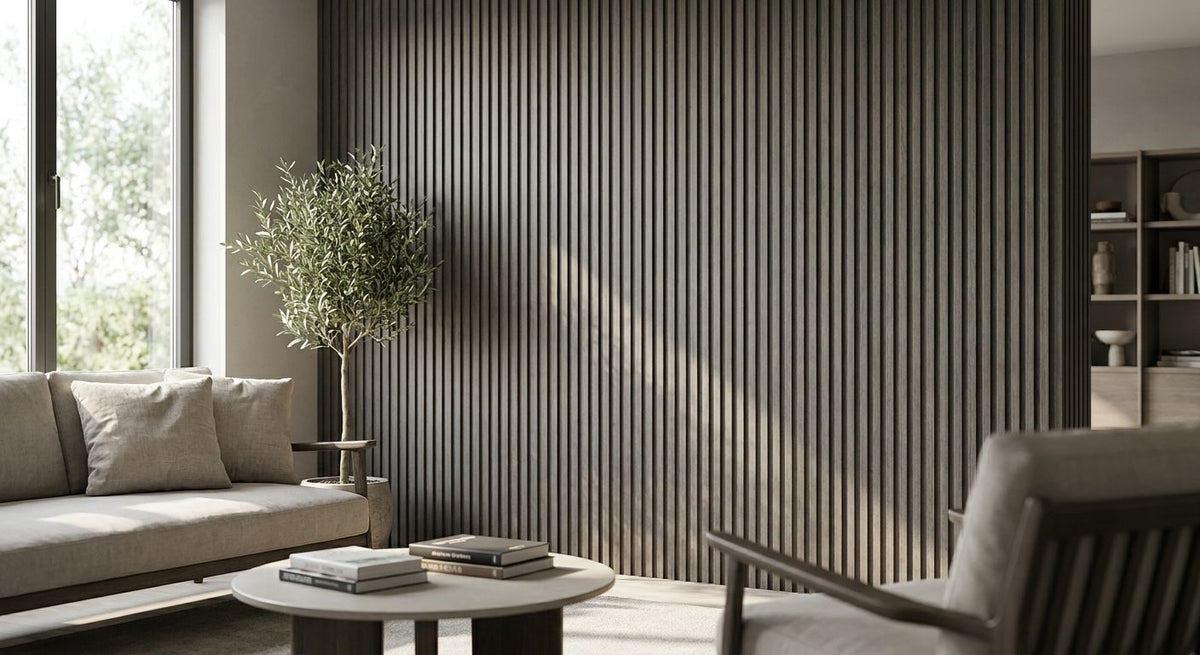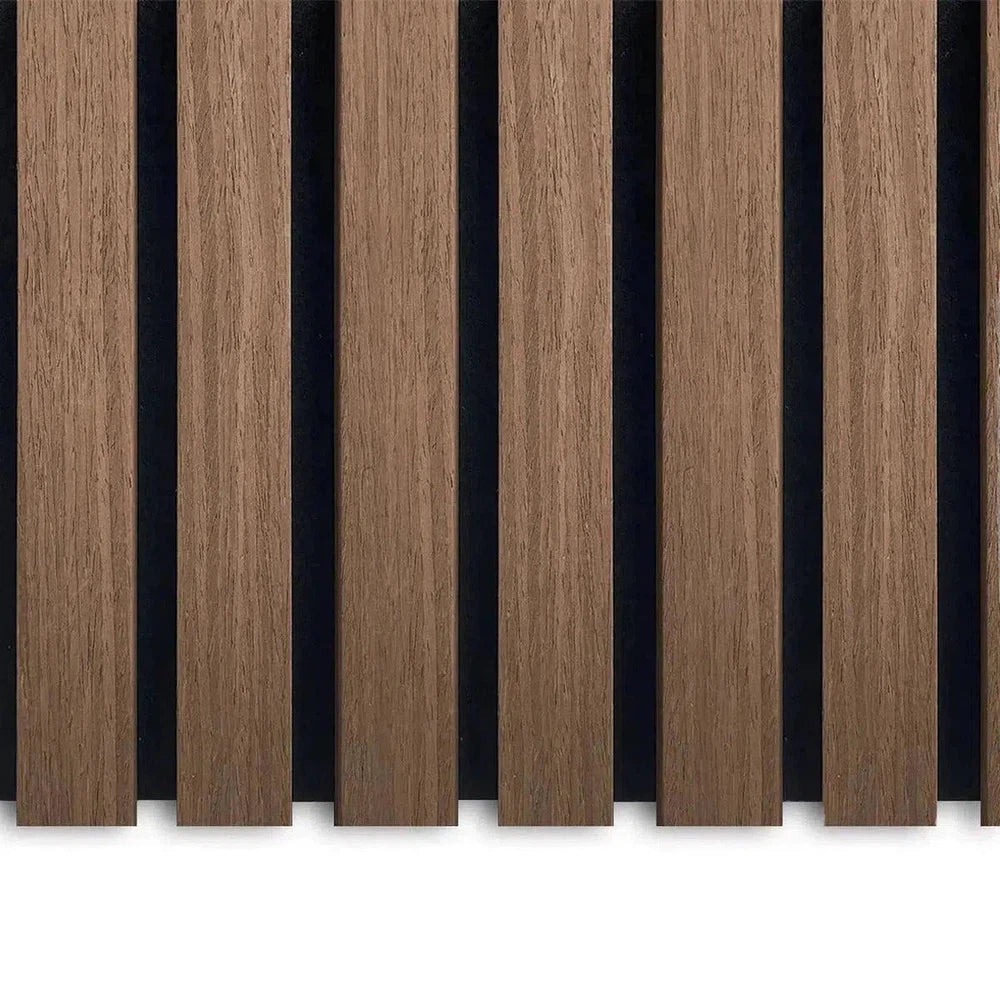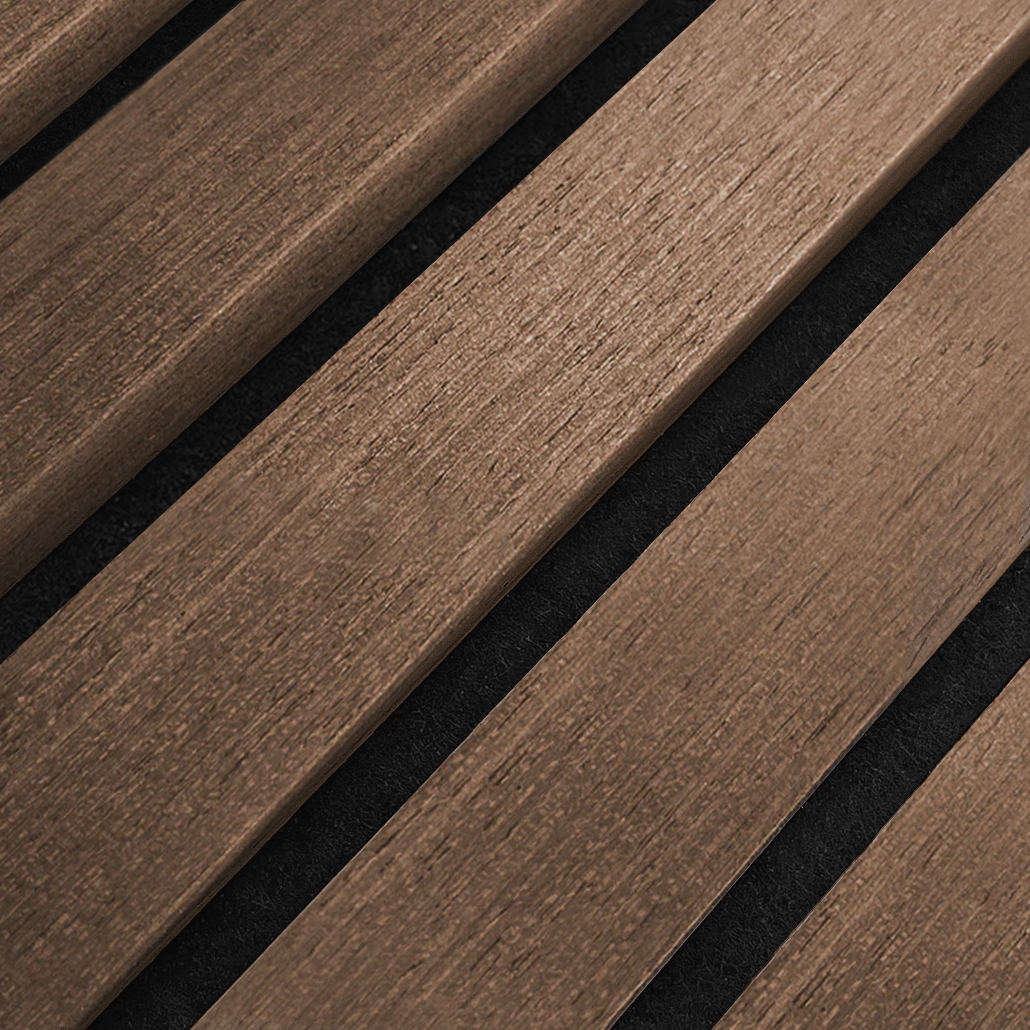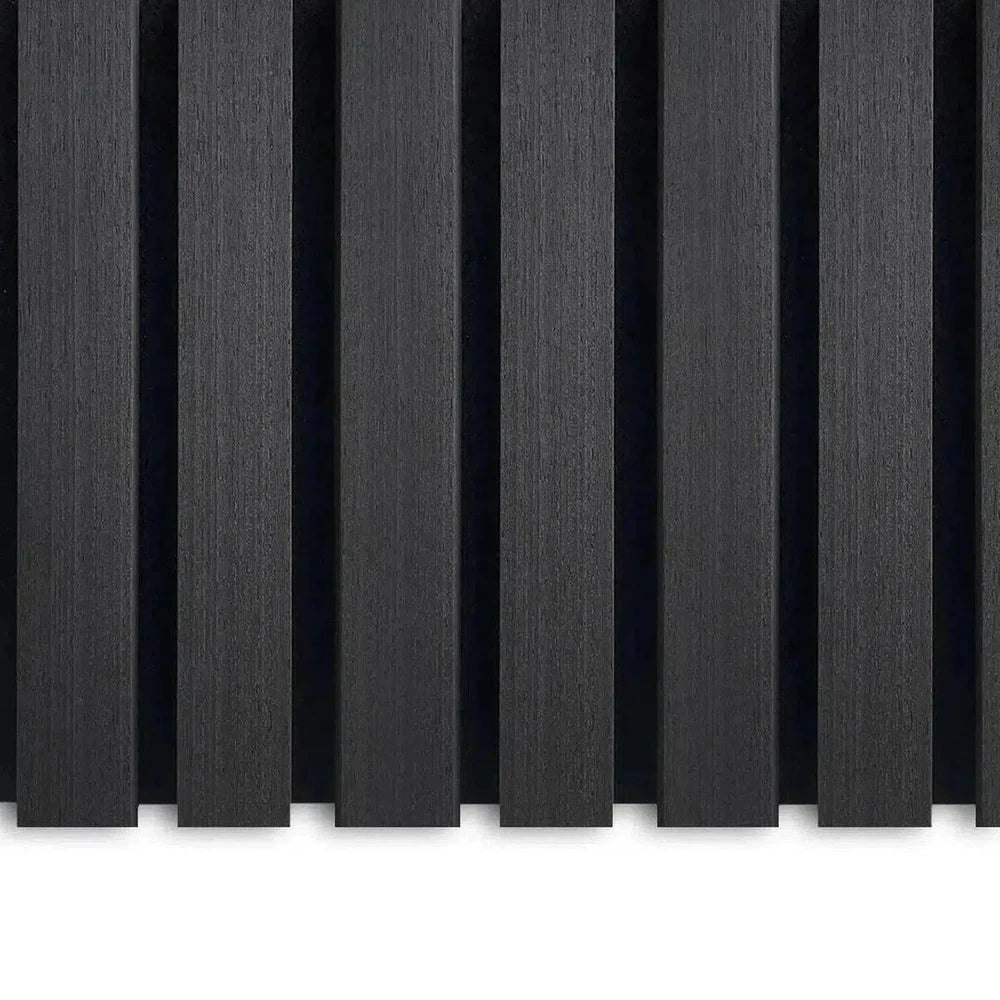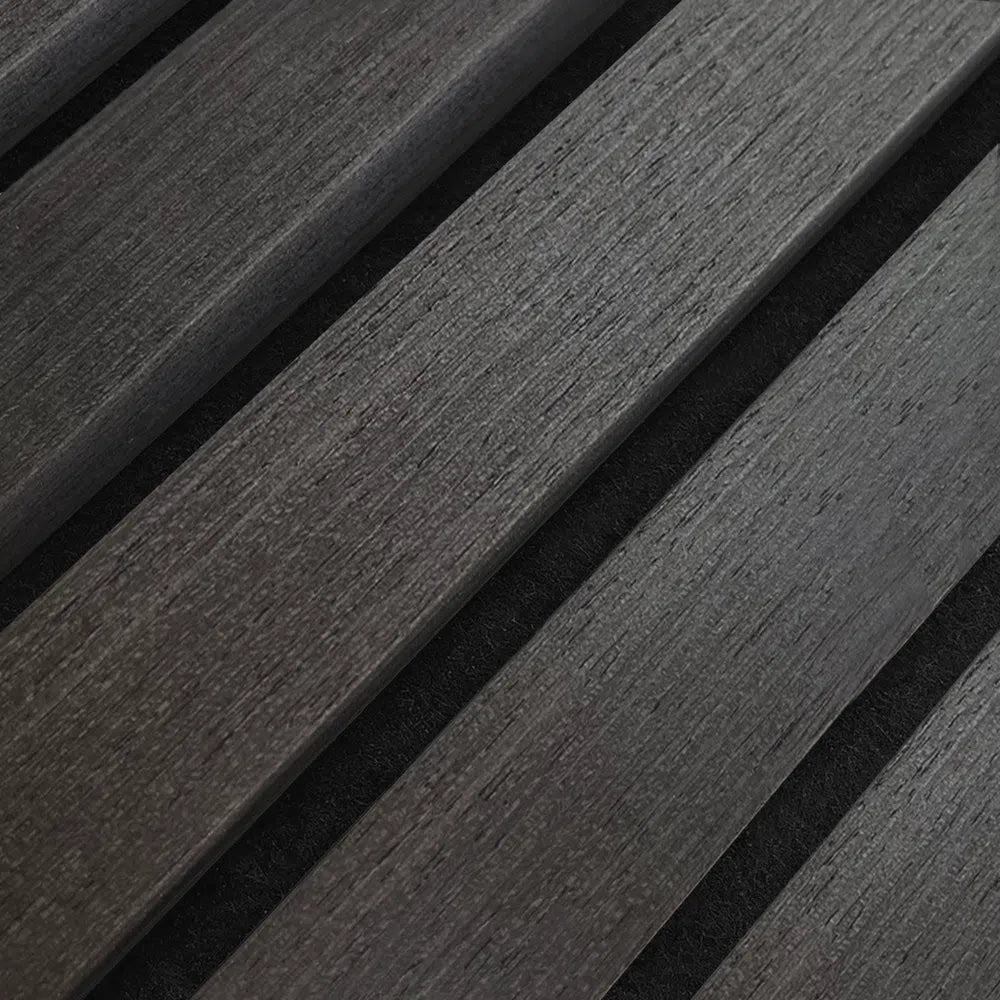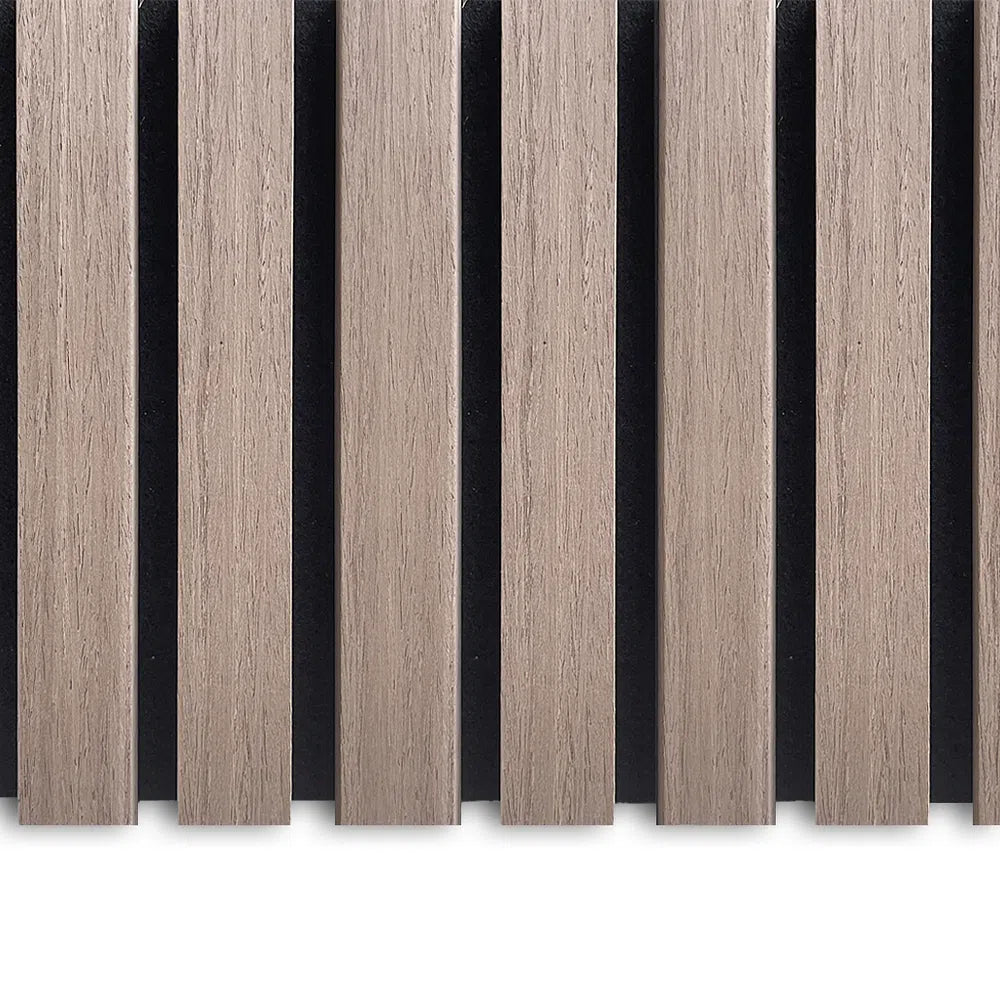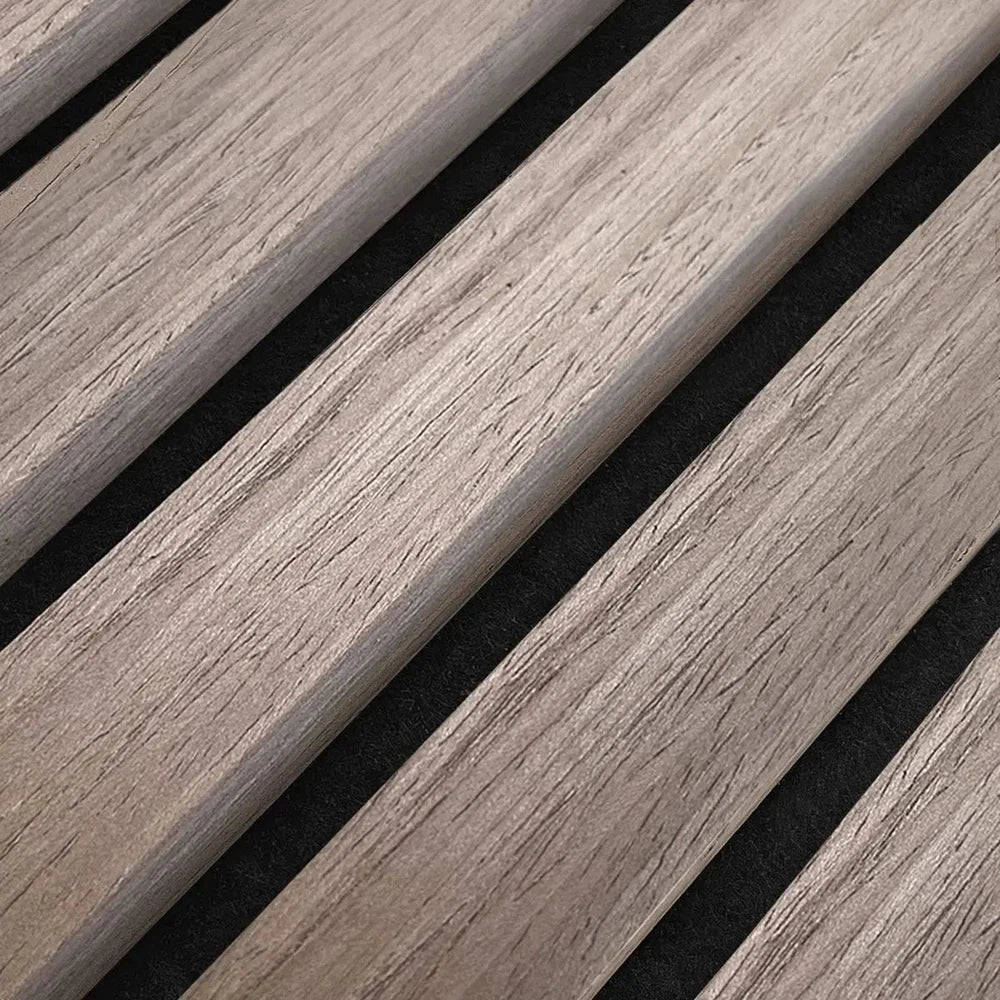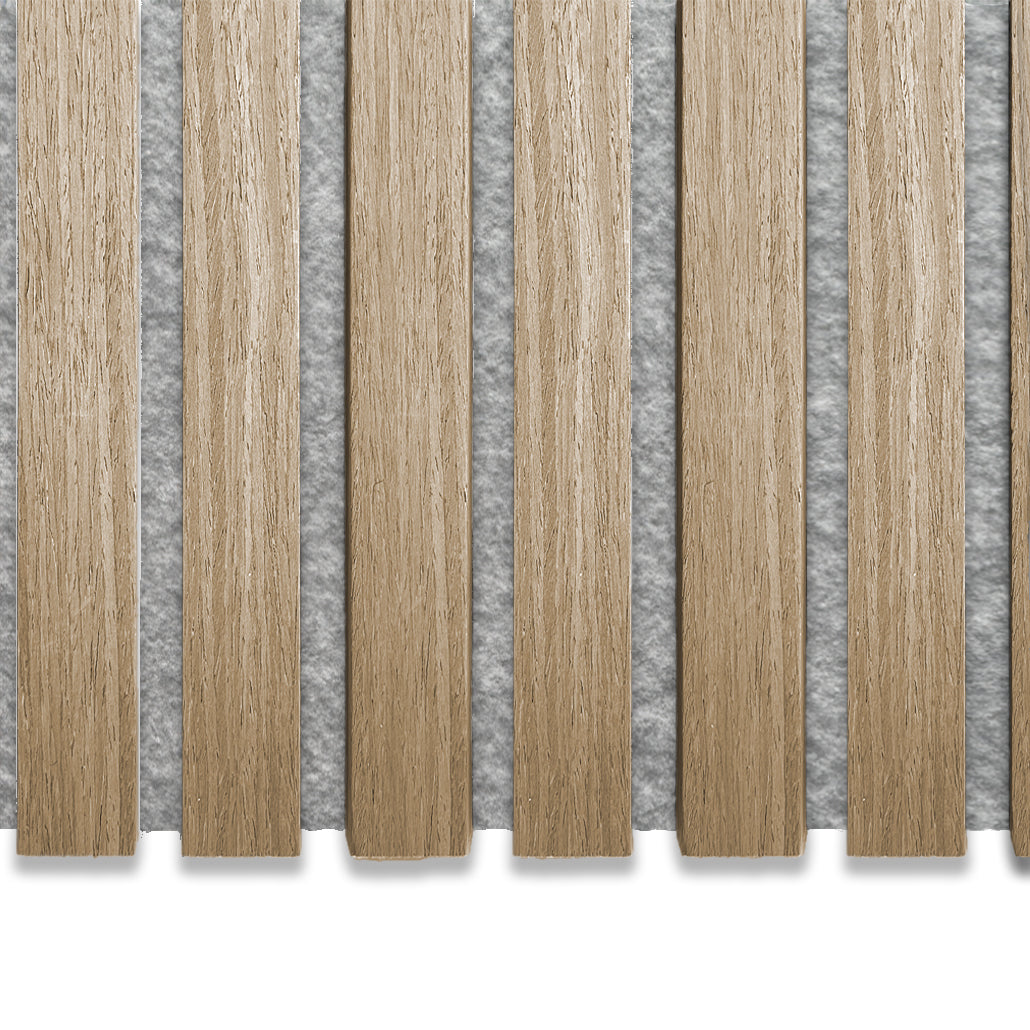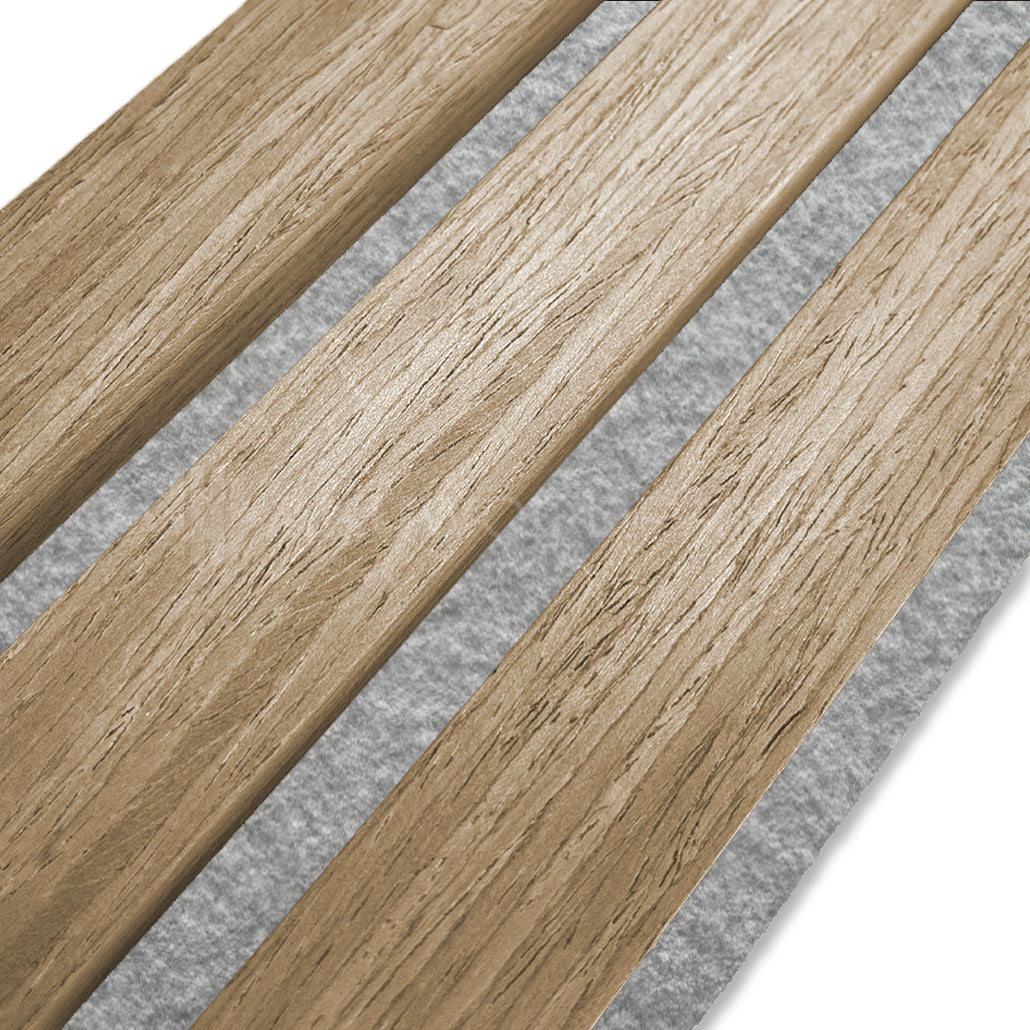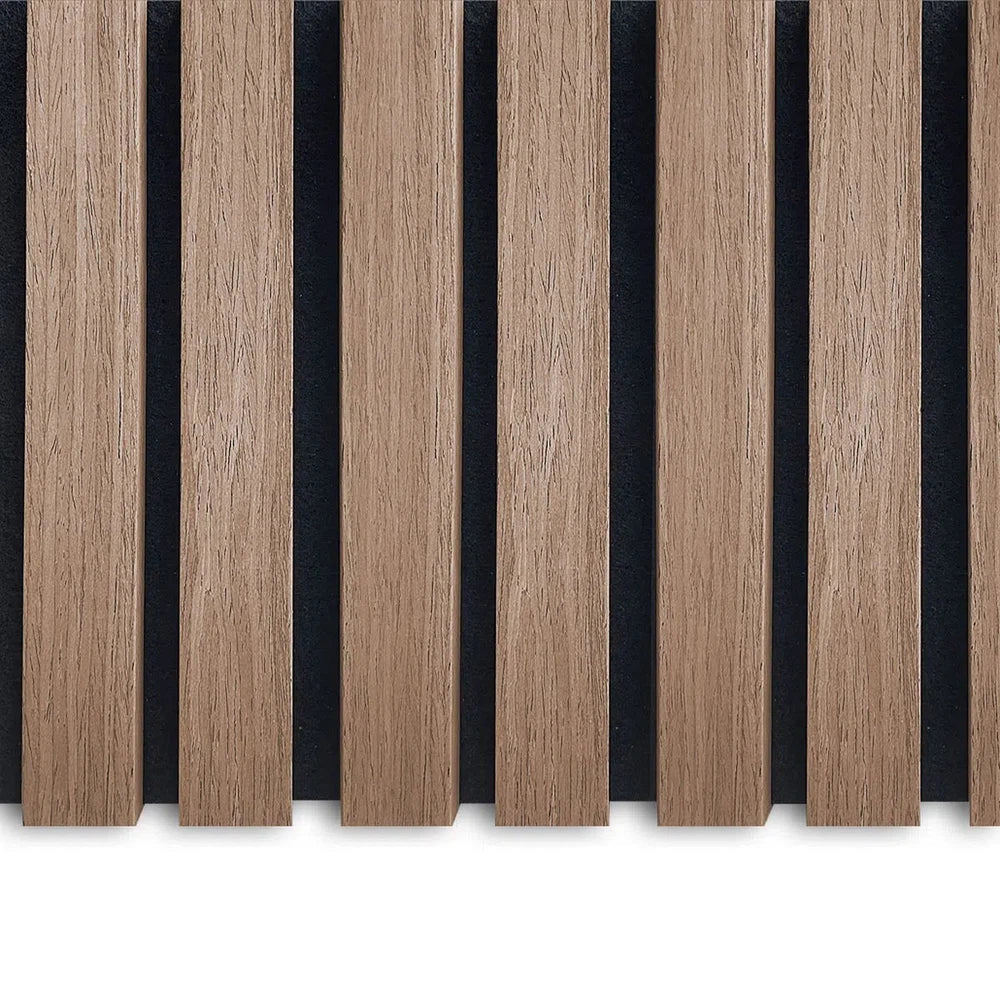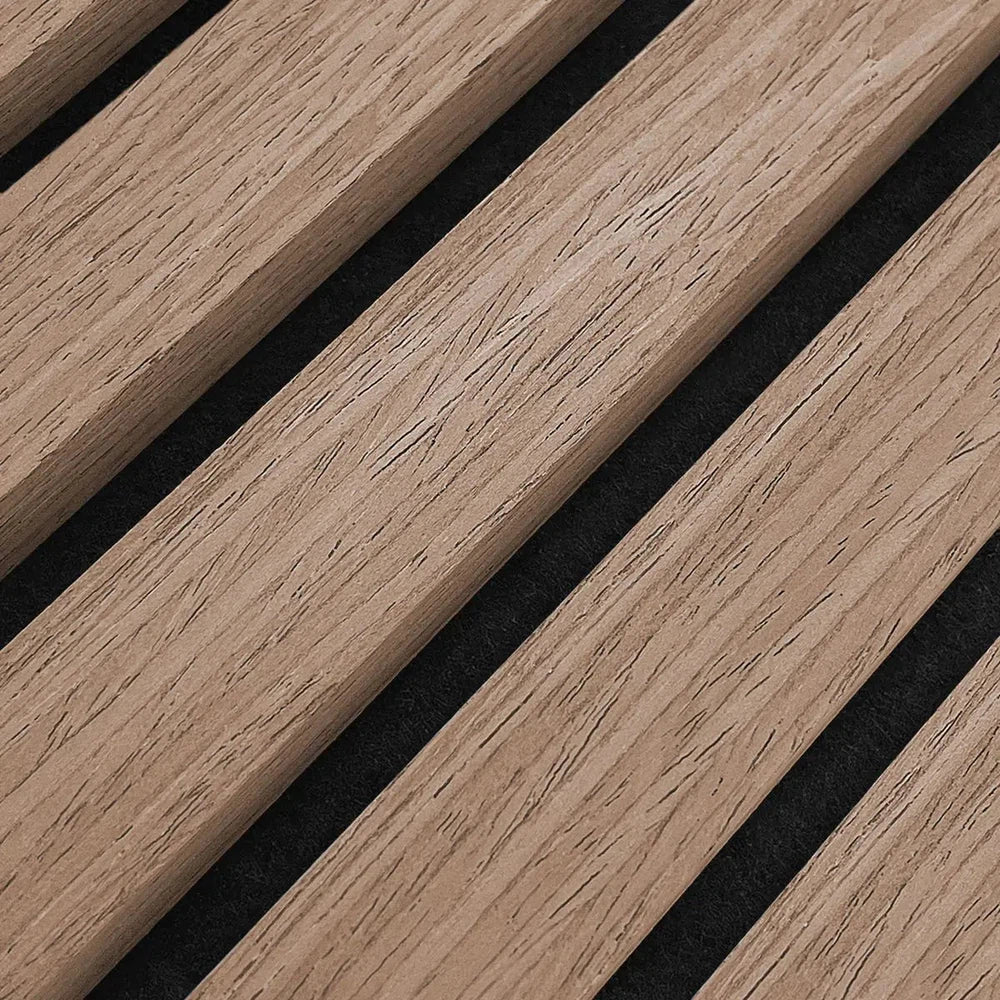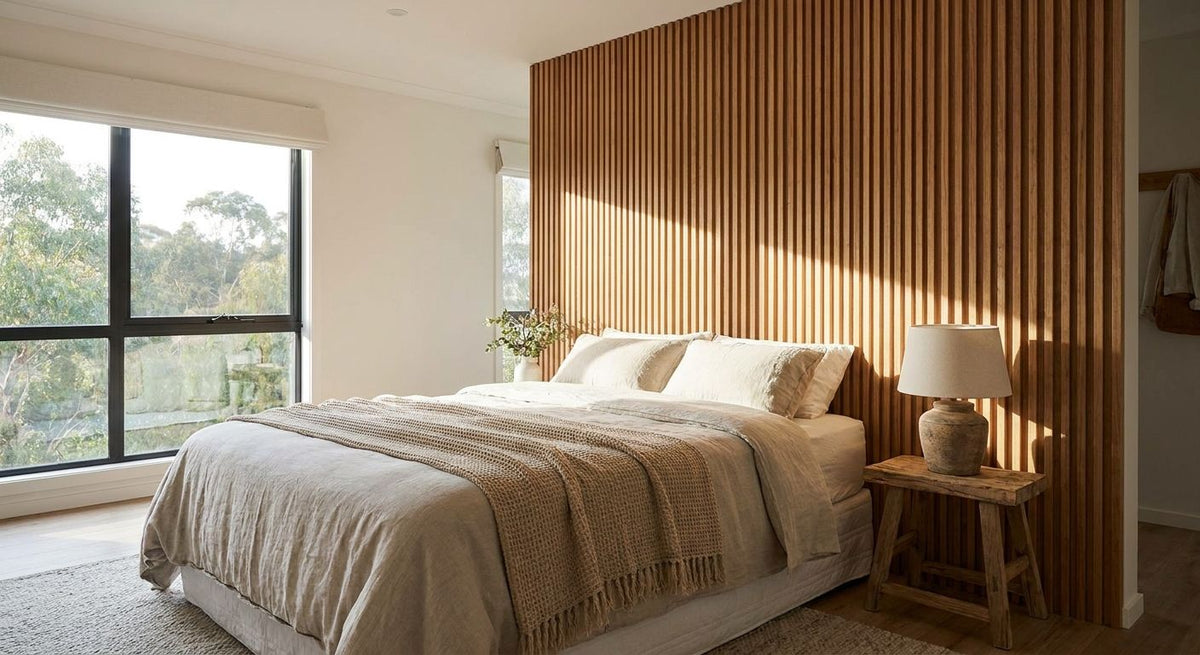
A wooden wall panels bedroom feature turns the flattest wall in the house into a textured, echo-dampening focal point behind the bed, the TV, or a bank of wardrobes. Bedrooms have their own demands: smaller wall runs, a headboard already competing for visual weight, and hard surfaces (wardrobe doors, laminate flooring, a TV screen) that bounce sound back at you while you're trying to sleep.
- A wooden wall panels bedroom feature with acoustic felt backing cuts echo behind a headboard without extra soundproofing work.
- Black oak wall panels give bedrooms the darkest, most dramatic accent wall finish Akustiq UK stocks in 2026.
- 300cm panels run floor-to-ceiling in one piece on taller bedroom walls; 240cm suits standard UK ceiling heights.
- Hexagon acoustic panels work as a headboard-sized feature rather than a full wall run.
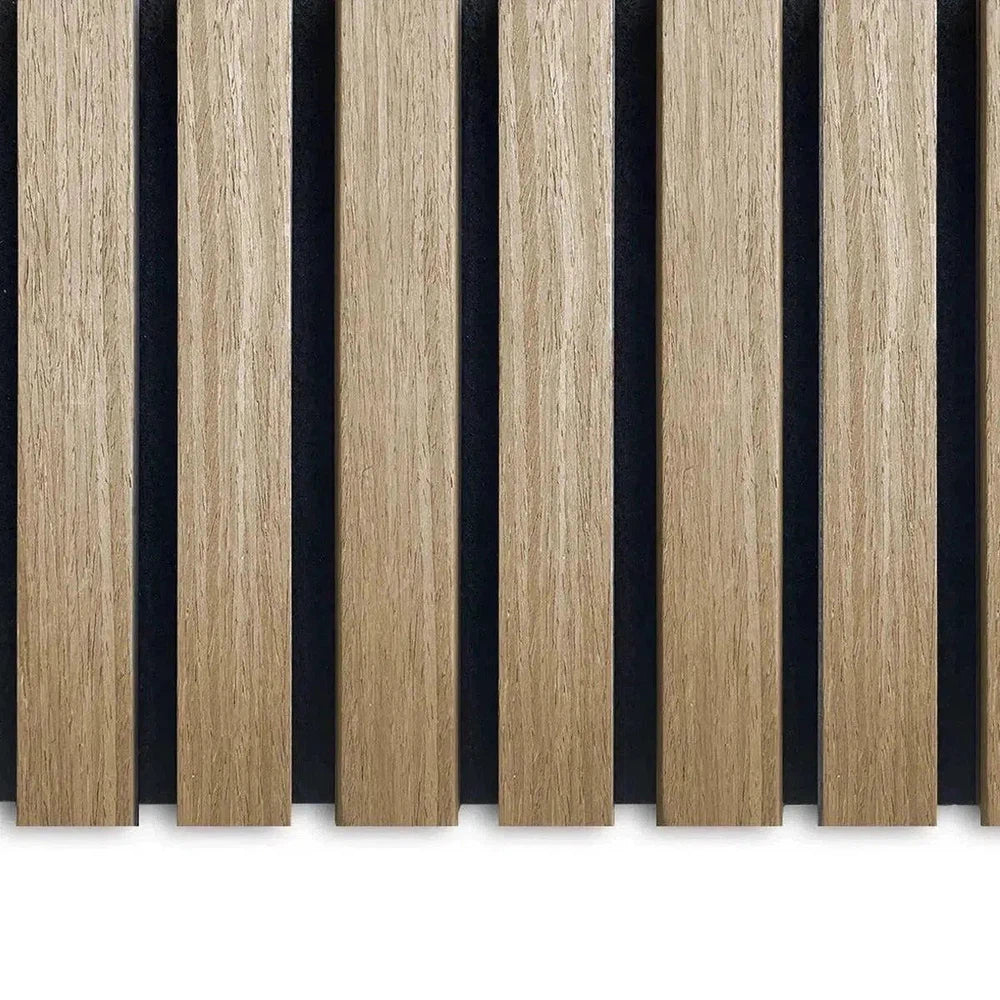
- Rustic oak reads warm and farmhouse; black oak and smoked oak read cooler and moodier.
Why wooden wall panels matter for bedrooms specifically
A bedroom is usually the quietest room in a house, which is exactly why bad acoustics stand out more there than anywhere else. Bare plaster behind a bed reflects sound straight back at your head; a TV mounted on a hard wall throws dialogue around the room instead of at you. Panels with an acoustic felt backing absorb that reflection instead of bouncing it, and a bedroom headboard wall is the single most common place UK homeowners fit them first.
The visual job matters just as much as the acoustic one. Bedrooms tend to have less wall space than living rooms — one wall behind the bed, maybe one behind a TV — so the finish you choose carries more visual weight per square metre than it would in an open-plan living room. Get the tone wrong and a small bedroom feels smaller; get it right and the same wall becomes the room's best feature.
Step 1: Choose which wall gets the feature
Start with the wall that does the least already, not the one that looks emptiest. A headboard wall doubles as acoustic treatment right where your head sits at night; a TV wall reduces glare and sound bounce behind the screen.
- Measure the wall width in cm before you order anything
- Note every socket, switch, and thermostat that panels will need to cut around
- Check ceiling height against the 240cm/300cm panel formats
- Mark stud or joist positions if you're fixing mechanically rather than with adhesive
- Decide now if the wall runs behind a padded headboard, which changes how much panel you actually need to buy
Step 2: Match the finish to the room's light
A north-facing bedroom with one small window reads dark by 4pm most of the year in the UK — that's the wrong room for a black oak wall run behind the whole bed. Save the darkest finishes for bedrooms that already get decent natural light or that lean into a deliberately moody look.
- Natural oak brightens a dim, north-facing bedroom without going stark white
- Black oak wall panels give the most dramatic, cinema-dark accent for bedrooms with good natural light or supplementary lighting
- Walnut and mocca sit warm and mid-tone, forgiving in either light direction
- Grey oak suits a cooler, minimalist bedroom style
- Smoked oak splits the difference between warm and dark
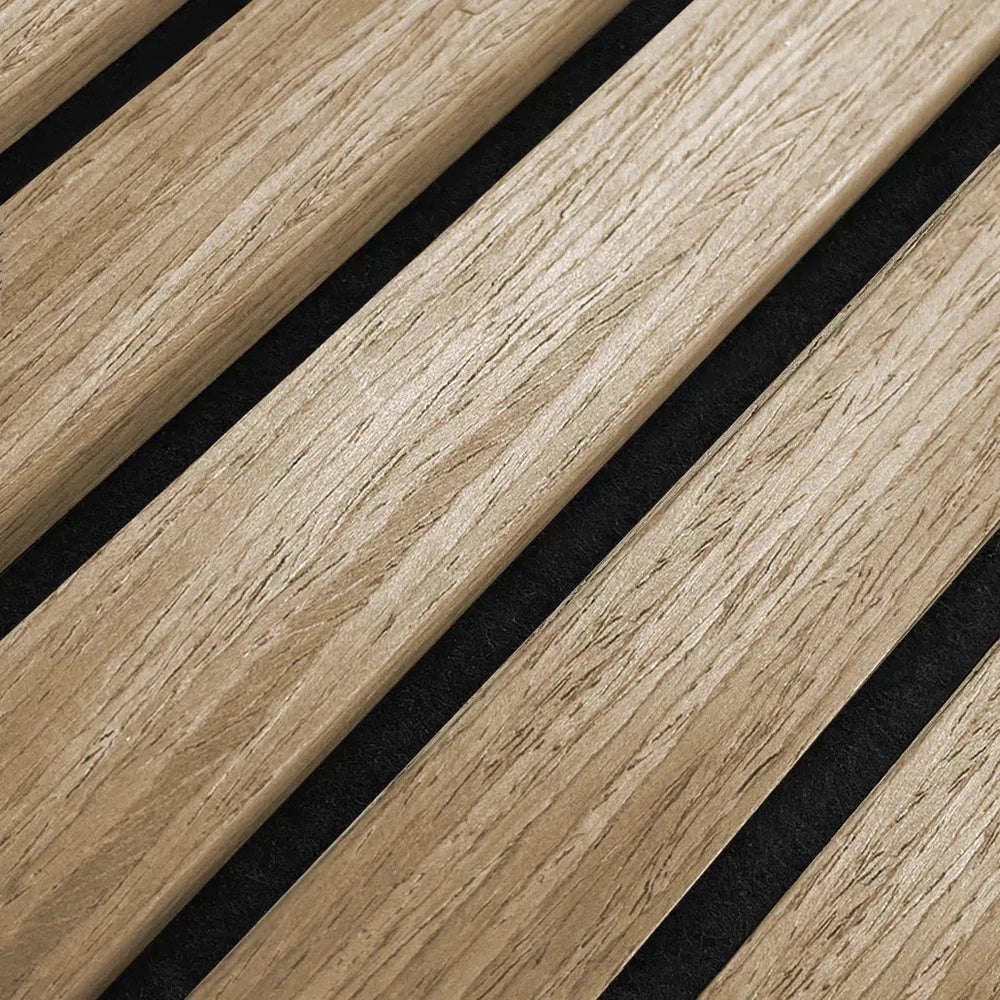
Rustic oak with a 3-sided wood veneer finish is the pick for a farmhouse or country-style bedroom rather than a slick modern one — it carries visible grain and knots that a flatter oak finish won't show.
Step 3: Pick the panel format — 240cm or 300cm
Standard UK bedroom ceilings run close to 240cm, which is why that's the default panel length. Loft conversions, period properties, and new-build bedrooms with vaulted or extra-tall ceilings need the 300cm format to avoid a visible seam or an awkward offcut near the top of the wall.
- Measure floor-to-ceiling height at the actual panel location, not just at the doorway
- Round down, not up — a panel that's slightly short is easier to trim at the base than one that's too long
- Use 300cm panels for any bedroom wall running floor-to-ceiling without a picture rail or dado break
- Budget one extra panel per wall for cutting waste around windows or sockets
- Order a sample first if you're choosing between two similar tones under your bedroom's actual light
Step 4: Decide whether you need the acoustic backing
Bedrooms are quiet by default, so it's tempting to skip acoustic backing and go purely decorative. That's the wrong call if the room doubles as a home office, if a TV lives on that wall, or if the bedroom sits above a hard floor with echo carrying up.
- Full acoustic felt-backed panels for a headboard or TV wall in a bedroom that also handles calls or a home desk
- Purely decorative 3D wood panels for a small accent zone with no noise problem to solve
- Hexagon acoustic panels rated at 0.75 NRC for a smaller feature above or beside a headboard rather than a full wall
- Grey felt-backed variants where the felt colour itself becomes part of the design, not just the function
- Skip acoustic backing only on walls that genuinely have no reflective flooring, TV, or hard furniture opposite
Step 5: Plan the layout around sockets and fixtures
Bedside sockets, wall lights, and thermostats are the detail that ruins an otherwise good panel job when they're an afterthought. Plan cuts before the panels arrive, not while you're holding one against the wall.
- Mark every socket and switch position on the wall in advance
- Order end pieces to finish exposed panel edges cleanly around corners or doorframes
- Use panel glue rather than mechanical fixings on plasterboard where you don't want visible screw heads
- Leave a small expansion gap at floor and ceiling for a real wood veneer finish
- Fit around a wall light last, once the main panel run is dry
Step 6: Fix the panels to the wall
A floor-to-ceiling bedroom panel job goes wrong most often at the fixing stage, not the finish choice. Solid plasterboard, a stud wall, and an old lath-and-plaster bedroom wall all need slightly different approaches.
- High-tack panel glue for flat, sound plasterboard walls
- Mechanical fixings into studs for uneven or older bedroom walls
- A test panel in an inconspicuous spot before committing the full wall
- Full weight support at the base while adhesive cures overnight
- A spirit level check every second panel, not just at the start
Step 7: Finish the edges and trims
The last 10% of the job is what people notice first when they walk in — clean edges around a door frame or corner make the whole feature wall look intentional rather than DIY-in-progress. Matching end pieces in the same finish as your main panels close off exposed sides without a visible seam.
Comparison: panel options for a bedroom feature wall
| Option | Best for | Key limitation | Verdict |
|---|---|---|---|
| Slatted acoustic panel with felt backing | Full headboard or TV wall, echo reduction | Needs a full wall run to look proportional | Buy |
| Decorative 3D wood panel | Small textured accent zone | No acoustic backing | Buy for accent, skip for full wall |
| Hexagon acoustic panel | Compact headboard-sized feature | Smaller format means more pieces to fit | Buy for small walls |
| Paint or wallpaper only | Renters, minimal budget | No texture, no acoustic benefit | Hold |
Common mistakes bedrooms make with wall panels
- Fitting a full panel wall behind a padded headboard — the panel and the headboard compete for depth and the wall looks cluttered instead of layered.
- Choosing black oak in a small north-facing bedroom — the room reads darker and smaller than the panels alone would suggest.
- Buying 240cm panels for a 3m loft ceiling — leaves a visible gap or an ugly offcut strip near the top.
- Skipping acoustic backing in a bedroom used as a home office — the same wall that looks fine for sleeping fails as soon as video calls start.
- Not ordering a sample before committing to a full wall — bedroom lighting shifts finish tone more than showroom lighting does, and a swatch under your own bulbs prevents an expensive reorder.


FAQ
What's the best wood panel finish for a bedroom feature wall?
There's no single best finish for every bedroom — black oak and smoked oak suit bedrooms with good natural light or a deliberately moody look, while natural oak and grey oak brighten a darker, north-facing room. Match the finish to the light the room actually gets, not the light in a showroom photo.
Do wooden wall panels reduce noise in a bedroom?
Panels with acoustic felt backing absorb sound reflection and reduce echo, which matters most behind a headboard or TV wall. Purely decorative 3D panels without felt backing add texture but don't meaningfully change the room's acoustics.
Should I use 240cm or 300cm panels in a bedroom?
Use 240cm panels for standard UK ceiling heights and 300cm for loft conversions or period bedrooms with taller ceilings. Measure the actual wall, not the room's general height, since alcoves and sloped ceilings vary the figure.
Can I fit wooden wall panels behind a bed with a headboard?
Yes, but plan around the headboard's depth first — a full panel wall behind a thick padded headboard can look cluttered rather than layered. A narrower panel run either side of the headboard often reads cleaner than covering the whole wall.
Is black oak too dark for a small bedroom?
Black oak works best in bedrooms with decent natural light or supplementary lighting; in a small, north-facing room it can make the space feel smaller. Test with a sample under your own bedroom lighting before committing to a full wall.
What's the difference between hexagon panels and full slat panels for a bedroom?
Hexagon acoustic panels suit a smaller, headboard-sized feature and come with a 0.75 NRC rating in the felt-backed version, while full slat panels cover a wider wall run in one continuous format. Choose hexagon for a compact accent and slat panels for a full headboard or TV wall.
Do I need special glue to fit wall panels in a bedroom?
High-tack panel glue works on flat, sound plasterboard, while older or uneven bedroom walls need mechanical fixings into the studs instead. Test a small area first, since not every wall behind a bed is as flat as it looks.
One last thing
The detail most people miss is that the acoustic benefit of a felt-backed panel scales with wall coverage, not panel count — three panels scattered across a headboard wall do less for echo than the same three panels grouped together in one continuous run. If reducing sound is the actual goal, group the panels tight rather than spreading them for symmetry.