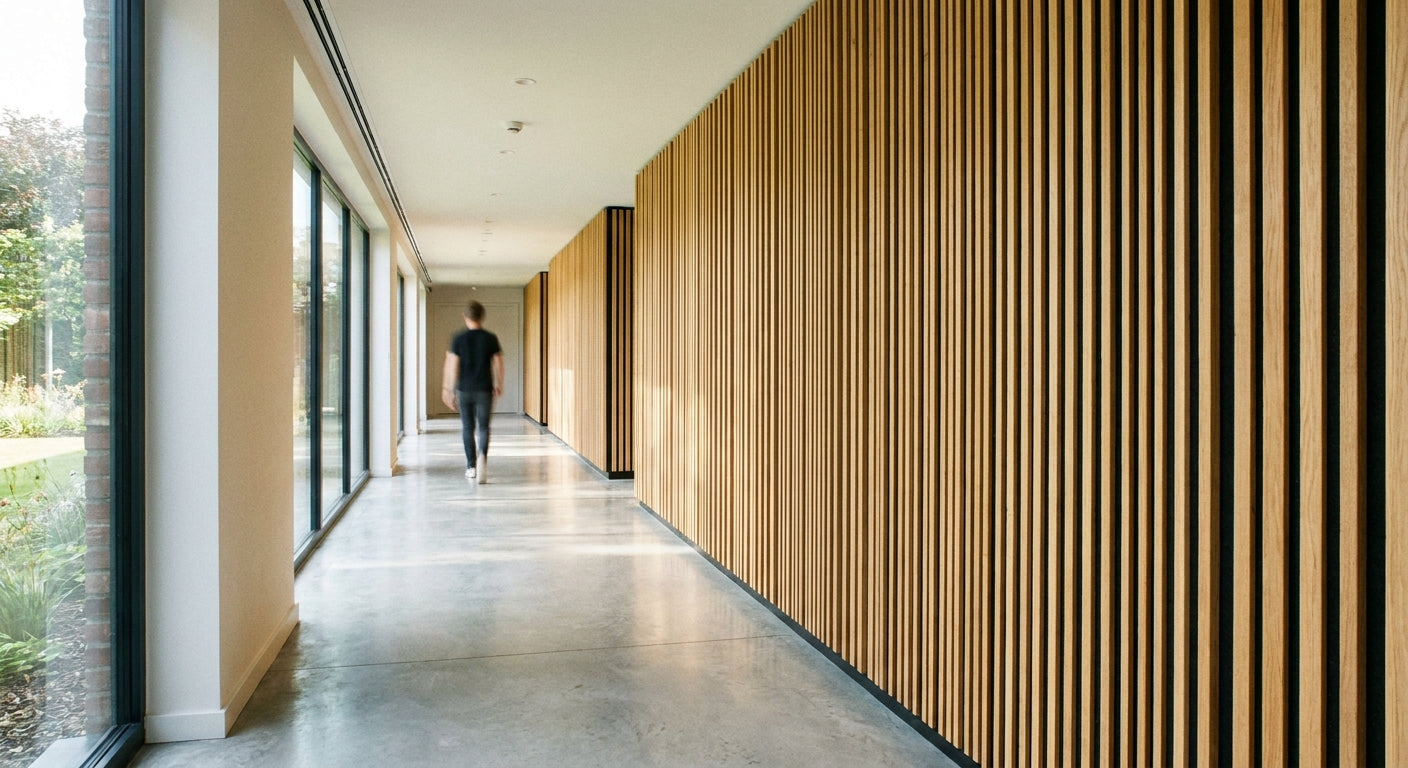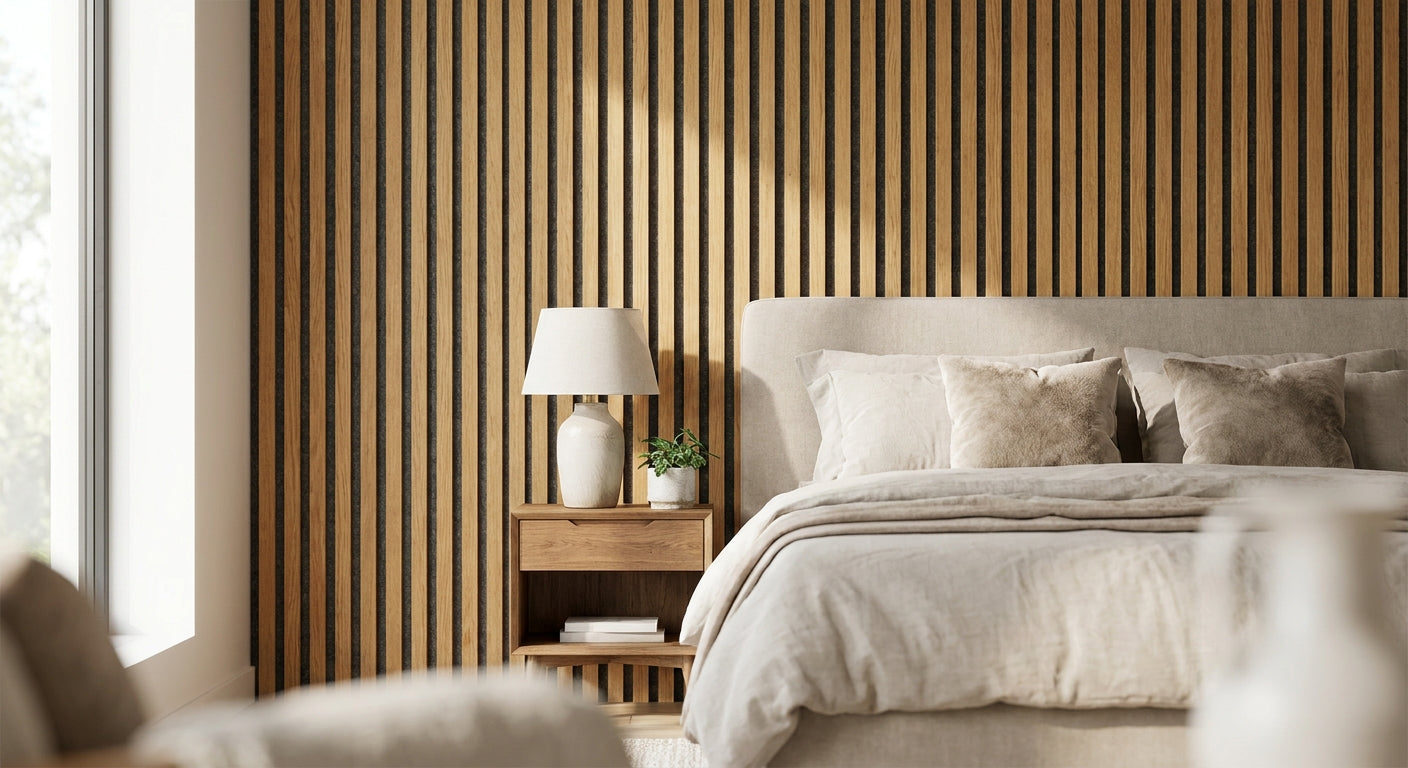
Bare plaster in a bedroom bounces sound between walls and headboard, which is why voices sound harsh and TV dialogue blurs at low volume. Acoustic slat wall panels fix that reflection problem while doubling as a feature wall, and this guide covers which finishes, sizes, and fixings actually work in a bedroom setting.
- Natural Oak acoustic slat wall panels suit most bedrooms and carry a 3-sided real wood veneer finish - Buy.
- Black Oak is the strongest pick for a moody headboard wall in 2026 - Buy.
- Smoked Oak works best on a single feature wall, not wall-to-wall, in rooms under 3m wide - Buy.
- Skip printed MDF slat panels marketed as acoustic slat wall panels bedroom solutions - they carry no felt backing.
- 240cm panels fit standard UK bedroom ceiling heights; 300cm suits floor-to-ceiling loft conversions.
Why this matters
A bedroom is the one room where echo complaints show up as a subjective feeling rather than a measurable problem - you notice it as restlessness, not reverberation. Soft furnishings like curtains and rugs absorb some reflected sound, but a hard headboard wall or a chimney breast still throws sound straight back at you.
Acoustic slat wall panels with a felt backing absorb mid and high frequencies at the wall surface, which is exactly where bedroom sound bounces hardest - off the wall behind the bed. AKU Woodpanel supplies these panels with a 3-sided real wood veneer face and felt backing in both 240cm and 300cm formats, which matters more in a bedroom than in a living room because bedroom walls are usually shorter and the panel has to read as furniture-grade, not warehouse-grade.
Who this is for
This guide is built for homeowners and renters converting a bedroom wall - usually behind the bed or on a chimney breast - into a quieter, better-looking surface without ripping out plasterboard. If you're comparing acoustic slat wall panels bedroom options against printed veneer alternatives, or trying to work out whether 240cm or 300cm suits your ceiling height, the criteria below are built around that exact decision.
What to look for in acoustic slat wall panels for a bedroom
Real wood veneer, not printed laminate
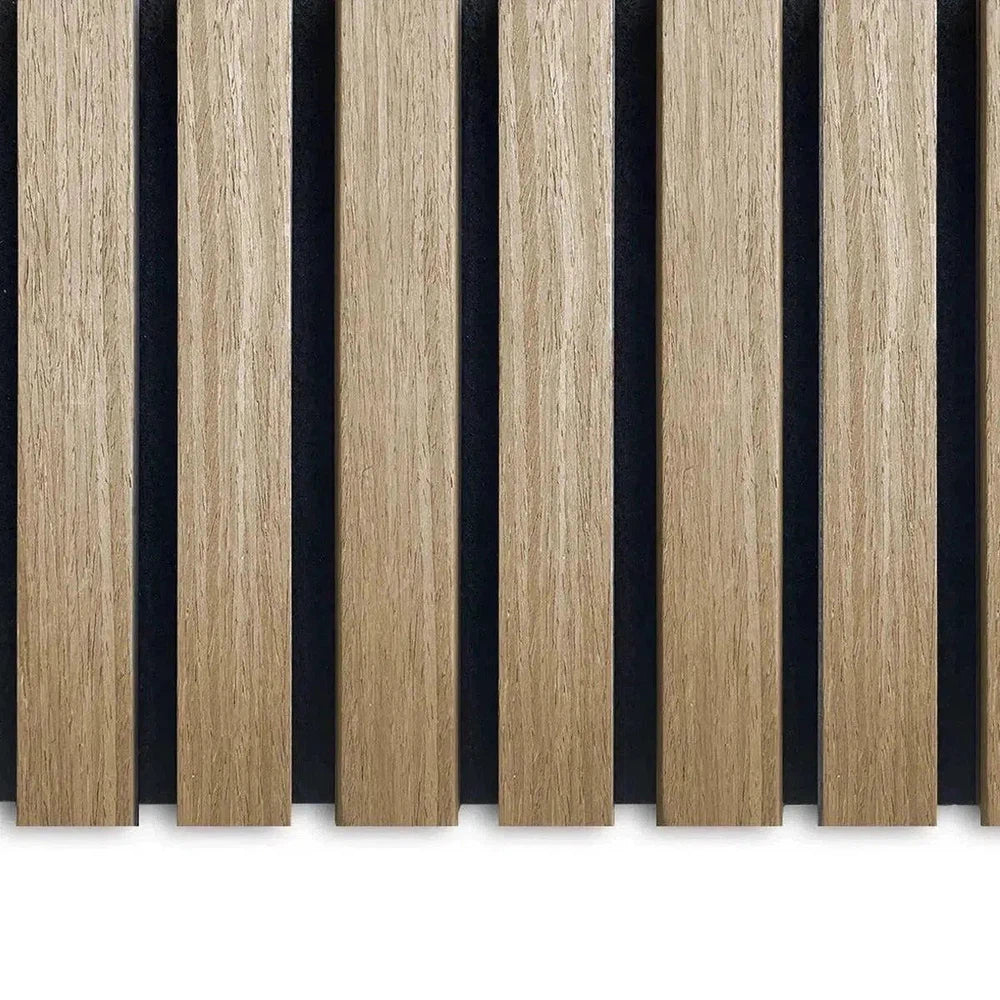
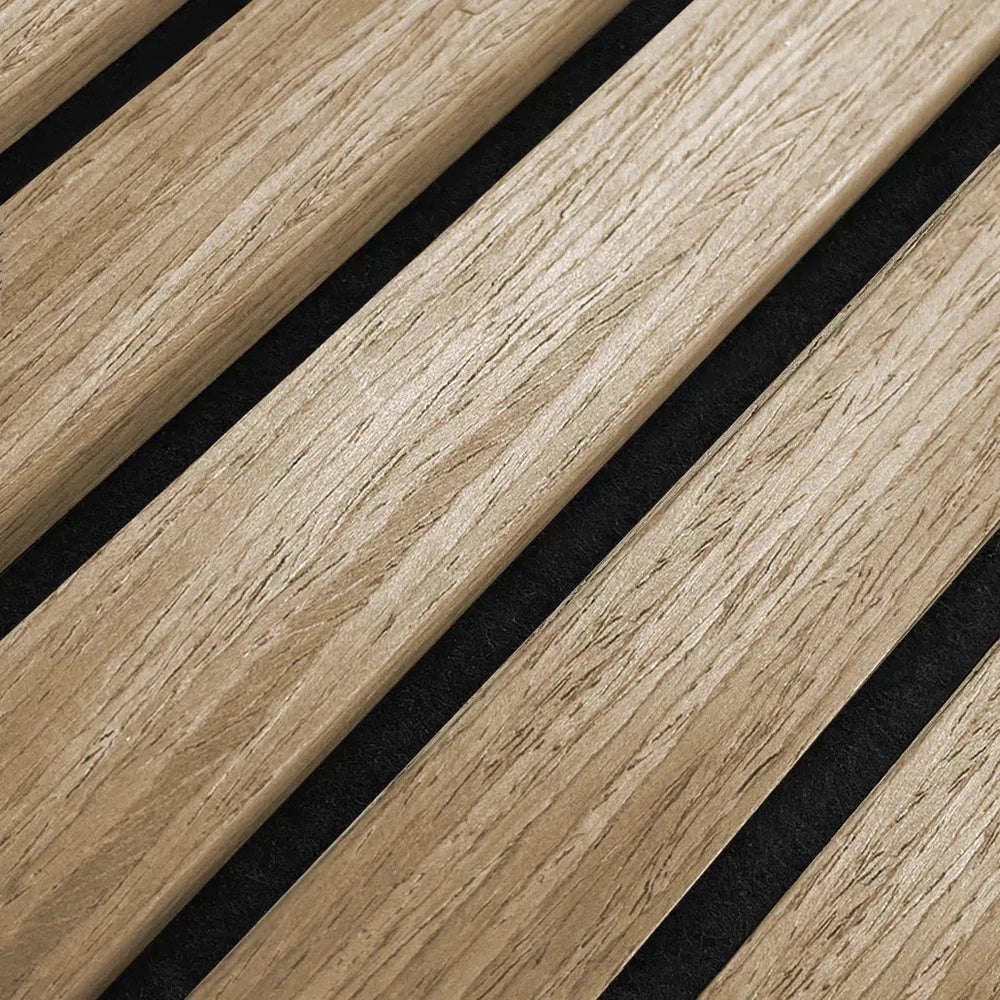
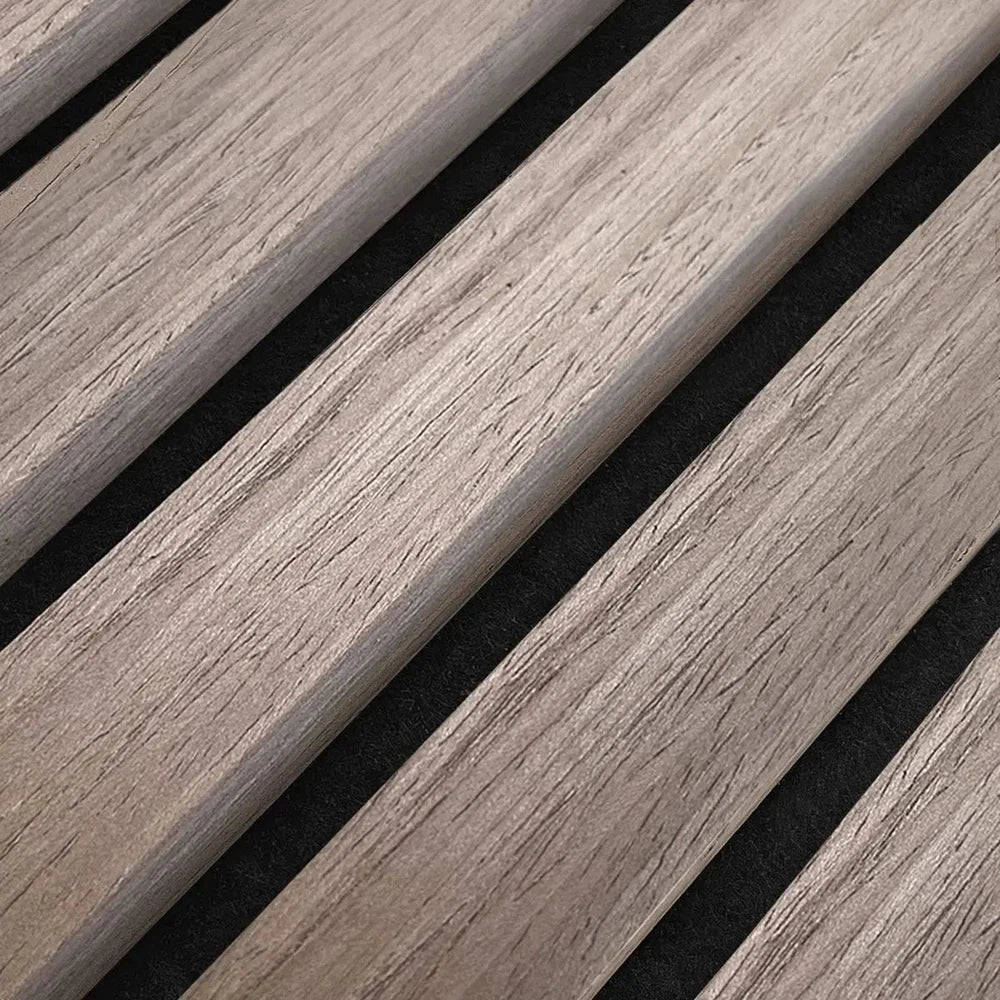
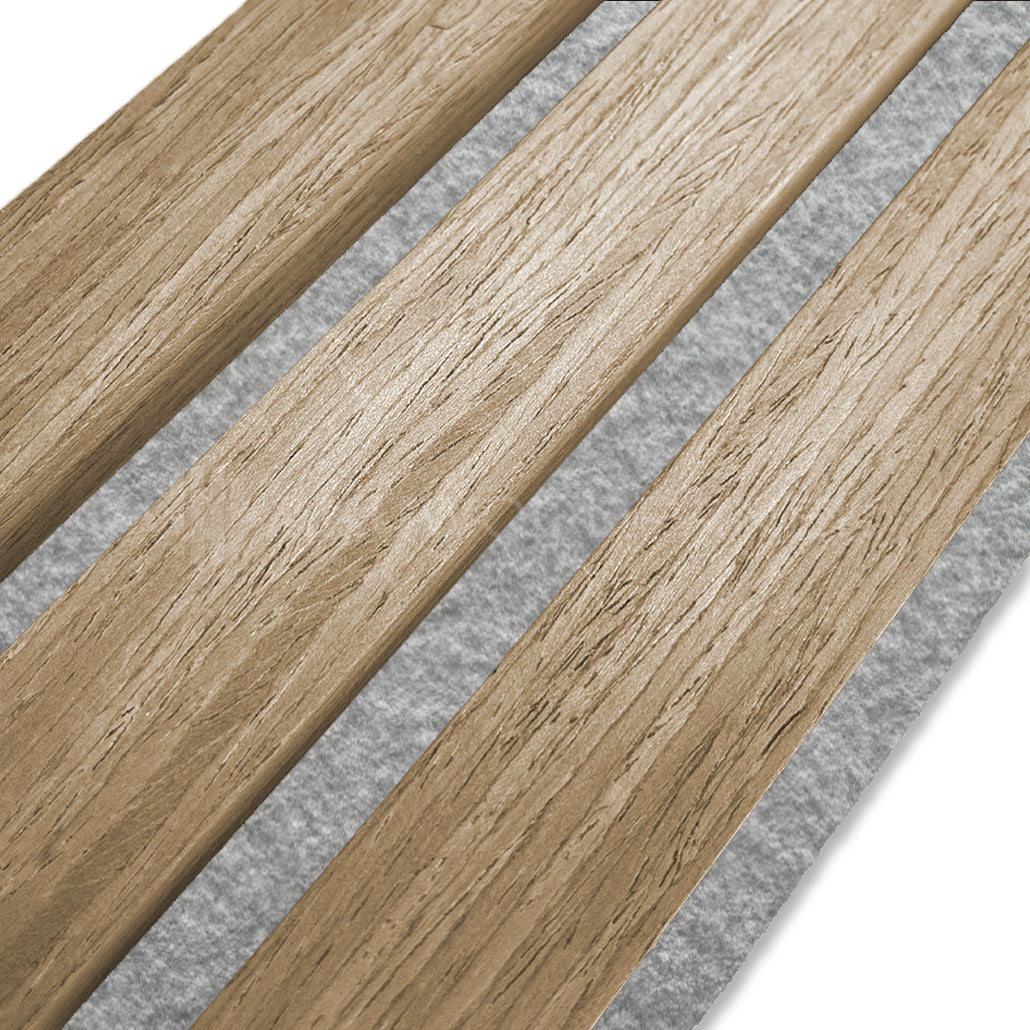
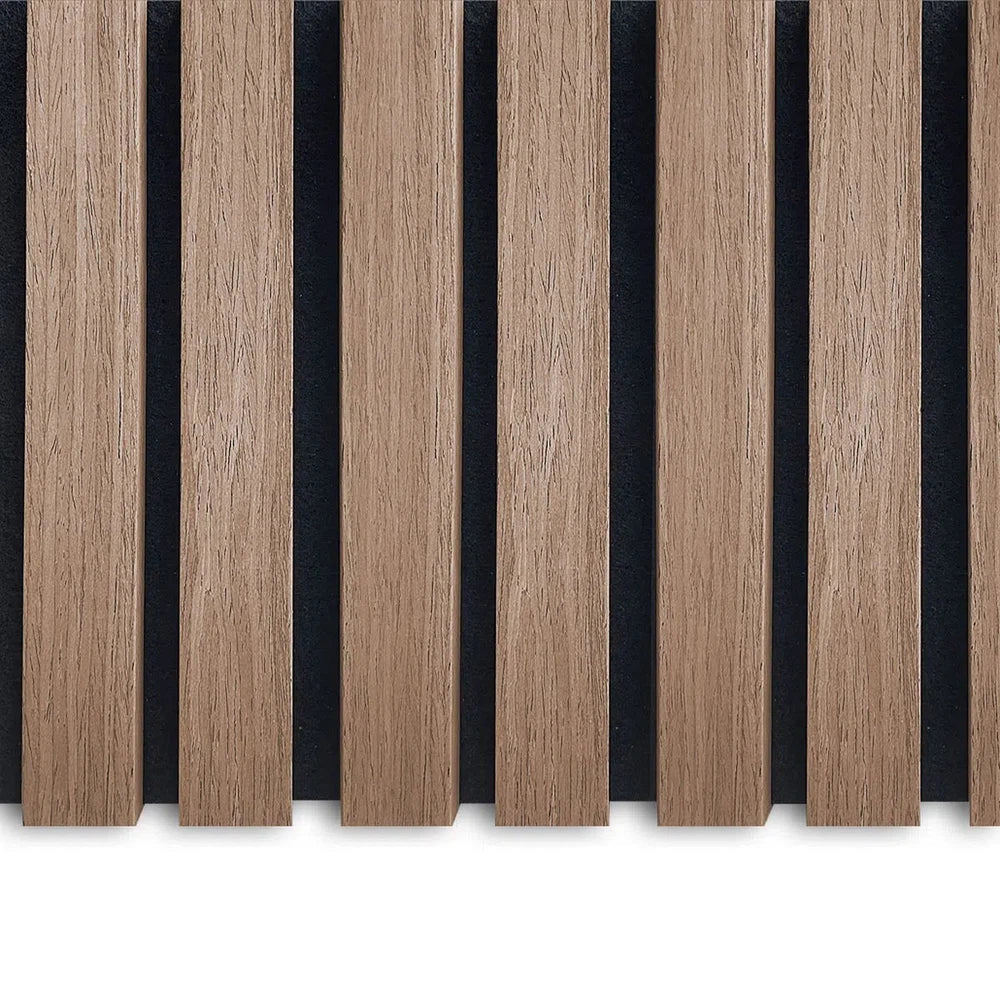
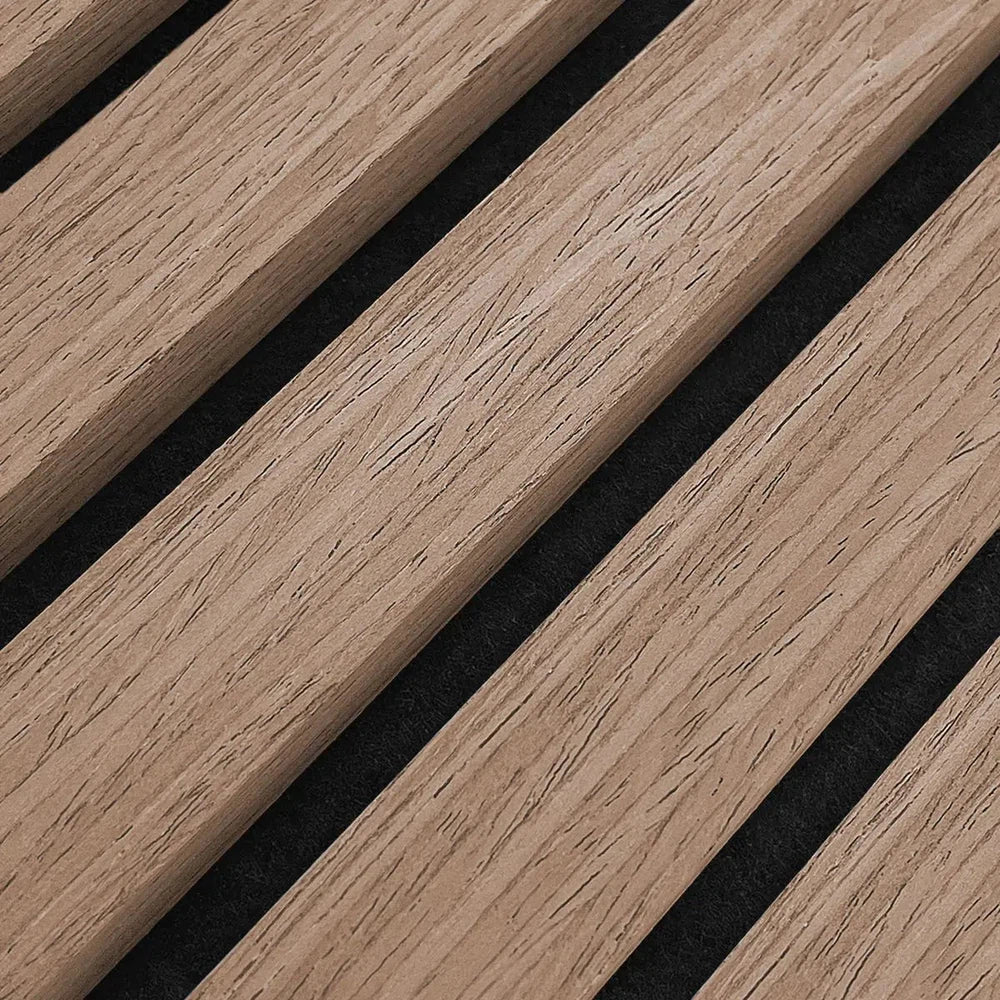
A genuine 3-sided wood veneer finish shows grain variation panel to panel; printed laminate repeats the same grain pattern every 30cm. In a bedroom, where panels sit at eye level from the bed, that repetition is far more visible than it would be on an office wall six metres away.
Felt backing behind the slats
The slats alone do very little acoustically - the felt layer behind them is what absorbs sound. A panel described as "acoustic" without a stated felt backing is a decorative slat panel wearing an acoustic label, and it won't touch echo behind a headboard.
Panel format: 240cm vs 300cm
Most UK bedroom ceilings sit at 2.3m to 2.4m, which makes the 240cm format the practical default - it needs less cutting and less waste. The 300cm format earns its keep in loft conversions and new-build bedrooms with taller ceilings, where a shorter panel would leave an awkward strip at the top.
Slat spacing and shadow gap
Wider gaps between slats read as more casual and rustic; tighter gaps look formal and modern. Behind a headboard, a tighter spacing tends to photograph better and hides fixings more cleanly, which matters if the panel doubles as a backdrop for video calls or photos.
Finish tone against bedroom light levels
Dark finishes like Black Oak and Smoked Oak absorb more ambient light than Natural Oak or Grey Oak, which can make a north-facing bedroom feel smaller if used wall-to-wall. Reserve the darkest finishes for a single feature wall unless the room already gets strong natural light.
DIY fitting difficulty
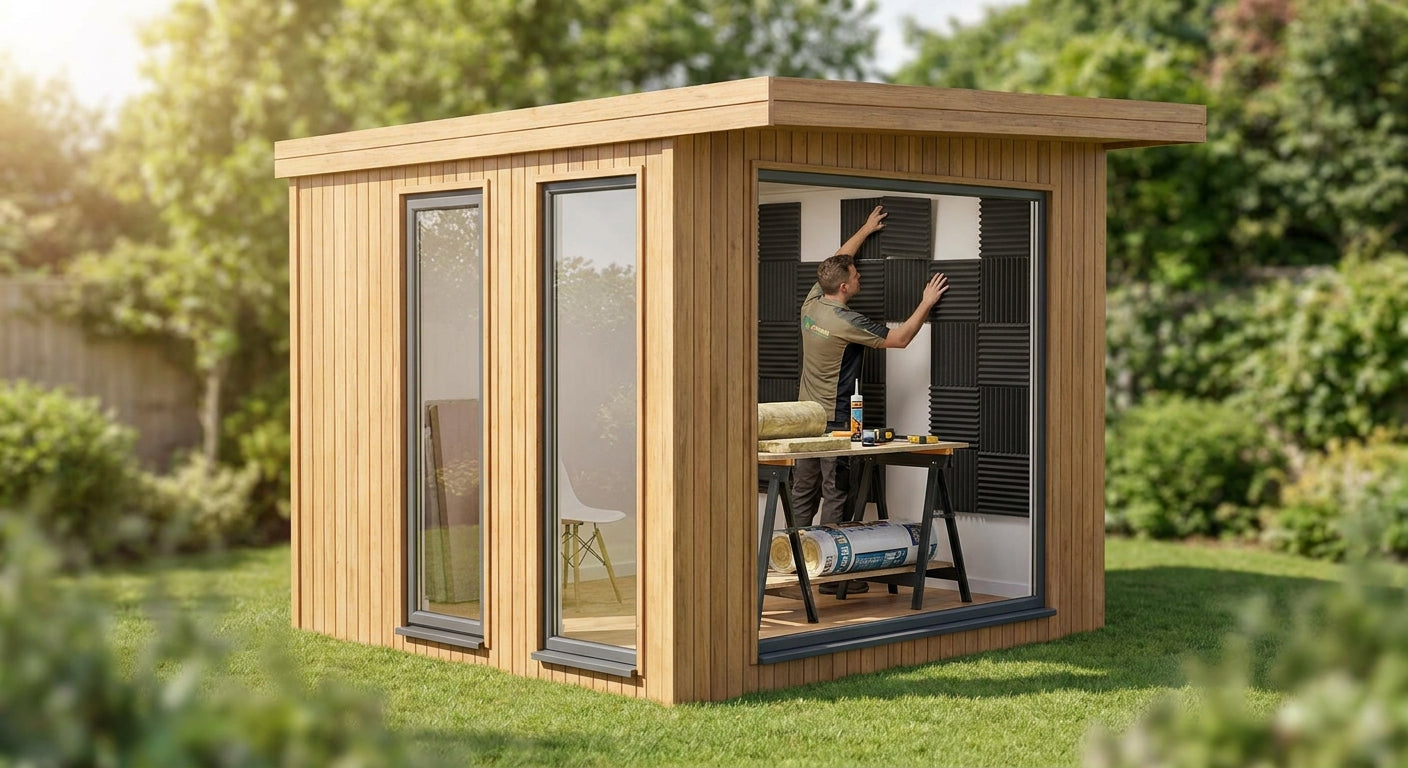
Most of these panels fix with construction adhesive directly to plasterboard or a stud wall, which is a weekend job for one person. If you're in a rented flat, that's still a bigger commitment than picture-hanging, so factor in whether you'll need to make good the wall on move-out.
Top picks for bedroom walls
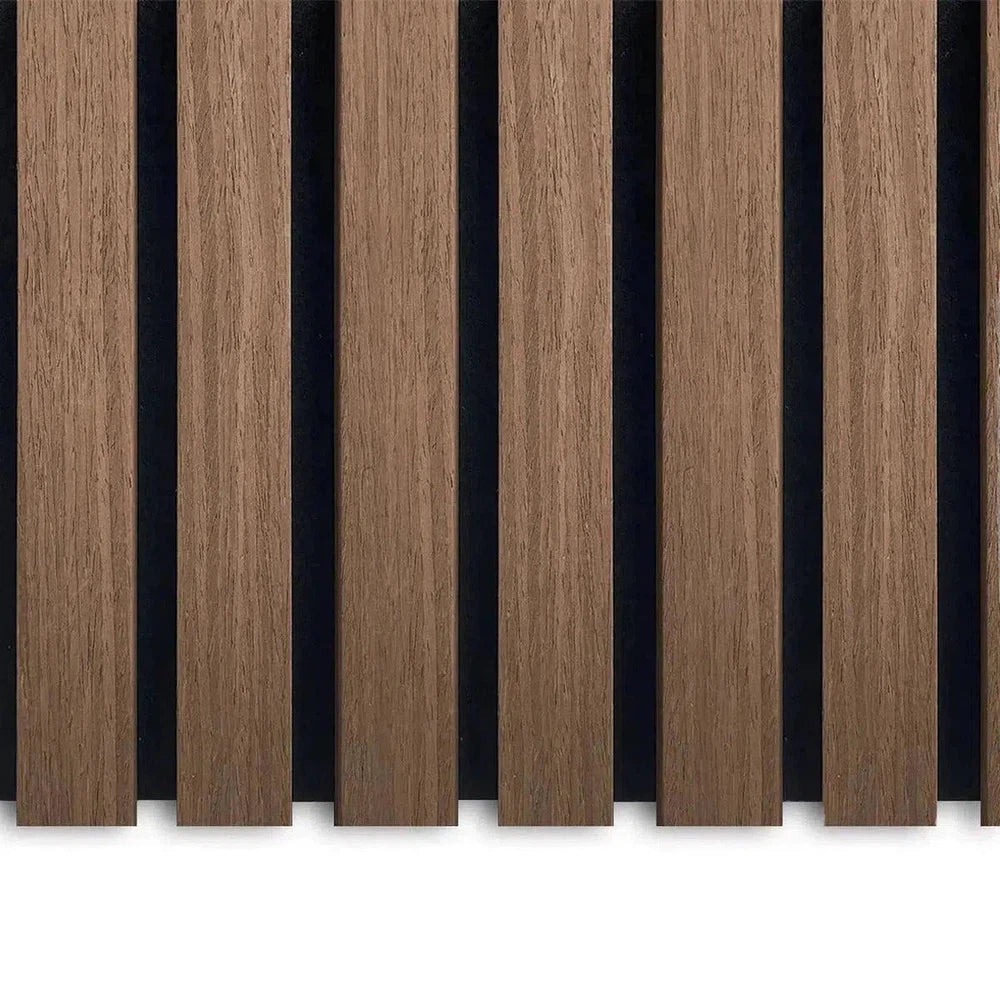
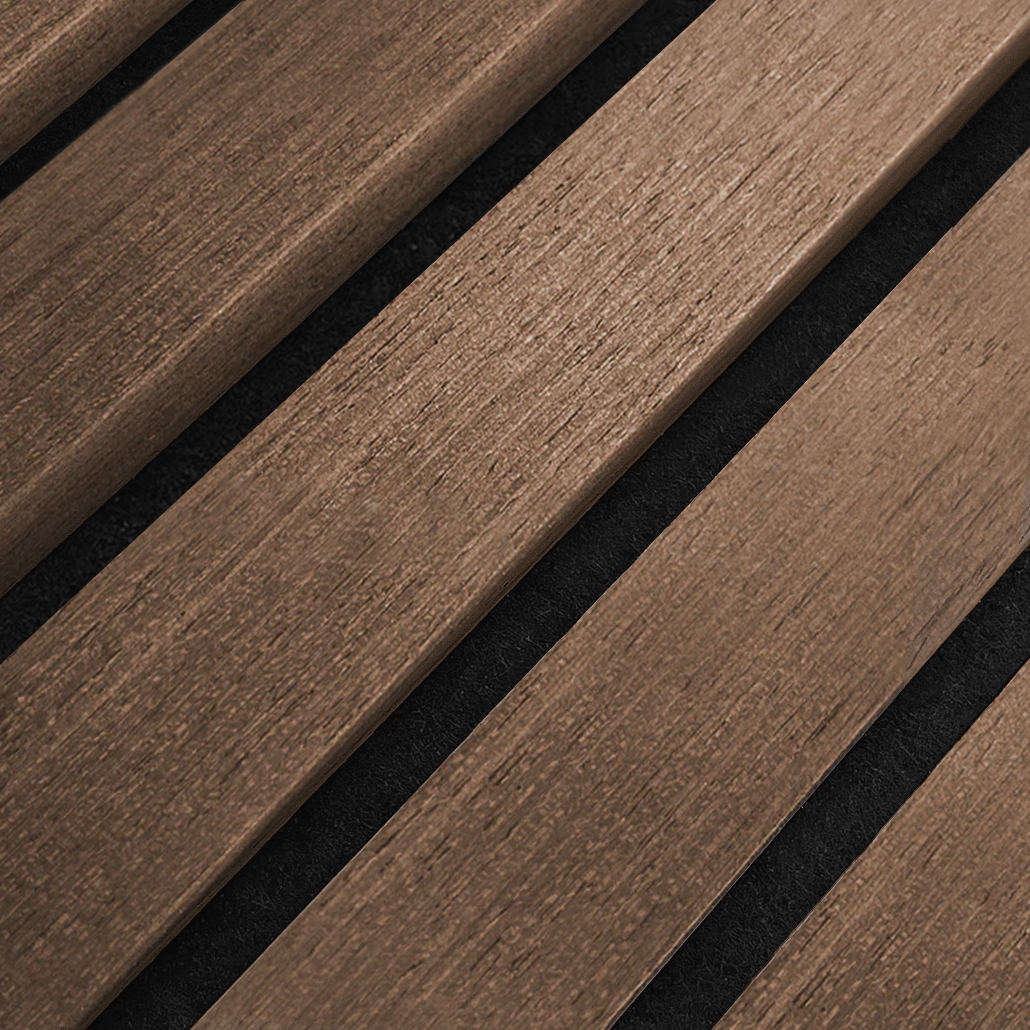
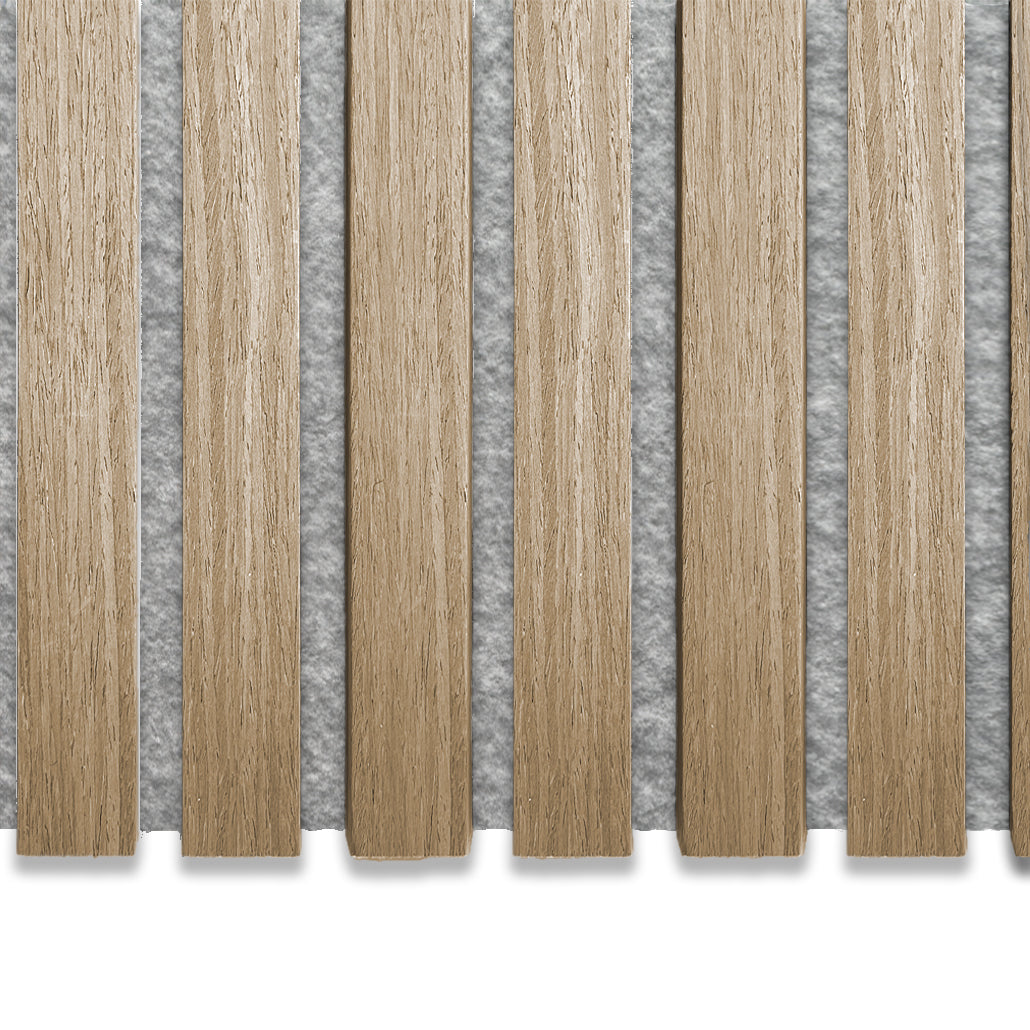
Natural Oak - the safe pick. Natural Oak wall panels carry the lightest of the oak finishes with a 3-sided real wood veneer face, and they read as neutral against almost any bedding colour. The felt backing sits behind every slat, so this isn't a decorative-only option. Verdict: Buy - this is the finish to pick if you're unsure and want the wall to still work after a redecorate.
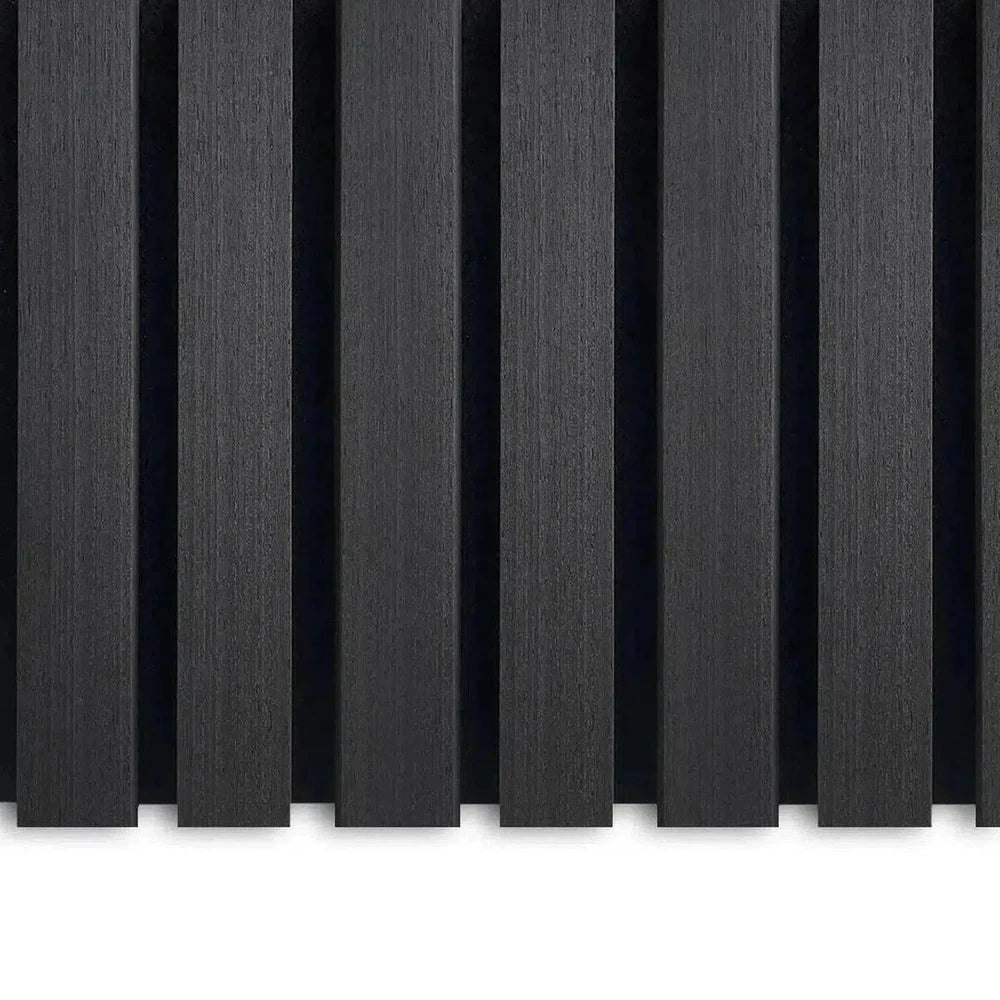
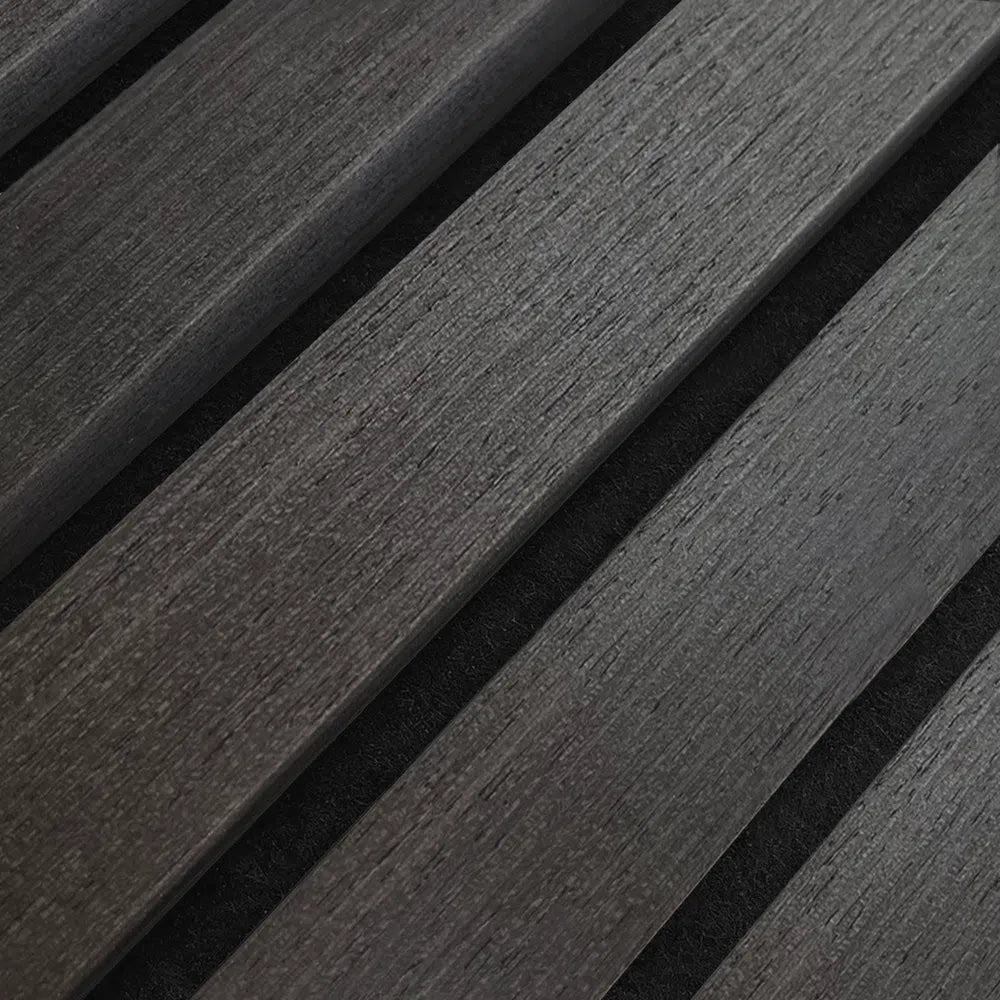
Black Oak - the moody pick. Black Oak wall panels suit a single headboard wall in a bedroom that already gets good daylight, and the dark tone hides scuffs and dust better than lighter finishes over 2026's longer panel lifespan. It's the strongest choice for a hotel-style feature wall look. Verdict: Buy for a single accent wall, Skip if you're covering more than one wall in a small or north-facing room.
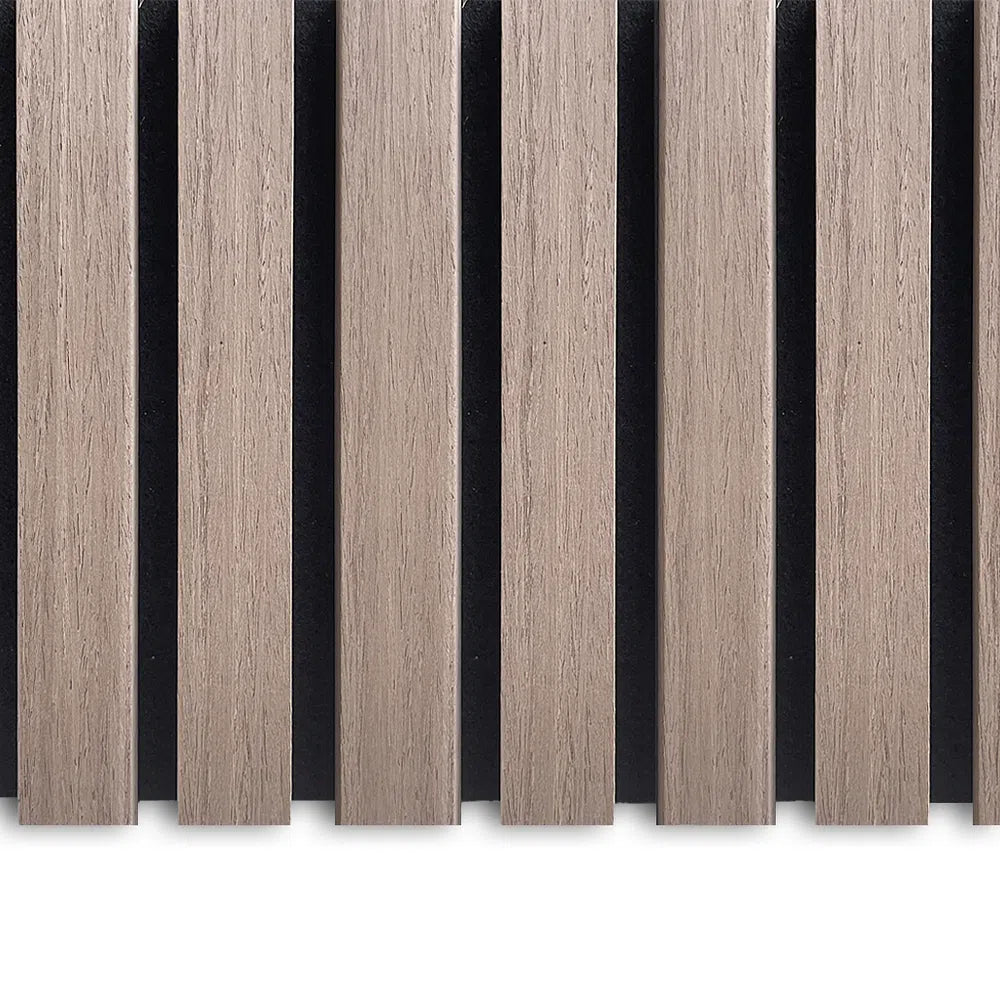
Smoked Oak - the feature-wall specialist. Smoked Oak wall panels sit between Natural and Black Oak in tone, with a warmer grain that photographs well under warm LED lighting. It works best as a chimney breast or headboard treatment rather than wall-to-wall coverage in rooms under 3m wide. Verdict: Buy for a feature wall, Consider for full-room coverage.
Grey Oak - the minimalist's choice. Grey Oak keeps the same 3-sided veneer and felt-backed construction as the rest of the range but in a cooler, more neutral tone that suits a Scandinavian or Japandi-style bedroom. It doesn't dominate a small room the way Black Oak can. Verdict: Consider if your bedding and furniture already lean neutral or cool-toned.
What to avoid
- Printed veneer slat panels sold as "acoustic" - if the listing doesn't mention a felt backing specifically, assume it's decorative only and won't reduce echo behind the bed.
- 300cm panels in a standard-height bedroom - you'll cut off 60cm or more per panel, which wastes material and leaves an awkward offcut pattern at the ceiling line.
- Wall-to-wall dark finishes in a small north-facing room - Black Oak and Smoked Oak look striking on a single wall but can make a compact bedroom feel noticeably darker when used on every wall.
Verdict comparison
| Finish | Tone | Best bedroom use | Format available | Verdict |
|---|---|---|---|---|
| Natural Oak | Light, neutral | Any wall, any room size | 240cm / 300cm | Buy |
| Black Oak | Dark, dramatic | Single headboard/feature wall | 240cm / 300cm | Buy (single wall) |
| Smoked Oak | Warm mid-tone | Chimney breast, feature wall | 240cm / 300cm | Buy (feature use) |
| Grey Oak | Cool, neutral | Scandinavian/Japandi bedrooms | 240cm / 300cm | Consider |
FAQ
What's the best acoustic slat wall panel for a bedroom?
Natural Oak is the safest all-round pick for acoustic slat wall panels bedroom projects because its neutral tone works with most bedding and furniture. For a single feature wall, Black Oak or Smoked Oak reads more dramatic without needing to cover the whole room.
Do slat wall panels actually reduce echo in a bedroom?
Yes, when the panel has a felt backing behind the wood slats, not just decorative grooves. The felt absorbs mid and high-frequency reflections at the wall surface, which is where bedroom echo is loudest.
Is 240cm or 300cm better for a bedroom feature wall?
240cm suits standard UK bedroom ceilings around 2.3m to 2.4m with minimal cutting. 300cm only makes sense in taller rooms such as loft conversions or new-build bedrooms with higher ceilings.
Can you fit acoustic wall panels behind a headboard?
Yes, and it's one of the most common placements because the headboard wall is usually the hardest, most reflective surface in the room. Panels fix directly to plasterboard or a stud wall with construction adhesive.
Are dark oak panels too dark for a small bedroom?
Black Oak and Smoked Oak can make a small or north-facing bedroom feel tighter if used on every wall. Restrict dark finishes to a single feature wall in compact rooms and use a lighter finish like Natural Oak or Grey Oak elsewhere.
Do slat wall panels need special fixings for plasterboard?
Most panels bond to plasterboard with a suitable panel adhesive rather than screws, provided the wall is flat and clean. A stud wall gives a stronger fix if you want to hang anything heavy from the panelled section later.
How many panels do I need for a standard bedroom wall?
A typical UK bedroom headboard wall around 3m to 3.6m wide needs roughly 5 to 6 panels in the 240cm height format, depending on panel width and how much of the wall you're covering.
Does the finish tone affect how much sound the panel absorbs?
No, absorption comes from the felt backing and slat structure, not the wood veneer colour. Choose the tone for the room's light and style, and choose the felt-backed construction for the acoustic result.
One last thing
Most buyers default to Natural Oak because it's the safest choice on paper, but the biggest difference in how a bedroom actually feels comes from restraint - one panelled wall with felt backing behind the bed does more for both sound and mood in 2026 than four panelled walls of the same finish, and it costs less to get wrong.