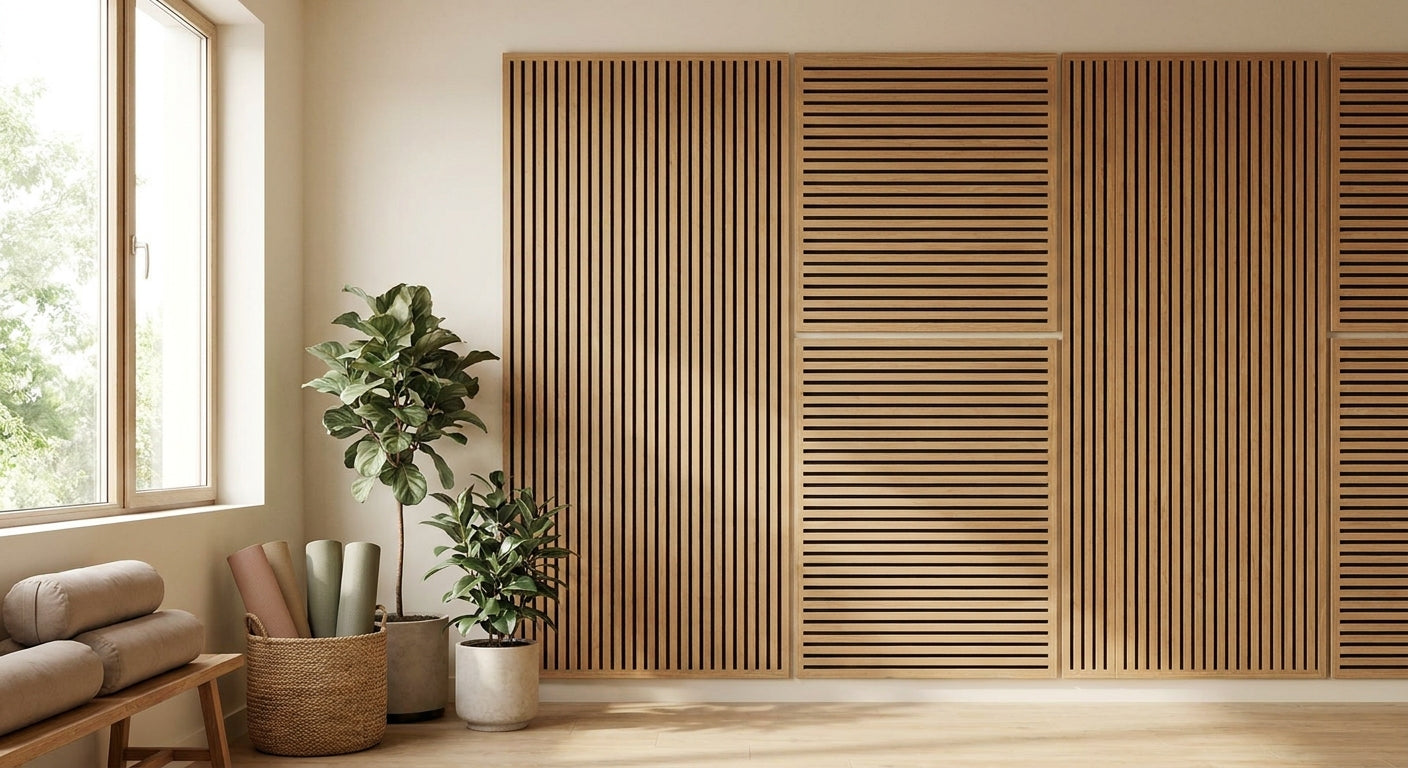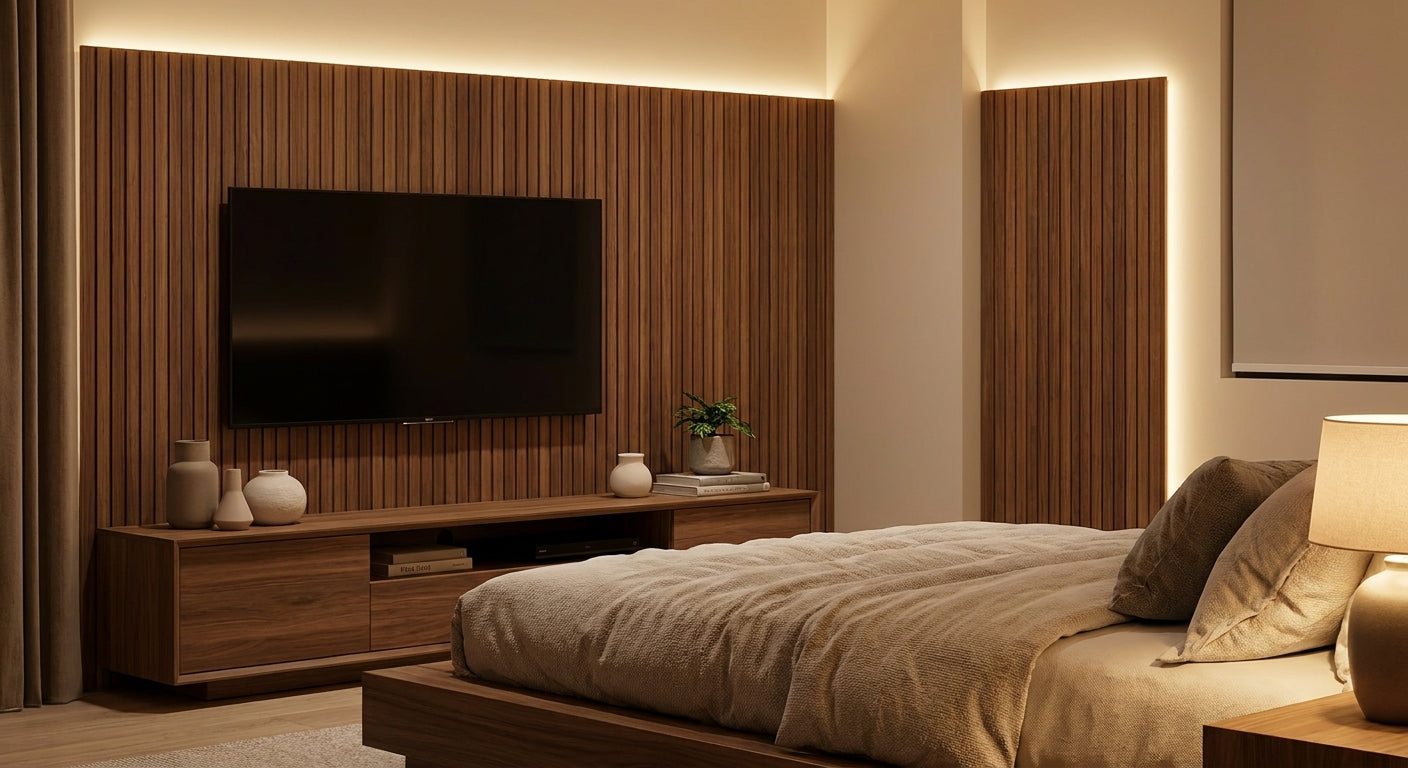
Mounting a TV against bare plaster or a stark feature wall in the bedroom leaves you with a flat, cold focal point and a room that echoes every notification chime. Wooden wall panels for bedroom TV wall use fix that by giving the screen a warm, textured backdrop while cutting reflected sound at the same time.
TL;DR
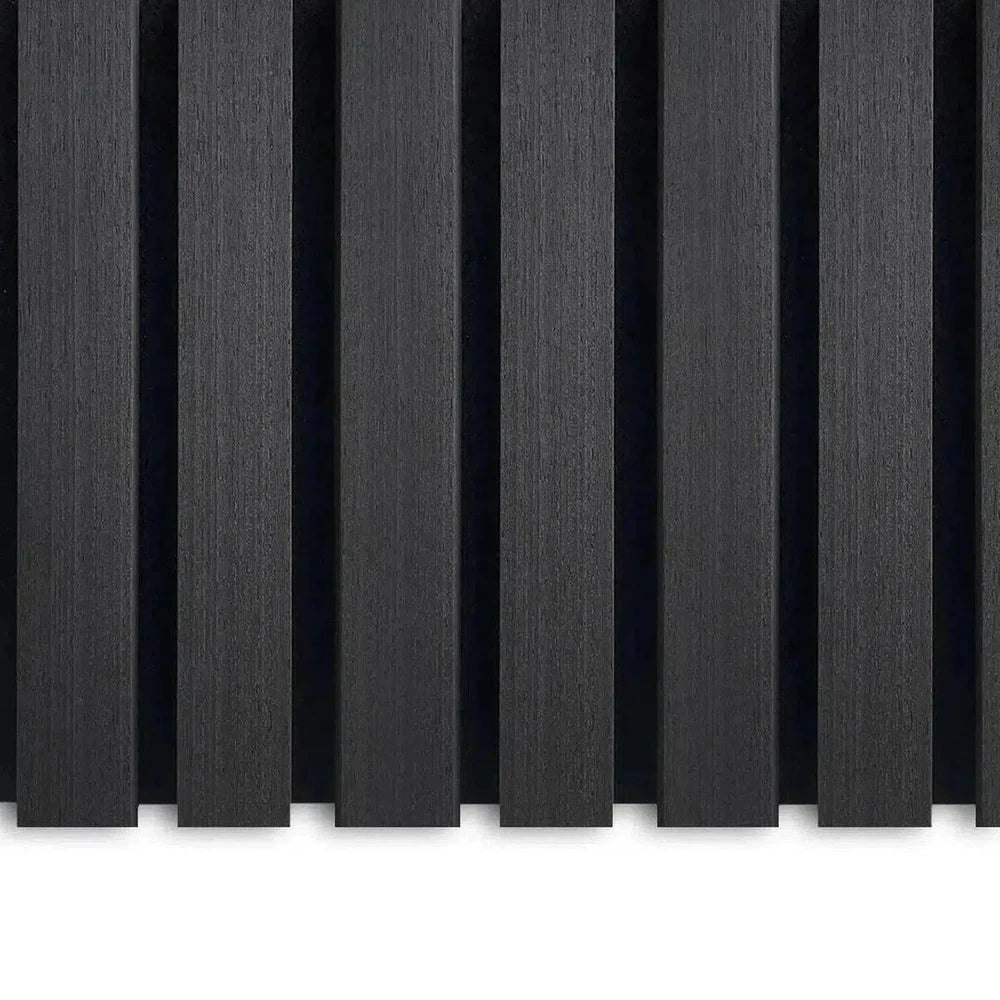
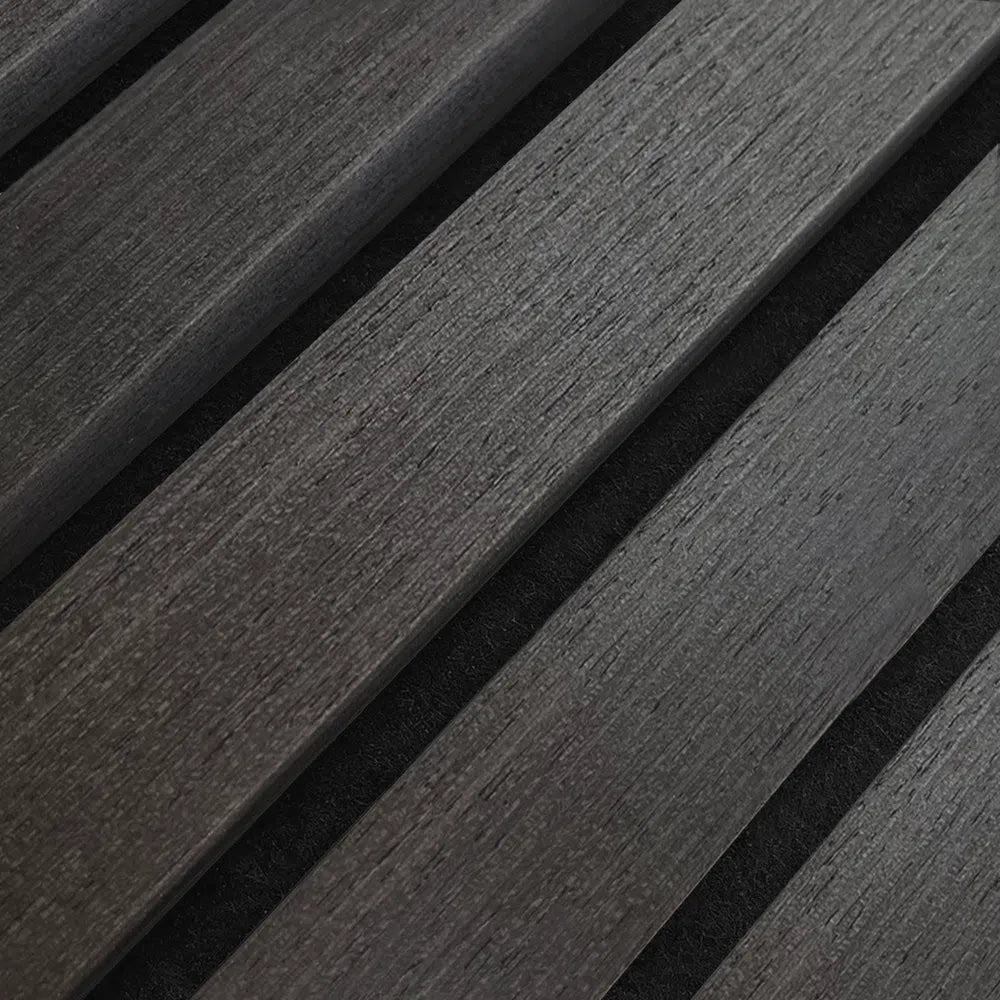
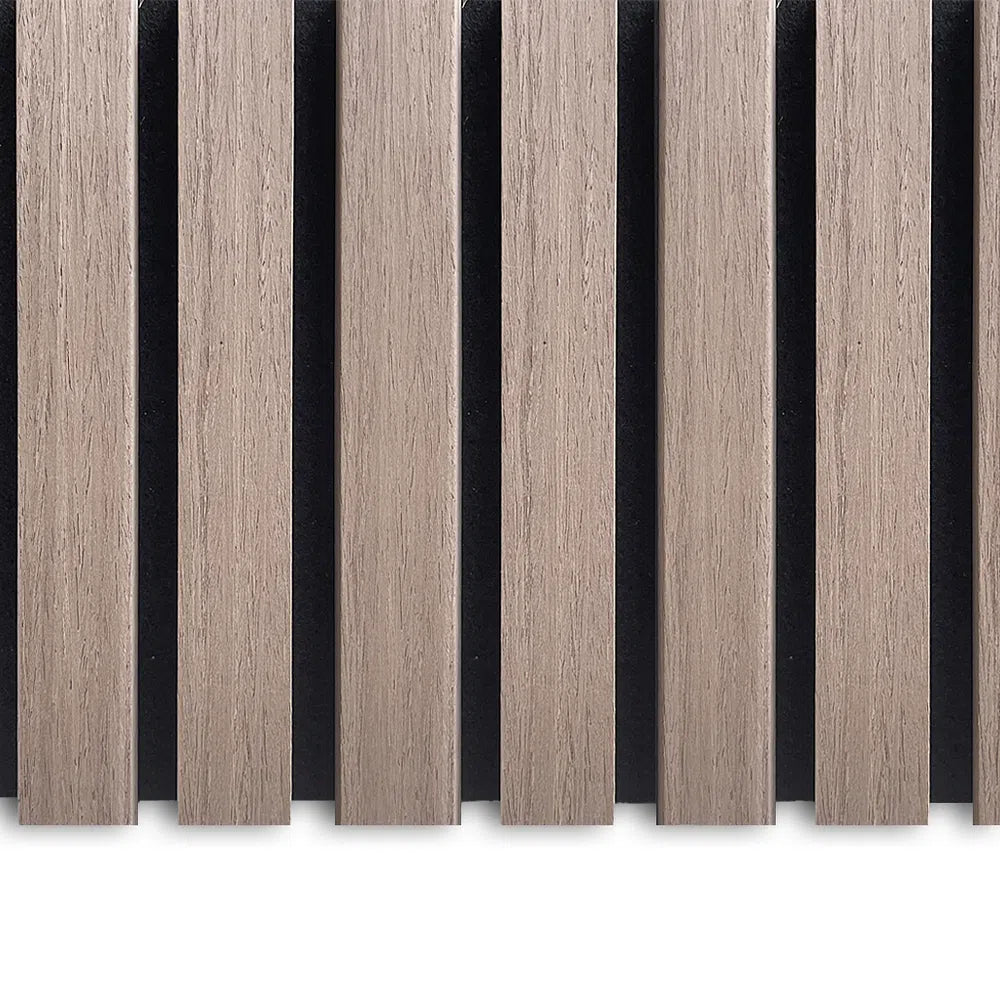
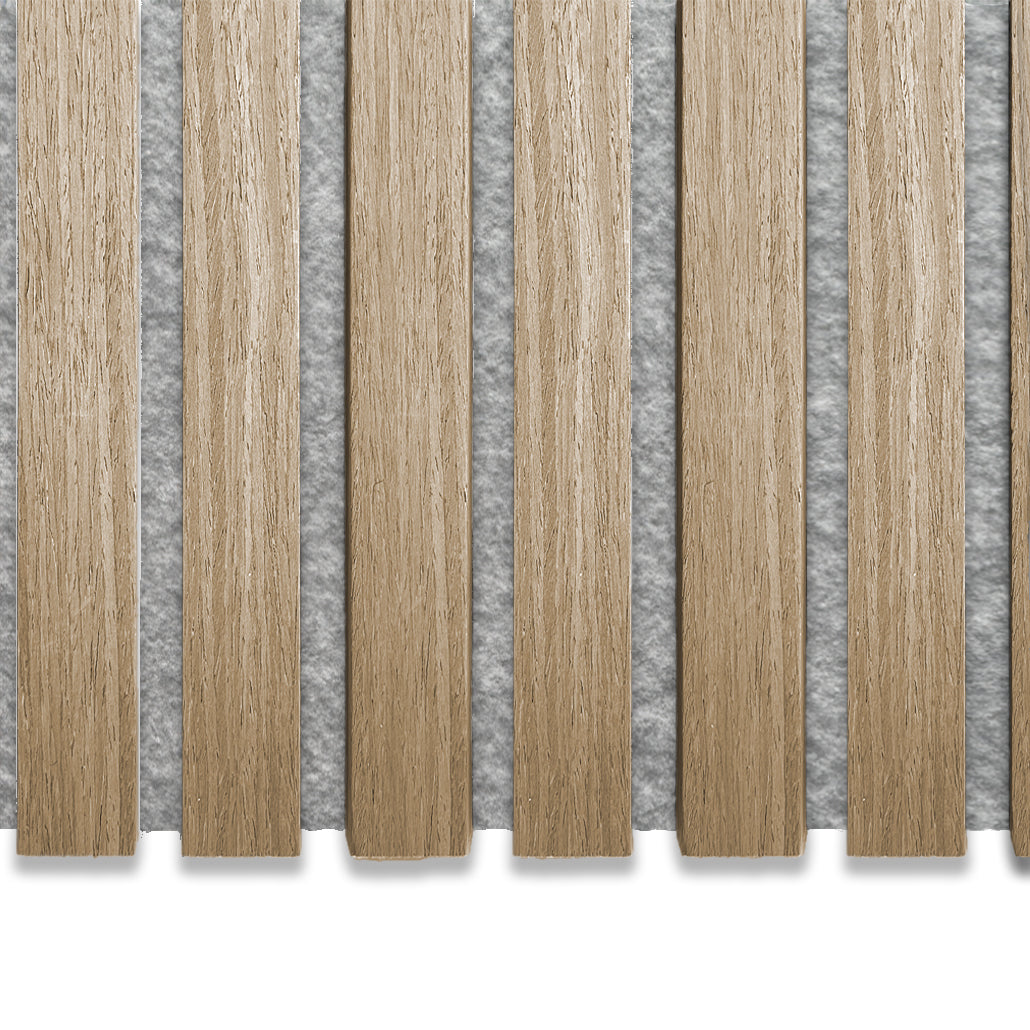
Wooden wall panels for a bedroom TV wall work best when they combine a real wood veneer face with an acoustic felt backing rather than a printed laminate. For a moody, cinema-style bedroom, Wooden Wall Panel Black Oak is the strongest all-round pick in 2026: it hides cable shadows well and reads as a deliberate design choice rather than a dark patch behind glass. If you want something lighter, Wooden Wall Panel Natural Oak keeps a small bedroom feeling airy. Skip thin MDF slat panels with no felt layer — they look identical in photos but do nothing for the muffled-TV-dialogue problem that drives most people to panel this wall in the first place.
Why this matters
A bedroom TV wall is usually the largest flat surface in the room, and it sits directly opposite where you sleep and where sound bounces straight back at you. Bare plasterboard reflects roughly 95-99% of the sound hitting it, which is why dialogue on a wall-mounted TV can sound harsh or unclear even at low volume. Slat-style wooden wall panels with an acoustic felt backing absorb a meaningful share of that reflected sound instead of bouncing it straight back into the bed. That's the functional case. The visual case is just as strong in 2026 — panelled TV walls have become the default upgrade for anyone tired of the single-painted-wall-plus-floating-shelf bedroom look.
Who this is for
This guide is for homeowners and renters planning a feature wall behind a wall-mounted or console-mounted bedroom TV, typically in a 240cm to 300cm-wide wall bay, who want the panel to do double duty: look intentional in daylight and photos, and quiet the room enough that late-night viewing doesn't feel like sitting inside a drum. If your bedroom already has carpet, curtains, and a fabric headboard soaking up sound, plain veneer panels without felt backing might be fine — but most bedrooms with a TV wall are hard-floored or minimally dressed, and that's where acoustic backing earns its keep.
What to look for in wooden wall panels for a bedroom TV wall
Real wood veneer, not a printed foil
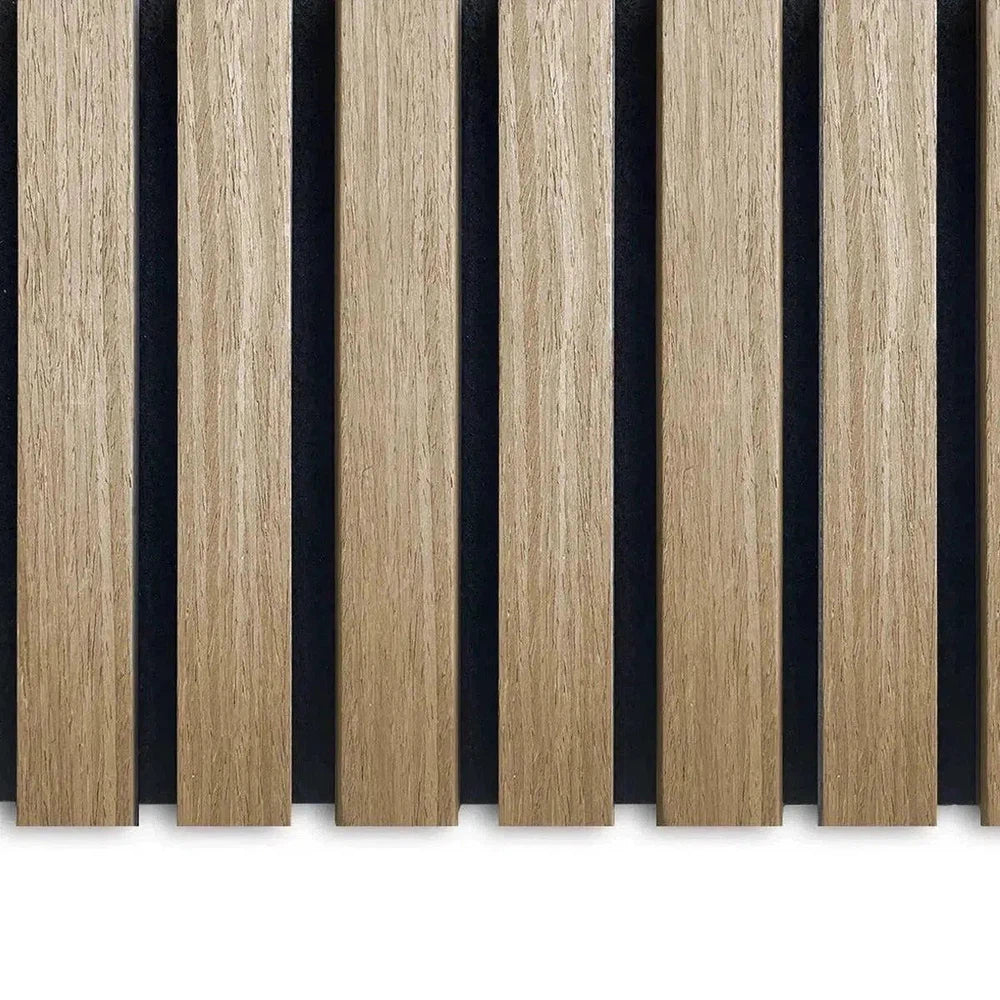
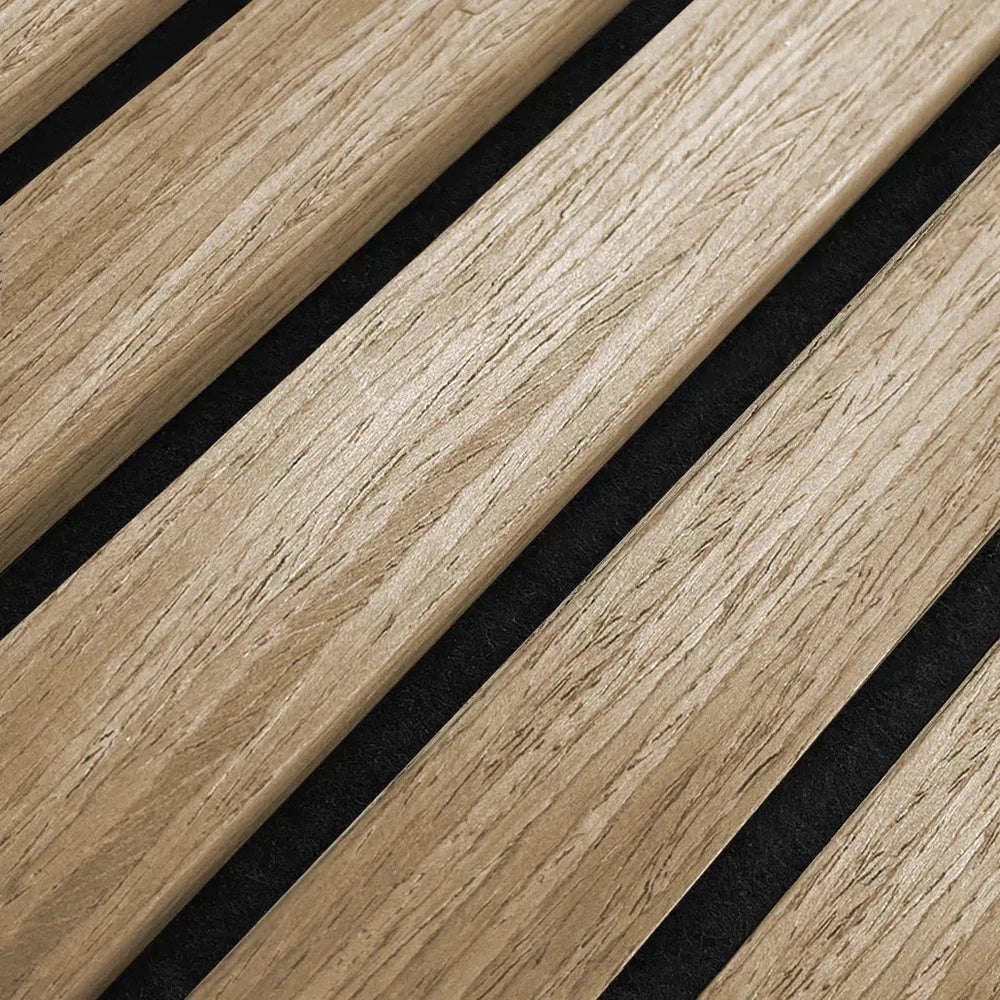
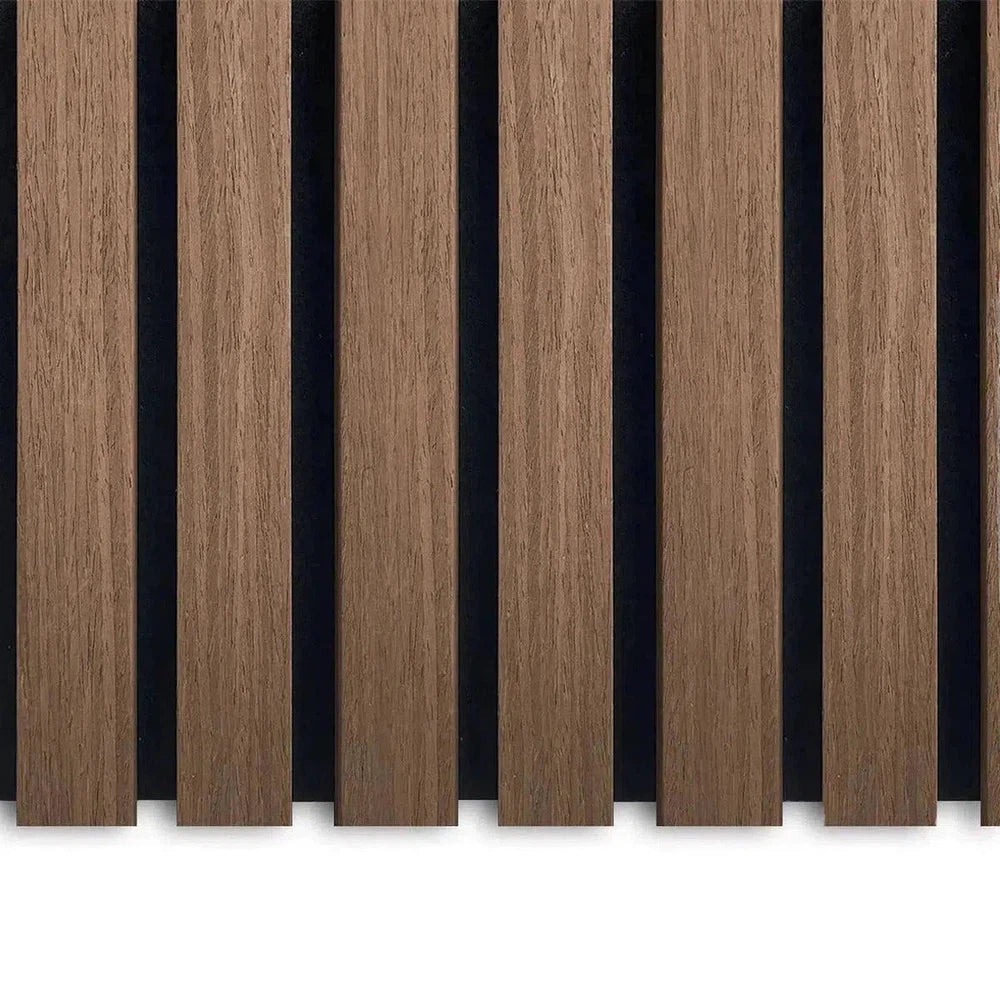
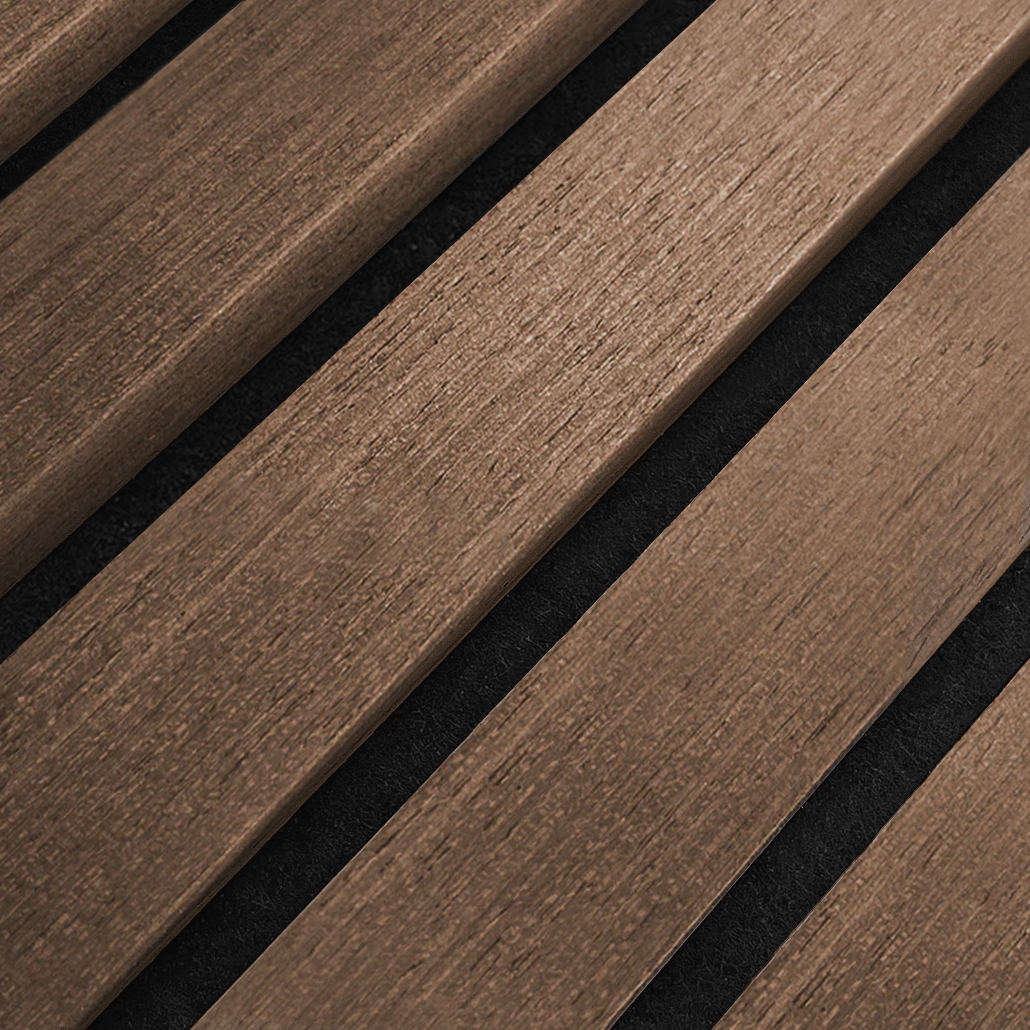
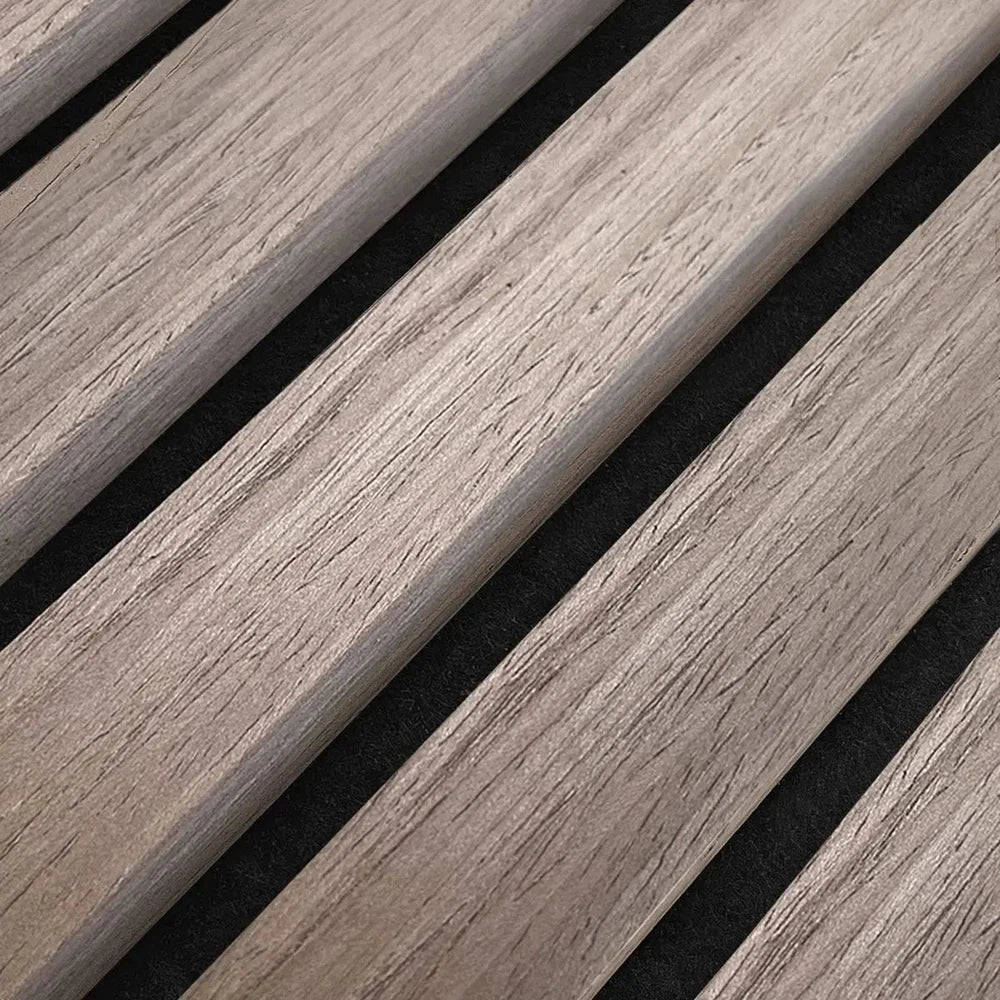
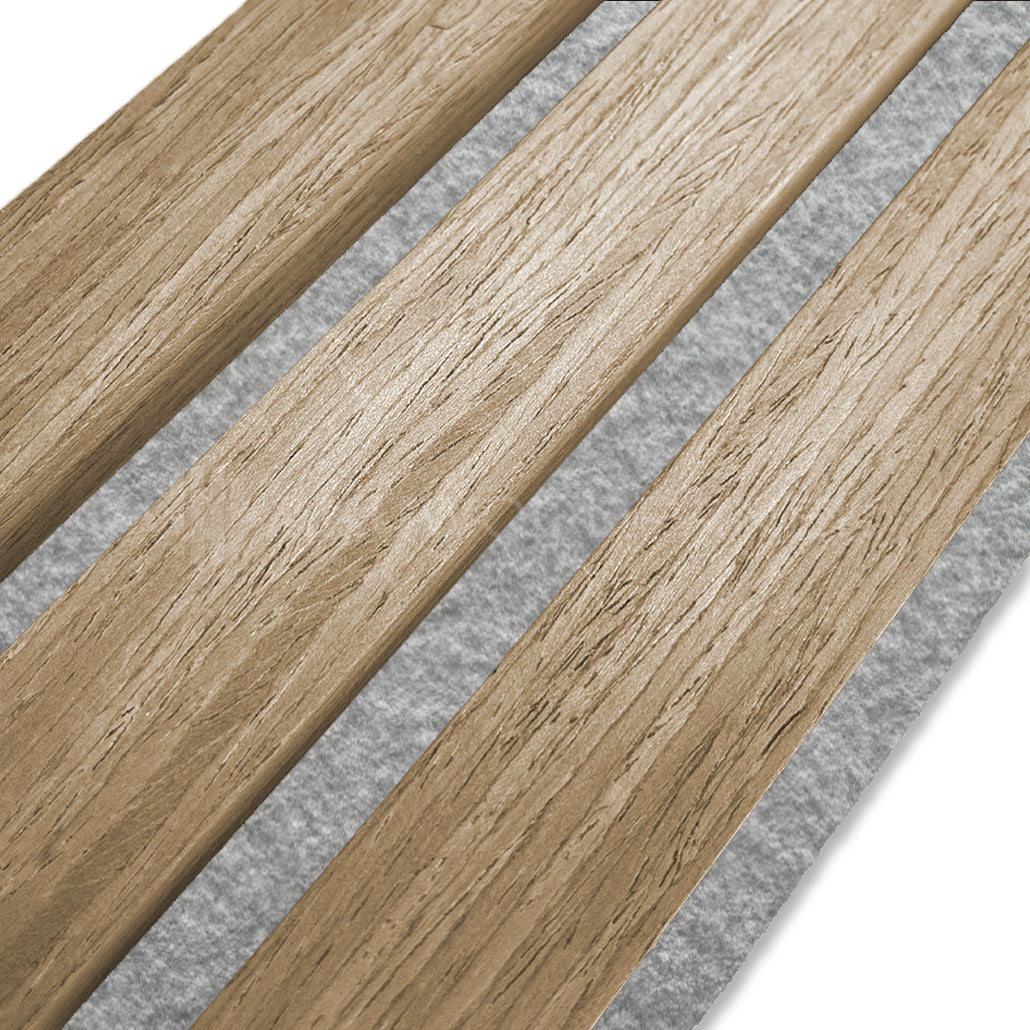
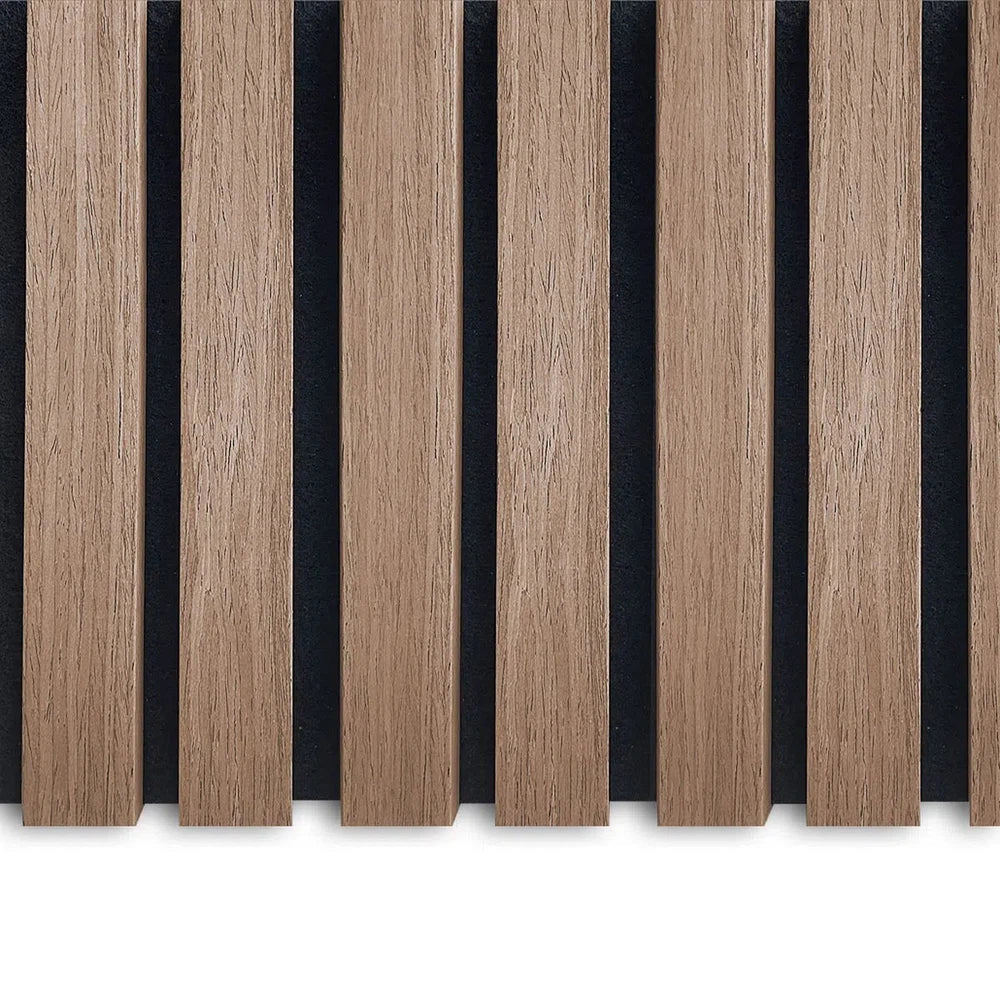
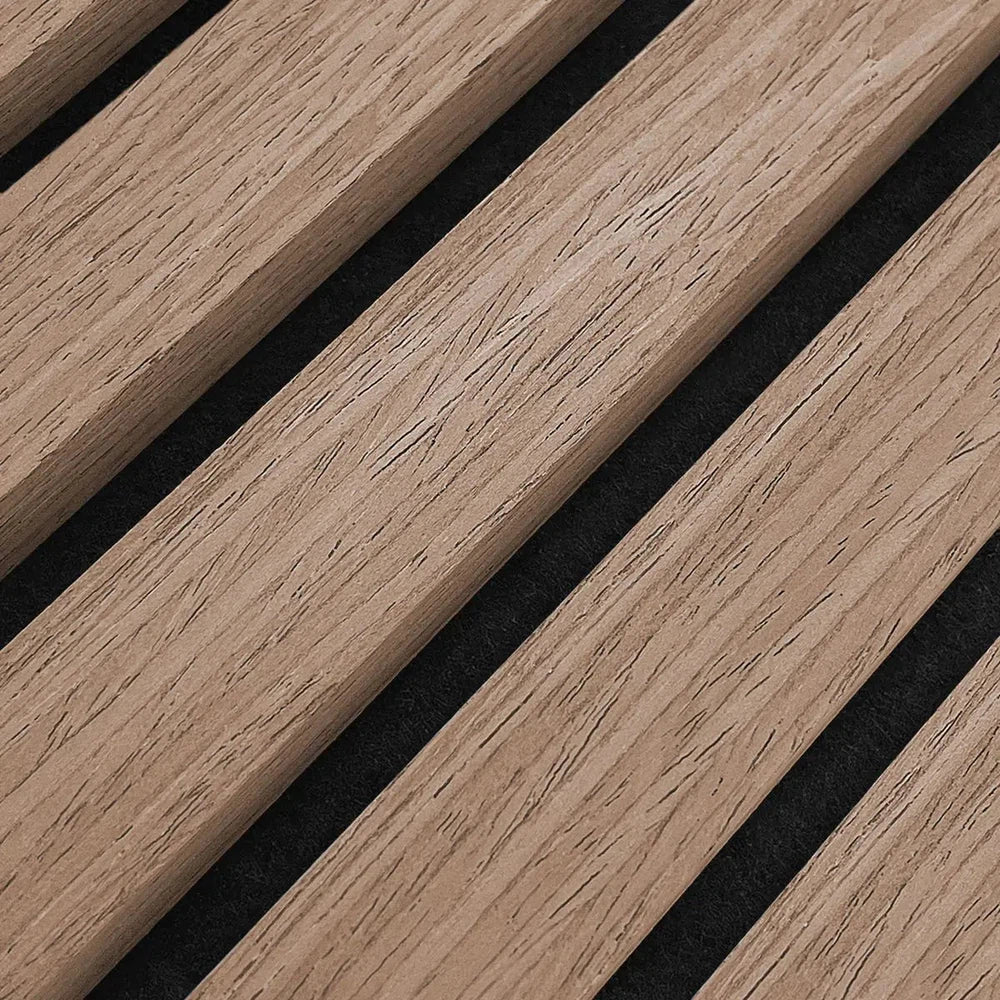
A 3-sided real wood veneer face shows natural grain variation panel to panel, so the wall doesn't read as one repeated printed pattern once the TV, cables, and a wall mount break up the surface. Printed foil finishes fade unevenly under direct light from a TV screen running for hours each evening, and they scratch to reveal plastic underneath rather than more wood.
Acoustic felt backing
This is the difference between a decorative panel and one that actually improves how TV dialogue sounds in the room. Felt-backed slat panels absorb mid and high frequencies — exactly the range human speech sits in — instead of reflecting them back toward the bed.
Panel size matched to your wall height
Akuwood Panel's slat panels come in 240cm and 300cm formats. A standard UK bedroom ceiling height of around 2.4m works cleanly with the 240cm panel with minimal cutting, while taller rooms or floor-to-ceiling designs suit the 300cm format better.
Cable and mount compatibility
Check how the panel handles a recessed TV mount and cable routing before you buy. Panels that can be cut and rejoined around a bracket without visible seams save you a second trip for end pieces.
Colour against your existing furniture
Darker finishes like black oak or smoked oak hide the TV bezel and cable shadow better than pale finishes, which is worth weighing if your TV stays visible rather than being fully recessed.
Fixing method for your wall type
Stud walls, plasterboard, and solid brick each need a different fixing approach, and panel glue alone won't hold weight-bearing brackets near a TV mount — plan the mounting hardware separately from the panel fixing.
Top picks for a bedroom TV wall
Wooden Wall Panel Black Oak — the cinema pick. Its 3-sided wood veneer face runs dark enough that a wall-mounted 55-65 inch TV with a black bezel almost disappears into the panel line, and the felt backing behind it absorbs sound instead of bouncing dialogue back at the bed. Available in the 240cm and 300cm formats to match most UK bedroom ceiling heights. Buy if you want the wall to look designed around the TV rather than interrupted by it. Wooden Wall Panel Black Oak
Wooden Wall Panel Natural Oak — the safe pick. Lighter grain keeps a small or north-facing bedroom from feeling boxed in, and it pairs with almost any existing furniture without a repaint. The trade-off is that cable shadows and TV bezels show up more against the paler wood. Buy for bedrooms under roughly 12 square metres where you want the panel to open the room up rather than darken it. Wooden Wall Panel Natural Oak
Wooden Wall Panel Smoked Oak — the middle ground. Sits between black oak and natural oak in tone, dark enough to frame a TV without committing to a fully moody room. Works well when the rest of the bedroom is already mid-tone (grey walls, oak furniture) and you don't want the feature wall to clash. Consider if your existing bedroom palette is already warm-neutral rather than stark white or dark. Wooden Wall Panel Smoked Oak
Wooden Wall Panel Walnut — the statement pick. Richer, redder grain than oak finishes, and it reads as a premium material choice in photos rather than a budget panel job. Consider for a primary bedroom where the TV wall is also the first thing seen from the door, since the grain draws the eye more than oak does. Skip it if you want the panel to recede rather than stand out.
Wooden Wall Panel Mocca — the warm-dark alternative to black oak. Reads brown rather than black-grey, which suits bedrooms with warm wood flooring or a wooden bed frame already in the room. Consider as a softer alternative if full black oak feels too stark for your existing decor.
What to avoid
- Thin printed-laminate slat panels with no acoustic layer. They photograph identically to real veneer panels online but do nothing to soften TV audio, and the print wears through at edges within a year or two of contact.
- Panels bought without checking felt backing colour. A grey felt backing shows through pale, thin veneer in certain light and looks unfinished around cut edges near a TV mount.
- Fixing panels with adhesive alone around a load-bearing TV bracket. Glue holds the panel to the wall; it does not hold a TV mount's weight, and skipping proper bracket fixing risks both the panel and the screen.
If your bedroom leans dark and dramatic already, the detailed breakdown in best black oak wall panels for moody bedroom walls goes deeper into pairing black oak with lighting and furniture than this guide covers.
Verdict comparison
| Panel | Tone | Best for | Verdict |
|---|---|---|---|
| Black Oak | Dark, near-black | Cinema-style bedrooms, TV bezel disguise | Buy |
| Natural Oak | Light, warm | Small or dim bedrooms needing airiness | Buy |
| Smoked Oak | Mid-tone | Neutral existing palettes | Consider |
| Walnut | Rich, red-brown | Statement primary bedrooms | Consider |
| Mocca | Warm brown-dark | Warm wood-toned bedrooms | Consider |
FAQ
What's the best wooden wall panel finish for a bedroom TV wall? Black Oak and Natural Oak cover the two most common bedroom needs in 2026 — Black Oak hides the TV frame and cable shadow, Natural Oak keeps a smaller room feeling open. Choose based on how dark your bedroom already reads before you add the panel.
Do acoustic wooden panels actually reduce echo behind a TV? Yes, when the panel has a felt backing rather than being solid wood or MDF alone. The felt layer absorbs mid and high frequencies, which is the range TV dialogue sits in, rather than reflecting it back at the bed.
Is wood veneer better than printed laminate panels for a TV wall? Real 3-sided wood veneer shows natural grain variation and ages by wearing gracefully, while printed laminate fades unevenly under a TV running for hours daily and reveals plastic underneath once scratched.
Should I match the panel colour to my bed frame or the TV itself? Match to the room's existing furniture tone first — the TV bezel is usually black regardless, so a panel that clashes with your bed frame or flooring will look disjointed even if it flatters the TV.
Can I fit a TV mount directly into wooden slat panels? The mounting bracket should anchor into the stud or solid wall behind the panel, not the panel material itself, since panel glue and the slat structure aren't rated to carry TV weight on their own.
What size wooden panel do I need for a standard UK bedroom wall? The 240cm panel format suits the roughly 2.4m ceiling height common in UK bedrooms with minimal trimming, while the 300cm format suits taller rooms or full floor-to-ceiling designs.
How many panels does a typical bedroom TV wall need? Measure the wall width and height in centimetres and divide by the panel's coverage width, then add roughly 10% for cuts around the TV mount and any end pieces.
Does panel colour affect how big the bedroom feels? Darker finishes like Black Oak can make a wall feel like it recedes when paired with good lighting, but in a genuinely small bedroom, lighter finishes like Natural Oak tend to keep the space feeling larger.
One last thing
Most people buying wooden wall panels for a bedroom TV wall in 2026 focus entirely on colour and skip the felt-backing spec — then wonder six months later why the room still sounds harsh with the TV on. Check the felt backing before you check the wood tone; it's the part doing the actual acoustic work, and it's the part nobody notices until it's missing.