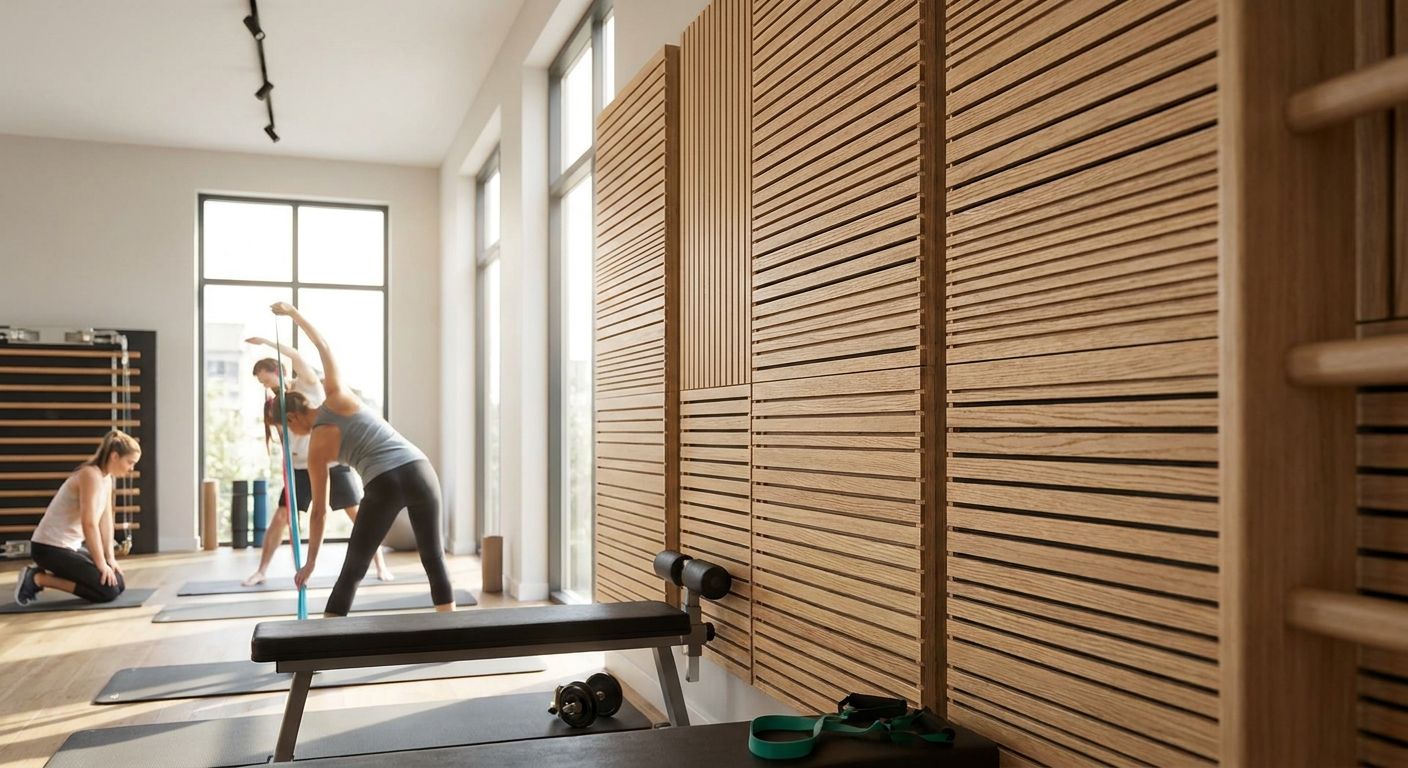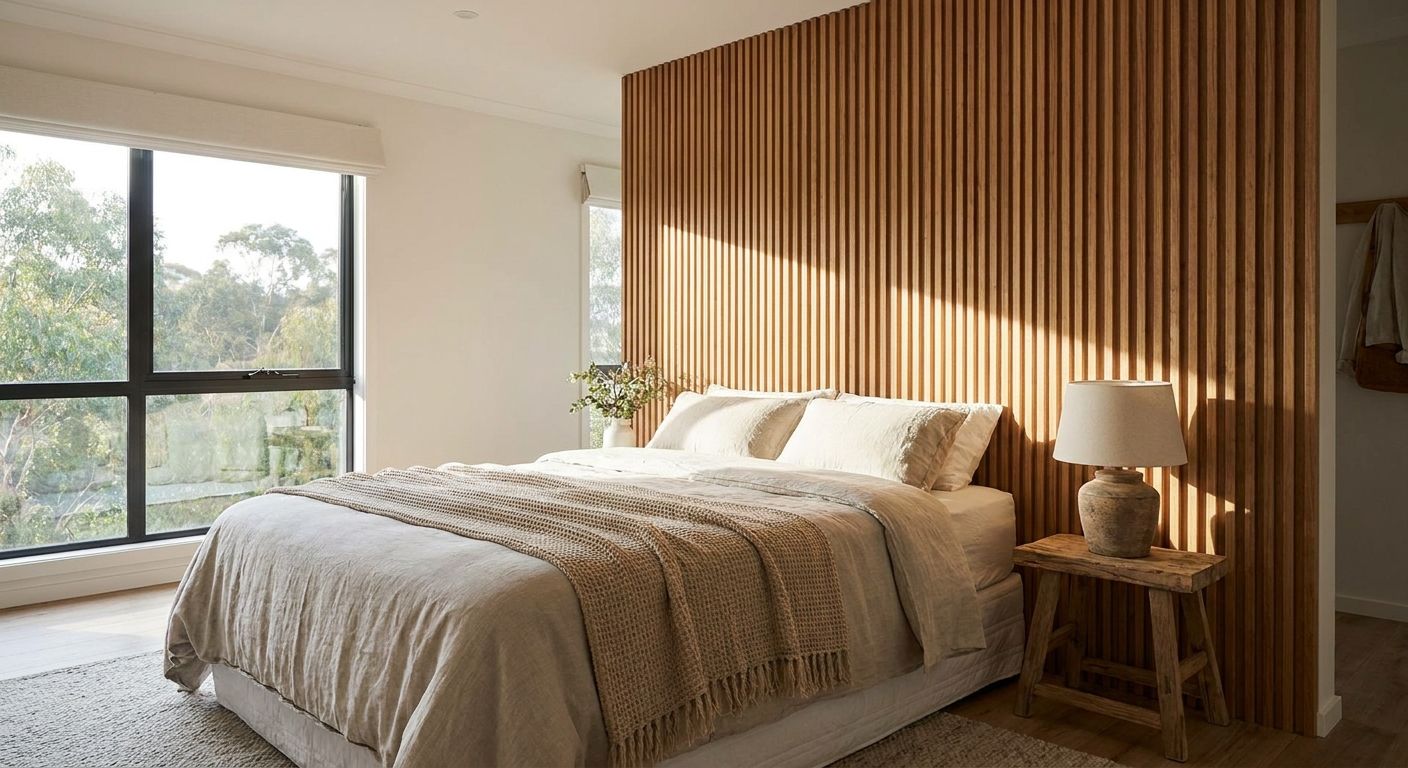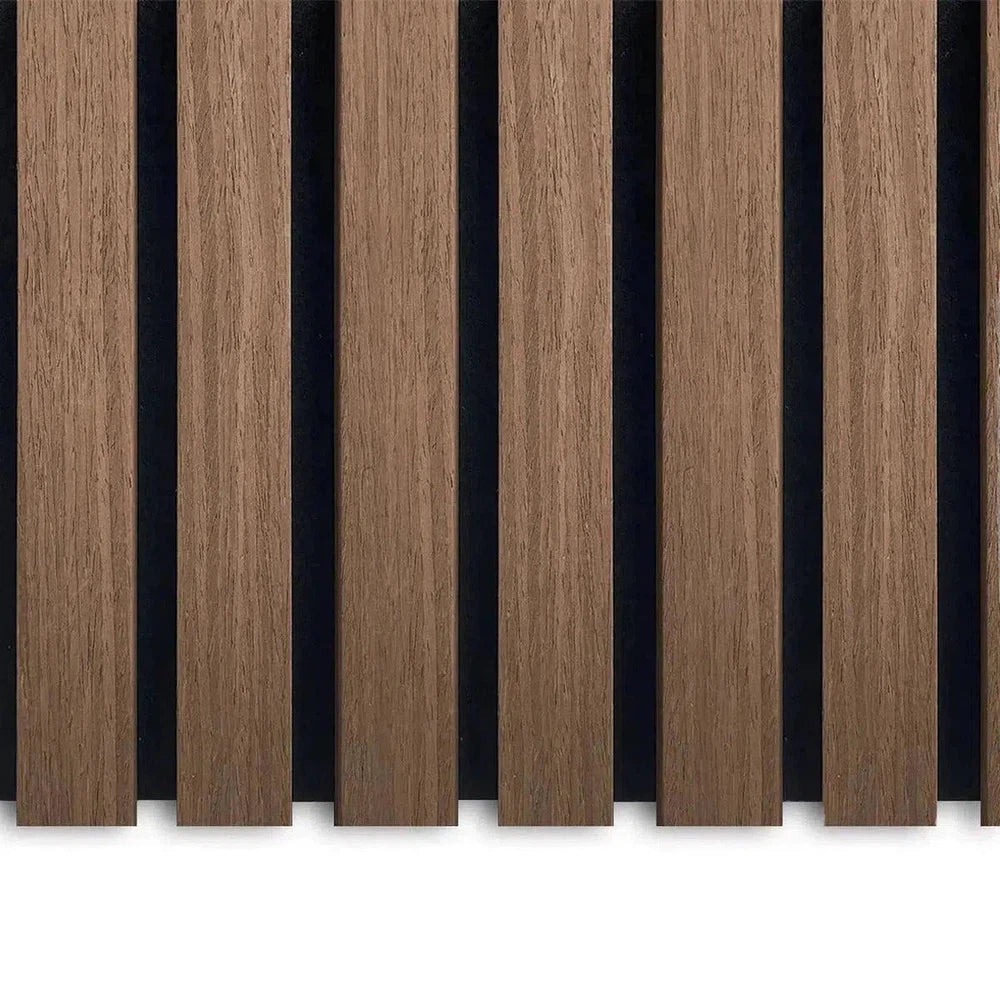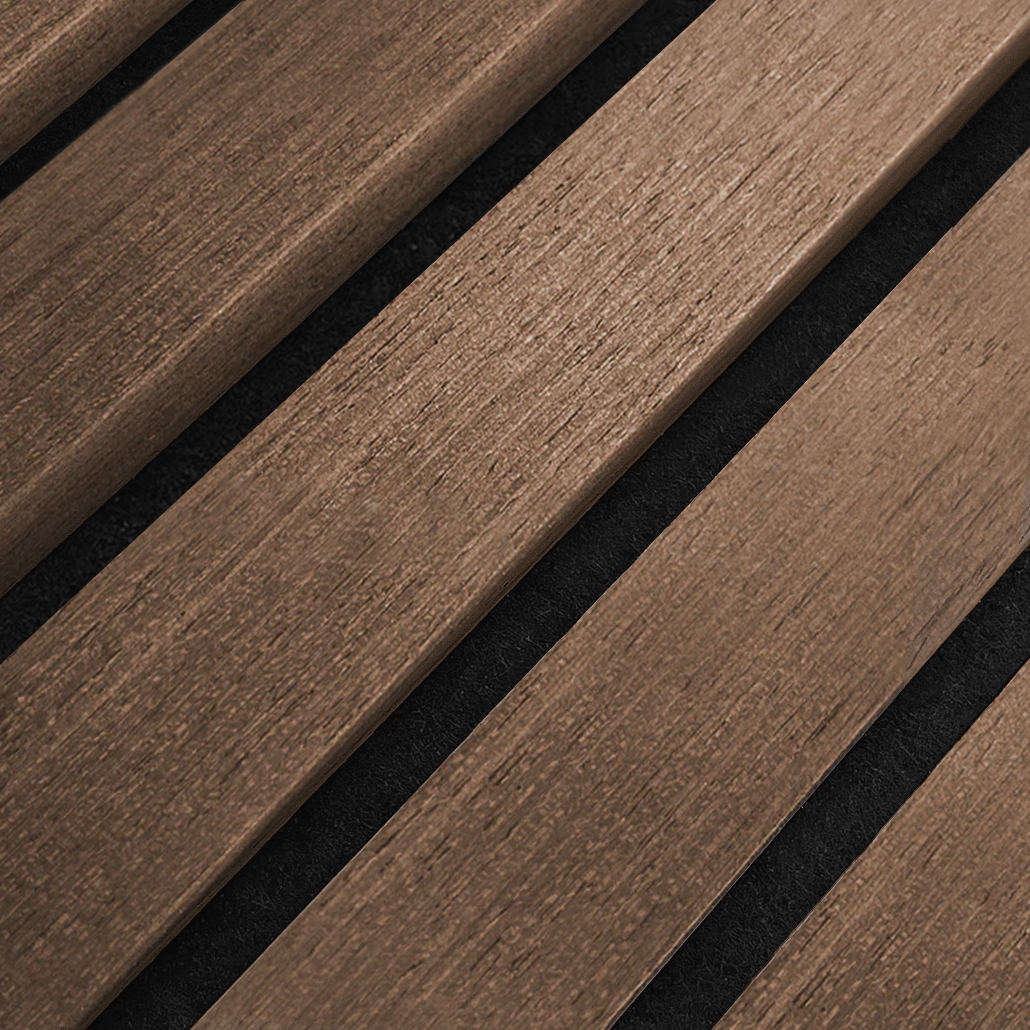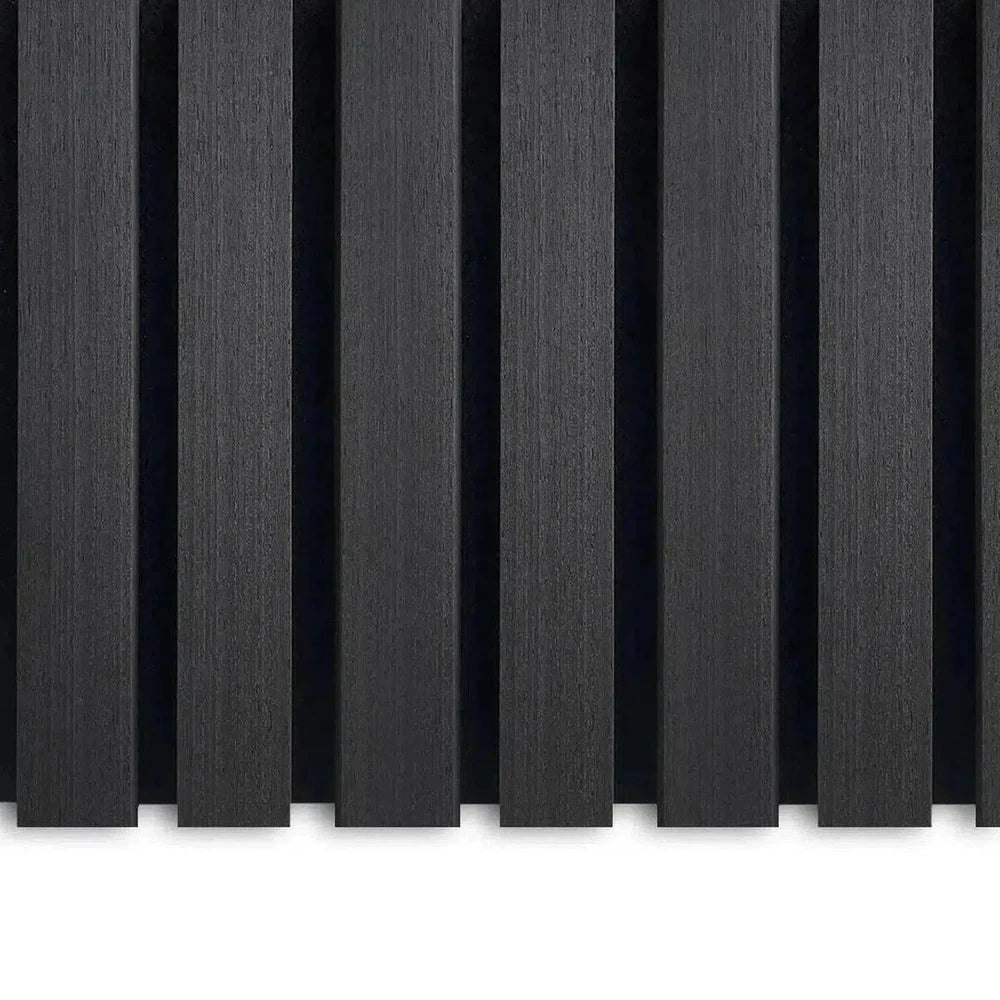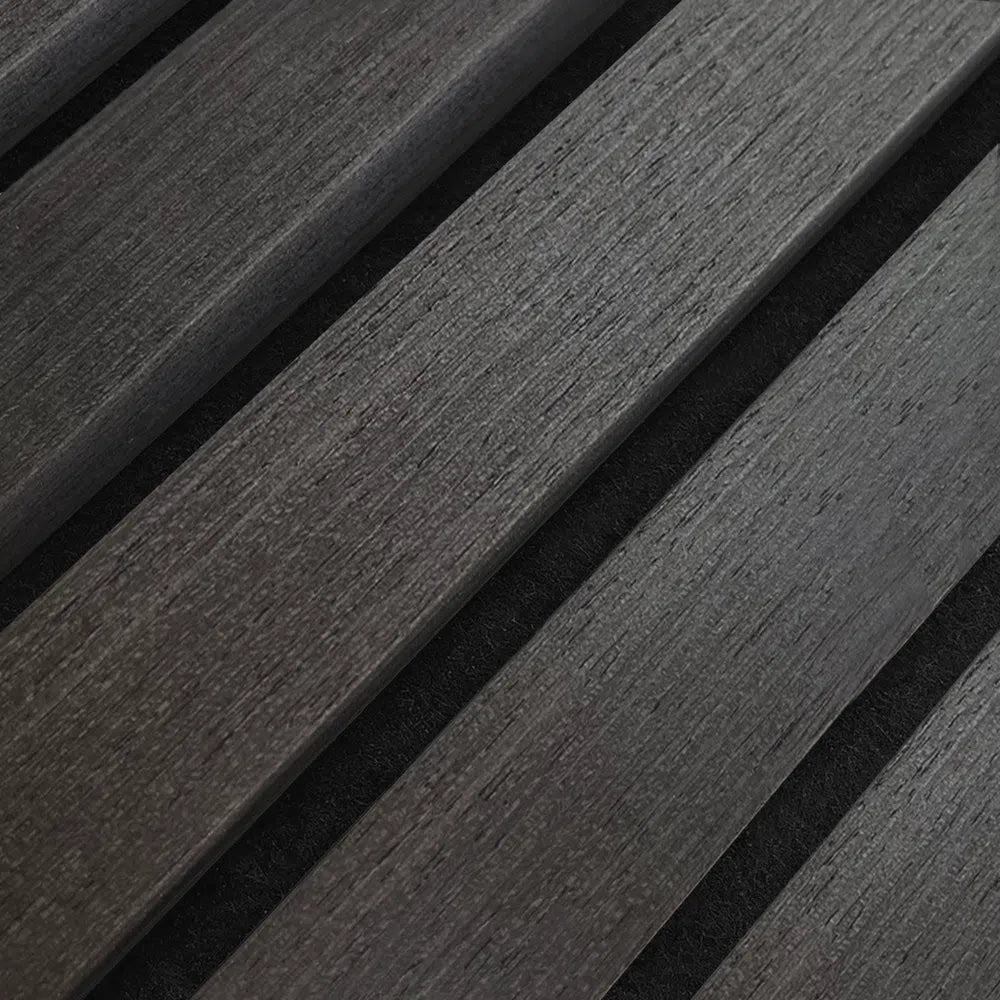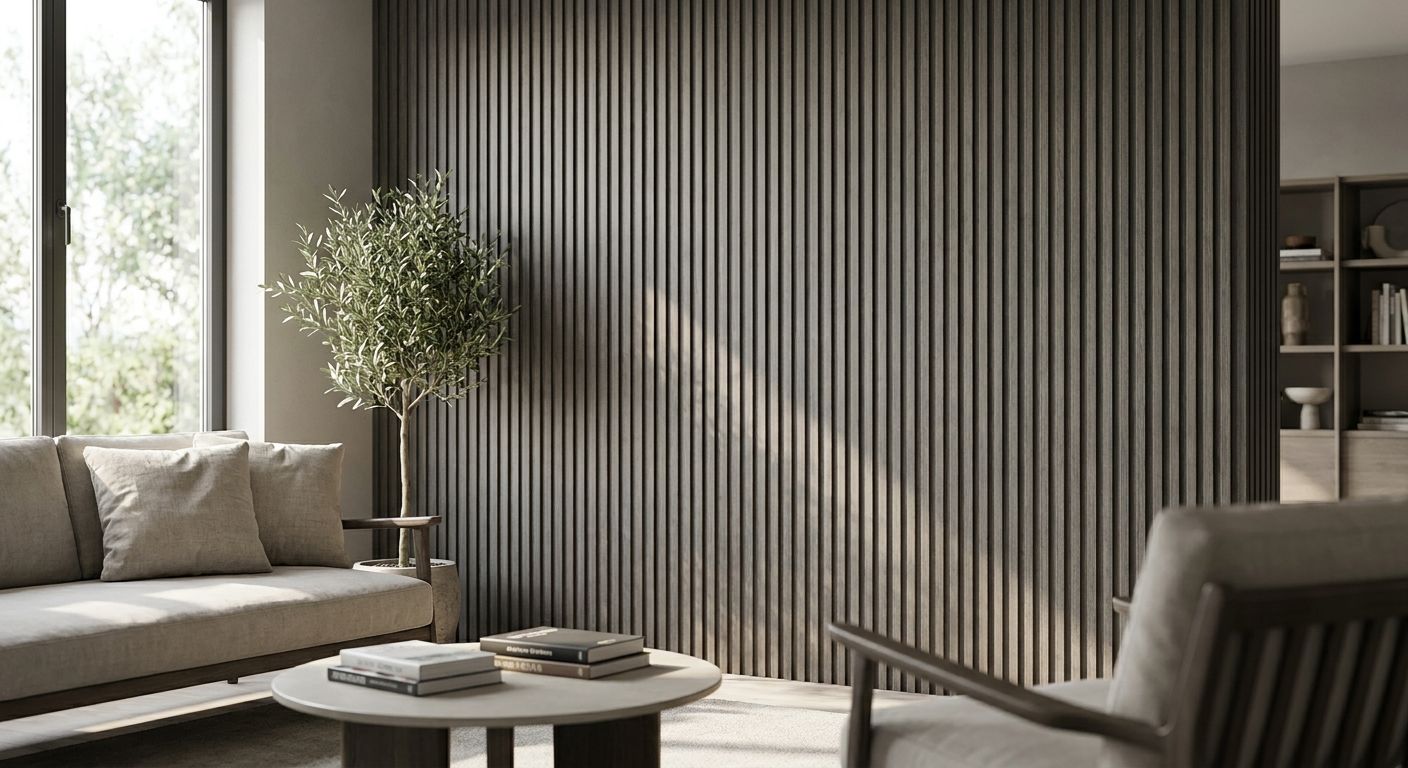
Composite wall panels modern design works when the slats disappear into the room rather than fight for attention: clean lines, one or two wood tones, and a finish that reads as texture rather than decoration. This guide is built for homeowners and designers panelling a modern-style living room, hallway, or home office in 2026, covering finish choice, panel sizing, acoustic backing, and the fixing method that keeps corners looking finished rather than cut short.
- Composite wall panels modern design favours straight oak slat profiles over ornate mouldings for a restrained look.
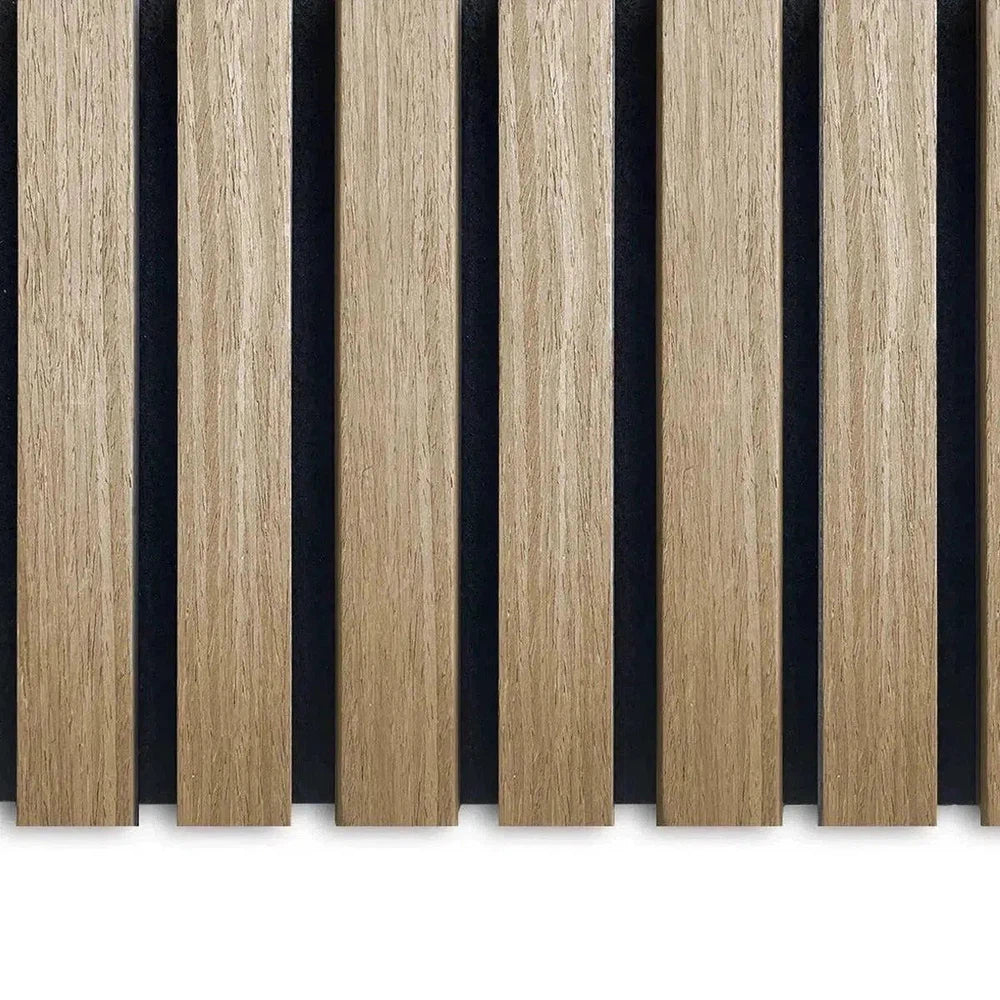
- 3-sided real wood veneer panels with acoustic felt backing cut flat-wall echo without curtains or rugs.
- Black oak wall panels suit dark, moody modern schemes but read heavy in small, low-light rooms.
- Hexagon acoustic panels break up a flat feature wall when straight slats feel too corporate for the space.
- Order a sample panel before committing to a full run; grain and tone shift under different room lighting.
Why this matters
Modern interiors strip out ornament: no cornicing, no heavy patterned wallpaper, which leaves flat plaster with nothing to break up sound or scale. A slat wall or 3D panel adds depth without adding clutter, but only if the finish and layout match the rest of the room's restraint.
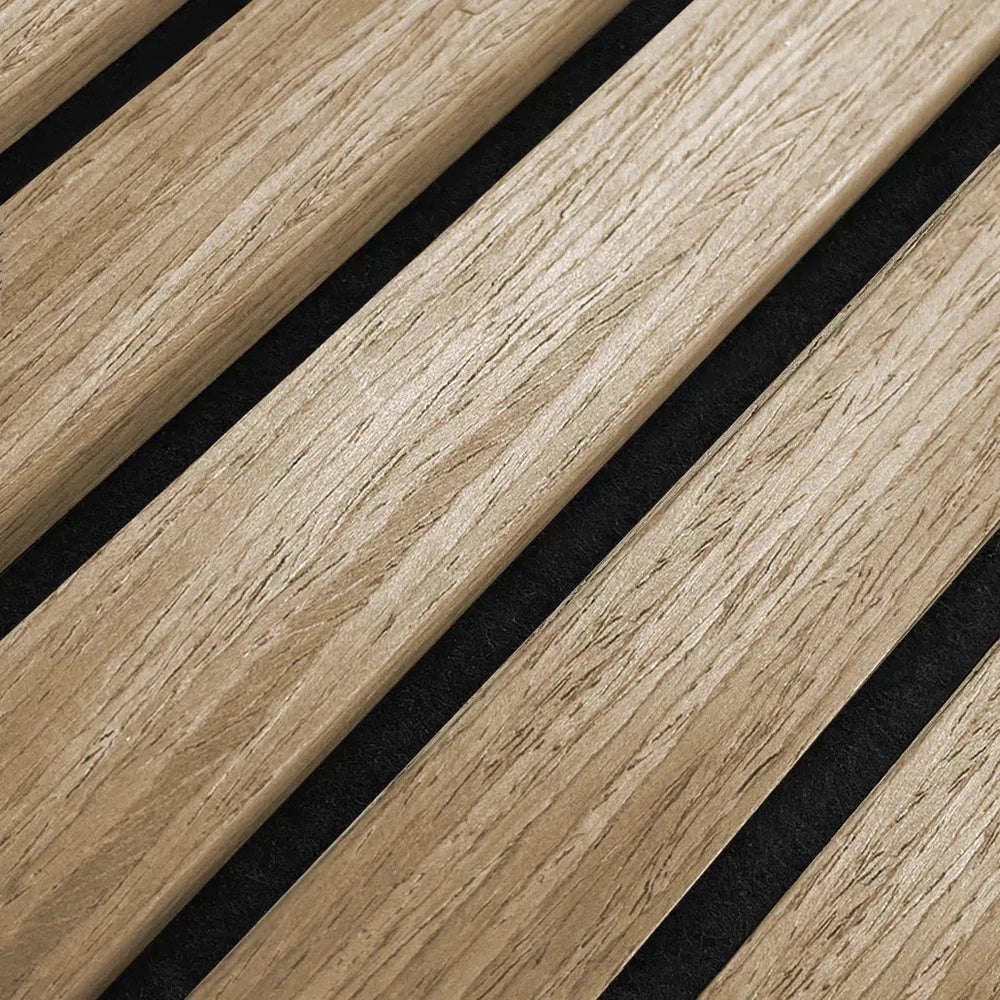
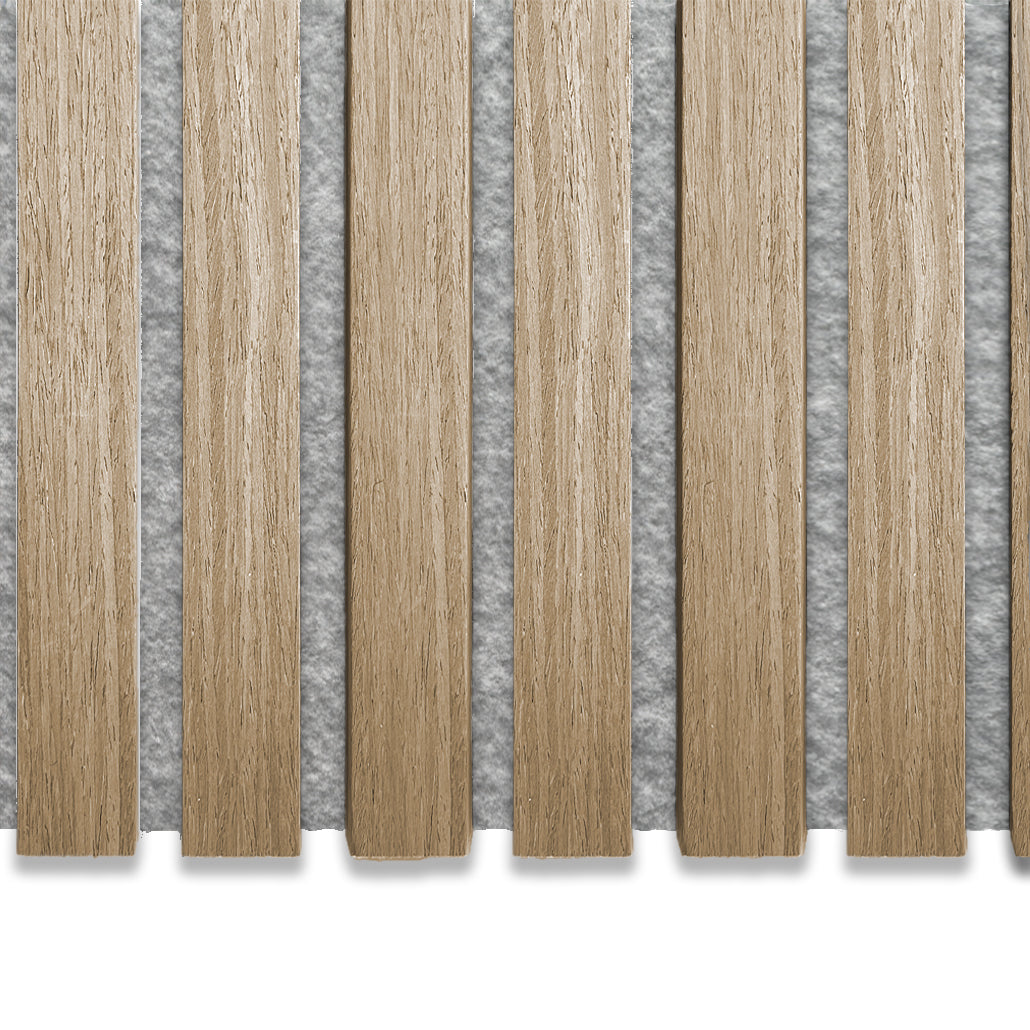
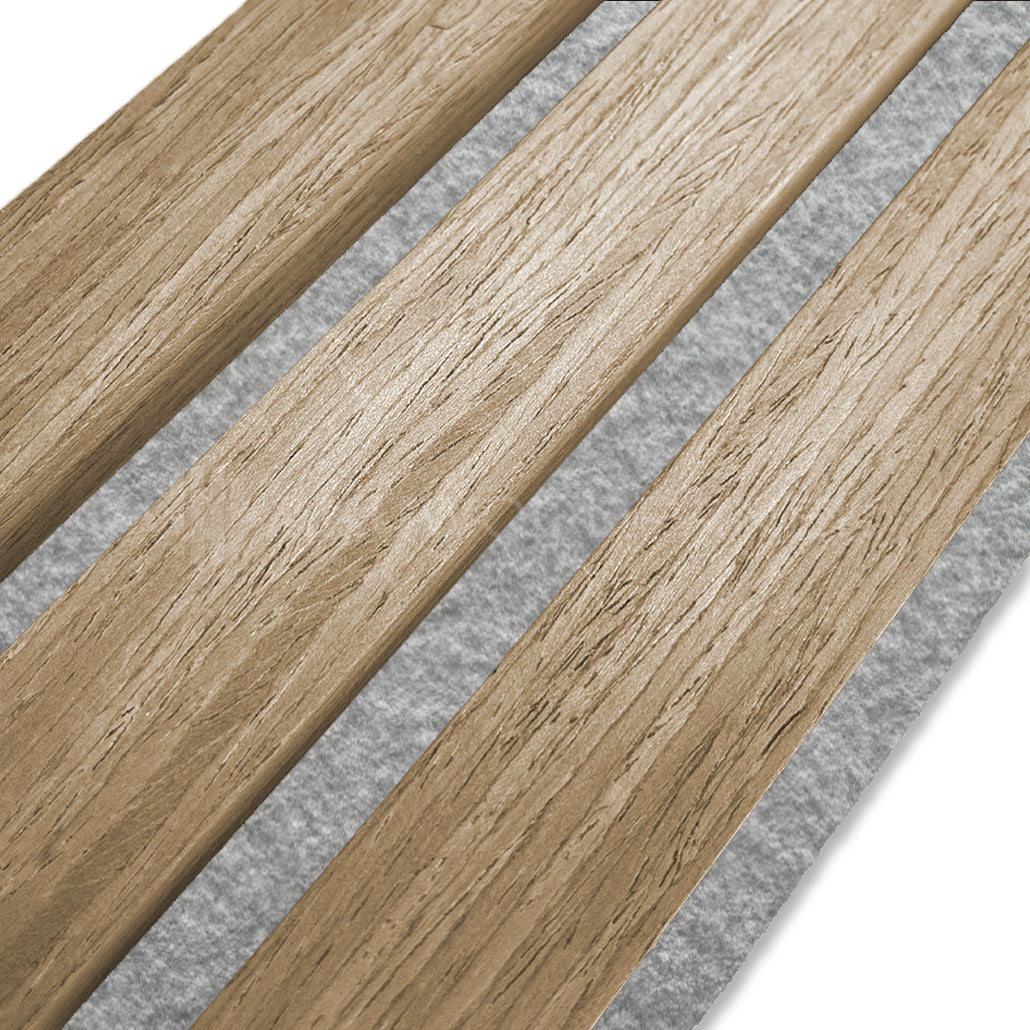
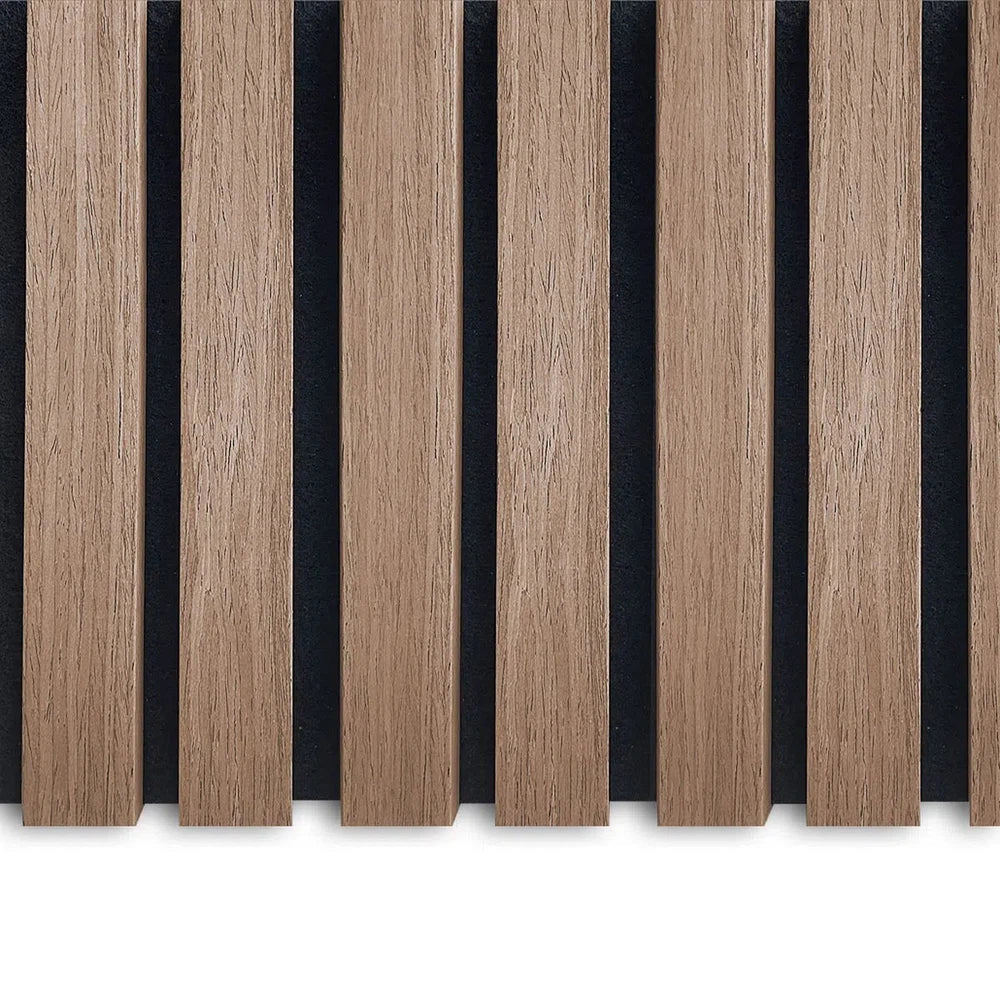
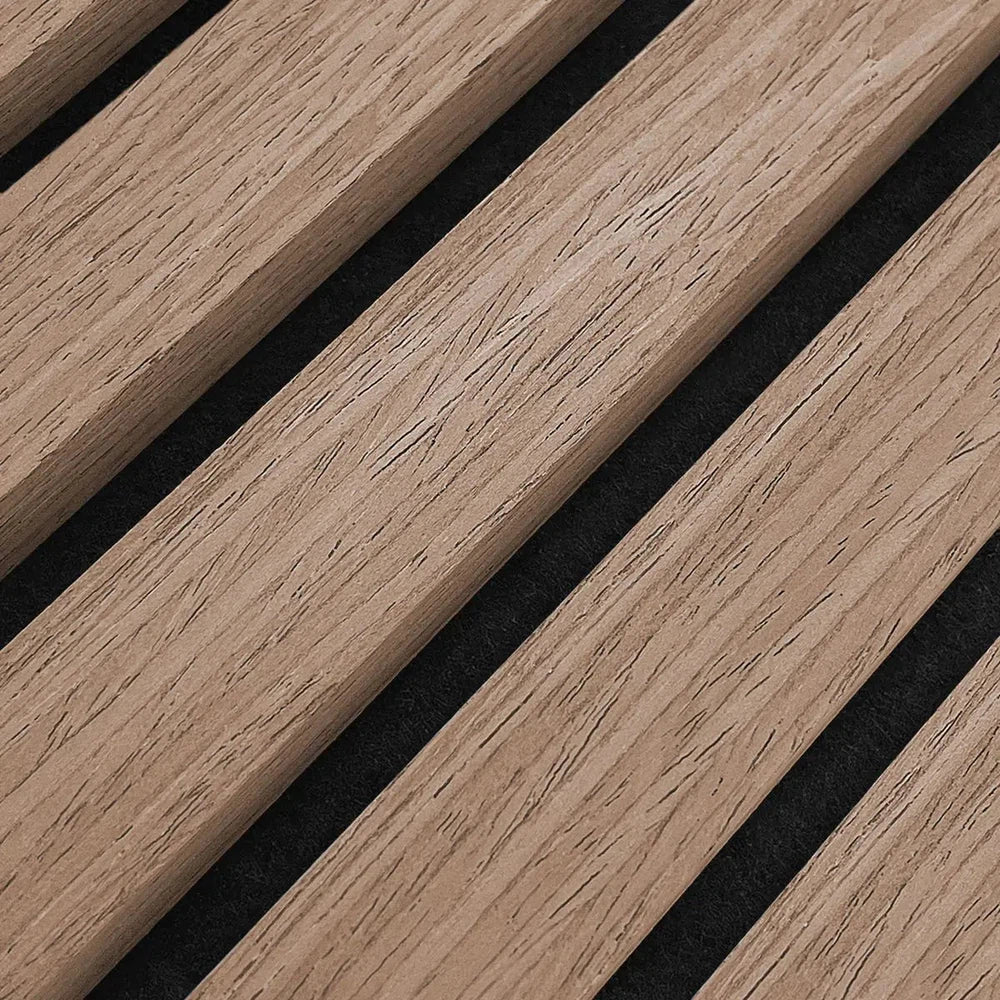
Most homeowners searching for composite wall panels modern design are solving one of two problems: an echoey open-plan room, or a wall that photographs flat under downlights. AKU Woodpanel's range covers both, and the rustic oak premium 3-sided wood veneer panel is the closest thing the catalogue has to a default choice for a first modern feature wall: real wood veneer on all three visible sides, bonded to a felt-backed core.
Get the fundamentals wrong, though, and a modern slat wall reads dated within a year rather than timeless. The steps below cover the decisions that actually change how the finished wall looks and performs.
How to choose composite wall panels for a modern interior
Define the tone before you shop for finish
Modern schemes usually commit to one dominant wood tone with a single accent, not three or four competing finishes. Decide the direction before opening the product catalogue.
- Natural oak for a light, Scandinavian-leaning room with white walls and pale flooring
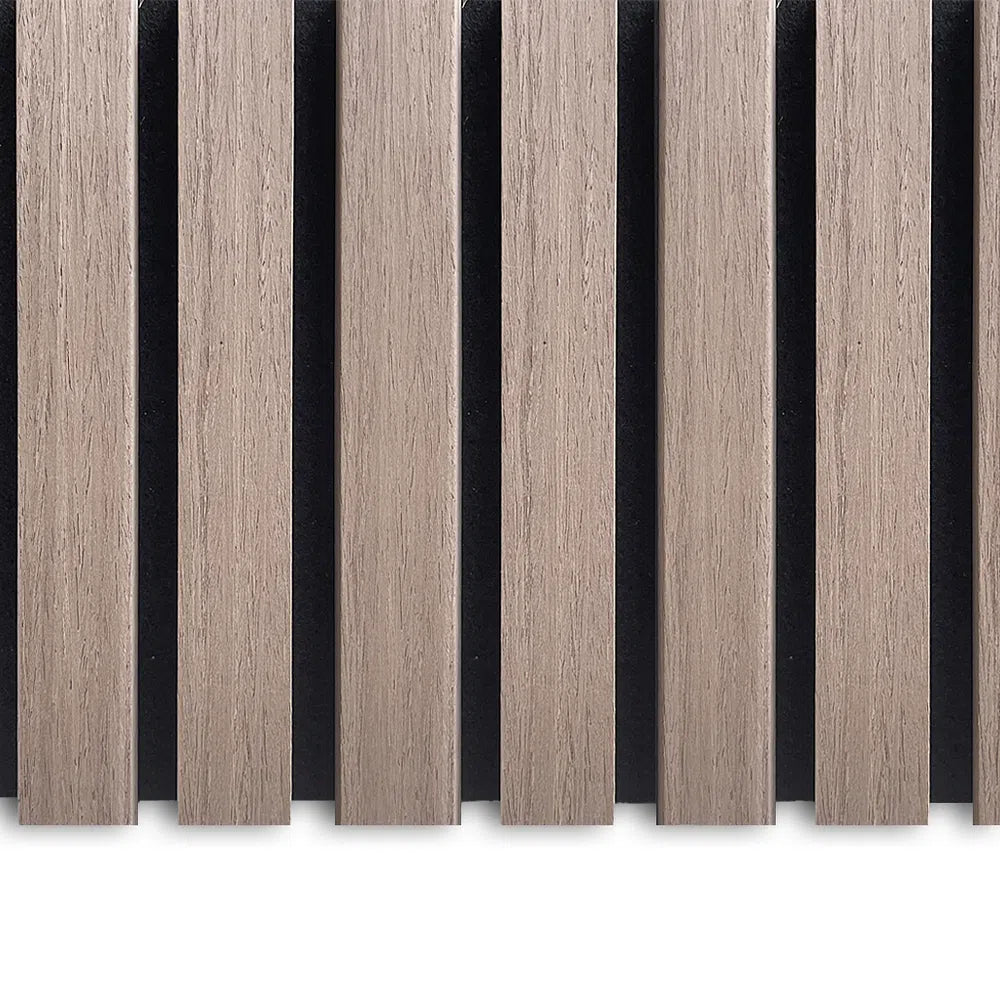
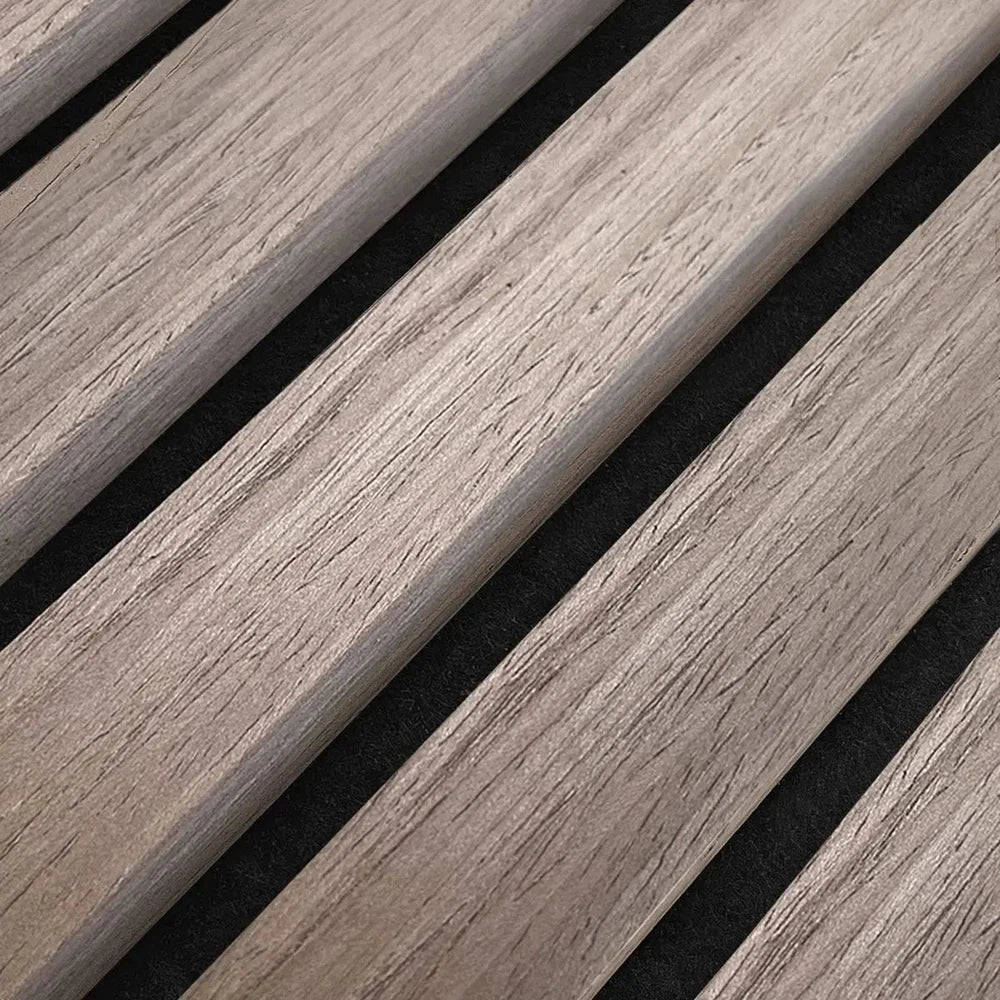
- Grey oak for a cool, neutral scheme that sits next to concrete, marble, or matte black fittings
- Smoked oak or black oak for a moody, high-contrast modern living room or home cinema
- Walnut for a warm mid-tone that pairs with brass or bronze hardware
- Mocca for a deep, warm brown that reads richer than black without going full charcoal
Measure the wall and pick a size format
Panels ship in two length formats, 240cm and 300cm. A UK new-build room with a standard 240cm ceiling height needs the shorter format with almost no cutting; a period room or extension with a taller ceiling suits the 300cm run for a true floor-to-ceiling look.
- Measure floor-to-ceiling height at three points along the wall, not just the centre
- Decide vertical runs (the default modern look) versus a horizontal orientation for a wider, lower feel
- Order matching end pieces so cut edges never show at internal or external corners
- Mark socket and switch positions before ordering so panels can be notched, not hacked, on site
- Allow for a skirting board offset if the existing skirting stays in place
Match panel finish to existing joinery and flooring
A modern slat wall competes with existing joinery for attention if the tones clash, so check doors, skirting, and flooring before locking in a finish.
- Natural oak against pale engineered flooring
- Black oak against dark stained doors or black window frames
- Grey oak against polished concrete or grey porcelain tile
- Walnut against warm-toned parquet or brass fittings
- Smoked oak or mocca against dark kitchen cabinetry
Decide where acoustic backing earns its place
Not every wall needs sound absorption, and paying for acoustic felt on a purely decorative wall is wasted spend. The Hexagon Panel in smoked oak with grey felt carries an NRC rating of 0.75, which is a genuine acoustic spec, not a marketing figure, and it is the right benchmark for walls doing real acoustic work.
- Media walls behind a TV or soundbar, where hard surfaces bounce dialogue
- Home offices with hard flooring and no soft furnishings to absorb sound
- Open-plan kitchen-diners where conversation competes with extractor fans and appliances
- Stairwells and hallways with tiled or wood flooring that amplify footsteps
“If a slat wall echoes as much as bare plaster, it is decorative only; check for felt backing before you buy.”
Break up a flat wall with accent formats
Straight slats are the safe modern default, but a single accent segment in a different format keeps a large wall from looking like panelling for its own sake.
- Hexagon acoustic panels on one wall segment, straight slats on the rest
- A 3D decorative panel in a 60x60cm module for an alcove, headboard wall, or narrow hallway run
- 3D wood wall panels in a 30x30cm module for a small accent strip above a fireplace or behind a bar
- End pieces on every exposed edge so the accent format reads intentional, not unfinished


Plan the fixing method before panels arrive
Glue and mechanical fixing suit different wall types, and picking the wrong one on installation day costs a wasted afternoon.
- High-tack panel adhesive for flat, sound plasterboard or plastered walls
- Battens over uneven or solid masonry walls before gluing panels to the battens
- Mechanical fixing through the felt backing on walls that will take heavy point loads, like a TV bracket
- A full 48-hour acclimatisation period indoors before fitting, so the wood settles at room humidity first
Order a sample before you commit to a full room
Wood tone shifts more under artificial light than most homeowners expect, and a photo on a screen never matches a panel under a room's actual downlights.
- Order a physical sample in the shortlisted finish, not just the natural oak default
- Hold it against the wall at the time of day the room gets most use
- Check it next to the existing flooring and door colour, not against a white background
- Compare two finishes side by side if choosing between a warm and cool tone
Composite wall panel options compared
| Option | Best for | Key limitation |
|---|---|---|
| Natural Oak slat panel | Light, Scandi-leaning modern rooms | Shows marks on pale walls if left unsealed |
| Black Oak slat panel | Moody, high-contrast modern schemes | Reads heavy in small, low-light rooms |
| Walnut slat panel | Warm mid-tone modern living rooms | Clashes with cool-toned original joinery |
| Hexagon Acoustic Panel | Feature walls needing shape, not just texture | Slower to install than straight slat runs |
| Decorative 3D Wall Panel | Small accent walls, headboards, alcoves | Not acoustic; felt-backed slats needed for noise control |
| Exterior Wall Cladding – Black | Composite modern facades and garden rooms | Needs battens for exterior fixing, not interior glue |
Verdict: for a first modern feature wall, the rustic oak 3-sided veneer panel is the safest buy; for a media wall doing real acoustic work, the felt-backed hexagon panel earns its place.
Common mistakes homeowners make with composite wall panels
- Mixing three or more wood tones in one room and losing the restraint that makes a scheme read as modern
- Skipping acoustic backing on a media wall, then wondering why dialogue still sounds thin
- Not ordering end pieces, leaving raw cut edges visible at internal corners
- Choosing the 240cm format for a room with a 300cm ceiling, creating an obvious horizontal seam
- Fixing panels straight from the delivery box without acclimatising them, then finding gaps as the wood settles
More detail on choosing between the two length formats is covered in AKU Woodpanel's composite wall panel guide for UK homes.
FAQ
What's the best composite wall panel finish for a modern living room?
Natural oak or grey oak works best for a modern living room in 2026 because both sit neutrally against pale flooring and white walls. Walnut or black oak suits the same room if the scheme already leans warm or dark.
Is composite wall paneling out of date in 2026?
No, straight slat panelling remains a standard modern finish in 2026 when it uses one or two tones and clean vertical runs. It dates fastest when mixed with too many competing wood finishes in the same room.
How much wall coverage does one panel give in the 240cm and 300cm formats?
Coverage depends on panel width, but the two length options, 240cm and 300cm, exist specifically to match standard and taller ceiling heights without cutting. Measuring floor-to-ceiling height first decides which format wastes the least material.
Do composite wall panels reduce echo, or are they decorative only?
Only felt-backed acoustic panels reduce echo; plain decorative 3D panels do not carry the same sound-absorbing core. The Hexagon Panel in smoked oak with grey felt carries a stated NRC rating of 0.75, which is a genuine acoustic figure to check for on any panel doing real acoustic work.
Can composite wall panels go on an exterior wall?
Yes, but interior slat panels and exterior wall cladding are different products with different fixing methods. Exterior cladding panels need battens and weatherproof fixing rather than the adhesive used indoors.
How do I stop cut edges showing at wall corners?
Order matching end pieces in the same finish as the main panel run before installation day. Cutting a standard panel to turn a corner leaves an unfinished raw edge that end pieces are specifically made to cover.
Is black oak paneling too dark for a small modern room?
Black oak reads heavy in a small room with limited natural light, so it works better as a single accent wall than a full-room treatment there. In a larger or brighter room it holds up as a full modern scheme.
How do I fix wall panels without damaging plasterboard?
High-tack panel adhesive applied directly to sound, flat plasterboard avoids the need for screw fixings in most rooms. Uneven or damaged plasterboard needs battens first so the panel sits flat rather than telegraphing the wall's imperfections.
One last thing
The most convincing modern schemes rarely rely on tone contrast alone; they mix format instead, pairing a straight slat run on the main wall with a single hexagon-panel segment on one section. That contrast in shape reads as intentional design rather than an accident of stock choices, and it costs nothing extra beyond ordering two finishes instead of one for the same wall.