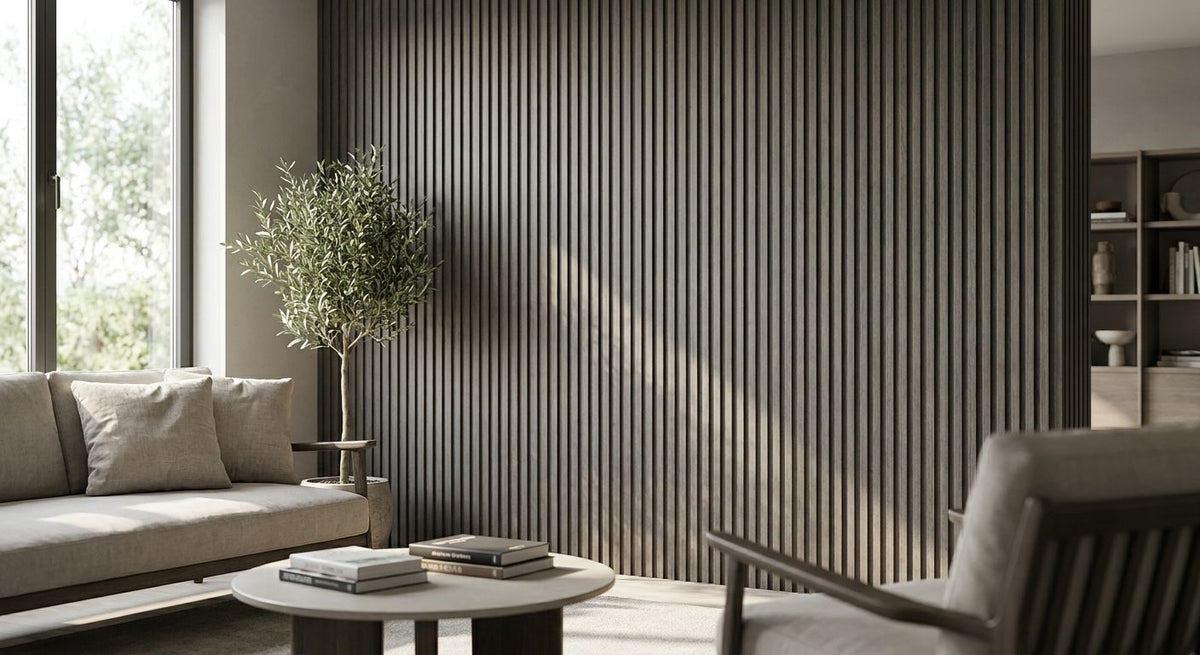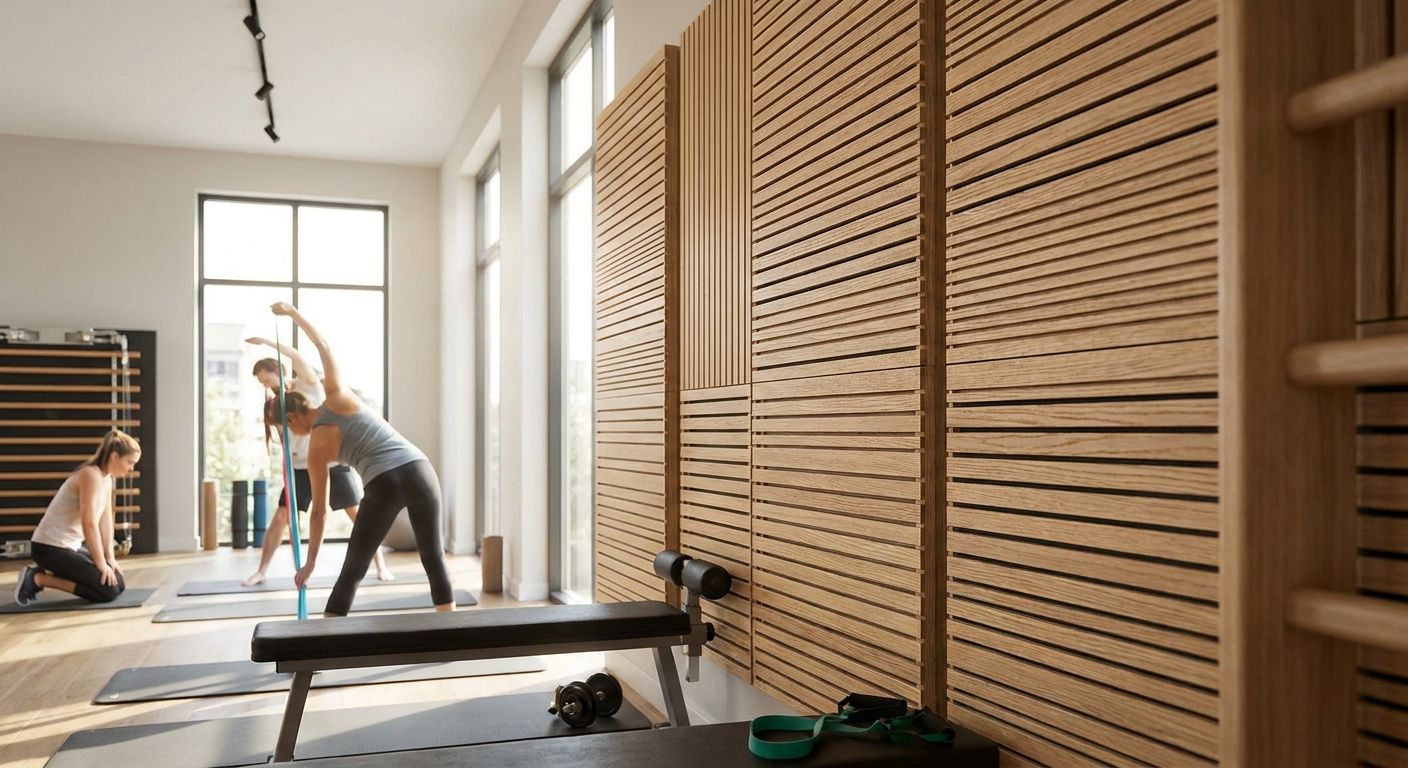
Fitness gyms and studios need acoustic wood panels that cut the echo off hard floors, mirrored walls and steel equipment while surviving sweat, dropped weights and daily cleaning. A home living room panel setup and a gym panel setup solve different problems: gyms deal with impact noise, humidity, and constant foot traffic near cardio zones, not just conversational echo.
- Acoustic panels fitness gym studio walls need a felt-backed veneer, not decorative slats alone, to cut real reverberation in 2026 fit-outs.
- Hexagon acoustic panels carry an NRC rating of 0.75, enough for reception areas and studio accent walls but not full weight-room coverage on their own.
- Boxing and CrossFit gyms should mount panels away from direct impact zones — dropped dumbbells and swinging bags will damage any wall product.
- Wooden Wall Panels for Gym and Fitness Studio Interiors covers zone-by-zone layout before you order a single panel.
- Budget gyms with bare drywall get zero absorption — the echo doesn't fade with time, only with material on the wall.
Why acoustic panels matter for gym and studio walls
A gym owner typically starts looking for acoustic panels after a member complains, or after a new studio room gets fitted out with mirrors and a sprung floor that bounces sound instead of absorbing it. The search intent is specific: not "soundproofing" in the abstract, but a working answer for a weight room, a spin studio, or a boxing space that's louder than the owner expected once equipment goes in.
Gym walls face constraints a living room never does. Humidity from group classes, dust from chalk and rubber flooring, and constant vibration from dropped weights all shorten the life of the wrong material. Wooden Wall Panels for Gym and Fitness Studio Interiors breaks the fit-out down by zone, which matters more here than in almost any other commercial space — a weight room and a yoga studio in the same building can need opposite acoustic treatment.
How to choose acoustic panels for a gym or studio wall
Map your gym's echo zones first
Walk the floor before buying anything. Echo isn't uniform across a gym — a 1,000 sq ft open weight floor with concrete walls behaves nothing like a carpeted studio room with a suspended ceiling.
- Flag the weight room and free-weight platform separately from cardio
- Note where mirrors run floor-to-ceiling — glass reflects sound, it doesn't absorb it
- Check reception and front-desk areas where members talk over gym noise
- Identify studio rooms used for classes with music and instructor mics
- Mark corridors and changing rooms where sound carries between zones
Measure wall area and ceiling height before ordering
Panel count depends on square footage, not guesswork, and ceiling height changes how much reverberation a wall treatment alone can fix.
- Measure each flagged wall in metres, not estimated "about half the room"
- Note ceiling height — double-height CrossFit boxes need more than wall panels
- Decide between 240 cm and 300 cm panel lengths based on wall height
- Account for doorways, windows and mirror runs that reduce usable wall space
- Order 5-10% extra to cover cuts around sockets and vents
Match panel absorption to the noise source
Not every gym zone needs the same treatment. A quiet stretching area and a spin studio running bass-heavy playlists have opposite acoustic problems.
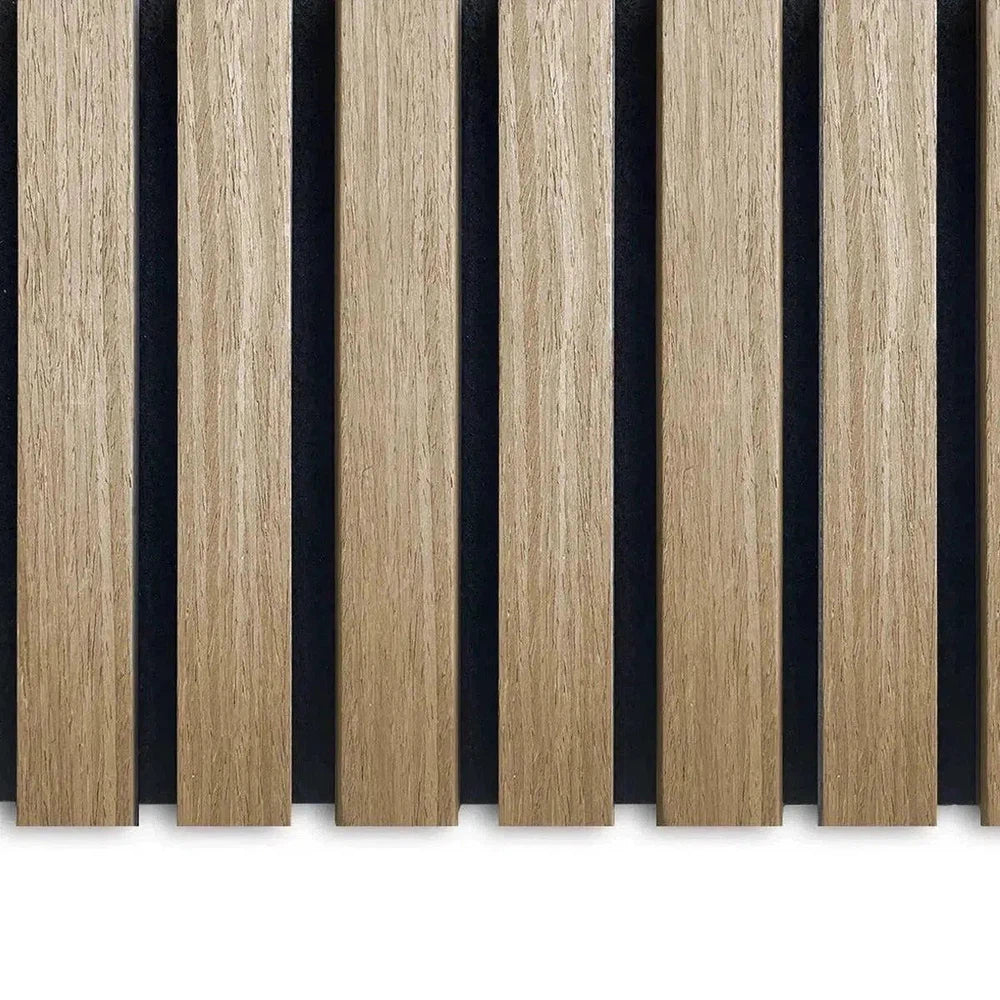
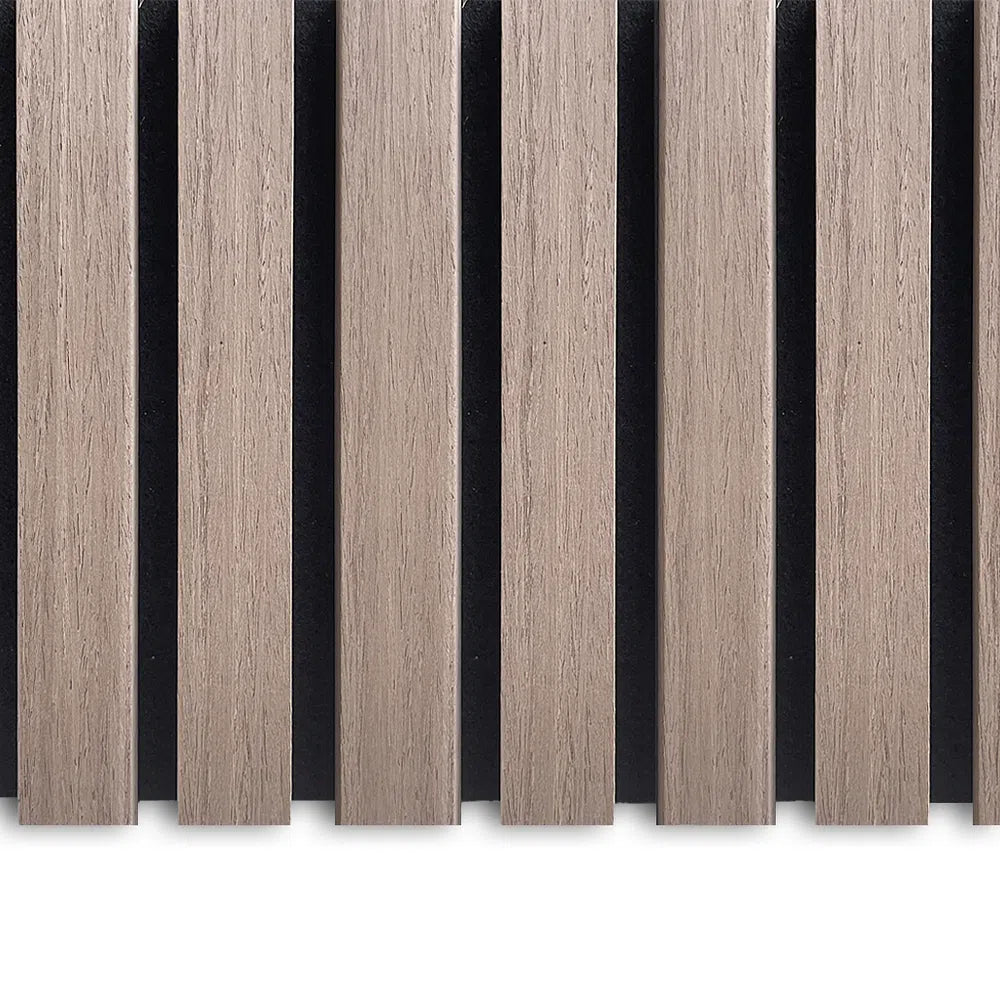
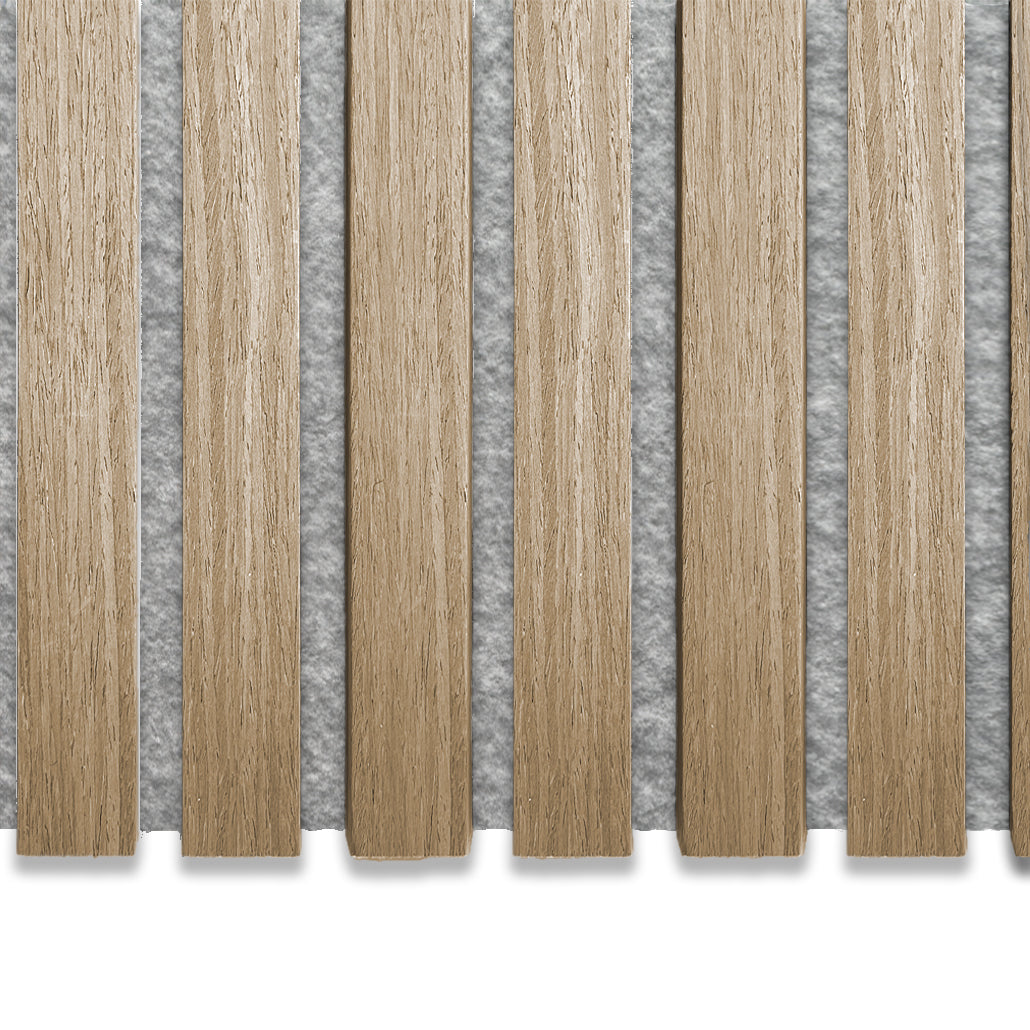
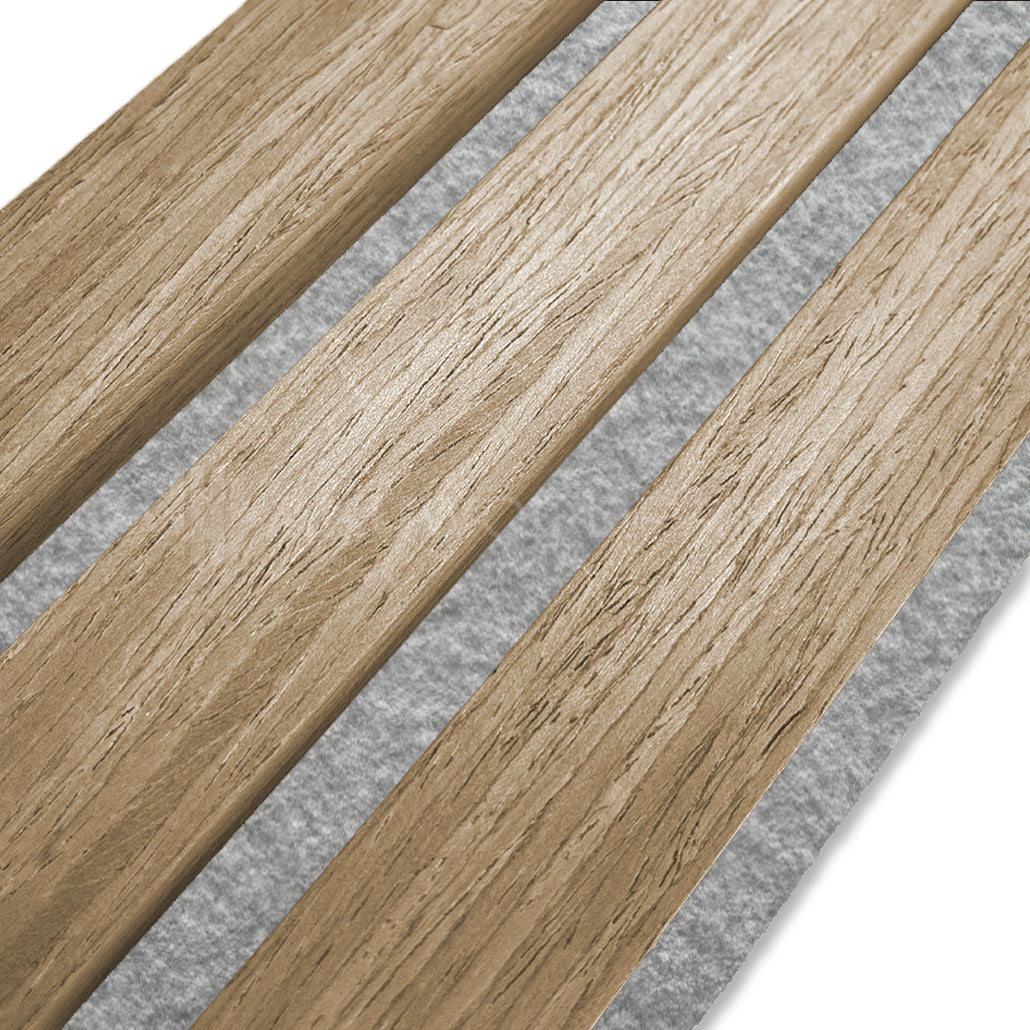
The natural oak hexagon panel carries an NRC rating of 0.75, which works well on reception walls and studio accent zones where the goal is knocking down chatter and instructor voice reflection rather than absorbing heavy impact noise.
- Reception and lobby: moderate absorption, finish matters as much as function
- Spin and cycling studios: absorption near speakers to control bass reflection
- Free-weight platforms: focus on impact dampening, not just echo reduction
- Yoga and stretch rooms: full-wall coverage for a calm, low-reverberation feel
- Boxing bag zones: placement away from swing radius, not just absorption rating
Protect panels in high-impact zones
This is where most gym fit-outs go wrong — panels chosen for looks end up dented or scuffed within months. Placement solves this before any product spec does.
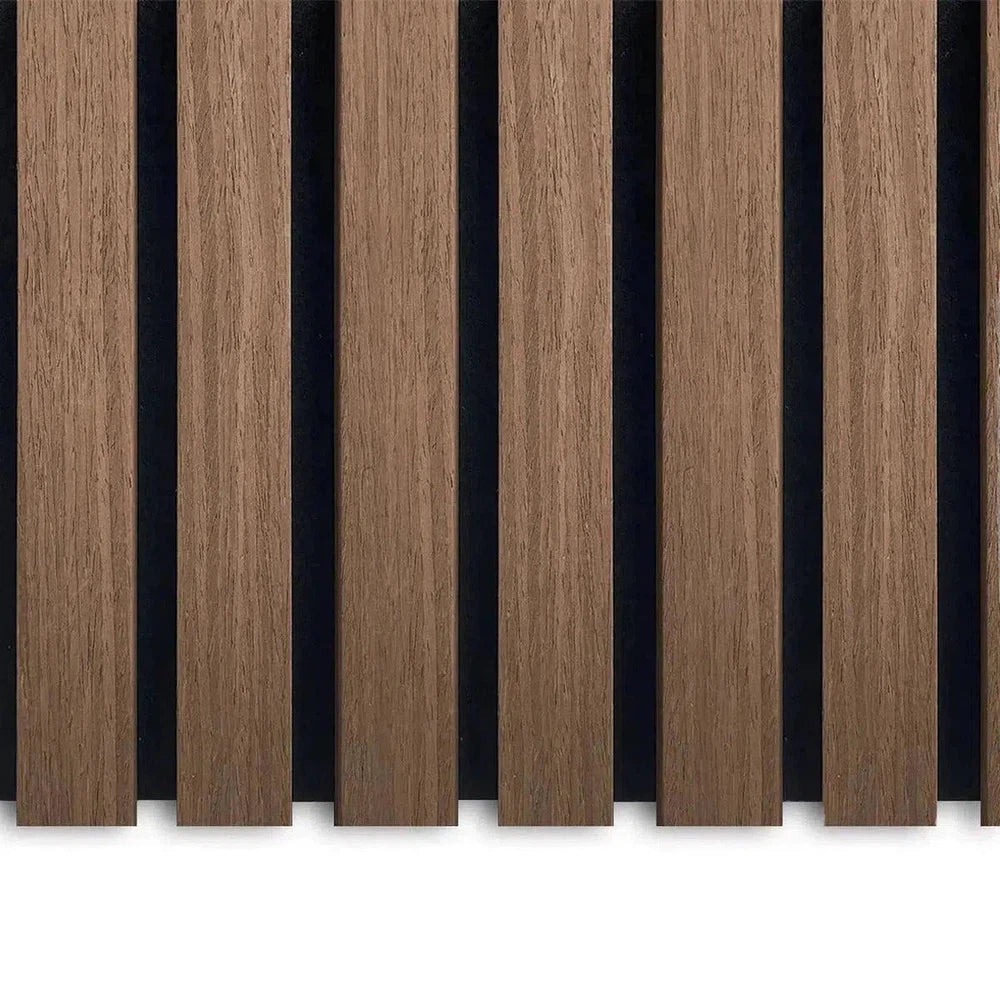
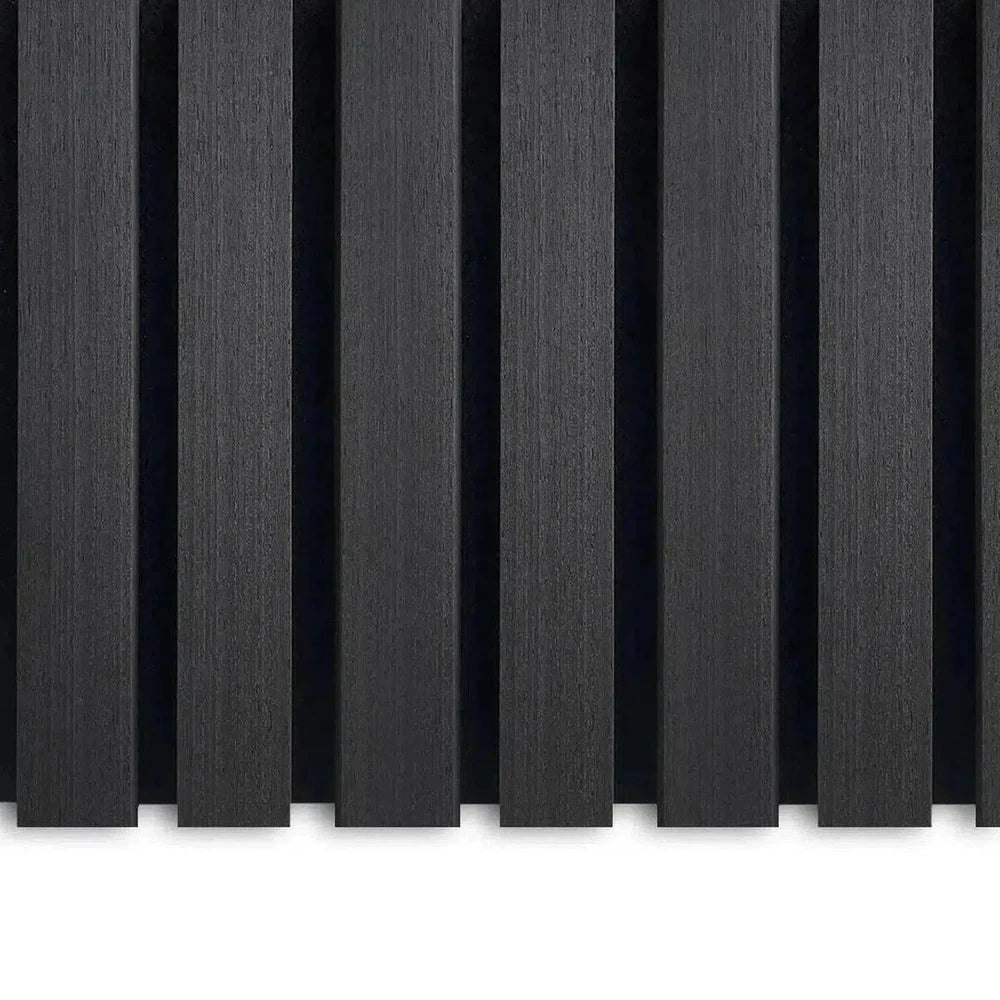
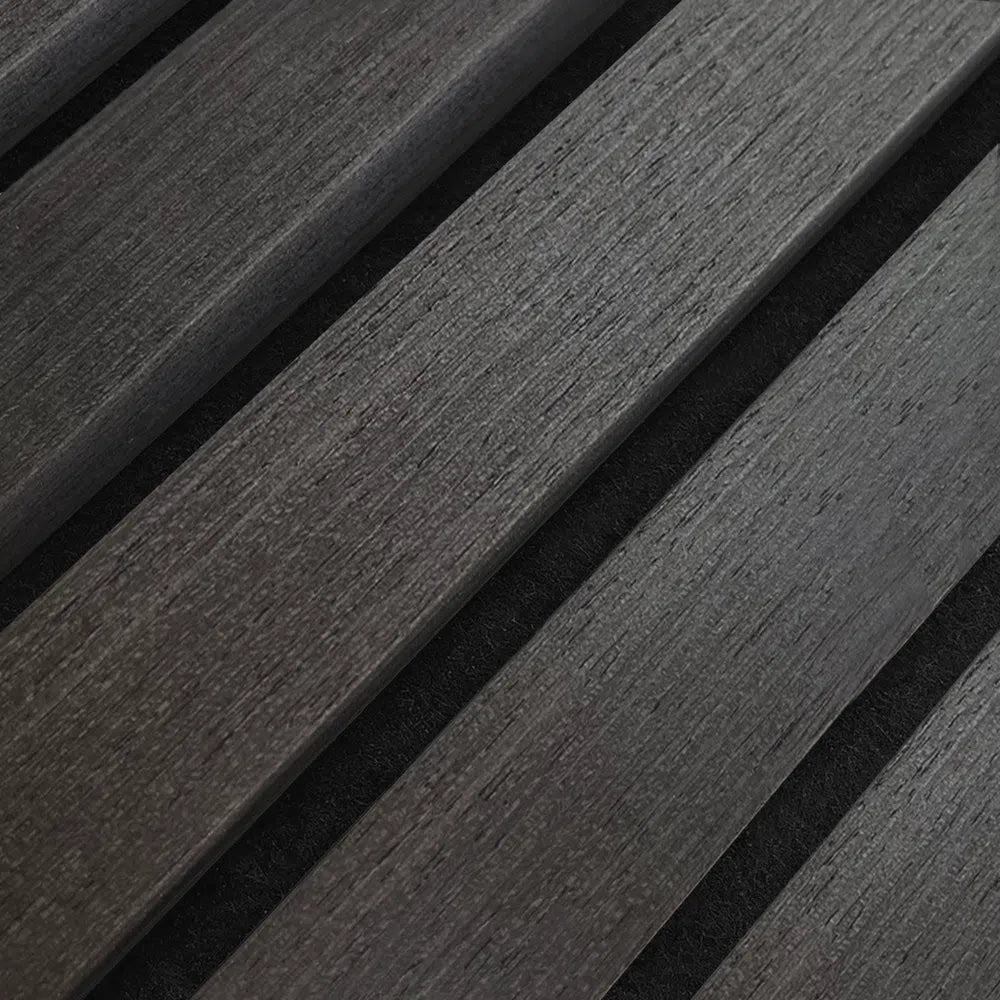
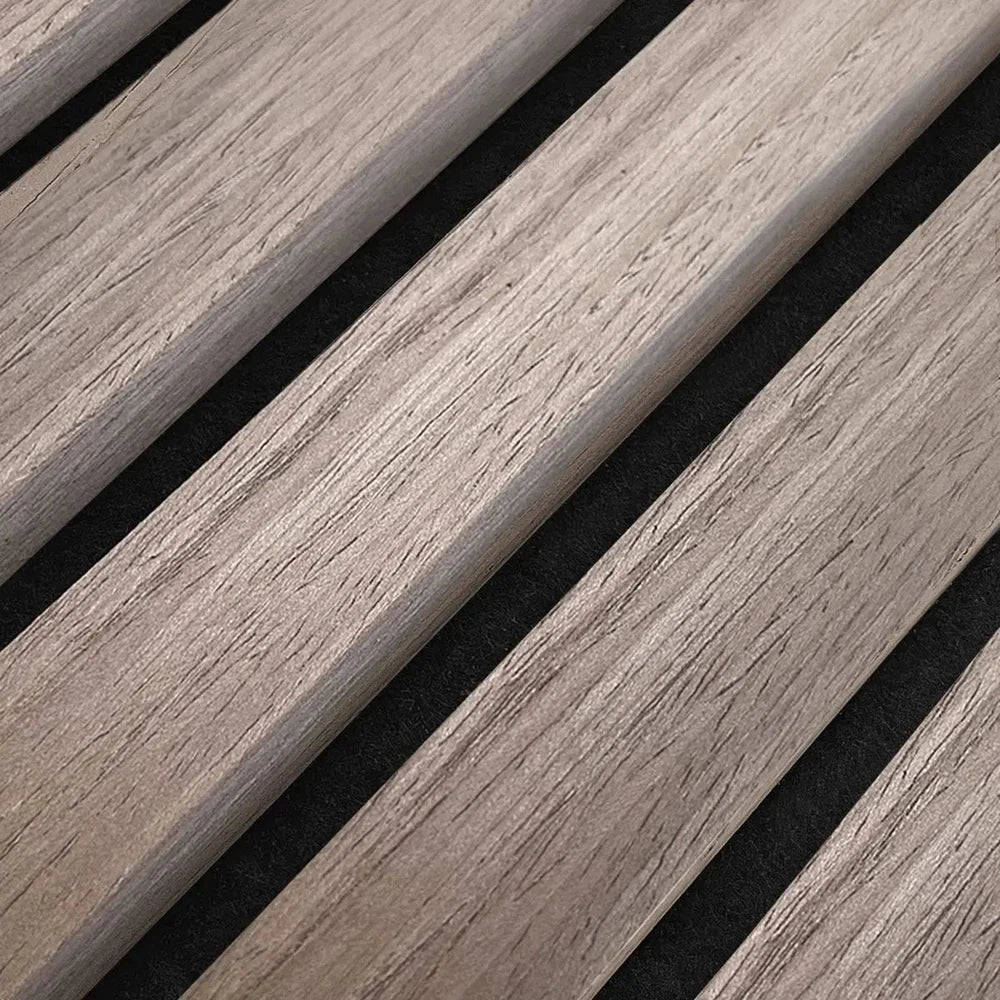
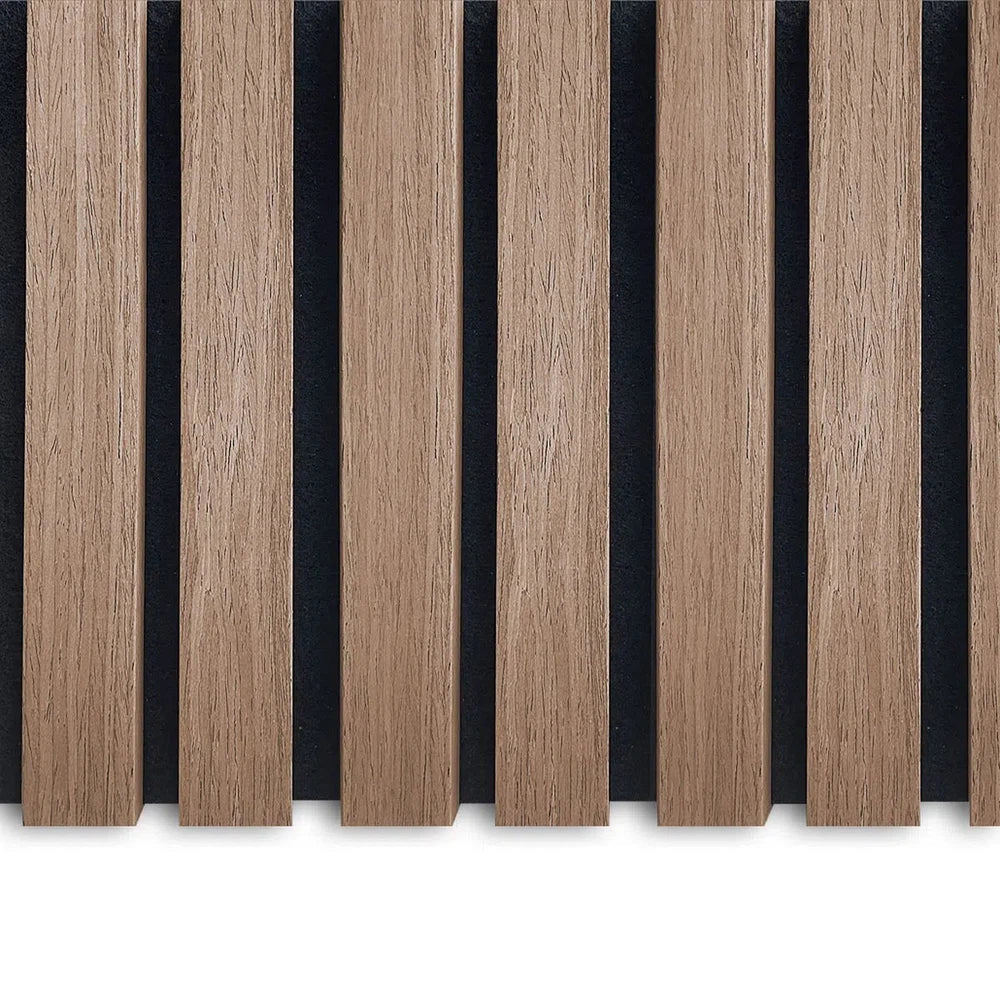
Black oak panels hide scuff marks better than pale finishes in boxing and martial arts gyms, where chalk dust and bag contact are constant. Keep panels clear of the actual swing radius of heavy bags and the direct drop zone under a squat rack.
- Mount panels at chest height and above in free-weight areas, not floor level
- Leave a buffer zone between panels and any bag or rack mounting point
- Use darker veneer finishes where scuffing is unavoidable
- Check wall type first — stud walls and breeze block need different fixings
- Avoid placing panels directly behind cable machines or plate racks
Choose a finish that handles humidity and cleaning
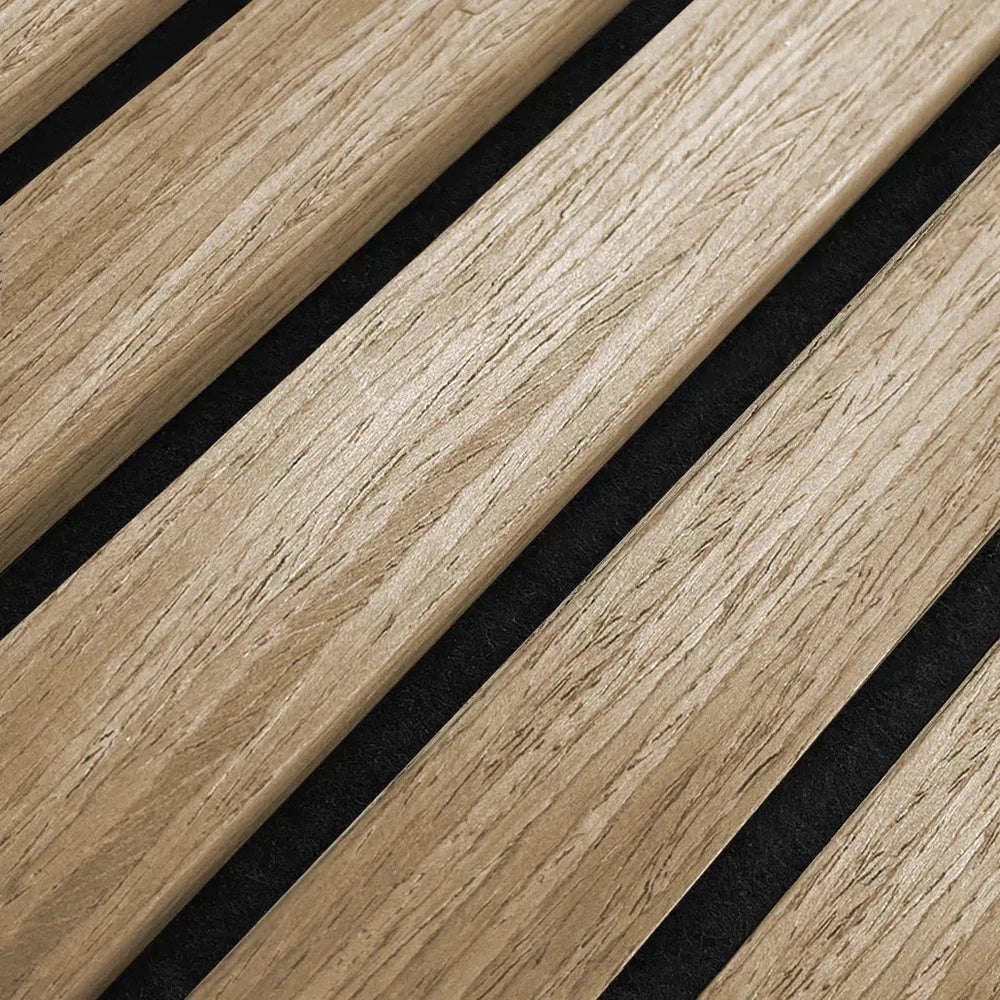
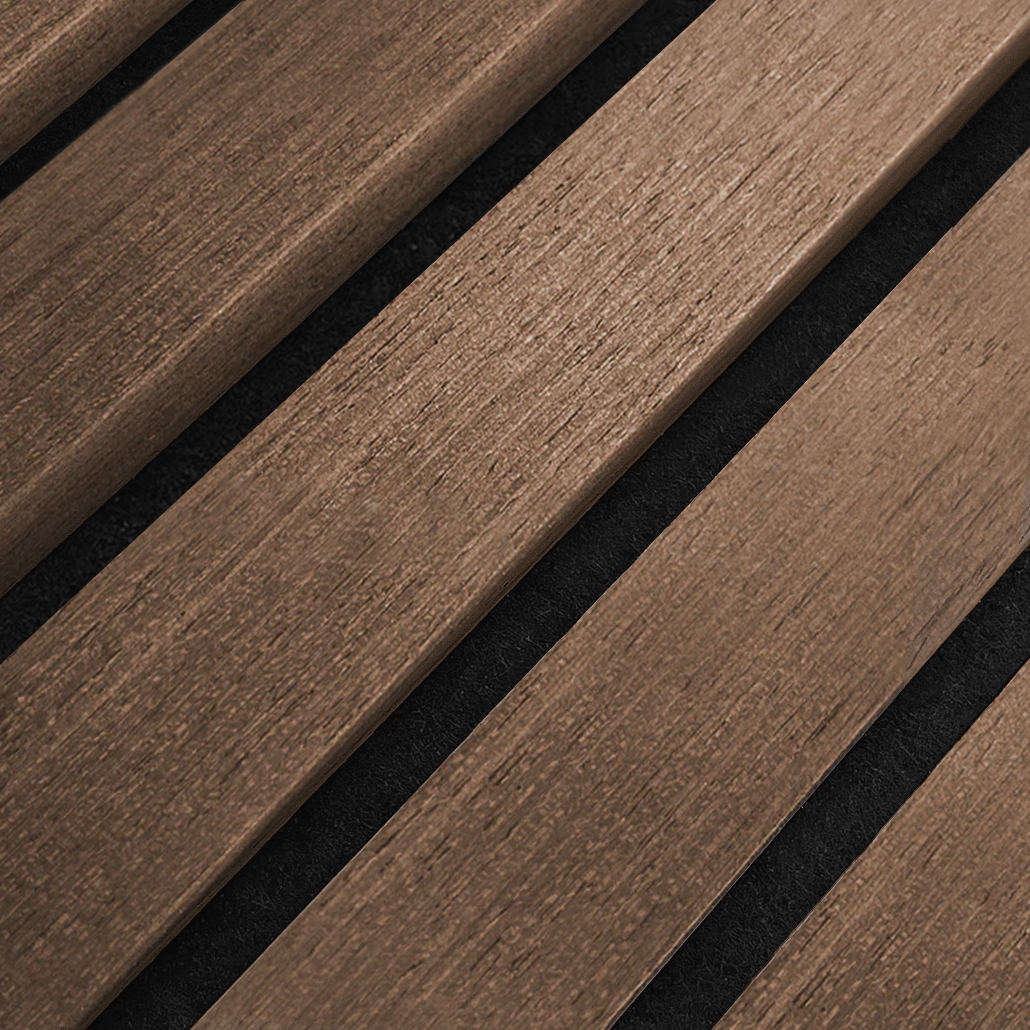
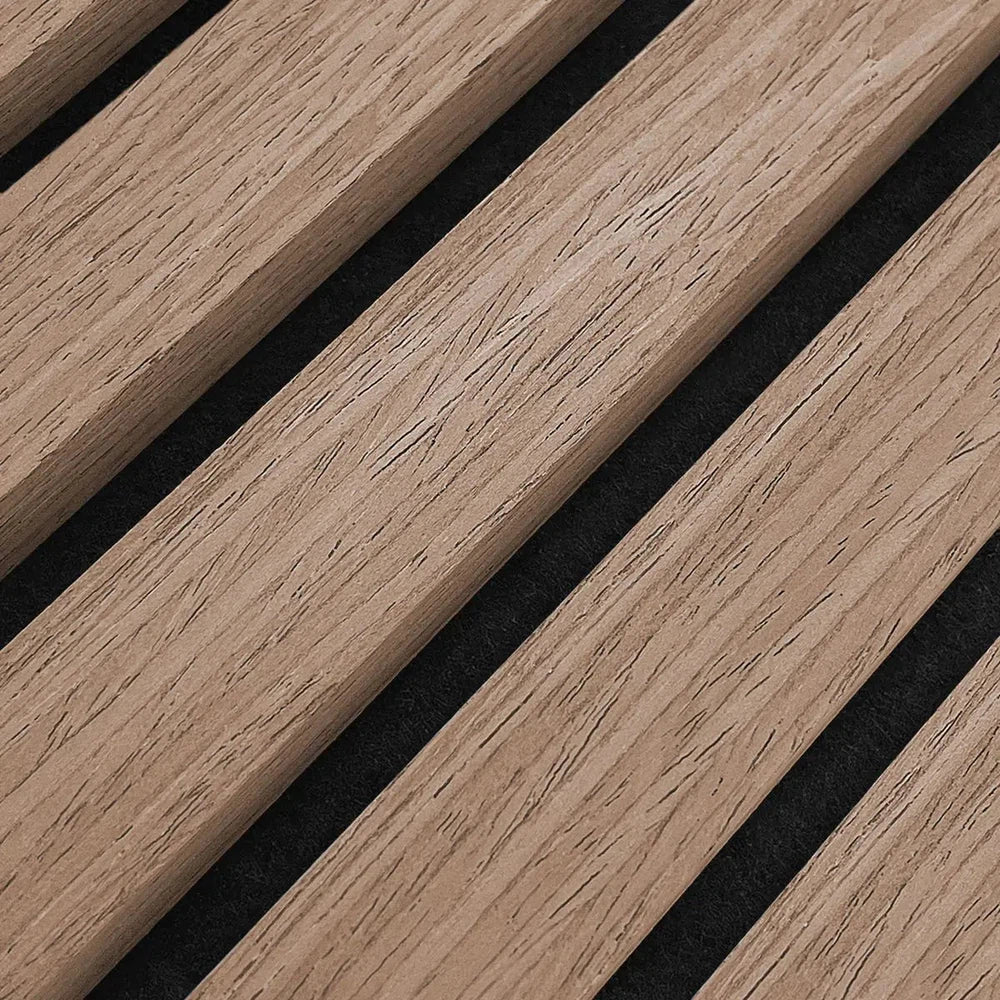
Group classes and hot yoga rooms push humidity higher than a typical office or living room. A 3-sided wood veneer finish with felt backing wipes clean, but it still needs the right placement to last.
- Keep panels away from direct shower or steam room walls
- Wipe veneer down with a dry or barely damp cloth, not soaked mops
- Avoid installing directly above radiators or heating vents
- Check ventilation in studio rooms before finalising panel placement
- Test one panel in the highest-humidity zone before ordering a full run
Install away from sweat-heavy equipment
Cardio rows and free-weight platforms generate the most moisture in any gym. Panels installed too close to treadmills or rowers pick up condensation faster than reception walls ever will.
- Leave clearance between panels and cardio equipment exhaust vents
- Avoid mounting directly behind rowing machines where sweat drips constantly
- Prioritise panels on walls, not near floor-level equipment splash zones
- Combine panels with rubber flooring for impact and moisture control together


Comparing panel options for gym and studio walls
| Option | Best for | Key limitation |
|---|---|---|
| Hexagon acoustic panels (NRC 0.75) | Reception areas, studio accent walls | Smaller unit size means more panels needed for full-wall coverage |
| Natural oak wall panel | Weight rooms, cardio floors | Felt backing needs periodic dust removal in dusty gym air |
| Black oak wall panel | Boxing and martial arts gyms | Dark finish hides scuffs but shows surface dust more visibly |
| Bare wall, no acoustic treatment | Nothing — included as a baseline | Provides zero sound absorption; echo doesn't improve on its own |
Verdict: gyms with mixed zones need mixed finishes — hexagon panels for reception, full wall panels for the weight floor, darker veneers wherever bags or racks make contact likely.
Common mistakes gyms make with acoustic panels
- Treating the whole gym as one room. A weight room and a yoga studio need different absorption levels, not the same panel run copied across both.
- Panelling one wall and expecting whole-floor results. A single accent wall does little for a 1,000 sq ft open floor with concrete on three other sides.
- Mounting panels directly behind squat racks or plate storage. Dropped weights will dent almost any wall surface at that height.
- Ignoring ceiling height. Double-height CrossFit boxes and warehouse gyms need more than wall panels alone — ceiling treatment matters too.
- Choosing fabric-only panels for hot yoga or spin rooms. Humidity from group classes shortens the life of fabric faster than a wipeable veneer finish.
FAQ
What's the best acoustic panel for a gym or fitness studio wall?
A felt-backed wood veneer panel with an NRC rating around 0.75 works best for reception and studio accent walls in 2026 fit-outs. Weight rooms need full-wall coverage rather than a single accent panel to make a noticeable difference.
Do acoustic wood panels work in a weight room with dropped dumbbells?
Panels help with echo but won't survive direct impact from dropped weights. Mount them chest-height and above, clear of the actual drop zone under racks and platforms.
How many acoustic panels does a gym need to cut echo?
It depends on wall square footage and ceiling height, not a fixed number — measure each flagged zone separately before ordering. A single accent wall rarely fixes echo across an open floor plan.
Is wood veneer or fabric better for gym acoustic panels?
Wood veneer with felt backing wipes clean and handles gym dust better than fabric-faced panels. Fabric panels struggle in humid rooms like spin studios and hot yoga spaces.
Can acoustic panels handle a hot yoga or spin studio's humidity?
Veneer-finished panels tolerate moderate humidity if kept away from direct steam or shower walls. Test one panel in the warmest room before ordering a full run.
What NRC rating do gym acoustic panels need?
An NRC of 0.75, as found on hexagon acoustic panels, suits reception and studio accent walls handling voice and chatter. Bass-heavy spin rooms and impact-prone weight floors need panels placed with absorption near the source, not just a high rating alone.
Do acoustic panels help with noise complaints from gym neighbours?
Wall panels reduce internal reverberation and can lower how much sound bounces before it reaches shared walls. They're not a soundproofing barrier on their own — check wall construction if noise transfer to neighbours is the main complaint.
Should acoustic panels go behind gym mirrors or beside them?
Beside them. Mirrors reflect sound rather than absorb it, so panelling the walls around and between mirror runs does more for echo control than trying to treat the mirrored surface itself.
One last thing
The wood veneer on a gym acoustic panel is doing less acoustic work than most buyers assume — it's the felt backing behind it that absorbs the sound. If a gym is choosing panels purely on finish and skipping the felt-backed spec to save on cost, the wall will look right and still echo.