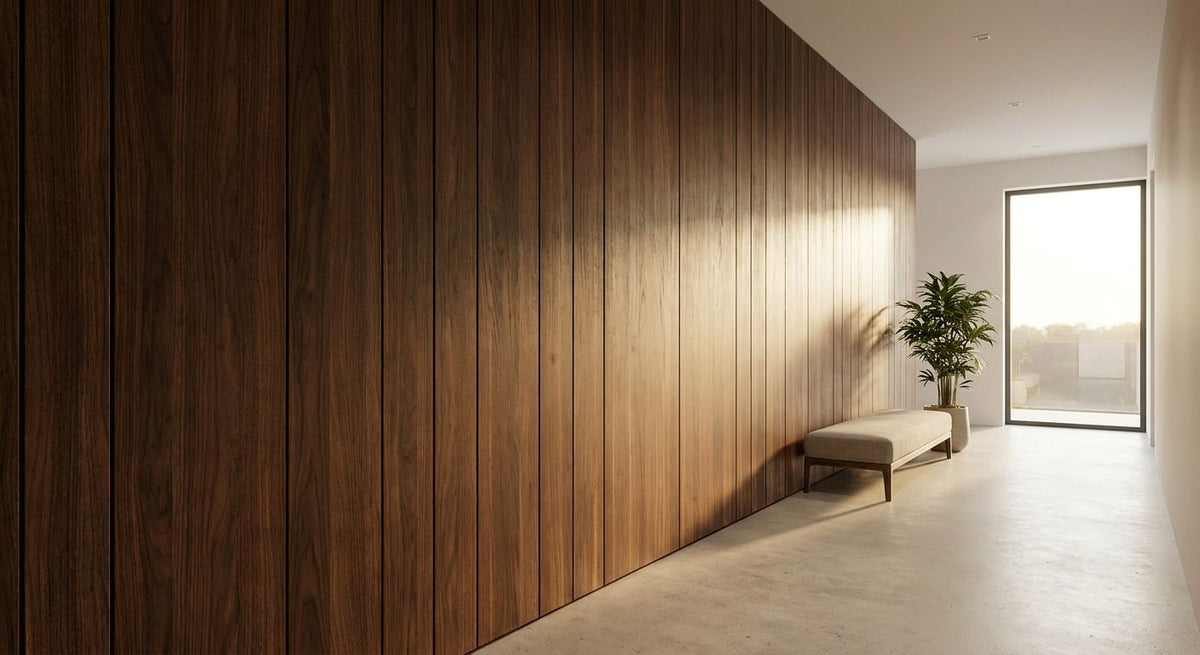
Walnut wall panels bring a warmer, richer tone to a hallway than oak ever will, and a hallway is one of the few rooms where a feature wall actually gets seen every single day. This guide breaks down which walnut wall panel to buy for a UK hallway feature wall in 2026, what to skip, and how the sizing actually works once you measure your corridor.
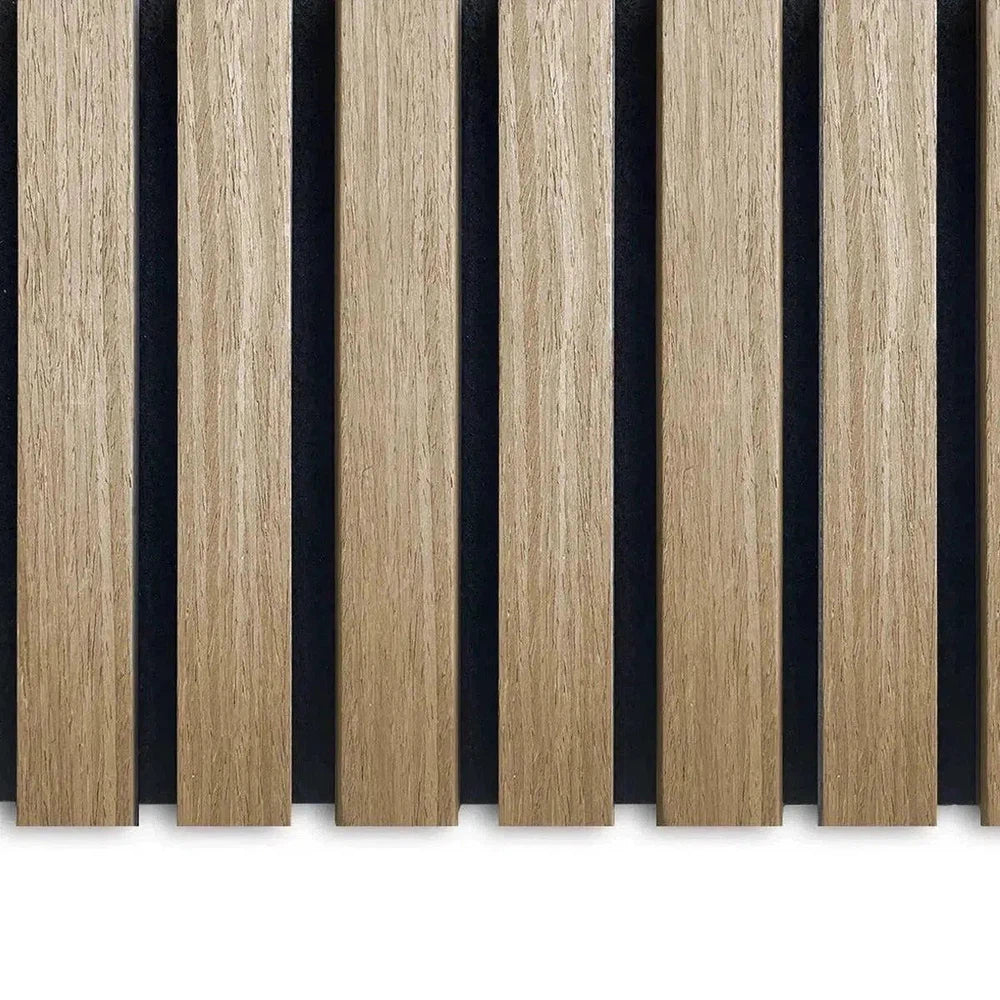
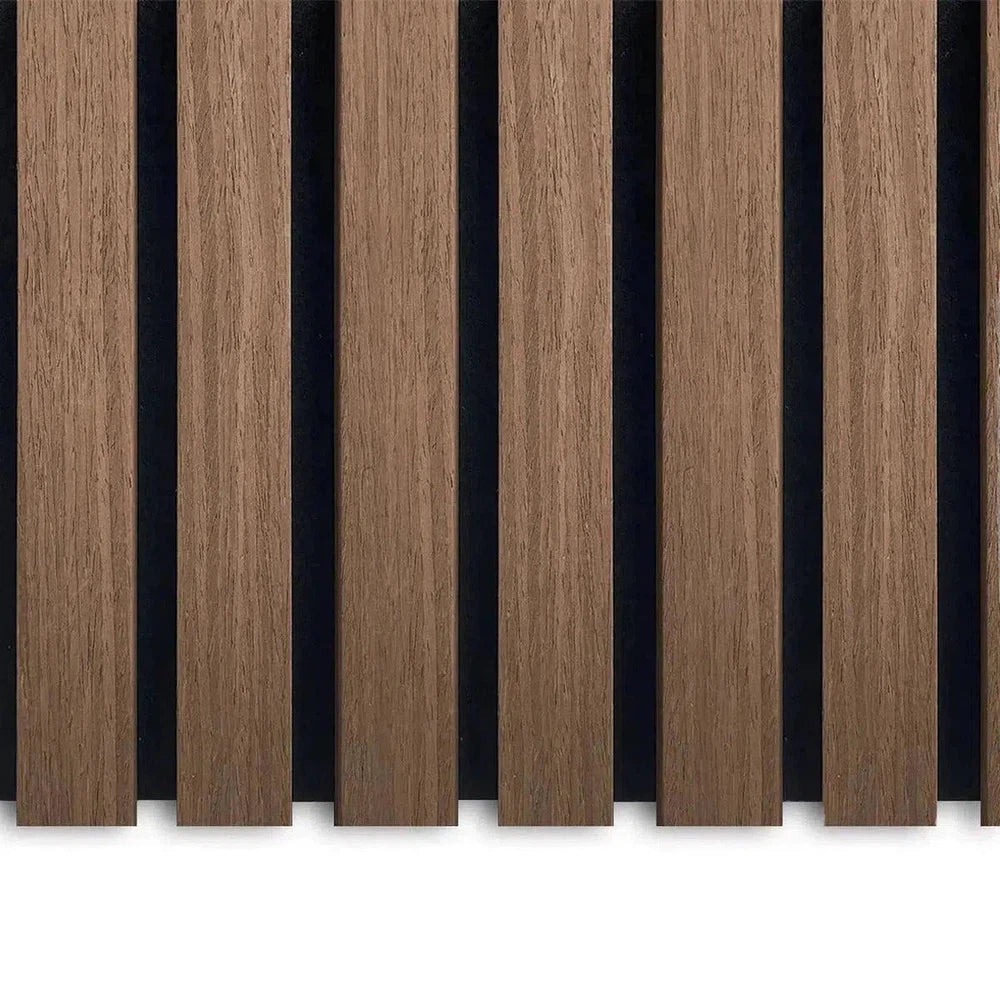
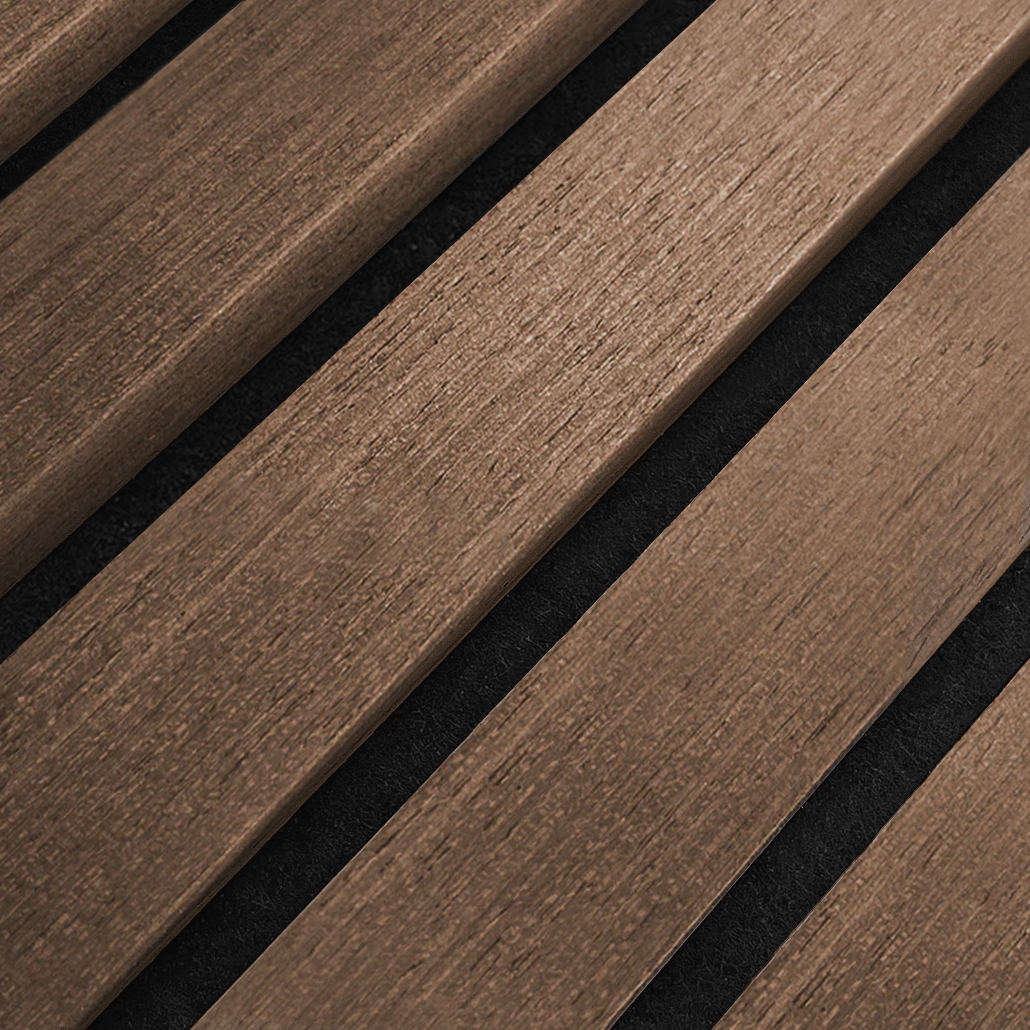
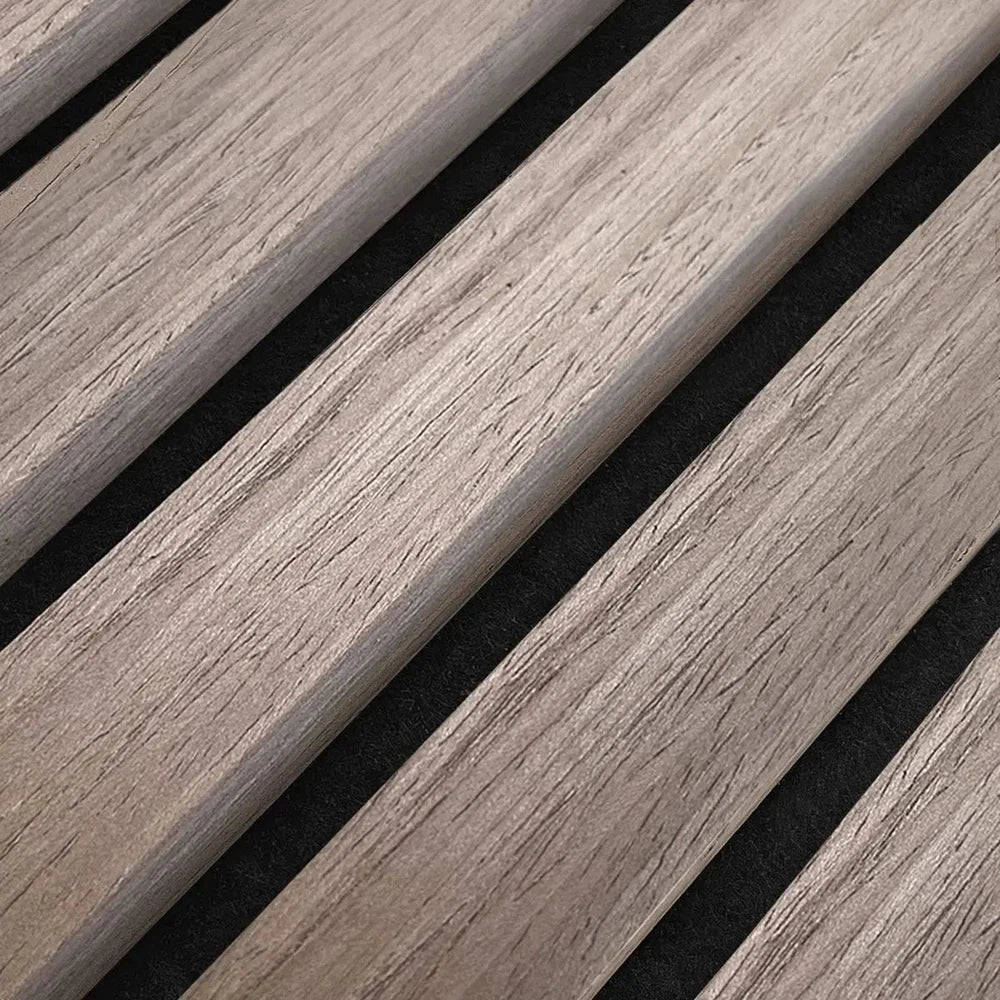
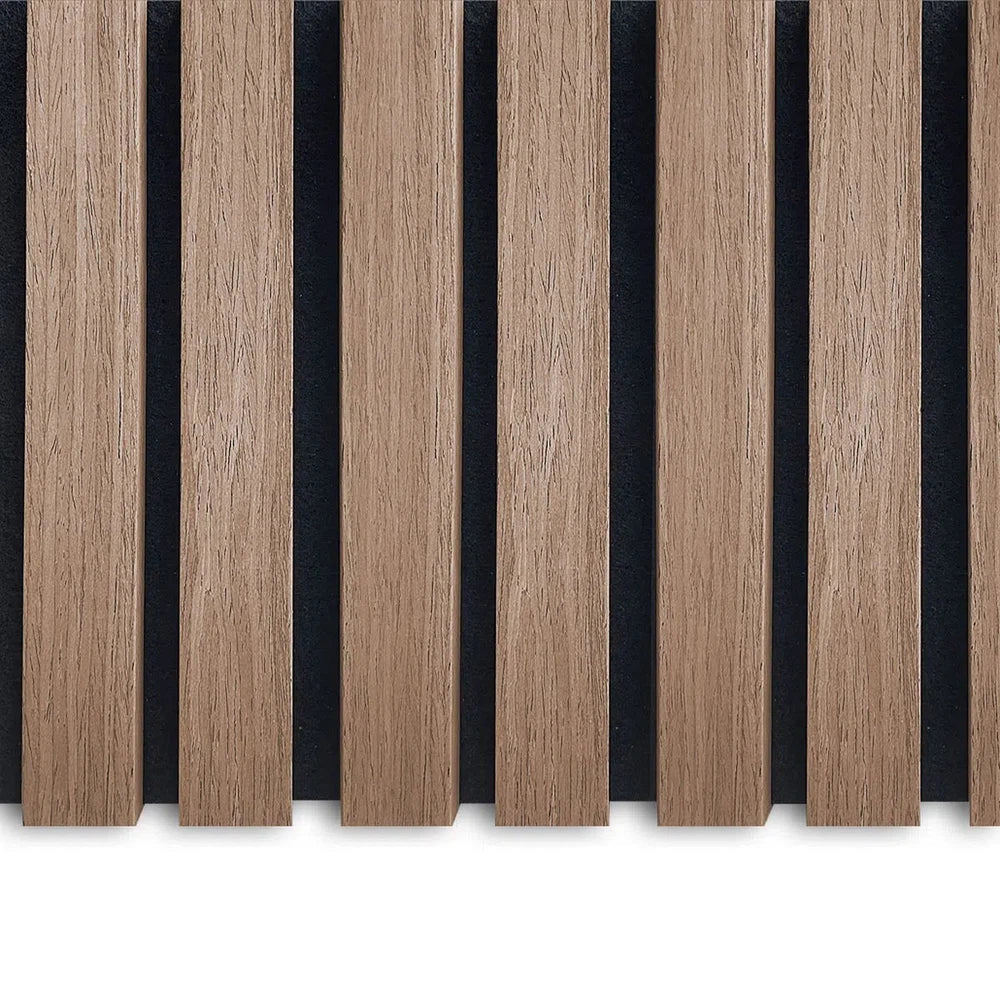
- Wooden Wall Panel Walnut is the safe buy for most hallways — 3-sided real wood veneer in 240 cm and 300 cm lengths.
- Hexagon Acoustic Panel Walnut with Grey Felt suits narrow corridors that need real echo control, not just decoration.
- Velvet Walnut 3D Wood Wall Panel is the wildcard for a short accent run, not a full-length hallway.
- Skip painted MDF slat panels sold as 'walnut' — they're not real wood veneer and they scuff fast in a high-traffic corridor.
Why this matters
A hallway is a transition space, not a room you sit in — which changes what you should actually be buying. Wall panels there take more knocks (coats, bags, pushchairs) than a living room feature wall ever will, and most hallways in UK homes are narrower and darker than the rooms either side of them.
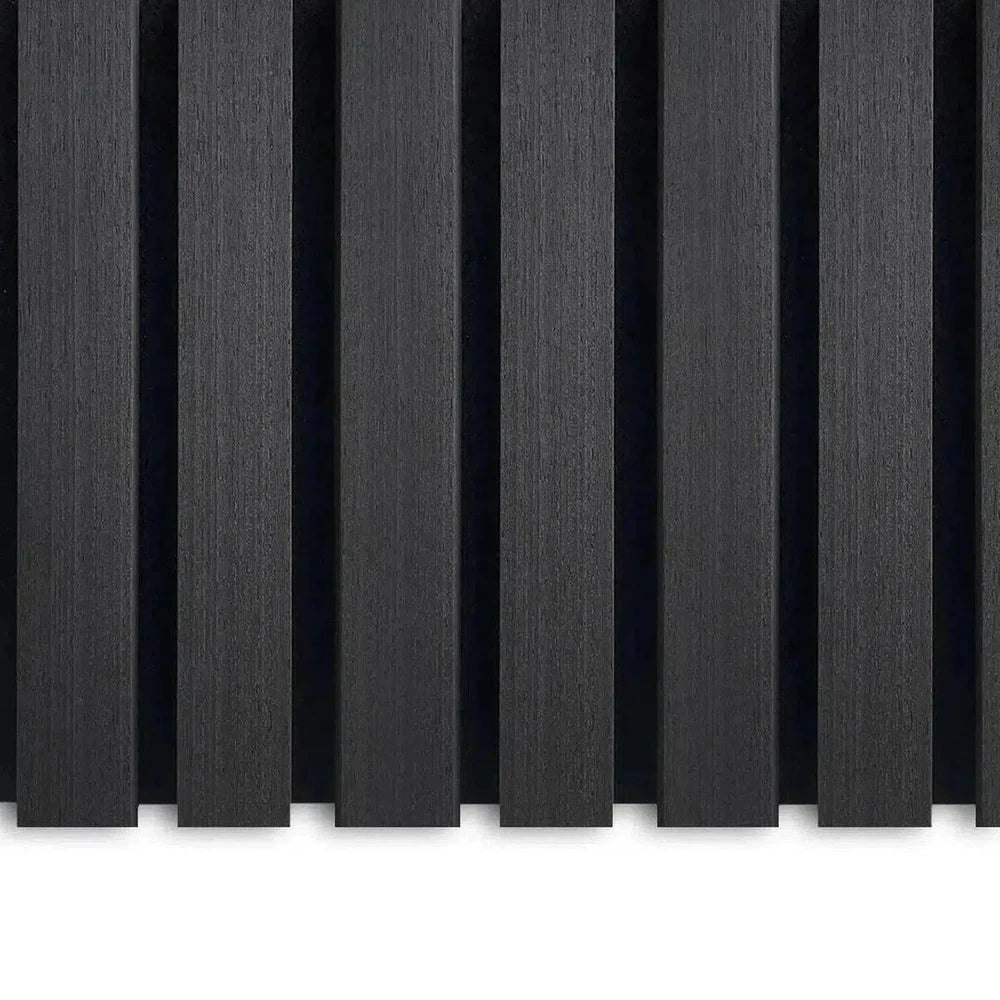
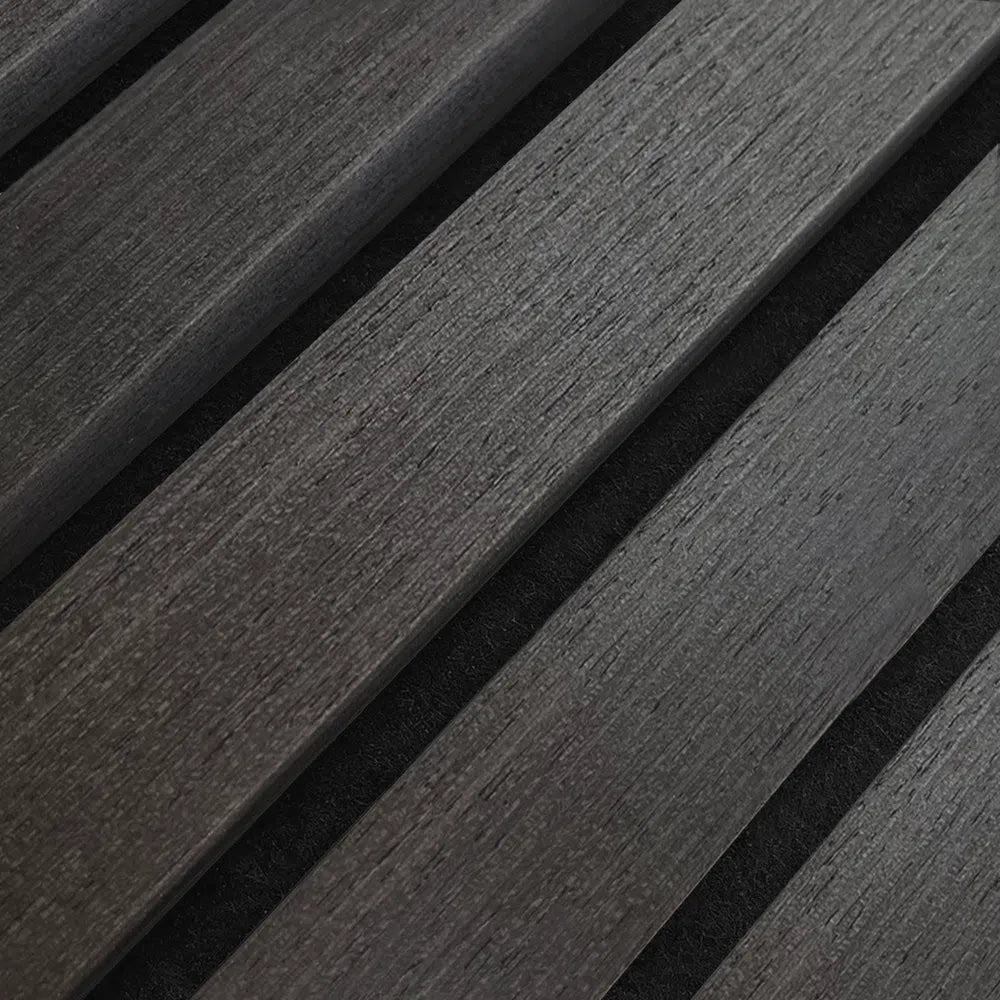
Walnut solves the dark-corridor problem better than most finishes because the grain reads warm even under a single ceiling pendant, unlike grey oak or black oak, which can flatten a windowless hallway into a shadow box. That's the whole case for walnut wall panels here: warmth without adding more light fixtures.
Who this is for
This guide is for a homeowner staring at a plain plastered hallway wall — usually the run from the front door to the stairs — who wants it to look finished without turning the corridor into a construction project. You're probably comparing paint, wallpaper, and panelling, and you've landed on wood because flat colour doesn't hide scuffs the way panelling does.
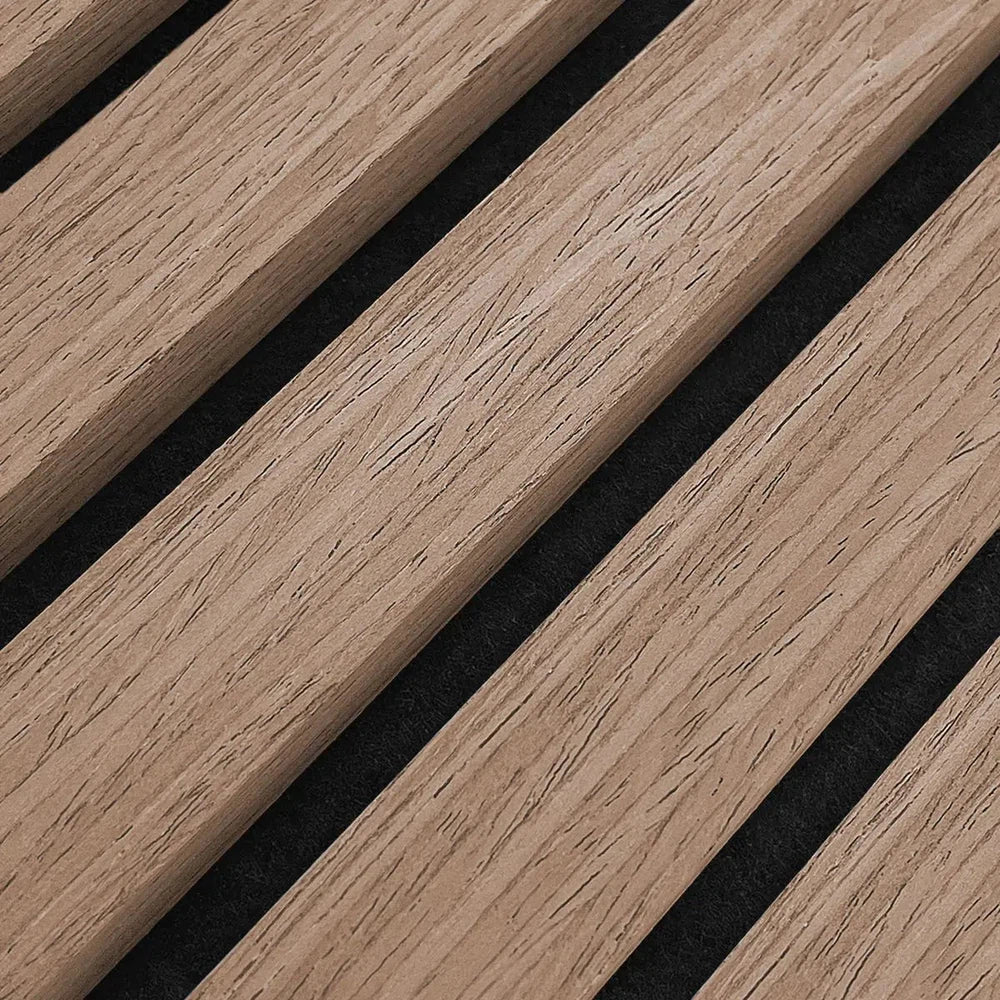
The Wooden Wall Panel Walnut from Akuwood Panel is the starting point for that comparison — 3-sided real wood veneer over an acoustic felt backing, sold in both 240 cm and 300 cm lengths so it fits standard and taller UK ceiling runs without excessive cutting. If your hallway also carries footsteps and door slams up to a landing, walnut wall panels with felt backing do double duty: they look like a design choice and quietly cut down flanking noise at the same time.
What to look for in walnut wall panels for a hallway
Real 3-sided veneer, not a printed foil
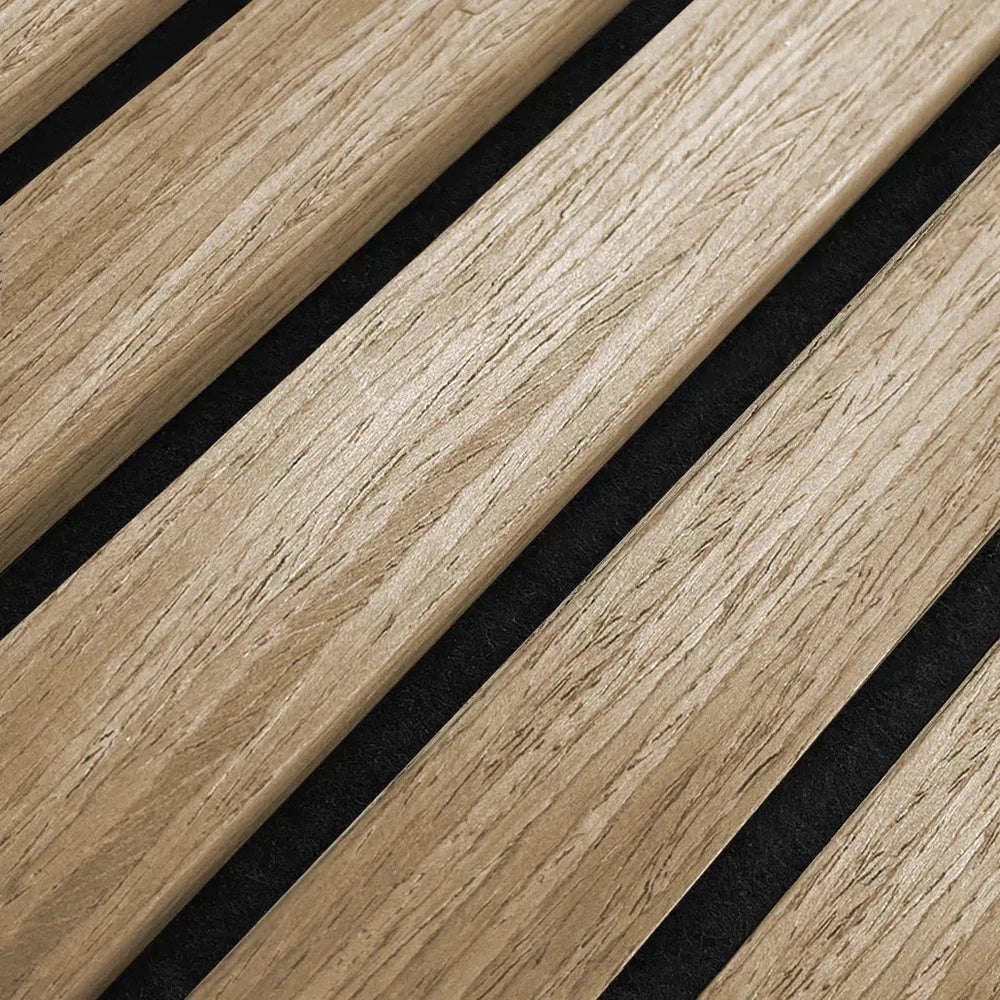
A hallway is viewed at close range and from an angle as people walk past, so a printed wood-effect foil shows its seams and repeats fast. Real veneer on three visible sides means the grain looks continuous even when you're standing a metre from the wall, which is exactly the viewing distance in most corridors.
Panel length against your ceiling height
Check your hallway's floor-to-ceiling measurement before you order anything. Akuwood Panel's walnut wall panels come in 240 cm and 300 cm lengths — 240 cm suits a standard UK ceiling height, while 300 cm avoids a horizontal seam in period homes with taller hallways.
Acoustic felt backing for stairwell noise
Hallways next to staircases carry sound up through the house, and bare plaster does nothing to stop it. A felt-backed panel — like the hexagon range with its NRC 0.75 rating — absorbs some of that reflected noise instead of bouncing it straight back down the stairs.
Tone consistency across multiple panels
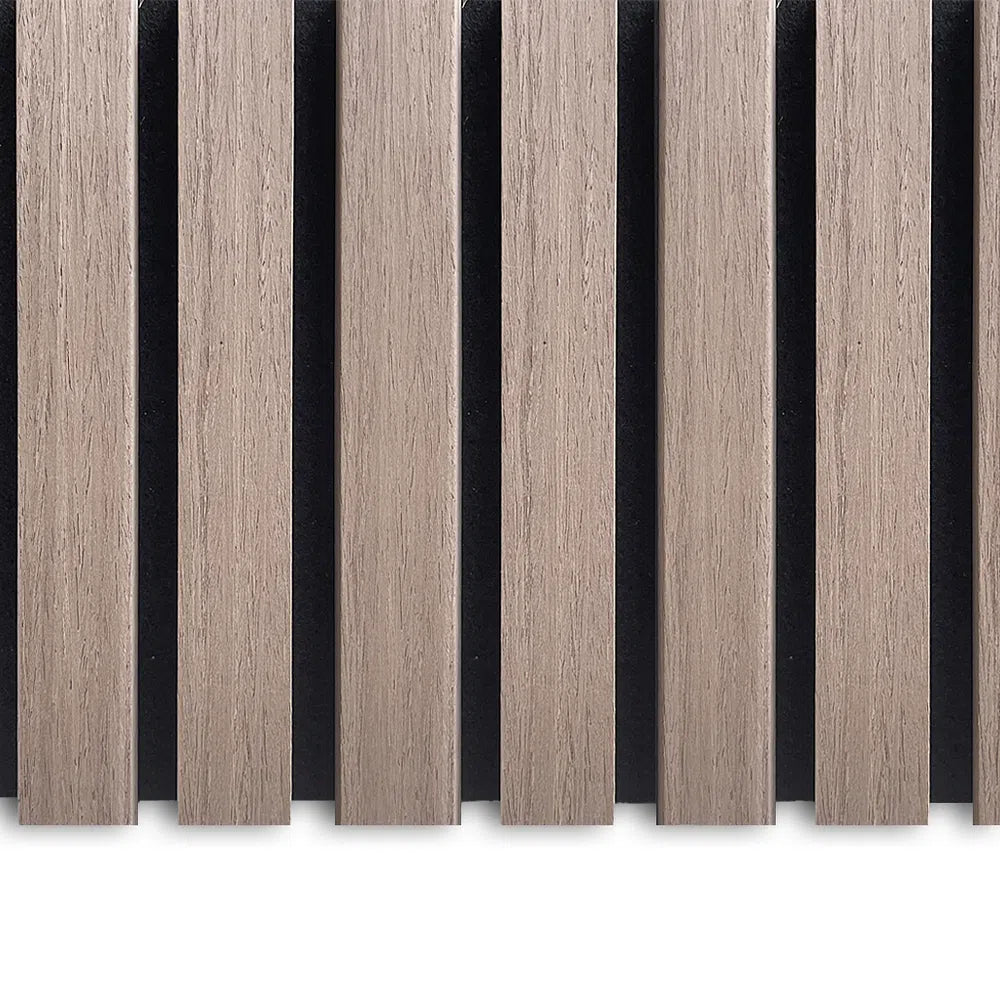
Real wood veneer varies slightly batch to batch, which is normal and part of why it looks like wood instead of plastic. For a hallway you'll be walking past daily, order a sample first and lay panels in sequence rather than mixing boxes at random.
Fixing method for a narrow corridor
Most hallways don't have the clearance for thick battens on both sides, so check whether the panel needs a full batten frame or can be glued directly with a compatible panel adhesive. This matters more in a hallway than a living room because every centimetre of width counts when people are passing each other.
Top picks for a walnut hallway feature wall
The safe pick — Wooden Wall Panel Walnut. Real 3-sided wood veneer, acoustic felt backing, available in 240 cm and 300 cm lengths. This is the panel to run floor-to-picture-rail down a standard hallway wall in 2026, and it's the one most buyers should start with. Buy.
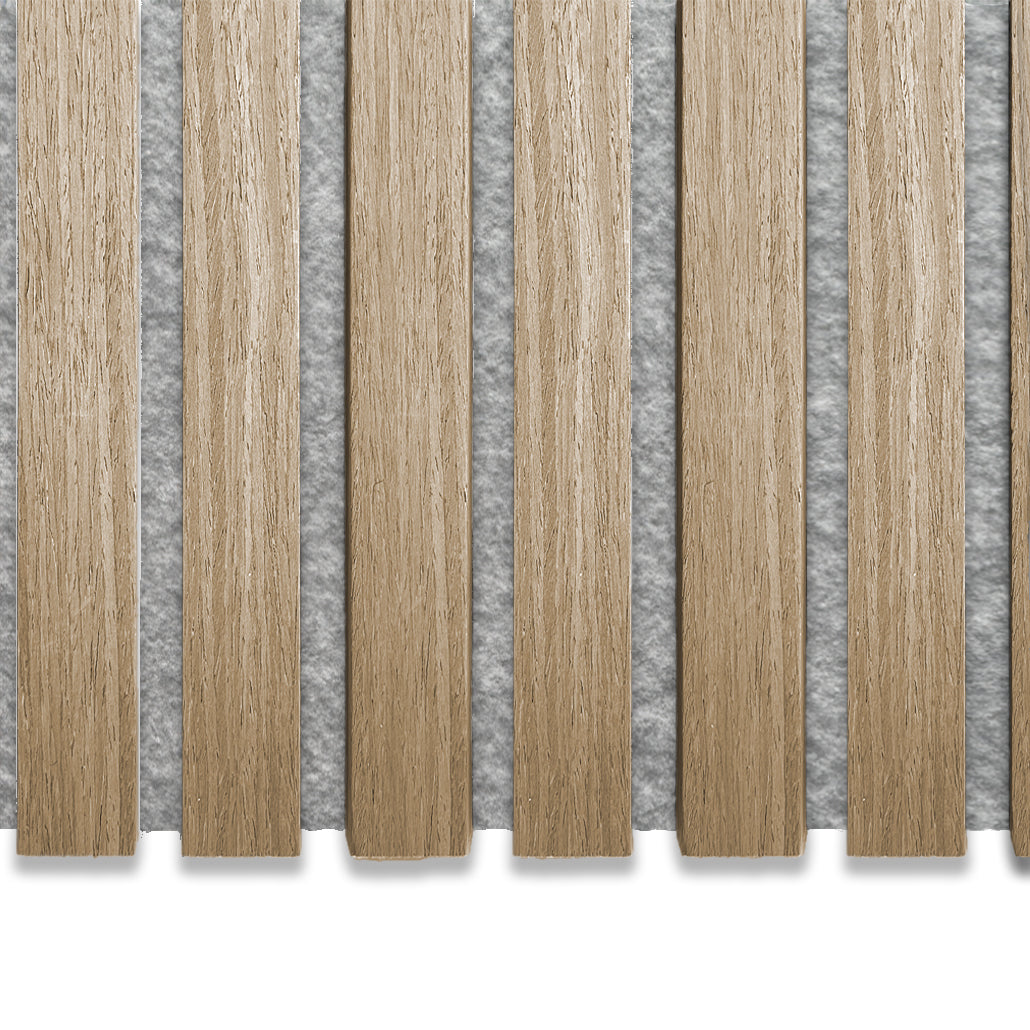
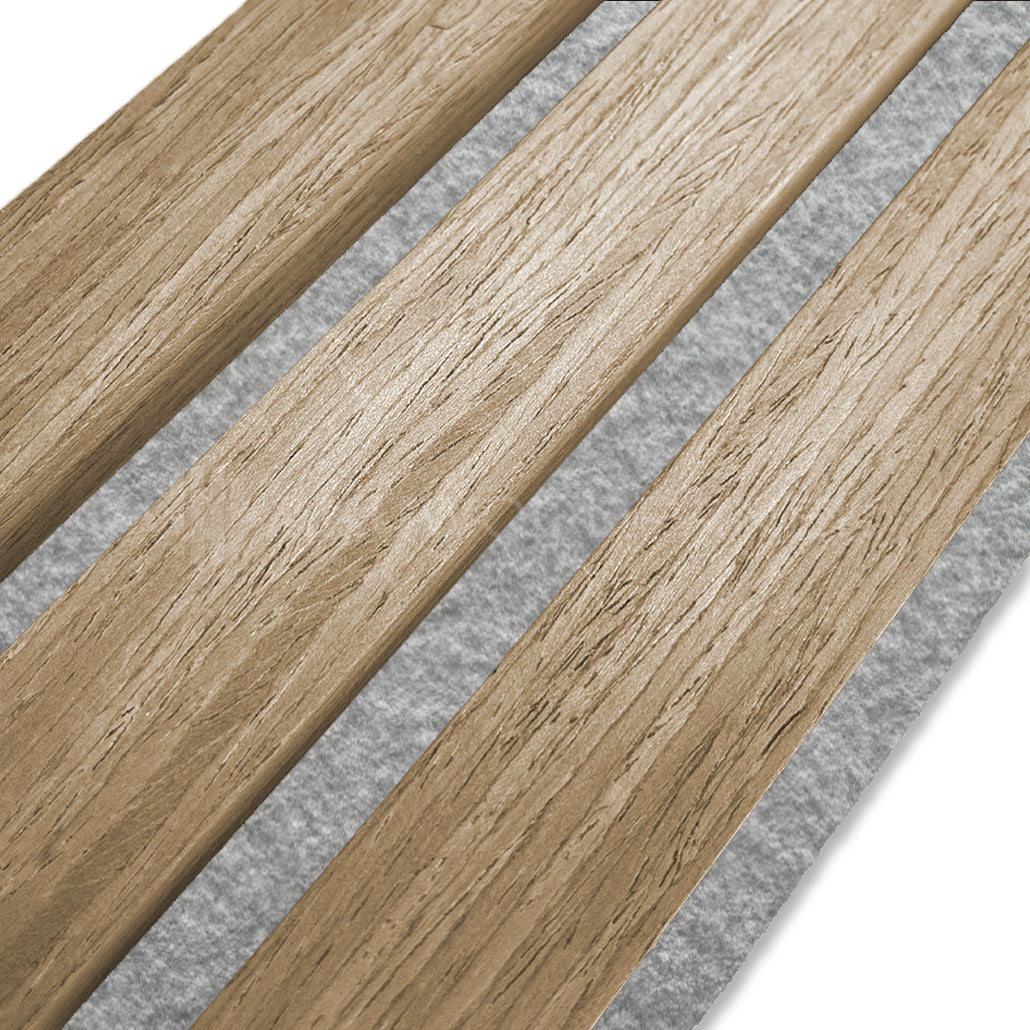
The textured statement — Hexagon Acoustic Panel Walnut with Grey Felt. Fixed hexagon modules instead of long slats, with a felt backing rated NRC 0.75 for sound absorption. This suits a hallway where you want a geometric feature wall rather than a full slat run, particularly around a stairwell where noise control earns its keep. Buy.
The wildcard — Velvet Walnut 3D Wood Wall Panel. A sculpted, dimensional real-wood surface rather than a flat veneer slat. It reads as a design statement under a single spotlight, which makes it better suited to a short accent section — behind a console table, for example — than a full hallway run. Consider.
The finishing touch — End Piece Wooden Wall Panel Walnut. A matching trim piece that closes off raw panel edges at corners and doorframes. Skip this and your hallway feature wall will show unfinished veneer edges at every turn. Consider.
The low-risk test — Sample Wooden Wall Panel Walnut. A swatch-sized piece of the same veneer, useful for checking the tone against your hallway's actual light before committing to a full run. Buy.
What to avoid
- Printed MDF slats sold as "walnut effect." They lack the real veneer grain that makes walnut wall panels worth the upfront cost, and the print wears through at knock height in a corridor within a couple of years.
- A single dark tone with no felt backing in a windowless hallway. Walnut is already a deep tone; pairing it with zero light bounce and no acoustic softening in a narrow space can make the hallway feel smaller, not more finished.
- Ordering a full-length run without end pieces or samples. Raw edges at the corner and a tone mismatch you only spot after installing eight panels are the two most avoidable mistakes on a hallway job.
Verdict comparison
| Panel | Veneer type | Size options | Acoustic backing | Verdict |
|---|---|---|---|---|
| Wooden Wall Panel Walnut | 3-sided real wood veneer | 240 cm and 300 cm | Felt backing | Buy |
| Hexagon Acoustic Panel Walnut with Grey Felt | Real wood veneer, hexagon module | Fixed hexagon size | NRC 0.75 felt | Buy |
| Velvet Walnut 3D Wood Wall Panel | Sculpted real wood | Fixed panel size | Not felt-backed | Consider |
| End Piece Wooden Wall Panel Walnut | Matching veneer trim | Trim length | N/A | Consider |
| Sample Wooden Wall Panel Walnut | Real wood veneer swatch | Sample size | N/A | Buy (for testing) |
For context on how the two lengths behave once fitted, Akuwood Panel's guide on choosing between 240 and 300 cm panels walks through the measuring step in more detail than fits here, and the brand's separate roundup of walnut wall panels for luxury interiors is worth a look if your hallway leads into a more formal reception space rather than a standard terrace corridor.
FAQ
What's the best walnut wall panel for a hallway feature wall in 2026?
Wooden Wall Panel Walnut from Akuwood Panel is the best all-round choice for 2026 — real 3-sided veneer, felt backing, and 240 cm or 300 cm lengths to match standard UK ceiling heights. It suits a full hallway run rather than a short accent section.
Is walnut better than oak for a dark hallway?
Walnut generally reads warmer than oak under low light, which helps a windowless or north-facing hallway feel less flat. Grey oak or black oak can look better in bright, naturally lit corridors instead.
Do walnut wall panels actually reduce hallway echo?
Panels with an acoustic felt backing, like the hexagon walnut range rated NRC 0.75, absorb some reflected sound rather than just decorating the wall. A flat, unbacked veneer panel won't do much for noise on its own.
What size wall panels fit a standard UK hallway ceiling?
240 cm panels suit most standard UK ceiling heights without a horizontal seam. Period homes with taller hallways usually need the 300 cm option instead.
Can I fit walnut wall panels without battens in a narrow corridor?
Fixing method depends on the specific panel and wall type, but a compatible panel adhesive is the usual route in tight corridors where a full batten frame would eat into walking width. Check the fixing guidance on the product page before ordering.
How do I stop the walnut tone looking patchy across several panels?
Order a sample first and lay full panels in sequence from the same batch where possible. Real wood veneer varies slightly by nature, which is normal, but sequencing panels reduces visible jumps in tone.
Are walnut wall panels real wood or a printed veneer?
Akuwood Panel's walnut range uses a 3-sided real wood veneer over an acoustic felt backing, not a printed foil. Printed alternatives exist elsewhere in the market and tend to wear through faster in high-traffic areas like hallways.
Do I need end pieces for a walnut hallway feature wall?
Yes, if the panel run ends at a corner or doorframe. End pieces close off the raw veneer edge and give the installation a finished look rather than an exposed panel edge.
One last thing
Most hallway feature wall regrets aren't about the wood tone — they're about stopping the panel run at the wrong point, usually a doorframe with no end piece to close it off. Order the trim at the same time as the panels, not after you've already fitted the wall, and the whole job reads as finished rather than half-done.