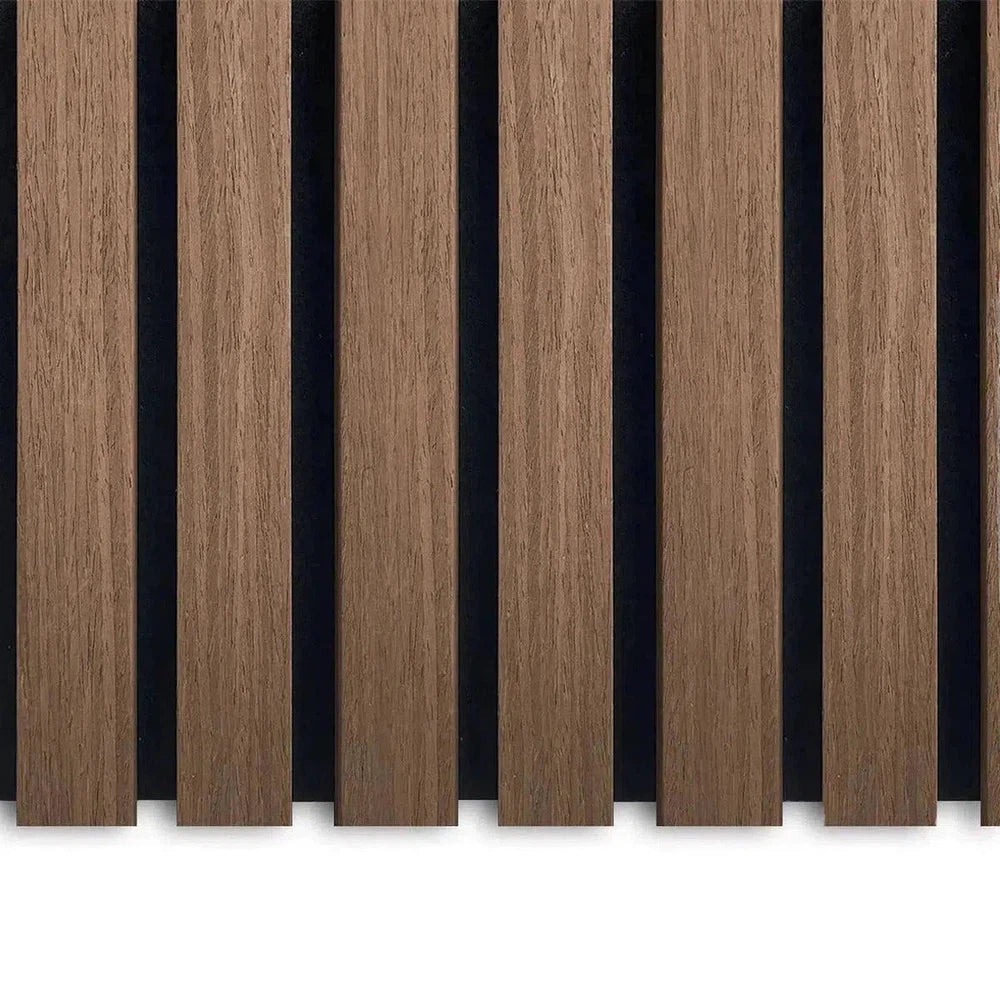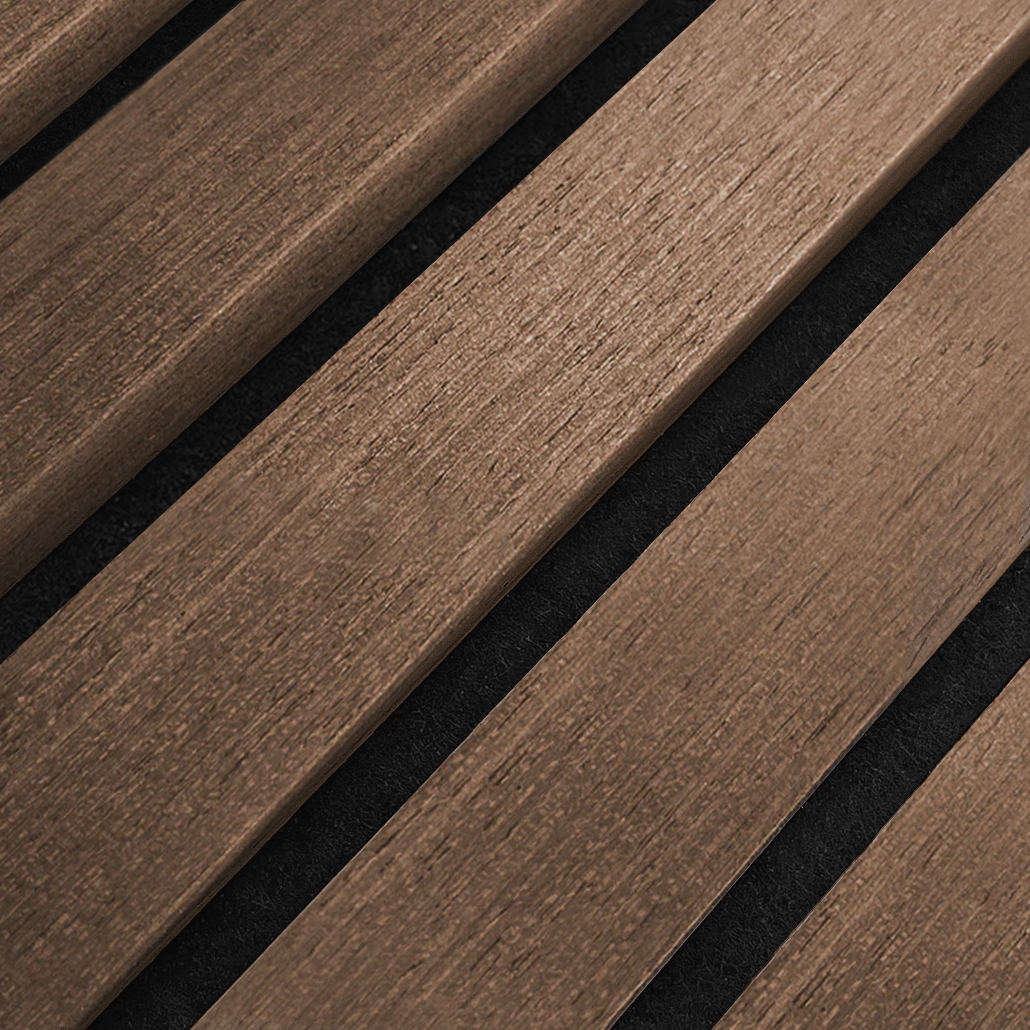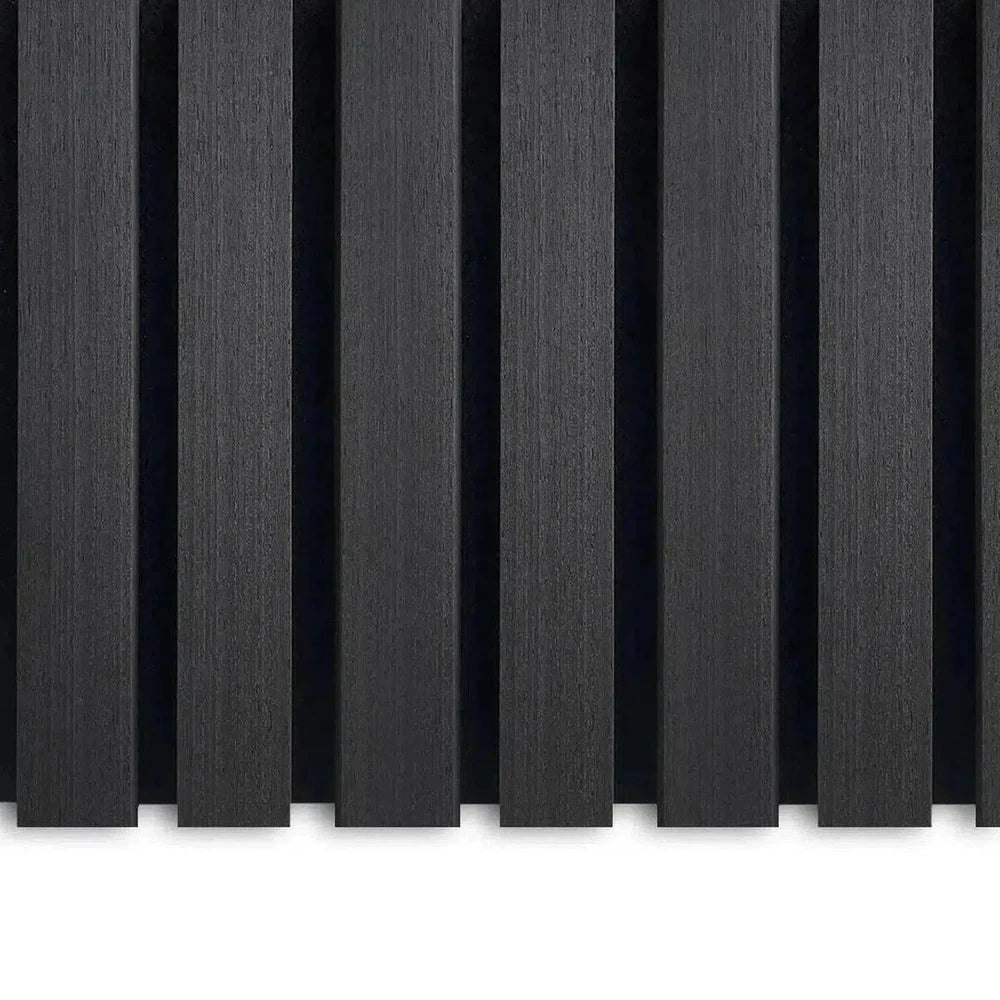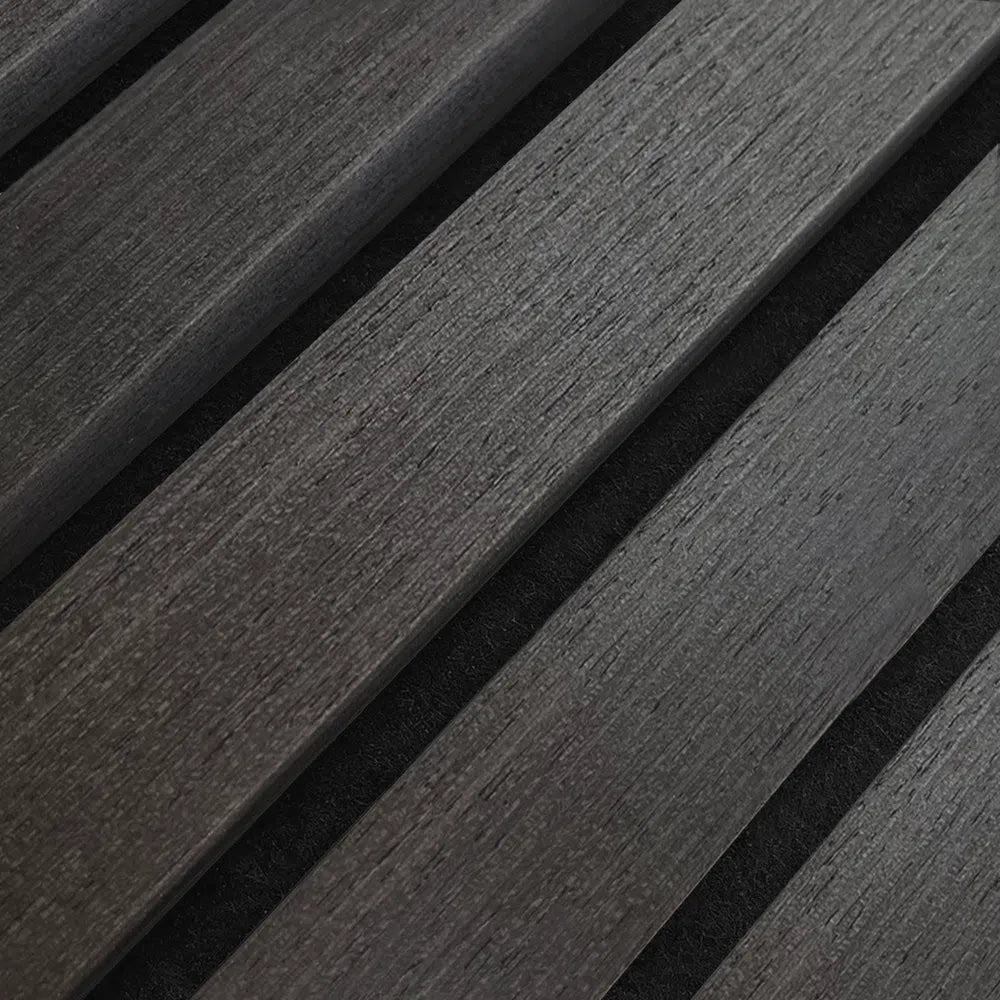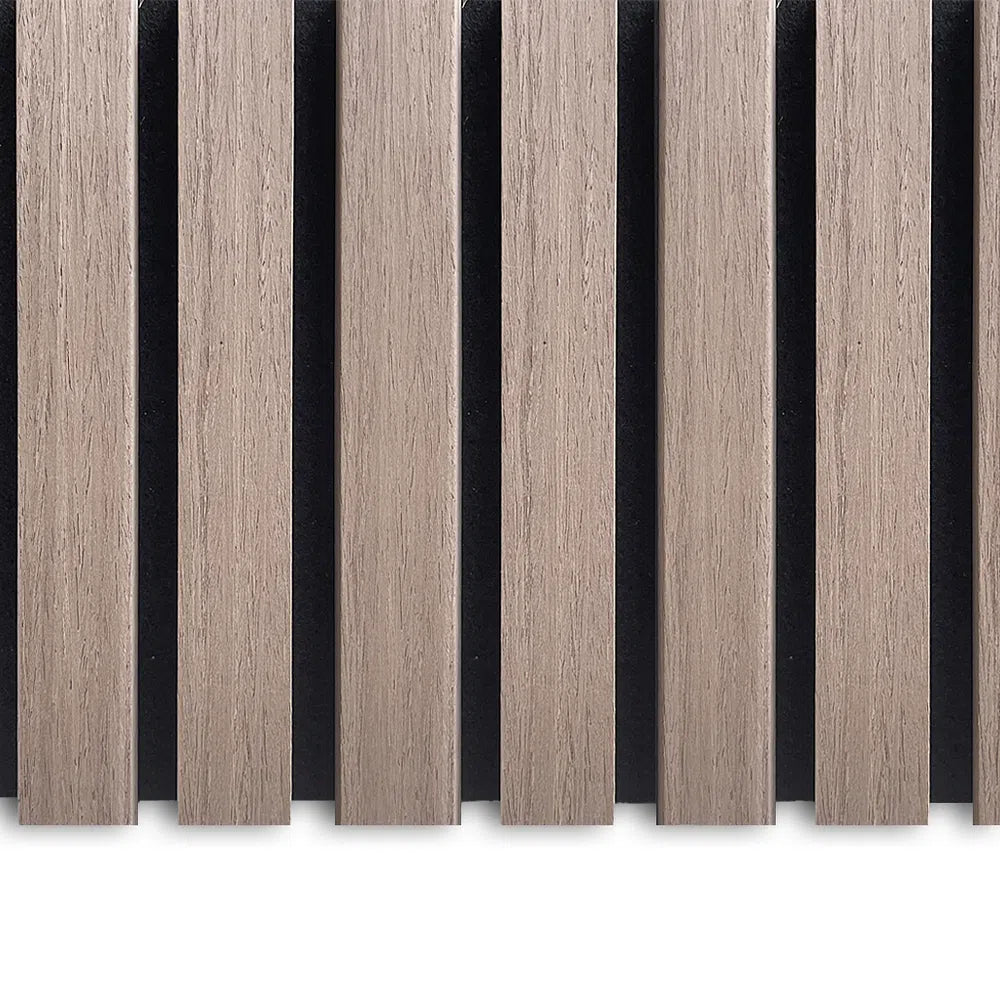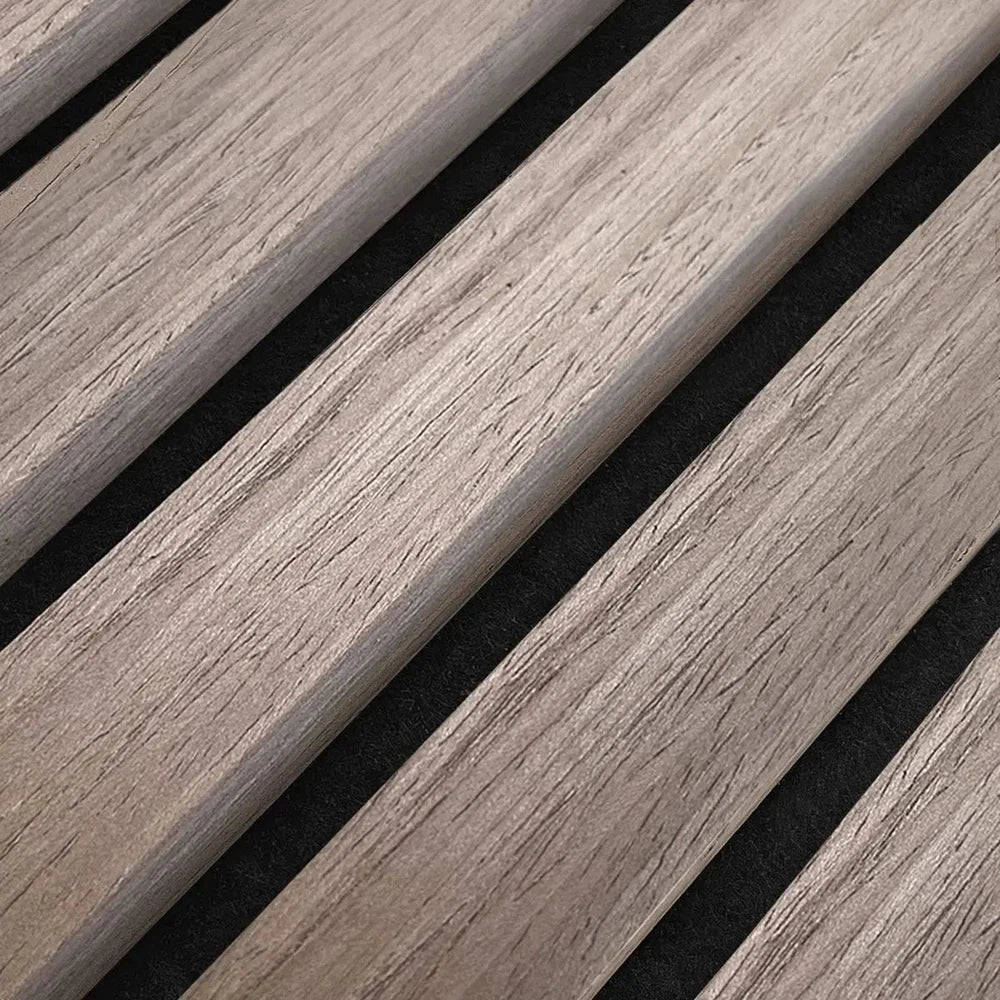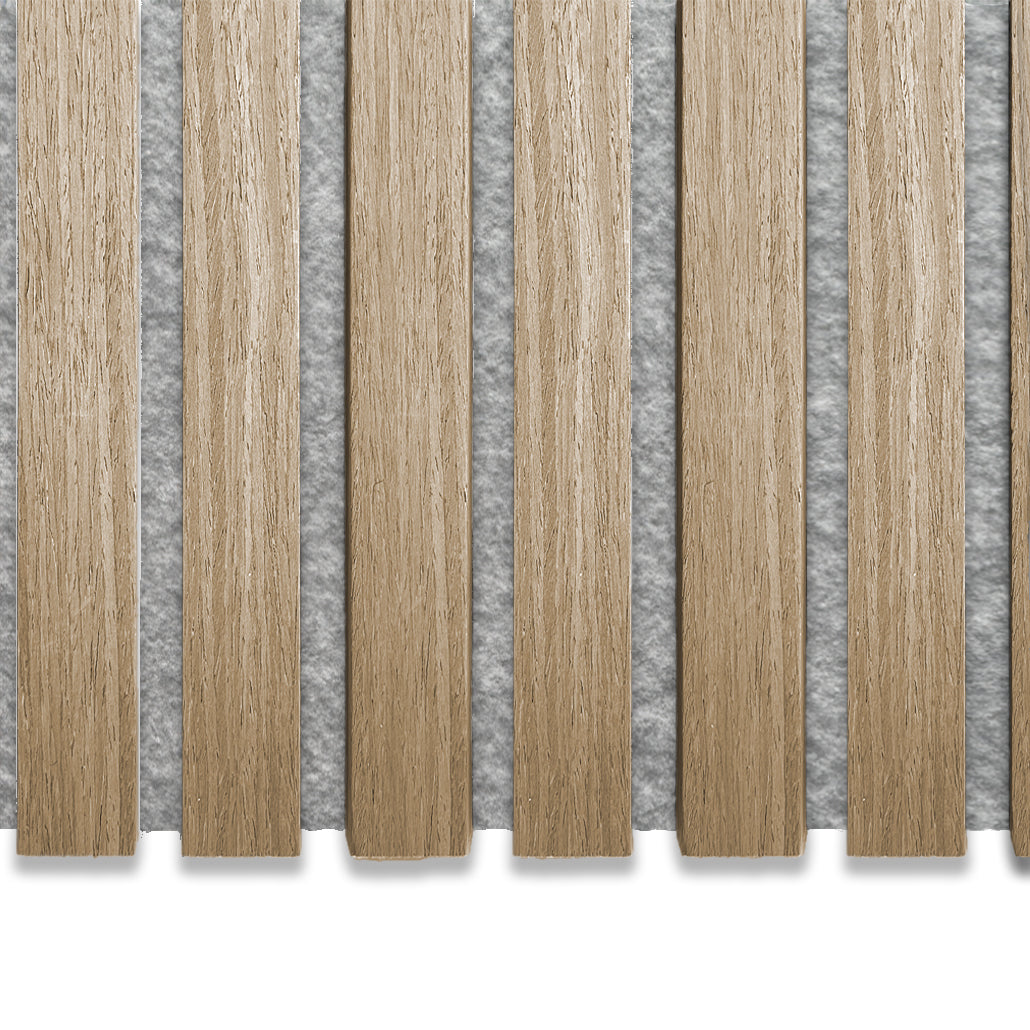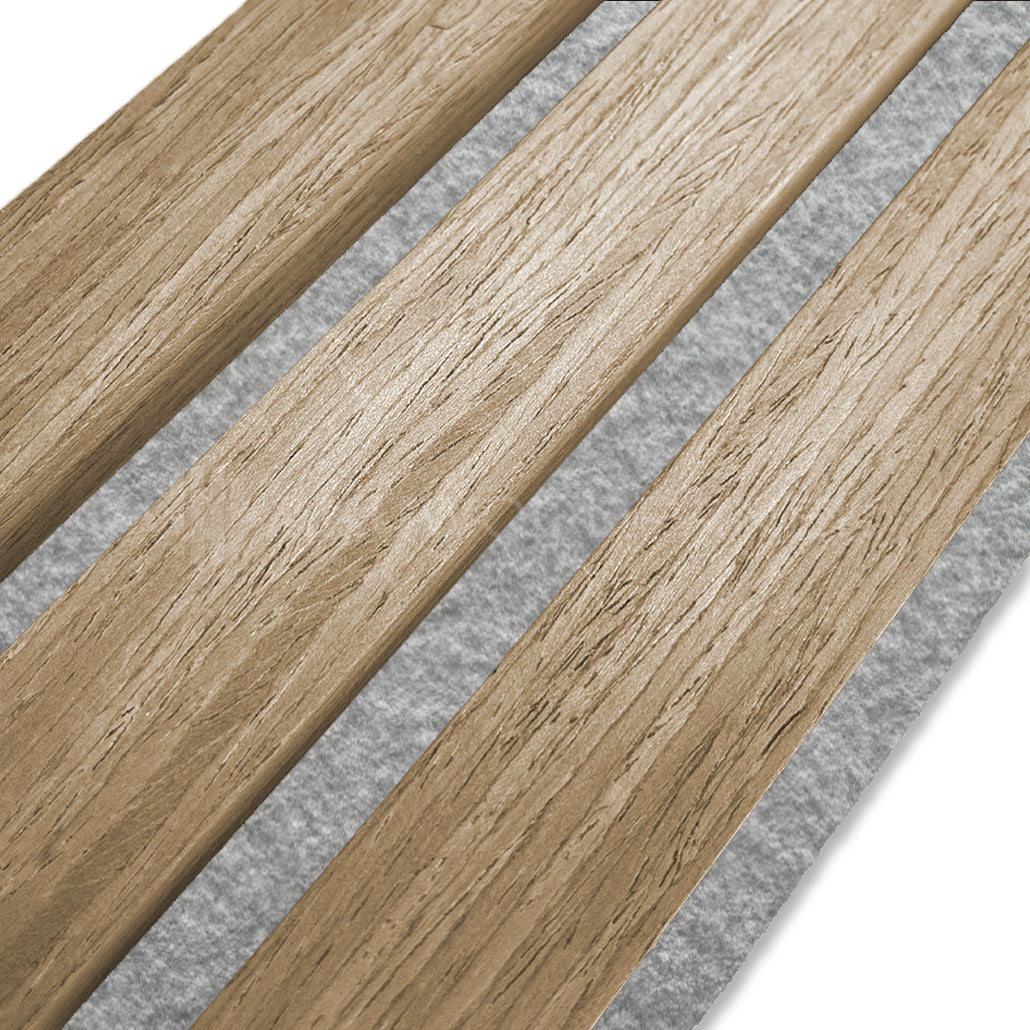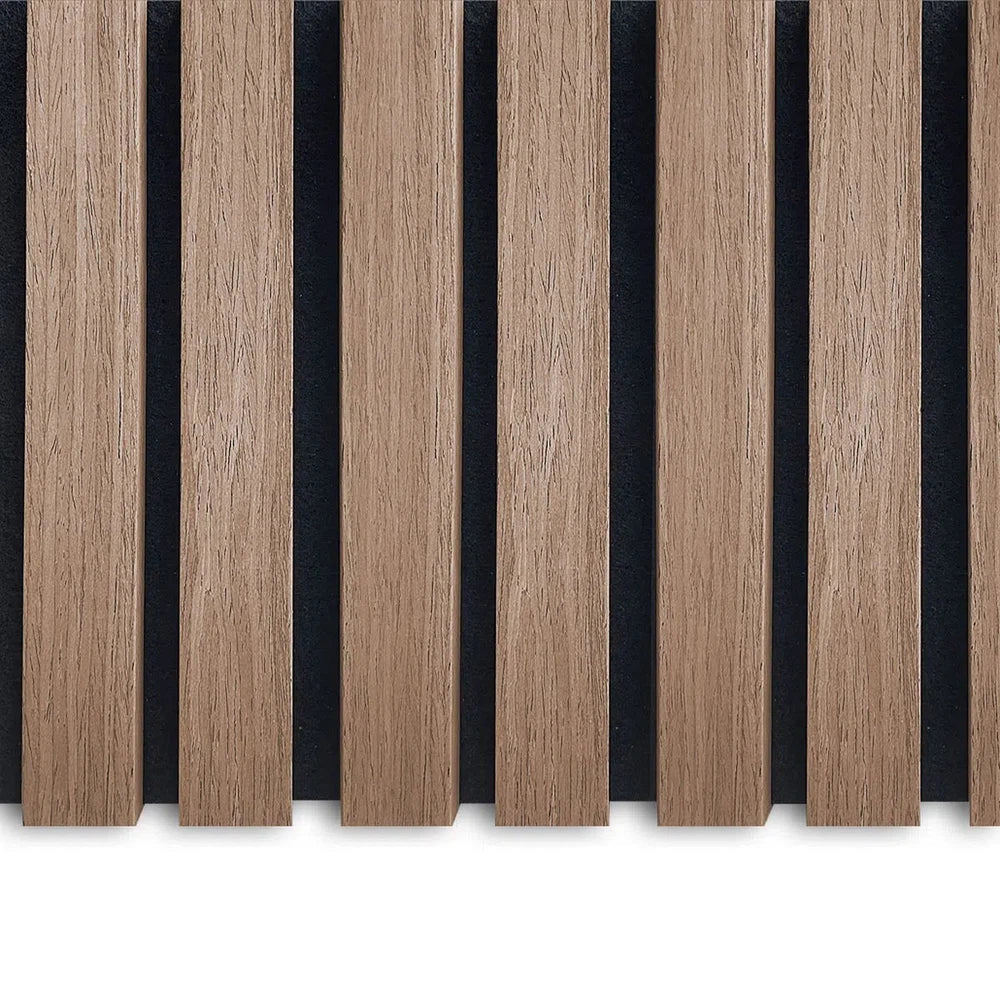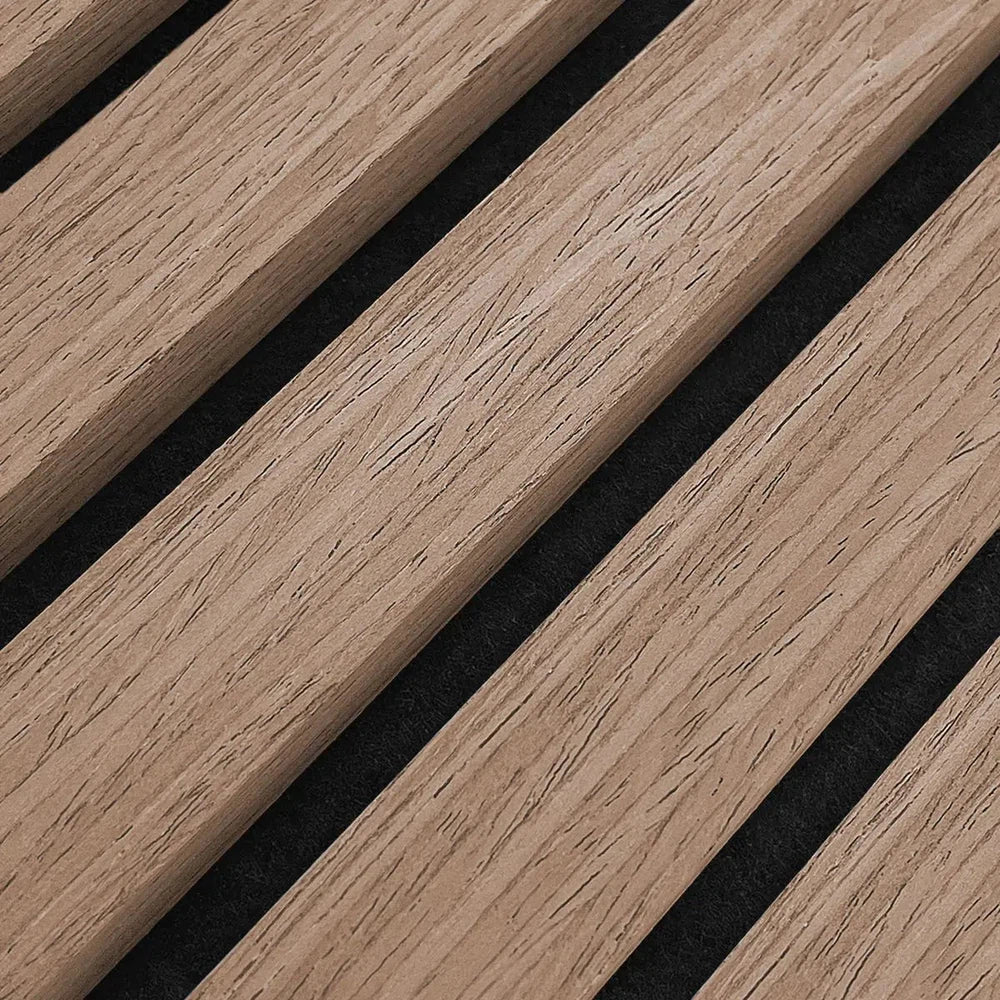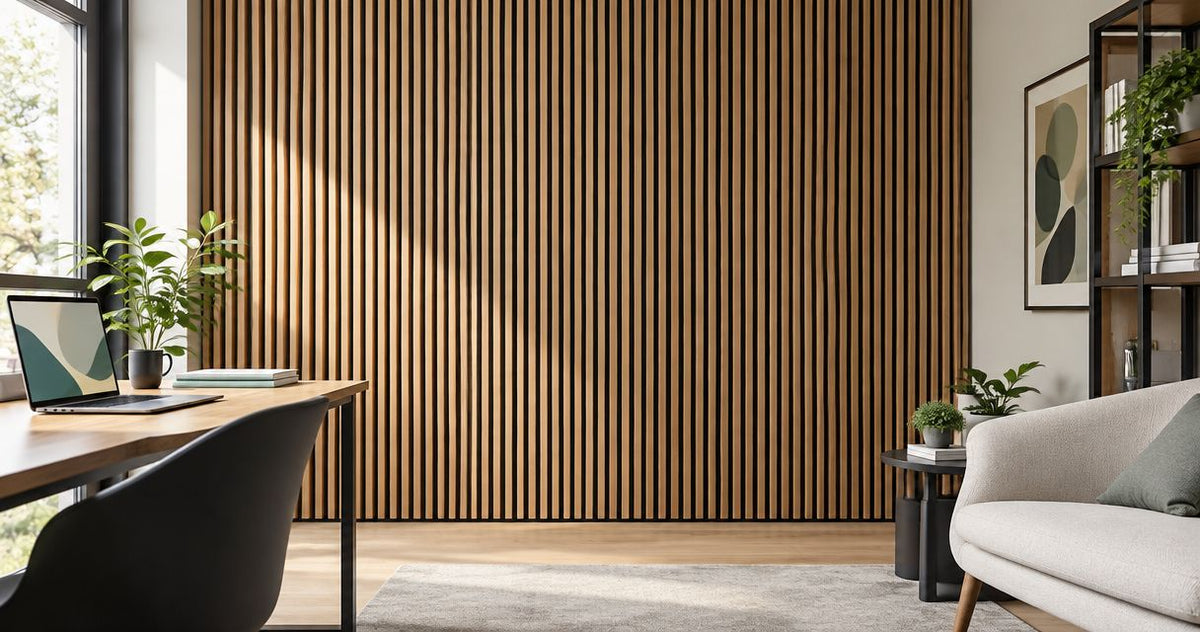
Aku Woodpanel's own catalogue makes the pick clear: Natural Oak wins as the best overall acoustic slatted wall panel for its narrow, even slat gap that suits most living rooms and offices in 2026. Smoked Oak takes the wide-gap category, cut with a bigger reveal between slats for deep shadow lines in dark rooms and home cinemas. Hexagon Acoustic Panel Smoked Oak wins for geometric spacing, trading straight-line gaps for a repeating hex pattern. Natural Oak Grey Felt is the pick for contrast walls, where the grey felt behind the slats is meant to show, not hide.
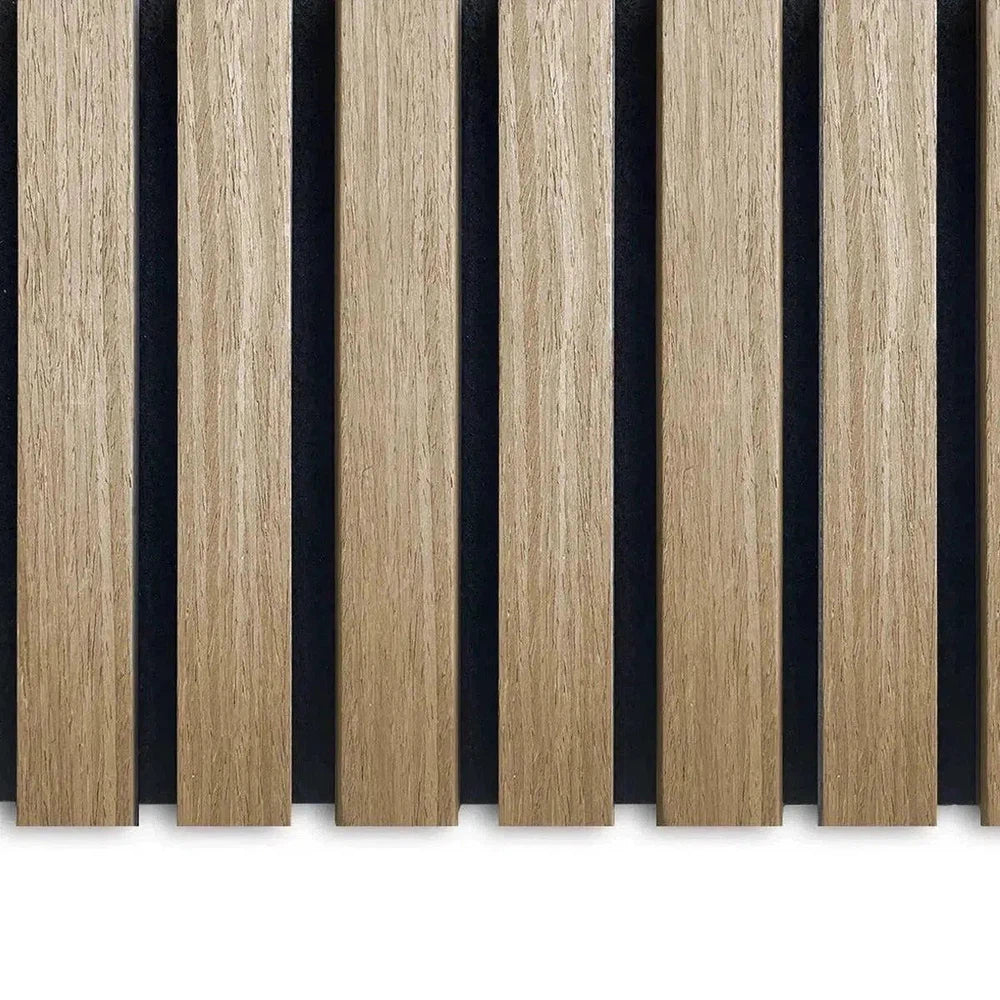
- Natural Oak is the best overall acoustic slatted wall panel for a narrow, even slat gap in 2026.
- Smoked Oak carries the widest gap on this list, built for dramatic shadow lines in dark rooms.
- Hexagon Acoustic Panel Smoked Oak swaps straight slats for a repeating hex layout entirely.
- Natural Oak Grey Felt is the contrast pick where the felt behind the slats is meant to show.
- Grey Oak has the tightest gap on the list, reading almost like a solid panel from a distance.
Why this matters
Slat gap width is not a cosmetic afterthought on an acoustic slatted wall panel - it changes how much felt backing is exposed to the room, and felt is what does the actual sound absorbing, not the wood face. A narrower gap looks calmer and closer to a solid panelled wall. A wider gap shows more felt, casts deeper shadow lines under downlights, and reads bolder from across a room.
Most buying guides for acoustic slatted wall panels compare finish colour or panel size (Aku Woodpanel ships in 240 cm and 300 cm formats) and skip spacing entirely. That is a mistake if you are trying to match a panel to a specific room: a tight-gap panel in a small hallway reads tidy, while the same room in a wide-gap finish can look busy fast.
“The felt behind the slats does the sound-absorbing work, not the wood - gap width decides how much of it the room actually sees.”
What makes the best acoustic slatted wall panel
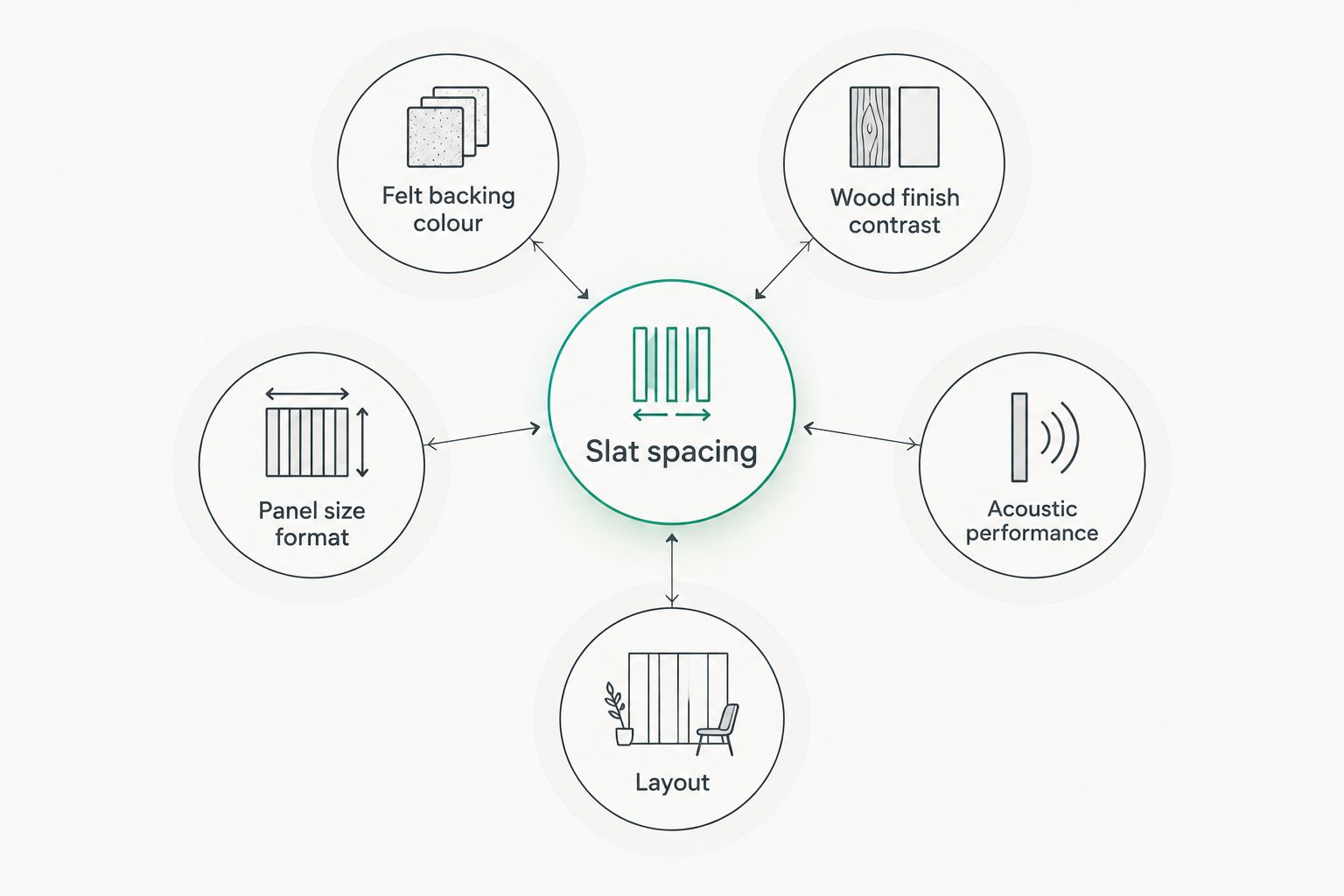
Rank any acoustic slatted wall panel against these six points before you compare finishes:
- Slat gap width relative to slat face - narrow gaps read as a near-solid wall; wide gaps expose more felt and shadow.
- Felt backing colour - black, grey or white felt changes how visible the gap reads against the wood.
- Wood finish contrast - pale finishes hide gap lines more than dark, high-contrast finishes.
- Panel size format - 240 cm and 300 cm runs change how many joints interrupt the spacing pattern.
- Acoustic performance versus decoration - more exposed felt generally means more absorption per panel.
- Layout type - straight slats follow one spacing rule; hexagon panels follow a completely different geometric rule.
Acoustic slatted wall panels at a glance
| Panel | Best for | Standout feature | Key limitation |
|---|---|---|---|
| Natural Oak | Narrow-gap everyday rooms | Even grain reads calm across a full wall run | Less dramatic on its own as a standalone feature wall |
| Natural Oak Grey Felt | Contrast feature walls | Grey felt shows through the gap for a two-tone look | The felt line can look busy on a very long wall |
| Smoked Oak | Wide-gap dark rooms and cinemas | Deep tone plus a wider gap doubles the shadow effect | Shows dust and fingerprints more than paler finishes |
| Rustic Oak Premium 3-Sided Wood Veneer | Textured farmhouse-style walls | Heavier grain reads well at wider spacing | Busier grain competes with very minimalist rooms |
| Hexagon Acoustic Panel Smoked Oak | Geometric, non-linear layouts | Hex tiles remove the straight-gap rule entirely | Harder to plan symmetrically around doors and switches |
| Grey Oak | Tight-gap Scandinavian interiors | Closest spacing on the list for a near-solid look | Lower felt exposure means less absorption per panel |
1. Natural Oak: best acoustic slatted wall panel for narrow-gap everyday rooms
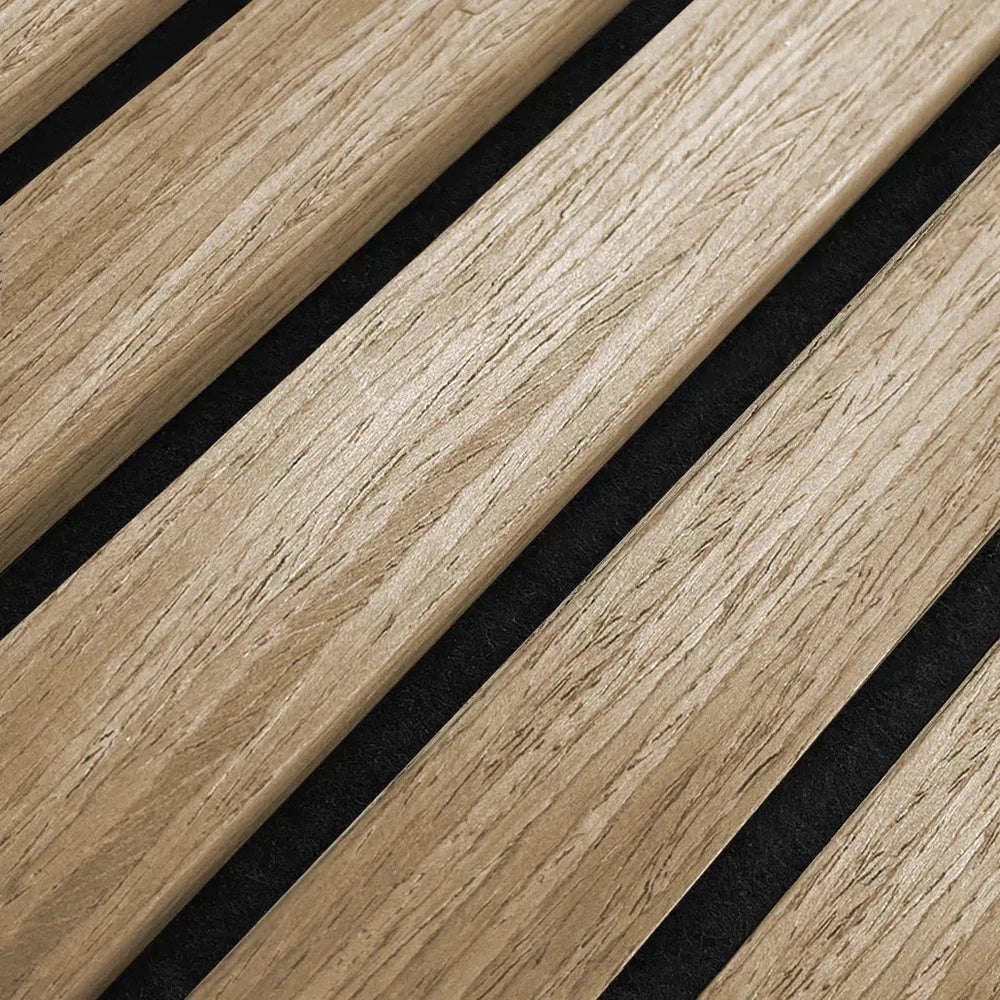
Natural Oak runs the tightest common gap on the standard range, which keeps the wall reading as one continuous surface rather than a strip pattern. The 3-sided real wood veneer finish sits over an acoustic felt backing, so the panel still absorbs sound even with less felt visible through the gap. It works across living rooms, bedrooms and home offices without dominating the room.
Natural Oak pros:
- Narrow, even gap suits almost any room without overwhelming the space
- Pale finish hides dust and small marks better than darker options
- Works in both the 240 cm and 300 cm size formats
Natural Oak cons:
- Less visual drama than a wide-gap finish on a large feature wall
- The tighter gap exposes less felt, so acoustic gain per panel is modest
Best for: living rooms, bedrooms and offices that need a calm, even wall texture.
Verdict: Buy - the safest narrow-gap acoustic slatted wall panel on Aku Woodpanel's range for 2026.

2. Natural Oak Grey Felt: best acoustic slatted wall panel for contrast feature walls
Same narrow-gap layout as standard Natural Oak, but the grey felt backing is meant to be seen, not hidden. That contrast turns a plain wall into a two-tone feature without adding pattern or colour to the wood itself. It suits rooms where you want texture without switching to a darker wood finish.
Natural Oak Grey Felt pros:
- Grey felt adds visible contrast without a bold wood colour change
- Keeps the same narrow-gap coverage as standard Natural Oak
- Reads more contemporary than an all-wood finish
Natural Oak Grey Felt cons:
- The felt line can look busy across a very long, uninterrupted wall
- Less traditional than a plain oak finish for period-style rooms
Best for: contemporary living rooms and offices that want texture without a dark wood tone.
Verdict: Buy - if the contrast reads right in your room's lighting, this is the strongest two-tone option on the list.
3. Smoked Oak: best acoustic slatted wall panel for wide-gap drama
Smoked Oak pairs a darker finish with a wider gap than the Natural Oak range, and the combination doubles the shadow effect under downlights. That makes it the pick for home cinemas, moody feature walls and any room where the wall itself is meant to be the focal point rather than a backdrop.
Smoked Oak pros:
- Wider gap creates deep, visible shadow lines across the wall
- Dark tone suits home cinemas, media rooms and dramatic feature walls
- Works well against lighter furniture and flooring for contrast
Smoked Oak cons:
- Shows dust and fingerprints more readily than a pale finish
- Too bold for rooms that need a calm, neutral backdrop
Best for: home cinemas and dark, dramatic feature walls.
Verdict: Buy - the clearest wide-gap choice on the range for 2026 if the room can take the contrast.
4. Rustic Oak Premium 3-Sided Wood Veneer: best acoustic slatted wall panel for textured, wider-gap walls
Rustic Oak carries a heavier, more visible grain pattern than the standard finishes, and that texture reads better at a slightly wider gap than a plain finish would. It suits farmhouse-style interiors and rooms that already lean toward natural, imperfect materials rather than a clean minimalist look.
Rustic Oak pros:
- Heavier grain pattern adds texture that wider spacing shows off well
- Suits farmhouse and rustic interior styles without extra styling
- Available in the same 3-sided veneer construction as the rest of the range
Rustic Oak cons:
- The busier grain competes with very minimalist or Japandi-style rooms
- Not the pick if you want the wall to disappear into the background
Best for: farmhouse-style rooms and feature walls built around natural, textured materials.
Verdict: Hold - strong for the right interior style, skip it if your room is already minimalist.
5. Hexagon Acoustic Panel Smoked Oak: best acoustic slatted wall panel for geometric spacing
Every other panel on this list runs straight, parallel slats. Hexagon Acoustic Panel Smoked Oak abandons that layout entirely in favour of a repeating hex-tile pattern, which changes the entire spacing logic - there is no single gap width to compare, just a geometric grid. It suits rooms where the wall is meant to read as a pattern rather than a texture.
Hexagon Acoustic Panel Smoked Oak pros:
- Breaks the straight-slat convention for a genuinely different look
- Smoked finish still delivers the darker, high-contrast tone of the standard Smoked Oak
- Distinct enough to work as a single accent wall rather than a full room
Hexagon Acoustic Panel Smoked Oak cons:
- Harder to plan symmetrically around doors, switches and corners
- Not a fit if you specifically want a straight-line slat look
Best for: accent walls and Scandinavian-style rooms that want a geometric pattern instead of straight slats.
Verdict: Buy - the right call when the brief is "pattern," not "texture."
6. Grey Oak: best acoustic slatted wall panel for tight-gap minimalist walls
Grey Oak sits at the tight end of the spacing range, closer to a near-solid wall than any other finish here. That works for minimalist and Japandi-style rooms where the goal is a calm, monochrome backdrop rather than a feature. It is the shortest section on this list because there is less to say - it does one job cleanly.
Grey Oak pros:
- Tightest gap on the list for a near-solid, minimal look
- Neutral grey tone suits Scandinavian and Japandi interiors
Grey Oak cons:
- Lower felt exposure means less acoustic gain per panel than a wider-gap finish
Best for: minimalist and Scandinavian-style rooms that want the wall to disappear.
Verdict: Buy - only if minimal is genuinely the goal; skip it if you want the wall to absorb more sound.
How we ranked these acoustic slatted wall panels
Each panel above is placed against the six criteria in the section above - gap width, felt colour, wood contrast, size format, acoustic performance and layout type - and matched to the room type it suits best rather than forced into a single "winner takes all" order. For a deeper look at how gap width and felt exposure affect measured sound absorption, see the ranking by NRC sound absorption rating.
Which acoustic slatted wall panel should you choose?
For most rooms in 2026, Natural Oak stays the default acoustic slatted wall panel - narrow gap, calm finish, works in both size formats. Choose Smoked Oak if the room is dark and you want the shadow lines to do the work. Choose Hexagon Acoustic Panel Smoked Oak only if a straight-slat look was never the goal in the first place.
FAQ
What is the best acoustic slatted wall panel for a living room in 2026?
Natural Oak is the best acoustic slatted wall panel for most living rooms in 2026 because its narrow, even gap reads calm across a full wall run. Smoked Oak is the alternative if the room is darker and can take more contrast.
Does slat gap width affect sound absorption?
Yes - a wider slat gap exposes more of the acoustic felt backing to the room, which generally increases sound absorption per panel. A narrow gap like Grey Oak's covers more felt with wood, which slightly reduces the acoustic gain.
Is a wide-gap or narrow-gap acoustic slatted wall panel better for a small room?
Narrow-gap panels like Natural Oak or Grey Oak generally suit small rooms better because the tighter spacing reads as one calm surface rather than a busy strip pattern. Wide-gap finishes like Smoked Oak work best in larger rooms with more wall to fill.
What sizes do acoustic slatted wall panels come in?
Aku Woodpanel's acoustic slatted wall panels are available in 240 cm and 300 cm formats. The longer 300 cm format reduces the number of joints across a full-height wall run.
Are hexagon acoustic panels better than straight slat panels?
Neither is objectively better - they solve different problems. Hexagon Acoustic Panel Smoked Oak suits rooms that want a geometric pattern, while straight-slat panels like Natural Oak or Smoked Oak suit rooms that want a linear, textured look.
Do grey felt acoustic panels look different from black felt panels?
Yes - Natural Oak Grey Felt is built specifically so the grey felt shows through the slat gaps as a visible contrast, rather than blending into the wood. Standard finishes with darker felt tend to hide the felt line more.
Which acoustic slatted wall panel suits a home cinema?
Smoked Oak is the strongest fit for a home cinema in 2026 because its darker tone and wider gap suit low-light rooms and add depth under downlights.
One last thing
Gap width is the one spec most buyers skip when they compare acoustic slatted wall panels by finish colour alone - and it is the one that decides whether the felt backing behind the slats actually gets to absorb sound or just sits hidden behind wood. If noise control matters more than the look, do not default to the tightest gap purely because it photographs cleaner.