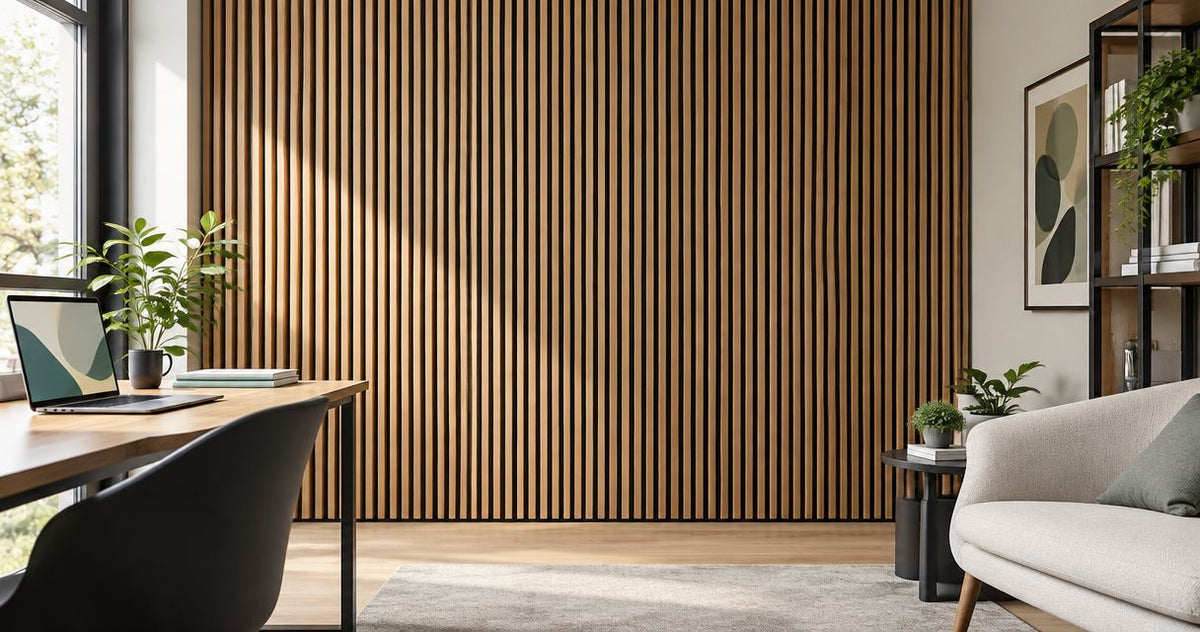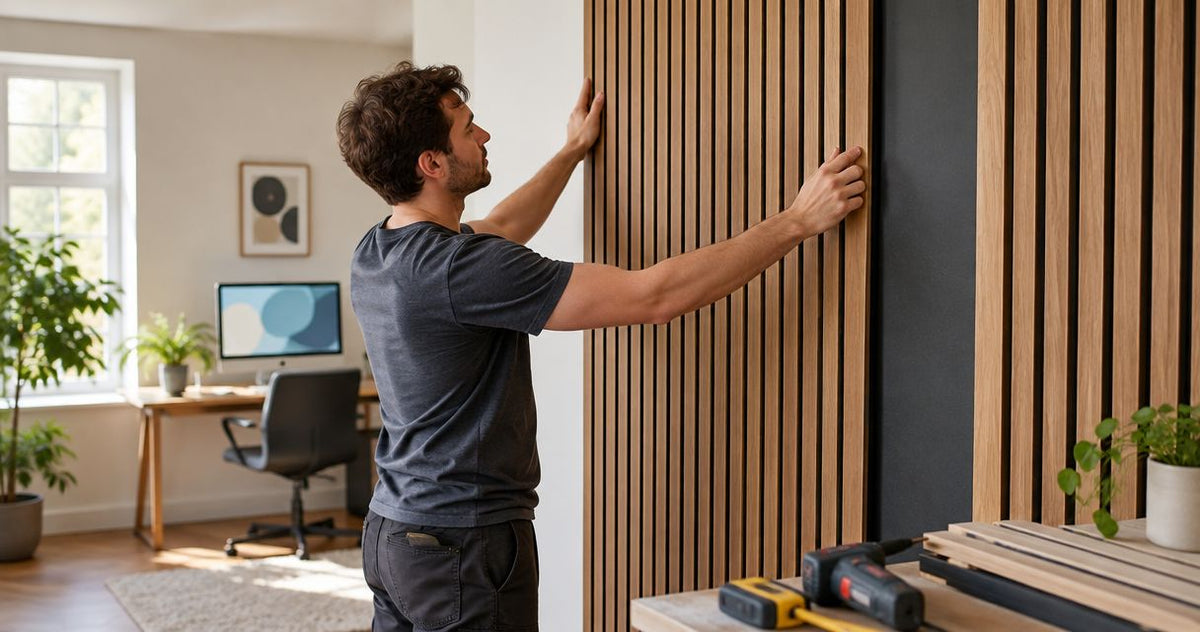
Ranking wall panels by installation ease means answering one practical question: which finish and format lets you fit it without hiring a joiner or wrecking a plasterboard wall. Best overall for straightforward DIY fitting: the Natural Oak Grey Felt panel. Best for uneven or older walls: the Rustic Oak panel. Best for small rooms and tight corners: the Grey Oak panel. Everything below explains why, with honest trade-offs for each.
- Natural Oak Grey Felt panel wins acoustic wood panels for walls installation ease in 2026 for first-time DIY fitters.
- Rustic Oak panel forgives uneven or older plaster walls better than smoother finishes.
- Grey Oak panel suits small rooms because end pieces cut waste on short runs.
- Hexagon Acoustic Panel Smoked Oak needs the most layout planning and sits last on this list.
- All indoor panels ship in 240 cm and 300 cm formats with a 3-sided real wood veneer finish.
Why this matters
Most buying guides for acoustic wood panels for walls installation talk about wood finish and acoustic performance and skip the part that actually determines whether your Saturday goes well: how forgiving the panel is when your wall isn't perfectly flat, your corners aren't square, or you've never held a mitre saw before.
A panel that looks identical to another in a photo can behave completely differently once it meets a 1970s plaster wall with a slight bow in it. That's the gap this ranking closes for 2026 buyers comparing options before they order.
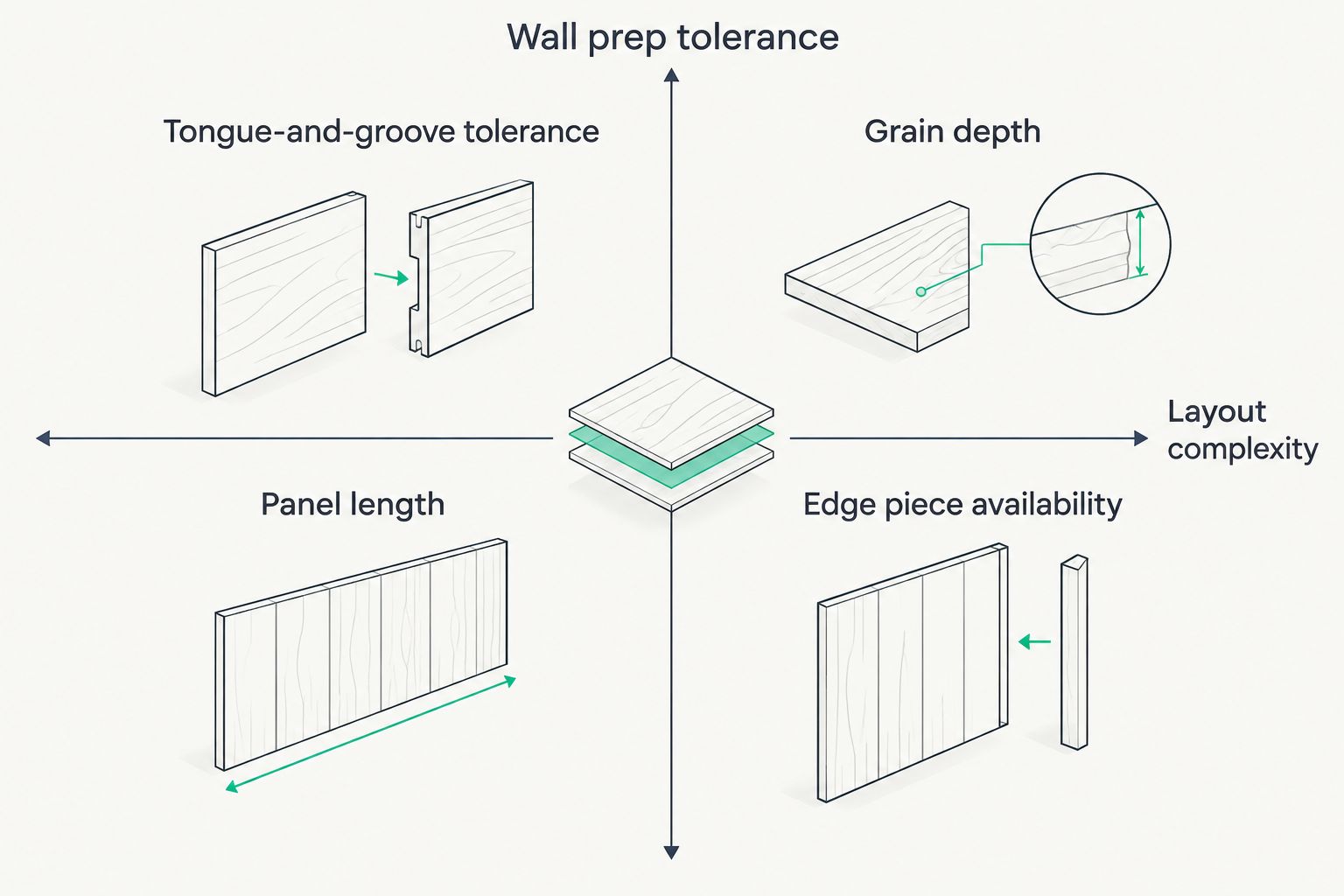
What makes the best acoustic wood panels for walls installation ease
- Tongue-and-groove tolerance — how much play the joint allows before gaps show
- Grain depth — deeper, rustic grain hides small misalignments; smooth grain shows every one
- Panel length — 300 cm formats cover more wall per joint than 240 cm, meaning fewer seams
- Edge piece availability — end pieces reduce the amount of on-site cutting needed
- Wall prep tolerance — how much flatness the panel actually demands before fitting
- Layout complexity — straight slat panels versus interlocking geometric patterns
At a glance
| Panel | Best for | Standout feature | Key limitation |
|---|---|---|---|
| Natural Oak Grey Felt | First-time DIY installers | Straightforward tongue-and-groove fit | Lighter tone shows dust and marks quickly |
| Rustic Oak | Uneven or older plaster walls | Deep grain masks small gaps | Heavier visual grain isn't for minimalist rooms |
| Grey Oak | Small rooms and tight corners | End pieces cut waste on short runs | Cooler tone can read cold in north-facing rooms |
| Walnut | Large open-plan walls | 300 cm format means fewer seams | Longer boards are harder to manoeuvre solo |
| Hexagon Acoustic Panel Smoked Oak | Feature accent walls | Interlocking geometric pattern | Most demanding layout on this list |
1. Natural Oak Grey Felt panel: best acoustic wood panel for first-time DIY installers
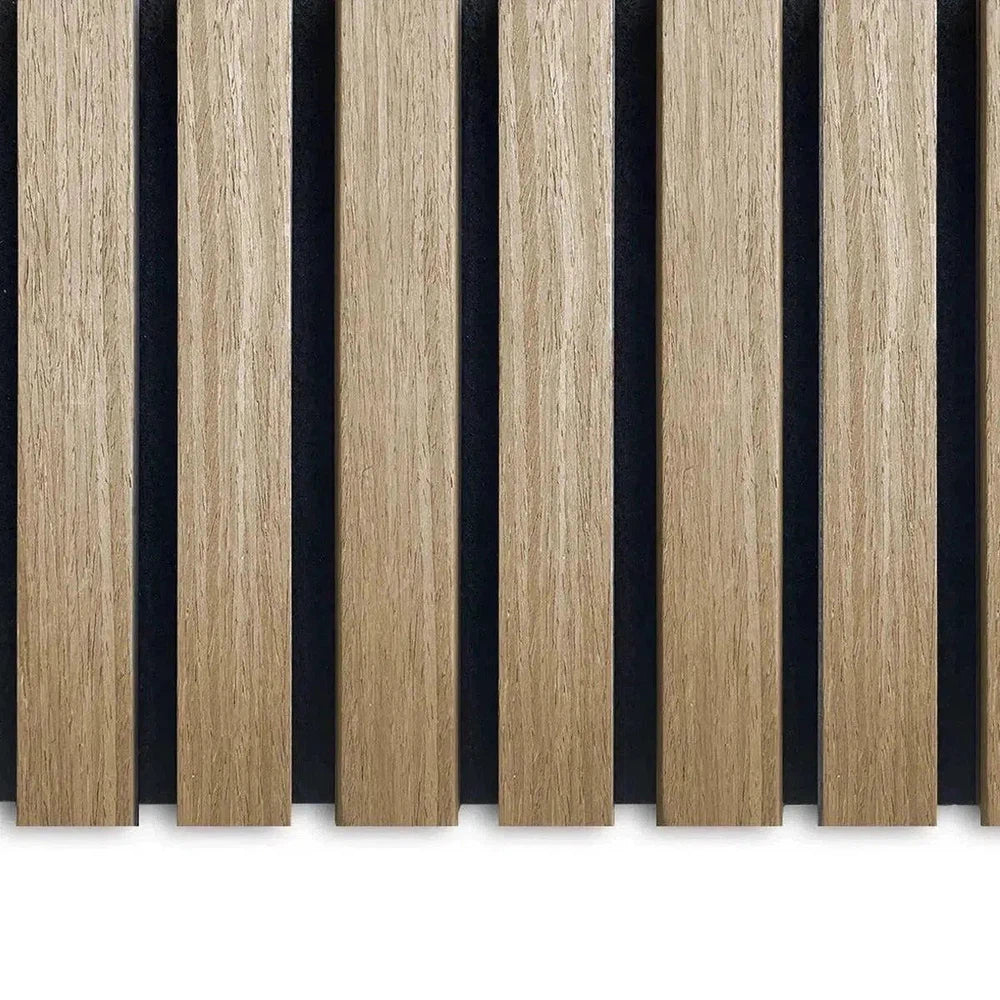
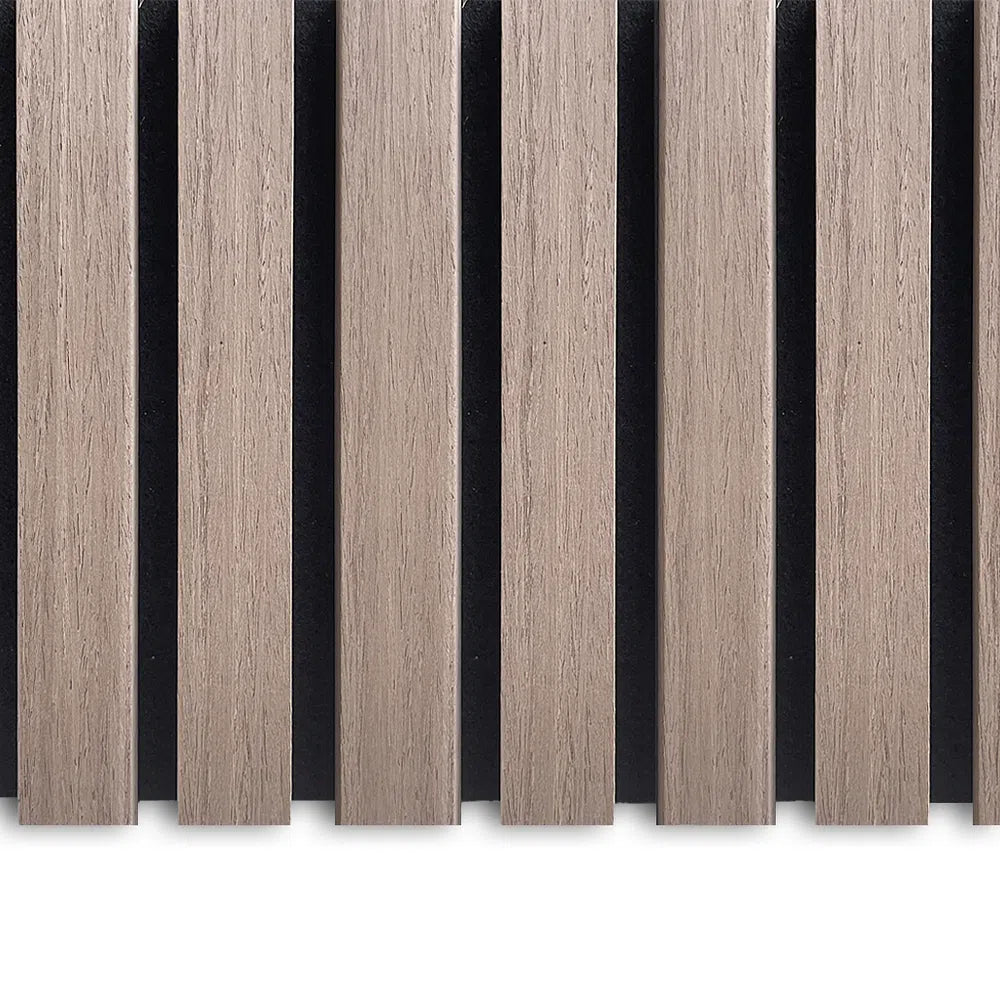
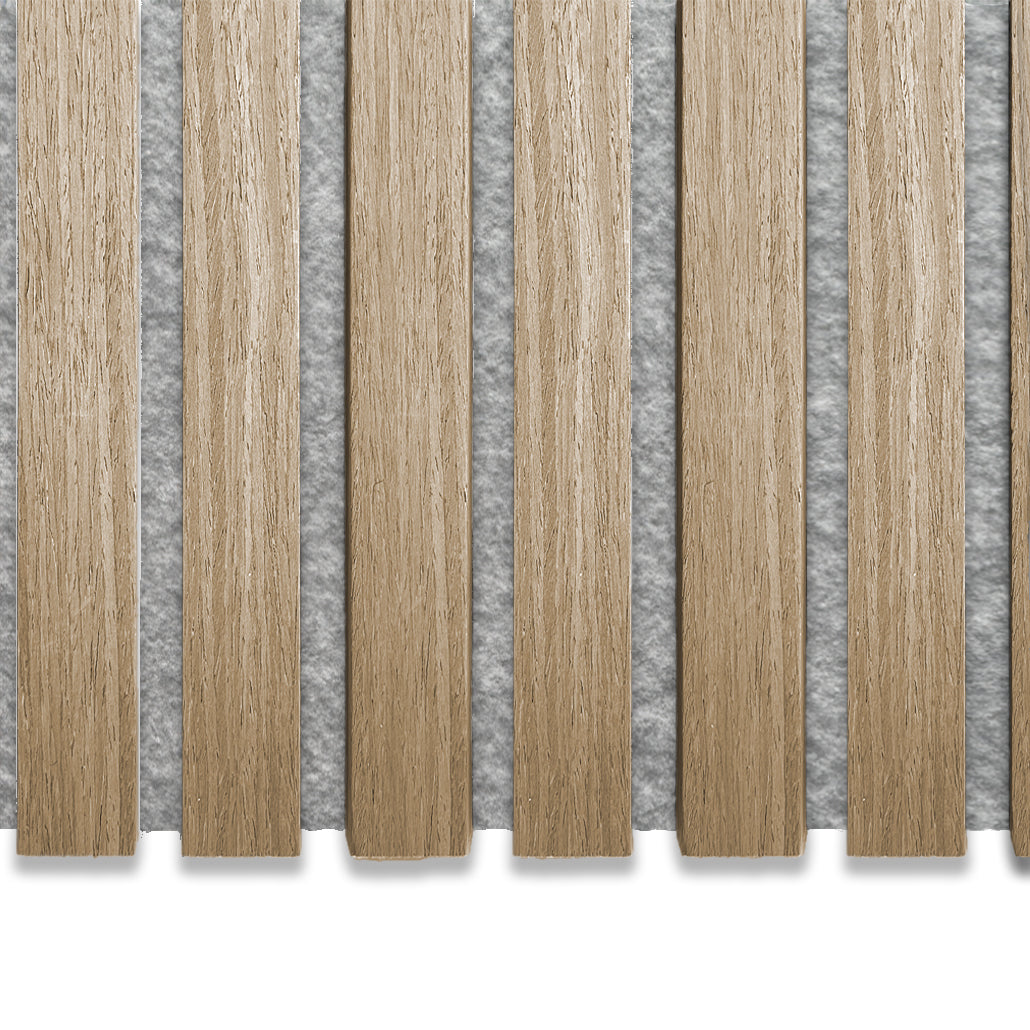
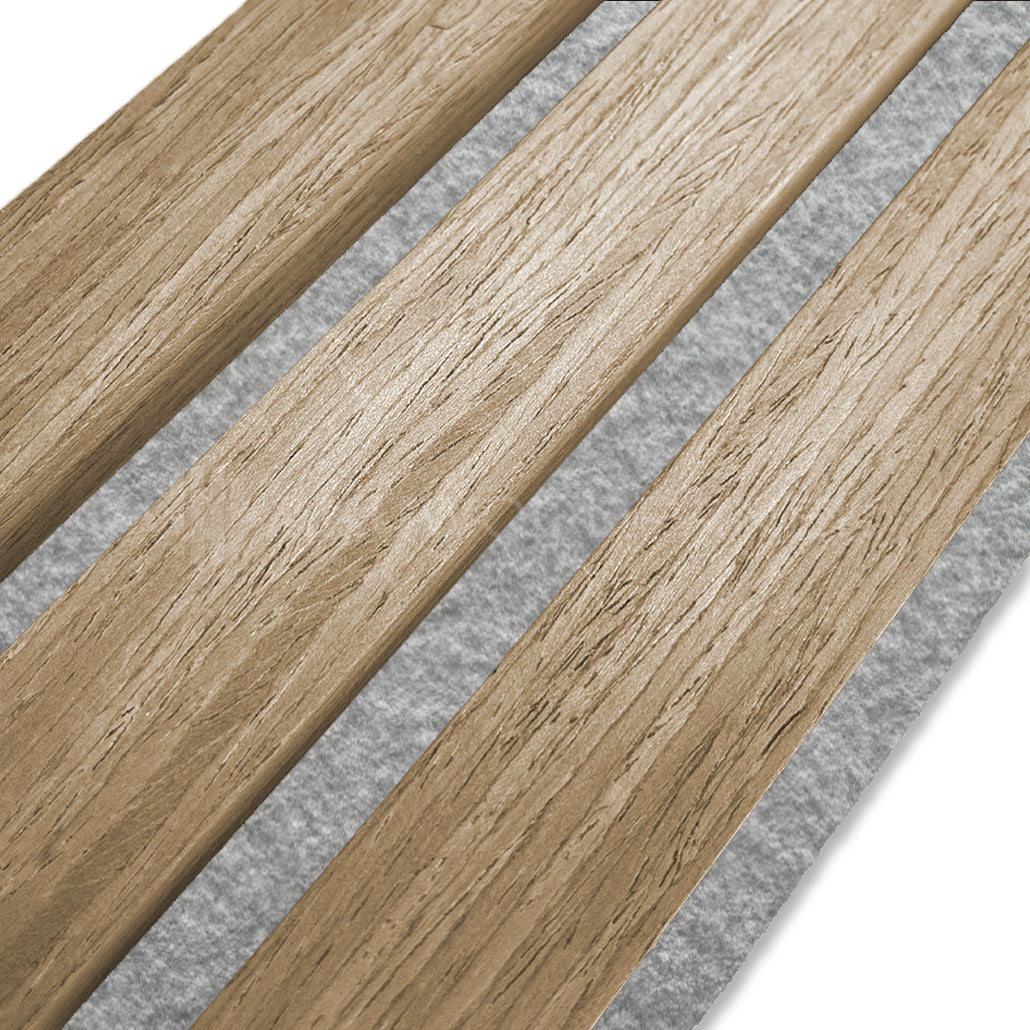
The natural oak grey felt panel is the panel to start with if you've never fitted acoustic wood panels for walls before. The slats sit on a consistent felt backing, the finish is a 3-sided real wood veneer, and the tongue-and-groove edges line up without much fuss on a reasonably flat wall.
It ships in the standard 240 cm and 300 cm formats, so you measure the wall once and pick accordingly rather than piecing together odd lengths.
Natural Oak Grey Felt pros:
- Consistent slat spacing makes measuring and cutting predictable
- Lighter natural tone works in most rooms without clashing
- Standard sizing means less waste calculation before ordering
Natural Oak Grey Felt cons:
- Shows dust and fingerprints more visibly than darker finishes
- Still needs a genuinely flat wall — it won't hide a bowed surface
Natural Oak Grey Felt panel verdict: Buy if this is your first acoustic wood panel installation and your wall is in reasonable condition.
2. Rustic Oak panel: best acoustic wood panel for uneven or older walls
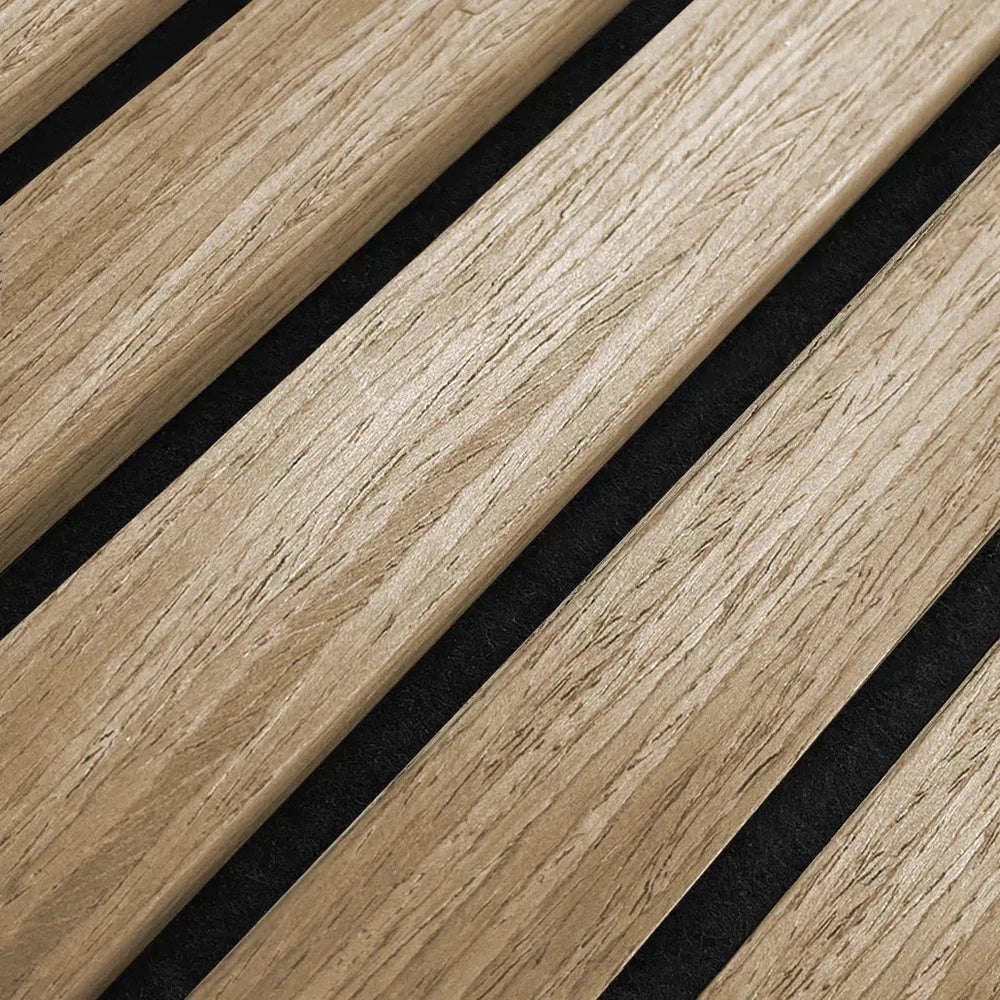
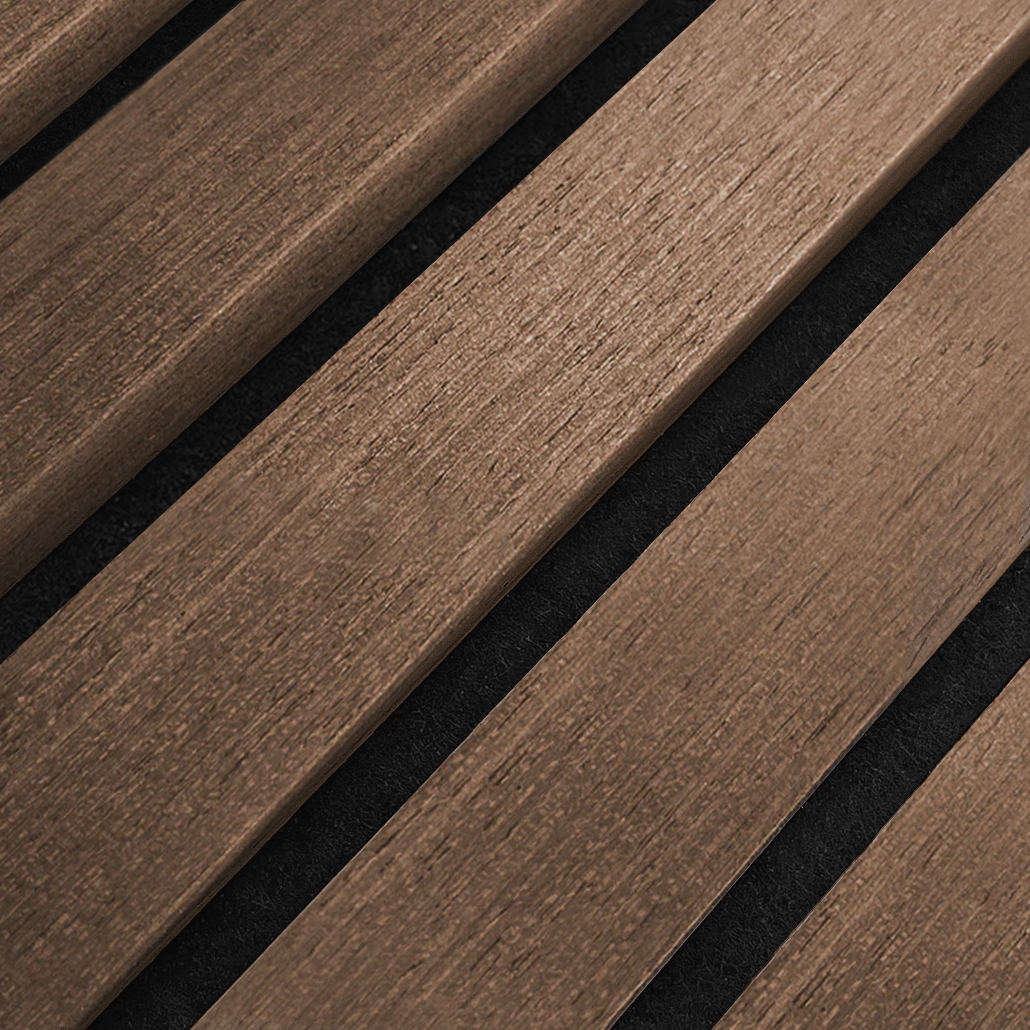
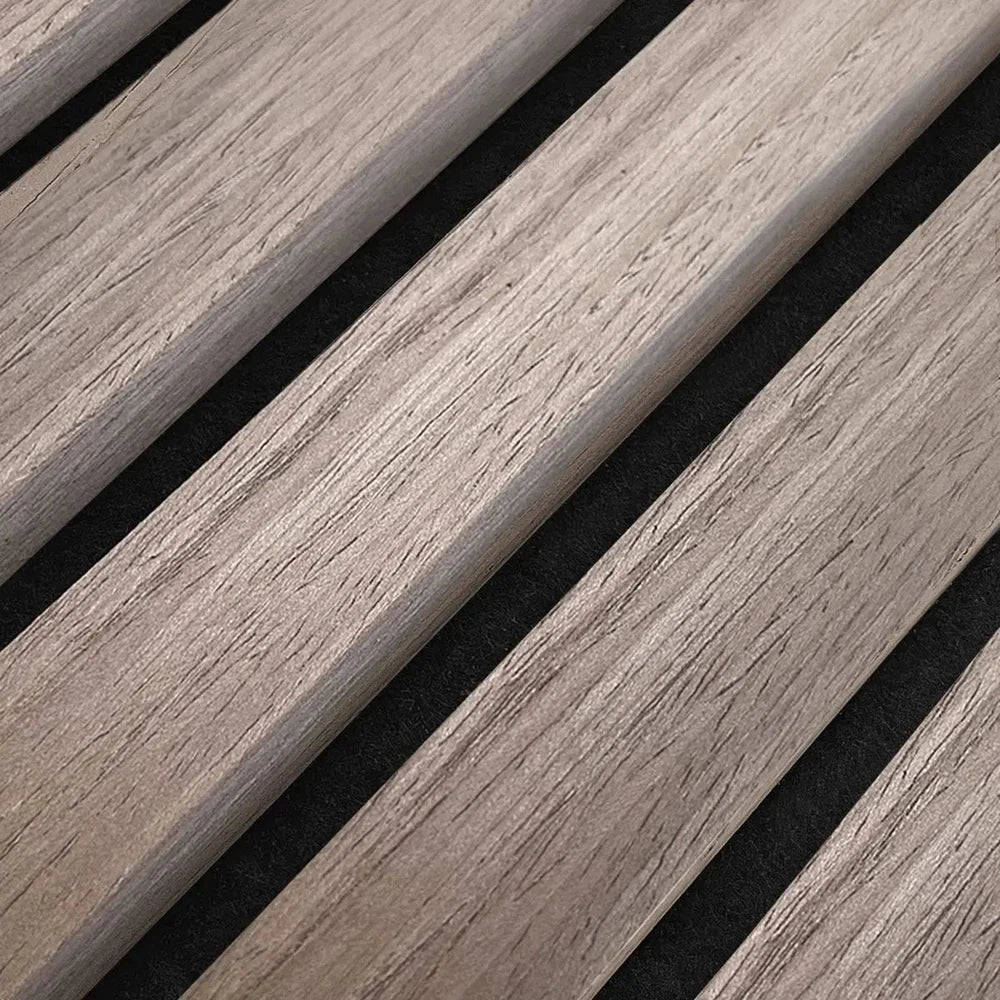
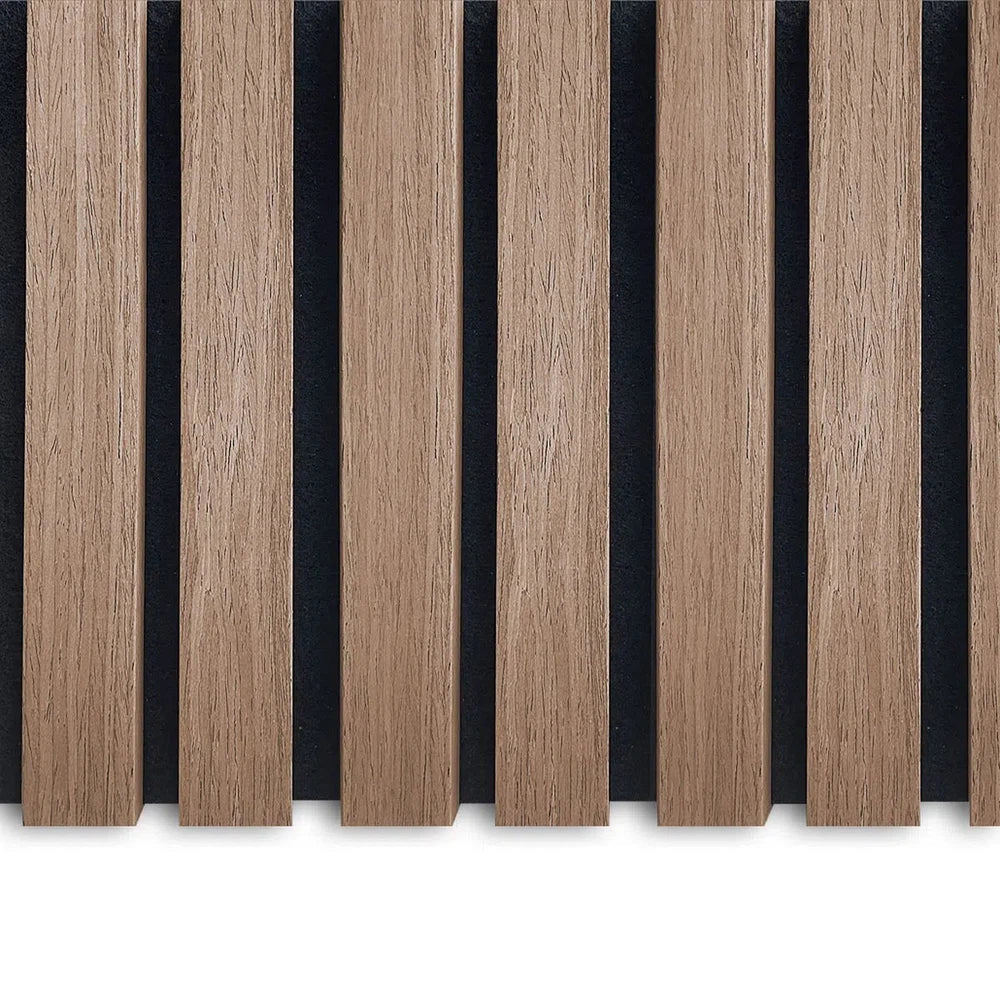
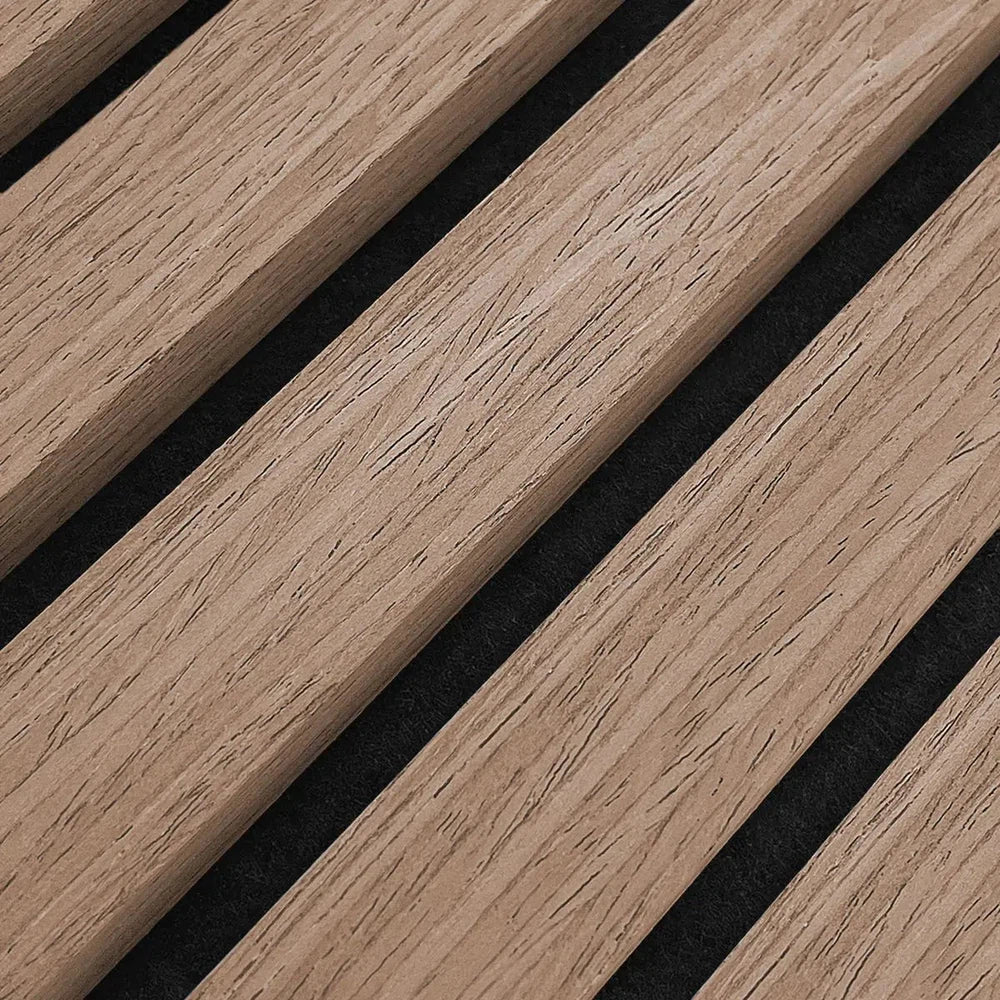
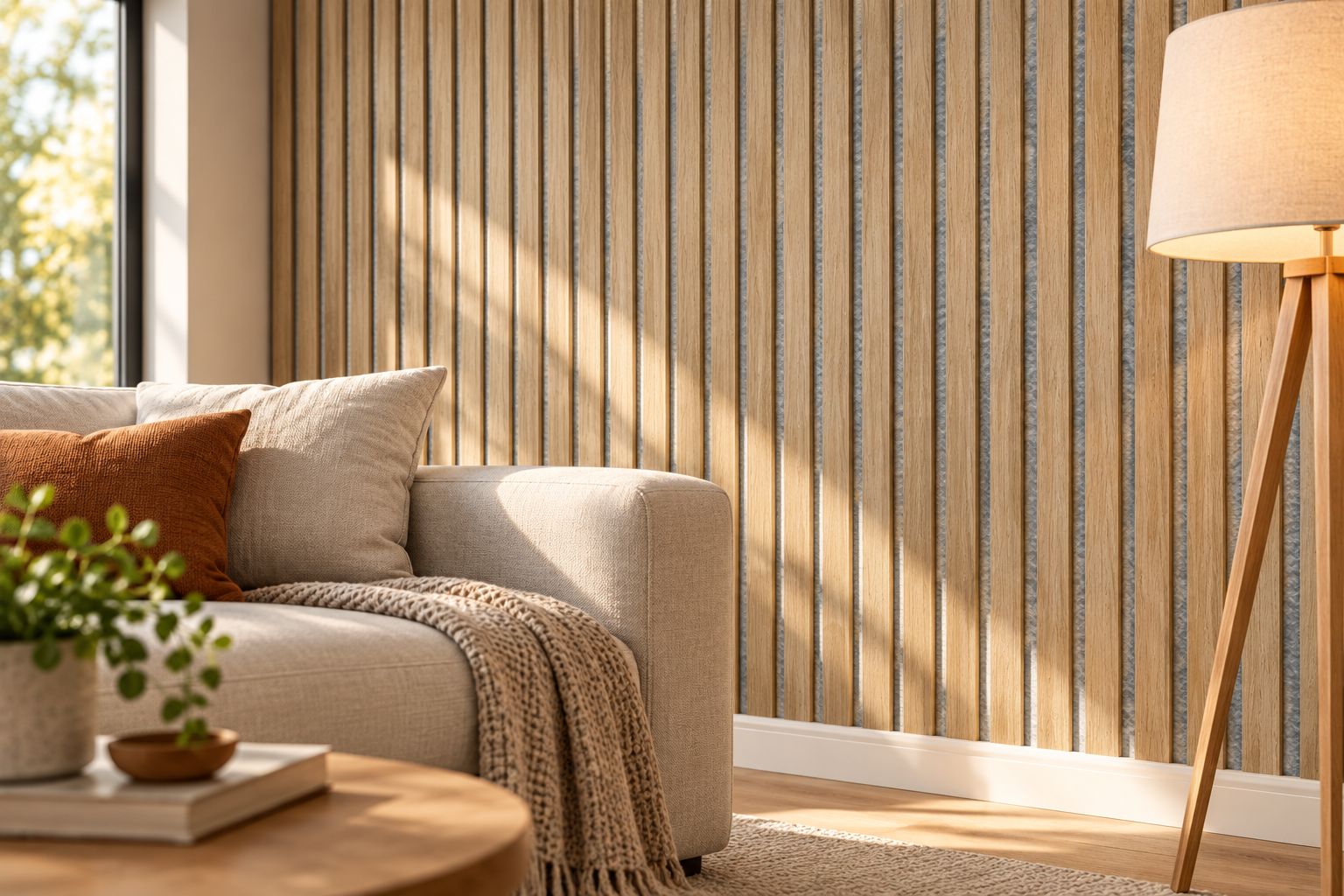
Older UK homes rarely have perfectly flat plaster, and that's exactly where the rustic oak wall panel earns its place. The heavier, more textured grain on this 3-sided wood veneer finish disguises the small joint gaps that a smoother panel would expose.
It's still a straightforward slat panel to fit — the forgiveness is in the finish, not a different fixing method.
Rustic Oak pros:
- Deep grain hides minor wall irregularities and joint gaps
- Works well over slightly bowed or textured plaster
- Same 240 cm / 300 cm format flexibility as the rest of the range
Rustic Oak cons:
- The heavier grain isn't right for a minimalist or Scandi-style room
- Darker variants make small gaps more visible than the lighter ones
Rustic Oak panel verdict: Buy if your wall isn't dead flat and you'd rather the panel hide that than fight it.
3. Grey Oak panel: best acoustic wood panel for small rooms and tight corners
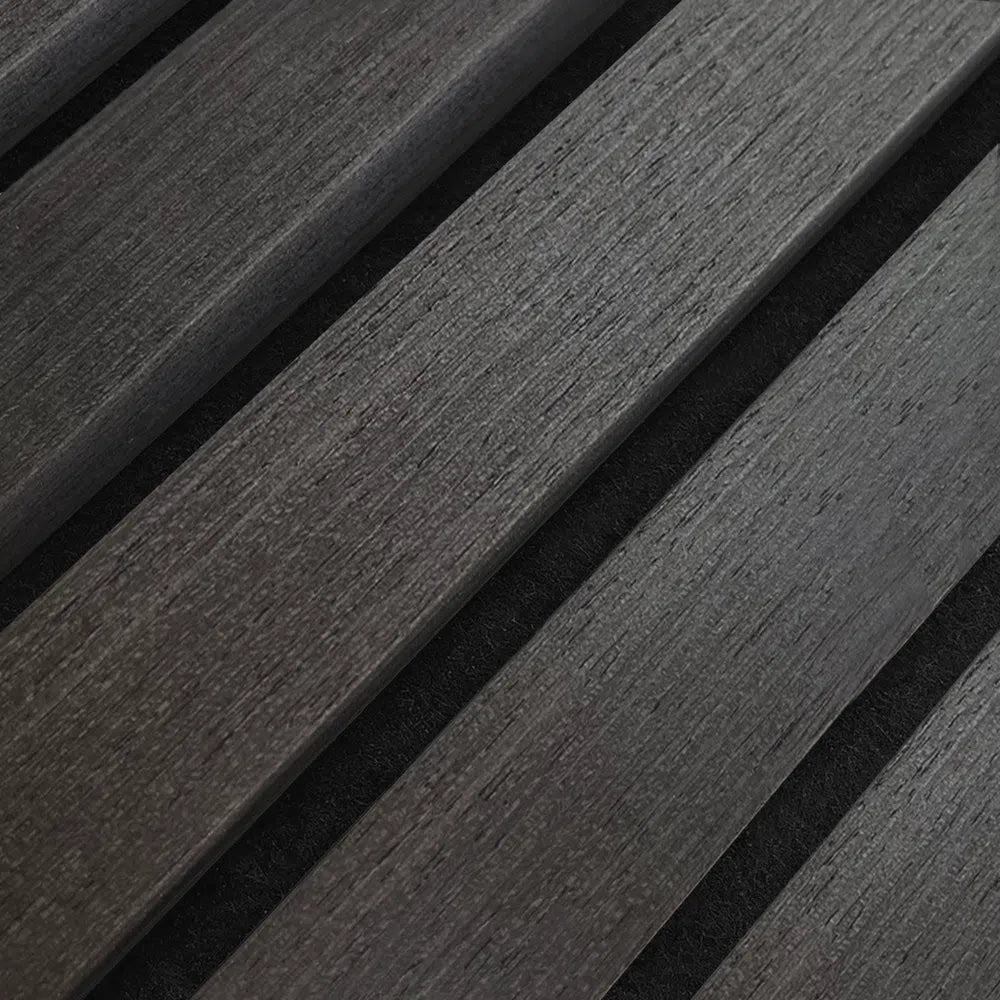
Small rooms punish wasted cuts, and the grey oak wall panel is easier to fit into awkward corners because matching end pieces are available separately, cutting down on the on-site trimming a short wall run usually demands.
The cooler grey tone also reads lighter in a boxy room than a dark walnut or black oak would.
Grey Oak pros:
- End pieces reduce cutting waste on short or irregular walls
- Cooler tone opens up small or low-light rooms
- Same 3-sided veneer and felt-backed acoustic construction as the rest of the line
Grey Oak cons:
- Can read cold in north-facing rooms without warm lighting
- Fewer wood-tone options if you're trying to match existing oak furniture
Grey Oak panel verdict: Buy for box rooms, alcoves, and any wall under roughly one panel-length wide.


4. Walnut panel: best acoustic wood panel for large open-plan walls
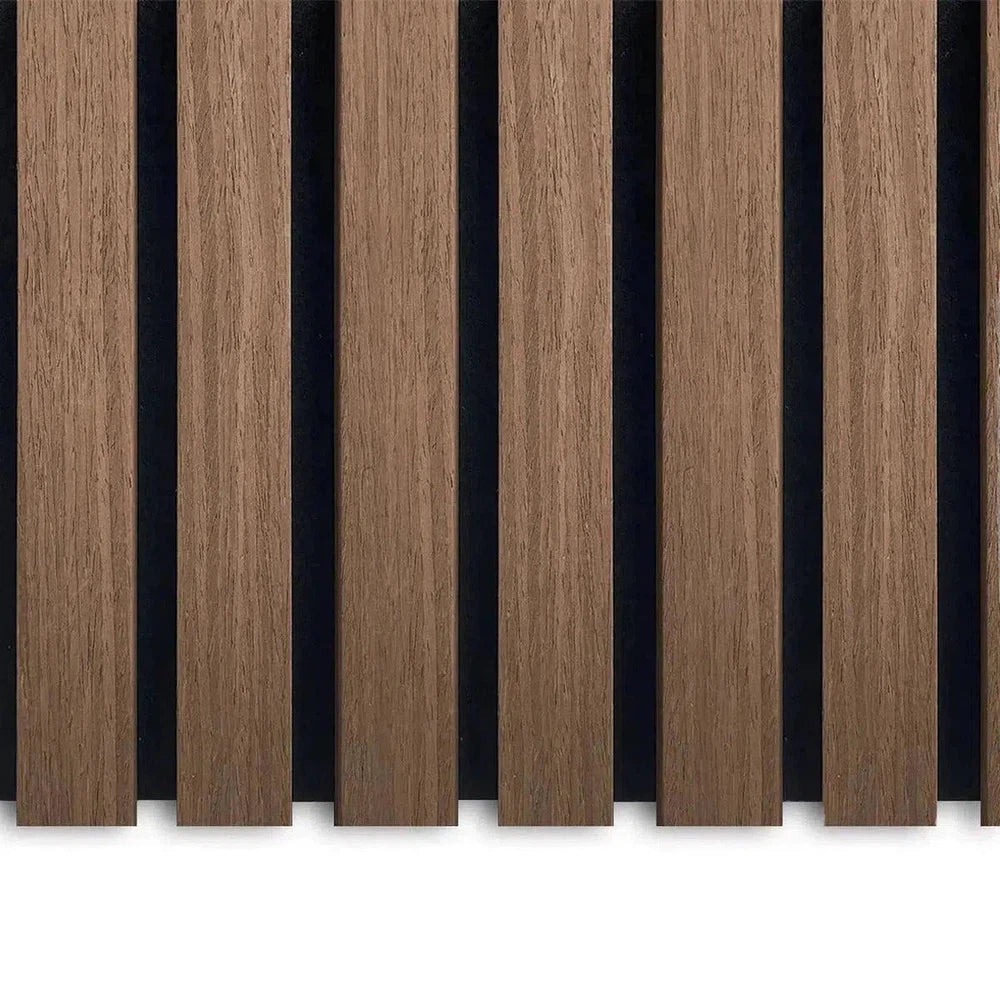
On a long open-plan wall, the number of joints matters more than the finish. The Walnut panel in the 300 cm format covers a wider run per board than the 240 cm option, which means fewer seams across a big feature wall and fewer opportunities for a joint to sit slightly proud.
Walnut pros:
- 300 cm format covers more wall per panel, cutting seam count
- Darker tone reads well on statement or double-height walls
- Same felt-backed acoustic build as the shorter panels
Walnut cons:
- Longer boards are noticeably harder to carry and align solo
- Dark finish makes any misaligned joint more visible than a lighter panel would
Walnut panel verdict: Hold if you're fitting alone — get a second pair of hands for the 300 cm length, then it's a straightforward install.
5. Hexagon Acoustic Panel Smoked Oak: best acoustic wood panel for feature accent walls
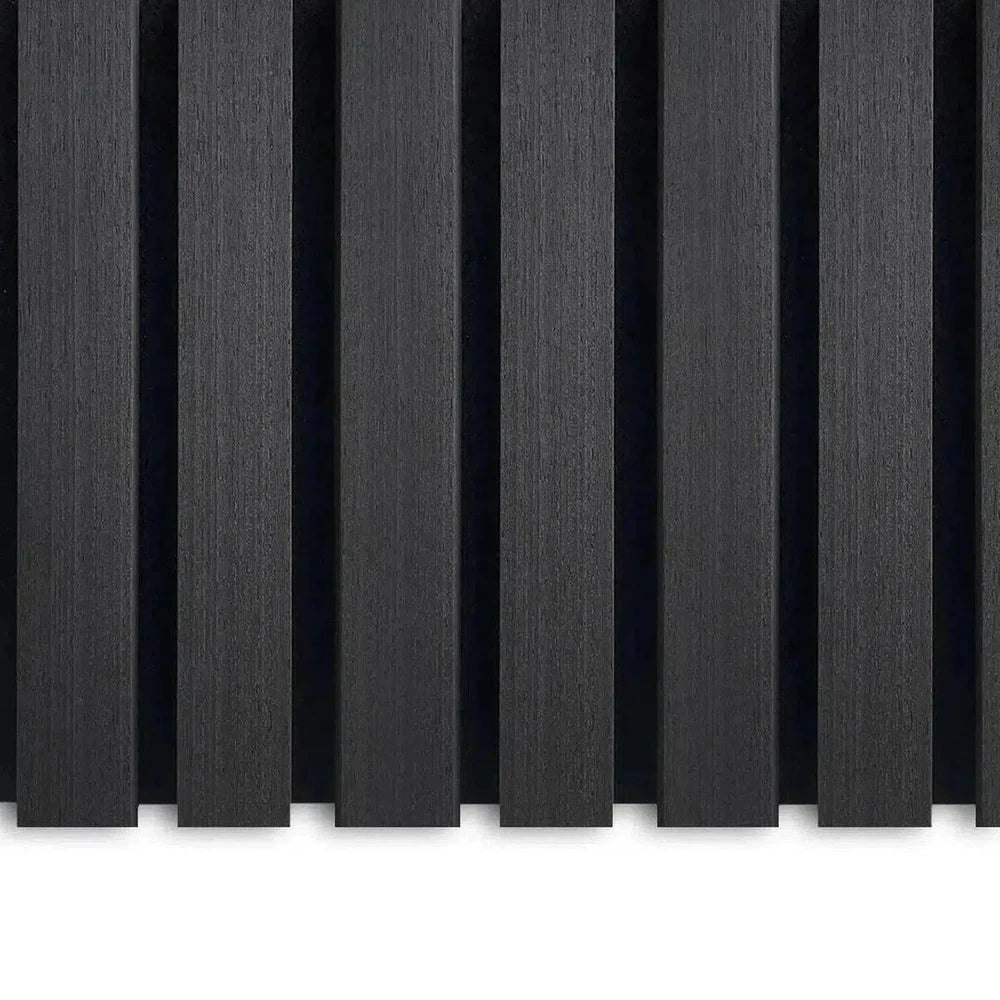
Hexagon panels aren't a beginner's first acoustic wood panel installation. The Hexagon Acoustic Panel in Smoked Oak needs the tiles laid out and dry-fitted before any fixing happens, because the interlocking pattern has to read correctly across the whole wall, not just panel by panel.
Hexagon Smoked Oak pros:
- Genuinely distinctive geometric result no slat panel replicates
- Works well as a contained accent wall rather than a full room
- Individual tile size makes it usable on smaller feature sections
Hexagon Smoked Oak cons:
- Layout planning takes noticeably longer than a straight slat panel
- Pattern misalignment is far more visible than a gap in a straight run
Hexagon Acoustic Panel Smoked Oak verdict: Wait unless the room is specifically built around a feature wall — it rewards patience, not speed.
How we ranked
Each panel above is judged against the same six criteria: tongue-and-groove tolerance, grain depth, panel length, edge piece availability, wall prep tolerance, and layout complexity. Panels that forgive wall imperfections and need less on-site cutting rank higher; panels demanding precise layout or a dead-flat wall rank lower, regardless of how good they look finished.
Wall prep still matters for every panel on this list — check whether your surface needs levelling before you start, because no panel on this ranking fixes a genuinely warped wall on its own.
“A panel that hides a small gap in the grain saves you an afternoon of shimming the wall first.”
Which acoustic wood panel should you choose?
For most UK rooms in 2026, start with the Natural Oak Grey Felt panel — it's the most forgiving straight slat option for a first installation. Swap to the Rustic Oak panel if your wall has any bow or age to it, and reach for the Grey Oak panel specifically when you're panelling a box room or alcove where end pieces save real cutting time. Save the Hexagon Acoustic Panel Smoked Oak for a dedicated feature wall once you've fitted at least one straight panel run.
FAQ
What's the easiest acoustic wood panel to install for a first-timer?
The Natural Oak Grey Felt panel is the easiest starting point in 2026 because its tongue-and-groove joints are consistent and it doesn't demand a perfectly flat wall to look good.
Do acoustic wood panels need a completely flat wall?
No, but flatter is easier. Deep-grain finishes like Rustic Oak hide small irregularities better than smoother finishes, though a genuinely warped wall should be levelled first.
Is the 300 cm or 240 cm panel format easier to fit?
240 cm panels are easier to handle solo since they're shorter and lighter to manoeuvre. 300 cm panels cover more wall per joint, which suits large walls with two installers.
Are hexagon acoustic panels harder to install than slat panels?
Yes. Hexagon panels need a dry-fit layout before fixing so the interlocking pattern reads correctly, which takes longer than a straight slat panel run.
Can acoustic wood panels be fitted without nails?
Panel adhesive is a common no-nail fixing method for acoustic wood panels, suited to walls where you don't want visible fixing points or can't drill into the surface.
How much wall prep do acoustic wood panels for walls installation actually need?
At minimum the wall should be dry and free of loose material; genuinely uneven walls benefit from levelling first so joints sit flush across the run.
Which acoustic panel finish hides installation gaps best?
Rustic Oak's deeper grain masks small joint gaps more effectively than lighter, smoother finishes like Natural Oak Grey Felt.
Do end pieces make small room installations easier?
Yes. Panels like Grey Oak that offer matching end pieces cut down on-site trimming, which matters most on short or irregular wall runs.
One last thing
The detail most buyers miss in 2026: the panel finish you pick affects install difficulty more than the fixing method does. Two people fitting the same wall with a straight slat panel and a hexagon panel are doing genuinely different jobs — one is measuring and cutting, the other is laying out a pattern before a single fixing goes in. Match the panel to your patience level, not just the room.