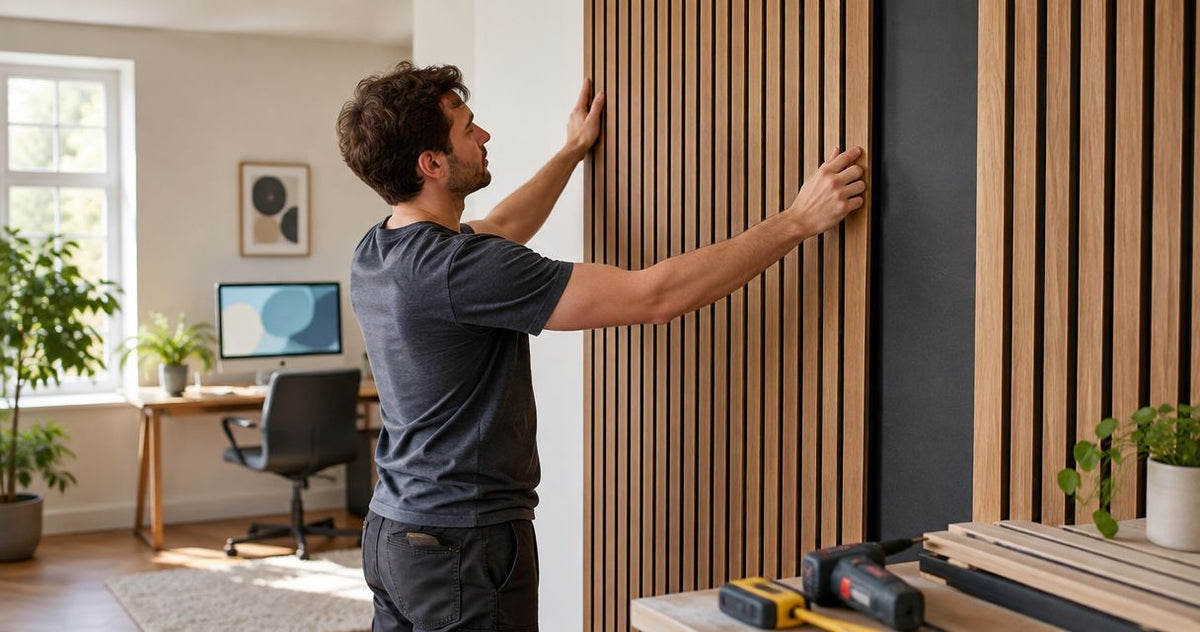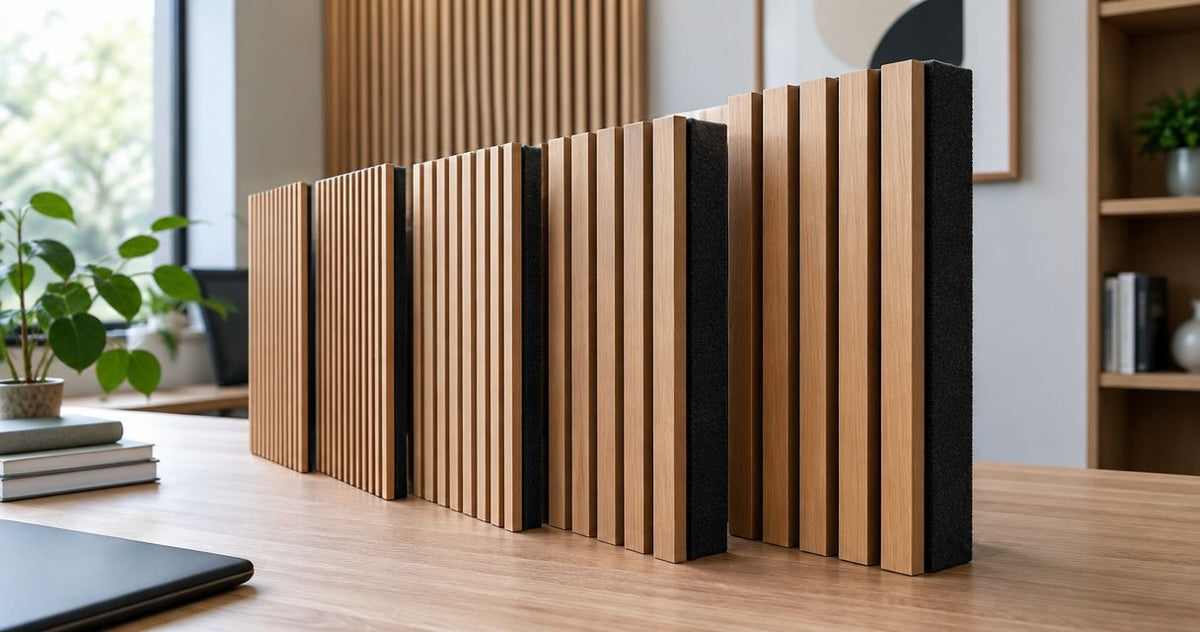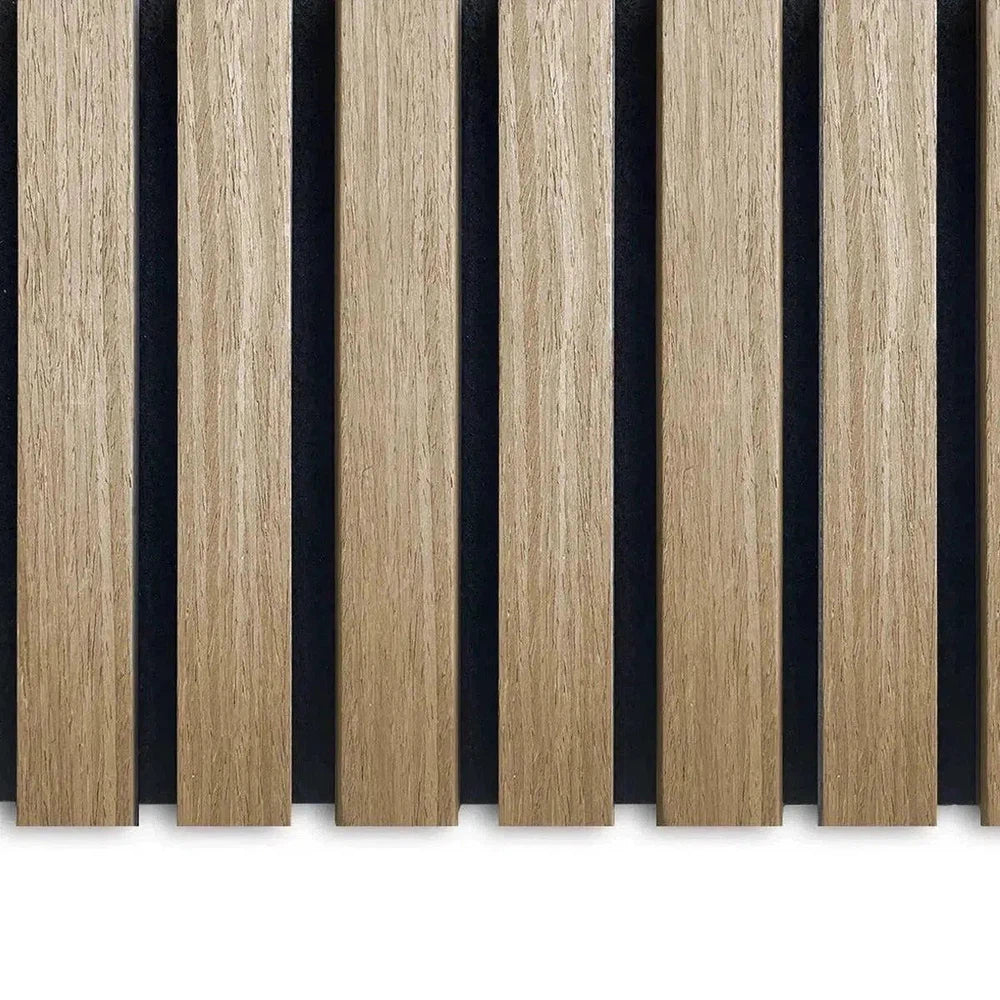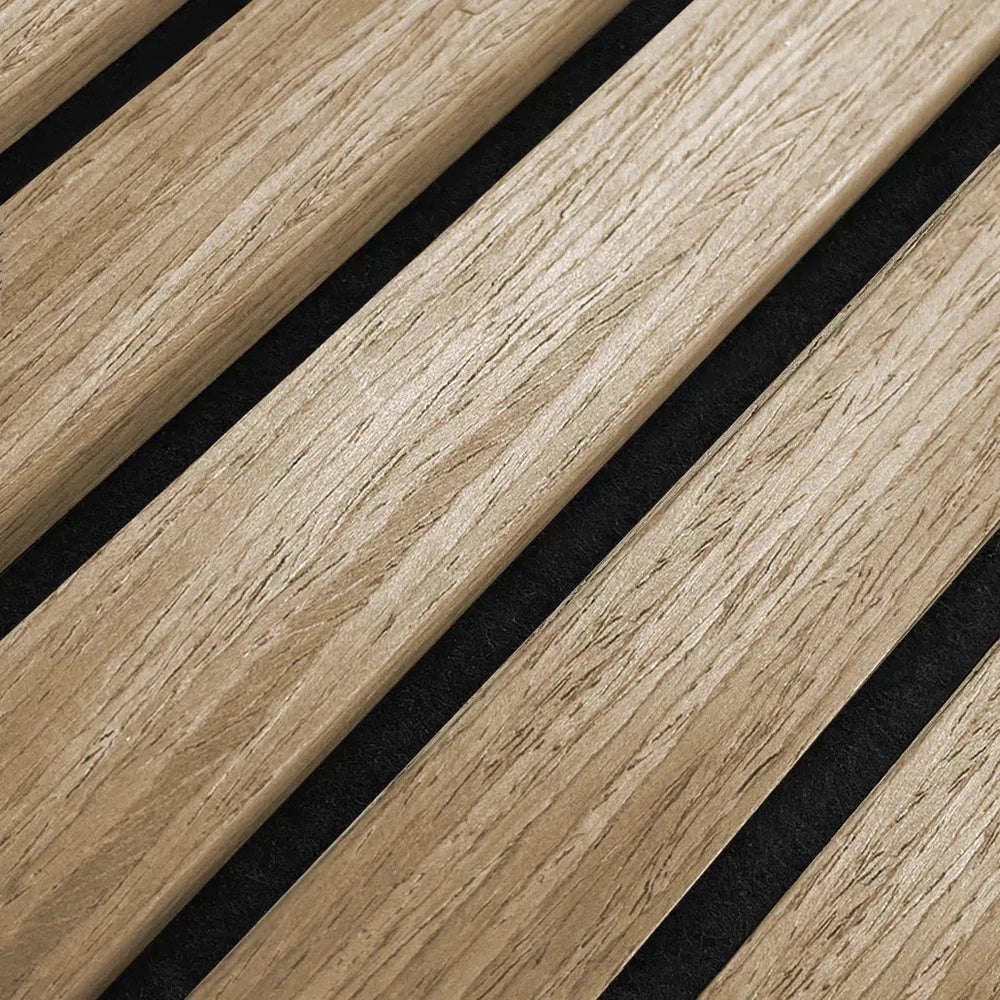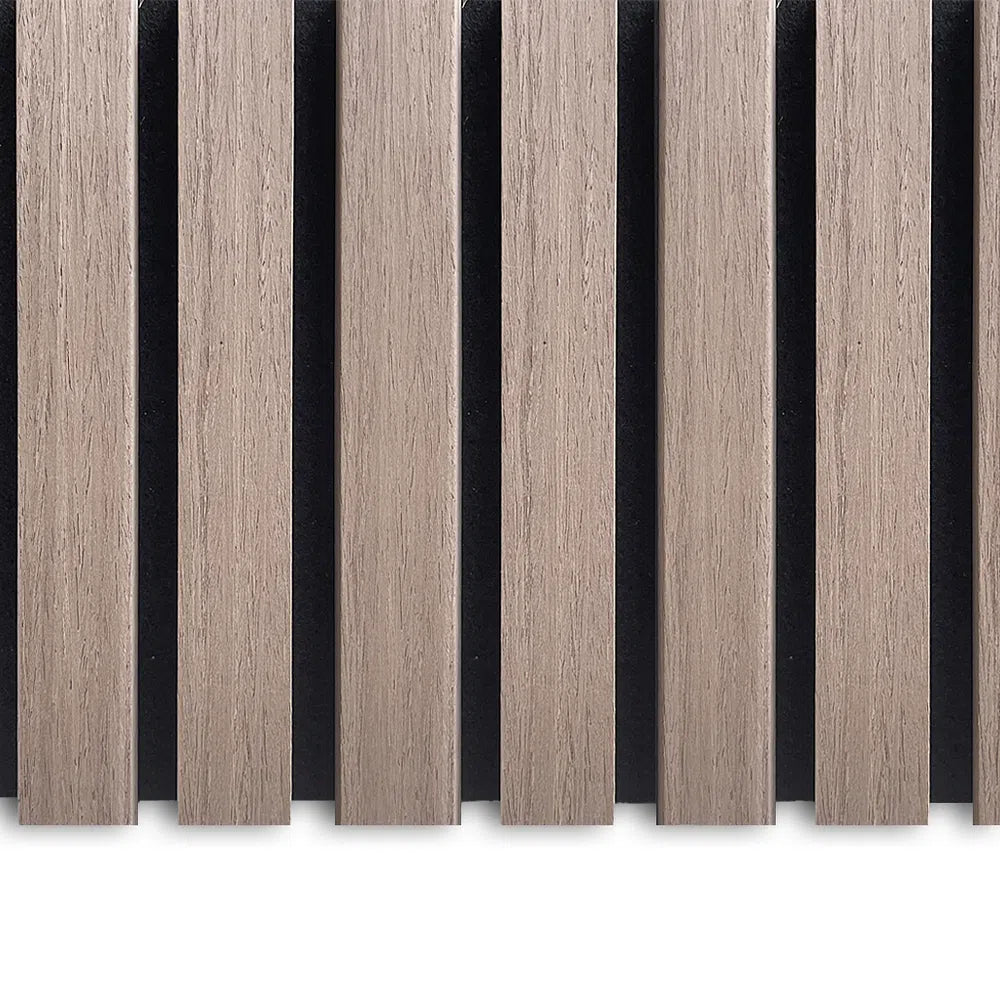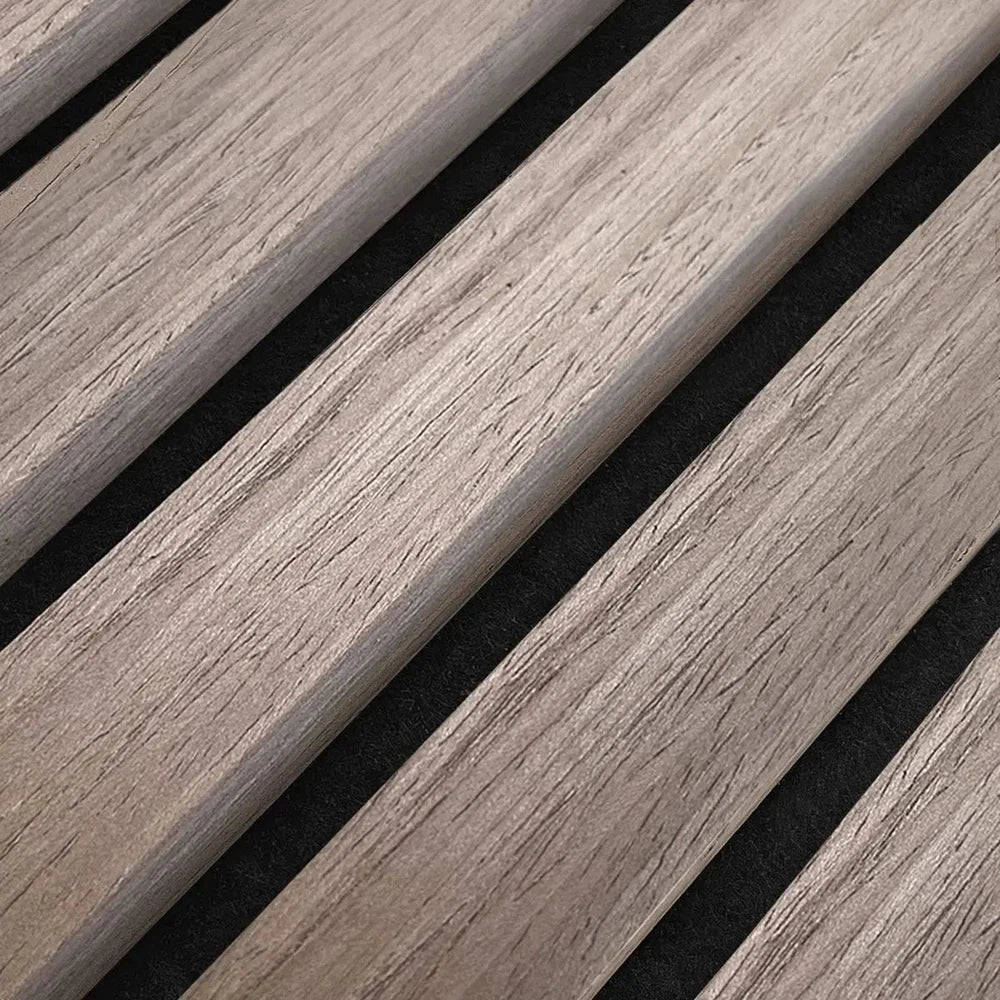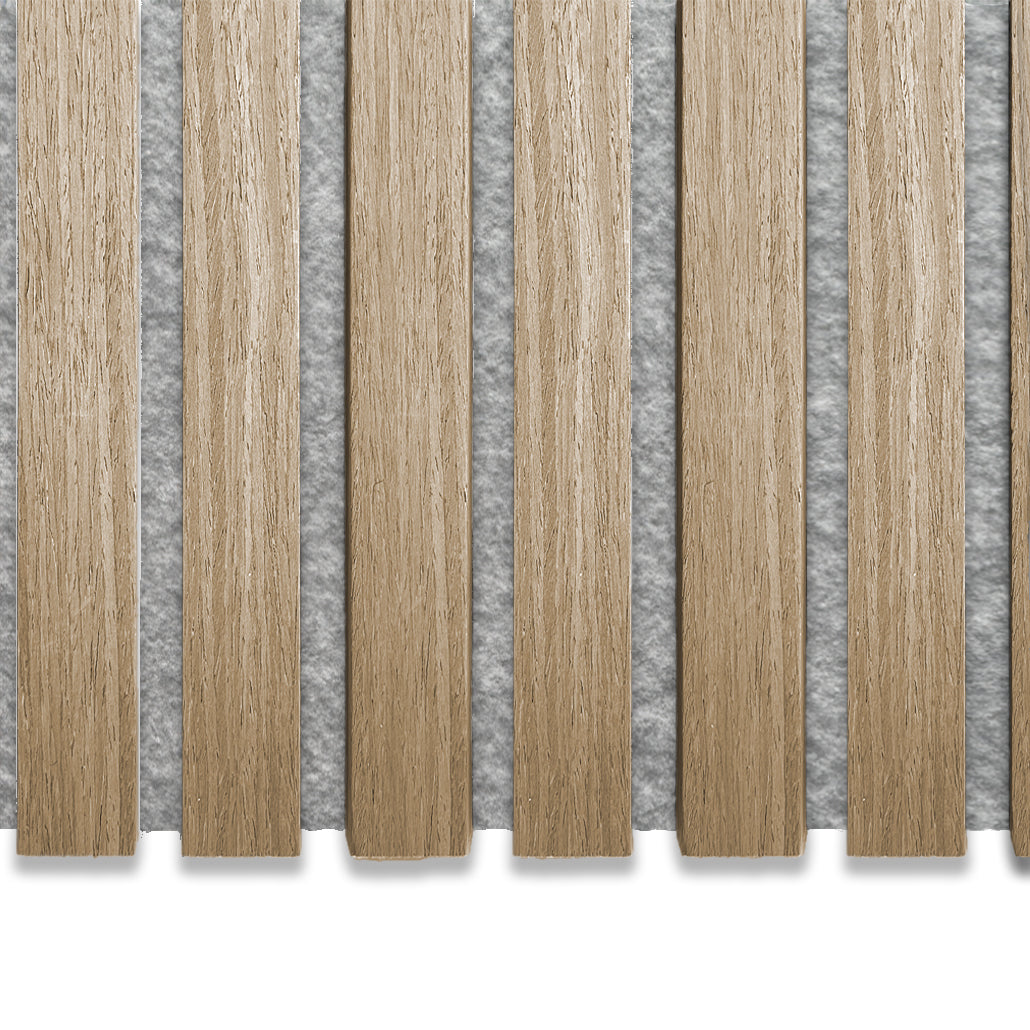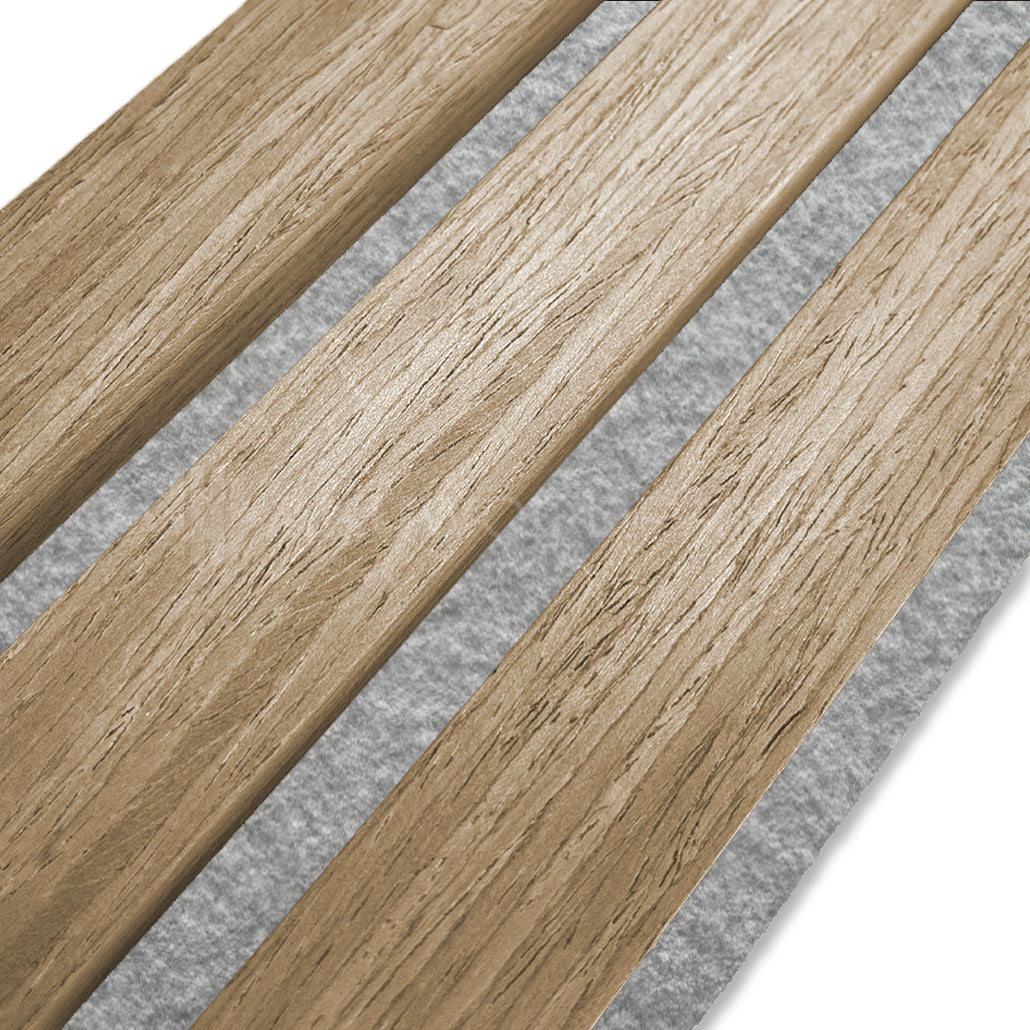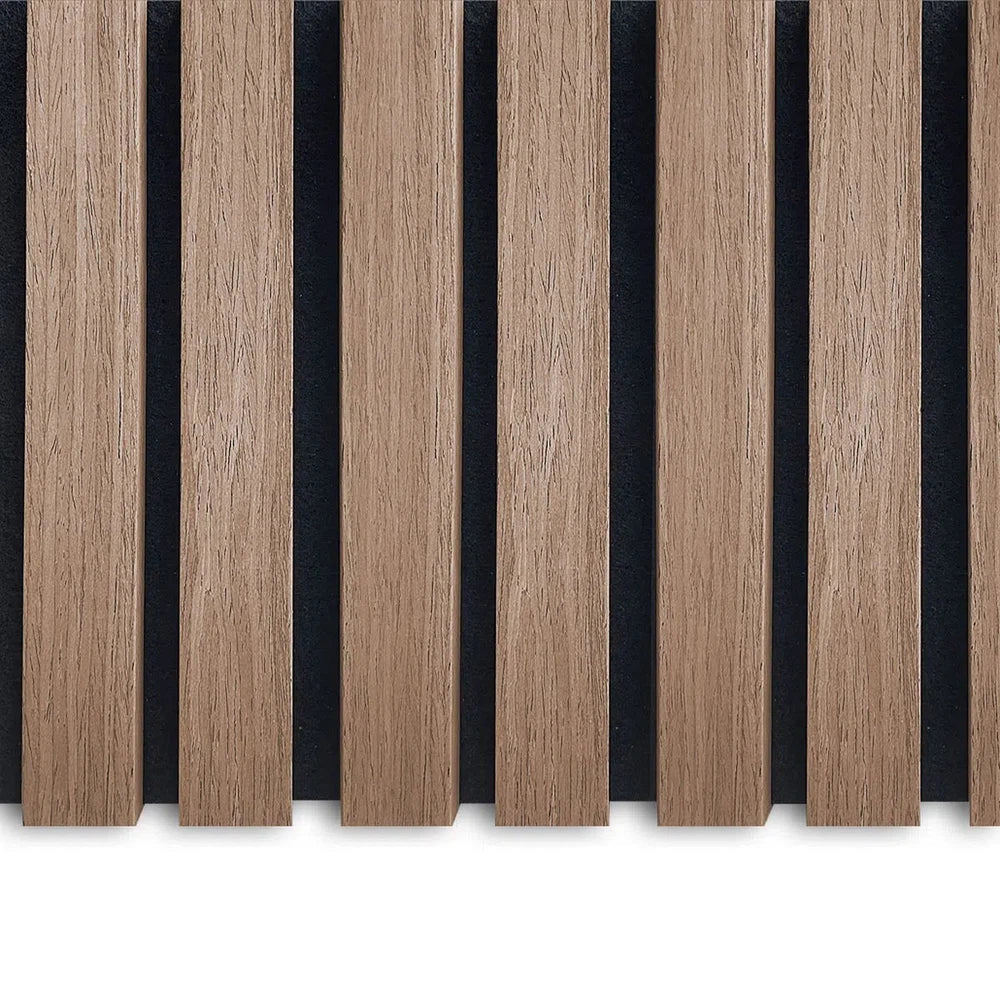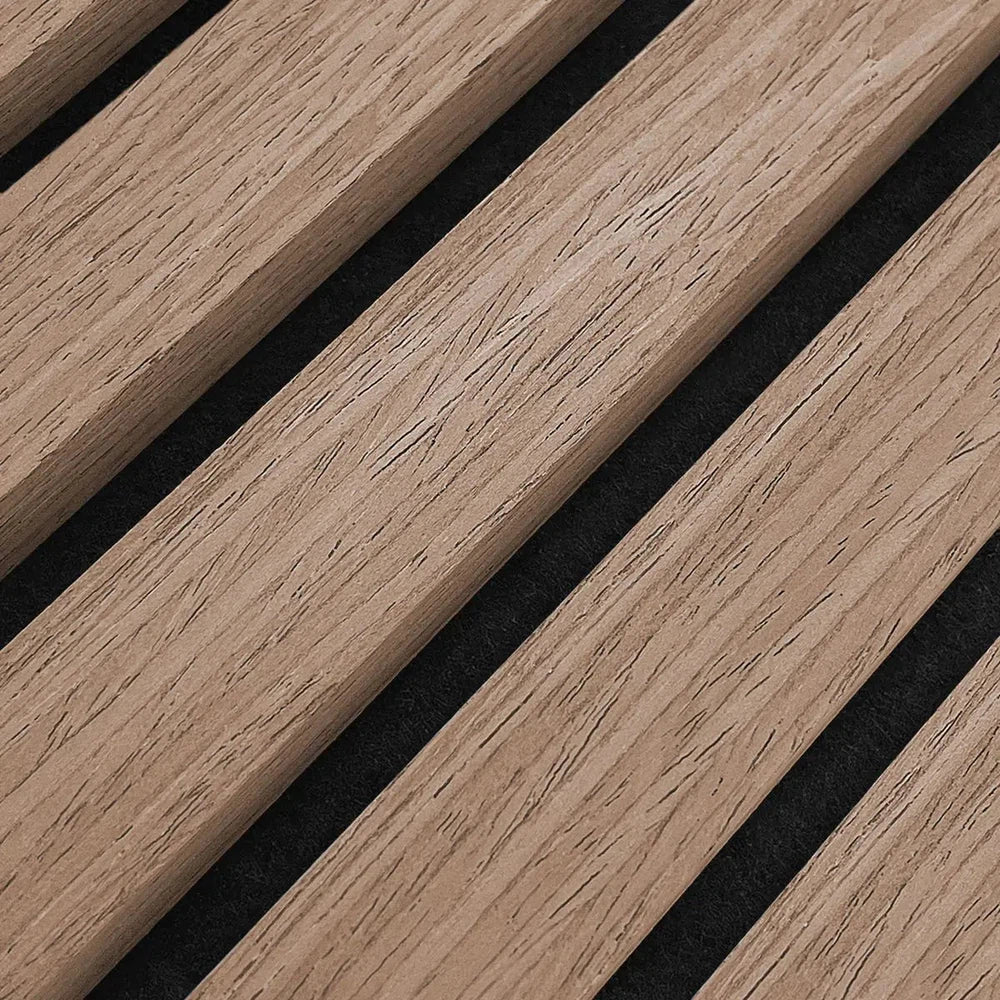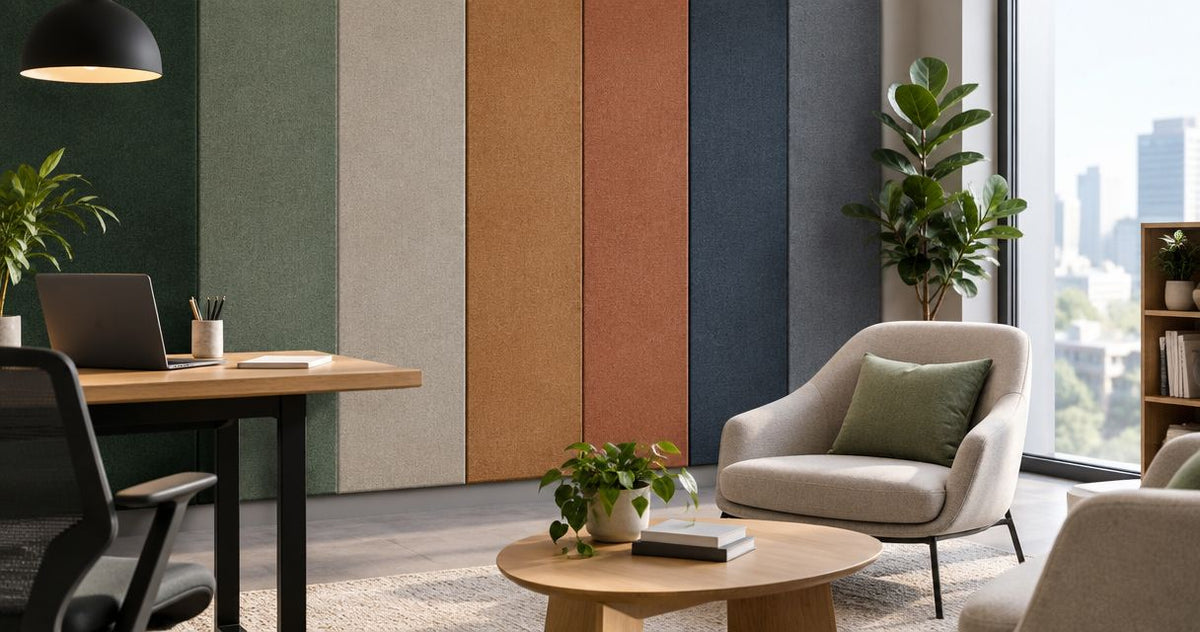
Grey Oak is the best overall acoustic wall panel colour for 2026 interiors — a neutral, cool-toned finish that works in Scandinavian, Japandi and contemporary rooms without fighting existing furniture. Natural Oak is the pick for small or north-facing rooms, since it reflects the most light of any finish in the range. Black Oak wins for a bold, high-contrast feature wall, and Walnut is the choice for a warmer, more traditional living room.
- Grey Oak is the best acoustic wall panel colour 2026 pick for most rooms — neutral and easy to match.
- Natural Oak reflects the most light, making it the strongest choice for small or dark rooms.
- Black Oak and Smoked Oak deliver contrast; Walnut and Mocca add warmth to living rooms and bedrooms.
- Every Akustiq UK finish uses a 3-sided real wood veneer over an acoustic felt backing rated NRC 0.75.
- Panels ship in 240 cm and 300 cm lengths, so colour choice never limits which rooms you can panel.
Why colour matters as much as acoustics in 2026
An acoustic panel does its job whether it's pale oak or near-black — the felt backing behind the slats absorbs sound the same way regardless of finish. What changes is how the room reads once the echo is gone. A wall of Akustiq UK's acoustic wood panels can make a small office feel larger or a big open-plan living room feel grounded, depending entirely on the colour you pick.
Getting the finish wrong is the most common regret buyers report: a Black Oak wall in a north-facing box room reads as a cave, while pale Natural Oak in a huge bright living room can wash out and look flat. The colour decision for 2026 is really a light-and-space decision wearing a wood-grain costume.
What makes the best acoustic wall panel colour for 2026
- Light reflectance — how much daylight the finish bounces back into the room versus absorbing
- Grain visibility — how pronounced the real wood veneer texture reads from a normal seating distance
- Undertone — warm (Natural Oak, Walnut, Mocca) versus cooler, greyer undertones (Grey Oak, Black Oak)
- Contrast against walls and floor — how sharply the panel colour separates from skirting, flooring and paint
- Felt-gap visibility — whether the acoustic felt behind the slats disappears or peeks through
- Room function — whether the space needs a calming backdrop (bedroom) or a statement (reception, office)
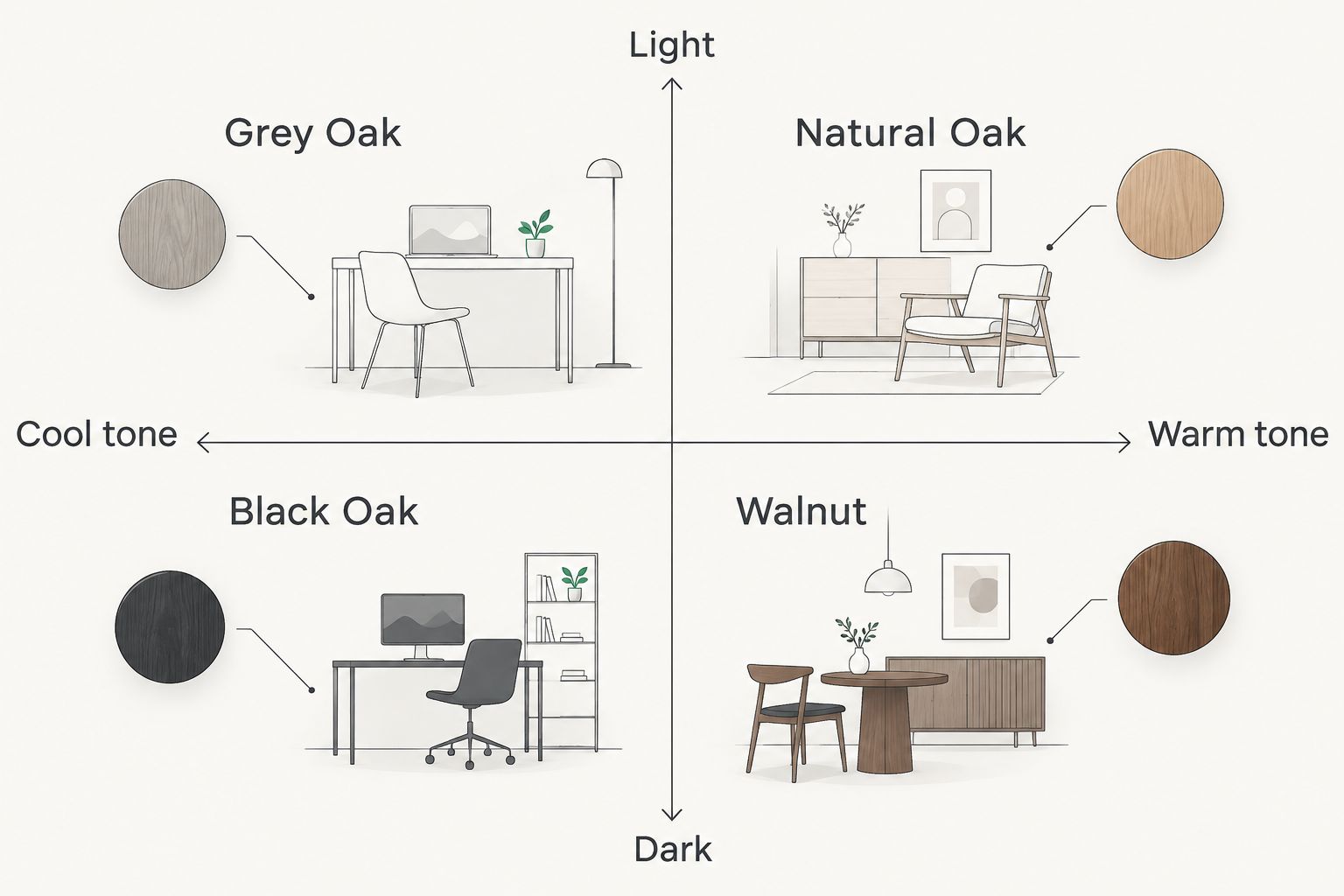
Acoustic wall panel colours 2026: at a glance
| Colour finish | Best for | Standout feature | Key limitation |
|---|---|---|---|
| Grey Oak | Scandinavian & minimalist rooms | Neutral tone matches most furniture | Can look flat under warm yellow lighting |
| Natural Oak | Small or low-light rooms | Highest light reflectance in the range | Shows scuffs more visibly than darker finishes |
| Smoked Oak | Moody feature walls | Deep grain contrast without going fully black | Can dominate a small room if overused |
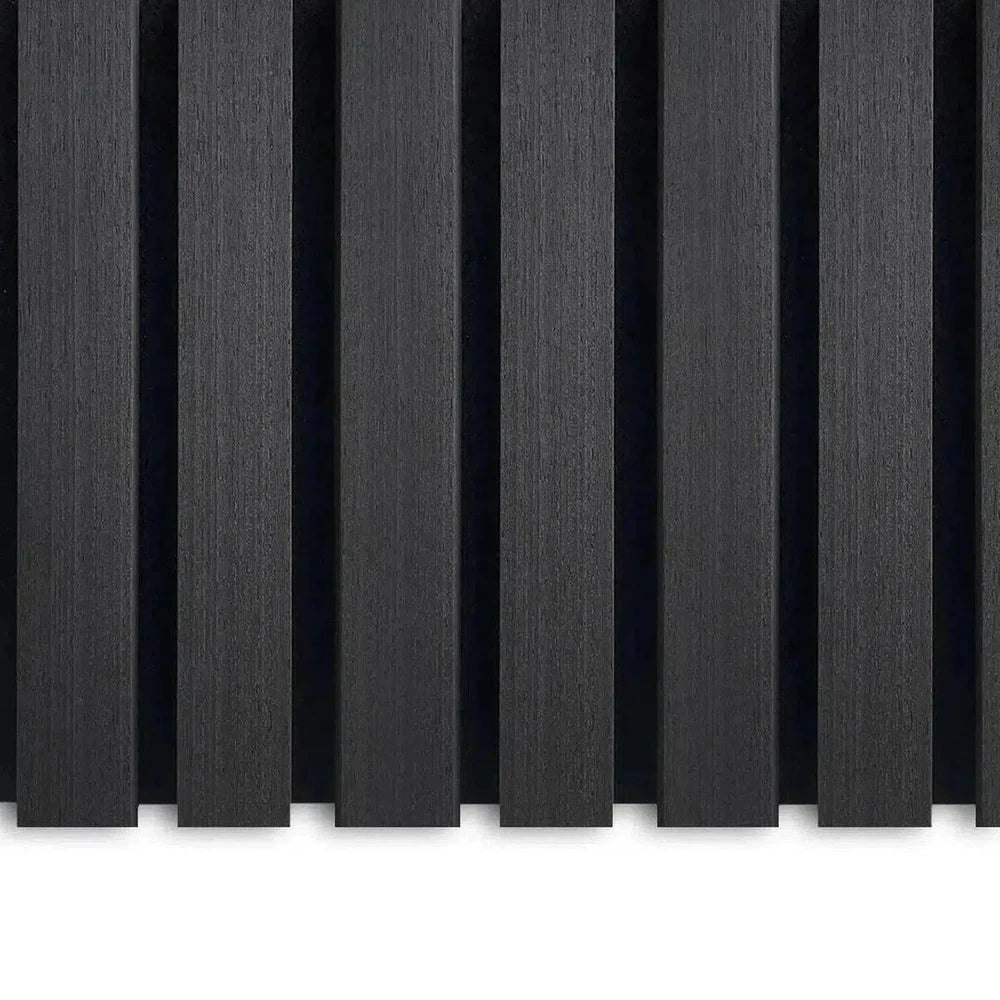
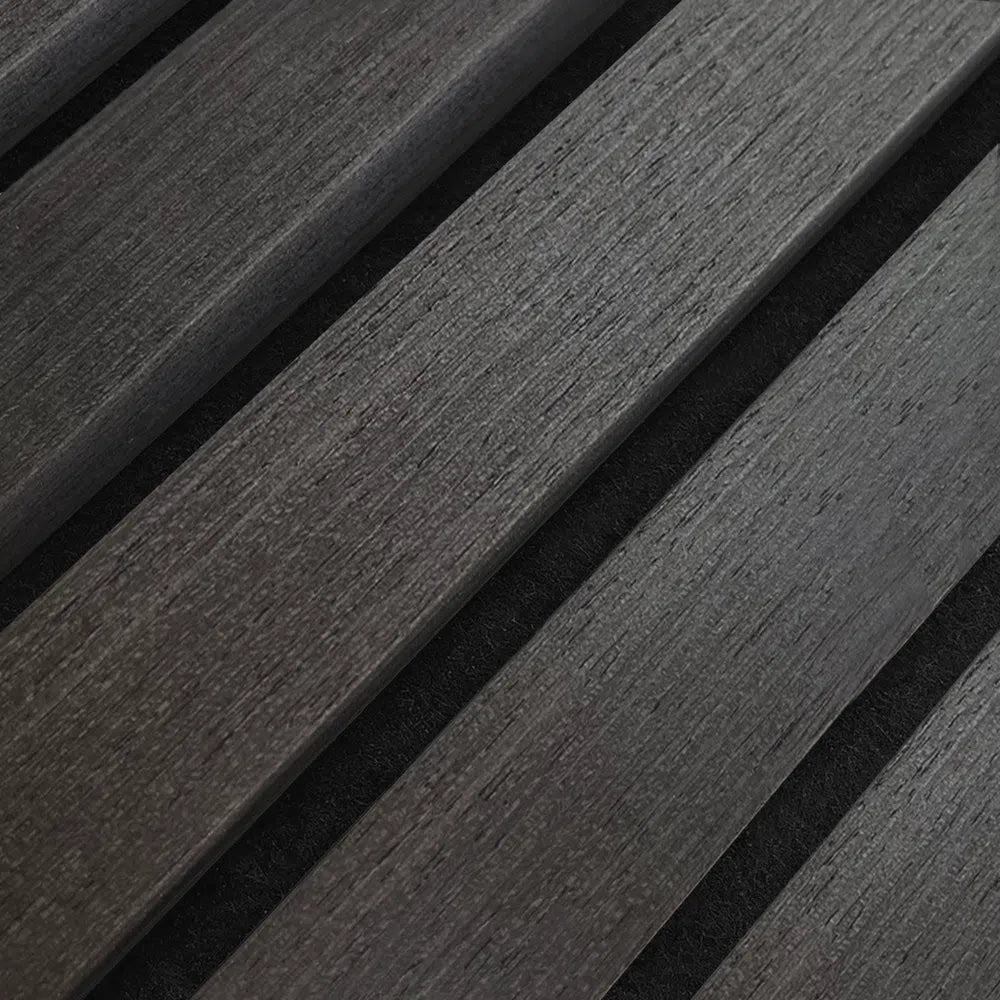
| Black Oak | Bold accent walls | Strongest colour contrast, hides felt-gap shadows | Absorbs light, needs good ambient lighting |
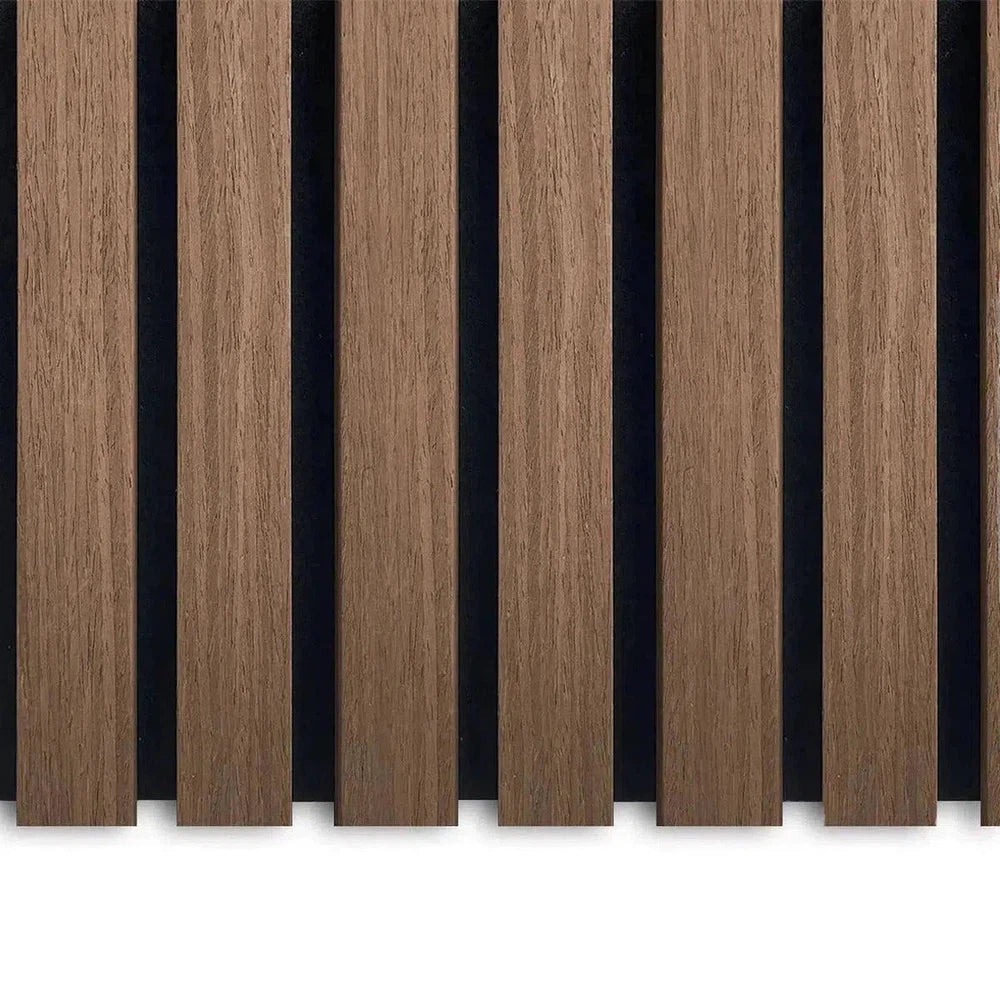
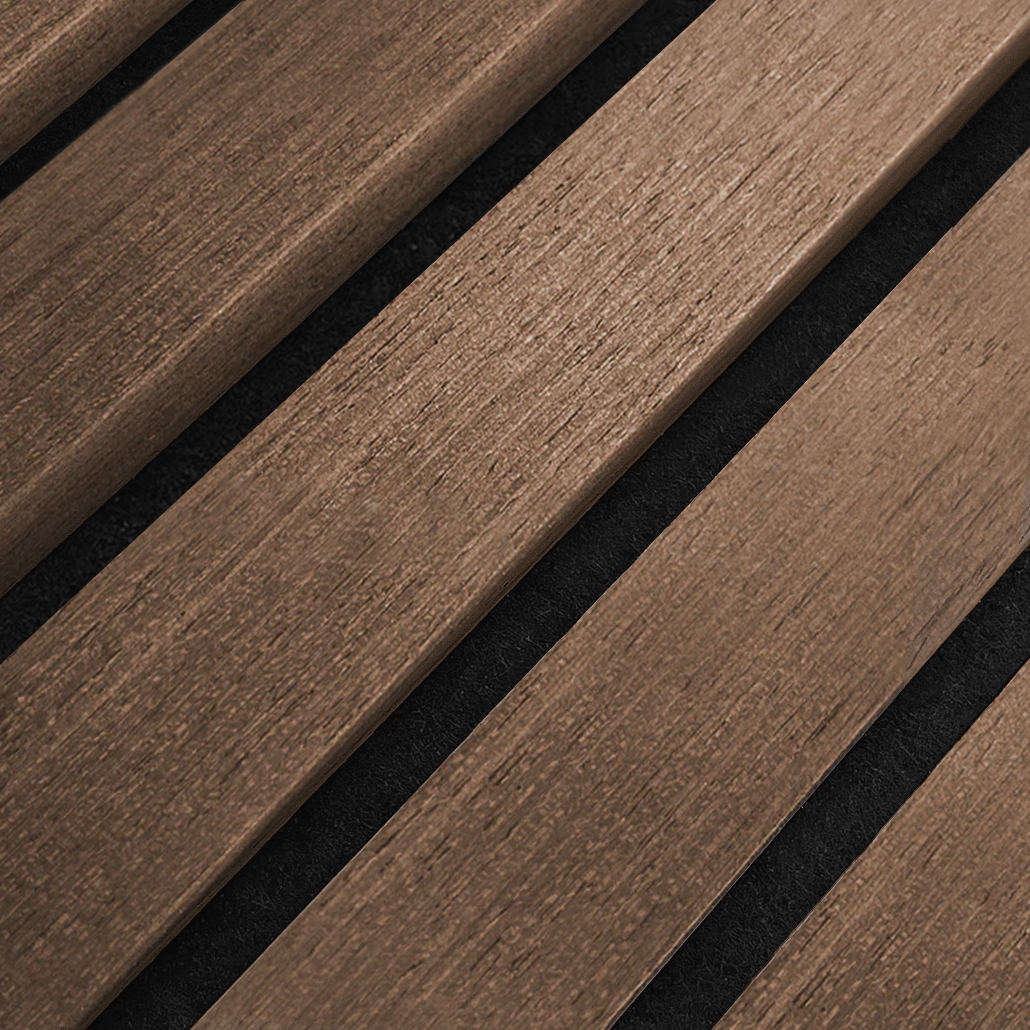
| Walnut | Warm, traditional living rooms | Rich reddish-brown undertone | Grain pattern needs care matching across long walls |
| Mocca | Cosy bedrooms | Warm mid-brown that softens hard edges | Less drama for a statement feature wall |
1. Grey Oak: best acoustic wall panel colour for Scandinavian and minimalist interiors
Grey Oak wall panel is the finish that disappears into almost any colour scheme — white, sage, terracotta, all sit next to it without a clash. The grain is visible but restrained, so it reads as texture rather than pattern from across a room.
Grey Oak pros:
- Neutral undertone pairs with both warm and cool wall paint
- Grain is subtle enough not to compete with other textures in the room
- Works equally well in living rooms, offices and bedrooms
Grey Oak cons:
- Can look slightly cold under warm-white bulbs
- Less of a statement piece than Black Oak or Smoked Oak
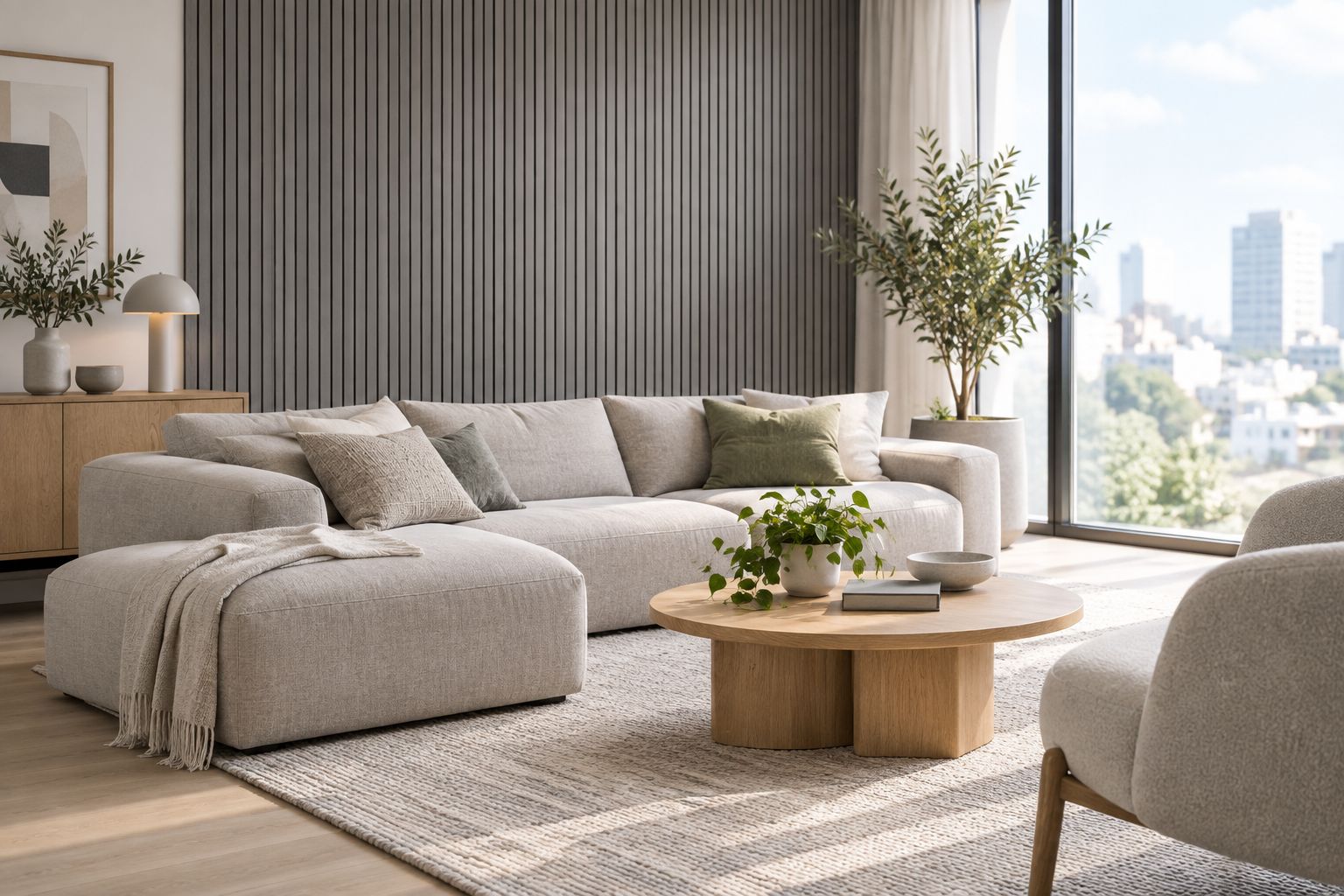
Best for: anyone wanting one finish that works in every room of the house. Verdict: Buy.
2. Natural Oak: best acoustic wall panel colour for small or low-light rooms
Natural Oak has the highest light reflectance of the range, which makes it the finish to reach for in box rooms, north-facing bedrooms or hallways with no window. It keeps the wood-panel look without adding visual weight to a space that's already tight.
Natural Oak pros:
- Bounces the most daylight of any finish, brightening dim rooms
- Pairs naturally with light flooring and pale walls
- Reads as classic and unlikely to date
Natural Oak cons:
- Shows scuffs and dust more visibly than darker finishes
- Less contrast if the room already has pale flooring and walls
Best for: compact rooms, hallways and any space starved of natural light. Verdict: Buy.
3. Smoked Oak: best acoustic wall panel colour for a moody feature wall
Smoked Oak sits between Natural Oak and Black Oak — dark enough to read as a deliberate feature, light enough that the grain still shows at close range. It's the finish most often chosen for a single accent wall behind a bed or a sofa.
Smoked Oak pros:
- Deep, dramatic grain contrast without committing to full black
- Hides everyday marks better than lighter finishes
- Photographs well for feature-wall style rooms
Smoked Oak cons:
- Can dominate a small or narrow room
- Needs contrasting lighter furniture or flooring to avoid looking heavy
Best for: one statement wall in an otherwise pale room. Verdict: Buy.
4. Black Oak: best acoustic wall panel colour for bold accent walls
Black Oak is the highest-contrast finish Akustiq UK offers, and it's the one that hides the acoustic felt backing most completely behind the slats. It reads as a design choice rather than a background material, which is exactly the point for a reception wall or a home cinema.
Black Oak pros:
- Strongest colour contrast against pale walls and floors
- Felt-gap shadows blend into the dark finish rather than standing out
- Suits home cinema rooms and office reception walls
Black Oak cons:
- Absorbs light, so the room needs good artificial lighting
- Not forgiving in a room that's already dark or small
Best for: a single dramatic wall in a well-lit room. Verdict: Buy for the right room, Skip in a dark box room.
5. Walnut: best acoustic wall panel colour for warm, traditional living rooms
Walnut carries a reddish-brown undertone that reads as more traditional and formal than the oak finishes. It suits living rooms built around wood furniture, leather seating or a fireplace, where the panel needs to match rather than contrast.
Walnut pros:
- Rich, warm undertone pairs with existing wood furniture
- Reads as premium and formal rather than casual
- Works well behind a fireplace or in a dining room
Walnut cons:
- Grain pattern needs care when matching panels across a long wall
- Less suited to a strictly minimalist or Scandinavian scheme
Best for: living rooms and dining rooms with existing dark wood furniture. Verdict: Buy.
6. Mocca: best acoustic wall panel colour for cosy bedrooms
Mocca sits in the warm mid-brown range, softer than Walnut and less severe than Smoked Oak. It's the finish most often chosen for bedrooms where the goal is calm rather than contrast.
Mocca pros:
- Warm mid-tone softens hard architectural edges
- Works well as a headboard-style feature wall
- Pairs easily with cream, blush and sage bedding tones
Mocca cons:
- Offers less drama than Smoked Oak or Black Oak for a true statement wall
- Undertone can read slightly orange under cool-white lighting
Best for: bedrooms and any room aiming for calm over contrast. Verdict: Buy.
How this list was ranked
Each finish was judged against the six criteria above — light reflectance, grain visibility, undertone, contrast, felt-gap visibility and room function — rather than treated as a single leaderboard. That's why no two finishes compete for the same "best for" slot: a panel that wins on light reflectance (Natural Oak) is never going to be judged against one that wins on contrast (Black Oak). For a side-by-side breakdown of grain and undertone across the three most-requested finishes, the natural oak vs smoked oak vs walnut comparison goes deeper than this list has room for.
Which acoustic wall panel colour should you choose in 2026?
If you're not sure where to start, default to Grey Oak — it's the finish least likely to clash with a scheme you haven't finalised yet. Go Natural Oak if the room is small or gets little daylight, and go Black Oak or Smoked Oak only if you've already got a well-lit room and want the wall to be the focal point. Walnut and Mocca are for rooms built around warmth rather than contrast.
Before committing to a full wall, order sample pieces in the finishes you're deciding between — colour reads very differently on a phone screen than on your own wall under your own lighting.


FAQ
What is the best acoustic wall panel colour for 2026?
Grey Oak is the best overall acoustic wall panel colour for 2026 because its neutral undertone works with most existing wall colours and furniture. For small or dark rooms, Natural Oak is the better pick since it reflects more light.
Is Black Oak too dark for a living room?
Black Oak works well in a living room that already gets good natural or artificial light, but it can make a small, dark room feel smaller. Reserve it for one feature wall rather than a full room.
Should acoustic wall panel colour match the flooring?
It doesn't need to match exactly, but strong contrast between panel and floor tends to look more deliberate than a near-match. Walnut against a pale oak floor, or Grey Oak against a warm wood floor, both read as intentional pairings.
Which finish is best for a small room?
Natural Oak is the best acoustic wall panel colour for small rooms because it has the highest light reflectance in the range. Grey Oak is the second choice if you want a cooler tone.
Do darker acoustic panels still absorb sound as well as lighter ones?
Yes. The acoustic performance comes from the felt backing behind the veneer, rated NRC 0.75 across the range, regardless of which colour finish sits on top.
What size do acoustic wood panels come in?
Panels are available in 240 cm and 300 cm length formats, so colour choice never limits which room height or wall length you can cover.
Can I mix two colour finishes on the same wall?
Yes, and it's a common way to break up a long wall or mark a zone within an open-plan room. Pairing a warm tone like Walnut with a neutral like Grey Oak tends to work better than combining two warm or two cool finishes.
Is Mocca or Walnut better for a bedroom?
Mocca is the calmer, softer option for a bedroom, while Walnut reads slightly more formal and traditional. Choose Mocca if the goal is a restful room, Walnut if you want it to match existing dark wood furniture.
One last thing
The felt backing colour behind the slats matters more than most buyers expect — on lighter finishes like Grey Oak and Natural Oak, a mismatched felt tone can show through the gaps between slats under direct light. Check the felt colour listed on the product page against your wall paint before ordering a full room's worth of panels, not just the wood tone in the thumbnail image.