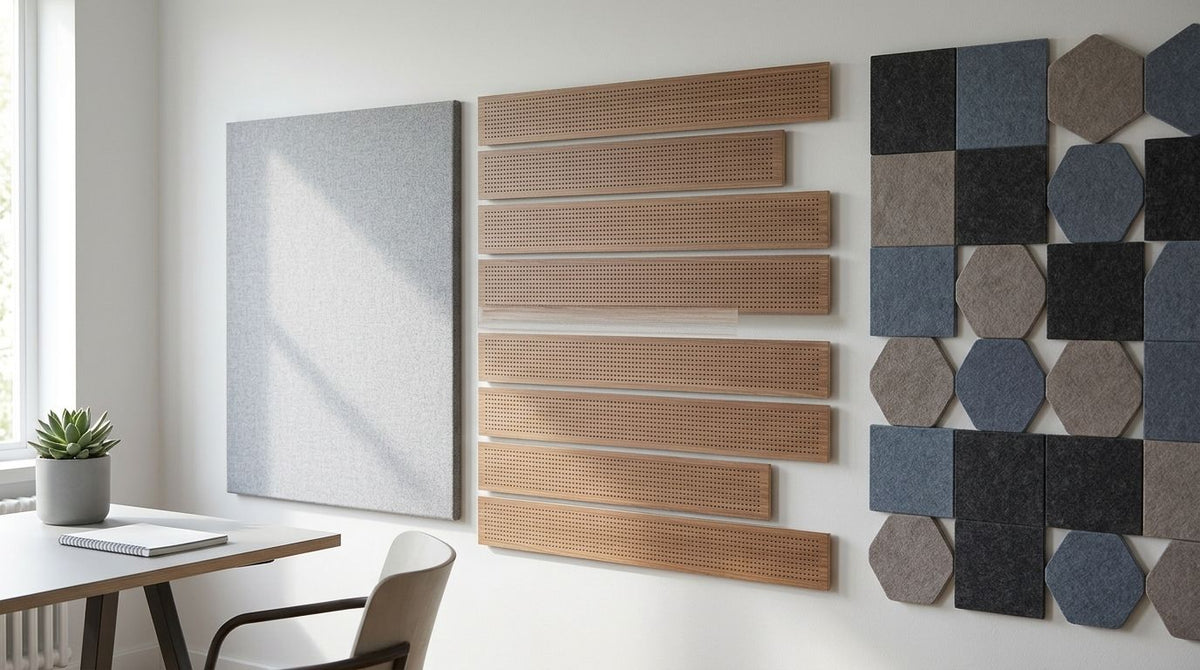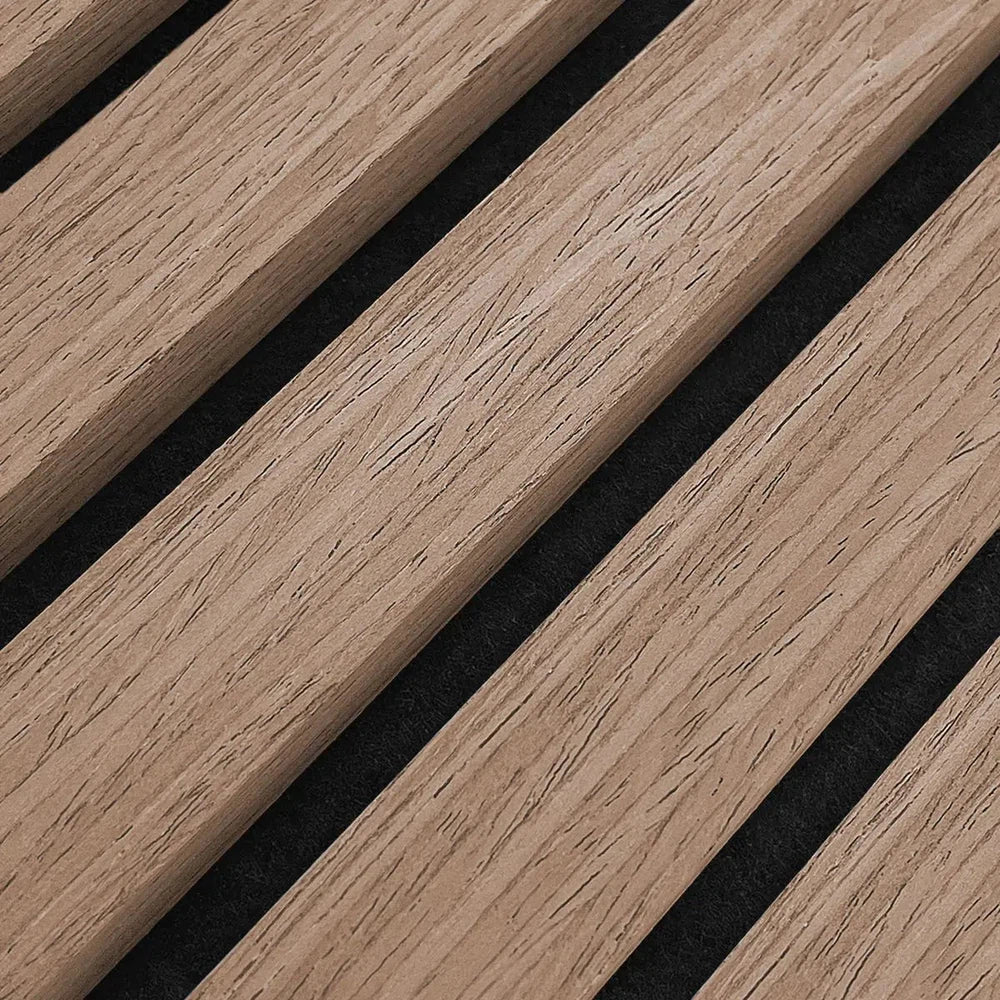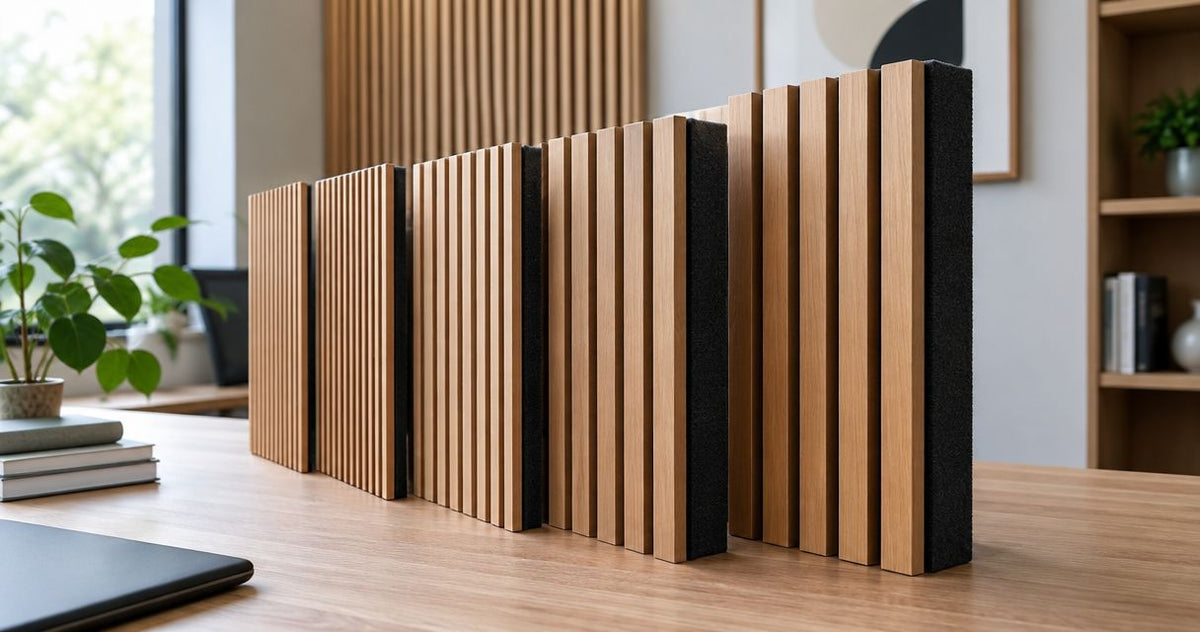
Sound absorbing wood panels don't all behave the same way once they're screwed to a wall, and the difference usually comes down to profile shape and felt coverage rather than a single millimeter spec. Best overall sound absorbing wood panel: the Natural Oak Grey Felt slat panel. Best for open-plan echo control: the Hexagon Acoustic Panel Walnut with Grey Felt. Best for a statement feature wall: the Rustic Oak Premium 3-sided Wood Veneer panel. Best slim-profile pick for offices: the Black Oak panel.
- Natural Oak Grey Felt wins overall among sound absorbing wood panels for living rooms in 2026.
- Hexagon Acoustic Panel Walnut with Grey Felt adds the deepest surface profile for open-plan echo control.
- Rustic Oak Premium veneer suits feature walls that still need real acoustic performance.
- Grey Walnut and Black Oak cover bright-room and budget-office use cases without giving up felt backing.
- All Akustiq UK indoor panels ship in 240 cm and 300 cm lengths to match ceiling height.
Why this matters
Echo happens when sound bounces off hard, flat surfaces instead of getting absorbed. A wooden wall panel with felt backing breaks some of that reflection up, but how much it absorbs depends on the panel's shape and felt coverage, not just how thick it looks. For the mechanics behind that trade-off, the guide on choosing acoustic panel thickness for sound absorption goes into frequency behavior in more depth than a buying guide needs to.
Thickness alone isn't the whole story here. A 3D hexagon panel scatters sound across a textured surface, which can do more work than a flat slat panel with the same felt backing behind it. That's why this list ranks Akustiq UK's sound absorbing wood panels by profile and structure in 2026, not by chasing a single spec-sheet number that rarely tells the full story anyway.
What makes the best sound absorbing wood panel
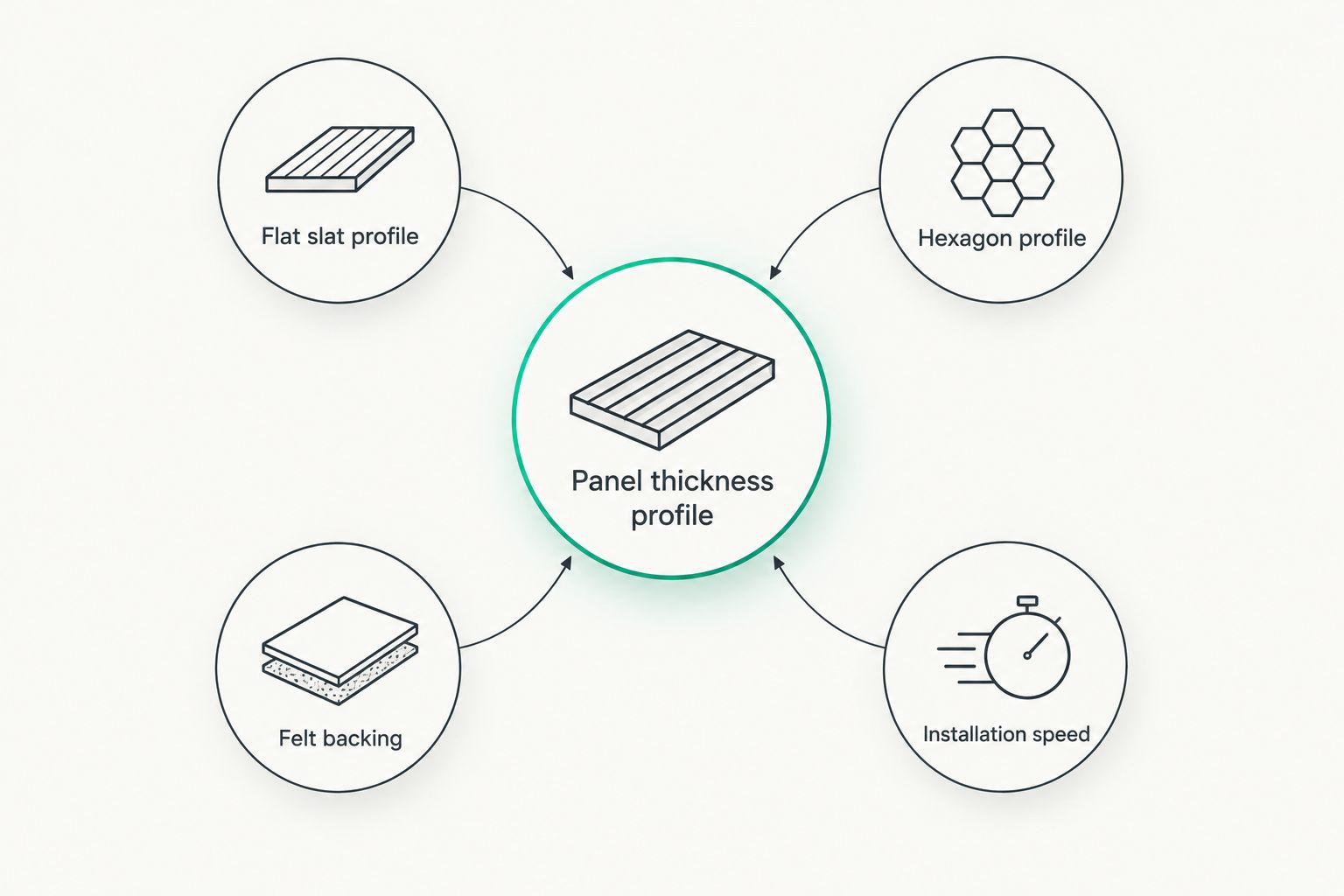
- Profile depth: flat slat panels versus 3D hexagon shapes that scatter sound across a textured surface
- Felt backing coverage: full-panel acoustic felt behind the veneer, not just trim strips
- Size format: 240 cm and 300 cm lengths that reach ceiling height without extra cutting
- Wood tone versatility: a finish that works with the room's light level instead of fighting it
- Installation profile: flat panels go up faster; shaped panels need more careful alignment
Sound absorbing wood panels at a glance
| Panel | Best for | Standout feature | Key limitation |
|---|---|---|---|
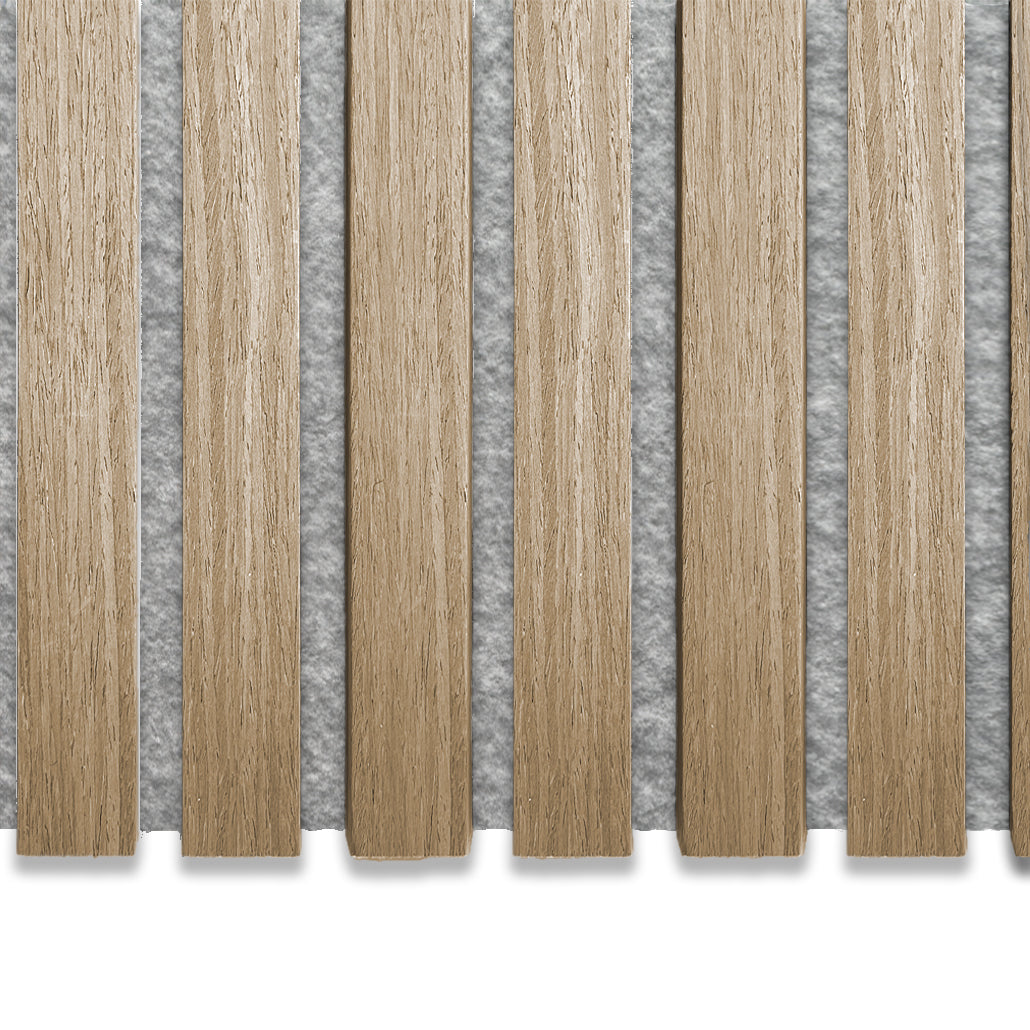
| Natural Oak Grey Felt panel | Living rooms overall | Flat slat profile with visible grey felt backing | Limited to one light wood tone |
| Hexagon Acoustic Panel Walnut with Grey Felt | Open-plan echo control | 3D hexagon shape scatters sound across a textured surface | More complex to cut and align than flat panels |
| Rustic Oak Premium 3-sided Wood Veneer | Statement feature walls | Heavy rustic grain reads as a richer, more dimensional surface | Bold grain can overwhelm a small room |
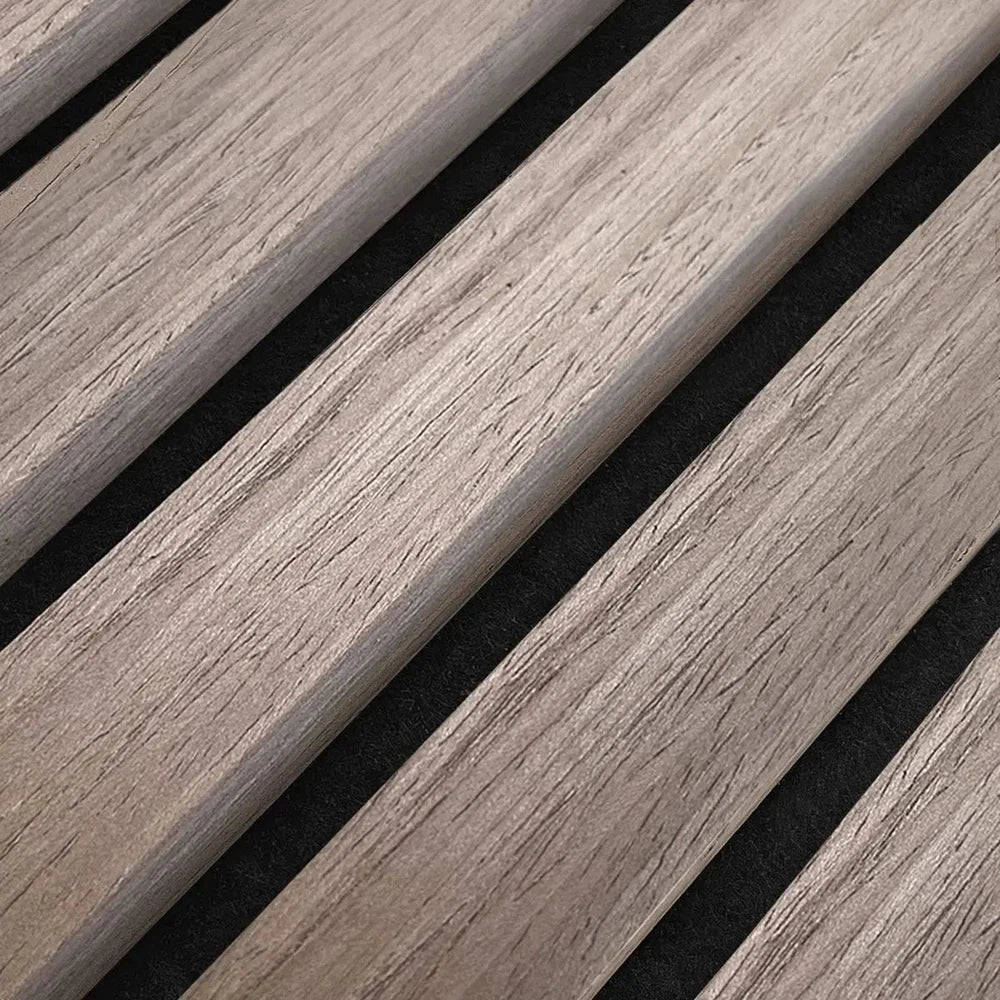
| Grey Walnut panel | Bright, light-filled rooms | Cool grey tone works with daylight instead of against it | Shows dust and marks more visibly than darker finishes |
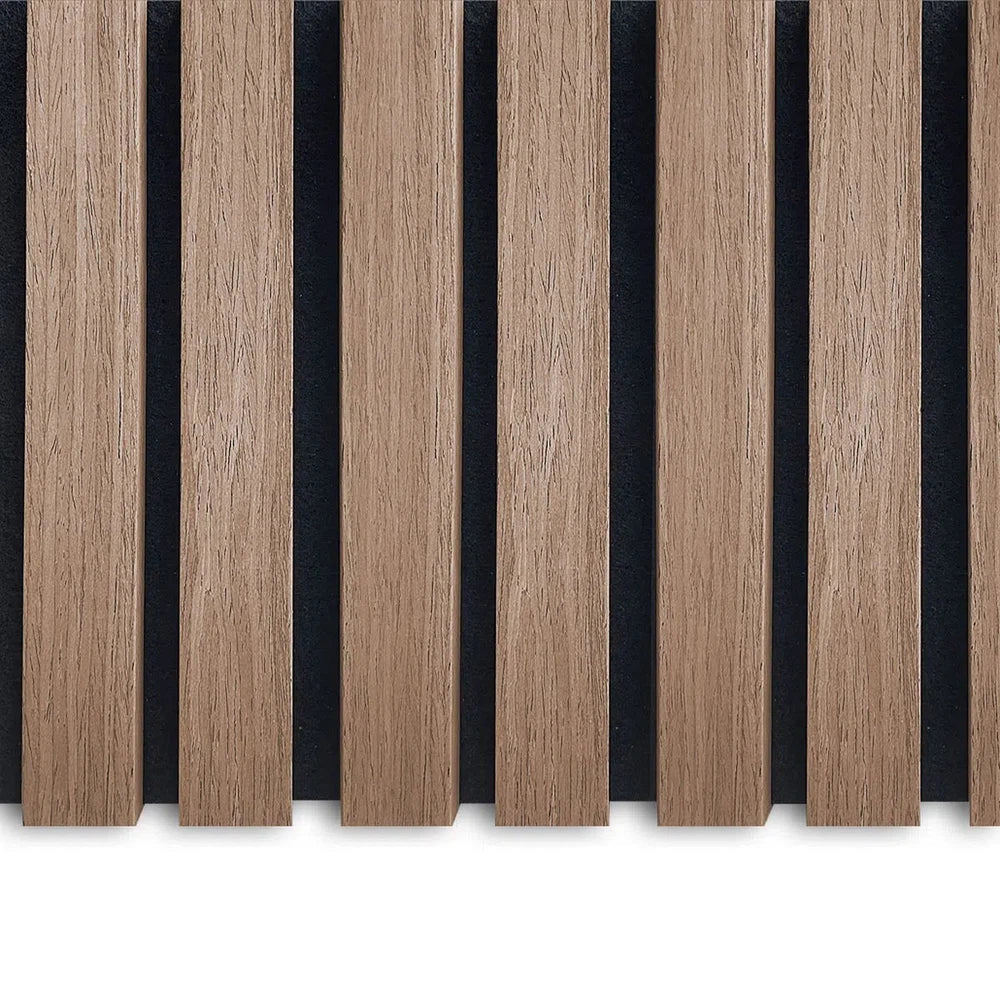
| Black Oak panel | Slim-profile budget offices | Dark tone plus flat slat profile keeps install simple | Darker tone can make a small room feel more closed in |
1. Natural Oak Grey Felt panel: best sound absorbing wood panel for living rooms
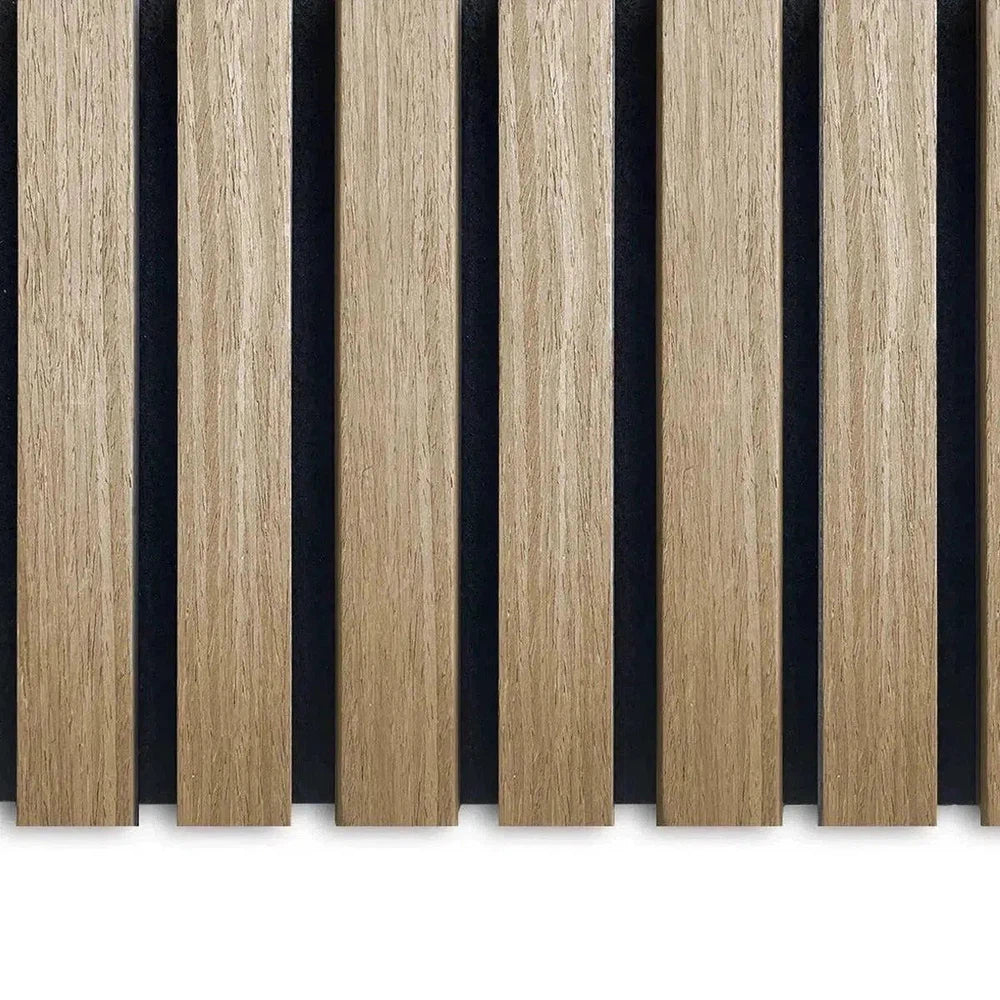
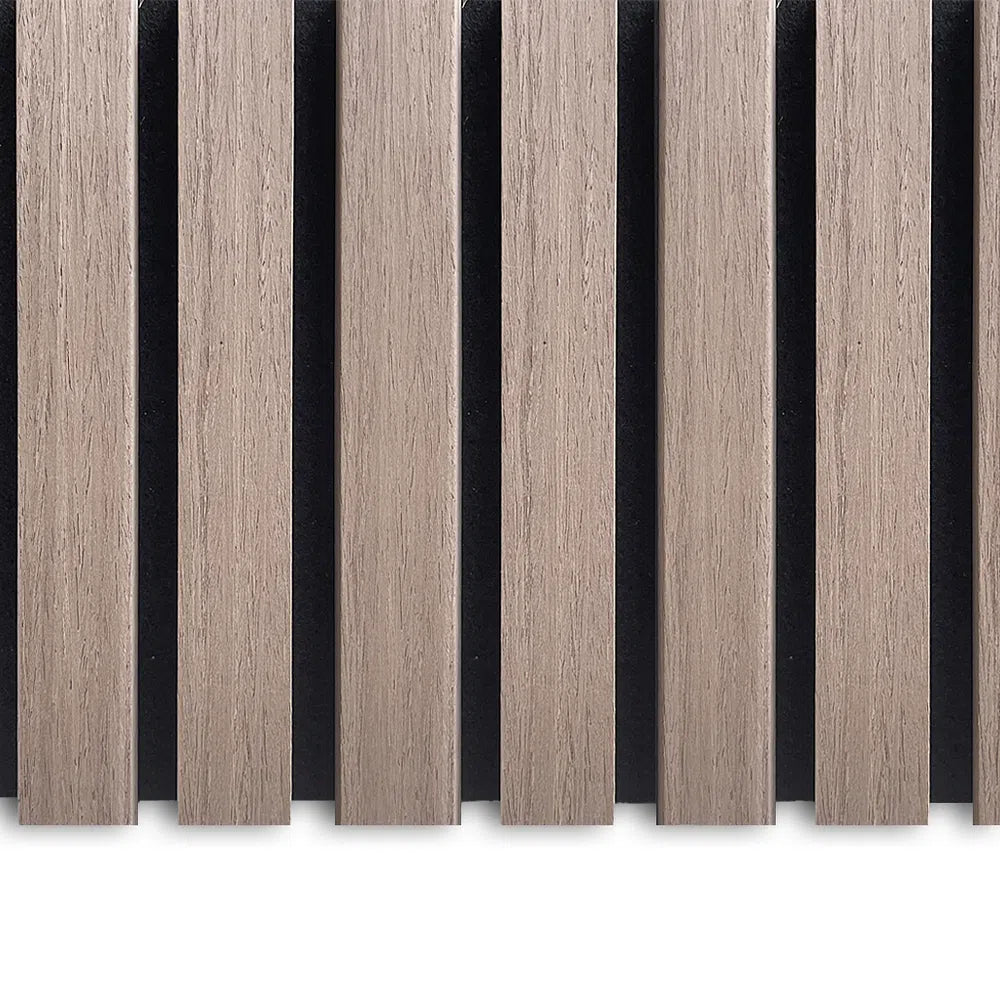
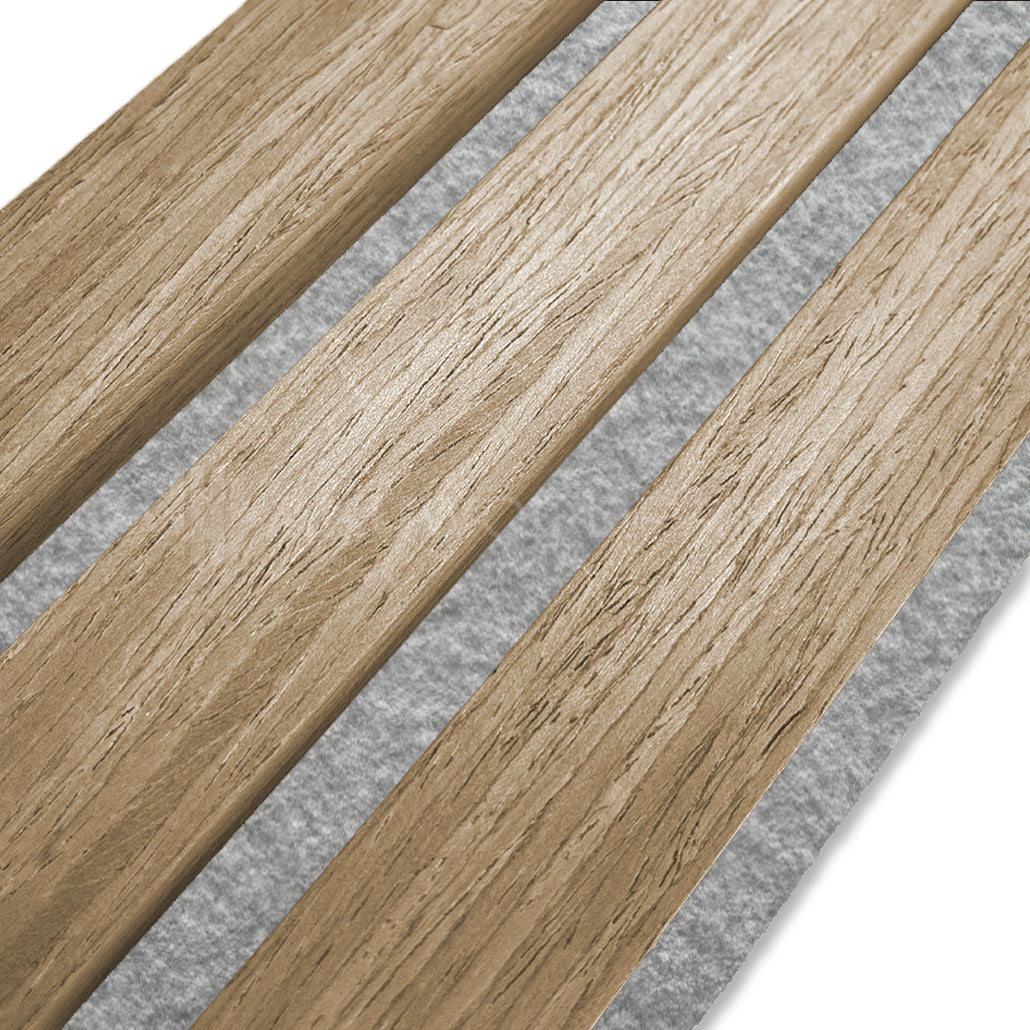
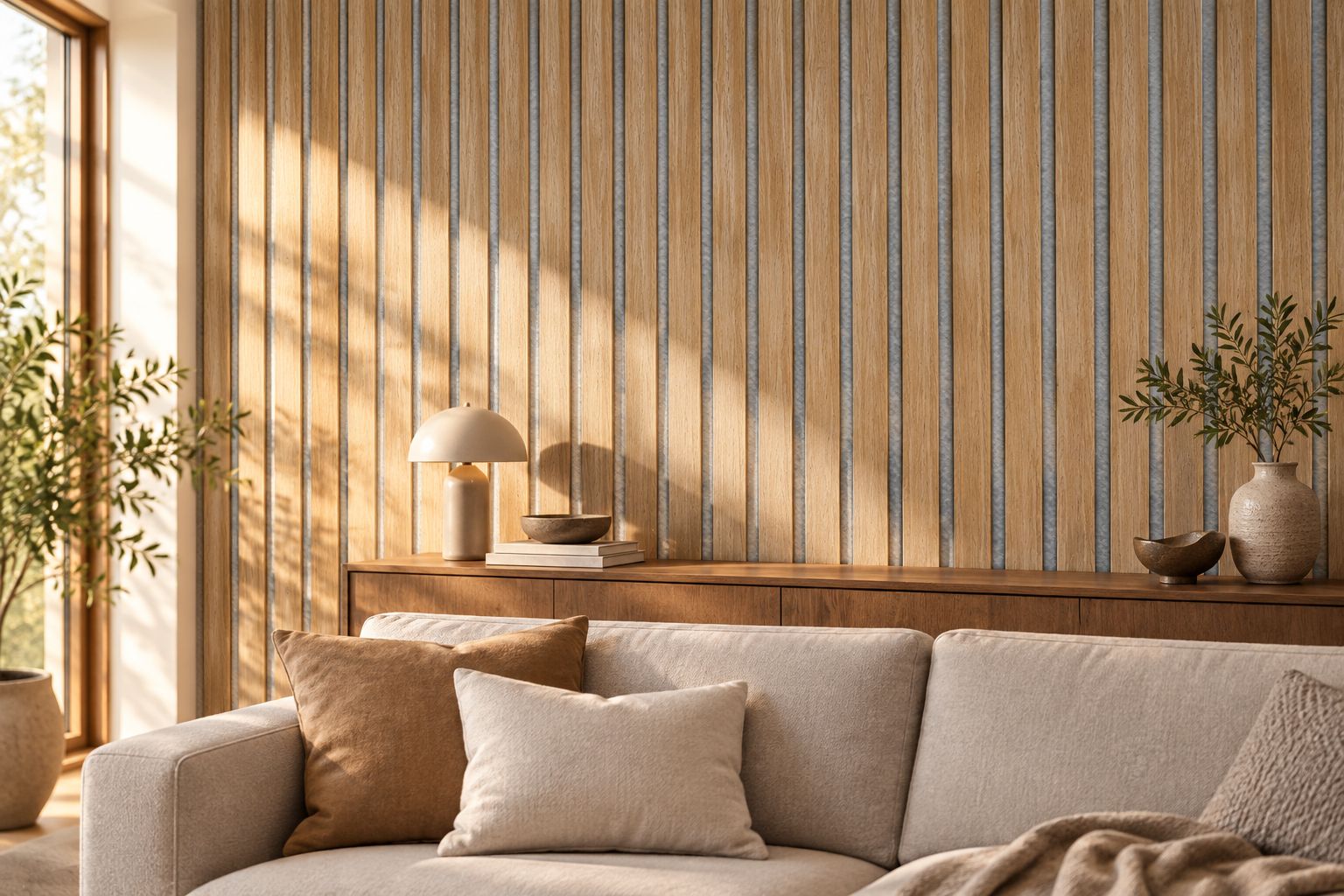
The Natural Oak Grey Felt panel pairs a light oak veneer with a grey felt backing that shows through the slat gaps for a two-tone finish. It uses a flat slat profile, so it installs the same way any standard wall panel does, without the alignment work a shaped tile needs. The felt runs the full length of the panel rather than sitting only at the trim edges.
Natural Oak Grey Felt panel pros:
- Flat slat profile installs like a standard panel, no shaped-tile alignment
- Grey felt backing is visible through the slats for a two-tone look
- Available in 240 cm and 300 cm lengths for different ceiling heights
Natural Oak Grey Felt panel cons:
- Only one light oak tone, so it won't suit a darker interior scheme
- Flat profile scatters sound less than a shaped hexagon panel
Best for: living rooms and bedrooms that need everyday echo control without a shaped-tile look. Verdict: Buy.
2. Hexagon Acoustic Panel Walnut with Grey Felt: best sound absorbing wood panel for open-plan echo control
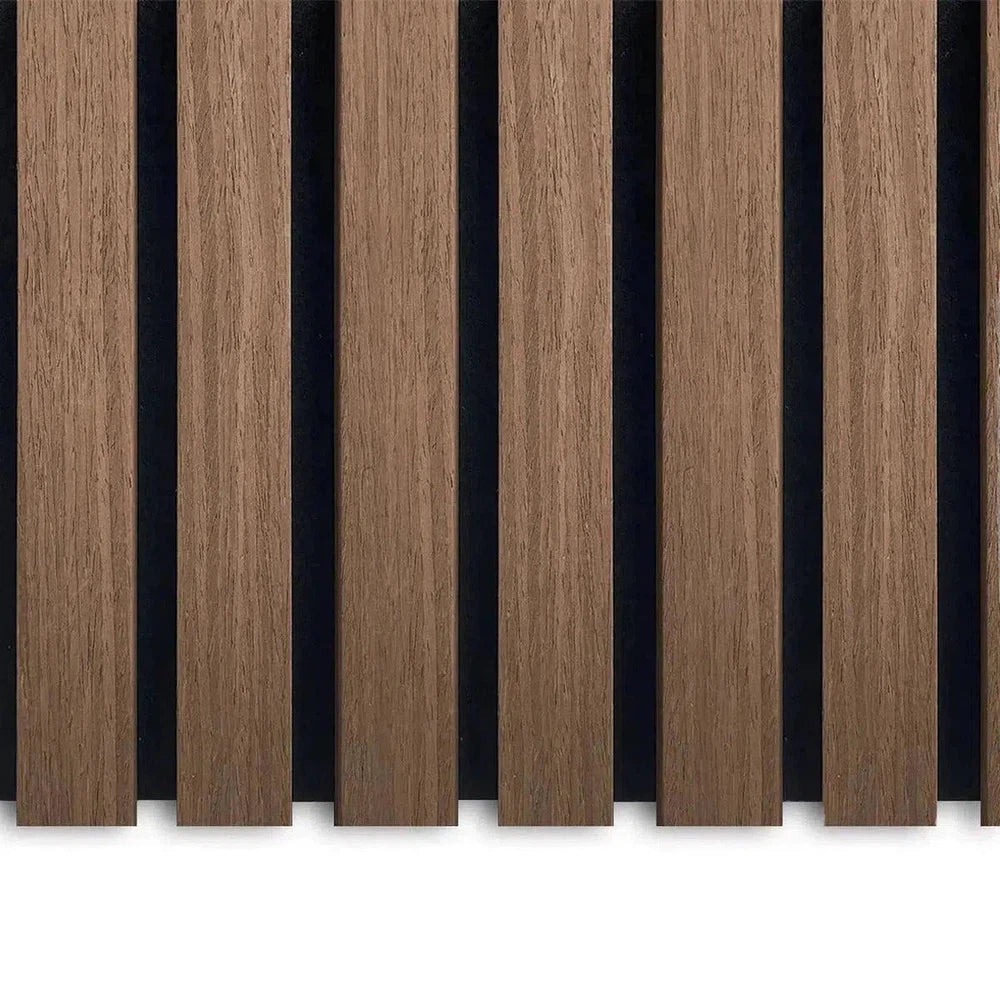
The Hexagon Acoustic Panel Walnut with Grey Felt swaps the flat slat shape for a 3D hexagon surface, so sound hits a textured face instead of a flat one. That shape adds surface area without changing the wall's footprint, which matters in an open-plan room where noise has more paths to travel. The grey felt sits behind the walnut veneer the same way it does across the flat-panel line.
Hexagon Acoustic Panel Walnut with Grey Felt pros:
- 3D hexagon shape scatters sound across a textured surface, not a flat one
- Walnut tone works as a darker accent wall in an otherwise light room
- Felt backing runs the full panel, matching the flat-panel construction
Hexagon Acoustic Panel Walnut with Grey Felt cons:
- Cutting and aligning hexagon tiles takes longer than a flat slat panel
- The pattern-heavy look isn't right for a minimalist room
Best for: open-plan living areas or offices where noise travels across a large, hard-surfaced floor. Verdict: Buy.
3. Rustic Oak Premium 3-sided Wood Veneer: best sound absorbing wood panel for a feature wall
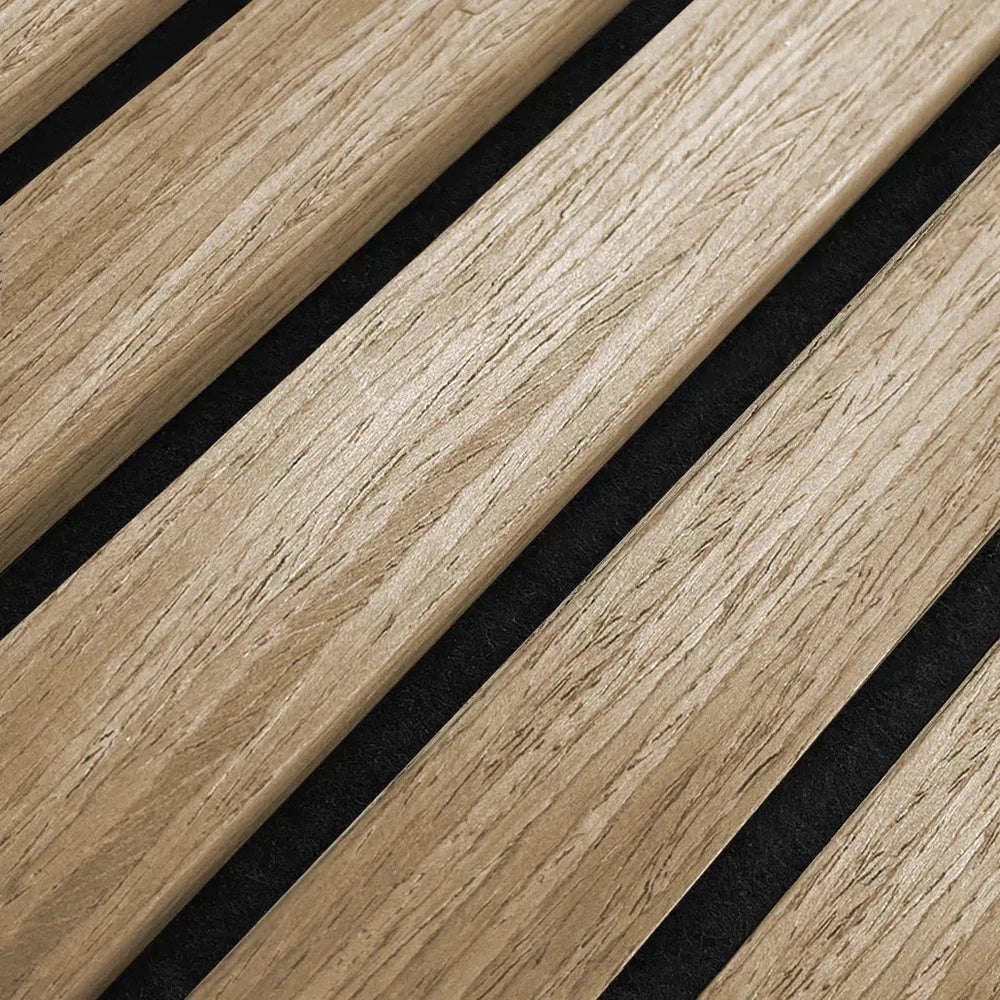
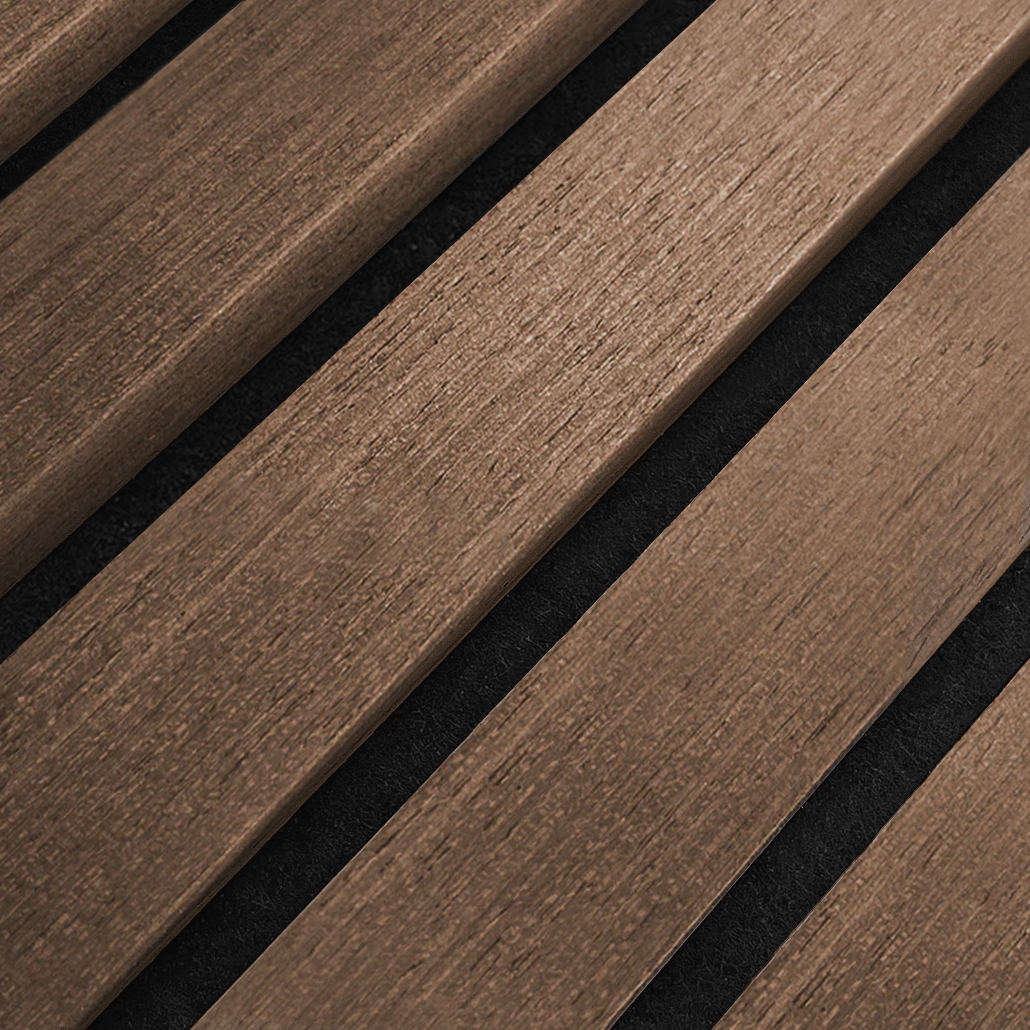
The Rustic Oak Premium 3-sided Wood Veneer panel carries a heavier, more textured grain than the Natural Oak finish, which reads as a richer surface even on the same flat slat profile. As a 3-sided veneer panel, the grain wraps the visible edges instead of stopping flat at the face. This is the pick when the wall itself needs to be the room's focal point, not just a quiet backdrop.
Rustic Oak pros:
- Heavier grain pattern gives a richer, more dimensional look than lighter finishes
- 3-sided veneer wraps the edges for a finished look from an angle
- Same flat slat installation as the rest of the indoor range
Rustic Oak cons:
- Bold grain can dominate a small room instead of blending into it
- Not the deepest profile in the range if maximum scatter is the goal
Best for: a single feature wall in a living room, hallway, or reception area. Verdict: Buy.


4. Grey Walnut panel: best sound absorbing wood panel for bright rooms
The Grey Walnut panel uses a cool grey wood tone instead of a warm oak or walnut finish, which keeps a naturally bright room from tipping into a heavy, dark look. It shares the same flat slat profile and felt backing as the rest of the wooden wall panel line, just in a different finish. Grey tones also pair more easily with pale grey and blue accent colors common in Scandinavian-style rooms.
Grey Walnut pros:
- Cool grey tone works with daylight instead of competing with it
- Same felt-backed construction as the warmer wood finishes
- Pairs easily with pale, minimalist color schemes
Grey Walnut cons:
- Shows dust and light marks more visibly than a darker finish
- Not the pick for a room that wants a warm, traditional wood look
Best for: bright, light-filled rooms or Scandinavian-style interiors that need acoustic control without a heavy dark wall. Verdict: Buy.
5. Black Oak panel: best sound absorbing wood panel for a slim-profile office
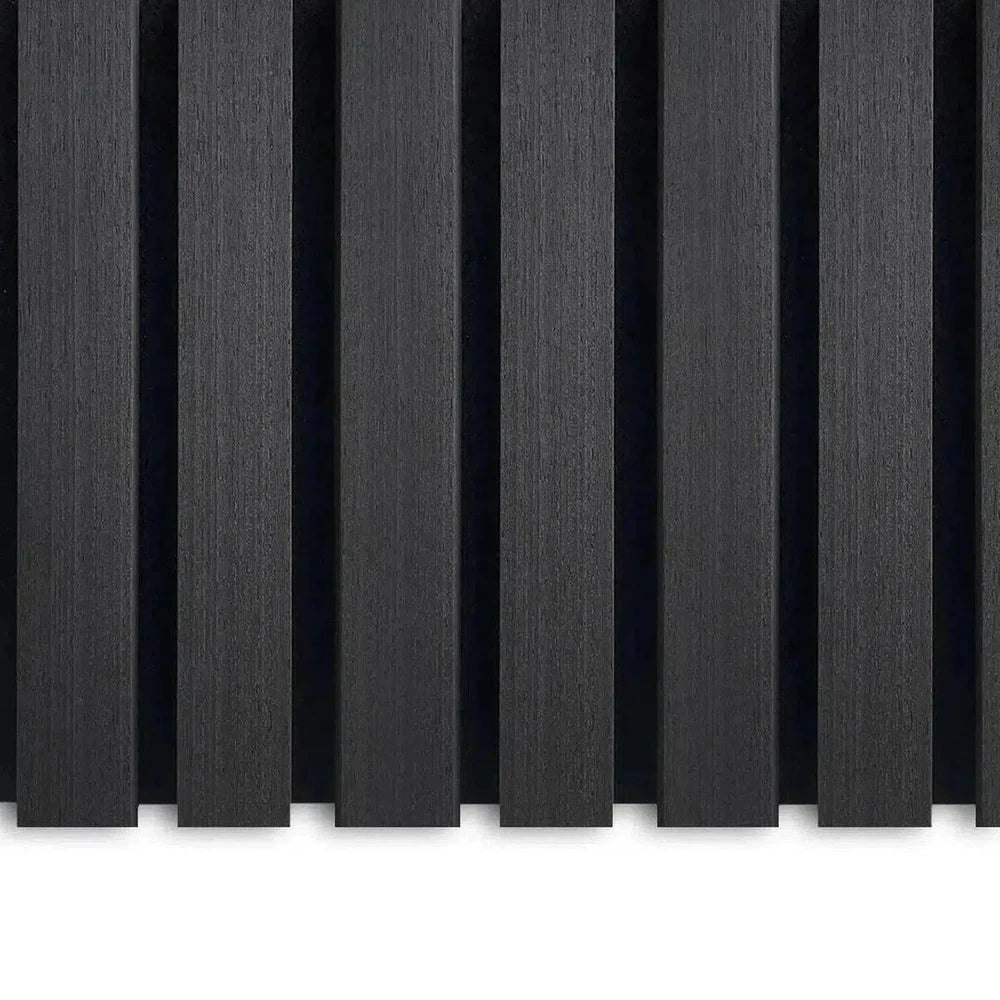
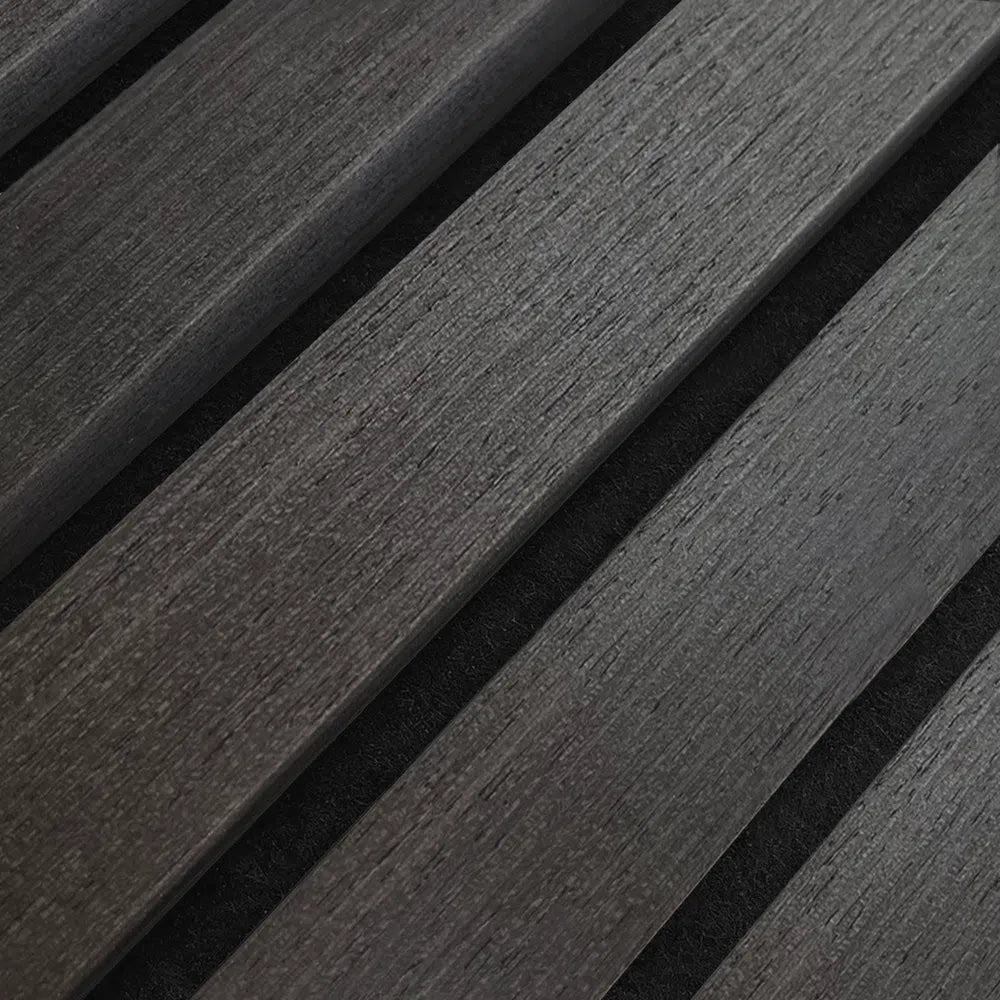
The Black Oak panel keeps the same flat slat profile as the rest of the range but in a dark finish that hides the felt backing almost completely. It's a straightforward install for an office or workspace that wants acoustic control without drawing attention to the wall. The dark tone also does a good job of hiding scuffs and marks in a high-traffic corridor.
Black Oak pros:
- Flat slat profile keeps installation as simple as the lighter finishes
- Dark tone hides scuffs and marks better than lighter wood
- Works as a low-key acoustic upgrade in an office or corridor
Black Oak cons:
- Darker tone can make a small room feel more closed in
- Doesn't stand out as a feature wall the way Rustic Oak does
Best for: offices and corridors that want quiet acoustic improvement rather than a design statement. Verdict: Buy for offices; hold off in a small, already-dark room.
How we ranked
This list weighs profile depth, felt backing coverage, size format flexibility, wood tone versatility, and installation profile against each other rather than chasing one thickness number. A hexagon panel and a flat slat panel with identical felt backing don't perform identically once they're on the wall, and a spec-sheet thickness in millimeters doesn't capture that. Every panel here ships in 240 cm and 300 cm lengths, so length wasn't a differentiator between them.
Which sound absorbing wood panel should you choose?
For most living rooms and bedrooms, the Natural Oak Grey Felt panel is the safe, flat-profile default for sound absorbing wood panels in 2026. Rooms with more open floor space and more paths for noise to travel do better with the Hexagon Acoustic Panel Walnut with Grey Felt, since the shaped surface breaks up sound instead of just softening one wall. Anyone treating the wall as a design feature first and an acoustic fix second should start with Rustic Oak, and anyone fitting out an office on a tighter brief can stop at Black Oak or Grey Walnut without feeling like they compromised.
FAQ
What's the best sound absorbing wood panel for a living room?
The Natural Oak Grey Felt panel is the best overall pick for a living room in 2026. Its flat slat profile and full felt backing handle everyday echo without a shaped-tile installation.
Does panel thickness matter more than felt backing for sound absorption?
Felt backing coverage matters as much as thickness, since it's the layer doing most of the absorbing work. A thicker-looking panel without full felt coverage won't outperform a flatter panel that has it.
Is a hexagon acoustic panel better than a flat slat panel for echo?
A hexagon acoustic panel scatters sound across a textured 3D surface, which helps more in open-plan rooms with several noise paths. A flat slat panel is easier to install and works fine for a single wall in a smaller room.
What size do Akustiq UK's wooden wall panels come in?
Akustiq UK's indoor wooden wall panels come in 240 cm and 300 cm lengths. Picking the length that matches the ceiling height cuts down on trimming during installation.
Can sound absorbing wood panels replace foam acoustic panels?
Wood panels with felt backing absorb sound while doubling as a finished wall surface, which foam panels don't. They suit a living room or office where appearance matters as much as acoustic performance.
How many wood panels do I need to reduce echo in a room?
The number of panels depends on wall size and how hard the existing surfaces are, so it's measured room by room rather than with a fixed rule. Covering one full wall is a reasonable starting point for a typical living room.
Do darker wood finishes absorb sound differently than lighter finishes?
Wood tone itself doesn't change how much sound a panel absorbs; the felt backing and profile shape do that work. Darker finishes like Black Oak use the same flat slat profile and felt backing as lighter finishes.
Is Rustic Oak or Natural Oak better for acoustic performance?
Both use the same flat slat profile and felt backing, so acoustic performance is comparable between them. The choice comes down to how bold a grain pattern the room can carry.
One last thing
The wood veneer on any of these panels decides how the wall looks; the felt backing behind it decides how much sound actually stops bouncing. It's easy to shop by finish alone, but the felt is doing the acoustic work in 2026 just as much as it was in any earlier catalog year, so don't skip checking that every panel on the shortlist has it.