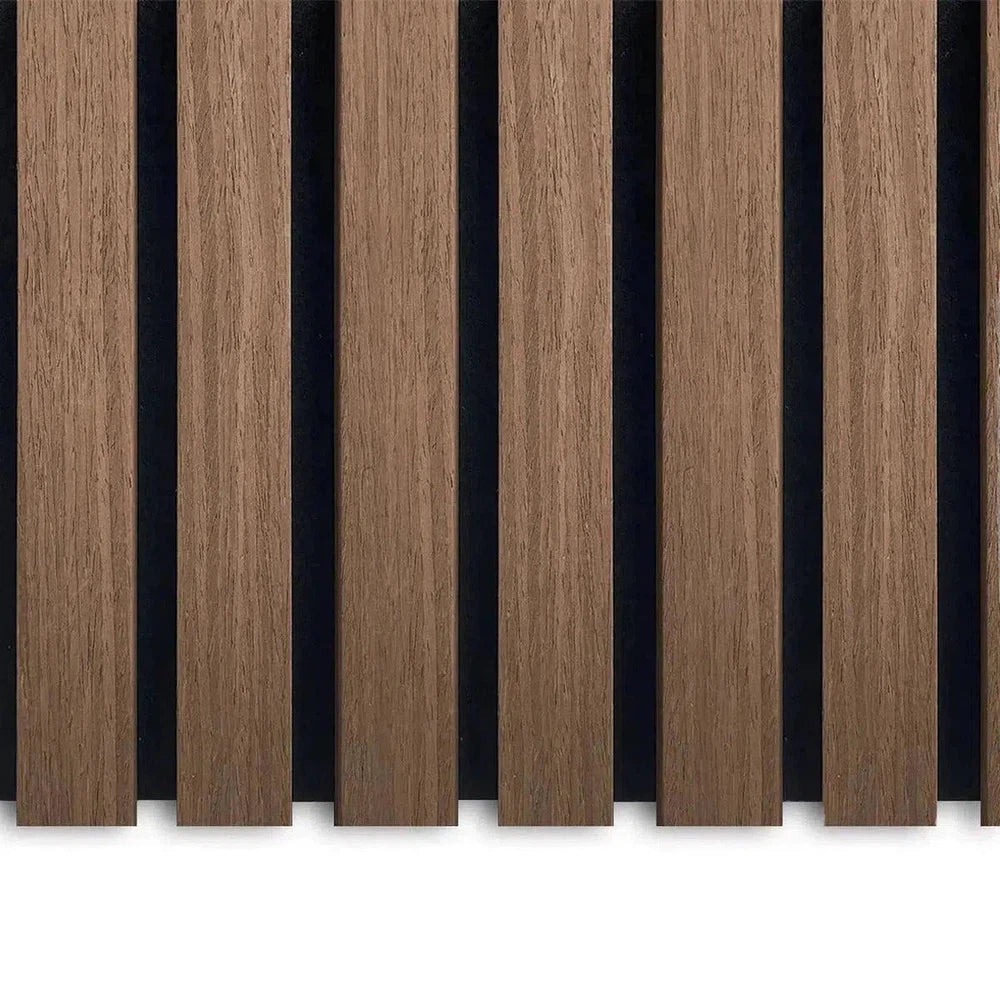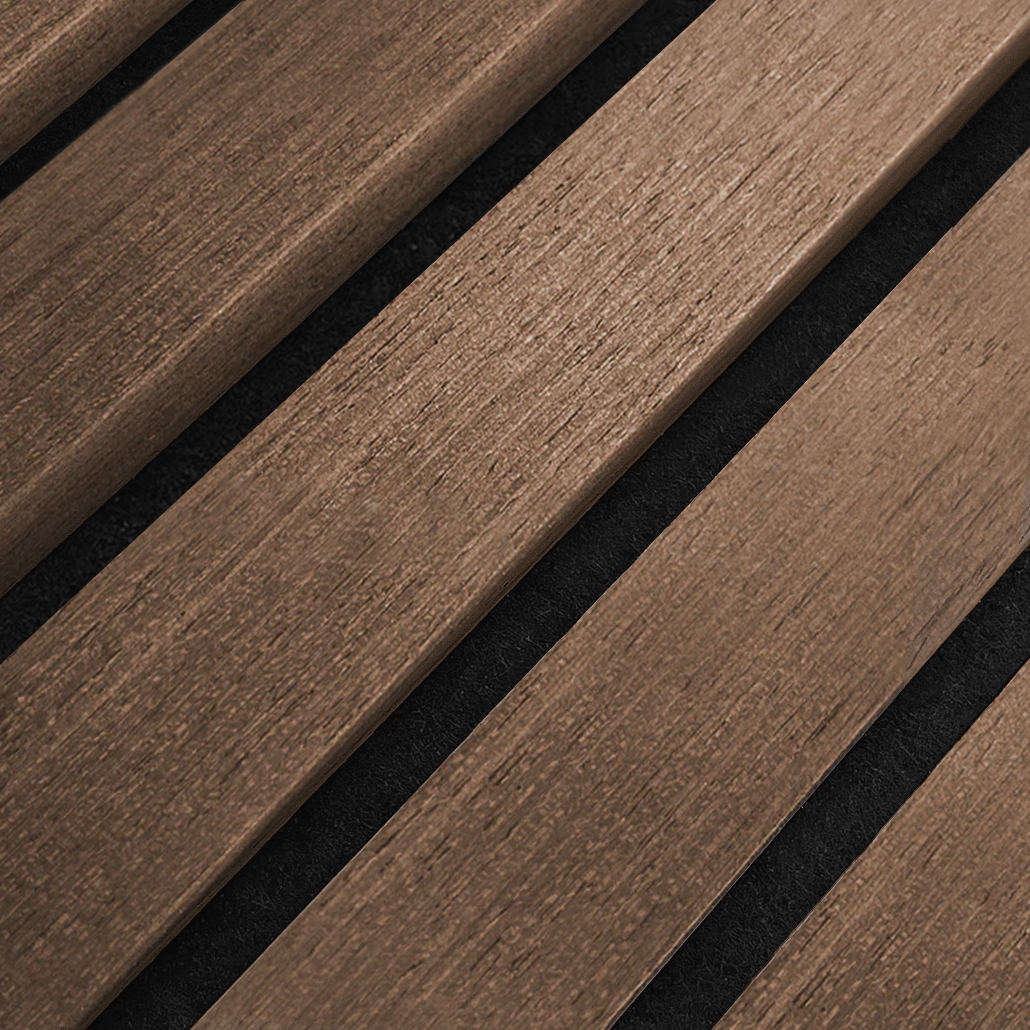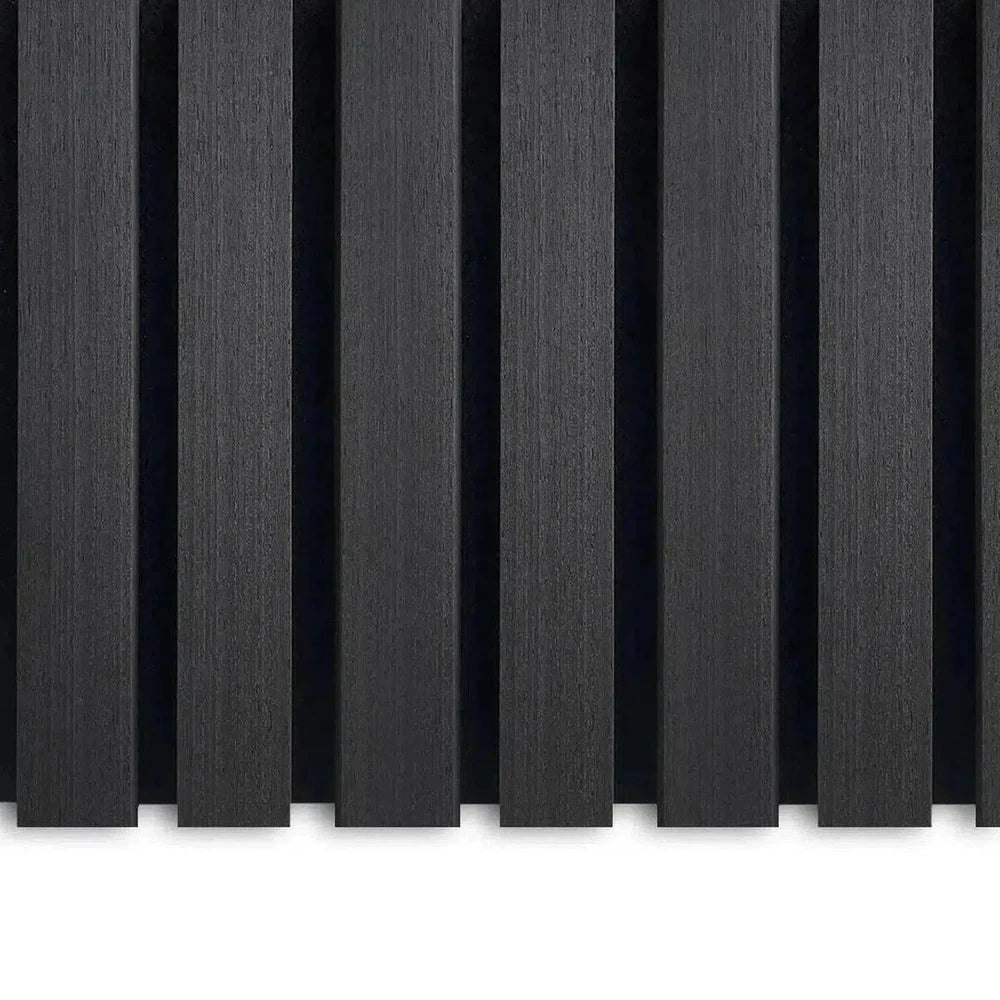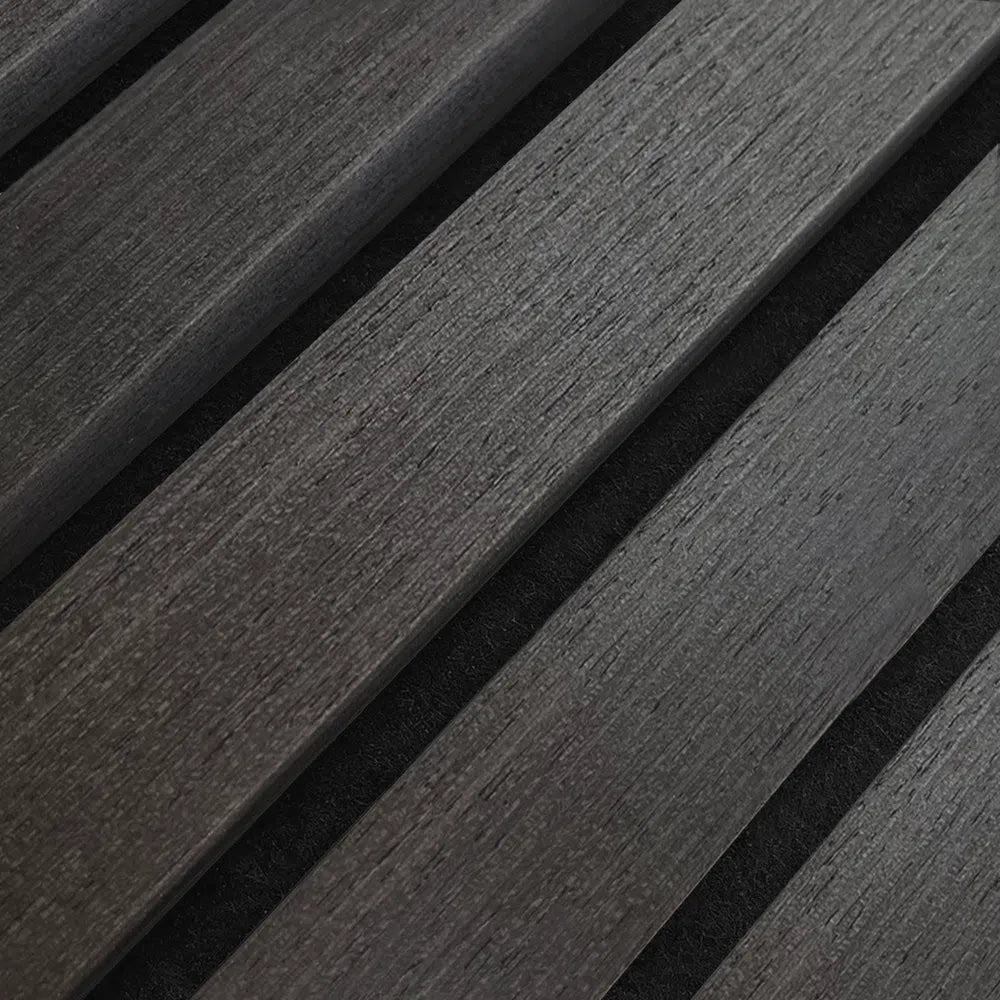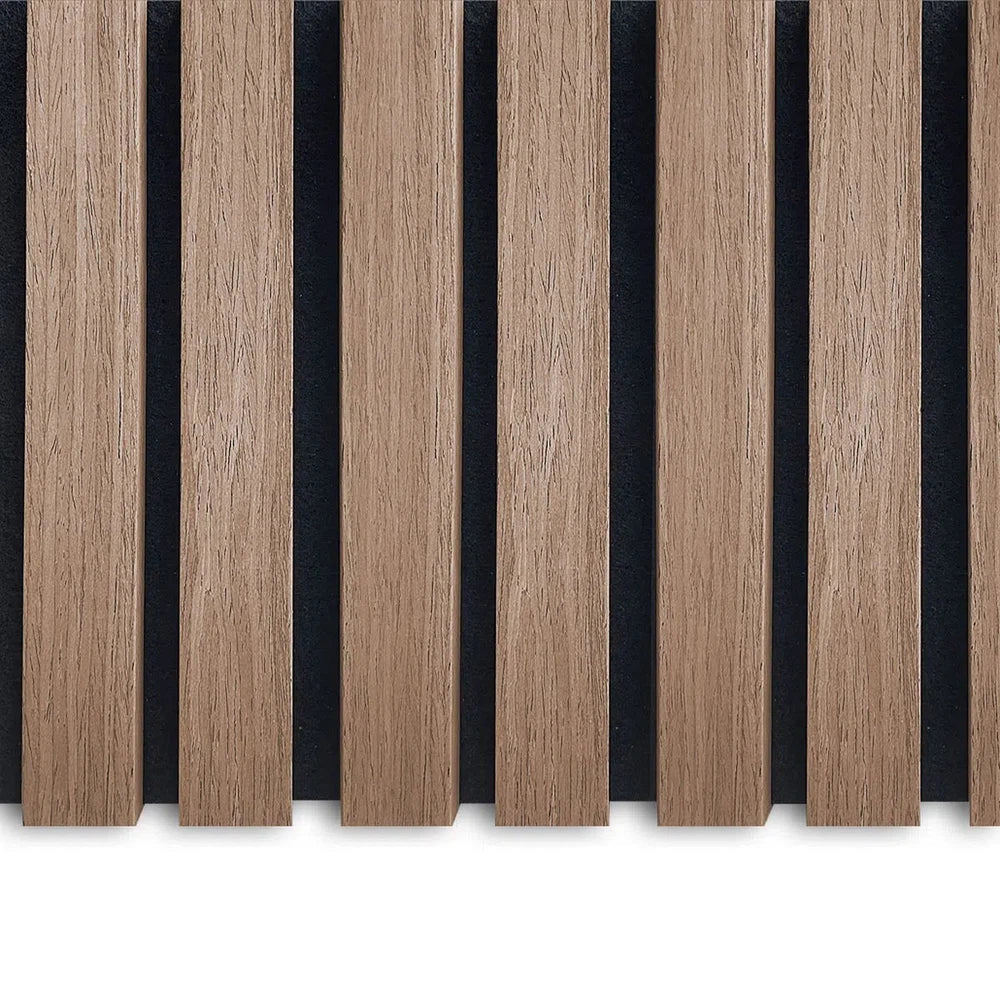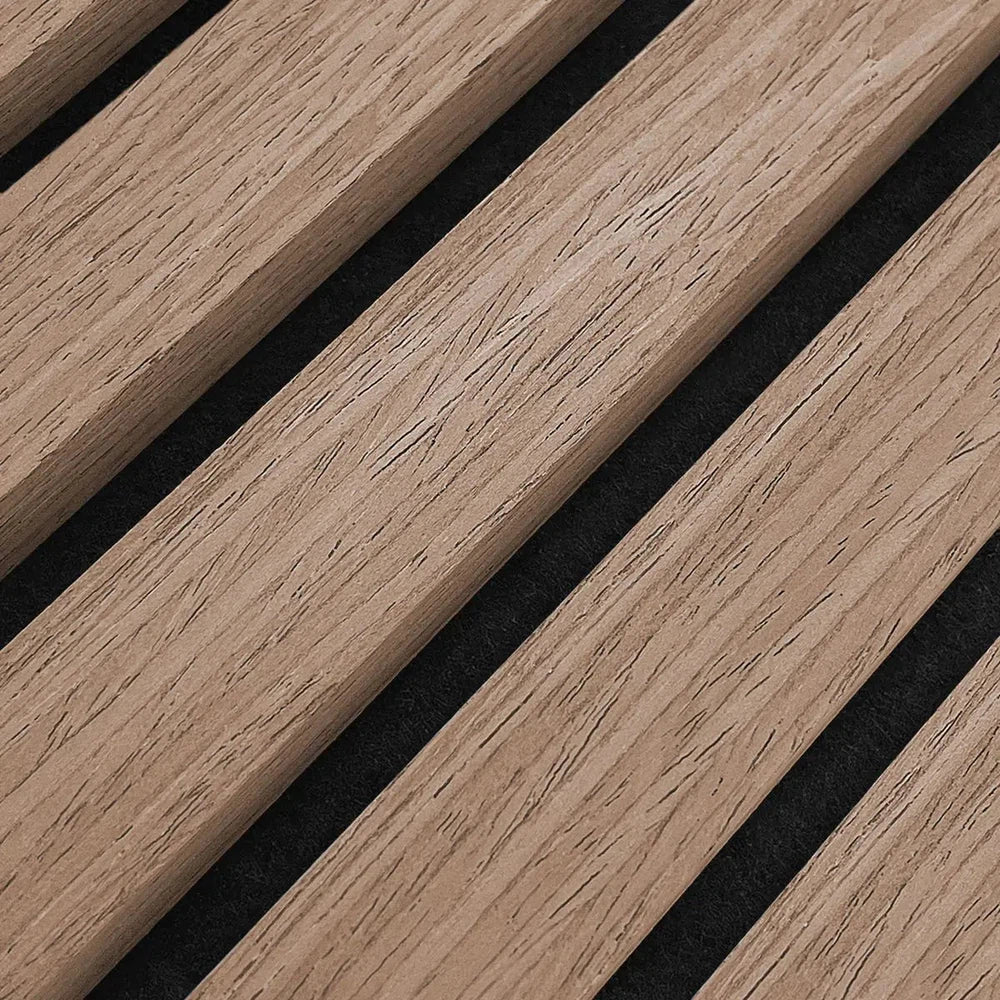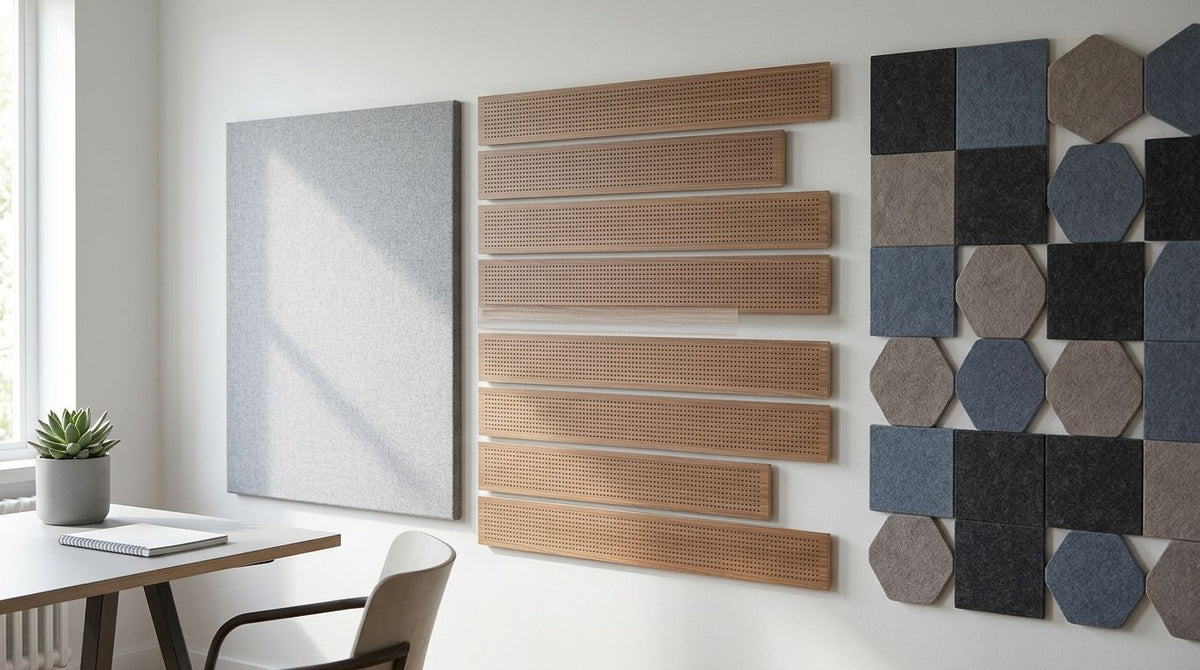
Acoustic wall panel formats split into five practical shapes: full-size boards, hexagon tiles, decorative square tiles, 3D texture tiles, and exterior cladding boards. Best overall: full-size 240cm and 300cm wooden wall panel boards for whole-room acoustic treatment. Best for pattern-driven feature walls: hexagon acoustic panels. Best budget accent: decorative wall panel tiles. Best for texture without acoustic backing: 3D wood wall panel tiles. Best for outdoor facades: exterior wall cladding panels.
- Full-size 240cm and 300cm wooden wall panel boards win for whole-room acoustic wall panel formats in 2026.
- Hexagon acoustic panels carry an NRC 0.75 rating and suit pattern-driven feature walls, not full-room coverage.
- Decorative wall panel tiles and 3D wood wall panel tiles are texture formats, not acoustic treatments.
- Exterior wall cladding panels belong outside; they are not built for indoor sound absorption.
Why this matters
Most buyers pick a wall panel by finish first and format second, then find out the tile they liked does not cover the wall the way they pictured. A natural oak wall panel board in the 240cm or 300cm length covers a wall run fast and keeps seams to a minimum, while a hexagon or decorative tile format is built for pattern and accent, not speed of coverage.
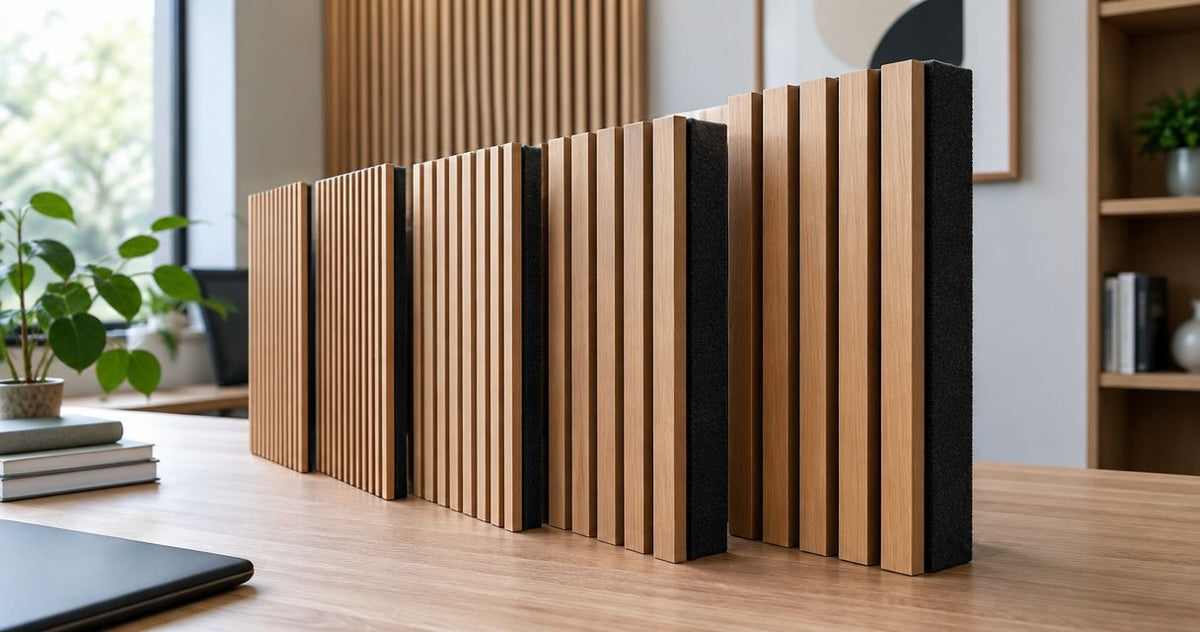
Format also decides whether the panel actually absorbs sound or just looks like wood. Akuwood Panel's flagship boards carry a 3-sided real wood veneer finish over an acoustic felt backing, which is why they sit at the top of this list for anyone dealing with an echoing living room, office or open kitchen in 2026. Tile formats built purely for texture skip that felt layer entirely.
What makes the best acoustic wall panel format
- Sound absorption — a felt-backed acoustic layer behind the wood veneer, not just a textured surface
- Coverage area — how much wall a single unit closes in one fixing pass
- Installation method — click-fit boards versus individually glued or screwed tiles
- Texture pattern — flat slat lines versus geometric hexagon or 3D relief
- Moisture and UV rating — whether the format is rated for outdoor exposure at all
Acoustic wall panel formats at a glance
| Format | Best for | Standout feature | Key limitation |
|---|---|---|---|
| Full-size wooden wall panel boards (240cm/300cm) | Whole-room acoustic treatment | 3-sided real wood veneer with acoustic felt backing | Needs a flat, mostly uninterrupted wall run |
| Hexagon acoustic panels | Pattern-driven feature walls | NRC 0.75 sound absorption in a geometric tile | More cut edges to align than a single board |
| Decorative wall panel tiles | Budget accent walls | Small-format tiles that cover a partial wall cheaply | Not built as a primary acoustic treatment |
| 3D wood wall panel tiles | Texture-only feature walls | Deep relief wood-grain texture | No felt layer, so no meaningful echo control |
| Exterior wall cladding panels | Outdoor facades | Built for exterior exposure, not indoor acoustics | Not intended for indoor sound absorption |
1. Wooden wall panel boards: best acoustic wall panel format for whole-room treatment
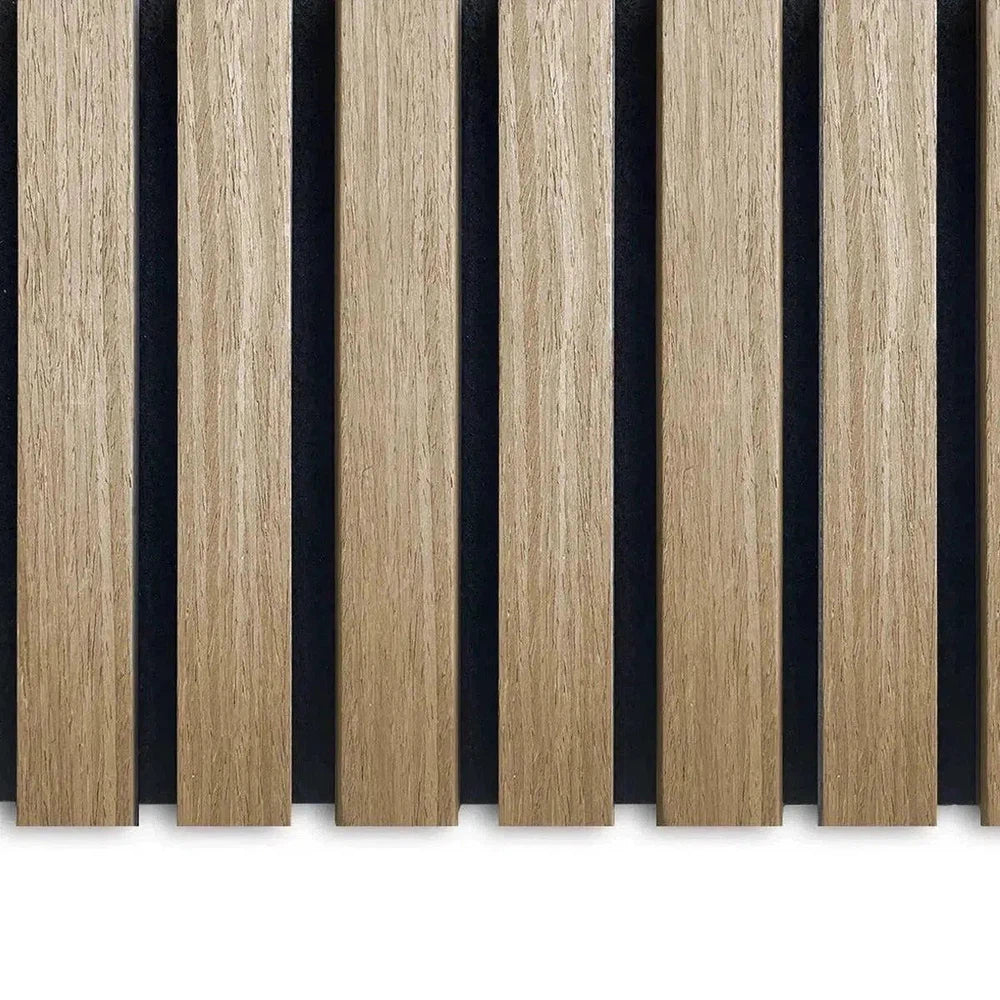
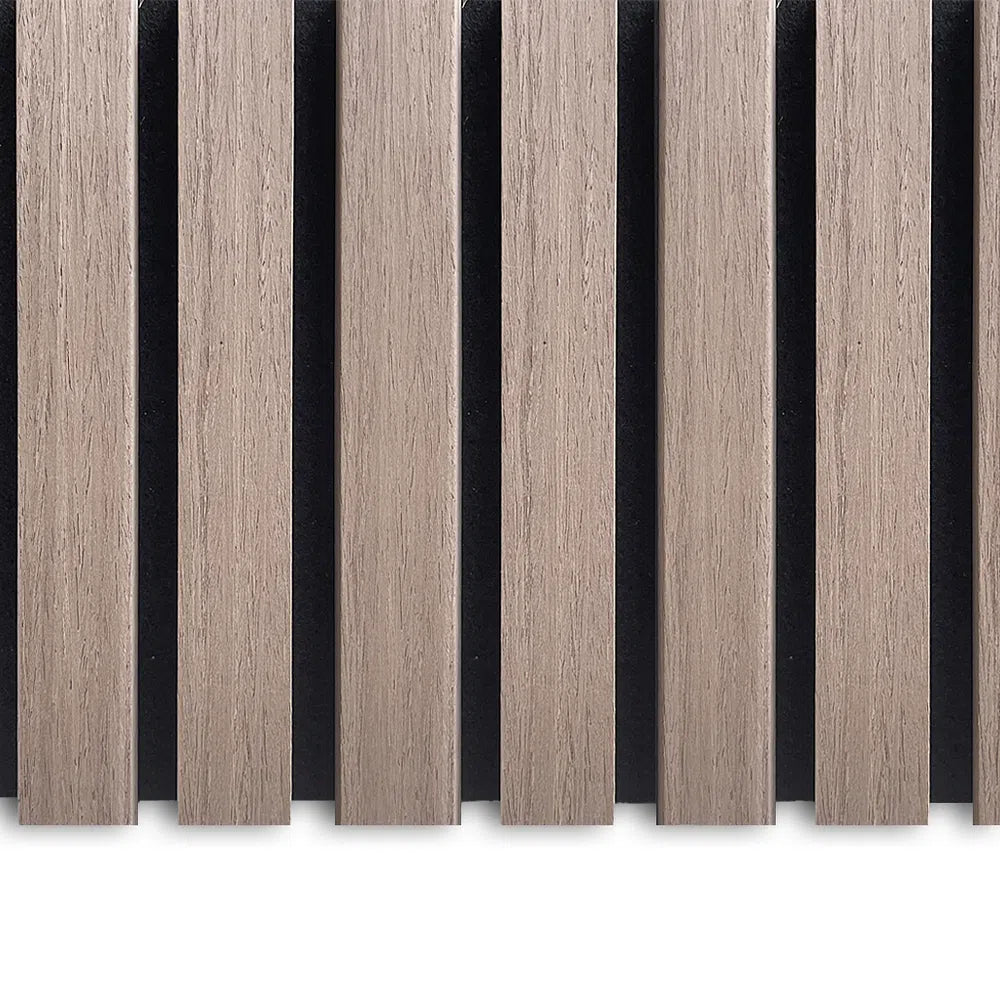
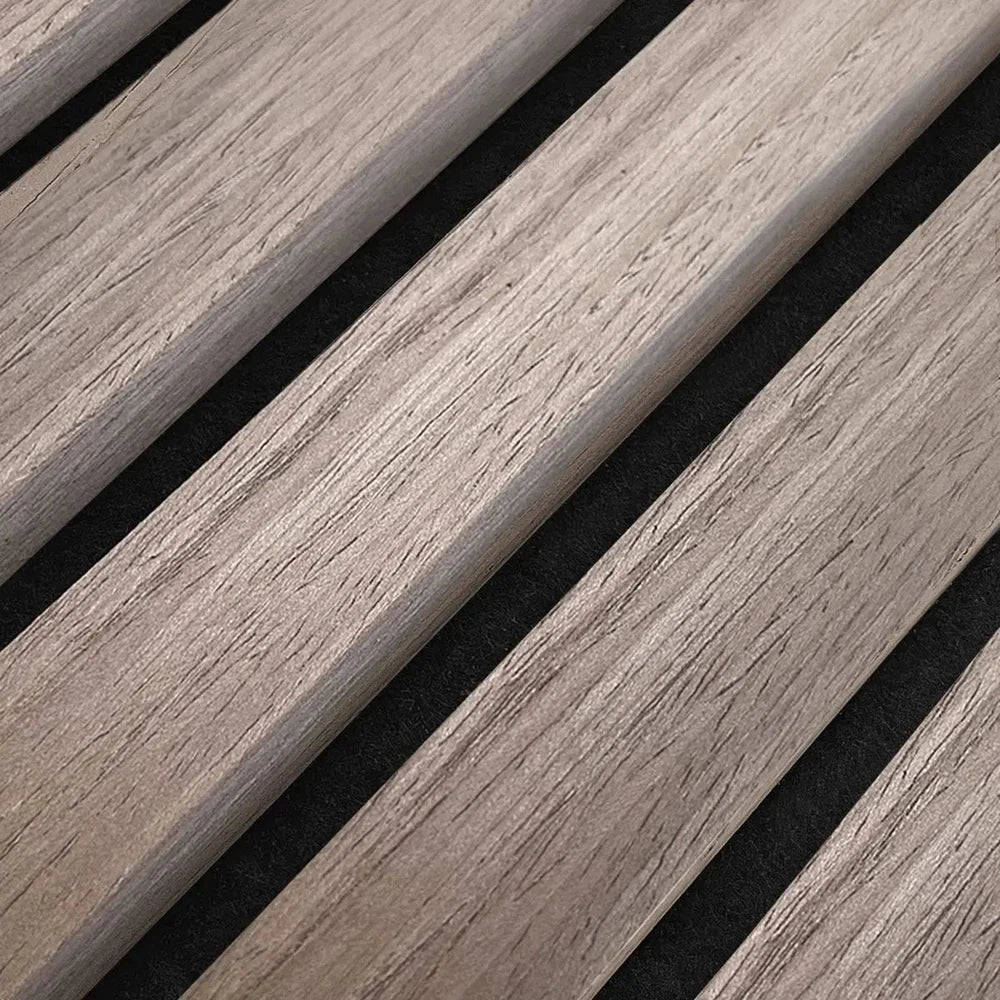
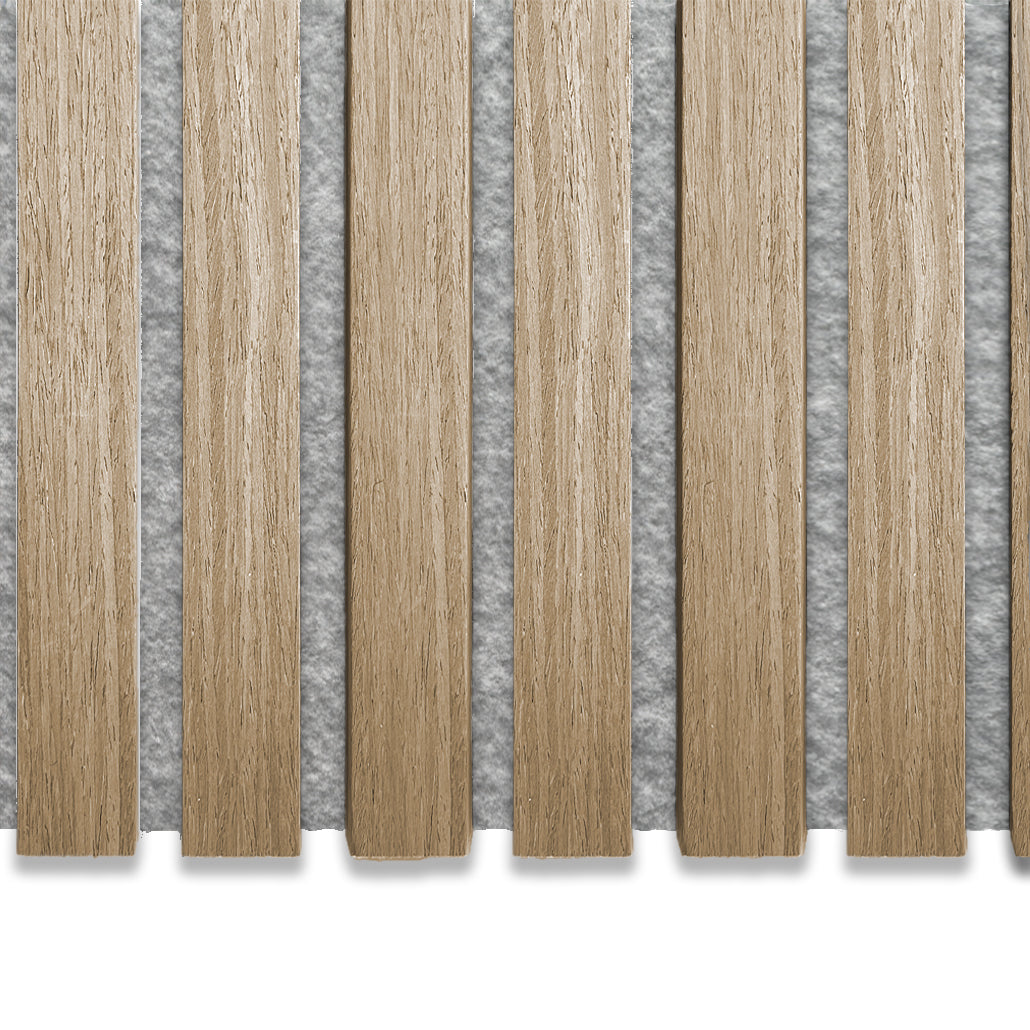
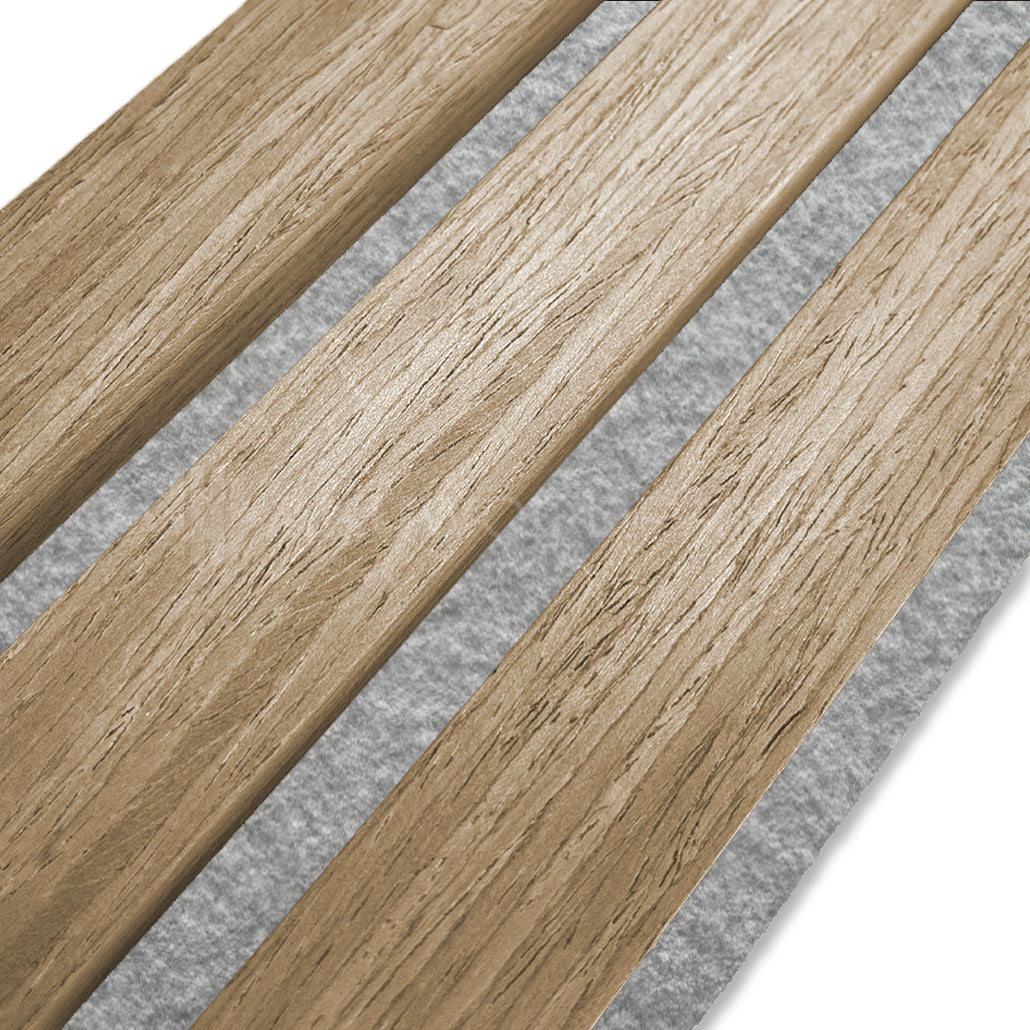
The natural oak wall panel board is the reference format at Akuwood Panel: a real wood veneer face on three sides with an acoustic felt backing, sold in 240cm and 300cm lengths so a single run closes most standard wall heights. This is the format to reach for when the goal is genuinely quieter rooms, not just a feature wall.
Wooden wall panel boards pros:
- Acoustic felt backing tackles reverberation, not just the look of a treated wall
- 240cm and 300cm lengths mean fewer joints across a wall
- Available in multiple wood finishes, including oak, walnut and mocca tones
Wooden wall panel boards cons:
- Straight boards do not suit curved or heavily broken-up walls
- Full coverage of a large room takes more panels than an accent-only tile layout
Best for: homeowners and offices treating echo across a full wall, not just decorating a corner. Verdict: Buy.
2. Hexagon acoustic panels: best acoustic wall panel format for pattern-driven feature walls
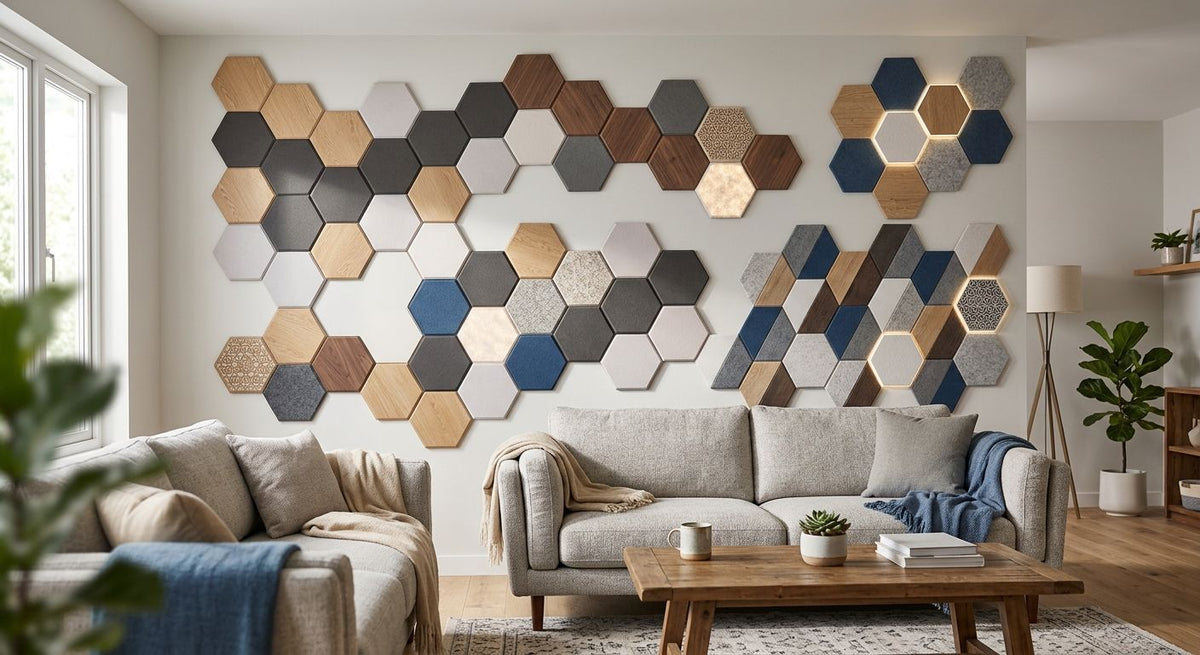
A hexagon acoustic panel in smoked oak keeps the same acoustic felt backing as the standard boards but breaks the wall into a geometric pattern instead of parallel slats. Akuwood Panel lists these hexagon tiles with an NRC 0.75 sound absorption rating, so the format still does real acoustic work, it just does it in a different shape.
Hexagon acoustic panels pros:
- NRC 0.75 rating keeps sound absorption close to the flagship boards
- Geometric layout suits Scandinavian and mid-century interiors better than long slats
- Sold in finishes like grey walnut and smoked oak to match existing board colours
Hexagon acoustic panels cons:
- More individual pieces to align than a single board run
- Pattern can look busy on a very small wall
Best for: feature walls where the pattern is part of the design brief, not an afterthought. Verdict: Buy.
3. Decorative wall panel tiles: best acoustic wall panel format for budget accent walls
The Aster Smoked Brown decorative tile is a square-format panel sized for partial-wall coverage rather than a full-room fit-out. It is the cheapest way into the Akuwood Panel range by area covered, but it is a decorative format first.
Decorative wall panel tiles pros:
- Small 60x60cm-style format suits alcoves, hallways and half-walls
- Lower total panel count needed for an accent area than a full board wall
- Easy to mix finishes across a single feature section
Decorative wall panel tiles cons:
- Not positioned as a primary acoustic treatment the way the felt-backed boards are
- Small format means more joints per square metre than a 240cm or 300cm board
Best for: a budget accent wall in a hallway or alcove where echo control is not the main problem. Verdict: Hold if acoustics are the priority; Buy if the goal is purely visual.
4. 3D wood wall panel tiles: best acoustic wall panel format for texture without acoustic backing
Akuwood Panel's 3D wood wall panel tiles, including Velvet Walnut and White Oak finishes, trade the flat veneer-and-felt build for deep relief texture. These sit lower in this ranking because texture is the entire point of the format, not sound absorption.
3D wood wall panel tiles pros:
- Deep relief pattern creates shadow and depth a flat board cannot
- Works well as a standalone design feature above a fireplace or headboard
3D wood wall panel tiles cons:
- No acoustic felt layer, so it does not meaningfully cut echo
- Narrower use case than boards or hexagon tiles if the room actually needs quieting
Best for: a textured design feature where acoustics are not the concern. Verdict: Wait if you need real sound absorption; Buy for a pure texture feature.
5. Exterior wall cladding panels: best acoustic wall panel format for outdoor facades
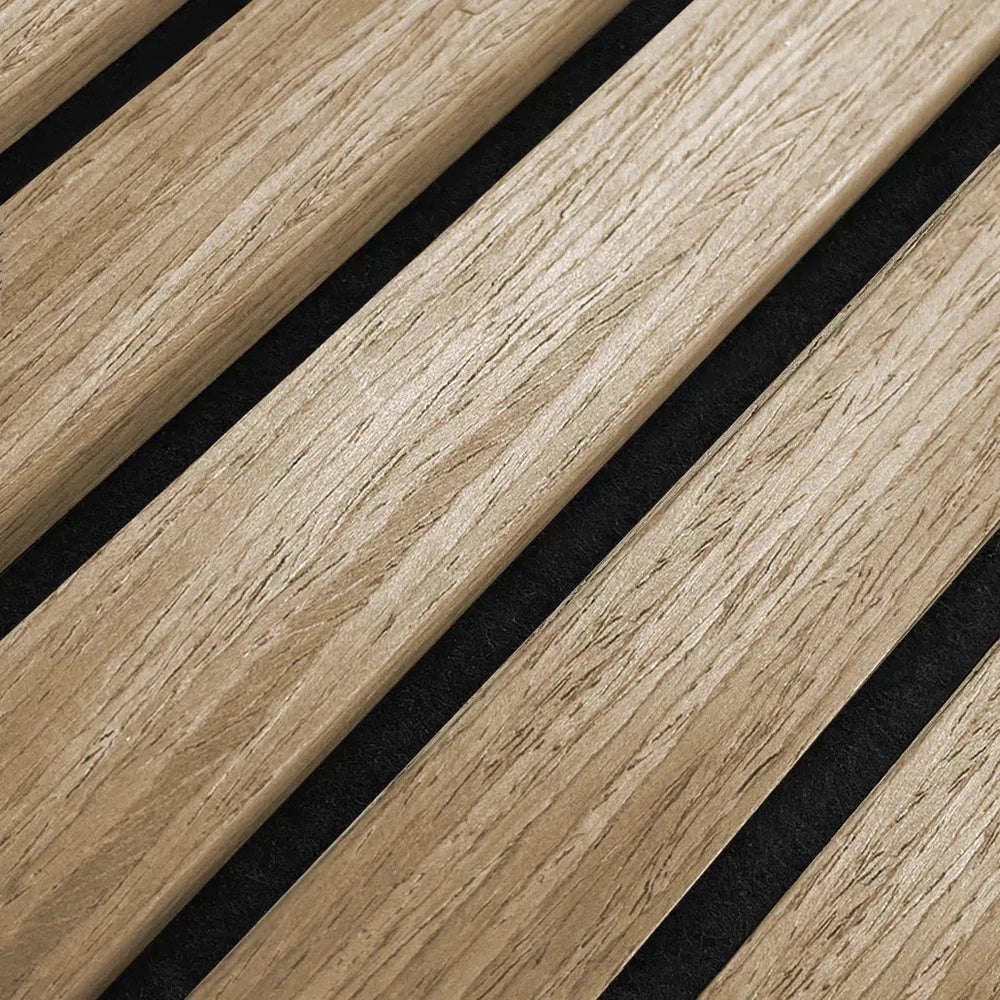
The oak exterior cladding panel belongs outside this indoor-acoustic conversation entirely, and that is exactly why it earns its own slot. It is a wood-grain cladding format built for exterior walls, not for treating echo in a living room or office.
Exterior wall cladding panels pros:
- Wood-grain finish extends the same visual language outdoors
- Suits garden rooms, extensions and facade refreshes
Exterior wall cladding panels cons:
- Not rated or intended as an indoor acoustic format
- A different fixing system to the indoor board and tile ranges
Best for: exterior facades and garden buildings, never indoor echo control. Verdict: Buy for outdoor use only.


How we ranked these formats
The ranking runs on the five criteria above: acoustic felt backing, coverage area per unit, installation method, pattern flexibility, and outdoor suitability. Boards rank first because they are the only format built for full-wall acoustic coverage with the fewest joints. For the sizing math between the two board lengths, the guide on choosing between 240cm and 300cm wall panels breaks down which length suits which ceiling height.
Which acoustic wall panel format should you choose?
If the wall has an actual echo problem, pick the felt-backed board or the hexagon panel, both of which carry real acoustic performance in 2026's Akuwood Panel range. If the goal is purely visual, the decorative tile or the 3D wood wall panel format covers less ground per unit but costs less overall attention to fit. Outdoor projects skip this decision entirely and go straight to exterior wall cladding panels, since that is the only format actually rated for exterior exposure.
Default pick for anyone undecided: full-size 240cm or 300cm wooden wall panel boards. They are the only format on this list that pairs real wood veneer with acoustic felt backing across a full wall run.
FAQ
What are the main acoustic wall panel formats available in 2026?
The main formats are full-size boards (240cm and 300cm), hexagon tiles, decorative square tiles, 3D texture tiles, and exterior cladding boards. Only the felt-backed boards and hexagon tiles are built as genuine acoustic treatments.
Is a full-size board or a tile format better for reducing echo?
A full-size board covers more wall with fewer joints and is the strongest format for reducing echo across a whole room. Tile formats like hexagon panels still absorb sound but suit smaller, pattern-driven feature areas.
Do hexagon acoustic panels work as well as full boards for sound absorption?
Hexagon acoustic panels carry an NRC 0.75 rating, close to the flagship board format. The difference is coverage speed, not absorption quality, since boards close a wall faster with fewer seams.
Can decorative wall panel tiles be used for acoustic treatment?
Decorative wall panel tiles are positioned as a visual accent format, not a primary acoustic treatment. Choose the felt-backed boards or hexagon panels instead if echo control is the main goal.
What is the difference between 3D wood wall panels and acoustic wall panels?
3D wood wall panels use deep relief texture for visual depth and do not carry the acoustic felt backing found on the standard boards. Acoustic wall panels are built specifically with that felt layer to absorb sound.
Should exterior wall cladding be used indoors as an acoustic panel?
No, exterior wall cladding panels are built for outdoor exposure and are not rated or intended as an indoor acoustic format. Use the indoor board or hexagon range for any room-based echo problem.
How do I choose between 240cm and 300cm panel boards?
The choice comes down to ceiling height and how many joints you want across the wall; a 300cm board suits taller rooms with fewer seams. The full breakdown is covered in Akuwood Panel's guide on choosing between the two lengths.
How much wall coverage do I need to notice an acoustic difference?
Coverage needs depend on the room, but a full wall run of felt-backed boards does more for echo than a partial accent section of tiles. Boards and hexagon panels both use the same felt backing, so the deciding factor is how much of the wall they cover.
One last thing
The detail most buyers miss: the hexagon format and the standard board format share the same NRC 0.75 acoustic rating in the Akuwood Panel range for 2026, so switching to a pattern does not cost you sound performance. It only costs installation time, since more individual pieces mean more edges to align than a single 240cm or 300cm board run.