Six hexagon wall panel patterns solve six different problems, and picking the wrong one wastes panels, buries the acoustic benefit, or turns a feature wall into visual noise. This guide ranks the layouts that actually hold up in UK rooms in 2026, from full honeycomb coverage to a scattered accent cluster, with a plain best-for verdict on each.
- Full honeycomb tessellation wins for living room feature walls that need real acoustic coverage in 2026.
- Staircase cascade is the only hexagon wall panel pattern built for a raked stairwell wall without angle-cutting every tile.
- Mini hex splashback tiles skip acoustic felt entirely and belong in kitchens, not open-plan lounges.
- Two-tone split-hex needs two matched product lines ordered together or the seam reads as a mistake.
- Scatter cluster uses the fewest hexagon wall panels and forgives imperfect measuring, making it the easiest DIY starting point.
Why this matters
A hexagon tessellates at a 120-degree interior angle, one of only three regular shapes (alongside triangles and squares) that tile a flat surface with zero gaps. That geometry is why hexagon wall panel patterns look deliberate even when a room is an awkward shape, but it only pays off if the layout matches the wall it's going on.
Get the pattern wrong for the room and you end up with two problems at once: a stack of part-hexagons cut for edges you didn't plan for, and a wall that looks busy instead of finished. The guide to arranging hexagon wall panels in a pattern covers the measuring step in more detail; this page ranks which pattern to pick before you get there.
Every pattern below is scored against the same six criteria, then given one best-for use case. No two patterns compete for the same room.
What makes the best hexagon wall panel pattern
- Tessellation tightness — how cleanly the hexagons interlock without visible gaps between rows
- Cut-piece waste — how many part-hexagons the pattern forces at wall edges and corners
- Acoustic coverage — how much felt-backed panel surface stays exposed to absorb sound
- Room fit — whether the pattern reads correctly against the ceiling height and wall length you have
- Install skill — how forgiving the layout is for a first attempt
- Visual boundary — whether the pattern can mark a zone without a stud wall
Hexagon wall panel patterns at a glance
| Pattern | Best for | Standout feature | Key limitation |
|---|---|---|---|
| Full honeycomb wall | Living room feature walls | Maximum acoustic coverage, no plain wall showing | Highest panel count and cut-piece waste |
| Single horizontal row | Hallways and low-ceiling rooms | Reads as a design line with minimal material | Small acoustic benefit versus full coverage |
| Staircase cascade | Stairwells and split-level walls | Follows the stair pitch instead of fighting it | Needs precise measuring on a raked wall |
| Two-tone split-hex | Open-plan zoning | Marks a visual boundary without a partition | Requires two matched product lines |
| Mini hex splashback cluster | Kitchen splashbacks | Peel-and-stick install, no acoustic backing needed | Decorative only, not for full-wall coverage |
| Scatter cluster | Bedroom accents and playrooms | Lowest panel count, most forgiving for DIY | Can look unfinished without a level line |
1. Full honeycomb wall: best hexagon wall panel pattern for living room feature walls
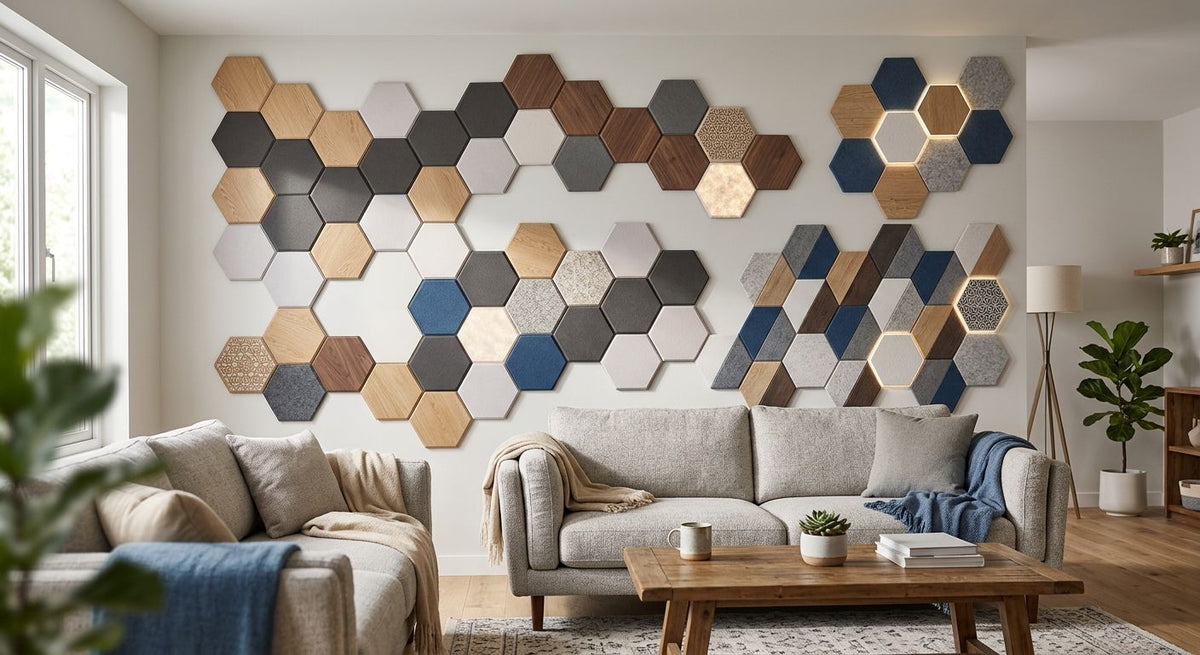
Edge-to-edge tessellation across a whole wall, hexagon touching hexagon at that 120-degree angle with no gaps between rows. It's the layout that puts the most felt-backed surface in the room, which matters if the wall is there to actually cut echo, not just look good.
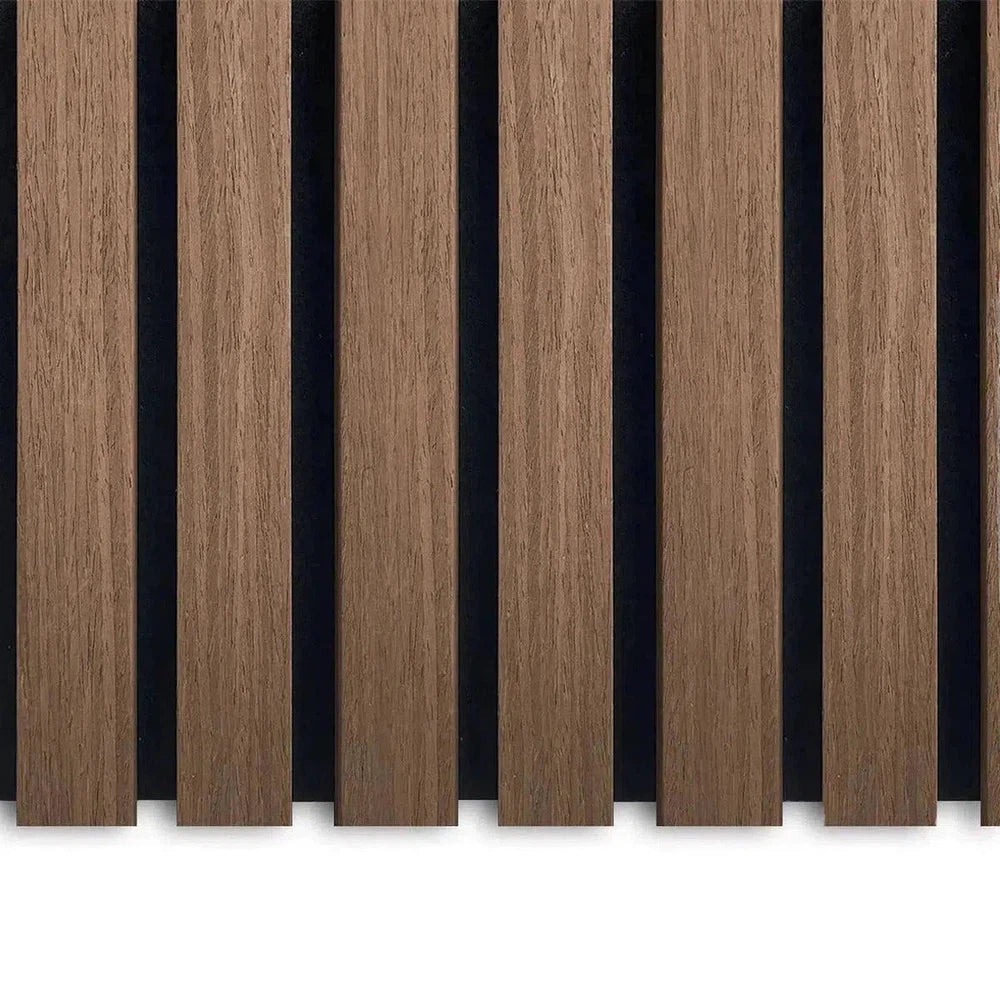
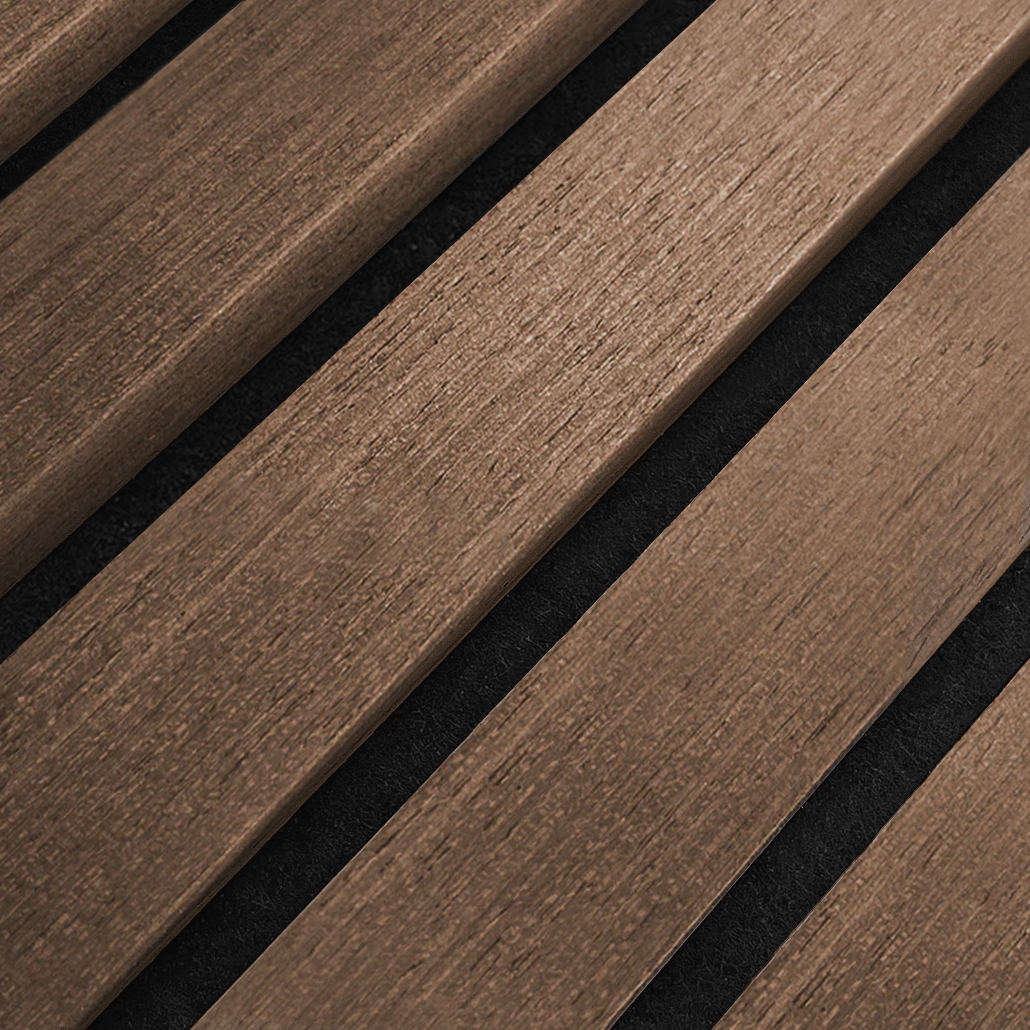
Hexagon acoustic panel in smoked oak is a common finish for this pattern because the dark grain reads clearly at full-wall scale, where a paler finish can flatten out.
Full honeycomb pros:
- Maximum acoustic surface exposed on the wall
- Reads as one continuous piece rather than a scattered feature
- Hides an uneven plaster wall well since the eye follows the pattern, not the surface
Full honeycomb cons:
- Highest panel count of any layout on this list
- More part-hexagons to cut and fit at wall edges
- A dark finish across a full wall can visually shrink a small room
Verdict: Buy for a feature wall with a genuine echo problem. Skip it if you just want a small design accent — that's a different pattern below.
2. Single horizontal row: best hexagon wall panel pattern for hallways and low ceilings
One row of hexagons at dado or eye height running the length of a wall. It behaves more like a picture rail than a full panel treatment, and it's the lowest-material option on this list.
Finishes like hexagon acoustic panel in grey walnut work here because a single row shows off the grain without needing the volume that a full wall pattern demands.
Single row pros:
- Lowest panel count and lowest cut waste of the acoustic patterns
- Reads as an intentional design line rather than a full treatment
- Suits hallways and corridors where a full wall would feel heavy
Single row cons:
- Small acoustic surface means limited sound absorption
- Can look thin against a very tall ceiling
Verdict: Buy for hallway accents. Skip if echo reduction is the actual goal — go full honeycomb instead.
3. Staircase cascade: best hexagon wall panel pattern for stairwells
A diagonal, ascending line of hexagons that follows the pitch of the stairs rather than sitting in a flat horizontal or vertical grid. It's the only pattern on this list designed around a raked wall instead of a flat one.
Staircase cascade pros:
- Follows the stair pitch instead of fighting it with a flat grid
- Draws the eye up the stairwell, which flat patterns don't do
- Extends naturally onto a half-landing wall
Staircase cascade cons:
- Needs precise measuring against the actual stair rise before any panel is cut
- Most first-time installers underestimate how many part-hexagons a raked wall needs at the edges
Verdict: Buy for stairwells once rise and run are confirmed. Hold if you haven't measured the actual stair pitch yet — this is not a pattern to eyeball.
4. Two-tone split-hex: best hexagon wall panel pattern for zoning open-plan rooms
Two finishes split a wall, usually along a diagonal or a horizontal band, to mark a visual boundary between zones without building a stud wall. Pairing a walnut felt-backed finish against a grey walnut felt-backed finish is a common combination for this pattern.
Two-tone split-hex pros:
- Marks a zone boundary — sofa side versus dining side — without a physical wall
- Lets you run a darker finish on the quieter side of an open-plan room
- Two acoustic finishes still means two working sound-absorbing surfaces
Two-tone split-hex cons:
- Needs two product lines ordered together so panel thickness and felt colour match at the seam
- A mismatched batch between two separate orders is obvious at close range
Verdict: Buy for open-plan zoning if you're ordering both finishes at once. Skip if you're not confident matching batches from two separate orders.
5. Mini hex splashback cluster: best hexagon wall panel pattern for kitchen splashbacks
Small-format, peel-and-stick hexagon tiles clustered behind a hob or sink. This pattern drops the acoustic felt backing entirely, which is the point: felt near a hob is a maintenance problem, not a feature.
The mini hexagon dark copper peel and stick splashback is a metallic-finish option built for this exact use case.
Mini hex splashback pros:
- No acoustic felt to keep dry near a hob or sink
- No grout and no trade needed to fit it
- Sits flush over existing tile or painted plaster
Mini hex splashback cons:
- Decorative only — it does nothing for room acoustics
- Smaller format than the full-size acoustic hex panels, so it reads differently up close


Verdict: Buy for kitchen splashbacks. Skip it for living room acoustic treatment — that's a job for felt-backed panels.
6. Scatter cluster: best hexagon wall panel pattern for bedroom accents and playrooms
An irregular cluster of hexagons that breaks off the main grid rather than filling a defined shape. It's the loosest pattern on this list, which makes it the cheapest to start and the hardest to get perfectly straight.
Scatter cluster pros:
- Fewest panels of the six patterns, so it's the lowest-commitment starting point
- Forgiving of small measuring errors because there's no strict grid line to keep straight
- Easy to extend later if you decide to grow into a fuller pattern
Scatter cluster cons:
- Without a plan on paper first, it drifts into looking unfinished rather than deliberate
- Still needs a level line marked before the first panel goes up, or the cluster ends up visibly crooked
Verdict: Buy for a first hexagon project or a kids' room accent. Hold if you want a symmetrical look from day one — pick single row or two-tone split instead.
“If you can't dry-lay a hexagon pattern on the floor first, it's too complex to nail straight to a wall.”
How we ranked these hexagon wall panel patterns
Each pattern was scored against the same six criteria: tessellation tightness, cut-piece waste, acoustic coverage, room fit, install skill, and whether it can double as a zoning boundary. No pattern scores well on all six — that's why the list reads as six separate best-for cases instead of one leaderboard.
Which hexagon wall panel pattern should you choose?
For a genuine acoustic problem in a living room, full honeycomb wall is the default in 2026 — it puts the most felt-backed surface on the wall. For a stairwell, nothing else on this list follows the pitch the way staircase cascade does. For a kitchen, mini hex splashback cluster is the only pattern built to sit near a hob without acoustic felt. If you're doing your first hexagon project and want the lowest-risk starting point, scatter cluster forgives the most measuring mistakes.
FAQ
What is the best hexagon wall panel pattern for a small room?
Single horizontal row or scatter cluster work best in small rooms because they use fewer panels and don't fill the wall edge to edge, which keeps the space from feeling boxed in.
Is full honeycomb better than a single row for acoustics?
Yes. Full honeycomb exposes far more felt-backed panel surface, so it absorbs more sound than a single row, which covers only a narrow band of the wall.
Can hexagon wall panels be mixed with two different finishes?
Yes, that's the two-tone split-hex pattern. Order both finishes together so panel thickness and felt colour match at the seam between them.
Do hexagon splashback tiles need acoustic felt?
No. Mini hex splashback tiles are decorative and peel-and-stick, with no felt backing, because felt near a hob or sink is a maintenance problem rather than a benefit.
How much wall space do I need for a full honeycomb pattern?
Full honeycomb needs the most panels of any layout on this list because it covers the wall edge to edge with no gaps between hexagons, so measure the full wall area before ordering.
What's the easiest hexagon wall panel pattern to install first?
Scatter cluster is the most forgiving because there's no strict grid to keep perfectly aligned, though it still needs a level line marked before the first panel goes up.
Can hexagon panels go on a staircase wall?
Yes, using the staircase cascade pattern, which follows the stair pitch diagonally instead of using a flat horizontal or vertical grid.
Do hexagon wall panels work in a hallway?
Yes, a single horizontal row is the common choice for hallways because it reads as a design line without covering the full wall.
One last thing
Hexagons are one of only three regular polygons, alongside triangles and squares, that tessellate a flat surface with zero gaps. That's the entire reason full honeycomb patterns waste less offcut than you'd expect for the coverage they give — the geometry does the work, the layout just has to respect it.