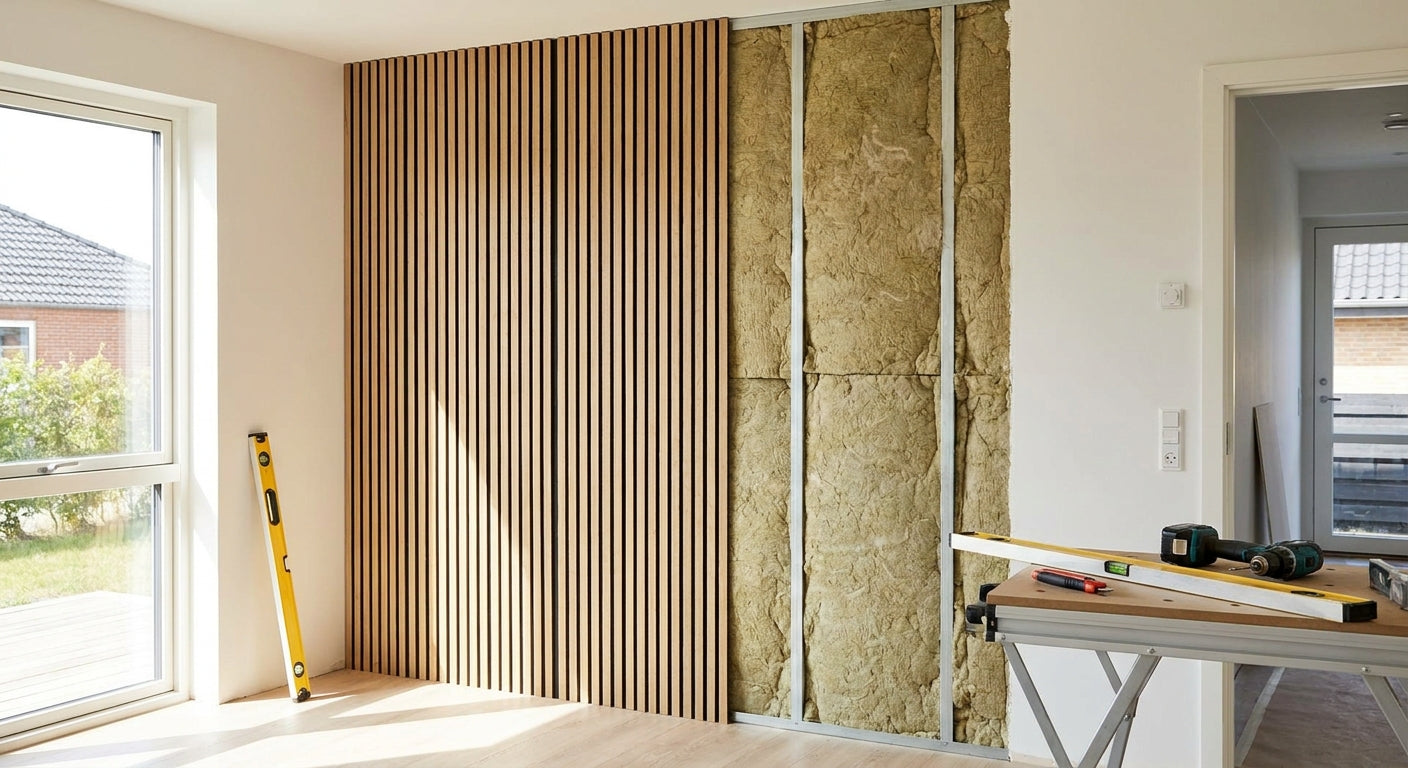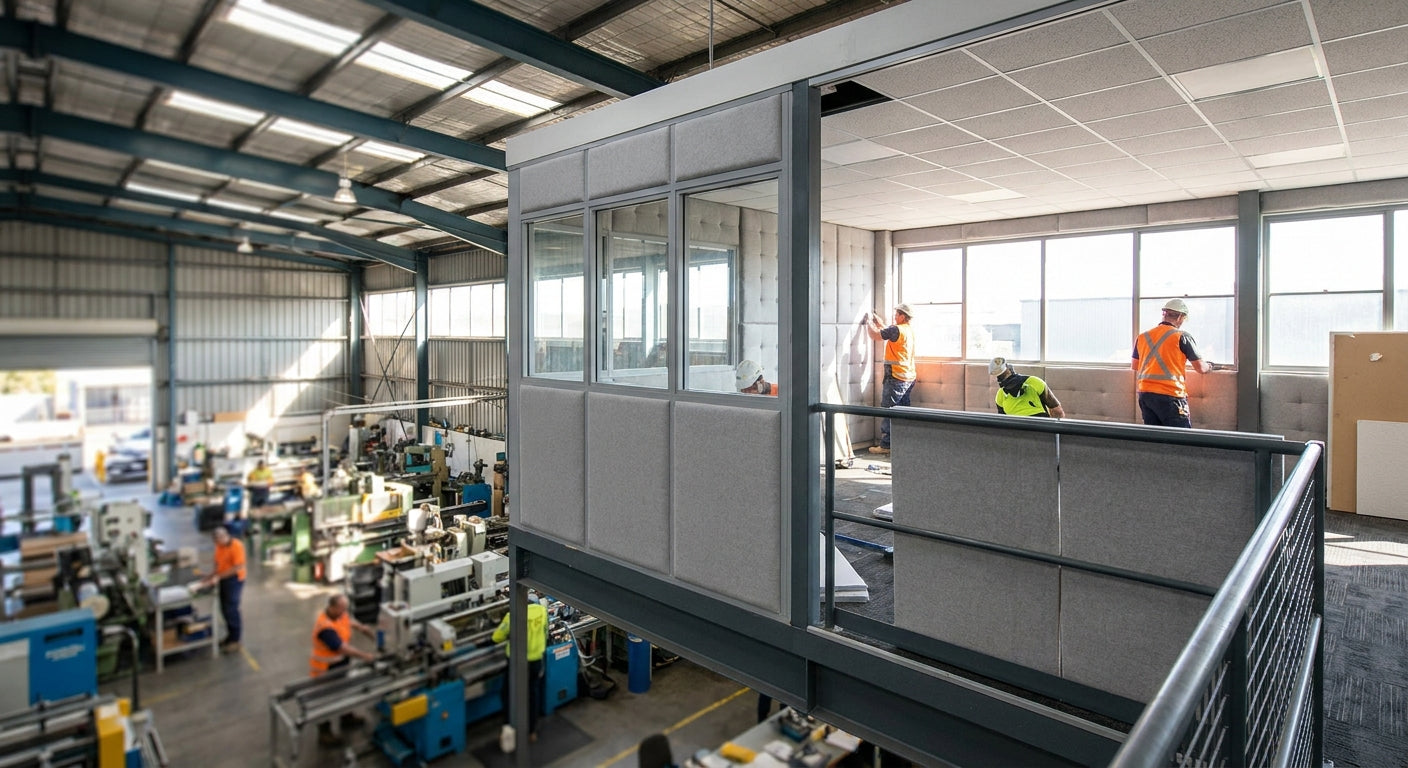
Acoustic panel thickness decides whether a wall actually tames echo or just looks good doing nothing — and most people buying acoustic wood panels in 2026 focus on the wrong layer entirely.
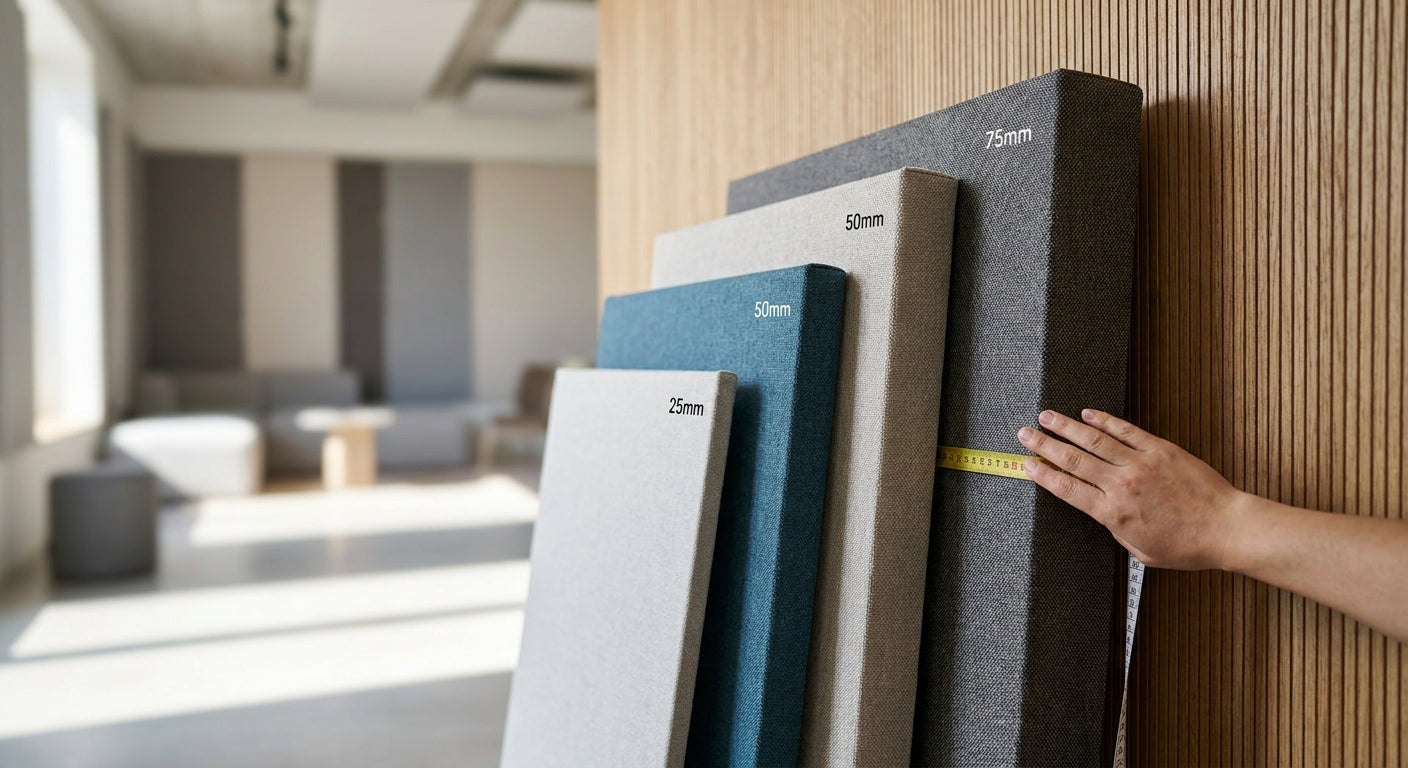
- Acoustic panel thickness in 2026 is mostly about felt backing depth, not the wood veneer on top.
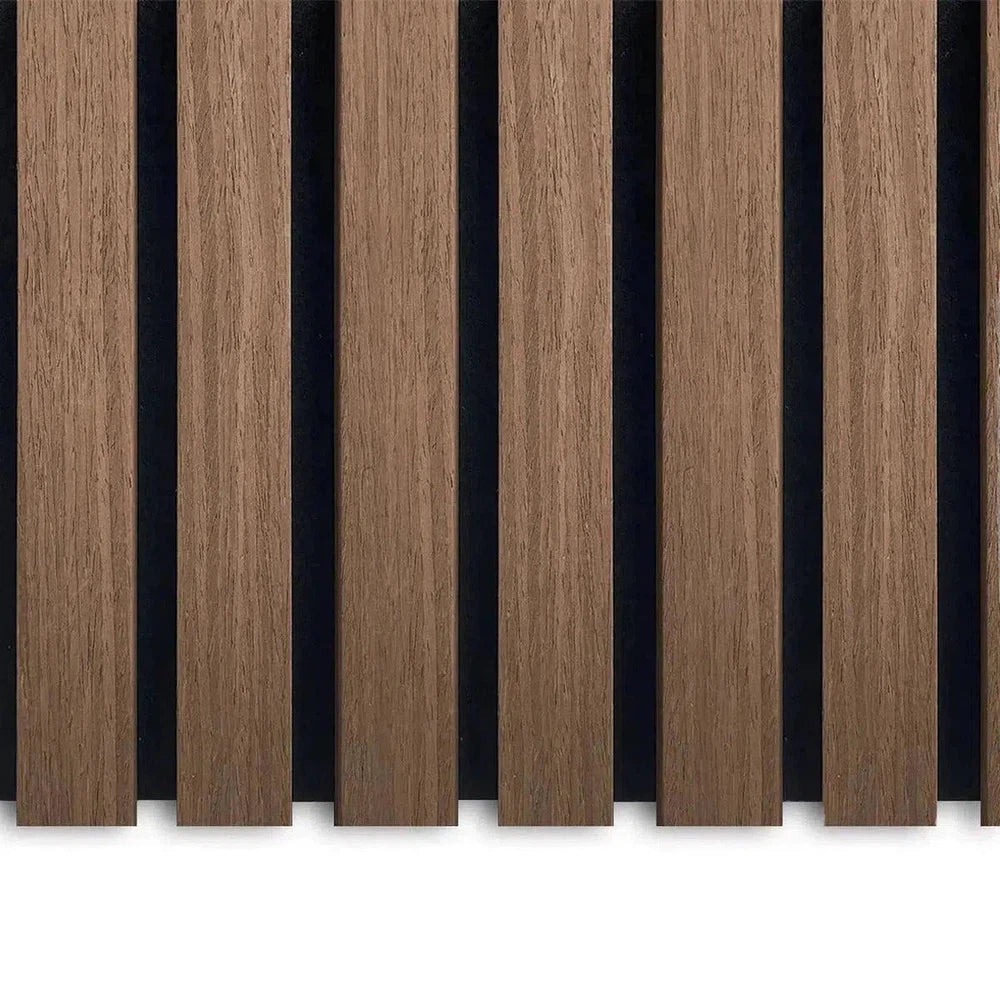
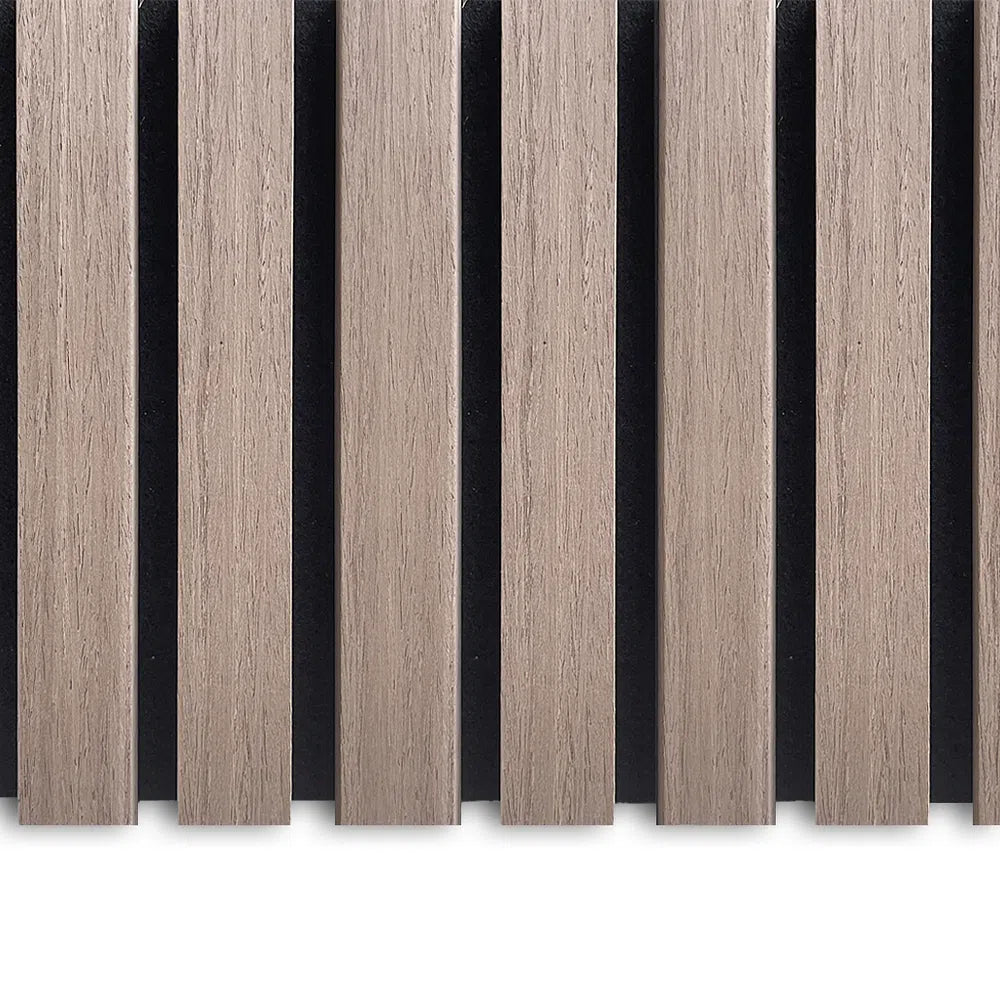
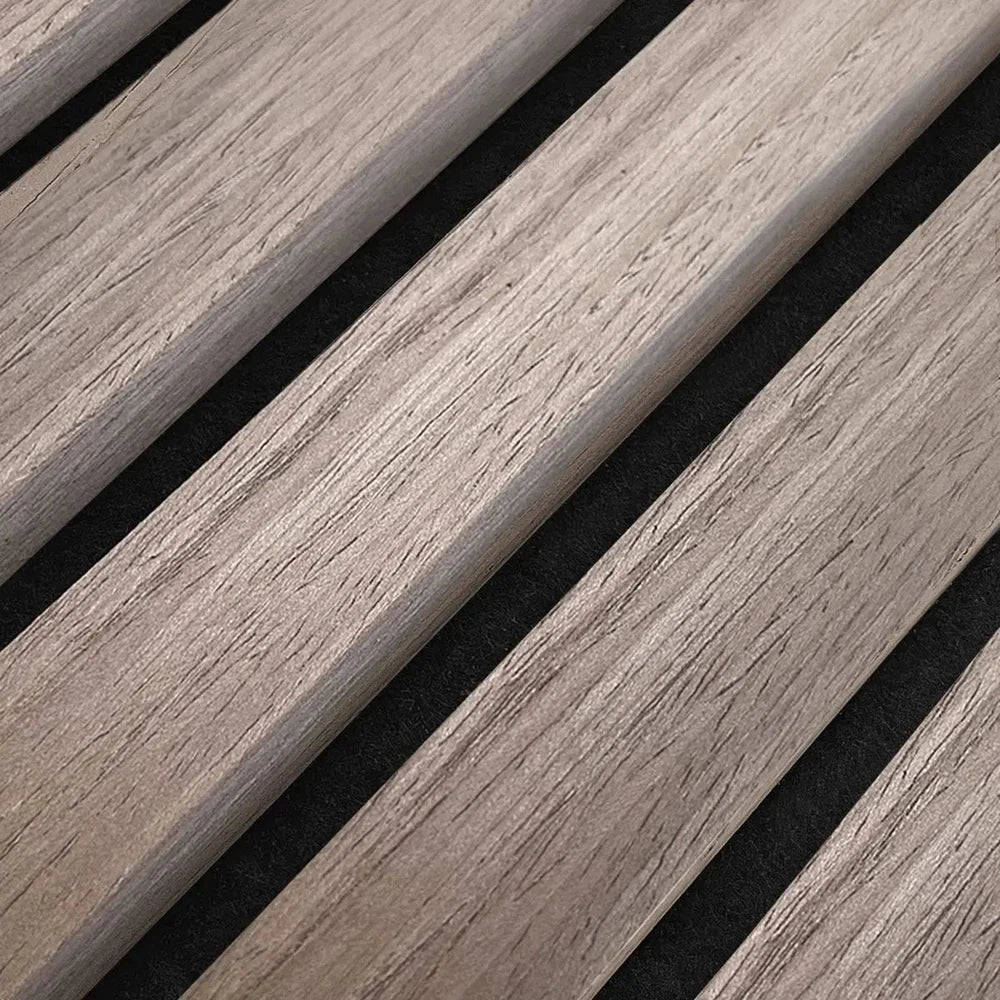
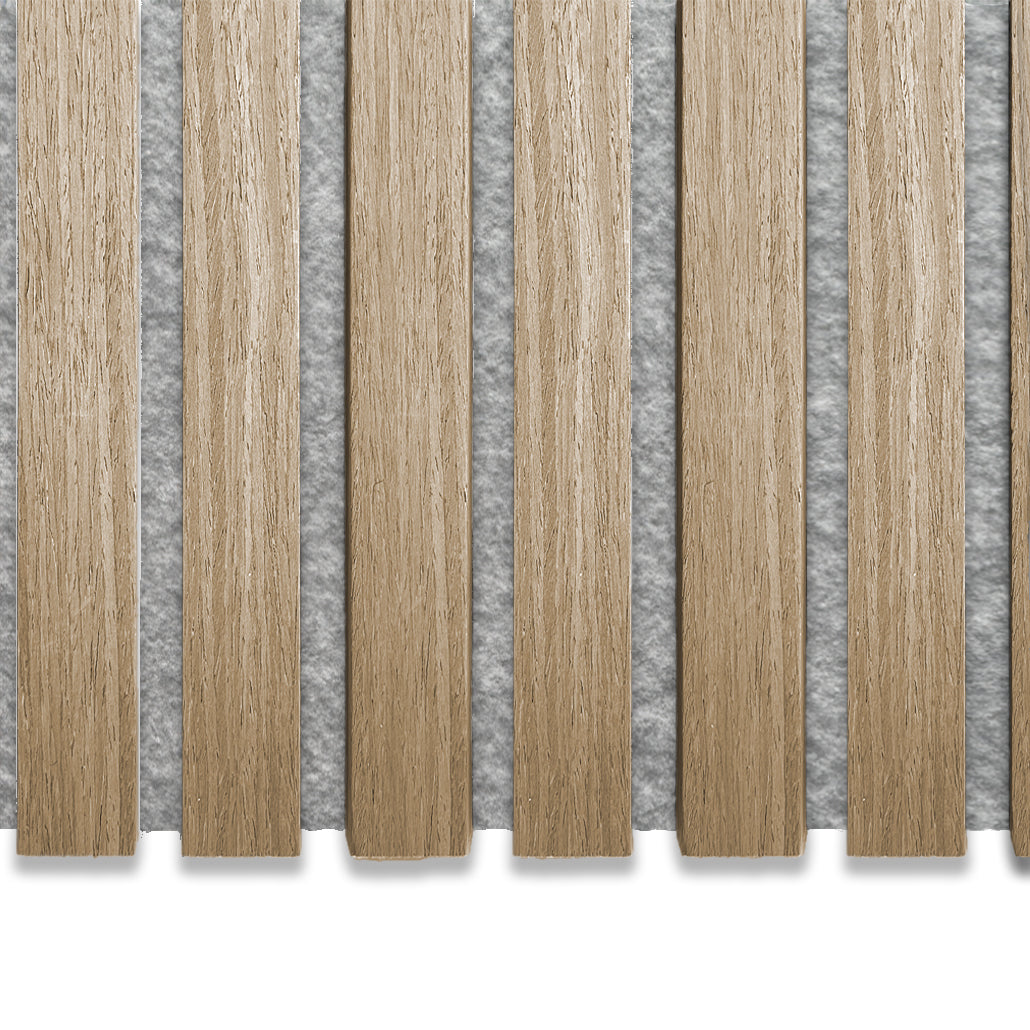
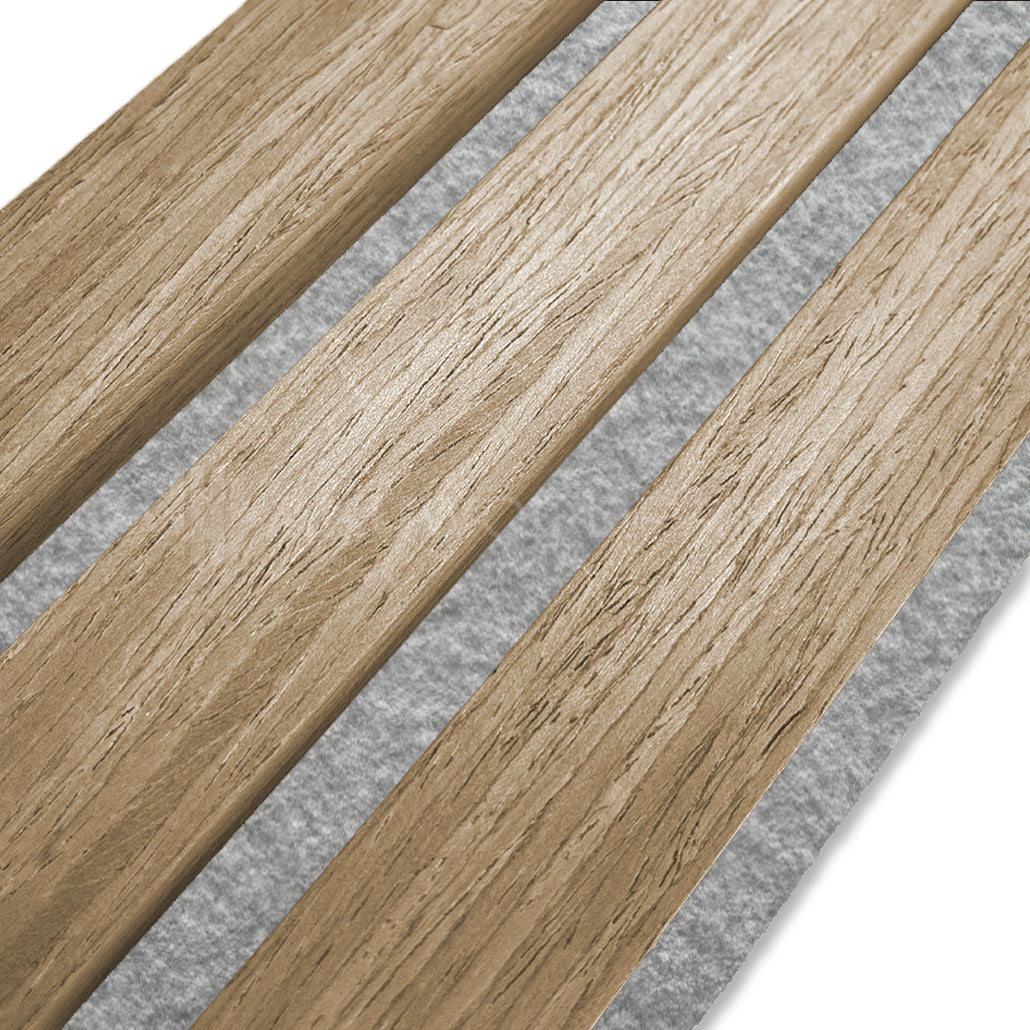
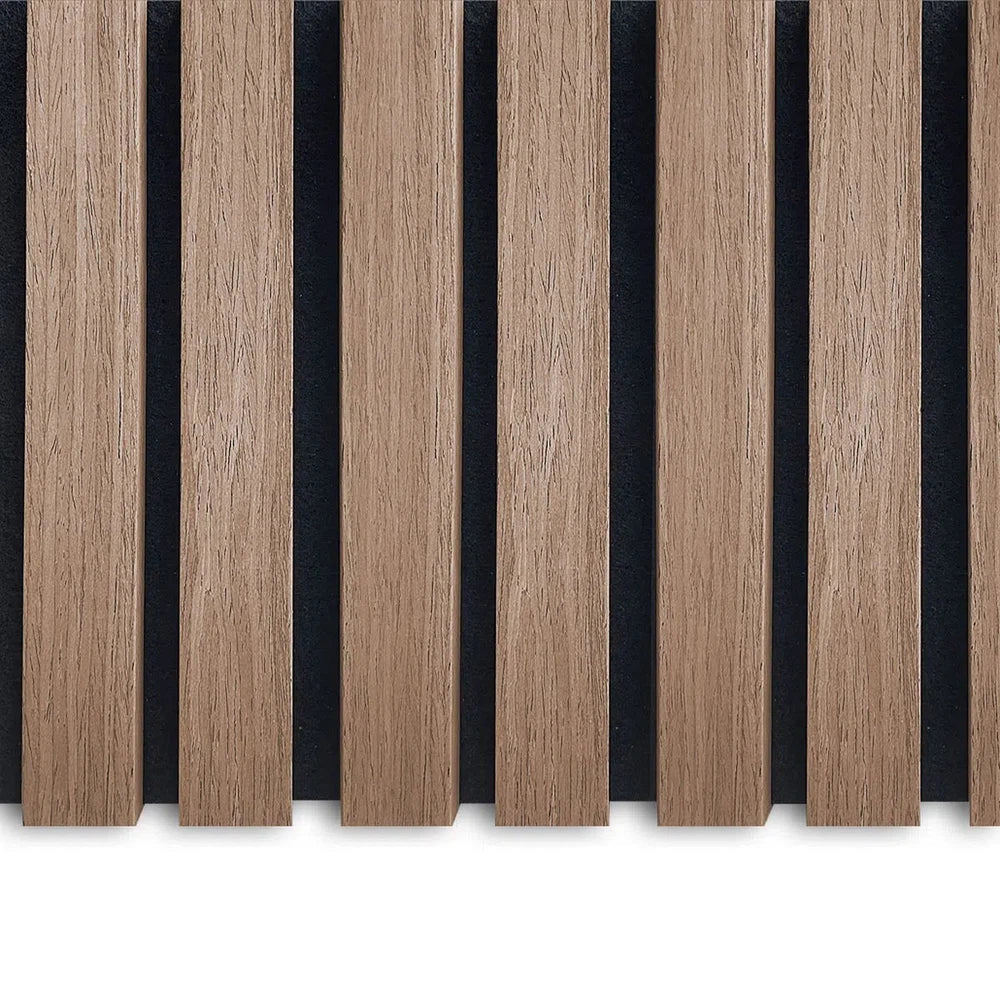
- The Natural Oak Grey Felt panel from Akustiq UK suits living rooms and home offices fighting mid-to-high frequency echo. Buy.
- 300 cm panels cut seams on tall walls; 240 cm suits standard ceiling heights without waste. Check your wall before ordering.
- Hexagon acoustic panels look sharp on feature walls but cover less surface per pound spent than full slat panels.
Why this matters
A wall covered in bare plaster or thin decorative panelling reflects roughly 95-99% of the sound that hits it. Sound bounces wall to wall, ears strain, conversations get lost over the TV, and a beautifully finished room still sounds like an empty box.
Acoustic panel thickness is the variable that fixes this — or doesn't. A thin veneer with no absorptive backing behind it does almost nothing for reverberation, no matter how good it looks in a living room or office. The felt or fibre layer behind the wood is what actually converts sound energy into heat, and its depth determines which frequencies it can grab.
Get the thickness wrong for your room and you'll spend money on panels that solve the aesthetic problem but leave the echo problem untouched. Get it right and a single wall of the right acoustic wood panels can cut a room's reverberation time noticeably within a weekend.
What you'll need
- A room with a known echo problem — clap test, TV dialogue that's hard to follow, or a home office that sounds hollow on video calls
- Rough wall dimensions (width x height) to calculate coverage
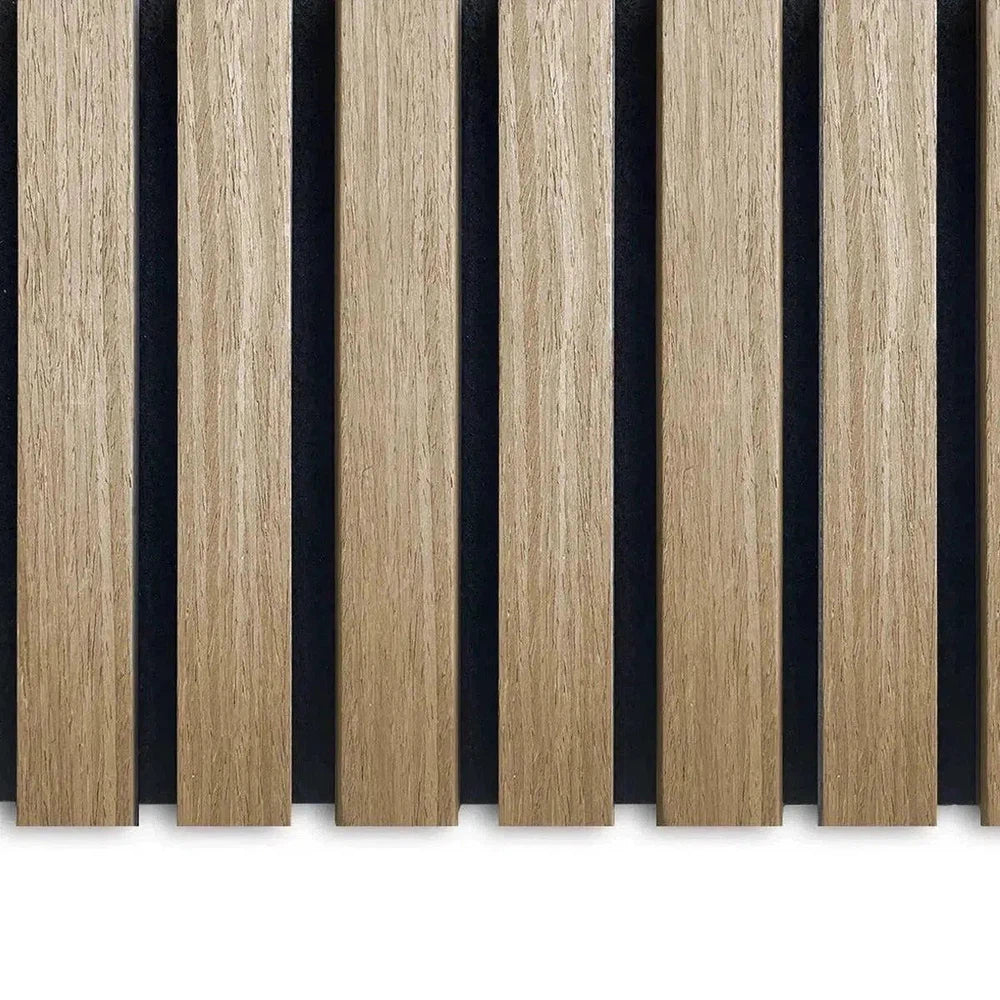
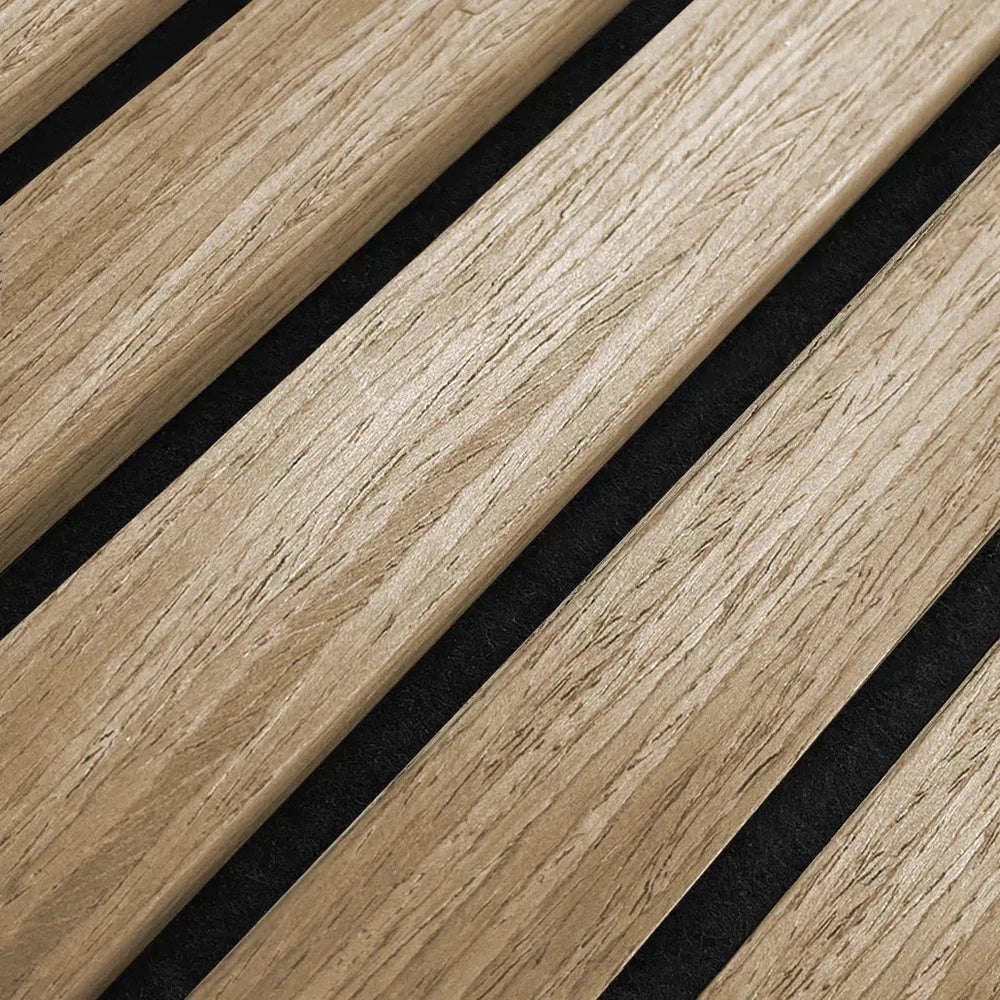
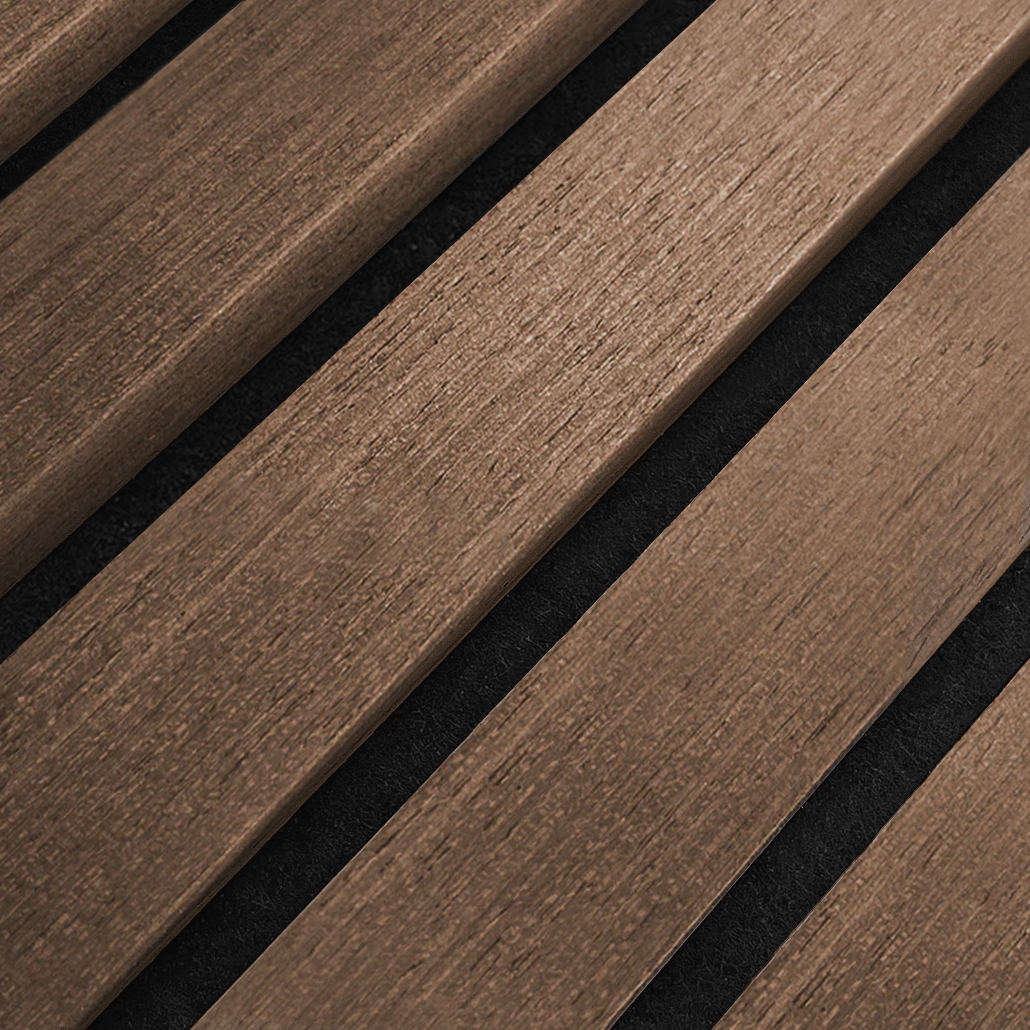
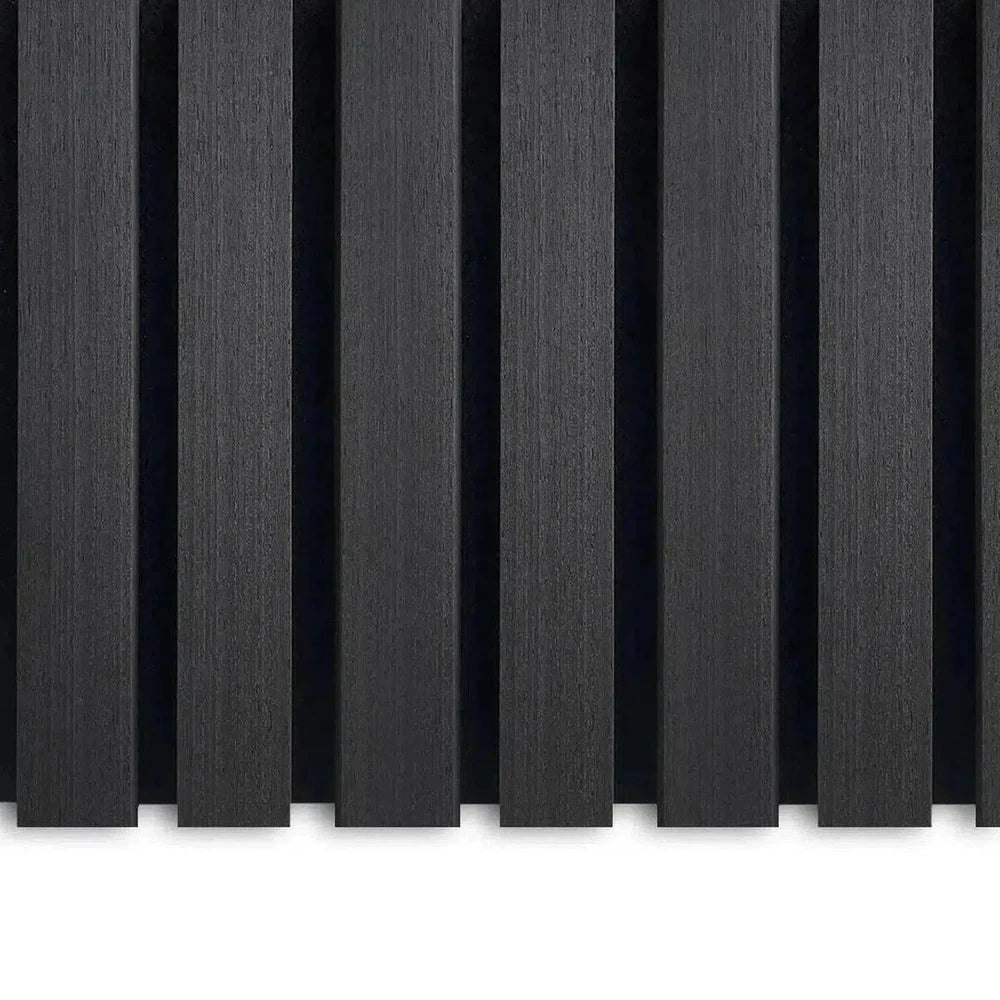
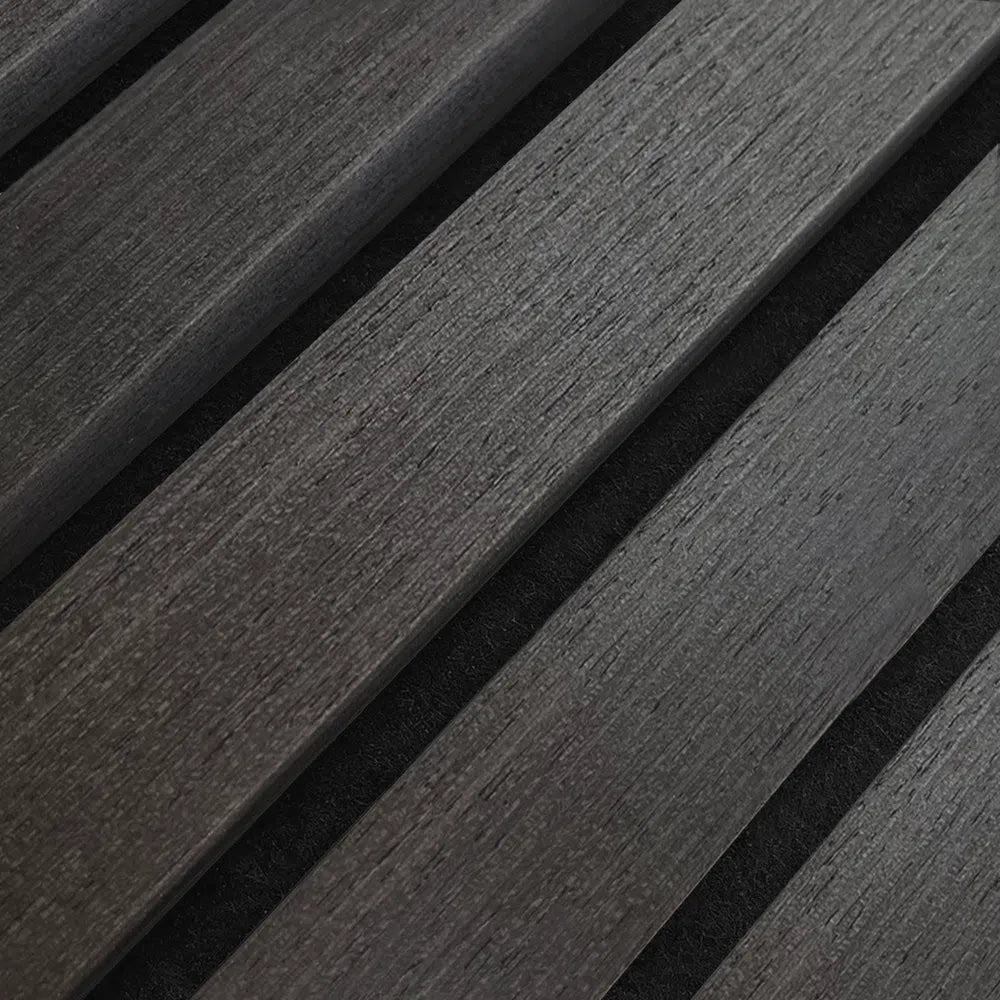
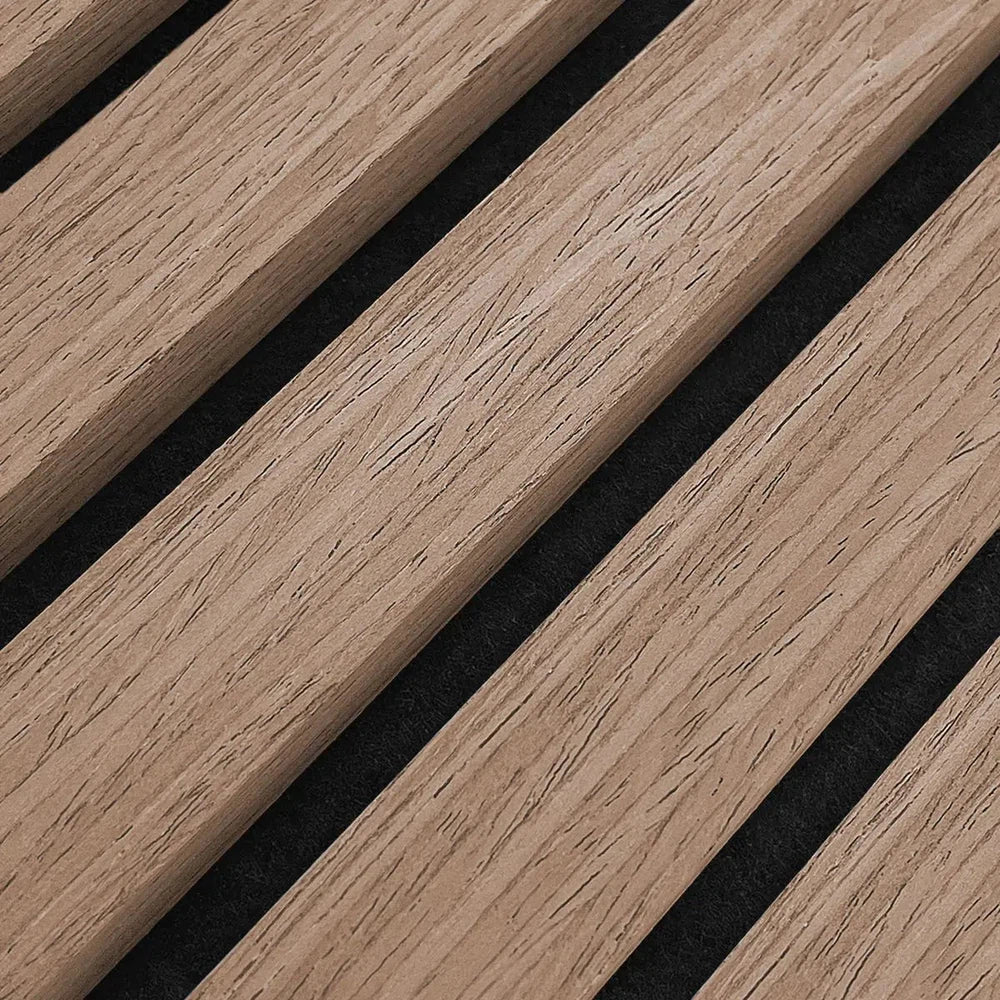
- A panel with a felt or fibre acoustic backing, not a purely decorative slat — the Natural Oak Grey Felt wall panel is built this way, with a 3-sided real wood veneer over acoustic felt
- A tape measure and a pencil for marking batten or stud lines
- Panel adhesive or fixings rated for the wall type (plasterboard, brick, or timber stud)
- 60-90 minutes per wall for measuring, cutting, and fitting
The steps
1. Diagnose the frequency, not just the volume
Echo isn't one problem — it's a range of frequencies bouncing at different rates, and thickness matters because different depths absorb different bands. Voices and TV dialogue sit mostly between 500 Hz and 4,000 Hz; footsteps, HVAC hum, and traffic rumble sit under 250 Hz.
Clap sharply in the room and listen to the tail. A short, sharp slap-back means high-frequency reflection — thinner felt backing handles this fine. A longer, boomy decay means low-frequency buildup, which needs more depth behind the veneer to absorb properly. Skipping this step is the most common mistake: buying thin panels for a room with a bass problem.
2. Match panel depth to the frequency range
As a rule of thumb in acoustic engineering, a porous absorber only works well down to a frequency whose wavelength is roughly four times the material's thickness. A 20mm felt layer absorbs high-frequency chatter and TV dialogue well; getting meaningful absorption below 250 Hz generally needs either much greater depth or an air gap behind the panel.
| Room noise type | Frequency range | Panel depth needed |
|---|---|---|
| Voice, dialogue, echo chatter | 500 Hz - 4,000 Hz | Standard felt-backed slat panel |
| Music, home cinema | 125 Hz - 4,000 Hz | Felt-backed panel plus air gap on batten |
| Bass hum, traffic, footsteps | Below 250 Hz | Thicker absorber or dedicated bass trap |
For a living room or bedroom fighting ordinary conversational echo, a standard acoustic wood panel with felt backing solves most of the problem. Home cinemas and music rooms need the extra step of mounting on battens to create an air gap, which effectively increases the working depth without adding more material.
3. Check the NRC rating, not just the description
Noise Reduction Coefficient (NRC) is the single number that tells you how much of the sound hitting a panel gets absorbed versus reflected, on a 0 to 1 scale. A panel rated 0.85 absorbs roughly 85% of incident sound; a panel rated 0.25 reflects most of it back into the room.
Thickness and NRC are directly linked — read the NRC sound absorption ratings guide before comparing panels from different suppliers, because manufacturers test at different frequencies and a headline number without the frequency curve behind it doesn't tell you much.
4. Decide between 240 cm and 300 cm panel length for your wall
Panel length isn't the same variable as acoustic thickness, but it changes how much cutting and seaming you do, which affects real-world coverage and therefore real-world absorption. A wall taller than 240 cm forces a horizontal seam if you use the shorter format; a 300 cm panel runs floor to a standard ceiling in one piece.
The guide to choosing between 240 and 300 cm wall panels walks through the measurement math. Get this wrong and you'll either waste offcuts or end up with a visible seam breaking up the acoustic surface.
5. Calculate coverage before you calculate thickness
A thick, high-NRC panel covering 20% of a wall absorbs less total sound energy than a thinner panel covering 60% of the same wall. Thickness sets the ceiling on per-square-metre absorption; coverage sets how much of that ceiling you actually reach.
For most living rooms and home offices, covering one full wall — typically the one behind the seating or the desk — does more for perceived echo than spreading thinner coverage across every wall in the room. Prioritise one wall done properly over four walls done thinly.
6. Mount with an air gap when bass is the problem
If step 1 flagged a boomy, low-frequency echo, mounting the panel on battens 20-40mm off the wall roughly doubles its effective low-frequency performance compared with gluing it flat. The air cavity behaves like additional absorptive depth without adding material cost.
This matters most in home cinemas, converted basements, and rooms with hard flooring where bass reflections build up. Flat-glued panels are fine for pure mid-to-high frequency chatter in a normal living room.
7. Confirm the fix before finishing the room
Once the first panel section is up, clap-test again. The decay should sound noticeably shorter and less hollow. If it doesn't, the thickness or coverage from steps 2-5 needs revisiting before you commit to panelling the whole wall — it's a lot cheaper to adjust after one section than after four.
Troubleshooting
- Echo persists after installing panels — coverage is probably too low. Add panels to a second wall or increase coverage on the existing one before assuming the product is wrong.
- Room still sounds boomy despite felt-backed panels — the problem is low-frequency, and flat-glued thin panels can't reach it. Remount on battens to add an air gap.
- Panels look bulky in a small room — swap flat slat panels for hexagon panels on the feature wall and keep slat panels for the primary absorption wall; hexagon formats add depth in a smaller footprint.
- Video calls still sound hollow in a home office — desk-facing walls need the panel, not just the wall behind the camera. Move coverage to whichever surface reflects sound back at your microphone.
- Budget doesn't stretch to full-wall coverage — partial coverage on the loudest-reflecting wall (usually opposite a hard floor or window) beats thin coverage spread across the whole room.
Tools and resources
- Tape measure and pencil for batten or panel layout
- Panel adhesive or mechanical fixings suited to your wall type
- A wall panel with felt or fibre backing rather than a purely decorative veneer
- The layering guide for acoustic panels if one wall of coverage isn't enough on its own
- A clap test or a smartphone voice memo, recorded before and after, to compare reverberation by ear
What to do next
Once coverage and thickness are sorted for one room, the same logic — frequency first, thickness second, coverage third — applies to every other room in the house. Home offices, home cinemas, and bedrooms all have different noise profiles, and the panel depth that fixes one won't automatically fix another.
FAQ
What thickness works best for acoustic wall panels in 2026?
For ordinary living room or office echo, a standard felt-backed slat panel handles mid-to-high frequencies well without needing extra depth. Low-frequency or home cinema noise needs an added air gap behind the panel, which acts like extra thickness.
Is a thicker acoustic panel always better for sound absorption?
No, thickness only helps the frequency range it's matched to. A very thick panel does nothing extra for high-frequency chatter, and a thin panel does almost nothing for bass rumble.
Does panel length, 240 cm versus 300 cm, affect acoustic performance?
Length affects seaming and coverage, not the absorption rate per square metre. A 300 cm panel avoids a horizontal seam on taller walls, which keeps the absorptive surface continuous.
What NRC rating should I look for in an acoustic panel?
Look for the frequency curve behind the headline NRC number, not just a single figure out of context. A panel rated around 0.75-0.90 across the speech frequency range performs well for typical living room and office echo.
Can acoustic wood panels stop noise coming from a neighbouring room?
Acoustic panels absorb reflected sound inside a room; they do not block sound transmission through a wall the way mass-loaded barriers or insulation do. For noise coming from next door, treat wall structure separately from surface acoustic panels.
How many acoustic panels do I need for one wall?
Coverage of one full feature wall, rather than thin coverage across every wall, generally does more to cut perceived echo. Calculate wall area first, then choose 240 cm or 300 cm panels based on which produces fewer cut seams.
Do hexagon acoustic panels absorb sound as well as full slat panels?
Hexagon panels use the same felt-backed construction but cover less continuous surface per panel, so full-wall slat coverage generally absorbs more total sound for the same wall. Hexagon formats suit feature walls where pattern matters as much as absorption.
What's the difference between acoustic panels and purely decorative wall panels?
Acoustic panels have a felt or fibre backing behind the wood veneer that absorbs sound energy; decorative panels are often solid wood or MDF with no absorptive layer and do little for echo.
One last thing
The wood veneer on an acoustic panel is almost entirely a visual layer — it's the felt backing behind it doing the work, which is why two panels that look identical from across the room can perform completely differently for echo control. Check what's behind the finish before checking the finish itself.