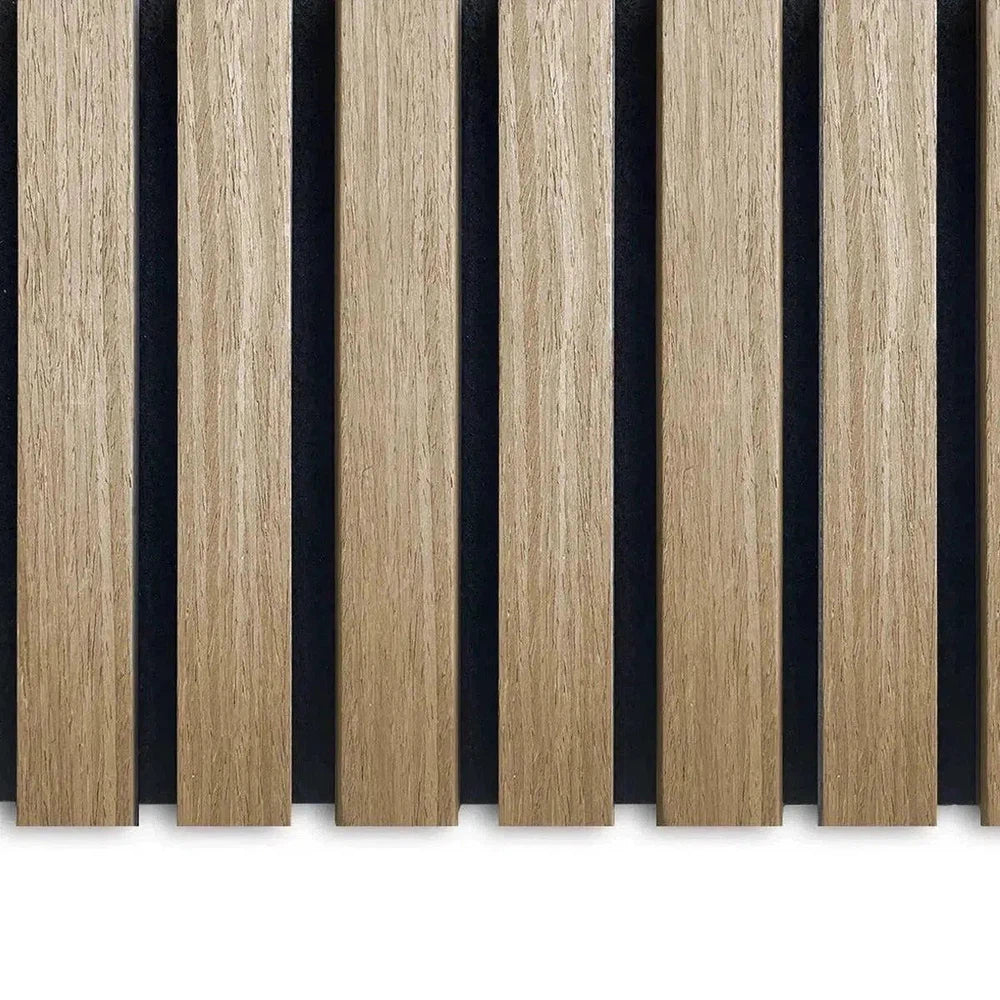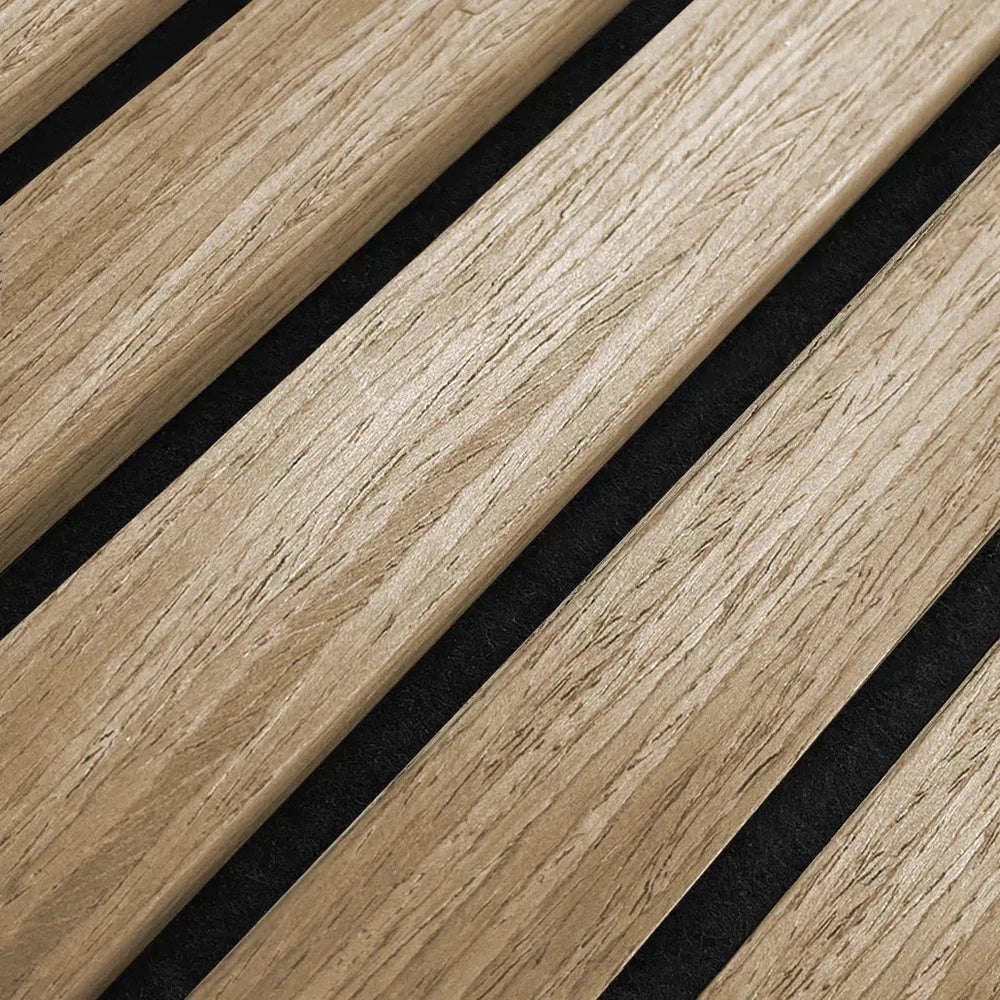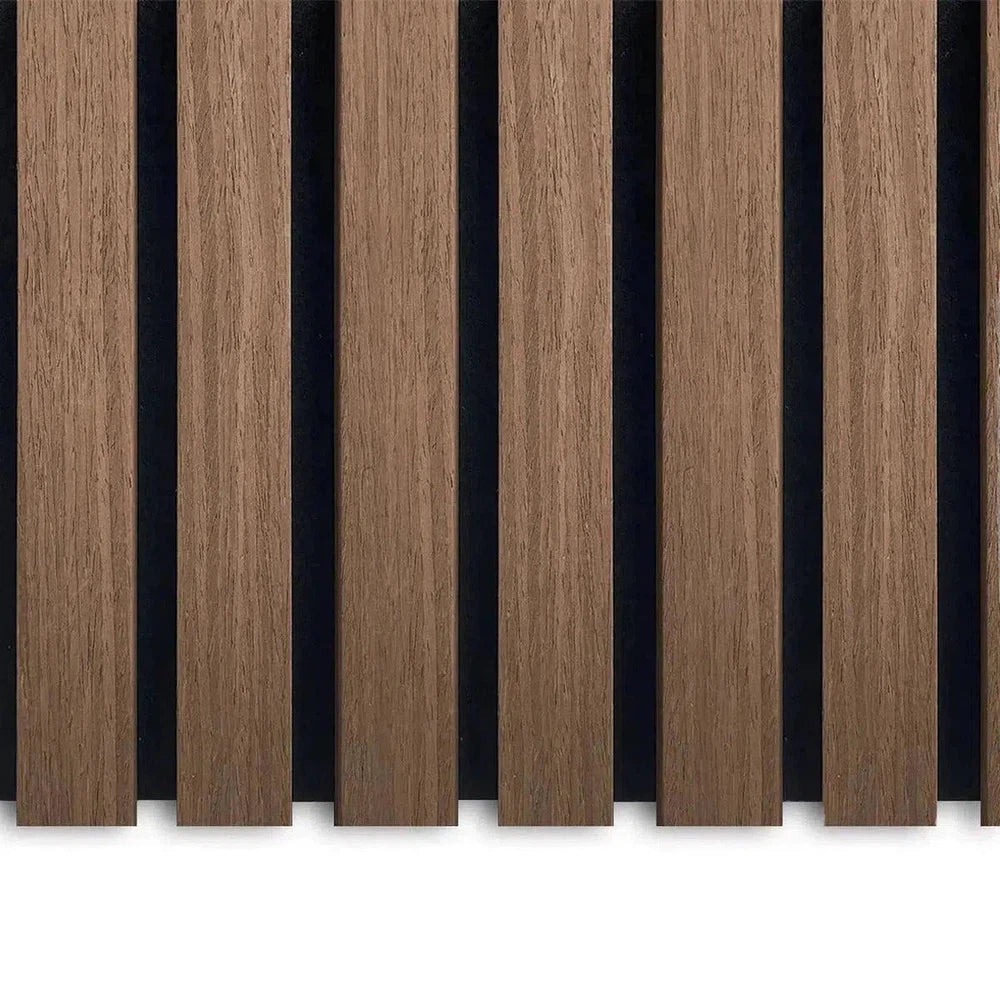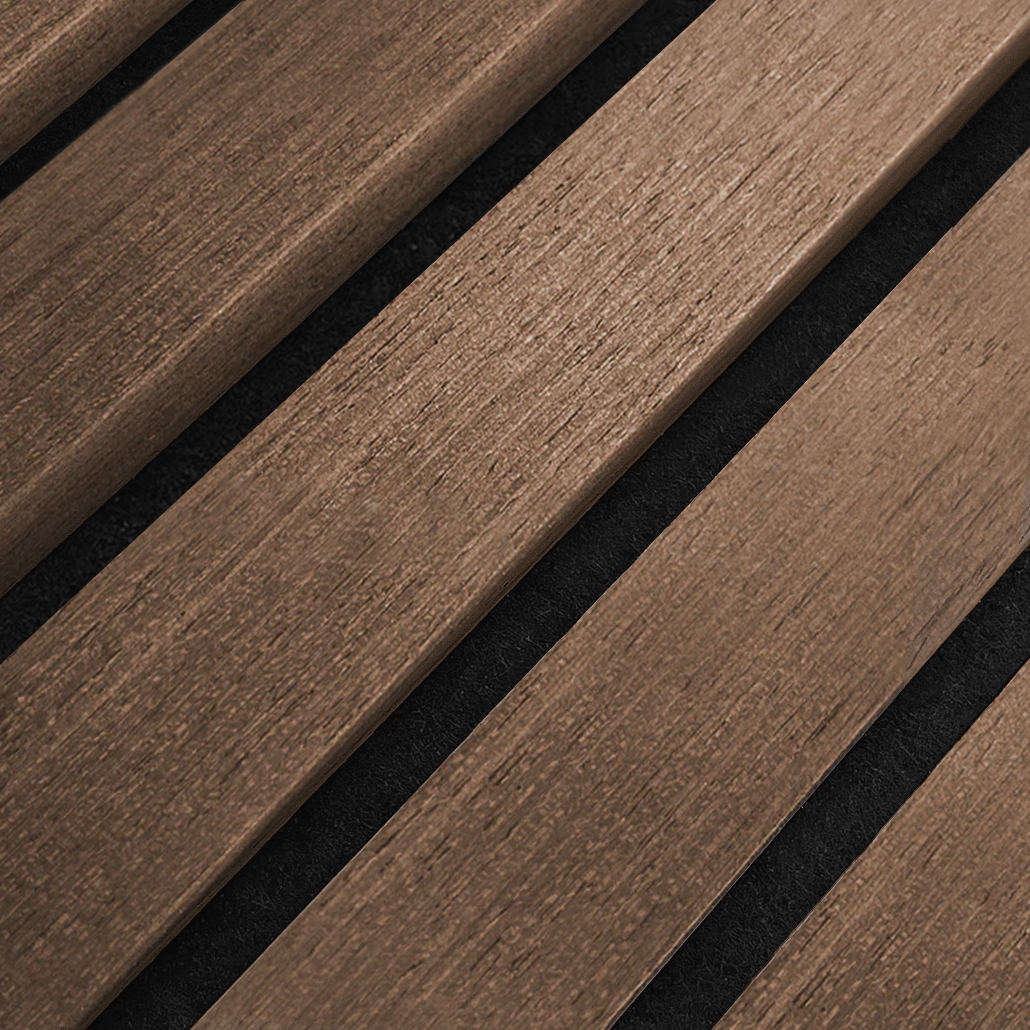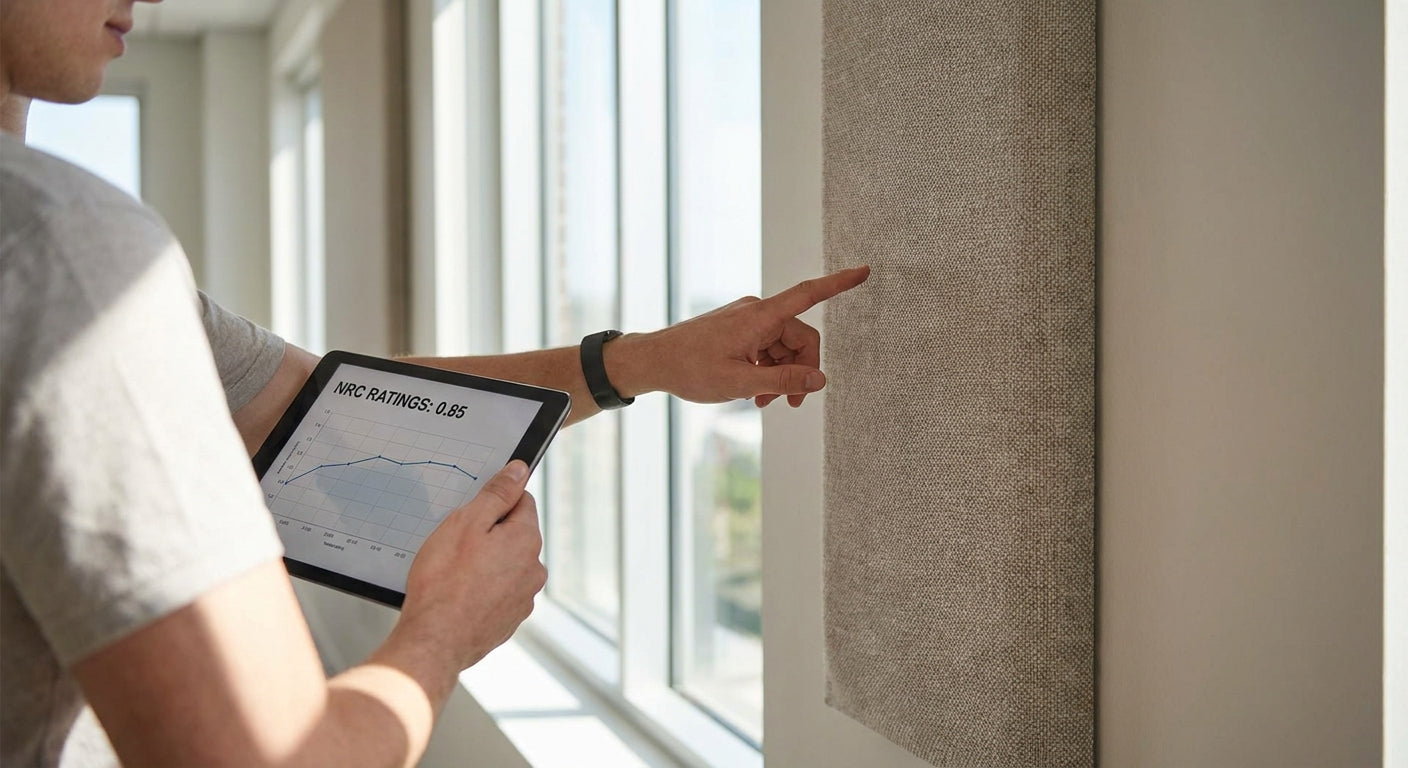
NRC ratings are the one number that separates panels that actually calm a room from ones that just look nice on a wall. This guide shows you exactly where to find the NRC rating on a product listing, what the decimal actually means, and how to use it to work out how many acoustic wall panels your room needs in 2026.
- NRC rating on acoustic panels ranges from 0 (no absorption) to 1.0 (total absorption) — Akuwood Panel's felt-backed hexagon panels list 0.75.
- A 0.75 NRC panel absorbs roughly three-quarters of the sound hitting it across the 250Hz-2000Hz test range.
- Cover 15-25% of hard wall surface with 0.70+ NRC panels to noticeably cut echo in a typical living room.
- Buy panels tested to ASTM C423; skip listings that quote NRC with no standard behind it.
- NRC measures absorption, not soundproofing — it will not stop noise passing through to a neighbour.
Why this matters
Most people buying acoustic wall panels in 2026 pick a finish they like and hope for the best. That's a coin flip. The NRC rating is the only figure on a spec sheet that tells you, in advance, whether a panel will do anything measurable to the echo bouncing round your living room, office, or studio.
Get the reading wrong and you'll spend money covering a wall with a decorative panel that has almost no absorption, then wonder why the room still sounds hollow. Get it right and you can calculate coverage before you order a single best acoustic wall panels for noise reduction panel.
What you'll need
- The product spec sheet or listing for the panel you're comparing
- A tape measure and the total square metres of hard wall surface in the room
- A note of your actual problem — TV dialogue unclear, video calls sound tinny, footsteps echo
- A calculator (or a phone) for working out coverage percentage
- A panel with a stated NRC, such as Akuwood Panel's felt-backed hexagon range, which lists an NRC of 0.75 on the product page
The steps
1. Learn what the NRC number actually represents
NRC stands for Noise Reduction Coefficient. It's a single decimal, from 0 to 1.0, that averages a material's sound absorption at four test frequencies: 250Hz, 500Hz, 1000Hz and 2000Hz. A rating of 0 means the surface reflects almost all sound back into the room, like bare drywall or a window. A rating of 1.0 means near-total absorption, the kind you'd expect from thick studio foam.
An NRC of 0.75 — the figure Akuwood Panel quotes on its hexagon acoustic panels with grey felt backing — means that panel absorbs roughly 75% of the sound energy hitting it across that frequency range and reflects the rest. Expected outcome: you now read any NRC figure as a percentage, not a marketing label.
Common mistake: assuming NRC is a percentage of the whole room's noise. It isn't. It's a property of the material's surface only.
2. Find the NRC rating on the panel's spec sheet
Check the product description or downloadable spec sheet before you check the price. If a wooden wall panel is marketed as "acoustic" but the listing has no NRC figure anywhere, that's a red flag — the felt backing may be decorative rather than functional.
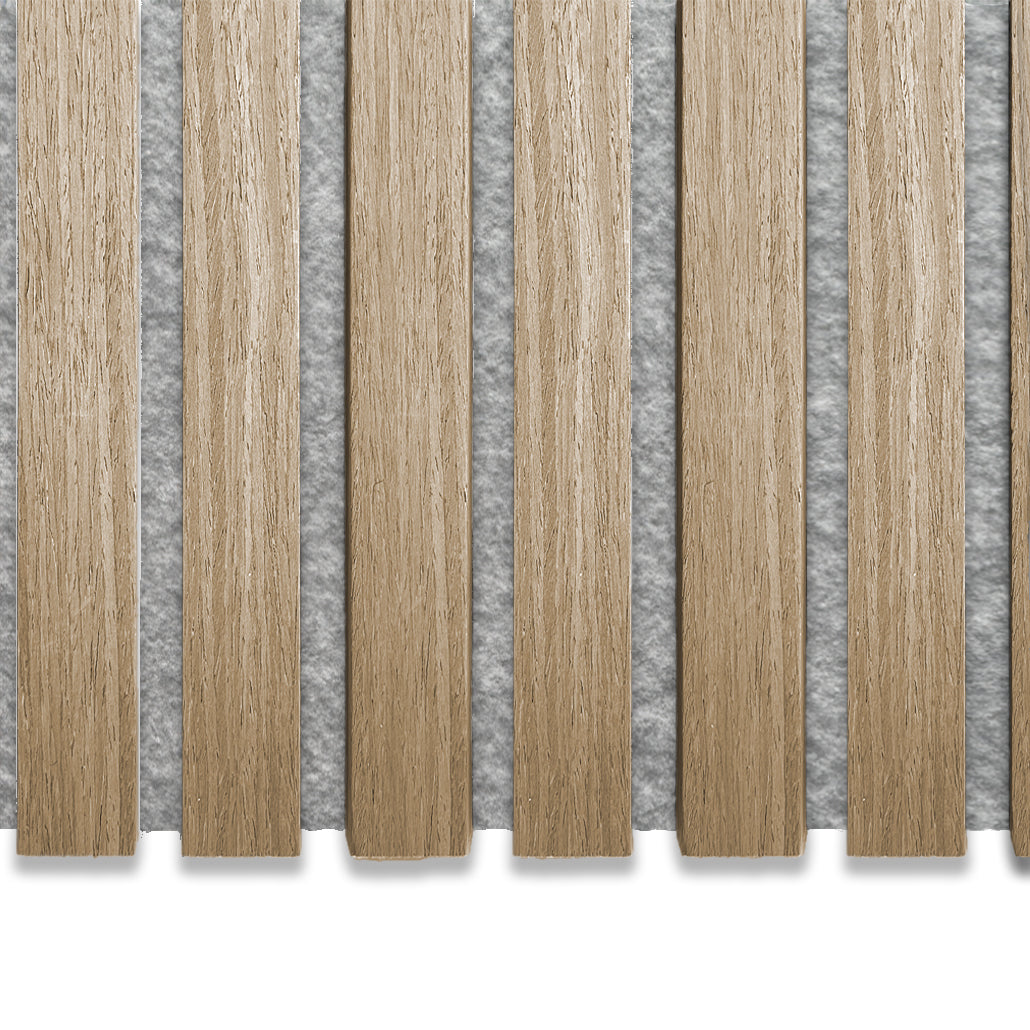
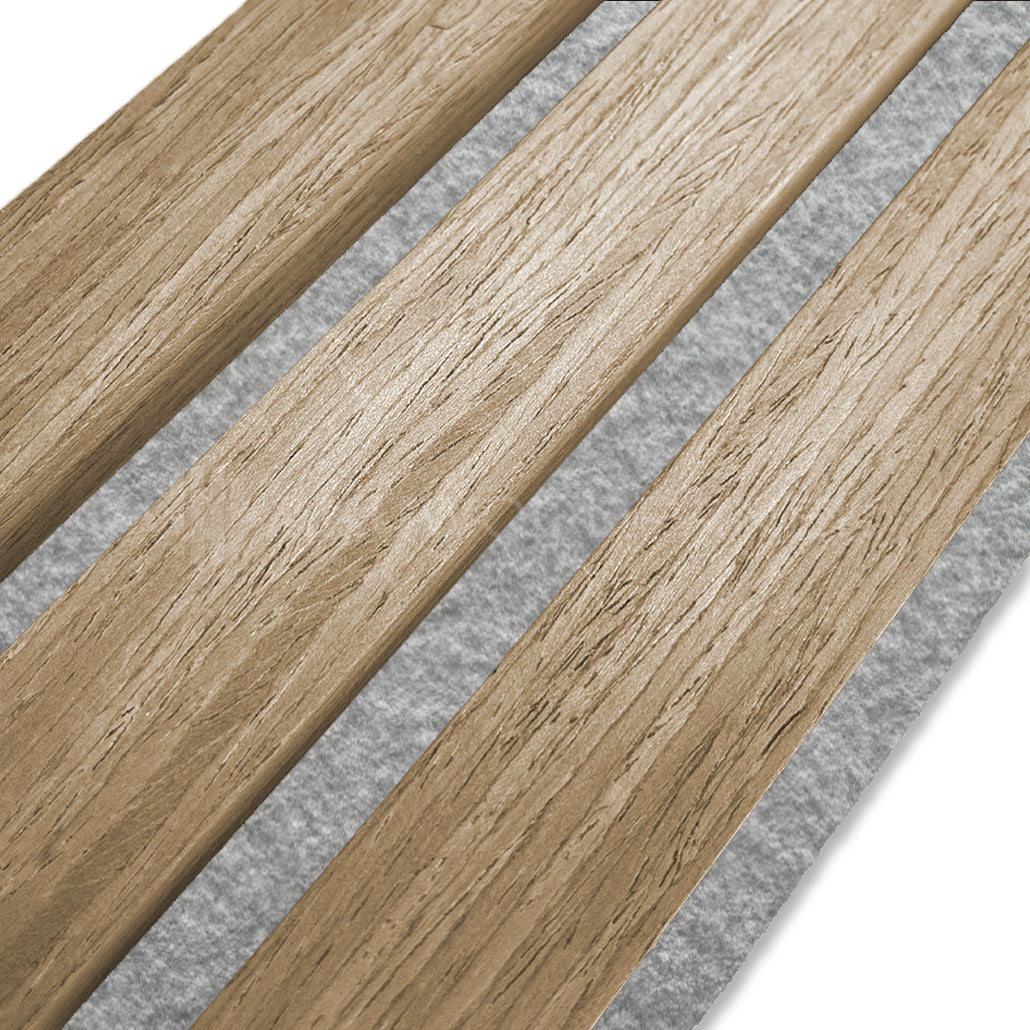
Akuwood Panel lists NRC 0.75 directly on its hexagon acoustic panel in natural oak with grey felt and across the rest of its felt-backed hexagon range. Expected outcome: a specific decimal, not a vague phrase like "sound absorbing."
Common mistake: confusing a panel's overall acoustic marketing copy with an actual tested figure.
3. Check which test standard backs the number
Any NRC worth trusting in 2026 should be measured to ASTM C423, the standard reverberation-room test used across the industry. If a listing gives an NRC with no standard referenced, treat it as unverified.
This step takes thirty seconds: search the spec sheet or product page for "ASTM" or "tested to." Expected outcome: confirmation the number came from a lab test, not a guess. Common mistake: trusting NRC figures quoted by resellers who didn't test the product themselves.
4. Match the NRC value to your room's echo severity
A home office with a hard floor and one soft sofa needs less absorption than a double-height living room with floor-to-ceiling glass. As a rough guide for 2026 domestic rooms: NRC 0.50-0.65 suits mild echo, 0.70-0.85 suits moderate echo (TV dialogue hard to follow, calls sound hollow), and anything above 0.85 is closer to studio-grade treatment.
At NRC 0.75, Akuwood Panel's hexagon and felt-backed slat ranges sit in the moderate-to-strong bracket — enough for most living rooms and open-plan kitchens. Expected outcome: you pick a coverage target, not just a panel. Common mistake: buying the highest NRC available when a mid-range figure would have solved the actual problem.
5. Calculate how much wall coverage you actually need
As a working rule for 2026 domestic and small commercial rooms, covering 15-25% of total hard wall surface with panels rated NRC 0.70 or higher noticeably reduces echo; covering 30%+ gets close to a fully treated room. Measure your wall area in square metres, multiply by your target percentage, then divide by the panel's coverage area to get a unit count.
Expected outcome: a number you can actually order against, instead of "a few panels and see how it goes." Common mistake: covering one accent wall fully while leaving three bare walls untouched — echo bounces off whichever hard surface is left.
6. Compare NRC across finishes and sizes before you commit
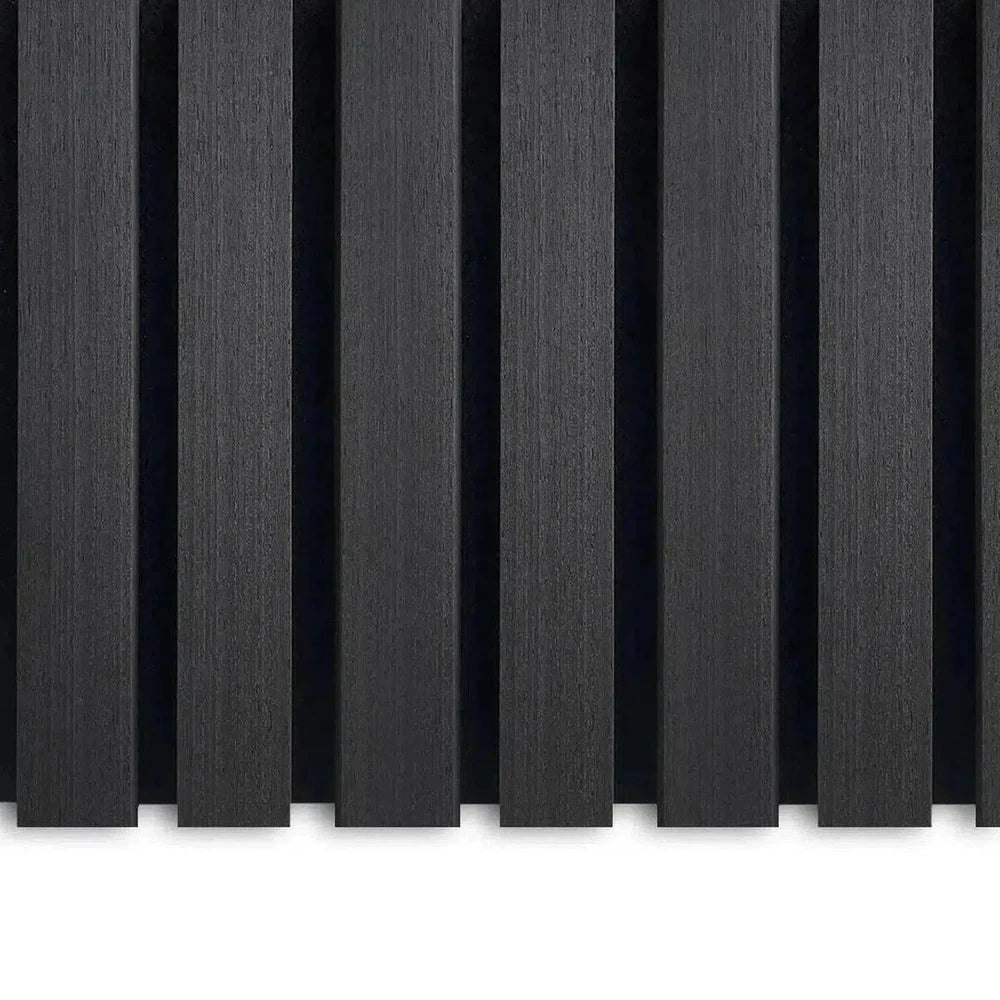
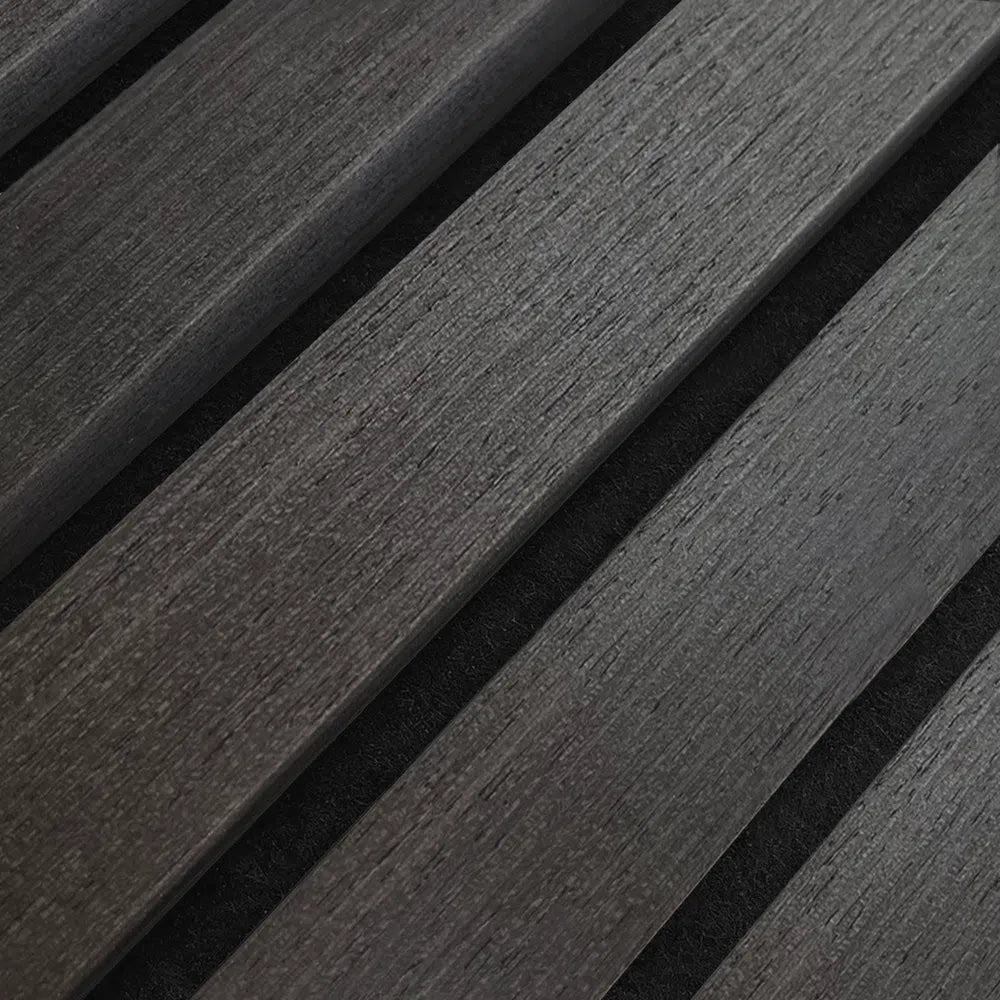
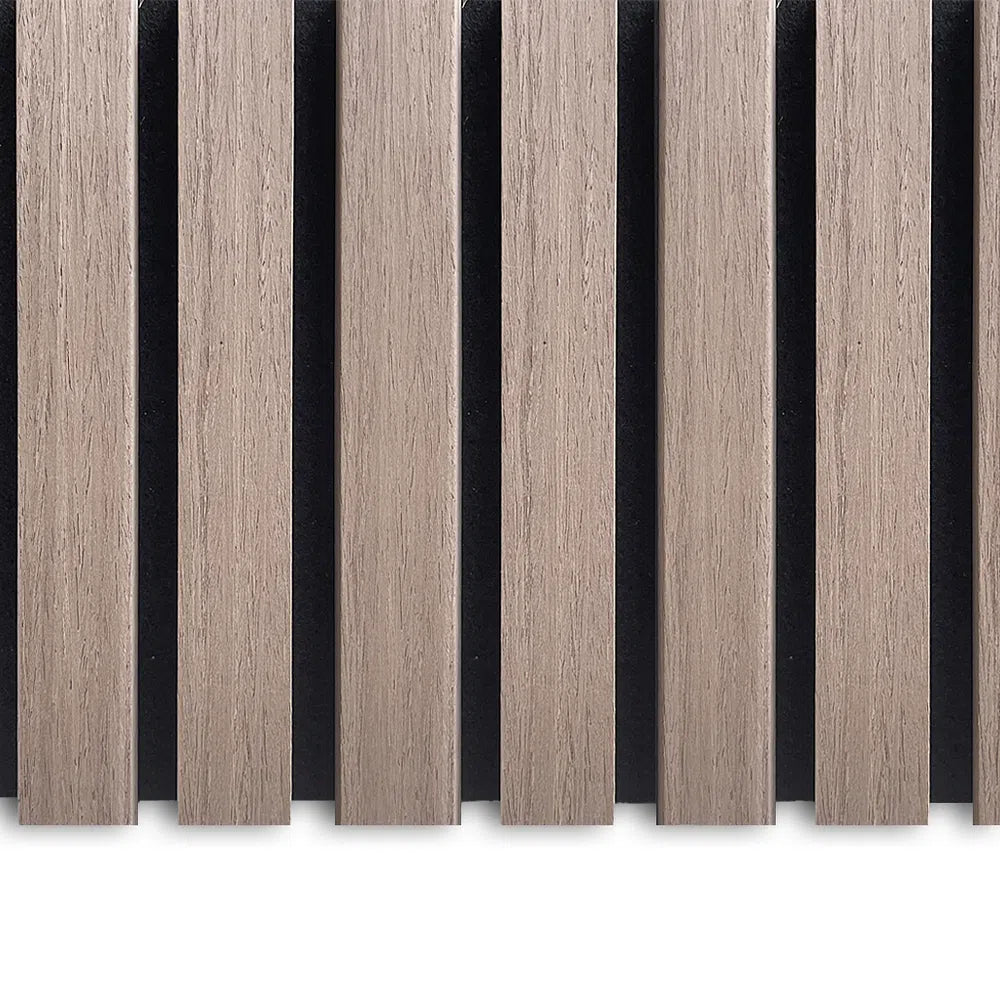
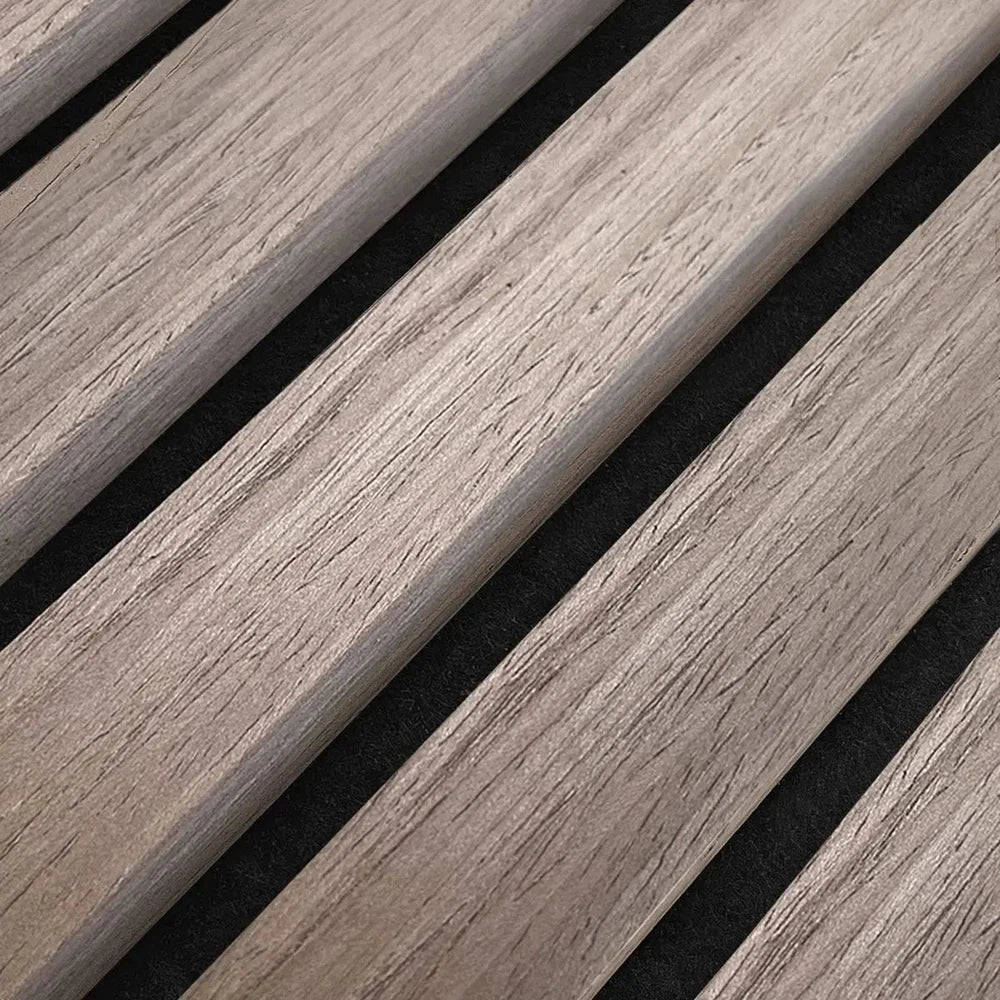
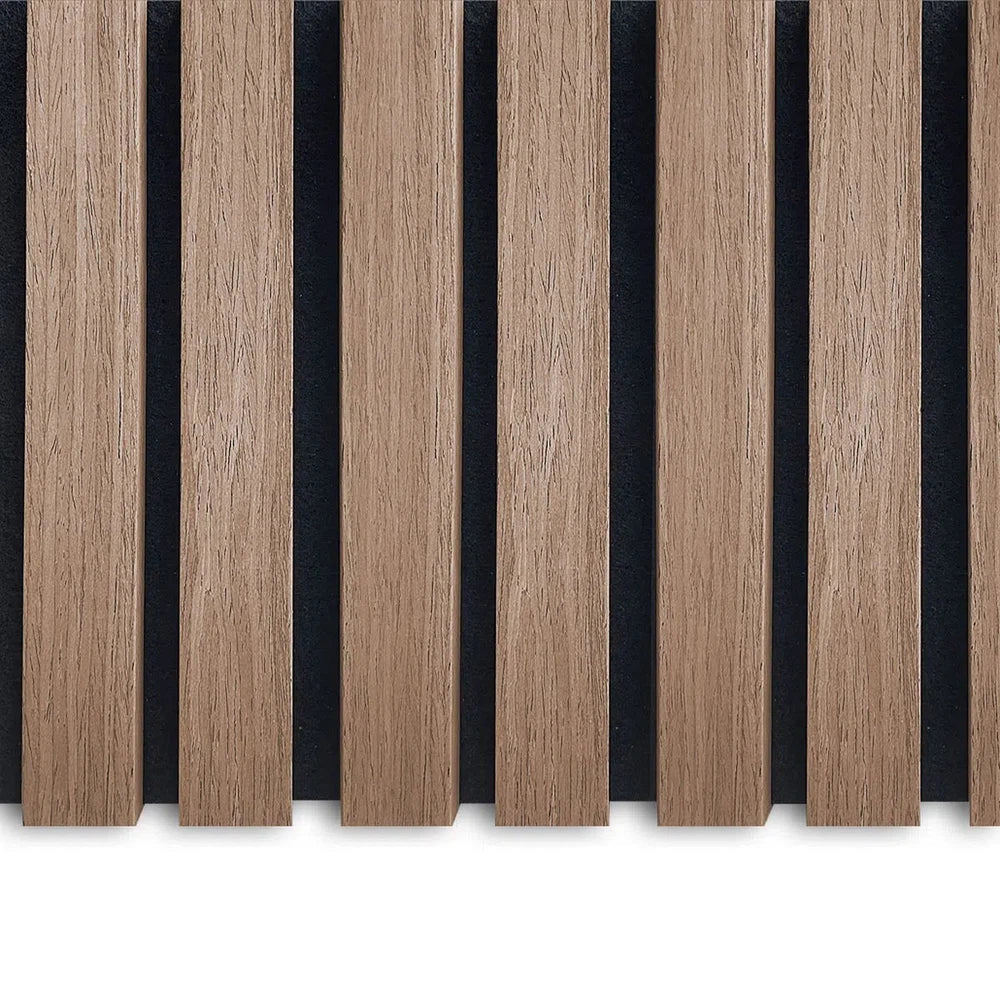
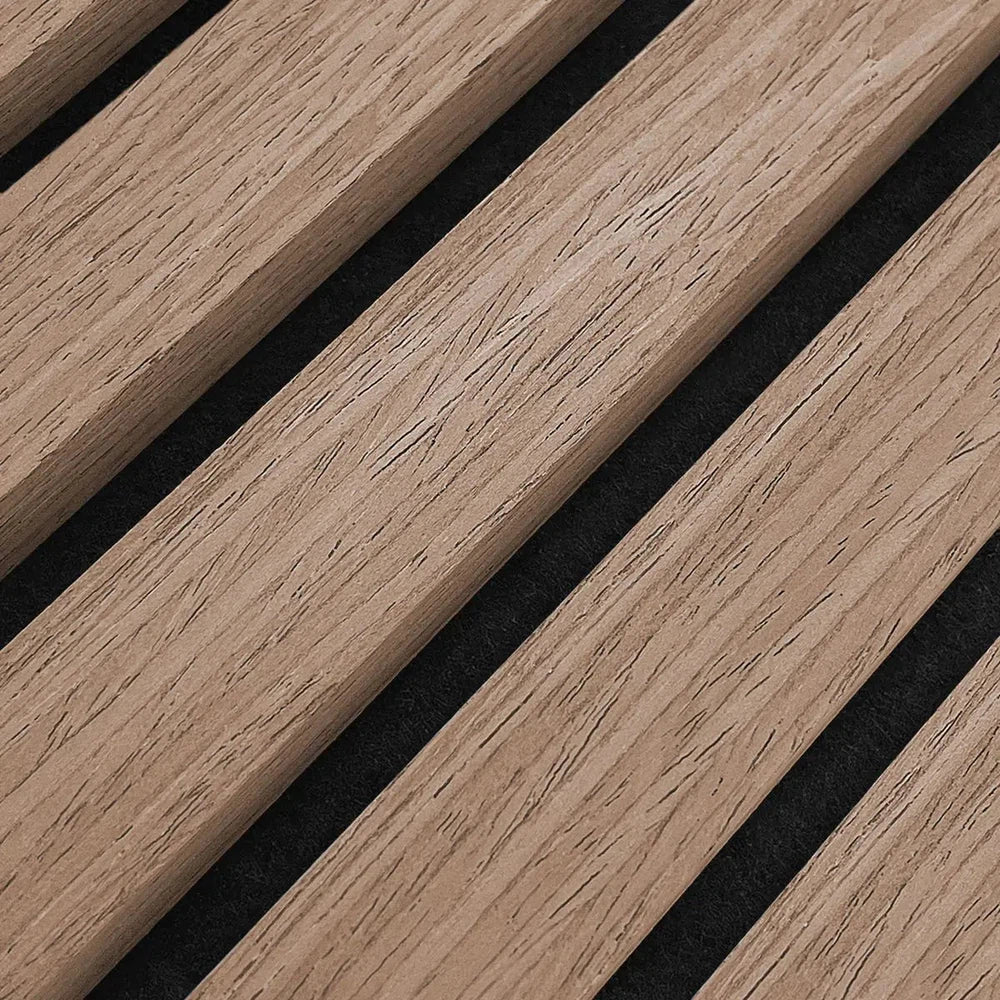
NRC can shift slightly between finishes on the same panel line depending on felt density and slat spacing, so don't assume every colour in a range performs identically without checking. Compare the 240cm and 300cm formats too — larger format panels cover more wall per unit, which changes your total count even at the same NRC.
Expected outcome: a shortlist of two or three panels, all with a confirmed NRC, rather than one impulse pick. Common mistake: choosing a finish purely on colour and only checking NRC after the order has shipped.


Troubleshooting
- No NRC listed anywhere on the product page — treat the panel as untested for absorption; ask the manufacturer directly or choose a listed alternative before buying in 2026.
- NRC seems too high for a thin panel — cross-check the felt backing thickness against the claimed rating; a thin veneer with no felt layer behind it will not reach 0.70+.
- Full wall coverage but echo persists — check the remaining bare walls, the ceiling, and hard floors; NRC only works on the surface it's applied to, not the room as a whole.
- Confusing NRC with STC — NRC measures absorption inside a room; STC (Sound Transmission Class) measures how much sound passes through a wall to the next room. A high-NRC panel will not stop noise reaching a neighbour.
- Panel described as "acoustic" with no test standard cited — an NRC figure without ASTM C423 behind it is a marketing claim, not a measurement.
- Buying based on colour, not coverage — a beautiful finish with the wrong NRC for your room size wastes the budget; recalculate coverage before ordering more units.
Tools and resources
- Tape measure and calculator for coverage math
- The product spec sheet for any panel you're comparing, checked for a stated NRC and ASTM reference
- Akuwood Panel's felt-backed hexagon range, which lists NRC 0.75 across every finish
- Panel adhesive for fitting once you've settled on a coverage plan
What to do next
Once you've settled on an NRC target and a rough panel count, order acoustic wall panel samples before buying so you can check the felt backing and finish in your own light before committing to a full wall.
FAQ
What is a good NRC rating for acoustic panels in 2026?
An NRC of 0.70 or higher is considered strong for domestic rooms in 2026. Akuwood Panel's felt-backed hexagon panels sit at 0.75, which covers moderate to strong echo in living rooms and offices.
Is a higher NRC rating always better?
Not necessarily — a mild echo problem doesn't need a 0.90+ panel, and over-treating a small room can make it sound flat and dead. Match the NRC to the actual echo severity, not the highest number available.
How much does NRC 0.75 acoustic paneling cost?
Akuwood Panel's felt-backed hexagon panels with an NRC of 0.75 are priced at £40.95 per 81cm unit as of 2026. Total cost depends on how much wall coverage your room needs.
Does NRC measure soundproofing?
No, NRC measures absorption inside a room, not transmission through a wall. If you need to stop noise reaching a neighbour, look at STC ratings and wall construction instead of panel NRC.
How many acoustic panels do I need based on NRC?
Covering 15-25% of hard wall surface with panels rated NRC 0.70 or above noticeably reduces echo in a typical 2026 living room. Measure your wall area and calculate coverage before ordering.
What test standard should acoustic panel NRC ratings use?
Look for NRC figures tested to ASTM C423, the standard reverberation-room test. A listing with no standard referenced should be treated as unverified.
Do wood veneer acoustic panels really absorb sound or just look decorative?
It depends on the backing — a wood veneer panel with a felt layer behind it, like Akuwood Panel's hexagon range at NRC 0.75, genuinely absorbs sound. A veneer panel with no felt backing is decorative only.
Can NRC ratings differ between finishes of the same panel?
Slightly, depending on felt density and slat spacing on that specific finish, so check the spec sheet for each colourway rather than assuming a uniform rating across a range.
One last thing
The number most buyers skip past is the test standard, not the decimal itself — an NRC of 0.75 tested to ASTM C423 tells you more than an NRC of 0.90 with no standard behind it, because the untested figure could be self-reported and never independently verified.