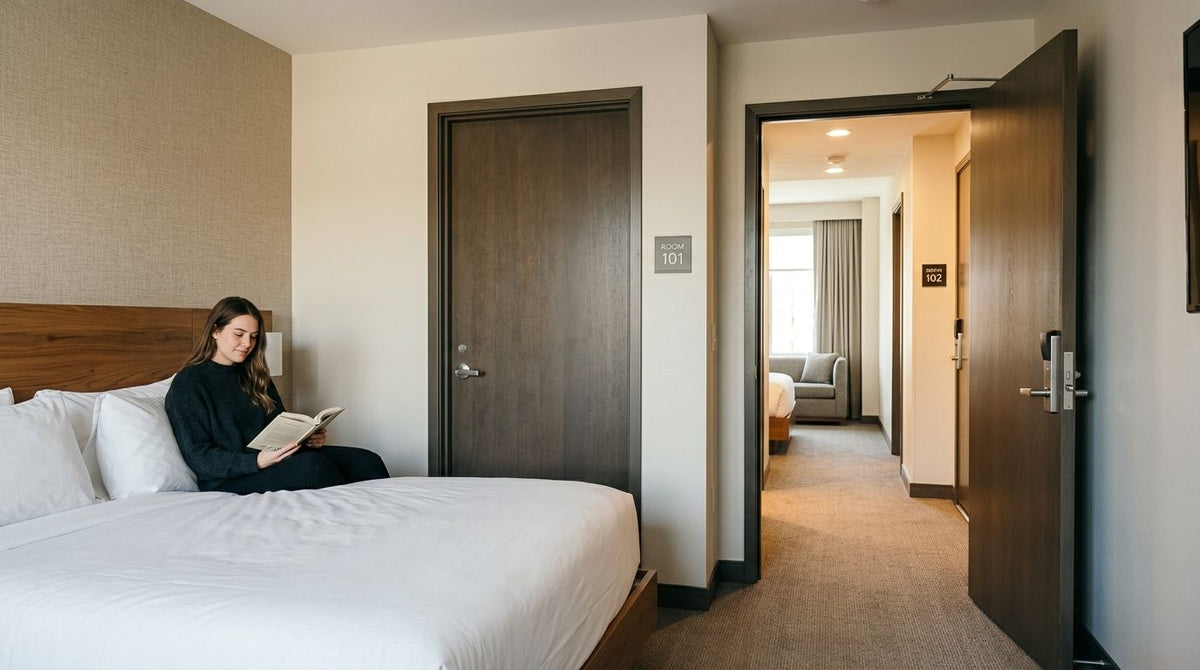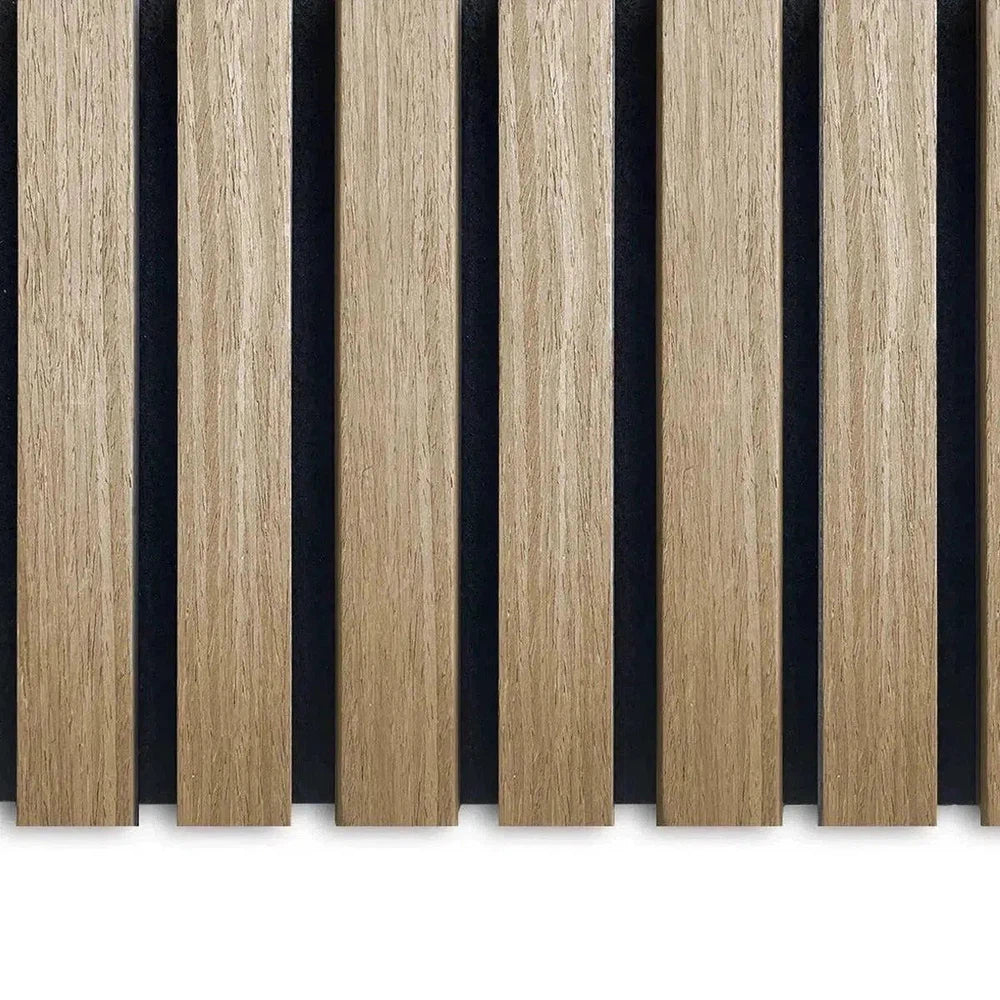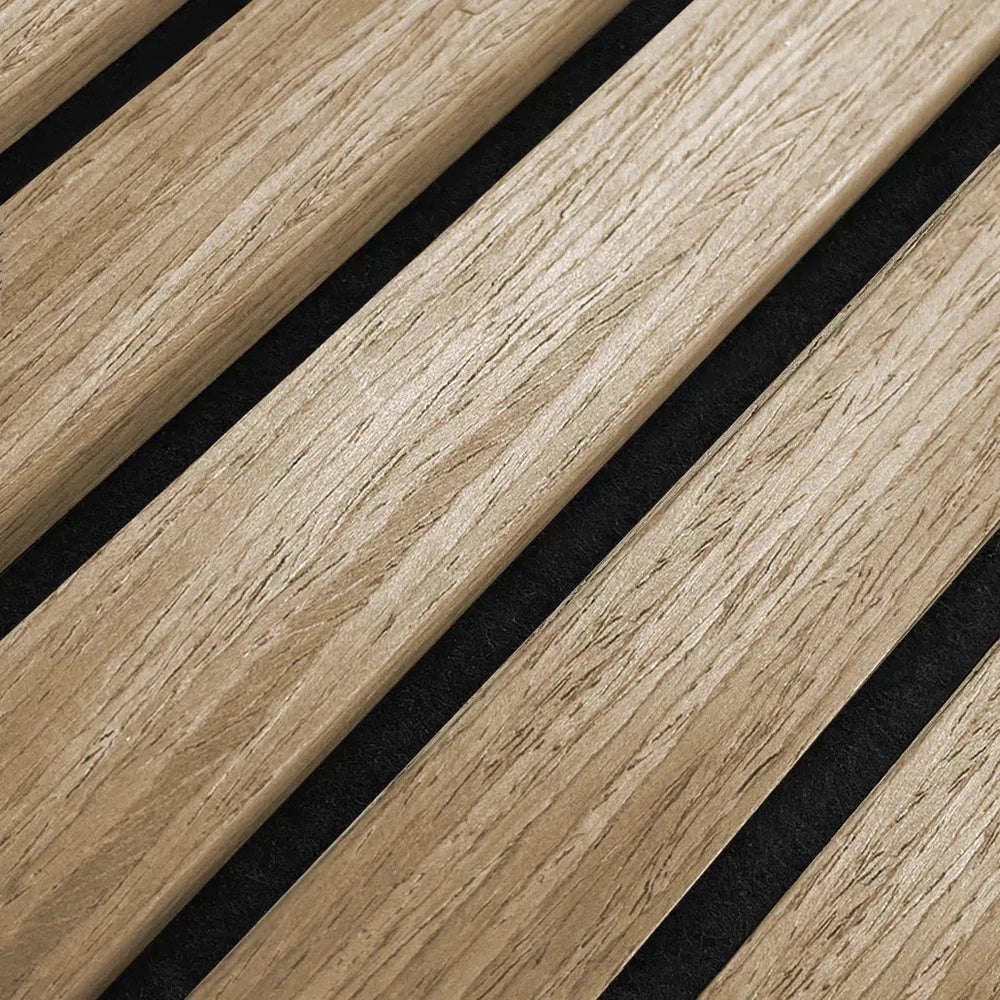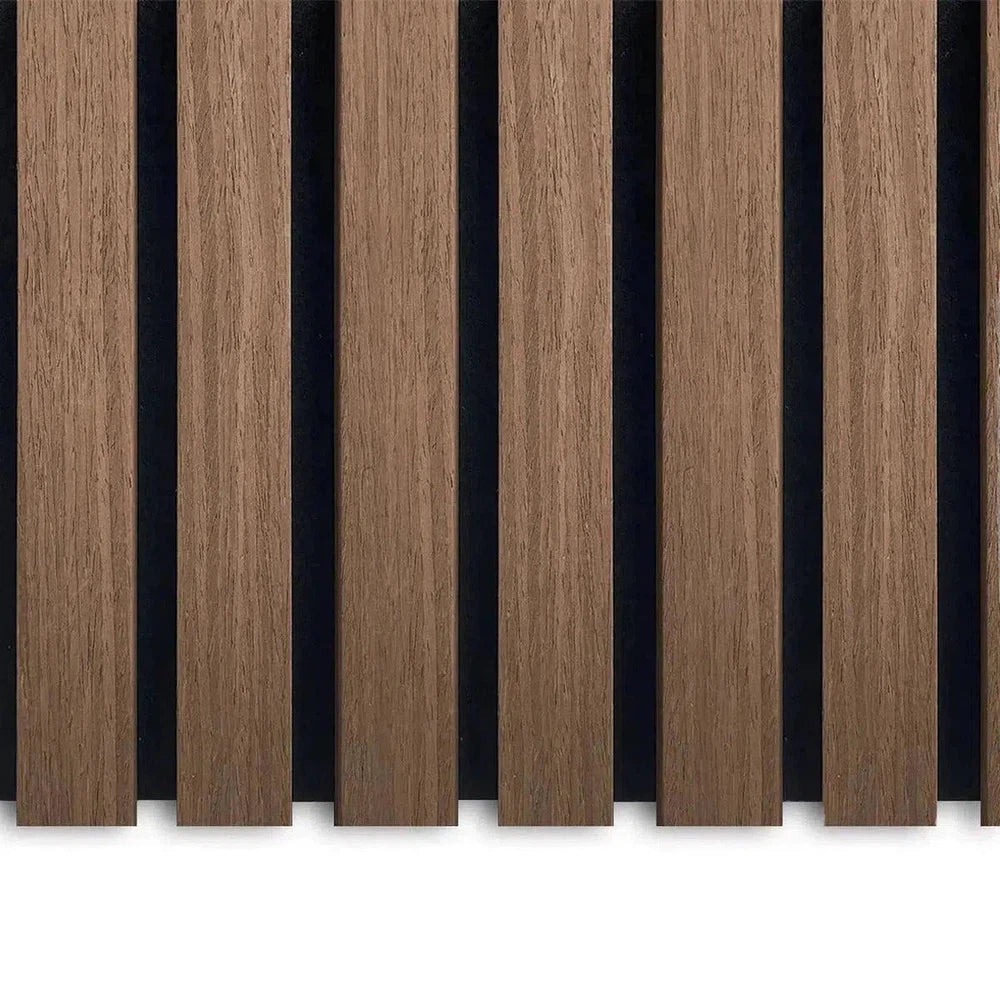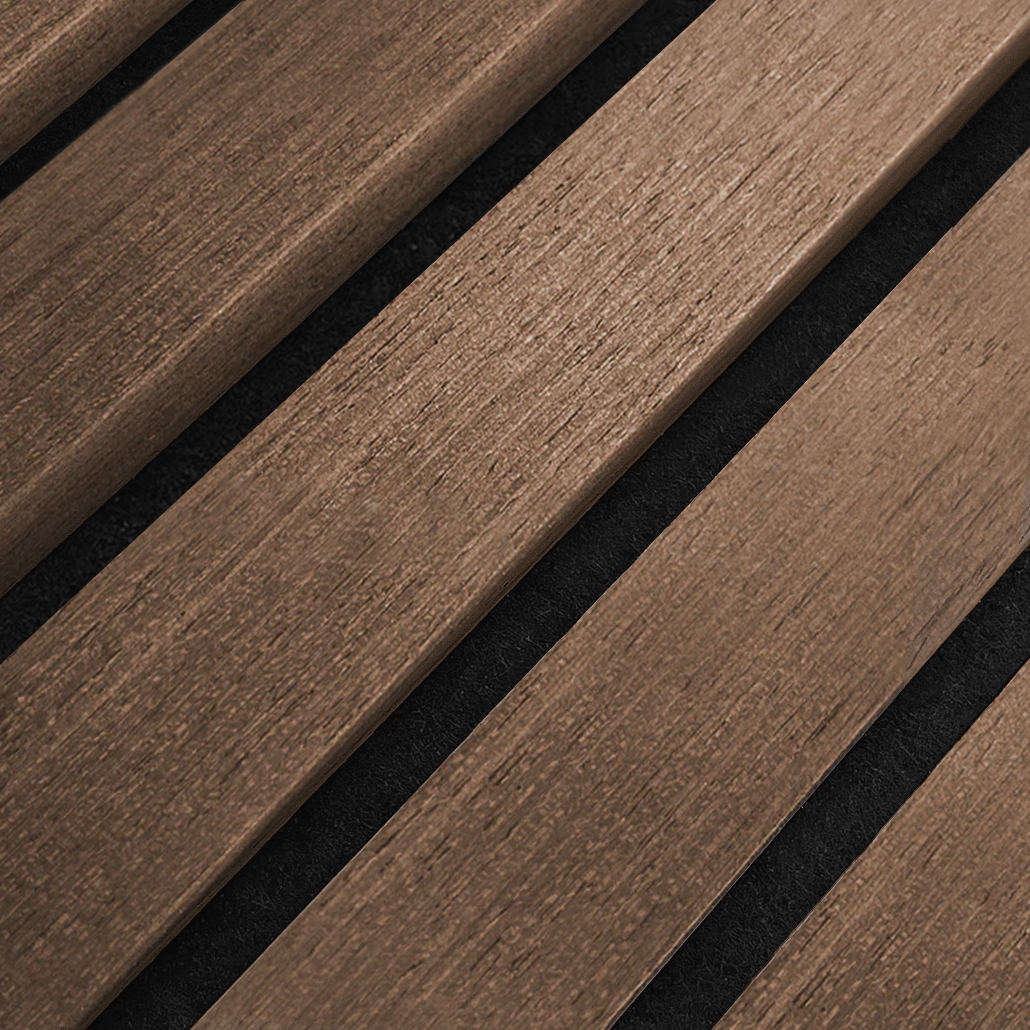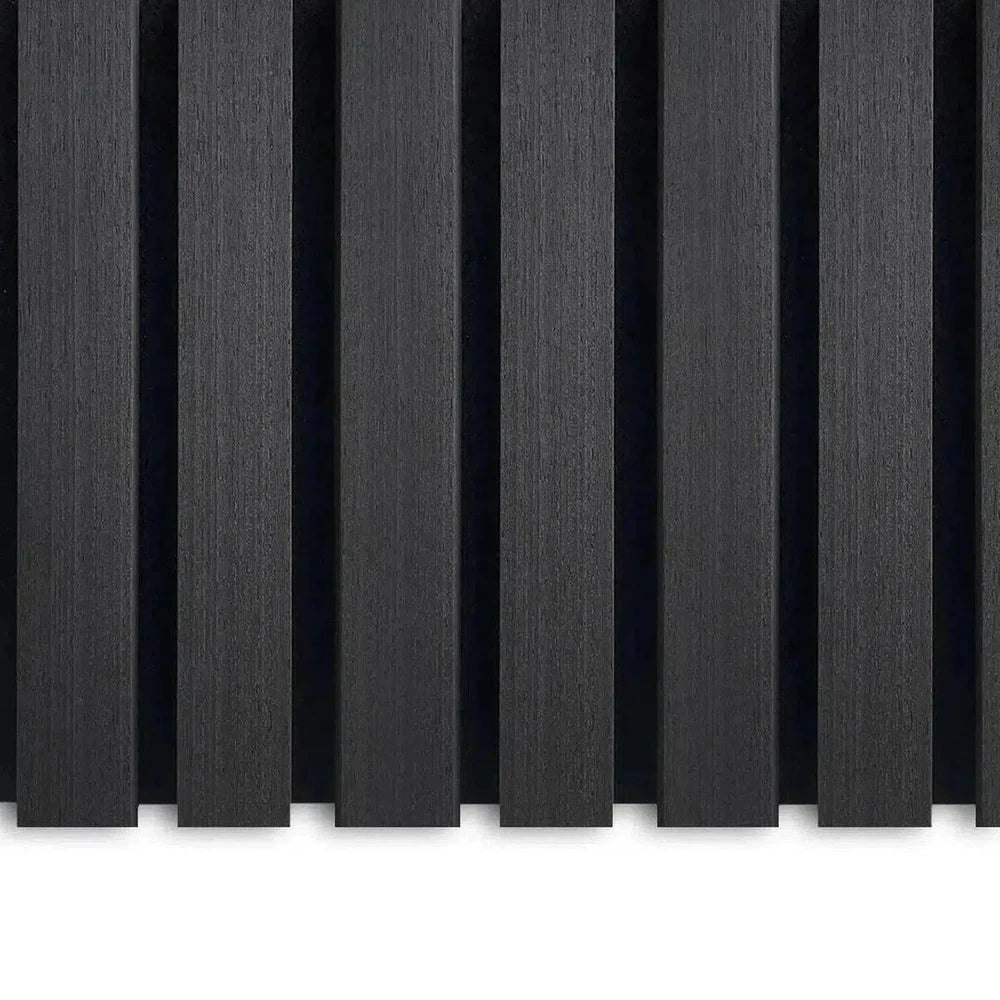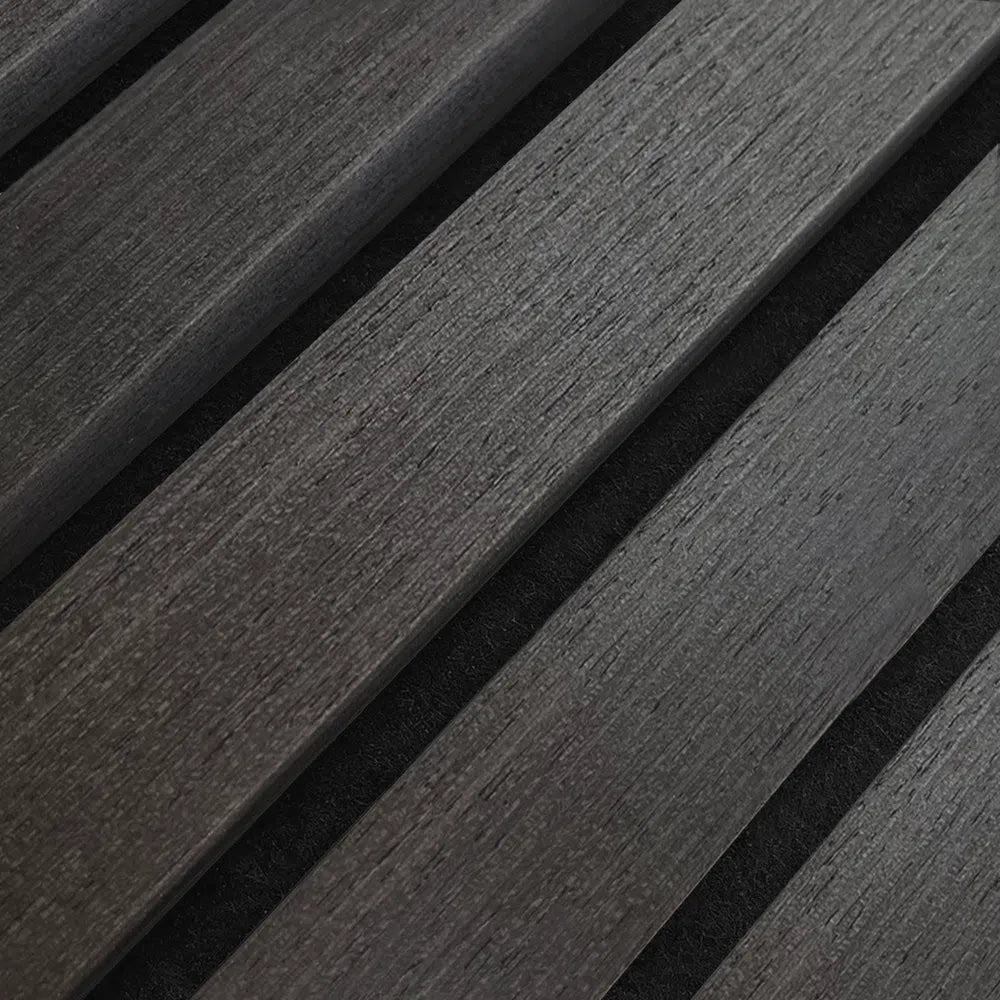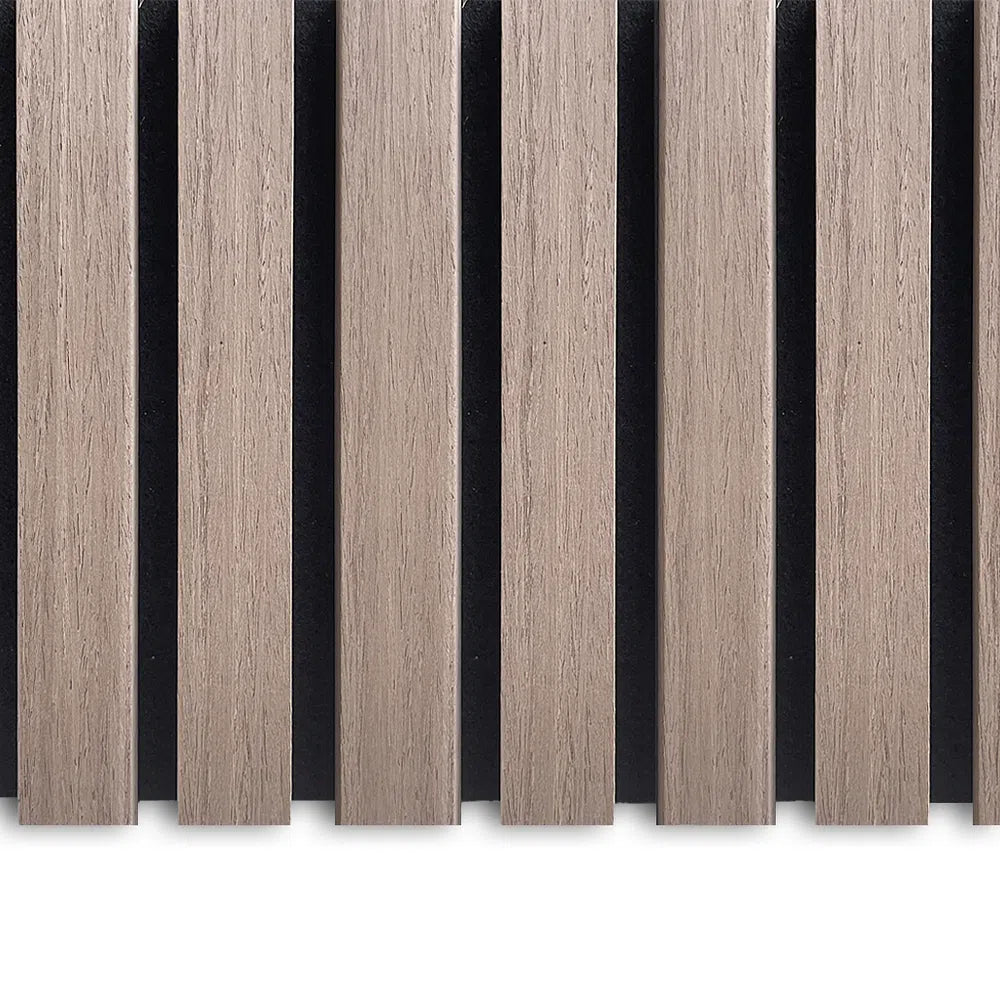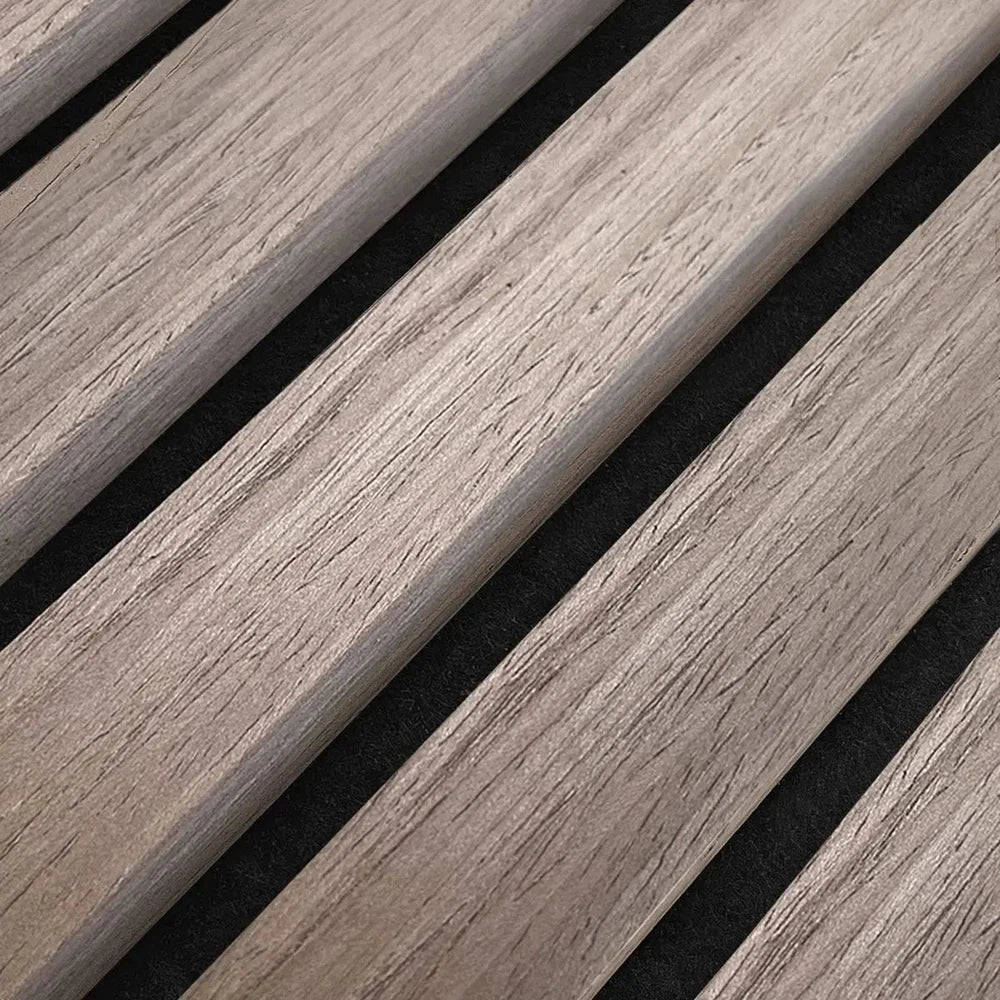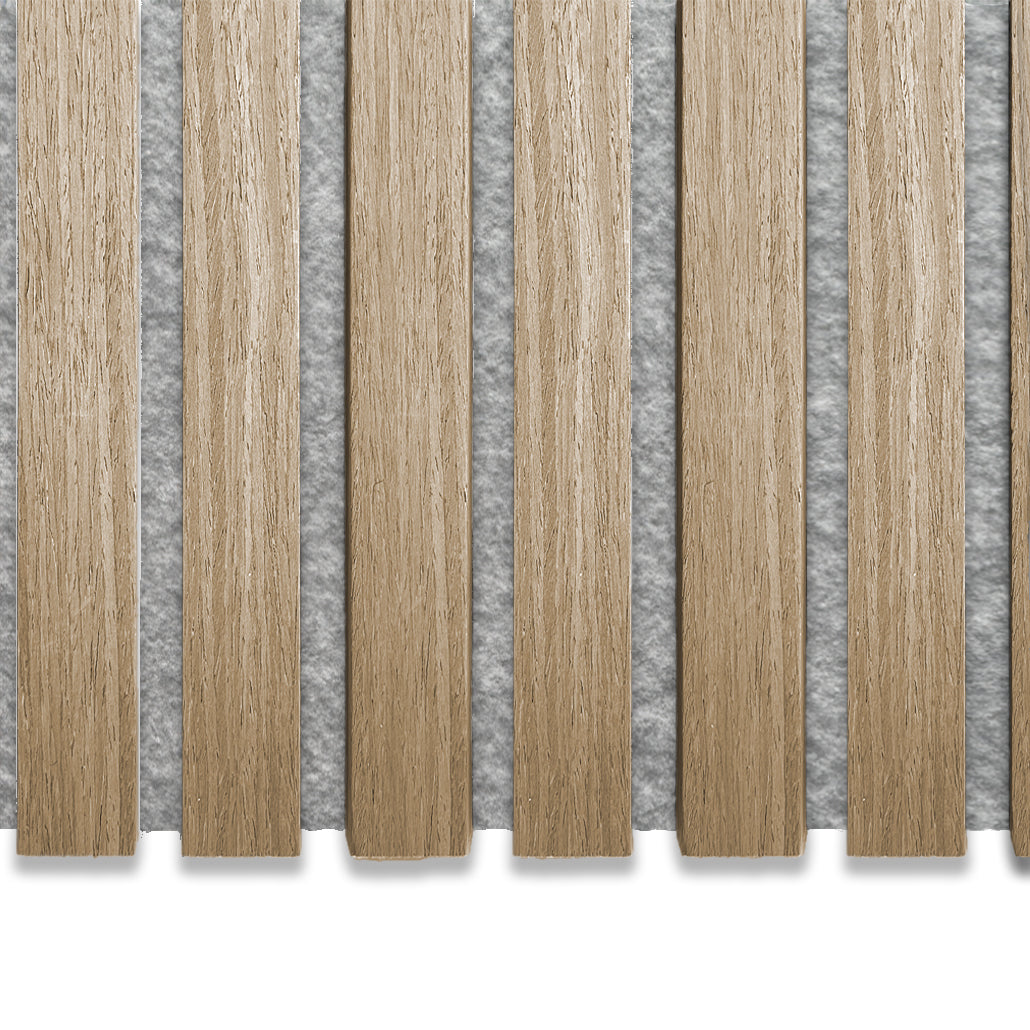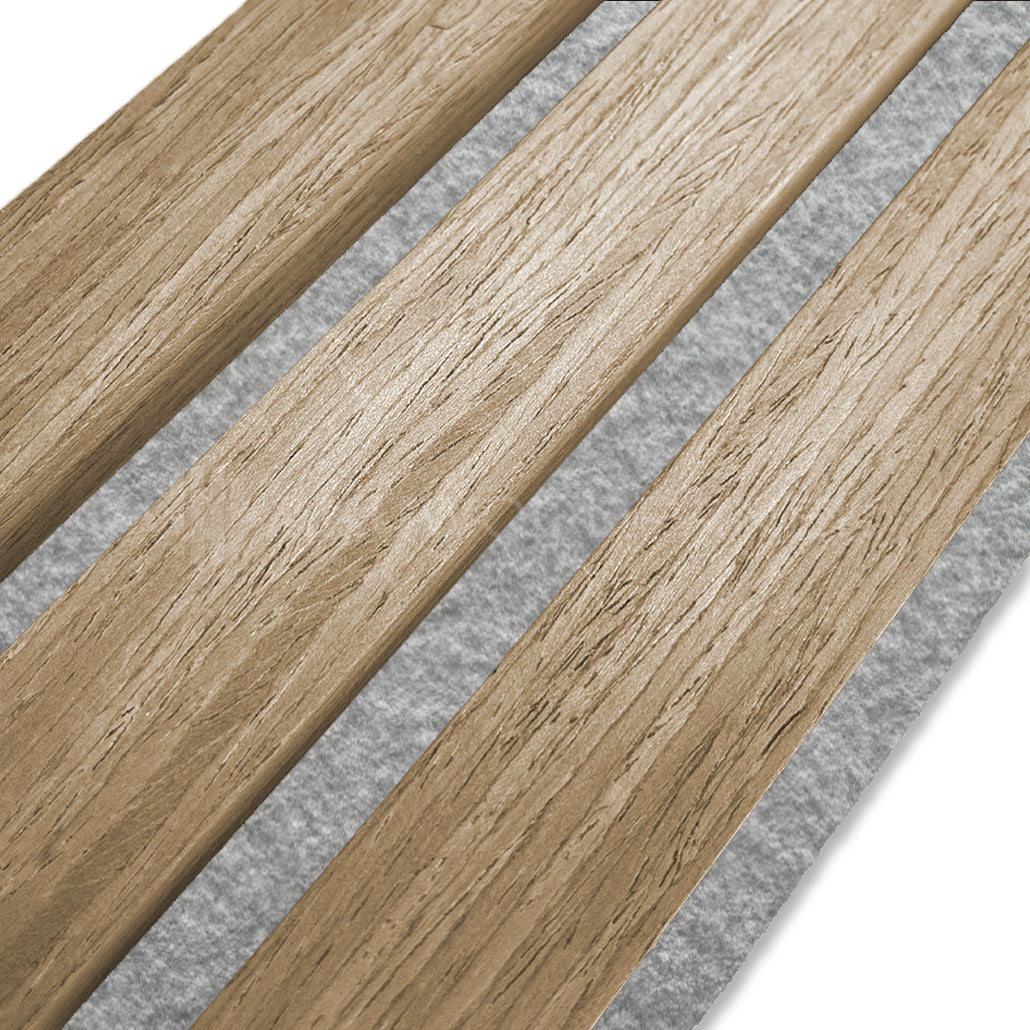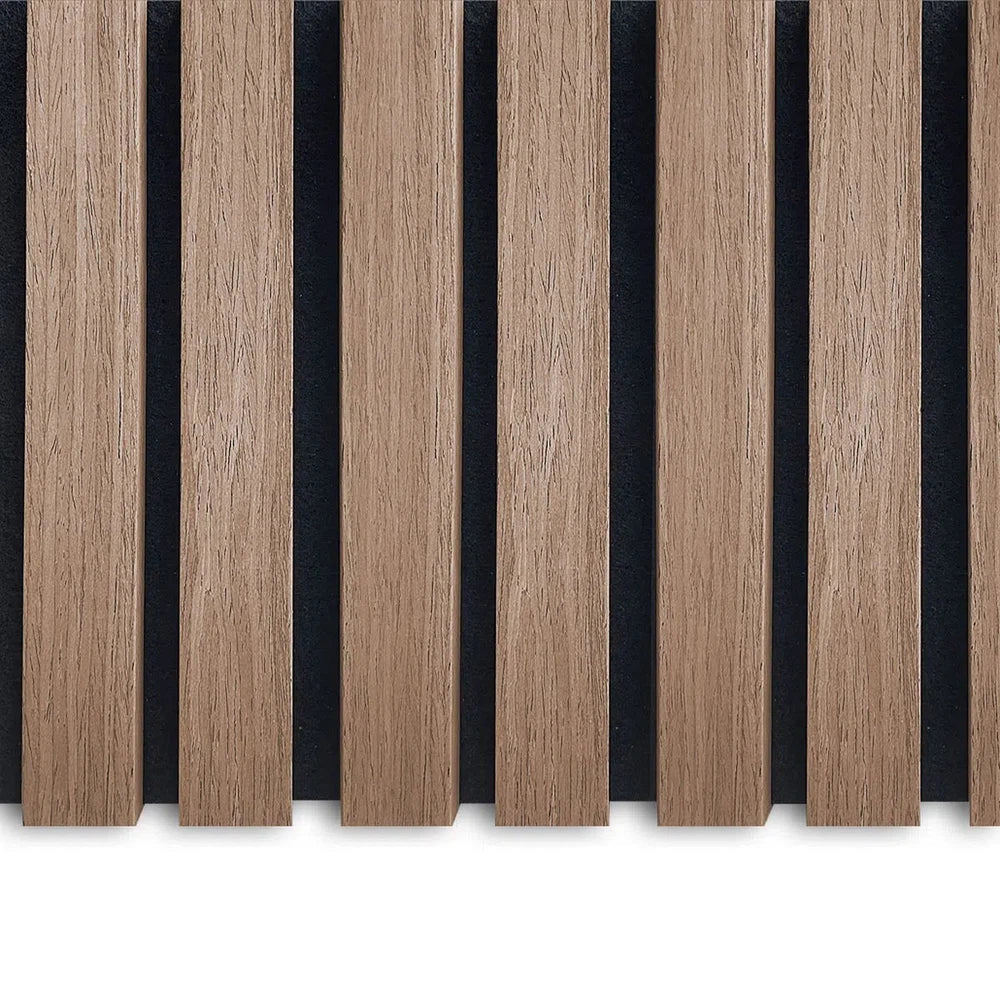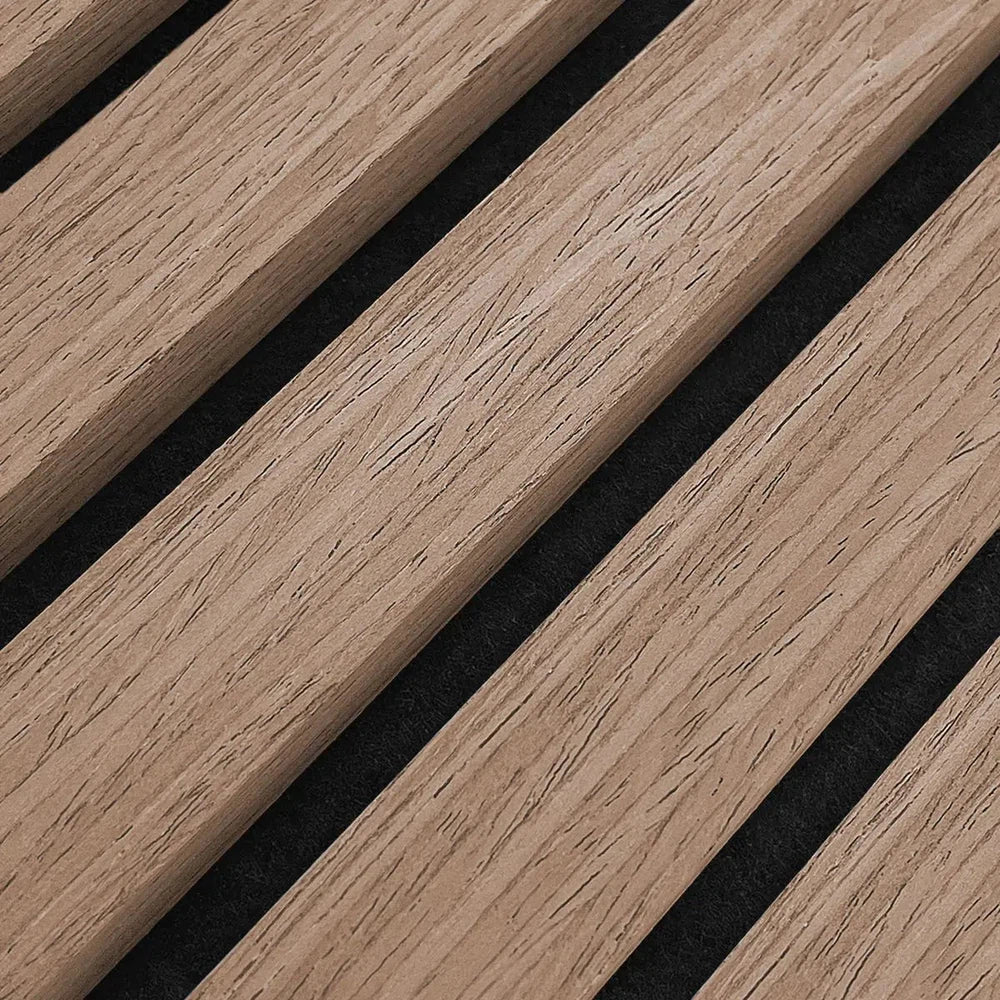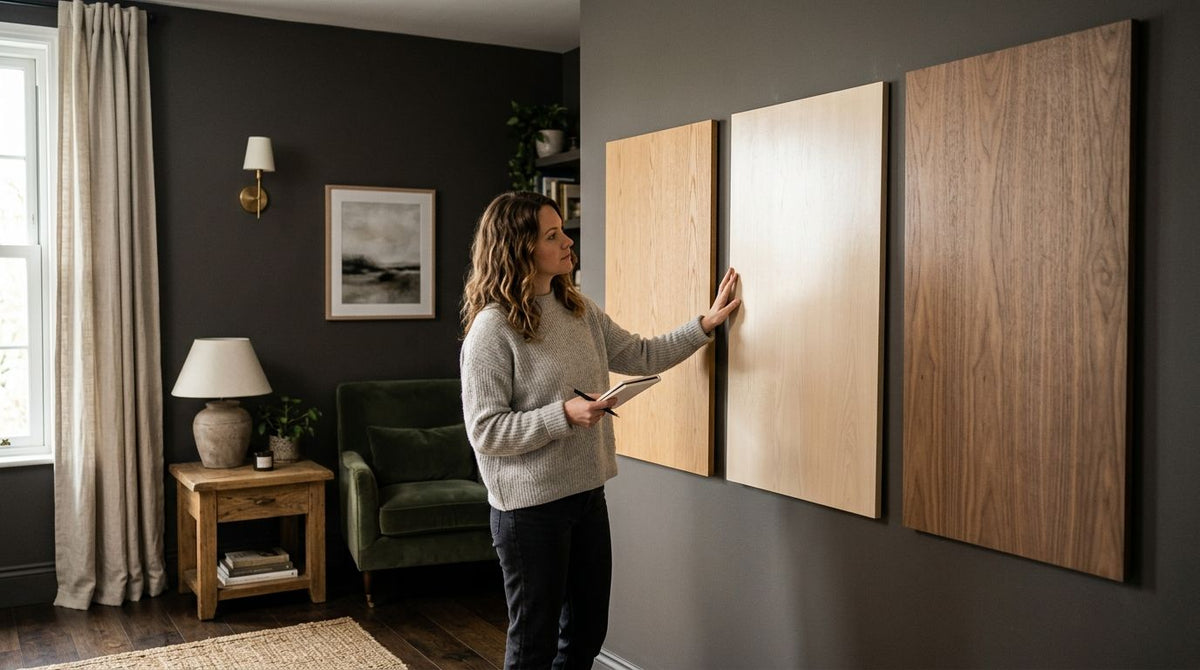
Light and mid-tone wood finishes read best in rooms that don't get much daylight, because they bounce back what little light exists instead of soaking it up. Natural Oak and Grey Oak wall panels are the safest picks for a low-light room in 2026; Black Oak, Smoked Oak, Mocca and Walnut all absorb light and work only as an accent wall, not full coverage, unless the room already has strong artificial lighting.
- Natural Oak and Grey Oak wall panels reflect available light and suit full-wall coverage in low-light rooms.
- Black Oak, Smoked Oak, Mocca and Walnut absorb light — treat them as accent walls, not whole-room finishes, unless lighting is strong.
- Panels ship in two formats, 240 cm and 300 cm, so measure ceiling height before deciding on colour or layout.
- Pair any dark finish with a lighter ceiling or floor tone to stop a low-light room reading smaller than it actually is.
- Walnut sits between light and dark tones and only works well once artificial lighting is layered into the room.
Why this matters
A wall panel colour doesn't just set a mood — in a room with limited daylight it changes how much of that daylight actually stays in the room. Dark tones absorb light hitting the wall; light tones bounce a portion of it back into the space. That's a bigger factor in a north-facing bedroom or a windowless home office than most people budget for when picking a finish.
Acoustic wall panels add a second variable most paint swatches don't: texture. A natural oak panel has a real wood veneer grain that catches light differently to a flat painted wall, which is part of why it tends to feel brighter than a flat white wall of the same reflectance value would suggest.
How to choose wall panel colour for a low-light room
Start with how little daylight the room actually gets, not how the finish looks in a showroom photo. A room with one small north-facing window behaves very differently to a room with two windows and a skylight, even if both are labelled "dark" by the homeowner.
| Finish | Tone | Best for | Verdict |
|---|---|---|---|
| Natural Oak | Light, warm | Small or windowless rooms needing max brightness | Buy |
| Grey Oak | Light-mid, cool | North-facing rooms, minimalist interiors | Buy |
| Rustic Oak | Mid, warm | Living rooms wanting warmth without going dark | Buy |
| Walnut | Mid-dark, warm | Rooms with strong lamp or downlight coverage | Hold |
| Smoked Oak | Dark | Feature walls, hallways with other light sources | Hold |
| Mocca | Dark, warm | Cosy spaces with layered lighting already in place | Hold |
| Black Oak | Darkest | Single accent wall only in a low-light room | Skip for full coverage |
Verdict: in a room that struggles for daylight, Natural Oak or Grey Oak wins for full-wall coverage — reserve Black Oak wall panels for one wall, not the whole box.
Light finishes: Natural Oak and Grey Oak — best for low-light rooms
Natural Oak and Grey Oak both sit at the pale end of the range, and both come with a 3-sided real wood veneer finish rather than a flat print, so the grain itself scatters light instead of absorbing it flat. Grey Oak leans cooler and suits a minimalist, Scandi-style room; Natural Oak leans warmer and suits a room that already has warm-toned flooring.
Either works as full wall coverage in a bedroom, office or living room that only gets a couple of hours of usable daylight. Verdict: Buy for any room where brightness matters more than drama.
Mid-tone finishes: Rustic Oak and Walnut — best with some artificial light
Rustic Oak sits between the light and dark groups — dark enough to add texture and warmth, light enough that it won't swallow a dim room the way a true dark finish will. Walnut goes further into warm, mid-dark tones and needs the room to already have decent lamp or downlight coverage to avoid looking flat and heavy.
Both work well in living rooms and dining rooms where the room isn't fully daylight-starved but isn't bright either. Verdict: Hold — fine with good artificial lighting, risky without it.
Dark finishes: Black Oak, Smoked Oak and Mocca — best as accent walls only
Black Oak, Smoked Oak and Mocca all sit at the dark end of the range and all absorb more light than they reflect. In a genuinely low-light room, covering every wall in one of these finishes makes the space feel smaller and dimmer than it already is.
Used as a single feature wall — behind a bed, a sofa, or a TV — any of the three adds contrast without dragging the whole room down, especially once a lamp or spotlight is aimed at the panel to bring out the grain. Verdict: Hold as an accent, Skip as full-room coverage in a low-light space.
“In a room with limited daylight, the wall finish should almost always be lighter than the floor — reverse that and the room reads darker than it actually is.”
Why wall panel colour choice varies
- Room orientation — north-facing rooms lose warm daylight for most of the day; south-facing rooms can carry a darker finish without feeling gloomy.
- Ceiling height — low ceilings amplify the shrinking effect of a dark finish; higher ceilings can absorb a darker wall without feeling boxed in.
- Existing floor and furniture tone — a dark floor paired with a dark wall panel compounds the light loss; a lighter floor balances a darker wall.
- Artificial lighting layout — rooms with layered lamp and downlight coverage can carry Walnut, Mocca or Smoked Oak far better than rooms lit by a single central bulb.
- Panel size format — panels are available in 240 cm and 300 cm lengths; taller formats reduce horizontal seams on a feature wall, which changes how light travels across the surface.
- Room function — a home cinema or media room benefits from a darker finish for glare control, while a home office or kitchen usually needs the brightest option the room allows.
Should I match wall panel colour to my flooring in a low-light room?
Matching wall panel colour to flooring works against you in a low-light room — a dark floor and a dark wall panel together remove two of the room's biggest light-bouncing surfaces at once. A lighter wall than the floor, or vice versa, keeps at least one large surface reflecting whatever daylight the room gets.
Does panel size affect how bright a room feels?
Panel size affects seam count more than raw brightness — 240 cm and 300 cm formats both come in the same finishes, but fewer seams on a 300 cm panel run mean fewer shadow lines breaking up the light across a tall wall. For a low-light room with a standard ceiling height, seam count matters less than finish colour, so pick the format that fits the wall with the least cutting.
Can I mix two wall panel colours in the same room?
Mixing two wall panel colours in the same room works when one wall stays light (Natural Oak or Grey Oak) and the accent wall goes dark (Black Oak, Smoked Oak or Mocca) rather than mixing two mid-tones that fight each other. This is the same logic that applies to any low-light room: keep the majority surface light, let one wall carry the contrast.
FAQ
What is the best wall panel colour for a dark room?
Natural Oak or Grey Oak are the best wall panel colours for a dark room because their light, warm-to-cool tones bounce back available daylight instead of absorbing it. Both come with a 3-sided real wood veneer finish rather than a flat print, which adds texture without adding darkness.
Should I avoid black wall panels in a low-light room entirely?
Black Oak wall panels aren't off-limits in a low-light room, but they should cover one accent wall, not all four. Used on a single wall with a lamp or spotlight aimed at it, Black Oak adds contrast without dragging the whole room's brightness down.
Is Grey Oak too cold for a north-facing room?
Grey Oak isn't too cold for a north-facing room on its own — pair it with warm-toned soft furnishings or lighting if the room already feels chilly. On its own, Grey Oak still reflects more light than any dark finish would.
Do lighter wall panels really make a room feel bigger?
Lighter wall panels do make a room feel bigger, because light surfaces reflect more of the room's available daylight and artificial light back into the space, reducing visual weight on the walls. Dark finishes do the opposite by absorbing that same light.
What size wall panels are available for a feature wall?
Wall panels are available in two size formats, 240 cm and 300 cm, so the right choice depends on the height of the wall being covered. Taller rooms generally suit the 300 cm format to cut down on horizontal seams.
Is Smoked Oak too dark for a small bedroom?
Smoked Oak works in a small bedroom only as a single headboard or feature wall, not full coverage, because a small room with limited daylight loses too much brightness when every wall absorbs light. Keep the remaining walls in a lighter finish such as Natural Oak.
How many wall panel colours can I use in one room?
Two wall panel colours work well in most rooms — one light finish covering the majority of the walls and one dark finish reserved for a single accent wall. Three or more competing tones tend to make a low-light room feel busier rather than brighter.
One last thing
The biggest mistake in choosing a wall panel colour for a low-light room isn't picking too dark a finish — it's judging the sample under a shop's daylight bulbs and then fitting it in a room lit by warm 2700K lamps at home. A finish that looks neutral under daylight-balanced lighting can shift noticeably warmer or darker once it's under household bulbs, which is exactly why holding a sample against the actual wall, at the actual time of day the room gets used, matters more in 2026 than any online colour chart.