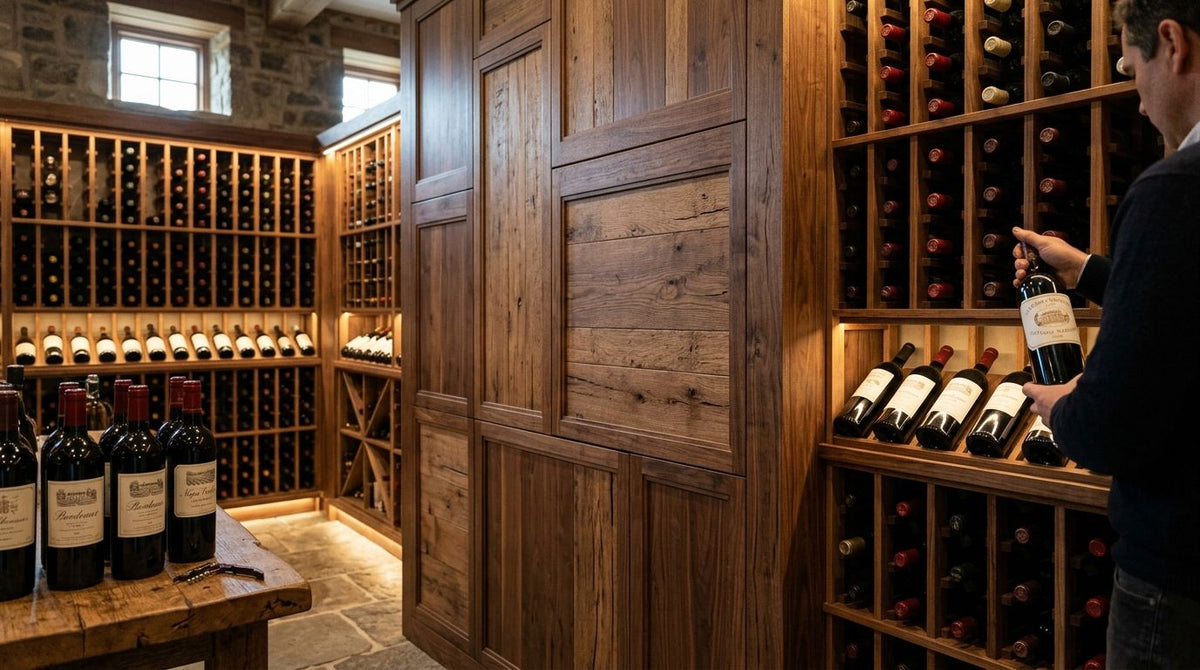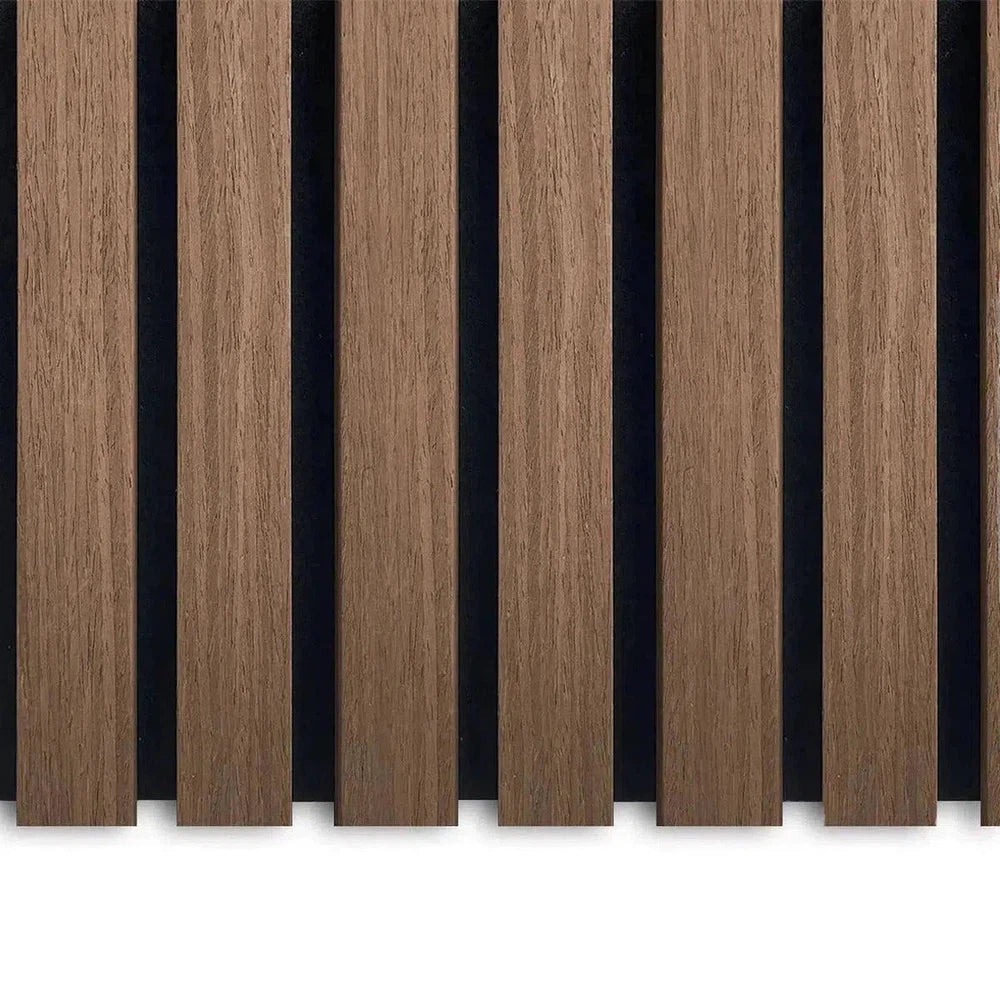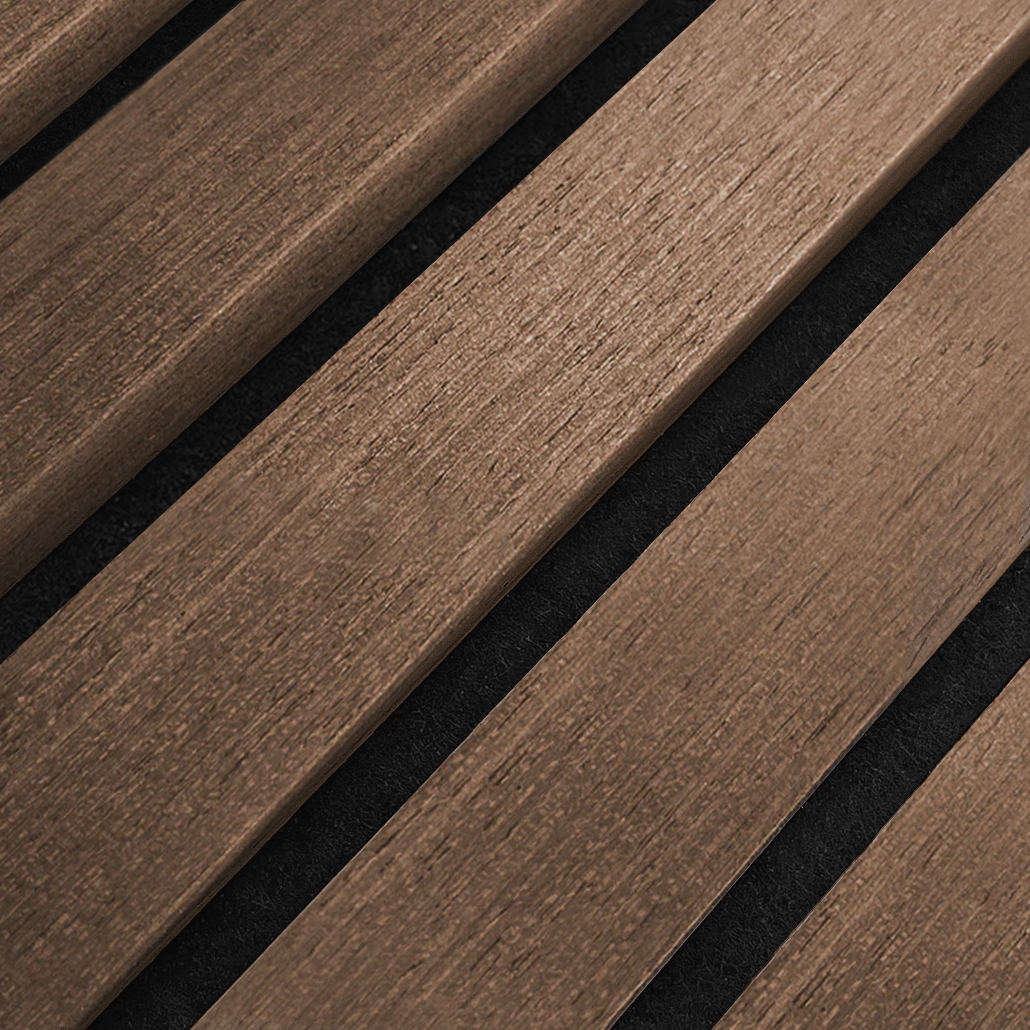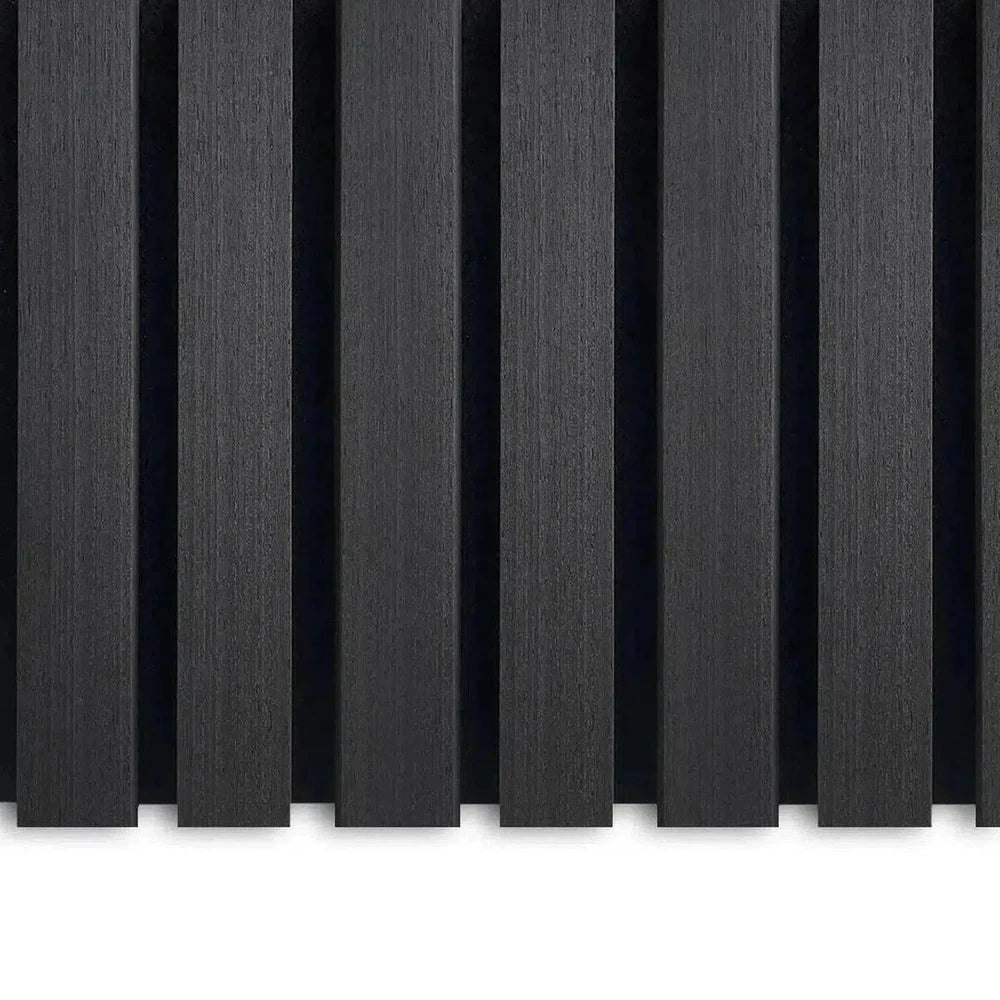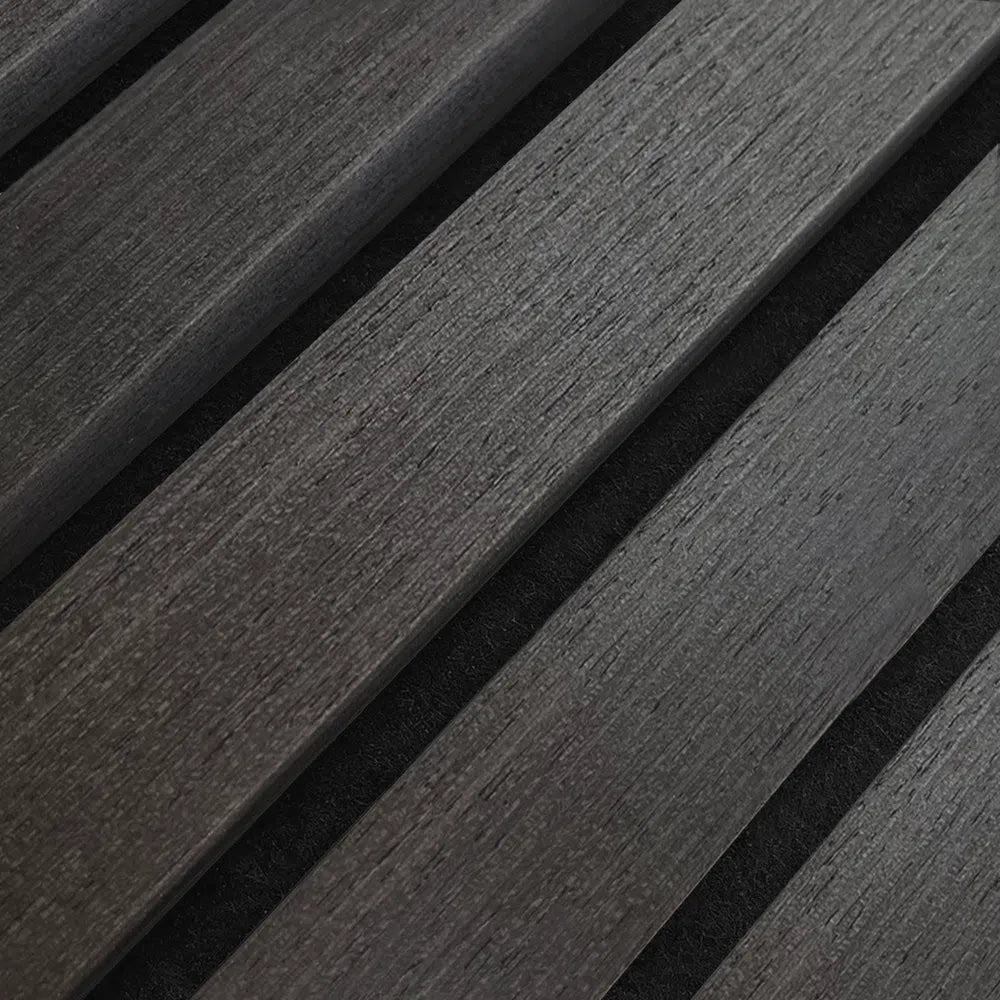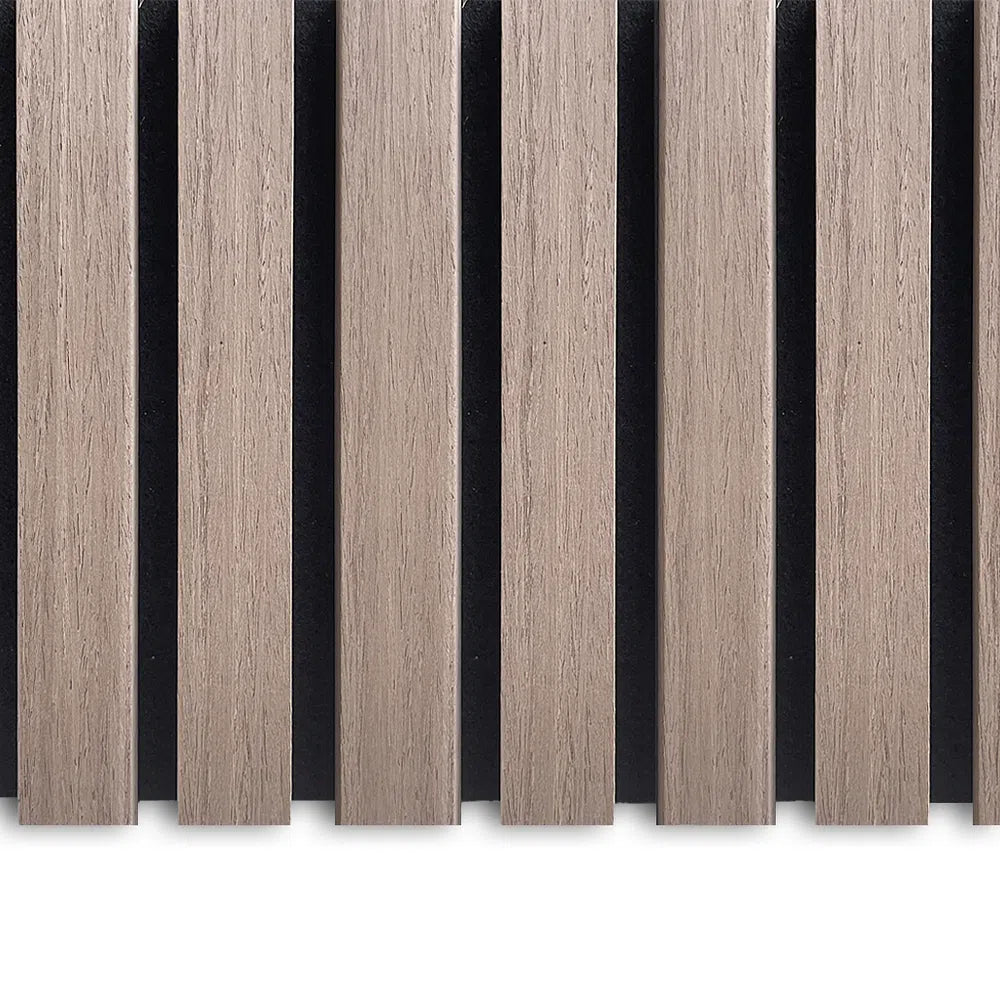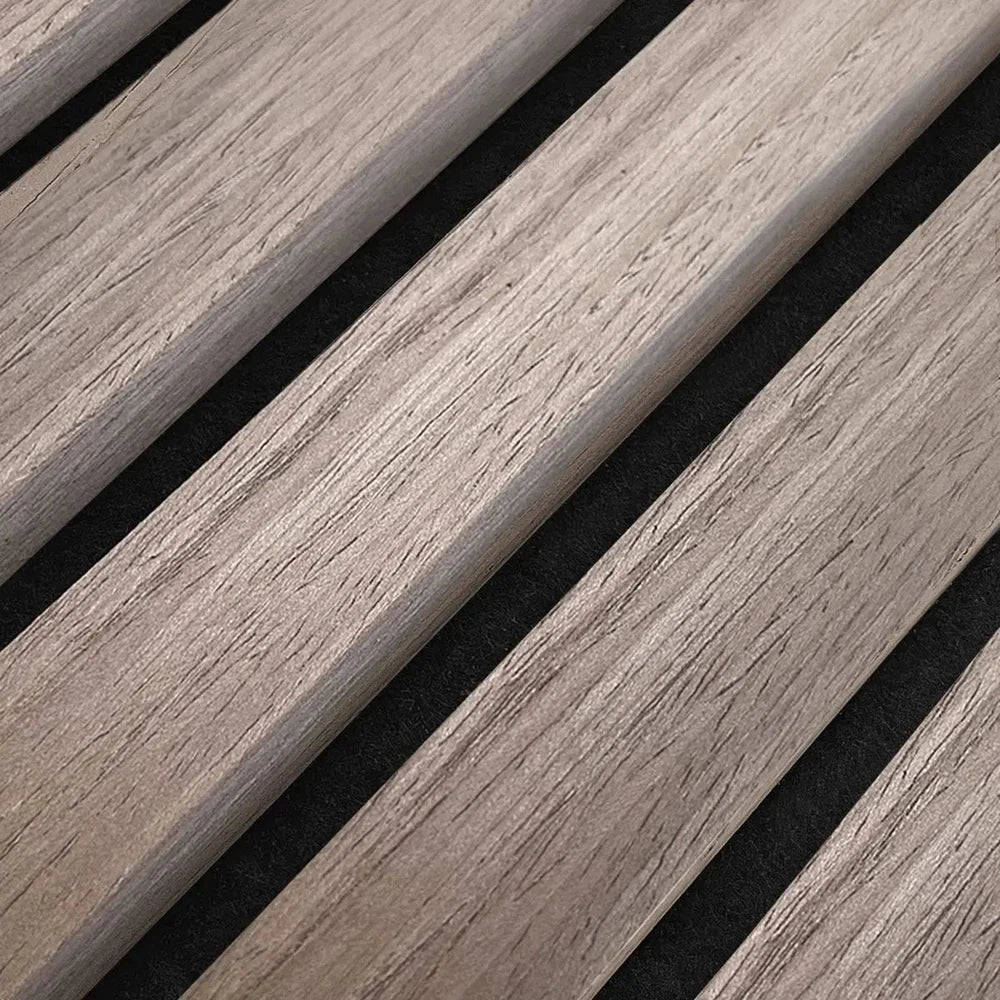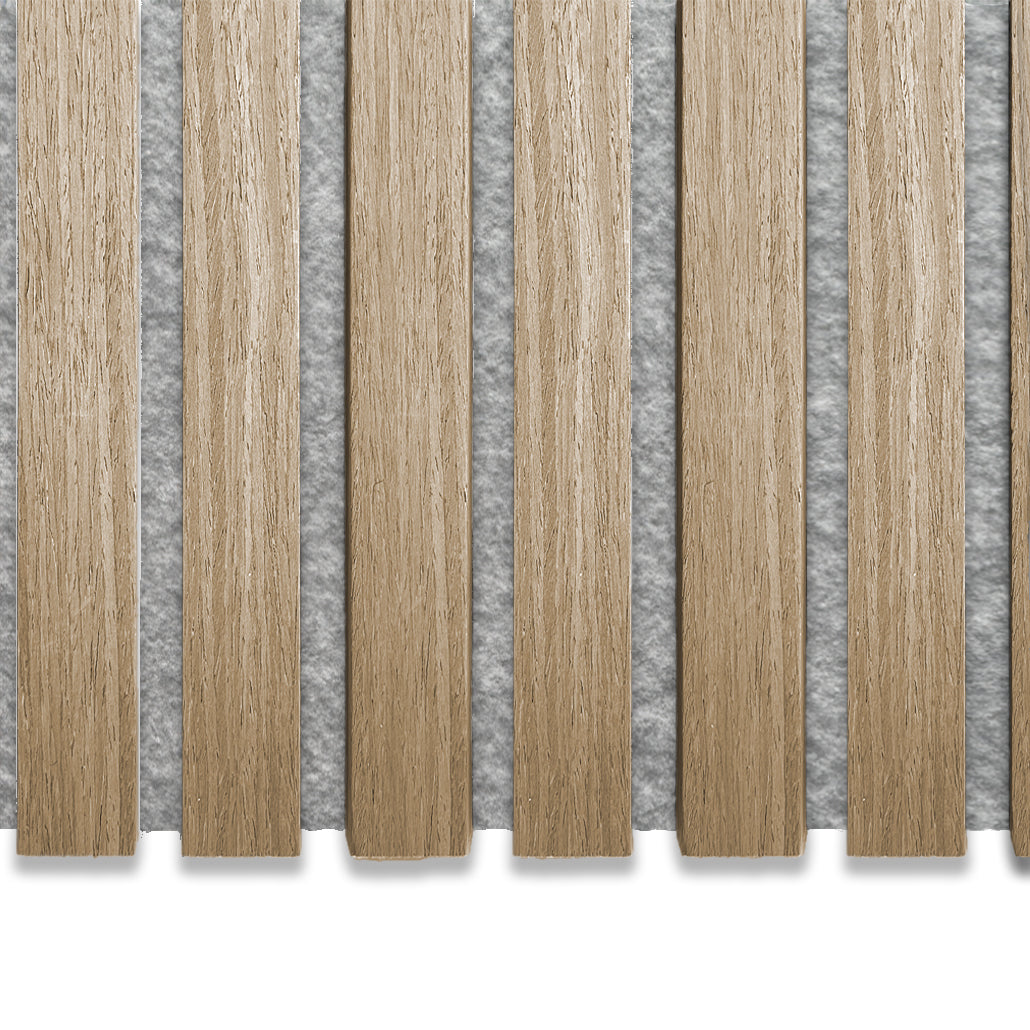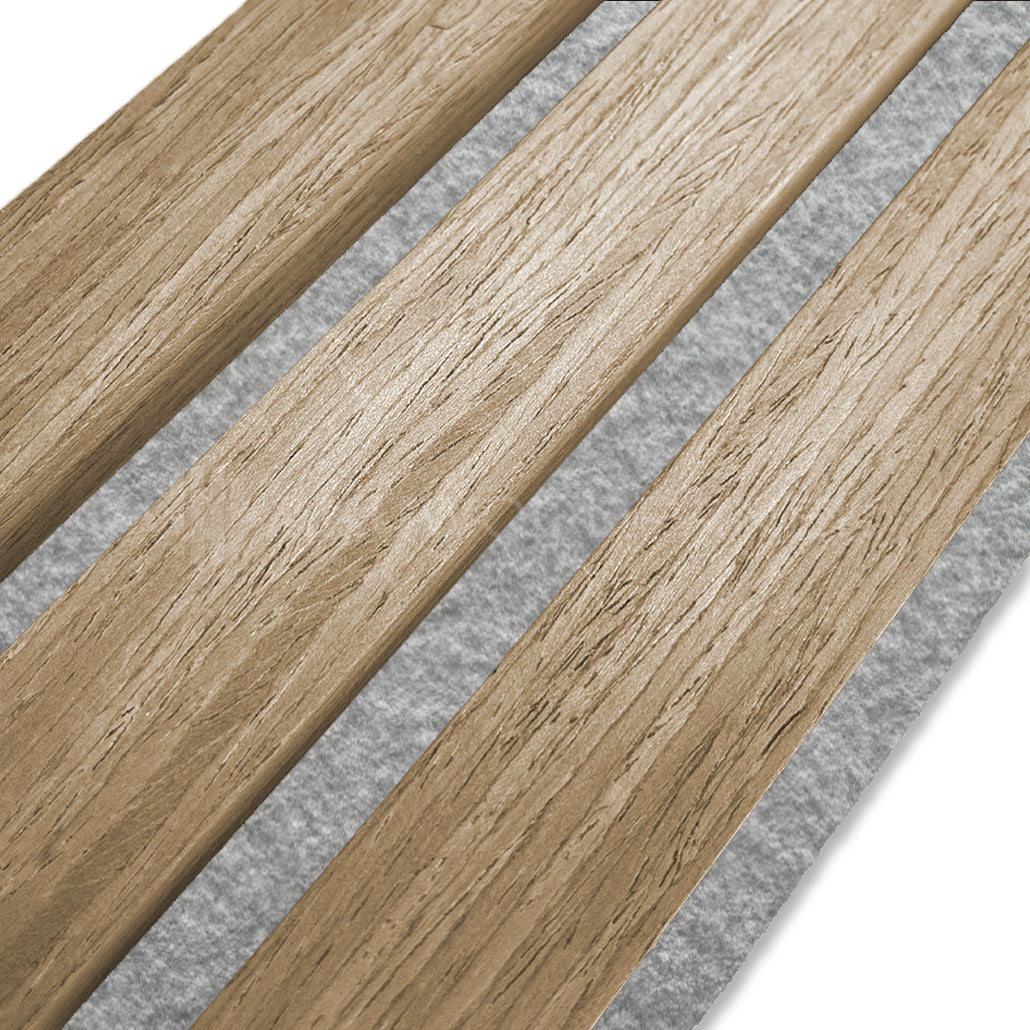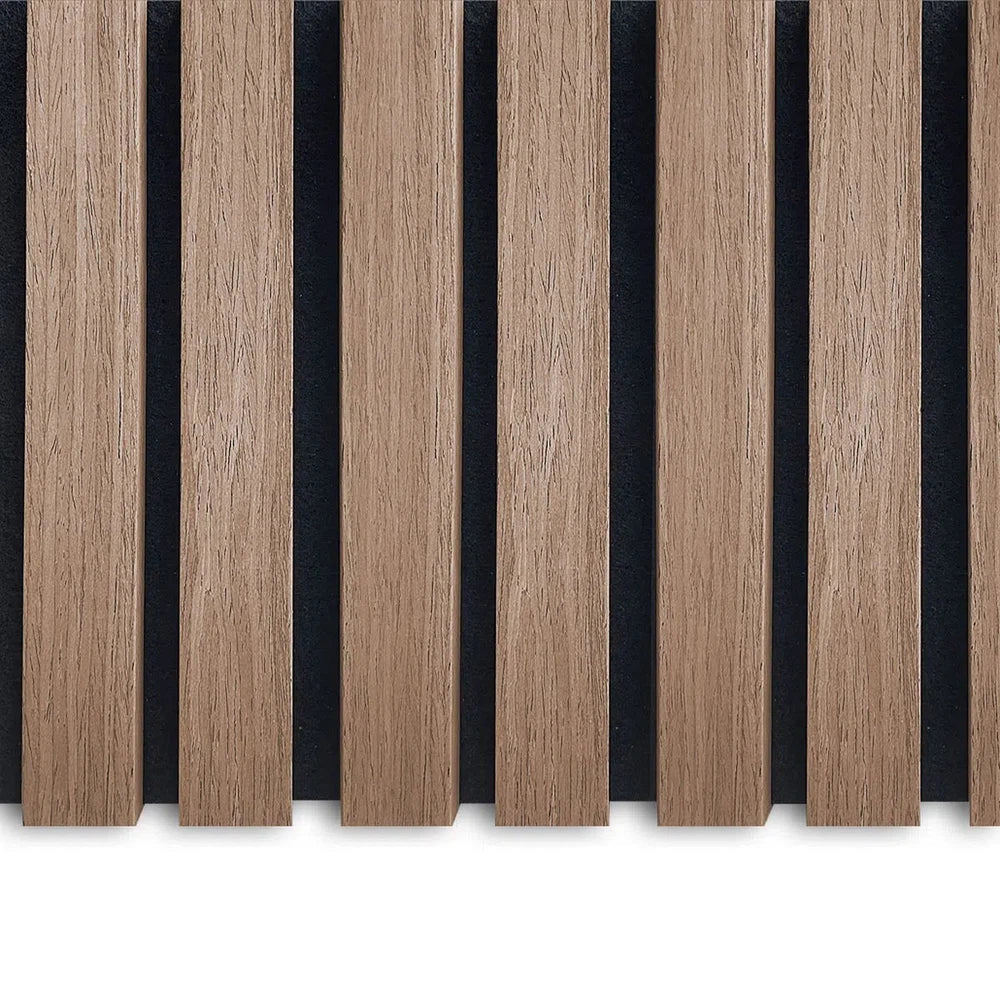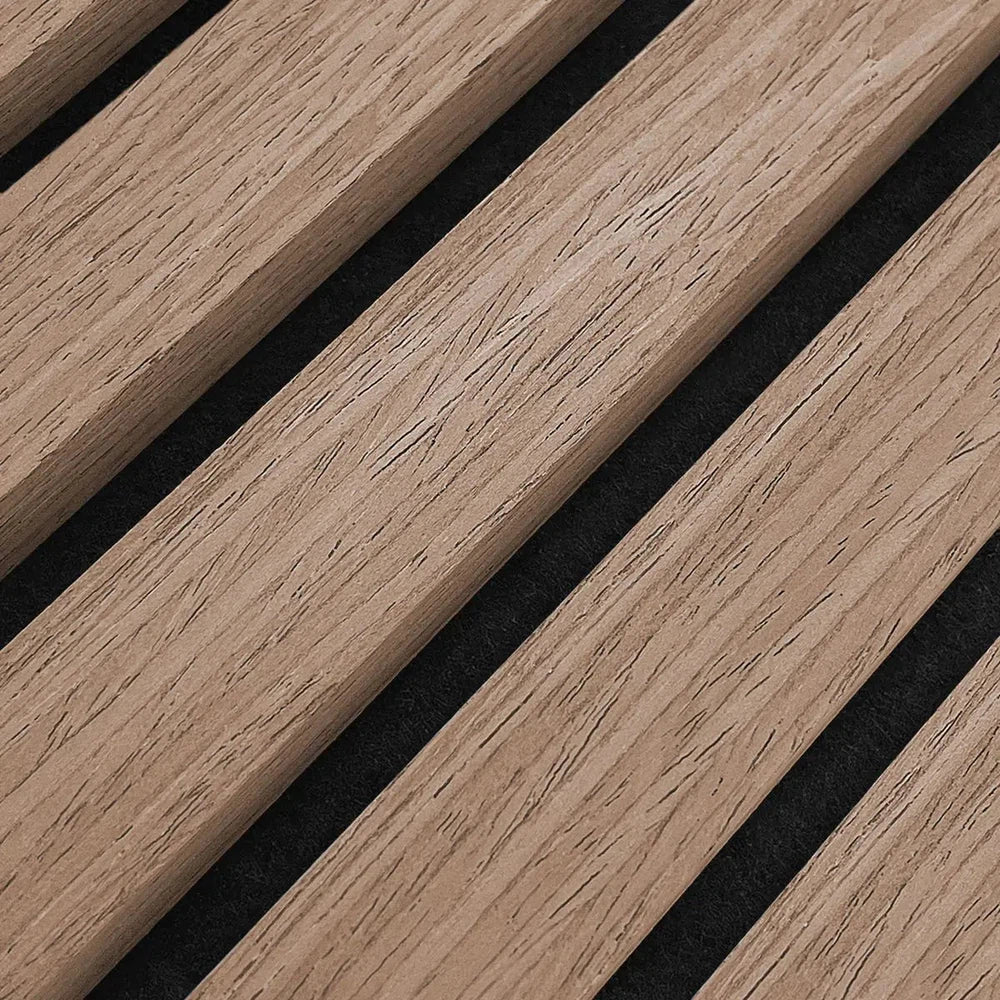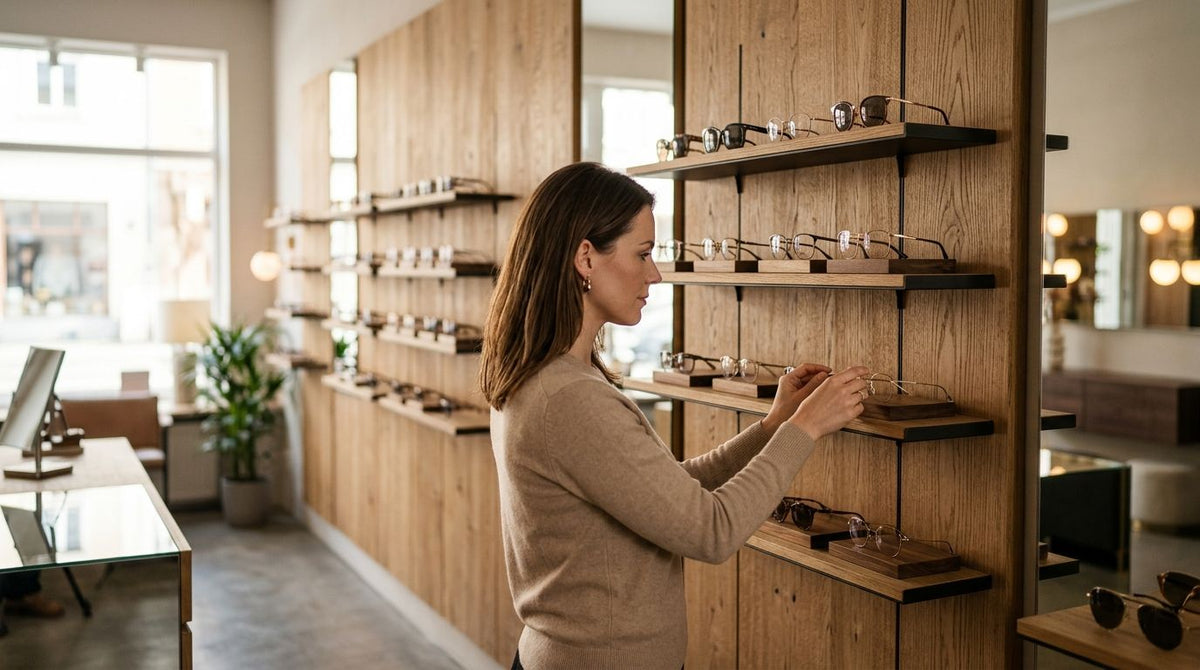
Eyewear boutique wall panels are wood-veneer acoustic panels fitted to optical retail walls to cut echo off glass counters and tile floors while giving frame displays a warmer, premium backdrop. A boutique selling £200+ frames needs a different acoustic and visual brief than a warehouse gym or a call centre floor — the walls have to look considered, not just quiet.
- Eyewear boutique wall panels from Akuwood Panel cut mid-frequency echo off glass cases and tile floors — start with the fitting area, not the whole shop.
- Natural Oak and Walnut finishes read as premium against metal frame displays; Black Oak suits darker, moodier optical brands.
- Hexagon acoustic panels break up long runs of slatwall without flattening the boutique's visual merchandising.
- Order a sample before a full run — LED spotlighting in optical retail shows grain and tone differently than daylight.
- A 240cm or 300cm panel run typically covers a fitting bay in one continuous piece, avoiding awkward seams behind the mirror.
Why acoustic wood panels matter for eyewear boutiques
Optical retail floors are acoustically brutal by design: glass display cases, mirrored fitting stations, polished concrete or tile, and low ceiling heights in many high-street units. Sound bounces hard, and a fitting conversation about prescription strength or frame comfort needs to stay quiet and legible — not compete with reflected chatter from three metres away.
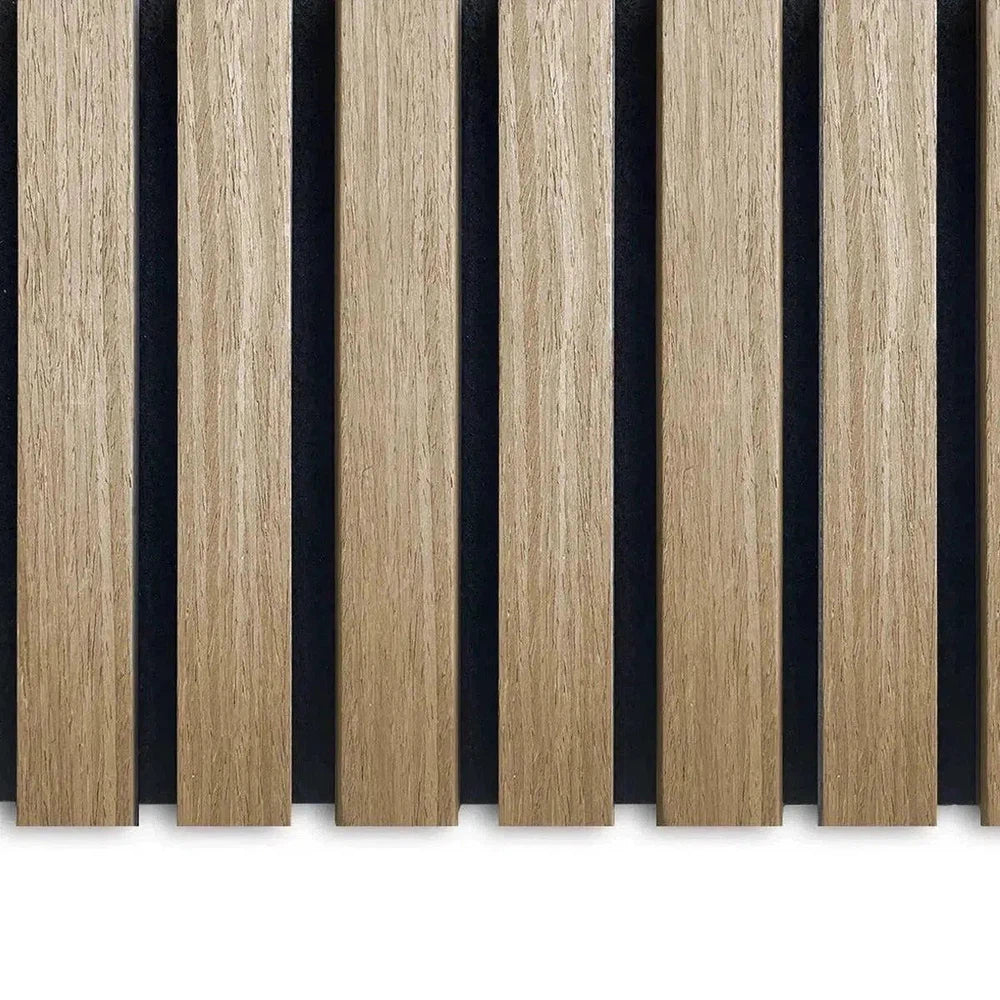
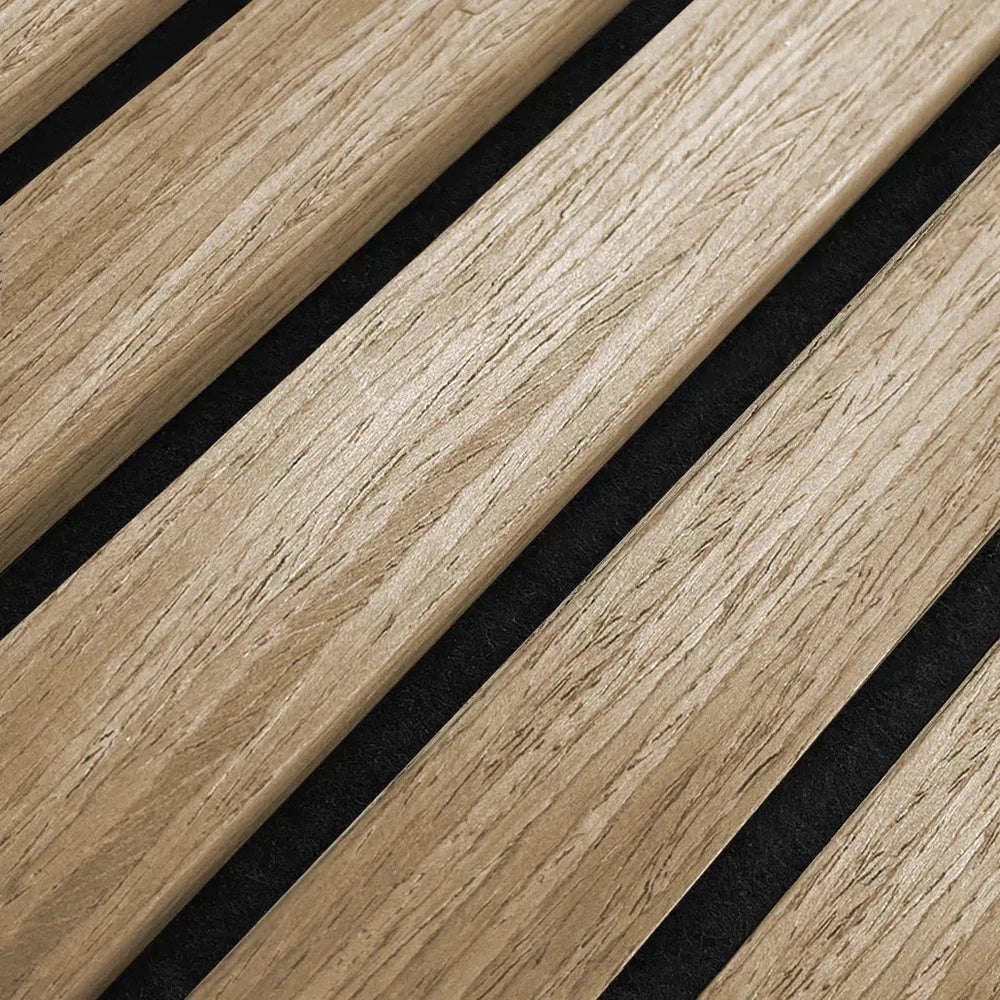
Wood-finish acoustic panels solve two problems at once here. The felt backing absorbs mid-to-high frequency reflections that make small boutiques feel loud despite low footfall. The wood veneer face does something a foam or fabric panel can't: it reads as retail fit-out, not soundproofing. That distinction matters when your walls are also selling the £300 frame sitting six inches in front of them.
Audit your echo before you order anything
Walk the boutique floor at a normal midday footfall and note where sound feels sharp rather than absorbed.
- Glass display cases and mirrors — count how many walls face them directly
- Fitting stations where staff speak at conversational volume
- Hard flooring type — tile and polished concrete carry sound further than carpet
- Ceiling height — lower ceilings in older high-street units make echo worse, not better
- Existing soft furnishing — curtains, upholstered chairs, or fabric already absorbing some sound
Match the panel finish to your frame merchandising
Wood tone next to metal and acetate frame displays either lifts the merchandising or fights it.
- Natural oak wall panels suit boutiques with light frame displays, gold or rose-gold hardware, and daylight-heavy shopfronts
- Grey oak reads neutral and works with almost any frame colourway, including bold acetate ranges
- Wooden wall panel walnut suits darker, more premium optical brands where frames sit under warm spot lighting
- Black oak works for boutiques leaning into a moody, jewellery-store aesthetic rather than a clinical optical look
- Avoid mixing more than two wood tones on visible walls — three or more competes with the frame displays themselves
Prioritise acoustic backing in the fitting and testing area first
Don't panel the whole shop before the fitting area is sorted — that's where quiet actually earns its keep.
- Panel the wall directly behind or beside the fitting mirror first, since that's where staff-customer conversation happens
- Choose felt-backed panels over plain veneer trims in this zone specifically
- Leave hard, unpanelled surfaces near the entrance where footfall noise matters less
- Test the acoustic difference in the fitting bay before committing to a full shop run
Plan panel runs around display fixtures and mirrors
Optical boutiques have more fixed furniture per square metre than most retail categories — plan the panel layout around it, not the other way round.
- Measure wall runs between fixed display units before ordering, not after
- 300cm panels suit floor-to-ceiling runs in units with higher ceilings; 240cm suits standard high-street bays
- Use end piece trims to finish exposed edges around mirrors and display cutouts cleanly
- Leave clearance around electrical points for wall-mounted display lighting
Order samples before committing to a full shopfit run
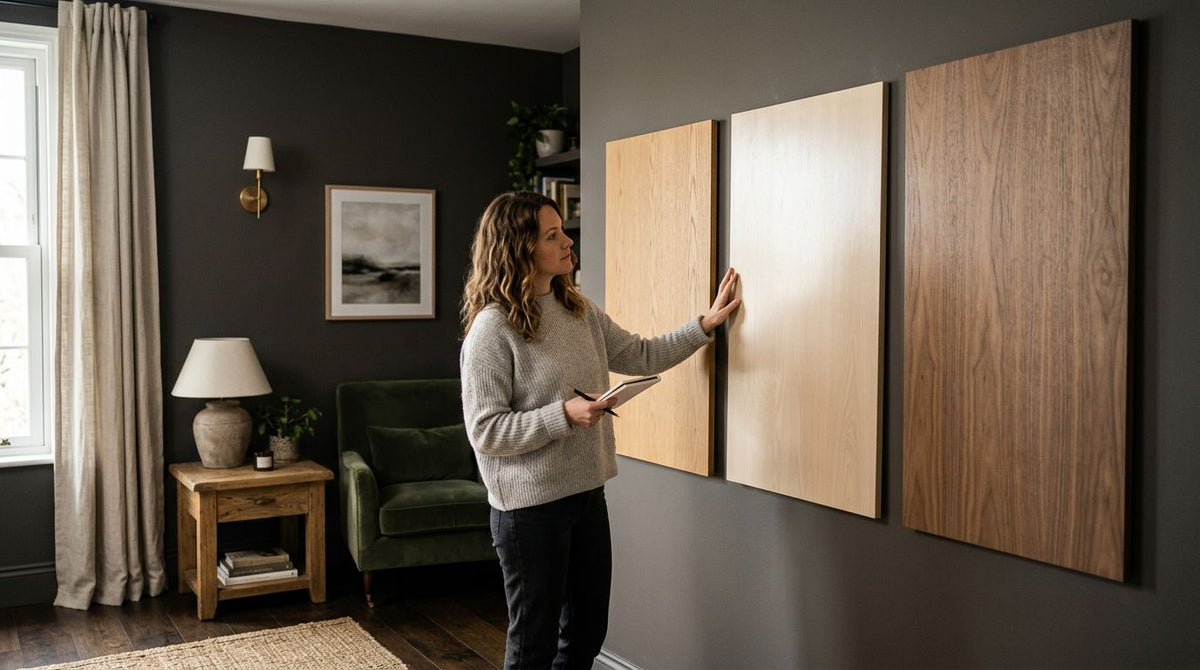
Optical retail lighting is rarely neutral — spot lighting on frame displays shifts how a wood tone reads compared to daylight.
- Order two or three finish samples and hold them against the shop's actual spotlighting, not a showroom
- Check the sample under both daytime and evening lighting if the boutique trades into the evening
- Compare the sample against frame display metal tones (gold, silver, black) before ordering the full run
- A guide to ordering acoustic wall panel samples walks through what to check before the full order goes in
Install without closing the shop for more than a day
Most boutiques can't afford a multi-day shopfit closure — plan the install to fit trading hours.
- Panel installation over an existing flat wall typically runs faster than a wall needing levelling first
- Schedule the fitting-area wall first since it has the least foot traffic disruption
- Confirm panel glue cure time against your reopening schedule
- Keep a day's buffer if the wall needs levelling before panels go up
Layer in accent textures near the till and entrance
The till point and entrance wall are where a boutique's personality shows up first — this is where texture variation earns its place.
- A hexagon acoustic panel run breaks up a long flat slatwall without losing the acoustic benefit
- Keep accent textures to one wall — the till point or a single feature bay, not the whole shop
- Pair a textured accent wall with a plainer veneer finish elsewhere to avoid visual noise
Comparing panel options for eyewear boutique interiors
| Option | Best for | Key limitation |
|---|---|---|
| Hexagon acoustic panel, smoked oak | Accent wall behind the till or a single feature bay | Not suited to full-shop coverage — too busy at scale |
| Natural oak wall panel | Light, daylight-heavy boutiques with gold-tone hardware | Shows dust and fingerprints more than darker finishes |
| Walnut wall panel | Premium, warm-lit boutiques with darker frame ranges | Reads heavy if used on more than two walls |
| Black oak wall panel | Moody, jewellery-store style optical fit-outs | Needs strong contrast lighting or the room reads flat |
| Exterior wall cladding | Shopfront exterior, not interior fitting areas | Wrong material category for indoor acoustic control |
Verdict: for most eyewear boutiques, start the fitting-area wall in natural oak or walnut, then add a hexagon accent near the till if the budget allows a second finish.
Common mistakes eyewear boutiques make with wall panels
- Panelling the entrance wall first instead of the fitting area — the entrance gets the least benefit from acoustic absorption; the fitting bay gets the most
- Choosing a finish under showroom lighting, not the boutique's own spotlighting — optical retail lighting is warmer and more directional than most showrooms, and tone shifts accordingly
- Mixing three or more wood tones across the shop floor — it competes with the frame displays instead of framing them
- Skipping the sample stage to save a week — a full panel run in the wrong tone against gold or rose-gold frame hardware is an expensive mistake to walk back
- Ignoring wall runs around fixed mirrors — measuring after the panels arrive instead of before leads to awkward, visible seams next to the fitting mirror


FAQ
What wall panels work best for an eyewear boutique in 2026?
Natural oak or walnut acoustic wood panels work best for eyewear boutiques in 2026, since both tones sit well against gold, silver and black frame hardware without competing with the display. Add a hexagon acoustic panel accent near the till if the shop wants texture variation on a single wall.
Do acoustic wood panels actually reduce noise in a small boutique?
Yes — the felt backing behind the wood veneer absorbs mid-to-high frequency reflections that bounce off glass display cases and tile flooring. The effect is most noticeable in a fitting or testing area, where conversation volume matters most.
Should I panel the whole shop or just one wall?
Start with the fitting-area wall, since that's where quiet conversation matters most and where echo is usually worst. A full-shop run is worth considering later, but a single wall done well outperforms a rushed full fit-out.
Is walnut or oak better for a premium optical boutique?
Walnut reads warmer and heavier, suited to boutiques with darker frame ranges and warm spot lighting. Oak reads lighter and works better in daylight-heavy shopfronts with gold-tone hardware on display.
How do I know which panel size to order, 240cm or 300cm?
Measure the wall run between fixed fixtures first. 300cm panels suit floor-to-ceiling runs in units with higher ceilings, while 240cm fits standard high-street bay heights without an extra cut.
Can wall panels be installed without closing the shop?
A single wall installed over an already-flat surface can usually be completed within a working day. A wall that needs levelling first will add time, so build in a buffer before a planned reopening.
Do I need a sample before ordering a full panel run?
Yes — optical retail spot lighting shifts how a wood tone reads compared to daylight or showroom lighting. Hold a sample against the shop's actual lighting and frame display hardware before committing to the full order.
What's the biggest mistake eyewear boutiques make with wall panels?
Panelling the entrance wall before the fitting area, when the fitting area is where acoustic absorption and visual premium quality matter most to the customer experience.
One last thing
Most eyewear boutiques over-panel the entrance and under-panel the fitting bay — the wall order should run backwards from where the customer actually spends the most time standing still. A single wall of Akuwood Panel's natural oak or walnut behind the fitting mirror, tested against your own spotlighting first, does more for both acoustics and merchandising than a full-shop finish chosen in a rush.