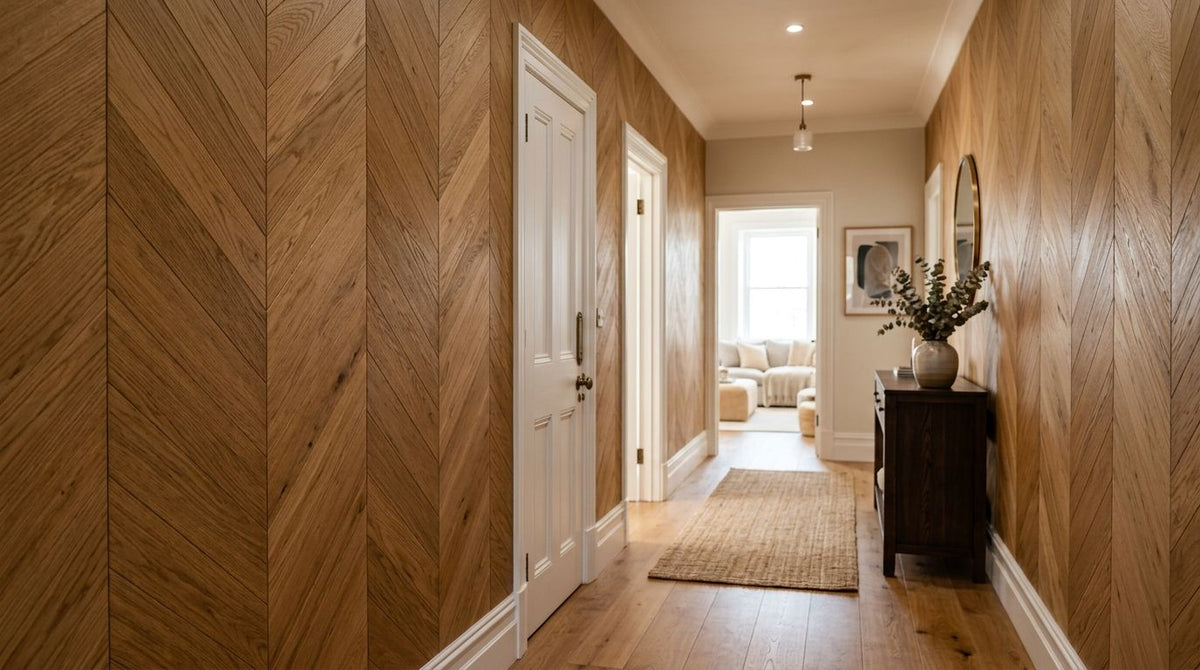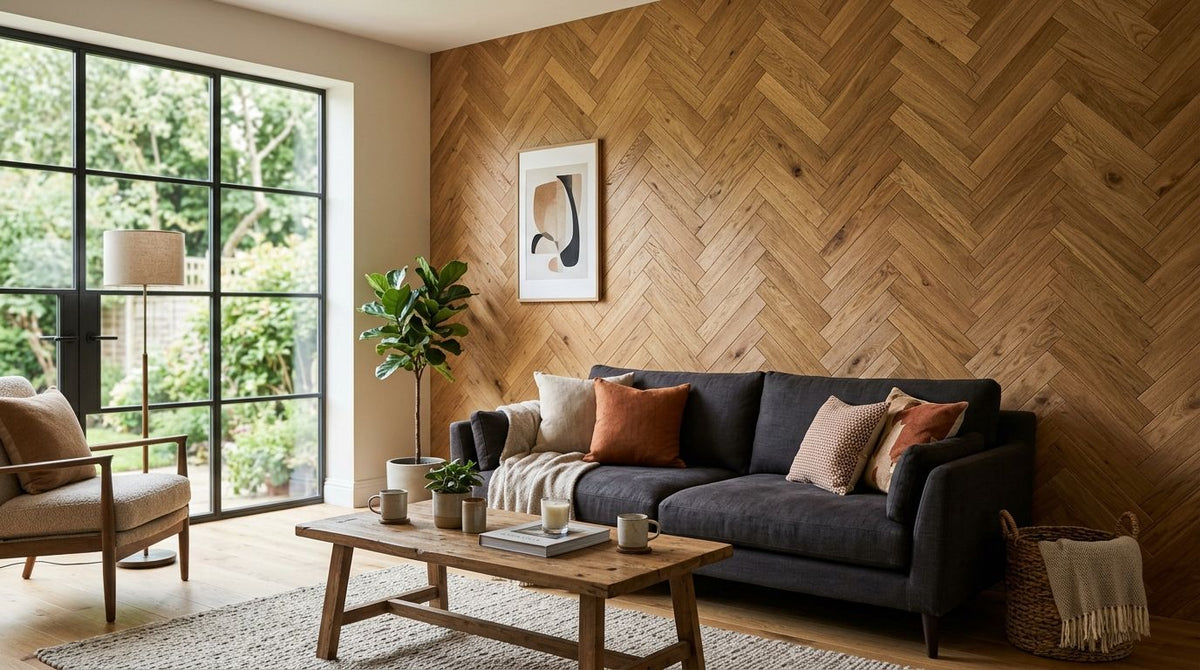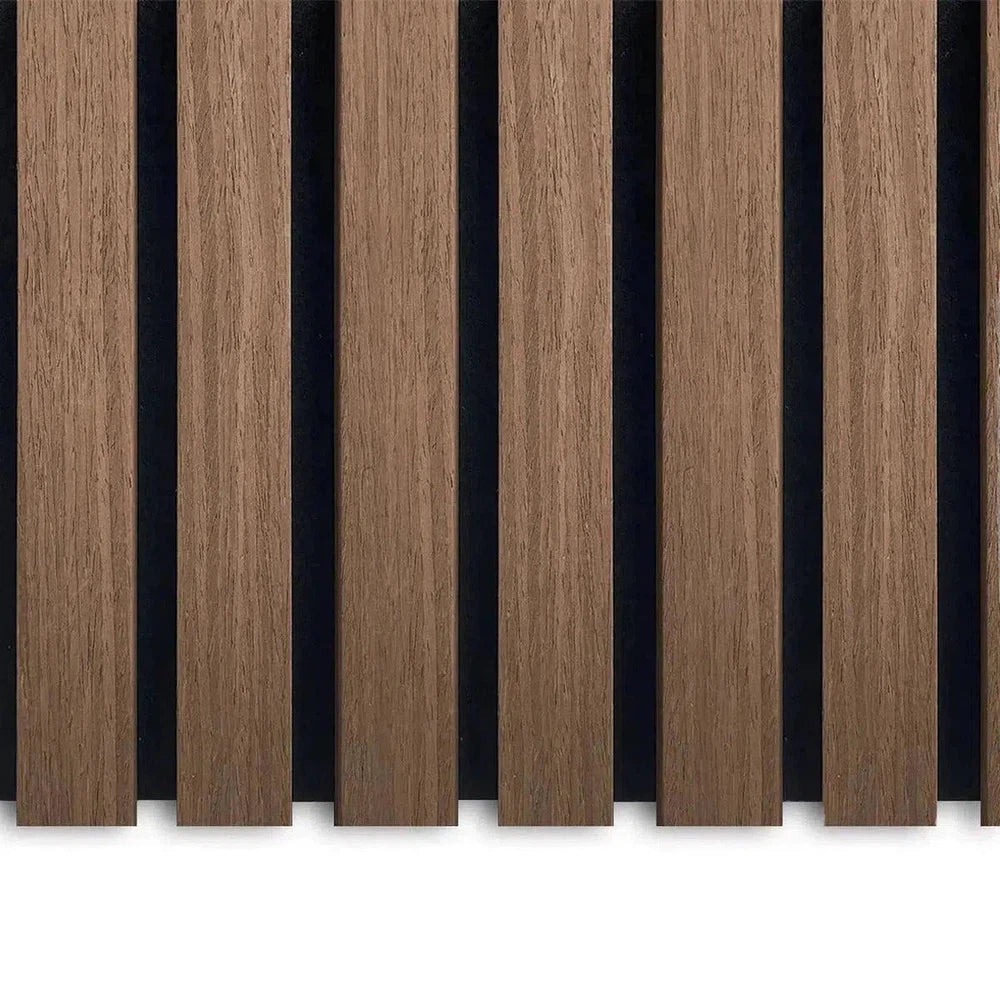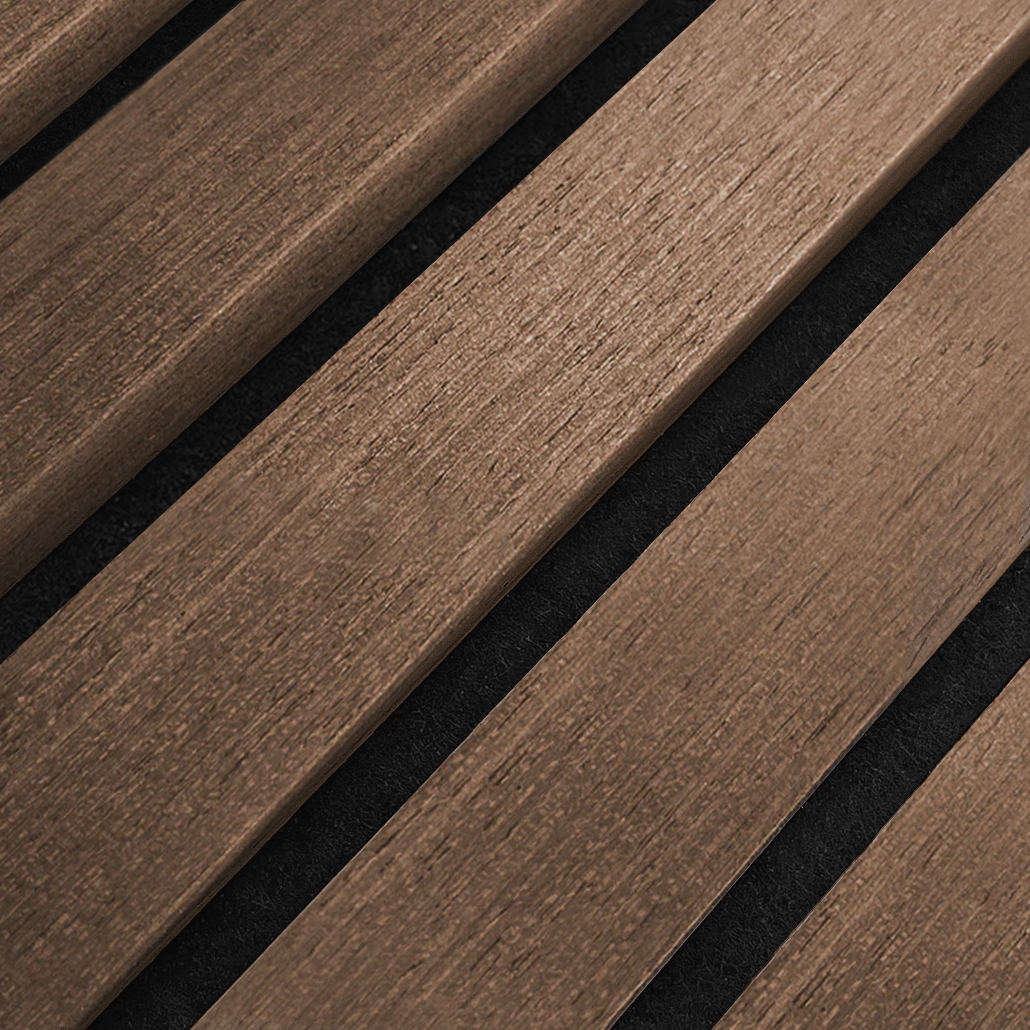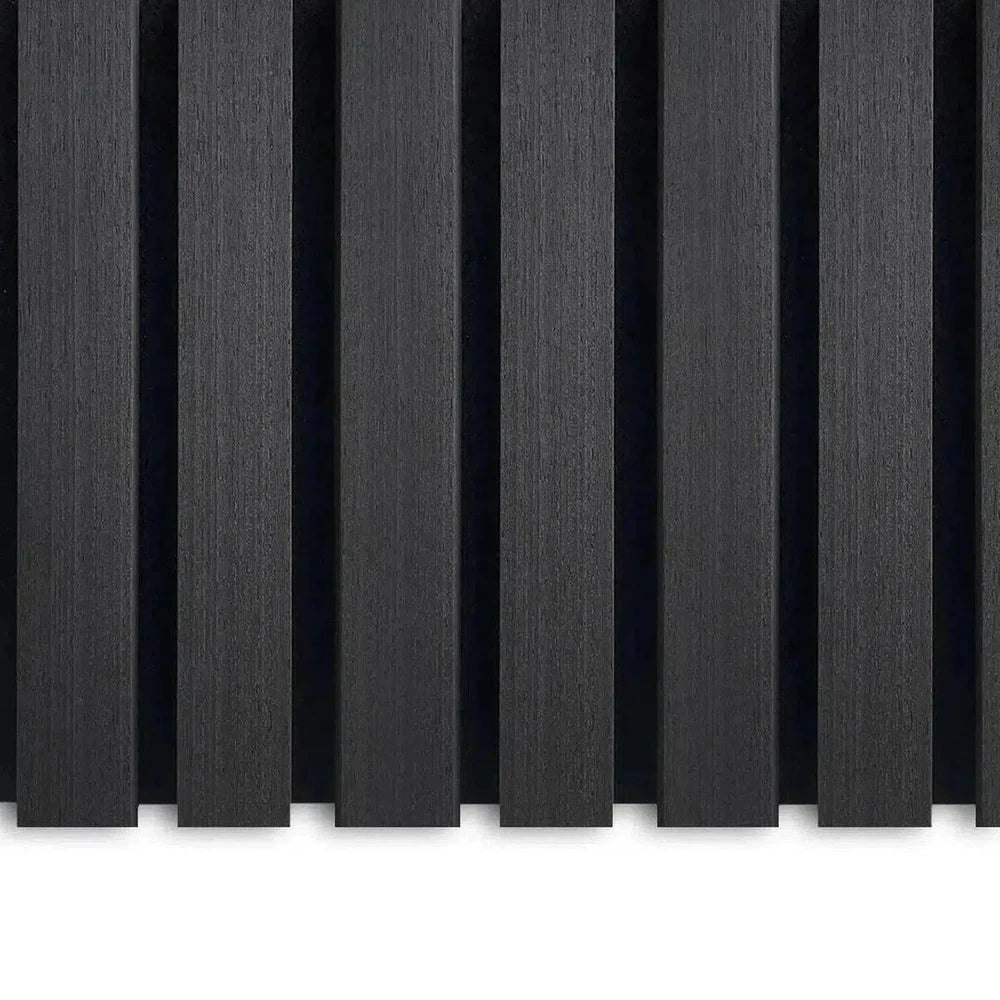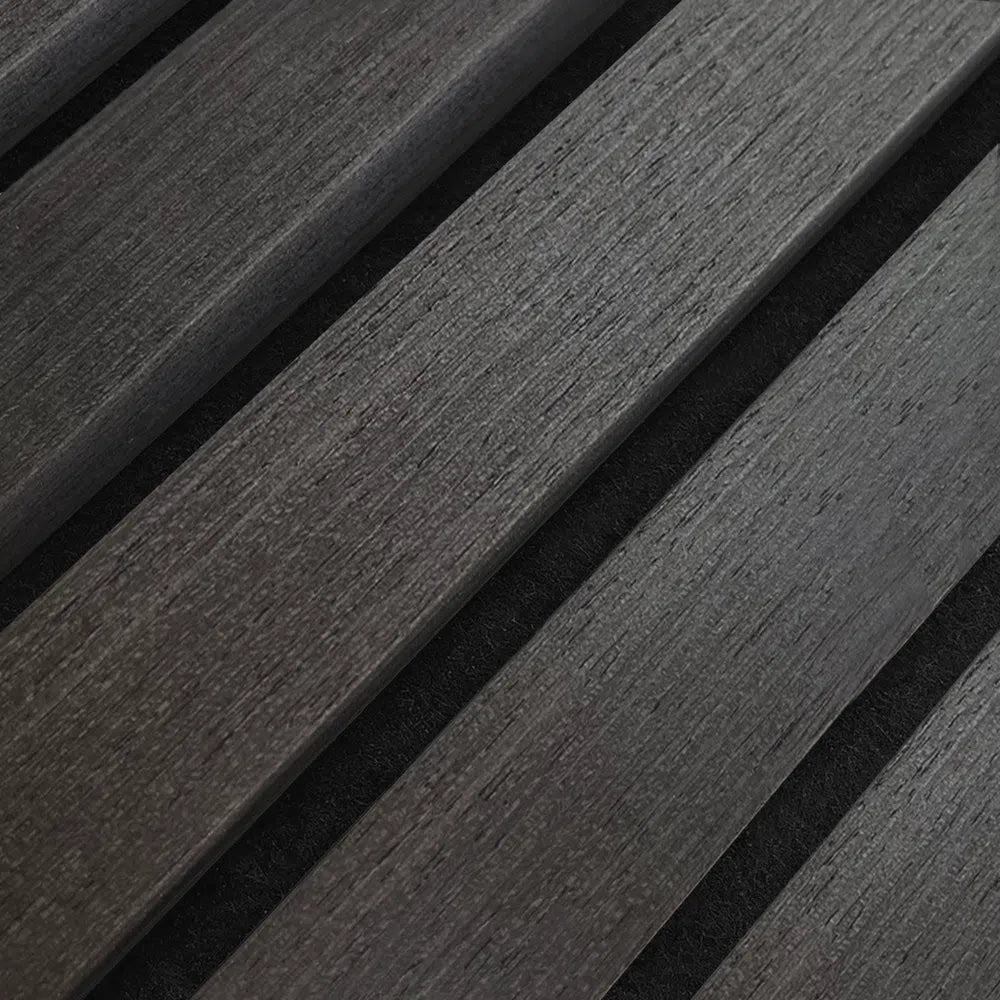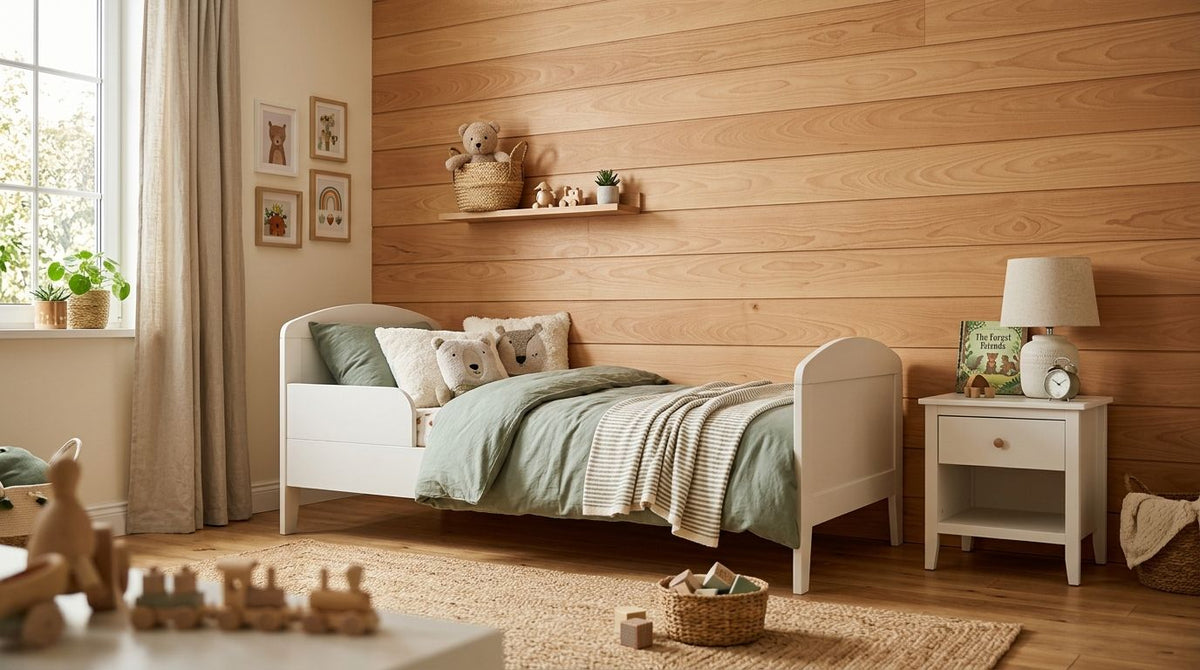
Beech wall panels for a child's bedroom promise a pale, warm wood tone that softens noise, hides small scuffs better than painted plaster, and avoids the flat, cold look of bare stud walls. Kids' rooms carry different constraints than a living room or office: short wall runs, hard flooring under the bed frame, and a finish that has to survive crayons, stickers and the occasional indoor football.
- Beech wall panels for bedroom projects work best in pale, low-sheen finishes that hide fingerprints and cut echo from hard floors.
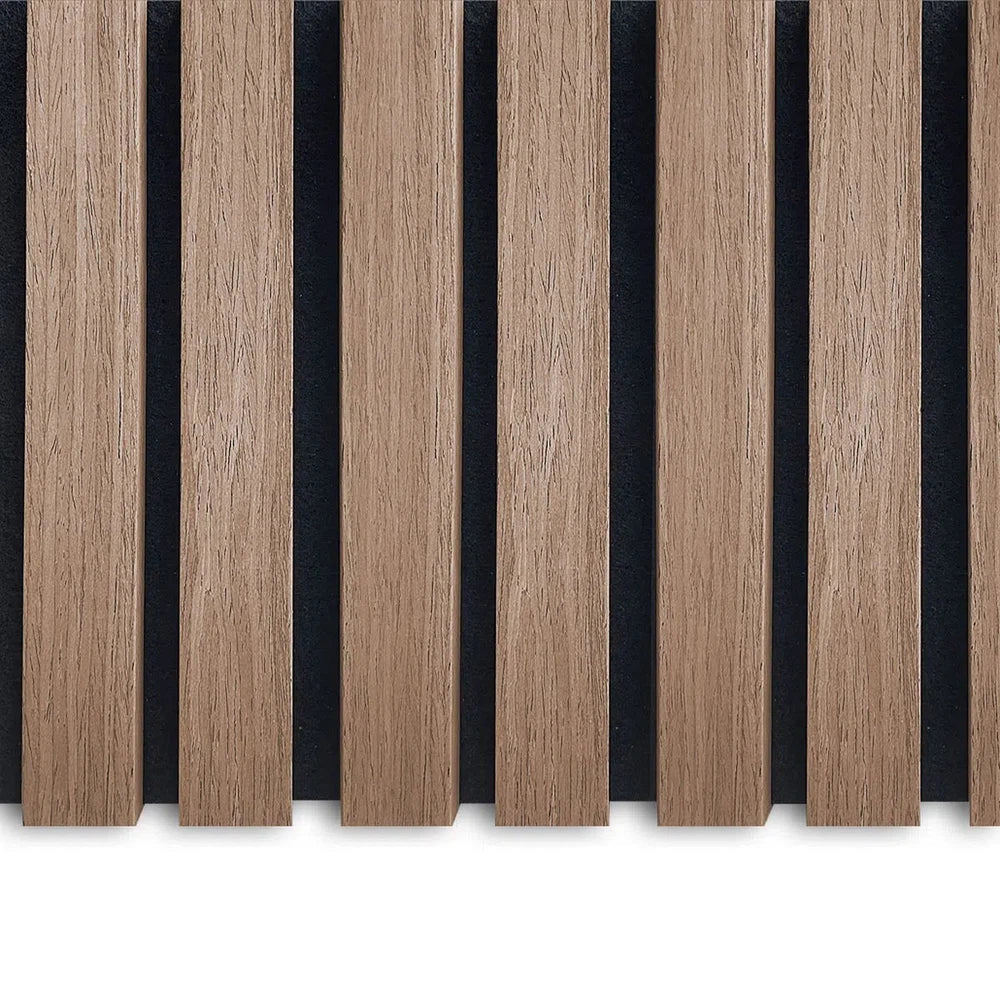
- Akuwood Panel does not stock a beech veneer; Natural Oak is the closest tonal match with 3-sided real wood veneer and acoustic felt backing.
- Panel one wall only - behind the headboard or desk - rather than all four, to control cost and keep a small room open.
- Use the 240 cm panel format for a standard UK ceiling height and 300 cm for a floor-to-ceiling look in a taller room.
- Verdict in 2026: a real wood veneer panel beats painted MDF slats on durability and echo control in a child's bedroom.
Why wall panels matter for a children's bedroom
A child's bedroom is usually one of the smallest rooms in a UK home, and small rooms with hard flooring and few soft furnishings bounce sound more than open-plan living rooms do. Bare plaster plus laminate gives a bedtime story a harsher, clattery edge that a textile-backed panel takes out of the room.
Parents searching for beech wall panels for bedroom walls want two things at once: a paler, warmer tone than the dark oak and walnut finishes that dominate living rooms, and a wipeable surface that survives daily wear. Wooden wall panels for bedrooms solve both, but the tone and the backing matter far more than the species name on the label.
The practical answer in 2026: buy the tone, not the timber species. Beech is prized for a pale, straight, even grain — and a light oak veneer delivers that same read on a wall at normal viewing distance.
Step 1: Clap-test the room before you buy anything
Stand in the middle of the room and clap once. A sharp ringing slap-back means the walls and floor are reflecting sound with nothing absorbing it.
- A flat clap with no tail means the acoustics are already fine — skip the panels and just paint
- Check whether the TV or speaker in that room needs turning up unusually loud
- Note which walls are bare plaster and which already carry a wardrobe or bookcase
- Laminate and engineered wood floors carry noticeably more echo than carpet
- Count the soft surfaces: one rug and one curtain is not enough in a 3 m x 3 m room
Step 2: Rule out paint and wallpaper first
Work out whether a cheaper finish gets you the beech look before spending on timber. Neither touches acoustics, but both are worth eliminating on cost grounds.
- Warm-white or oatmeal paint mimics beech tone without any grain
- Peel-off wood-grain wallpaper suits a rental or a room due to change within two years
- A thick rug and lined curtains cut echo without touching the walls
- Neither paint nor paper adds real timber texture or survives a scooter hitting the skirting
Step 3: Match the tone to beech without buying beech
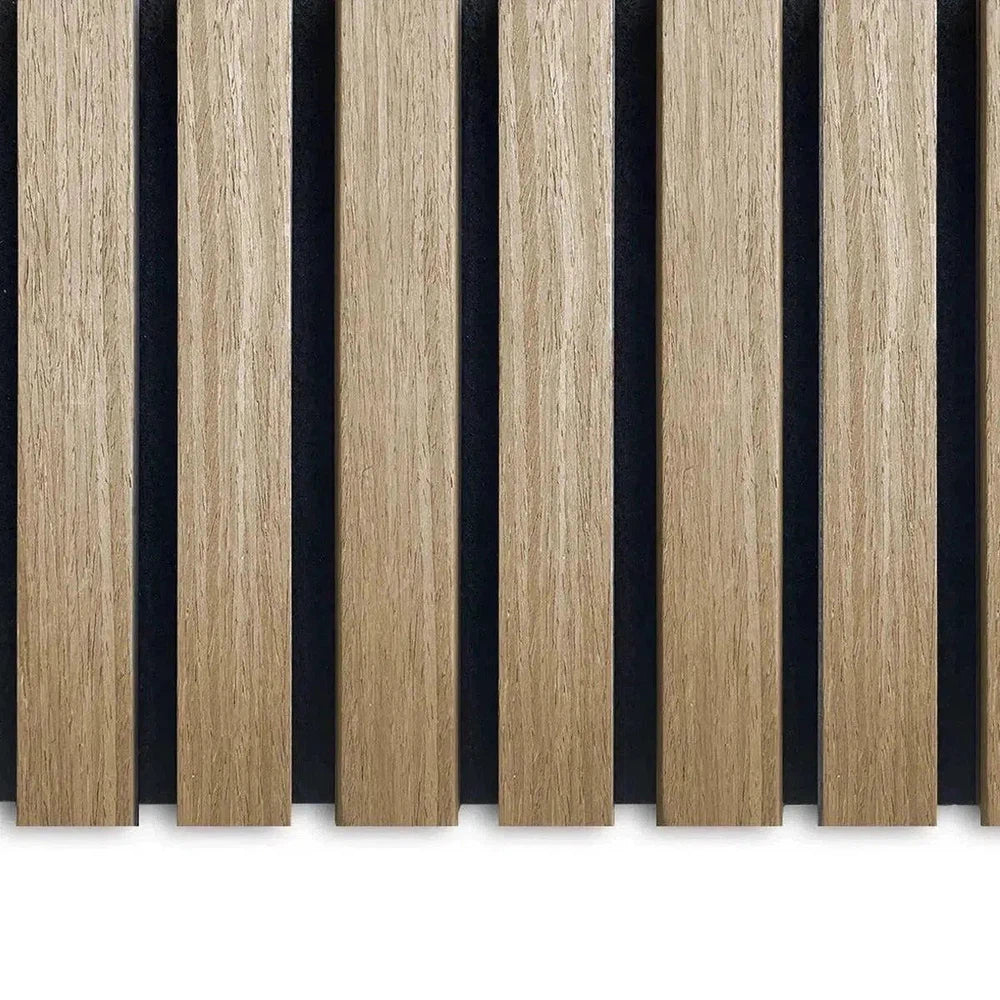
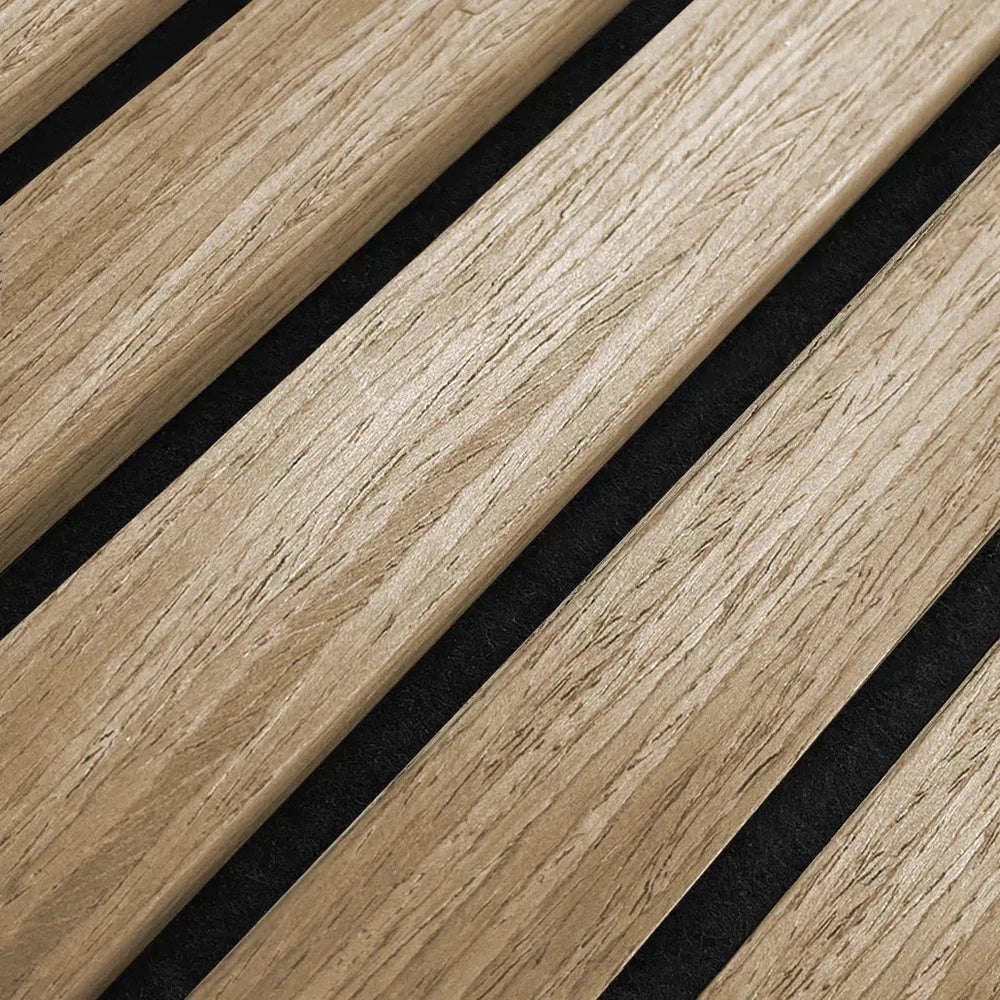
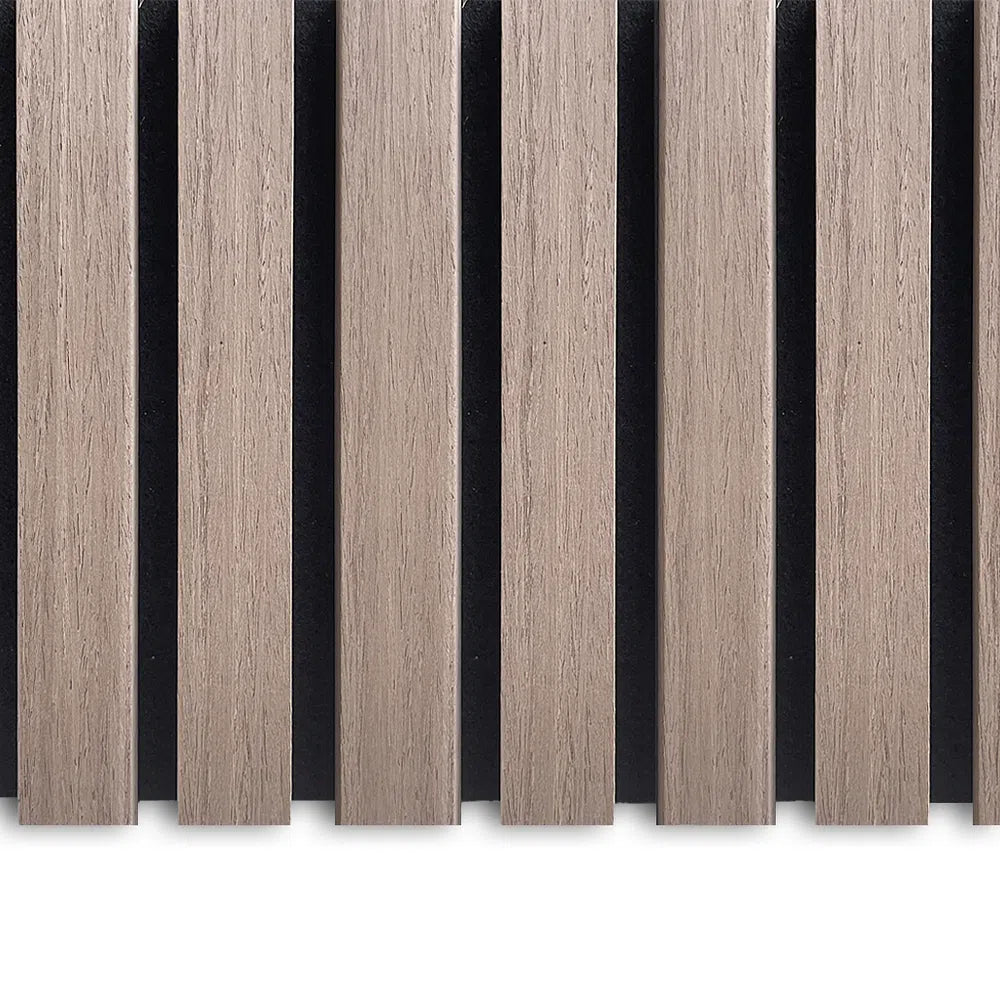
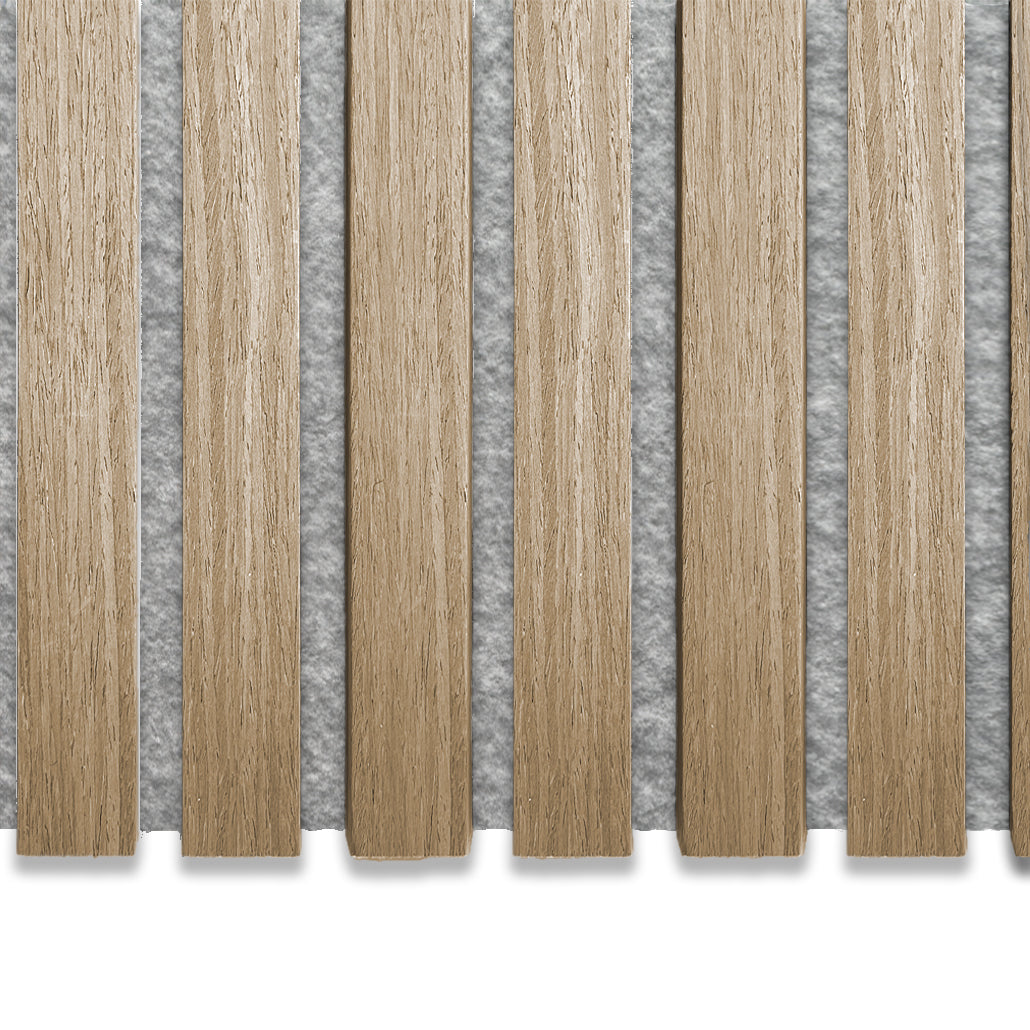
Here is where a real veneer panel earns its cost. Akuwood Panel does not list a beech finish, so Natural Oak is the closest match for that pale, straight-grained look — same light warmth, same 3-sided real wood veneer, same acoustic felt backing.
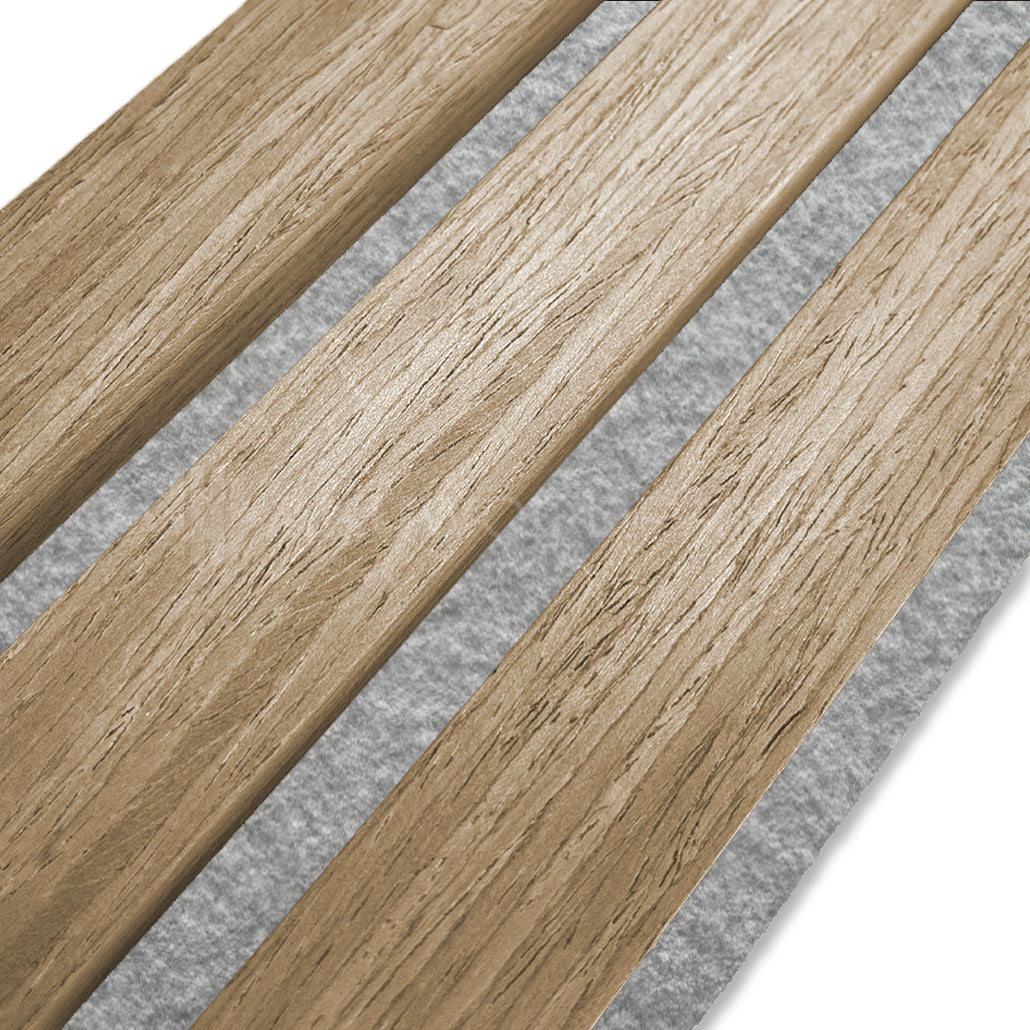
- Natural Oak: closest tonal match to beech, light and warm, best for a bright child's room
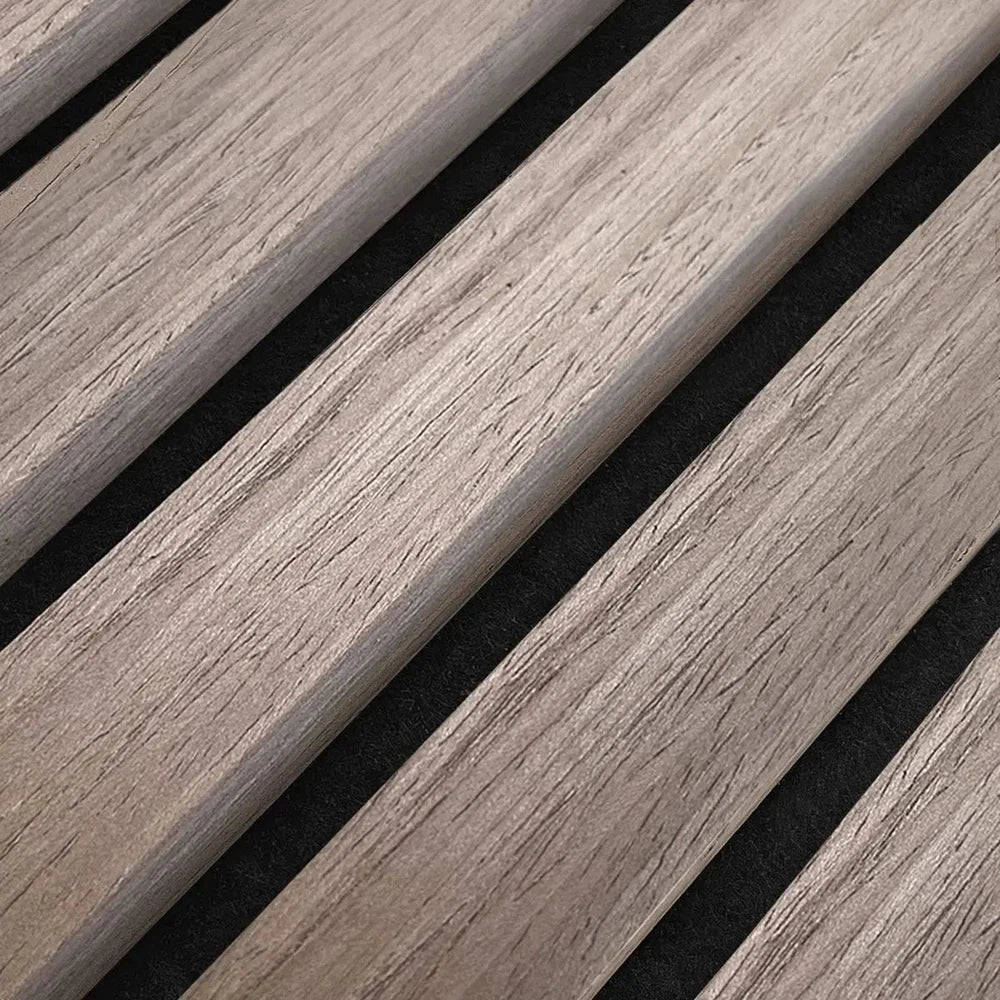
- Grey Oak wall panel: cooler and muted, best when the room scheme leans grey or blue
- Mocca: mid-brown, best for a teenager's room that will not be redecorated for years
- Skip Black Oak and Smoked Oak in a young child's room — dark finishes show dust and fingerprints fastest
- Order a physical sample before committing; screens misread pale wood tones badly
Step 4: Pick the panel length for the ceiling height
Panels come in two lengths and the wrong one leaves an awkward gap or forces an unnecessary cut across the grain.
- 240 cm suits most standard UK bedroom ceilings without trimming
- 300 cm suits a taller room, a loft conversion or a true floor-to-ceiling feature wall
- Measure the actual wall height at three points — older UK houses are rarely level
- Add one spare panel to the order for miscuts around sockets and radiator pipes
Step 5: Choose one wall, not four
Panelling every wall of a small bedroom gets expensive fast and boxes the room in. One treated wall handles most of the echo and delivers the whole visual effect.
- Headboard wall: the default choice, and the one that reads best in photos
- Desk wall: best for a homework or gaming setup where voice clarity matters
- Wardrobe wall: panel around a built-in run for a tidy, joined-up finish
- Media wall: if the room has a TV, this wall gives the biggest acoustic gain
Step 6: Check the finish survives a child
Surface and backing matter as much as colour once a child actually lives with it.
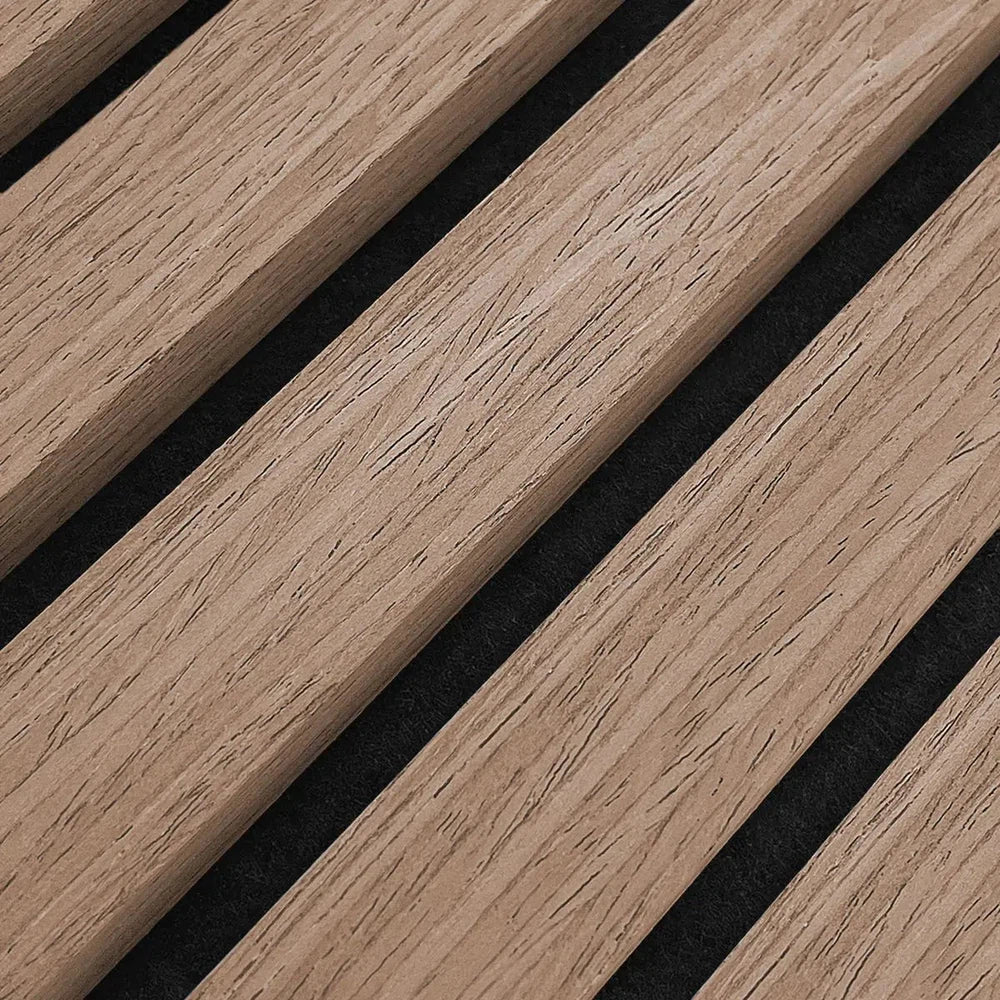
- The 3-sided real wood veneer wraps the visible edges, so cut panels never expose raw board at a headboard or wardrobe return
- The acoustic felt backing sits behind the slats, so the wall reads as timber rather than as a foam acoustic tile
- Wipe marks off with a damp cloth; skip solvent cleaners on an oiled veneer
- Level the wall before fitting — a bowed stud wall shows through straight-grain slats far more than through paint
- Fit panels with panel adhesive on a sound plasterboard wall to avoid visible screw heads at child height
“Panel the wall behind the bed first. It does most of the acoustic and visual work for a fraction of a full-room job.”
Comparison: beech-style options for a child's bedroom in 2026
| Option | Best for | Key limitation |
|---|---|---|
| Natural Oak wall panel | Closest real match to a pale beech tone, with acoustic felt backing | Oak, not an actual beech veneer |
| Grey Oak wall panel | Cool-toned rooms with grey or blue schemes | Reads grey rather than warm beech in daylight |
| Painted MDF slat panel (generic) | Tight budgets where texture matters more than real timber | No felt backing, no genuine grain, chips at the edges |
| Beech-effect wallpaper (generic) | Rentals and rooms changing within a year or two | Zero echo reduction, tears where furniture touches it |
| Decorative 3D wall panel | A single artwork-style feature above a bed or desk | Decorative rather than acoustic; covers a small area |
If the goal is a decorative panel rather than a full slatted wall, handcrafted American walnut 3D panels give a child's room a single sculptural feature without covering the whole surface.


Common mistakes parents make with bedroom wall panels
- Panelling all four walls. The headboard wall alone carries most of the effect; four walls multiply the cost for a marginal acoustic gain in a room under 12 m².
- Picking a dark stain for a young child's room. Black Oak looks sharp in a living room and shows every fingerprint at 90 cm off the floor.
- Skipping the sample. Pale woods shift tone dramatically between a phone screen, a north-facing bedroom and a warm bulb.
- Ignoring ceiling height. A 300 cm panel in a standard-ceiling room forces a cut; a 240 cm panel on a tall wall leaves a gap you will stare at for a decade.
- Fitting straight onto an unlevelled wall. Straight slats magnify every bow in old plaster — level first, fit second.
FAQ
Does Akuwood Panel sell beech wall panels for bedrooms?
Akuwood Panel does not currently list a beech veneer. Natural Oak is the closest tonal match, with the same pale colour, 3-sided real wood veneer and acoustic felt backing.
Is beech a good wood tone for a child's bedroom?
Yes - beech's pale, warm tone reflects light in small rooms and hides scuffs better than dark stains. A light oak veneer achieves the same visual effect and adds acoustic backing.
What size wall panel fits a standard UK bedroom ceiling?
The 240 cm format fits most standard UK bedroom ceiling heights without trimming. Choose 300 cm for a loft conversion, a taller room or a true floor-to-ceiling feature wall.
Do wooden wall panels actually reduce noise in a bedroom?
Panels with an acoustic felt backing absorb sound that bare plaster and hard flooring reflect, which cuts echo and slap-back. They reduce echo inside the room rather than blocking noise between rooms.
How much of the wall needs panelling to cut echo?
One feature wall, usually behind the bed or desk, handles most of the echo reduction and the whole visual effect. Panelling all four walls adds cost for marginal extra benefit.
Can you paint over a wood veneer wall panel later?
Painting over a real wood veneer covers the grain and is not practically reversible. Order a sample and get the tone right the first time instead.
Are real wood wall panels safe for a child's bedroom?
An oiled or lacquered real wood veneer wipes clean with a damp cloth and resists everyday scuffs better than painted plaster. Check the specific finish before fitting it in a room a young child uses daily.
One last thing
The 3-sided veneer matters more in a child's bedroom than anywhere else in the house. Panels get trimmed around headboards, wardrobe returns and radiator pipes, and a wrapped edge keeps raw board hidden at exactly the height a child's eye lands. That single detail separates a wall that still looks finished in 2026 from one showing its cut edges within a year.