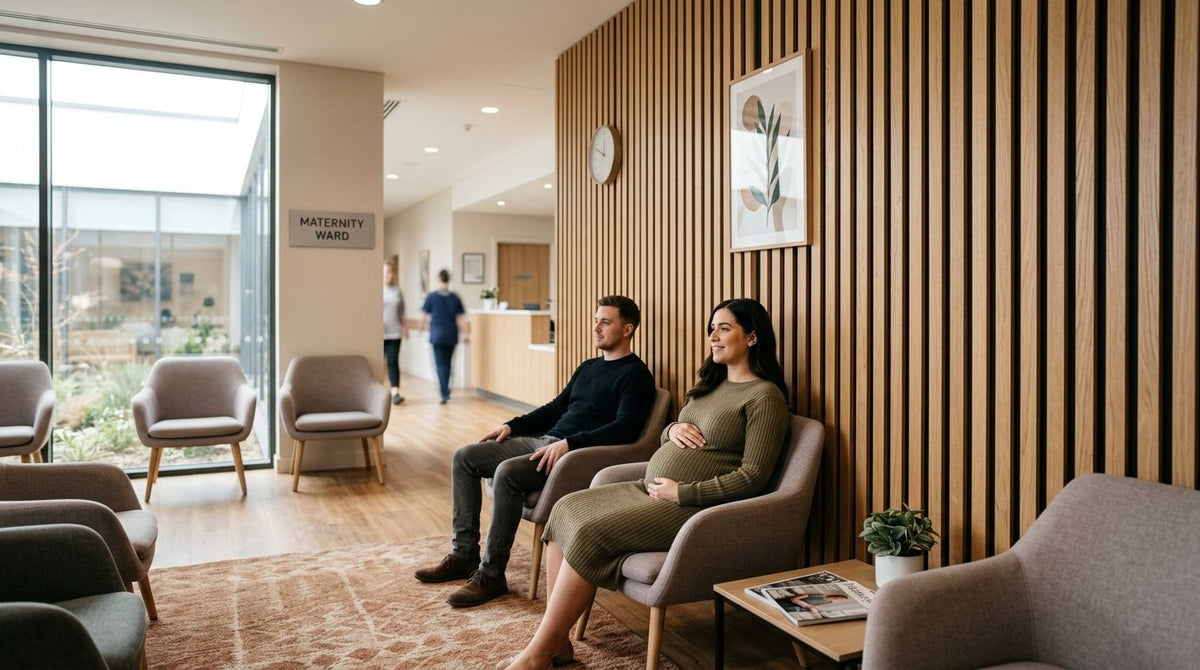
Acoustic wood panels for maternity ward waiting rooms cut reverberation from hard floors, glazed partitions and painted plasterboard so anxious parents and newborns aren't sitting in a room that amplifies every trolley wheel and crying baby. Maternity waiting areas have a specific acoustic problem: 24-hour occupancy, infection-control cleaning regimes, and a patient group that is measurably more stressed by noise than a typical office or retail space.
- Felt-backed acoustic wood panels from Akustiq UK cut echo in maternity ward waiting rooms without soft furnishings that fail infection control.
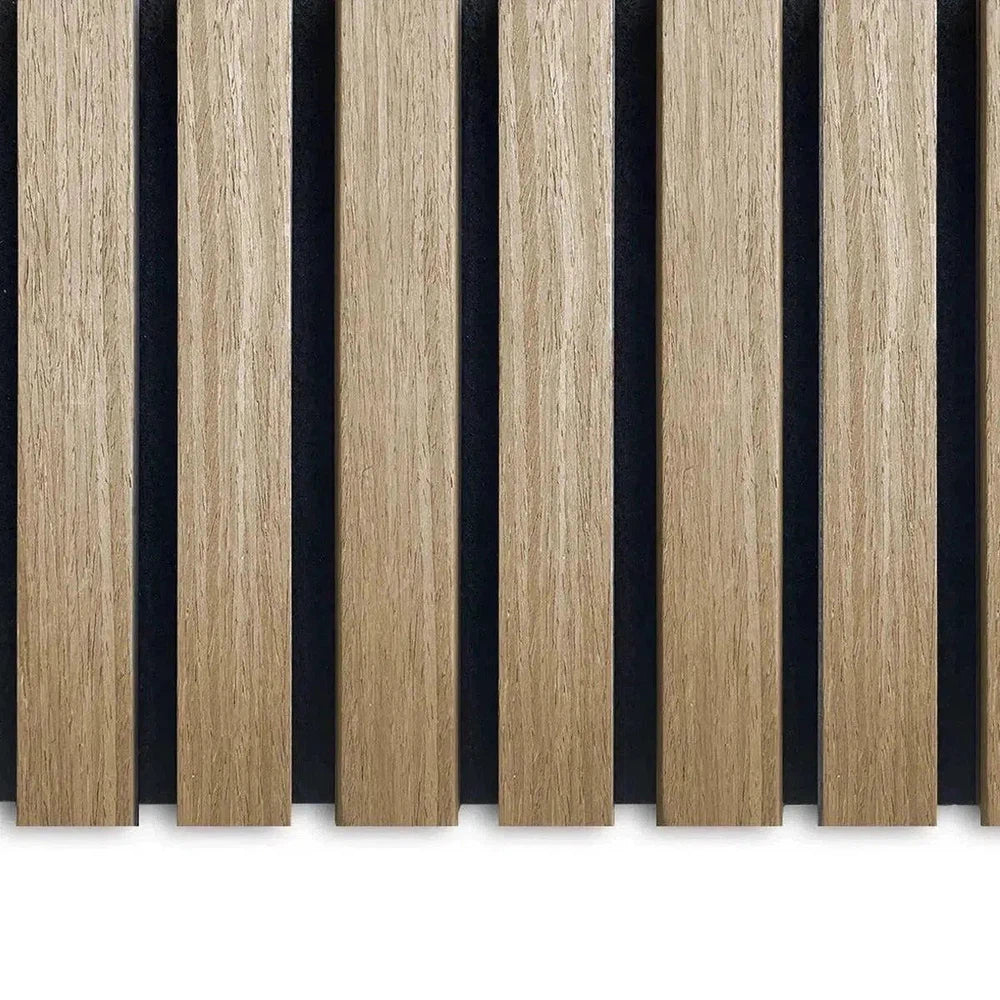
- Natural oak and grey oak finishes read calm rather than clinical, which matters in a room parents sit in for hours in 2026.
- Specify felt-backed veneer panels with fire data, not decorative slat panels with no absorptive backing.
- Order samples first: veneer and felt tone shift under ward LED lighting versus a product photo.
Why acoustic wood panels matter for maternity wards
A maternity waiting room combines three noise sources at once: hard vinyl flooring for cleaning, glass partitions for observation, and constant footfall from staff, porters and visitors. None of that goes away — the room still has to be wipeable and observable. What changes is what's on the walls, and bare plasterboard or painted blockwork reflects almost all of that sound straight back into the space.
Estates and facilities teams researching this in 2026 aren't shopping for home decor. They're solving a functional problem inside an NHS or private maternity unit refurbishment budget, against a fire-rating and infection-control checklist as much as an acoustic one. That's a different brief to a living room feature wall, and the hospital ward walls guide covers the wider clinical estate this waiting room sits inside.
Audit the acoustic problem before you specify anything
Walk the waiting room at three different times of day: a quiet mid-morning slot, a busy antenatal clinic session, and an evening when partners are waiting for news. Reverberation complaints cluster around specific surfaces, not the whole room.
- Note where hard, parallel surfaces face each other (glass to glass, tile to plasterboard)
- Flag ceiling height — anything above 2.7 m lengthens reverberation noticeably
- Check whether existing curtains or upholstered chairs are being stripped out for infection control
- Record staff and parent complaints separately; they usually point at different sources
- Photograph and measure wall runs so a supplier quotes from real dimensions, not guesses
Choose a wood finish that reads calm, not clinical
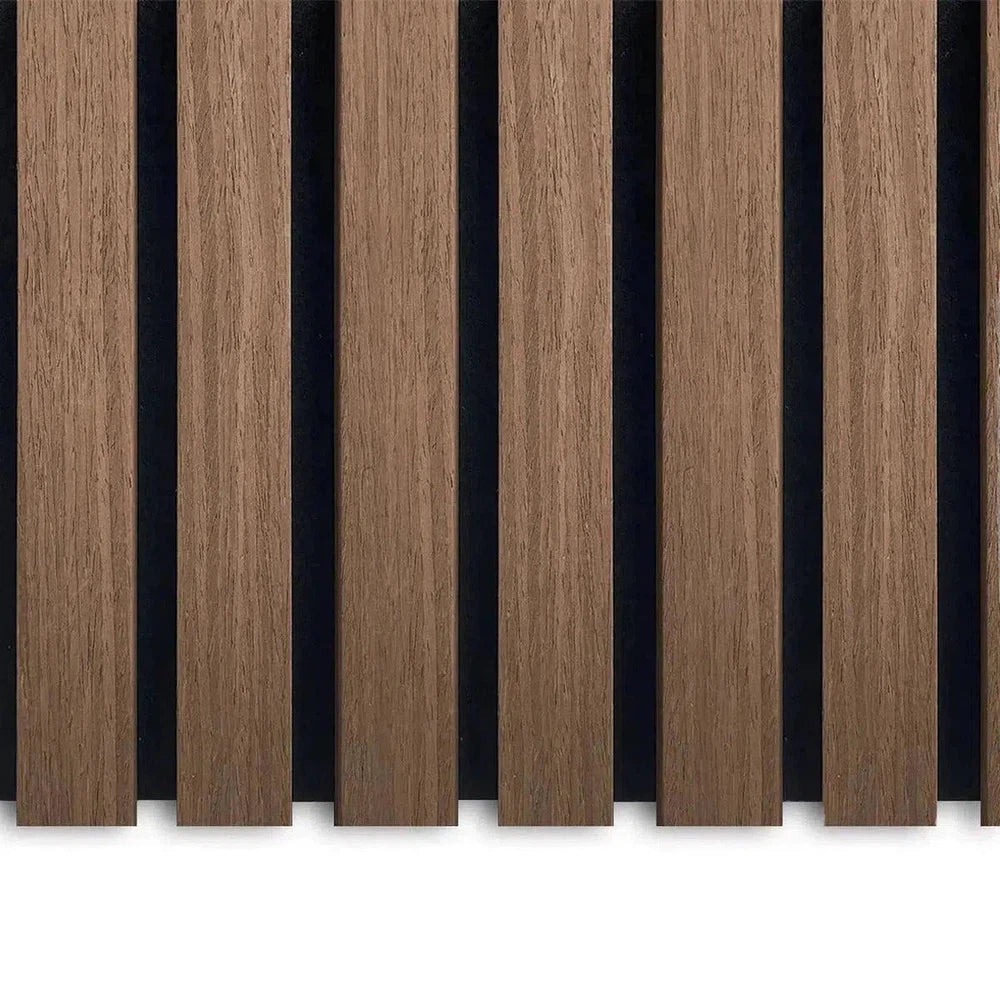
Maternity units already look clinical enough. A warm wood veneer softens the room without adding pattern or colour a busy waiting area can't maintain over five years.
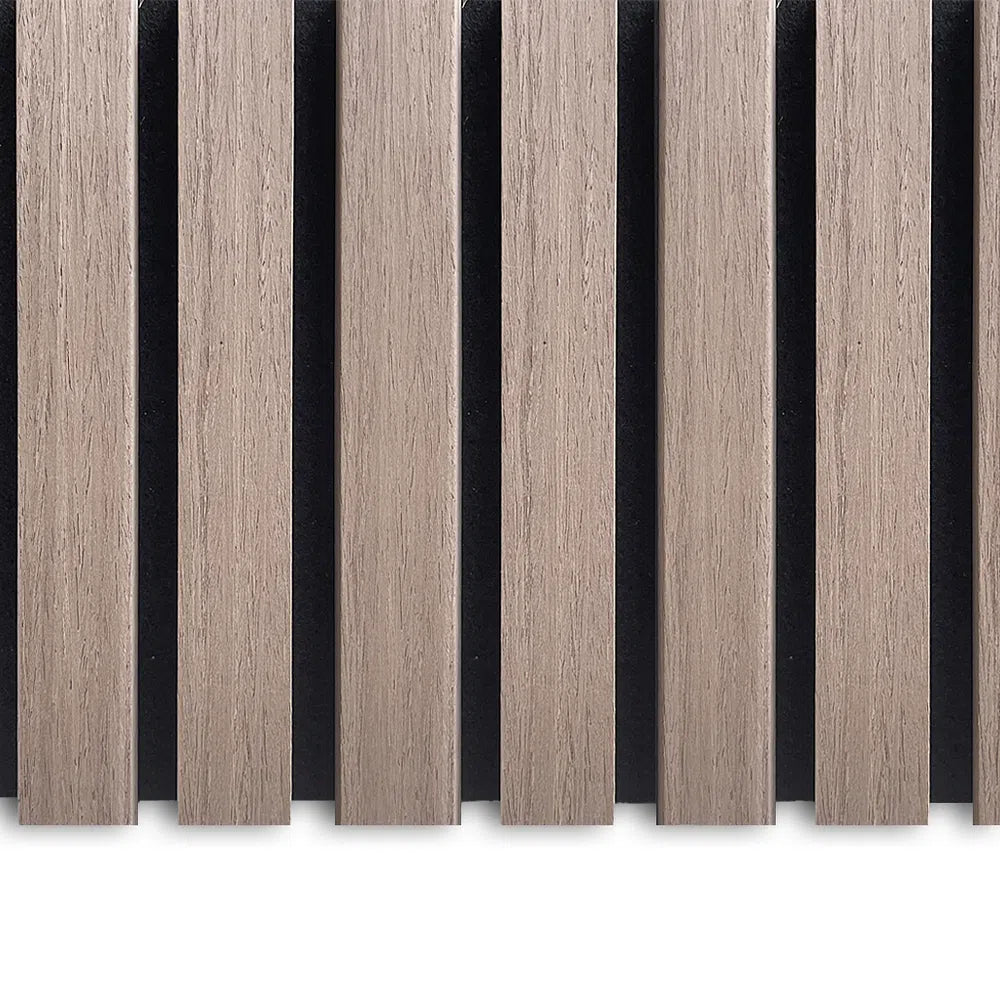
- Natural oak reads neutral under both daylight and ward LED strip lighting
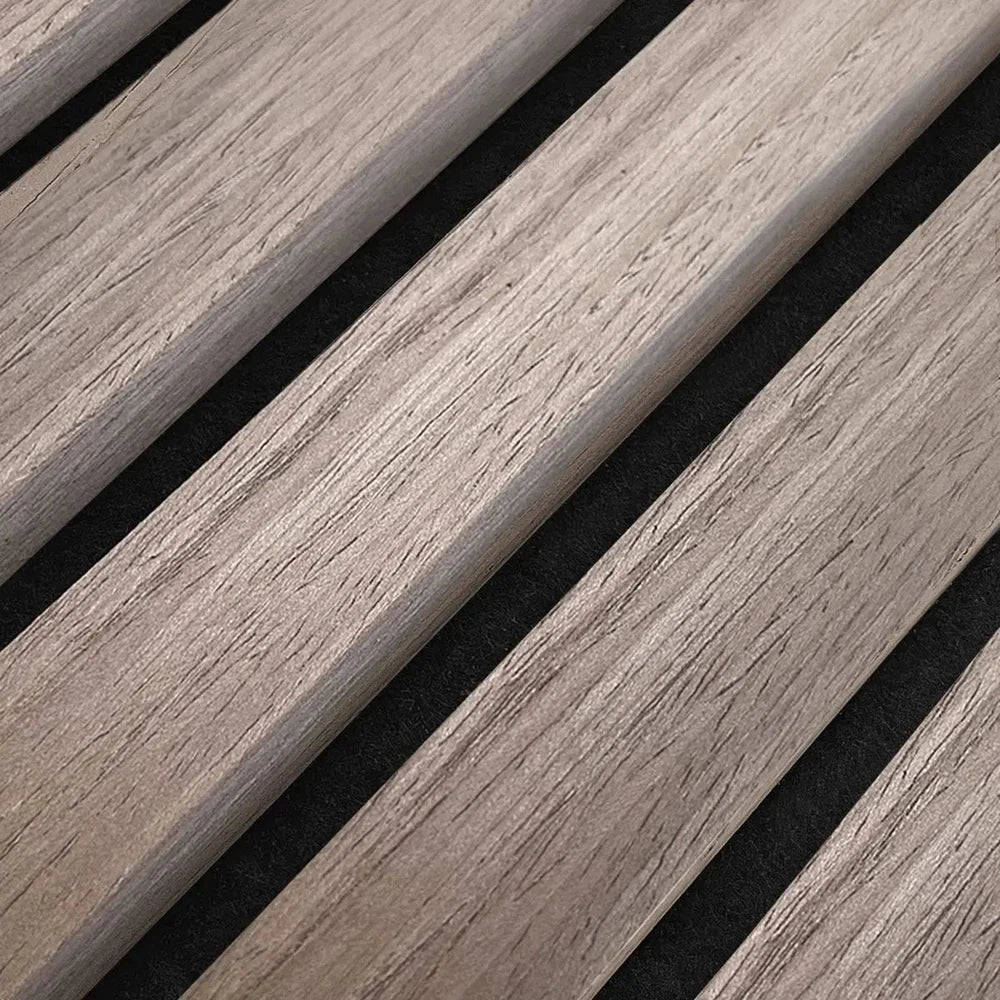
- Grey oak suits units wanting a cooler contemporary palette without going cold
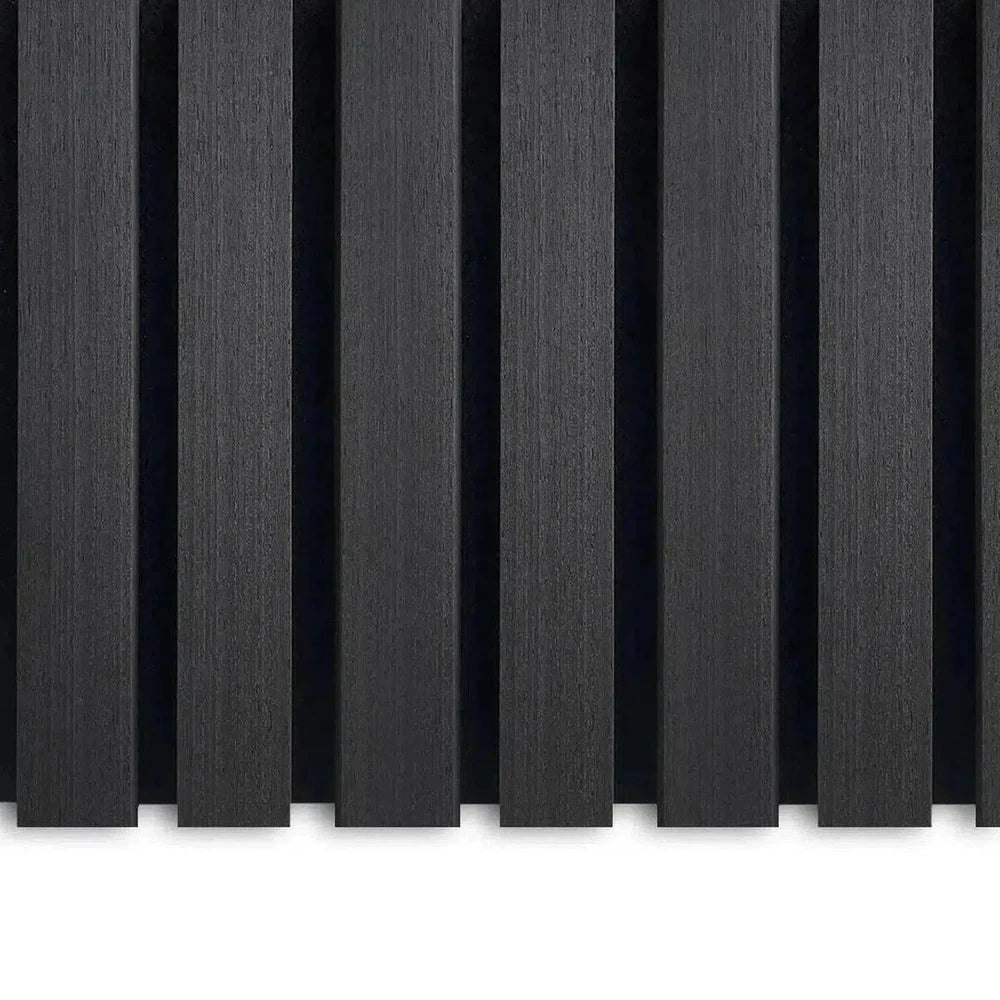
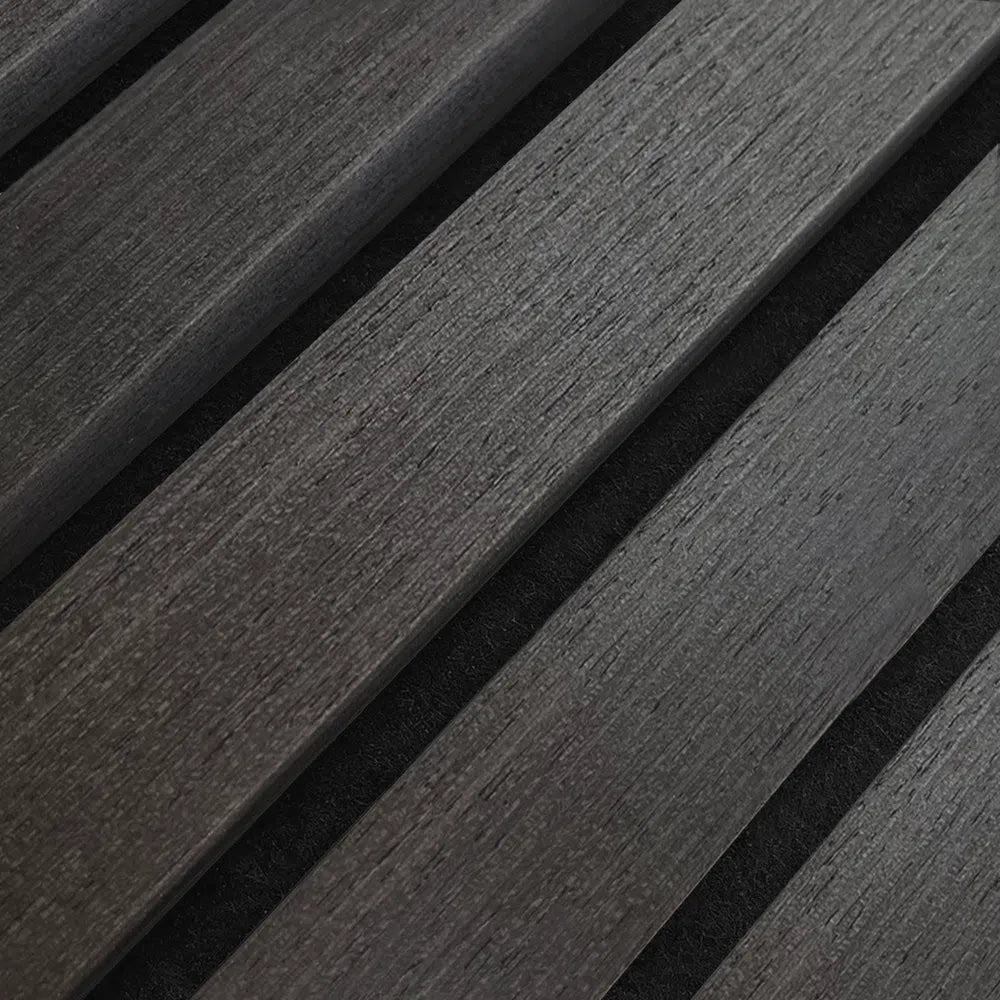
- Skip very dark finishes in small waiting bays — they cut perceived light levels
- Match the finish to existing signage and wayfinding colours where a trust brand standard exists
- Hold a sample against the actual ward paint before ordering a full run
Specify felt-backed panels for real absorption, not decoration
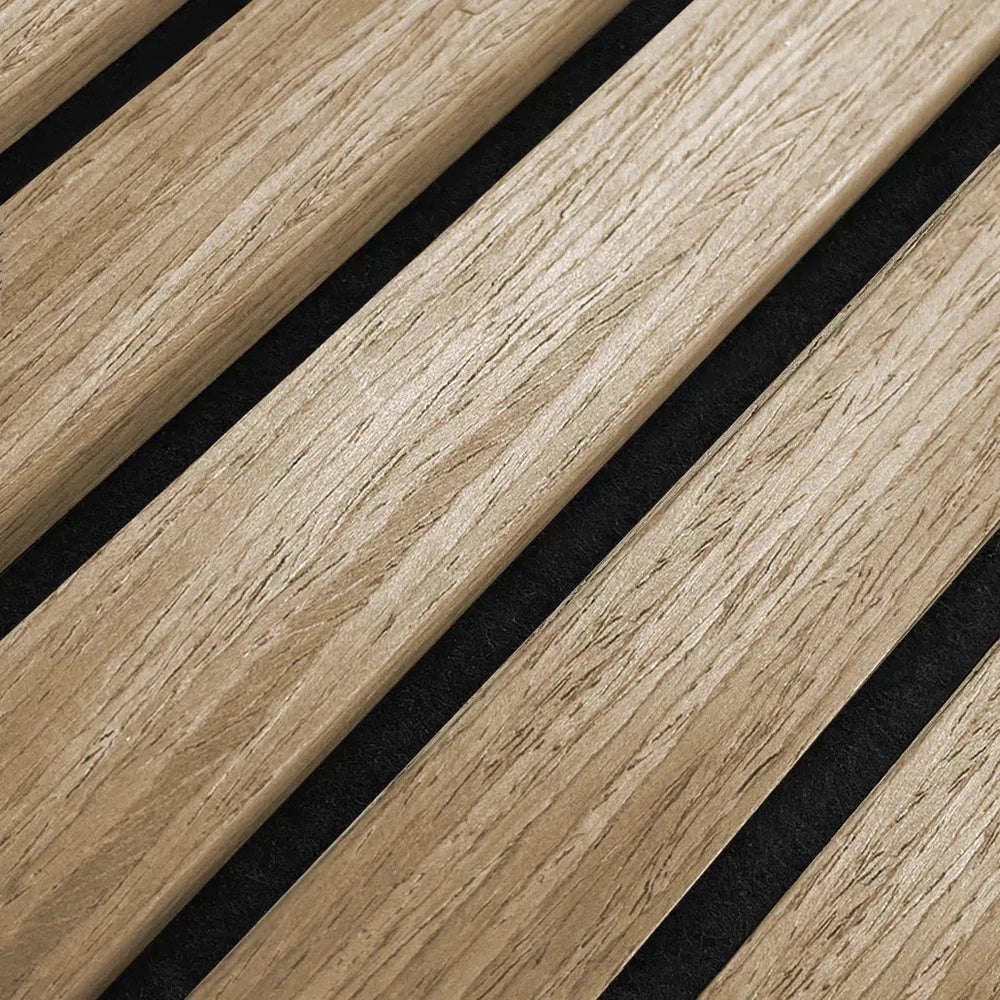
This is where healthcare projects go wrong: buying a decorative slat panel that looks acoustic but has no absorptive backing. A panel only reduces reverberation when there is felt or acoustic fibre behind the veneer, not just grooves cut into board.
- Ask for construction spec, not a photo — 3-sided veneer over felt backing is the baseline
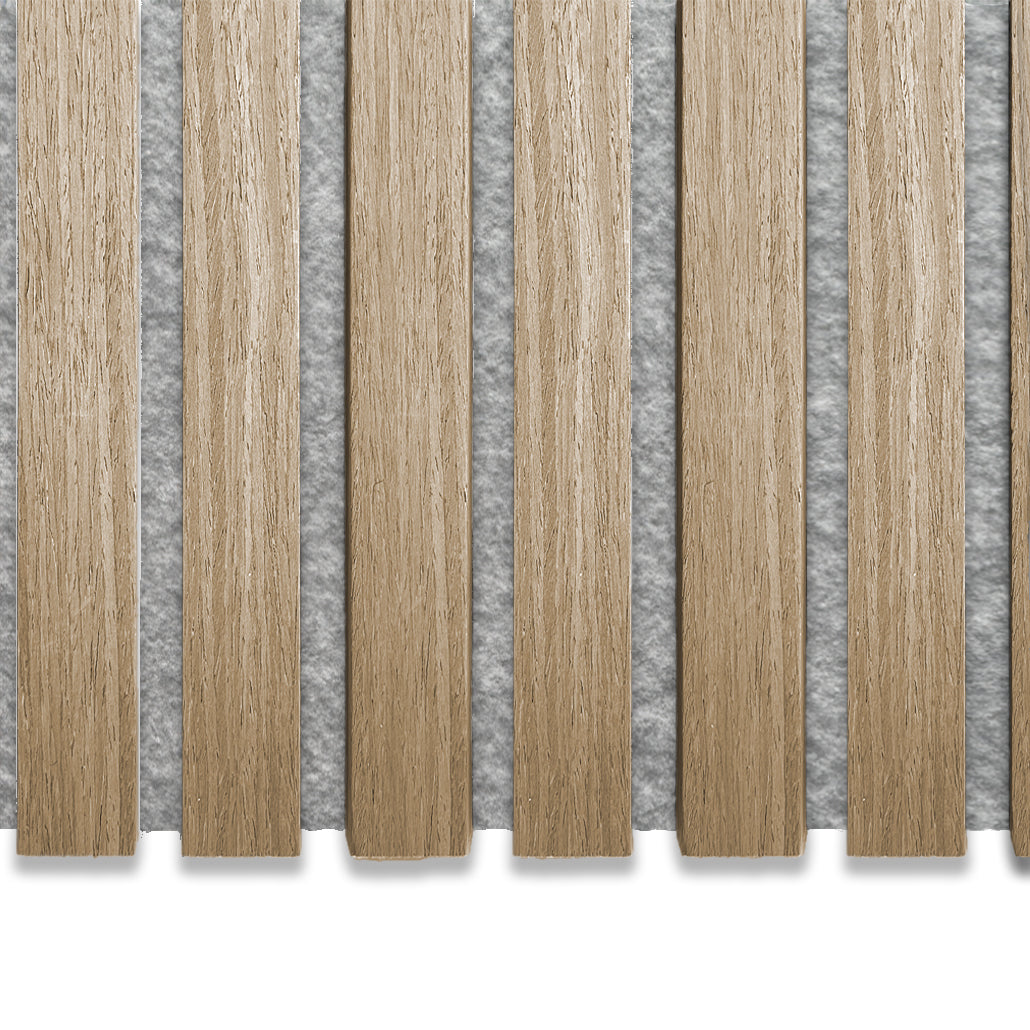
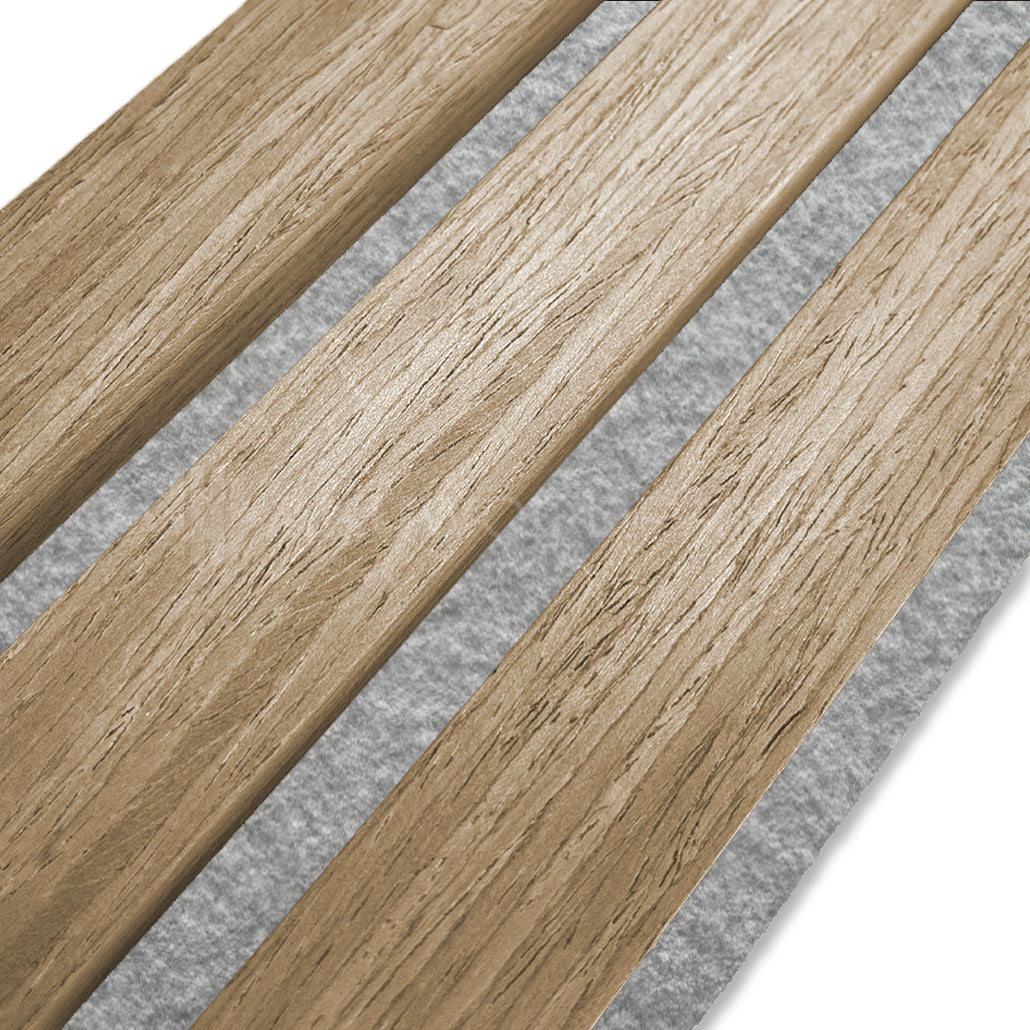
- The natural oak grey felt panel pairs a light veneer with grey felt, which suits clinical schemes better than black felt
- Request absorption data from the manufacturer before it enters a tender document
- The slat gaps do some work; the felt layer does most of it
- Cross-check fire classification against the building's compartmentation requirements
Plan panel placement around clinical furniture and sightlines
Maternity waiting rooms need clear sightlines to reception and the corridor for staff monitoring. Panelling the wrong wall wastes the acoustic benefit and creates a maintenance headache within a year.
- Panel the longest unbroken wall first — it carries the most reflected sound
- Leave reception glazing and observation windows clear
- Run panels to dado height where wheelchairs and trolleys circulate, to limit impact damage
- Avoid panelling directly behind seating rows where backs and bags scuff veneer daily
- Coordinate runs with existing handrails rather than cutting around them after fitting
Check fire ratings and infection-control compatibility
A maternity ward waiting room sits inside a healthcare building, so panel choice clears fire and cleaning standards before it clears an acoustic brief.
- Confirm the panel's fire classification matches the room's use category under current Building Regulations guidance
- Ask whether the veneer finish is wipeable with the disinfectant your trust actually uses
- Check felt backing is not left exposed at floor level where fluids get spilled
- Get written fire test data from the supplier, never a verbal assurance
- Confirm the fixing method and adhesive are acceptable in an enclosed clinical space
Budget panel quantity and installation realistically
Estates budgets for a 2026 maternity waiting room refit are usually fixed before the acoustic brief is finalised, so getting quantity right early avoids a change order later.
- Measure wall area in square metres, not linear metres
- Add 5-10% for cut waste around doors, sockets and skirting
- Price installer time separately from panel cost — clinical spaces often need out-of-hours fitting
- Confirm whether end pieces and trims are needed to finish exposed panel edges
- Check lead times against the ward's planned decant or closure window
Order samples before committing to a full order
Never specify a maternity ward refit from a product photo. Veneer colour shifts under ward lighting in ways a screen image does not show.
- Request a physical sample of the exact finish under consideration
- Hold it against the ward's real wall colour and flooring at different times of day
- Check felt colour against existing signage and soft furnishings
- Get sign-off from estates and clinical staff before the full order goes in
- Keep one sample on file to check the delivered batch against


Comparing acoustic panel options for maternity waiting rooms
| Option | Best for | Key limitation |
|---|---|---|
| Felt-backed acoustic wood panels | Waiting rooms needing real absorption with a wipeable, low-maintenance surface | Higher spec than decorative slat panels; fire data must be checked upfront |
| Hexagon acoustic panels | Reception feature walls breaking up a long clinical corridor | More cutting waste on irregular wall shapes |
| Flat acoustic wall panels | Fast installs on straight walls with no pattern requirement | Less visual warmth than slatted veneer |
| Fabric-wrapped acoustic panels | Rooms with no infection-control cleaning requirement | Fabric is hard to wipe and can hold odour in clinical settings |
| Untreated plasterboard | A budget-zero holding position only | Does nothing for reverberation; not a real option for a maternity waiting room |
Felt-backed acoustic wood panels from Akustiq UK are the buy for a maternity ward waiting room in 2026 — the only option here that combines genuine sound absorption with a ward-appropriate wipeable surface.
“A slat panel with no felt behind the veneer is decoration, not acoustics — it will not move the reverberation in a maternity waiting room.”
Common mistakes maternity units make with acoustic panels
- Treating the whole room instead of the loudest wall. Panelling every surface burns budget better spent on the two or three walls actually causing the reflections.
- Skipping the fire data request. A supplier who cannot produce fire classification paperwork is not ready for a healthcare tender, however good the sample looks.
- Choosing colour before confirming felt backing exists. Decorative-only panels look identical in photos and do nothing for reverberation.
- Leaving cleaning staff out of sign-off. A finish estates approves can fail a ward's cleaning protocol within weeks if nobody checks it against the disinfectant in use.
- Ordering without a sample under ward lighting. LED and fluorescent ward lighting shift wood tones noticeably against a showroom or screen image.
FAQ
What are the best acoustic wood panels for a maternity ward waiting room?
Felt-backed 3-sided veneer panels, such as the Akustiq UK natural oak and grey oak ranges, suit maternity ward waiting rooms best in 2026. They combine genuine sound absorption with a wipeable surface that works with ward cleaning routines.
Are wood acoustic panels better than fabric-wrapped panels in a hospital waiting room?
Yes, in clinical settings. Fabric-wrapped panels absorb sound well but are harder to disinfect and can hold odour, while felt-backed wood veneer panels wipe clean and still absorb reverberation.
Do acoustic wood panels need a fire rating for NHS or private maternity units?
Any panel installed in a healthcare building needs fire classification data matched to the room's use category. Request written fire test results from the supplier before specifying.
How much wall area should be panelled to reduce echo in a waiting room?
Start with the longest unbroken wall and any surface facing hard glazing or tiling. Those surfaces generate most of the reflected sound, so panelling every wall rarely earns its cost.
Can acoustic wood panels be cleaned with hospital-grade disinfectant?
A wipeable wood veneer surface tolerates routine ward cleaning, but confirm compatibility with the specific product your trust uses before placing a full order.
What panel size works best for a maternity waiting room refit?
Panels come in 240 cm and 300 cm formats. Choose based on ceiling height and whether you are running dado-height or floor-to-ceiling coverage.
How do I get samples before ordering for a healthcare project?
Order physical samples of the exact finishes shortlisted and view them in the room itself. Veneer and felt tone change under ward lighting compared with a product photo.
Is grey felt or black felt better behind panels in a clinical space?
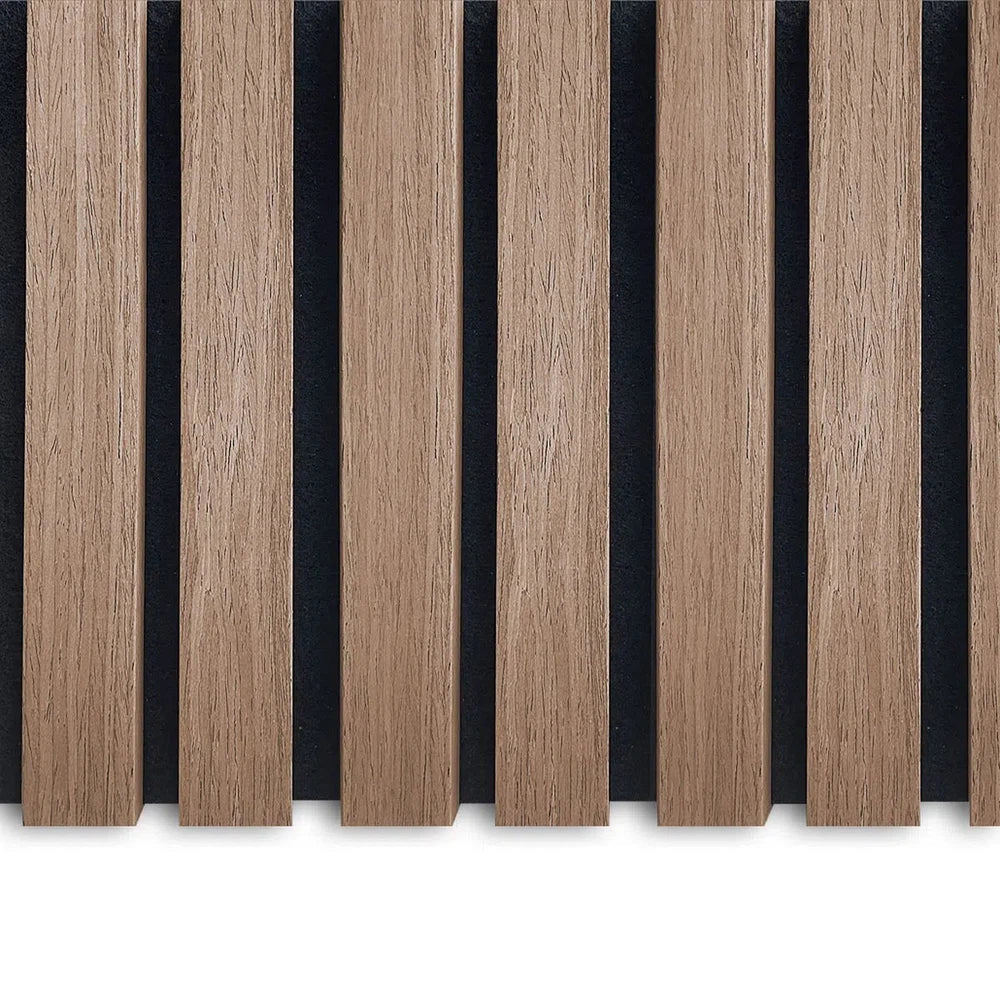
Grey felt suits clinical colour schemes better because it keeps the wall visually lighter. Black felt reads darker on the wall than it does in a product image.
One last thing
The detail estates teams miss most often in 2026 is not the acoustic spec — it is the felt colour. Grey felt behind a light oak veneer keeps a maternity waiting room visually open under ward lighting, while black felt visibly darkens the same wall once fitted. Check the felt, not just the wood, before the order goes in.