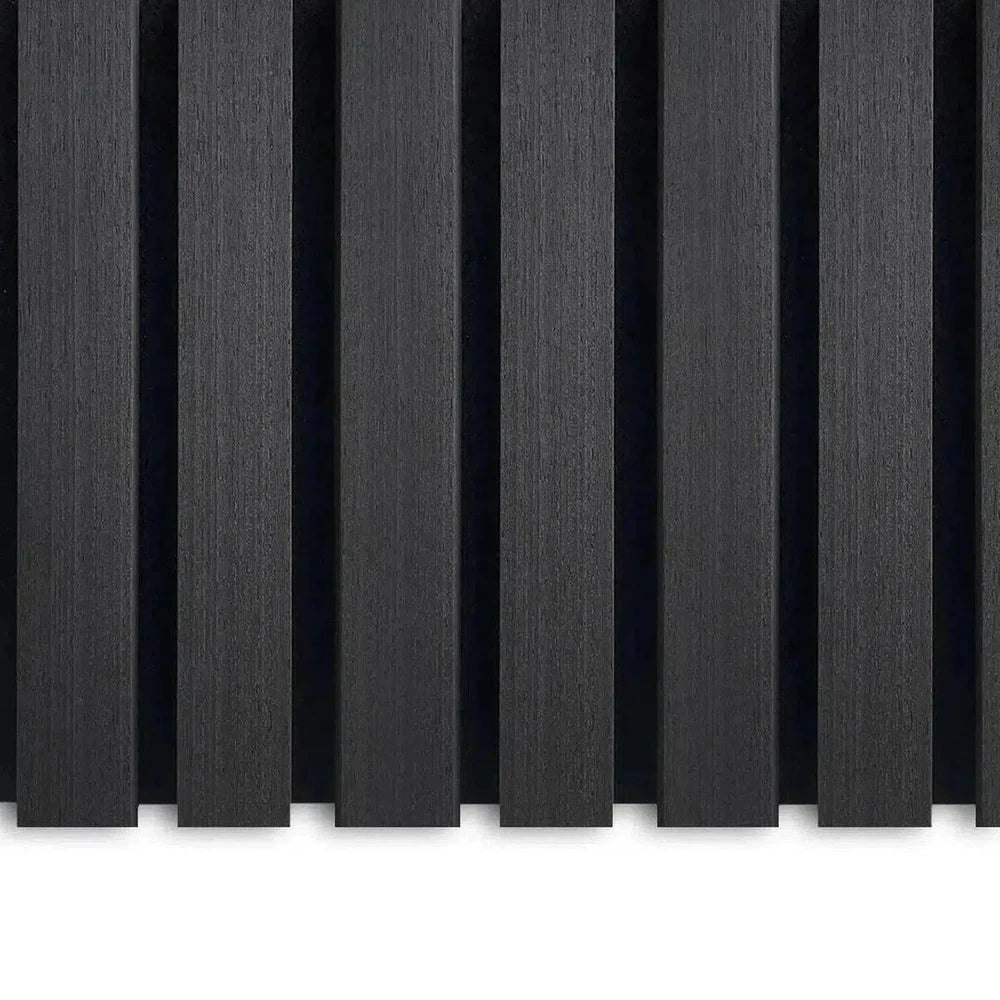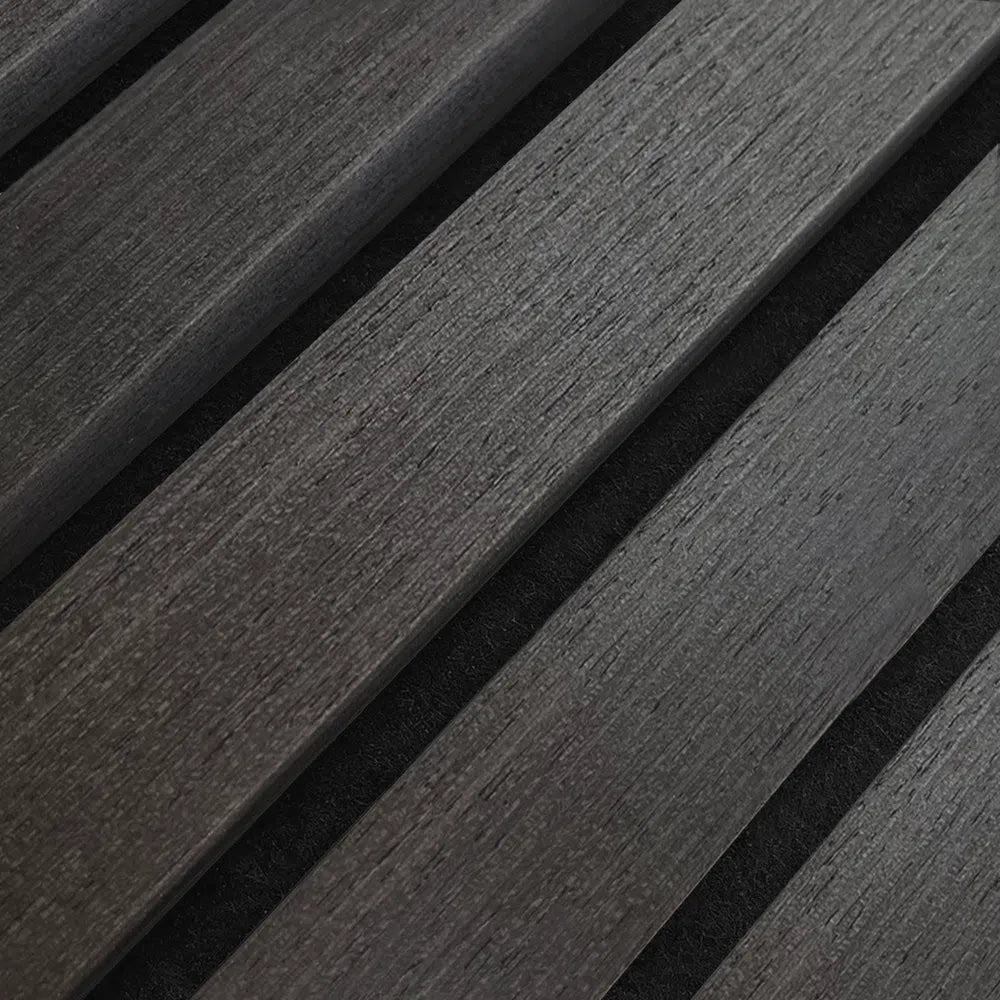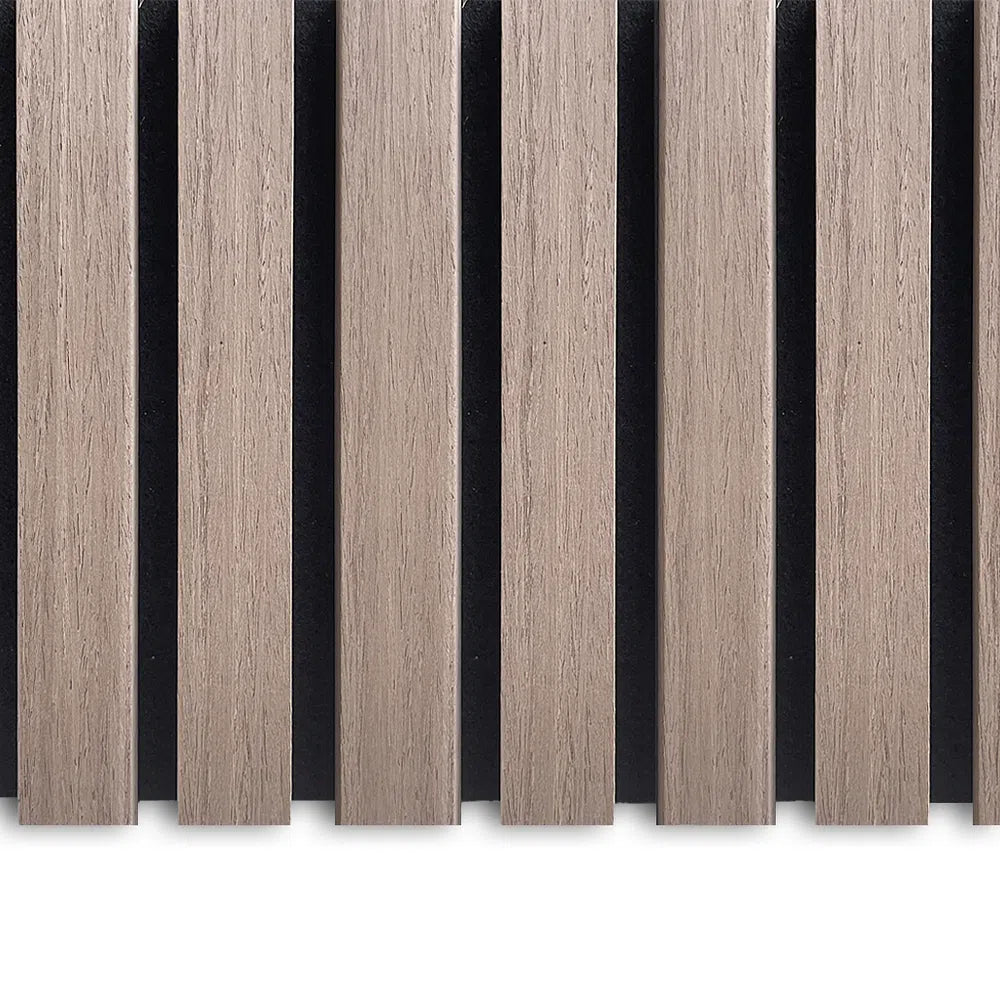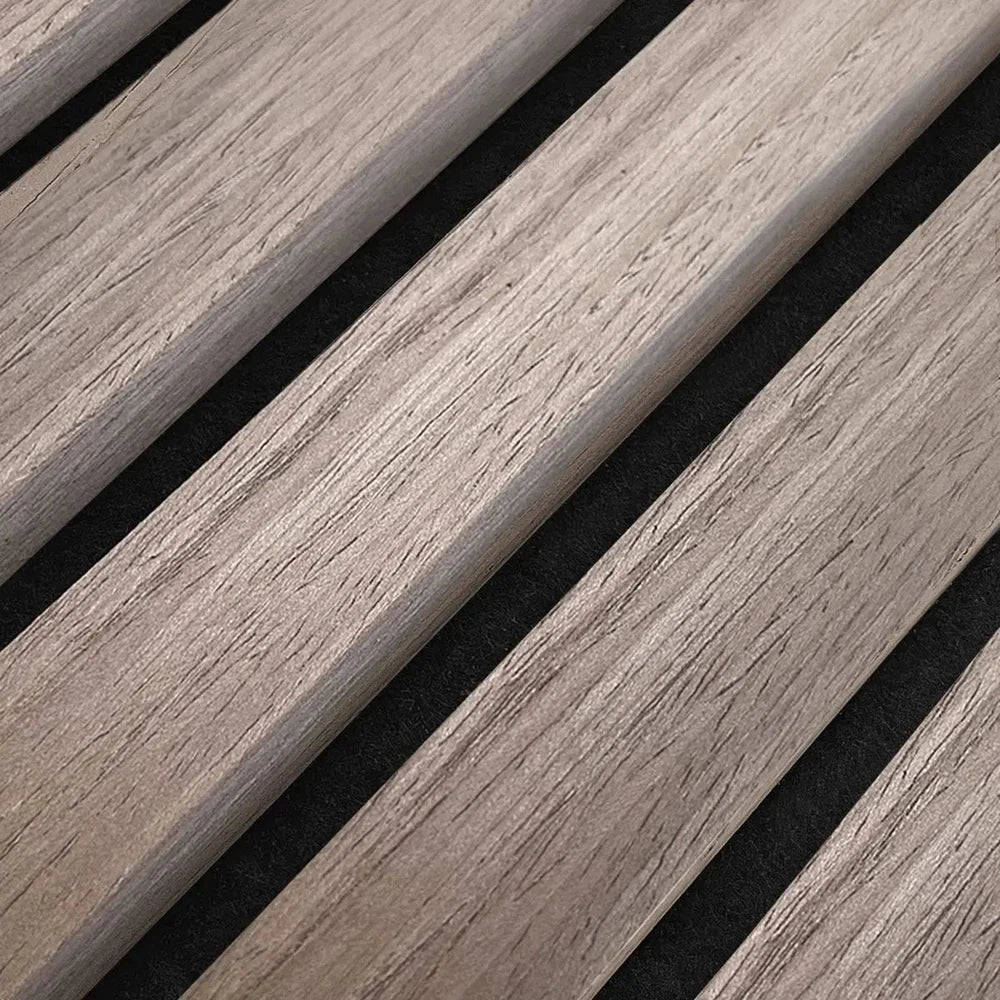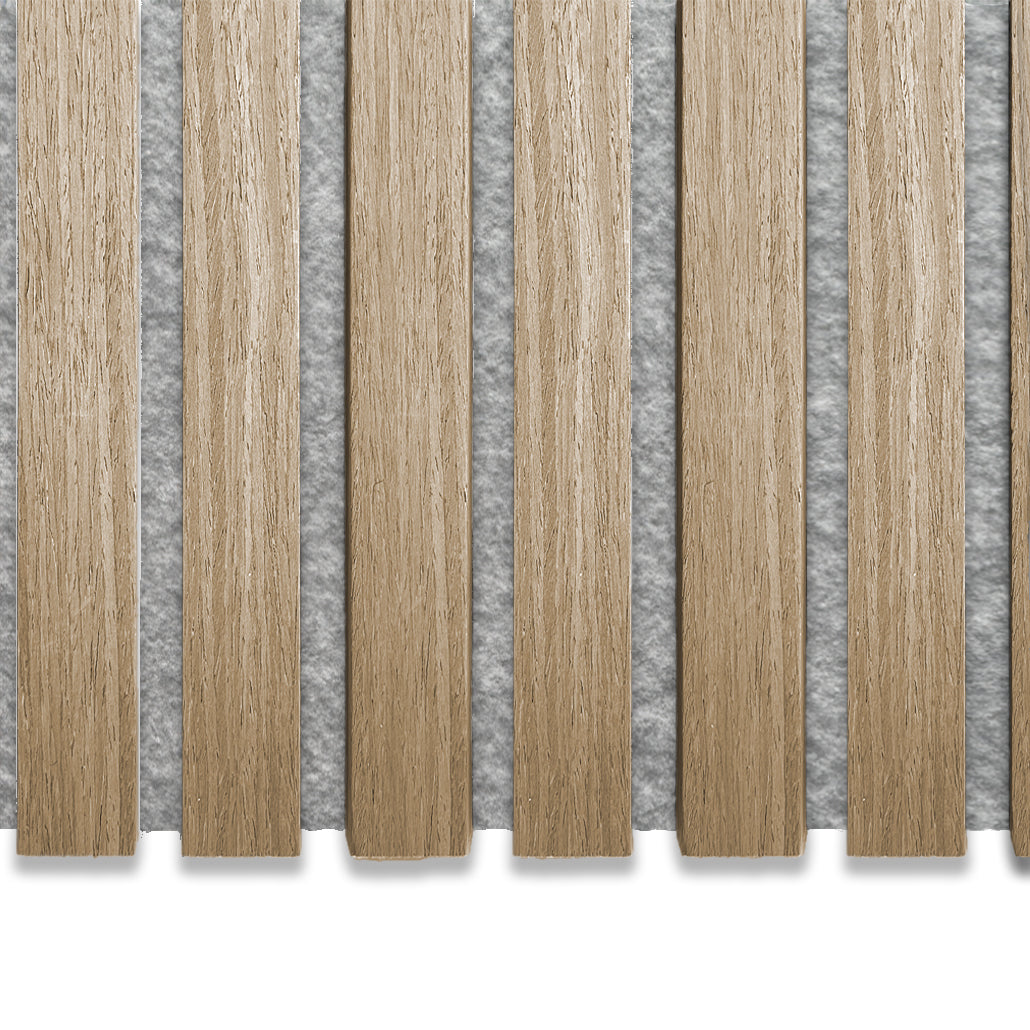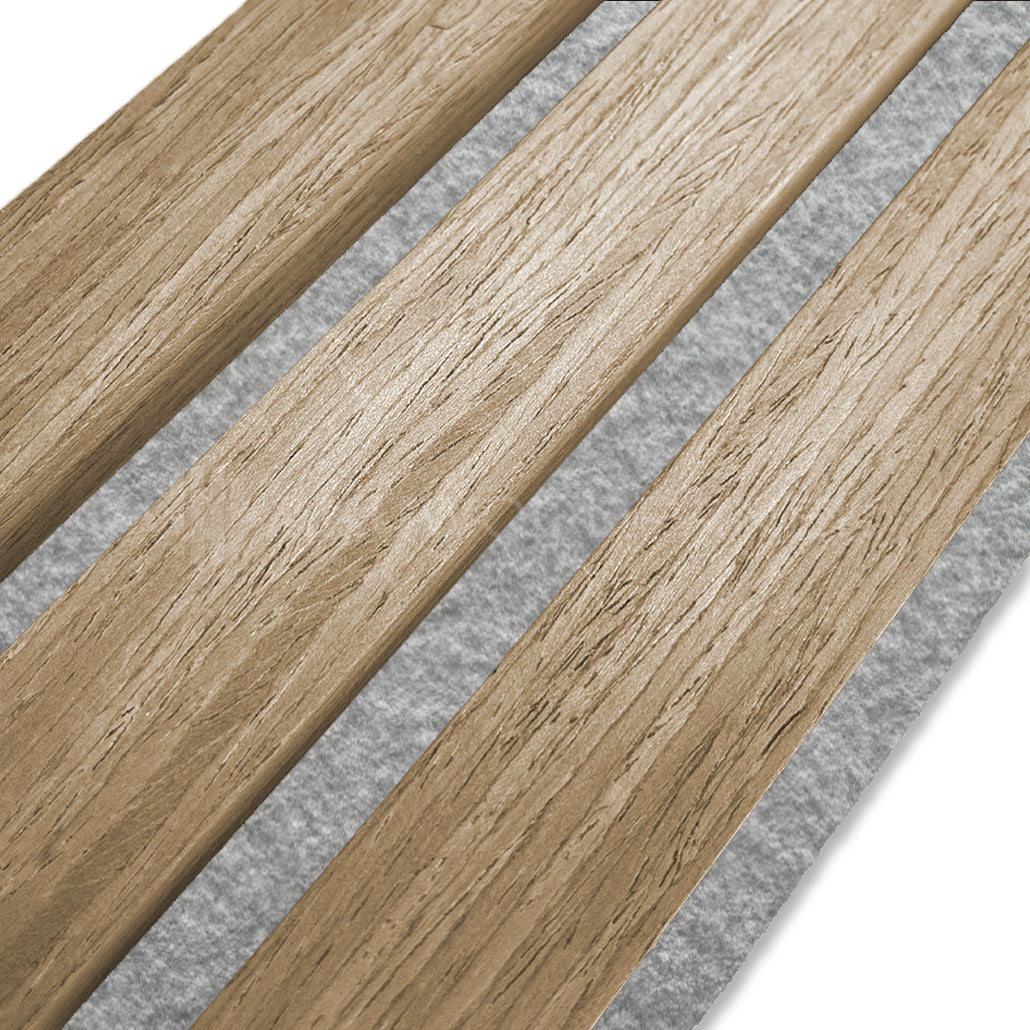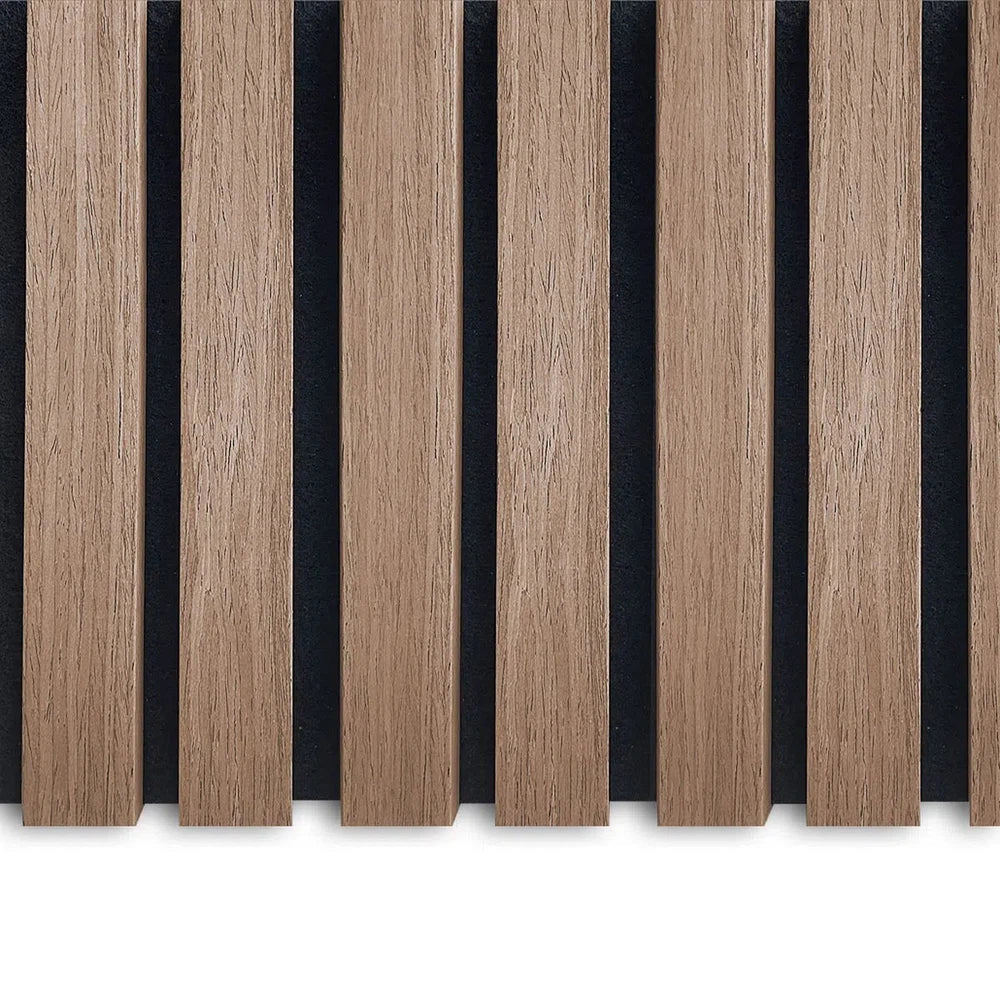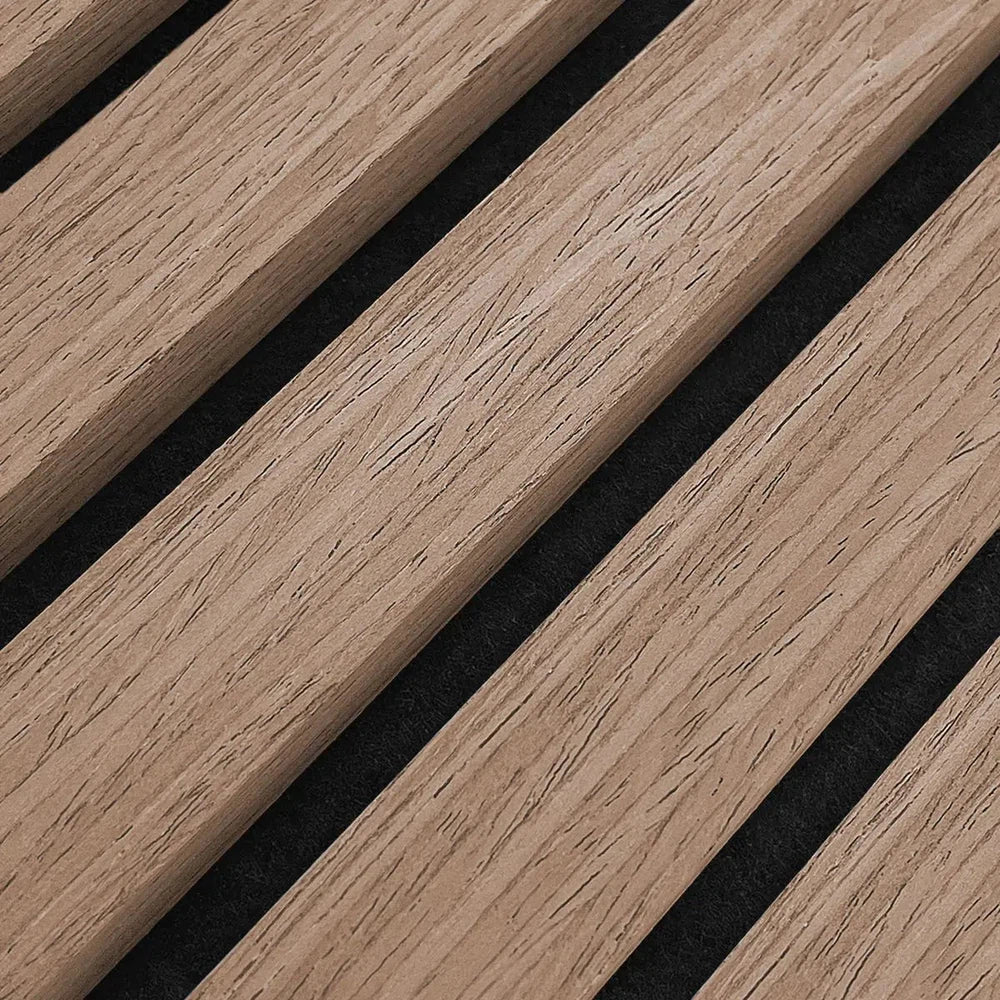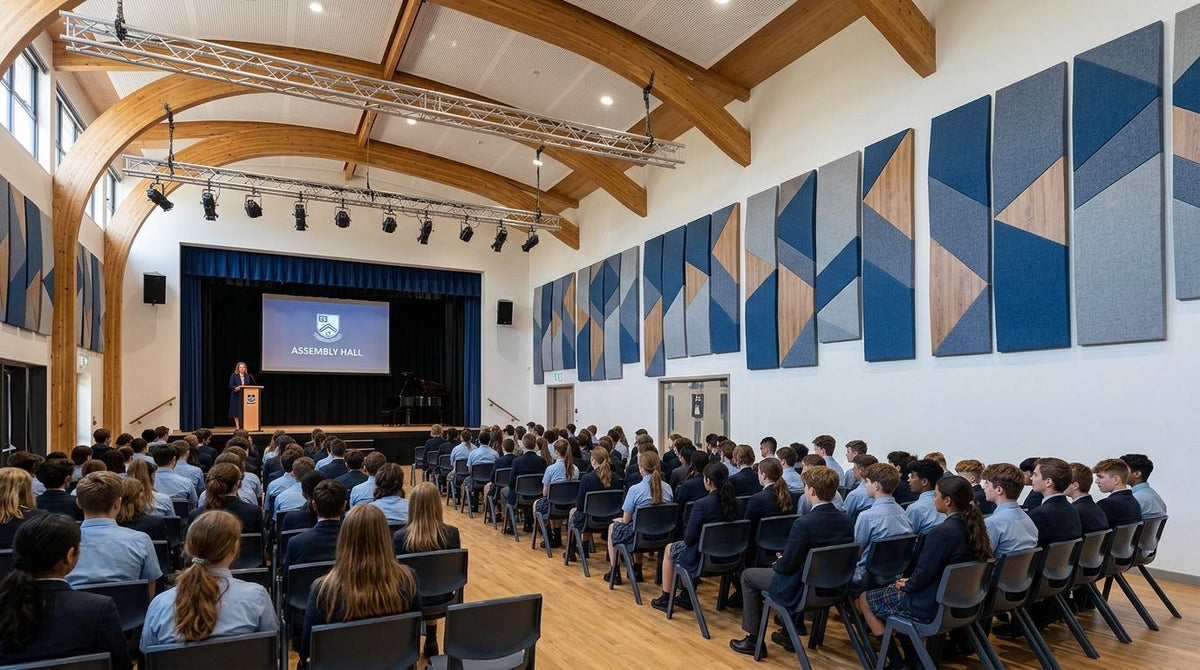
School assembly hall acoustic panels solve the specific echo problem that comes from a large volume of empty air trapped between hard walls, a high ceiling and a polished floor — the room type most likely to make a headteacher's announcement bounce back as noise. Assembly halls double as gyms, exam venues and performance spaces, so any acoustic treatment has to survive foot traffic, ball impacts and daily use, not just look good on the day it's fitted.
- School assembly hall acoustic panels with an NRC of 0.75 or higher cut reverberation fastest on bare-wall halls.
- Akustiq UK's felt-backed hexagon panels suit assembly halls that need a durable, low-maintenance wood veneer finish.
- Cover 25-40% of hard wall area before touching the ceiling — walls first, ceiling only if speech clarity is still poor.
- Book installation for a school holiday window; halls in daily use for assemblies, exams and PE rarely have a spare weekday.
Why school assembly hall acoustic panels matter for this room type
An assembly hall is usually the largest single volume in a UK school building — hard plaster or block walls, a suspended or exposed ceiling, and a wood or vinyl floor with almost nothing soft to absorb sound. That combination produces the longest reverberation time in the school, which is why a microphone in a hall often sounds worse than one in a much bigger sports centre with carpeted seating.
Staff running assemblies, exams or parents' evenings feel this daily: raised voices, repeated instructions, and pupils at the back straining to hear. Unlike a classroom, where furniture and pupils themselves absorb some sound, an empty assembly hall during a briefing or exam has almost no soft surfaces working in its favour. That's the gap acoustic panels for education spaces are built to close.
How to fix acoustics in a school assembly hall
Measure the reverberation problem first
Don't order panels before you understand where the echo is worst. A five-minute clap test at different points in the hall tells you more than a spec sheet.
- Clap once from the stage and count how long the echo tail lasts
- Repeat from the back row and from the centre of the hall
- Note which walls are bare block or plaster versus which have windows, doors or noticeboards
- Check whether the ceiling is exposed structure or a suspended tile grid
- Write down which activities suffer most: assemblies, PE announcements, exam instructions
Map where echo originates in the hall
Most halls have one or two dominant reflective surfaces doing most of the damage — usually the two long side walls facing each other, because sound bounces between parallel hard surfaces repeatedly before it decays.
- Identify parallel wall pairs — these cause flutter echo, the sharpest kind
- Mark any wall directly opposite the stage or PA speakers
- Flag high-level areas above head height that are hard to treat later
- Rule out floor and glazing as fixable now — those need separate treatment
Decide how much wall coverage you need
There's no need to panel every wall from floor to ceiling. Partial coverage, placed correctly, does most of the work.
- Start with 20-30% of total hard wall area on the worst-affected walls
- Prioritise the wall behind the stage and the wall facing it
- Spread coverage in a band at speaking height rather than one dense block
- Reassess with a second clap test after the first phase before adding more
Match the acoustic rating to the room size
Not every acoustic panel absorbs sound at the same rate — the Noise Reduction Coefficient (NRC) tells you how much. Akustiq UK's hexagon acoustic panels carry an NRC of 0.75, which is a meaningful absorption rate for a hard-surfaced hall rather than a token acoustic panel bought mostly for looks.
- Check the NRC figure before comparing any two panels on price alone
- Use how to read NRC sound absorption ratings to understand what the number actually means for a hall this size
- A higher NRC panel needs less wall coverage to hit the same result
- Felt-backed panels generally out-absorb solid wood-only panels of the same size
This is where a manufactured panel earns its place over generic foam tiles or fabric boards bought purely for budget: a school hall gets treated once and needs the finish to hold up for years, not one term.
Choose a finish that survives daily school use
An assembly hall isn't a boardroom. Panels get knocked by chairs, PE equipment and passing pupils, so the finish has to take that without looking tired by half term two.
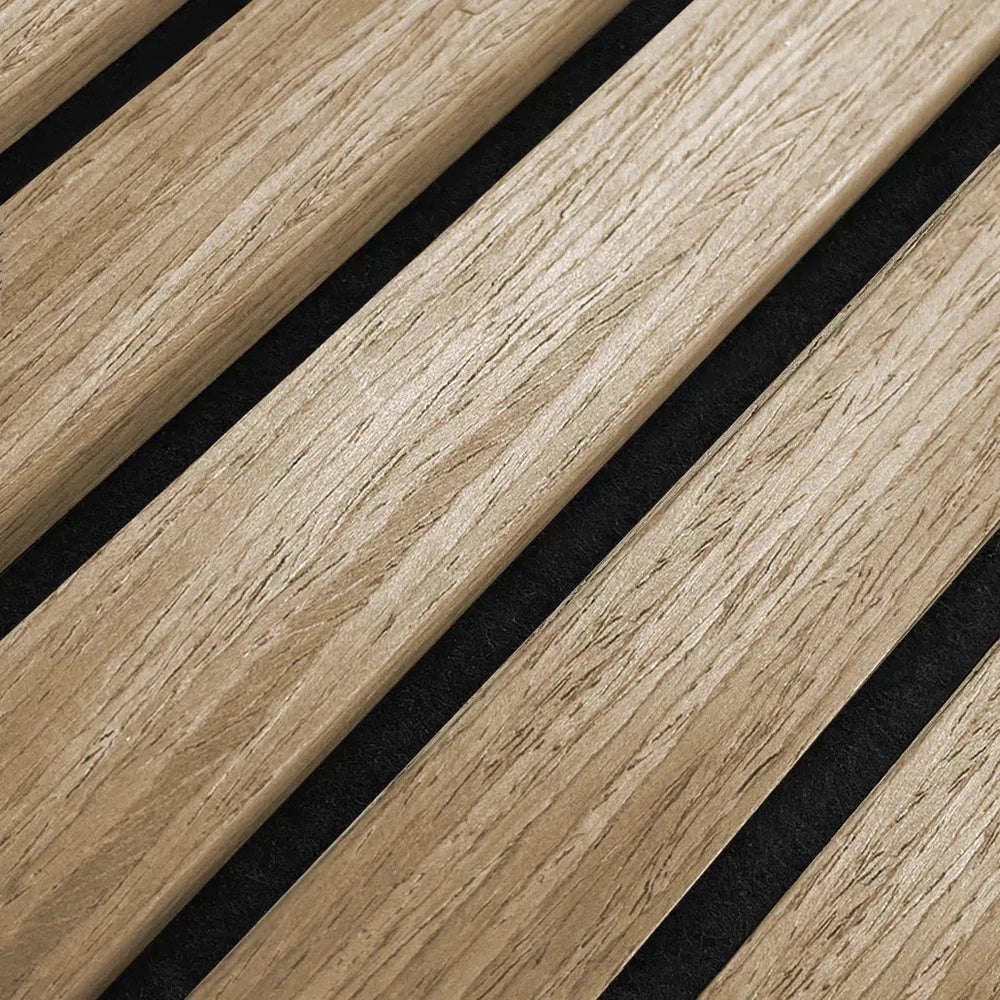
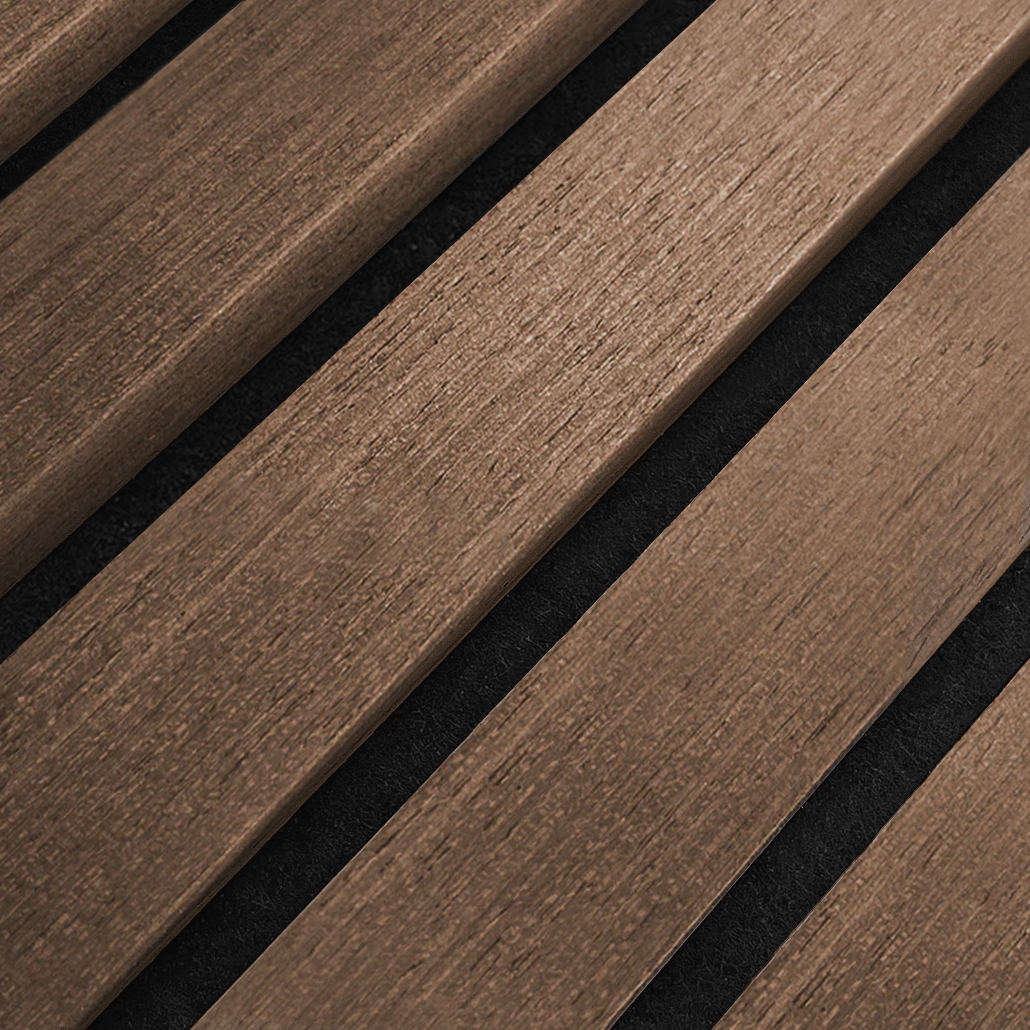
- Pick a real wood veneer over painted MDF for scratch resistance and a finish that ages evenly
- Avoid fabric-wrapped panels in halls used for PE — fabric marks and tears faster than veneer
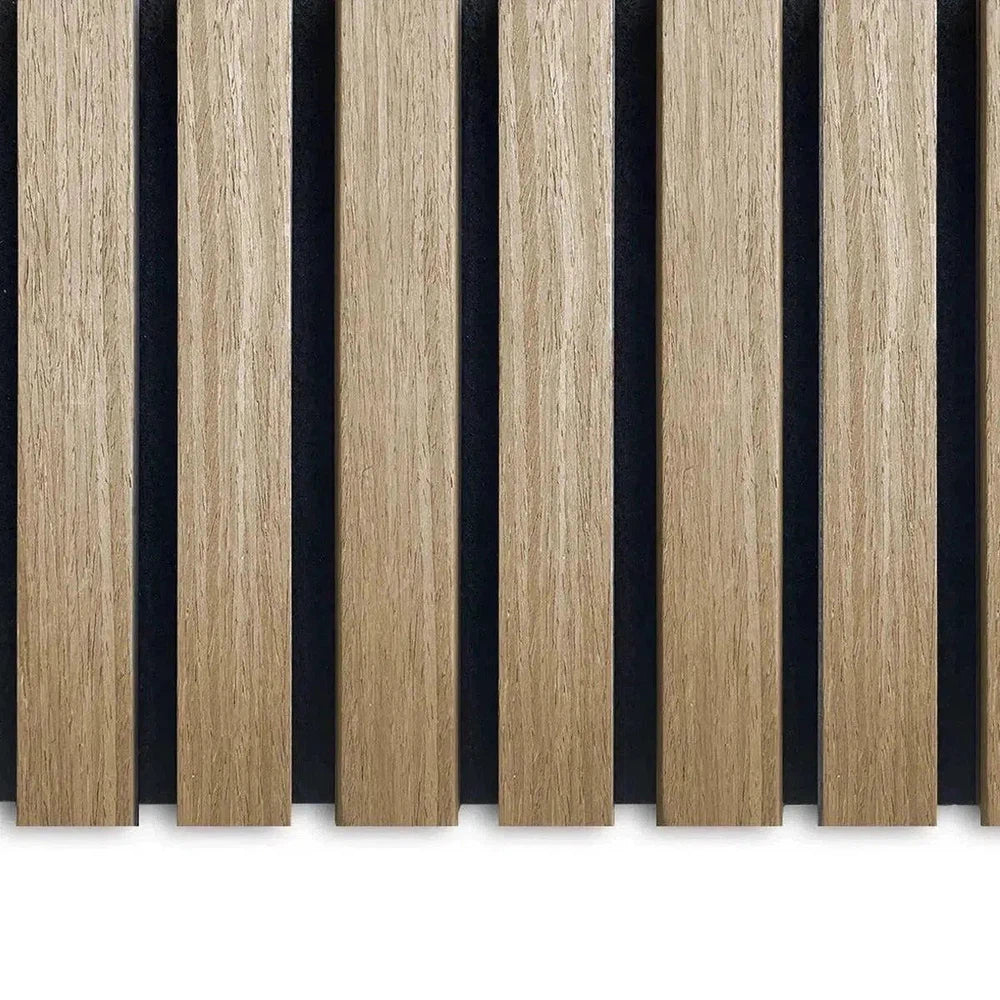
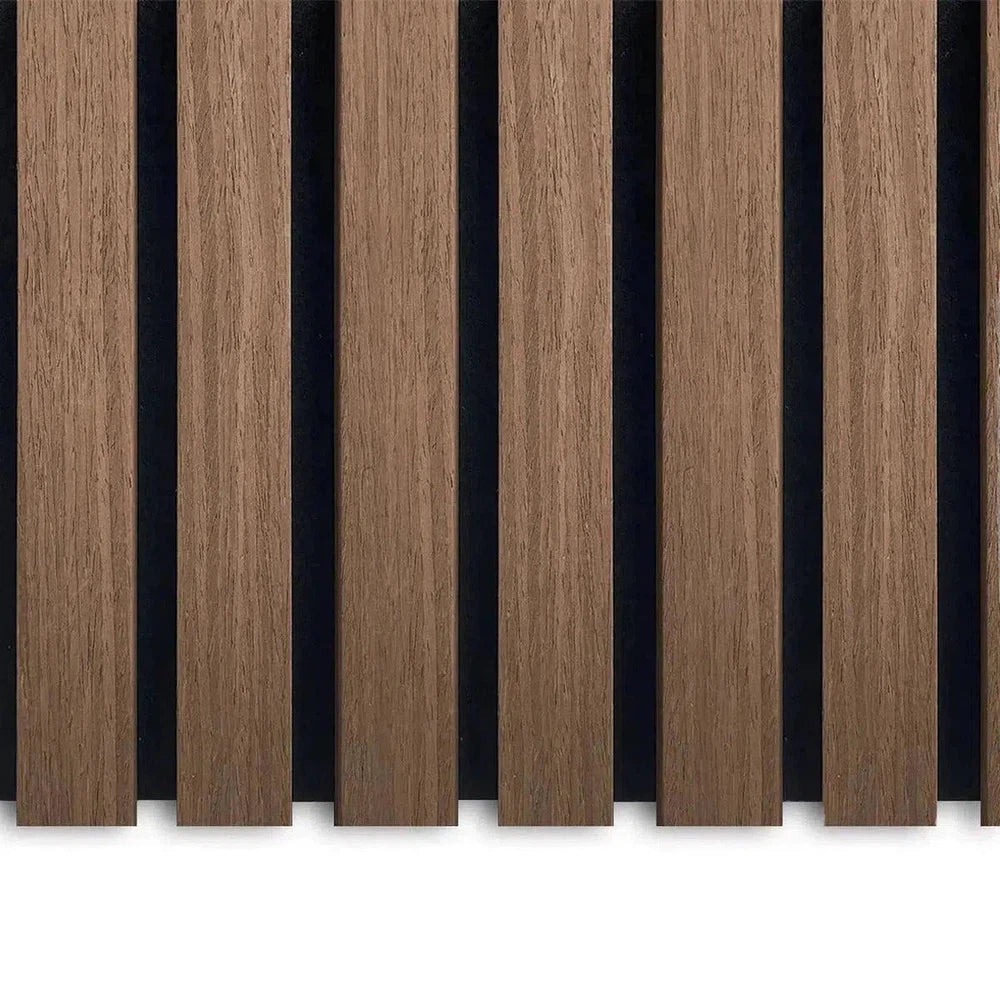
- Choose a mid-to-dark tone like natural oak or smoked oak if the hall also hosts events and needs to look presentable, not just functional
- Confirm the panel format fits your ceiling height — Akustiq UK's slat panels come in 240 cm and 300 cm lengths, and hexagon panels are sold as individual 81 cm units for pattern layouts
Plan installation around the school calendar
A hall in daily use for assemblies, exams and PE has almost no free weekday. Fitting panels needs a plan, not a hope that a contractor turns up between lessons.
- Book installation for a half-term or summer holiday window
- Confirm the substrate — block, plaster or stud — before ordering fixings
- Check scaffold or platform access if coverage extends above 2.4 metres
- Allow a full day of drying time if adhesive is used before the hall goes back into use
Maintain panels after installation
Once fitted, wood veneer acoustic panels need very little upkeep compared with fabric-wrapped alternatives, but a school hall still takes more abuse than a home office.
- Dust with a soft cloth or vacuum brush attachment monthly
- Wipe scuffs with a dry cloth immediately rather than letting marks set
- Avoid wet cleaning products directly on veneer joints
- Inspect fixings annually, especially near doors where panels take the most knocks


Comparing acoustic treatment options for assembly halls
| Option | Best for | Key limitation |
|---|---|---|
| Felt-backed wood veneer hexagon panels (Akustiq UK) | Halls needing 0.75 NRC absorption plus a real wood finish that holds up to daily use | Needs a clean, flat substrate for the felt backing to seat properly |
| Smooth wood slat panels, no felt backing | Corridors and lower-echo rooms where impact resistance matters more than absorption | Lower absorption than felt-backed panels of the same size |
| Suspended acoustic ceiling rafts | Halls with ceiling height to spare and a ceiling-driven echo problem | Requires structural fixing points; doesn't treat wall-to-wall flutter echo |
| Generic fabric-wrapped acoustic panels | Budget large-format wall coverage on a tight timeline | Fabric wears and marks faster in halls also used for PE |
Verdict: felt-backed wood veneer panels win for assembly halls that need real absorption and a finish that survives years of daily school use, not a one-term fix.
Common mistakes schools make with assembly hall acoustics
- Treating only the back wall. Flutter echo usually comes from two facing walls — treating one side barely changes the reverberation time.
- Covering too little area. Under 15% wall coverage rarely produces an audible difference; it looks like something was done without fixing the problem.
- Skipping fire and school-premises checks. Any wall finish in a hall used for assemblies and events needs to meet the building's fire safety requirements — confirm this before ordering, not after fitting.
- Scheduling fitting during term time. A hall used daily for assemblies and PE rarely has a free weekday; half term or summer holiday windows avoid disruption.
- Choosing decorative panels over rated ones. A panel that looks acoustic but carries no NRC figure is a wall covering, not a fix for echo.
FAQ
What's the best acoustic panel for a school assembly hall?
A felt-backed wood veneer panel with an NRC of 0.75, such as Akustiq UK's hexagon range, gives meaningful absorption plus a finish that survives daily school use through 2026 and beyond.
How many acoustic panels does a school hall need?
Start with 20-30% coverage of the worst-affected hard walls, usually the two facing the stage, then reassess with a simple clap test before adding more.
Do acoustic panels need fire ratings for schools?
Any wall finish fitted in a school assembly hall needs to meet the building's fire safety requirements, so confirm this with the panel supplier before specifying a full run.
Is wood veneer or fabric better for assembly hall panels?
Wood veneer holds up better than fabric in halls also used for PE, since fabric-wrapped panels mark and tear faster under daily impact.
Can acoustic panels go on a ceiling in a school hall?
Yes, but wall treatment usually comes first because it addresses the flutter echo between facing walls; ceiling treatment is a second phase if speech clarity is still poor.
How much wall coverage reduces echo in a big hall?
25-40% coverage on the dominant reflective walls is a reasonable starting point for most assembly halls before ceiling treatment is considered.
How long does fitting panels in a school hall take?
Fitting time depends on coverage area and substrate, but schools typically schedule the work for a half-term or summer holiday window to avoid disrupting daily hall use.
What size acoustic panels work in a standard assembly hall?
Akustiq UK's slat panels come in 240 cm and 300 cm lengths for full wall runs, while hexagon panels are sold as 81 cm units for pattern layouts around stages and entrances.
One last thing
Order a sample panel before specifying a full hall run. Veneer grain and tone read differently under hall strip lighting from 20 metres than they do on a screen or a small swatch, and a hall is too big a job to get the finish wrong on the first order.