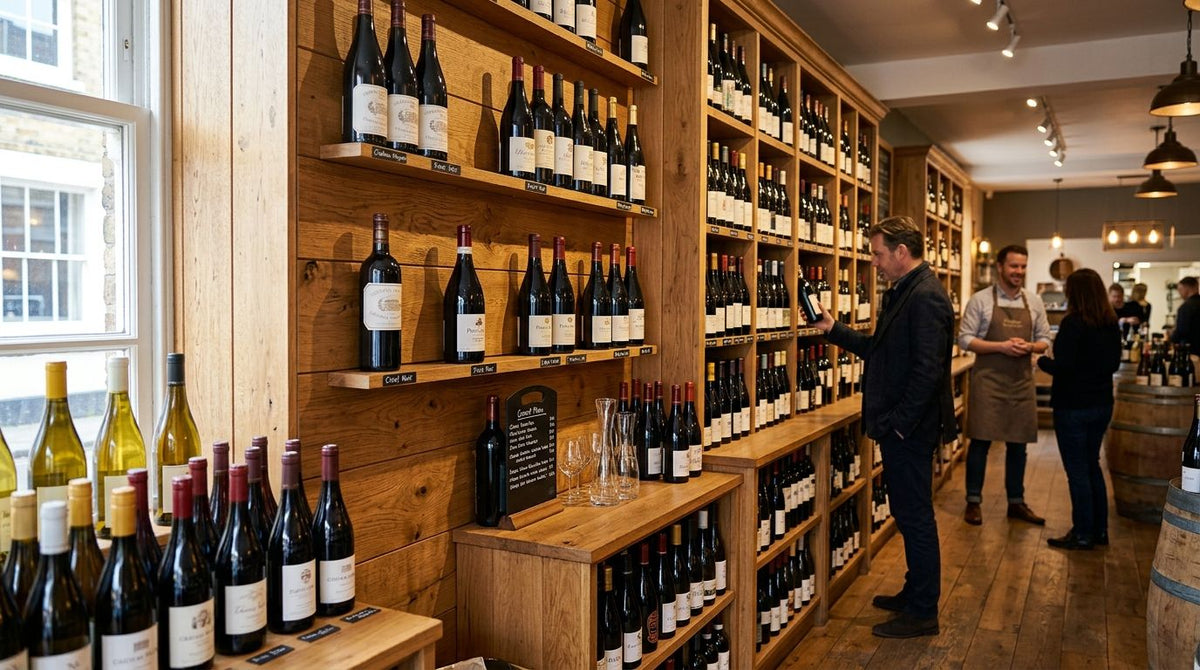
Wine shop wall panels need to do three jobs a standard retail fit-out skips: cut the echo bouncing off glass bottles and hard floors, hold the weight of shelving brackets and gondola ends, and read premium enough to justify the markup on the bottle sitting in front of them. A wine shop or off-licence isn't a café or a boutique — the acoustic problem is worse because glass and metal racking reflect sound far more than fabric or carpet ever would.
- Wine shop wall panels cut reverberation off glass bottles and tile floors without a full rebuild.
- Order Natural Oak, Black Oak or Smoked Oak samples before committing to a 240 cm or 300 cm run.
- A feature wall behind the till does more for atmosphere than panelling every wall in a small unit.
- Budget separately for panel glue and end-piece trims — panels alone don't finish a wine shop fit-out.
Why wall panels matter for wine shop and off-licence acoustics
Wine shops and off-licences are acoustically hostile by design. Glass bottles on open shelving, chiller cabinet doors, tile or polished concrete floors and low suspended ceilings all reflect sound instead of absorbing it. A customer asking about a bottle at the back of the shop competes with the till printer, the door chime, and whatever's echoing off the rack behind them.
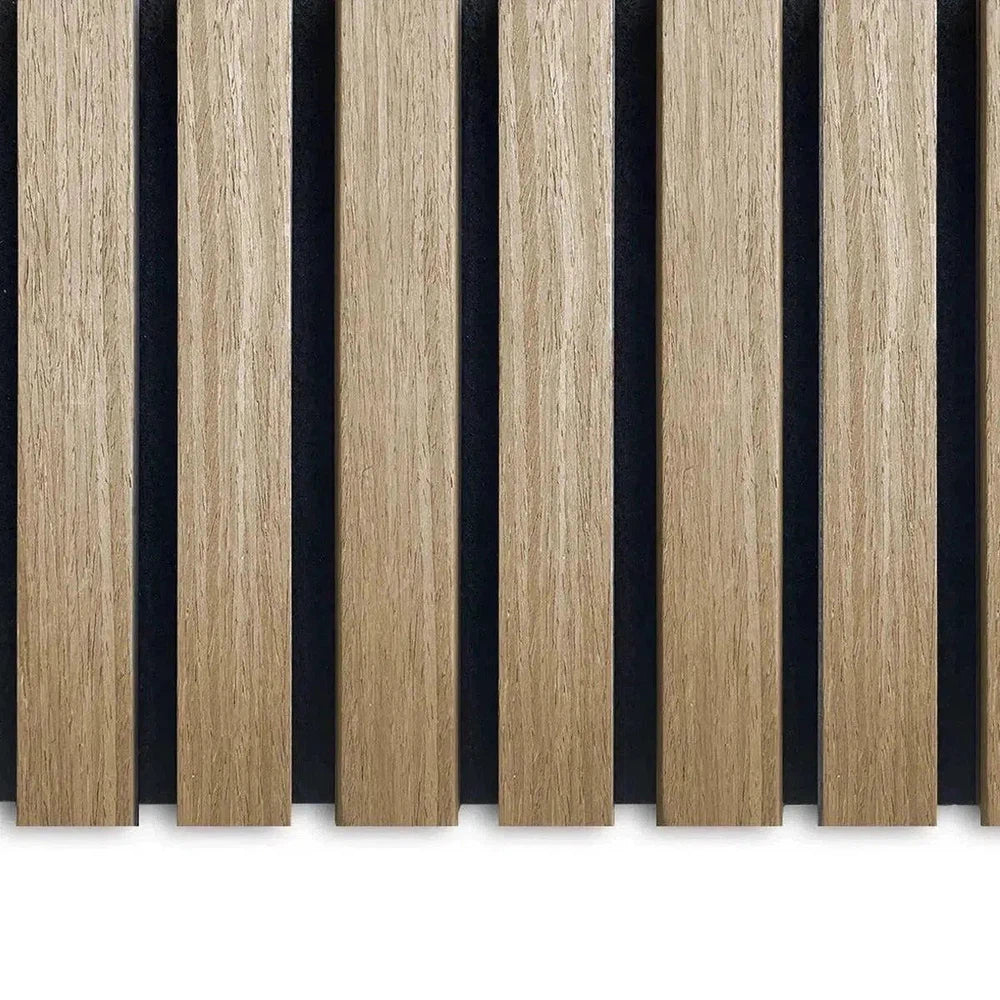
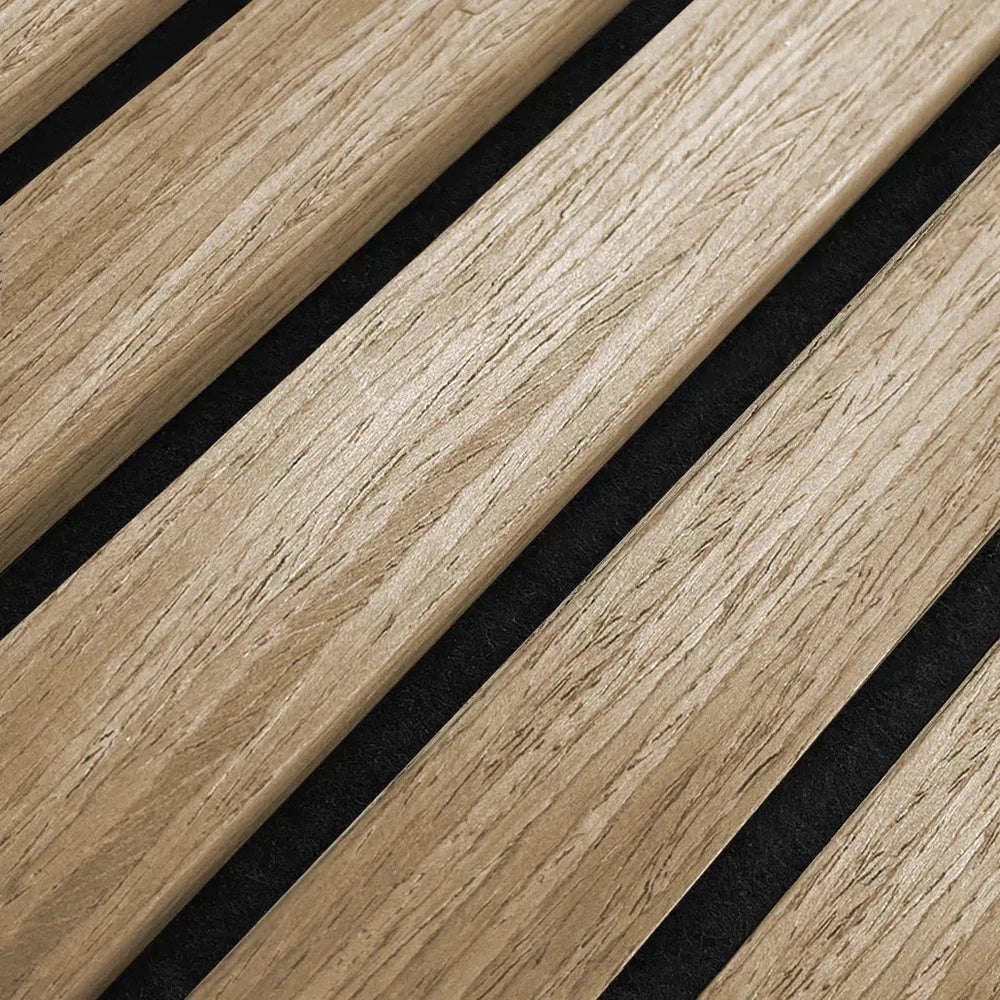
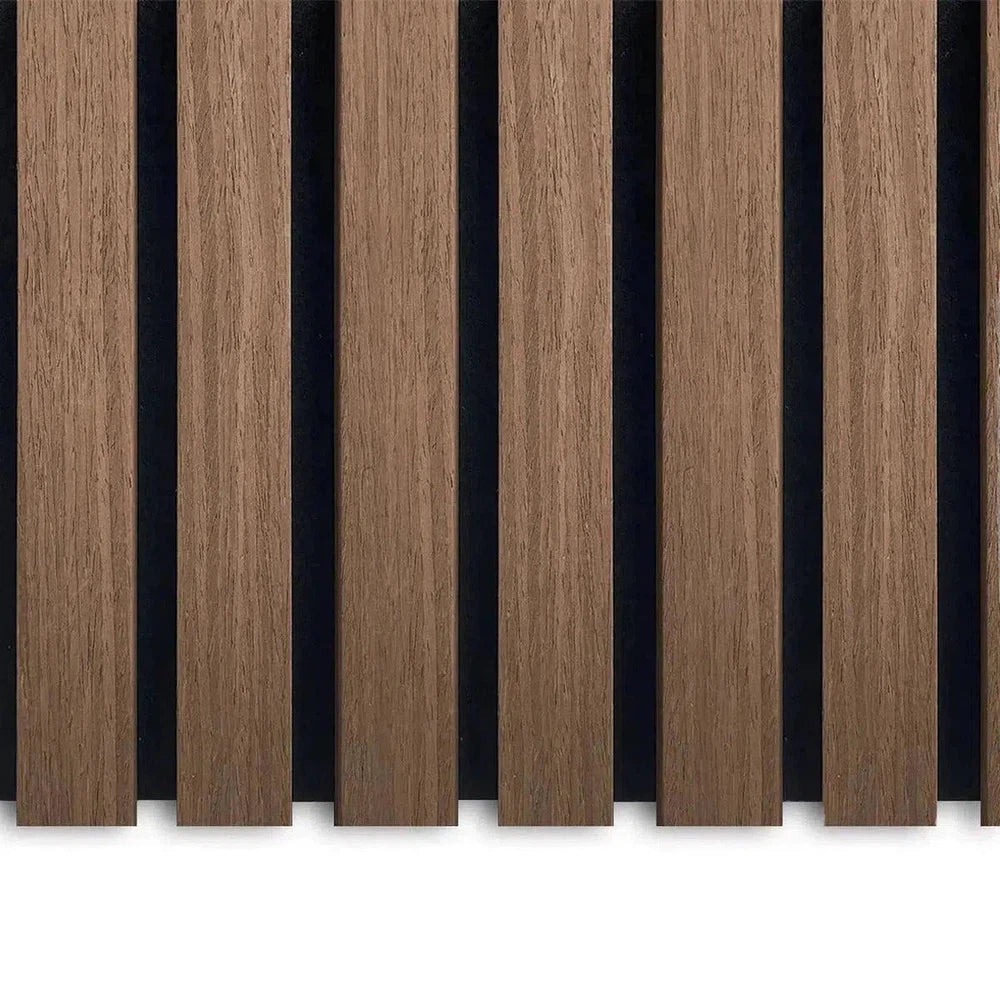
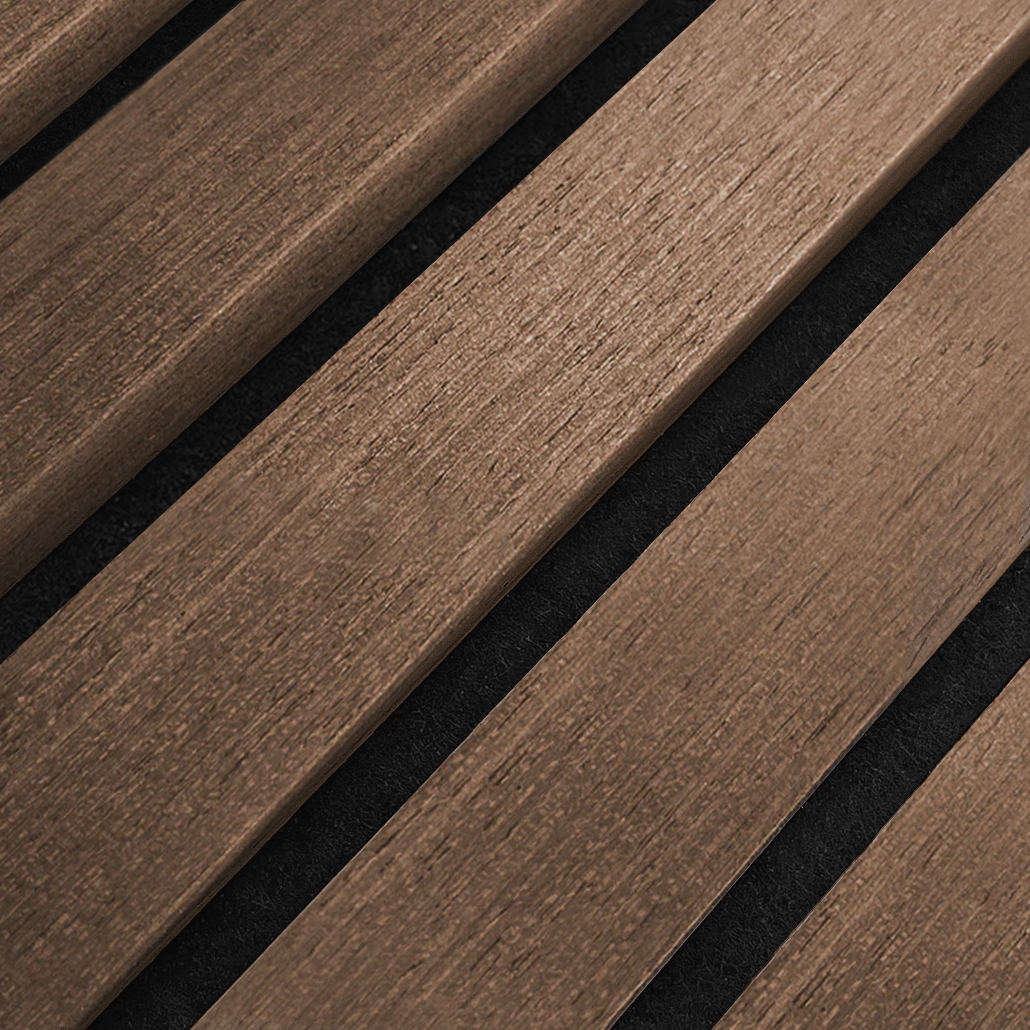
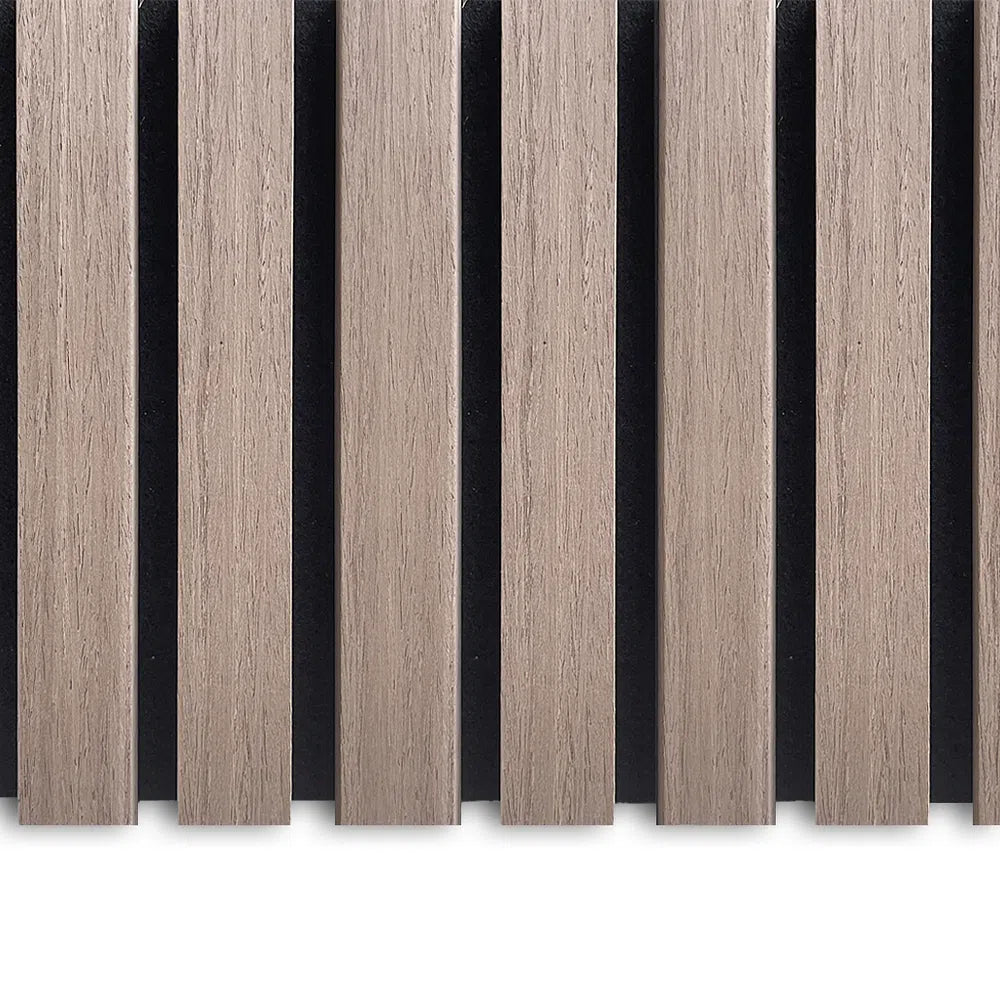
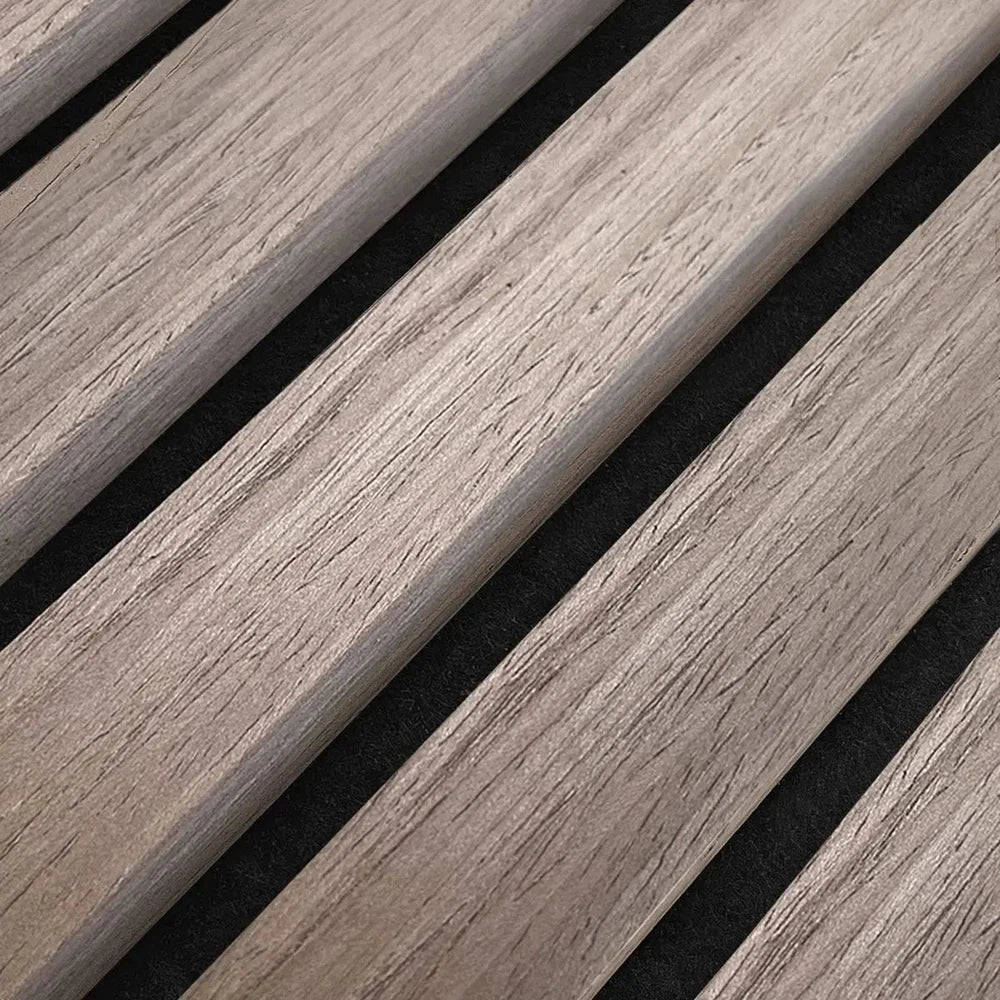
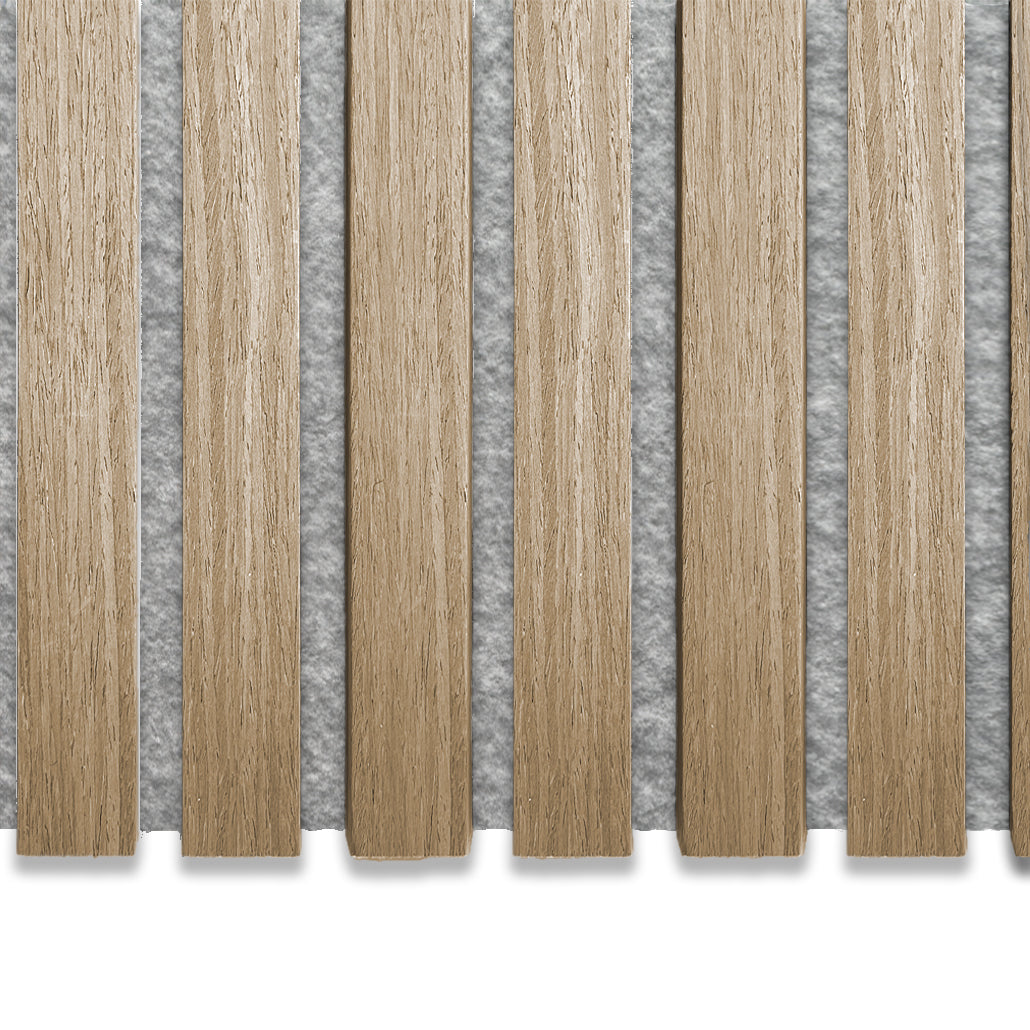
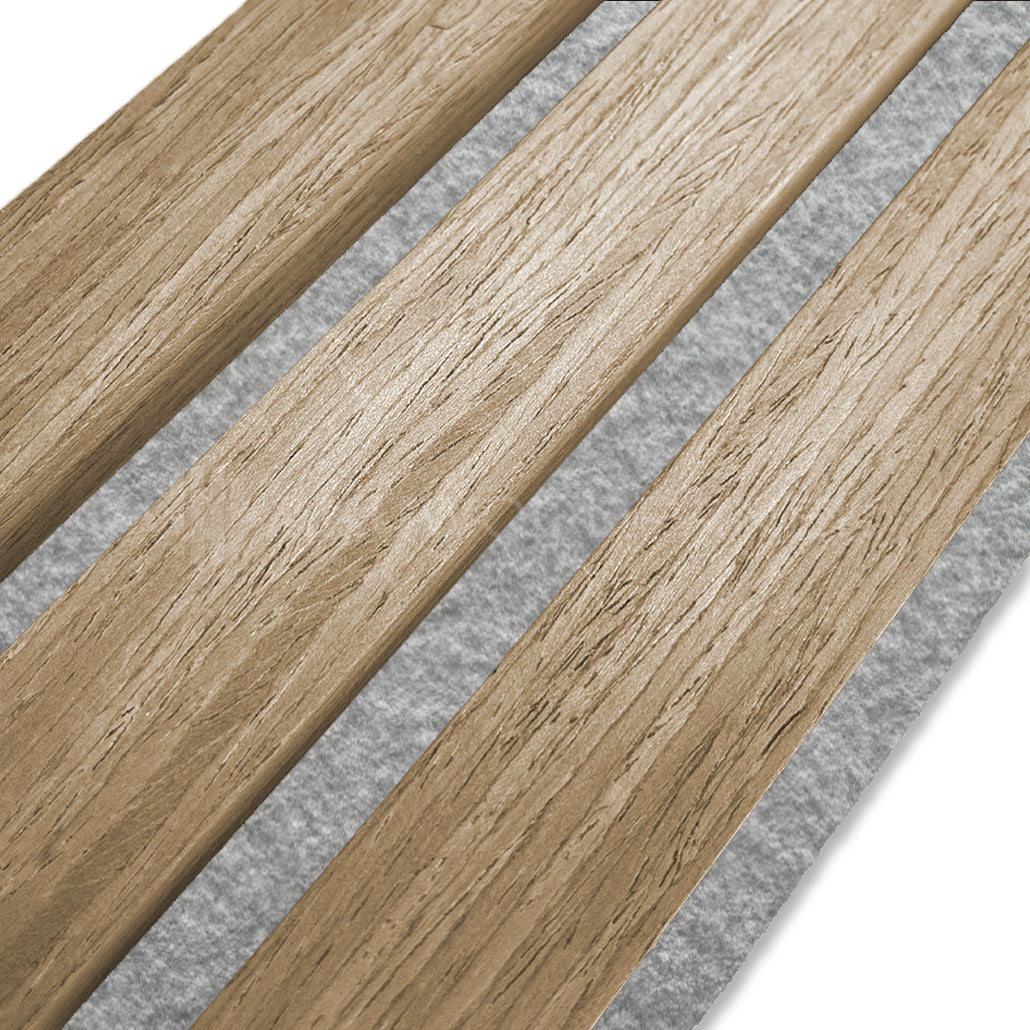
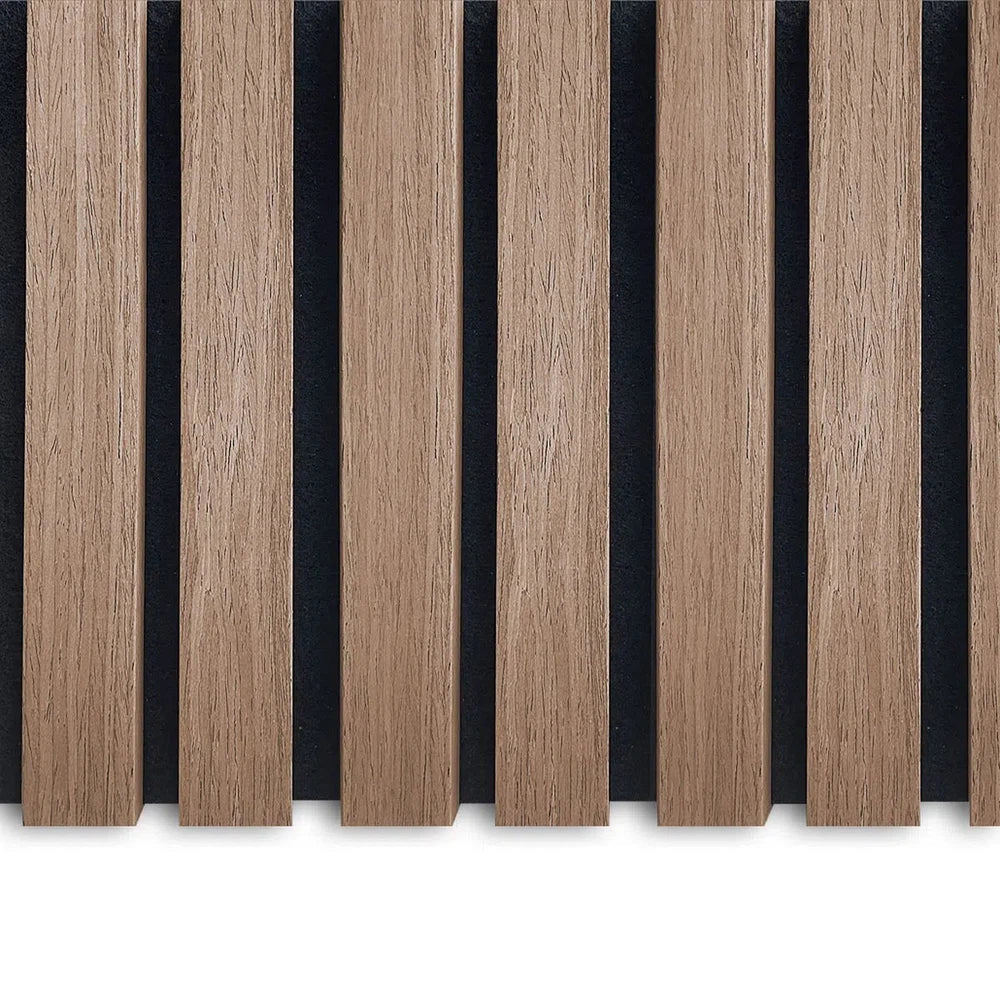
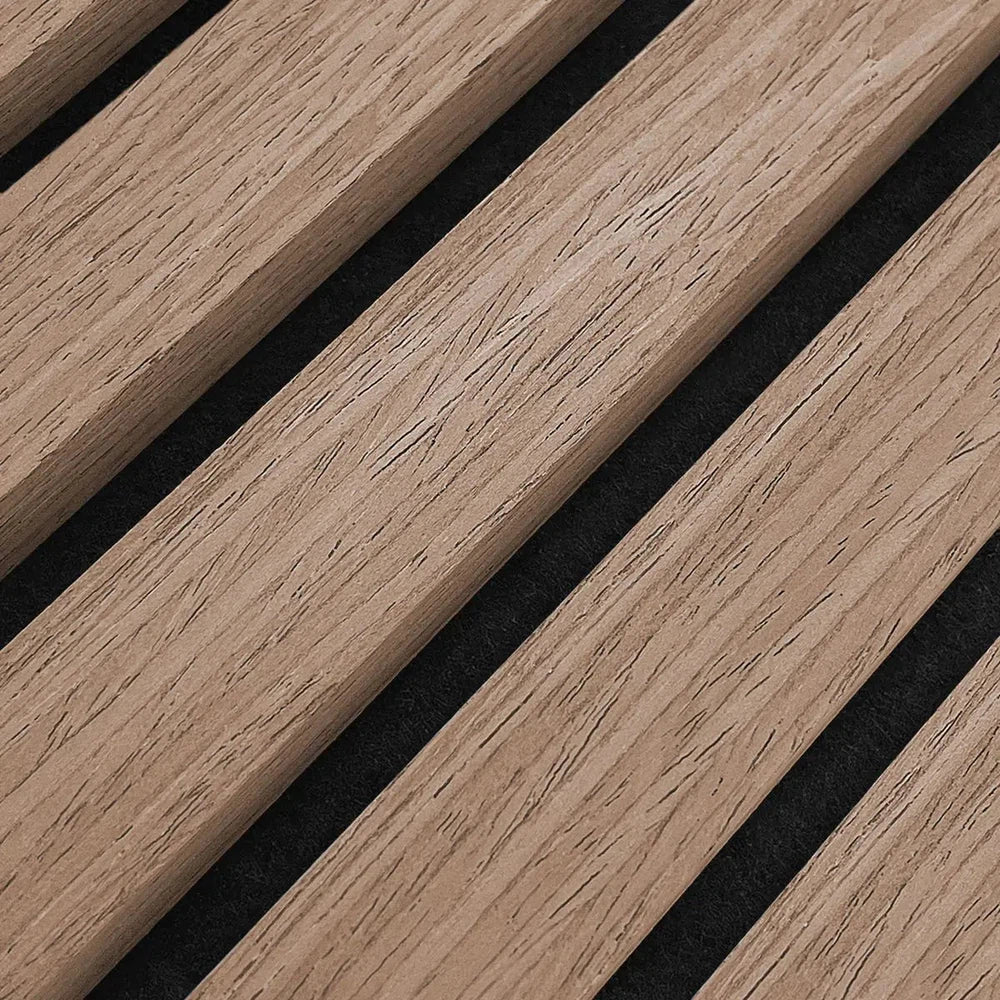
Akuwood Panel pairs a real wood veneer face with an acoustic felt backing that absorbs sound instead of bouncing it, which is the opposite of what glass and tile do on their own. For a wine shop, that matters most at the till and tasting counter, because that's where staff and customers actually need to hear each other over the rest of the shop floor.
The visual side counts just as much in 2026. A wine shop selling anything above supermarket price points needs the walls to argue for the markup before the customer even reaches the shelf.
Audit the acoustics before you order panels
Do this on the shop floor, not from a spec sheet. It costs nothing and tells you where panels actually need to go.
- Clap once in the empty shop before opening hours and note where the sound trails longest.
- Check the ceiling: suspended tile ceilings behave differently to exposed concrete or brick.
- Walk the shop while a colleague talks at normal volume from the till — see where it drops out.
- List every hard surface: chiller doors, tile runs, glass shelving, metal wine racks.
- Compare the sound with the door open versus closed during a quiet trading hour.
Map fixture and shelving loads before choosing panel type
A panel that looks right on a mood board can still fail if it's asked to carry a loaded wine rack. Work out what's structural before you pick a finish.
- Weigh out what each wall-mounted wine rack or gondola end actually carries when fully stocked.
- Check stud spacing on stud walls; panels distribute weight differently than plasterboard alone.
- Decide which walls need to carry fixtures and which are decorative-only feature walls.
- Confirm glass shelving brackets fix into masonry behind the panel, not into the panel face.
Choose a wood finish that matches your wine categories
This is where the shop's own stock should drive the decision, not the other way round. A finish that suits a natural wine specialist won't suit a whisky and fine wine merchant.
- Natural Oak wall panels suit bright, everyday wine and rosé sections in daylight-heavy shop fronts.
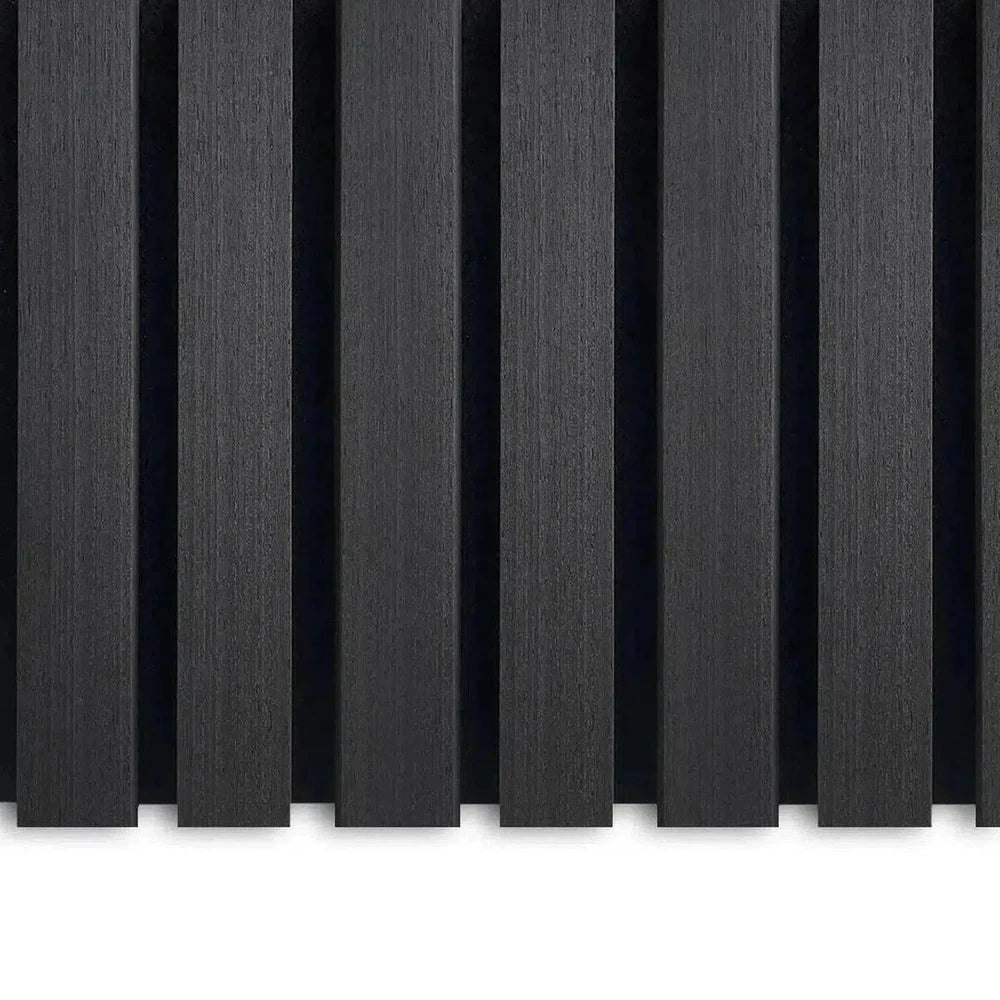
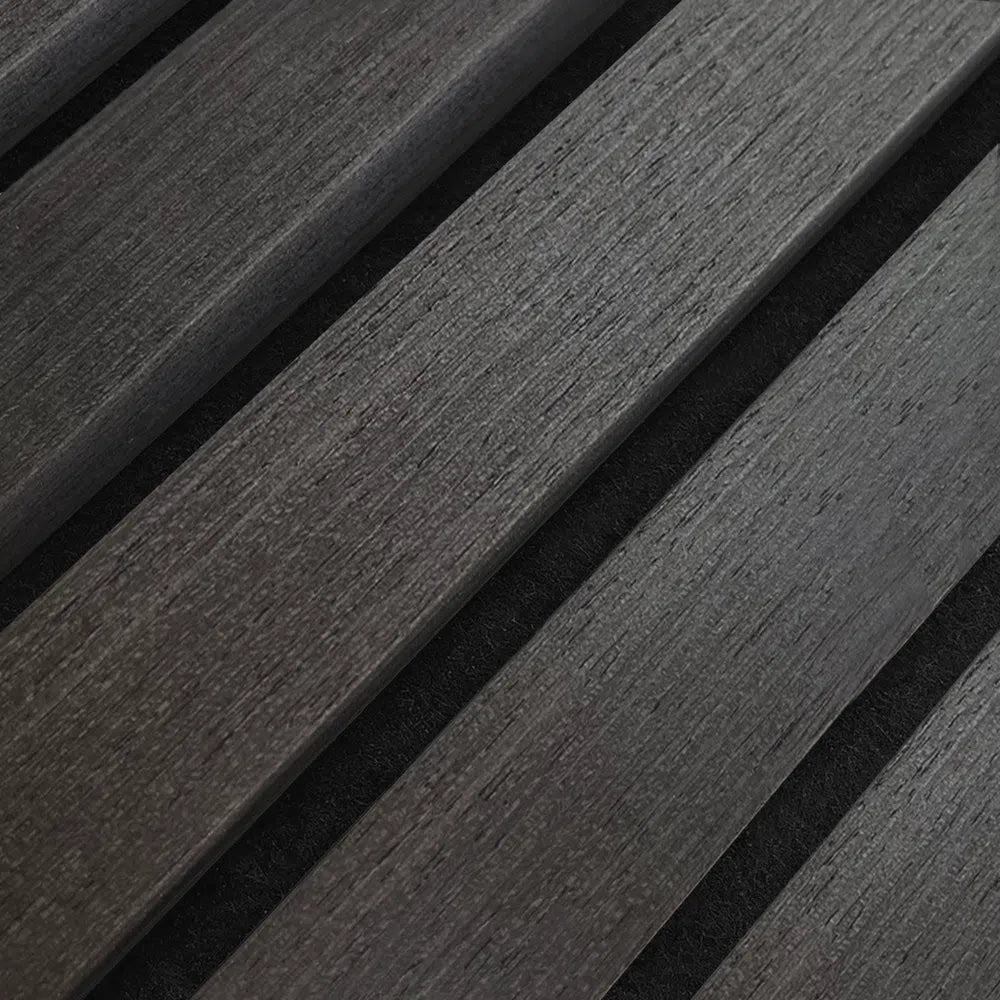
- Black Oak reads well behind fine wine, port and spirits walls where you want a moodier backdrop.
- Walnut brings a warmer tone that pairs with Old World reds and traditional off-licence styling.
- Smoked Oak works as a single feature wall behind the till rather than a full-room finish.
- Grey Oak or Mocca give a neutral base wall that lets glass shelving and labels do the talking.
- Rustic Oak suits farm-shop and natural wine retailers going for an unpolished, working-cellar look.


Plan panel layout around tasting counters and till zones
Don't panel the whole shop just because one wall echoes. A feature wall behind the till does more for a wine shop's atmosphere than panelling every wall in the building.
“A feature wall behind the till does more for a wine shop's atmosphere than panelling every wall in the building.”
- Put acoustic panelling behind the tasting counter first — that's where glass clatter is loudest.
- Use a feature wall behind the till as a backdrop for photos and social posts.
- Skip full panel runs directly behind chiller cabinets; condensation and heat cycling degrade veneer faster there.
- Leave clear, unpanelled runs at fire exits and required signage locations.
Order samples before committing to a full run
A wine shop's lighting rig changes how a finish reads more than almost any other retail category, because spotlighting on bottles throws warm and cool light unevenly across the wall.
- Request two or three finish samples and view them under the shop's actual spotlighting, not daylight alone.
- Hold the sample against the till counter or bar top to check undertone match.
- Check how the veneer grain sits next to bottle labels and pricing cards.
- Confirm the felt backing colour where panel edges will be visible near doorways.
Budget for glue, end pieces and installation extras
Panels are one line item on the fit-out invoice, not the whole thing.
- Factor in panel glue for surface-mount runs where studwork isn't available.
- Price end pieces for exposed panel edges at doorways, window returns and gondola ends.
- Allow time for panels to acclimatise to the shop's temperature before fitting.
- Add labour time for cutting around sockets, alarm sensors and till points.
Comparing finish options for wine shop interiors
| Finish | Best for | Key limitation | Verdict |
|---|---|---|---|
| Natural Oak | Bright, everyday wine sections | Shows wear near high-traffic tills faster | Buy |
| Black Oak | Fine wine and spirits walls | Reads heavy in units under 20 sqm | Buy |
| Walnut | Old World reds, traditional shops | Grain contrast needs consistent lighting | Buy |
| Smoked Oak | Single feature wall behind till | Not suited to full-wall daylight runs | Hold |
| Grey Oak | Neutral base behind glass shelving | Least distinctive without accent lighting | Hold |
| Mocca | Farm-shop, natural wine styling | Smaller matching end-piece range than oak | Hold |
Akuwood Panel stocks all six finishes as 3-sided veneer wall panels in both 240 cm and 300 cm formats, so the size choice comes down to ceiling height rather than availability.
Common mistakes wine shops make with wall panels
- Panelling straight over the chiller cabinet wall. Condensation cycling behind refrigeration units warps veneer over a season or two — leave that wall bare or use tile instead.
- Full-wall panelling when only the till needed it. Most echo complaints in a wine shop trace back to one or two hard surfaces, not the whole room.
- Picking one dark finish for the entire shop. Black Oak or Smoked Oak across every wall shrinks a small unit under standard retail lighting.
- Mounting loaded wine racks straight into the panel face. Fixture weight needs to land on studwork or masonry behind the panel, not the panel itself.
- Treating the fit-out as an isolated cost. Retail units that skip a rates review before signing off a shopfit invoice often overpay for years afterward — the same due diligence that goes into business rates advice for retailers should happen before the panels go up, not after.
FAQ
What's the best wall panel finish for a small wine shop?
Natural Oak or Grey Oak work best in small units because lighter finishes don't shrink the room the way Black Oak or Smoked Oak can under standard retail lighting. Use a darker finish as a single feature wall instead of a full room treatment.
Do acoustic wood panels work in glass-heavy off-licence interiors?
Yes — acoustic wood panels absorb sound where glass bottles and tile floors reflect it, which is exactly the imbalance most wine shops have. The felt backing behind the veneer face does the absorbing, not the wood itself.
How much wall coverage does a wine shop actually need to panel?
Most wine shops only need the till wall and tasting counter panelled, not the full room. Run the clap-test audit first to confirm where the echo actually sits before ordering a full-wall quantity.
Can wall panels go behind a wine chiller cabinet?
It's not recommended. Heat and condensation cycling from the chiller unit degrades wood veneer faster than anywhere else in the shop, so that wall is better left bare or tiled.
Is Black Oak too dark for a small off-licence?
Black Oak can read heavy across a full room under 20 sqm, but it works well as a single feature wall behind a fine wine or spirits section. Pair it with a lighter finish elsewhere in the unit.
Do I need panels or just an acoustic feature wall behind the till?
Most wine shops only need a feature wall behind the till or tasting counter, since that's where staff and customers need to hear each other over the rest of the shop floor. Full-room panelling is rarely necessary.
What size format works better for shop fit-outs, 240 cm or 300 cm panels?
The choice comes down to ceiling height, not preference. 240 cm panels suit standard retail ceiling heights; 300 cm panels suit floor-to-ceiling runs in taller units without a horizontal join.
How long should I keep panels in the shop before fitting them?
Let panels acclimatise to the shop's temperature and humidity before fitting rather than installing them straight off the delivery pallet, which reduces the risk of movement after installation.
One last thing
The wine shops getting the most out of wall panels in 2026 aren't the ones panelling every wall — they're the ones running a single feature wall behind the till in Black Oak or Smoked Oak and leaving the rest of the shop in a lighter, neutral finish. It costs less material, solves the actual echo problem at the point of sale, and still gives the shop the premium backdrop it needs for photos and displays.