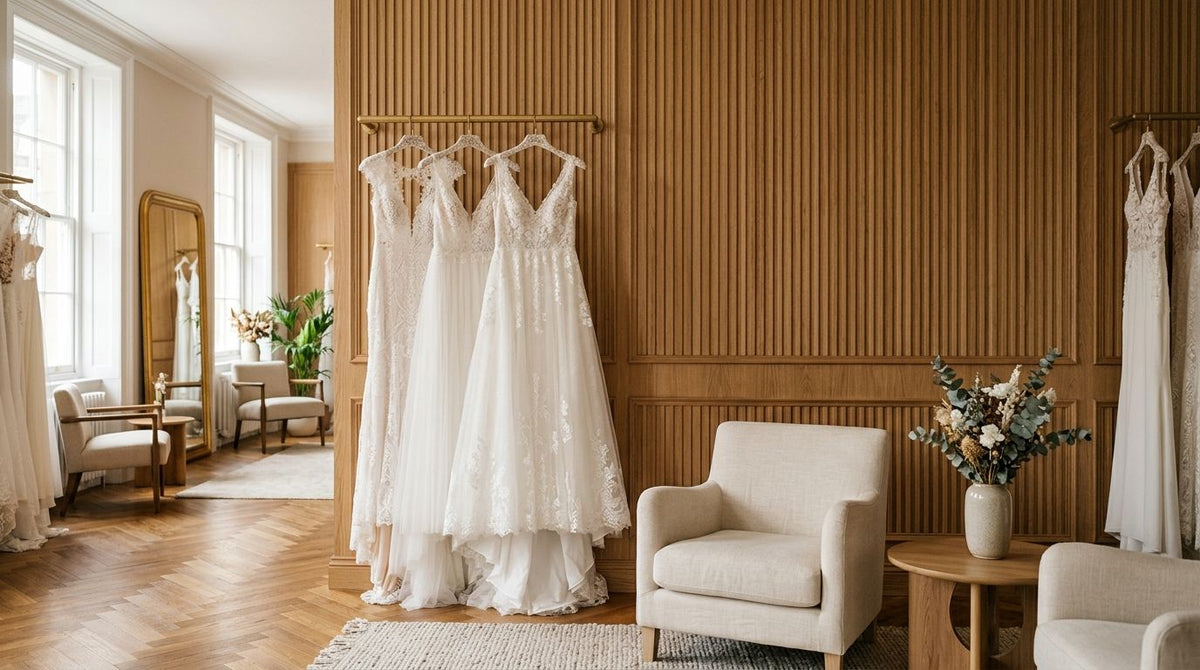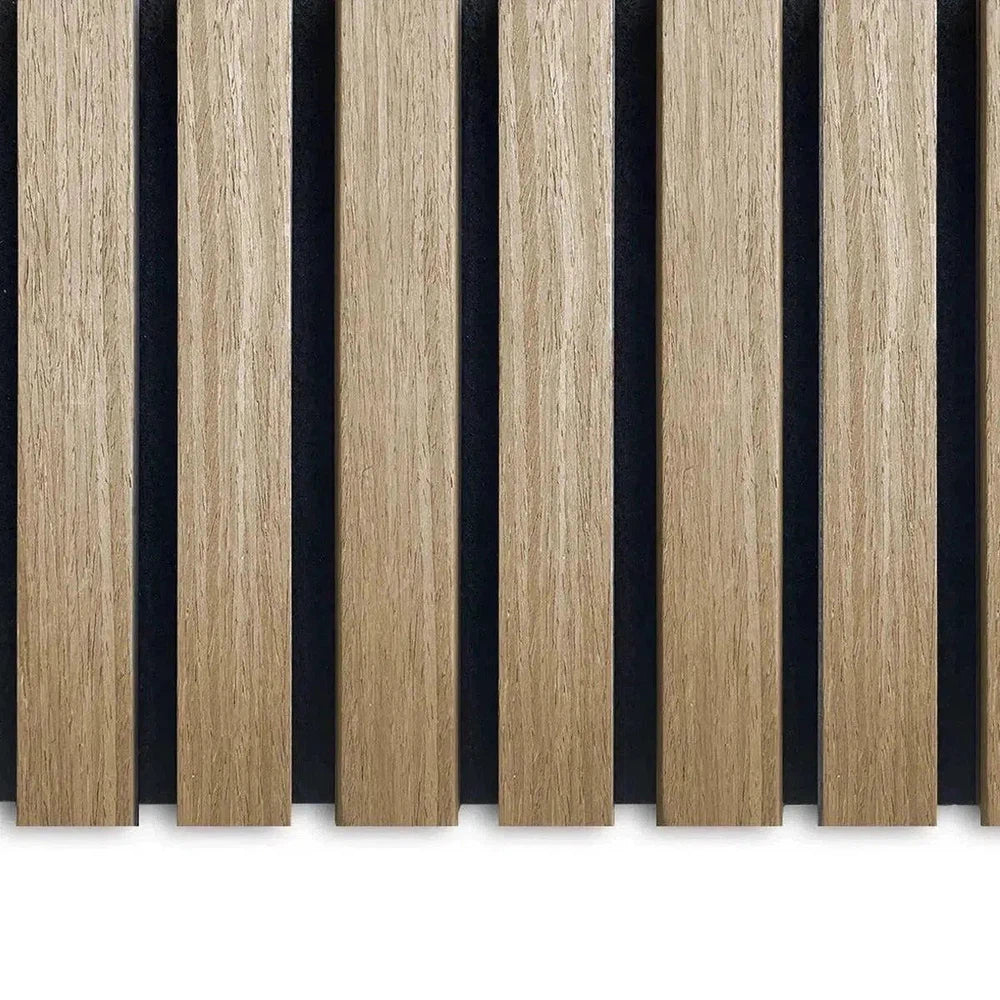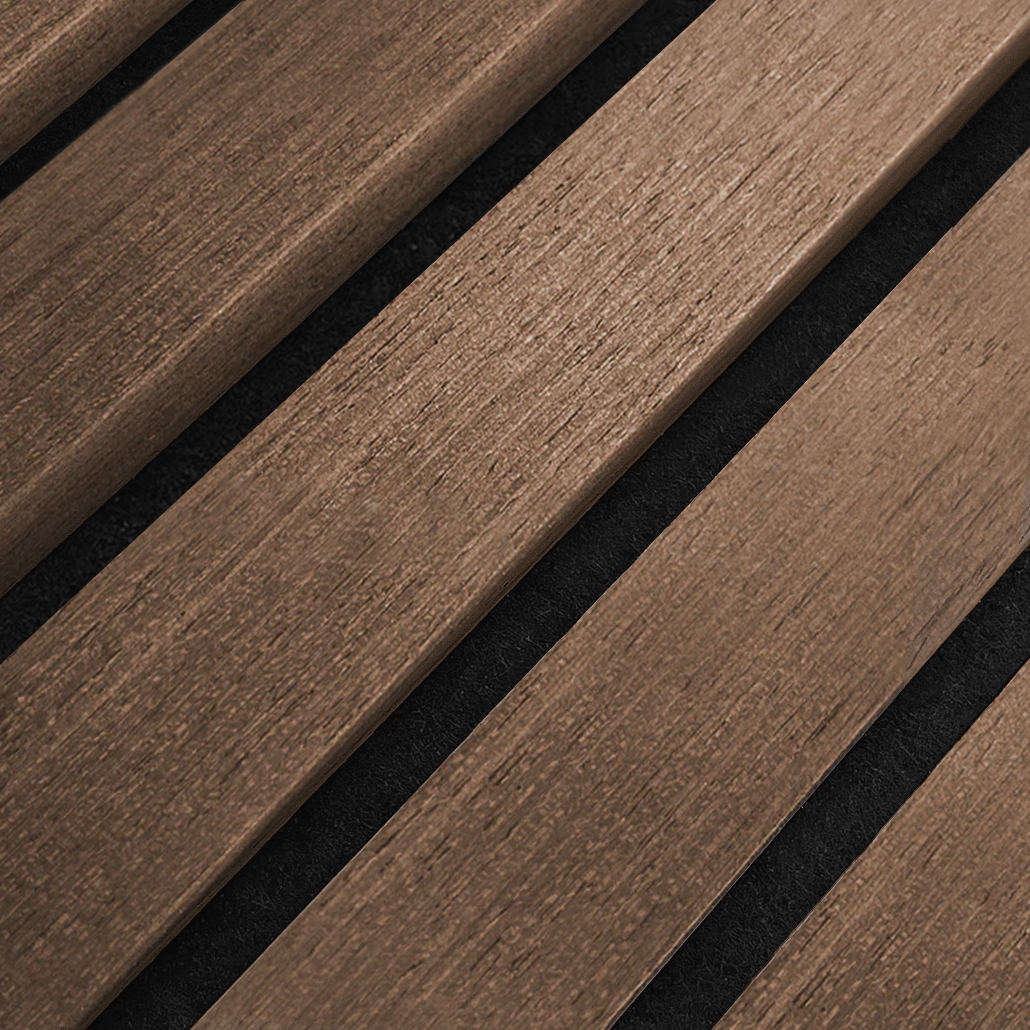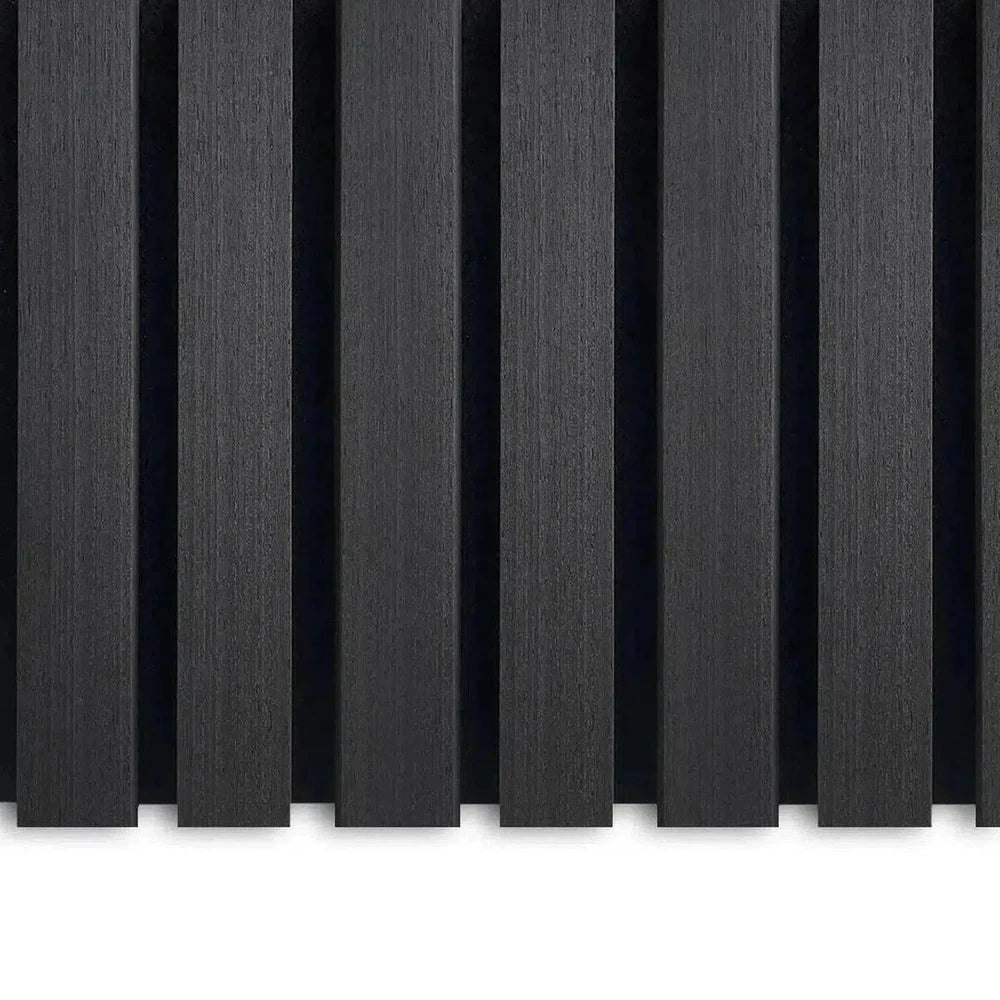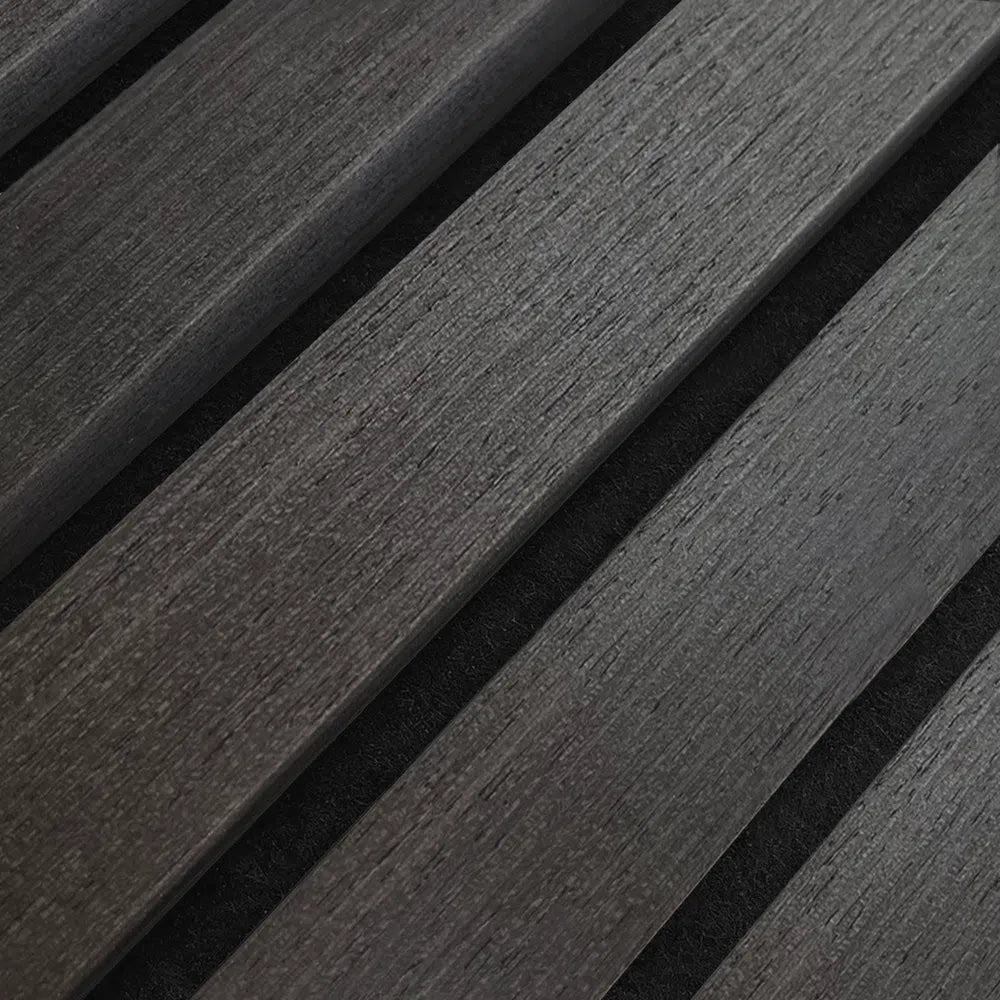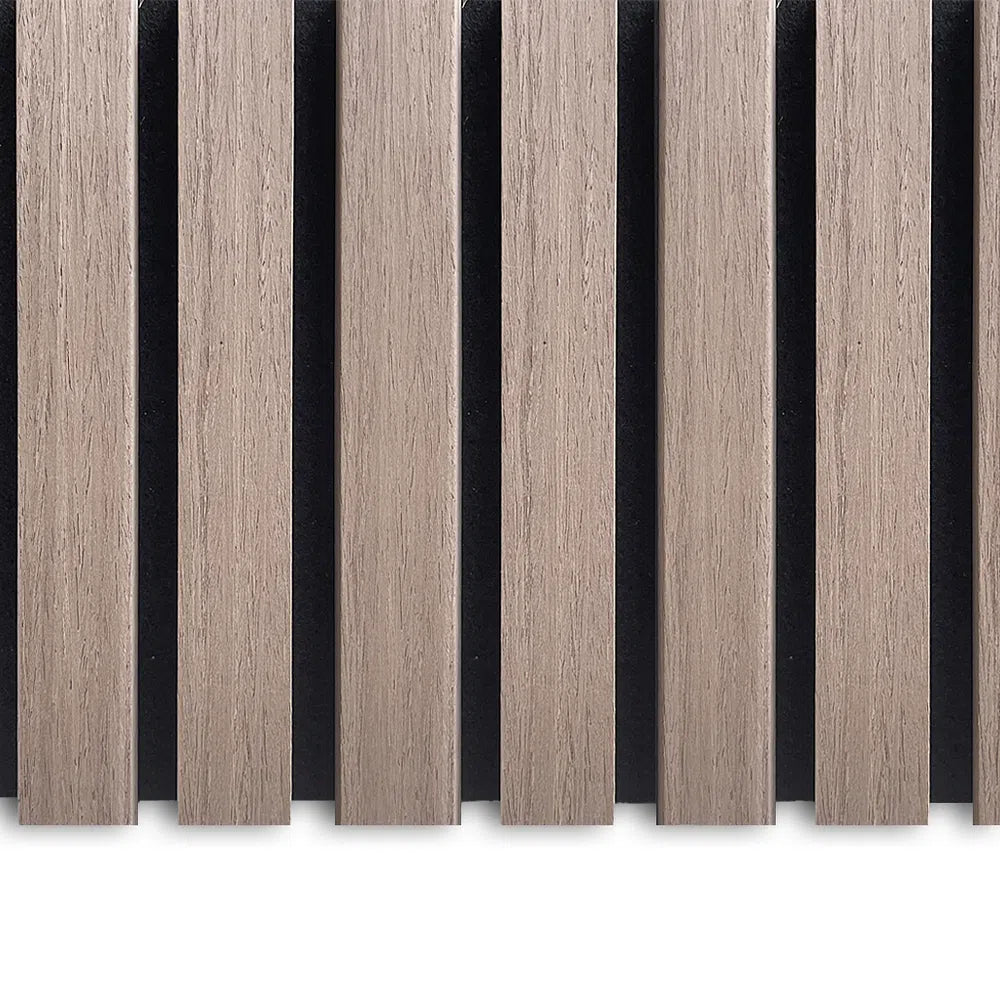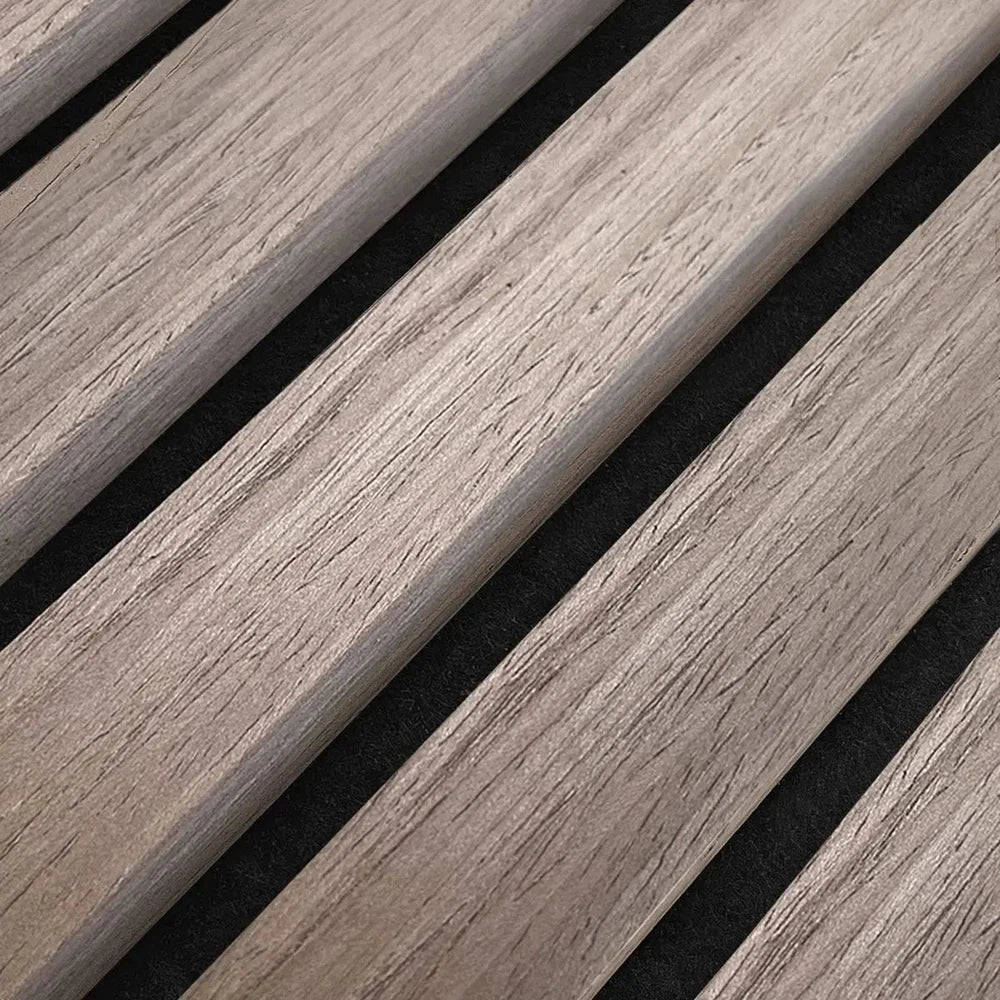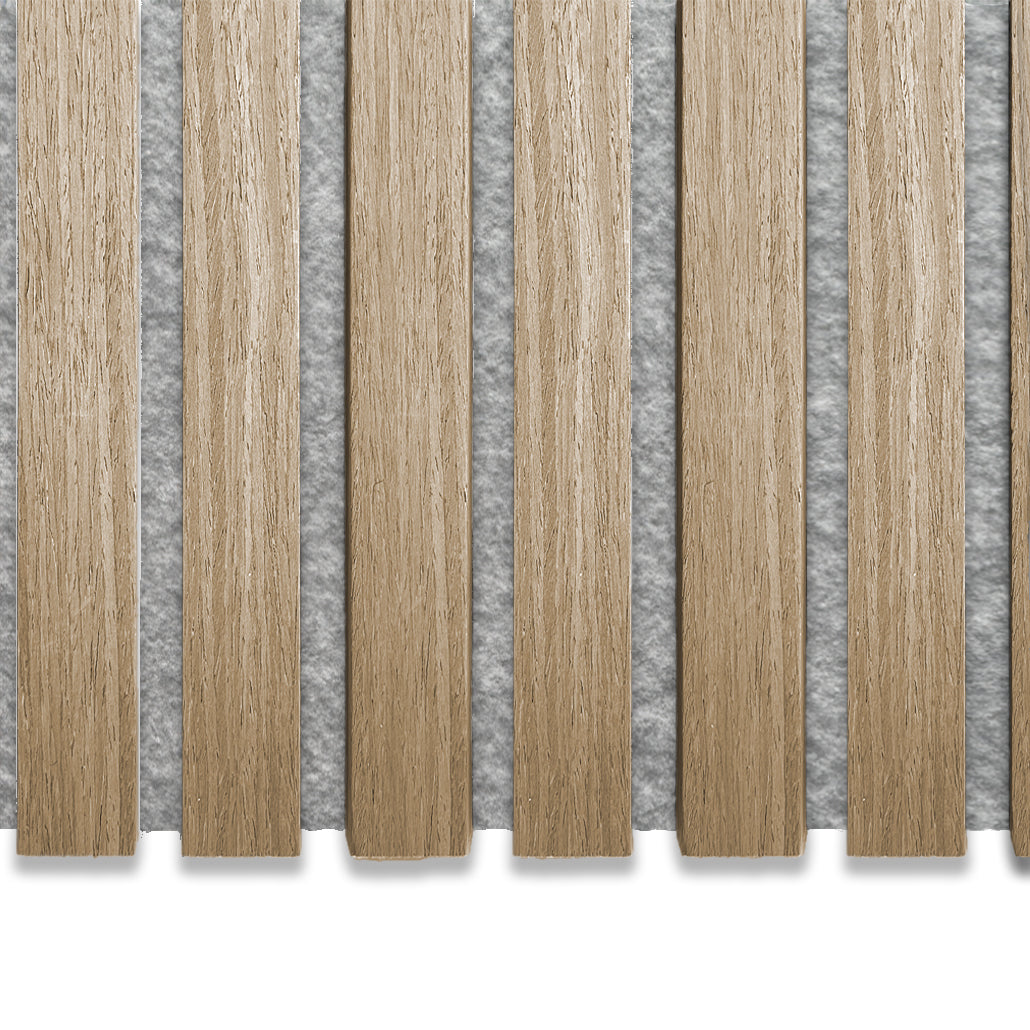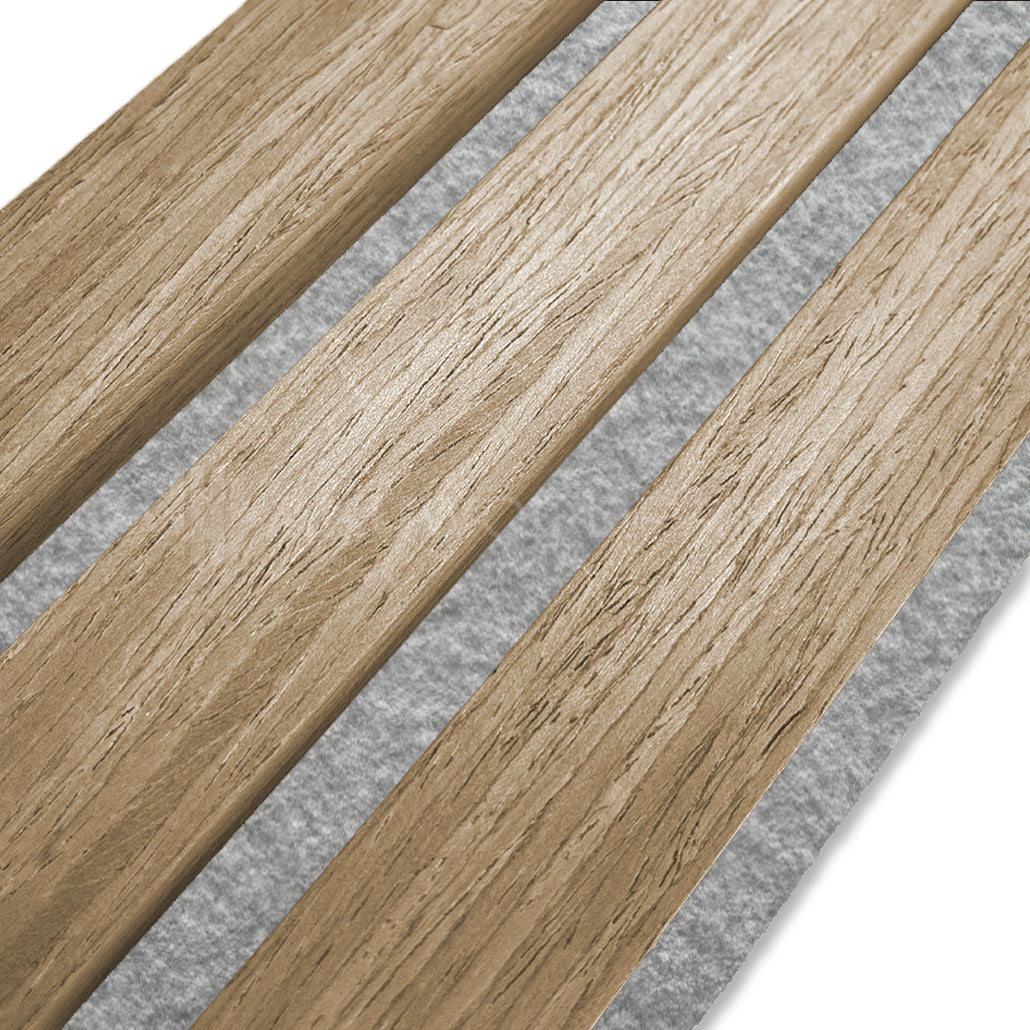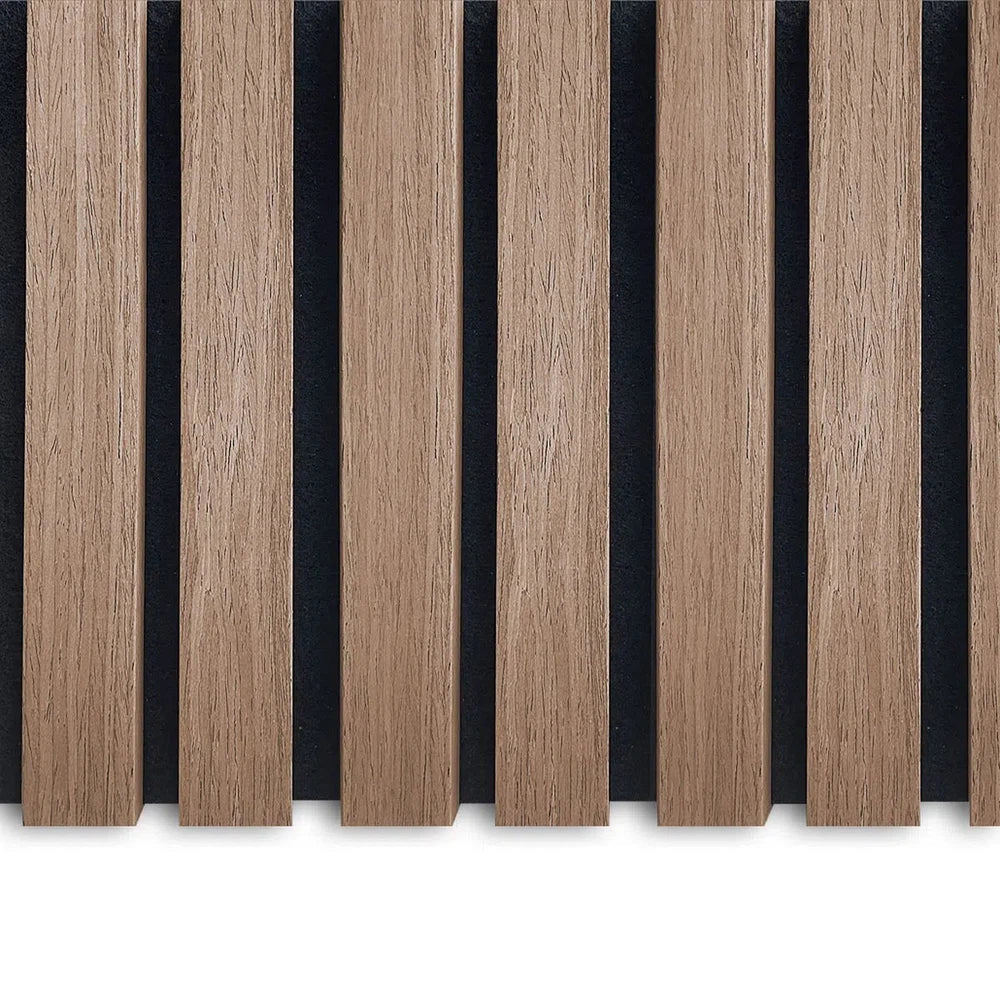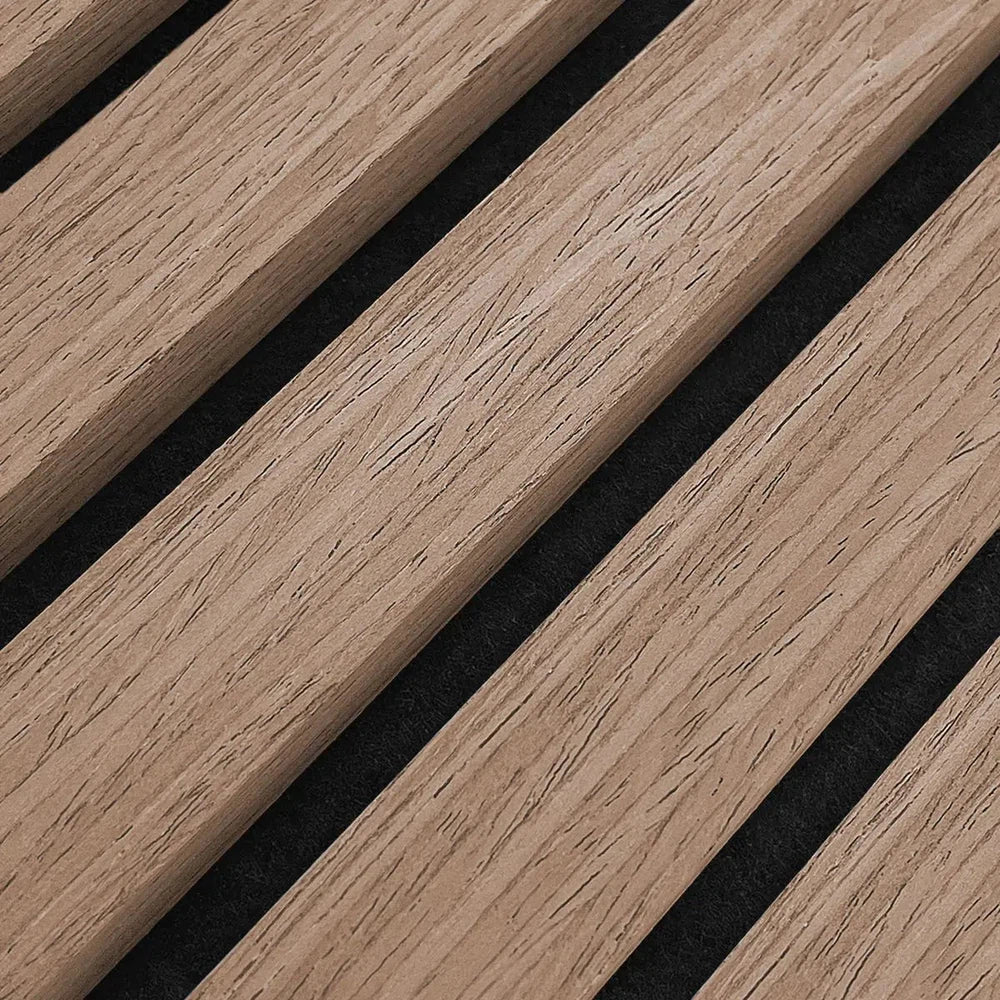
Driving school classroom wall panels are acoustic wooden slat panels fitted to theory-lesson rooms to cut echo, dampen road-noise bleed from outside, and give a rented or converted unit a finished, professional look. A driving school classroom has a specific problem most offices don't: hard floors, thin partition walls, a projector or TV running theory videos, and one instructor's voice competing with traffic noise from the car park where lessons start and end.
- Driving school classroom wall panels with acoustic felt backing cut echo in bare-walled rented rooms fast.
- Natural Oak and Grey Oak finishes suit a calm, professional driving school classroom without going cold or corporate.
- Order samples before buying — panel tone reads differently under classroom fluorescent lighting than in daylight.
- 240cm and 300cm panel formats cover most classroom ceiling heights with minimal cutting or waste.
Why this matters for driving school classrooms
Most driving school theory rooms aren't purpose-built. They're a spare room above a car showroom, a converted retail unit, or a repurposed office with a projector bolted to one wall. Bare plaster, a laminate or vinyl floor, and a run of windows facing the street mean sound bounces instead of absorbing — instructors end up raising their voice over their own echo before a single learner asks a question.
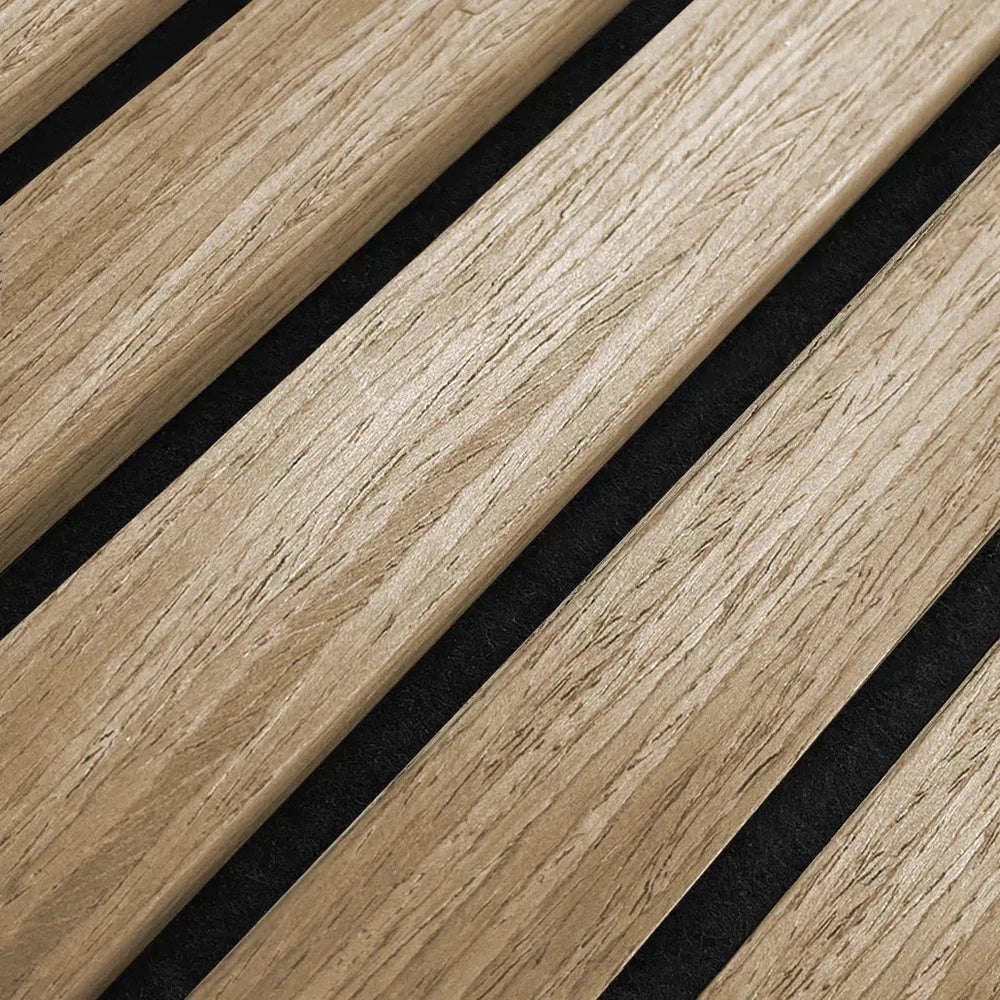
That's the exact problem acoustic panels for classroom walls are built to solve: a 3-sided real wood veneer front with an acoustic felt backing that absorbs mid and high frequencies rather than bouncing them back across the room. For a driving school specifically, that means clearer playback of hazard-perception videos, easier hearing during Q&A, and a room that reads as professional rather than makeshift when a learner walks in for their first theory session in 2026.
Update your room: the step-by-step
Calculate the wall area and panel count
Before ordering anything, measure every wall you'll cover — most driving school classrooms only need one or two feature walls, not the whole room, to make a real acoustic difference.
- Measure width and height of each wall in metres, subtract door and window openings
- Decide whether you're covering floor-to-ceiling or a waist-height band behind the instructor's desk
- Check ceiling height against the two available panel formats — 240cm and 300cm — to minimise offcuts
- Add 5-10% extra for cutting waste around sockets, light switches and a projector mount
- Use calculate panel quantities needed to work the maths before you commit to an order
Choose a finish that reads calm, not corporate
A driving school classroom sits somewhere between an office and a domestic living room — learners are often nervous, and a cold, clinical finish doesn't help.
- Natural Oak or Grey Oak for a bright, neutral room that suits video projection without glare
- Rustic Oak or Smoked Oak where the room doubles as a reception or waiting area
- Black Oak only if the room has strong natural light — it reads dark in a windowless unit
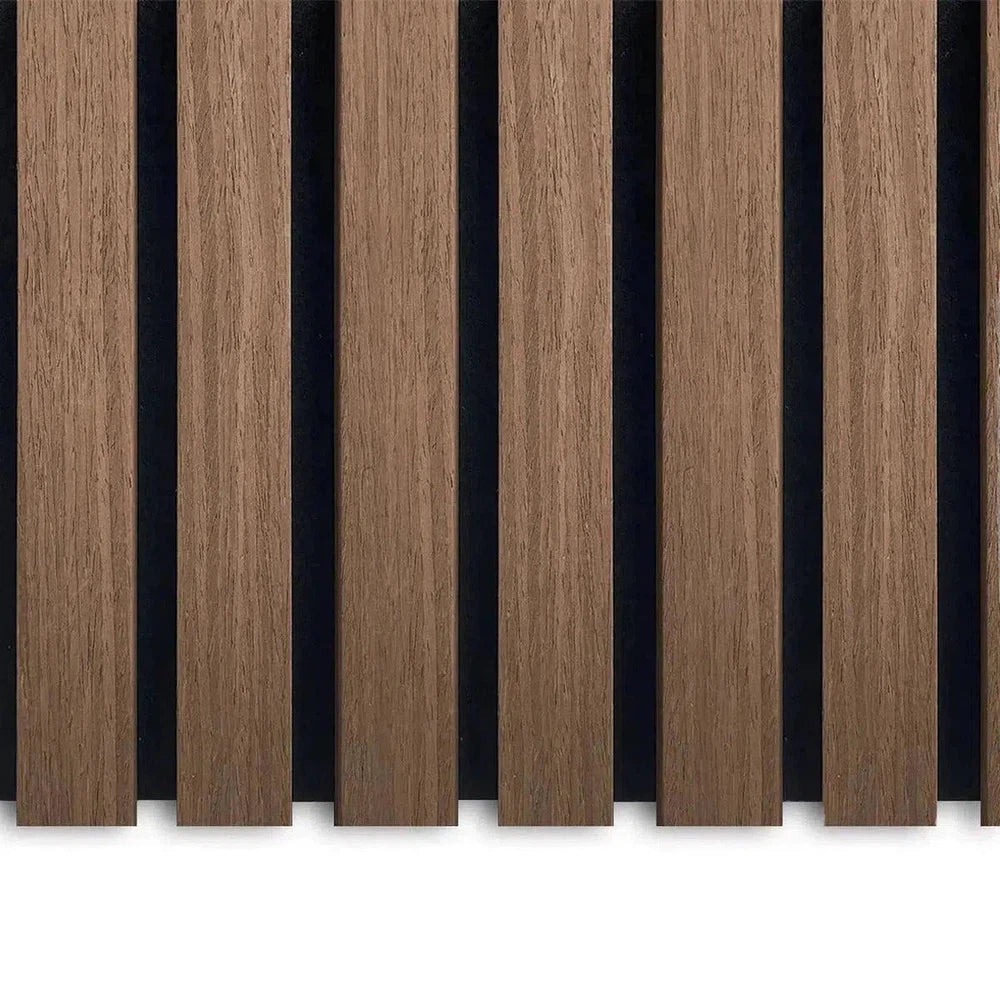
- Walnut or Mocca for a warmer, more premium feel in larger franchise locations
- Avoid mixing more than two finishes in one small room — it fights the calming effect you're after
Order samples before you commit
Wood veneer tone shifts noticeably under classroom strip lighting compared with a photo on a screen, and a driving school can't afford to reorder mid-term.
- Request samples in the two or three finishes you're considering
- Hold them against the wall at the time of day theory lessons actually run
- Check the felt backing colour against your existing furniture and flooring
- Confirm panel width matches your measured wall sections before bulk ordering
- Order acoustic wall panel samples before buying rather than guessing from product photos alone
Plan the install around term dates, not around convenience
Driving schools run back-to-back theory sessions most weeks, so a mid-week install with no downtime beats a rushed weekend job.
- Book the install for a low-booking week rather than peak exam season
- Confirm whether the wall is stud, plasterboard, brick or render before fixing
- Check if the building is rented — many driving school classrooms are, and fixing method matters
- Allow the panels to acclimatise in the room for 48 hours before fitting
- Keep offcuts for patching around future socket or shelf additions
Coordinate the wall treatment with the rest of the room
Wall panels solve half the echo problem — the other half comes from what's inside the room bouncing sound straight back off a hard floor.
- Hard plastic chairs scraping a tiled or laminate floor undo an acoustic install in minutes
- Pairing acoustic wall panels with comfortable classroom seating that doesn't scrape or squeak keeps theory lessons audible from the front row to the back wall
- Add a rug or floor mat under desk rows if the floor is hard vinyl or laminate
- Keep curtains or blinds on any window wall to stop a second echo source
- Position the projector screen against a panelled wall, not a bare one, for cleaner sound during video playback
Budget realistically for a small commercial room
A typical driving school classroom is smaller than an office training room, which changes what "budget" means here.
- Price by wall section, not by the whole room, if you're only doing a feature wall
- Factor in fixings and adhesive as a separate line item, not an afterthought
- Ask about trade or bulk terms if you're fitting more than one location
- Compare the cost of a full wall against a waist-height band before deciding
Finish comparison for driving school classrooms
| Finish | Best for | Key limitation | Verdict |
|---|---|---|---|
| Natural Oak acoustic panel | bright classrooms needing a neutral, approachable feel | shows scuffs more visibly on the lighter veneer | Buy |
| Grey Oak with grey felt | classrooms wanting a modern, slightly cooler tone | reads clinical to some instructors without warm accents | Consider |
| Black Oak | classrooms doubling as a professional exam or briefing room | makes a windowless room feel darker | Consider |
| Walnut | premium-feel classrooms at larger franchise sites | pricier veneer, less common in small single-room orders | Consider |
| Hexagon Acoustic Panel, Natural Oak | a feature wall behind the instructor rather than full coverage | costs more per covered square metre than straight slat panels | Consider |
The verdict for most driving school classrooms: Natural Oak or Grey Oak slat panels on the wall directly behind the instructor and TV screen, sized to the room's ceiling height in either the 240cm or 300cm format.


These two 3D panels aren't acoustic-backed like the slat range, so they're not a substitute for the main echo-reducing wall — use them for a reception counter or entrance strip, not the room where the theory lesson audio needs to stay clean.
Common mistakes driving schools make
- Panelling the wrong wall. Covering the wall behind the learners does less for audibility than covering the wall behind the instructor and speaker, where sound actually originates.
- Skipping the felt-backed range for a decorative-only panel. A panel without acoustic backing looks similar in photos but does far less against echo — check the product spec, not just the finish name.
- Ignoring the floor. A fully panelled wall next to a bare vinyl floor and plastic chairs still echoes; the floor and seating need addressing too.
- Over-ordering a dark finish for a small room. Black Oak or Smoked Oak can make an already tight classroom feel smaller and dimmer without extra lighting.
- Fixing panels without checking the tenancy agreement. Many driving school premises are leased — confirm what fixing method is allowed before drilling into a rented wall.
FAQ
What are the best wall panels for a driving school classroom?
Natural Oak or Grey Oak acoustic slat panels with felt backing work best for driving school classrooms in 2026 — they cut echo without making the room feel cold or corporate.
Do acoustic wood panels actually reduce echo in a classroom?
Yes — the felt backing behind the wood veneer absorbs mid and high-frequency sound instead of reflecting it, which is the main source of echo in a bare-walled theory room.
Is Natural Oak or Grey Oak better for a driving instructor's classroom?
Natural Oak suits rooms that rely on daylight and need a warm, approachable tone; Grey Oak suits classrooms going for a more modern, neutral look. Both come with felt backing options.
How many wall panels does a small driving school classroom need?
Most driving school classrooms only need one or two feature walls covered, not the whole room — measure the wall behind the instructor and speaker first, since that's where echo control matters most.
Can wall panels go up in a rented driving school unit without damage?
Yes, provided you check the fixing method allowed under the lease first. Confirm with the landlord before drilling into rented walls, and keep offcuts in case of future patching.
What size wall panels suit a standard classroom ceiling height?
Panels come in two size formats, 240cm and 300cm, so measuring your ceiling height before ordering avoids unnecessary cutting waste on a standard classroom wall.
How do hexagon acoustic panels compare to standard slat panels for classrooms?
Hexagon acoustic panels work well as a feature wall behind the instructor but cost more per covered square metre than straight slat panels, making them better for accents than full-wall coverage.
Do I need samples before ordering classroom wall panels?
Yes — wood veneer tone reads differently under classroom strip lighting than in product photos, so ordering samples first avoids a mismatched bulk order.
One last thing
The wall behind the instructor's desk does more acoustic work than any other surface in the room — if budget only stretches to one wall in 2026, panel that one first and leave the side walls for a later phase.