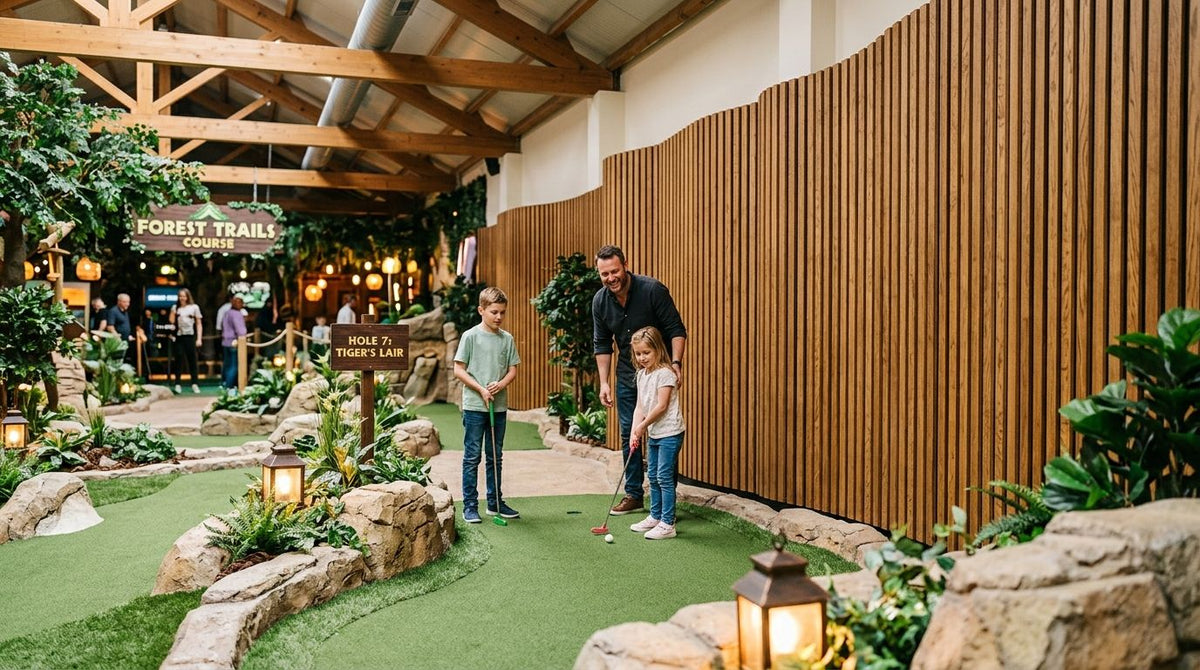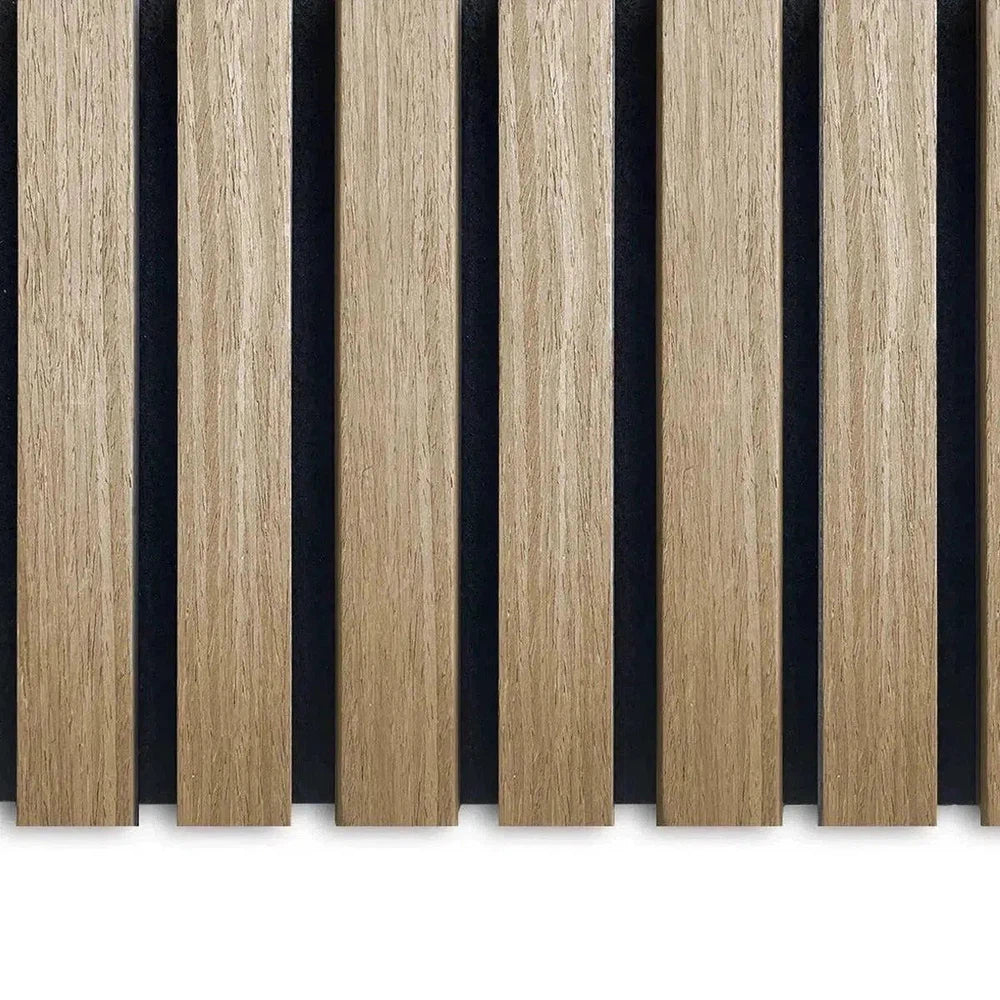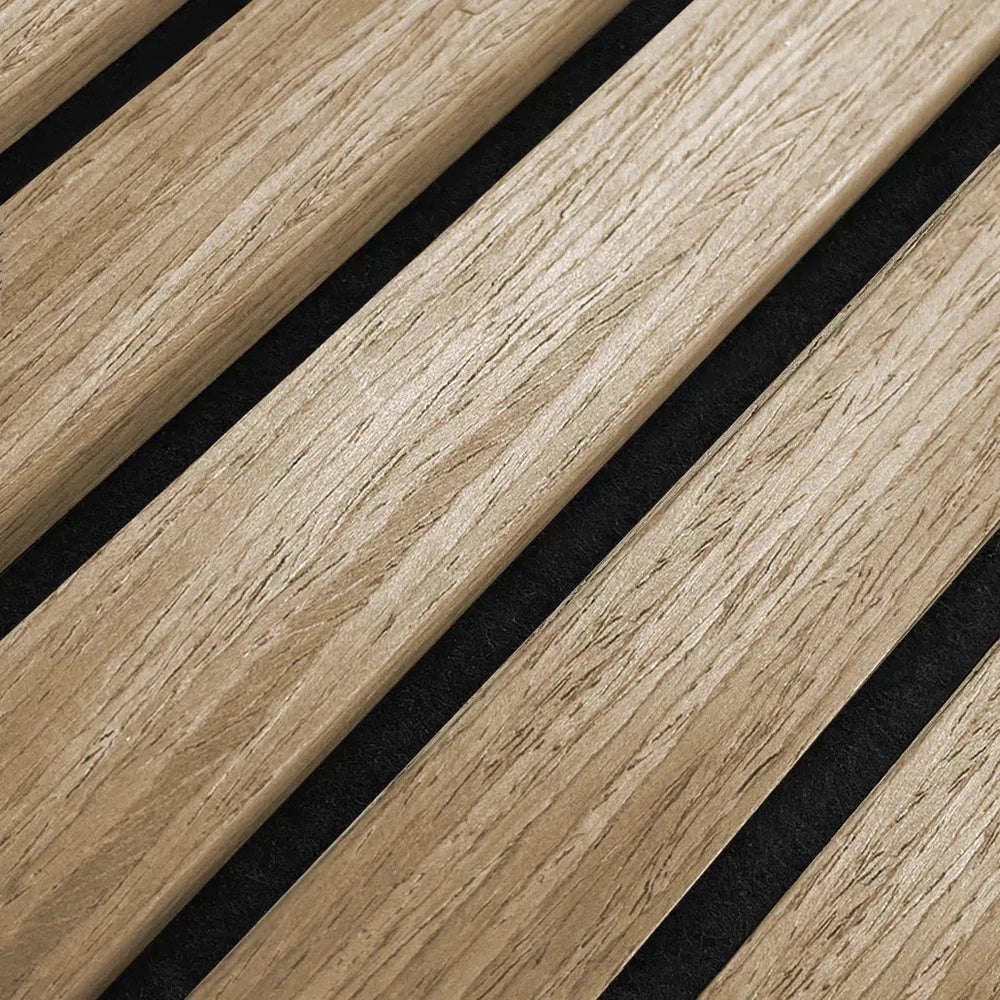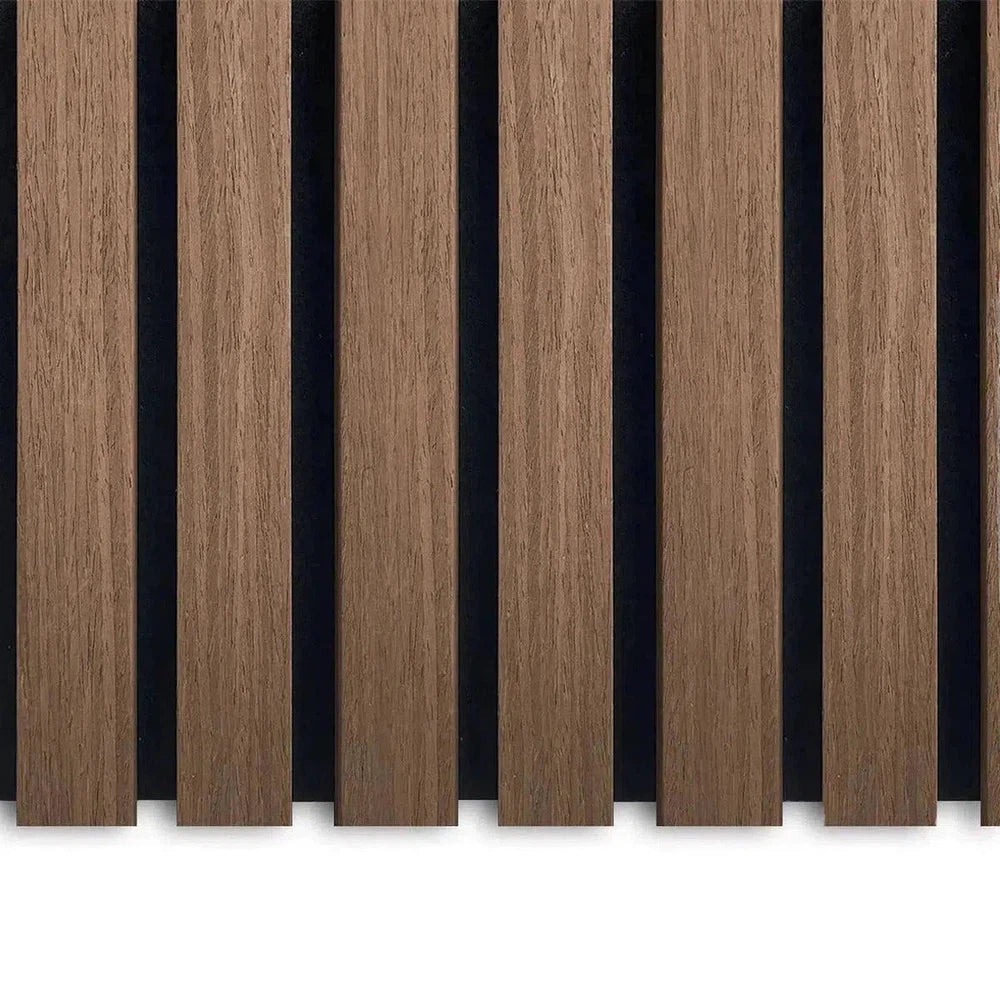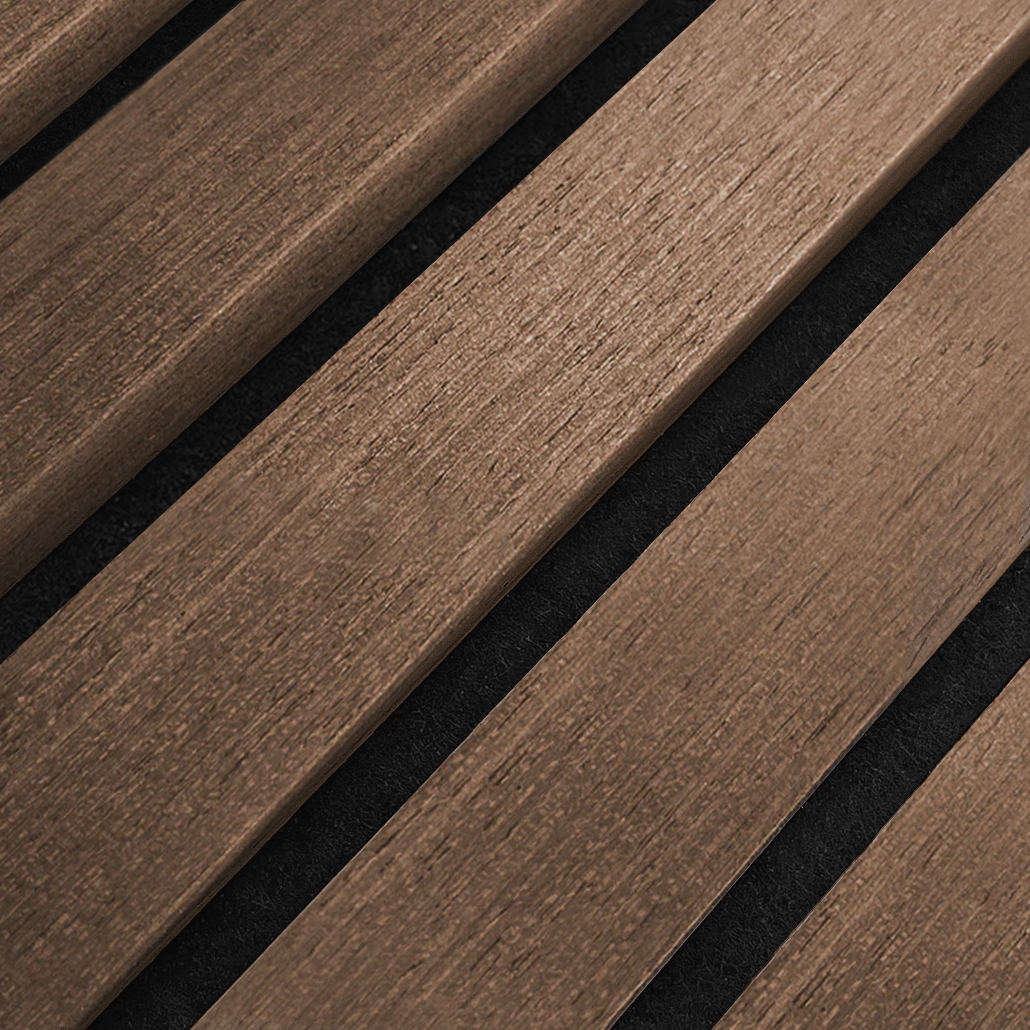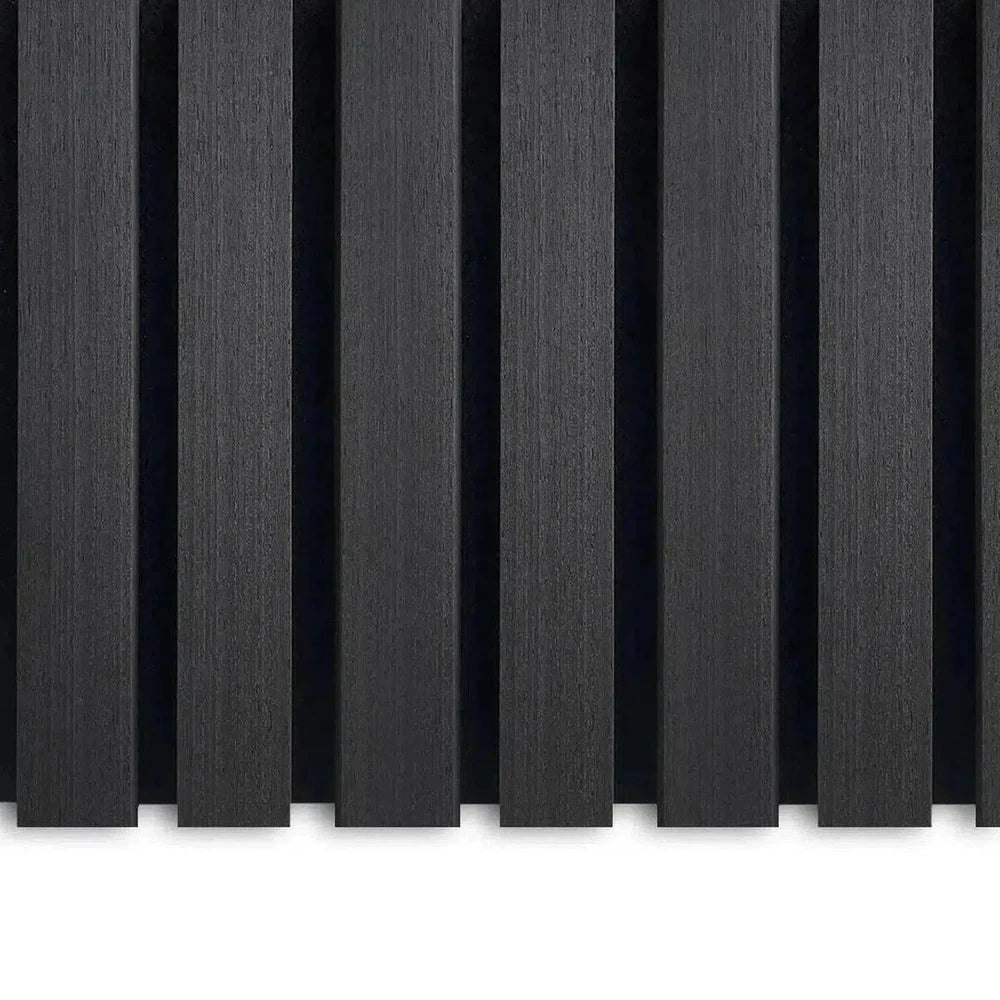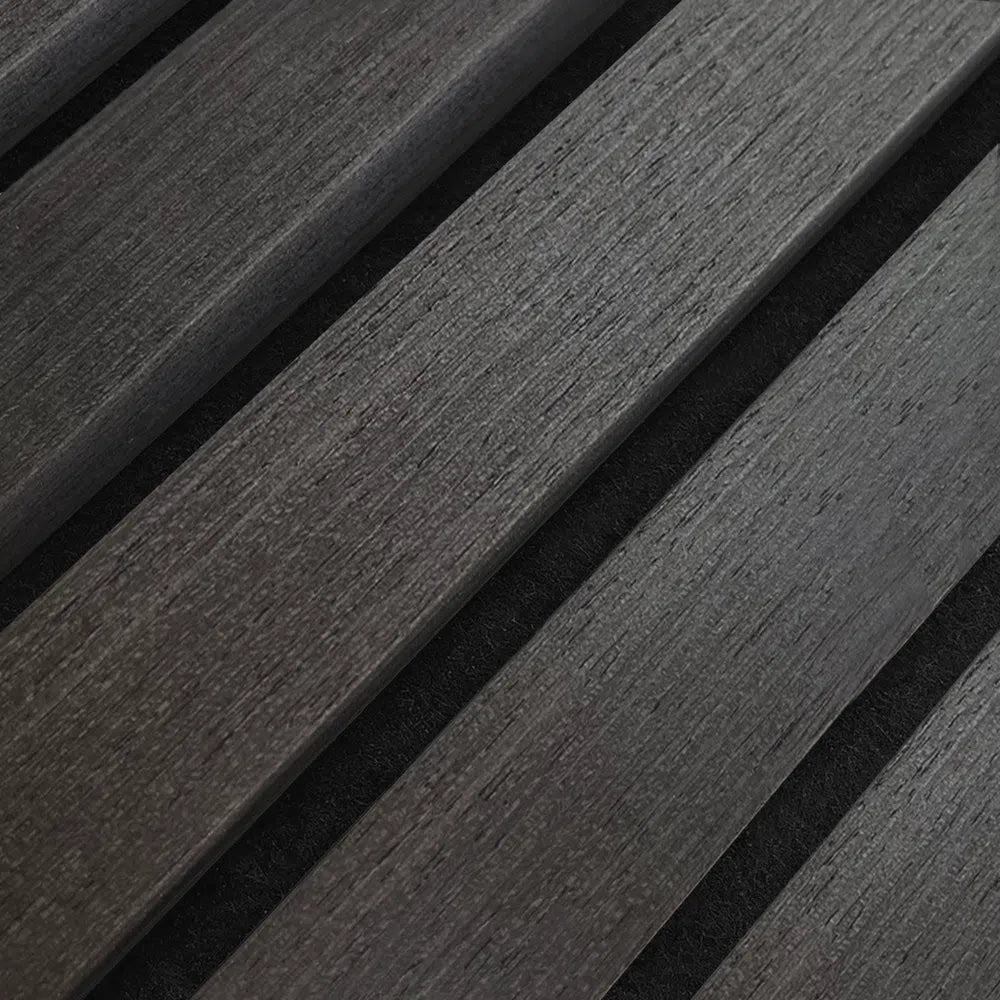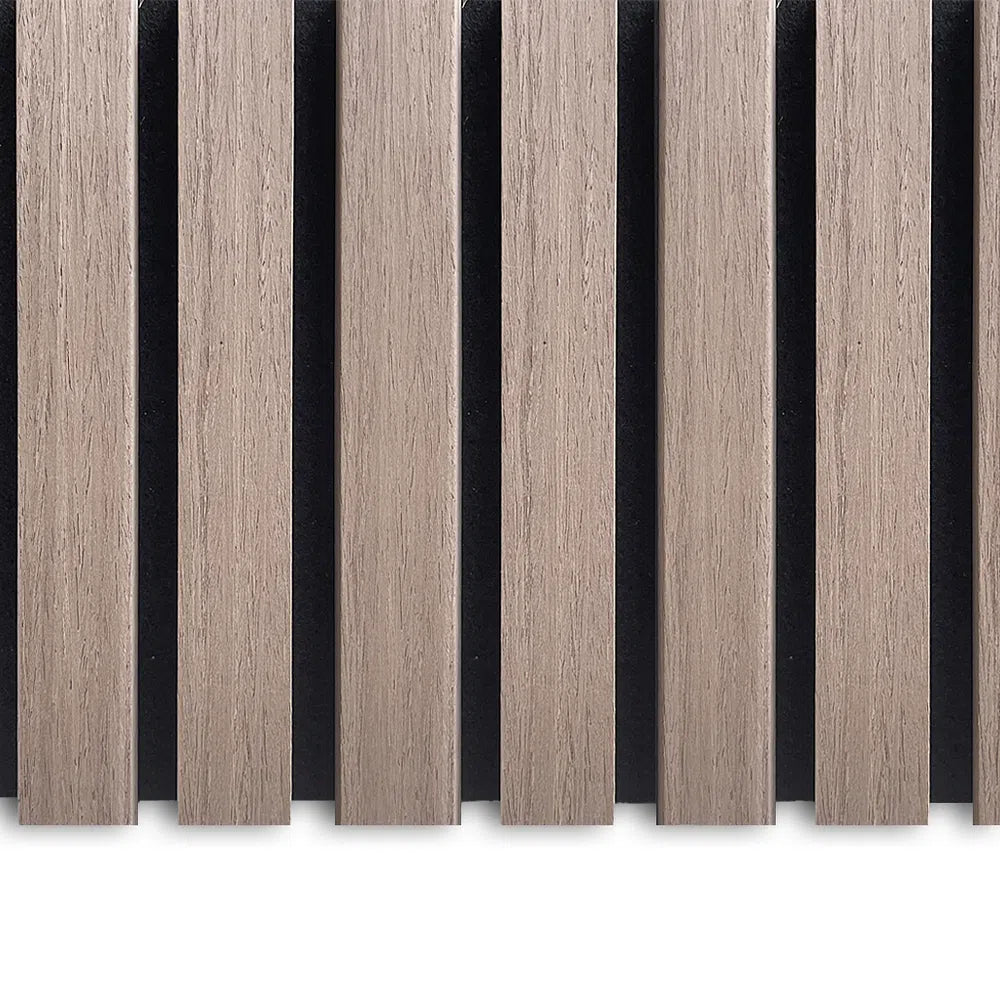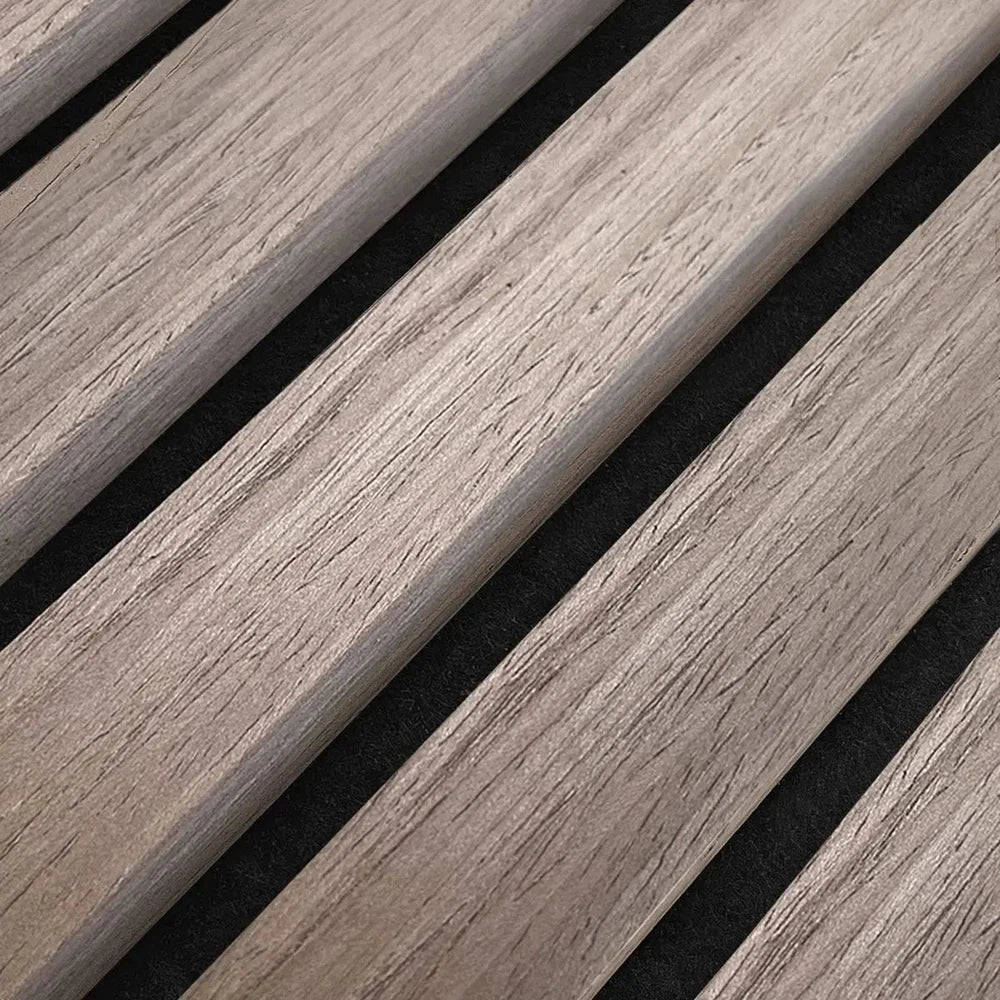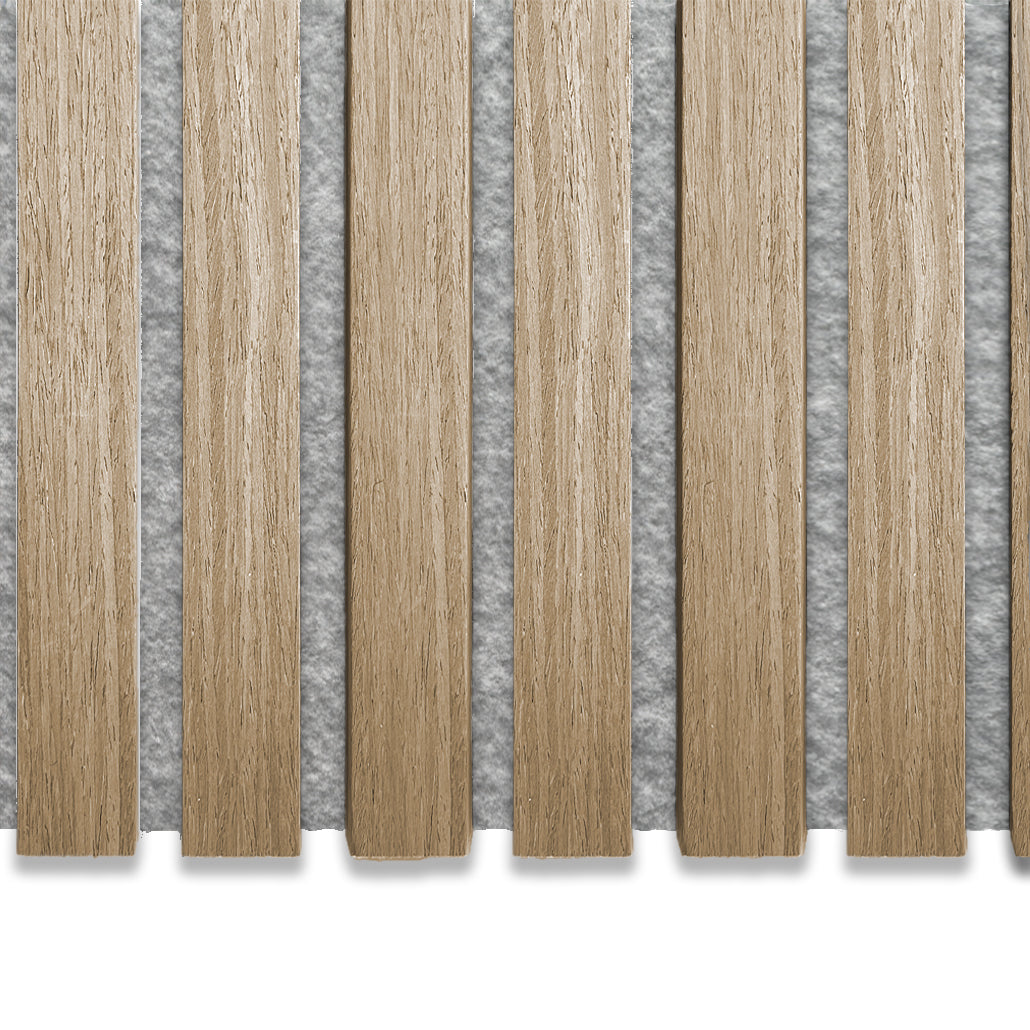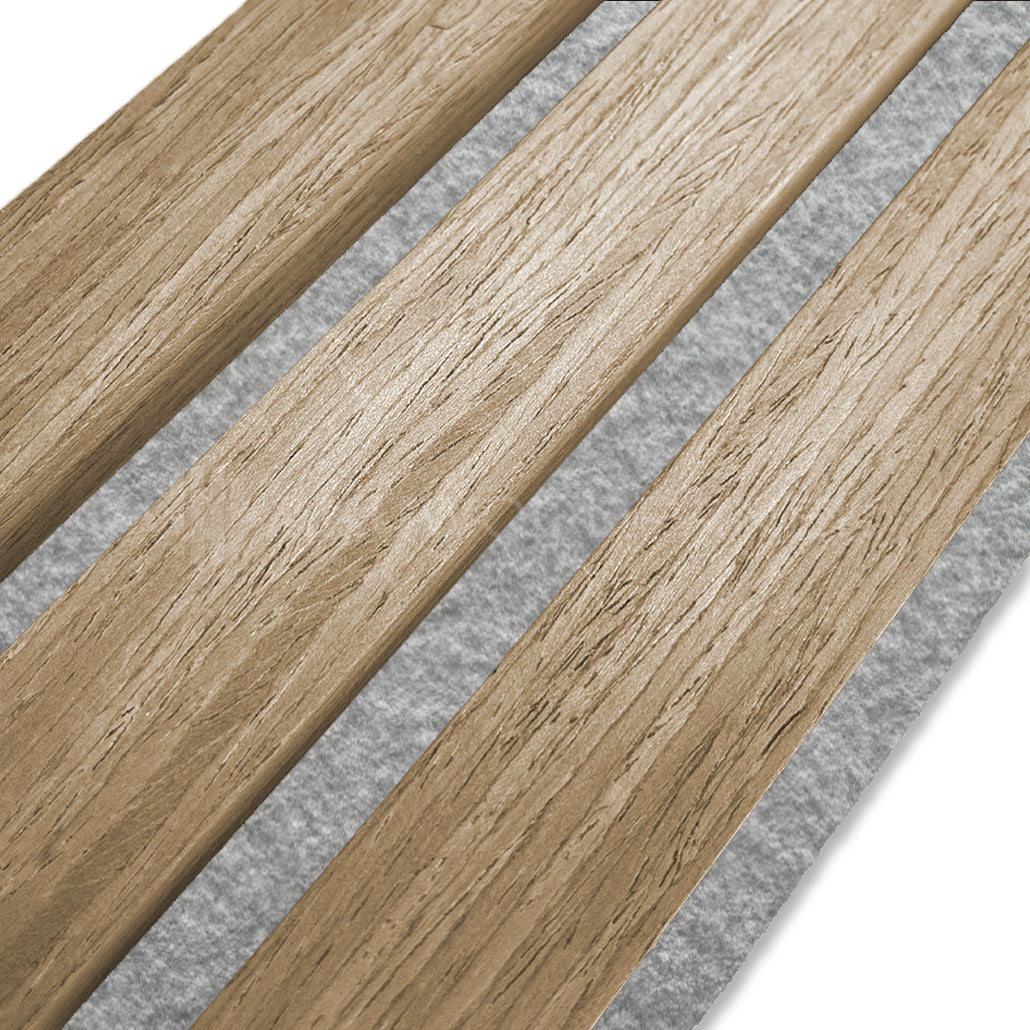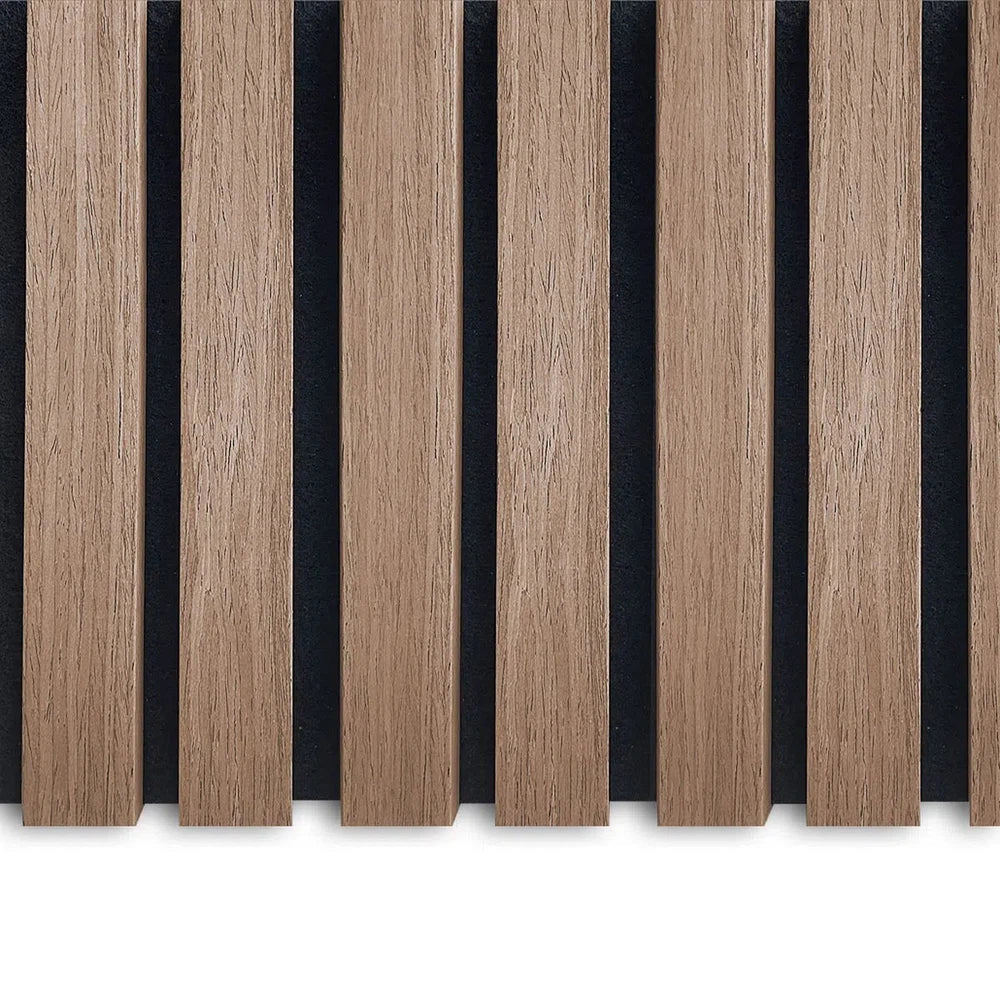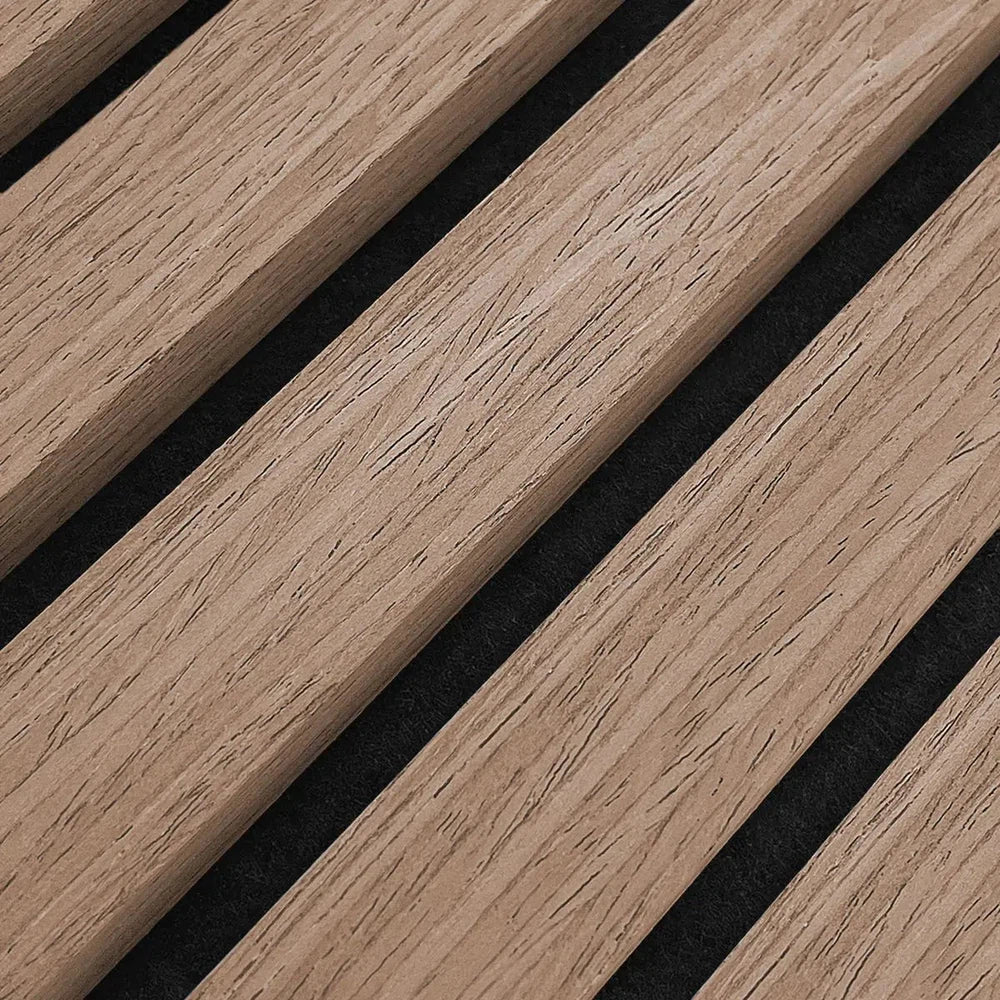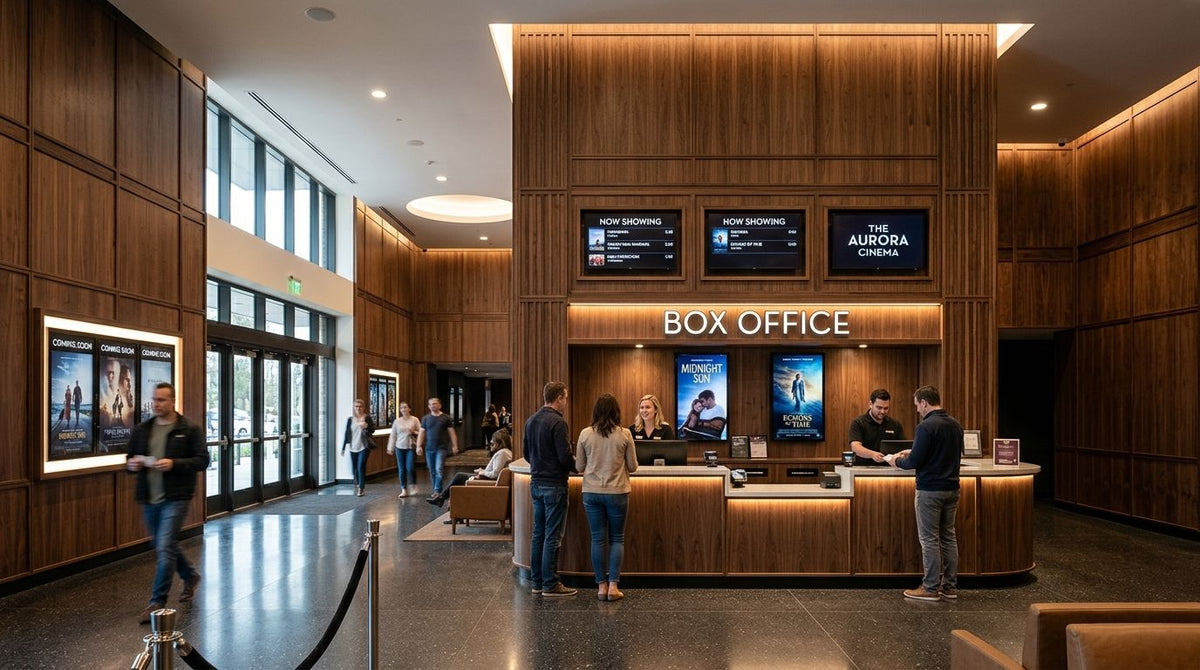
Cinema foyer wall panels are acoustic or decorative wood-veneer panels fitted across box office counters, concession queues and lobby walls to cut echo and give the space a finish that holds up to thousands of visitors a week. A multiplex foyer has hard floors, glass frontage and a ceiling that's often double-height, which means sound bounces further and longer than in almost any other retail-style space — the panelling needs to work harder here than it does in a living room or a boardroom.
- Acoustic-core wood panels beat decorative-only cladding in cinema foyers because tile floors and glass fronts push reverberation up.
- Aku Woodpanel's felt-backed panels come in 240 cm and 300 cm lengths, letting you run full-height runs without visible joins.
- Box office booths need panelling on the operator's side too — most foyer fit-outs only treat the public-facing wall.
- 3-sided real wood veneer finishes hide scuff marks better than painted MDF in high-footfall lobbies.
- Cinema foyer wall panels should be zoned by function: lobby, booth, corridor each have different noise sources.
Why cinema foyer wall panels matter for this space
A cinema lobby combines three things that make noise worse: a high ceiling, a mostly glazed frontage, and hard flooring for queue management. Sound has nowhere to land, so it keeps bouncing between the glass and the floor until it hits a soft surface — usually a person's ear. That's why foyers feel loud even when nobody's shouting: it's the room, not the crowd.
A natural oak hexagon acoustic panel or a felt-backed slat panel absorbs that reflected sound instead of bouncing it back, which is the difference between a foyer that feels buzzy and welcoming and one that feels like a train station concourse. Box offices have an extra problem: staff need to hear ticket requests over ambient noise from the concession stand and the screens themselves, so the booth walls matter as much as the public-facing lobby walls.
Cinema foyer wall panels work best when they're treated as an acoustic fix first and a design upgrade second — the wood veneer finish is the reason it looks good, but the felt backing is the reason it works.
Measure the foyer's reverberation before you spec panels
Don't order panels off a floor plan alone. Walk the space at a busy time and listen for where sound piles up.
- Note the ceiling height at the highest point of the lobby, not just above the box office
- Check how much of the frontage is glass versus solid wall
- Time how long a hand-clap or door-close takes to fade — anything over 1-2 seconds in a mid-size foyer is a signal
- Identify hard-floor zones (terrazzo, tile) versus any carpeted queue lanes
- Flag which walls sit closest to the screens, since bass bleed adds to the noise floor
Pick an acoustic-core panel over decorative-only cladding for high-noise zones
Not every wood panel absorbs sound — some are purely decorative and will look the part while doing nothing for the echo problem.
- Acoustic slat panels with a felt backing absorb reflected sound; flat decorative veneer without backing mostly reflects it
- A black oak wall panel with acoustic backing suits dark, moody box office surrounds where scuffs are less visible
- 3D decorative panels (like hexagon or fluted profiles) add texture and some diffusion but shouldn't be the only treatment on a large glazed wall
- Reserve decorative-only panels for feature walls away from the loudest zones — the ticket counter and the main concourse need the acoustic-core version
Zone the panelling by function: foyer, box office booth, corridors
A multiplex lobby isn't one acoustic problem — it's three or four stacked on top of each other.
- Main concourse walls: full-height acoustic panels absorb crowd noise and reduce shouting-over-each-other at peak times
- Box office booth: treat both the visitor-facing wall and the operator's side; staff fatigue from constant echo is a real cost
- Corridors to screens: narrower runs, often lower panels, mainly to stop footstep and chatter carry-through
- Concession queue area: panels near tills and popcorn machines cut the clatter that makes ordering harder to hear
Choose a finish that hides scuffs and survives cleaning rounds
Cinema foyers get cleaned daily and knocked by trolleys, queue barriers and pushchairs constantly, so the finish matters as much as the acoustic spec.
- Darker veneers (smoked oak, black oak, walnut) hide scuff marks better than pale finishes under commercial lighting
- A real wood veneer surface, applied 3-sided, resists chipping at the edges better than a single-face laminate
- Avoid raw MDF or exposed edges in any zone where trolleys or barriers will make contact
- Matte finishes show fewer fingerprints and cleaning-cloth streaks than gloss


Fix panels to suit the wall type behind them
Cinema foyers usually mix wall types across one lobby — solid block behind the box office, stud partition on internal corridors, sometimes a glazed section near the entrance.
- Solid masonry or block walls take mechanical fixings or adhesive depending on the panel weight
- Stud and plasterboard partitions need fixing into the studs, not just the board, for anything above a light decorative panel
- For a faster install on flat, prepared surfaces, panel glue in a 290 ml cartridge covers standard panel bonding without mechanical fixings — the manual mechanical-fix route is still the sturdier choice for heavy-traffic contact zones like queue-barrier walls
- Glazed or curtain-wall sections generally can't take wall panels directly — treat the solid returns and reveals around the glass instead
Sequence the install around opening hours and lead time
A foyer refit rarely gets a clean shutdown — most cinemas want the doors open every evening.
- Phase the install screen-by-screen or wall-by-wall rather than closing the whole lobby
- Order panel samples early so the finish is confirmed before bulk stock is committed
- Build in a few extra days for cinema screening room acoustic panels if the same project covers the auditoriums as well as the foyer — the two zones often get ordered together
- Confirm glue cure time or fixing schedule against the site's overnight-only access window
Maintain the panels after handover
Daily commercial cleaning is harder on finishes than a home installation ever is.
- Wipe veneer surfaces with a dry or barely-damp cloth — standing water at joins swells the wood over time
- Check felt-backed panels annually for dust build-up, which reduces how much sound they absorb
- Touch up any scuffed edges with a matching oil or wax rather than repainting the whole panel
- Keep a spare panel or two from the original run in storage — finishes vary slightly batch to batch
Comparing panel options for cinema foyers
| Option | Best for | Key limitation |
|---|---|---|
| Felt-backed acoustic slat panel | Main concourse and box office walls | Needs a flat, prepared wall for best results |
| 3D decorative veneer panel (no felt) | Feature walls, low-noise zones | Limited acoustic absorption on its own |
| Hexagon acoustic panel | Textured feature walls that still need absorption | Pattern can read busy on very large runs |
| Exterior cladding panel | Entrance canopy or outdoor ticket kiosk only | Not designed for indoor acoustic treatment |
Verdict: felt-backed acoustic panels are the right call for any foyer wall within earshot of a queue or a screen, with decorative-only panels reserved for accents.
“If a box office queue can't hear the till bell over the room, the walls are still bouncing sound instead of absorbing it.”
Common mistakes cinema foyers make with wall panelling
- Treating only the public-facing box office wall — the operator's side echoes just as much and staff hear it eight hours a day
- Panelling the feature wall and ignoring the concourse — a striking accent wall does nothing for the crowd noise near the tills
- Choosing pale finishes for high-contact zones — light veneers show every trolley scuff within months in a busy 2026 multiplex
- Skipping the reverberation check before ordering — guessing panel coverage from a floor plan alone under-treats glazed, double-height lobbies
- Forgetting corridors to the screens — footstep and chatter carry-through in bare corridors undoes some of the work done in the main foyer
FAQ
What's the best wall panel for a cinema foyer?
A felt-backed acoustic wood panel is the best choice for cinema foyer wall panels because it absorbs reflected sound from hard floors and glass frontage rather than just adding decoration. Reserve purely decorative 3D panels for smaller feature walls away from the busiest queue areas.
Do acoustic wood panels work in a box office booth?
Yes, and both sides of the booth benefit — the visitor-facing wall reduces queue noise reaching the till, while the operator's side cuts fatigue from constant echo over an eight-hour shift. Treat both sides, not just the public-facing one.
How much of a foyer wall needs acoustic panelling?
Prioritise the main concourse, the box office booth on both sides, and any corridor leading to the screens before treating feature walls. A hand-clap reverberation test on site tells you which zones need coverage most urgently.
Are decorative 3D wall panels durable in high-footfall lobbies?
Decorative 3D panels in a real wood veneer finish hold up well in lobbies as long as they're placed away from direct trolley or barrier contact. For zones with constant physical contact, a flat acoustic slat panel in a darker finish hides scuffs better.
Can acoustic panels go over glass or curtain-wall foyer sections?
No, wall panels need a solid substrate and can't be fixed directly to glazing. Treat the solid returns, reveals and side walls around the glass instead to cut reflected noise from that section.
What size wood wall panels fit standard cinema ceiling heights?
Aku Woodpanel's acoustic panels come in 240 cm and 300 cm lengths, which cover most standard and double-height foyer walls with fewer horizontal joins than shorter panel formats.
How do you clean wood veneer panels in a cinema lobby?
Wipe with a dry or barely-damp cloth during daily cleaning rounds — standing water at panel joins causes swelling over time. Touch up scuffed edges with matching oil rather than repainting the whole panel.
Is exterior cladding suitable for a cinema entrance canopy?
Exterior wall cladding panels are built for outdoor entrance canopies, ticket kiosks and covered forecourts, but they're not designed for indoor acoustic treatment. Use acoustic-core wood panels once you're past the threshold into the foyer itself.
One last thing
Most foyer refits treat the box office as a design feature and forget it's also a workstation — the operator hears that echo for every shift of 2026, not just during the opening week walkthrough. Fix the booth's back wall with the same acoustic-core panel as the concourse, not a downgraded finish, and the whole space reads calmer within the first week of trading.