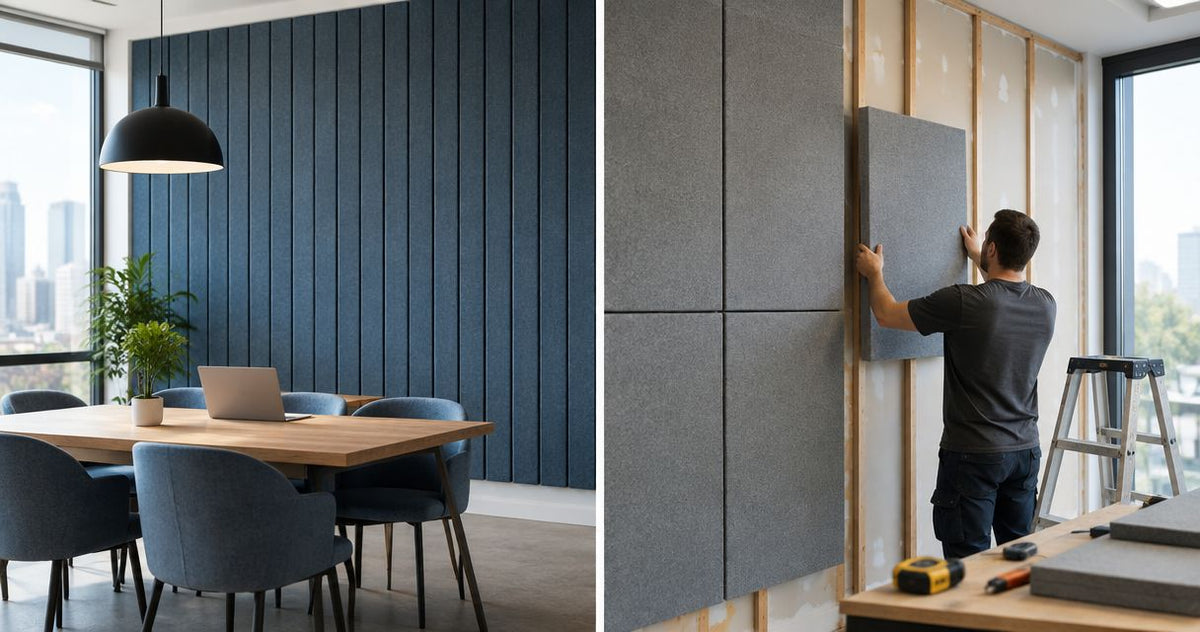
Wickes is a practical choice when you need building materials and DIY supplies for the same project. Its broad-retailer model is less useful when the decision centres on the finish and acoustic construction of one feature wall. The best Wickes alternative in 2026 is Akustiq UK for acoustic wood panels; choose B&Q for a general DIY shop or timber battens if you want to build the wall yourself.
- For wickes alternatives in 2026, Akustiq UK is best for acoustic wood feature walls with real wood veneer and felt backing.
- Choose Wickes or B&Q when the wall panels are only one part of a wider DIY shopping list.
- Choose DIY timber battens when you want to control the slat layout and accept the extra assembly work.
- Acoustic treatment reduces echo within a room; it is not the same as soundproofing a wall.
Why this matters
A living room that echoes and a bedroom that needs a new focal wall can look like the same panelling job. They are different briefs. For the first, you need to consider how much sound reflects around the room; for the second, the finish and layout may be the main decision.
That distinction makes a broad search for wickes alternatives more useful. Wickes and B&Q are places to gather materials for a wider renovation. Akustiq UK supplies acoustic wood panels for interior applications, while a DIY batten wall gives you control over individual timber pieces. None is the right answer to every brief.
In 2026, start by writing down the problem you want the wall to solve: echo, appearance, or both. Then check the proposed product or construction against that brief. A wood-look surface alone does not establish an acoustic benefit, and an acoustic panel alone does not stop sound travelling through a shared wall.
Wickes alternatives at a glance
| Option | Best for | Standout feature | How it differs from Wickes |
|---|---|---|---|
| Wickes | Buying materials for several DIY jobs together | Broad home-improvement range | The benchmark general retailer |
| Akustiq UK | An acoustic wood feature wall | Real wood veneer slats with acoustic felt backing | Focuses on wall panels rather than a broad DIY range |
| B&Q | Comparing general decorating and building supplies | Broad DIY retail range | Another general retailer, not a specialist panel manufacturer |
| DIY timber battens | Designing and assembling your own slat layout | Control over individual pieces and spacing | A construction approach rather than a ready-made panel choice |
The table compares shopping routes, not independently measured acoustic performance. No product-by-product absorption results or like-for-like specifications for Wickes and B&Q are supplied here, so a performance ranking would be misleading. Ask for the evidence relevant to your project before specifying any acoustic treatment.
1. Akustiq UK: best for acoustic wood feature walls
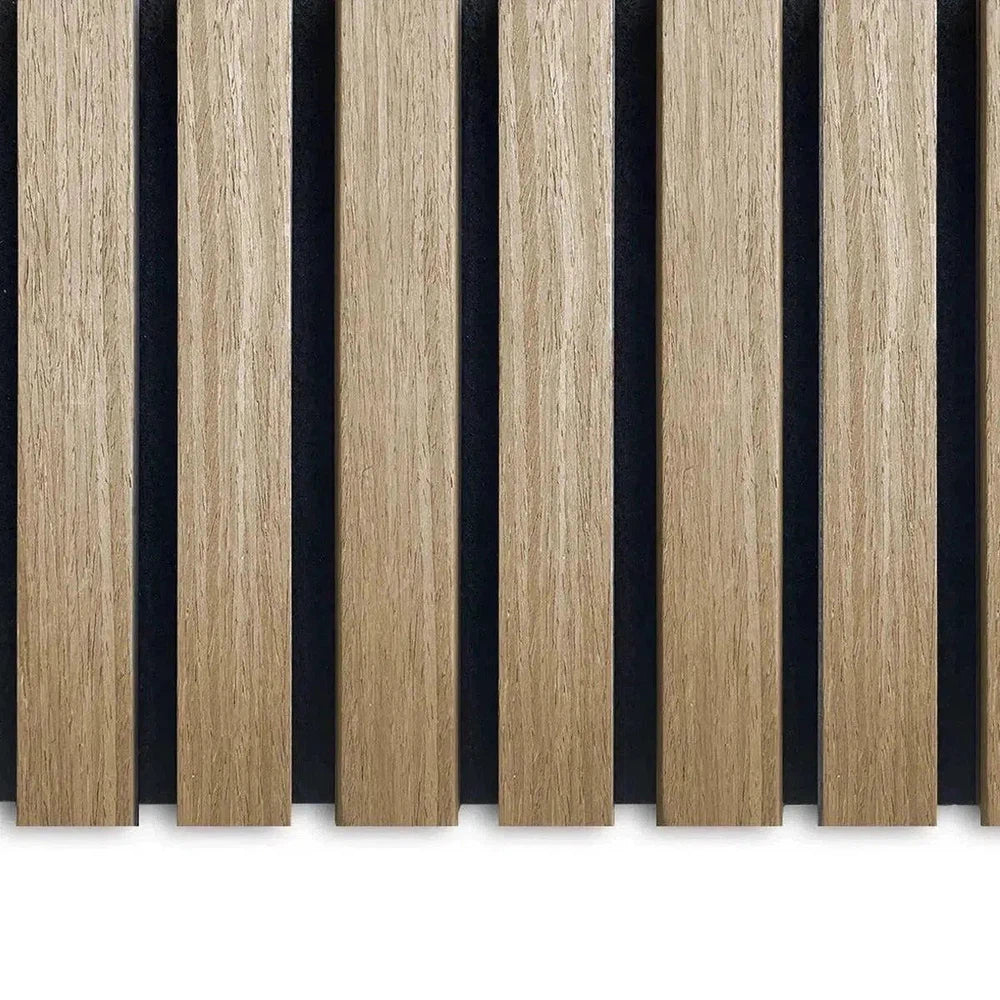
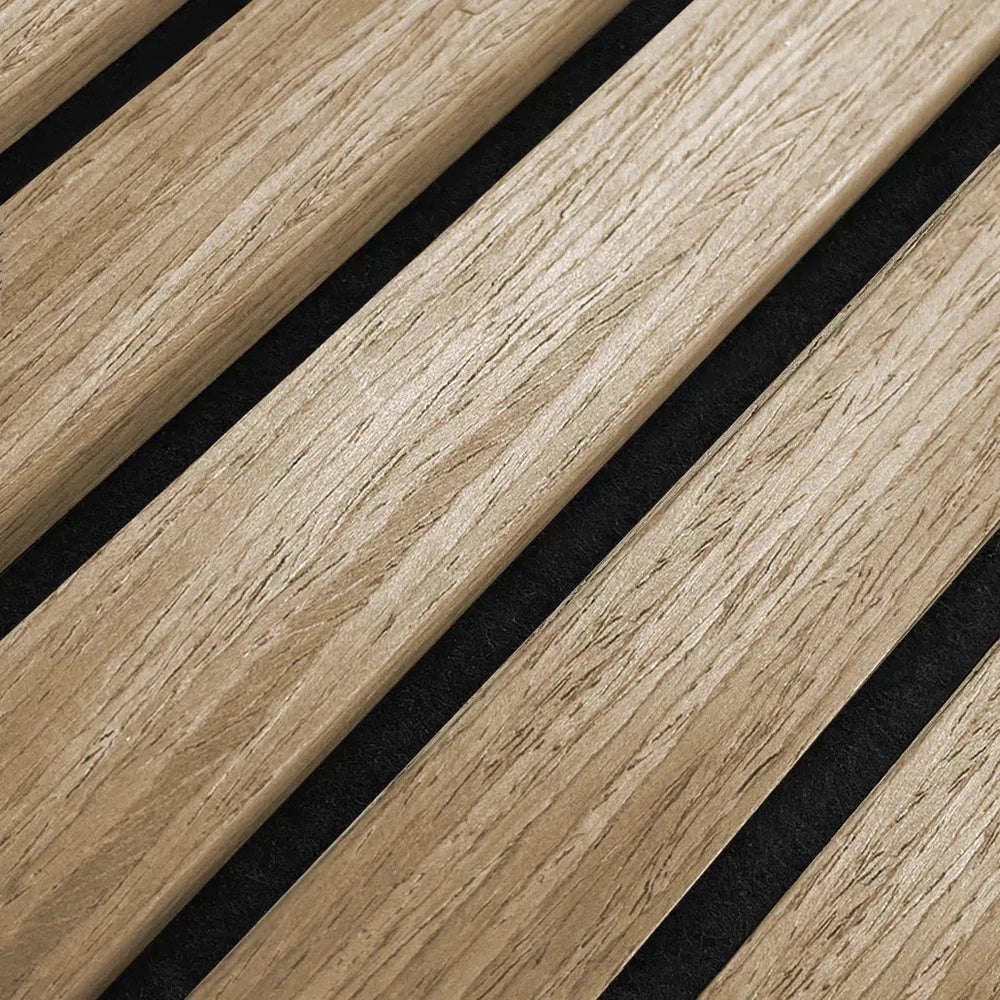
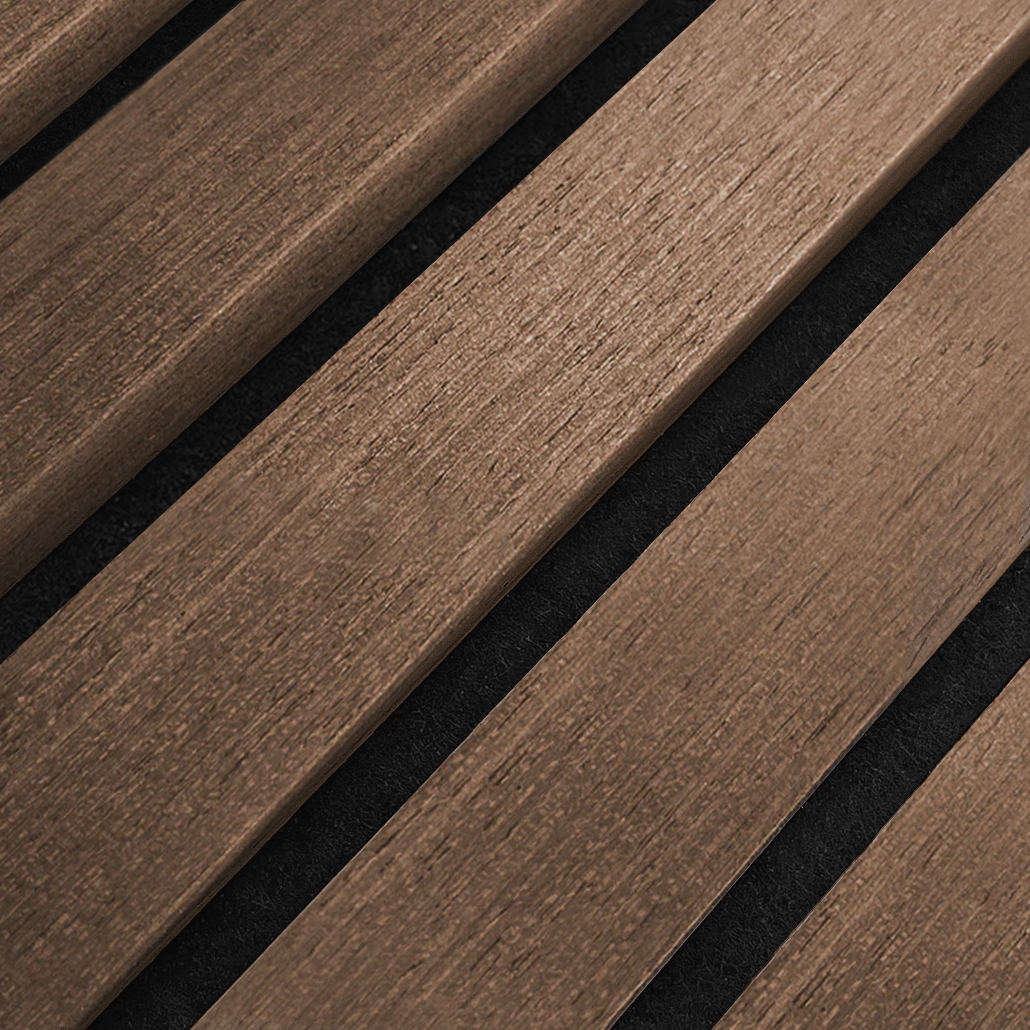
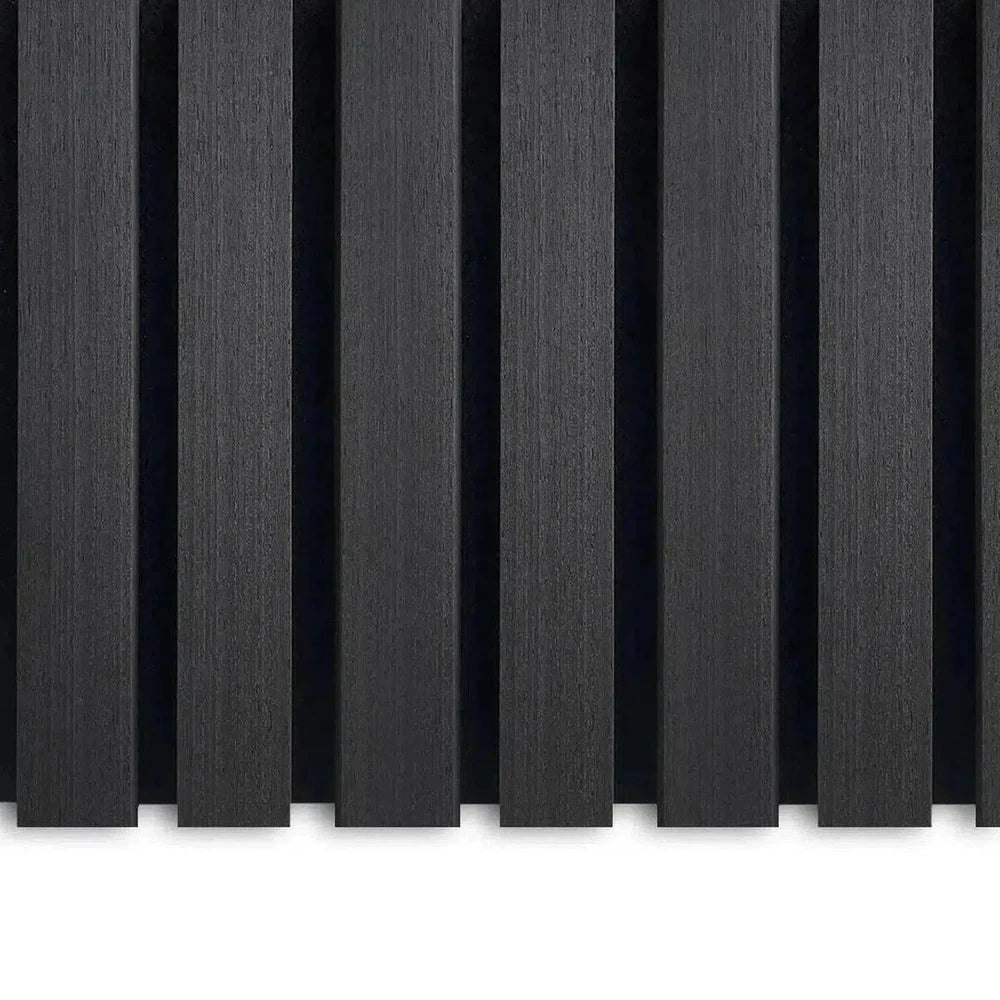
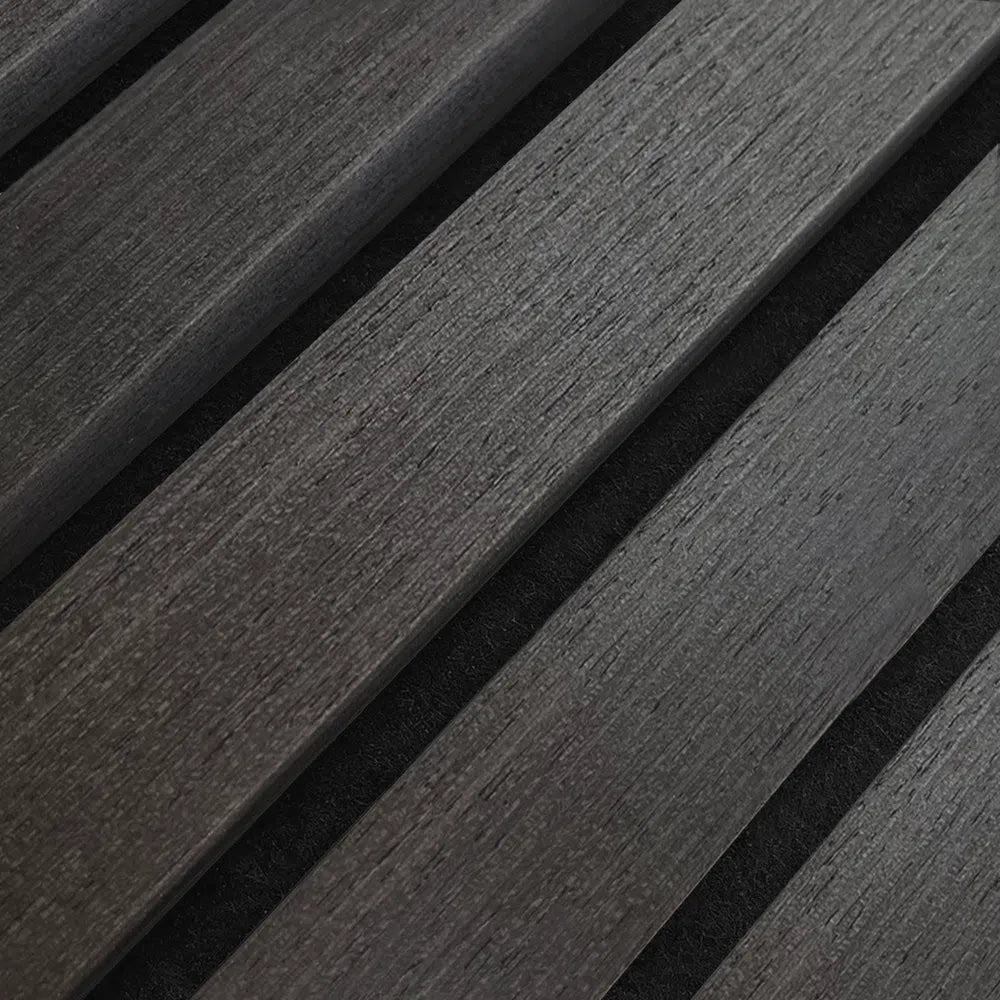
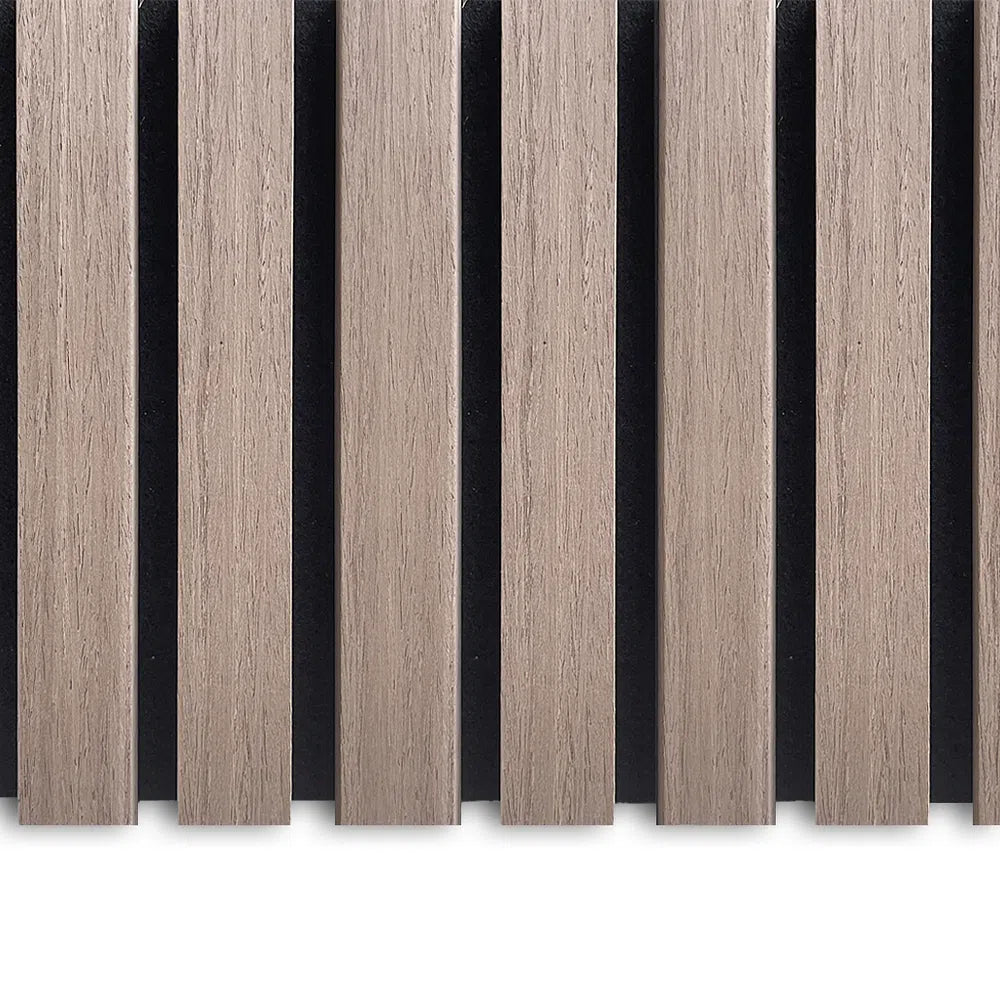
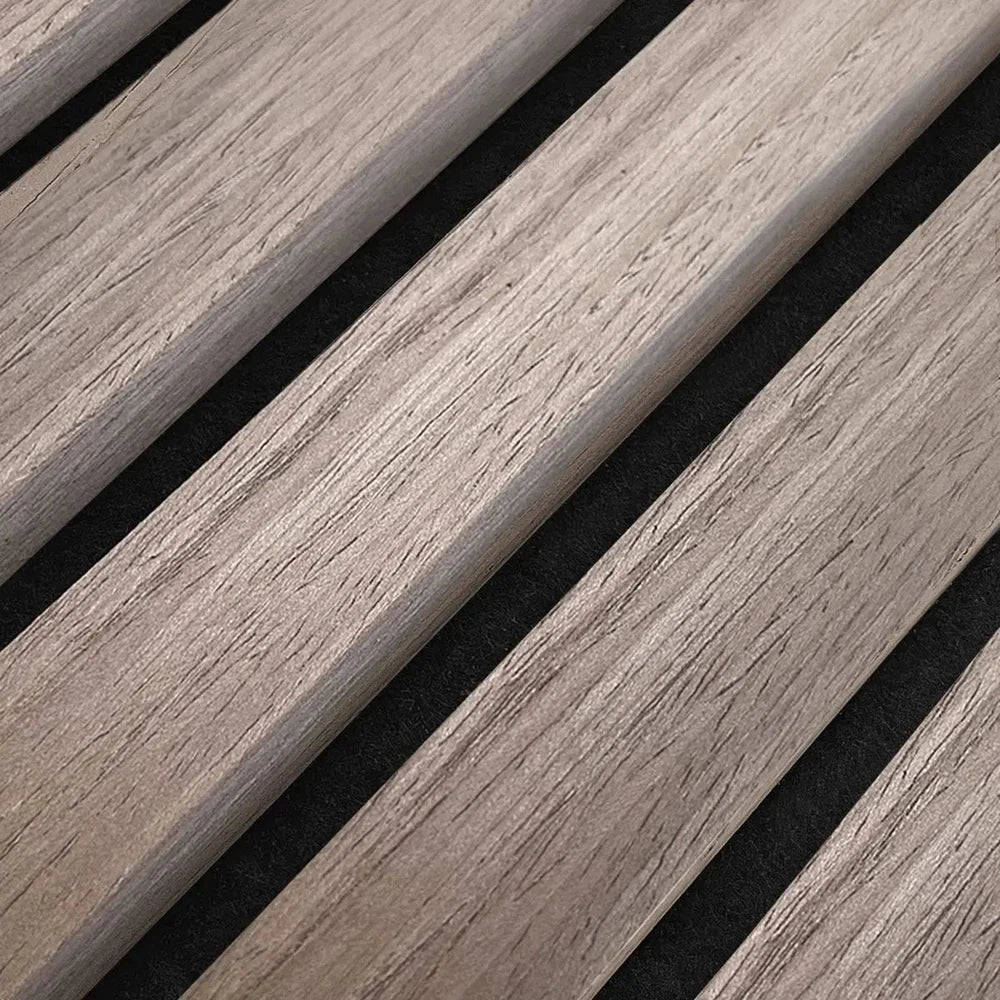
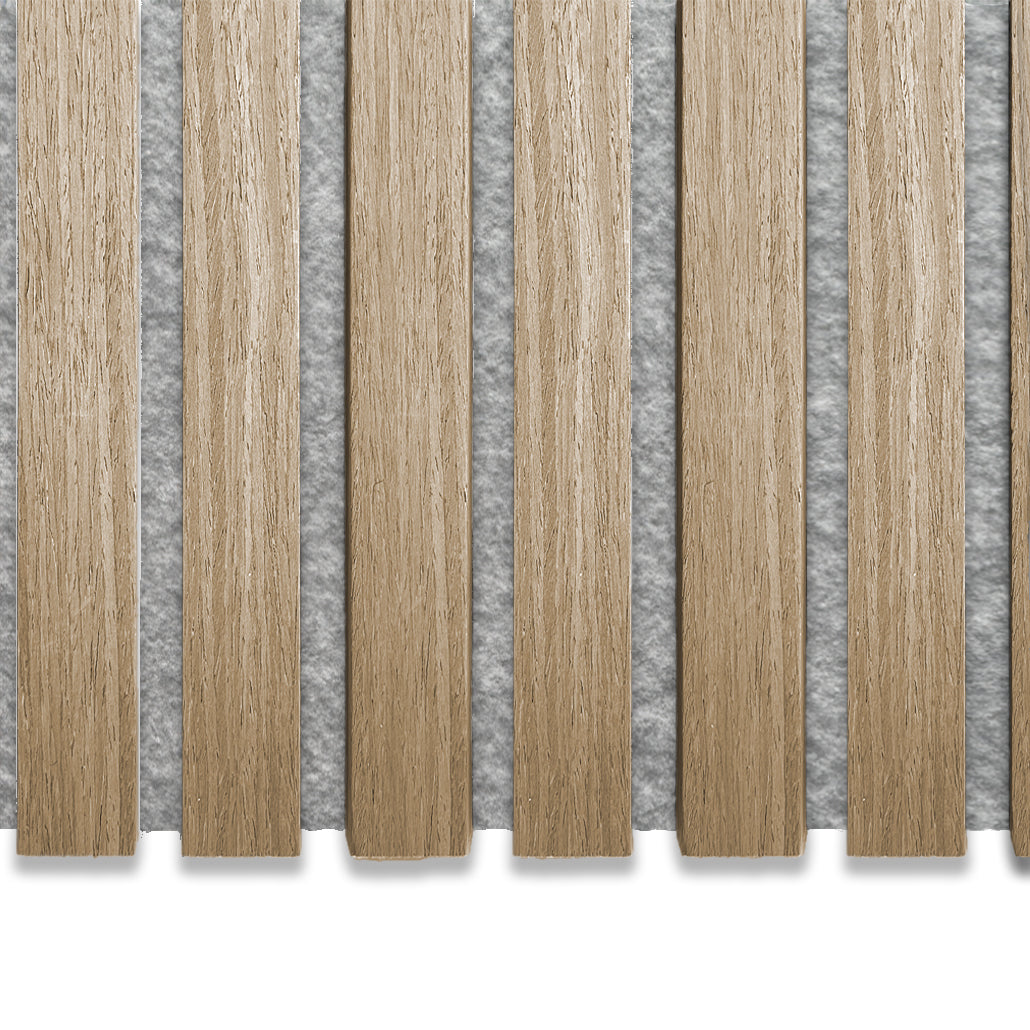
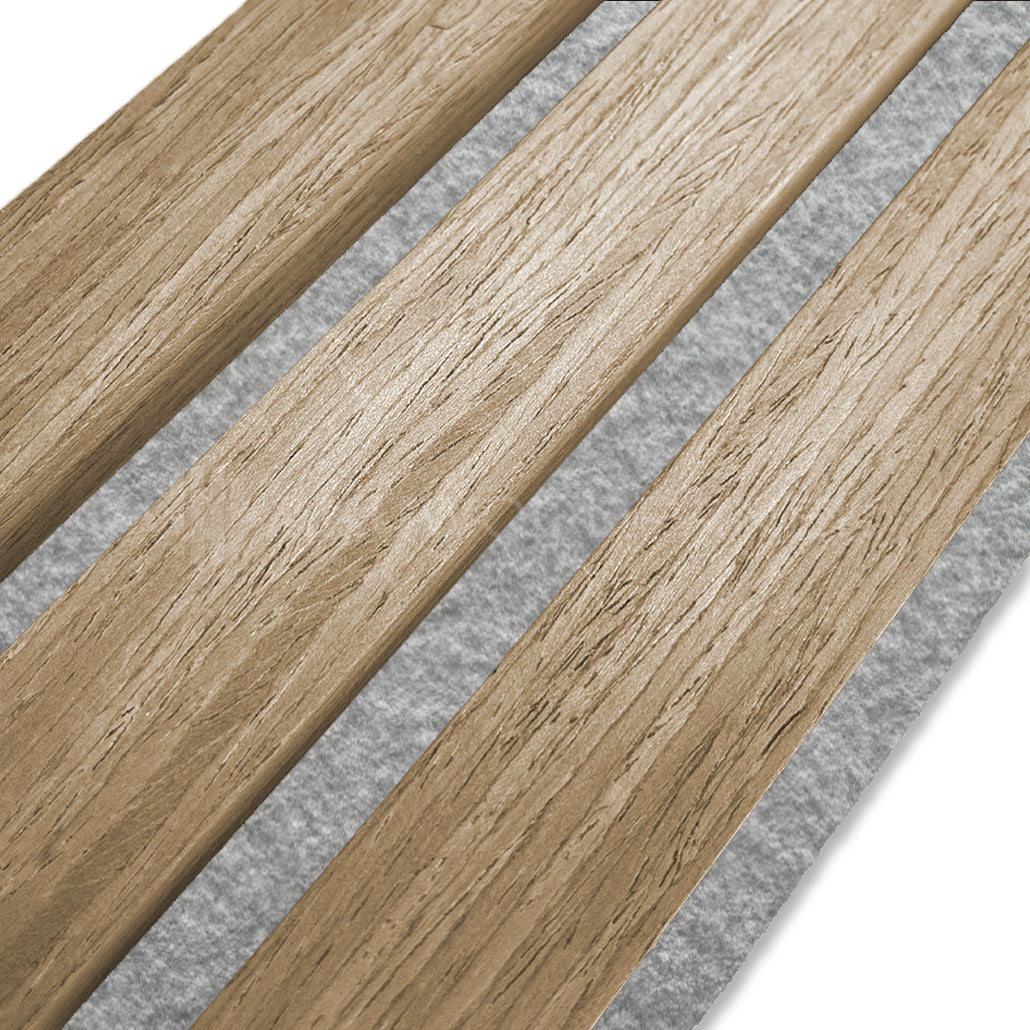
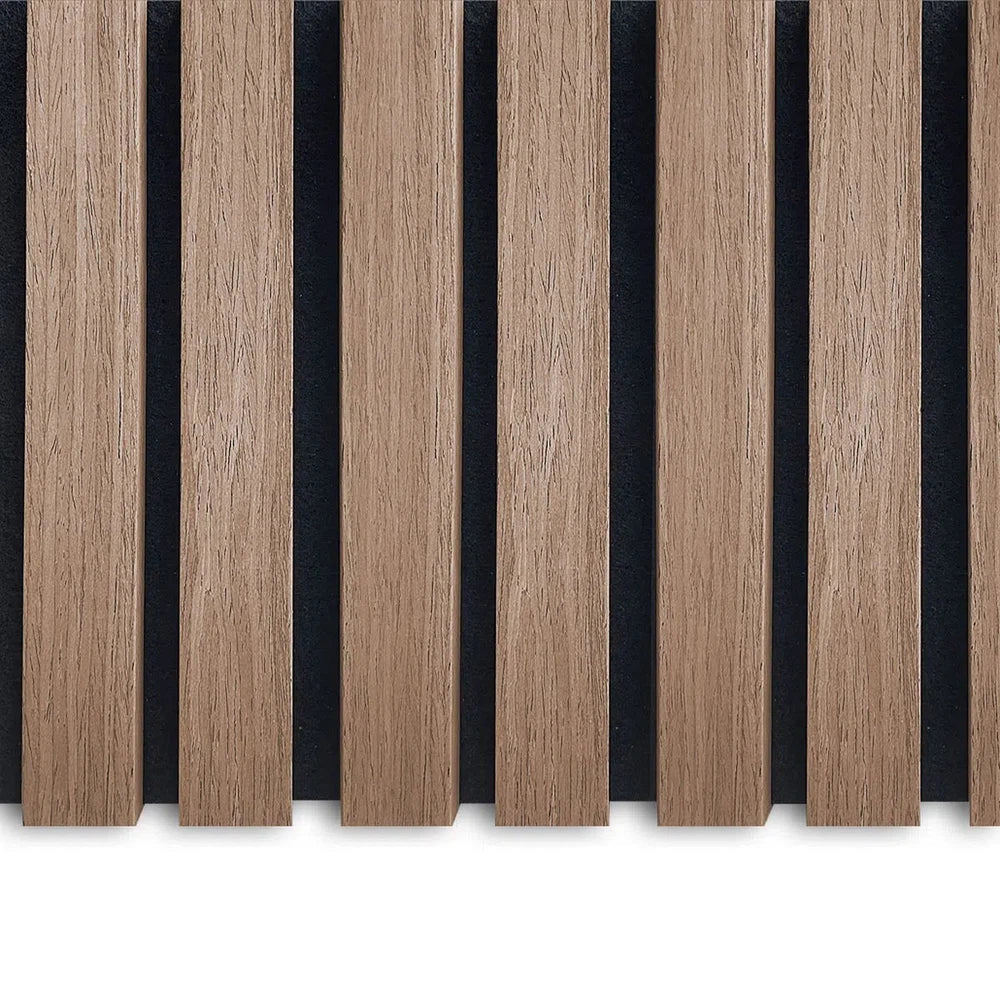
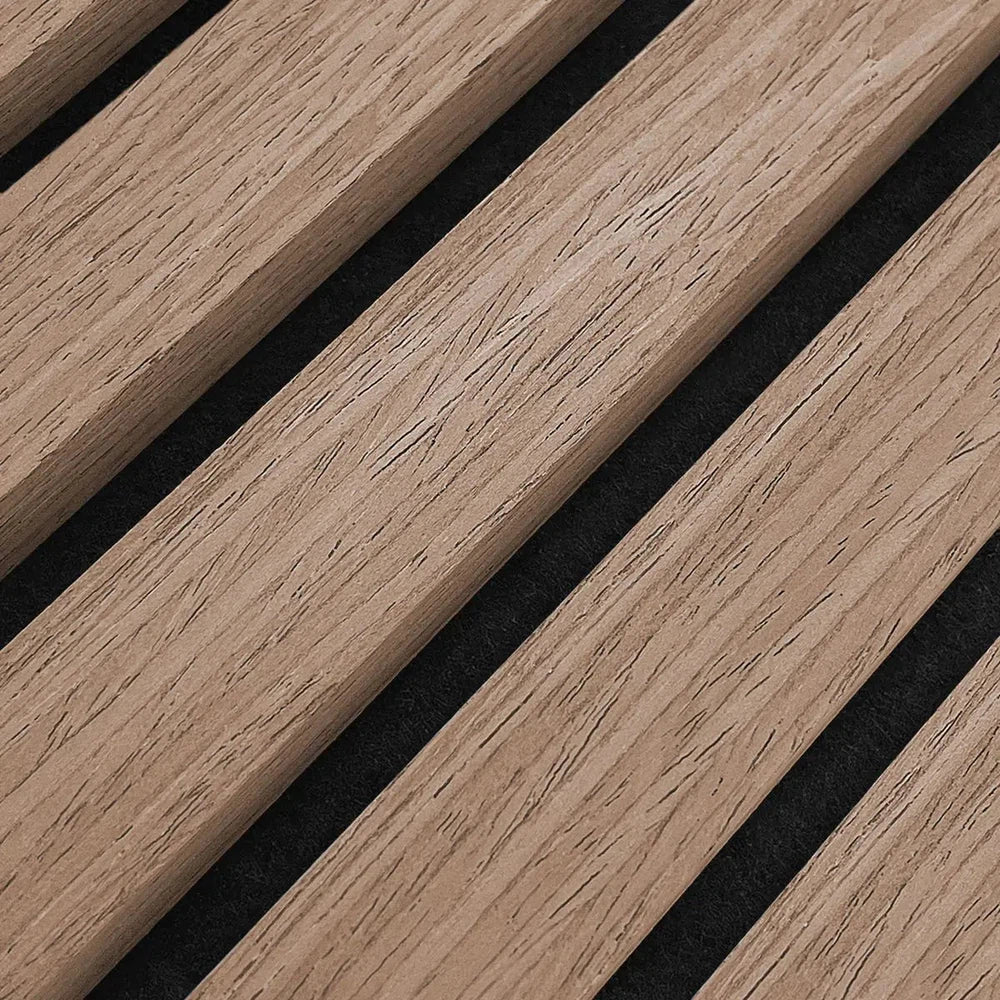
Akustiq UK manufactures and supplies acoustic wood panels for construction and interior applications. Its flagship indoor panels pair a 3-sided real wood veneer finish with an acoustic felt backing and come in 240 cm and 300 cm formats. That makes the range relevant when you want the wood finish and the room-acoustics brief addressed by the same wall treatment.
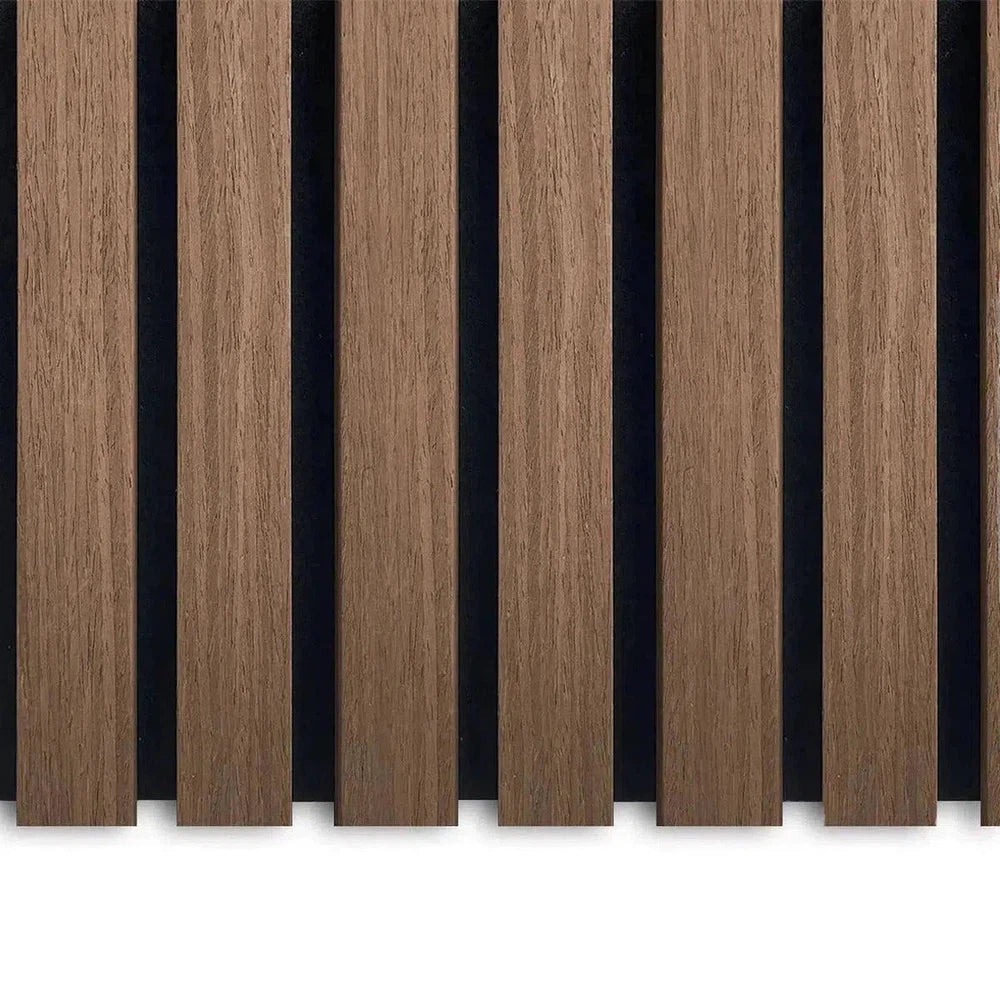
For a living room or home office, start with the finish you want to see every day. A wooden wall panel in natural oak is one listed option; the catalogue also includes darker wood finishes. Check how the chosen finish looks against your floor, furniture and lighting rather than assuming a product photograph will match the room.
Where Akustiq UK shines
- The indoor slat panels combine real wood veneer and felt backing, so you do not have to design those elements as separate purchases.
- The 240 cm and 300 cm formats give you two stated panel heights to assess against the wall.
- The range includes acoustic slat panels, hexagon panels and decorative wall panels, letting you choose a shape that suits the space.
- A specialist panel supplier is a clearer starting point when your brief is specifically an acoustic feature wall.
Where Akustiq UK falls short
- It is not a general DIY retailer. You still need to plan the rest of a wider renovation separately.
- The supplied information does not establish how much echo a particular installation will remove. Panel coverage, placement and the rest of the room matter to the result.
- Wood veneer and felt are not a substitute for a sound-insulated partition if noise transfer between rooms is the problem.
Best for: Homeowners and project teams planning an indoor wood feature wall where room acoustics matter as well as appearance. Verdict: Buy for an echo-and-finish brief; skip it as your sole source for a whole renovation.
| Decision point | Akustiq UK | Wickes |
|---|---|---|
| Main shopping brief | Acoustic wood panels for interiors | General home-improvement materials |
| Stated indoor panel construction | Real wood veneer slats and acoustic felt backing | Check the construction of the specific product you select |
| Stated flagship formats | 240 cm and 300 cm | Check dimensions on the specific product you select |
| Wider renovation supplies | Not a general DIY range | Broad building and DIY range |
Do not read the table as a claim that every Wickes wall product lacks felt or veneer. It says what is established for the named Akustiq UK range and what you need to verify before comparing individual products.
2. B&Q: best for a broader DIY shopping list
B&Q is a sensible Wickes alternative when wall decoration sits alongside other jobs. You can approach it as a general home-improvement retailer rather than choose a specialist wall-panel supplier at the outset. That is useful if your immediate task is to work out the whole materials list.
It does not settle the acoustic question. Before choosing any panel from a broad retailer, look at the actual product construction and supporting acoustic information. A decorative slat effect and an acoustic treatment are not interchangeable descriptions.
Where B&Q shines
- Its broad DIY focus suits projects that extend beyond one feature wall.
- It gives you another general-retailer route if you are comparing materials for a renovation.
Where B&Q falls short
- A broad retailer is not, by itself, evidence that a particular wall product meets an acoustic brief.
- You still need to compare individual panel materials, dimensions and fitting requirements rather than choosing by shop name.
Best for: A homeowner planning several decorating or building tasks together. Verdict: Buy for the wider materials list; check individual panel evidence before choosing it for echo control.
| Decision point | B&Q | Wickes |
|---|---|---|
| Main role | General DIY retailer | General DIY retailer |
| Suitable starting brief | Several home-improvement tasks | Several home-improvement tasks |
| Acoustic panel decision | Check the specific product | Check the specific product |
In 2026, the useful comparison between B&Q and Wickes is not which name sounds more specialised. It is whether the exact material you intend to use matches the wall you intend to build.
3. DIY timber battens: best for a custom slat layout
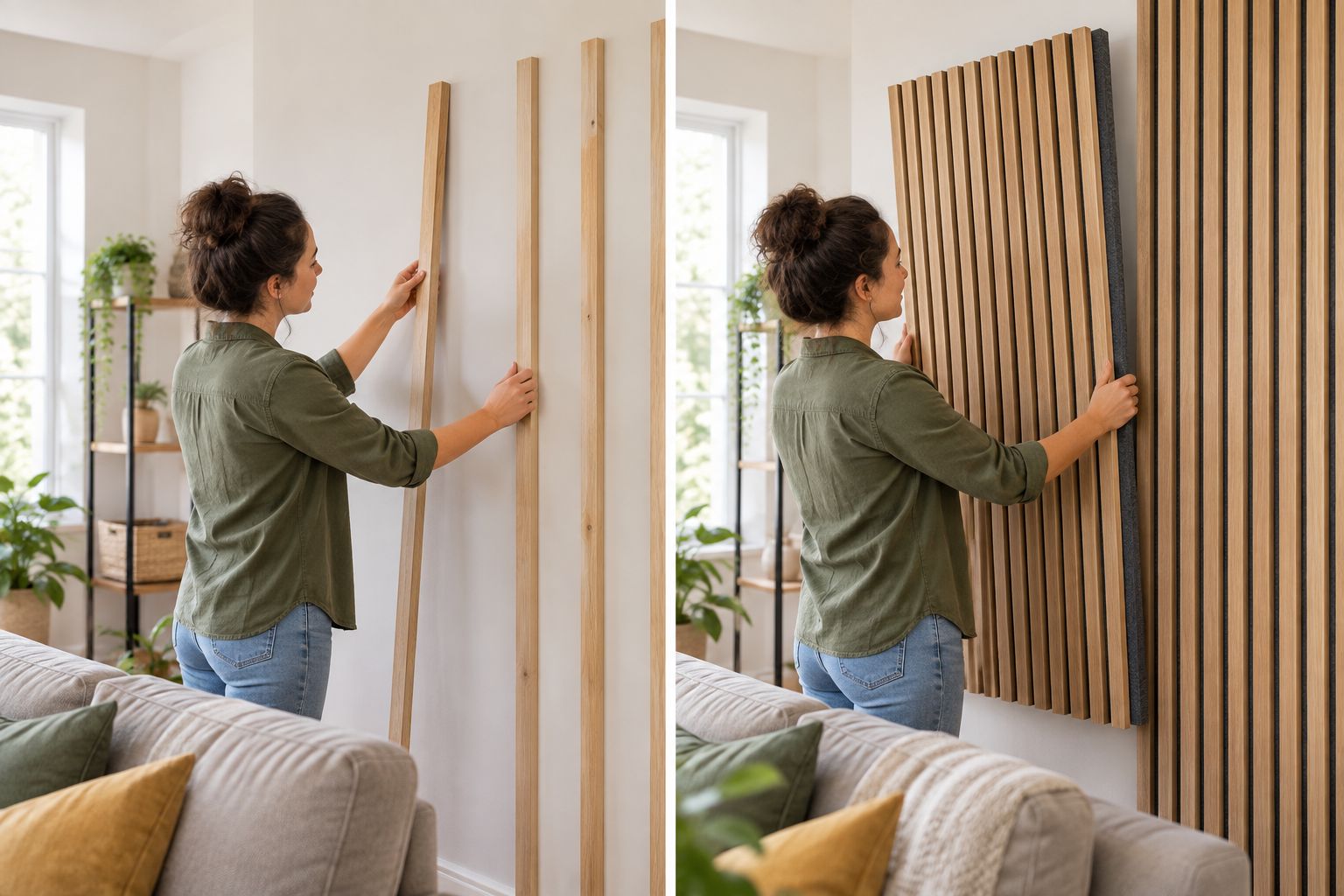
A batten wall is the hands-on Wickes alternative: choose the individual timber pieces and design their spacing yourself. It makes sense when the visual pattern is the project and you want direct control over the layout. It also puts measuring, preparation and assembly on your own task list.
A DIY slat wall is not automatically an acoustic panel. Bare timber fixed to a hard wall does not become a documented sound-absorbing system because it resembles one. If reducing echo is the reason for the job, decide how absorption will be provided and ask for evidence for the finished construction, not just its visible slats.
Where DIY timber battens shine
- You control the appearance of individual slats and the pattern between them.
- You can plan the layout around the shape of the wall instead of starting from a panel format.
Where DIY timber battens fall short
- You take responsibility for setting out, cutting, finishing and fitting the separate pieces.
- The appearance alone tells you nothing reliable about sound absorption.
- A custom wall is harder to compare with a finished panel unless you document its materials and construction.
Best for: Someone who wants to build a decorative slat wall and is comfortable managing its components. Verdict: Buy the materials for a custom visual project; skip a bare-batten solution if proven acoustic performance is the brief.
| Decision point | DIY timber battens | Wickes |
|---|---|---|
| What you choose | A wall-building method | A retailer for materials |
| Slat layout | Set by your own design | Depends on the product or method you choose |
| Acoustic case | Must be established for the finished construction | Must be established for the specific product or construction |
The visual similarity between these routes can be deceptive. A finished panel, a decorative slat product and individual battens can all create vertical lines, but you should assess their backing and installation separately.
Why people switch from Wickes
The reason to switch is the project brief, not an unverified claim about Wickes. A broad DIY retailer remains useful for broad DIY shopping. A specialist supplier becomes more relevant when you are choosing the surface and construction of a particular wall.
- The room echoes. Compare products by their stated acoustic construction and any evidence for the installation you are considering. Do not treat a wood-look finish as proof of sound absorption.
- The feature wall needs a particular wood finish. Look at the named veneer finish and the completed wall design, including edges and interruptions such as sockets.
- The wall height affects the layout. Compare the stated 240 cm and 300 cm formats with your measured wall before deciding where joins or cuts would sit.
- You want to build the pattern yourself. Choose individual battens if control over each piece matters more than starting with a backed panel.
- You are renovating more than one part of the room. Keep a general retailer in the plan for the wider materials list; there is no need to make one supplier do every job.
Before committing to panels in 2026, measure the wall, mark any openings and decide where the treatment will go. Then separate claims about echo within the room from claims about noise passing through the wall. They are different problems, and neither a retailer name nor a slatted appearance resolves that distinction.
Choose your wall panel finish
Compare wood finishes and panel styles for your interior wall.
When staying with Wickes makes sense
Stay with Wickes if the wall is only one item on a broader DIY list and you already know which materials your design requires. It is also a sound starting point for a decorative project where you are buying components and taking responsibility for the finished construction.
Do not switch suppliers simply because a product is labelled acoustic. For a 2026 office or living-room project, check what the panel is made from, how it is intended to be fitted and what evidence supports the acoustic claim. If the problem is sound from next door, assess the wall assembly rather than expecting a decorative surface to soundproof it.
FAQ
What is the best Wickes alternative for acoustic wall panels in 2026?
Akustiq UK is the best fit here for an acoustic wood feature wall. Its stated indoor panel construction combines real wood veneer slats with an acoustic felt backing; check the evidence relevant to your planned installation.
Is Akustiq UK better than Wickes for a feature wall?
Akustiq UK is the more focused choice when you specifically want acoustic wood panels. Wickes remains useful when the feature wall is part of a wider DIY shopping list.
Is B&Q a good alternative to Wickes?
Yes, B&Q is another general DIY retailer for a wider home-improvement project. For an acoustic wall, compare the specifications of individual products rather than treating either retailer name as a performance claim.
Do acoustic wood panels soundproof a wall?
No, treating echo inside a room is different from stopping sound travelling through a wall. Investigate the wall construction when noise transfer between rooms is the main problem.
Are DIY timber battens the same as acoustic slat panels?
No, a row of timber battens does not establish the acoustic performance of a finished panel system. Check the backing, construction and supporting evidence if echo reduction is your aim.
Which panel height should I consider for a feature wall?
Measure your wall and compare it with the stated 240 cm and 300 cm flagship indoor panel formats from Akustiq UK. Plan cuts, joins and obstacles before settling on a format.
Can decorative wall panels help with echo?
A decorative appearance alone does not tell you how a panel handles sound. Check its materials and acoustic evidence instead of assuming that all slatted products work the same way.
One last thing
If your main complaint is echo, listen for it in the room where the panels will go before choosing a finish. If the sound you want to tackle comes through a shared wall, change the brief: you need to assess noise transfer, not just pick a better-looking feature wall. That single distinction is more useful than any 2026 list of retailers.