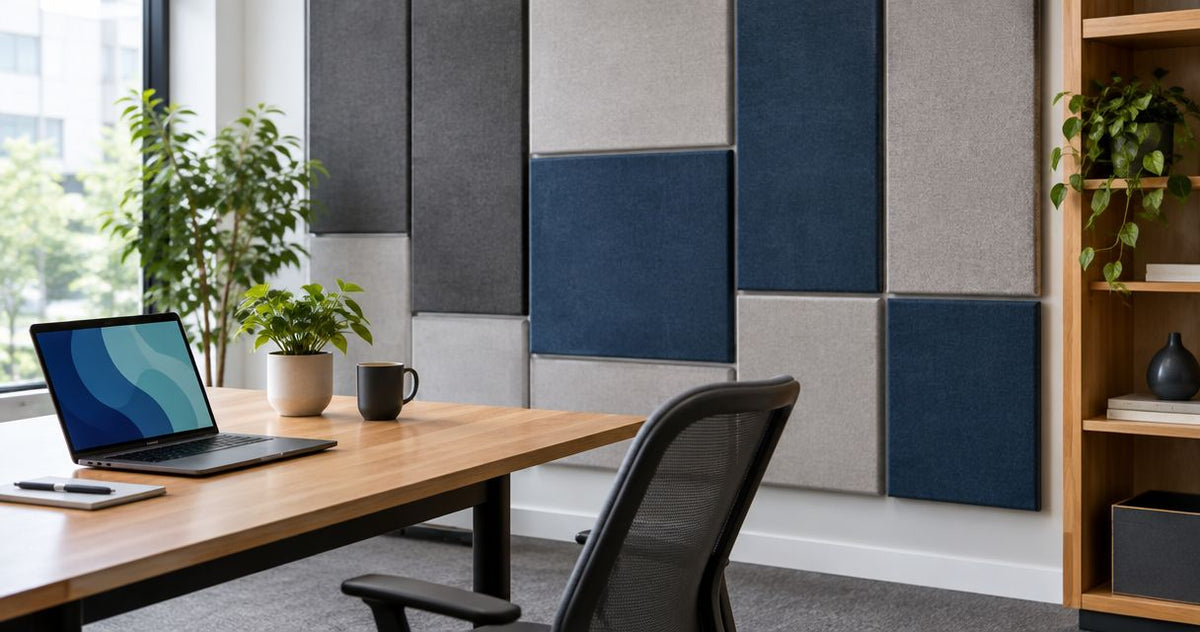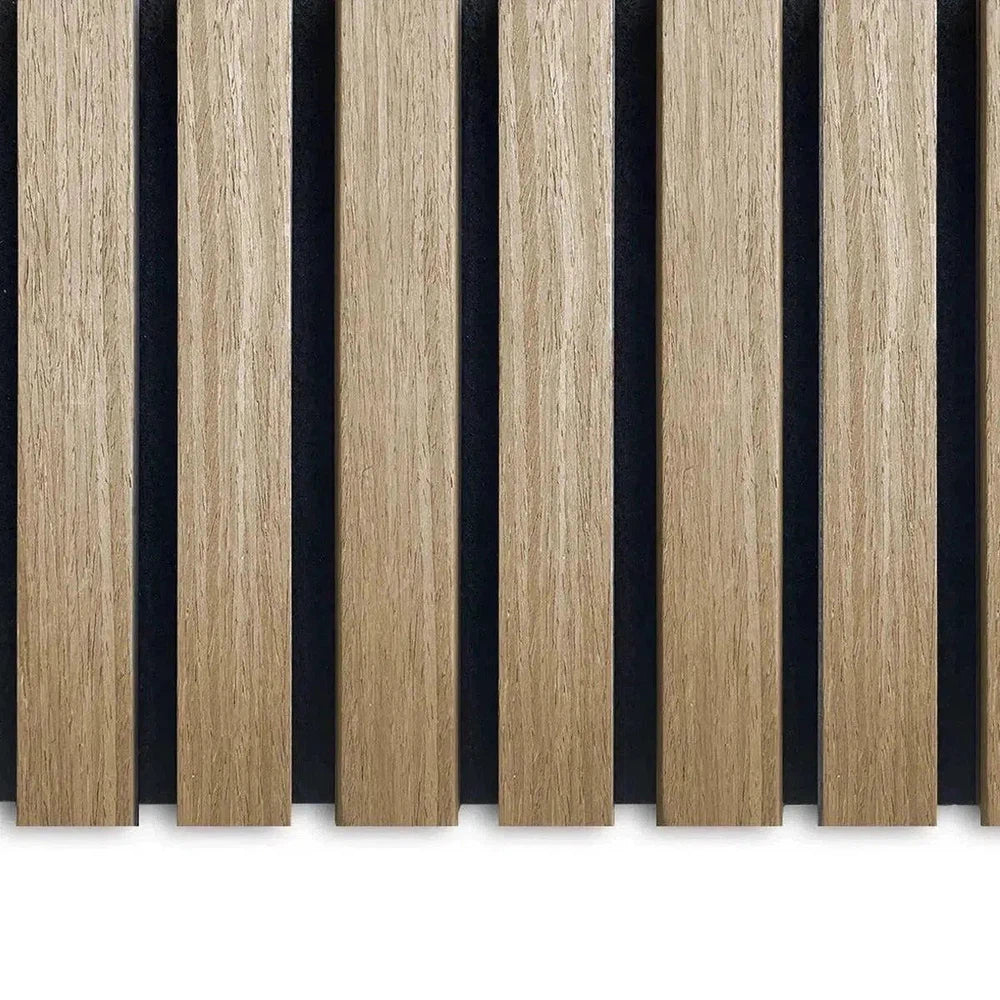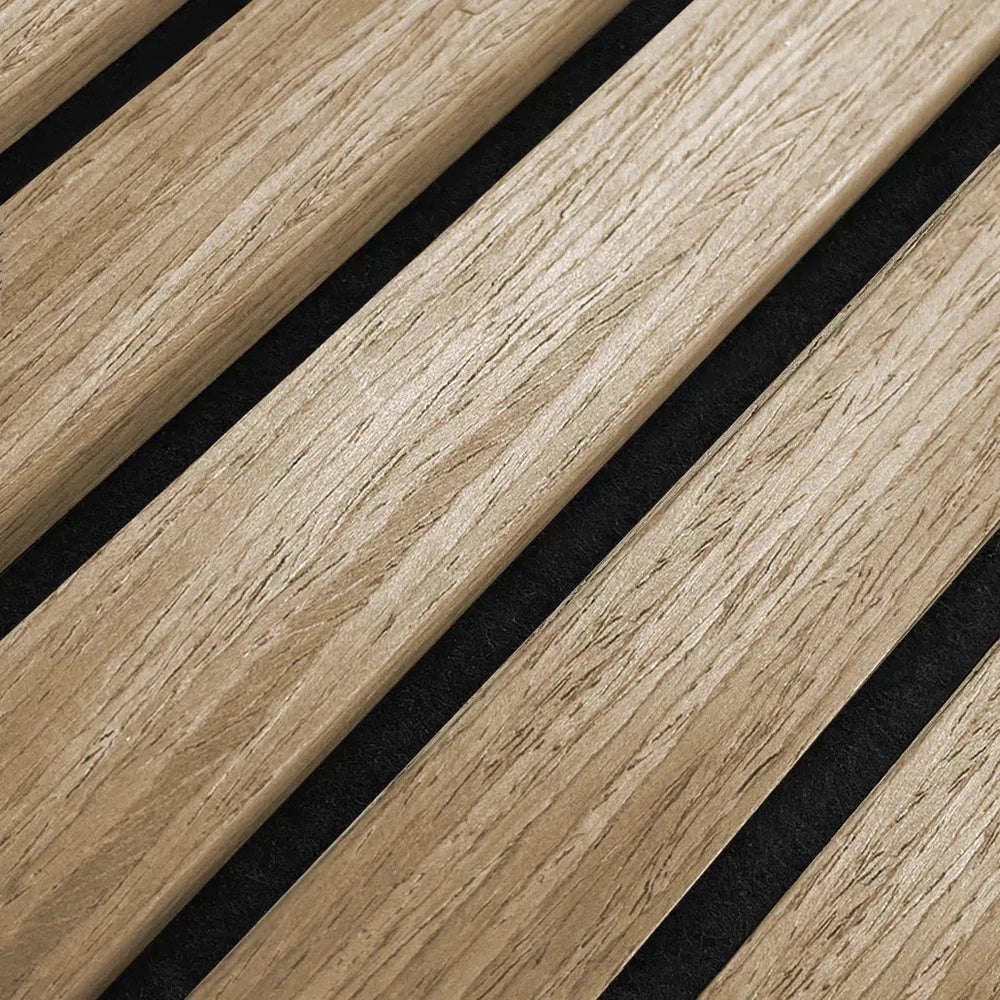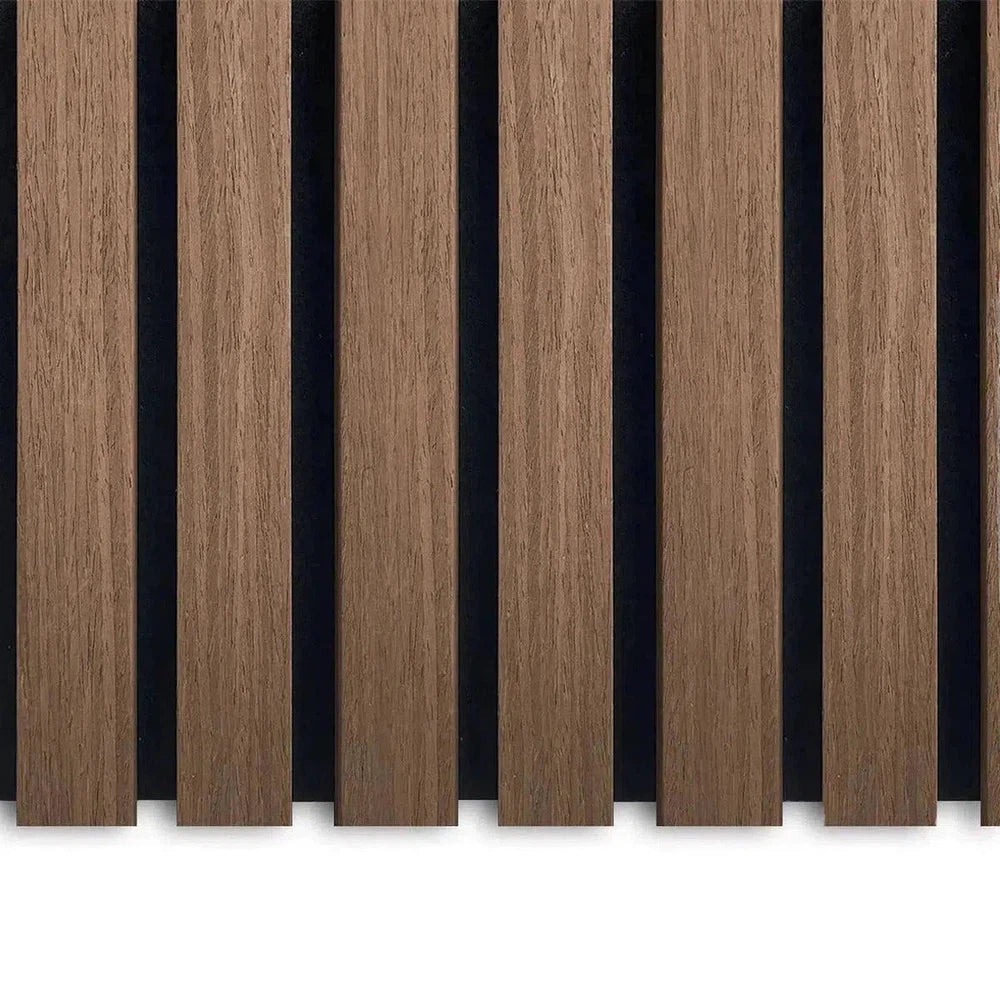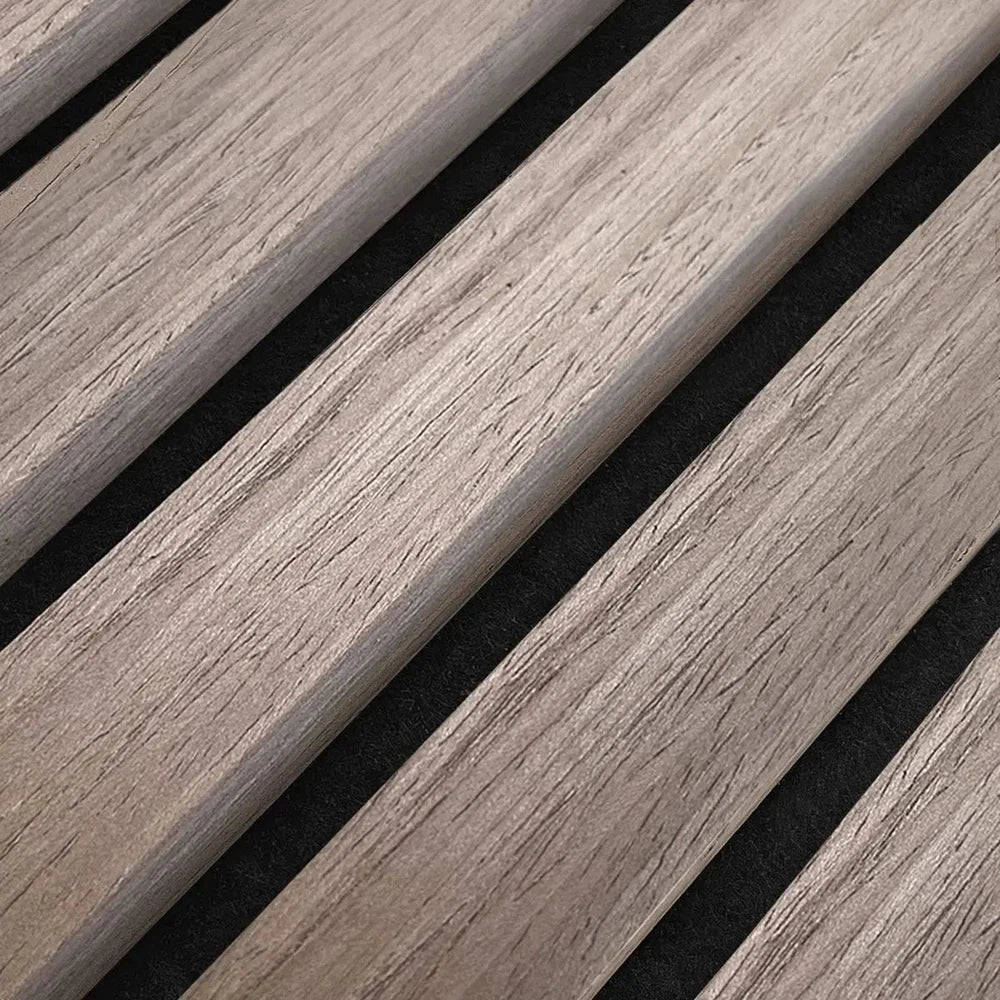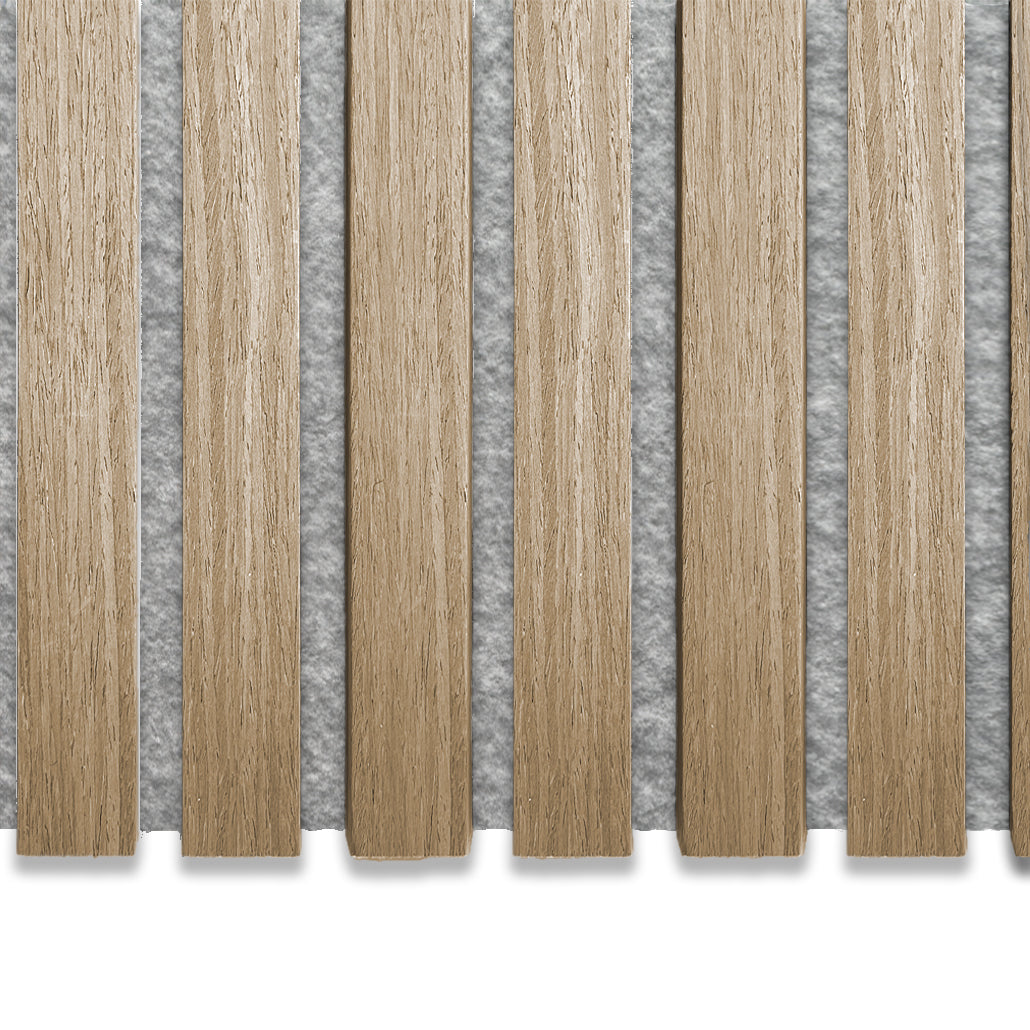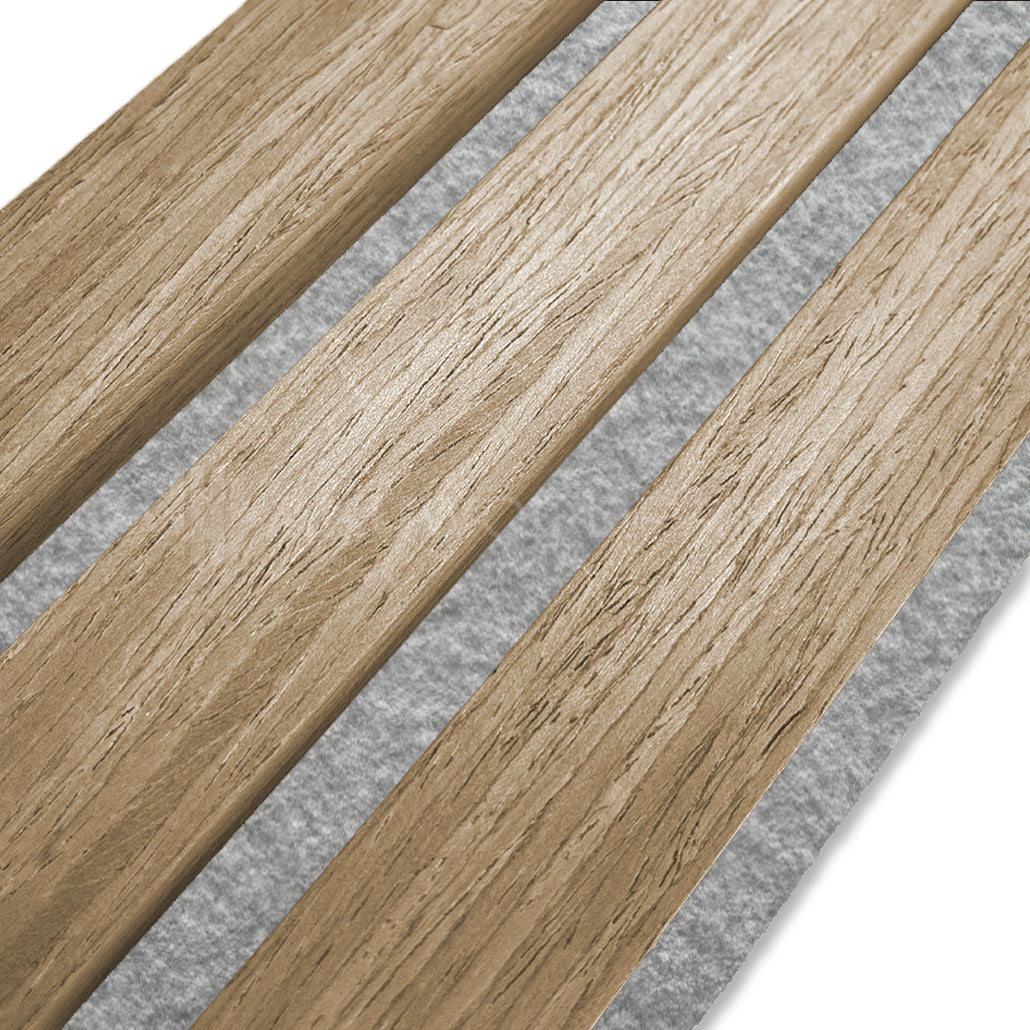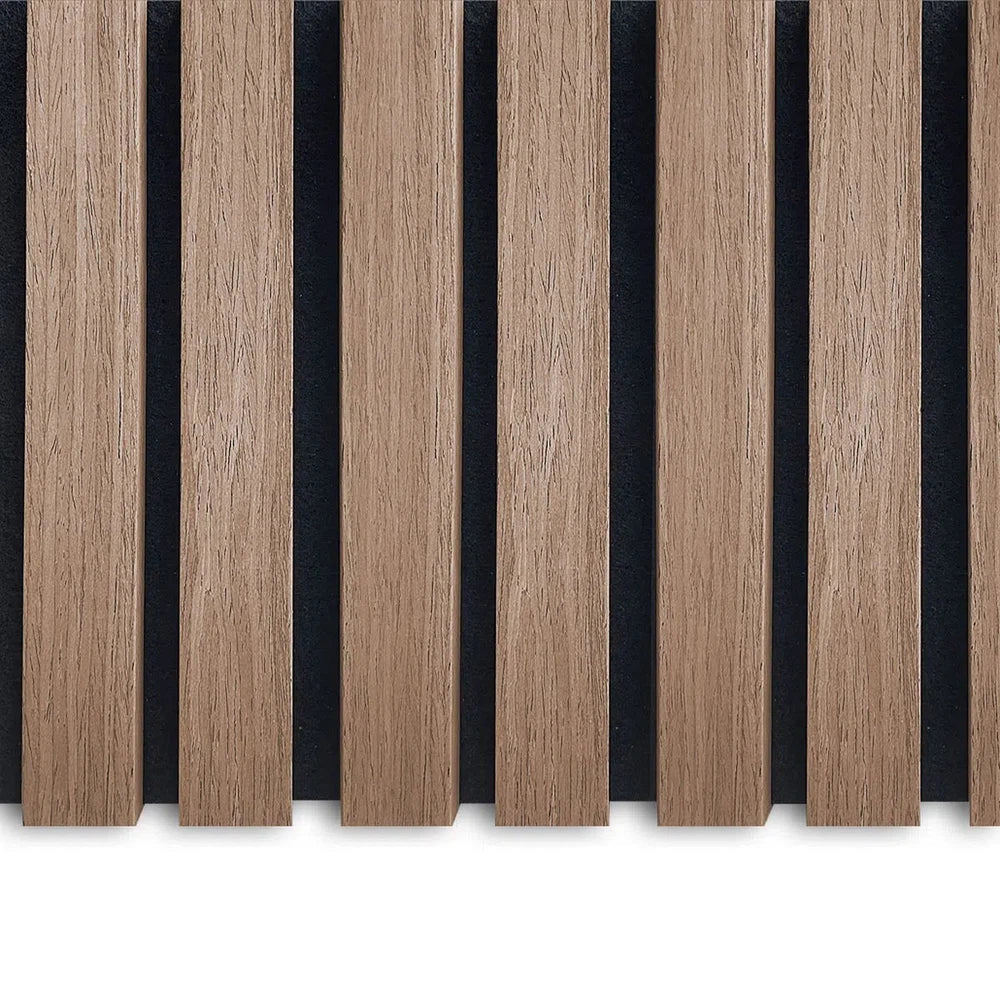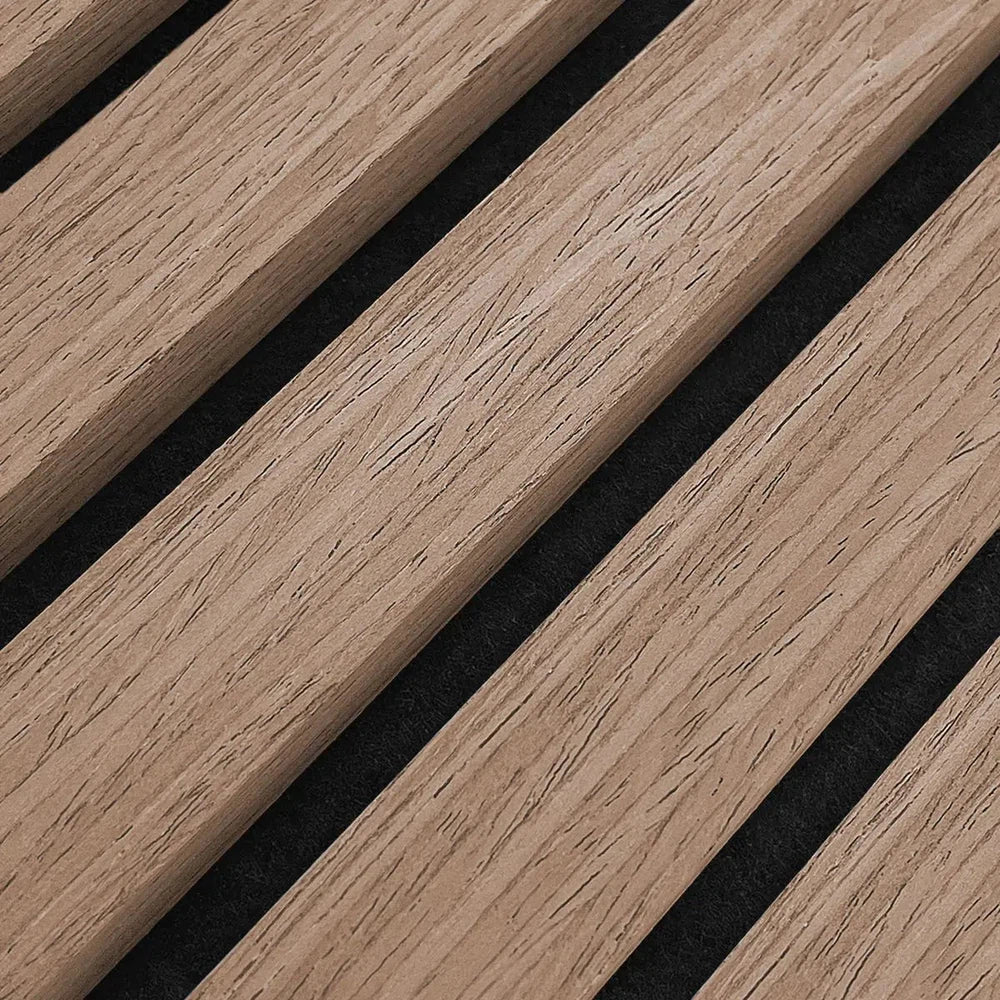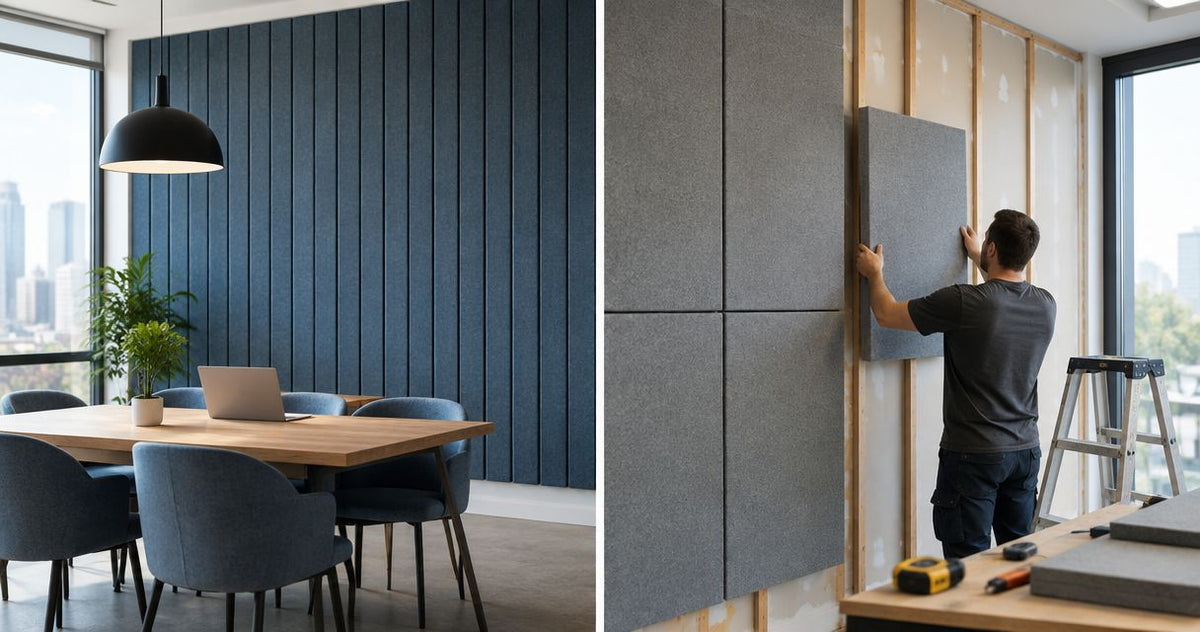
Best overall for a planned new-build wall: Akuwood Panel Natural Oak wooden wall panel. Best for an existing feature wall: Smoked Oak wooden wall panel. Best for a smaller accent area: Hexagon Acoustic Panel Grey Walnut with Grey Felt. The right acoustic wall panels for a new build vs retrofit depend first on the wall you can cover, not the wood finish you prefer.
- For acoustic wall panels new build vs retrofit, choose Natural Oak for a planned full wall and Smoked Oak for an existing feature wall.
- Choose Hexagon Acoustic Panel Grey Walnut with Grey Felt when you want a smaller accent area.
- Akuwood Panel felt-backed wood panels address sound reflected within a room; they do not replace soundproofing between rooms.
- Check wall condition, fixing positions and panel layout before choosing a finish.
Why this matters
A new build lets you decide where panelling belongs before sockets, lighting and furniture fix the room layout. A retrofit starts with those decisions already made. The acoustic aim can be the same in both cases: reduce sound reflected from hard surfaces in a living room, bedroom or office. The installation plan is not the same.
In 2026, start by deciding whether you need a full panelled wall, a single feature wall or a smaller accent area. Do not choose by appearance alone if echo is the reason for the project. Panel coverage and the room's other hard surfaces matter to the result; a decorative patch should not be treated as a soundproof wall.
What makes the best acoustic wall panel?
- Available wall area: A clear new-build wall suits a continuous layout. Doors, sockets and furniture can break up a retrofit wall.
- Panel format: Akuwood Panel's flagship indoor panels come in 240 cm and 300 cm formats. Match the format to your measured wall before deciding where joints will fall.
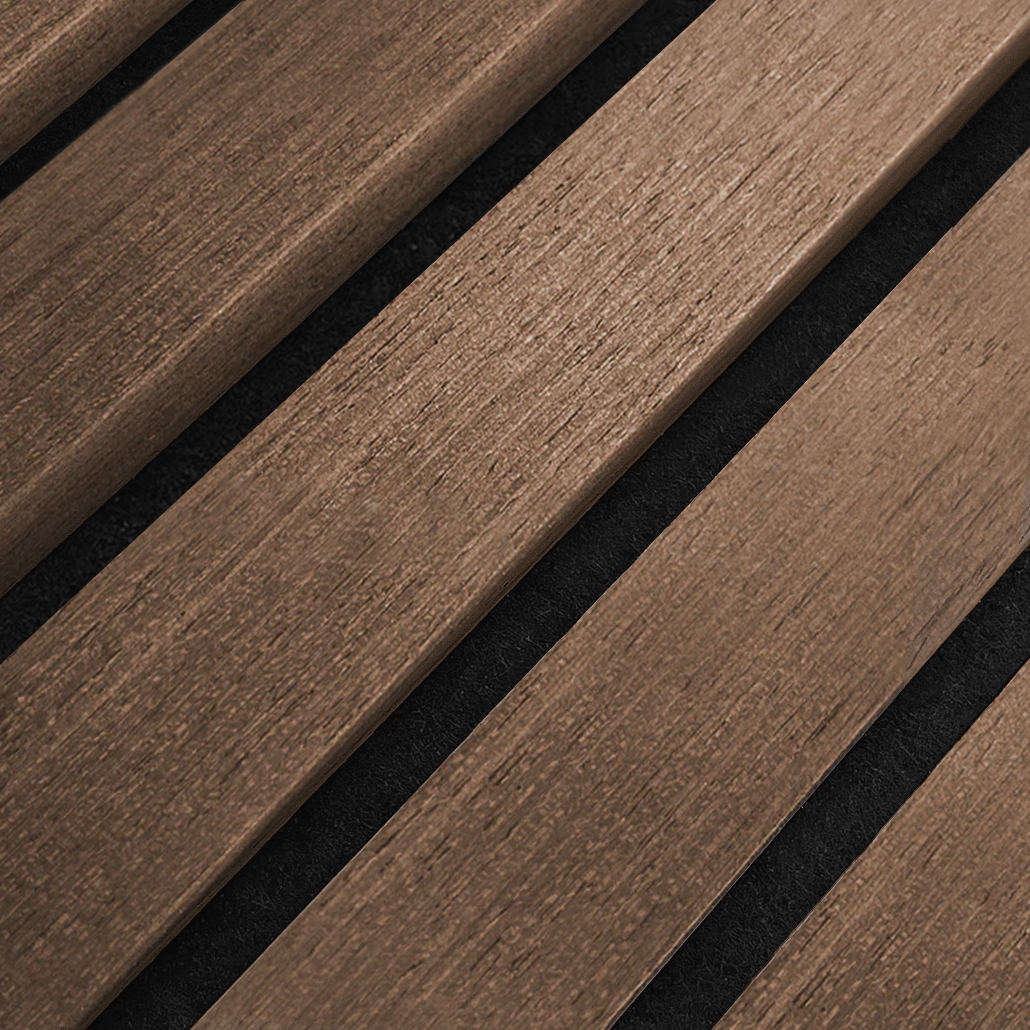
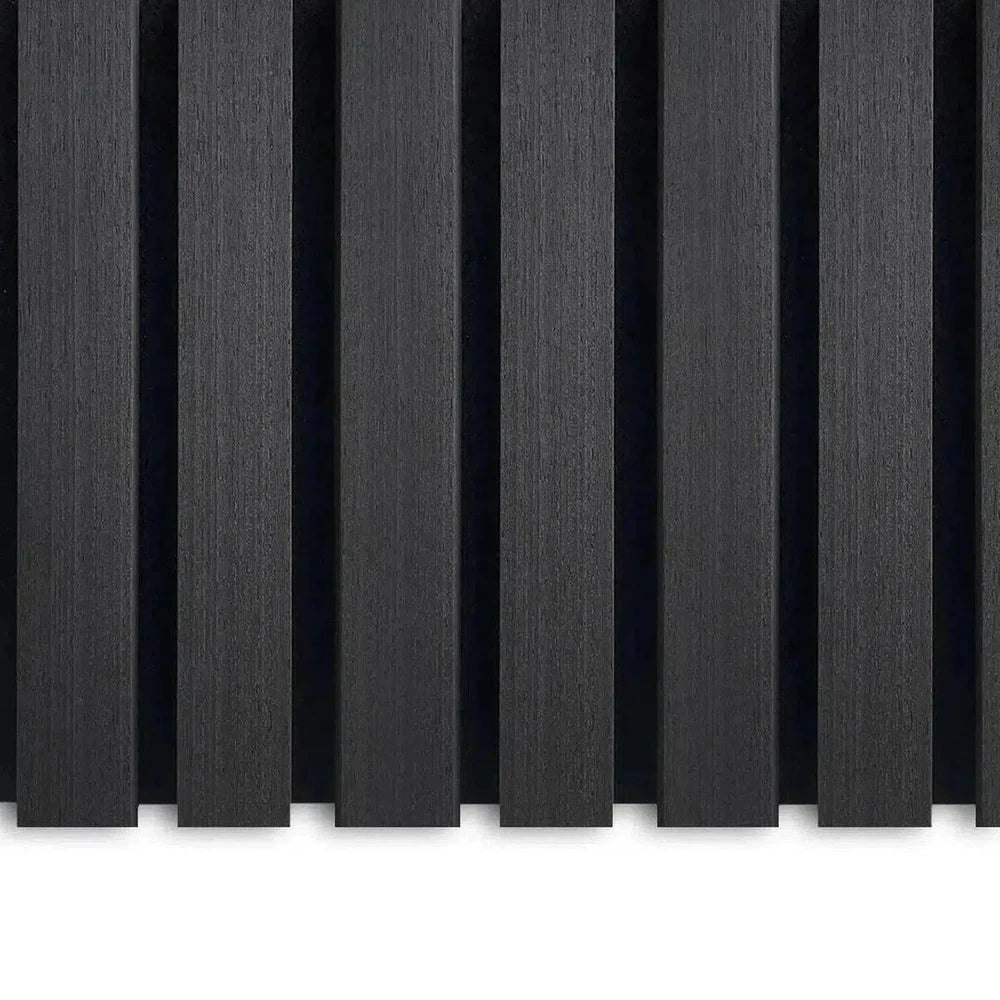
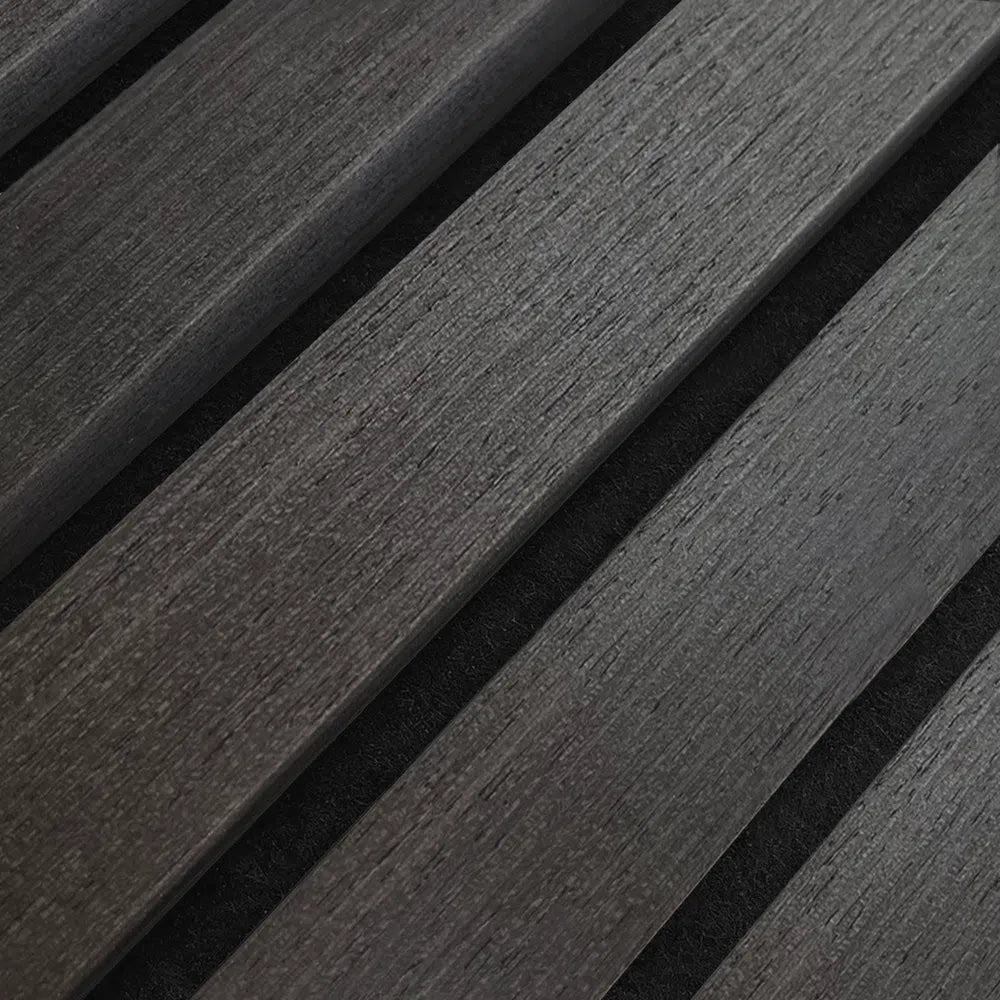
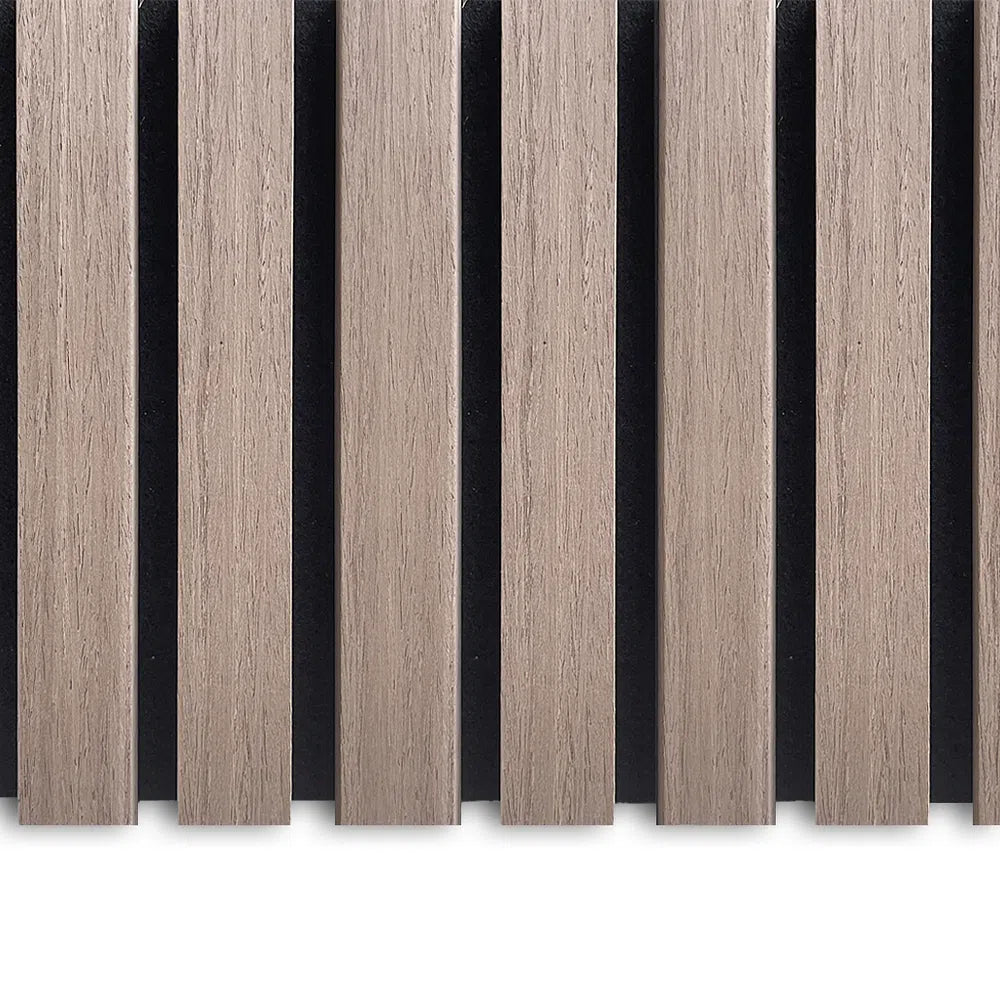
- Visible finish: Natural Oak keeps the treatment visually light; Smoked Oak makes it a darker feature. Judge the finish alongside the room, not in isolation.
- Backing: The flagship indoor slat panels have acoustic felt backing. Check the exact product specification when comparing a slat panel with another panel format.
- Fixing surface: A sound layout still needs a suitable wall and fixing method. Inspect existing plaster, paint and services before a retrofit.
At a glance: new-build and retrofit picks
| Panel | Best for | Standout feature | Key limitation |
|---|---|---|---|
| Natural Oak wooden wall panel | Planned new-build wall | Light wood finish for a continuous slat layout | Needs a measured wall plan before sockets and edges are finalised |
| Smoked Oak wooden wall panel | Existing feature wall | Darker wood finish | The finish cannot compensate for poor coverage or an uneven wall |
| Hexagon Acoustic Panel Grey Walnut with Grey Felt | Smaller accent area | Hexagon format with grey felt named in the product | Separate pieces require a deliberate layout; do not assume the same coverage as a full slat wall |
The ranking is a fit guide, not a claim that one finish absorbs more sound than another. No comparable absorption figures are supplied for these three products, so choose the layout first and request the relevant performance documentation if your project has an acoustic target.
1. Natural Oak: best acoustic wall panel for a planned new-build wall
A clear wall is the main advantage of a new build. You can place a continuous run of Natural Oak wooden wall panels before the room gains radiators, wall lights, shelves or a fixed media unit. Akuwood Panel's flagship indoor slat panels combine real wood veneer with acoustic felt backing; the brand describes the veneer as a 3-sided finish.
Natural Oak pros:
- A continuous slat layout is straightforward to plan when the wall is still clear.
- The natural-oak finish gives you a defined material choice for a living room, bedroom or office.
- You can coordinate panel ends and the positions of visible fittings at the design stage.
Natural Oak cons:
- It is a poor choice to order before the finished wall height and obstructions are confirmed.
- A full wall creates more cuts around sockets and openings if services move after the layout is agreed.
- Felt-backed wall treatment is not a substitute for a wall assembly designed to limit sound transfer.
Best for: A new-build living room or office where you can reserve an uninterrupted wall for panelling. Decide which sections stay exposed, then measure the finished surface and assess how the available 240 cm or 300 cm format fits. Do not assume a panel format equals your finished ceiling height; floors, ceilings and trims all affect the visible fit.
The useful question for a builder is not simply which finish looks best. Ask where each vertical edge will land and whether sockets, switches and wall-mounted equipment can sit outside the main run. Verdict: Buy for a planned full wall; wait until the finished dimensions are confirmed.
2. Smoked Oak: best acoustic wall panel for an existing feature wall
A retrofit often has one workable wall rather than a blank room. Smoked Oak wooden wall panels suit the decision to make that wall a distinct feature while adding felt-backed slat treatment. The darker finish changes the look of the room, but it does not remove the need to plan enough coverage for the echo problem you are trying to address.
Smoked Oak pros:
- A defined feature wall gives the retrofit a clear start and end point.
- The darker finish creates a distinct choice from Natural Oak without changing the basic decision about wall coverage.
- You can plan the layout around furniture that will stay in the room.
Smoked Oak cons:
- Existing sockets, shelving and skirting can interrupt the intended pattern.
- A dark finish will not hide a visibly uneven join or a poorly prepared wall.
- Treating only a small section of a large, reflective room limits how much surface you address.
Best for: An occupied living room, bedroom or office with a sound wall you want to turn into a feature. First mark the panelled area on the wall. Then check the substrate, identify services and decide how the panels end at corners, skirting and fittings. In 2026, that sequence matters more than choosing a finish from a screen image.
If an existing wall has loose paint, damaged plaster or an uneven surface, resolve it before fitting panels. Panelling should not become a shortcut around a wall problem you already know exists. Verdict: Buy for a measured retrofit feature wall; wait if the wall surface still needs attention.
3. Grey Walnut hexagon: best acoustic panel for a smaller accent area
Hexagon Acoustic Panel Grey Walnut with Grey Felt is the format change in this comparison. Instead of planning a continuous slat wall, you plan an arrangement of individual hexagon panels. That makes it a distinct choice for an accent area, such as part of a home office wall or a bedroom wall where a full-height run is not the design brief.
Grey Walnut hexagon pros:
- The separate pieces let you define the outline of a smaller panelled area.
- Grey felt is identified in this product's name, making the visible backing part of the finish decision.
- A repeatable shape gives you a clear pattern to set out before fitting.
Grey Walnut hexagon cons:
- More individual edges make spacing and alignment important.
- A small arrangement covers less wall than a full-wall layout; do not promise it the same effect on room echo.
- The hexagon format will not give you the continuous slat look of the other picks.
Best for: A smaller, deliberately bounded accent area. Sketch the arrangement at its intended size and check how it sits beside furniture, sockets and door frames. If the main complaint is strong echo across an open-plan room, assess the whole room rather than treating this accent as the complete answer.
In a 2026 retrofit, the format helps you work within an existing layout. In a 2026 new build, it is chiefly a design choice for a limited area. Verdict: Buy for a smaller accent; skip as your sole treatment when the brief calls for broad wall coverage.
New build vs retrofit: plan the wall before the panel
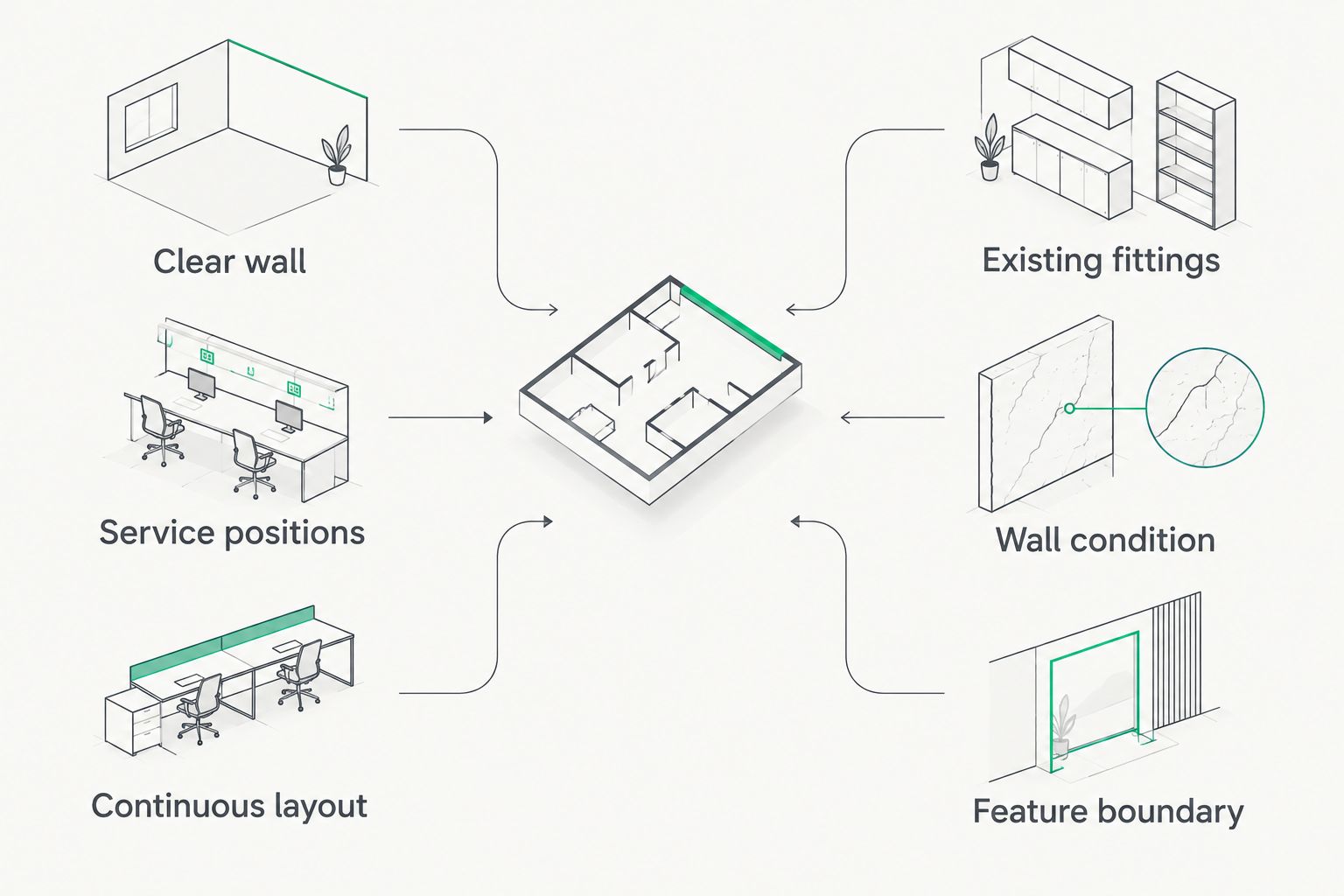
For a new build, identify the wall early enough to coordinate panelling with other wall details. Mark the finished floor and ceiling levels, then locate sockets, switches, lights and any wall-mounted furniture. Decide whether a 240 cm or 300 cm flagship panel format works with the intended look. A drawing based on unfinished dimensions is not an order measurement.
For a retrofit, inspect what is already there. Check whether the existing surface is sound and level, and identify anything you need to retain or work around. Measure the usable area between doors, corners and fixed fittings. Then draw the panel boundary on the wall so you can see whether it looks deliberate from the room's normal viewing position.
Neither route starts with an absorption claim. A felt-backed wood wall panel helps treat reflections within the room, while blocking sound between rooms is a different construction problem. If you need a specified acoustic outcome for a commercial room, obtain the product's applicable test data and have the wall design assessed against the project brief. Do not substitute a finish description for a performance specification.
Match the treatment to the noise problem
If conversation or television sounds harsh inside the same room, look at hard surfaces first. Bare walls, hard floors and large areas of glazing give reflected sound places to bounce. Wall panelling addresses part of that reflective surface; the location and extent of the treatment matter more than whether the wood is Natural Oak or Smoked Oak.
If you hear a neighbour through a shared wall, the problem is sound transmission. A decorative felt-backed panel should not be presented as proof that the wall will become soundproof. The same distinction applies when speech escapes a meeting room: improving sound within the room and limiting sound between rooms are separate briefs.
For a bedroom retrofit, decide which problem you actually have before choosing a panel. An unpleasant echo inside the bedroom supports an interior treatment brief. Noise entering from another room calls for a review of the separating construction instead. That distinction prevents you from buying the right-looking product for the wrong task.
How the ranking works
These picks are ranked by wall condition, usable coverage and layout flexibility, not by an unverified absorption score. Natural Oak leads when the wall can be planned from the outset. Smoked Oak leads when an existing wall needs a defined feature treatment. The Grey Walnut hexagon option serves a smaller accent area where a full slat run is not the brief.
That also explains the limitations. The new-build pick needs accurate finished dimensions; the retrofit pick needs a sound existing surface; the accent pick should not be mistaken for broad coverage. For a 2026 project with a measured acoustic requirement, compare documented performance under the intended installation conditions before approving any panel.
Which acoustic wall panel should you choose?
Choose Natural Oak as the default for a new-build wall you can plan end to end. Choose Smoked Oak when the project is a retrofit and you want the panelled section to read as an intentional, darker feature. Choose Grey Walnut hexagons when the available area is smaller and an arranged pattern is the point of the design.
If you have not measured the finished wall, none of the three is ready to order. Mark the intended coverage, check the fixing surface and settle the positions of fittings first. In 2026, a well-planned panel boundary is a better starting point than a colour preference.
FAQ
What are the best acoustic wall panels for a new build?
Natural Oak wooden wall panels are the default pick here for a planned, continuous new-build wall. Confirm finished dimensions and fitting positions before choosing the panel layout.
What are the best acoustic wall panels for a retrofit?
Smoked Oak wooden wall panels suit an existing feature wall with a sound surface and a measured boundary. Work around fixed services and furniture rather than planning as though the wall were empty.
Are acoustic wall panels different for new builds and retrofits?
The acoustic aim can be the same, but the installation constraints differ. A new build lets you coordinate the wall treatment with future fittings; a retrofit must account for existing surfaces, services and openings.
Do felt-backed wooden wall panels soundproof a shared wall?
No: felt-backed wall treatment addresses reflections within a room and is not a substitute for a sound-insulating wall assembly. Assess the separating construction if sound transmission is the problem.
Should I choose 240 cm or 300 cm panels?
Choose between Akuwood Panel's 240 cm and 300 cm flagship formats after measuring the finished wall and planning the visible joints. Neither format should be selected solely from an unfinished ceiling height.
Are hexagon acoustic panels better than slat panels for a small wall?
Hexagon panels are the better fit in this comparison when the brief is a smaller arranged accent. A continuous slat layout suits a broad, uninterrupted wall; neither format has a documented performance advantage in the supplied details.
Does Natural Oak absorb more sound than Smoked Oak?
There is no supplied comparative absorption figure establishing that Natural Oak outperforms Smoked Oak. Choose the finish for the room, then assess the panel coverage and relevant acoustic documentation separately.
One last thing
Before you settle on any finish, stand where you normally sit and look at the wall you intend to cover. If a door, television or window cuts across the proposed treatment, redraw its edges now. A panel layout that works around the real room beats a perfect-looking layout drawn on an empty wall.