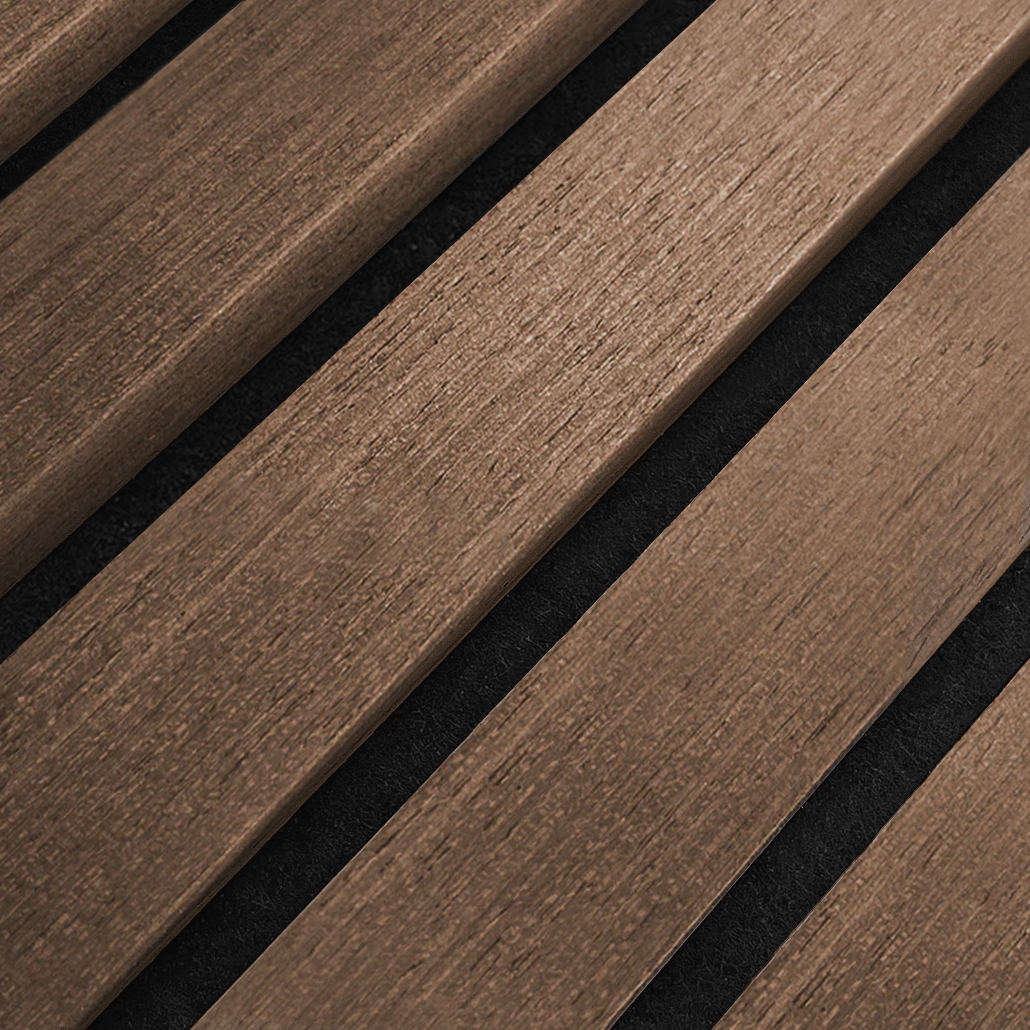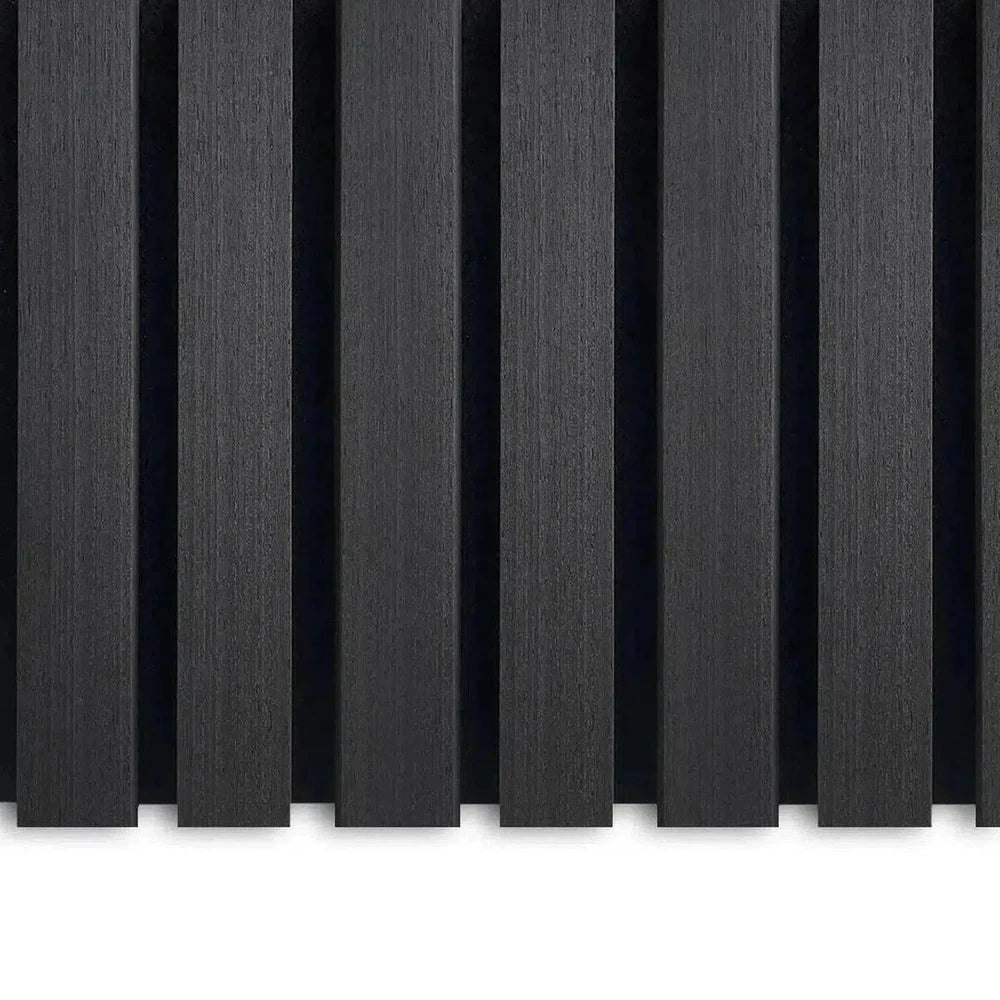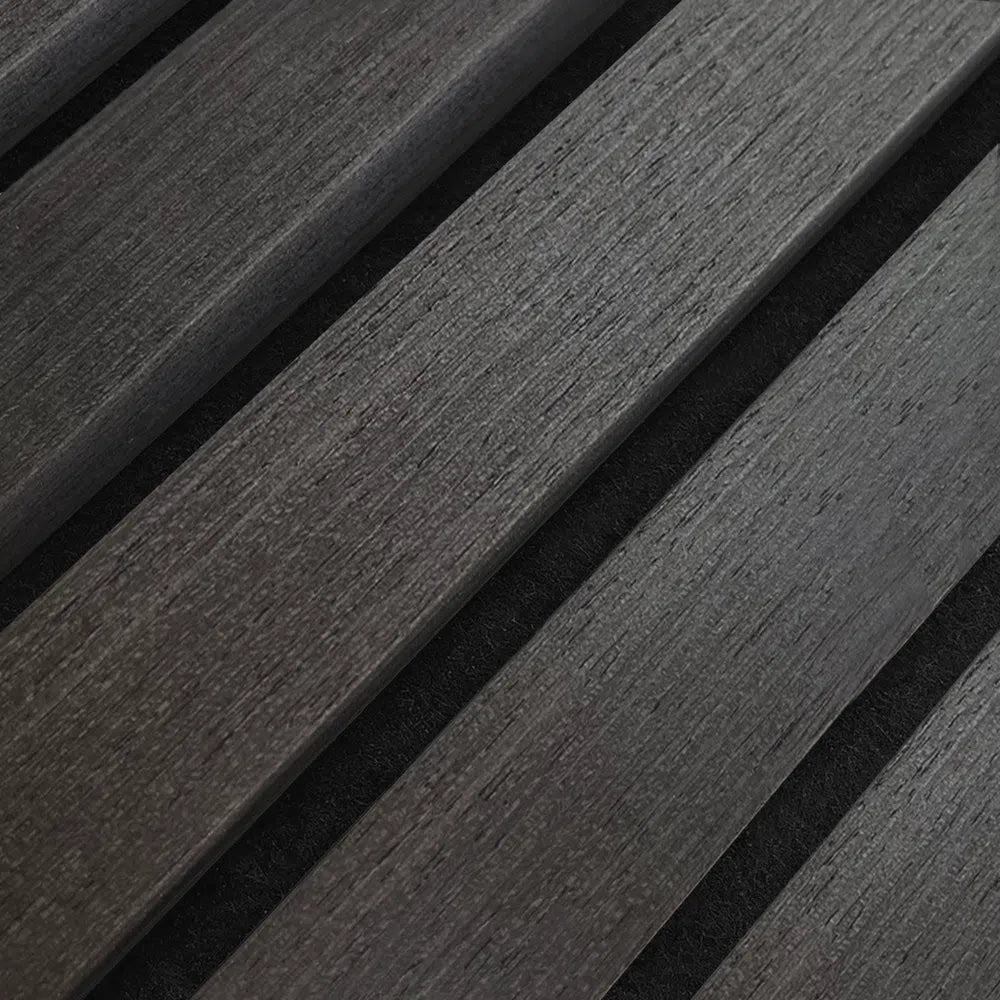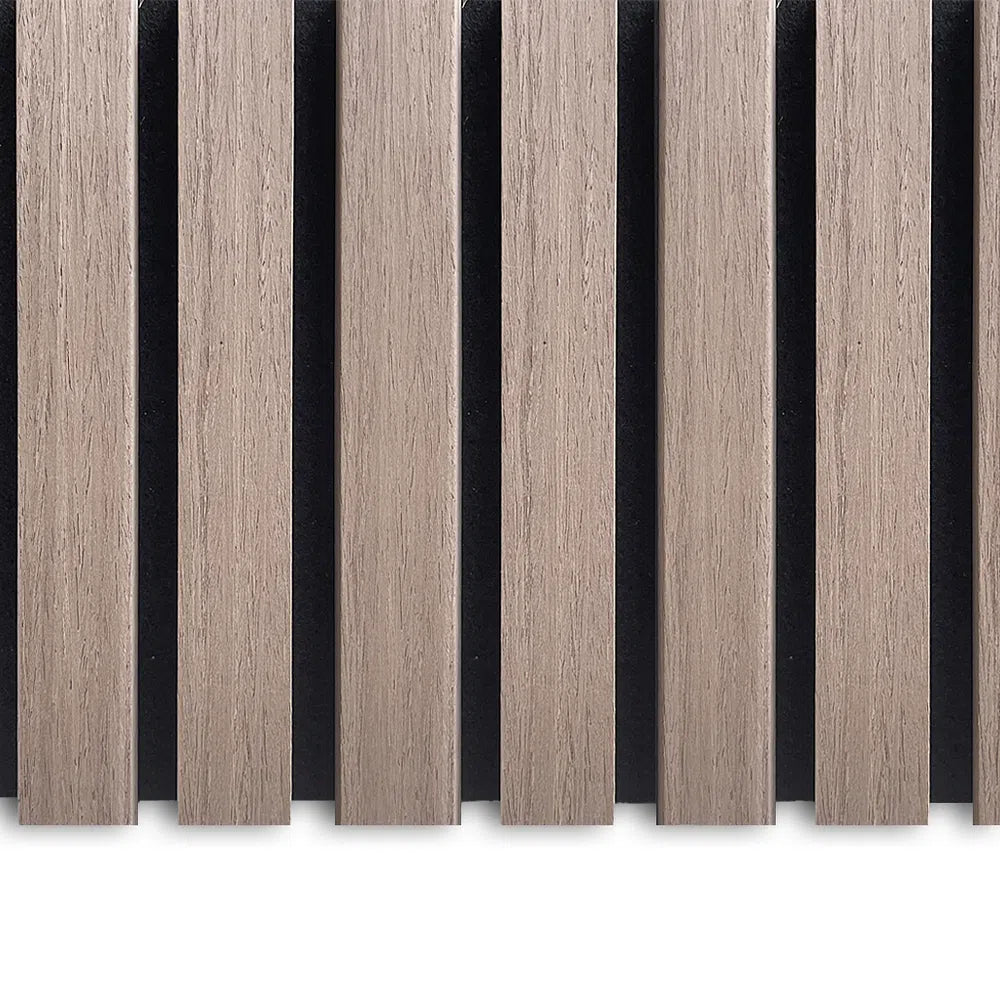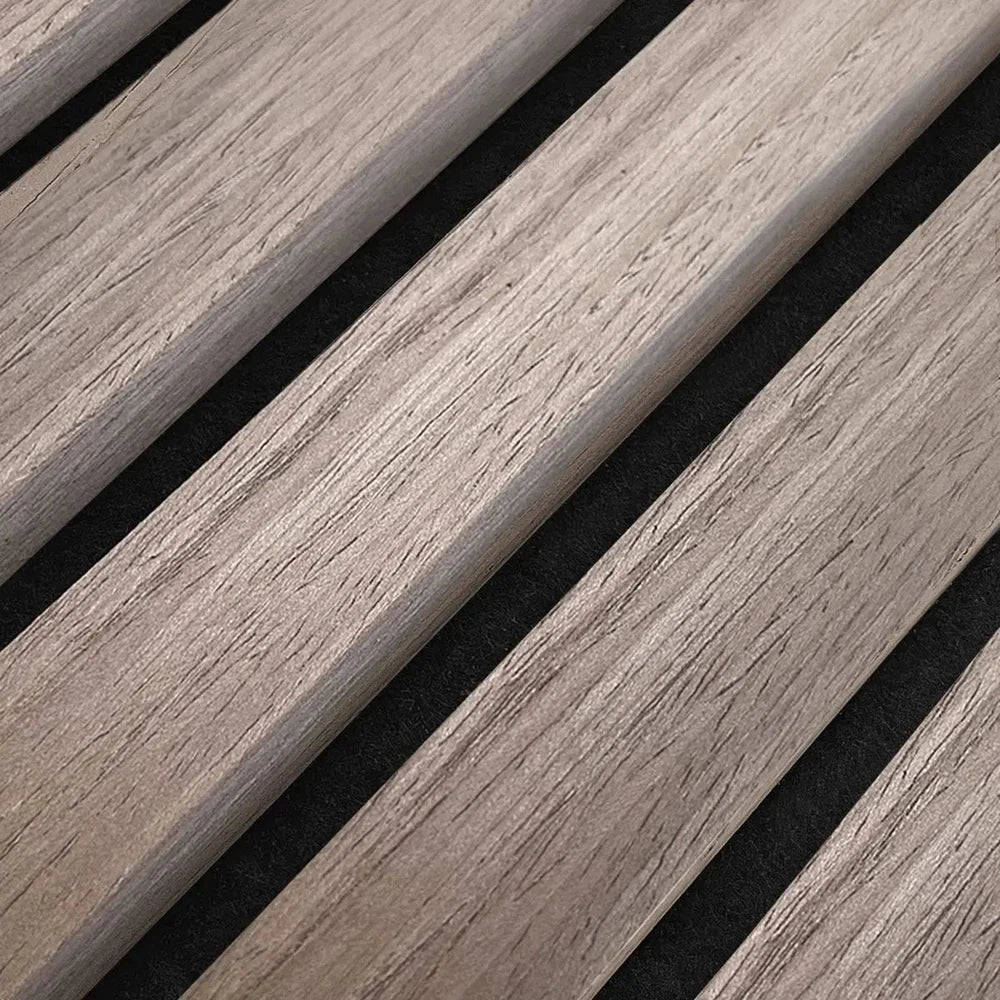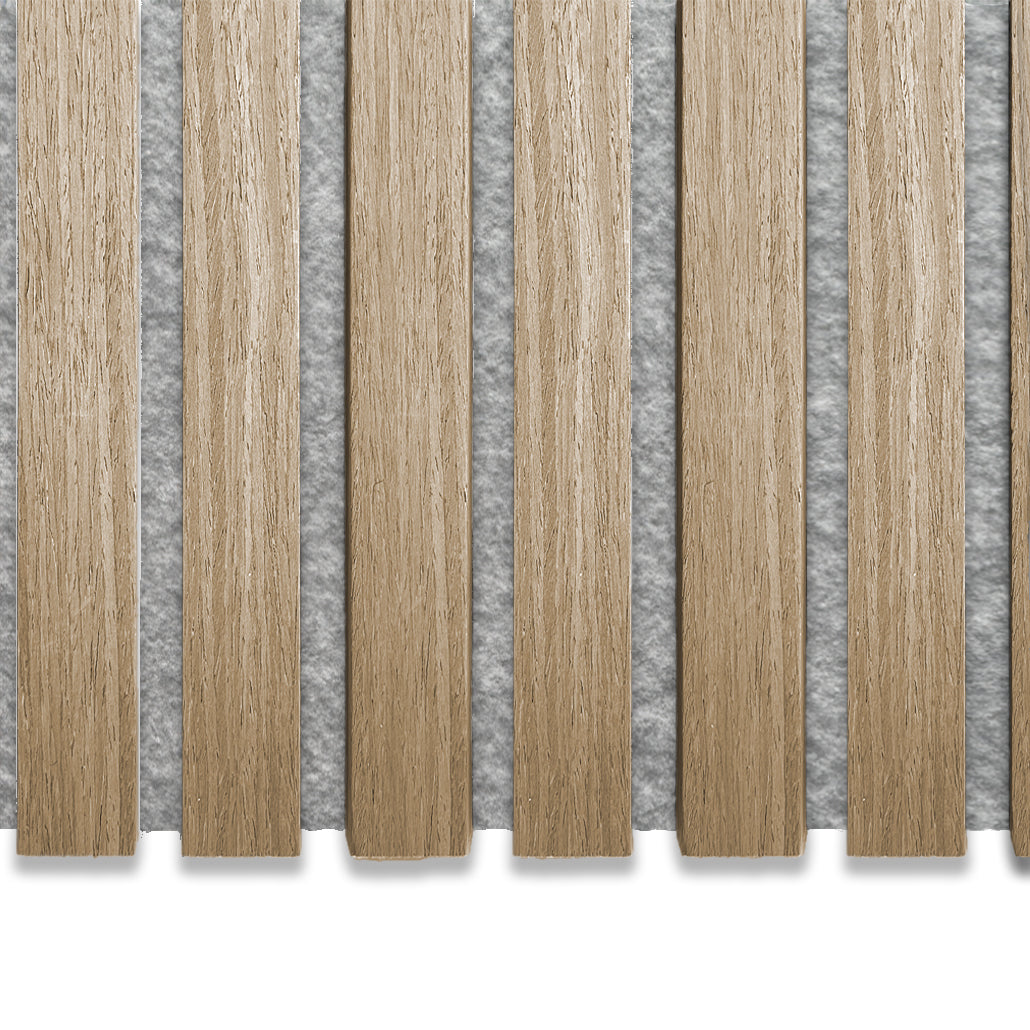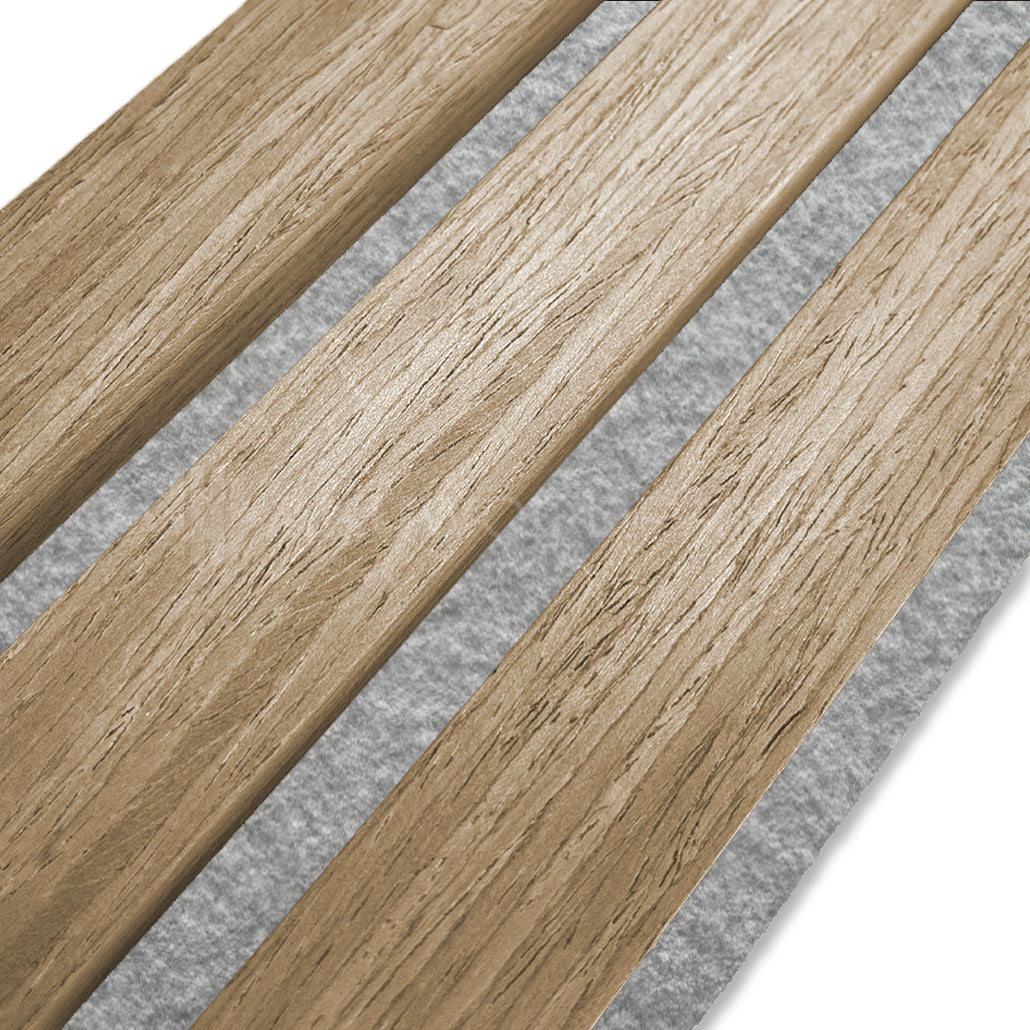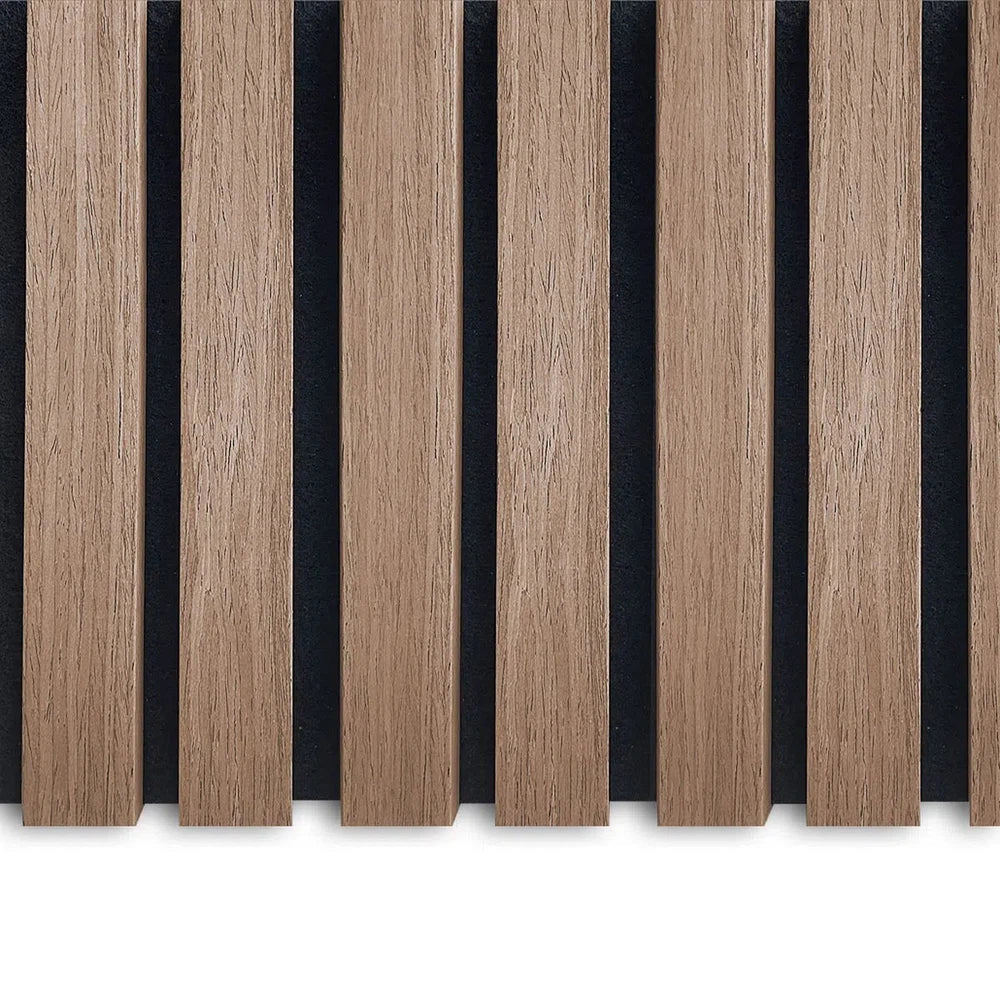
Painting wooden wall panels is straightforward on MDF, plywood, and PVC slat panels — sand, prime, and roll on two thin coats — but painting over real wood veneer wipes out the grain you paid for. This guide covers the exact sequence for painting slatted panels in 2026, when to stop and reach for a pre-finished panel instead, and why acoustic felt backing changes the calculation.
- Paint wooden wall panels interior surfaces with a bonding primer and two thin coats of paint, not one heavy one.
- Sand MDF or plywood panels with 120-220 grit before priming; skip painting real wood veneer entirely.
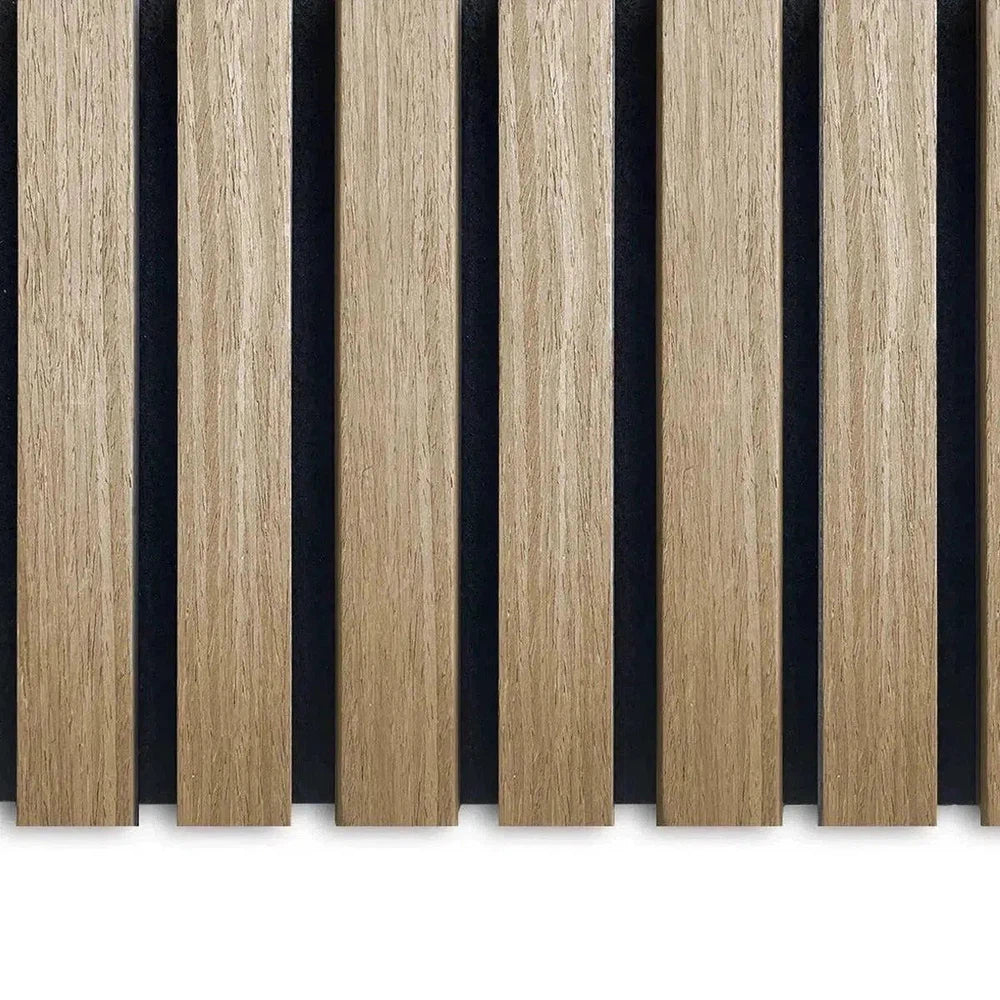
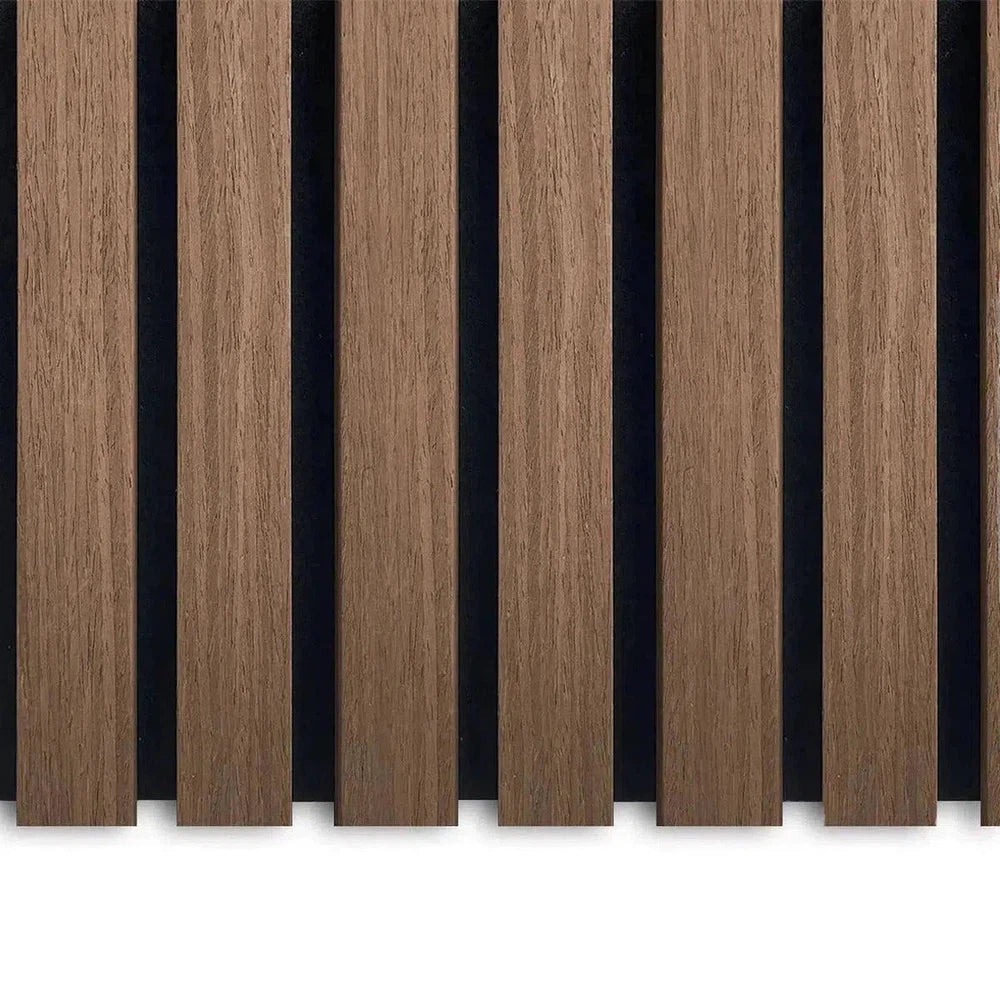
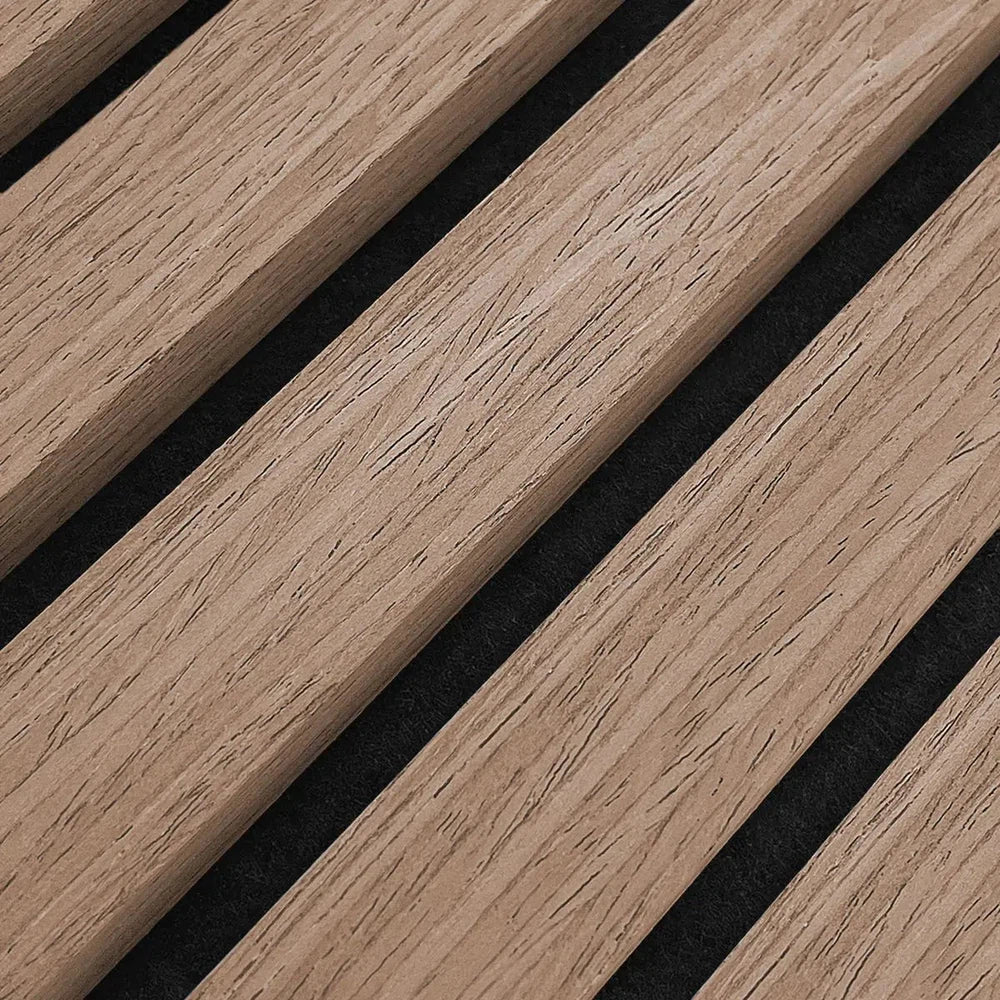
- AKU Woodpanel's oak and walnut veneer panels arrive pre-oiled, built for oil or stain finishes, not paint.
- Satin or eggshell sheen hides brush marks better than gloss on slatted wall panels in 2026.
Why this matters
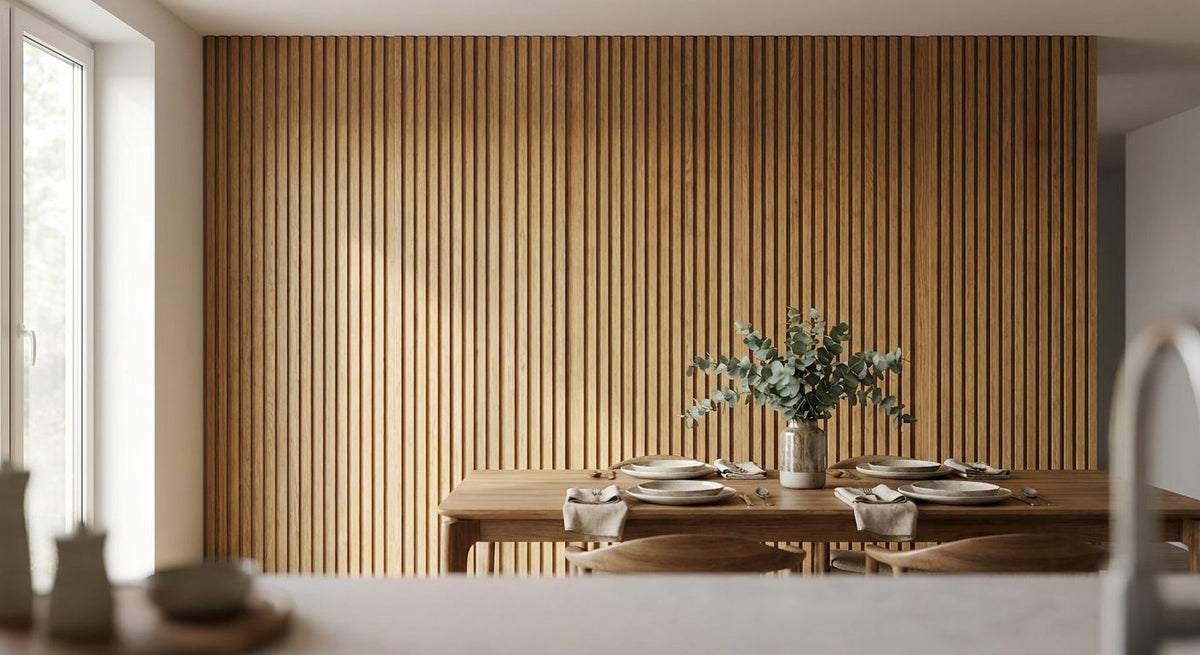
Most people who search for this are staring at a beige MDF slat wall they bought a few years back, not a real wood veneer panel. The two materials behave completely differently under a brush. Painting an MDF or plywood panel is a normal weekend job; painting a real wood veneer panel like natural oak veneer panels from AKU Woodpanel means stripping the factory oil finish first, which defeats the reason most people buy veneer in the first place — the grain.
Getting the material wrong before you pick up a roller is the single biggest reason paint jobs on panelled walls peel, flake, or look patchy within a year.
How do you paint wooden wall panels?
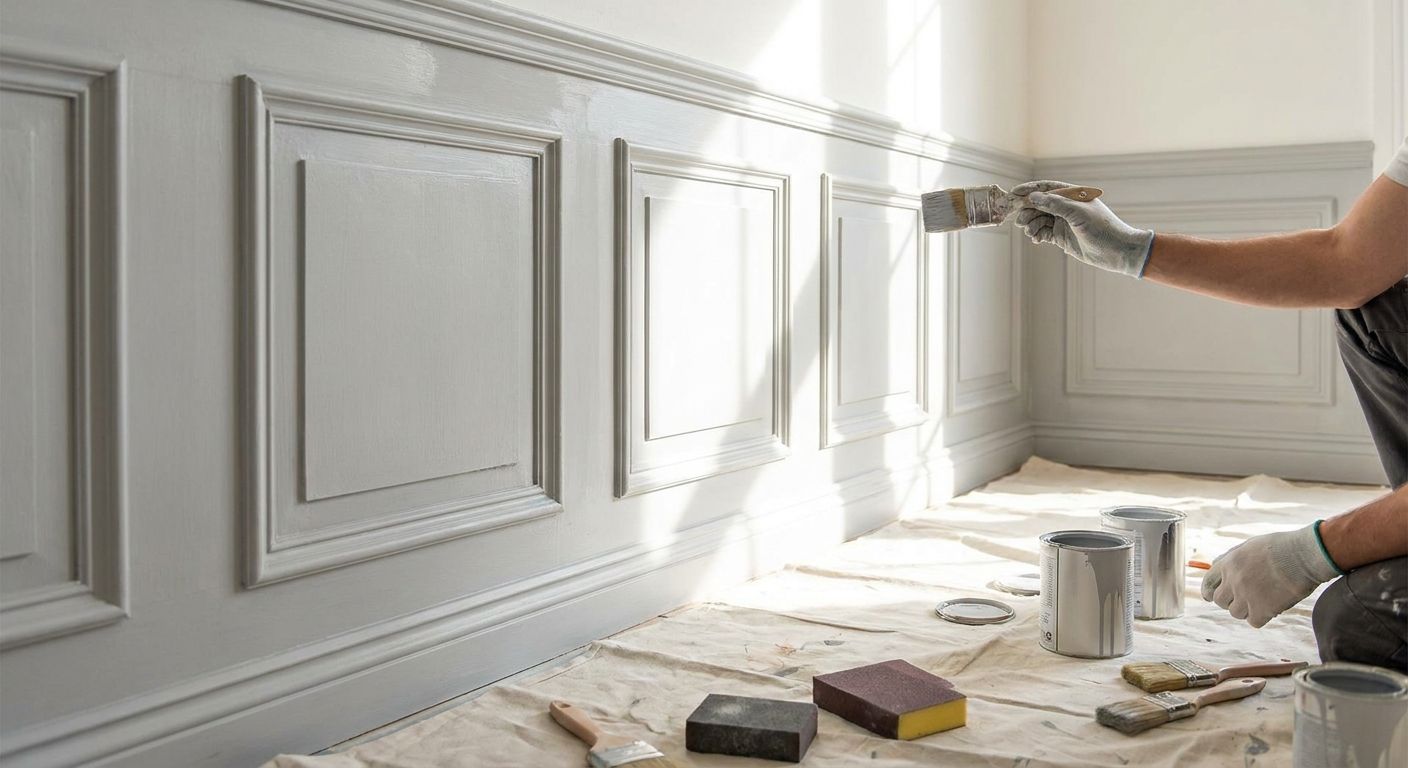
For MDF, plywood, or PVC slat panels, the process is the same one you'd use on any timber trim:
- Clean the panels with a damp cloth and let them dry fully — dust and oil residue are the top cause of peeling.
- Sand with 120-220 grit to knock back any factory sheen so primer has something to grip.
- Fill visible gaps or nail holes on flat MDF panels; skip this on slatted panels where the grooves are meant to stay.
- Apply a bonding primer in one even coat and leave it 24 hours before touching the surface again.
- Roll or brush two thin coats of paint, sanding lightly with fine-grit paper between coats rather than loading on one thick layer.
- Seal with a matte or satin topcoat in bathrooms or kitchens where moisture and grease are a factor.
Two thin coats consistently outperform one heavy coat on slatted profiles — a single thick coat pools in the grooves and cracks along the edges within months.
Painting real wood veneer wall panels: why it's not recommended
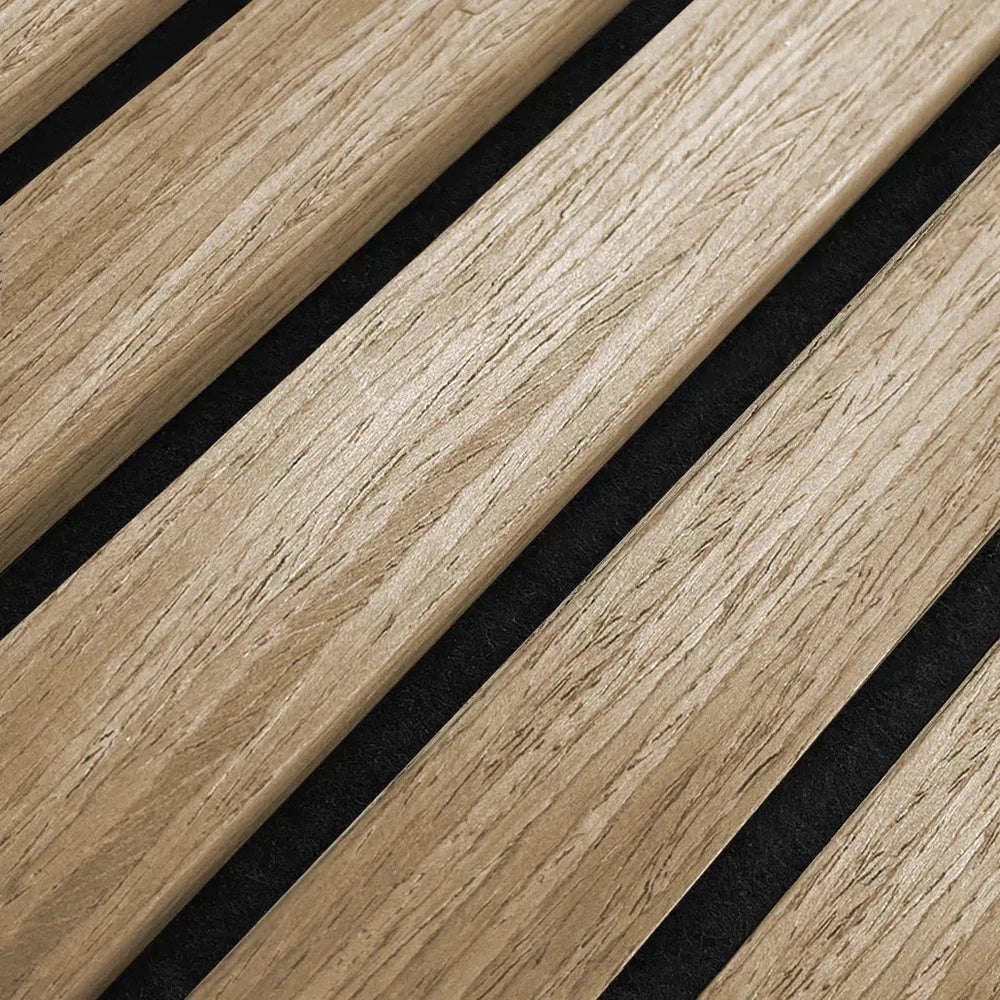
Most real wood veneer panels, including AKU Woodpanel's oak, walnut, and mocca finishes, arrive factory pre-oiled. That oil finish is what makes the grain pop and gives the panel its depth. Paint doesn't bond well to an oiled surface without heavy sanding that strips the veneer layer down thin enough to risk sanding through it entirely.
If you bought a veneer panel specifically for the wood look and now want a different colour, painting is the wrong tool. Swapping to a different finish, or picking a panel that already matches the tone you're after, gets you there without touching sandpaper.
Verdict: skip paint on real wood veneer panels — refinish with oil or stain, or choose a different veneer colour outright.
Painting MDF and PVC slat wall panels
MDF and PVC slat panels are built to be painted — some come primed straight from the factory, which cuts one full step out of the process above. The main risk on PVC is adhesion: standard wall paint can flake off smooth plastic within weeks unless you use a primer rated for plastic substrates.
On MDF, the groove edges are the weak point. Sand them by hand rather than with a power sander, since MDF edges chip and fuzz easily under aggressive sanding.
Verdict: paint MDF and PVC slat panels freely — just match the primer to the substrate.
Why paint results vary on panelled walls
The same paint and technique can look completely different from one panelled wall to the next. The factors that actually move the outcome:
- Panel material — MDF and PVC take paint evenly; real wood veneer resists it.
- Groove depth — deep slat grooves trap extra paint and take longer to dry between coats.
- Primer type — oil-based bonding primer holds better on glossy factory finishes than water-based primer.
- Room humidity — bathrooms and kitchens need a moisture-rated topcoat or the paint lifts within a season.
- Sheen level — gloss shows every brush mark on a slatted surface; satin and eggshell hide them.
- Coat thickness — thin, even coats cure harder than one thick pass, especially inside grooves.
If you're painting over an existing panelled wall rather than fresh panels, the prep changes again — the full walkthrough for painting over existing wood panels covers stripping old wax and sealant before you start.
Choosing paint sheen and colour for panelled walls
Eggshell and satin are the two sheens that consistently work best on slatted MDF and plywood panels — they hide the small imperfections that gloss exposes and clean easily enough for hallways and kitchens. Matte works in low-traffic rooms like bedrooms but marks more easily near light switches and door frames.
Colour choice is where most people get stuck, because paint swatches on a wall never quite match what a full panelled feature wall will look like once the grooves catch shadow. Before committing an entire wall to one tin, being able to preview different paint finishes against your actual room photo saves a second trip to the shop for a different shade. Test a sample panel or an offcut first regardless — panelled walls read darker than flat drywall once the slats throw shadow lines.


If the goal was really a colour change rather than paint itself, a pre-finished panel in a different tone gets there in an afternoon with no sanding, priming, or drying time between coats.
Can you paint over wood veneer wall panels?
You can paint over wood veneer, but it requires stripping the factory oil finish and sanding through the top layer first, which risks sanding into the veneer itself. Most people who want a colour change get a better result switching to a different veneer finish instead.
How many coats of paint do slat wall panels need?
Slat wall panels need two thin coats of paint for even coverage, not one thick coat. A single heavy coat pools inside the grooves and cracks along the raised edges within months.
Does painting affect the acoustic performance of felt-backed panels?
The felt backing sits behind the slats, not on the visible face, so painting the wood itself doesn't touch the felt directly. Heavy paint buildup inside the slot gaps can reduce how much sound actually reaches the felt, so anyone relying on the acoustic function should keep coats thin — or avoid painting acoustic panels altogether.
FAQ
What's the best paint finish for wooden slat wall panels?
Satin or eggshell is the best finish for slat wall panels in 2026 because it hides brush marks in the grooves better than gloss and holds up to cleaning better than matte.
Is it better to paint or stain wooden wall panels?
Stain is better for real wood veneer panels since it keeps the grain visible; paint is better for MDF or PVC panels where there's no grain worth preserving.
How long does paint take to dry on wall panels?
Primer needs roughly 24 hours before the first coat of paint goes on, and each paint coat needs similar drying time before the next one or before sanding lightly between coats.
Can you paint MDF slat panels without priming first?
No — skipping primer on MDF slat panels leads to uneven absorption and a patchy finish, since raw MDF soaks up paint unevenly across the grooves and flat sections.
Do painted wall panels need to be sealed?
Painted wall panels in bathrooms or kitchens need a moisture-rated topcoat sealed over the paint; panels in dry rooms like bedrooms or living rooms don't strictly need it.
Will painting a wood veneer panel ruin it?
Painting a wood veneer panel doesn't ruin the panel structurally, but it permanently hides the grain and requires stripping the factory oil finish, which most owners come to regret.
What grit sandpaper should I use before painting wall panels?
Use 120-220 grit sandpaper before priming wall panels — 120 grit to knock down factory sheen, finer grits closer to 220 for a smoother final surface before the topcoat.
One last thing
Most people assume painting a slat panel white kills its acoustic performance, but the sound absorption comes from the felt backing behind the slats, not the paint layer on top — a thin, even coat barely changes how the felt performs. The bigger risk is thick paint clogging the gaps between slats, not the colour itself.