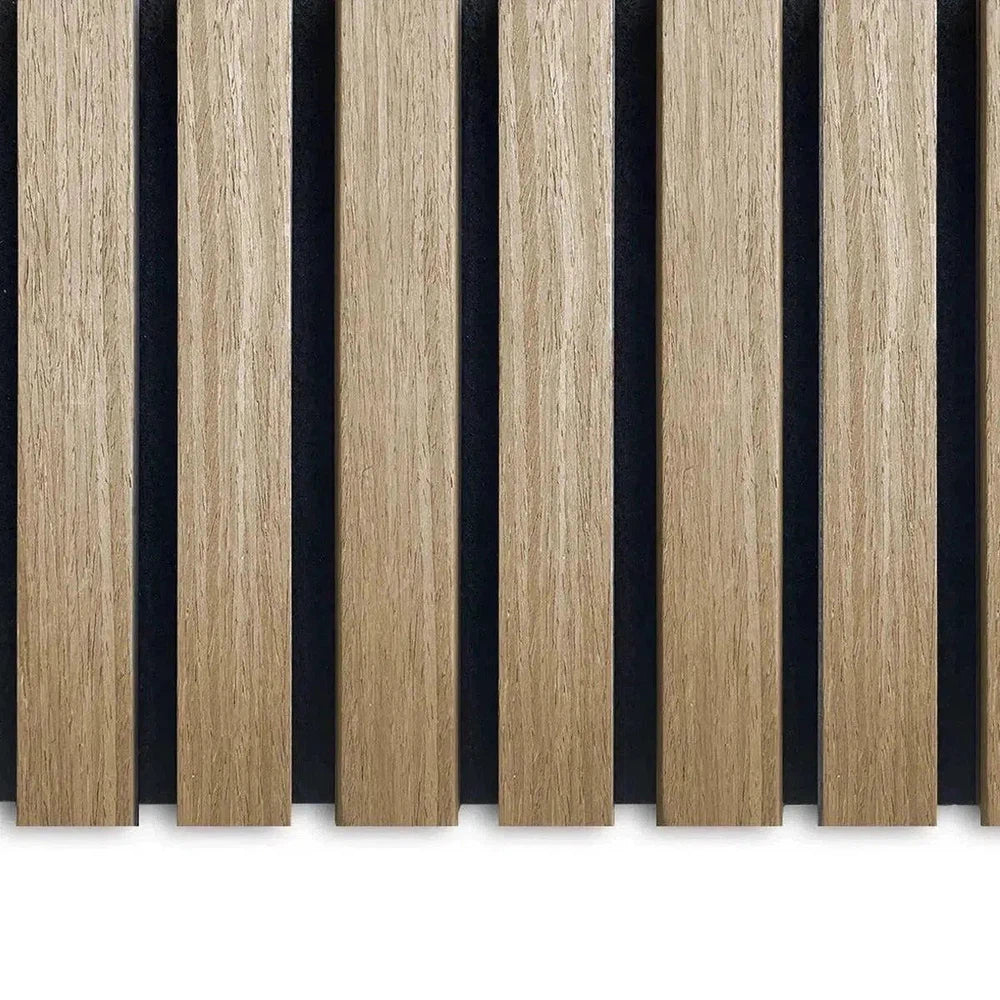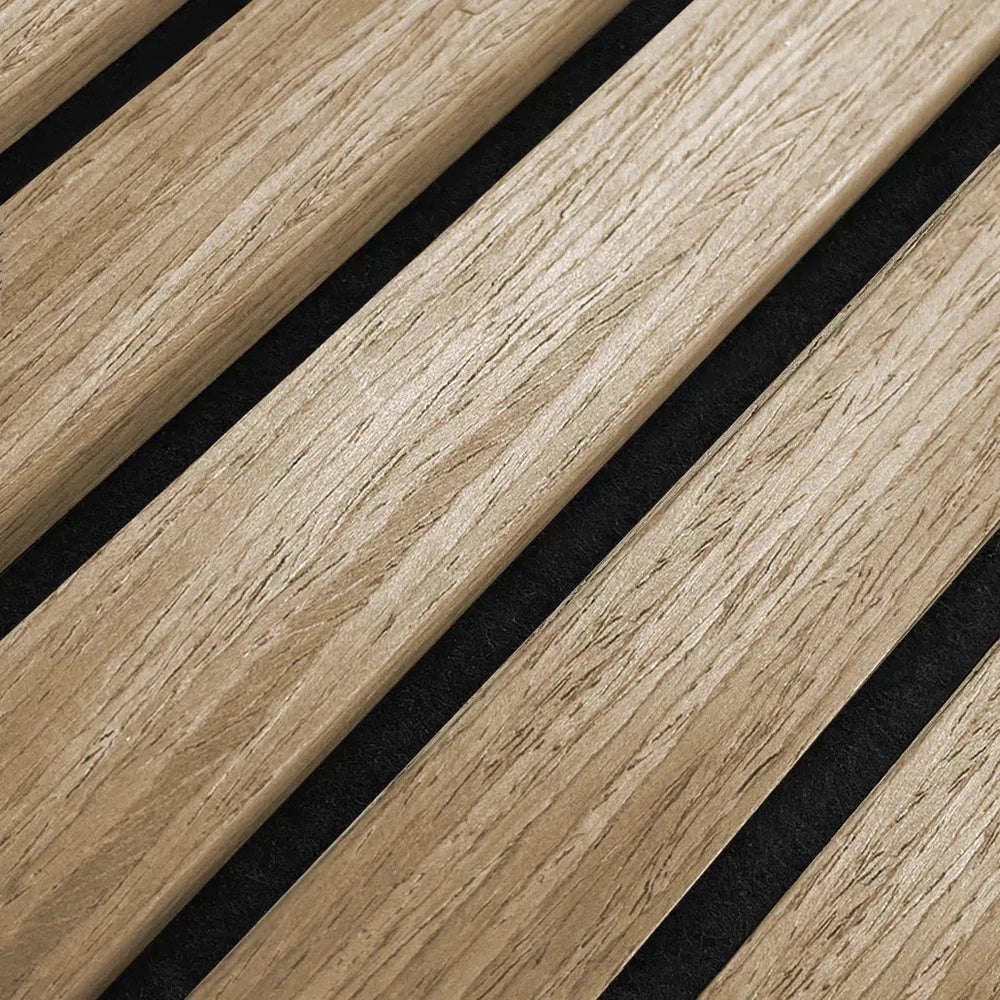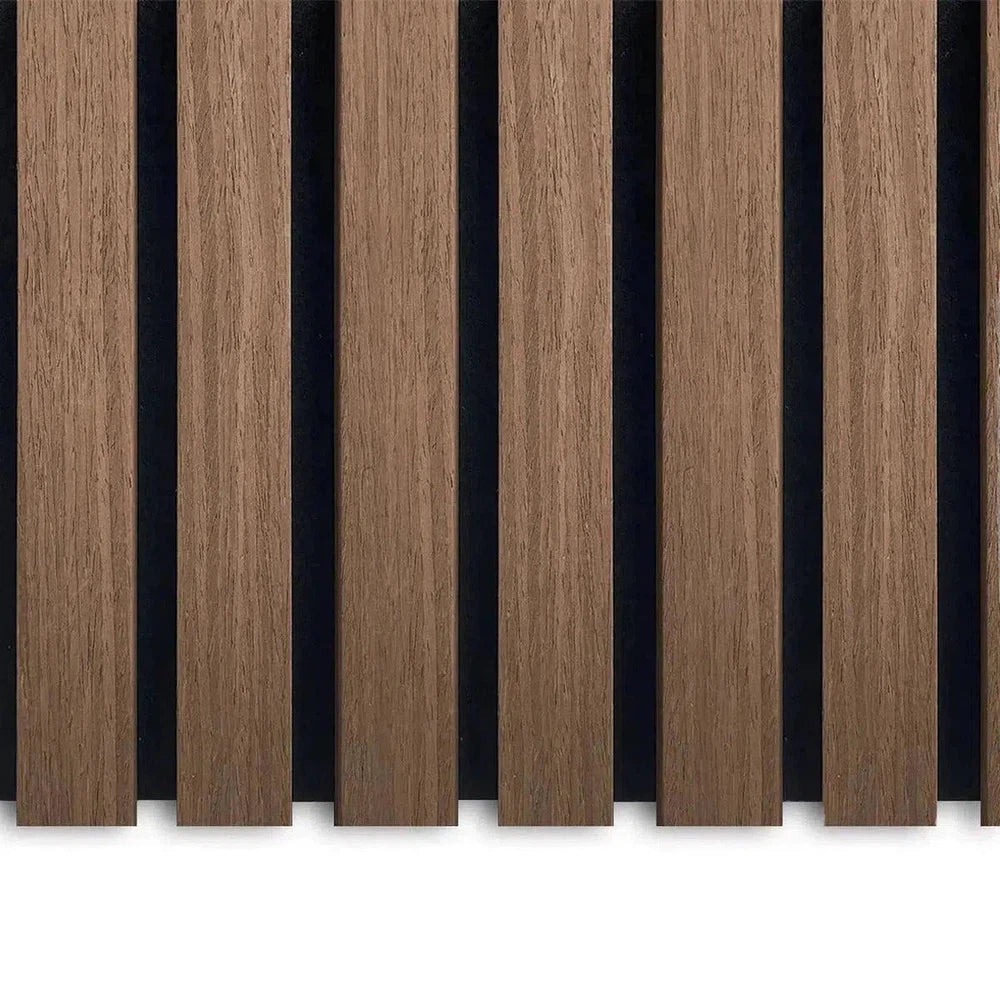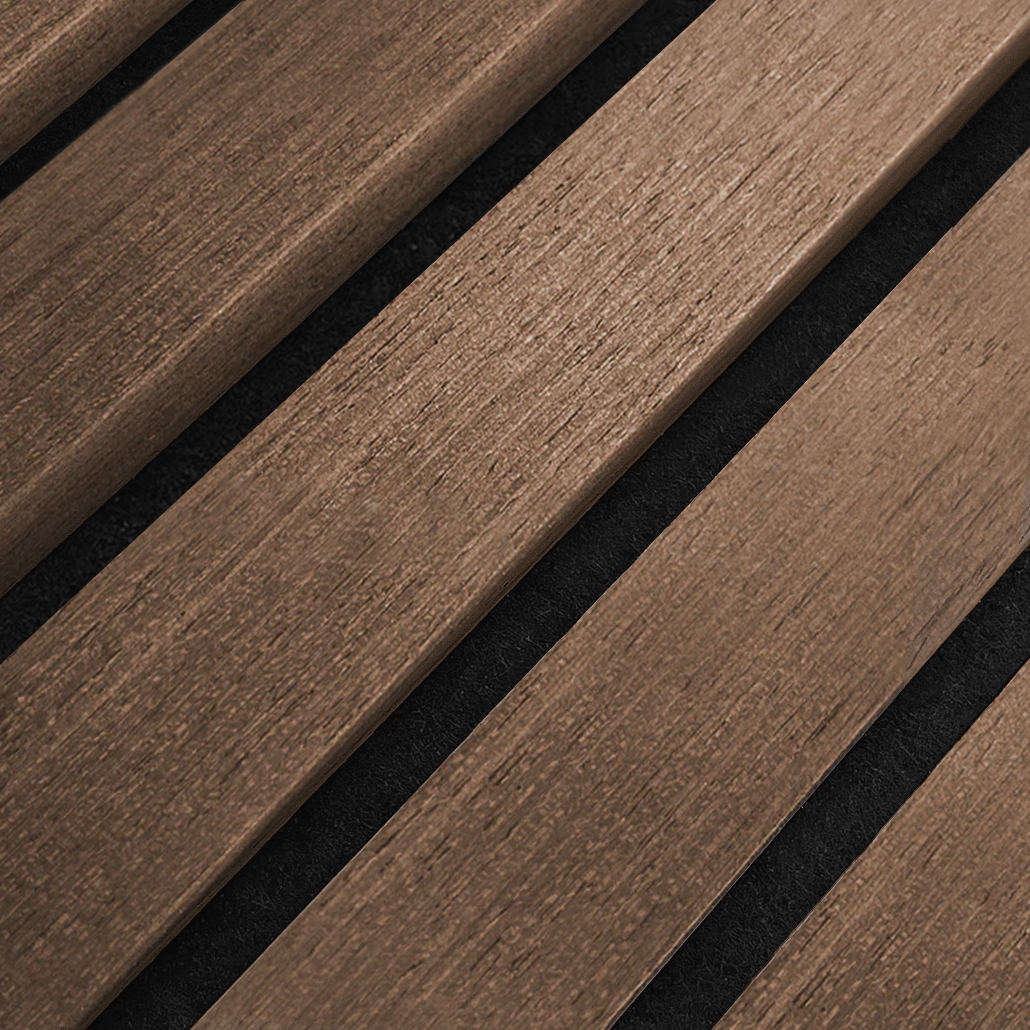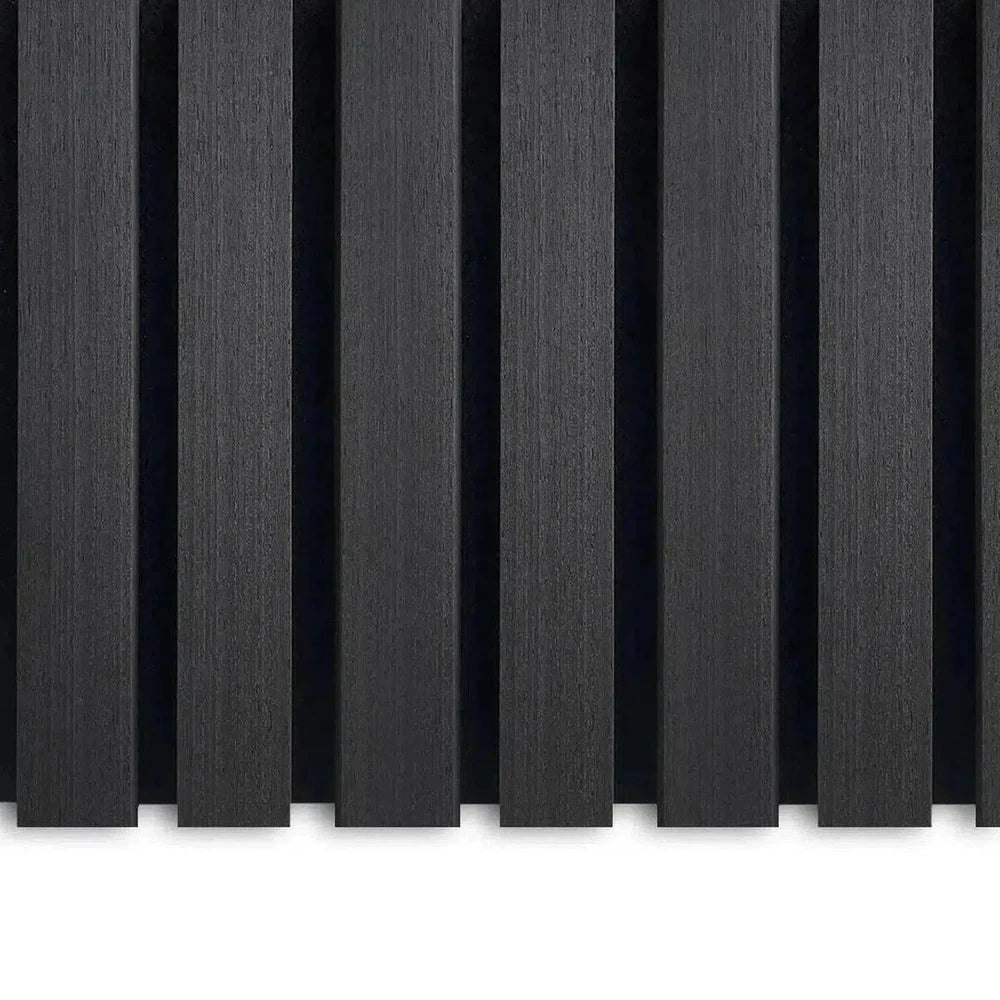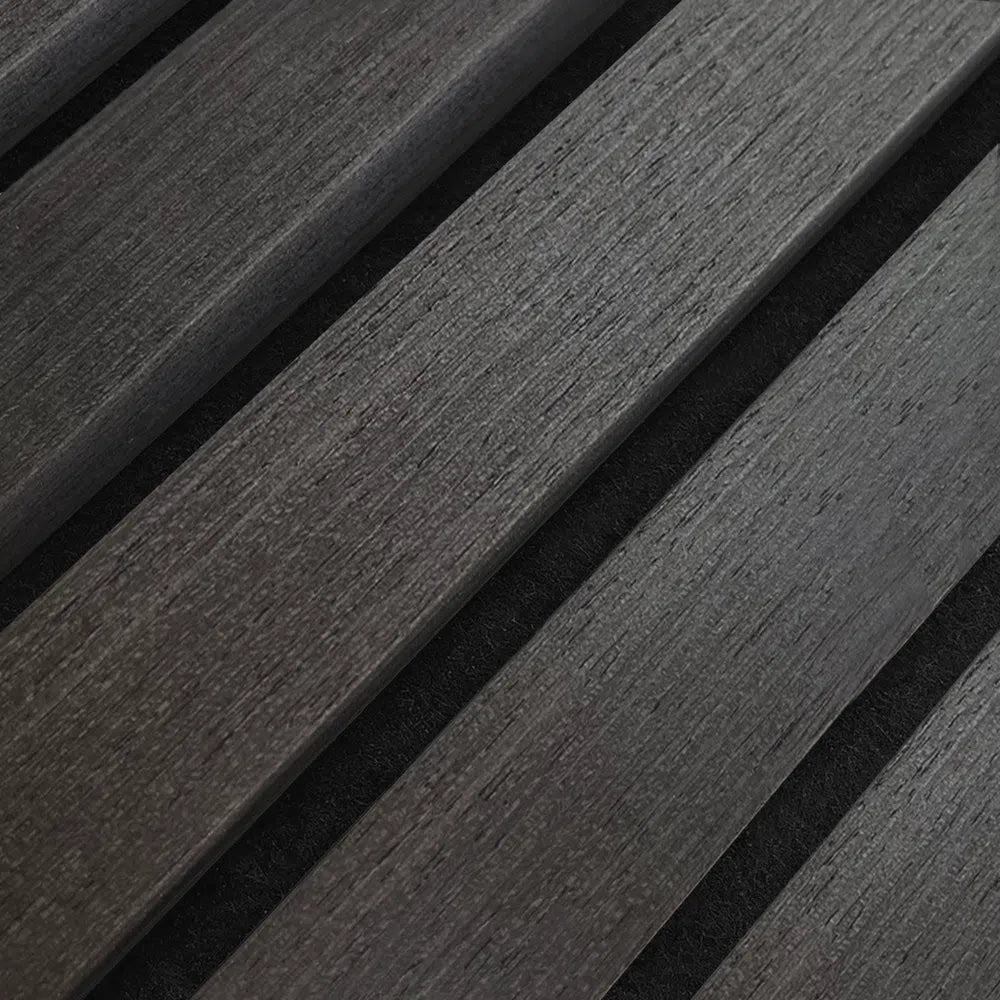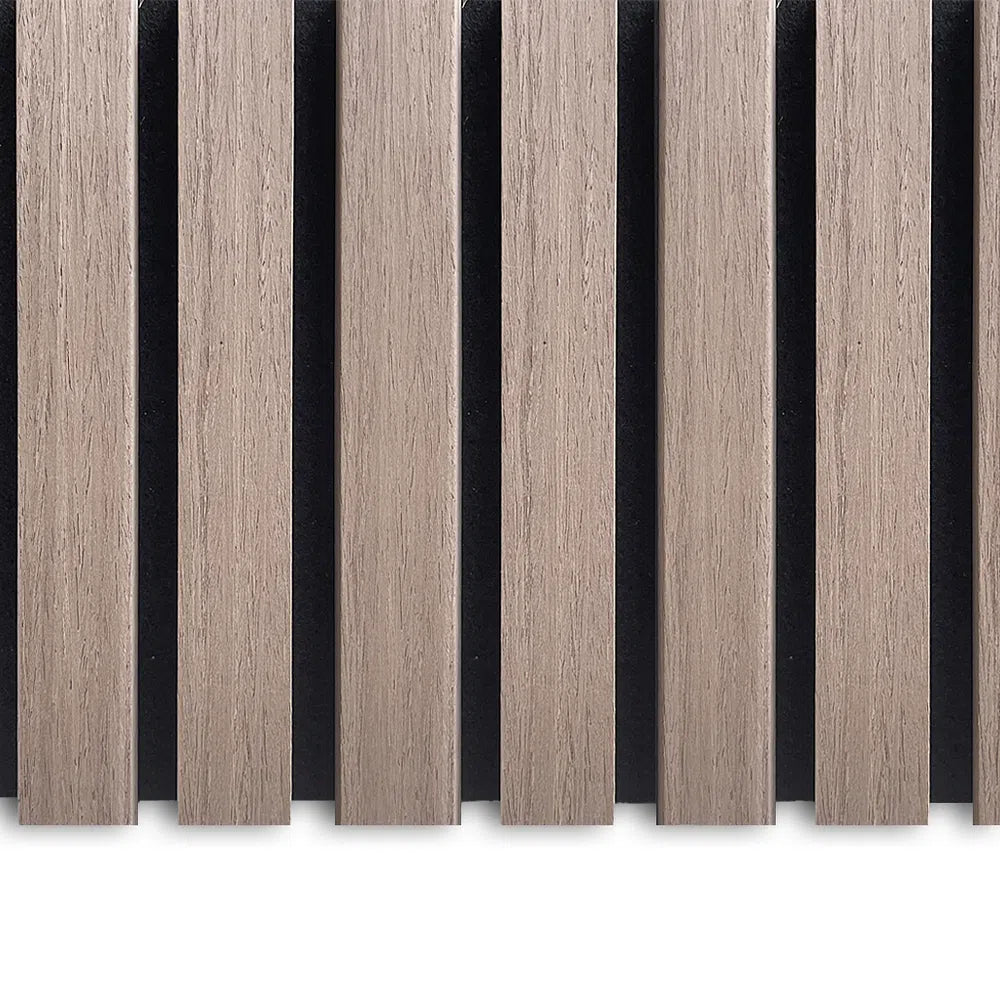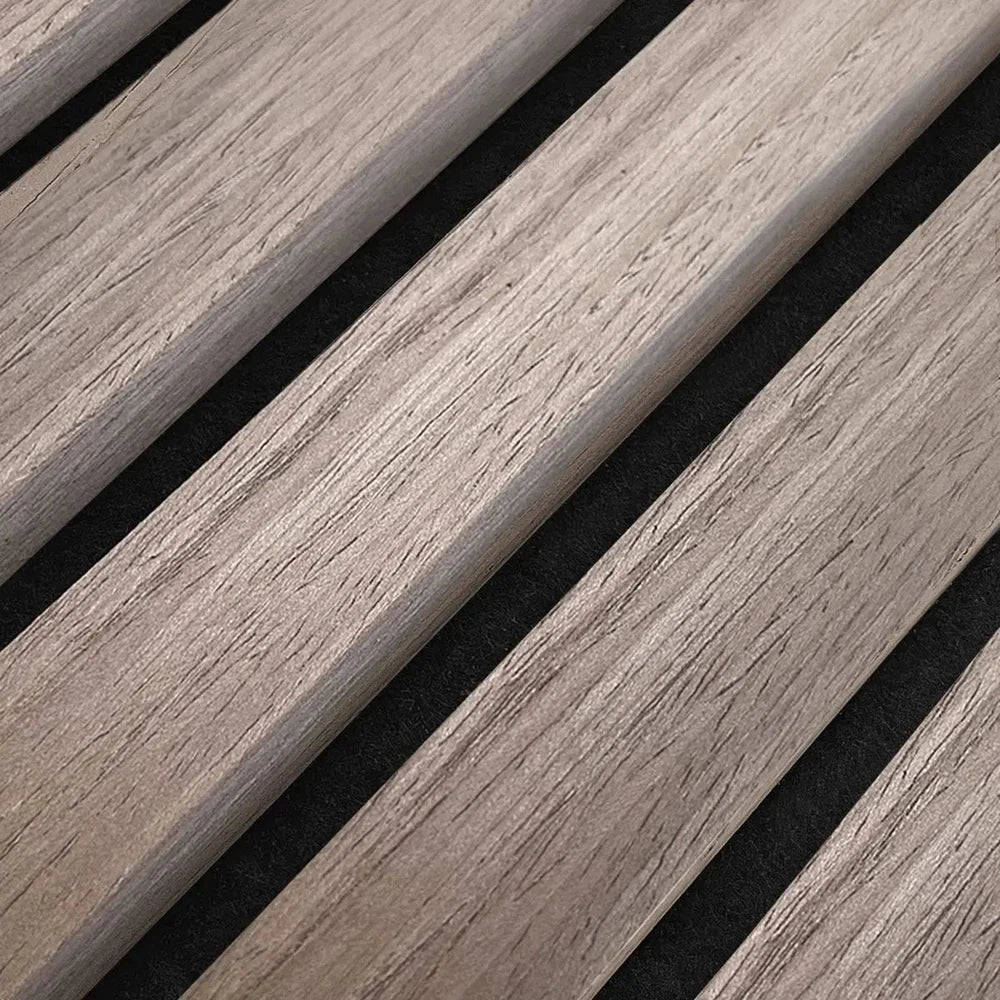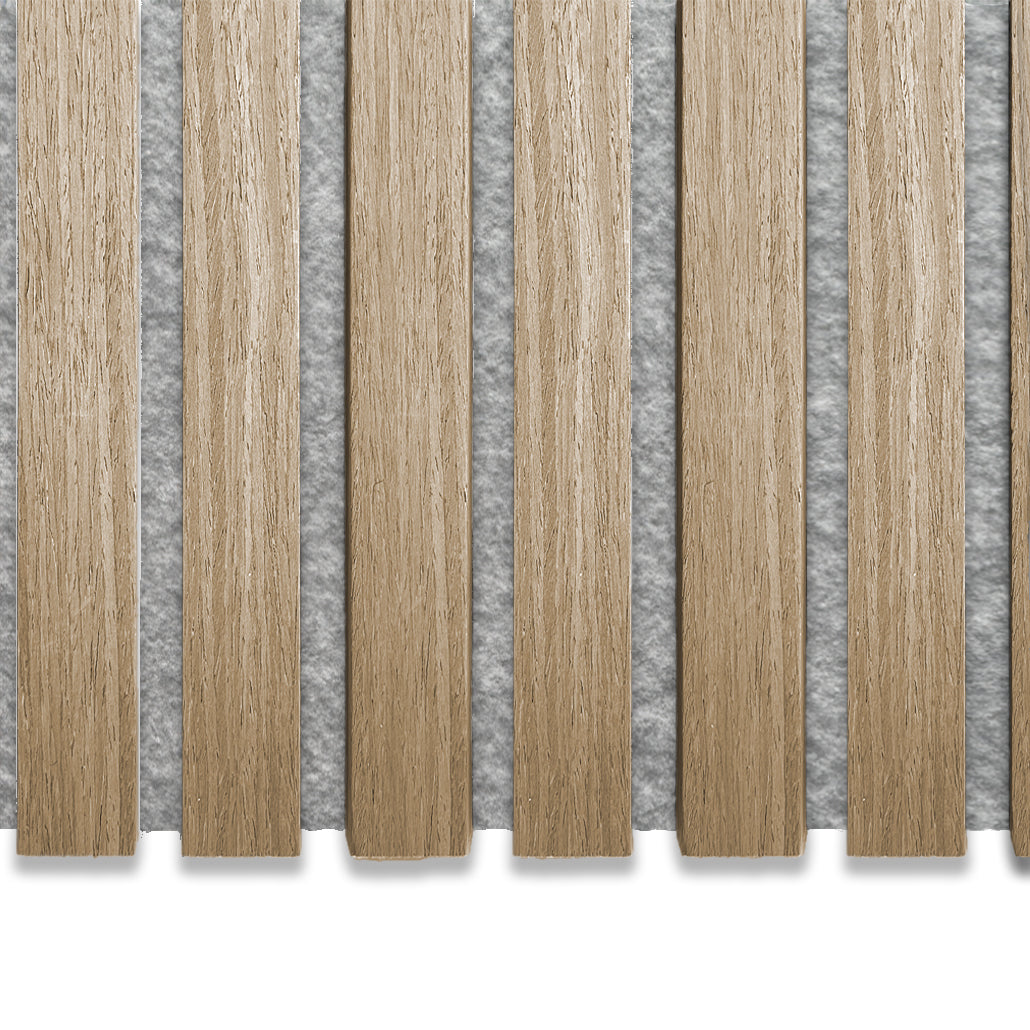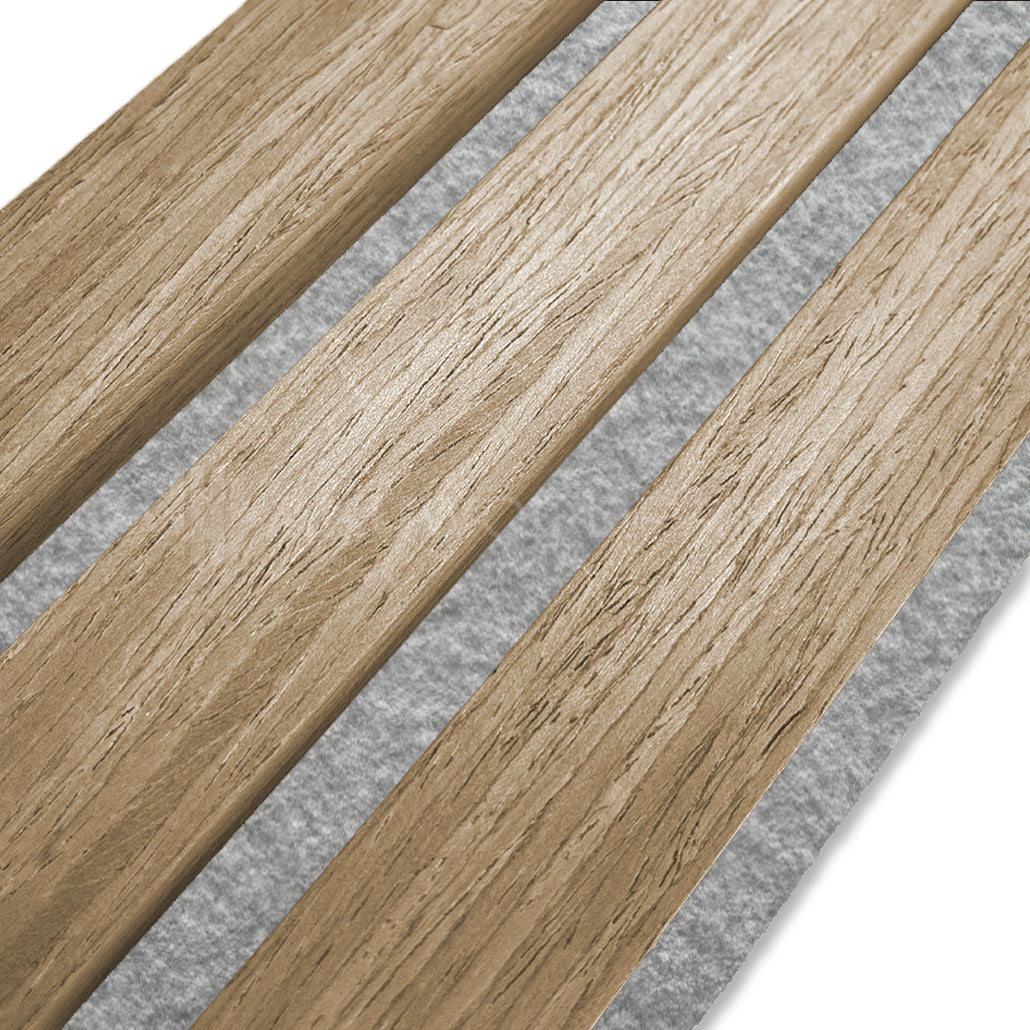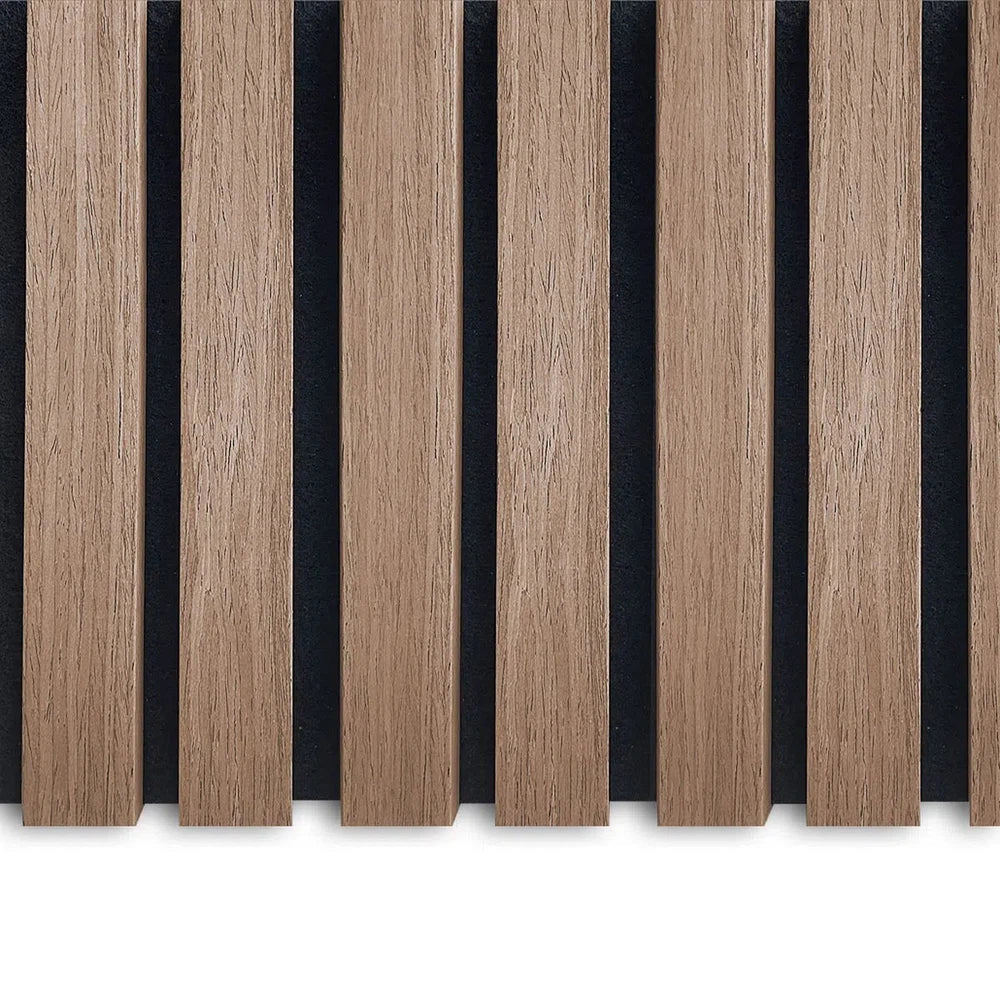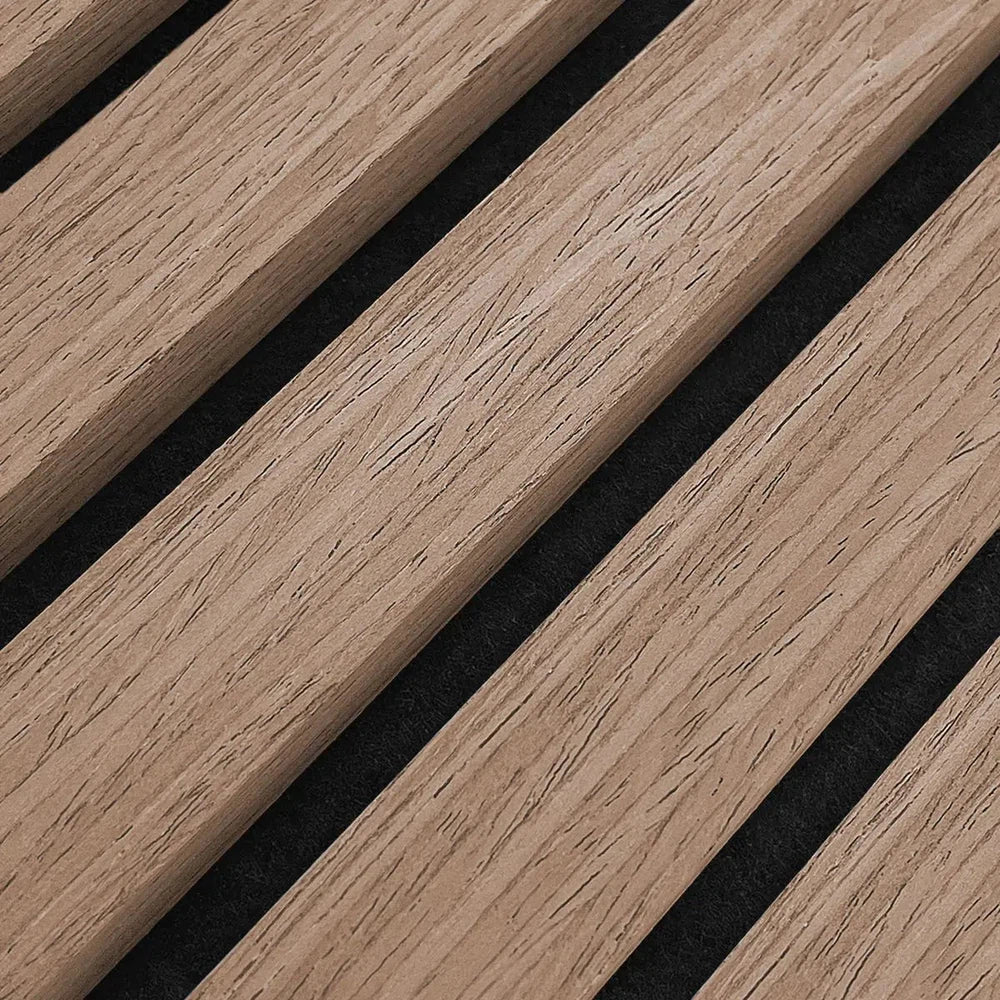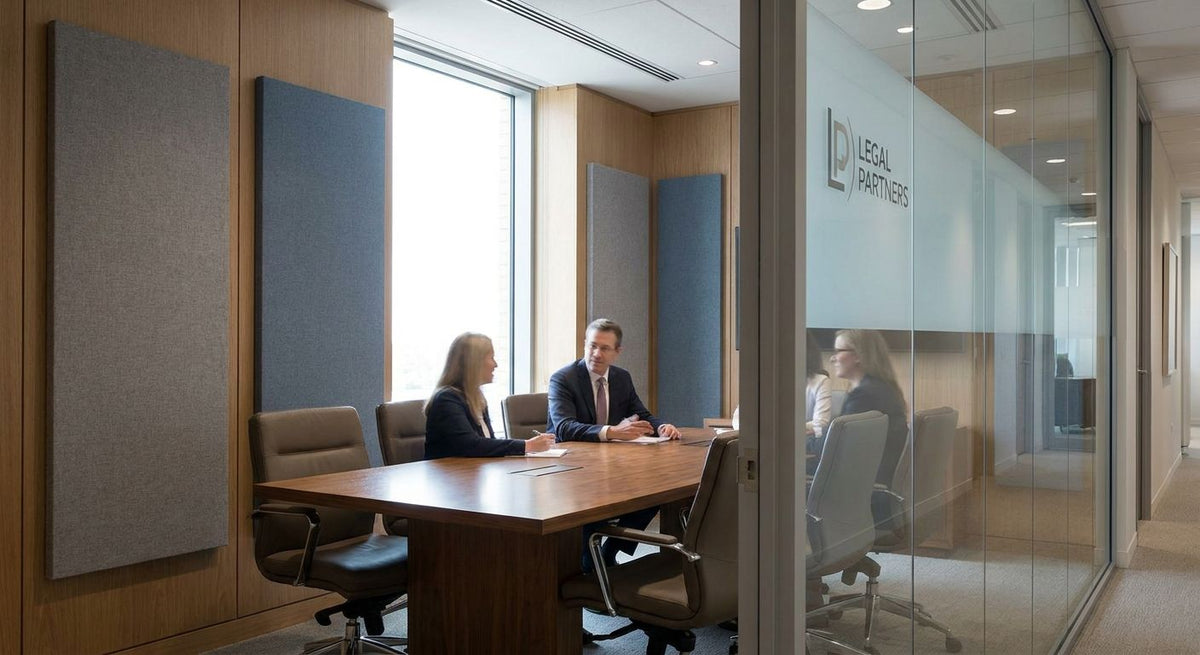
Acoustic panels for law firm meeting rooms are wood-veneer, felt-backed wall panels fitted to cut echo, reduce sound bleed between client rooms, and replace bare plasterboard or glass with a calmer, more professional finish. The priority for a legal office isn't just quieter rooms - it's protecting confidential conversations that a glass partition or hard wall would otherwise carry straight through.
- Wood veneer acoustic panels from Akuwood Panel cut echo and improve speech privacy in law firm meeting rooms for 2026 refits.
- Treat the two hardest surfaces first - usually a glass partition and a bare party wall - before adding more panels anywhere else.
- Hexagon acoustic panels carry an NRC 0.75 rating; fabric-wrapped panels look softer but wear faster in high-traffic legal offices.
- Black oak and grey oak finishes read as senior-partner-grade; natural oak suits reception and client-facing rooms.
- Order a sample before specifying room-wide - office LED lighting shifts how oak tones actually look on the wall.
Why acoustic panels matter for law firm meeting rooms
Most legal offices fitted out in the last decade lean on glass partitions, exposed soffits and hard flooring. The look reads as transparent and modern, and it's also close to the worst combination available acoustically. Glass reflects nearly all the sound that hits it, so a fully glazed meeting room bounces speech back into the room instead of absorbing it.
For most businesses that's an annoyance. For a law firm it's a confidentiality problem: privileged conversations, settlement figures, and client details carry further than the room's four walls suggest, especially where a corridor or open-plan area sits on the other side of a party wall. Wood veneer acoustic wall panels from a supplier such as Akuwood Panel address both issues in one install - they absorb reflected sound at the wall and, fitted correctly, reduce how much speech transfers through to the next room.
The verdict: acoustic panels for law firm meeting rooms earn their place when they're specified to fix the worst wall first, not spread thin across every surface for decoration.
Seven steps to quieter, more private meeting rooms
Audit the room before you buy anything
Walk each meeting room and note where sound actually collects before ordering panels for the whole floor.
- Clap test each room and note where the echo tail lasts longest.
- Check whether party walls back onto reception, a corridor, or another meeting room.
- Photograph glass partitions and hard flooring - these are usually the worst offenders.
- Note ceiling height and whether ducting or sprinklers limit wall-mounted options.
Treat the worst reflective surfaces first
Don't panel every wall equally on day one - fix the surfaces doing the most damage.
- Prioritise glass partition walls and bare plasterboard over carpeted or curtained walls.
- Cover at least one full wall per meeting room before spreading panels thin across several.
- Add panels to an exposed concrete or metal-deck soffit if the ceiling itself is reflective.
- Skip panelling a wall that's already softened by full-height curtains or an upholstered banquette.
Match the finish to how the room is used
Senior partner offices and negotiation rooms tend to read better in a darker finish. A black oak wall panel suits a room where the brief is authority and discretion. Client-facing reception areas and smaller meeting rooms generally work better in a lighter grey oak wall panel or natural oak, which keeps the space feeling open under standard office lighting.
- Order a sample before specifying room-wide - LED colour temperature shifts how oak actually reads.
- Keep finishes consistent floor by floor so client-facing areas don't look mismatched.
- Avoid clashing a new panel finish against existing reception desk or table veneer.
- Check the finish under both meeting-room downlights and daylight from glazing before committing.
Stop sound leaking into the next room
A panelled wall next to an unsealed gap or a hollow-core door still leaks conversation.
- Seal any gap where a partition meets the ceiling or floor - even a few millimetres carries sound.
- Panel both sides of a shared wall between two meeting rooms, not just one.
- Fit an acoustic door seal alongside the wall panels; a treated wall next to a gappy door under-delivers.
- Check whether the ceiling void is open above the partition - sound often travels over the top, not through the wall.
Install without shutting the office down
Glue-mounted panels avoid the disruption of a full wet-trade fit-out.
- Fit panels out of hours or over a weekend to avoid interrupting client meetings.
- Use panel adhesive on a flat, dry wall instead of drilling where the lease restricts wall fixings.
- Batten an uneven brick or block wall first, then fix panels to the battens.
- Sequence rooms so at least one meeting room stays usable throughout the works.
Pick the right panel size and pattern
Standard sizing avoids awkward cuts and visible joints on a boardroom wall.
- Standard 240 cm panels suit most UK office ceiling heights without cutting.
- 300 cm panels reduce visible joints on floor-to-ceiling boardroom walls.
- Hexagon panels break up a long corridor or reception wall without reading as a full acoustic treatment.
- Order end pieces to finish exposed edges cleanly around doors and corners.
Budget and phase the rollout
A staged rollout protects the budget and the busiest rooms get treated first.
- Treat the boardroom and busiest client meeting room first - highest confidentiality risk, highest visibility.
- Phase remaining floors over subsequent quarters rather than one disruptive fit-out.
- Order samples across shortlisted finishes before committing to a floor-wide spec.
- Measure wall dimensions and get a quantity estimate before ordering, not after panels arrive short.
Compare your acoustic options for a legal office
| Option | Best for | Key limitation |
|---|---|---|
| Soft furnishings only (rugs, curtains, upholstered chairs) | Firms with a tight refurbishment budget needing a quick fix | Barely touches speech privacy between rooms; echo returns once furniture moves |
| Fabric-wrapped acoustic panels | Firms prioritising exact brand-colour matching over material | Shows wear and dust faster than a sealed wood veneer finish |
| Suspended acoustic ceiling baffles | Firms with double-height boardrooms or exposed soffits | Needs a qualified installer; does nothing for wall-level echo or privacy |
| Wood veneer acoustic wall panels (Akuwood Panel) | Firms wanting acoustic control and a finished, on-brand wall in one product | Needs a flat, dry wall or battens - not a fix for airborne sound through a stud wall alone |
Buy: wood veneer acoustic wall panels for the boardroom and any glass-fronted meeting room. Hold: ceiling baffles for standard-height rooms where wall treatment already does the job. Skip: soft furnishings alone as the only acoustic fix in a confidentiality-sensitive room.


Common mistakes law firms make with acoustic treatment
Treating only the boardroom. Confidential conversations still travel through the corridor wall outside it - visitors and staff walk past a wall that was never touched.
Choosing a finish that clashes with existing millwork. A new panel finish that doesn't match the reception desk or existing panelling looks bolted on rather than fitted.
Spending the whole budget on flooring and curtains. A glass partition left untouched is usually the biggest offender in the room, regardless of what's underfoot.
Skipping the sample order. Oak tones shift noticeably under office LED panels compared with a screen image or a showroom light.
Scheduling installation during client hours. Fitting panels while meetings are running creates exactly the kind of noise and disruption the panels are meant to prevent.
“If the corridor wall outside your meeting room isn't treated, the room inside might as well not be either.”
FAQ
What's the best acoustic panel for a law firm meeting room?
Wood veneer acoustic wall panels with a felt backing, in a black oak or grey oak finish, work best for law firm meeting rooms in 2026 because they combine sound absorption with a finish that reads as professional rather than a raw acoustic treatment. Fabric-wrapped panels absorb sound too but show wear faster in high-traffic client areas.
How many acoustic panels does a typical meeting room need?
Coverage depends on room size and how reflective the existing walls are, but treating one full wall - usually the glass partition or the hardest plasterboard surface - is the minimum starting point. Rooms with two hard surfaces, such as glass on one side and bare block on another, generally need both treated before echo drops noticeably.
Do acoustic panels stop sound from being heard in the next room?
Wall panels reduce how much sound reflects inside a room and cut some sound transfer through a party wall, but they don't fully block speech on their own. Sealing gaps around the partition, fitting an acoustic door seal, and checking the ceiling void above the wall matter as much as the panels themselves.
Is real wood veneer better than fabric-wrapped panels for offices?
Real wood veneer panels hold their finish longer under daily handling and cleaning than fabric-wrapped panels, which matters more in a law firm than a home office. Fabric offers a wider range of colours to match a brand palette, but wood veneer is generally the lower-maintenance choice for a client-facing meeting room.
Can acoustic panels be fitted without drilling into a leased office wall?
Yes - panel adhesive lets you fix acoustic wall panels to a flat, dry wall without drilling, which suits leased offices where the landlord restricts wall fixings. The wall still needs to be flat and structurally sound; an uneven brick or block wall needs battens first.
What NRC rating should I look for in office acoustic panels?
An NRC of 0.75 or higher, which is what Akuwood Panel's hexagon acoustic panels carry, gives noticeable sound absorption for a standard meeting room. Anything well below that is doing more decorative work than acoustic work.
Should I panel the whole meeting room or just one wall?
Start with the single worst wall - almost always the glass partition or the bare plasterboard wall - rather than spreading a thin layer of panels across every surface. One fully treated wall generally does more for echo and privacy than four partially treated ones.
How much disruption does fitting acoustic panels cause to a working office?
Glue-mounted wood veneer panels can usually go up out of hours or over a weekend without shutting the office, since there's no wet trade and minimal drilling involved. Phasing the install room by room, rather than floor by floor in one go, keeps at least one meeting room usable throughout.
One last thing
The wall panel gets credit for killing echo, but in most modern legal fit-outs, the open ceiling void above a partition wall carries more sound between rooms than the wall itself. If a meeting room still feels exposed after panelling, check what's happening above the partition before ordering more panels for the walls in 2026.