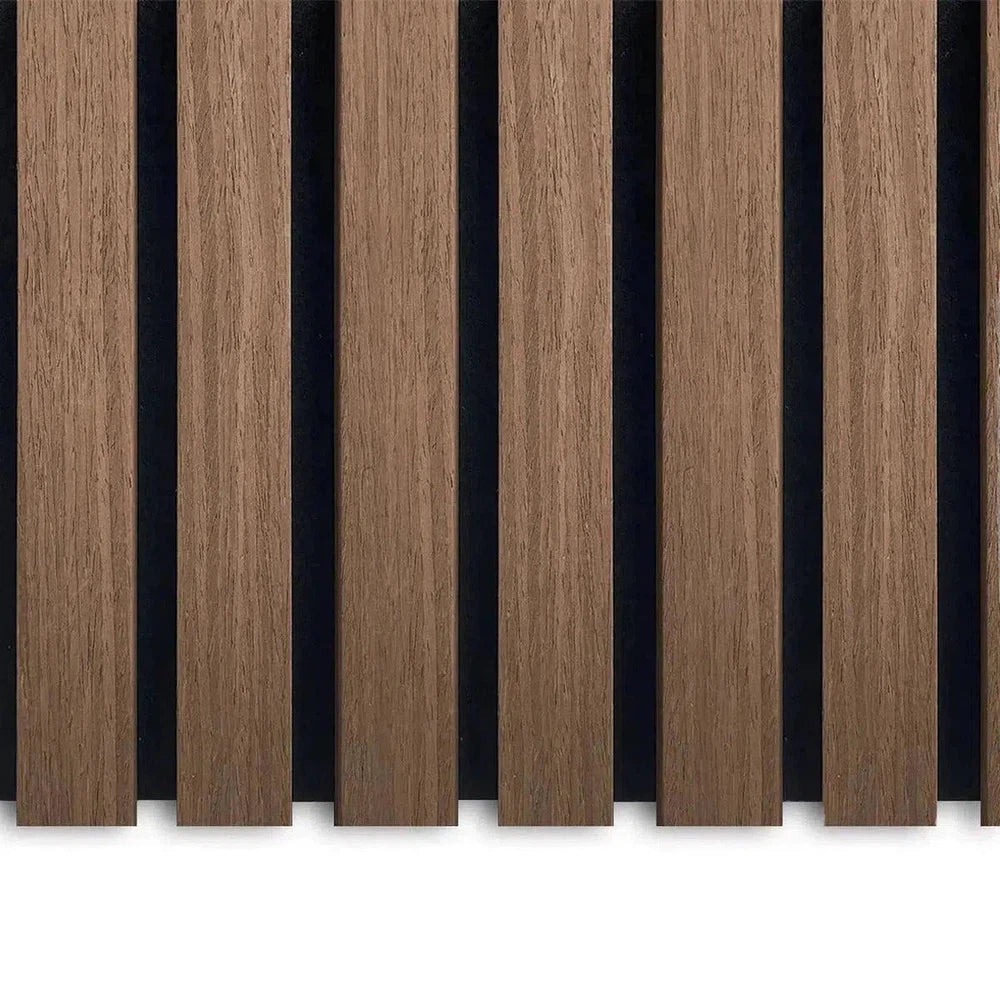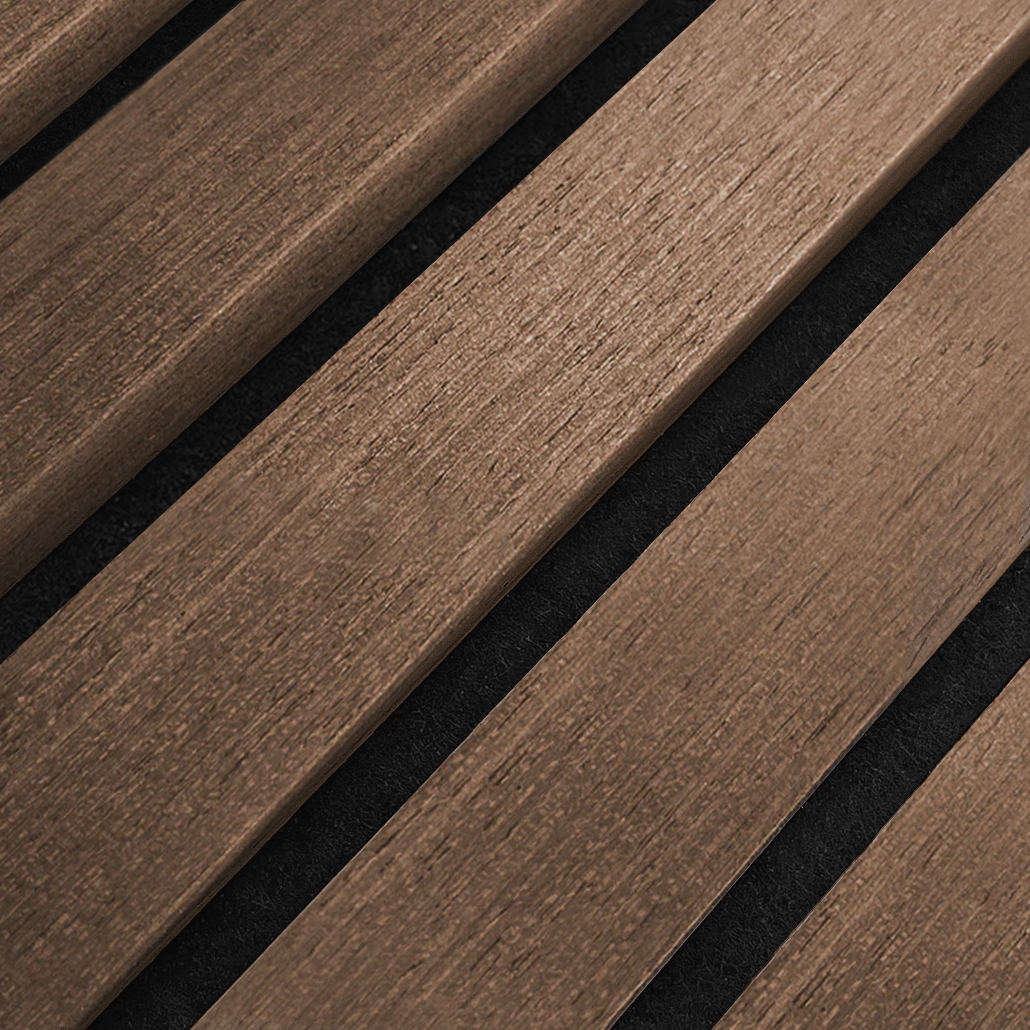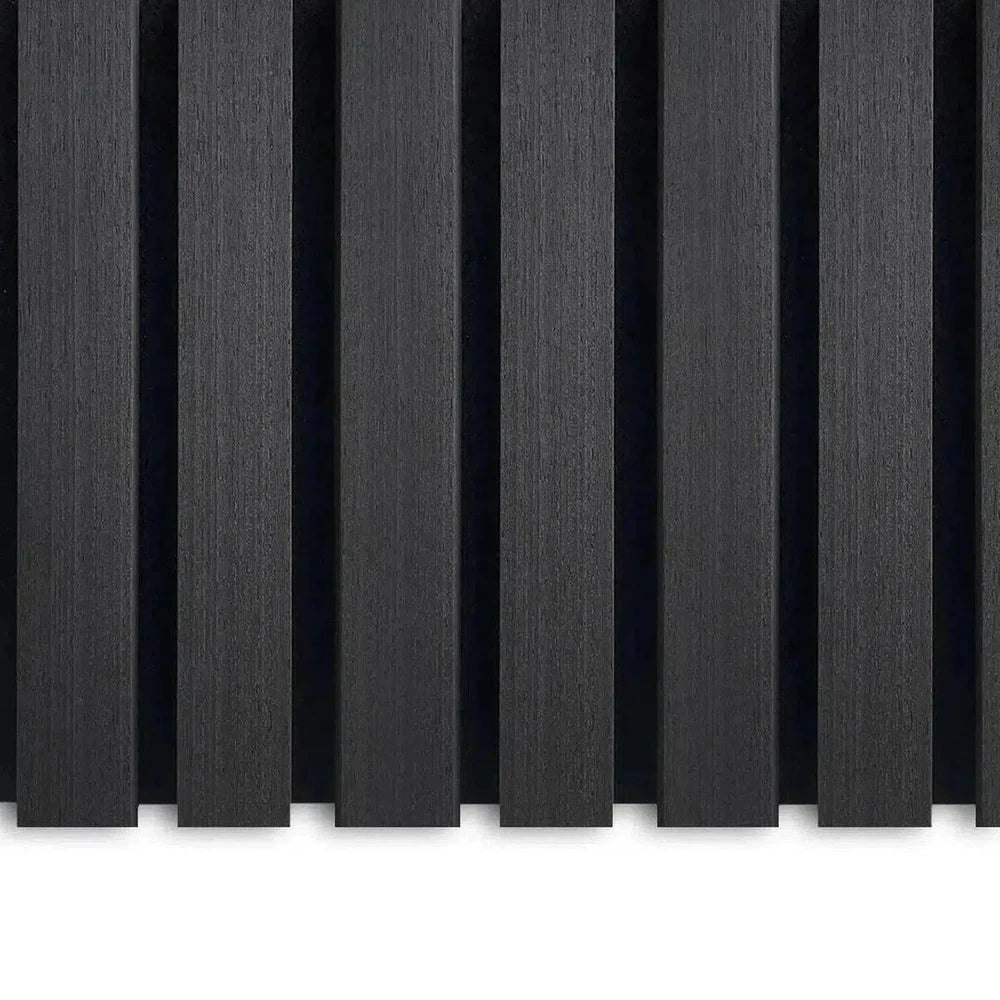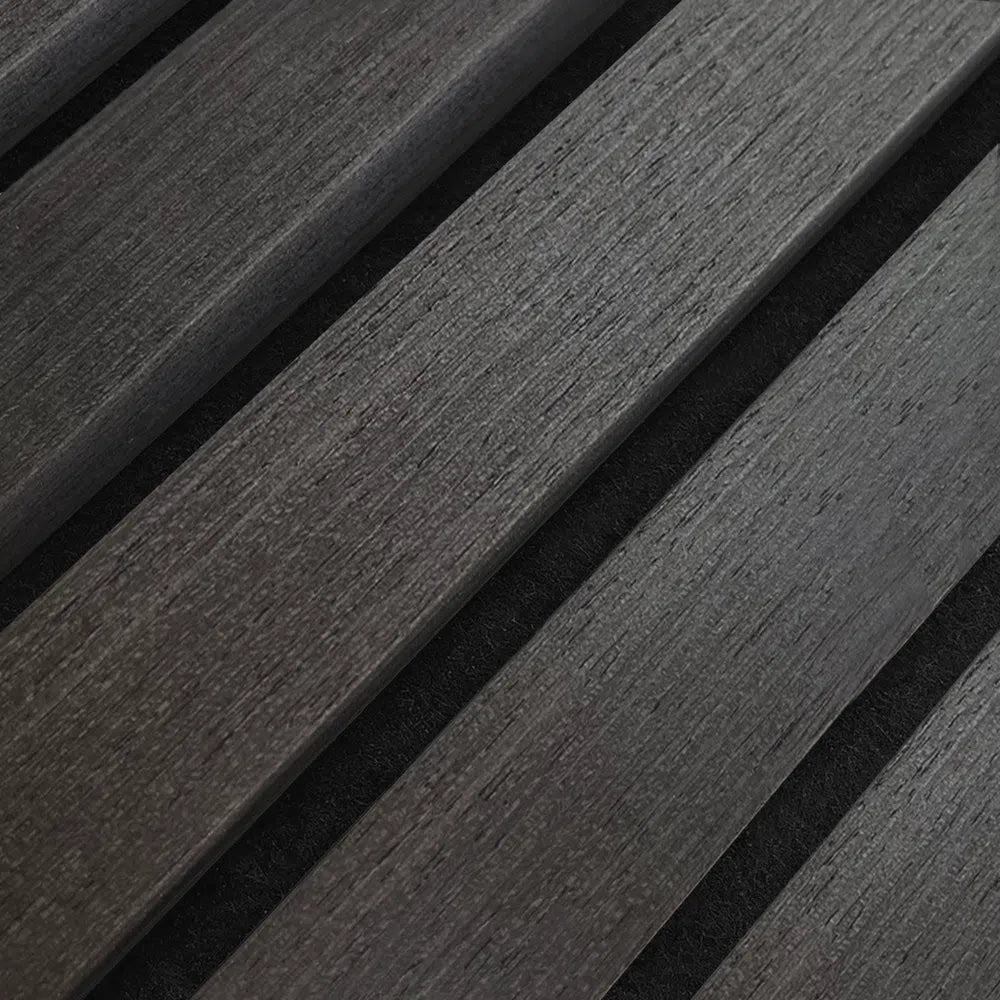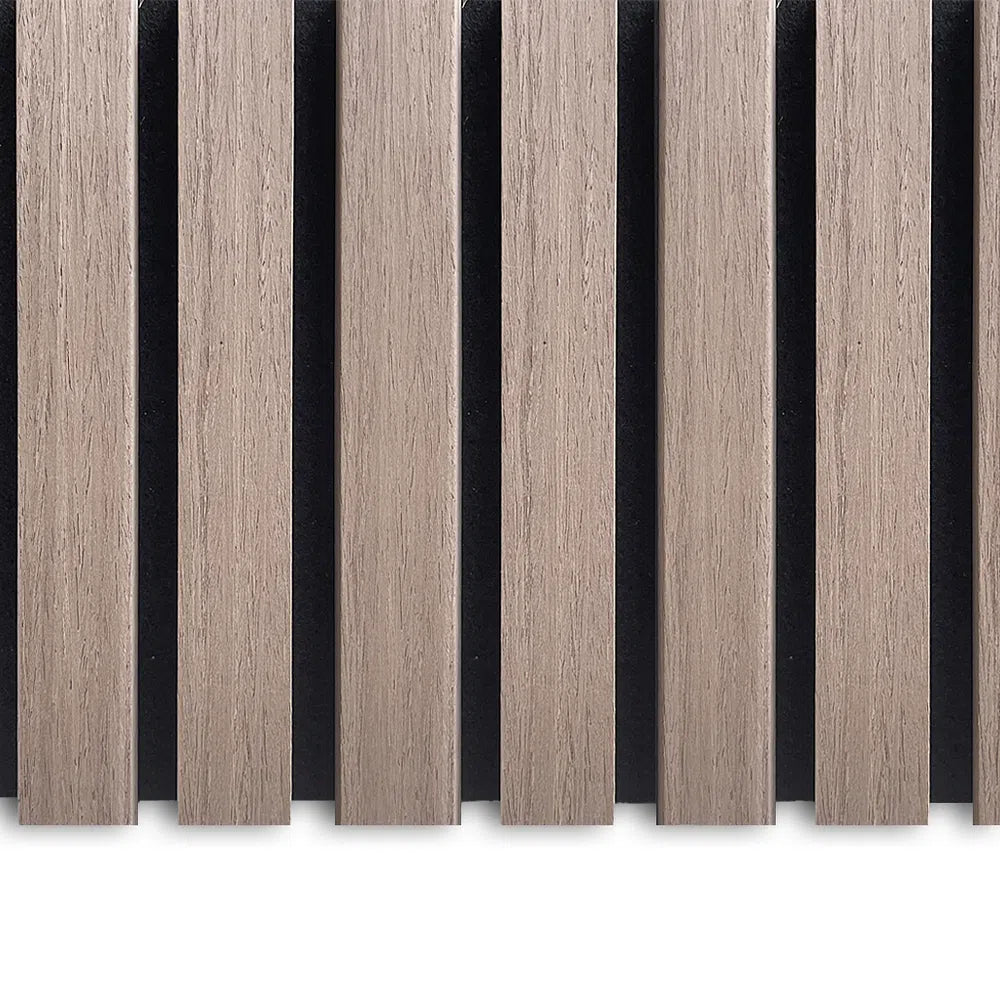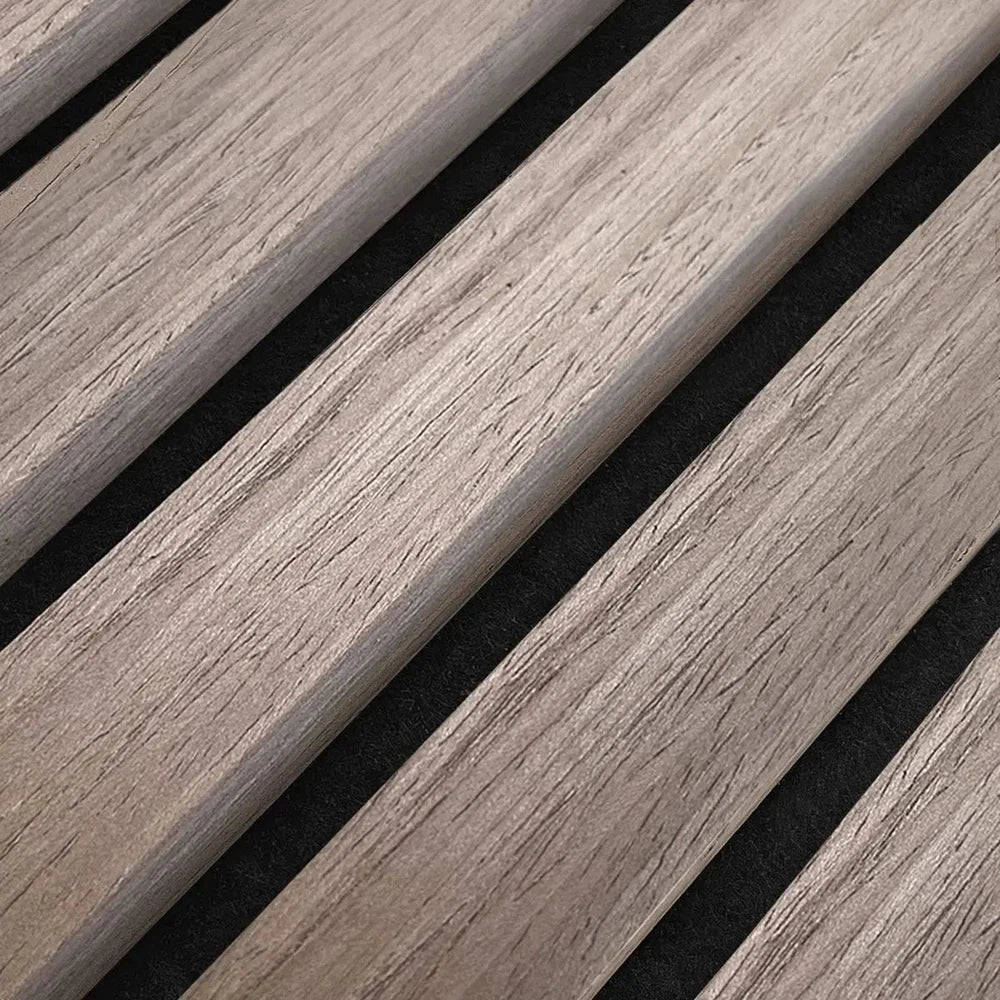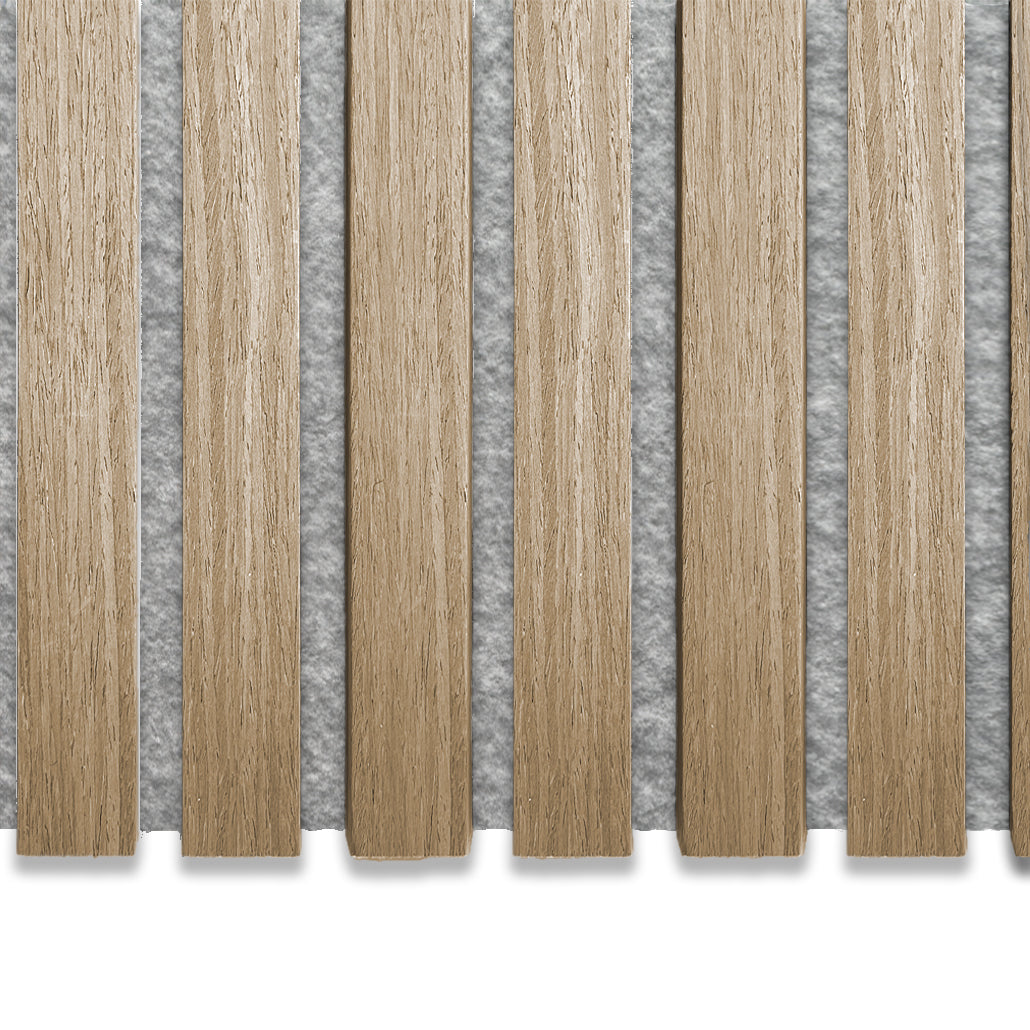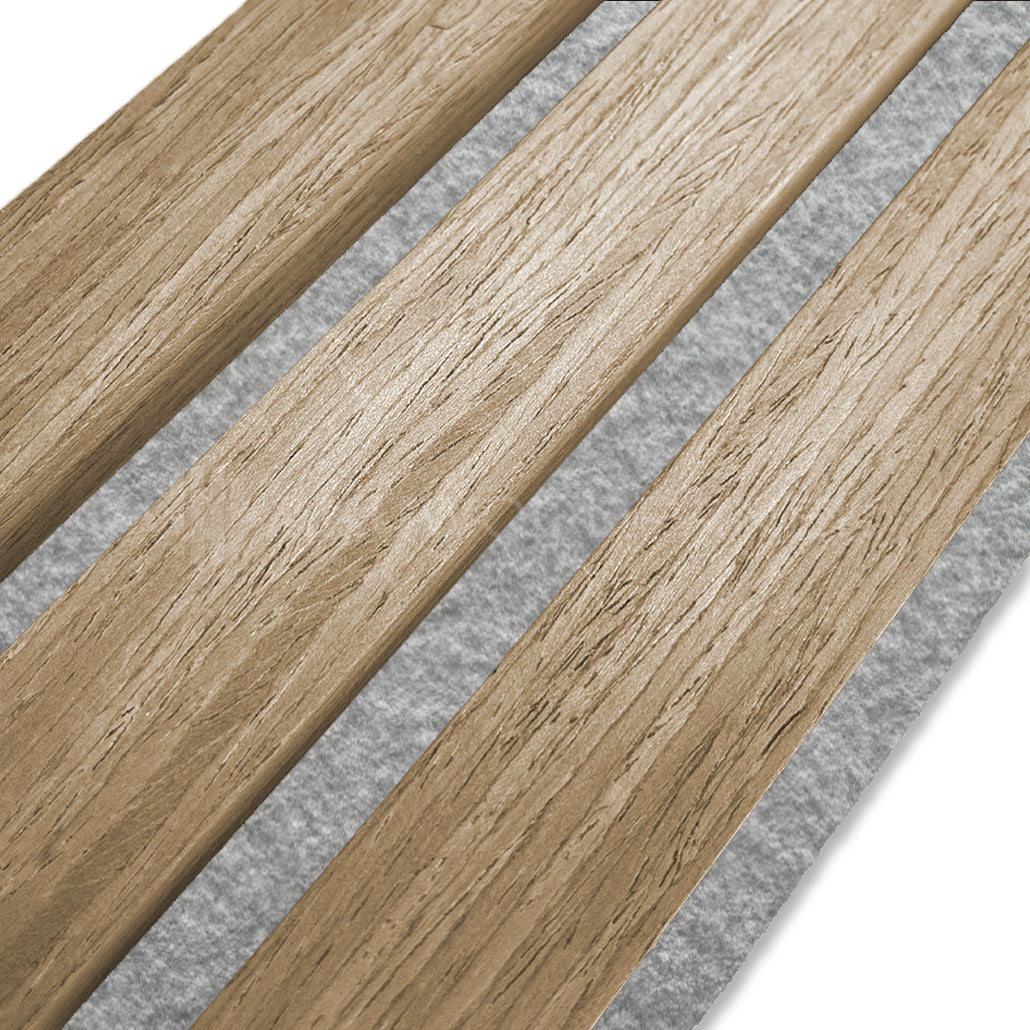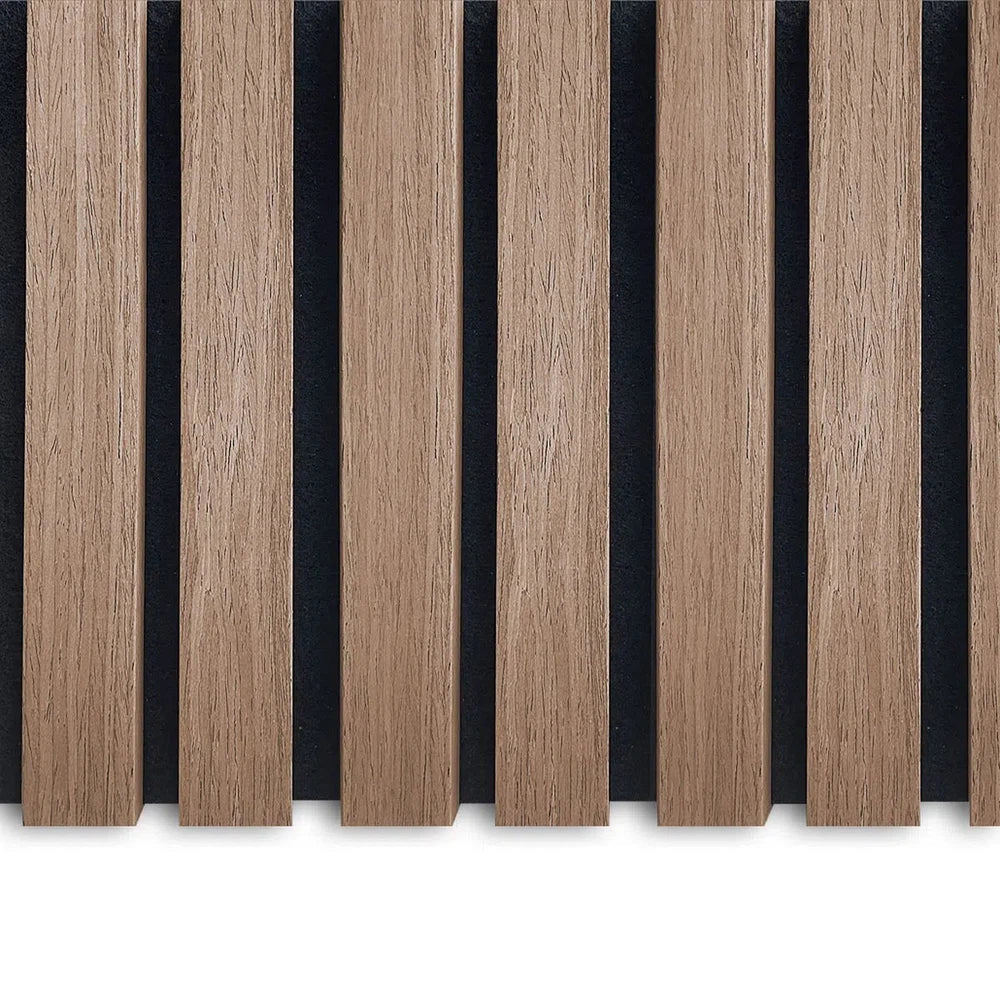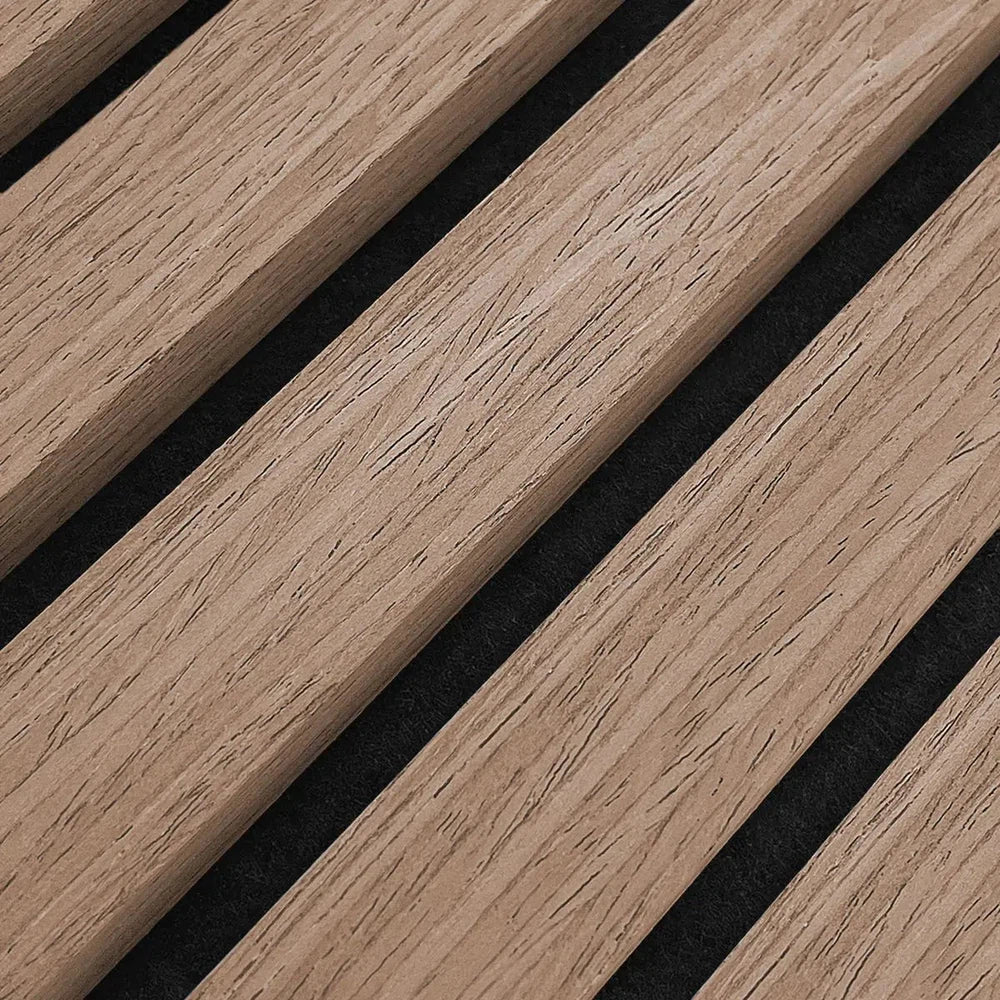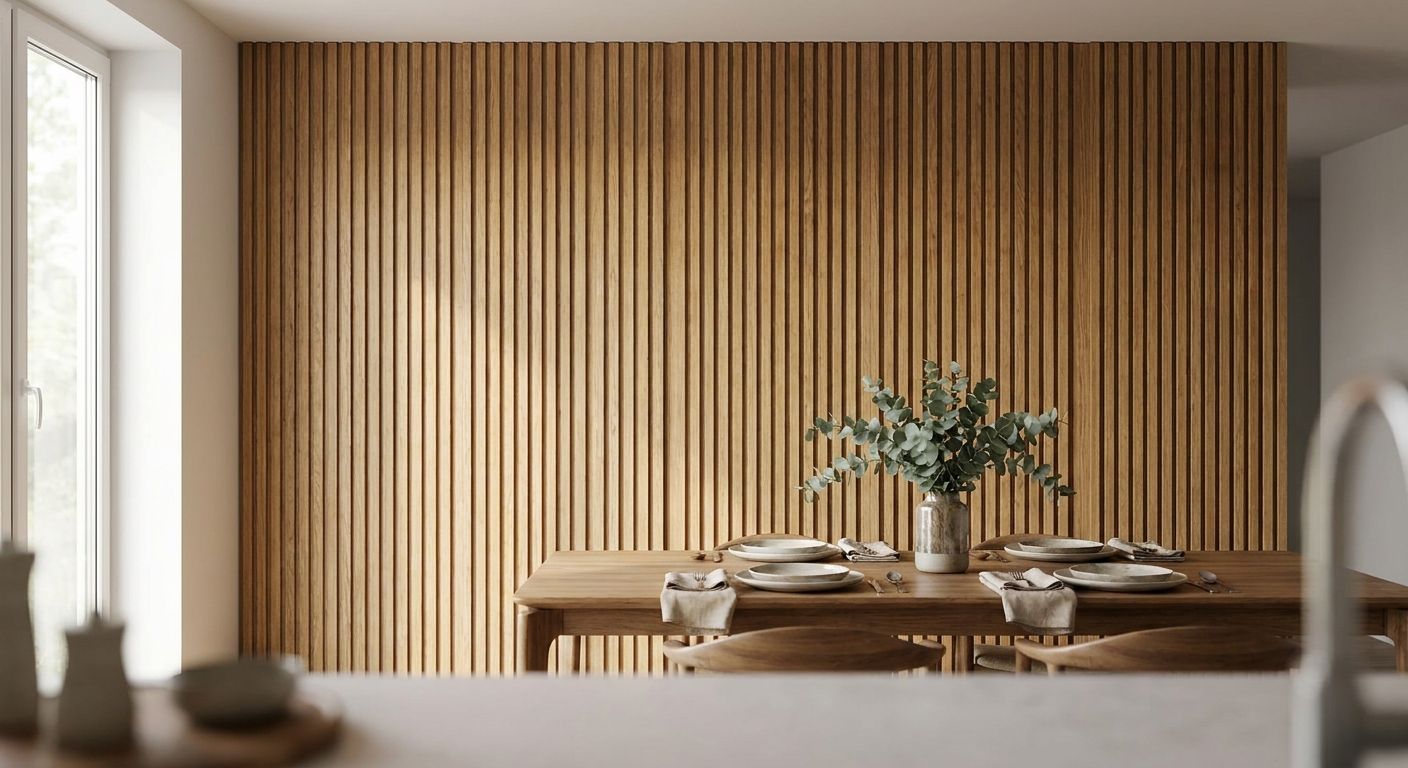
Wooden wall panels dining room feature walls solve two problems in one job: hard floors and glass tables bounce sound around the room, and plain plaster looks unfinished under a pendant light. A dining room feature wall built from real wood veneer slats gives you both a warmer look and a measurable drop in echo, which matters more in dining rooms than almost any other room because conversation happens at table height, right where sound reflects hardest.
- Wooden wall panels dining room feature walls cut echo from hard floors and glass-top tables while adding a real wood veneer finish.
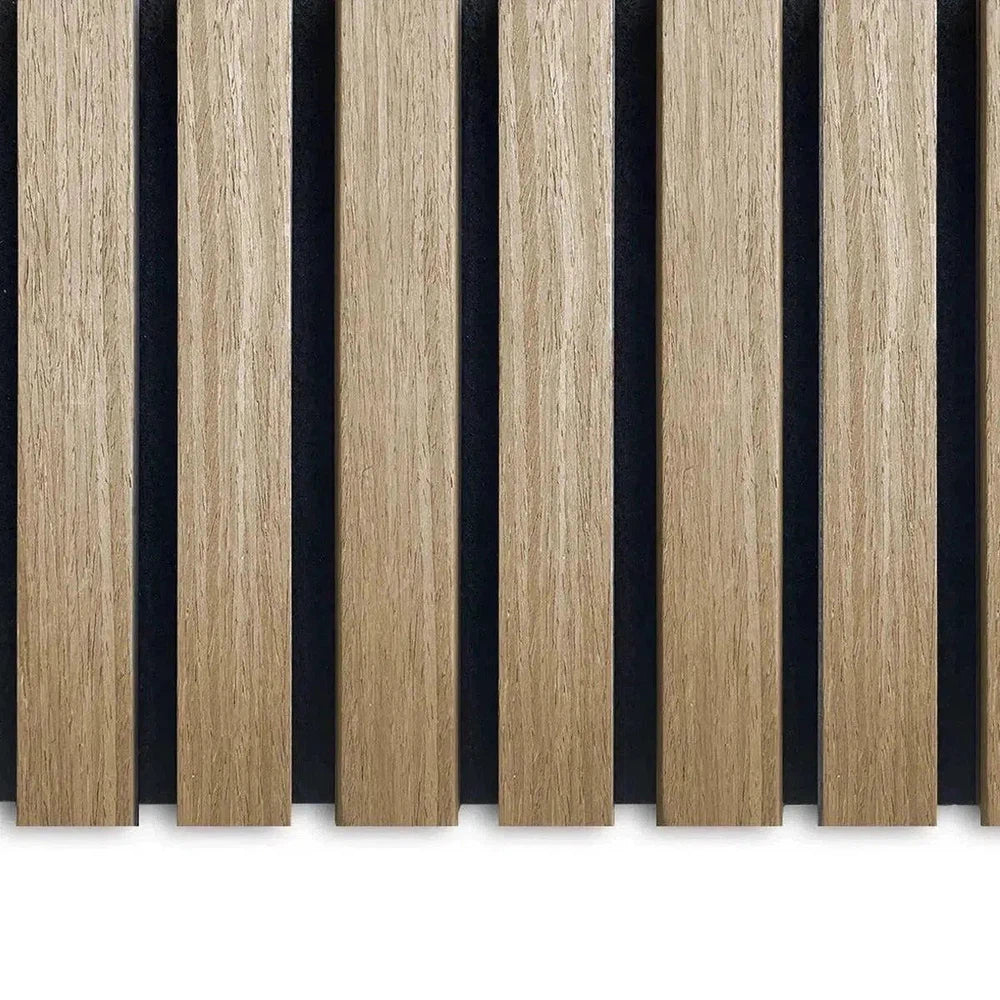
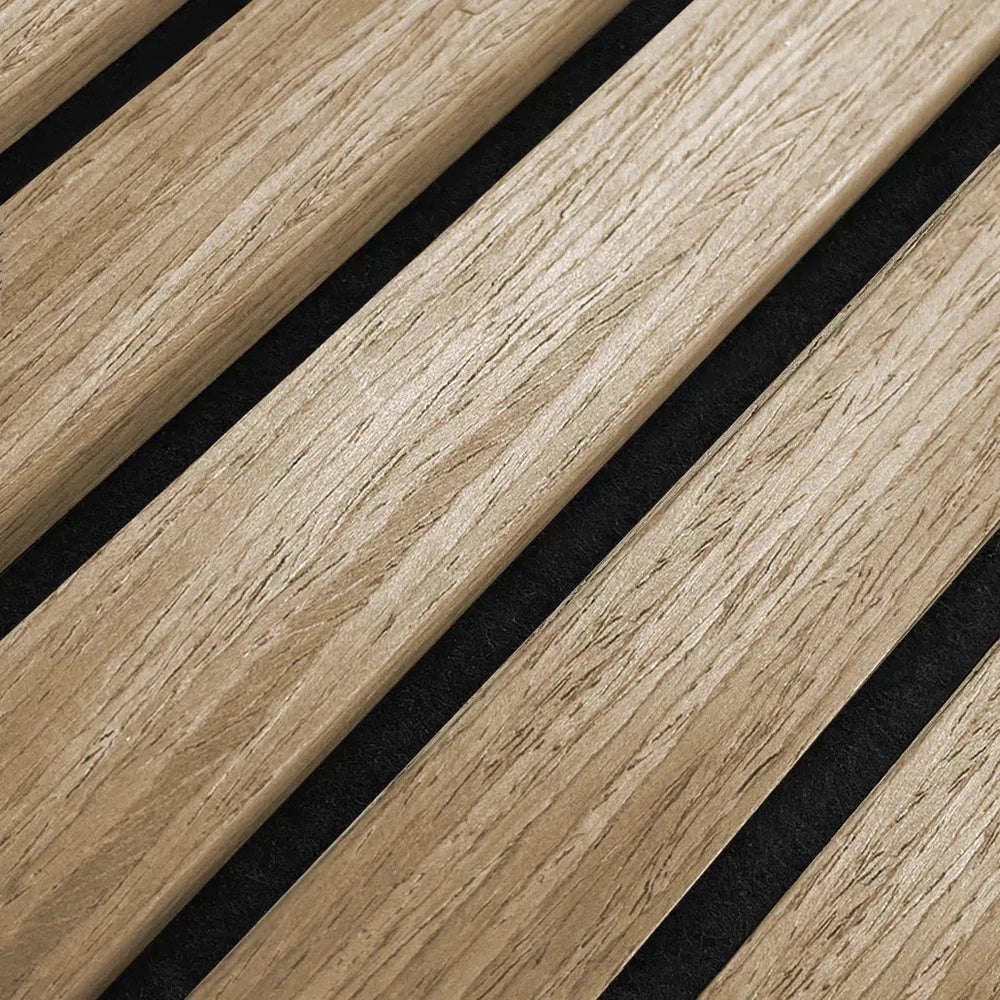
- Akuwood Panel's Walnut wood wall panel and Rustic Oak Premium 3-sided veneer panel both suit dining feature walls in 240cm or 300cm formats.
- A single feature strip behind the table gets most of the visual impact for far less material than full-height panelling.
- Acoustic felt backing absorbs sound rather than just decorating the wall - painted MDF or wallpaper doesn't.
Why this matters for dining rooms
Dining rooms are acoustic traps by design. Hardwood or tiled floors, a glass or laminate table, and bare walls give sound nowhere to go except back and forth between surfaces, which is why a busy family dinner or a dinner party can feel louder than it actually is. Panelling one wall with a real wood veneer finish, like the Walnut wood wall panel, breaks up that reflection instead of adding another hard surface to the mix.
The other half of the argument is visual. A dining room is usually the room guests see up close for the longest stretch of an evening, seated at one level, facing the same wall for an hour or more. That's a different viewing condition to a living room where people move around, and it's why a textured, real-wood feature wall reads as considered rather than decorative filler.
Akuwood Panel's acoustic slat panels are the strongest wooden wall panels for a dining room feature wall when a glass table or hard floor is causing echo, because the felt backing absorbs sound in a way paint or wallpaper physically can't.
Measure your dining room wall
Get the numbers right before you choose a finish, because dining rooms are often narrower than living rooms and panel counts add up fast.
- Measure wall width at its widest point, including any recesses
- Measure floor-to-ceiling height to decide between 240cm and 300cm panel formats
- Note socket, switch, and radiator positions before ordering
- Mark where a sideboard or table will sit against the wall, since panels behind furniture are wasted spend
- Order one sample panel first to check the finish against your existing furniture tone
Choose a finish that matches your dining furniture
Dining tables and chairs are usually the most expensive wood item in the room, so the panel finish needs to sit with it, not fight it.
- Match warm oak table legs with a natural or rustic oak panel rather than a cool grey tone
- Pair dark walnut furniture with the Rustic Oak Premium 3-sided wood veneer panel for contrast, or a walnut panel for a tonal match
- Test the sample under your actual dining room lighting, not daylight from a different room, since dining rooms often run on warm, low-level bulbs in the evening
- Avoid black oak in a dining room with little natural light unless you're deliberately going for a moody, evening-only look
Decide between full-wall coverage and a feature strip
Most dining rooms don't need every wall panelled, and going full-height on every wall makes a small room feel boxed in.
- Panel the wall behind the table, not the wall the table faces, since that's the surface sound bounces off hardest
- A single horizontal band at table-and-above height covers the zone where conversation actually happens
- Full floor-to-ceiling panelling on one wall reads as a proper feature; partial panelling on two walls often looks unfinished
- Use end pieces at open edges so the panel doesn't show a raw MDF core
Prepare the wall surface
A flat, dry wall is the difference between panels that sit tight for years and panels that lift at the seams within a season.
- Strip old wallpaper completely rather than panelling over it
- Fill and sand any holes or uneven plaster before fitting
- Let panels acclimatise in the room for at least 48 hours before fixing, since dining rooms with radiators can run warmer and drier than the rest of the house
- Check for damp behind the wall if it backs onto a kitchen or exterior wall
Install the panels
The manual route works for most homeowners with basic tools; a fitter is worth it for full-height jobs or awkward corners.
- Dry-fit the layout first and mark panel positions with a level line
- Fix with panel adhesive on a flat, sound wall, or battens on an uneven or solid masonry wall
- Leave a small expansion gap at floor and ceiling, especially near underfloor heating or radiators
- Work outward from a centred starting point so any cut panel at the end is even on both sides
- Bring in a fitter for panelling above a fireplace, around a bay window, or on a wall over 4 metres wide
Add finishing touches
The last 10% of the job is what makes a panelled wall look finished instead of half-done.
- Fit matching end pieces at all exposed edges
- Run a picture light or LED strip along the top edge to catch the veneer grain in the evening
- Keep skirting board height consistent so the panel doesn't look like it's floating
- Leave sockets and switches flush by cutting panels precisely rather than boxing around them
Maintain the finished wall
Dining rooms see more spills and grease in the air than most rooms, so upkeep is part of the choice.
- Wipe with a dry or barely damp cloth, never a wet one, on real wood veneer
- Keep the wall away from direct steam if the dining room adjoins an open-plan kitchen
- Re-oil or re-wax the veneer occasionally to keep the finish from drying out near radiators
- Avoid harsh solvents or spray cleaners on the wood surface
Comparing your options for a dining room feature wall
| Option | Best for | Key limitation |
|---|---|---|
| Akuwood Panel Walnut wood wall panel | Warm, traditional dining rooms with wood furniture | Real veneer needs gentle cleaning, no harsh solvents |
| Akuwood Panel Rustic Oak Premium 3-sided veneer | Rooms wanting visible grain and texture | Rustic grain shows more knots than a smoother finish |
| Painted MDF tongue-and-groove (DIY) | Budget feature walls with no acoustic requirement | Flat surface does nothing to absorb echo |
| Wallpaper feature wall | Fast, low-cost pattern change | Zero sound absorption, vulnerable to damp and steam |
Verdict: for a dining room genuinely struggling with echo, an acoustic wooden wall panel beats paint or wallpaper outright, because it's the only option on this list that changes the room's sound, not just its look.


Common mistakes in dining rooms
- Panelling the wrong wall. Fitting panels behind the sideboard while the wall facing the table, where sound actually bounces, stays bare and untreated.
- Ignoring furniture undertone. Choosing a cool grey oak against warm walnut dining furniture creates a mismatch that's obvious in evening lighting.
- Skipping end pieces. Leaving a raw MDF edge exposed at an external corner undercuts an otherwise premium-looking install.
- No expansion gap near heat sources. Fitting panels flush to the floor over underfloor heating or beside a radiator, which can cause the veneer to buckle within a season.
- Going full-height for the wrong reason. Panelling floor-to-ceiling on every wall in a small dining room instead of one feature wall, which makes the room feel smaller rather than more finished.
FAQ
What's the best wood finish for a dining room feature wall?
Match the panel tone to your dining table: warm oak furniture suits a natural or rustic oak panel, while dark walnut furniture pairs well with a walnut panel or a contrasting black oak. Test a sample under your dining room's actual evening lighting before committing to a full wall.
Do wooden wall panels reduce echo in a dining room?
Yes, acoustic wooden wall panels with a felt backing absorb sound rather than reflect it, which cuts the harsh echo common in dining rooms with hard floors and glass tables. Flat MDF panelling without an acoustic layer gives little to no sound benefit.
Is wallpaper or wood panelling better for a dining room?
Wood panelling with an acoustic backing outperforms wallpaper on both echo reduction and durability near steam or spills, though wallpaper is cheaper and faster to change. In 2026, most dining rooms with a hard floor benefit more from panelling than a pattern change alone.
How much wall do I need to panel for a dining room feature?
A single feature wall behind the dining table, from roughly table height to the ceiling, delivers most of the visual and acoustic benefit without panelling the whole room. Full floor-to-ceiling coverage on one wall is the next step up if budget allows.
Can I fit wooden wall panels myself in a dining room?
Most dining room walls are straightforward enough for a confident DIYer using panel adhesive or battens, provided the wall is flat and dry. Bring in a fitter for panelling above a fireplace, around a bay window, or across a wall wider than 4 metres.
Should I choose 240cm or 300cm panels for a dining room?
Use 240cm panels for standard ceiling heights and 300cm panels for taller rooms or floor-to-ceiling feature walls, so you avoid an unnecessary horizontal seam. Measure floor-to-ceiling height first, since the wrong format means more cutting and more waste.
Do wood panels work behind a dining table with a glass top?
Yes, and they matter more there, since a glass table adds another hard, reflective surface to a room that's already prone to echo. An acoustic wood panel behind the table offsets some of that reflection.
How do I clean real wood veneer panels in a dining room?
Wipe with a dry or barely damp cloth and avoid harsh solvents or spray cleaners, since these strip the veneer's finish over time. Keep the panel away from direct steam if the dining room opens onto a kitchen.
One last thing
Most homeowners panel the lower two-thirds of a dining room wall and stop, treating it like a wainscot. That does almost nothing for the echo problem, because sound reflects hardest at ear height and above, exactly where dinner conversation happens. If echo is the actual complaint, take the panel to at least head height or higher, not just to chair-rail height.