

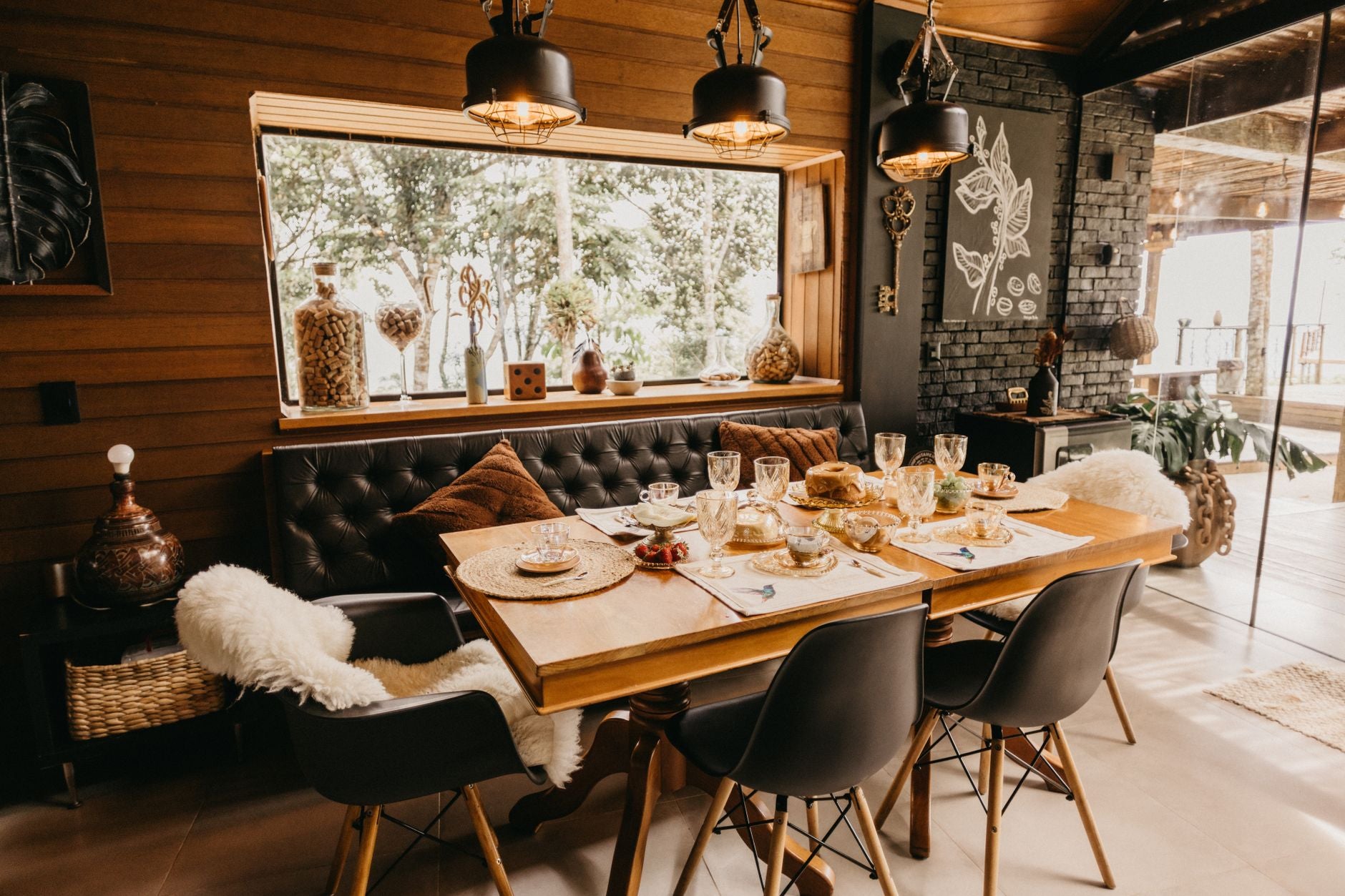
Walnut wall panels are one of the most searched upgrades for dining room feature walls in 2026 — and for good reason. This guide covers which panel types work best in a dining setting, what to look for before you buy, and how to avoid the common mistakes that leave a feature wall looking cheap.
TL;DR: For a dining room feature wall in 2026, walnut acoustic wood panels are the strongest choice. They deliver warm, dark grain that anchors a room, they absorb enough sound to reduce echo during meals, and they fix to most wall substrates with panel adhesive in a single afternoon. Aku Wood Panel's wooden wall panel walnut is the direct pick. Order a sample wooden wall panel walnut first if you're matching to existing furniture.
Why This Matters in 2026
Dining rooms are acoustically brutal. Hard floors, glass, and bare plaster bounce sound straight back at you — dinner conversation at a table for six can peak above 70 dB in a typical UK semi-detached. A walnut feature wall does two jobs at once: it adds a visual focal point behind the dining table or sideboard, and the slatted acoustic construction reduces mid-frequency echo by a measurable amount. You're not just decorating. You're solving a real problem.
Who This Guide Is For
This is for homeowners and interior designers specifying a feature wall in a dining room — either freestanding or open-plan — who want a natural walnut finish. It also applies to restaurant and hospitality fit-outs where acoustic performance matters as much as aesthetics. If you're renting, the section on adhesive options below is especially relevant. If you're working with a dark or moody colour palette, walnut grain sits at roughly Pantone 476–478 range and pairs directly with deep greens, charcoals, and brass fittings.
What to Look for in Walnut Wall Panels for a Dining Room
Acoustic Performance
Dining rooms are high-noise environments. Slatted acoustic panels with a felt backing absorb sound in the 500 Hz–2 kHz range — exactly where conversation sits. A panel without acoustic backing is purely decorative; fine for a bedroom, but a missed opportunity in a dining room where echo and reverberation affect the experience of every meal. Look for panels that specify a felt or absorbent substrate behind the slats, not just a plain MDF backing.
Grain Depth and Finish Consistency
Walnut varies enormously between manufacturers. Flat, uniform veneer can look printed rather than natural. The best acoustic wood panels in 2026 use real wood veneer with visible grain movement — darker heartwood streaks against lighter sapwood. Ask for a physical sample before ordering full panels. A sample tile costs almost nothing and saves you from a colour mismatch against walnut dining furniture or dark joinery.
Panel Dimensions and Coverage Maths
A standard UK dining room feature wall runs between 3.2 m and 4.5 m wide and 2.4 m high — roughly 7.7 to 10.8 m². Most slatted panels cover 0.54 m² per unit. That means you need between 15 and 20 panels for a full wall before accounting for cuts. Get the maths right before ordering or you'll be waiting on a second delivery. Aku Wood Panel's how to calculate how many wall panels you need guide walks through the formula.
Fixings and Substrate Compatibility
Dining rooms typically have plasterboard or plastered brick walls. Both work with panel adhesive — no drilling required for most installations. High-tack panel glue rated for timber-to-plaster bonds is the standard method. A 290 ml cartridge covers approximately 3–4 panels depending on application thickness. If you're fixing to a damp or uneven surface, mechanical fixings into the studs are the safer call.
End Pieces and Edge Finishing
A feature wall that ends mid-run with a raw slatted edge looks unfinished. End trim pieces cap the vertical edges cleanly and are colour-matched to the panel finish. If you're panelling a chimney breast or an alcove, you'll need end pieces on both sides. Don't treat them as optional — they're what separates a professional result from a DIY one.
Colour Tone vs Existing Joinery
Walnut panels read warmer or cooler depending on your lighting. Warm filament or 2700 K LED lighting brings out the reddish-brown tones. Cool white (4000 K+) makes the same panel look grey-brown. Check the sample under the actual lighting conditions in your room. If your dining chairs or sideboard are in a lighter oak or a painted finish, walnut panels with very dark grain can overwhelm the space — smoked oak or mocca tones may be a better bridge.
Top Picks for Dining Room Feature Walls in 2026
The Main Pick — Walnut Acoustic Panel
The safe choice. Rich brown grain, real wood veneer, slatted acoustic construction with felt backing. This is the panel most dining rooms want: warm enough to anchor the space, dark enough to read as a focal point against white or grey walls.
- Verdict: Buy. Order the sample first, then the full run.
The Darker Alternative — Smoked Oak
The wildcard for moody interiors. Smoked oak reads almost charcoal-brown under warm light — closer to a dark walnut than a traditional oak. If your dining room already has walnut furniture and you want the wall to contrast rather than match, smoked oak creates separation without clashing.
- Verdict: Consider if your existing joinery is mid-tone walnut and you want depth rather than a direct match.
The Warm Mid-Tone — Mocca
The bridge finish. Mocca sits between walnut and a warm grey-brown. It works particularly well in open-plan dining rooms that connect to a kitchen with stone or concrete worktops, where pure walnut can read as too red.
- Verdict: Consider for open-plan layouts with cool-toned kitchen finishes.
The Statement Option — Rustic Oak Premium Veneer
For rooms that can carry texture. The rustic oak premium 3-sided veneer panel has visible knots and grain variation — more character than walnut, but harder to pair with refined furniture. Best in a farmhouse or industrial dining setting.
- Verdict: Skip if your dining room has clean-lined contemporary furniture. Consider if your space is already textured.
What to Avoid
- Panels with no acoustic backing in a hard-floored dining room. You'll add visual warmth but won't touch the echo problem. If you're spending money on a feature wall, spend it on panels that do both jobs.
- Ordering without a sample in a dining room with existing walnut furniture. Walnut finishes vary by 2–3 Pantone steps between manufacturers. A sample tile costs under £5 and takes 3 days to arrive. A full wall ordered blind that clashes with your table costs a full reorder.
- Skipping end pieces on a chimney breast or alcove. The raw slatted end of a panel is one of the most common complaints in installation reviews. End pieces are colour-matched and specifically manufactured for this — use them.
Comparison Table
| Panel | Grain Tone | Acoustic Backing | Best For | Verdict |
|---|---|---|---|---|
| Walnut | Warm brown | Yes | Main feature wall | Buy |
| Smoked Oak | Dark charcoal-brown | Yes | Contrast wall, dark interiors | Consider |
| Mocca | Warm grey-brown | Yes | Open-plan, mixed finishes | Consider |
| Rustic Oak Premium Veneer | Textured, variable | Yes | Farmhouse/industrial settings | Skip (most rooms) |
FAQ
What are the best walnut wall panels for a dining room in 2026? Slatted acoustic walnut panels with a felt backing are the best choice for 2026. They add visual warmth and reduce echo in one installation — both of which matter in a dining room.
How many panels do I need for a dining room feature wall? For a wall between 3.2 m and 4.5 m wide at standard 2.4 m ceiling height, you need 15–20 panels at 0.54 m² per unit. Always add 10% for cuts.
Are walnut wall panels suitable for open-plan dining areas? Yes. In open-plan spaces, walnut panels define the dining zone visually and help absorb sound from kitchen appliances and conversation. Pair with a rug under the dining table for maximum acoustic effect.
Can I install walnut panels myself? Yes. Most slatted acoustic panels fix to plasterboard or plaster with high-tack panel adhesive. No specialist tools required. Allow a full afternoon for a standard feature wall.
Do I need to order a sample before buying walnut wall panels? Yes — particularly if you have existing walnut furniture. Walnut panel finishes vary between manufacturers. A sample confirms the tone under your room's specific lighting before you commit to a full order.
Are walnut panels better than dark oak for a dining room? Walnut has a warmer, redder-brown tone; dark oak reads cooler and greyer. Walnut is the stronger choice when you want the wall to feel warm and intimate. Dark oak works better in contemporary rooms with grey or black accents.
How do I finish the edges of a walnut feature wall? Use colour-matched end trim pieces. These cap the vertical edges cleanly and are the same finish as the panel face. They're not cosmetic extras — without them, the raw slatted end of the panel is visible.
Do walnut acoustic panels actually reduce noise at the dinner table? Yes, but with a qualifier. Acoustic slatted panels with felt backing absorb mid-frequency sound — they reduce echo and reverberation noticeably in a hard-surfaced room. They won't soundproof the room or block sound from adjacent spaces.
One Last Thing
The direction you run the slats changes the room more than most buyers expect. Vertical slats make ceiling height feel taller — useful in a standard UK dining room with 2.4 m ceilings. Horizontal slats make the wall feel wider and more grounded. Most acoustic slatted panels can be installed either way. Decide on orientation before you order, because end pieces and trims are dimensioned to match.
Share:
How to Panel a Chimney Breast With Slat Panels (2026)
How to Repair an Acoustic Wall Panel (2026)