

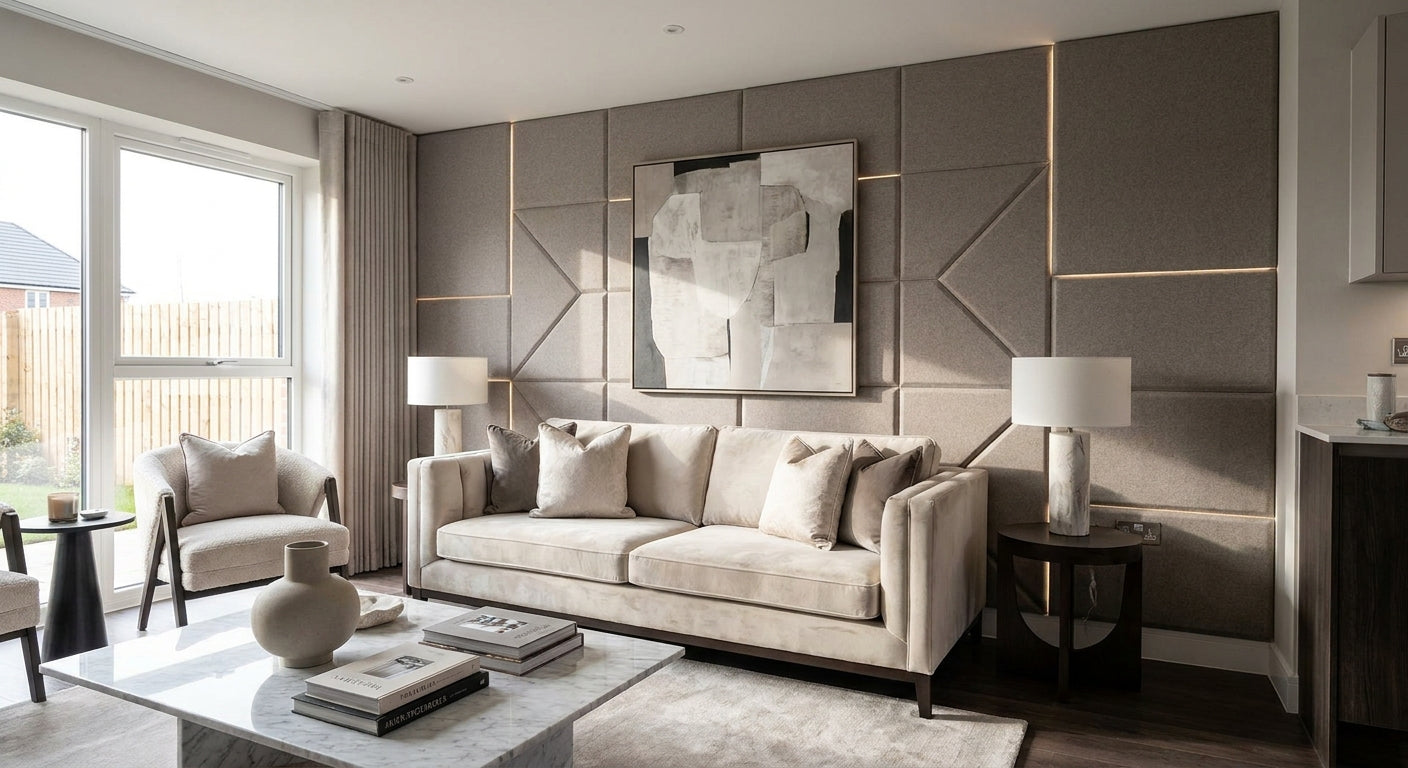
Show homes sell the estate before a single brick goes up on the surrounding plots, and the wall finish in that lounge or feature bedroom is doing more selling than the sales brochure. This guide ranks the wall panel options that hold up across multiple show home fit-outs in 2026, from show-stopping feature walls to the exterior cladding that frames the front elevation.
TL;DR
For a developer show home in 2026, Wooden Wall Panel Natural Oak is the safe, repeatable choice for open-plan lounges and hallways, while Wooden Wall Panel Black Oak wins on drama for a single statement wall in the primary bedroom or snug. Both come in 240cm and 300cm formats with a 3-sided real wood veneer and acoustic felt backing, which matters when viewings run back-to-back and echo in an empty room kills the atmosphere. Skip anything without acoustic backing on show homes with hard flooring, because bare veneer over plasterboard bounces sound and makes rooms feel cheap on a viewing day. Akustiq UK supplies the full range direct, which keeps procurement simple when you're panelling several plots from one order.
Why this matters
A show home has one job: make a buyer picture themselves living there within the first four minutes of a walkthrough. Bare plasterboard, downlighting, and hard flooring create an echo that undermines that pitch before the agent finishes the tour. Wall panels for developer show home projects solve two problems at once, cutting reverberation in unfurnished or lightly furnished rooms and giving the space a finished, premium look that photographs well for the listing.
Developers running four, six, or ten plots at a time also need consistency. Ordering the same finish across every unit means the show home matches the standard specification buyers actually get, not an inflated version that sets expectations the build can't meet. That's the tension this list resolves: panels that look premium enough to sell the plot, but specified in a way that scales to the rest of the site.
How this list was ranked
Each panel is judged against four things that matter specifically for show home fit-outs rather than a single residential room: install speed across repeat plots, veneer and colour consistency batch to batch, acoustic performance in an empty or lightly staged room, and how well the finish coordinates with an exterior cladding scheme so the front elevation and interior feature wall read as one design story. Panels that fail on any of these get marked down even if they look striking in a single photo, because a show home has to survive dozens of viewings, not one shoot.
The ranked list
1. Wooden Wall Panel Natural Oak — the safe pick
Natural Oak is the panel most developers reach for first because it reads as premium without pushing the room into a dark, moody register that limits buyer appeal. The 3-sided real wood veneer finish and acoustic felt backing mean a single feature wall in the lounge cuts noticeable echo the moment it goes up, which matters in a show home that's staged with minimal furniture. It's available in both the 240cm and 300cm formats, so ceiling height across different house types on the same estate isn't a problem.
Across multiple plots, colour consistency is the thing that actually causes headaches, because a batch that reads warmer in one unit than another is obvious the moment a buyer walks between two show homes on the same street. Natural Oak has the widest install base of any finish in the range for exactly this reason. Verdict: Buy for the primary show home feature wall and any repeat-plot rollout where consistency across units matters more than making a statement.
2. Wooden Wall Panel Black Oak — the wildcard
Black Oak is the pick for a developer who wants one room in the show home to stop buyers mid-walkthrough, typically the primary bedroom or a home office nook. It's dramatic in a way Natural Oak isn't, and it photographs exceptionally well under warm downlighting, which is most show home lighting in 2026.
The trade-off is that it only works as an accent, not a whole-house finish, because used across every room it reads heavy rather than premium. Use it on one wall, one room, and let the rest of the house stay lighter. Verdict: Buy as a single statement wall; Skip as a whole-property specification.
3. Wooden Wall Panel Walnut — the premium upgrade
Walnut sits a tier above Natural Oak on perceived value, which makes it the right call for the flagship plot on an estate, the five-bedroom detached unit at the top of the price ladder rather than the standard three-bed terrace. The veneer grain reads richer under natural daylight than under artificial lighting, so it's worth checking the show home's window orientation before committing a whole feature wall to it.
On cost-per-plot rollouts across a full estate, Walnut is usually reserved for the one or two hero units rather than every show home, keeping the premium finish meaningful rather than standard. Verdict: Buy for flagship plots and hero units; Consider for standard-spec show homes where budget needs to stretch across more square metres.
4. Wooden Wall Panel Smoked Oak — the moody middle ground
Smoked Oak lands between Natural Oak's neutrality and Black Oak's drama, which makes it useful when a developer wants a feature wall with more character than a standard lounge finish but doesn't want the commitment of a full dark room. It works particularly well in home cinema rooms or snugs staged as a secondary reception space, which is increasingly common in show homes built for 2026 buyer expectations around multi-use rooms.
The acoustic felt backing does real work here too, because cinema or media rooms staged with a large TV and minimal soft furnishing echo badly without it. Verdict: Buy for secondary reception rooms and media snugs.
5. Wooden Wall Panel Grey Oak — the minimalist play
Grey Oak suits a developer targeting a contemporary, Scandinavian-leaning buyer profile rather than a traditional one. It's the coolest tone in the range and pairs well with light oak flooring and white kitchen units, a combination showing up repeatedly in new-build show home schemes through 2026.
Where it falls down is warmth, because a show home aiming for a cosy, family-first pitch will find Grey Oak reads a little clinical without soft furnishings to balance it. Verdict: Consider for contemporary-styled show homes; Skip if the sales brief is a warm family home.
6. Hexagon Acoustic Panel Natural Oak with Grey Felt — the feature-wall specialist
Hexagon panels aren't a whole-room solution, but as a single statement wall behind a sofa or bed headboard, they do more visual work per square metre than any flat panel on this list. The grey felt backing behind the natural oak veneer adds a design detail that stands out in listing photography, which is exactly the kind of detail that gets an estate's show home shared rather than scrolled past.
Install time per wall runs longer than a flat panel because of the pattern layout, so it's not the right pick if you're fitting six show homes on a tight handover deadline. Verdict: Buy for a single hero wall in the flagship plot; Skip for a fast multi-plot rollout.
7. Wooden Wall Panel Rustic Oak (Premium 3-Sided Wood Veneer) — the character finish
Rustic Oak brings visible grain and knot character that reads as high-end rather than budget, which suits developments pitching a barn-conversion or farmhouse-adjacent aesthetic, a growing share of new-build estates positioned around rural or semi-rural plots in 2026. It's a heavier visual statement than Natural Oak but warmer than Black Oak, sitting in its own lane.
It won't suit every buyer profile, because a strictly contemporary urban scheme will find the grain too busy. Verdict: Consider for rural or character-led developments; Skip for urban contemporary schemes.
Comparison table
| Panel | Best show home use | Tone | Verdict |
|---|---|---|---|
| Natural Oak | Lounge, hallway, repeat plots | Warm, neutral | Buy |
| Black Oak | Single statement wall | Dark, dramatic | Buy (accent only) |
| Walnut | Flagship / hero plot | Rich, premium | Buy (hero plots) |
| Smoked Oak | Cinema room, snug | Warm, moody | Buy |
| Grey Oak | Contemporary schemes | Cool, minimal | Consider |
| Hexagon Natural Oak Grey Felt | Single feature wall | Warm, textured | Buy (slow install) |
| Rustic Oak Premium | Rural/character schemes | Warm, characterful | Consider |
Where to buy
- Order samples before committing a full estate rollout. Colour and grain vary batch to batch on real wood veneer, and a sample checked against your show home's actual lighting avoids a costly reorder mid-fit-out.
- Buy in one order per plot type rather than piecemeal. Batch consistency across an estate's identical house types is the single biggest cause of buyer complaints when they compare units.
- Coordinate the exterior finish before the interior goes in. If the front elevation uses cladding, check Akustiq UK's guidance on cladding for new-build estates so the exterior tone and the interior feature wall don't clash in listing photography.
FAQ
What's the best wall panel finish for a show home lounge? Natural Oak is the most repeatable choice for a show home lounge in 2026 — it's neutral enough to suit most buyer profiles and consistent enough across batches to roll out over several plots without colour mismatch.
Is Black Oak too dark for a whole show home? Yes, used across every room Black Oak reads heavy rather than premium. It works as a single accent wall in a bedroom or snug, not as a whole-property specification.
Do wall panels actually reduce echo in an empty show home? Panels with an acoustic felt backing noticeably cut reverberation in lightly staged rooms with hard flooring, which is common in show homes furnished with minimal soft furnishings for viewings.
Which panel size fits standard new-build ceiling heights? The 240cm format suits most standard new-build ceiling heights, while the 300cm format is for floor-to-ceiling feature walls in taller rooms or double-height hallways.
Should every show home on an estate use the same panel finish? Standard plots should match to set accurate buyer expectations; the flagship or hero plot can justify an upgraded finish like Walnut without misleading buyers on the rest of the estate.
How many finishes should one show home use? One primary finish for repeat rooms plus one accent finish for a single statement wall is the pattern that photographs best and avoids a busy, uncoordinated look.
Do wall panels need matching exterior cladding? They don't need to match exactly, but a coordinated tone between the interior feature wall and the exterior cladding reads more considered in listing photography and site signage.
Is Rustic Oak suitable for a contemporary urban development? No — its visible grain and knot character suit rural or character-led schemes better than a strictly contemporary urban aesthetic.
One last thing
The detail that gets missed on multi-plot rollouts isn't the panel finish, it's the glue. A show home panel that lifts at the edge after three weeks of viewing traffic undoes every design decision above it, so specify proper panel adhesive rather than a generic contact adhesive from the builder's merchant. Order sample sets before the first fit-out date is locked in, not after, because veneer batches shift slightly through the year and the sample that matched your brochure render in January 2026 may not match what ships in June 2026.
Share:
Fit Exterior Cladding on a Cavity Wall (2026 Guide)
Acoustic Panels for Photography Studio Walls (2026 Guide)