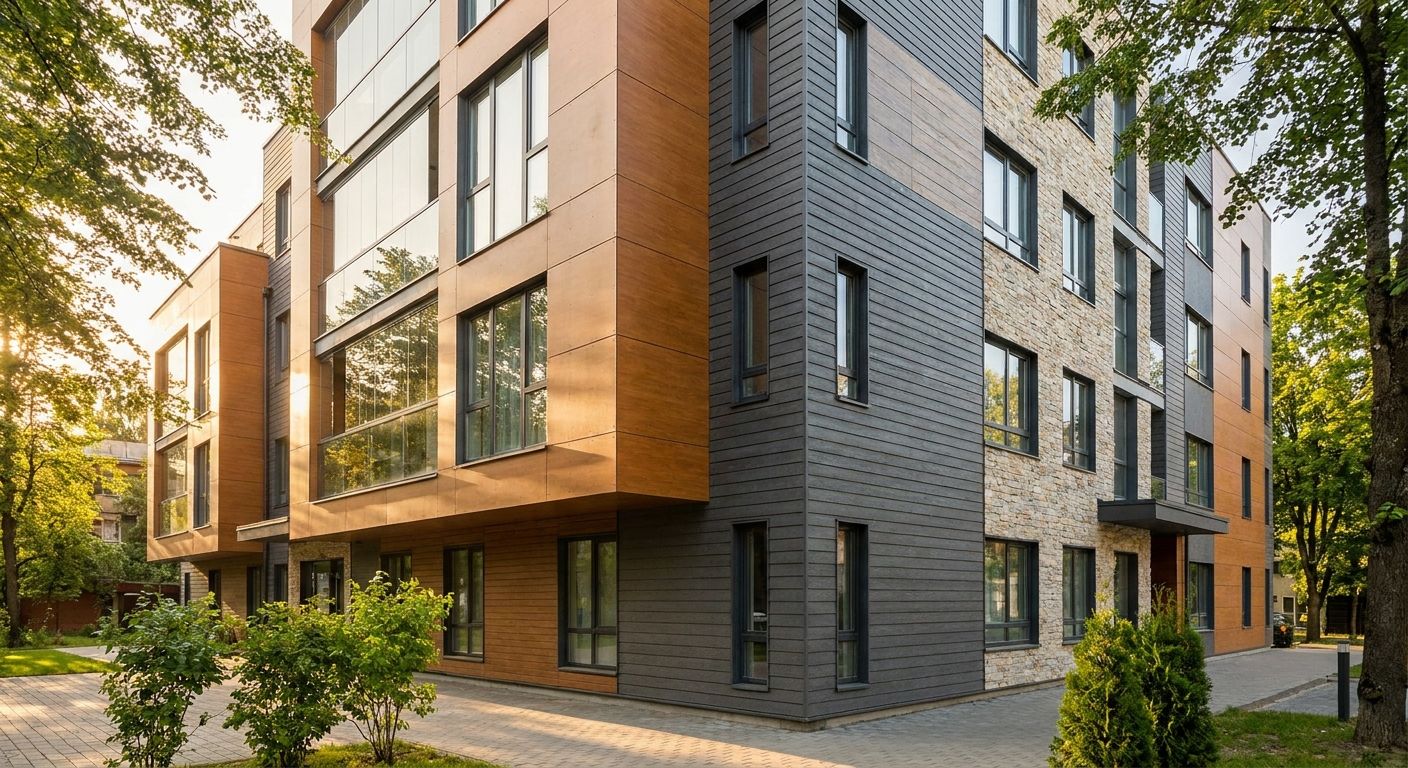
Composite wood-grain panels win for balcony walls and low-rise flat facades; fibre cement wins for blocks above the combustible-cladding threshold; render wins on cost for new-build estates; brick slip wins for matching period brick; uPVC wins only when maintenance-free trumps looks. That's the shortlist for exterior cladding for apartment and flat buildings in 2026, and the rest of this guide breaks down why.
- Composite wood-grain cladding from Akuwood Panel suits balcony walls and low-rise flat exteriors up to 11 metres.
- Fibre cement is the pick for high-rise blocks that must meet the combustible-cladding ban in England.
- Render costs less per square metre than most cladding systems but cracks without proper substrate prep.
- Brick slip matches period apartment block facades almost exactly but needs skilled fitting.
- uPVC is the lowest-maintenance option but reads as the cheapest finish on an owner-occupied block.
Why this matters
A flat or apartment block isn't a detached house. Whoever picks the cladding has to answer to freeholders, building control, and often a fire risk assessor before a single board goes up. Get the material wrong on a building above the height threshold and it isn't a cosmetic mistake — it's a compliance failure.
Akuwood Panel supplies composite wood-grain exterior boards used on balconies, boundary walls, and low-rise elevations, so this guide leans on that experience alongside the wider material categories landlords and managing agents actually specify in 2026. Every option below gets an honest read, including where it falls short.
What makes the best exterior cladding for flats
- Fire performance — does the material clear the combustible-cladding restrictions that apply to taller residential buildings in England?
- Weather and UV resistance — north-facing elevations and coastal blocks punish cladding that isn't rated for it.
- Install complexity on communal buildings — scaffolding access, shared walls, and leaseholder disruption all raise the bar versus a single house.
- Maintenance burden over the lease term — a managing agent doesn't want a re-render every five years.
- Aesthetic match to the existing facade — Victorian brick blocks and 2026 new-build estates need different finishes.
- Availability of trims and fixings for a clean, weathertight edge around windows and corners.
Exterior cladding for flats: at a glance
| Cladding type | Best for | Standout feature | Key limitation |
|---|---|---|---|
| Composite wood-grain panels | Balcony walls & low-rise flat exteriors | Real wood-grain look with a stated 25-year maintenance-free durability spec | Not a substitute for a fire-rated system above 11 metres |
| Brick slip | Matching period brick apartment blocks | Near-identical texture to solid brick | Slower, skilled-labour install |
| Fibre cement | High-rise blocks needing fire compliance | Non-combustible board rating | Limited timber-look realism |
| Render | Budget new-build apartment estates | Seamless, joint-free finish | Cracks without proper substrate prep |
| uPVC | Rental flats prioritising low upkeep | Lowest ongoing maintenance | Yellows with UV exposure over years |
1. Composite wood-grain cladding panels: best for balcony walls and low-rise flat exteriors
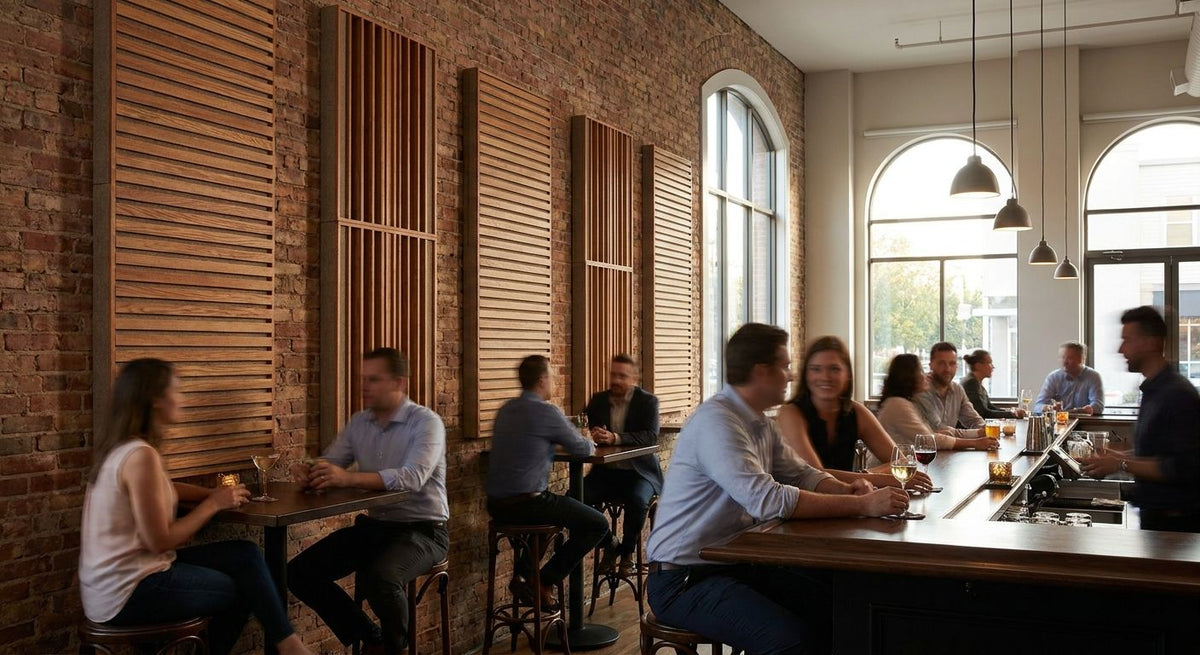
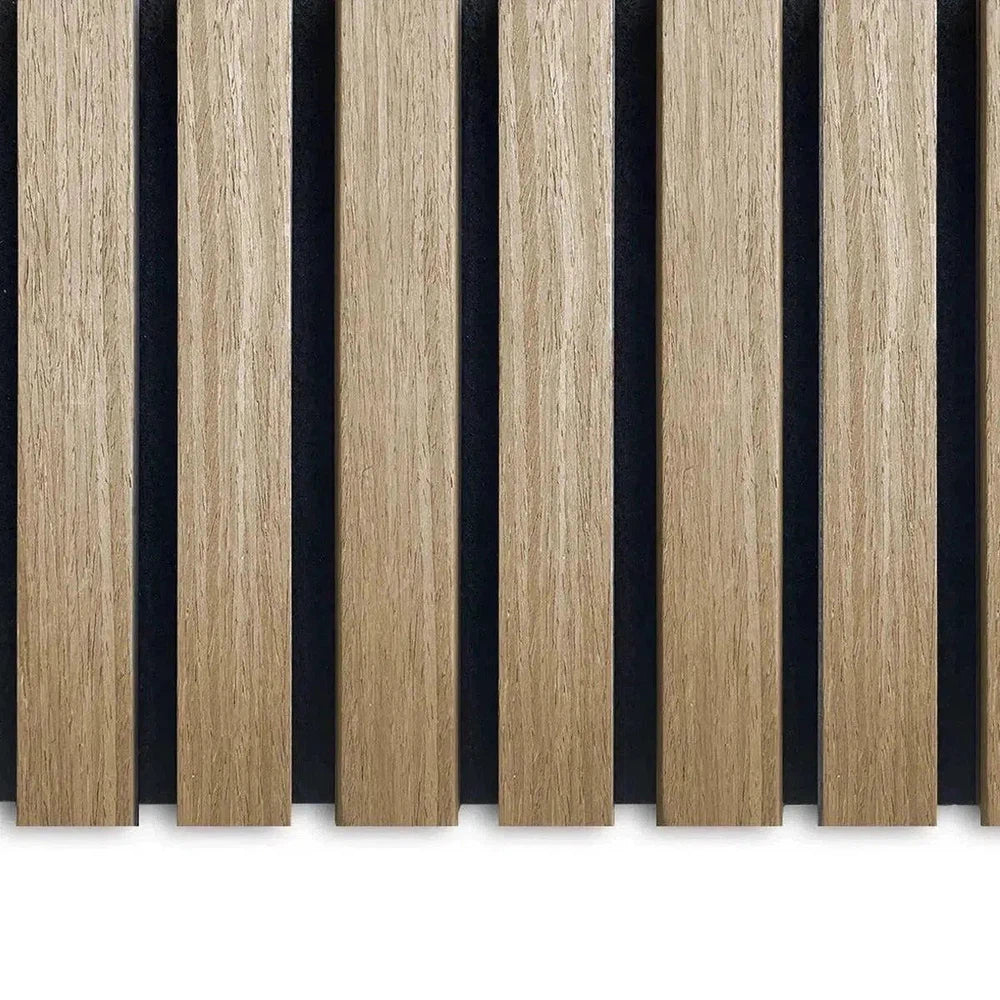
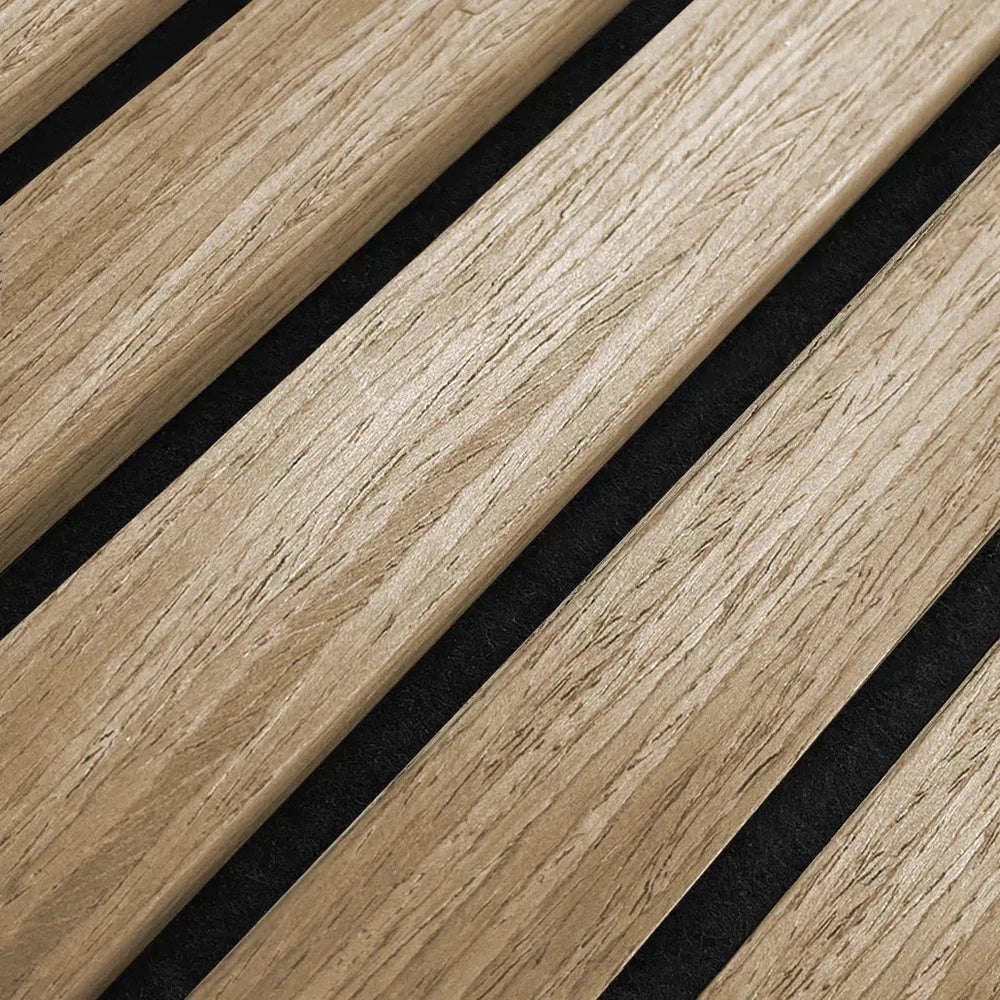
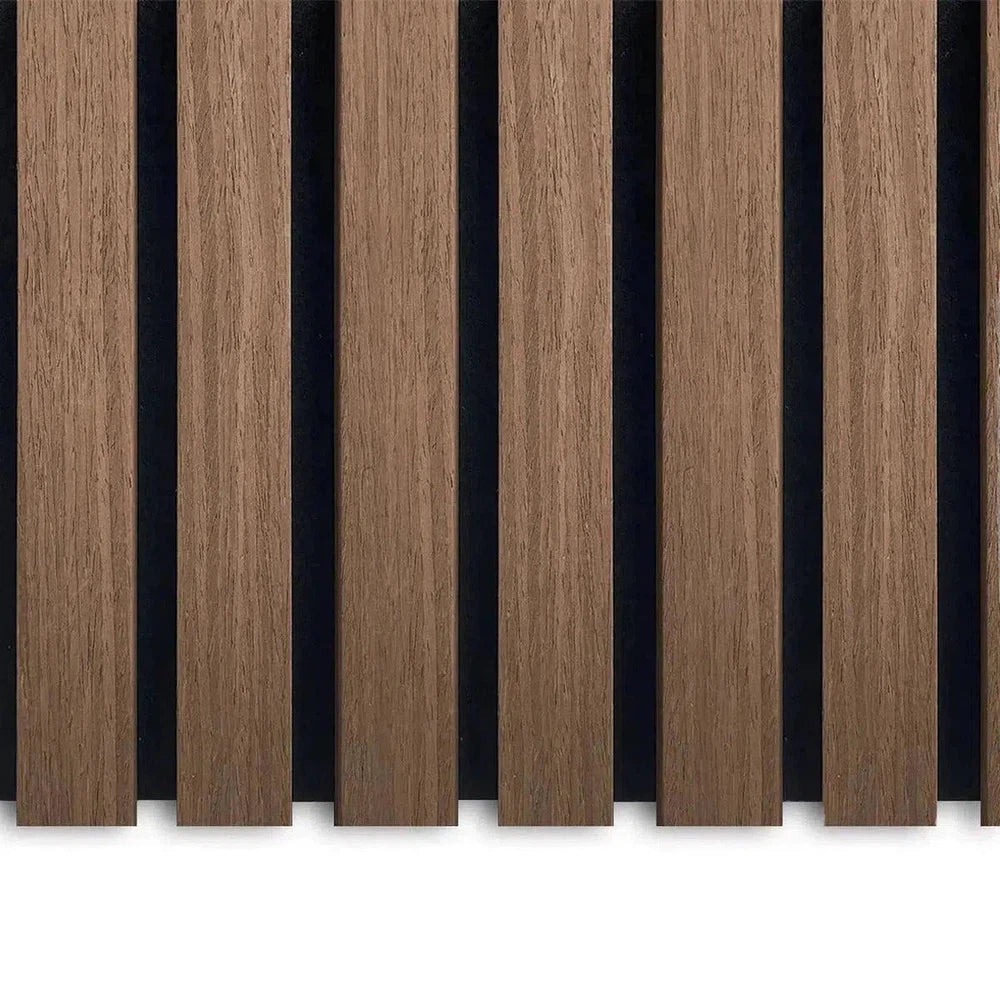
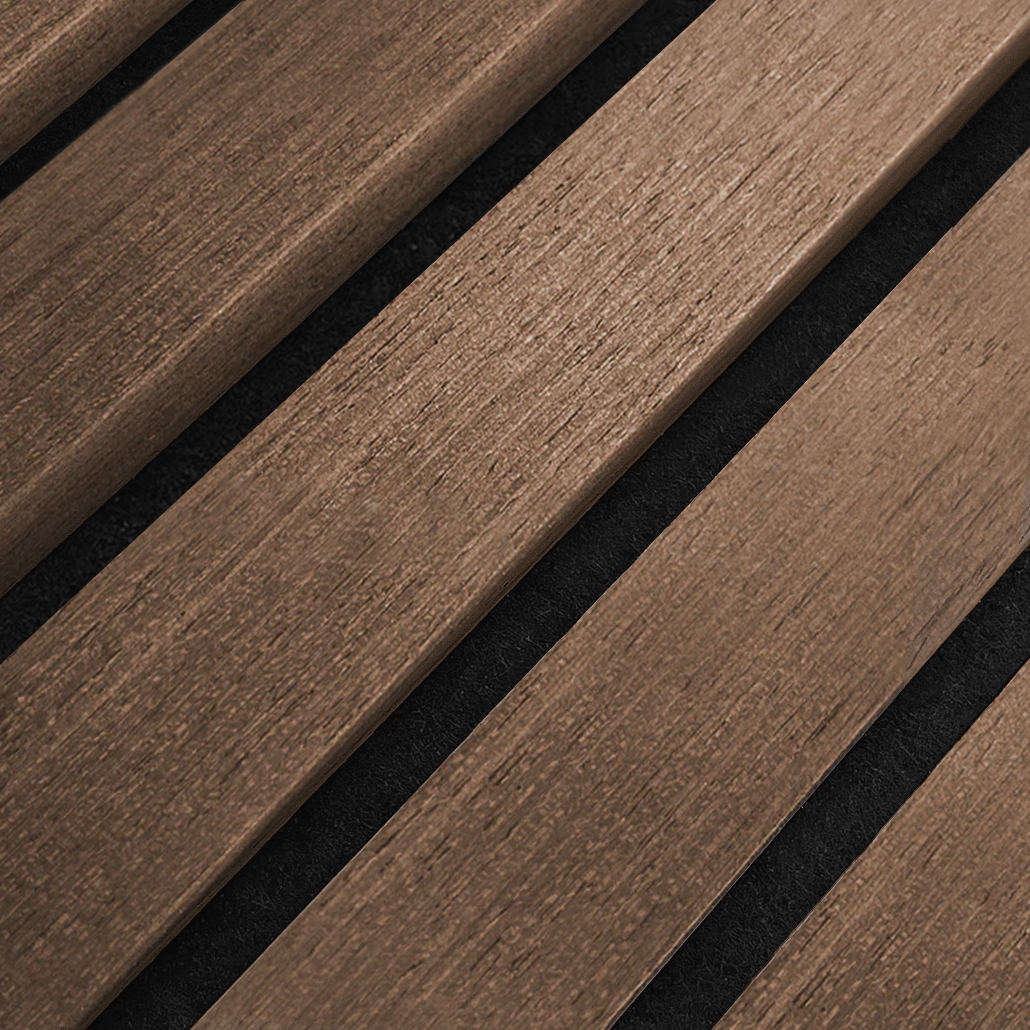
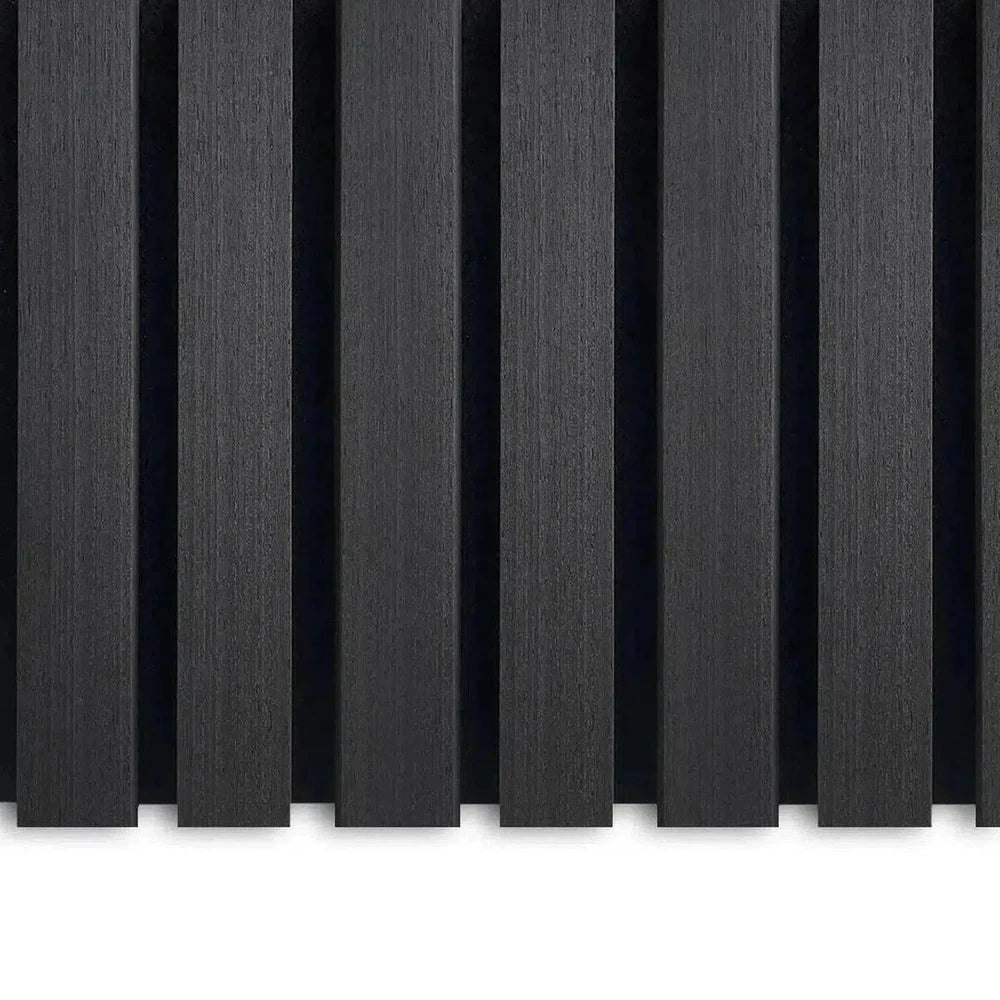
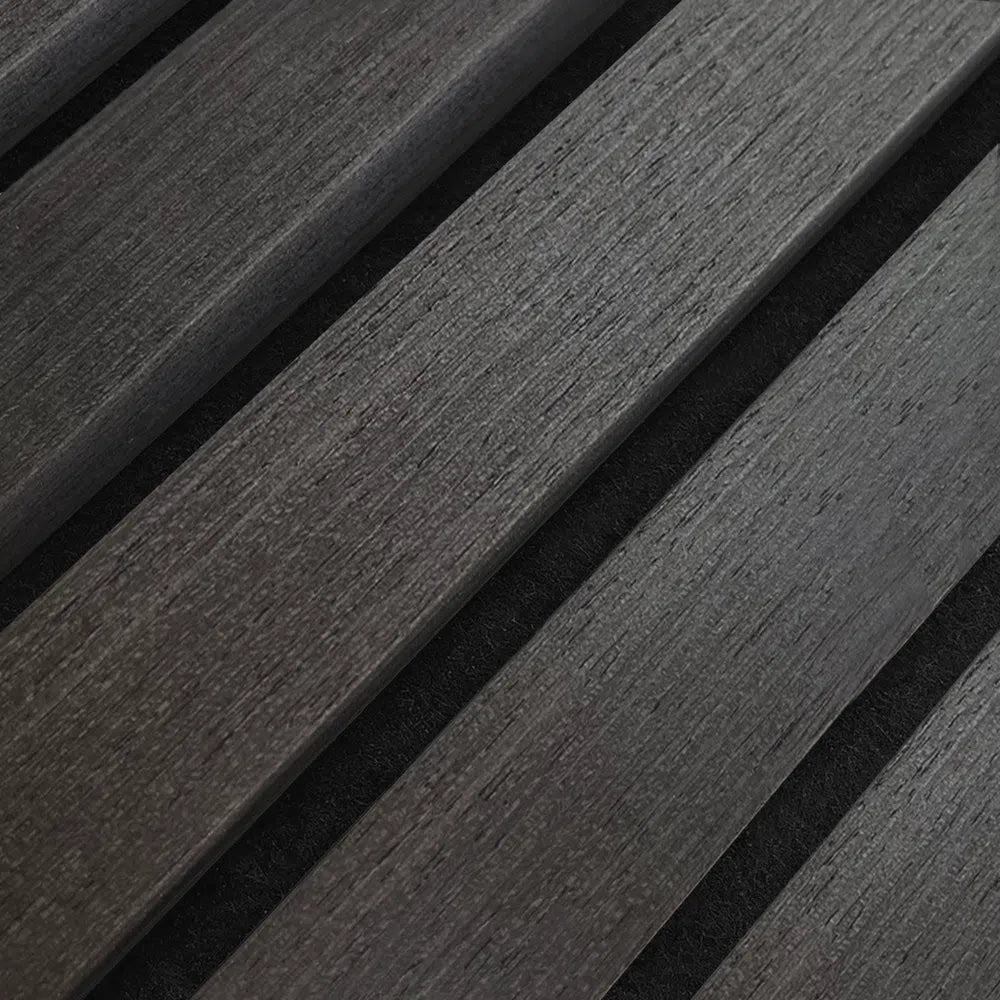
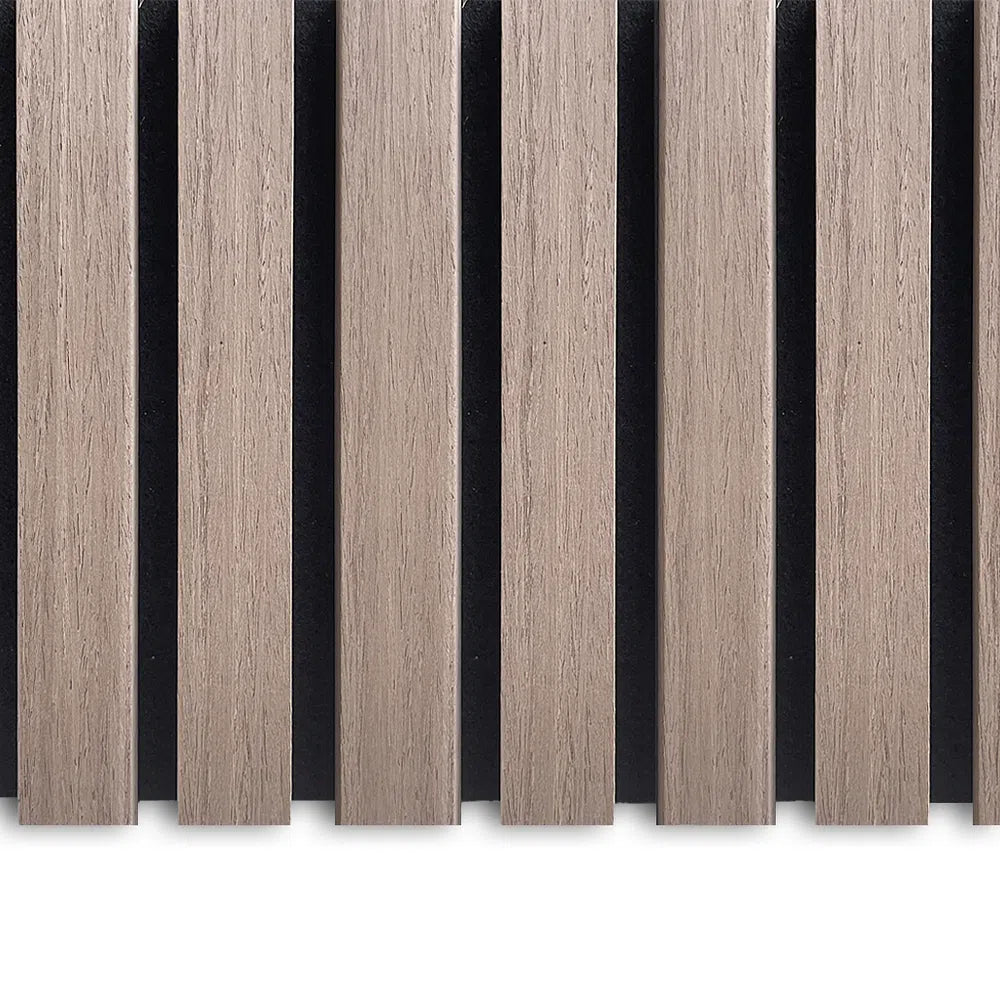
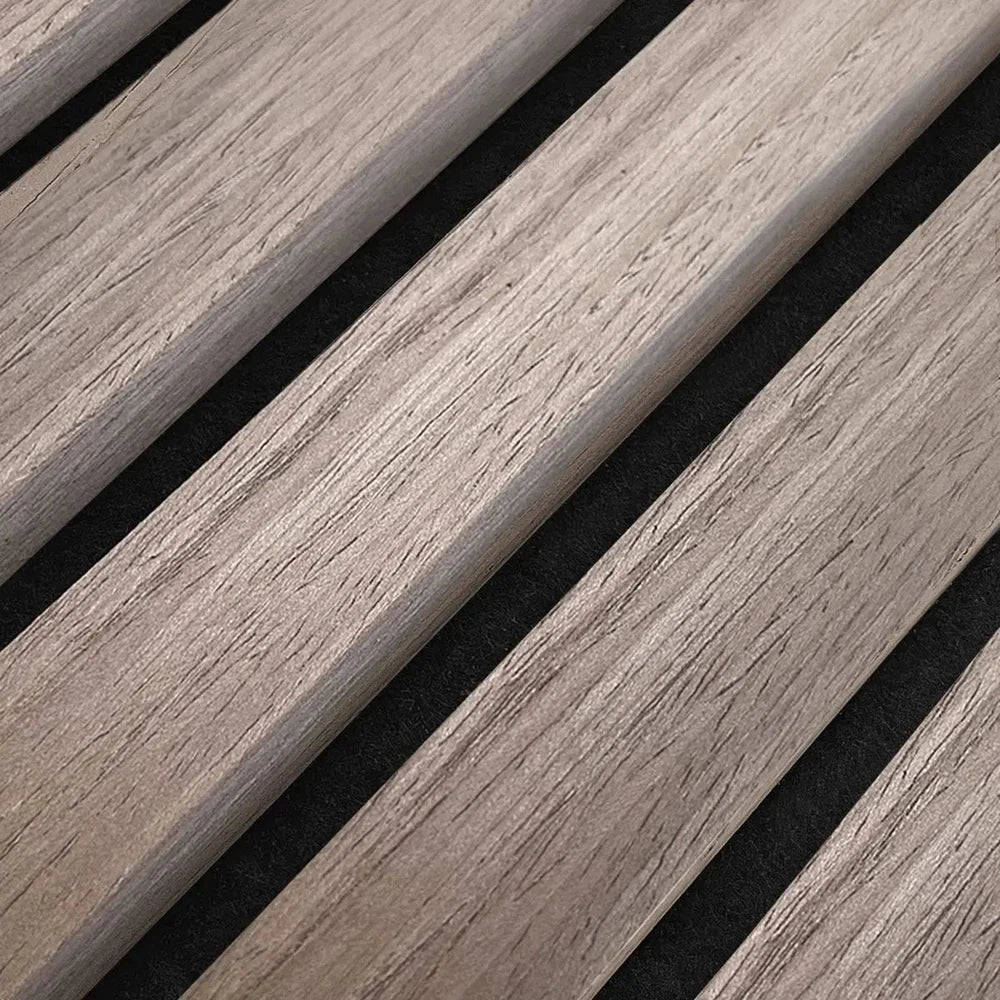
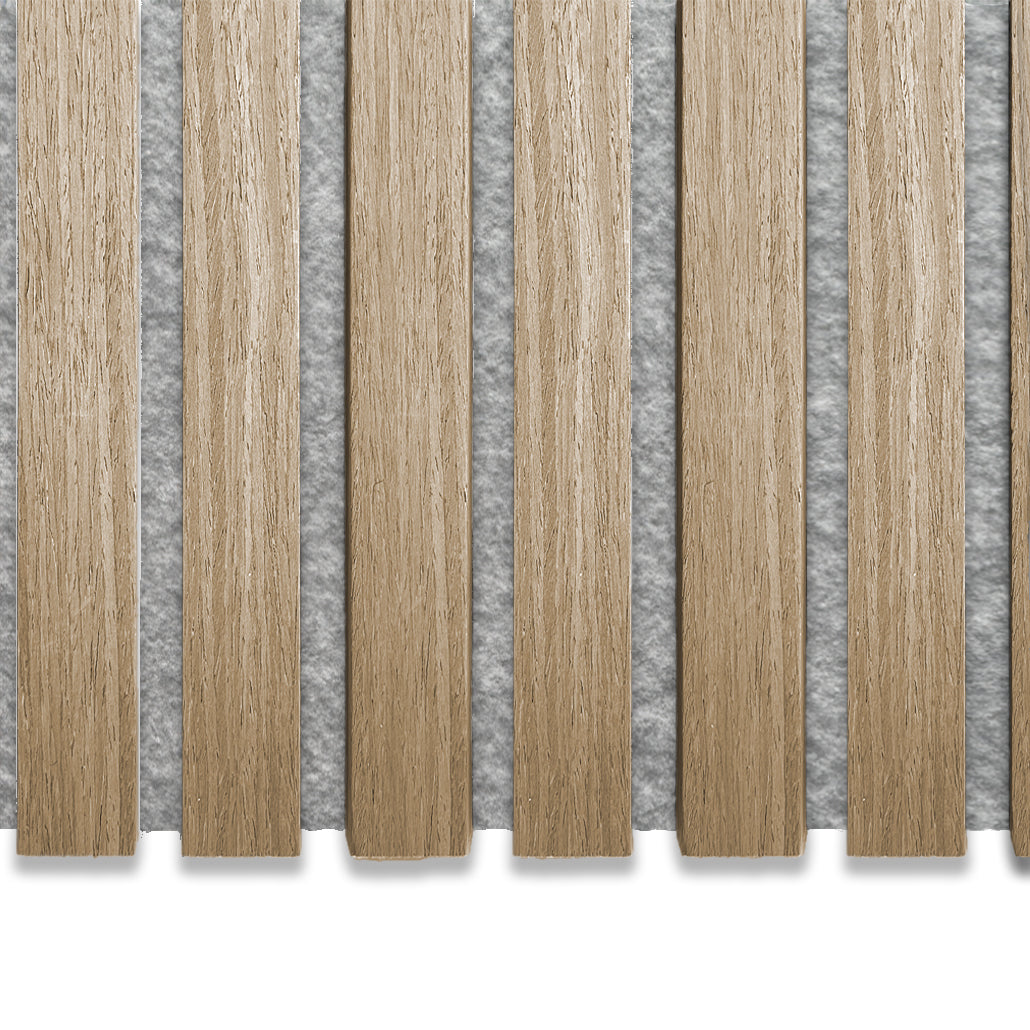
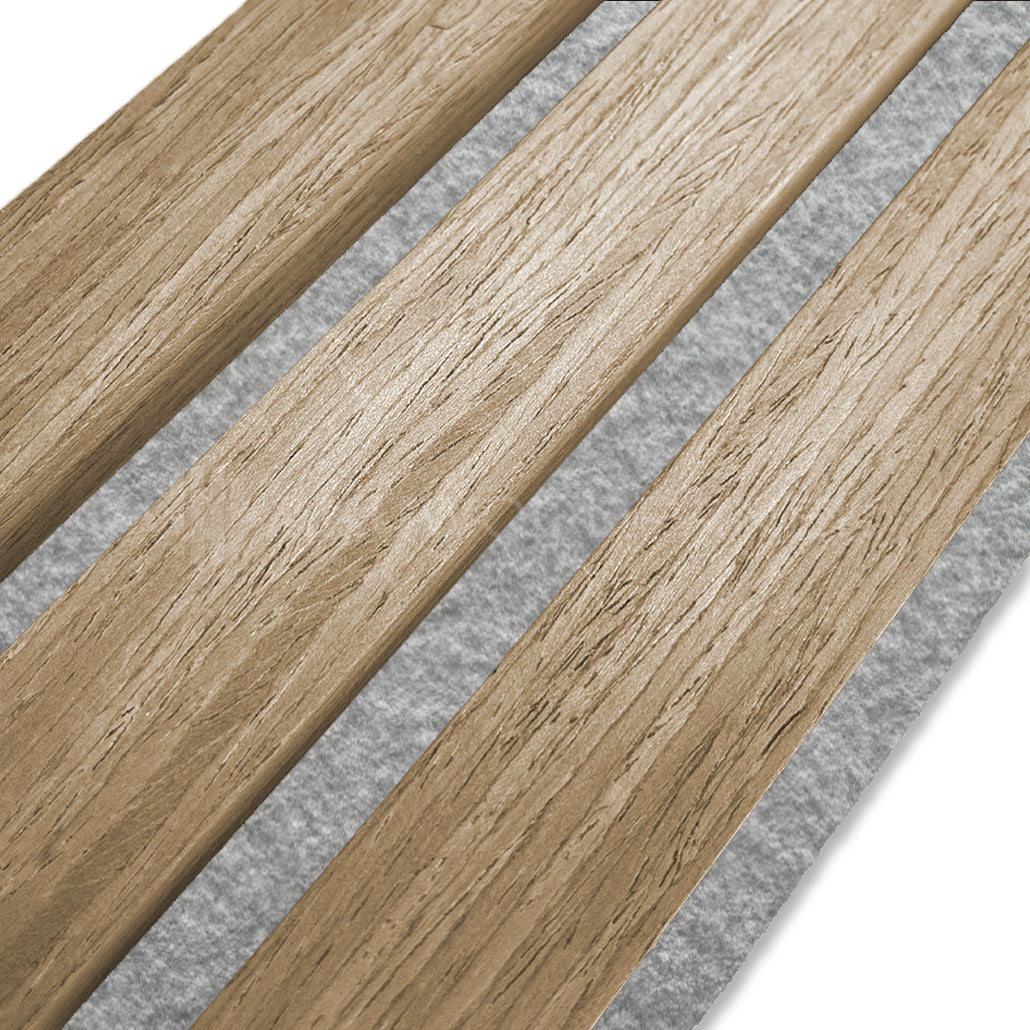
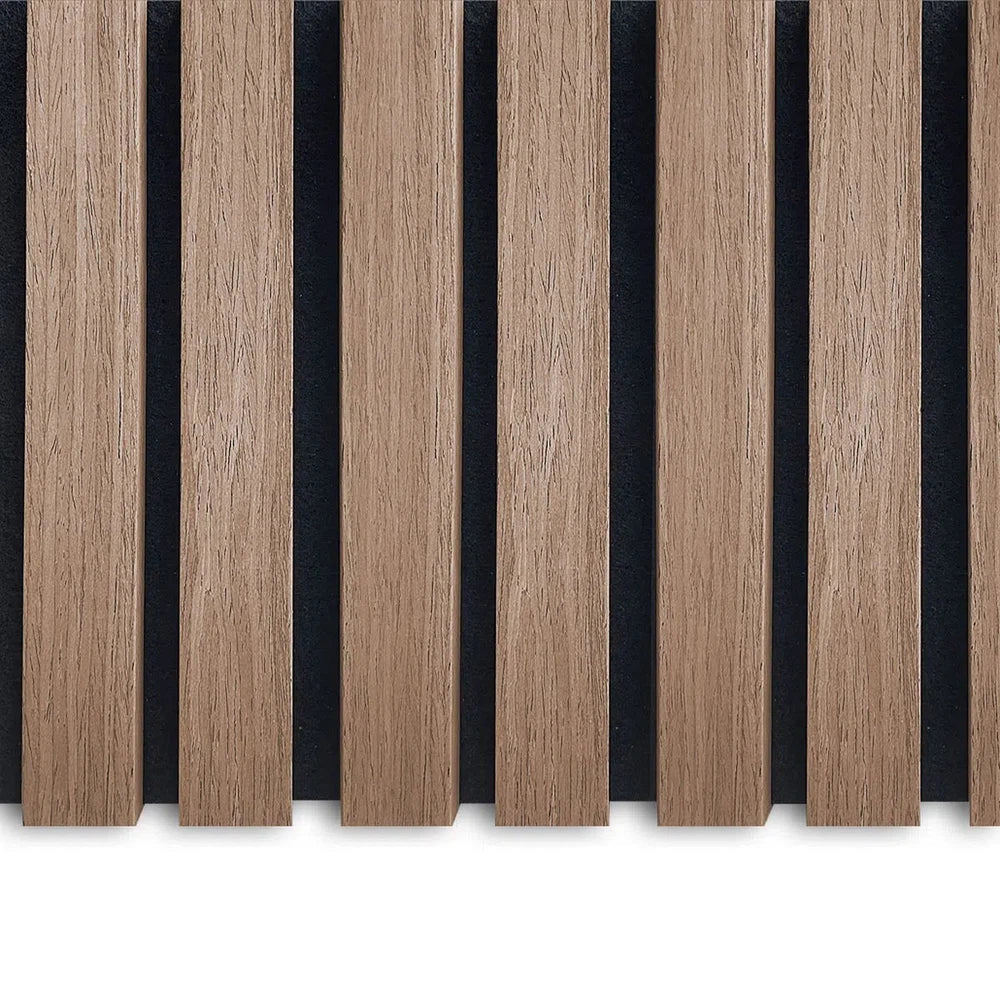
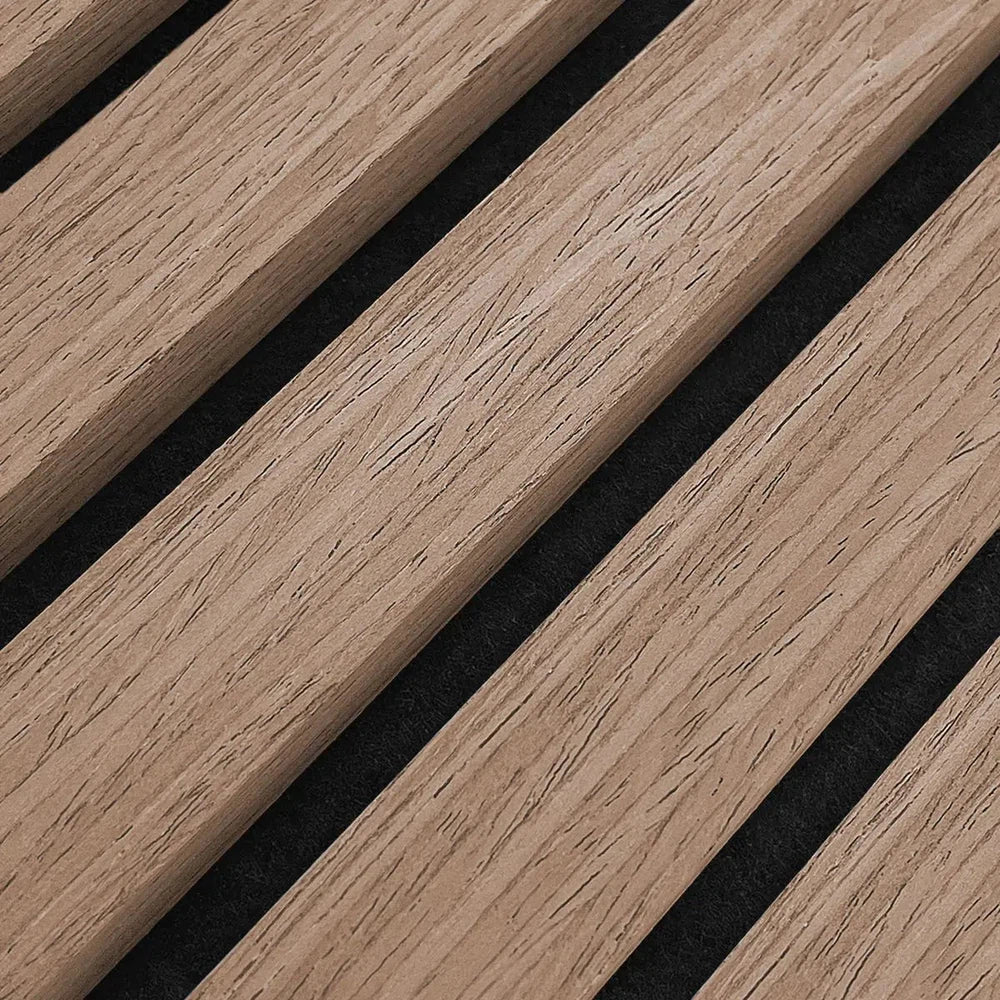
Akuwood Panel's exterior range is a composite board with a 3D wood-grain finish, sold in 290 cm lengths and four finishes — Stone Grey, Oak, Birch, and Black. It's fixed to a batten substructure on balcony fascias, communal garden walls, and ground-floor flat exteriors rather than full curtain-wall systems.
Composite wood-grain cladding pros:
- Real wood texture without timber's warping, staining, or repainting cycle
- Manufacturer spec states over 25 years of maintenance-free use with minimal wear and fading
- UV and weather resistant across four finishes to match render, brick, or dark modern facades
- Matching corner trims, finishing trims, and screws sold separately for a clean edge
Composite wood-grain cladding cons:
- Not a fire-rated external wall system for buildings above the combustible-cladding height threshold
- Suits balconies, boundary screens, and low-rise elevations, not full tower-block facades
- Needs a batten substructure, so it's a proper install job, not a weekend DIY glue-up
Best for: balcony walls, communal garden walls, and low-rise flat exteriors up to 11 metres. Verdict: Buy.


2. Brick slip cladding: best for matching period apartment block facades
Brick slip is a thin brick tile, adhered or mechanically fixed over insulation or blockwork, built for refurbishments where the block already has a Victorian or Edwardian brick facade. It's specified when planning conditions or a conservation area rule out anything that doesn't read as real brick from the street.
Brick slip pros:
- Matches existing brick facades almost exactly, including mortar joint detail
- Fire performance close to solid masonry
- Long service life with minimal fading
Brick slip cons:
- Heavier and slower to install than composite boards, with more scaffold time
- Grout lines need re-pointing maintenance over the years
- Skilled bricklayer labour drives the timeline more than material choice
Best for: listed or conservation-area apartment blocks. Verdict: Hold — order samples before committing on any protected facade.
3. Fibre cement cladding: best for high-rise blocks needing fire compliance
Fibre cement is a cement-and-cellulose board, factory-finished, and it's the default answer when building control asks for a non-combustible external wall system. Read the full breakdown in fire-rated exterior cladding for high-rise buildings before specifying anything on a tall block.
Fibre cement pros:
- Meets the fire classification required above the height threshold
- Low ongoing maintenance once installed
- Consistent factory finish across large elevations
Fibre cement cons:
- Heavier than composite boards, needing a specialist fixing system
- Limited timber-look realism compared with wood-grain composites
- A specification decision for a project team, not a retrofit a leaseholder does alone
Best for: apartment blocks above 11 metres in England, where the combustible-cladding ban applies. Verdict: Buy for anything crossing that height line.
4. Render: best for budget new-build apartment estates
Render — silicone, acrylic, or mineral — is a wet finish applied over insulation or blockwork, and it's the cheapest-per-square-metre way to cover a large new-build elevation with a smooth, joint-free look.
Render pros:
- Lower material cost per square metre than most cladding systems
- Seamless finish with no visible board joins
- Wide colour range for matching a developer's palette
Render cons:
- Cracks at movement joints if the substrate isn't prepped correctly
- Algae staining shows up fast on north-facing elevations
- A full re-render is often the only fix once colour fades unevenly
Best for: new-build apartment estates on a tight budget. Verdict: Hold — pair render with a cladding accent at ground-floor level, where footfall damage happens first.
5. uPVC cladding: best for rental flats prioritising low upkeep
uPVC is hollow plastic board cladding clipped onto battens, common on 1990s and 2000s low-rise apartment conversions where upkeep budget matters more than kerb appeal.
uPVC pros:
- Lowest maintenance of every option on this list
- Doesn't rot, swell, or need repainting
- Simple to clean with a hose and brush
uPVC cons:
- Reads as the cheapest finish next to wood-grain composites or brick slip
- Yellows and discolours with UV exposure over the years
- Rarely seen as a value-add finish on an owner-occupied block
Best for: buy-to-let and rental blocks where budget rules the decision. Verdict: Skip unless every other option is genuinely out of reach.
“If the block stands above 11 metres, decorative timber-look panels belong on balconies and courtyards, not the external wall system.”
How this list was ranked
Each material got weighed against the six criteria above — fire performance first, since it's the one non-negotiable for taller buildings, then weather resistance, install complexity on a shared building, ongoing maintenance, facade match, and trim availability. Composite wood-grain panels rank first for the specific job they're built for — balconies and low-rise elevations — not as a blanket high-rise answer.
Which exterior cladding should you choose for your block?
Under 11 metres and refreshing a balcony, boundary wall, or ground-floor elevation: composite wood-grain cladding is the default choice for 2026, in whichever of the four finishes matches the existing brick or render. Above that height, fibre cement is the only option that clears building control without a conversation about combustible materials. Everything else on this list — brick slip, render, uPVC — earns its place for a narrower reason: matching a period facade, hitting a tight new-build budget, or minimising upkeep on a rental block.
FAQ
What's the best exterior cladding for a flat or apartment building in 2026?
Composite wood-grain cladding is the best fit for balconies and low-rise flat exteriors up to 11 metres. Above that height, fibre cement is the material that clears the combustible-cladding restrictions in England.
Is composite cladding allowed on high-rise apartment blocks?
Composite wood-grain panels are built for balconies, boundary walls, and low-rise elevations, not full external wall systems on tall buildings. Buildings above the 11-metre threshold in England need a non-combustible material such as fibre cement.
How much maintenance does exterior wood-grain cladding need?
Manufacturer specs for composite exterior boards state over 25 years of maintenance-free use with minimal wear and fading. That compares favourably with render, which needs re-application when colour fades unevenly.
Can you fit cladding on a balcony wall in a flat?
Yes, composite wood-grain boards are a common fix for balcony walls and fascias on low-rise flats. They're fixed to a batten substructure rather than glued directly to the existing surface.
What height triggers the combustible cladding ban in England?
Buildings over 11 metres in England fall under restrictions on combustible materials in the external wall system, under Building Regulations Approved Document B. Anything taller than that needs a non-combustible cladding specification.
Is render cheaper than cladding for apartment blocks?
Render typically costs less per square metre than most cladding systems, which is why it's common on budget new-build estates. It's more prone to cracking and algae staining if the substrate isn't prepped correctly.
Can uPVC cladding be used on a listed apartment building?
uPVC is rarely approved on listed or conservation-area buildings because it doesn't match period brick or stone facades. Brick slip is the closer match for those planning conditions.
Do composite exterior panels come in different finishes?
Yes, exterior composite boards are available in Stone Grey, Oak, Birch, and Black, all with a 3D wood-grain finish. All four are sold in 290 cm board lengths with matching corner and finishing trims.
One last thing
The combustible-cladding rule doesn't just cover the visible panel — it applies to the whole external wall build-up, insulation and cavity barriers included. A managing agent who specs a fire-rated fibre cement board but leaves a combustible insulation layer behind it hasn't actually solved the problem, and that detail gets missed more often than the panel choice itself.