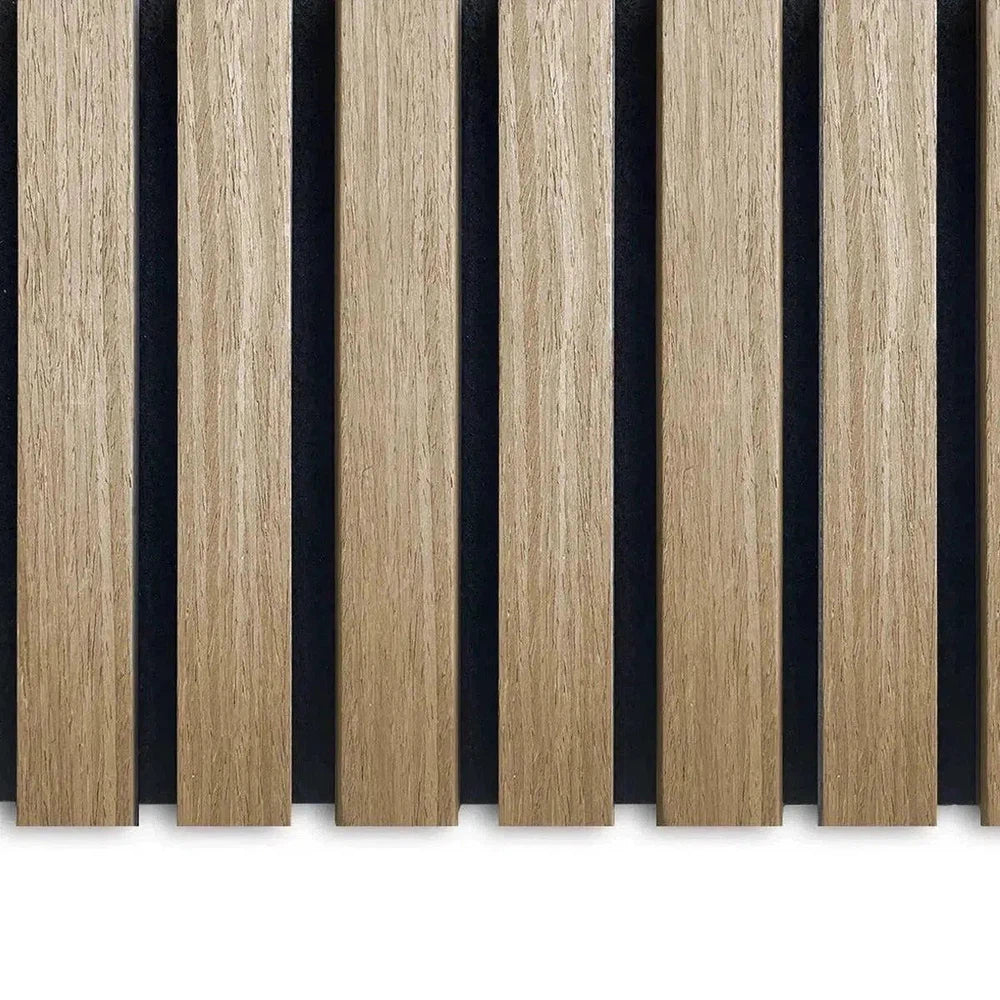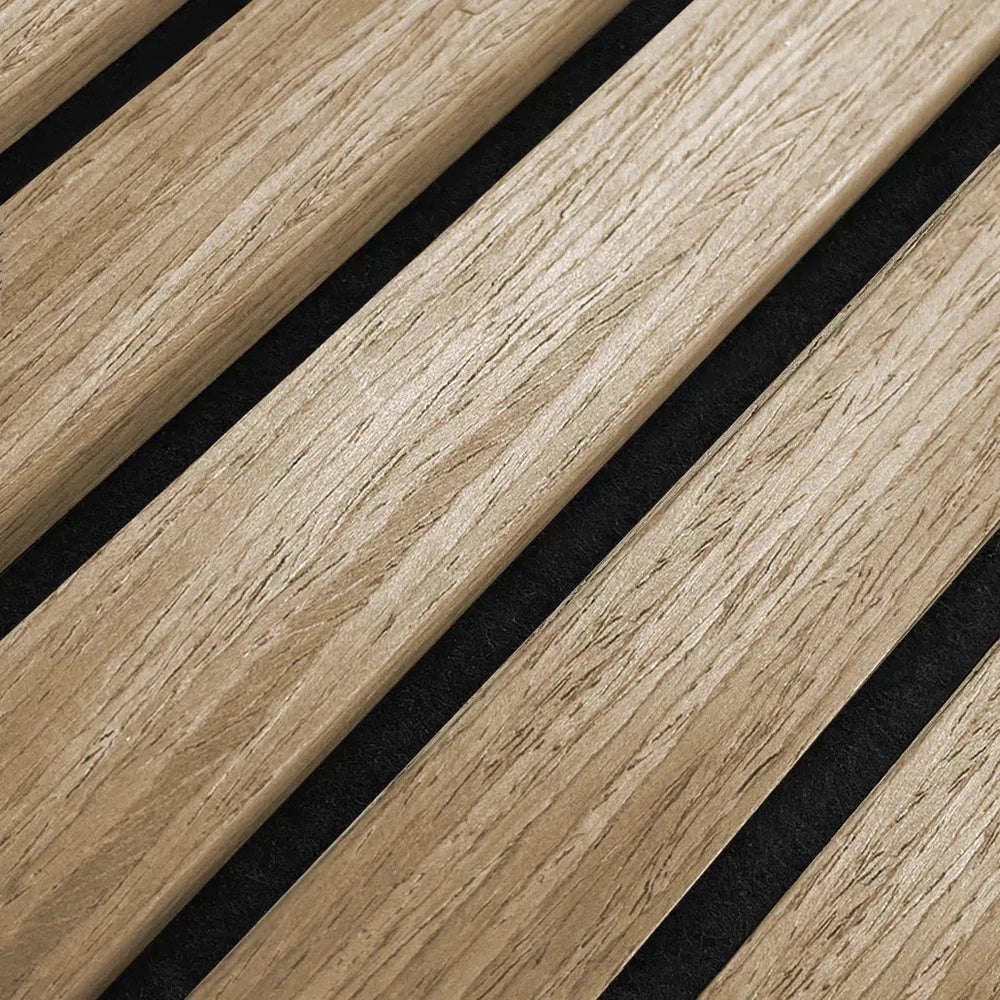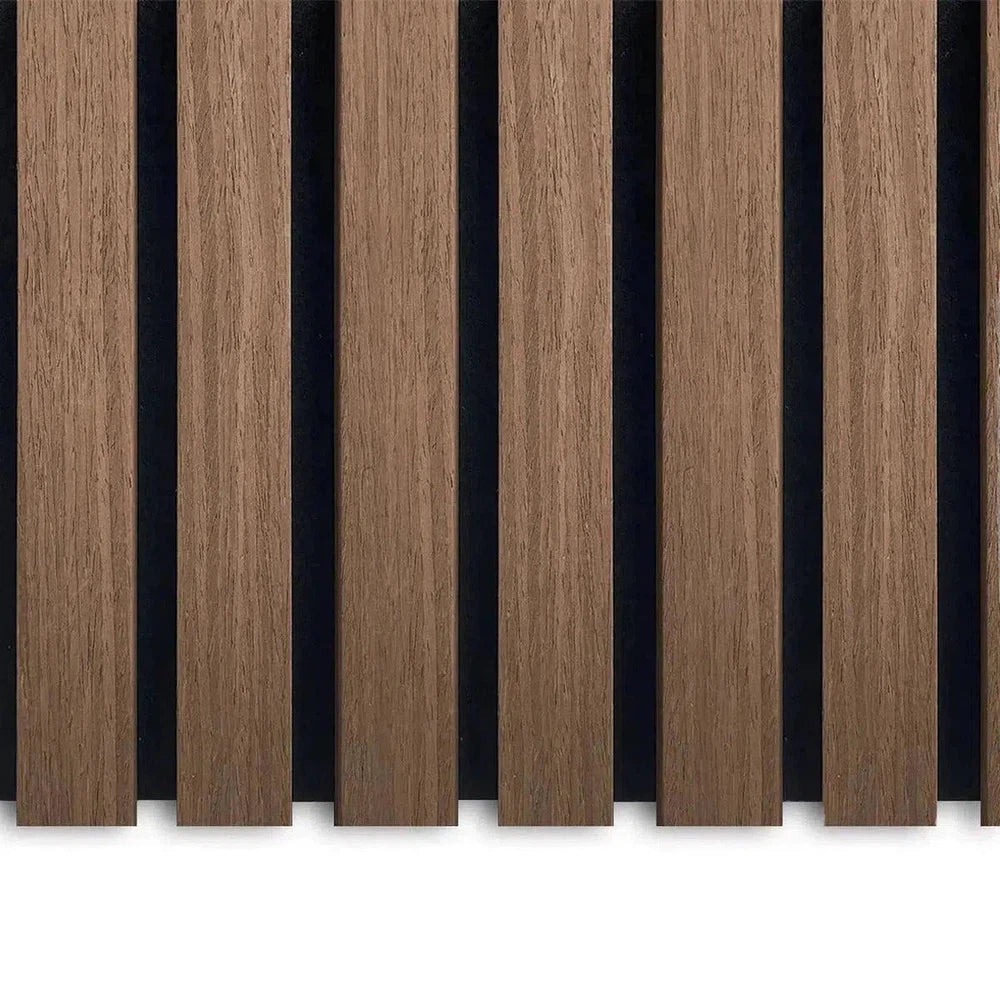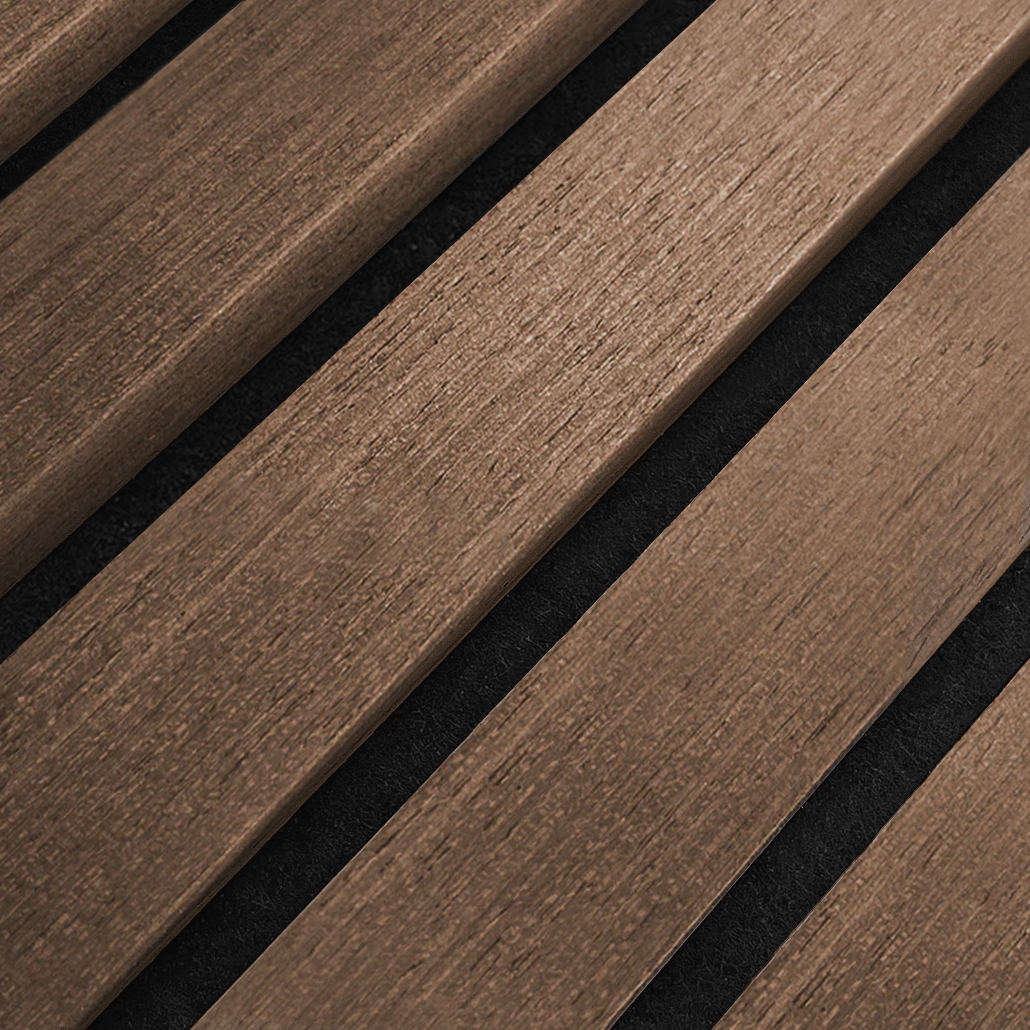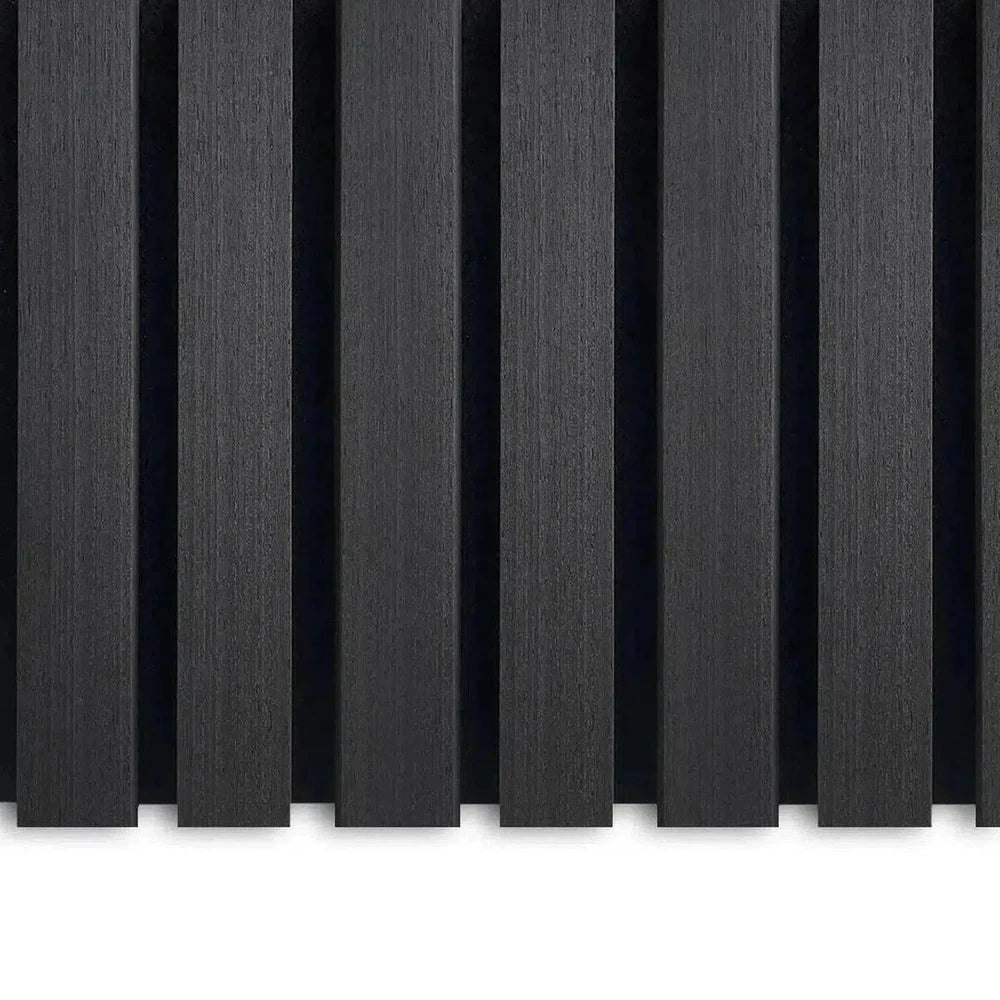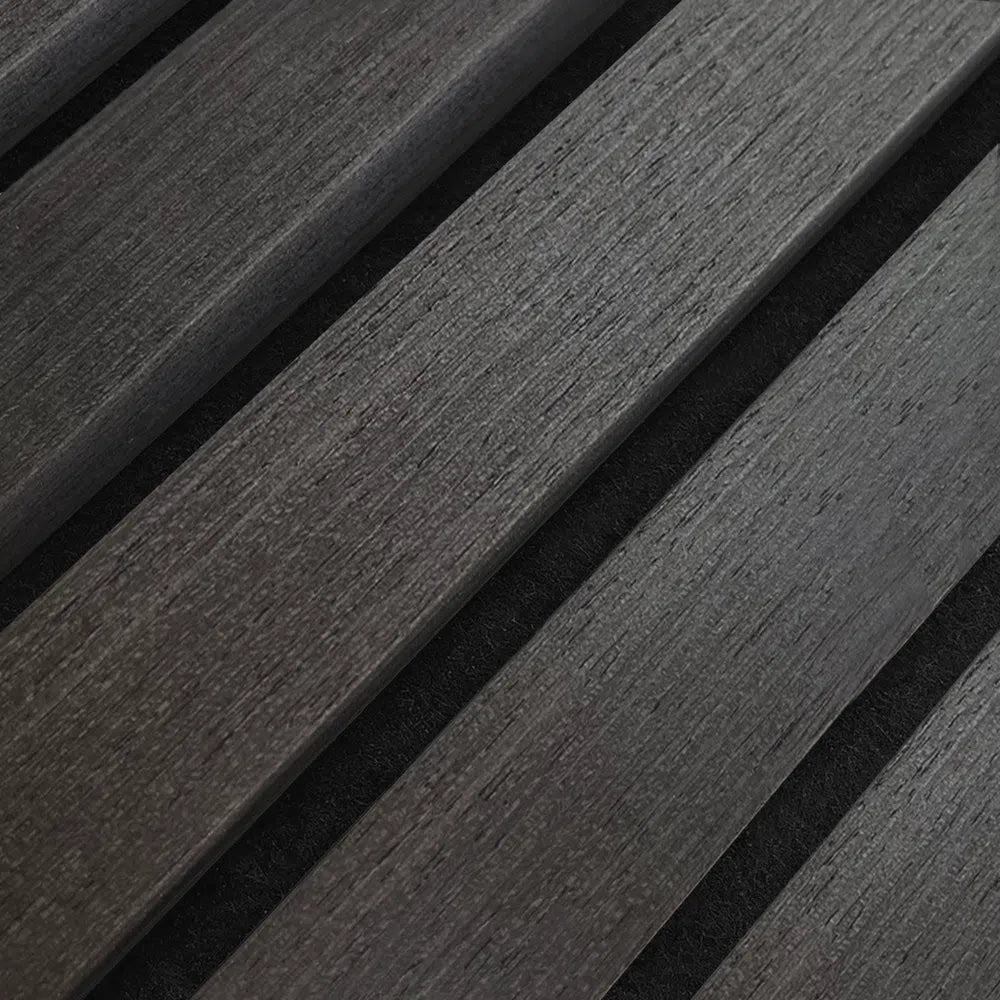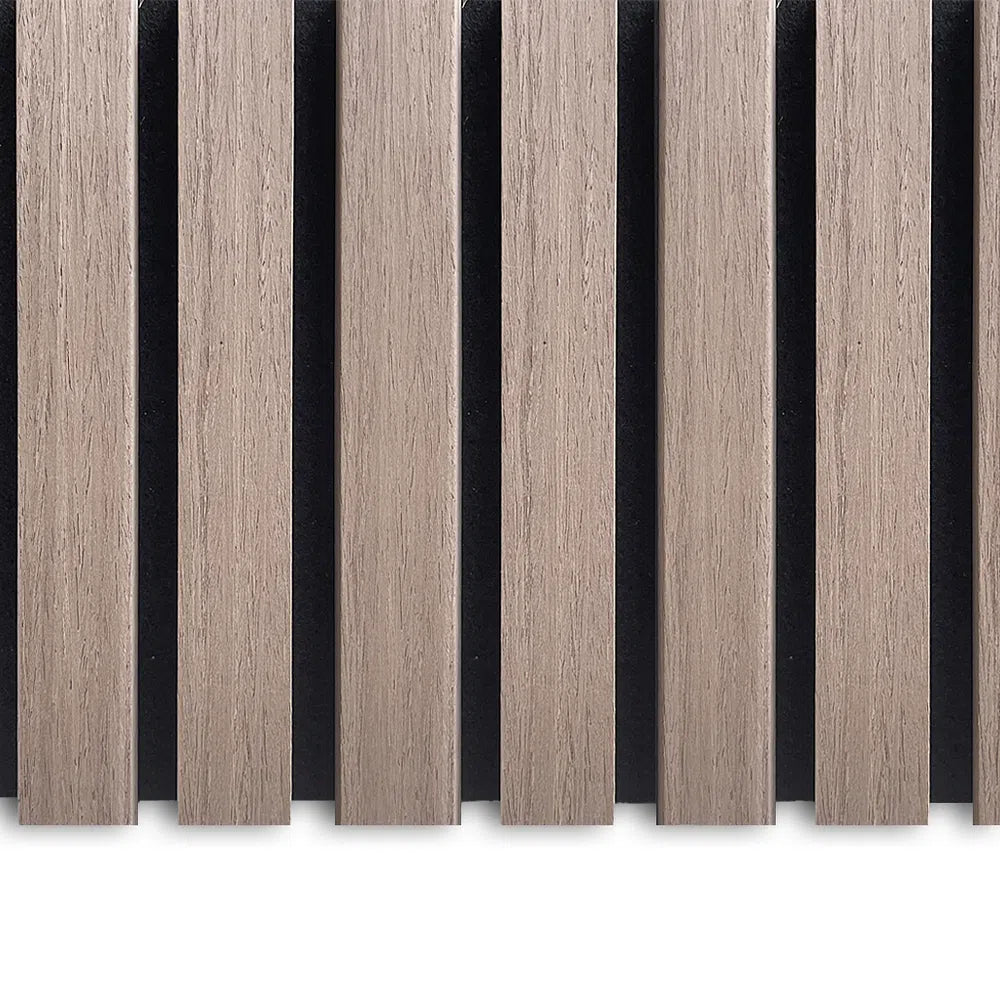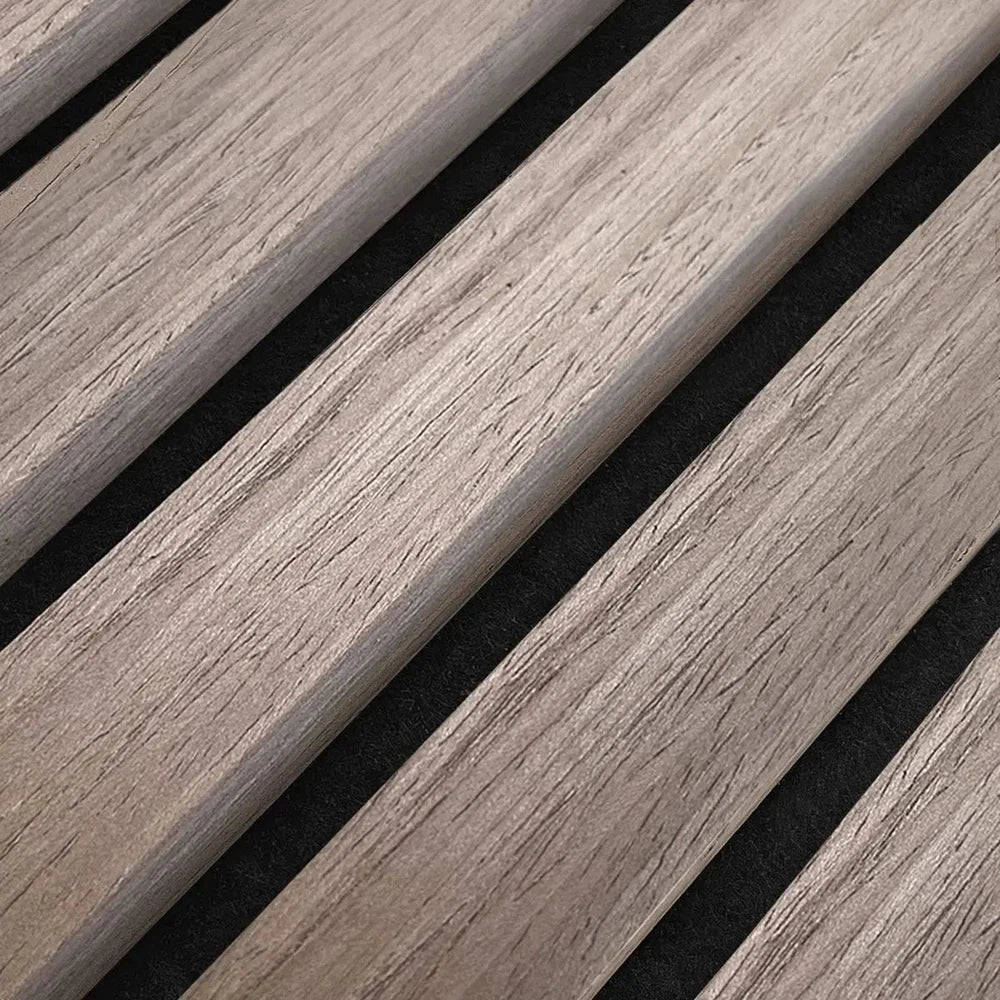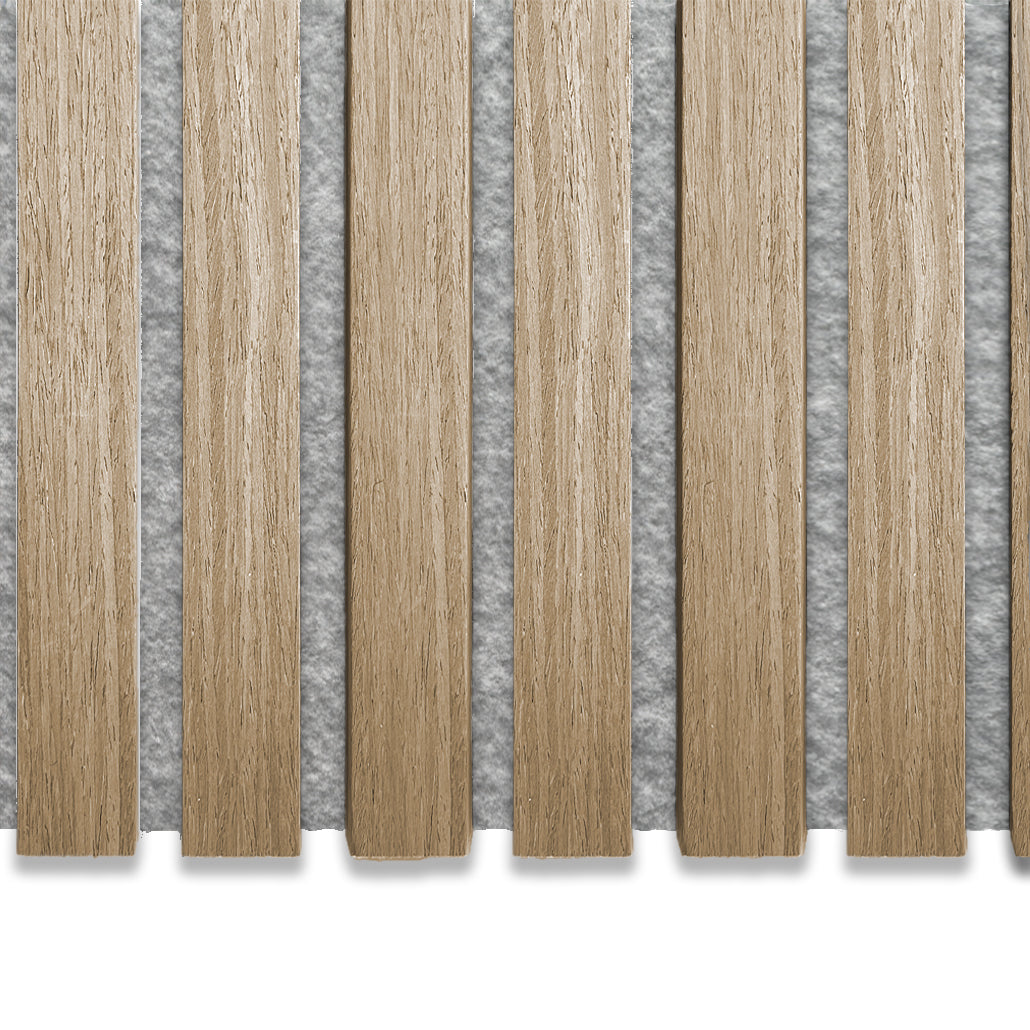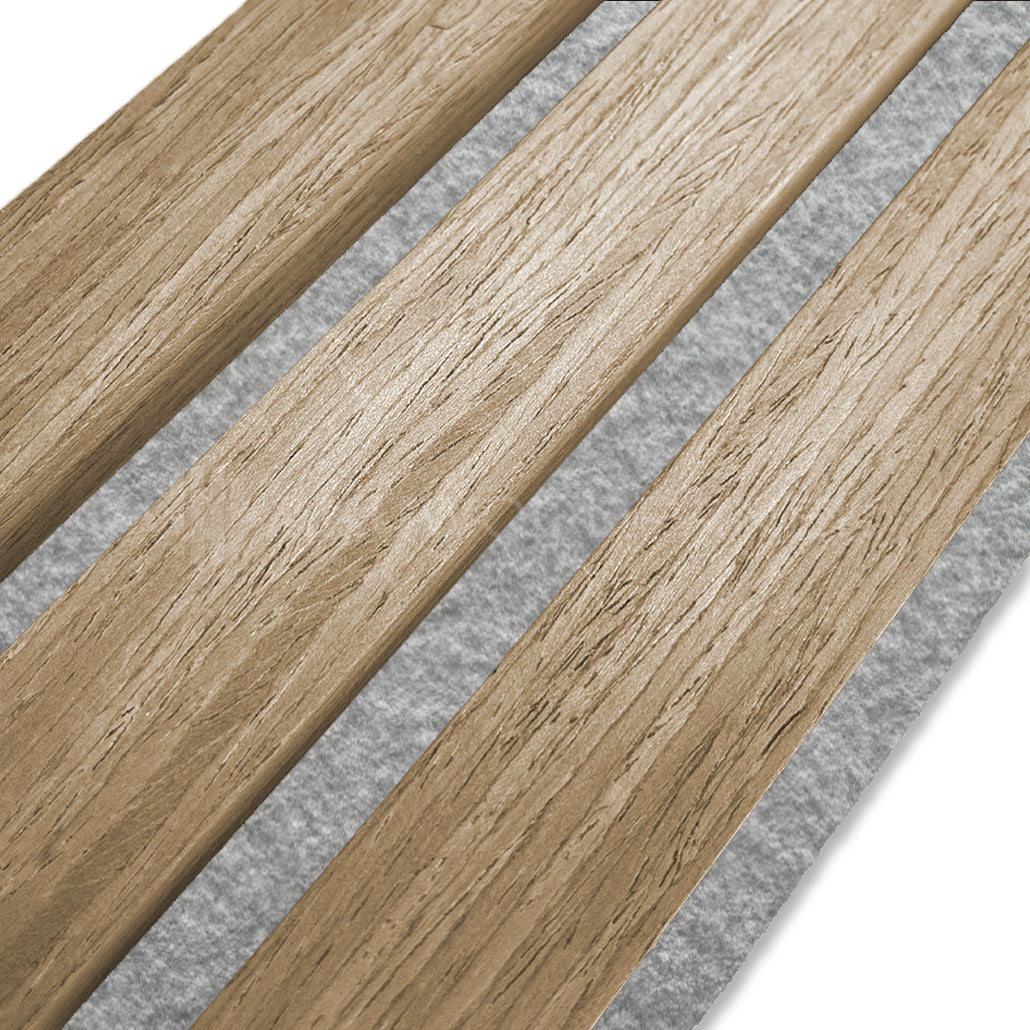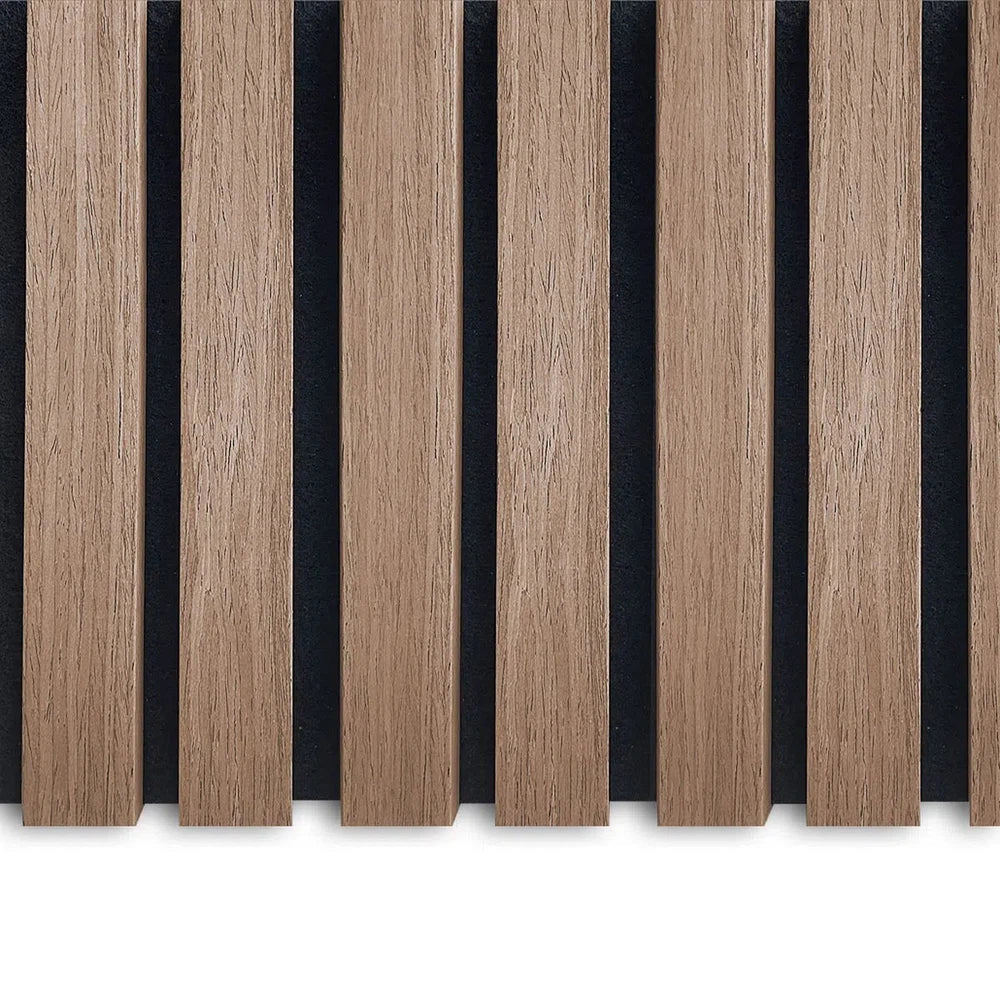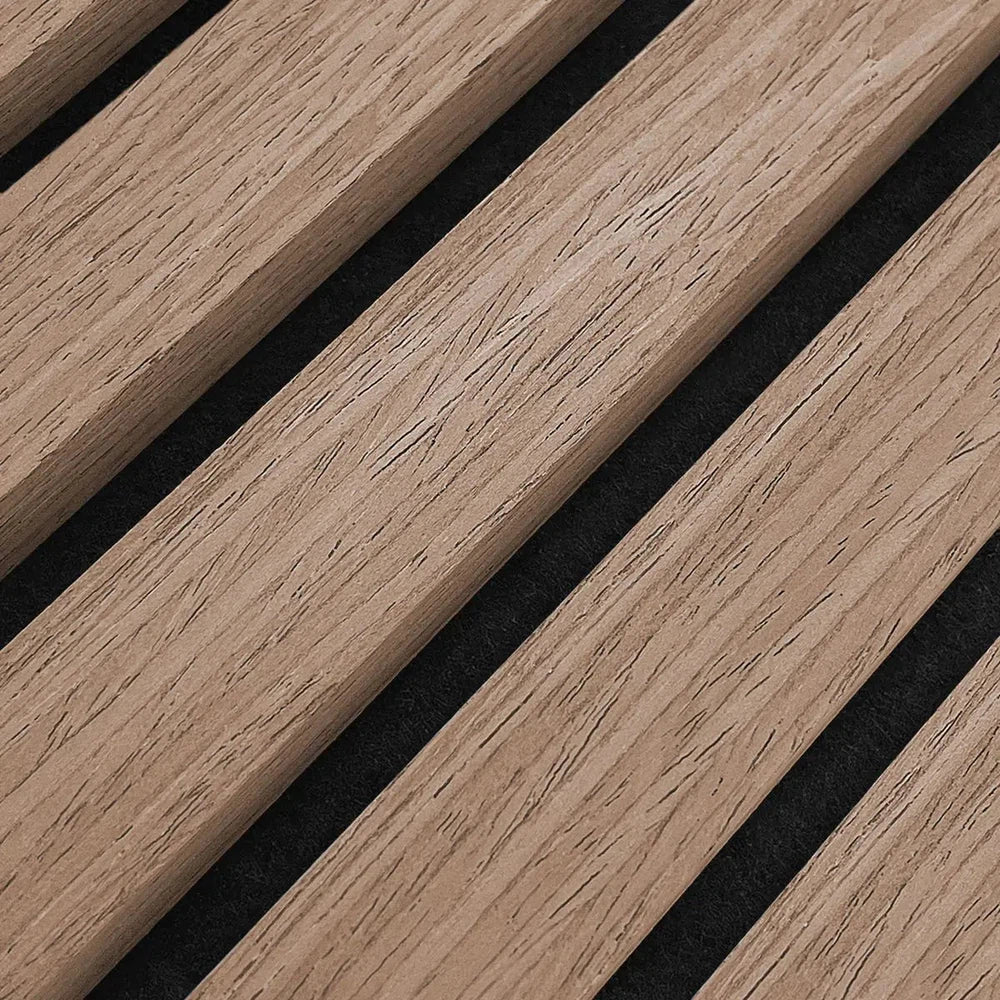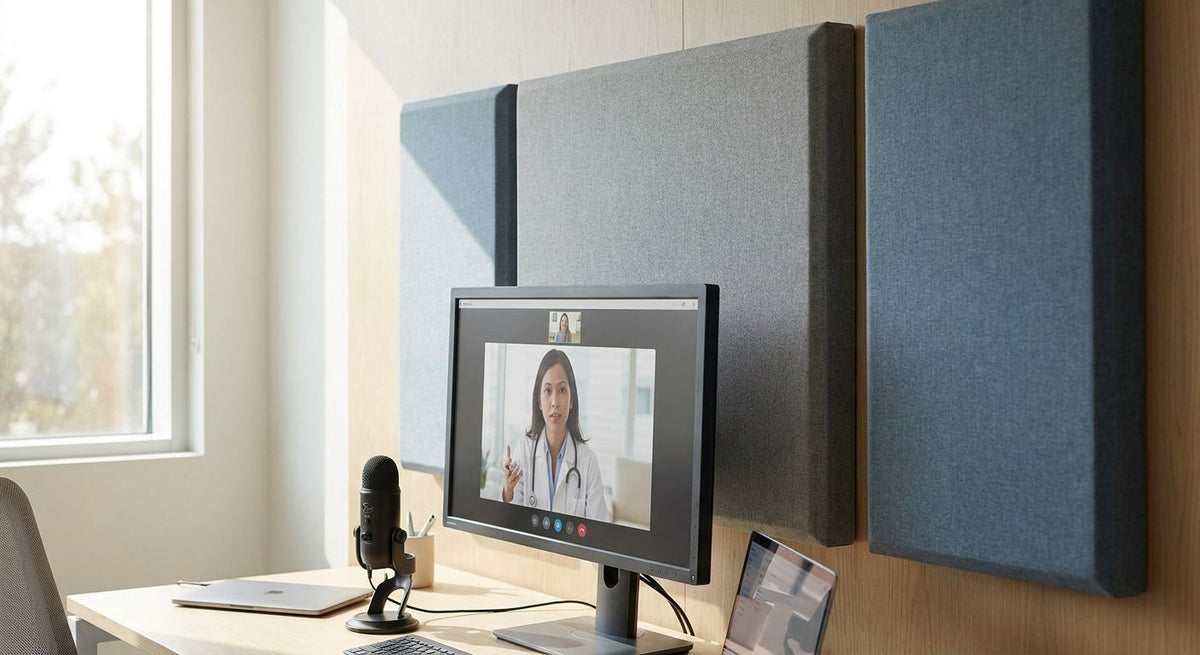
Telehealth office acoustic panels are wood-veneer slat wall panels with an acoustic felt backing, mounted behind the camera or desk to cut the echo that makes video consultations hard to follow. A telehealth room is smaller and harder-surfaced than a typical clinic office — glass partitions, laminate desks, a monitor and a webcam sitting inches from the clinician's mouth — so untreated walls turn ordinary speech into a slap-back echo the patient hears on the other end of the call.
- Felt-backed slat panels from Akustiq UK cut echo behind the camera wall; verdict: fit one continuous wall, not a patch.
- Acoustic panels for telehealth video conference calls need an NRC 0.75 rating minimum for clear speech pickup.
- Hexagon felt panels suit small consult booths; 240 cm or 300 cm slat panels suit full-size rooms.
- Order a sample before fitting a whole wall — webcam lighting shifts wood tone warmer than daylight does.
Why acoustic panels matter for telehealth offices
Video conferencing software already compresses and processes audio aggressively, and reflected sound off bare walls confuses that processing — patients hear robotic dropout right when the clinician says the part that matters. The fix is physical, not software: felt-backed wood panels from Akustiq UK's acoustic panel range absorb the mid-to-high frequency range where speech sits, at an NRC rating of 0.75, before the microphone ever picks it up.
A telehealth consult room is unlike a normal office in one specific way: the microphone sits close to a hard desk and a glass or laminate surface, so the reflection reaches the mic almost as loud as the direct voice. That's the reflection an in-person conversation never has to fight. Fixing it in 2026 means treating the wall the camera faces, not just the wall behind the clinician's head.
How to fix echo in a telehealth consult room
Identify the echo hotspots in your consult room
Start with a manual test before buying anything.
- Clap once in the room and count how long the ring hangs after the sound stops — anything past half a second means untreated hard surfaces.
- Record a 30-second test call and play it back through headphones, not the laptop speaker, to hear the reflection the patient actually hears.
- Check for glass, whiteboards or laminate cabinetry directly behind or beside the desk — these are the loudest reflectors.
- Note the ceiling height; rooms above 2.7 m carry sound further before it decays.
- Mark the wall the camera faces and the wall behind the clinician's head — both need treatment, not just one.
Choose the wall that sits behind the camera first
- Position the desk so the camera faces the shortest, most reflective wall in the room — that's the one doing the most damage.
- Push the desk 30-40 cm from the wall so panels aren't blocked by monitor arms or cable trays.
- Rule out corner desks for camera-facing walls; two adjoining hard surfaces double the reflection.
- Check the wall isn't shared with a corridor or waiting room — vibration transfer needs a different fix than airborne echo.
Fit a felt-backed panel, not a solid veneer panel
A solid wood veneer panel looks good on camera but does nothing for sound on its own — the felt backing is what does the acoustic work. The natural oak wall panel pairs the veneer finish with felt backing rated at 0.75 NRC, which is the part a purely decorative slat panel skips.
- Confirm the panel spec states an NRC rating — plenty of "acoustic-style" decorative slats have no felt backing at all.
- Pick a finish that reads clearly on camera: natural oak and grey oak photograph lighter and more neutral under webcam white balance than black oak.
- Avoid high-gloss veneer directly behind the head — matte felt-backed finishes cut glare as well as echo.
- Match the finish to the practice's branding if the wall doubles as the video backdrop for every consult in 2026.
Calculate how much wall you actually need to cover
- Measure the width of the camera's field of view at typical seating distance — panels outside that frame affect what the patient hears but not what they see.
- Cover floor-to-desk height as a minimum; a partial strip above head height leaves reflections bouncing underneath it.
- Choose the 300 cm format for a floor-to-ceiling run in one go and the 240 cm format for standard 2.4 m ceiling heights, so there's less cutting.
- Add 10% to the panel count for offcuts around sockets, light switches and monitor arms.
Order samples before fitting a full wall
- Photograph the wall panel sample under the same lighting the camera uses during a real consult, not daylight — LED ring lights shift wood tone warmer than a showroom does.
- Hold the sample against the existing wall colour and any on-screen branding to check it doesn't clash with the video call background.
- Test at least two finishes side by side if the room serves more than one clinician with different desk setups.
Fit panels without damaging a leased office wall
Most telehealth providers work out of leased serviced offices or clinic space where the lease bars structural fixings, so a reversible mounting method matters as much as the acoustic spec. Panel adhesive rated for plasterboard or painted brick avoids pre-drilling and keeps the fixing removable if the lease is under three years.
Recording exactly what got fitted, and where, matters beyond the audio fix itself — the same record that documents panel placement and adhesive used typically sits alongside the notes a provider keeps for telehealth clinic compliance requirements around consult-room standards, so treat the fit-out record as compliance paperwork rather than an afterthought.
- Ask the landlord in writing before using any adhesive fixing on a listed or heritage building — some require removable battens instead.
- Keep the fixing method reversible if the lease is under three years; glue and battens leave less repair work than screws into a stud wall.
- Photograph the finished wall for the practice's own compliance file, alongside the invoice and panel spec sheet.
Treat the desk and floor, not just the wall
- Swap a hard laminate desktop for a fabric desk mat under the microphone zone; direct reflection off the desk reaches the mic before the wall echo does.
- Add a low-pile rug under the chair if the floor is tile, laminate or polished concrete.
- Close blinds or fit a fabric roller blind instead of leaving bare glass in the camera's field of view.
- Keep the wall panel run continuous rather than broken into small squares — gaps between untreated sections re-introduce the echo you just removed.
Panel options for telehealth consult rooms
| Option | Best for | Panel size | Key limitation |
|---|---|---|---|
| Felt-backed hexagon panel | Small consult booths and pods | 81 cm hexagon | Doesn't cover a long flat wall as fast as a slat panel |
| Felt-backed 3-sided veneer slat panel | Full-height camera wall | 240 cm or 300 cm | Needs a continuous run to hit its full NRC 0.75 rating |
| Foam acoustic tile (non-wood) | Budget back-of-house rooms | Varies by supplier | No real wood finish, reads clinical on camera |
| Fabric curtains or blinds only | Low-cost partial fix | N/A | Doesn't stop reflection off desks or hard flooring |
A felt-backed slat panel behind the camera wall is the strongest single fix for telehealth video conference echo in 2026 — foam tile and curtains only handle part of the problem.
“If the panel wall doesn't run floor to desk height, the reflection just bounces underneath it.”
Common mistakes telehealth practices make with acoustics
- Treating only the wall the clinician faces and ignoring the wall the camera itself points at, which is often a different surface.
- Choosing a decorative slat panel with no felt backing because it's marketed as "acoustic style" — check the NRC rating, not the name.
- Leaving a hard laminate desktop directly under the mic after fitting wall panels, then wondering why the echo is only partly fixed.
- Fitting panels only up to head height, leaving the desk-to-floor section bare so sound still bounces underneath the panel line.
- Skipping the sample step and picking a wood tone from a screen photo, then finding it reads orange under the room's actual lighting.


FAQ
What's the best acoustic panel for a telehealth video conference room?
A felt-backed 3-sided wood veneer slat panel rated NRC 0.75 is the strongest single fix for a telehealth consult room in 2026. It absorbs the speech-range reflections a solid veneer or foam tile misses.
Do I need a full wall of panels or just behind the camera?
Cover the wall the camera faces from floor to desk height at minimum. A partial strip above head height alone leaves the desk-level reflection untreated.
Is wood panel better than foam for telehealth offices?
A felt-backed wood panel matches foam tile on absorption while keeping a finish that reads professional on camera. Foam tile is cheaper but looks clinical on a video call background.
Can I fit acoustic panels in a rented clinic space?
Yes, with a removable adhesive or batten system rather than screws into a stud wall. Get the landlord's written approval first if the building is listed or heritage.
What NRC rating do I need for a telehealth room?
An NRC of 0.75 or higher covers the mid-to-high frequency range where speech sits. Lower-rated decorative panels won't cut the echo a video call microphone picks up.
Does panel colour affect video call quality?
Colour doesn't change the acoustic rating, but a lighter finish like natural oak or grey oak reads more neutral under webcam white balance than a dark finish. This matters for how the consult room looks on the patient's screen, not for the audio itself.
How long does it take to notice a difference after fitting panels?
The change is audible on the very next test call once the panel wall is fitted floor to desk height. Partial coverage shows a smaller, less consistent improvement.
Should I treat the desk as well as the wall?
Yes — a hard laminate desktop reflects sound directly into the microphone before the wall echo even registers. A fabric desk mat under the mic zone closes that gap.
One last thing
The desk does roughly as much damage as the wall in a small telehealth room, because the microphone sits centimetres from it — fit the wall panel and skip the desk mat, and the improvement will sound smaller than expected on the next call. Treat both in the same pass rather than one now and one later.