Specifying wood wall panels for a commercial fit-out means proving where the timber came from before anyone checks how the panel sounds or looks — this guide breaks down what FSC certified wood wall panels actually require on paper and how to build that proof into your spec sheet in 2026.
- FSC certified wood wall panels need a chain-of-custody certificate number, not just a logo on the packaging — verify it before you spec.
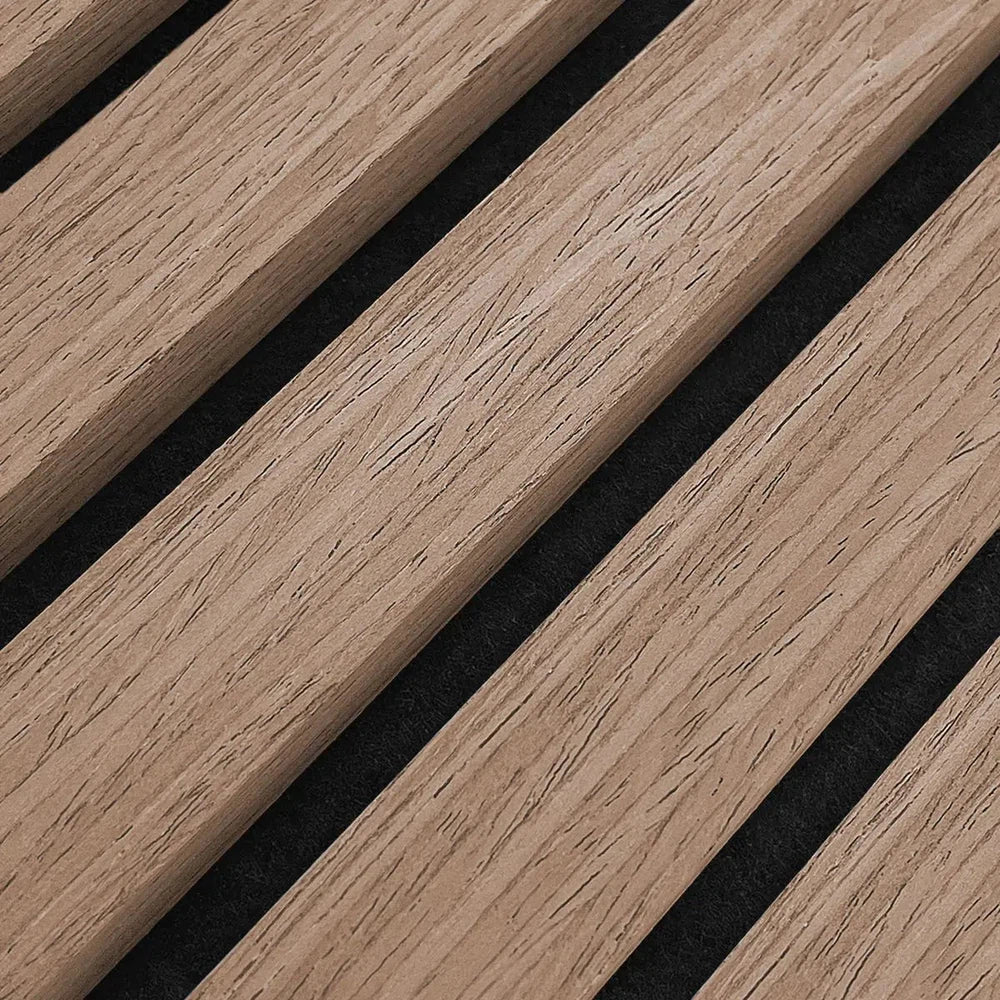
- Rustic Oak Premium 3-sided wood veneer suits reception feature walls where real veneer is a hard requirement: Consider.
- A panel with a 0.75 NRC rating cuts reverberation in open-plan offices and meeting rooms far better than an unrated laminate copy.
- Printed foil wood-effect panels sold as sustainable with no traceable certificate number: Skip for any commercial specification.
Why this matters
A design that fails on paperwork gets pulled from the schedule of works, no matter how good it looks in the render. Planning conditions on new commercial builds, BREEAM material sourcing credits, and internal ESG reporting all lean on documented timber sourcing, and FSC (Forest Stewardship Council) chain-of-custody certification is the most widely recognised proof a specifier can point to.
The problem is that "FSC certified" gets used loosely in wood wall panel marketing. A real certificate has a number you can look up on the FSC public database; a sticker on a product page does not. Before you shortlist finishes from Akuwood Panel or any other supplier, get the paperwork first and the finish second.
Who FSC certified wood wall panels are for
This is written for architects, interior designers, main contractors and facilities managers specifying wall linings for offices, hospitality venues, retail units, schools and healthcare buildings in the UK where a planning condition, a BREEAM assessment, or an internal procurement policy requires documented, traceable timber. If your project needs sign-off from a sustainability consultant or a client's ESG team, this list is for you.
What to check before you specify wood wall panels
Chain-of-custody documentation
Ask for the FSC or PEFC certificate number, not a marketing claim. A genuine certificate identifies whether the timber is FSC 100%, FSC Mix, or FSC Recycled, and each category has a different meaning for a sustainability assessor scoring your project. Get this in writing before the panel goes into the fit-out schedule, not after installation when it is too late to swap the finish.
Acoustic performance data
Commercial rooms full of hard surfaces need a documented Noise Reduction Coefficient (NRC), not a vague "sound-dampening" claim. The hexagon acoustic panel in smoked oak with grey felt backing carries a published 0.75 NRC rating, which is the kind of figure a specifier can actually cite in a submission. If a supplier can't give you a number, assume the panel is decorative only.
Fire test certificates
Every wood wall panel in a commercial building needs a Euroclass fire rating (the EN 13501-1 scale runs A1 through F) backed by a test certificate, not a datasheet adjective. Check the fire ratings on acoustic wood panels before you commit a finish to the spec, because a real wood veneer product with no published Euroclass figure is a red flag on any commercial job.
Veneer type and batch consistency
A 3-sided real wood veneer behaves differently from a printed foil wrap once it's under commercial lighting and daily wear. Ask whether the veneer is consistent across production batches — a mismatch between the sample panel and the delivered pallet is one of the most common site disputes on a multi-room fit-out.
Size format and waste on large runs
Panels supplied in 240cm and 300cm formats reduce offcuts and joint lines on floor-to-ceiling commercial runs compared to shorter residential-length boards. On a large office or hospitality contract, that difference adds up across every wall.
Top picks for commercial specification
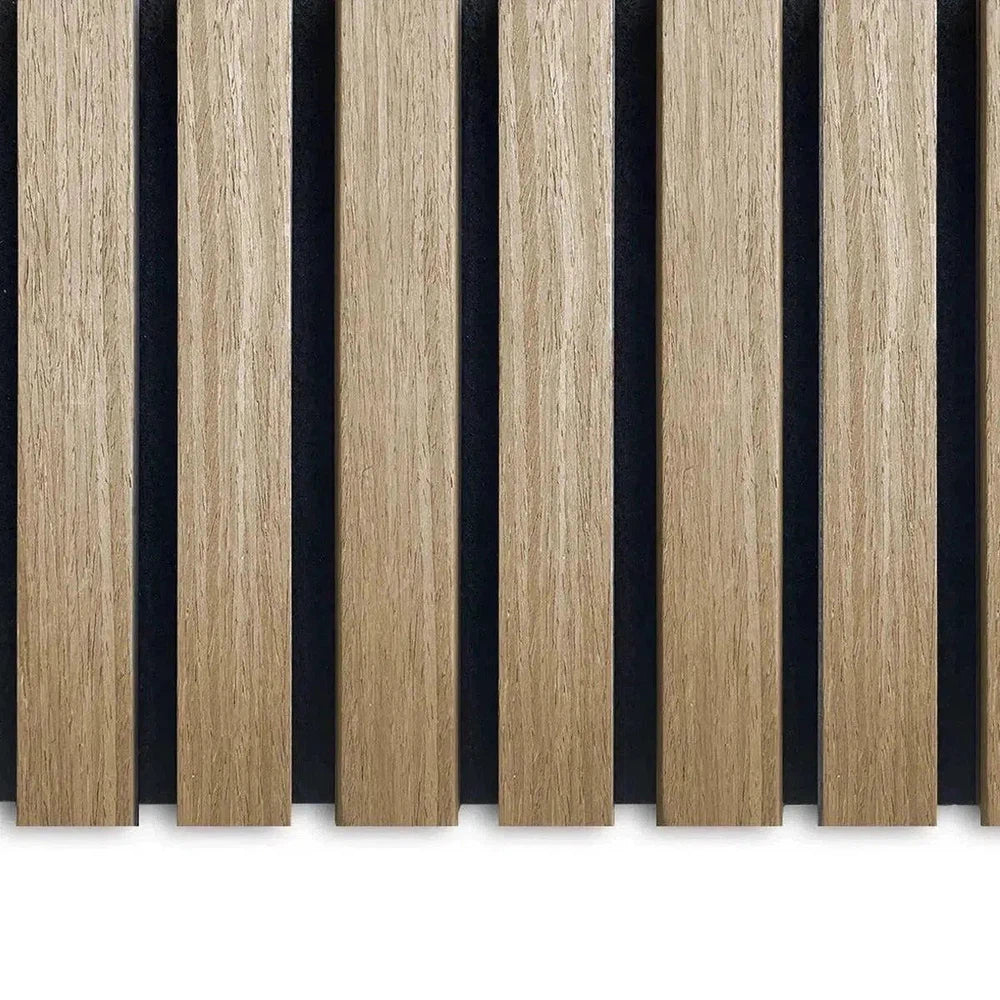
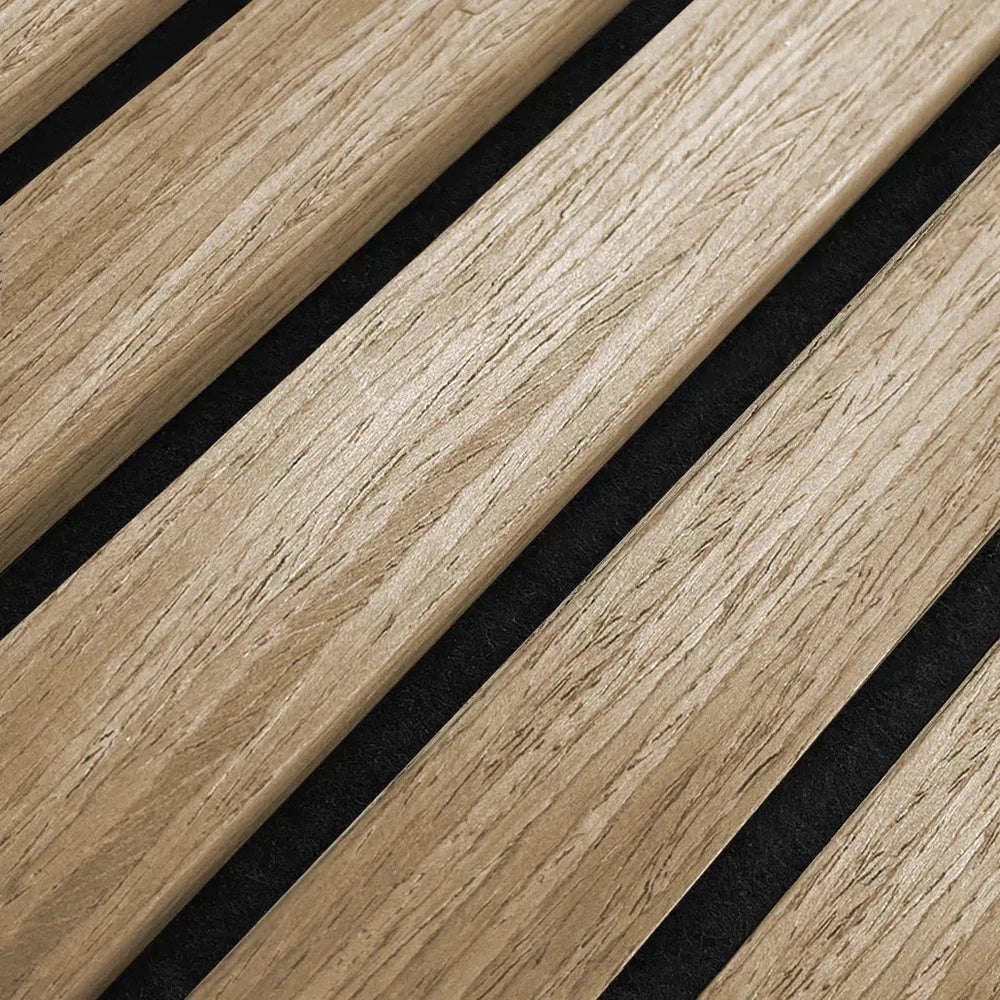
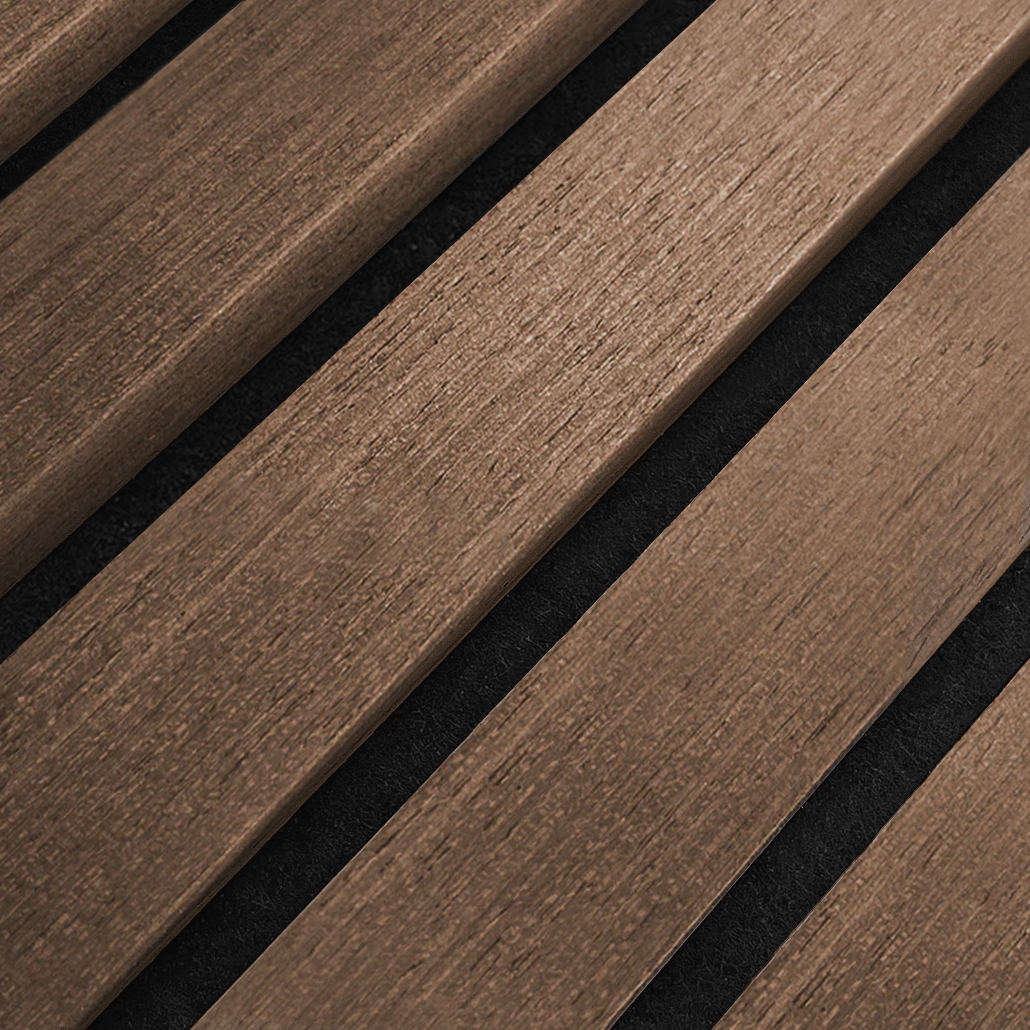
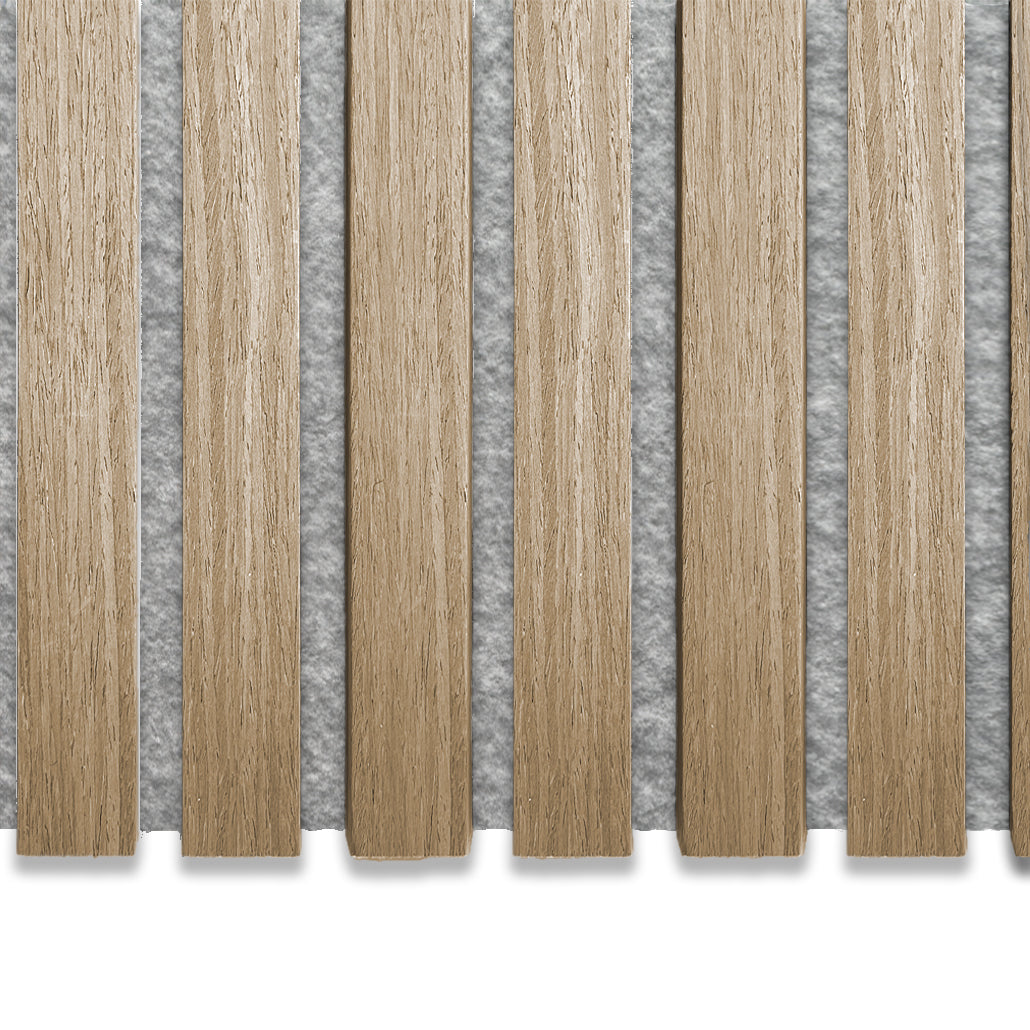
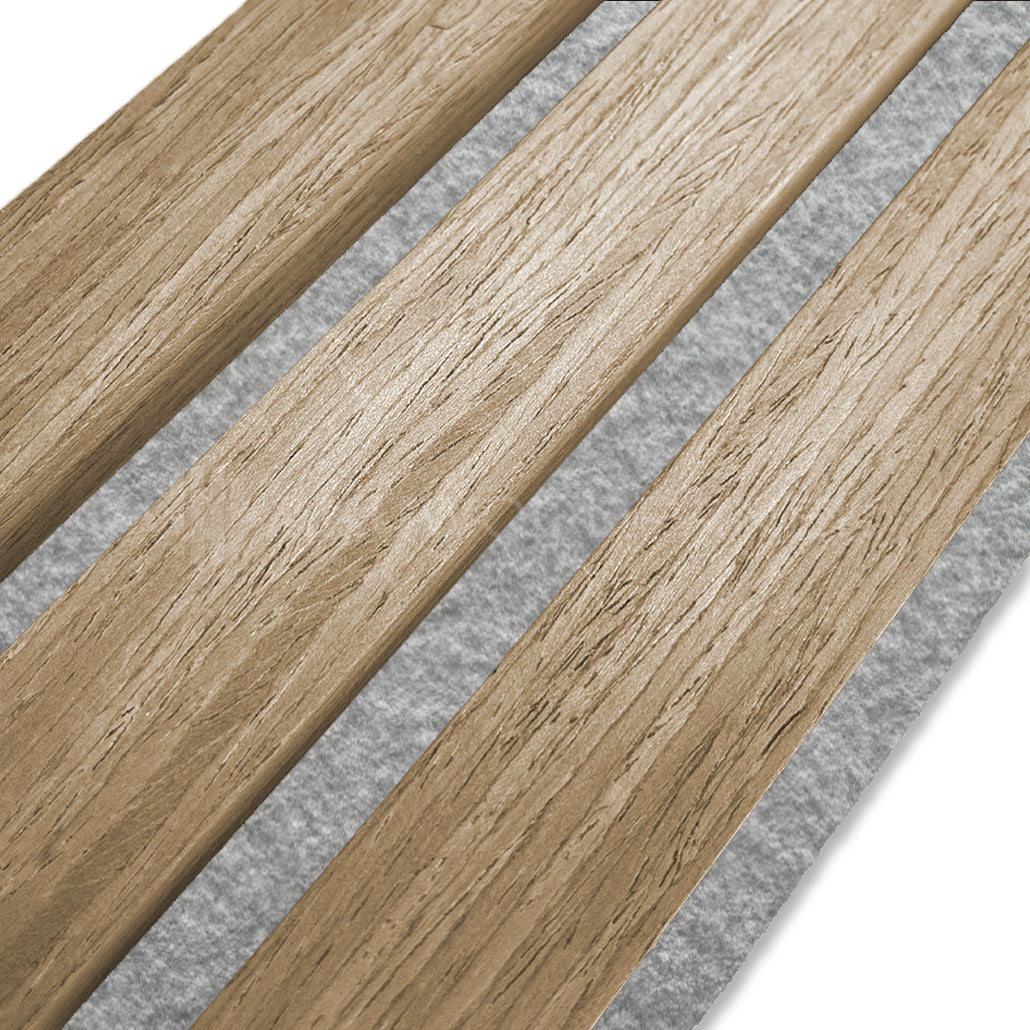
Rustic Oak Premium 3-sided wood veneer — the specification-safe pick. Full wood veneer wraps three visible sides rather than a single face, which matters when a panel sits at an internal corner in a reception or corridor. It's available in the standard 240cm and 300cm formats. Consider it, but request the chain-of-custody certificate number in writing before it goes on the schedule.
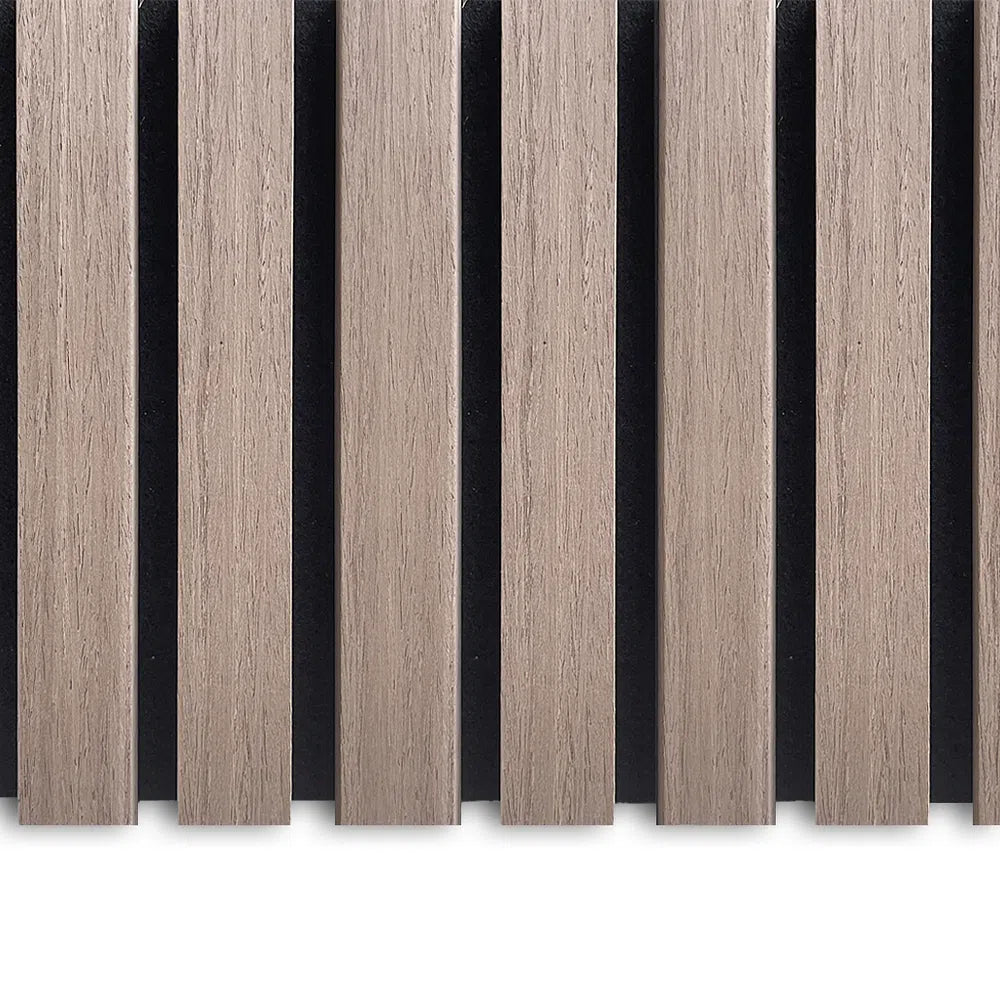
Grey Oak — the neutral corporate pick. A muted, felt-backed finish that reads well against glass partitioning and neutral carpet tile, common in office refurbishments. Consider for boardrooms and open-plan zones where the panel needs to disappear into the background rather than dominate it.
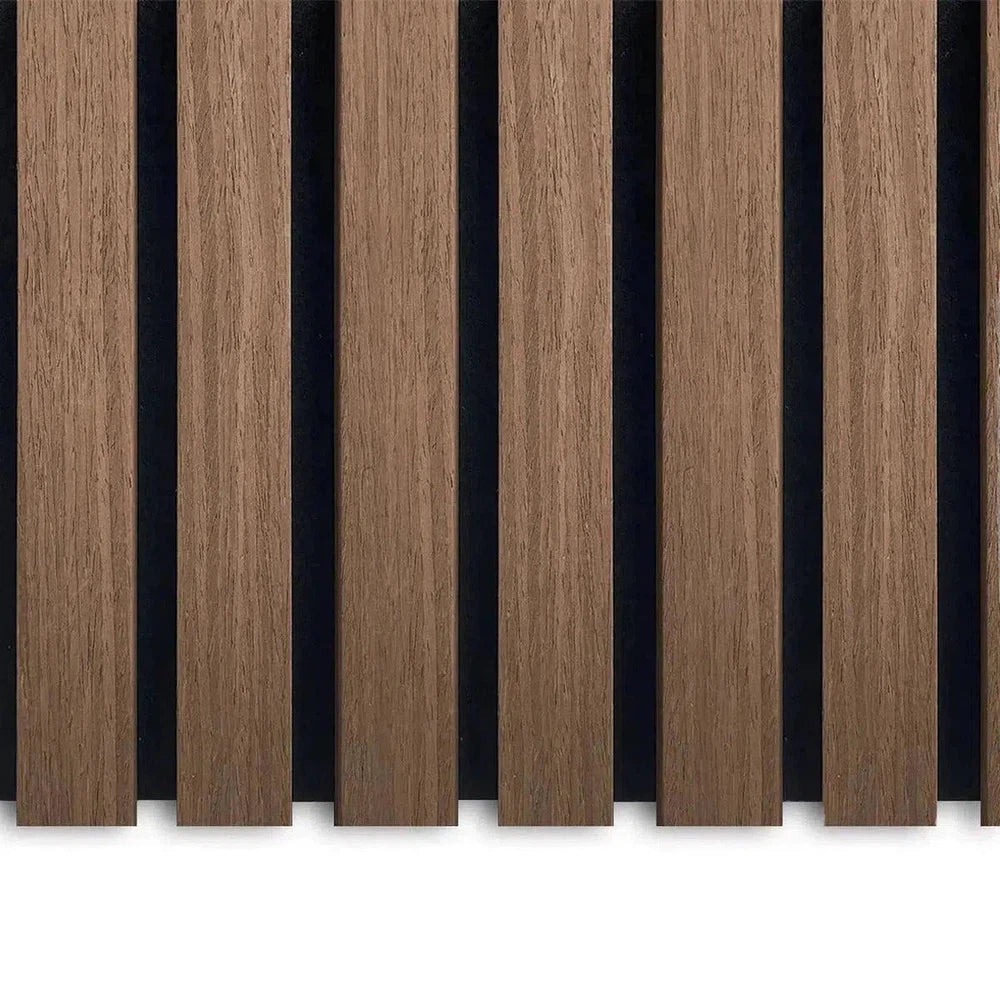
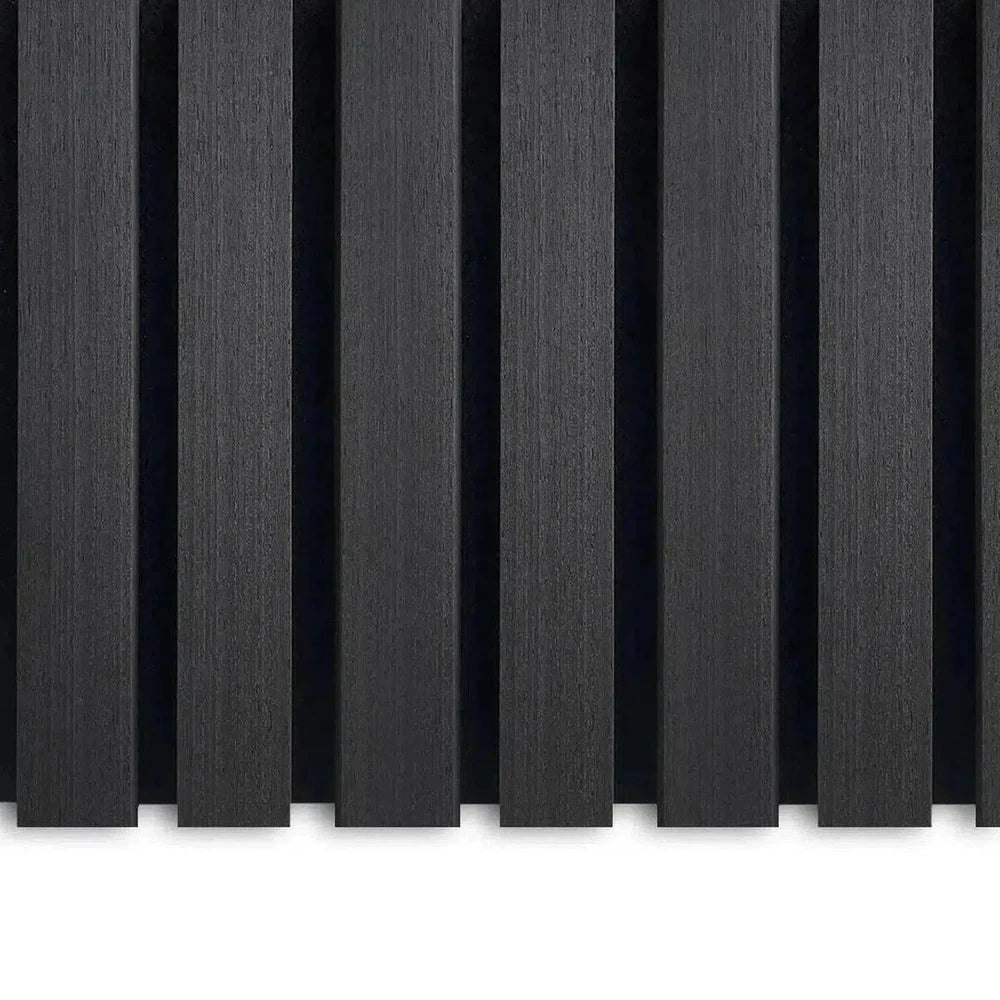
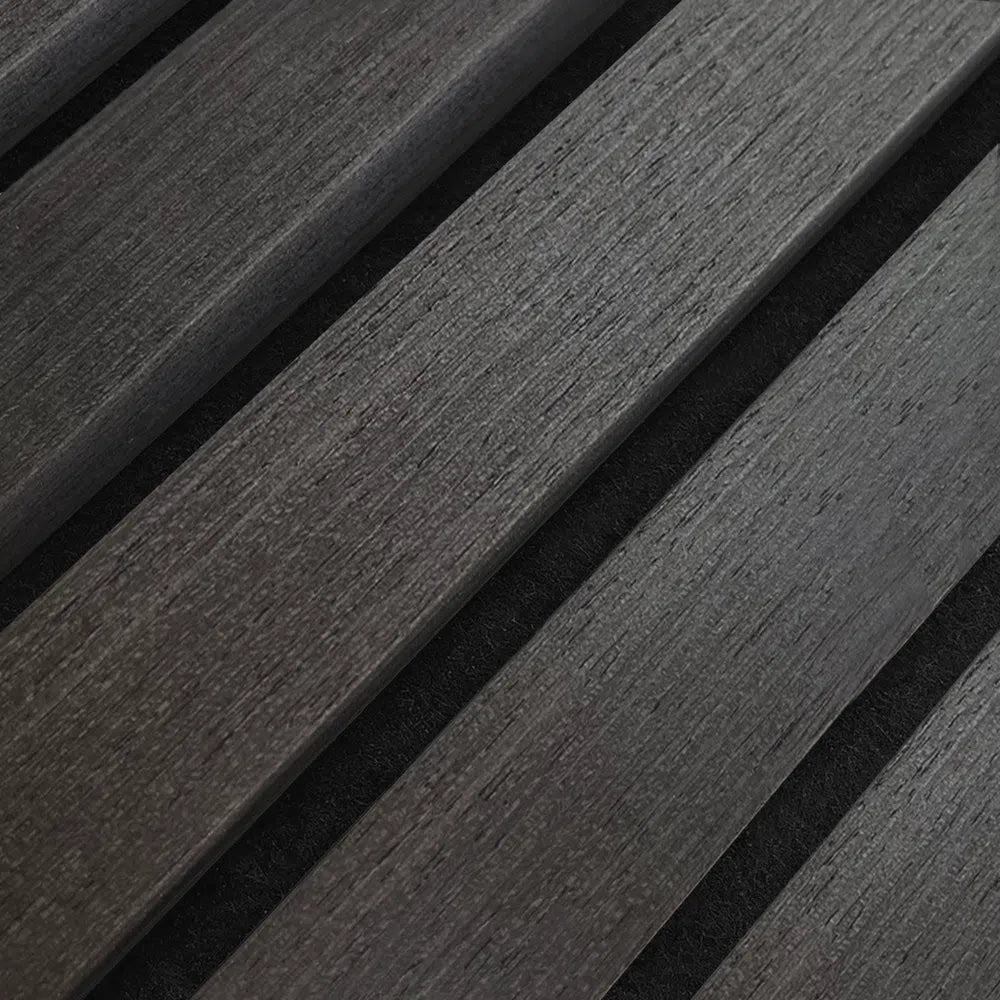
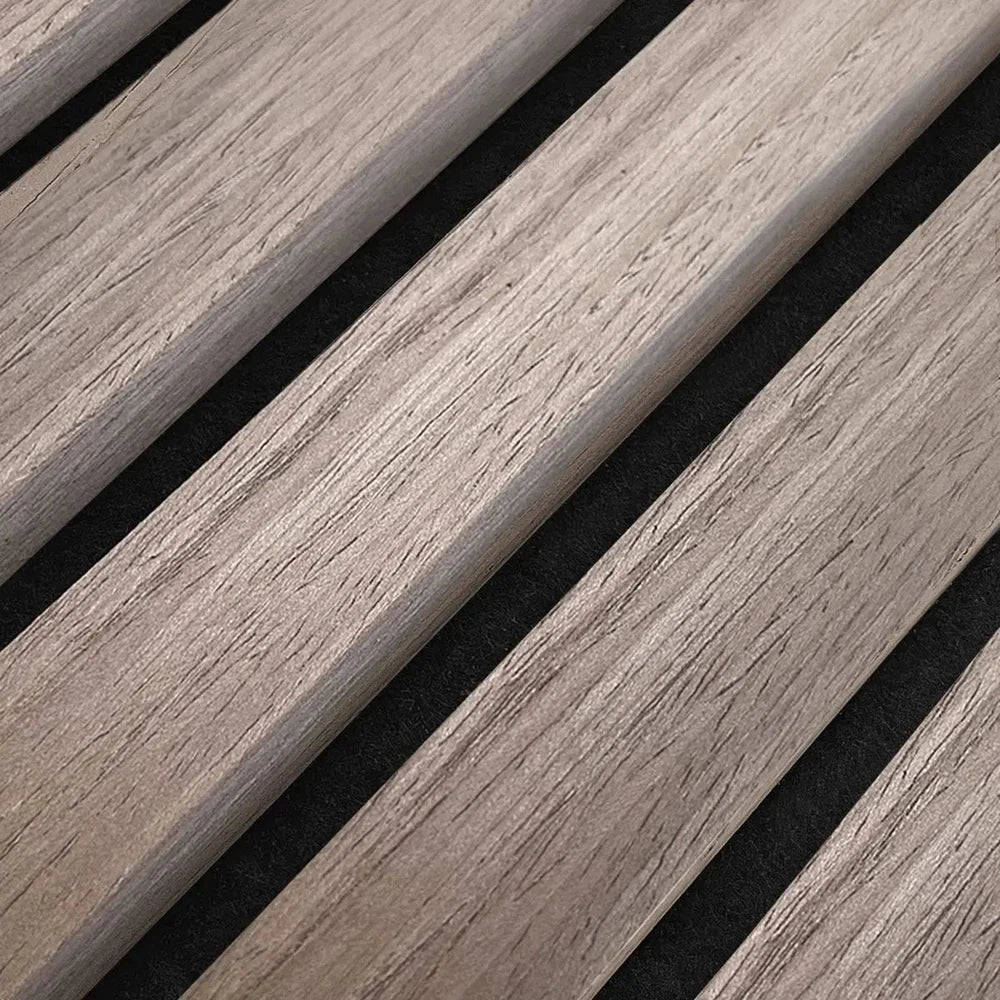
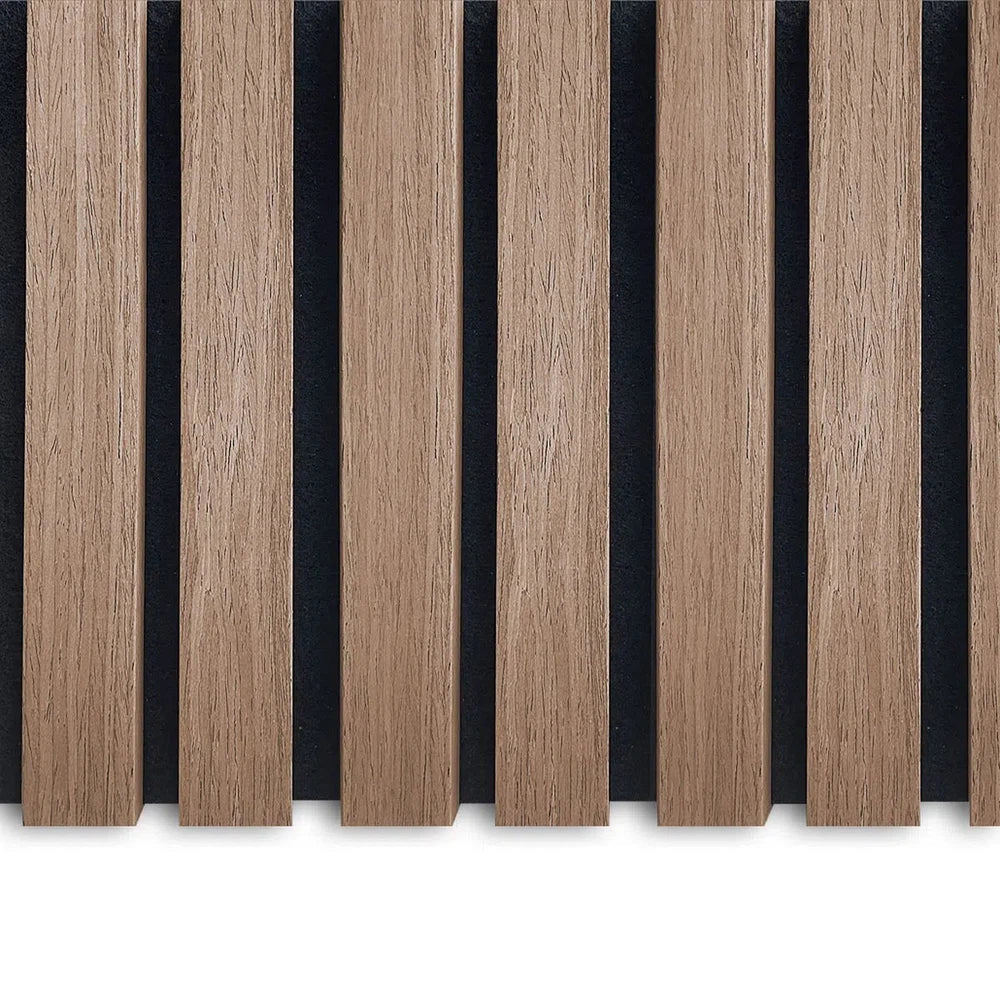
Black Oak — the statement pick. Best reserved for a single reception or branding wall rather than a full room, since a dark finish across every surface reads heavy in a commercial space with limited daylight. Consider for one feature wall; Skip for whole-room specification without a lighter finish to balance it.
Hexagon acoustic panel, smoked oak with grey felt — the acoustic workhorse. Carries the published 0.75 NRC rating referenced above, making it the clearest choice when the brief is explicitly about reverberation control rather than looks alone. Buy for meeting rooms, breakout areas and open-plan floors with a documented noise complaint.


What to avoid when specifying for commercial projects
- Printed foil "wood effect" panels marketed as sustainable. No certificate number, no chain of custody, no way to defend the claim to a BREEAM assessor.
- A "sustainably sourced" sticker with no lookup number. If you can't check it against the FSC or PEFC public database, it's not evidence — it's a slogan.
- A real wood veneer panel with no published Euroclass fire rating. This is the single most common gap that gets a spec rejected late in a commercial project.
Verdict comparison table
| Pick | Veneer / finish | Size formats | Acoustic backing | Verdict |
|---|---|---|---|---|
| Rustic Oak Premium 3-sided | Real wood veneer, 3-sided | 240cm / 300cm | Felt-backed | Consider |
| Grey Oak | Real wood veneer | 240cm / 300cm | Felt-backed | Consider |
| Black Oak | Real wood veneer | 240cm / 300cm | Felt-backed | Consider (feature wall only) |
| Hexagon acoustic, smoked oak grey felt | Real wood veneer | 81cm hexagon | Grey felt, 0.75 NRC | Buy |
FAQ
What does FSC certification mean for wood wall panels?
FSC certification means the timber in the panel can be traced back through a documented chain of custody to a forest managed under Forest Stewardship Council standards. Ask for the certificate number and check it against the FSC public database rather than accepting a logo alone.
Do commercial fit-outs legally require FSC certified timber?
There is no blanket UK law mandating FSC certification, but many planning conditions, BREEAM assessments and corporate procurement policies require documented sustainable timber sourcing as a condition of approval. Check your project's specific planning conditions and sustainability assessment scope before finalising a spec.
What's the difference between FSC and PEFC certification?
FSC and PEFC are separate, competing chain-of-custody certification schemes that both verify timber comes from managed forests, and most sustainability assessments accept either. The practical difference is which scheme a specific supplier's mill and distribution chain is certified under, so ask which one applies to the exact product you're specifying.
How do I check if a wood wall panel supplier's FSC certificate is genuine?
Request the certificate number and search it on the FSC public database, which lists the certificate holder and scope. A supplier unwilling to share a checkable number should be treated as uncertified regardless of what the marketing copy claims.
Do acoustic wood panels need a fire rating as well as FSC certification?
Yes, fire performance and timber sourcing are assessed separately, and a commercial wall lining needs a documented Euroclass fire rating under EN 13501-1 in addition to any sustainability certification. Ask for both certificates before adding a panel to the schedule.
Are Akuwood Panel's wood wall panels suitable for commercial specification?
Akuwood Panel's range includes real 3-sided wood veneer finishes, felt-backed acoustic panels rated up to 0.75 NRC, and standard 240cm and 300cm size formats suited to commercial-scale runs. Confirm current chain-of-custody and fire test documentation directly with the supplier before finalising a spec for a specific project.
What's the difference between FSC 100% and FSC Mix panels?
FSC 100% means every fibre in the product traces to FSC-certified forests, while FSC Mix allows a blend of certified, recycled and controlled-source material. Both appear on FSC certificates, so check which category your supplier's certificate actually covers before citing it in a sustainability submission.
How much documentation should I request before specifying wood wall panels for a project?
Request the FSC or PEFC certificate number, the Euroclass fire test certificate, and the published NRC rating if acoustic performance is part of the brief. Keep copies with the project file, since assessors and building control may ask for them again after installation.
One last thing
The certificate number is the cheapest insurance on the entire spec. A panel swap after installation because the paperwork doesn't check out costs far more in delay than the five minutes it takes to verify a chain-of-custody number against the FSC database before the order goes in.