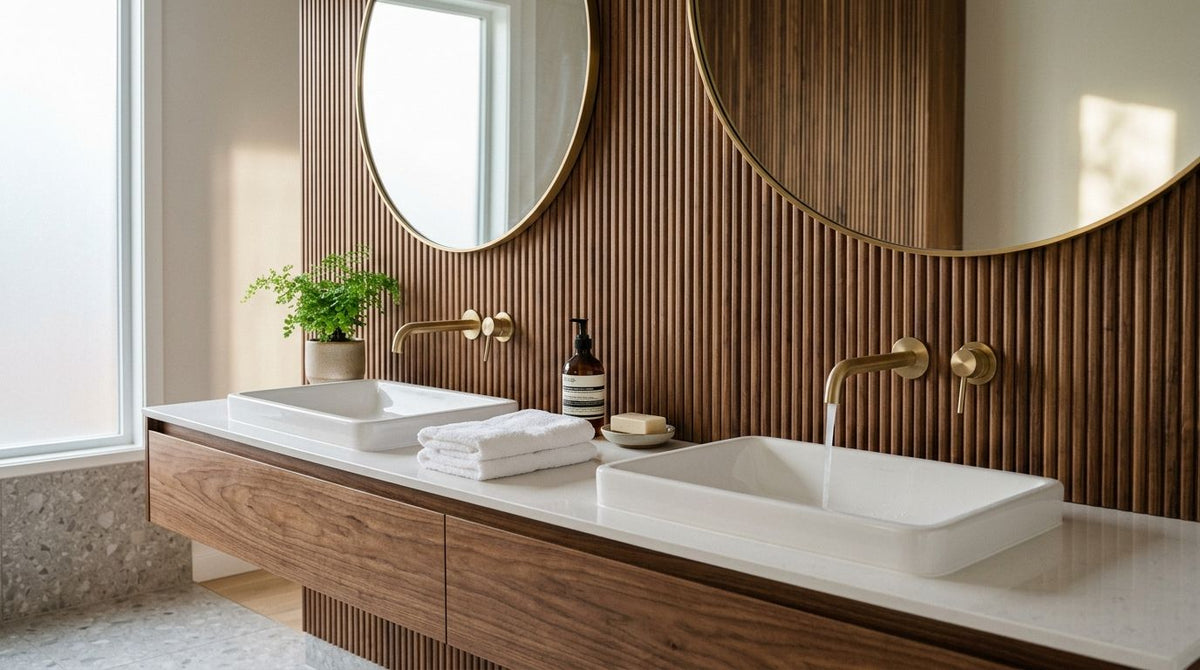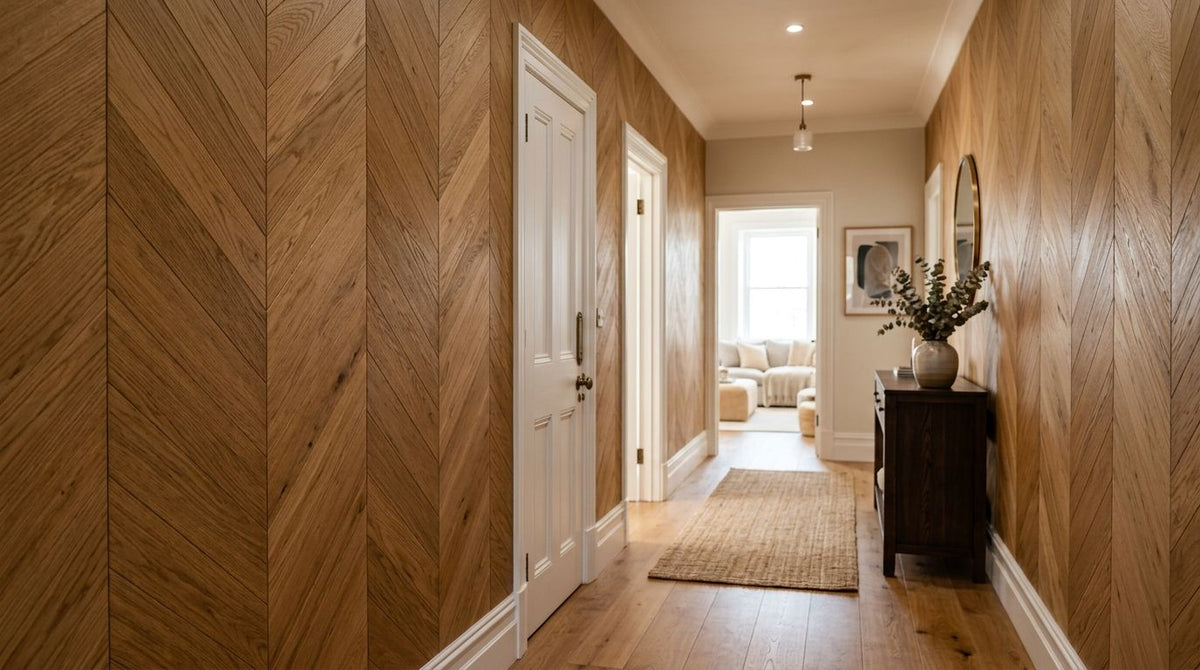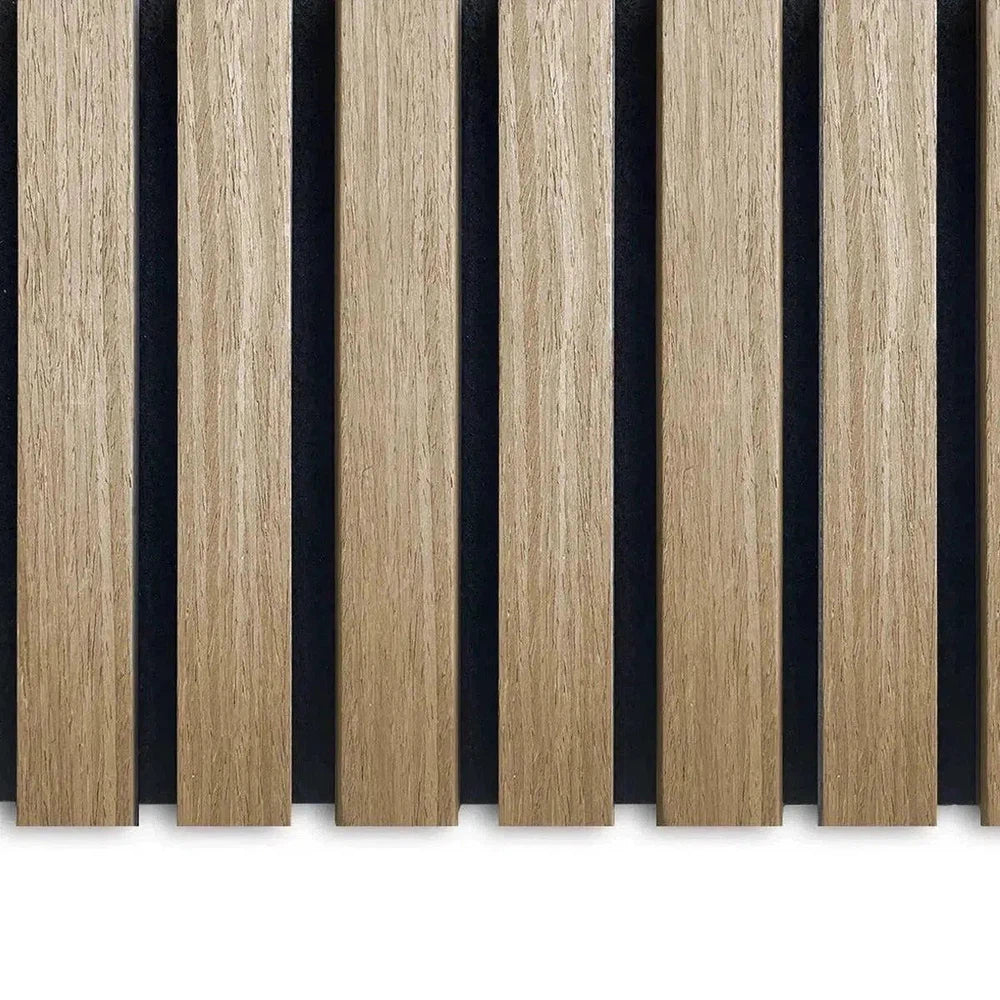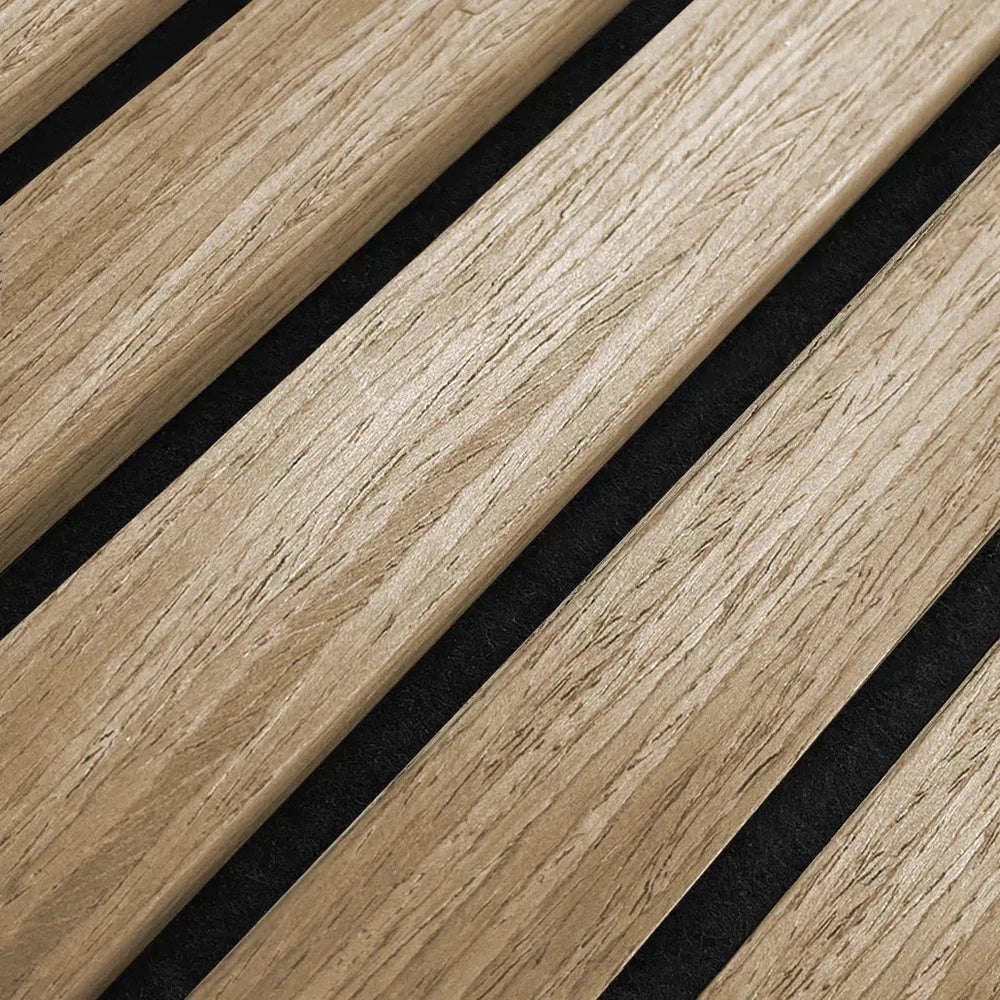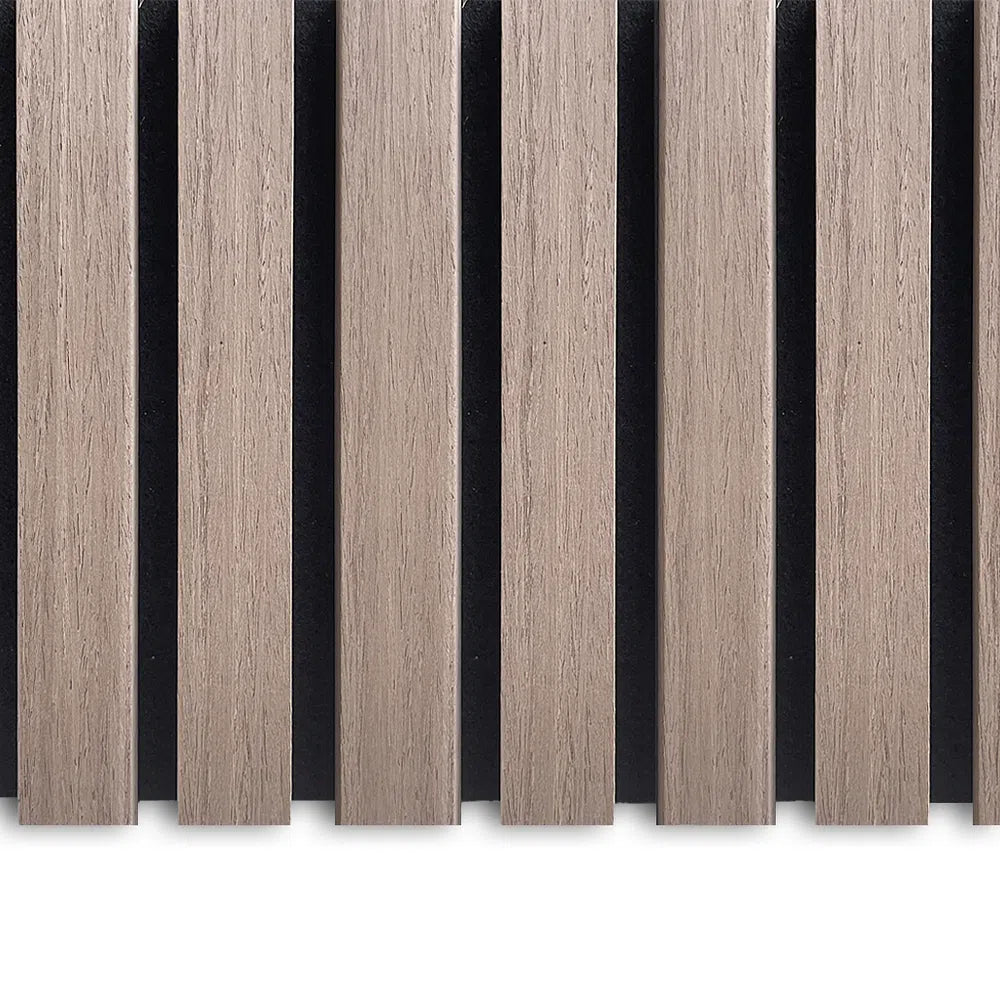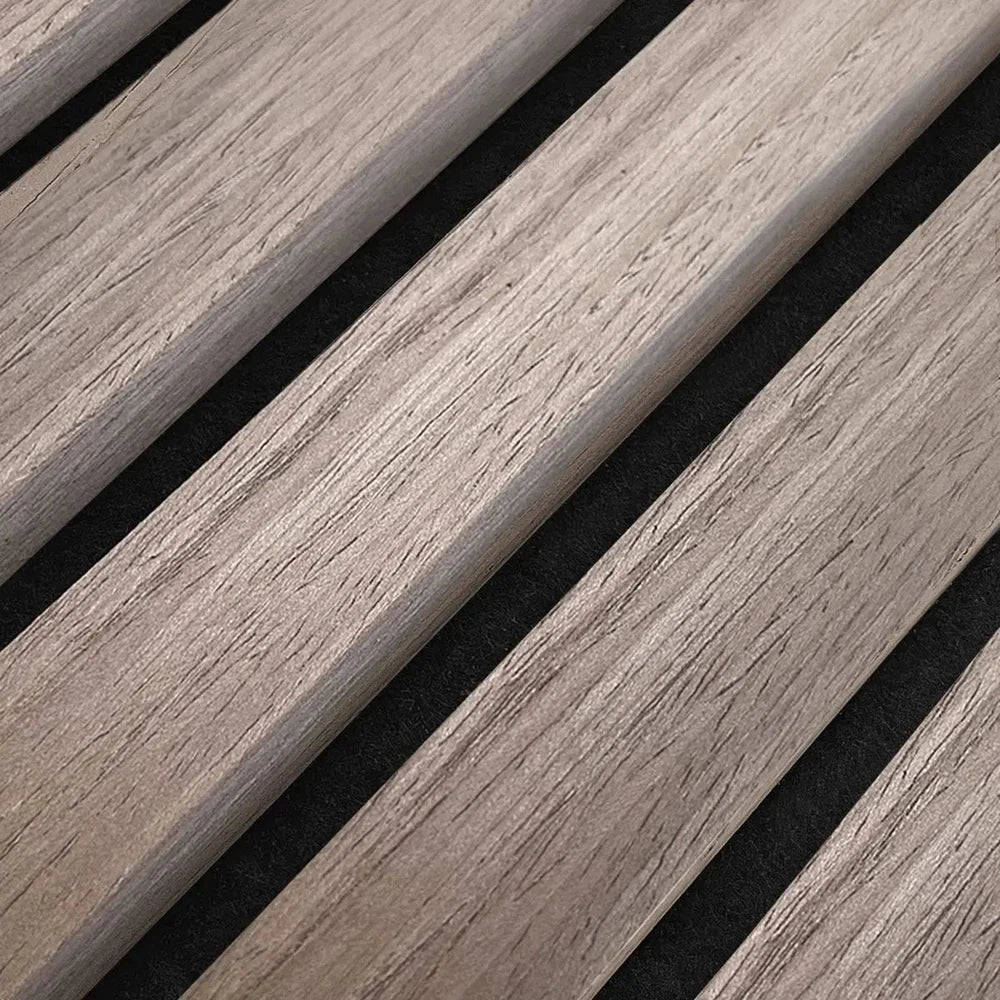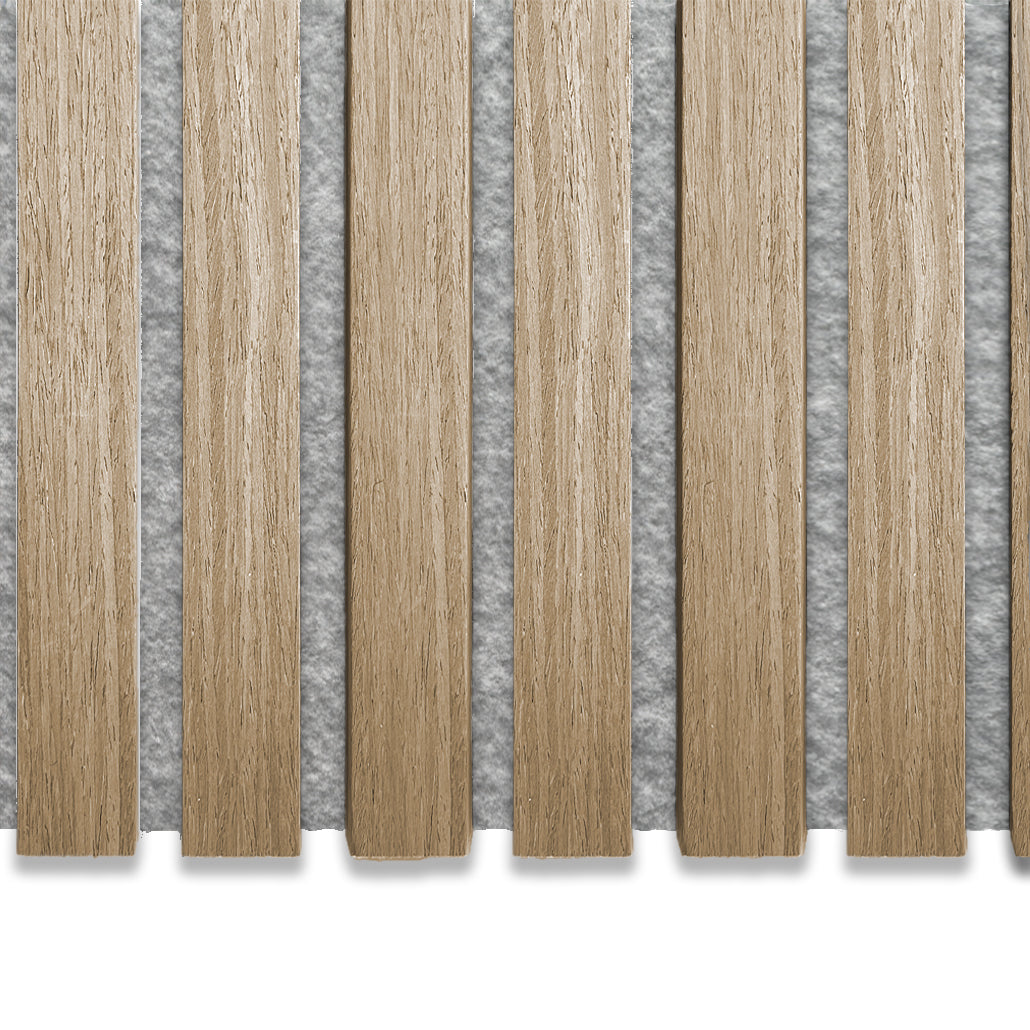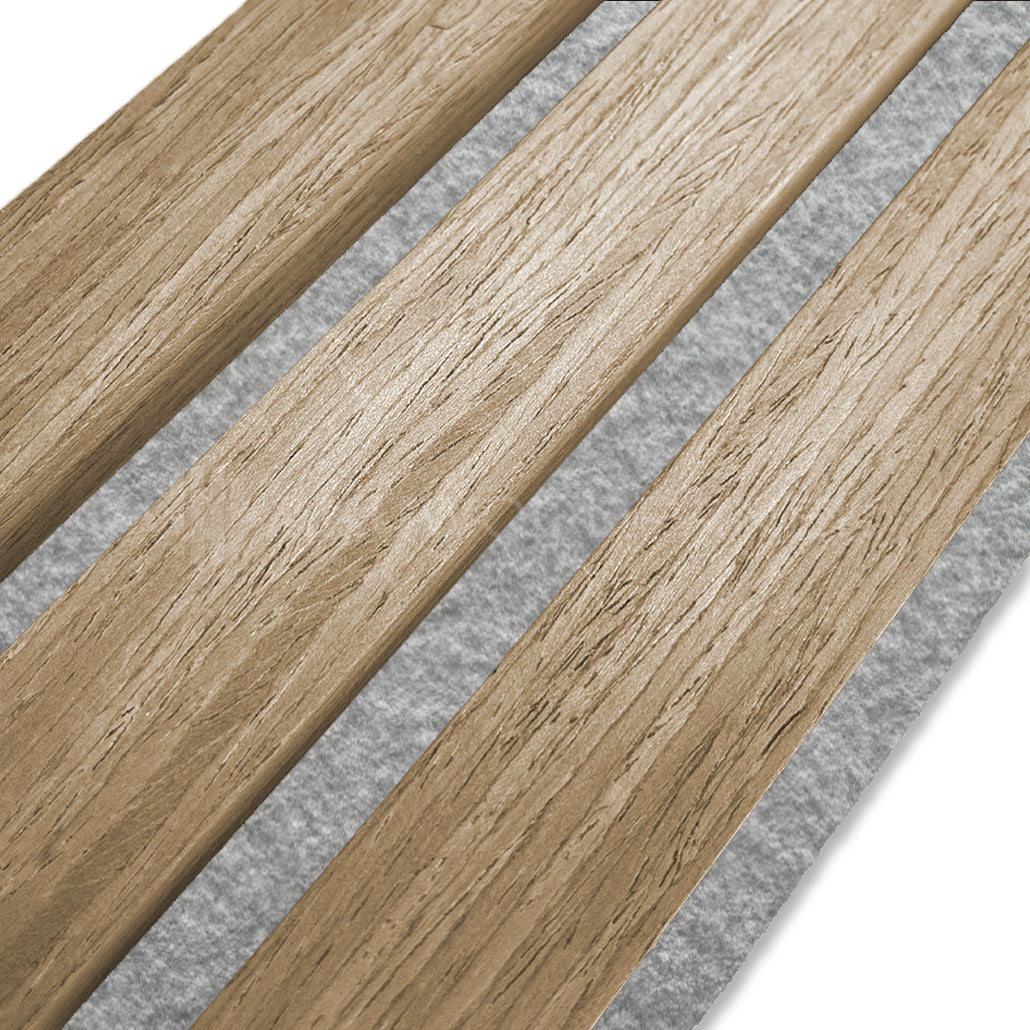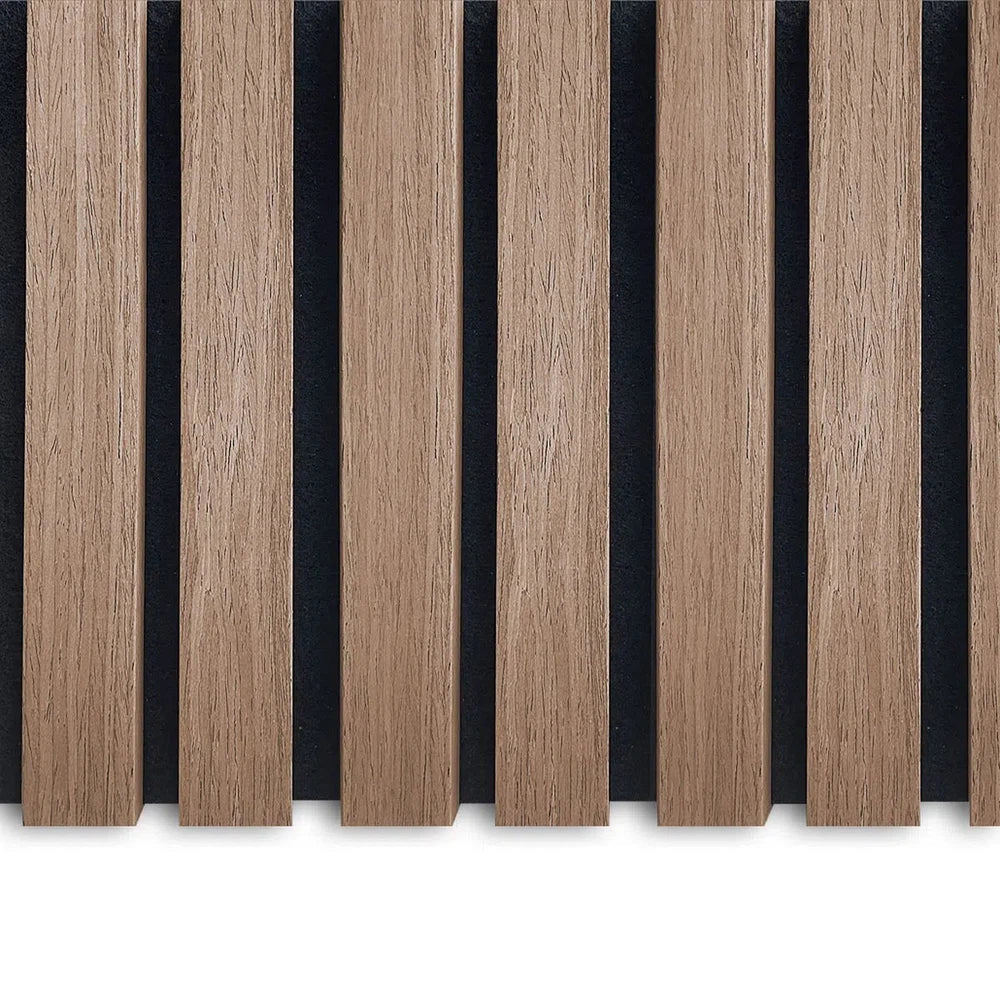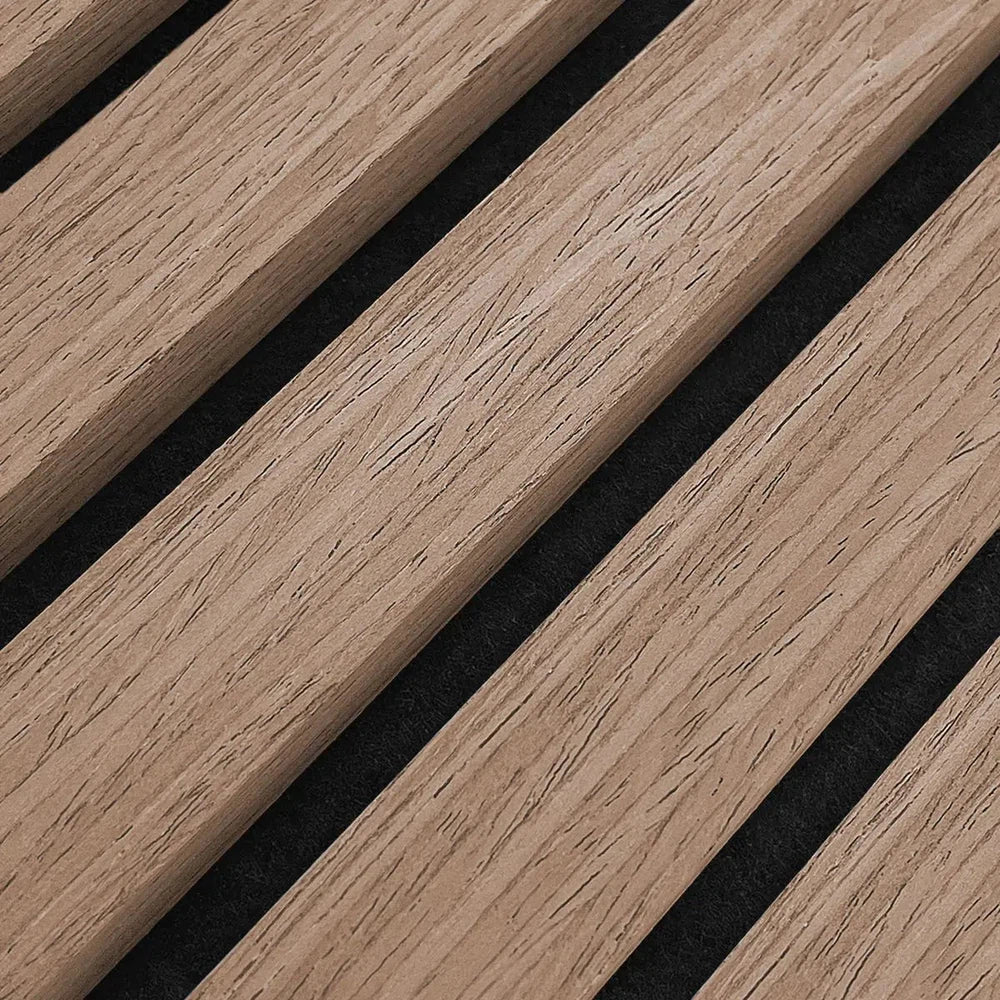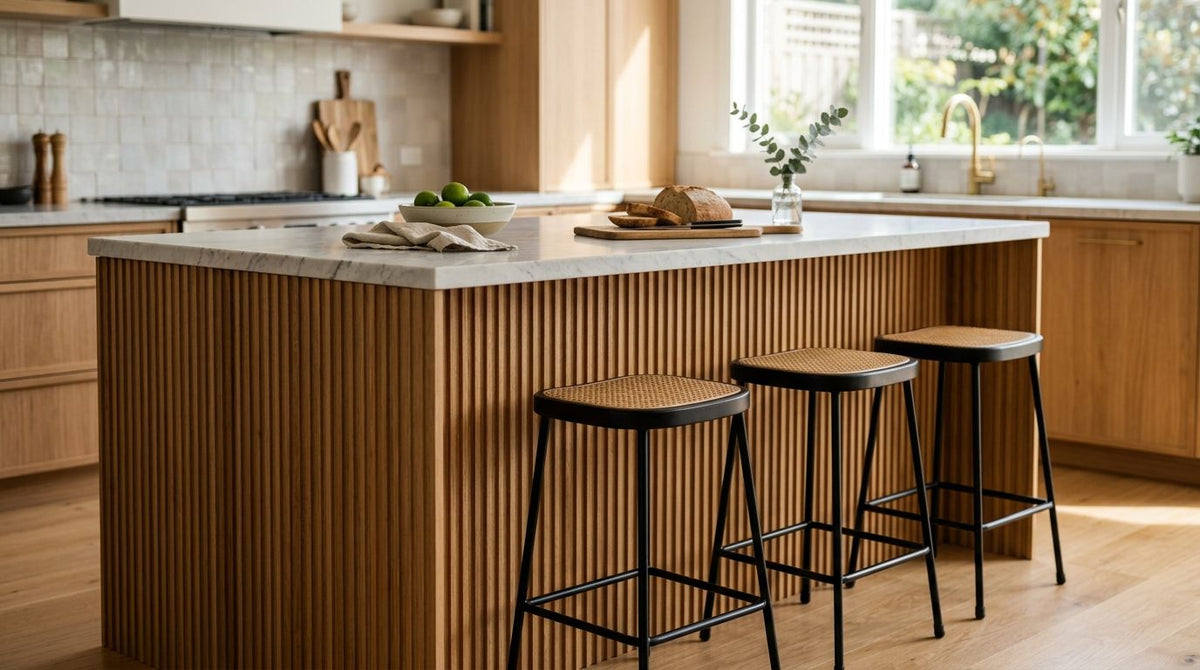
Fluted oak kitchen panels are vertical-grooved oak veneer wall panels fitted to island fronts and end panels to add texture to plain cabinetry without replacing doors or worktops. A kitchen island takes more knocks, spills, and knee traffic than a living room feature wall, so the fixing method, edge finish, and moisture handling need different treatment than a standard wall panel job.
- Wooden Wall Panel Natural Oak and Rustic Oak give the grooved look for island fronts — buy for a warm real-wood finish.
- Fit panels after base cabinets are set and before the worktop overhang is fixed, or tolerances get tight fast.
- Akuwood Panel's oak range ships in 240 cm and 300 cm lengths, so most single-run islands need one panel plus an end piece.
- Skip felt-backed acoustic panels on fronts next to a sink — the felt backing isn't built for constant splash exposure.
Why fluted oak kitchen panels matter for island fronts
An island front is the most visible vertical surface in an open-plan kitchen — you see it from the sofa, the hallway, and every time you walk past with a tray. Flat painted MDF reads flat under kitchen downlights; a grooved oak veneer surface catches shadow lines and looks intentional rather than budget.
The segment has constraints a living room feature wall doesn't. Islands take chair backs, dishwasher doors, and school bags banging into them daily. Panels sit close to hobs, sinks, and bin drawers, so heat and moisture exposure runs higher than on a lounge wall. Most UK islands measure well under 300 cm across the front, which means a single Natural Oak wall panel length usually covers the run with no visible joint.
Measure your island front and end panels
Get the exact dimensions before you order anything. Five minutes with a tape measure saves a second delivery for an end piece you didn't know you needed.
- Measure the full front elevation, floor to underside of worktop overhang
- Measure each end panel separately — islands are rarely perfectly square
- Note socket cutouts, kick plinths, or integrated handles that interrupt the run
- Check clearance if the panel also wraps up a breakfast bar upstand
- Confirm whether the 240 cm or 300 cm format covers your run without a joint
Choose your oak finish and grain direction
Fluted panels only look deliberate when grain direction stays consistent across the whole island. Vertical grooves running floor to worktop is the standard look for island fronts; horizontal reads more like cladding.
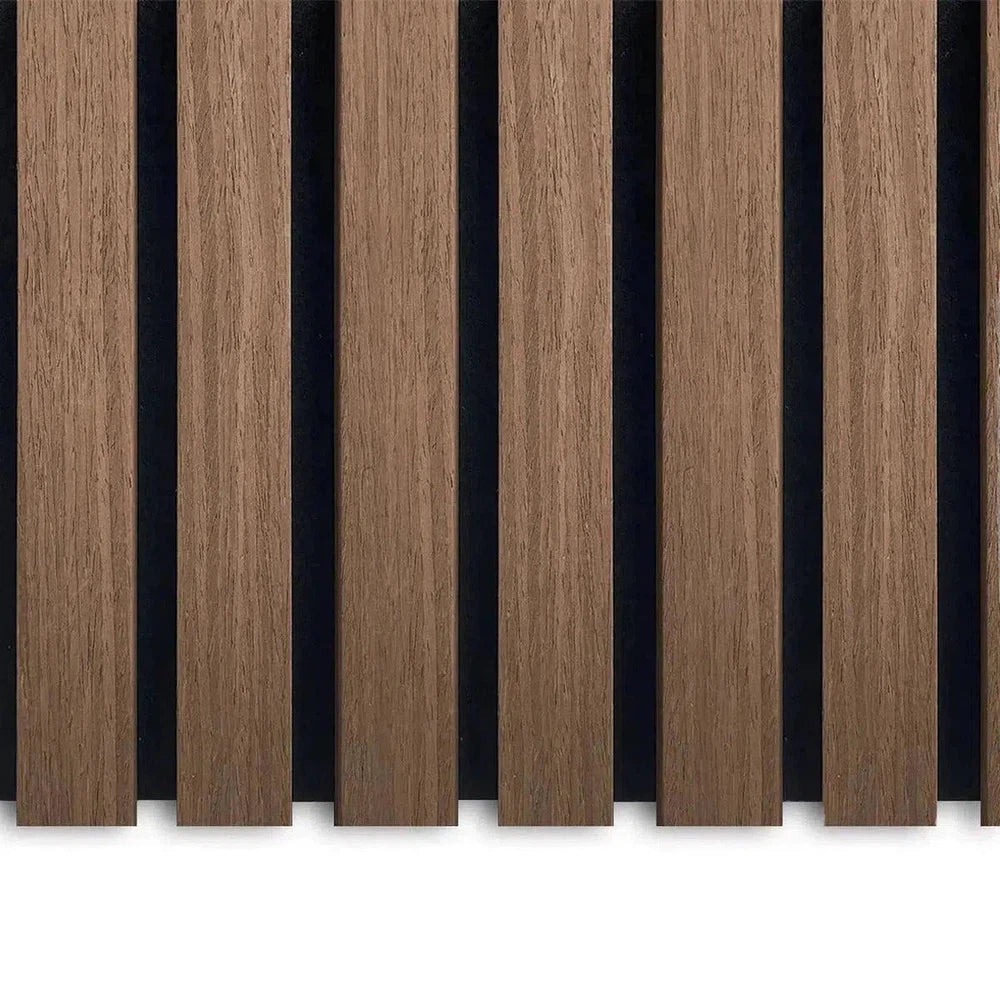
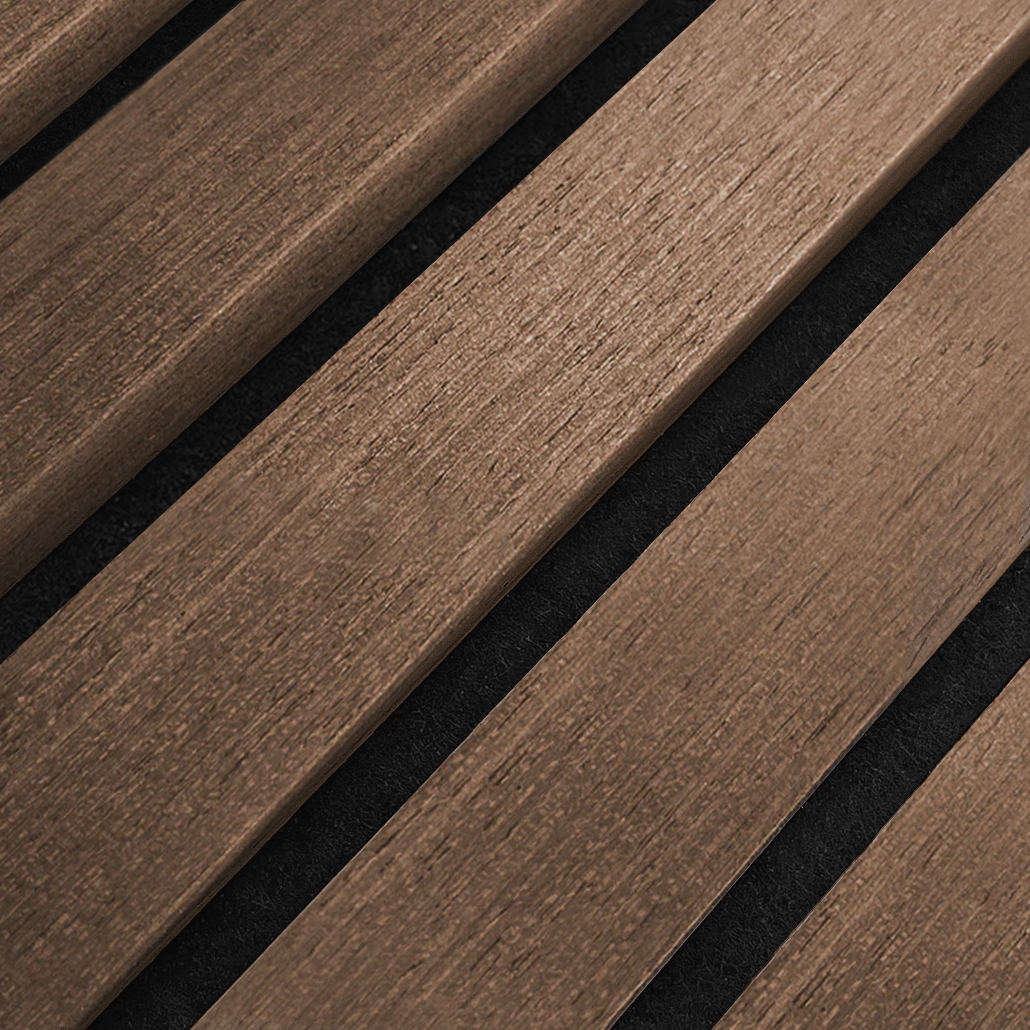
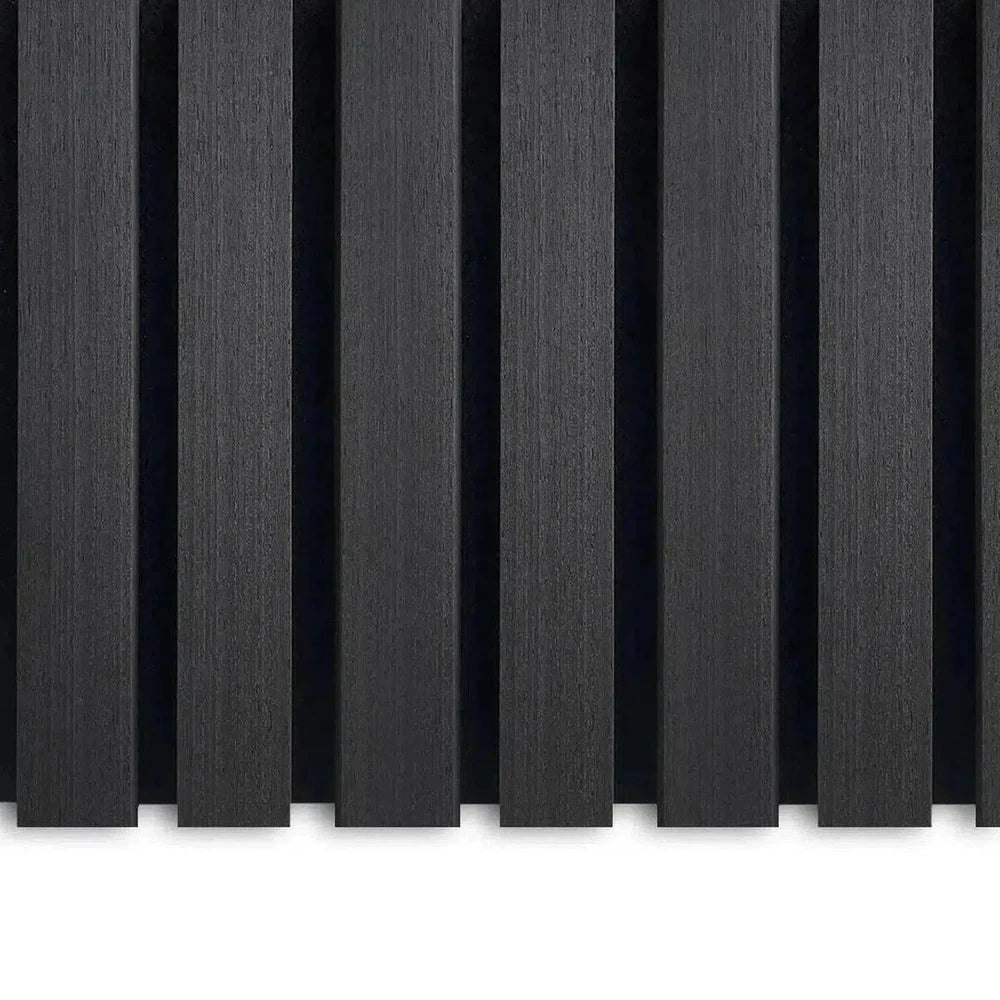
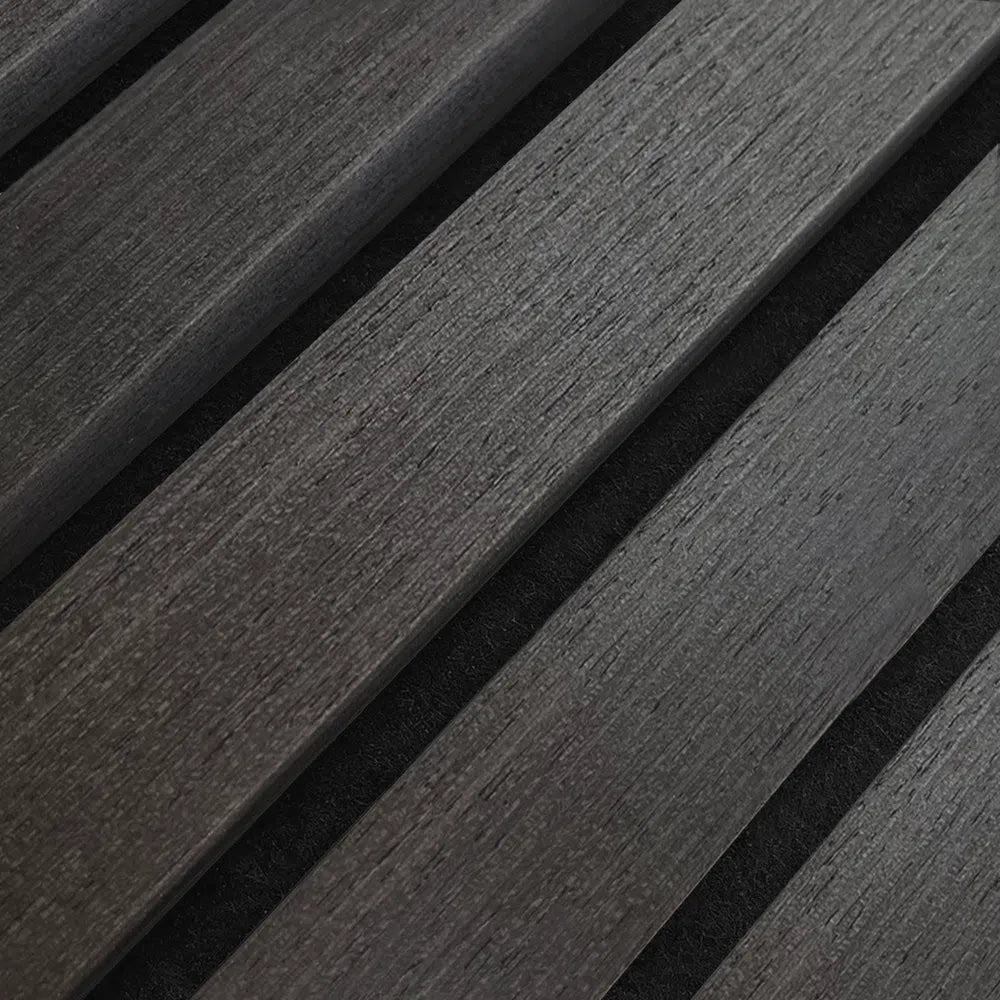
Here the manual route and the faster route split. You can source raw oak veneer sheet and rout your own flutes with a jig — slow, and grain-matching across sheets is fiddly. The faster path is a pre-finished 3-sided veneer panel with the grooved profile already milled and the edges sealed, such as Rustic Oak 3-sided wood veneer or the Natural Oak and Smoked Oak equivalents in the same range.
- Natural Oak: lightest tone, best for bright kitchens with white or pale cabinetry
- Rustic Oak: visible knots and grain variation, best for farmhouse-style islands
- Smoked Oak: darker, warmer tone, best for contrast against white worktops
- Black Oak: strongest contrast, best for matte black or navy cabinetry runs
- White Oak 3D panel: pale tight grain, best for Scandinavian or minimalist kitchens
Prep the substrate before fitting
Fluted oak panels need a flat, clean surface to bond to. Any bow in the existing cabinet front telegraphs through the veneer once it's fixed.
- Remove existing door fronts or handles sitting in the panel's footprint
- Sand or fill dents, screw holes, and old adhesive residue
- Check the substrate is dry — MDF that's absorbed kitchen humidity won't hold adhesive well
- Prime bare MDF edges that stay visible once the panel goes on
- Dry-fit the panel against the front before applying any adhesive
Cut panels to fit around plinths and worktops
Most island fronts need at least one cut, whether that's trimming panel height under the worktop or notching around a plinth.
- Score the veneer face first with a sharp knife to prevent splintering
- Cut from the back face with a fine-tooth blade where possible
- Leave a few millimetres of expansion gap at top and bottom for seasonal movement
- Use an end piece rather than a raw cut edge on any face that stays visible
- Test-fit before committing to adhesive — cuts on 3-sided veneer aren't undoable
Fix panels with adhesive and mechanical fixings
Kitchen island fronts flex slightly with use, so a belt-and-braces fixing approach beats adhesive alone.
- Apply a wood-veneer-rated construction adhesive such as High Tack Panel Glue in a bead pattern across the back
- Press and hold for the adhesive's stated cure window before releasing pressure
- Add discreet mechanical fixings at top and bottom edges on a high-traffic front
- Keep fixings in the flat sections between flutes, never through visible groove faces
- Let the adhesive fully cure before leaning anything against the panel
Seal edges and corners for kitchen durability
An island front gets wiped down more than any wall in the house. Unsealed edges are where moisture gets in first.
- Finish exposed panel edges with a matching end piece rather than a raw cut
- Run a thin bead of sealant where the panel meets the worktop underside
- Check corners where two panel faces meet at 90 degrees for gaps
- Reseal any joint that opens up after the first heating season
Comparison: fluted oak options for island fronts
| Option | Best for | Key limitation |
|---|---|---|
| DIY-routed MDF with fluted profile | Budget builds with time to spare | Grain-matching across sheets is inconsistent |
| Fluted PVC or foil-wrap cladding | Rental kitchens, quick refreshes | Reads as plastic close up, not real wood |
| Solid oak tongue-and-groove boards | Traditional or period-style kitchens | Heavy, needs structural fixing support |
| Akuwood Panel 3-sided oak veneer | Island fronts needing a real-wood look with minimal fitting time | Felt-backed variants aren't suited to splash zones next to sinks |
Akuwood Panel's oak veneer range is the faster route to a fluted island front in 2026 for anyone who wants the grooved look without routing their own MDF.


Common mistakes on island front fluted oak jobs
- Mismatched grain direction between the island and a nearby feature wall. Vertical flutes on the island against horizontal panels on an adjacent wall makes the kitchen look unplanned.
- No end piece on a visible raw edge. A cut edge without an end piece shows the substrate underneath and kills the real-wood effect.
- Fitting felt-backed panels right next to the sink. The felt backing on acoustic-rated panels isn't designed for constant splash exposure — keep those for dining walls, not sink-adjacent fronts.
- Forgetting the worktop overhang tolerance. Panels fitted before the exact overhang depth is confirmed finish proud or short once the worktop template comes back.
- Skipping the dry-fit. Committing adhesive before test-fitting a cut panel is the most expensive mistake on this list — veneer panels don't forgive a bad cut.
FAQ
What are fluted oak kitchen panels made from?
Fluted oak kitchen panels are a wood veneer face over an engineered core, finished with a grooved surface. Akuwood Panel's oak range uses a 3-sided real wood veneer rather than a printed or foil-wrap surface.
Can you fit fluted oak panels directly onto kitchen cabinet doors?
Yes, provided the door front is flat, clean, and free of handles or hardware in the panel's footprint. Sand and prime any bare MDF edges before fixing the panel in place.
Are fluted oak panels safe near a hob or sink?
Standard oak veneer panels handle everyday splashes, but felt-backed acoustic variants are not built for constant moisture exposure. Keep felt-backed panels out of the immediate splash zone around a sink or hob.
What size fluted oak panels do I need for a standard island?
Akuwood Panel's oak veneer panels come in 240 cm and 300 cm formats. Most single-run UK kitchen islands fit within one panel length, which avoids a visible joint across the front.
Is fluted oak panelling better than painted MDF for an island front?
Fluted oak panelling adds texture and a real-wood surface that painted MDF cannot replicate. It costs more in materials and takes longer to fit precisely around plinths and worktops.
How do you finish the edges of a fluted oak panel on an island?
Use a matching end piece instead of leaving a raw cut edge exposed. End pieces are available across the natural oak, rustic oak, smoked oak, walnut, mocca and black oak finishes.
Can fluted oak panels be painted over later?
Real wood veneer panels can be painted, but doing so removes the grain detail that makes the fluted look distinctive. Most buyers pick the finish they want up front instead.
How do you order a sample before buying fluted oak kitchen panels?
Akuwood Panel sells small samples of the wooden wall panel range so you can check the oak tone against your cabinetry under kitchen lighting. Order the sample in the exact finish you plan to fit.
One last thing
The detail most people miss on an island job: grain direction has to match across every visible face, including the two end panels flanking the front run. Order end pieces in the same finish as the main panel — natural veneer varies between production runs, and a mismatched end panel is the first thing anyone notices standing at the hob in 2026.