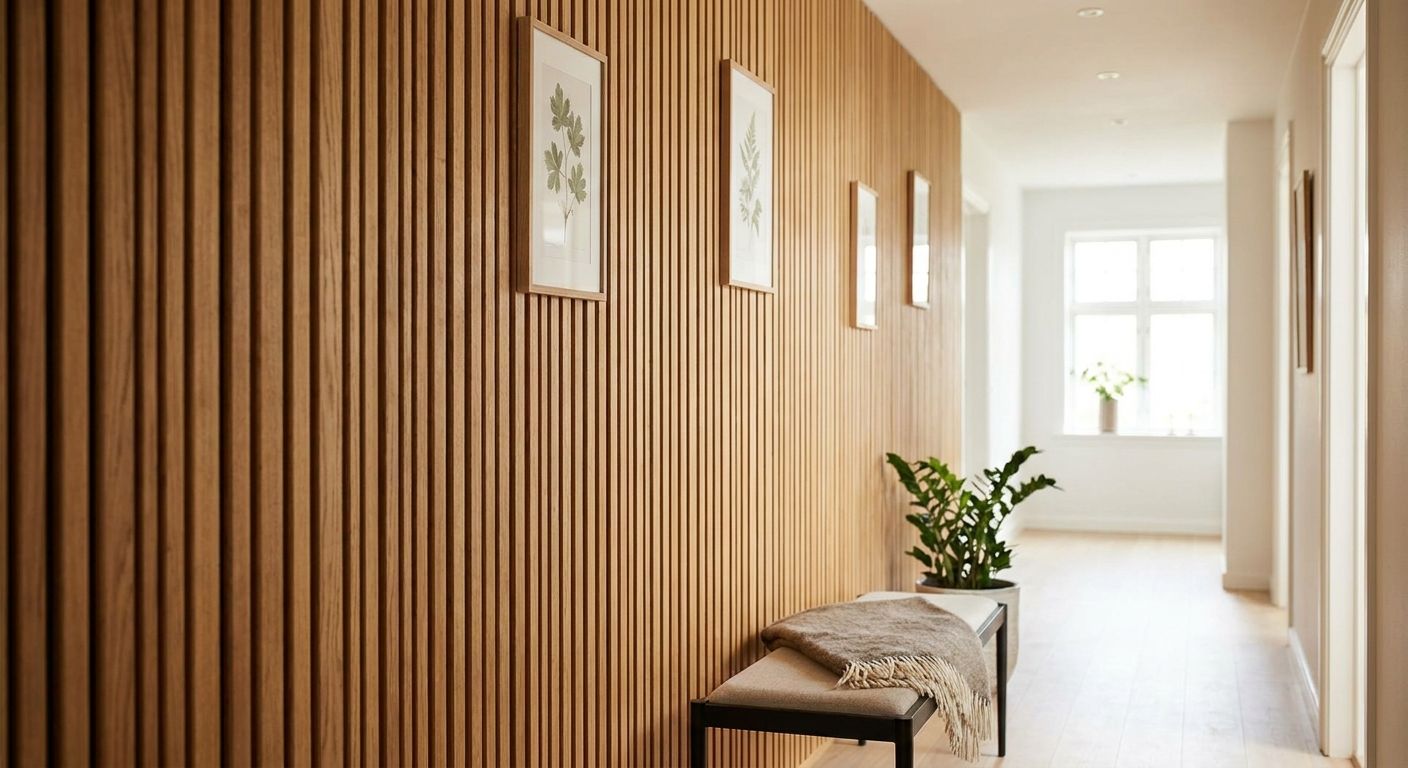
Natural Oak is the best wooden wall panel for a hallway feature wall in 2026, and it earns that spot because it brightens a corridor without adding a single extra light fixture. Five other finishes from the Akustiq UK range cover the jobs Natural Oak can't handle on its own: dark statement walls, period character, high-contrast staircase runs, and echo control in a tall entryway.
- Natural Oak wall panel wins overall for a hallway feature wall in 2026 - pick it for bright, narrow corridors.
- Smoked Oak and Black Oak cover dark, moody hallway walls; sample before committing to a full run.
- Hexagon Acoustic Panel Natural Oak suits short entryway patches where slat panels need too many awkward cuts.
- Every Akustiq UK indoor panel carries acoustic felt backing, not only the ones marketed as acoustic.
- Rustic Oak Premium 3-Sided Veneer is the pick for farmhouse and period hallways with dado rails.
Why this matters
Hallways get more daily foot traffic than almost any other room in the house, and they usually have the least soft furnishing to absorb sound. Hard floors, a front door that slams, and bare plaster all bounce noise straight down a corridor. That's why a wooden wall panel picked for looks alone can disappoint - the right choice from the Akustiq UK hallway wall panel range does double duty, covering the wall and taking the edge off the echo at the same time.
The six panels below aren't ranked on one scale. Each one wins a different hallway problem - light, dark, period, modern, noisy, or awkwardly short - so treat this as a decision tree, not a leaderboard.
What makes the best wooden wall panels for a hallway
- Real wood veneer, not a printed laminate - a hallway gets viewed at arm's length daily, so grain needs to hold up to close inspection.
- Panel length matched to ceiling height - 240cm suits standard UK hallway ceilings; 300cm suits taller Victorian runs or floor-to-ceiling looks.
- Acoustic felt backing - a corridor with a hard floor amplifies every footstep and door slam more than a carpeted living room does.
- Scuff resistance - hallways take bags, pushchair wheels, and dog claws more than almost any other room in the house.
- Fitting flexibility around obstacles - light switches, thermostats, and doorframes need end pieces and trims that finish clean.
Wooden wall panels for hallways at a glance
| Wall panel | Best for | Standout feature | Key limitation |
|---|---|---|---|
| Natural Oak Wall Panel | Bright, narrow hallways | Light tone reflects available light | Shows scuffs more than darker finishes |
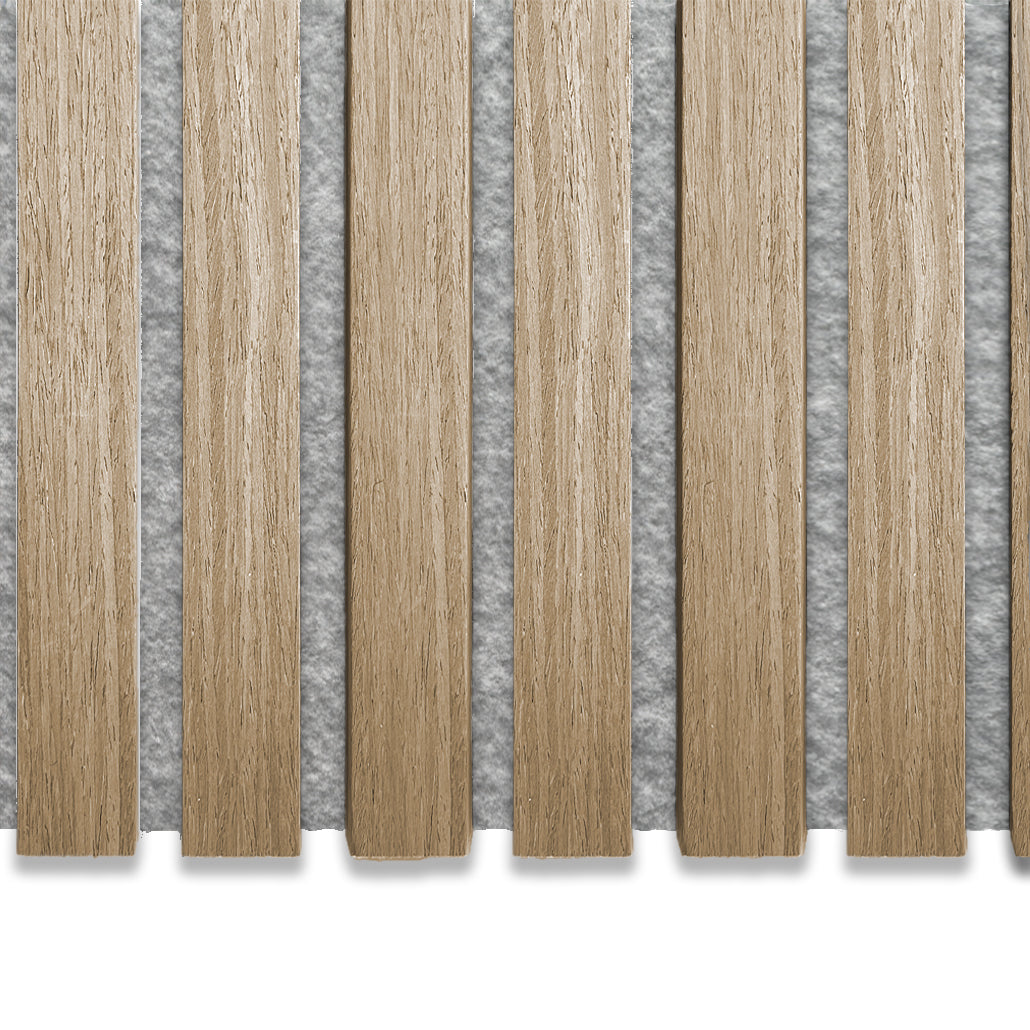
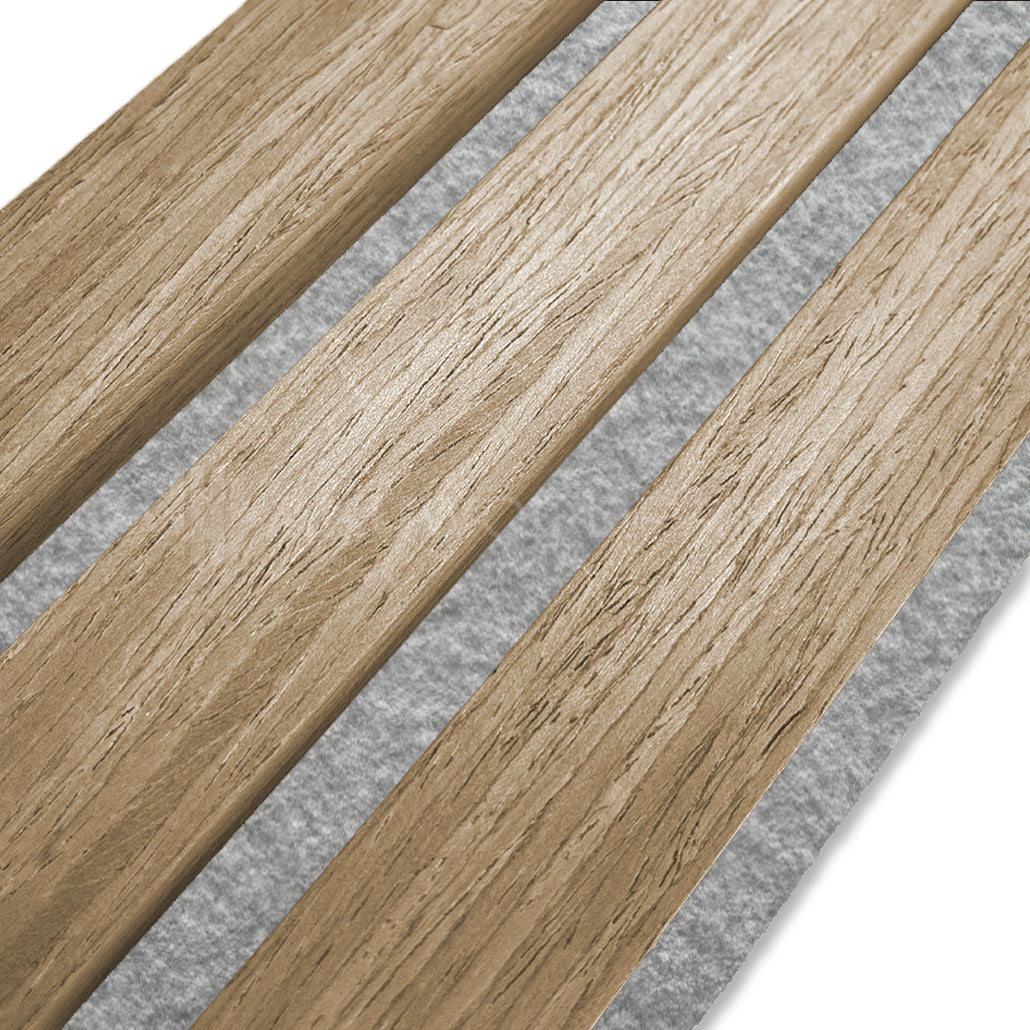
| Natural Oak Grey Felt | Corridors with an echo problem | Grey felt shows through the slat gaps for contrast | Harder to colour-match if you repair a panel later |
| Rustic Oak Premium 3-Sided Veneer | Farmhouse and period hallways | Heavy grain hides everyday marks | Busy pattern can clash with patterned floor tiles |
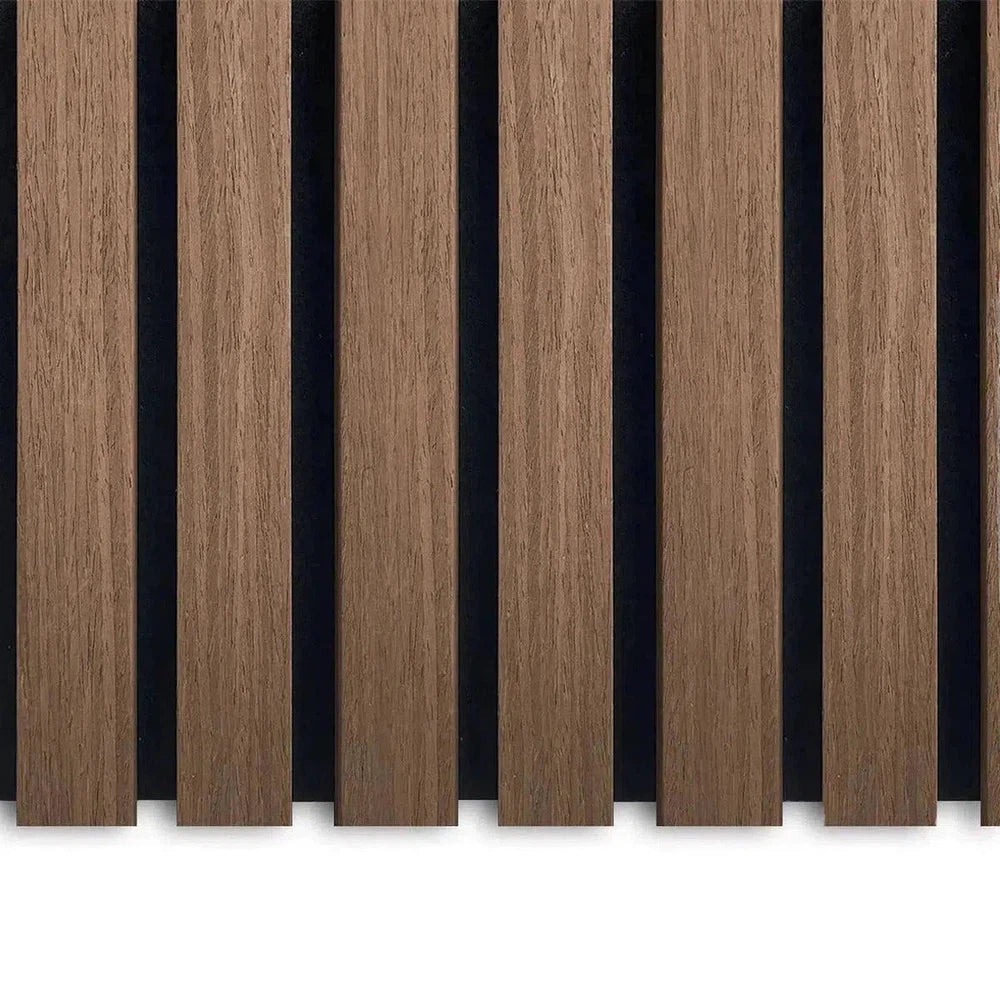
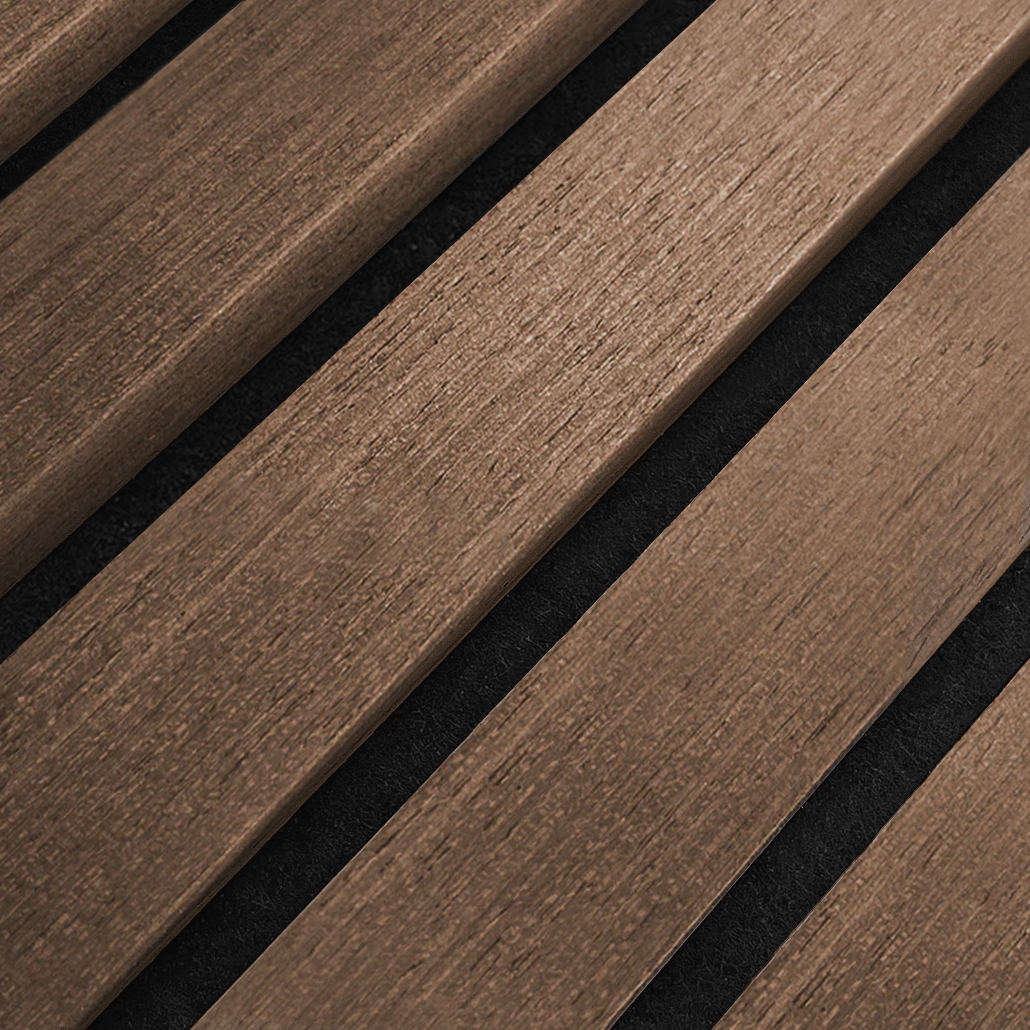
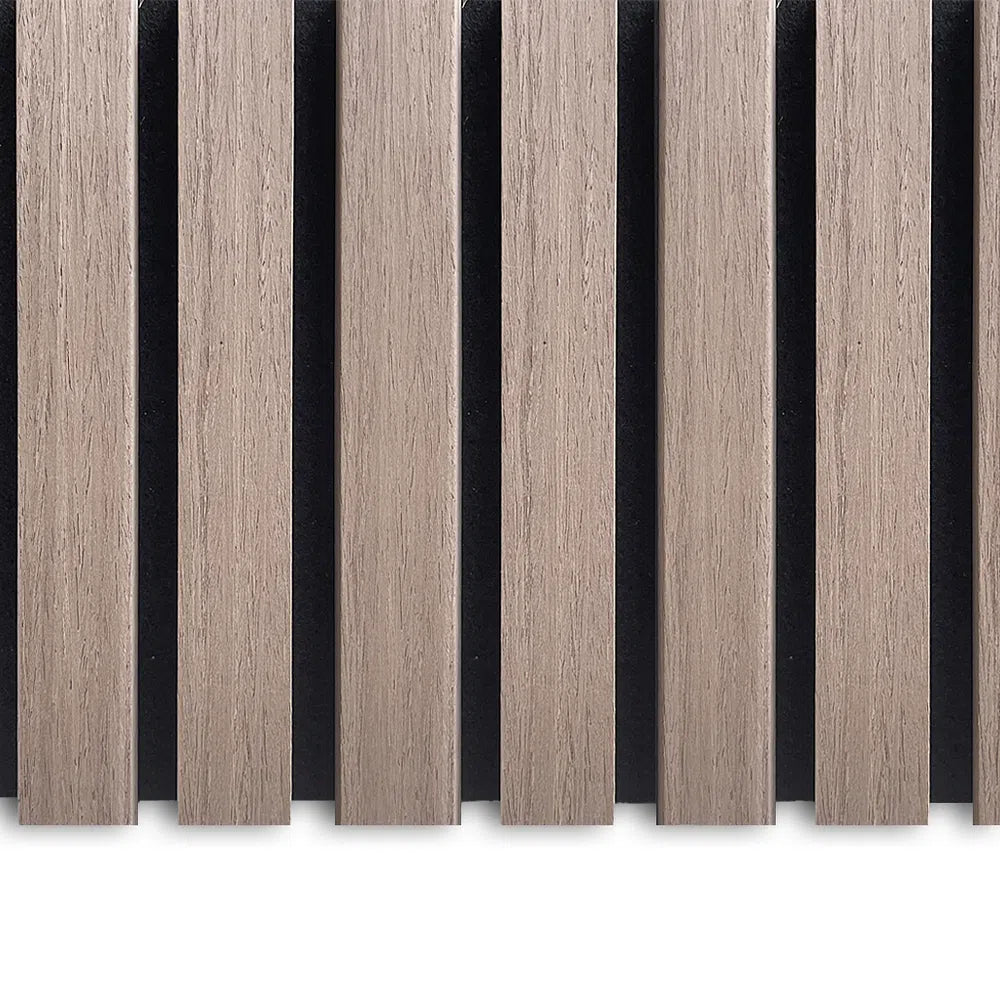
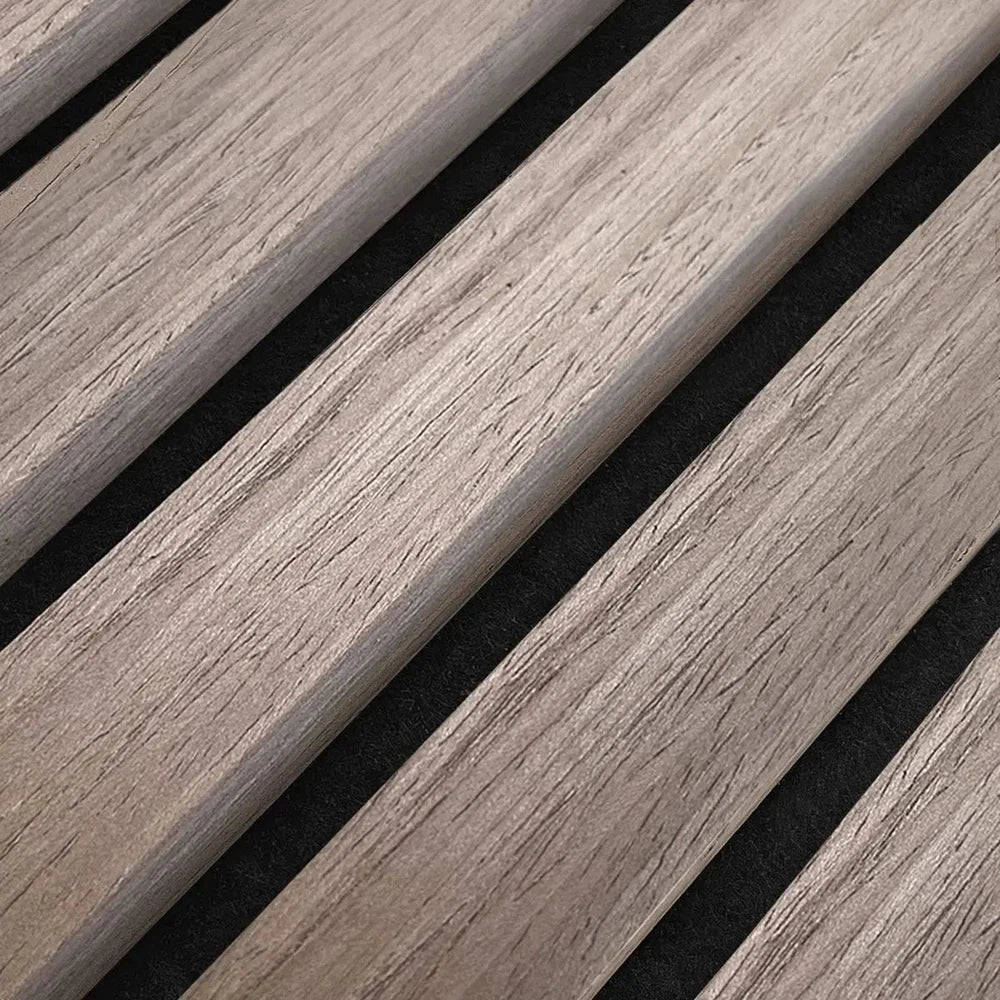
| Smoked Oak Wall Panel | Dark, moody feature walls | Deep tone still shows real wood grain in daylight | Can shrink a windowless hallway visually |
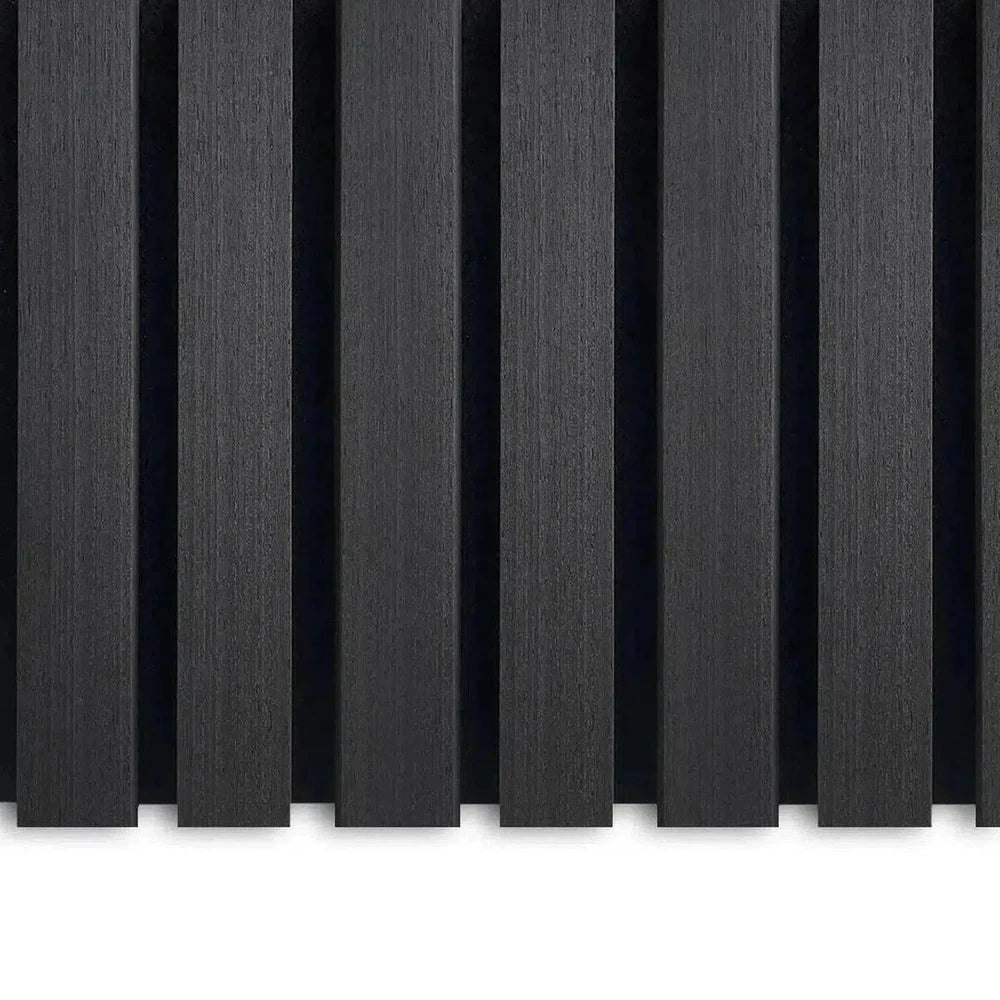
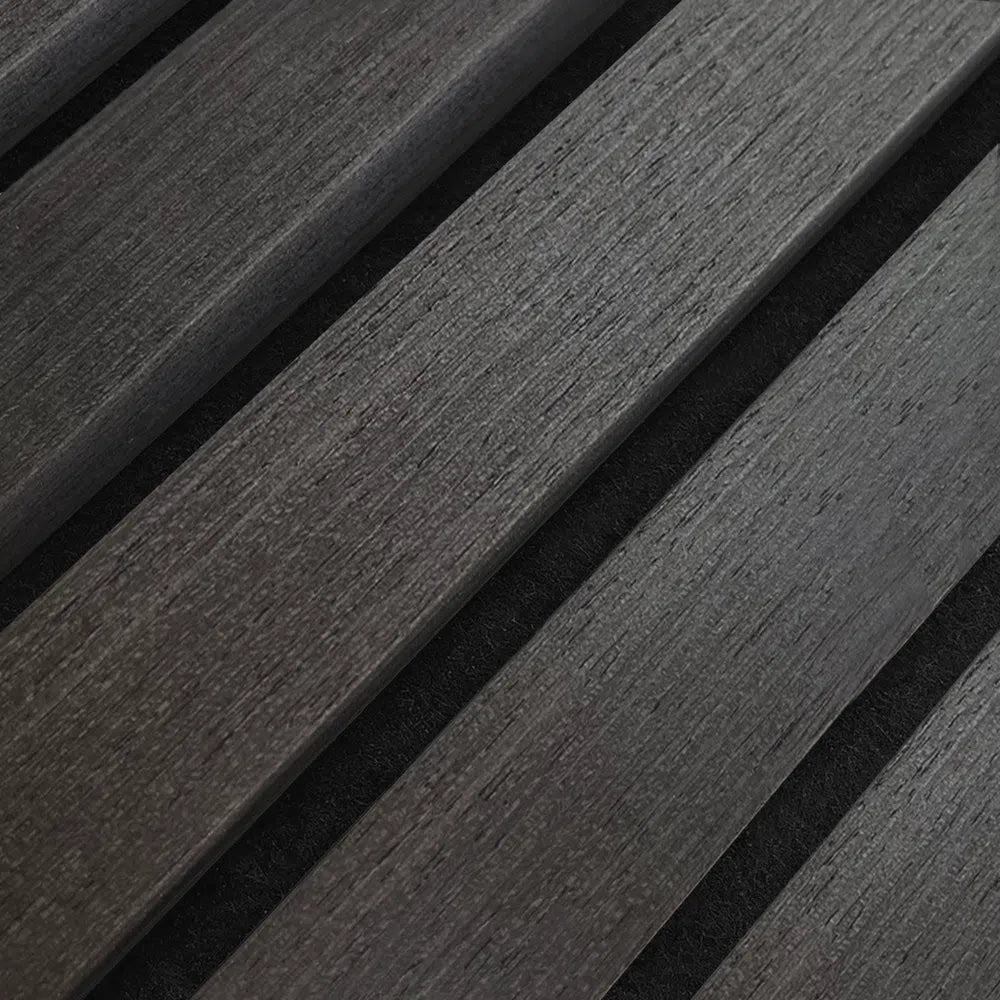
| Black Oak Wall Panel | High-contrast staircase walls | Strongest contrast against white skirting and spindles | Needs strong natural light or it reads flat |
| Hexagon Acoustic Panel Natural Oak | Small entryways and awkward nooks | Geometric tiles fit short runs without long cuts | Not built for full-length hallway coverage |
1. Natural Oak Wall Panel: best wooden wall panel for bright, narrow hallways
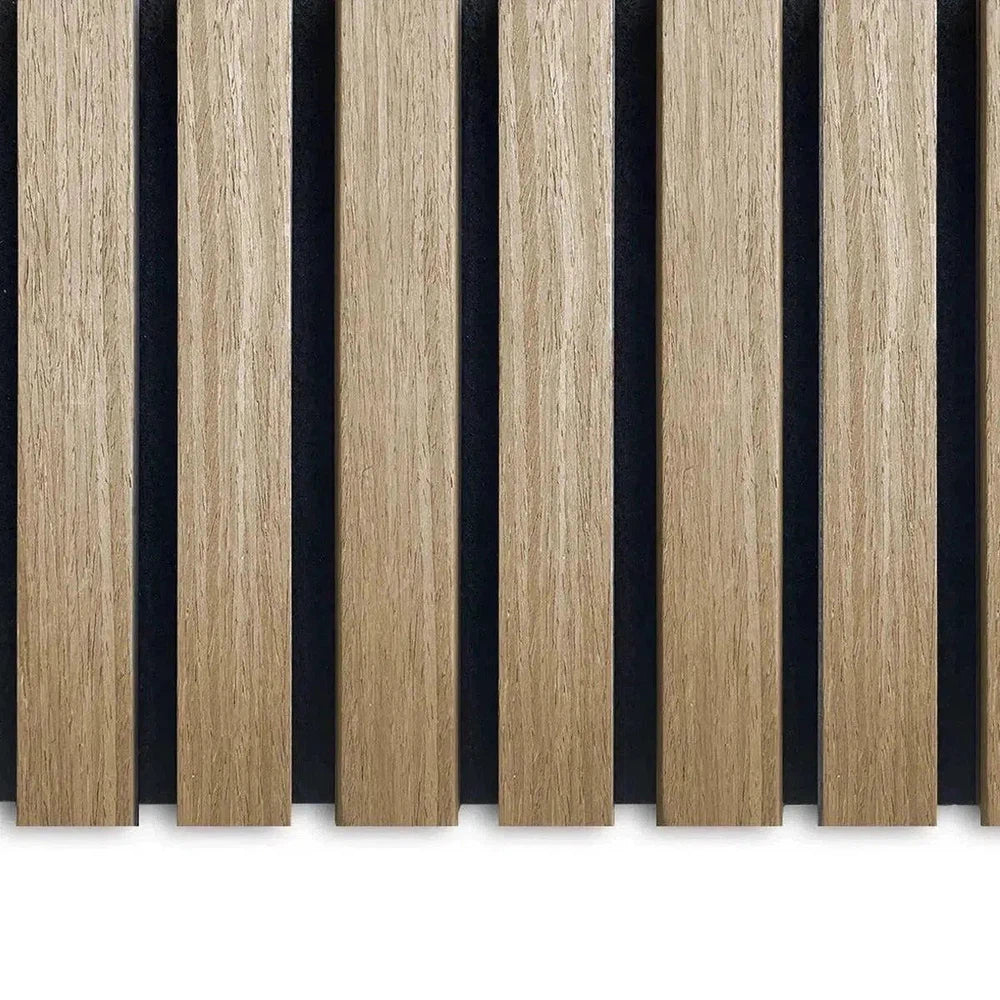
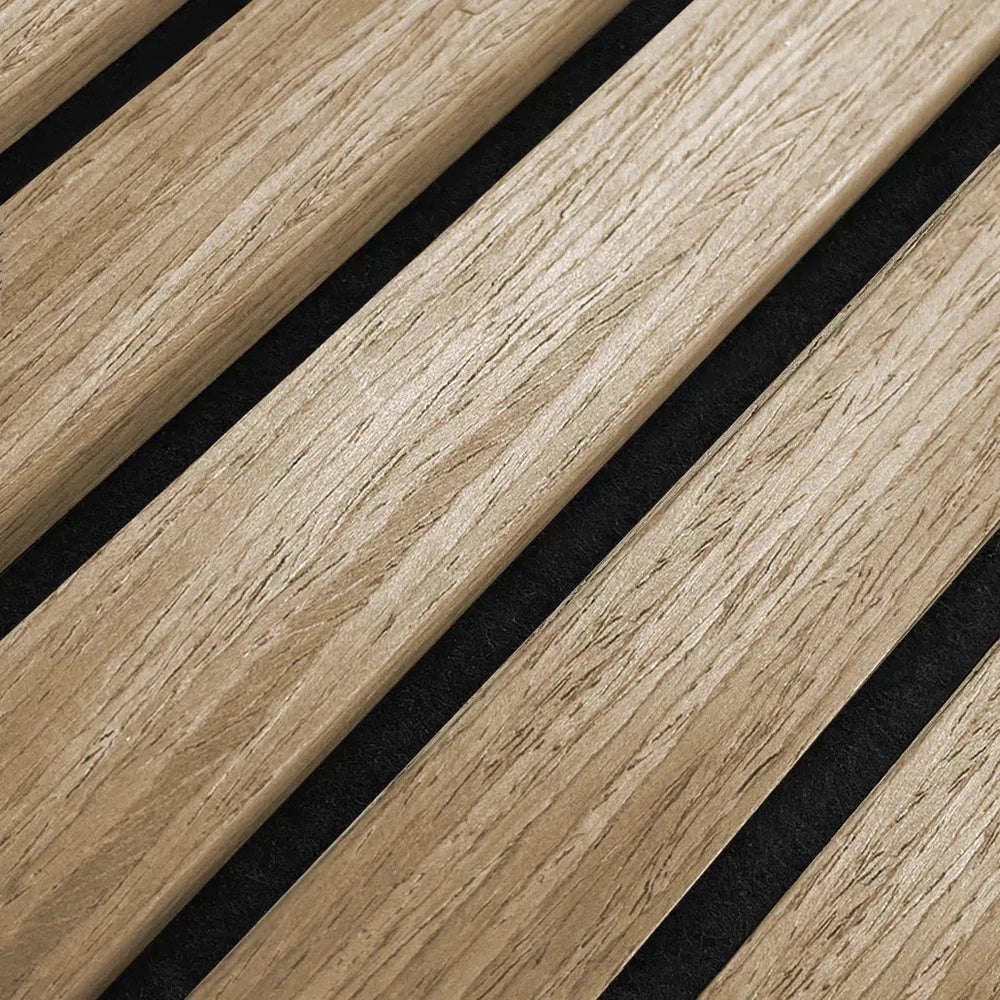
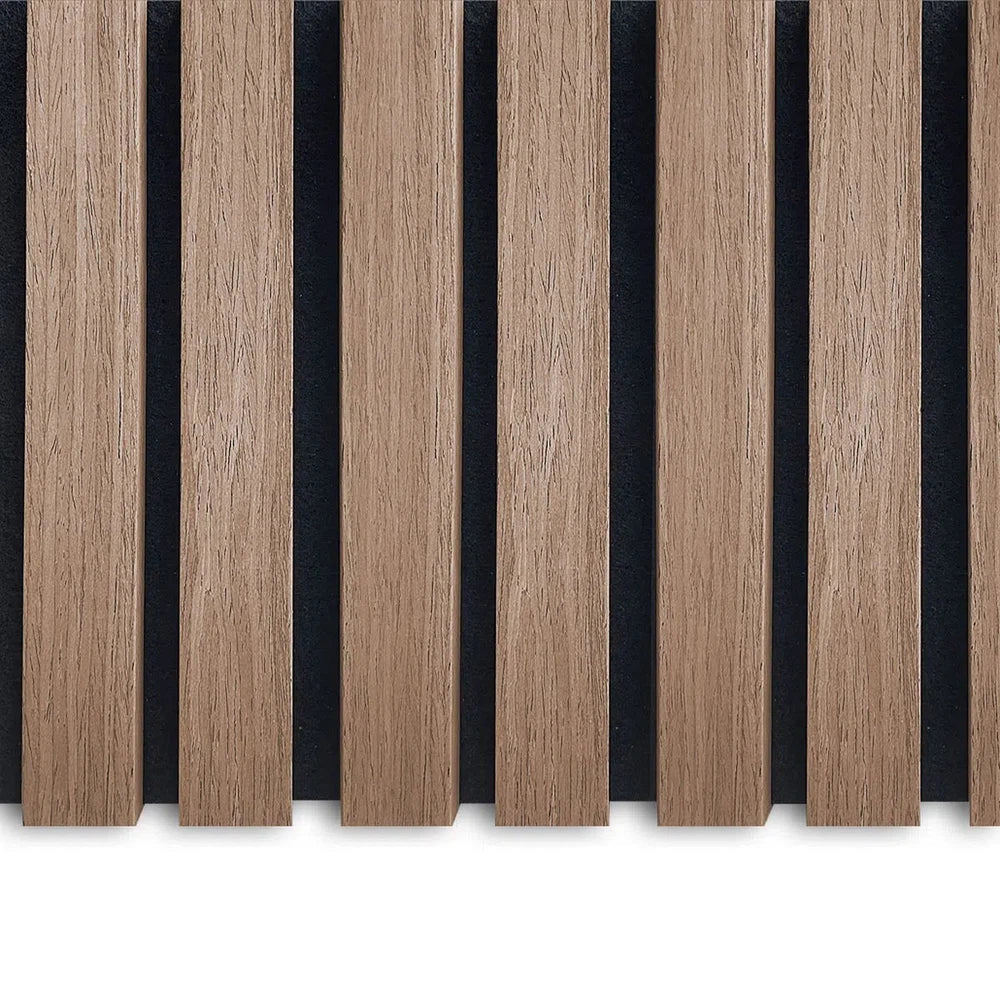
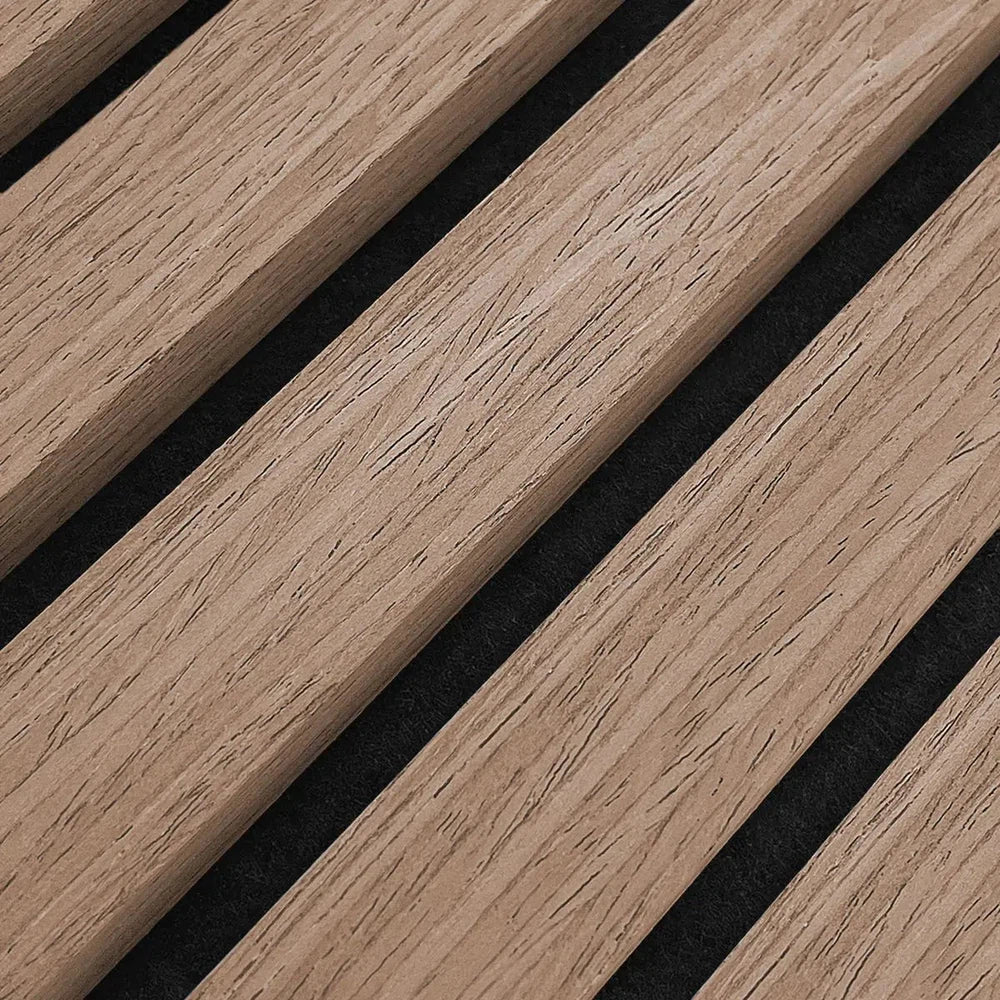
Natural Oak carries a light, 3-sided real wood veneer face with the same acoustic felt backing found across the Akustiq UK indoor range, in both 240cm and 300cm lengths. It's the panel most hallways can take without a redesign, because the tone lifts light rather than absorbing it.
Natural Oak pros:
- Light oak tone reflects available light in dim or windowless corridors
- Real wood veneer grain reads as genuine, not a printed pattern
- Felt backing takes the edge off hard-floor echo
- Two length options fit standard and taller ceilings
Natural Oak cons:
- Light tone shows scuff marks from bags and pushchairs more than darker finishes
- Needs a reasonably straight, level wall run - not ideal on uneven Victorian plaster
Best for: bright, narrow hallways that need warmth without extra lighting. Verdict: Buy.
2. Natural Oak Grey Felt: best wooden wall panel for a hallway with an echo problem
This panel keeps the same natural oak wood face as the standard version but shows grey felt through the slat gaps instead of a matching tone, giving a deliberate two-tone look while carrying the same acoustic backing.
Natural Oak Grey Felt pros:
- Grey felt gaps add contrast against pale oak that reads intentional, not unfinished
- Acoustic felt backing softens footsteps and door slams in a corridor
- Same 3-sided veneer quality as the standard Natural Oak panel
Natural Oak Grey Felt cons:
- The oak-and-grey combination is a specific look, harder to match if you extend into an adjoining room later
- Spare panels for future repairs need to match the exact felt tone, not just the wood finish
Best for: hallways where the actual complaint is noise, not just a bare wall. Verdict: Buy.
3. Rustic Oak Premium 3-Sided Wood Veneer: best wooden wall panel for a period hallway
Rustic Oak Premium carries heavier grain and visible knots on a 3-sided veneer, giving a reclaimed-wood look without the uneven thickness that real reclaimed timber brings to a fitting job.
Rustic Oak Premium pros:
- Grain variation hides dust and everyday marks better than smoother finishes
- Sits well against original skirting and dado rails in period homes
- Same panel format as the rest of the range, so end pieces and trims line up
Rustic Oak Premium cons:
- Busy grain can compete with patterned encaustic floor tiles common in Victorian hallways
- Not the pick if you want a clean, minimalist corridor look
Best for: farmhouse and period-property hallways with dado rails or original tiling. Verdict: Buy.
4. Smoked Oak Wall Panel: best wooden wall panel for a dark, moody hallway feature wall
Smoked Oak carries a deep, almost-black veneer that still shows wood grain in daylight, and it hides marks better than any lighter finish in the Akustiq UK range.
Smoked Oak pros:
- Hides scuffs and shoe marks better than lighter finishes
- Works as a backdrop for brass or black coat hooks and mirror frames
- Felt backing cuts hard-floor echo the same as the lighter finishes
Smoked Oak cons:
- Can make a windowless hallway feel smaller if run floor-to-ceiling on both walls
- Shows dust and light-coloured pet hair more than mid-tone finishes
Best for: hallways with a window or skylight that can carry a darker palette. Verdict: Buy.
5. Black Oak Wall Panel: best wooden wall panel for a high-contrast staircase wall
Black Oak sits at the darkest end of the range, a near-black veneer that still shows real wood grain up close rather than reading as flat paint.
Black Oak pros:
- Strongest contrast against white skirting, spindles, and stair risers
- Hides scuffs from school bags and pram wheels almost completely
- Pairs well with brushed brass or matte black stair rail hardware
Black Oak cons:
- Needs a genuinely bright hallway or the corridor reads as dark rather than dramatic
- The darkest finish in the range - order a sample panel before committing to a full run
Best for: staircase walls that get natural light from a landing window. Verdict: Hold - sample first.
6. Hexagon Acoustic Panel Natural Oak: best wooden wall panel for a small entryway
This is a hexagon-tile acoustic panel rather than a long slat panel, built for a feature patch rather than a full wall run - the shape that fits an awkward entryway where a straight panel would need constant cutting.
Hexagon Acoustic Panel pros:
- Geometric shape works in short entryway runs where slat panels need awkward cuts
- Acoustic backing tackles echo right by the front door, where hard floors and slamming doors create the worst noise
- Easier to arrange around a light switch or thermostat than a continuous slat panel
Hexagon Acoustic Panel cons:
- Pattern-matching hexagons around doorframes takes longer than fitting straight slat panels
- Not the right choice for a long, straight hallway run - it's built for a feature patch, not full coverage
Best for: small entryways and awkward nooks where a slat panel would need too many cuts. Verdict: Buy.


“If your hallway echoes when the front door closes, felt-backed panels fix that before paint ever could.”
How we ranked these hallway wall panels
Each panel above was checked against the five criteria listed earlier: real wood veneer over printed laminate, length options for ceiling height, acoustic backing, scuff resistance, and how well it fits around hallway obstacles like switches and doorframes. No panel wins on every criterion - Natural Oak trades scuff resistance for brightness, Black Oak trades light-friendliness for contrast. That trade-off is why the list reads as six different hallway problems, not six competitors for the same wall.
Which wooden wall panel should you choose for your hallway?
If you're not sure where to start, default to Natural Oak - it's the safest pick for the widest range of UK hallway layouts in 2026, and it won't fight a hallway that gets limited daylight. Swap to Smoked Oak or Black Oak only once you've confirmed the corridor gets real natural light from a window, skylight, or landing. If noise is the actual complaint rather than the look, Natural Oak Grey Felt or the Hexagon Acoustic Panel earn the spot instead - both carry the same acoustic felt backing but solve for sound first.
FAQ
What's the best wooden wall panel for a hallway in 2026?
Natural Oak is the best all-round wooden wall panel for a hallway feature wall in 2026 because its light tone brightens narrow or windowless corridors. Smoked Oak and Black Oak are better choices once the hallway already gets strong natural light.
Is a dark or light wood panel better for a windowless hallway?
Light finishes like Natural Oak work better in windowless hallways because they reflect the available light instead of absorbing it. Dark finishes such as Smoked Oak or Black Oak can make a windowless corridor feel smaller.
Do wooden hallway panels need acoustic backing?
Acoustic felt backing helps in any hallway with a hard floor, since footsteps and door slams echo more in a bare corridor than in a carpeted room. Every Akustiq UK indoor panel carries this felt backing, not only the ones labelled acoustic.
Should I choose 240cm or 300cm panels for my hallway?
240cm suits standard UK hallway ceiling heights, while 300cm suits taller Victorian hallways or a floor-to-ceiling look. Measure the wall height first, since cutting a panel down wastes the length you paid for.
Can wooden wall panels go on a curved or uneven hallway wall?
Straight slat panels need a reasonably flat, level wall run to sit properly, so an uneven Victorian plaster wall may need levelling first. Hexagon-tile acoustic panels handle small irregularities better since each tile fits independently.
How do hexagon acoustic panels differ from slat panels for a hallway?
Hexagon acoustic panels are tiled in small geometric pieces built for a feature patch, while slat panels run in long lengths for full wall coverage. Hexagon tiles suit short entryway runs; slat panels suit a long, straight corridor.
Do wooden wall panels scratch easily in a high-traffic hallway?
Lighter finishes like Natural Oak show scuffs from bags and pushchairs more visibly than darker finishes such as Smoked Oak or Black Oak. Grain and knot patterns, as on Rustic Oak Premium, also help disguise everyday marks.
Can I mix two wood finishes in one hallway?
Yes - a common approach is Natural Oak or Rustic Oak for most of the run with a darker finish like Smoked Oak framing a mirror or console table. Keep the panel length format the same across both finishes so end pieces line up cleanly.
One last thing
The felt backing isn't exclusive to panels labelled "acoustic" - Natural Oak, Smoked Oak, Black Oak, and Rustic Oak Premium all carry the same felt backing as the rest of the Akustiq UK indoor range. You get some echo control in a hallway even when you pick a panel purely for its colour.