


Six Akustiq UK acoustic wall panel lines can be installed as a DIY kit in 2026, and the right pick depends on what you're solving: echo, a dull feature wall, or a bare home cinema wall that eats light.
- Natural Oak Wooden Wall Panel is the best overall diy acoustic wall panel kit for living rooms in 2026.
- Natural Oak with Grey Felt backing wins for home offices where echo control matters more than looks.
- Smoked Oak suits dark feature walls and home cinemas; Walnut suits premium rooms but costs visual weight in small spaces.
- Hexagon Acoustic Panel Natural Oak carries an NRC 0.75 rating and fits accent-wall layouts standard slats can't.
- Order a sample panel first — colour on screen rarely matches the wood grain in your room's light.
Why this matters
Most "acoustic panel" searches in 2026 land on either bare MDF slat kits with no felt backing or fabric-wrapped foam that looks like a recording booth. Neither solves the actual problem for a living room or home office: you want the echo gone and the wall to look intentional.
The Natural Oak Wooden Wall Panel is the closest thing to a default answer here — real wood veneer on three sides, acoustic felt backing, and enough finish options that it works in most UK homes without a redesign. If you want the install itself walked through step by step, the guide to using acoustic panels in a DIY home project covers tools and sequencing before you buy anything.
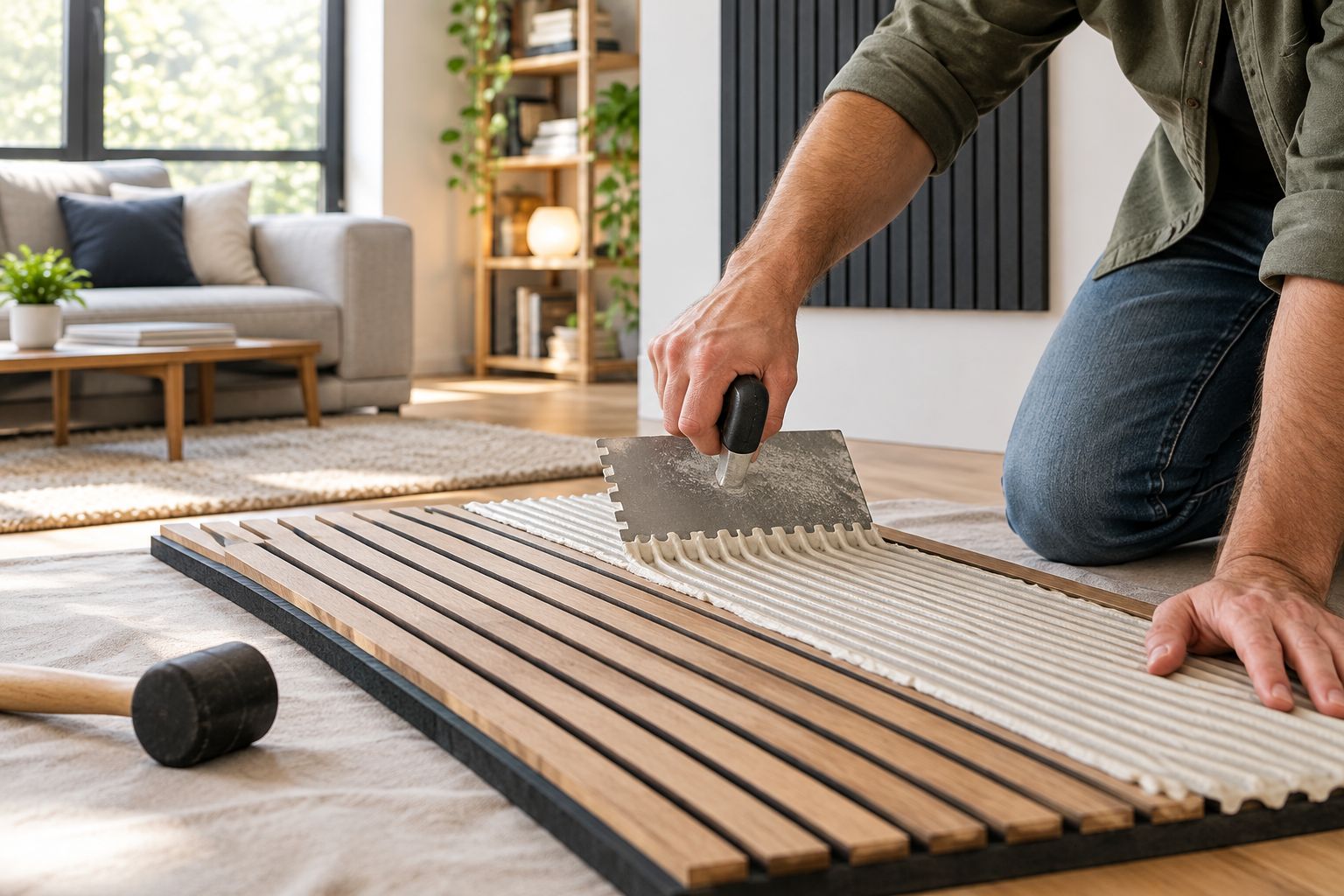
Every diy acoustic wall panel kit in this comparison ships as individual slats or hexagons you glue or screw to a stud or plasterboard wall — no contractor, no plastering.
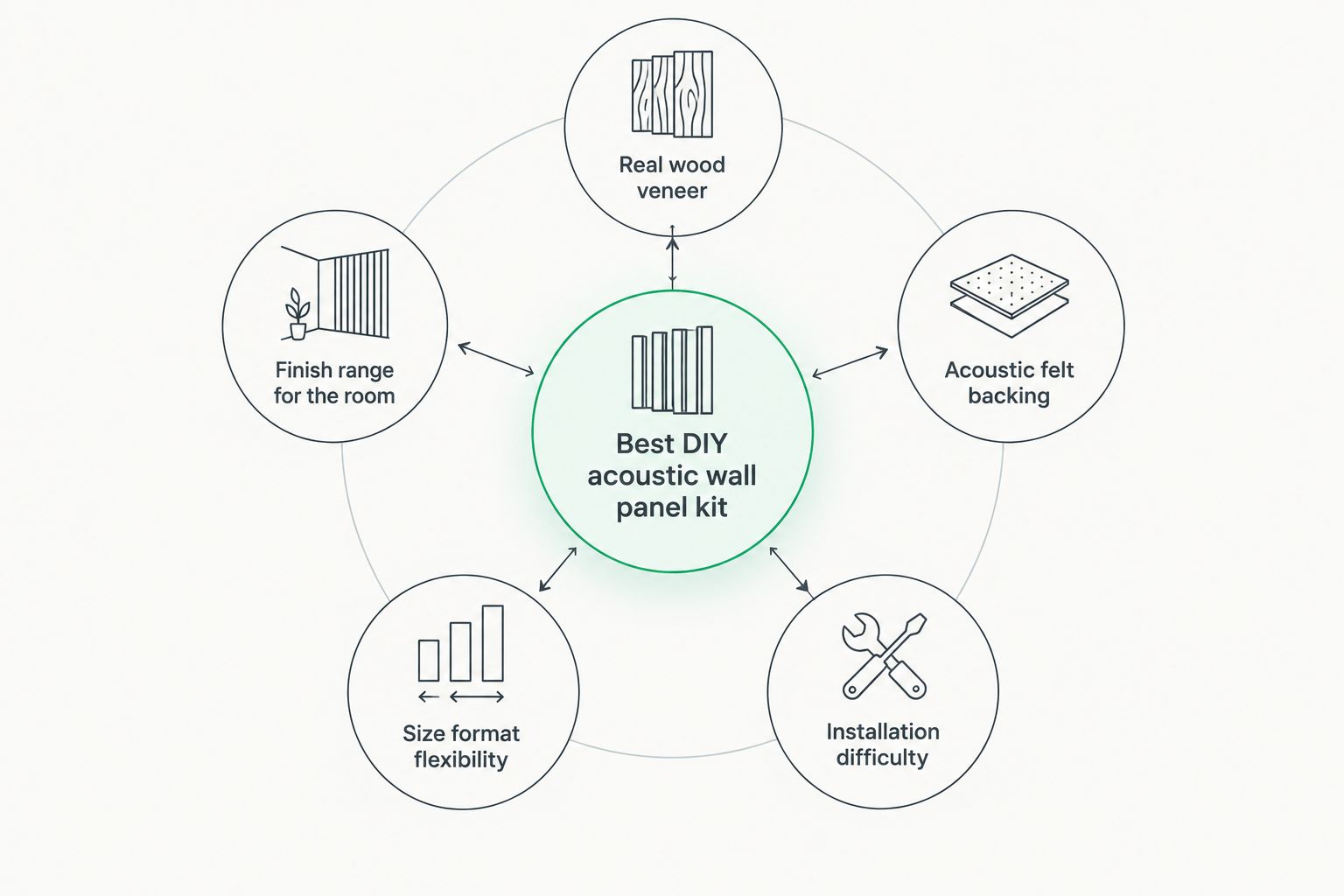
What makes the best DIY acoustic wall panel kit
- Real wood veneer, not printed vinyl — grain should read as wood up close, not a photograph of wood.
- Acoustic felt backing — the felt layer behind the veneer is what actually absorbs sound; a slat panel without it is decorative only.
- Installation difficulty — glue-up vs. screw-fix, and how forgiving the panel is of a slightly uneven wall.
- Size format flexibility — 240cm and 300cm formats cover most UK ceiling heights without extra cutting.
- Finish range for the room — lighter oaks open up small rooms; smoked and black tones suit low-light spaces.
- How it performs as an accent, not just a full wall — hexagon and slat formats behave differently in a partial-wall layout.
Best DIY acoustic wall panel kits at a glance
| Kit | Best for | Standout feature | Key limitation |
|---|---|---|---|
| Natural Oak Wooden Wall Panel | Overall / living rooms | 3-sided veneer with felt backing | Light tone only, not for dark-theme rooms |
| Natural Oak with Grey Felt | Home office echo control | Grey felt shows less than white behind slats | Fewer wood-tone choices than standard Natural Oak |
| Smoked Oak Wooden Wall Panel | Home cinema / dark feature wall | Deep smoked finish absorbs glare | Shows dust and fingerprints more than lighter finishes |
| Hexagon Acoustic Panel Natural Oak | Accent walls, creative layouts | NRC 0.75 rating, modular hexagon shape | More cutting and layout planning than straight slats |
| Walnut Wooden Wall Panel | Premium living rooms | Rich walnut grain reads as a statement wall | Visual weight can overwhelm a small room |
| Sample panels | Testing before you commit | Small enough to check against existing decor | Won't tell you how a full wall performs acoustically |
1. Natural Oak Wooden Wall Panel: best DIY acoustic wall panel kit overall
This is the panel most people should start with. It uses a 3-sided real wood veneer over an acoustic felt backing, comes in the 240cm and 300cm size formats, and reads as a warm, natural finish in almost any living room or hallway.
Natural Oak Wooden Wall Panel pros:
- Real wood veneer, not a printed laminate
- Felt backing does actual acoustic work, not just decoration
- Light tone suits small and low-light rooms without darkening them further
- Available in both size formats for standard and floor-to-ceiling walls
Natural Oak Wooden Wall Panel cons:
- Limited to one light wood tone — no option for a darker feature wall
- Grain pattern repeats across large runs, visible if you stand close
Best for: first-time DIY installers who want one panel that works almost everywhere.
Verdict: Buy. It's the safest starting point in the whole lineup.
2. Natural Oak with Grey Felt: best for echo reduction in a home office
Same veneer, different backing colour. The Natural Oak panel with grey felt is built for rooms where the felt is visible between slats — home offices and studies where the gap pattern shows against a plain wall.
Natural Oak with Grey Felt pros:
- Grey felt disappears into shadow gaps better than white or cream backing
- Same veneer quality and acoustic function as the standard Natural Oak line
- Reads calmer on video calls than a high-contrast dark panel
Natural Oak with Grey Felt cons:
- Only one wood tone paired with this felt colour
- Slightly less contrast makes the slat pattern less of a design statement
Best for: home offices and studies where you want quiet, not a feature wall.
Verdict: Buy if echo is the problem you're actually solving, not decor.
3. Smoked Oak Wooden Wall Panel: best for a home cinema feature wall
The Smoked Oak Wooden Wall Panel is the darkest standard slat option in the range, and it's the one that makes sense behind a projector screen or TV wall where reflected light is the enemy.
Smoked Oak pros:
- Dark finish cuts glare behind screens better than light oak tones
- Still carries the 3-sided veneer and felt backing of the rest of the range
- Hides minor wall imperfections better than pale finishes
Smoked Oak cons:
- Shows dust and fingerprints more visibly than lighter panels
- Can make a small room feel smaller if used on more than one wall
Best for: home cinema rooms, media walls, and low-light snugs.
Verdict: Buy for a dedicated media wall; skip it for a small, naturally dark room.
4. Hexagon Acoustic Panel Natural Oak: best for accent walls and creative layouts
This is the only panel in the lineup rated at NRC 0.75, and the hexagon shape means you're not locked into a single-direction slat run. It suits partial walls, stairwells, and rooms where a full slat wall would be too much.
Hexagon Acoustic Panel Natural Oak pros:
- NRC 0.75 sound absorption rating, the highest cited figure in this range
- Modular hexagon shape allows partial-wall and pattern layouts
- Same real wood veneer as the slat panels, just a different geometry
Hexagon Acoustic Panel Natural Oak cons:
- More layout planning and cutting than a straight slat run
- Not the right choice if you want a simple, single continuous panel wall
Best for: accent walls, stairwells, and anyone who wants a pattern instead of straight lines.
Verdict: Buy for a feature area; hold off if you just want a full, simple wall.
5. Walnut Wooden Wall Panel: best for a premium living room finish
Walnut carries more visual weight than any oak tone in the range. It suits a living room built around dark furniture and warm lighting, but it's the one panel here that can overwhelm a small or narrow space.
Walnut pros:
- Rich, deep grain that reads as a genuine upgrade over oak tones
- Pairs well with dark furniture and brass or black fixtures
- Same felt-backed construction as the rest of the acoustic range
Walnut cons:
- Visual weight can make small rooms feel closed in
- Fewer size and felt-colour combinations than the Natural Oak line
Best for: larger living rooms and dining rooms with dark or warm-toned furniture already in place.
Verdict: Hold — measure the room and check the sample against your existing furniture before ordering a full run.
6. Sample panels: best for testing before you commit
Before any full-size order, a sample panel is the cheapest way to check that a wood tone actually matches your wall's light. Screens lie about wood colour more than almost anything else in a home renovation.
Sample panels pros:
- Lets you check grain and tone against your actual wall and lighting
- Removes the biggest risk in ordering wood panels sight-unseen
- Available across most finishes in the range
Sample panels cons:
- A small sample doesn't tell you how a full wall reads acoustically
- Adds a short delay before you can start the full installation
Best for: anyone ordering for the first time, regardless of which finish you're leaning toward.
Verdict: Buy — it's a low-risk step that prevents an expensive mismatch.


How we ranked
Each kit was measured against the six criteria above: veneer quality, felt backing, installation difficulty, size flexibility, finish range, and how it behaves as a partial-wall accent versus a full run. The Natural Oak Wooden Wall Panel wins overall because it clears every criterion without forcing a compromise; the rest of the list exists because rooms and use cases differ, not because the ranking is soft.
Which DIY acoustic wall panel kit should you choose?
If you're not sure, start with the Natural Oak Wooden Wall Panel and order a sample first. It's the one finish in the Akustiq UK range built to work in a living room, hallway, or bedroom without a design rethink. Swap to Smoked Oak for a media wall, Hexagon Acoustic Panel Natural Oak for an accent layout, and Walnut only once you've confirmed the tone against your furniture in daylight.
FAQ
What's the best DIY acoustic wall panel kit for a living room in 2026?
The Natural Oak Wooden Wall Panel is the best overall choice for a living room in 2026 because it pairs a 3-sided real wood veneer with acoustic felt backing in a light, versatile tone. It suits most UK living rooms without needing a full redecoration.
Is a hexagon acoustic panel better than a slat panel?
Neither is universally better — the Hexagon Acoustic Panel Natural Oak carries an NRC 0.75 rating and suits accent walls and pattern layouts, while slat panels like Natural Oak or Smoked Oak suit full, continuous wall runs. Choose hexagon for a feature area and slats for a whole wall.
Do acoustic wood panels actually reduce echo?
Yes, provided the panel has a felt backing layer behind the wood veneer — that felt is what absorbs sound, not the wood itself. A printed or veneer-only panel with no felt backing is decorative and won't meaningfully cut echo.
Can you install acoustic wall panels yourself?
Yes, Akustiq UK panels are designed as a DIY kit — most install with panel glue directly onto a flat stud or plasterboard wall. The guide to using acoustic panels in a DIY home project walks through the tools and sequence before you start.
Should I order a sample before buying a full acoustic panel kit?
Yes. Wood tone on screen rarely matches how it looks in your room's actual light, so a sample panel is the cheapest way to avoid an expensive mismatch before ordering a full run.
What size formats do acoustic wall panels come in?
Akustiq UK panels come in two size formats, 240cm and 300cm, which cover most standard and floor-to-ceiling UK wall heights without extra cutting.
Which acoustic panel finish works best for a home office?
Natural Oak with Grey Felt backing works best for a home office because the grey felt shows less between the slats than lighter backing, giving a calmer look on video calls while still absorbing sound.
One last thing
The detail people skip: felt backing colour matters as much as wood tone once panels are actually on the wall. Grey felt behind Natural Oak reads noticeably calmer in a home office than the same veneer over standard backing — order both samples side by side before deciding, not just the wood finish alone.
Share:
Best Acoustic Wall Panels for Contractors 2026
Best Acoustic Wall Panels for Interior Designers in 2026