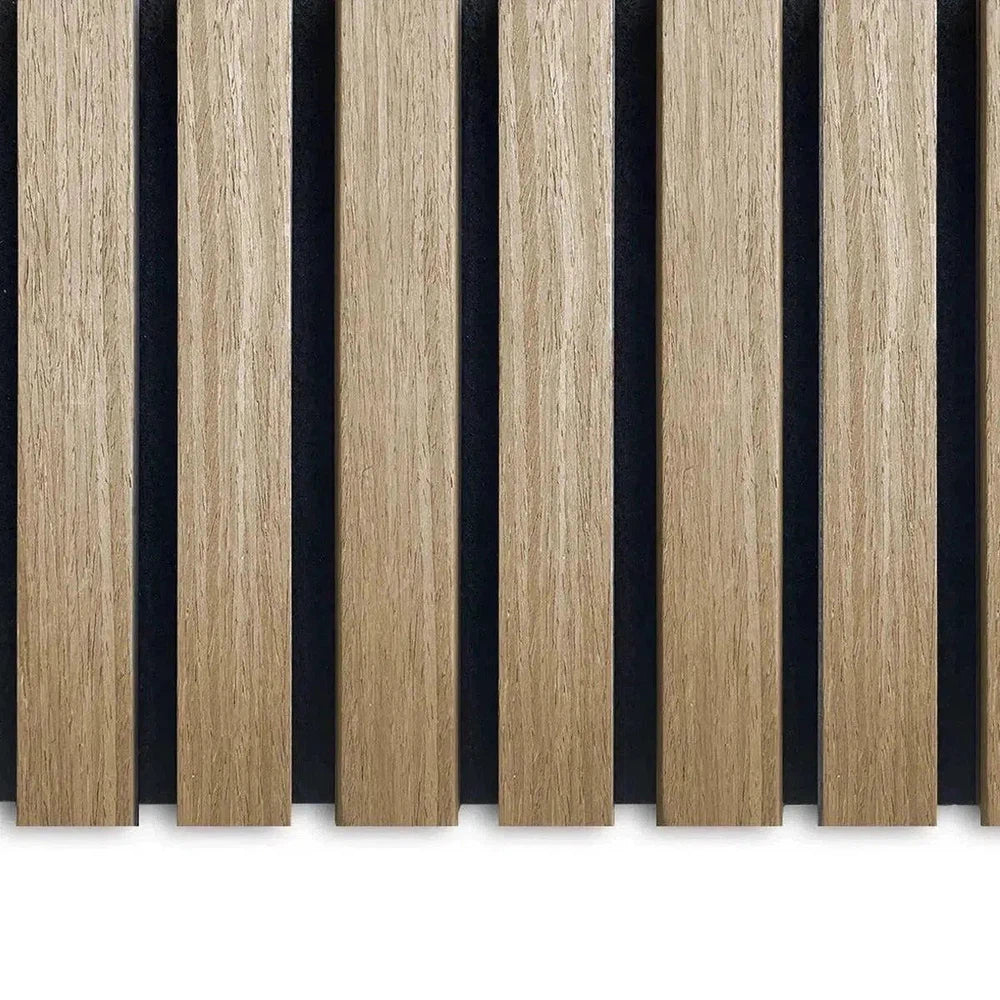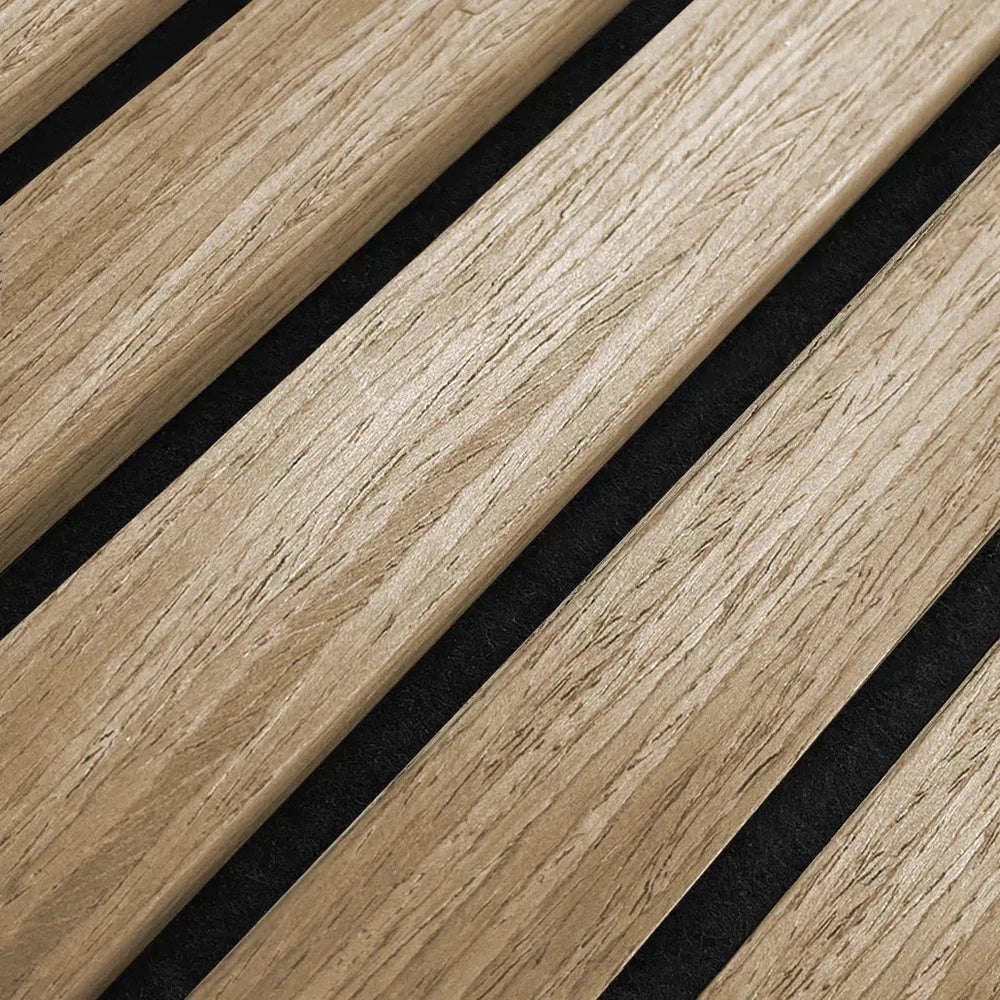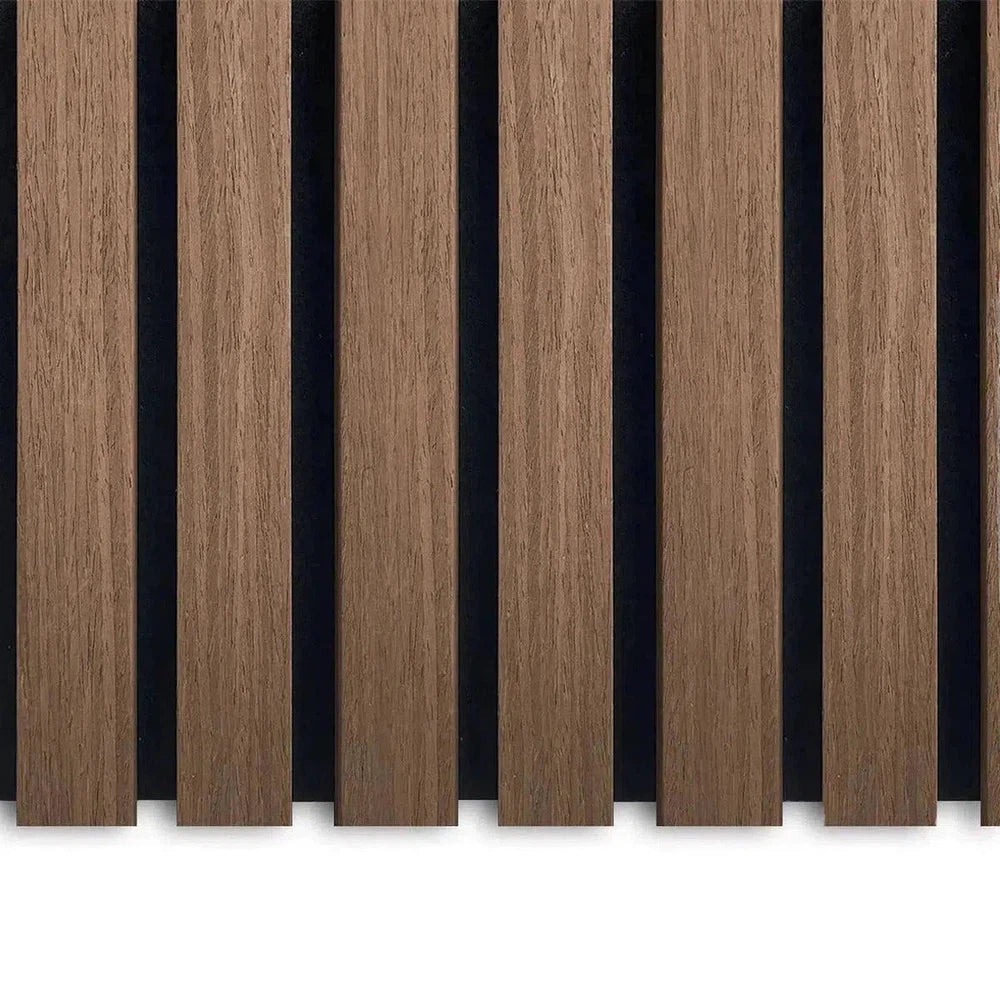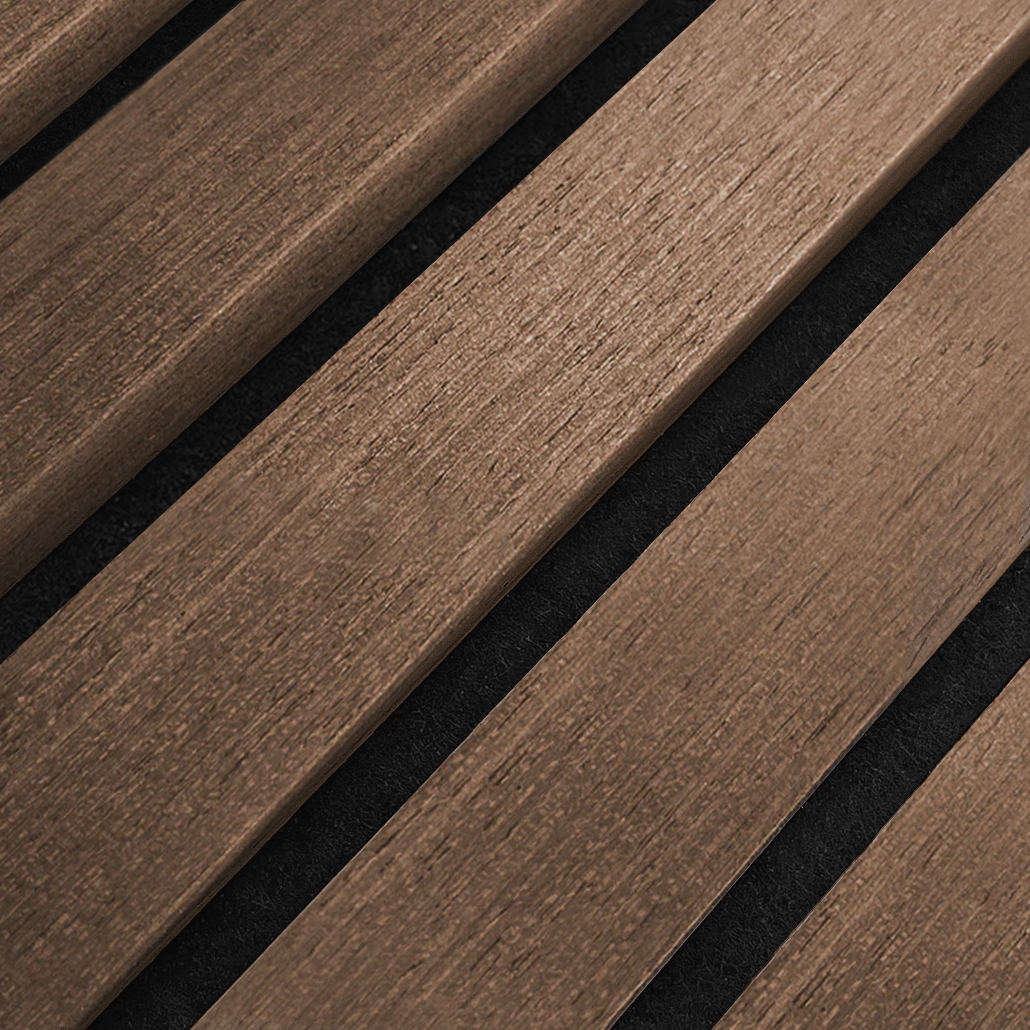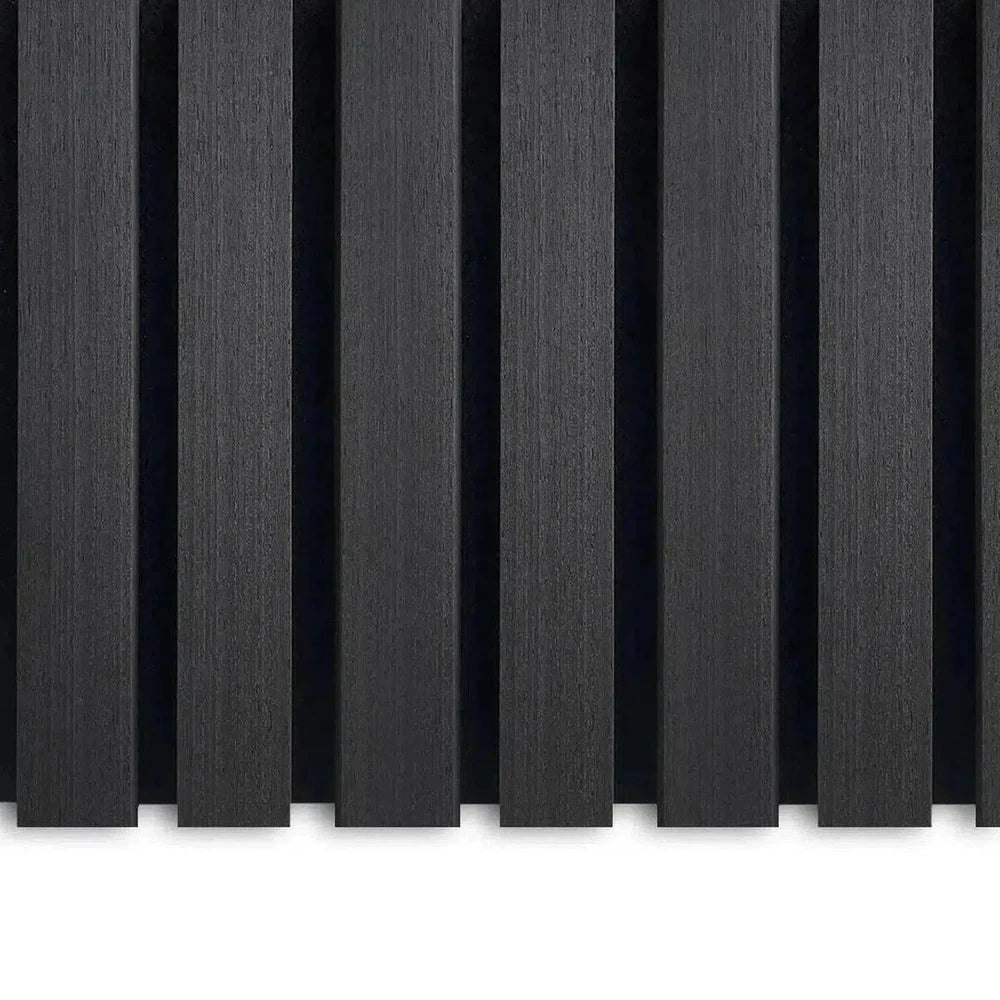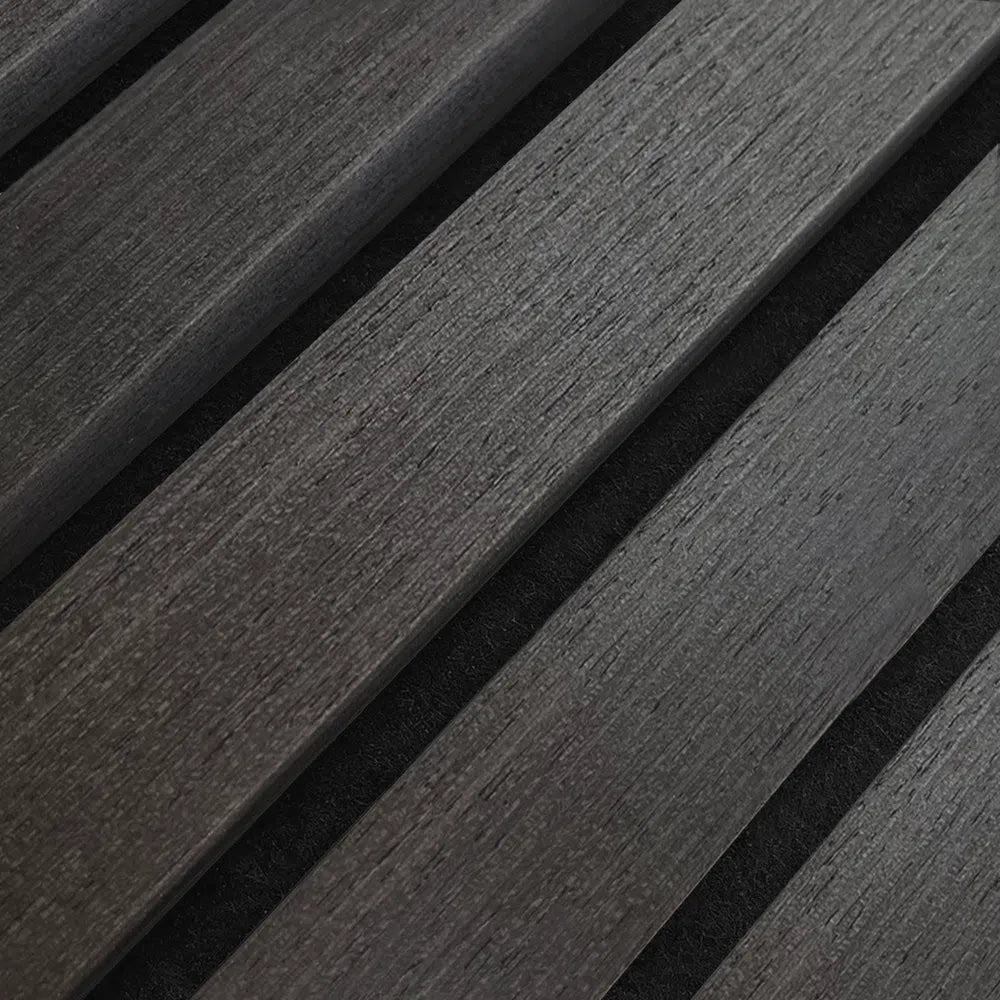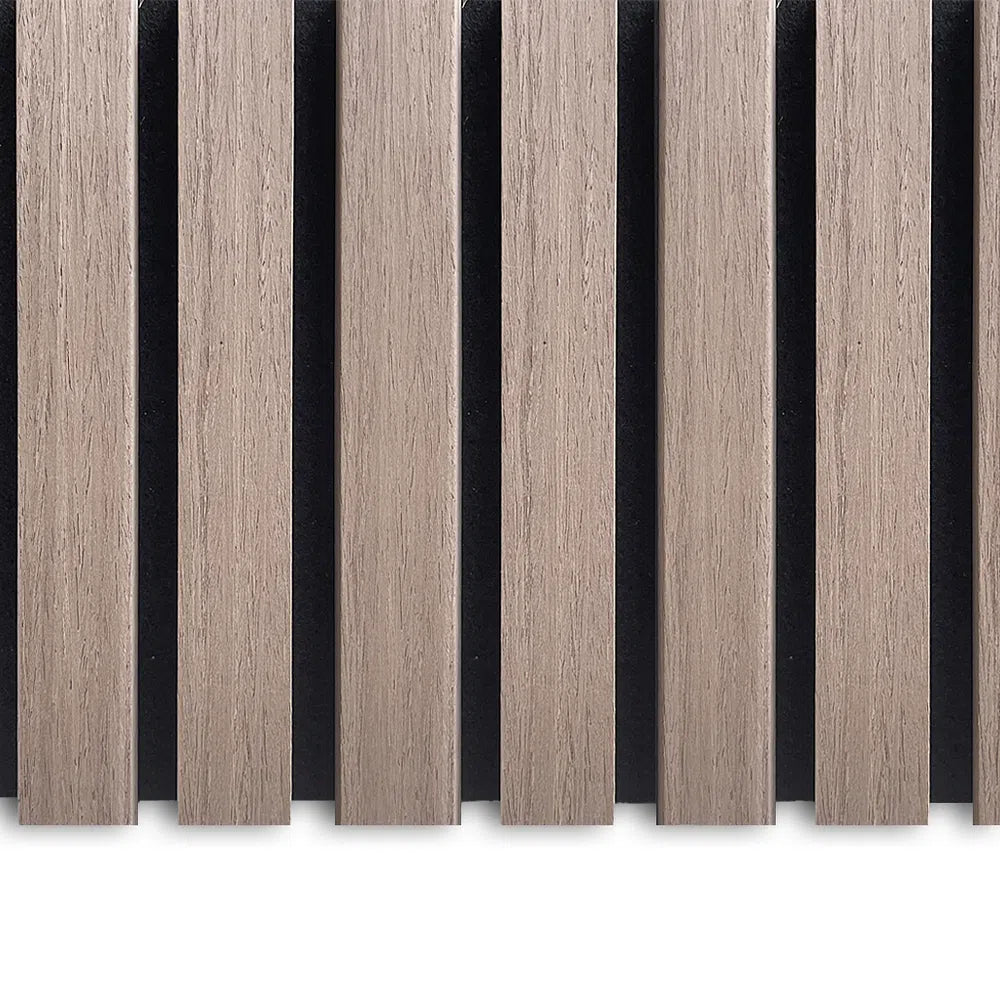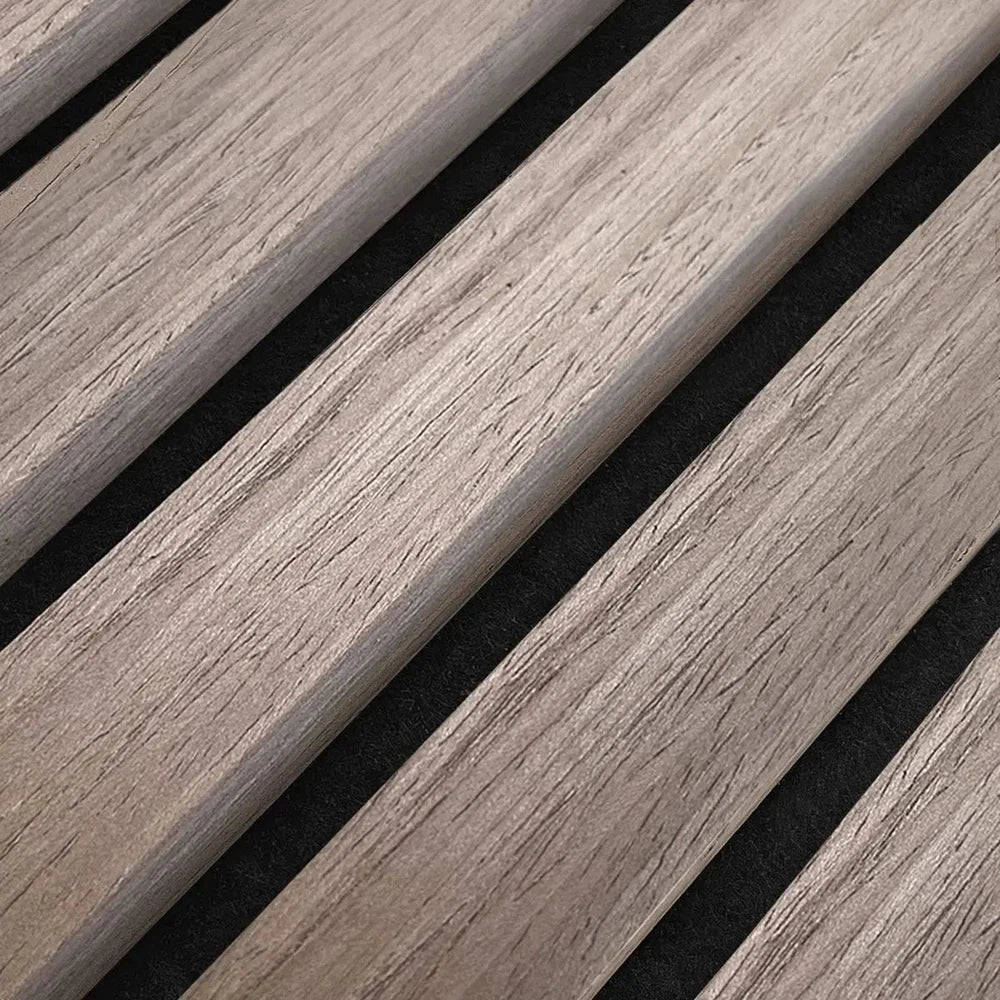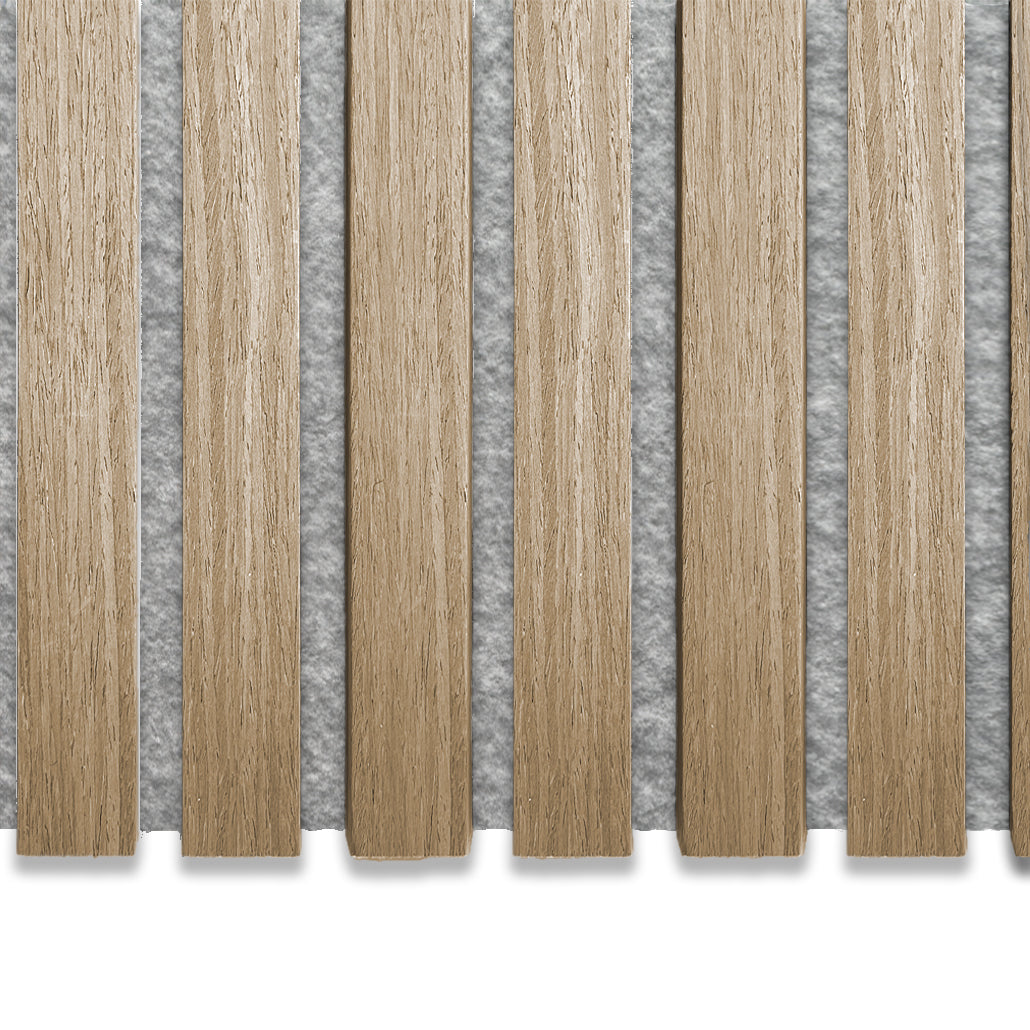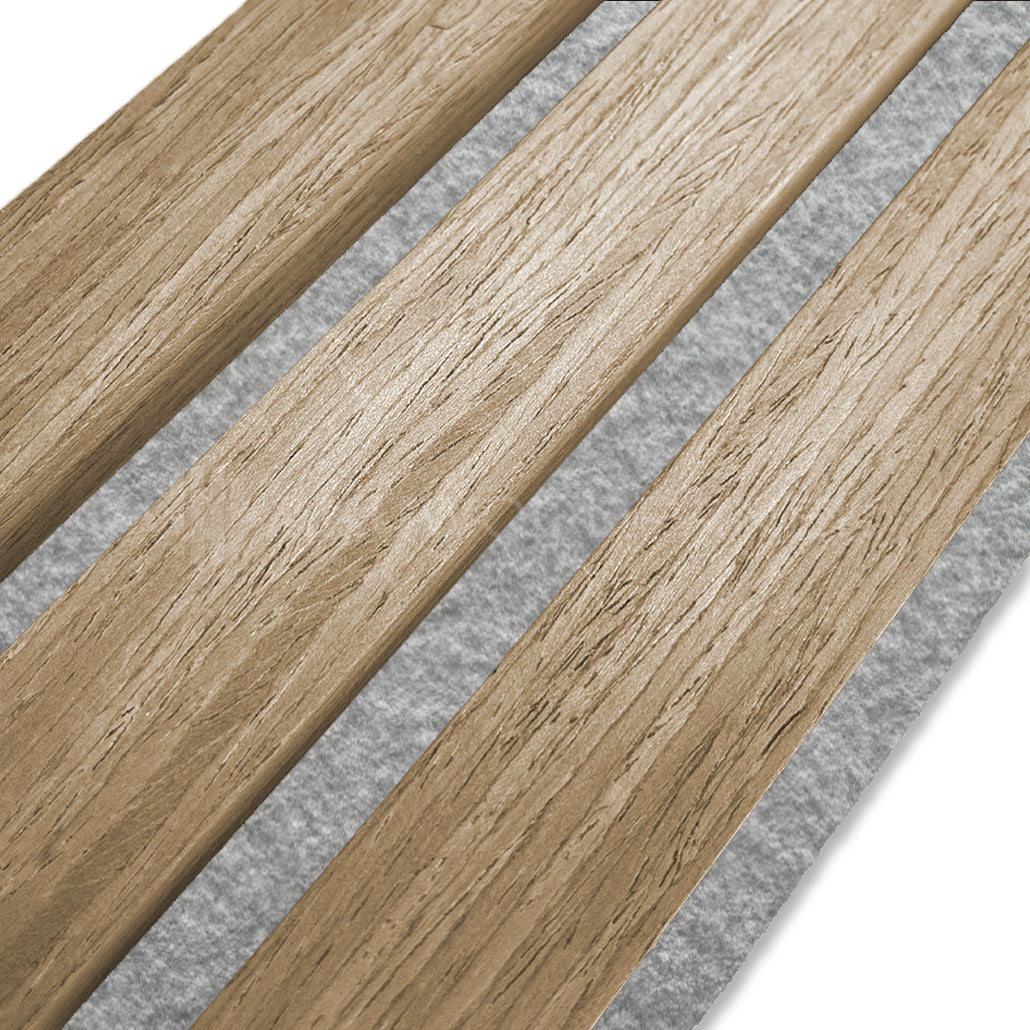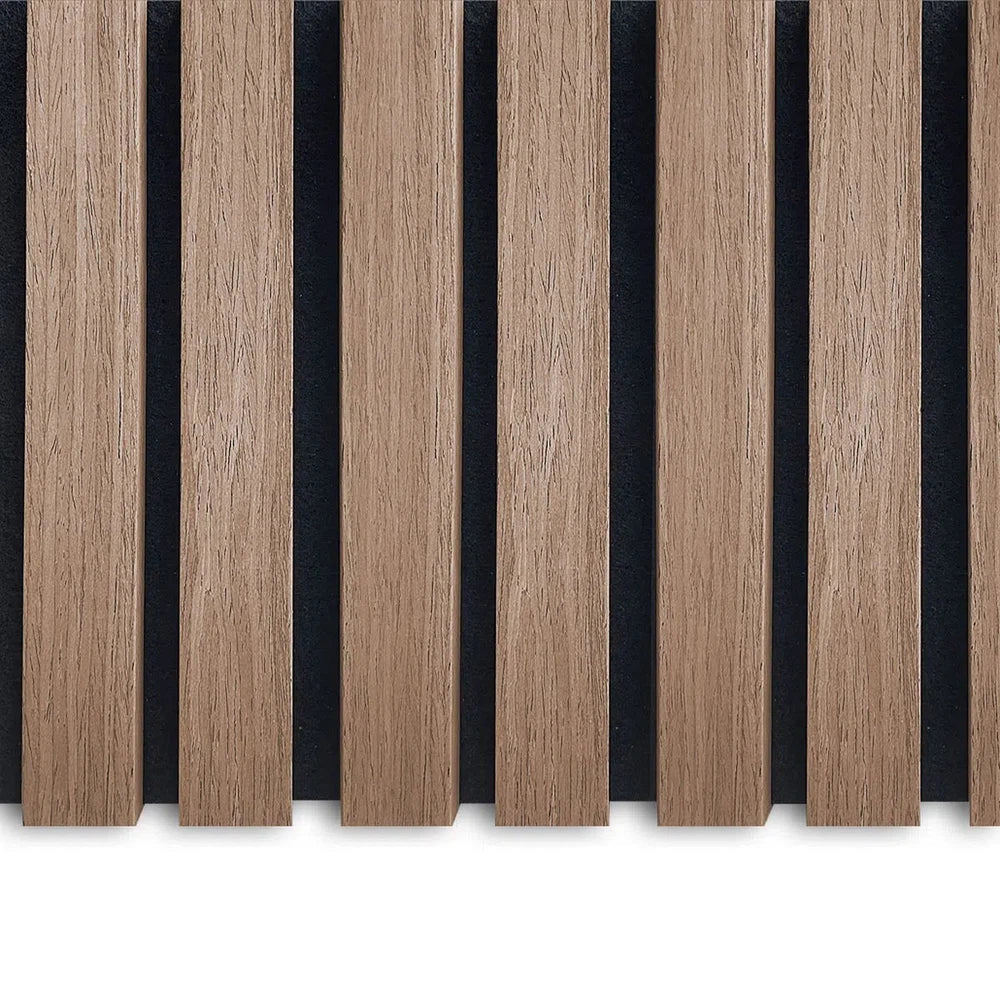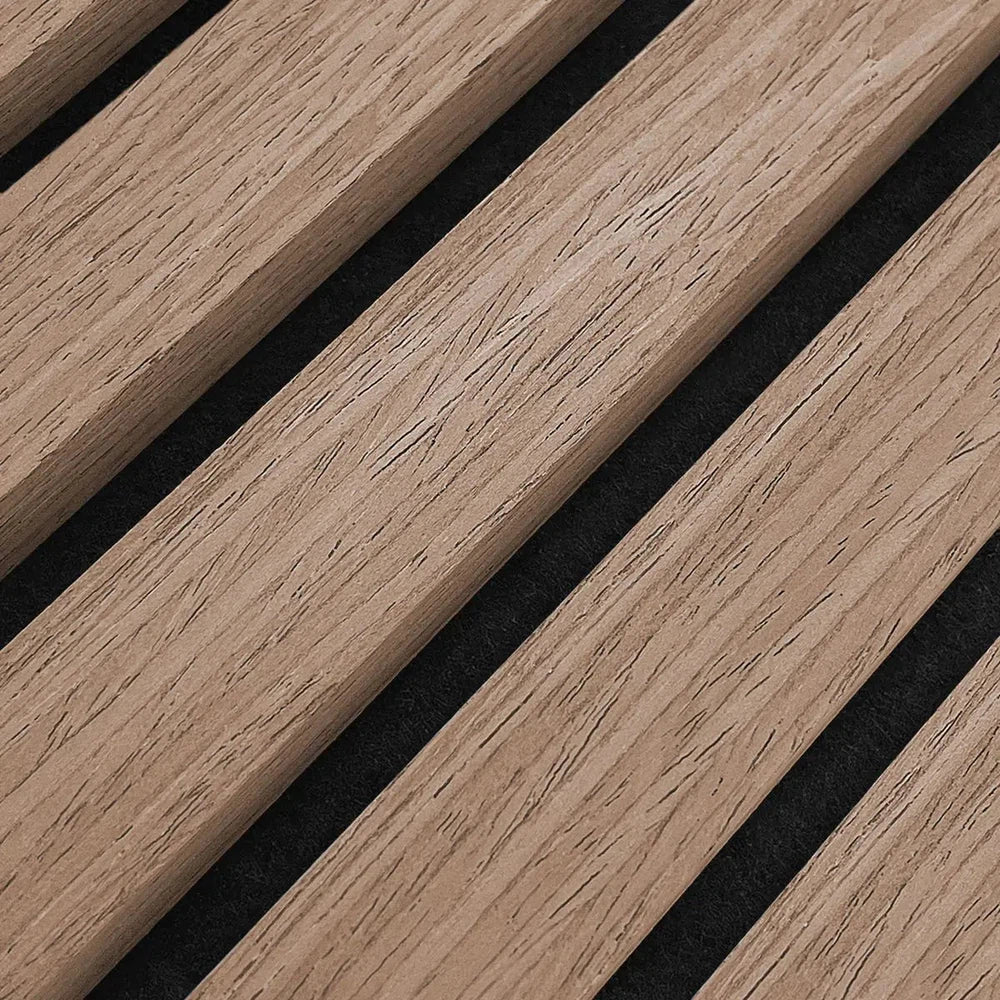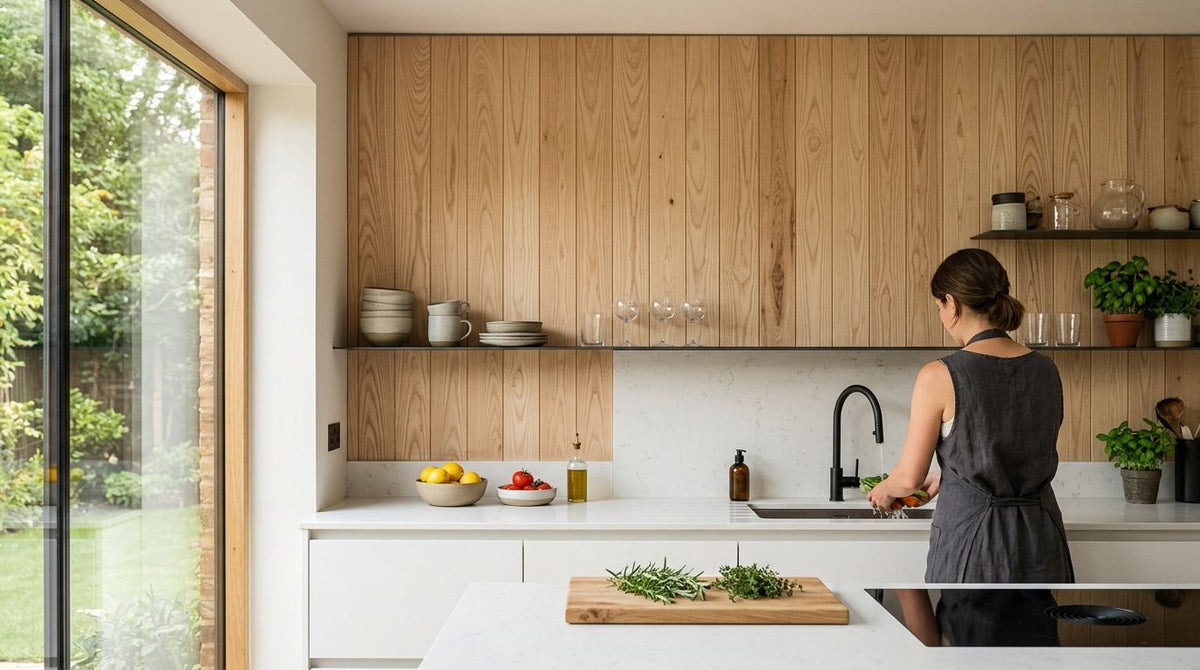
Ash wood wall panels for kitchen feature walls are pale, straight-grained timber panels fitted to break up hard, reflective kitchen surfaces and add warmth next to worktops, splashbacks and cabinetry. Genuine ash veneer isn't part of AKU Woodpanel's current wood panel range in 2026, so the practical build for that pale, tight-grain look is Natural Oak or Grey Oak panelling styled to the same tone.
- Ash wood wall panels for kitchen feature walls need a pale, straight grain — AKU Woodpanel's Natural Oak is the closest stocked match in 2026.
- Grey Oak panels suit cooler kitchen palettes; Natural Oak suits warmer honey-toned worktops and cabinetry.
- AKU Woodpanel panels ship in 240 cm and 300 cm formats, covering most standard kitchen ceiling heights without a horizontal seam.
- Keep panelling clear of direct hob splash and steam to protect the veneer finish long-term.
- 3D decorative walnut accent panels add texture to a kitchen feature wall but aren't rated as a splashback material.
Why ash wood wall panels matter for kitchen feature walls
Kitchens stack hard, sound-reflective surfaces on top of each other: tile splashbacks, stone or laminate worktops, glass cabinet fronts, stainless appliances. None of that absorbs sound or adds visual texture, which is why a single pale wood wall reads as a relief rather than clutter. An ash-toned Natural Oak wall panel does that job without introducing another dark, competing surface into a room that's often already busy with cabinet colour.
The appeal of an ash-pale tone specifically is that it sits neutral against both warm timber worktops and cooler white or graphite cabinetry — darker options like smoked oak or black oak don't do that as easily. The verdict for most kitchens chasing an ash look in 2026 is Natural Oak for warm palettes and Grey Oak for cool ones, since neither introduces the heavy, dark grain that reads more like a bar or study than a kitchen.
Fitting an ash-toned panel wall, step by step
Define your kitchen feature wall zone
Not every kitchen wall is a good candidate for panelling. Pick a spot that gets visual attention but stays clear of constant water contact.
- The dining-facing wall in an open-plan kitchen, visible from the table rather than the sink
- The end wall of a kitchen island run, away from splash zones
- The wall behind open shelving, where panelling adds backdrop contrast
- Any wall away from the direct sink splash area
- The hob wall only if a heat-rated splashback sits directly in front of the panel
Match the wood tone to an ash look
Ash grain reads pale and fairly straight, so the closest match in the AKU Woodpanel wood panel range depends on your existing cabinet and worktop colours.
- Choose Natural Oak for warm honey undertones alongside timber worktops or brass fittings
- Choose Grey Oak for a cooler, Scandi-leaning palette matched to white or graphite cabinetry
- Hold a sample against your actual cabinet door and worktop offcut, under kitchen lighting rather than a showroom spotlight
- Rule out smoked oak or black oak if the brief is specifically a pale ash look — both read too dark once fitted
- Order a physical sample before committing to a full wall's worth of panels
Check heat, steam and grease exposure
A kitchen puts more stress on a wood veneer finish than a living room ever will. Plan around it rather than after fitting.
- Keep panelling clear of the direct hob splash zone
- Fit a heat-rated splashback material immediately behind the hob before panelling starts beyond it
- Wipe grease with a damp cloth, not a degreasing spray, on the veneer finish
- Avoid positioning panels directly above a kettle or steam-heavy prep station
- Run the extractor fan consistently when cooking to limit moisture reaching the veneer
Calculate panel quantity and format
Getting the quantity wrong mid-installation is the single most common reason kitchen panel walls end up with a mismatched batch.
- Measure wall width and height in cm and check it against the 240 cm and 300 cm panel formats before ordering
- Add roughly 10% extra for cut waste around sockets, switches and shelving brackets
- Decide on a horizontal or vertical panel run based on the wall's proportions
- Use a panel quantity guide if you're unsure how many boards a given wall needs
- Order one spare board from the same production batch for future repairs
Level the wall before fitting
Older kitchen extensions and refitted walls are rarely as flat as they look.
- Check for old paint ridges, tile ghost lines or uneven plaster
- Fill and sand any gap wider than a few millimetres
- Remove skirting or trim that will conflict with the panel's edge
- Prime bare plaster so panel adhesive bonds properly
- Let a freshly plastered wall cure fully before fitting anything on top
Fit the panels and finish the edges
- Dry-fit the first panel to check reveal and level before gluing anything
- Use a proper wood panel adhesive rather than a generic tile adhesive, so the veneer doesn't lift near steam
- Work in one consistent direction to keep grain alignment even across the wall
- Finish exposed edges with matching end pieces rather than leaving raw board edges near a doorway or corner
- Leave the recommended cure time before wiping down the finished wall
Maintain the finish
- Dust with a soft dry cloth rather than a wet wipe
- Treat grease splash immediately instead of letting it sit on the veneer
- Check the area near the hob annually for early signs of veneer lifting
- Never use a steam cleaner on wood veneer panelling
- Keep the extractor fan running whenever you're cooking near the panelled wall
Comparing your options for an ash-toned kitchen wall
| Option | Best for | Key limitation |
|---|---|---|
| Natural Oak veneer panel (AKU Woodpanel) | Warm-toned kitchens with timber worktops or brass hardware | Warmer than raw ash, not a literal match |
| Grey Oak veneer panel (AKU Woodpanel) | Cool-toned, contemporary kitchens with white or graphite cabinets | Reads cooler and greyer than natural ash |
| Solid ash tongue-and-groove boards (bespoke joinery) | Architect-specified kitchens wanting genuine ash grain | Custom sourcing, longer lead time, not a stocked panel product |
| Painted or primed MDF slat panel | Budget feature walls with a paint-matched ash tone | No real wood grain, colour-matched look only |
| 3D decorative walnut accent panel (AKU Woodpanel) | A textured focal zone rather than full wall coverage | Dark walnut tone, not a pale ash substitute |
Buy Natural Oak or Grey Oak if you want a stocked, ash-adjacent panel wall in 2026. Skip bespoke solid ash boards unless a specifier is already sourcing them for you.
If the brief allows for a textured accent rather than full ash-tone coverage, AKU Woodpanel's handcrafted 3D decorative panels work as a focal point beside a run of pale oak panelling — just not as the panelling itself, and not as a splashback.


Common mistakes with kitchen ash-tone panel walls
- Panelling straight across the hob wall with no heat-rated splashback between the board and the cooktop
- Choosing a warm oak tone under cool LED strip lighting, then finding it reads yellow rather than ash-pale once fitted
- Skipping the quantity calculation and running short mid-wall with an unmatched batch
- Fitting panels on an unlevelled or freshly plastered wall before it's fully cured
- Treating a 3D decorative accent panel as if it's a full splashback-rated surface
FAQ
What's the best wood panel for an ash-look kitchen feature wall in 2026?
Natural Oak is the closest stocked match to ash's pale, straight grain in AKU Woodpanel's 2026 range, with Grey Oak as the cooler-toned alternative. Genuine ash veneer isn't part of the current panel line-up.
Is ash wood better than oak for a kitchen feature wall?
Ash and oak both give a pale, straight-grained look, so the choice usually comes down to sourcing rather than performance. If ash isn't stocked as a panel product, oak-toned panelling gets the same visual result without a bespoke order.
Can you put wood wall panels near a kitchen hob?
Wood veneer panels should sit behind a heat-rated splashback rather than directly against a hob. Direct heat and grease exposure will damage the veneer finish over time.
How many wall panels do I need for a kitchen feature wall?
Measure the wall's width and height in cm and check it against the 240 cm and 300 cm panel formats, then add roughly 10% for cut waste around sockets and fittings. A panel quantity guide helps confirm the exact count before ordering.
Do wood wall panels need special treatment in a kitchen?
Yes — kitchen panels need clearance from direct steam and grease, plus a heat-rated splashback near the hob. Cleaning should be a damp cloth, not a degreasing spray or steam cleaner.
What size do kitchen wall panels come in?
AKU Woodpanel's wood veneer panels come in 240 cm and 300 cm formats, covering most standard UK kitchen ceiling heights without a horizontal seam. Decorative 3D accent panels come in a smaller 60 x 60 cm format.
Are 3D decorative panels suitable for kitchen splashbacks?
No — 3D decorative walnut accent panels work as a textured focal point away from water contact, not as a splashback material. Keep them clear of direct sink or hob splash zones.
How do I clean wood wall panels in a kitchen?
Dust with a soft dry cloth and wipe grease immediately with a damp cloth rather than letting it sit. Avoid steam cleaners on any wood veneer finish.
One last thing
Most kitchens only need one panel format, but a lot of buyers overlook that AKU Woodpanel's 240 cm and 300 cm sizes mean a standard 2.4-metre kitchen ceiling can be panelled floor-to-ceiling with zero horizontal seam — check your ceiling height against both formats before you order, since picking the wrong one is what forces an ugly seam halfway up an otherwise clean feature wall.