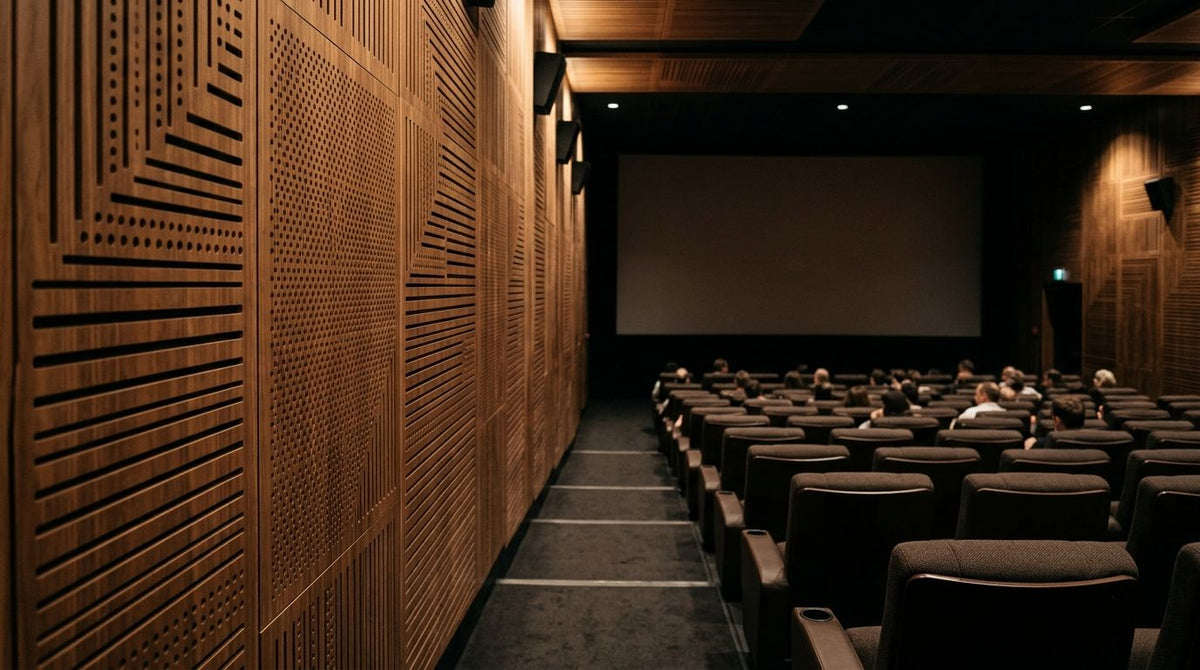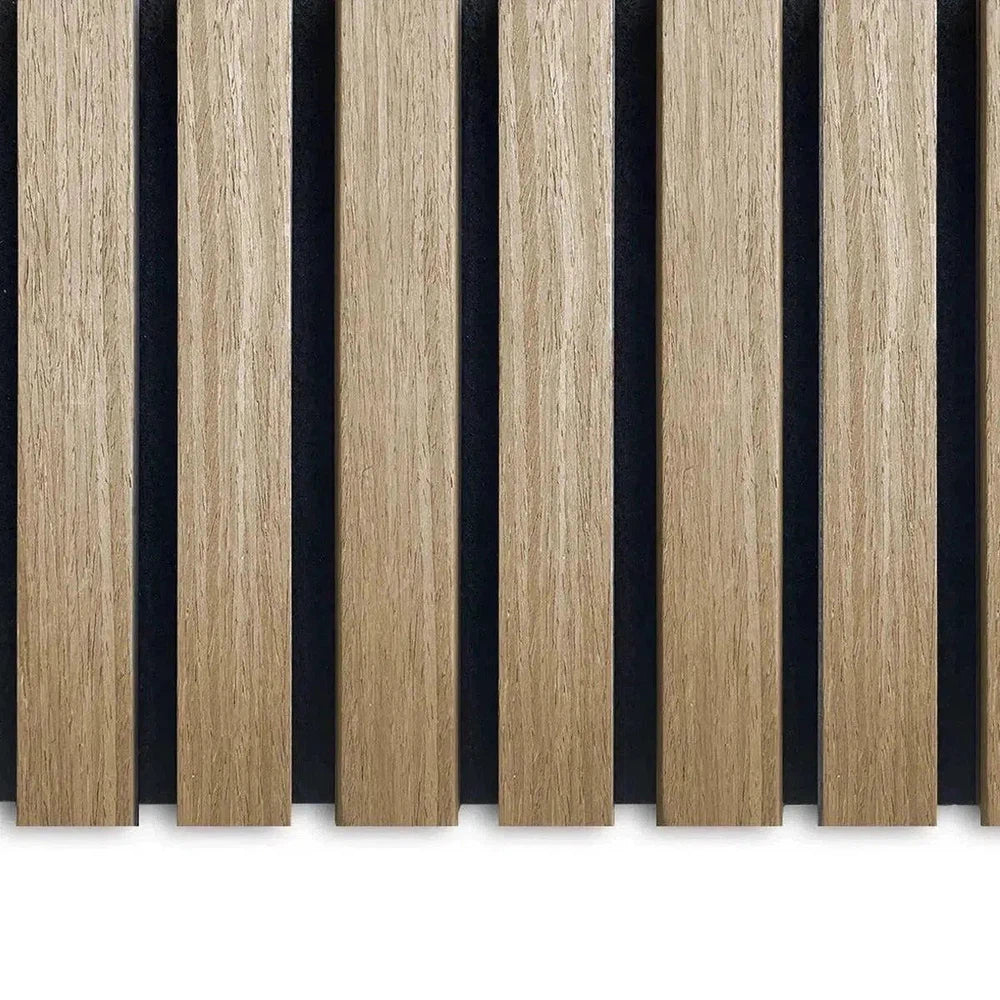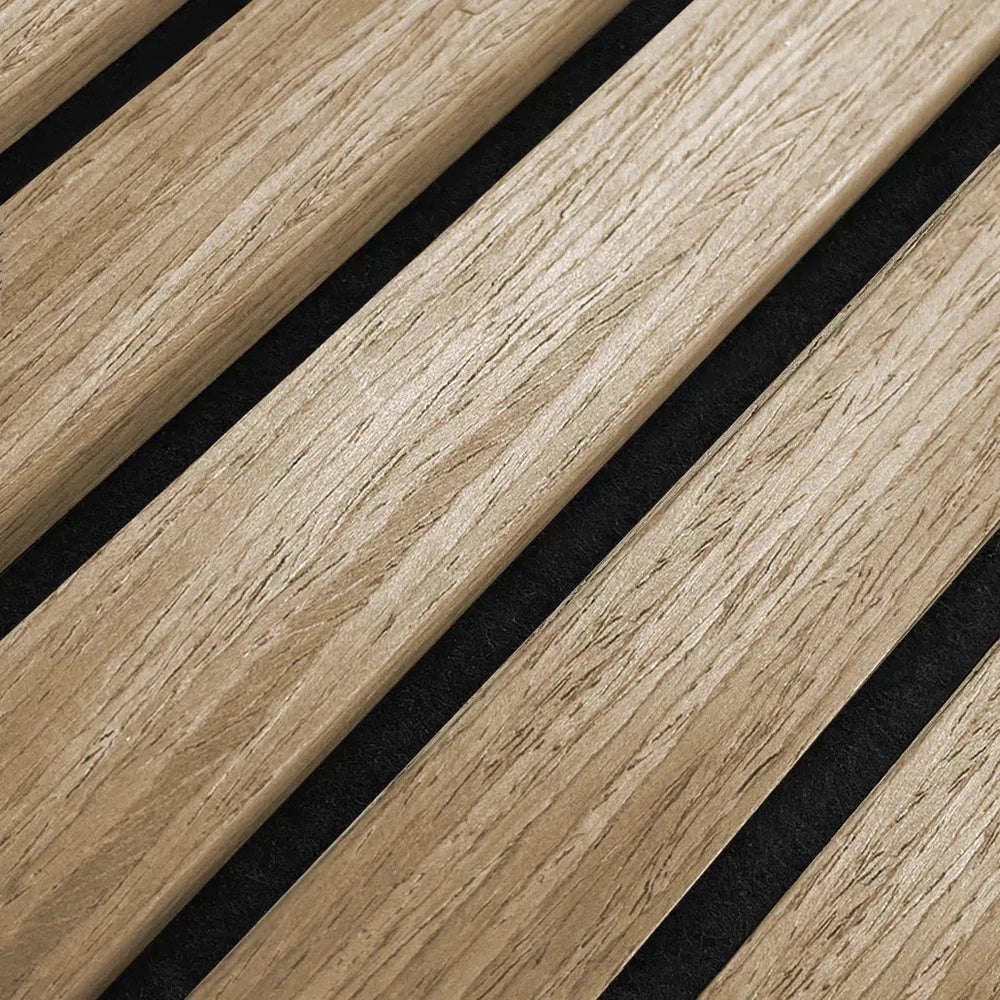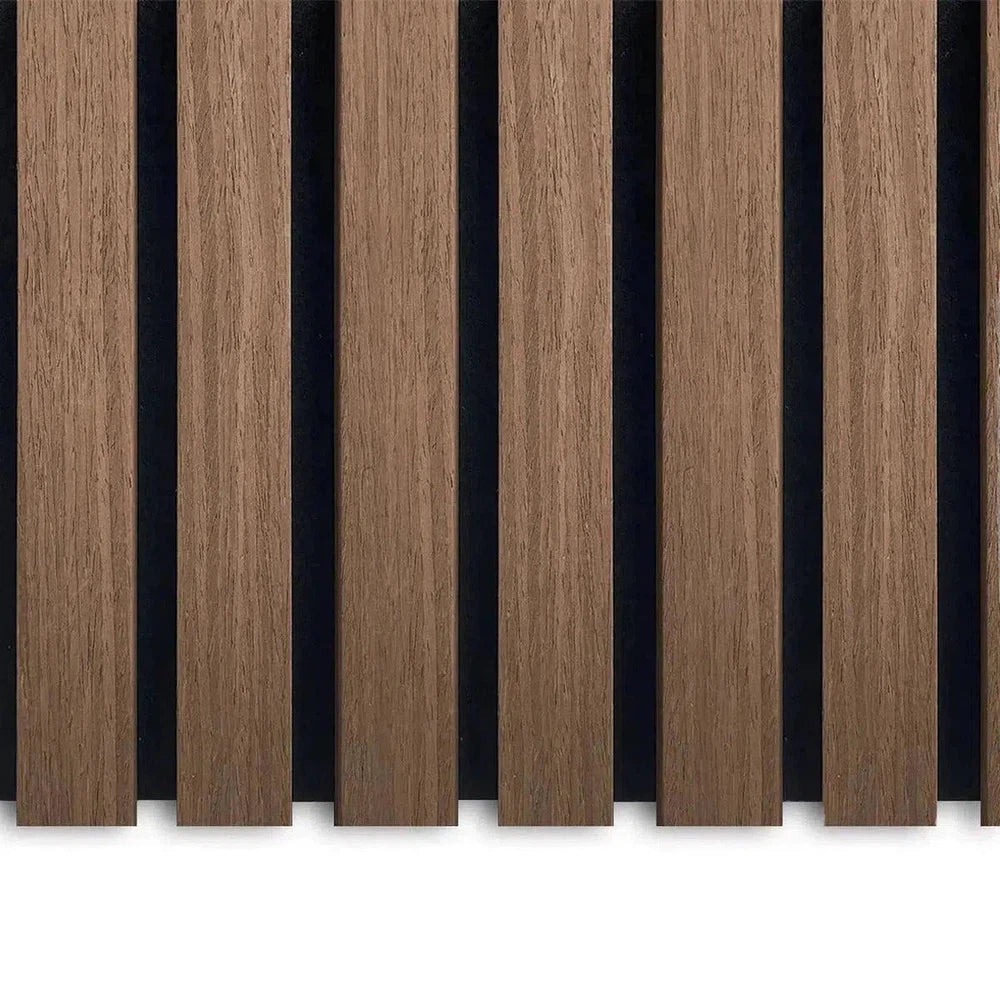
Karaoke booth acoustic panels stop the boxed-in echo and mic feedback that turn a fun booth into an unusable one, and the right panel depends on booth size, wall material, and how hard the speakers get pushed. This guide covers what to install, where to put it first, and which mistakes waste a booth owner's budget in 2026.
- Karaoke booth acoustic panels with a 0.75 NRC rating cut echo fastest on the mic-facing wall.
- Akustiq UK felt-backed hexagon panels combine sound absorption with a finished wood look for enclosed booths.
- Treat walls before ceilings - flutter echo between parallel hard surfaces causes most of the boxy karaoke sound.
- Foam wedges cost less upfront but degrade faster in a small, hot, high-traffic booth.
- Corner treatment matters most in booths under 3m x 3m, where low frequencies build up and muddy vocals.
Why this matters for karaoke booths
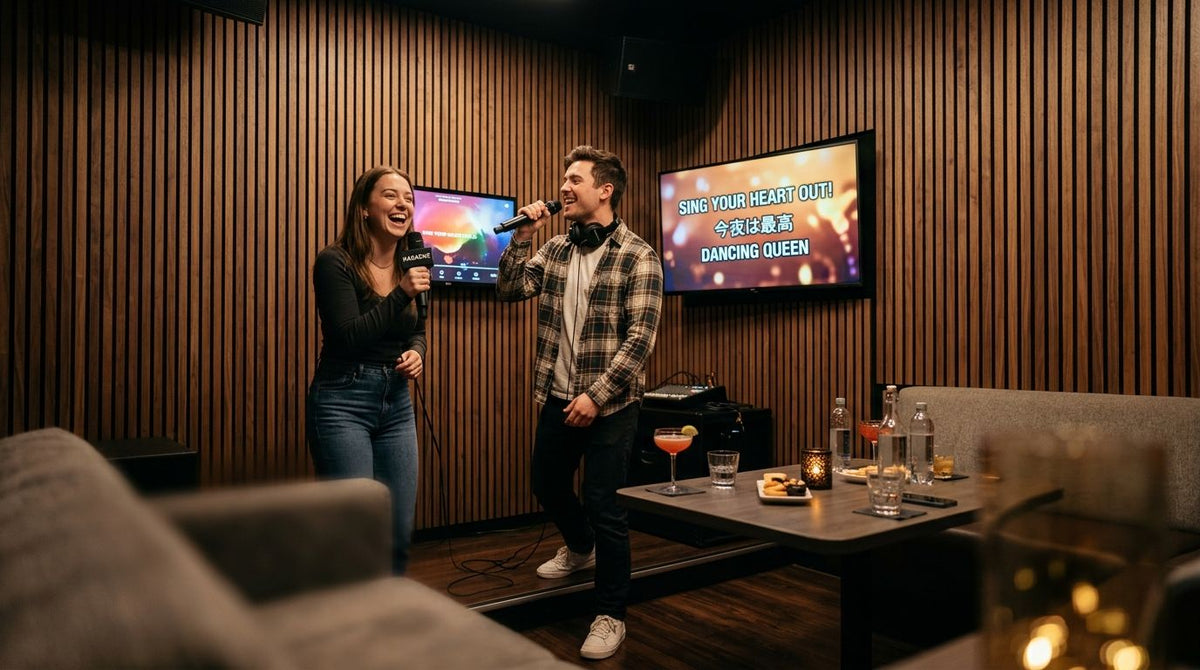
A karaoke booth is a small, hard-walled box with a loud mic and a speaker pointed straight back at the singer. That combination amplifies every acoustic problem a normal room shrugs off - flutter echo between parallel walls, bass buildup in corners, and mic feedback bouncing off bare plasterboard or MDF.
Most booths run 2.5m to 4m on a side, so reflections travel a very short distance before hitting a hard surface again. That is why karaoke booths need denser, more targeted treatment than a living room of the same size. The reverb in an untreated booth is short but harsh, and singers notice it within seconds of picking up the mic.
Owners fixing this for the first time usually start by covering surfaces at random. The steps below run in the order that actually fixes the sound, starting with the free option and moving to finished acoustic wood panels once the layout is confirmed.
Test the echo before you buy anything
Do not order panels off a floor plan alone. Stand in the booth, clap once, and listen to how long the slap-back lasts. A booth with a hard, ringing echo needs more surface coverage than one that already has soft seating and curtains.
- Clap test in each corner and at the mic position
- Run a track through the speakers at normal volume and listen for boominess in the low end
- Note which walls are hard (painted plasterboard, glass, MDF) and which are soft (curtains, upholstered seating)
- Mark the mic-facing wall and the wall directly behind the singer - these get treated first
- Check ceiling height; booths under 2.4m trap more mid-range reflection than taller ones
Cut reverberation on walls before the ceiling
Flutter echo between two parallel hard walls is the single biggest cause of that boxed-in karaoke sound in 2026 booths, and it is a wall problem before it is a ceiling problem.
- Cover the wall directly behind the singer first - it is the first reflection point the mic picks up
- Treat the opposite wall next to break the parallel-surface bounce
- Leave the ceiling for a second pass once wall coverage is in place
- Do not cover one wall and call it done; echo needs two treated surfaces to break up
- Use a plumb line to confirm panels sit flat before fixing them permanently
Match panel coverage to booth size
Small-room treatment guidance commonly points to covering roughly 25-30% of hard wall surface as a starting point, then listening again and adjusting. A 3m x 3m booth with 2.4m ceilings has enough hard surface that partial coverage on two walls plus the door wall usually gets you there.
- Calculate square metres of the two primary reflection walls before ordering panel counts
- Round up rather than down - under-ordering means a second delivery and a possible finish mismatch
- Leave gaps around light switches, speaker mounts and door frames instead of cutting panels awkwardly
- Add end pieces or trim where panels meet a corner for a clean edge
- Confirm panel format (240 cm or 300 cm) against your actual wall height before cutting
Choose felt-backed wood panels over bare foam
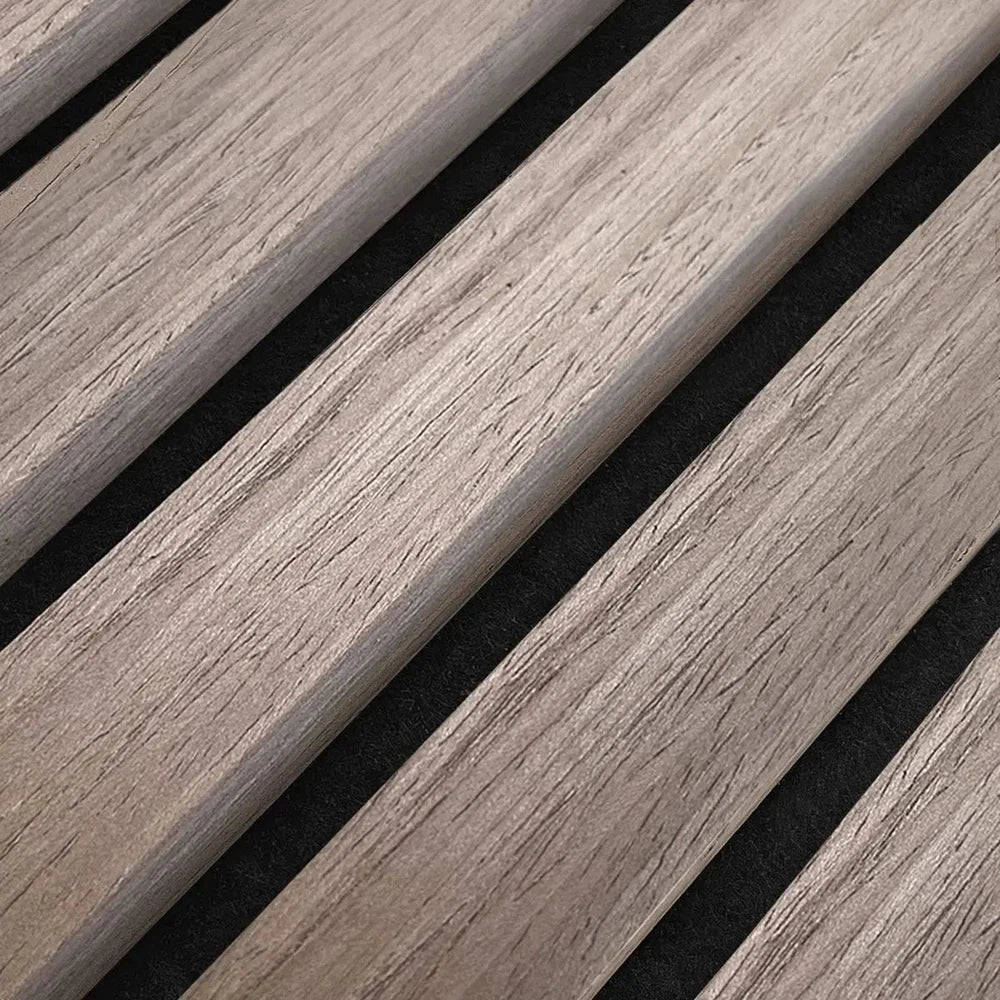
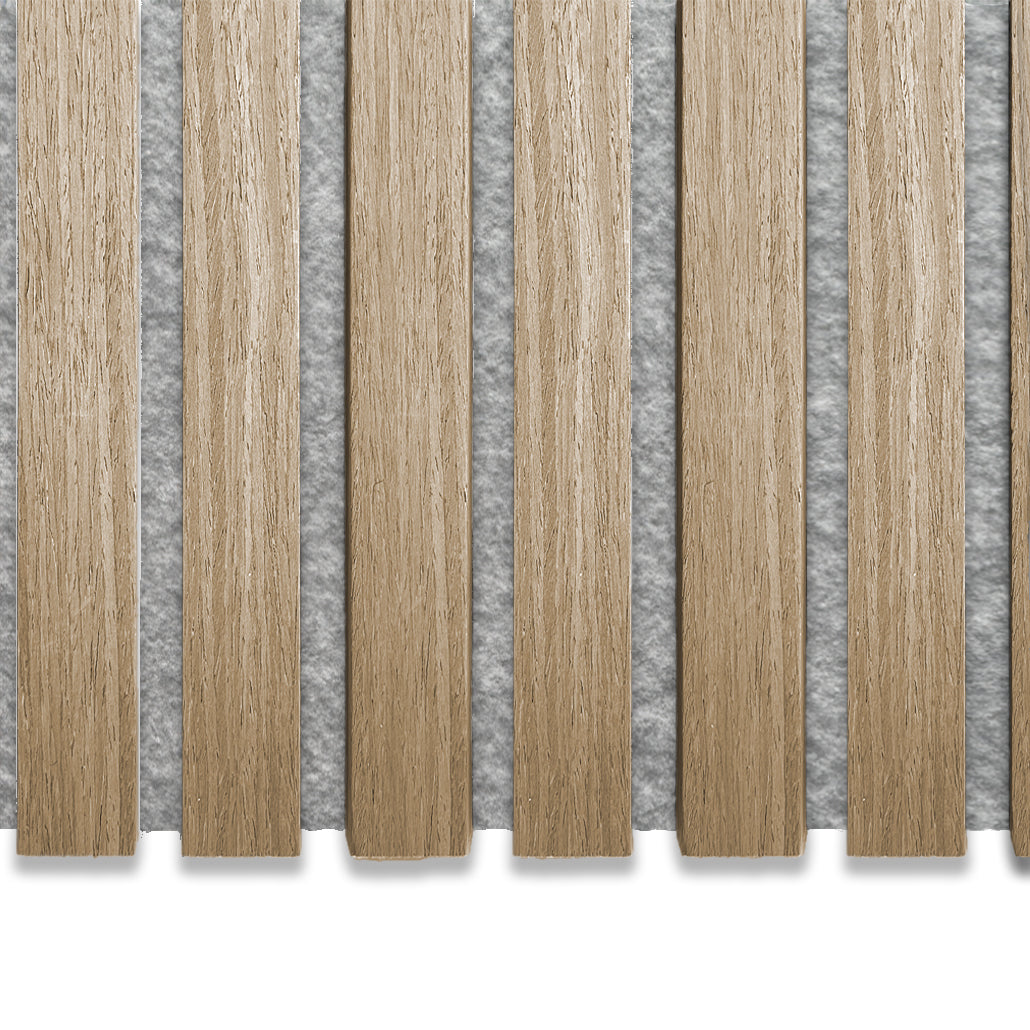
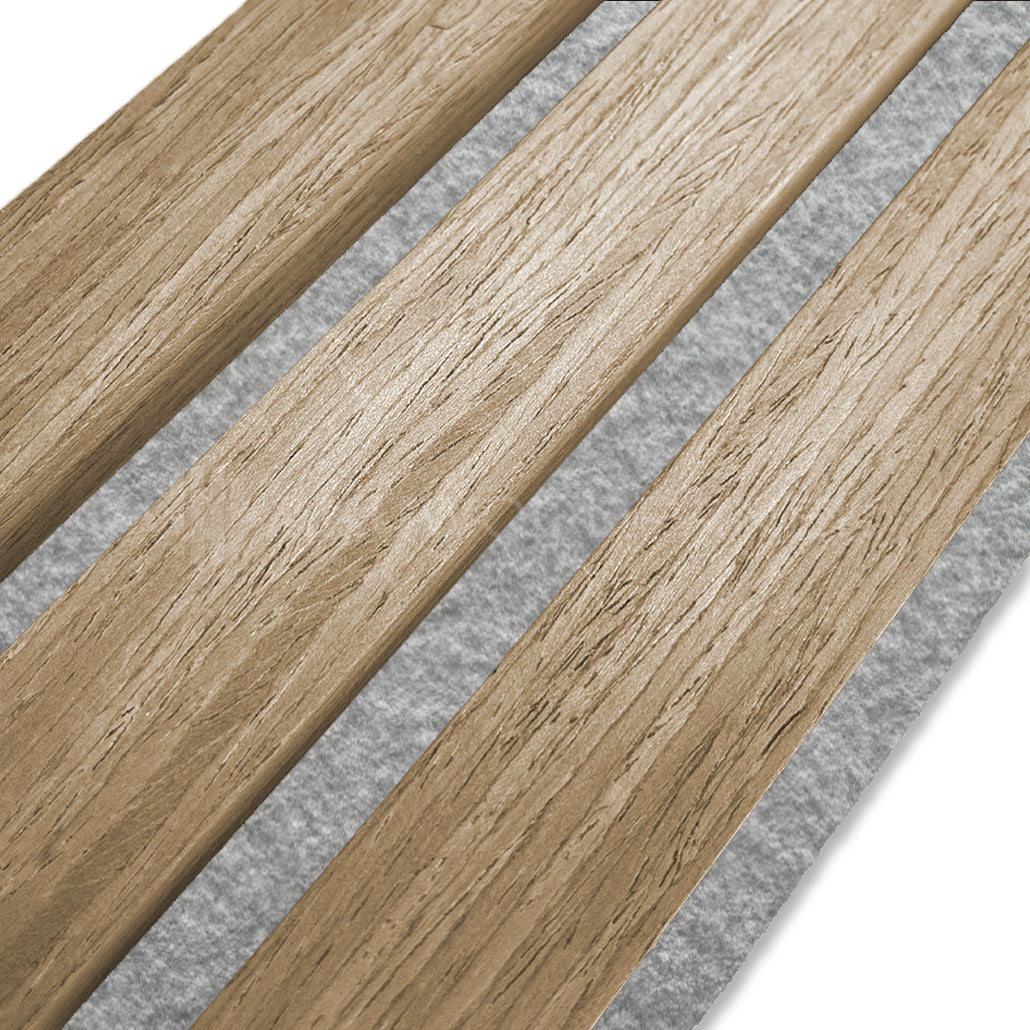
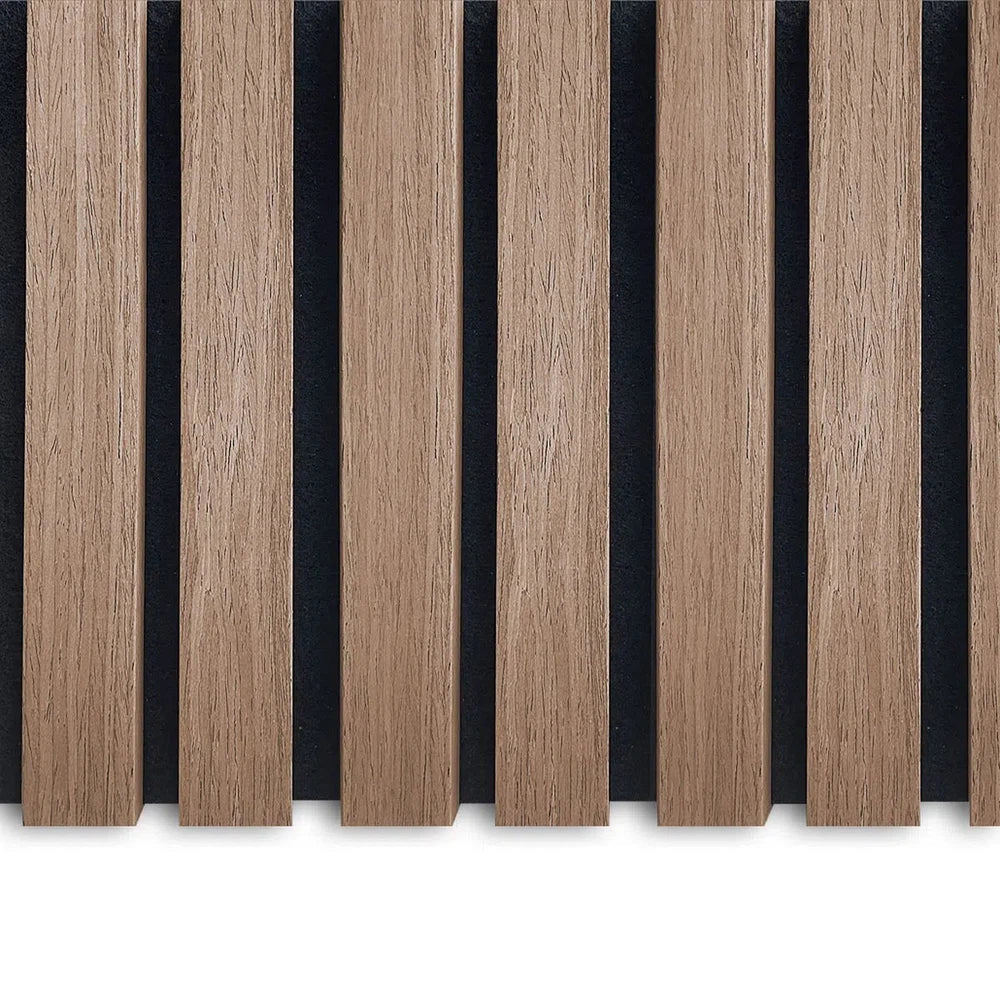
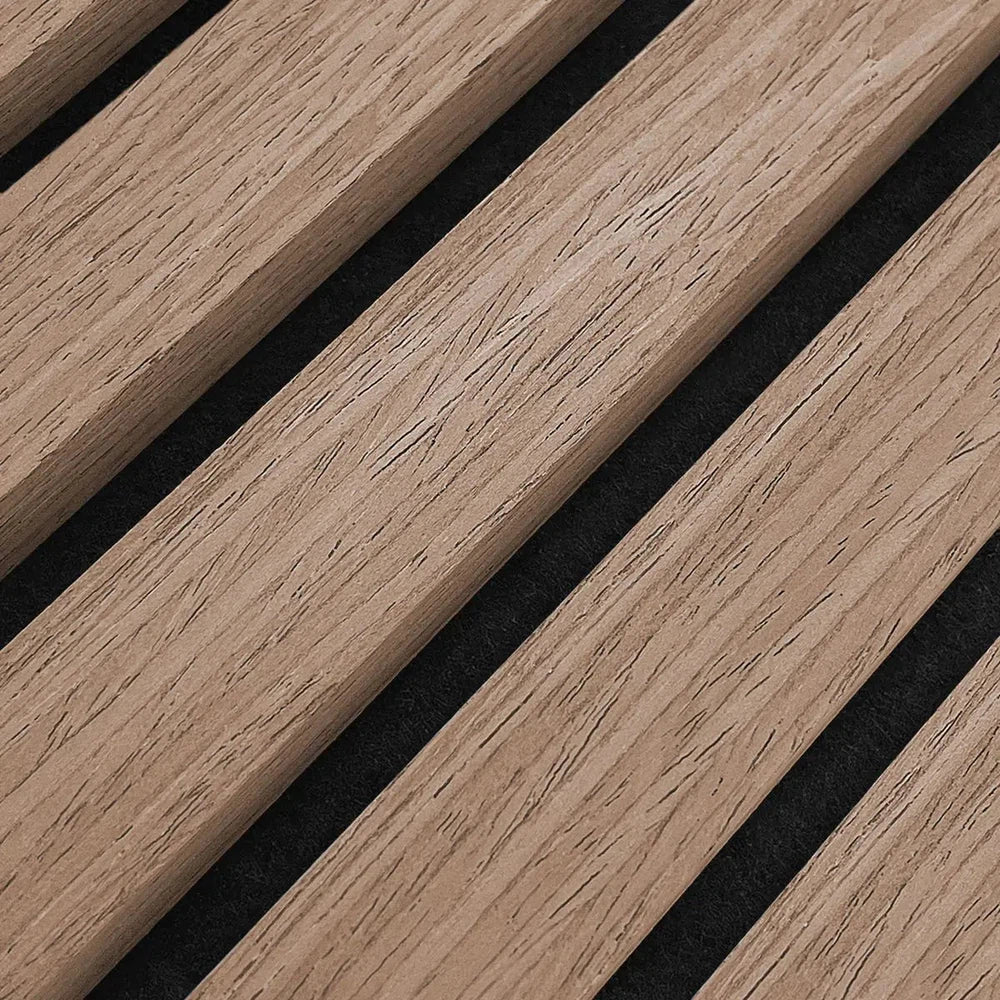
Acoustic foam absorbs sound and costs less upfront, but it does not hold up to the heat and constant hand contact of a busy karaoke booth, and it looks unfinished next to a bar or a home entertainment setup. Akustiq UK felt-backed hexagon panels carry a 0.75 NRC rating with a real wood veneer face, so the booth gets absorption and a finished surface in one install. The hexagon acoustic panel in natural oak suits a mic-facing wall where you want texture rather than a flat slab.
- Felt backing does the acoustic work; the wood veneer face is the visible finish
- The hexagon format breaks reflections across an irregular surface instead of one flat plane
- Grey felt variants pair with darker wood tones for booths with low, moody lighting
- Panel versions without felt drop the acoustic performance - check which variant you are ordering
- Order a sample panel first if you have not seen the finish in person
Treat the corners for bass control
Low frequencies build up where two walls meet the ceiling or floor long before mid and high frequencies become a problem. A karaoke booth under 3m x 3m feels this fastest because the bass has nowhere to disperse.
- Add denser panel coverage in each vertical corner of the booth
- Prioritise corners nearest the subwoofer or main speaker
- Do not expect flat wall panels alone to fix corner buildup - corners need their own treatment
- Re-run the clap test after corner treatment; boominess should drop noticeably
Finish the mic-side wall for lighting and cleaning
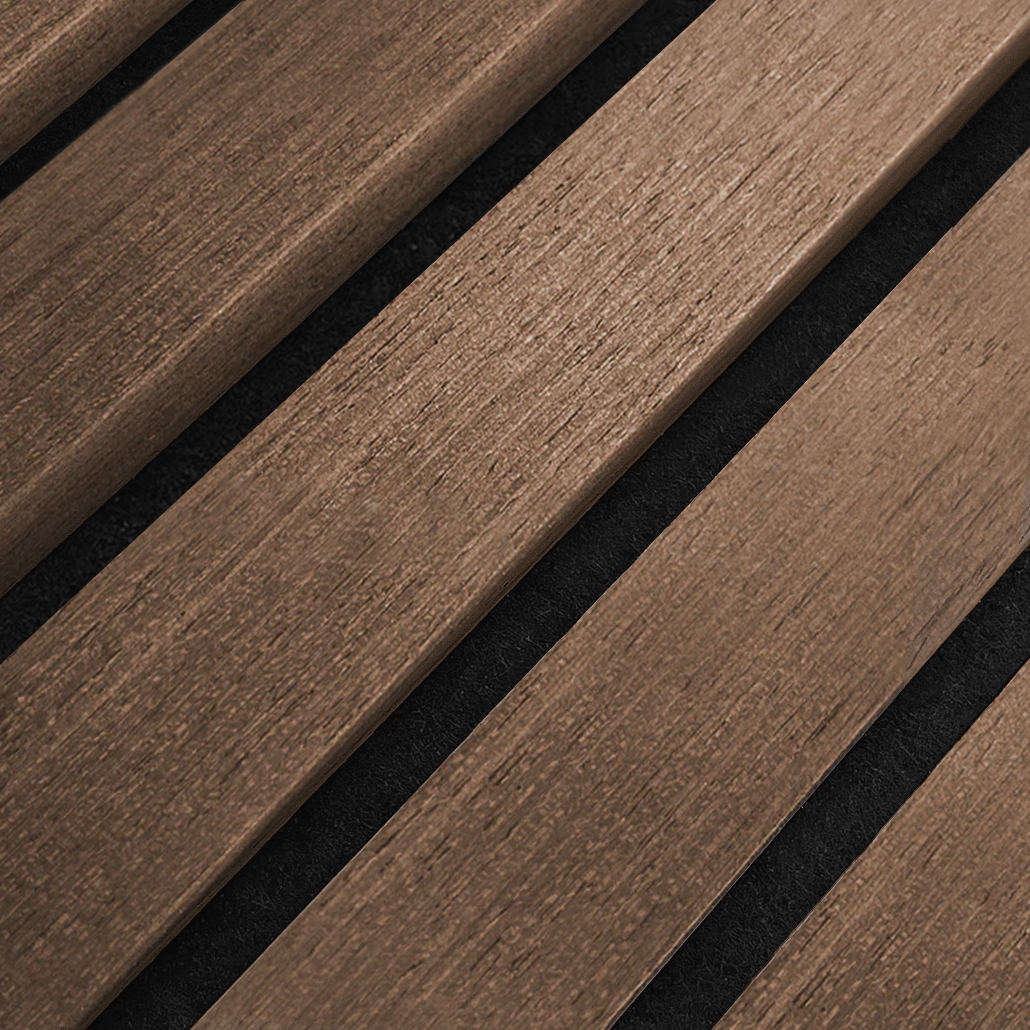
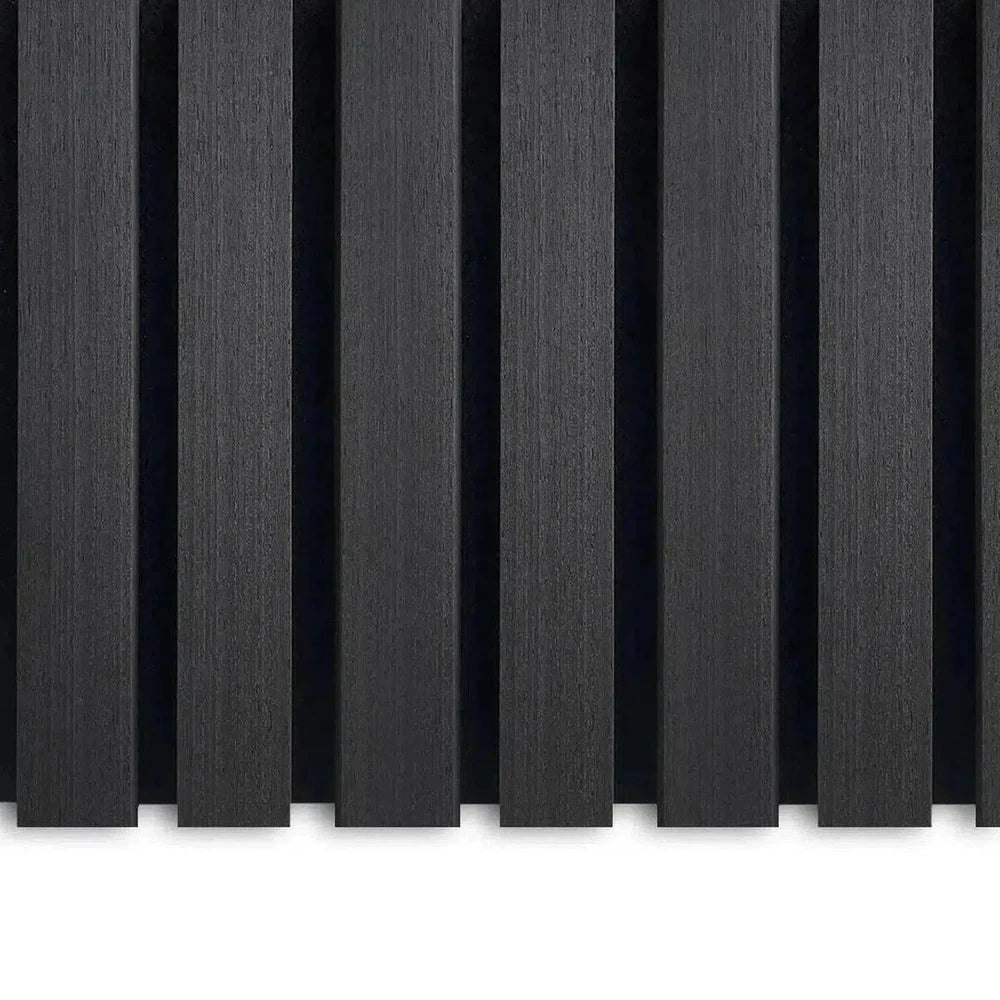
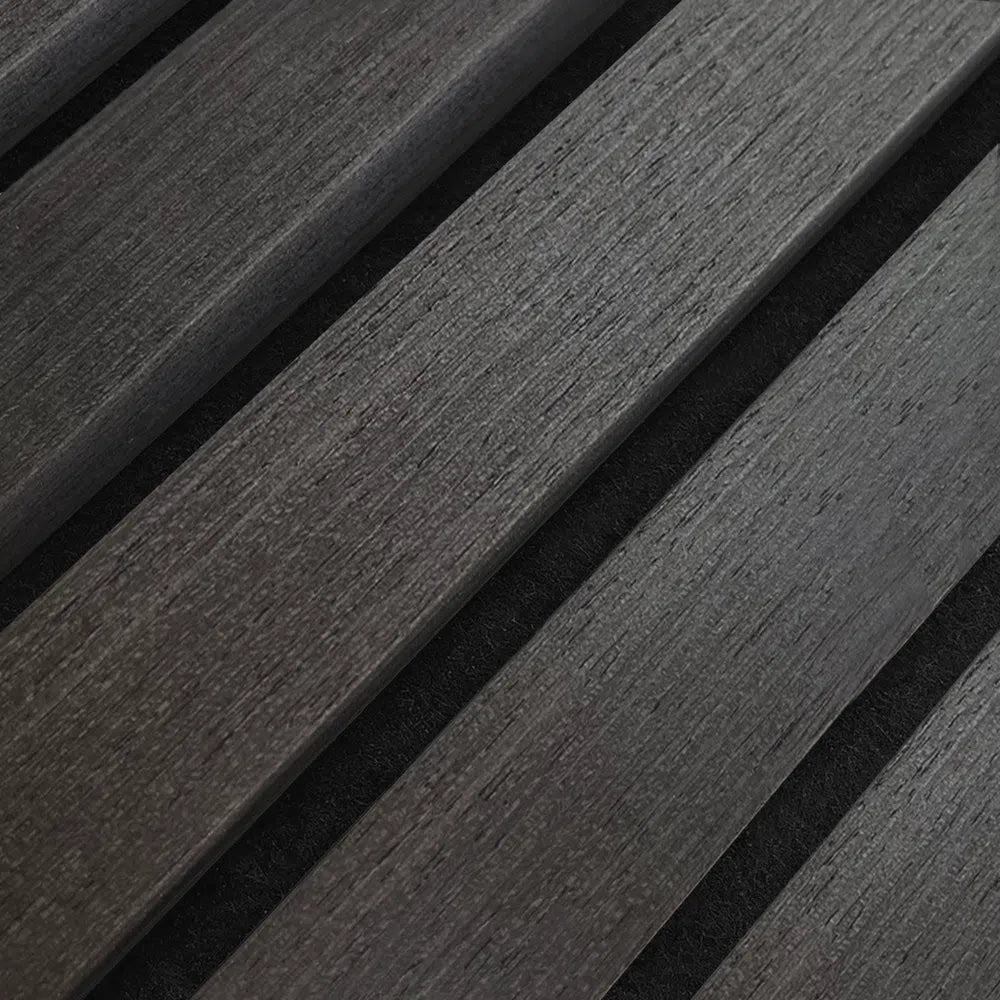
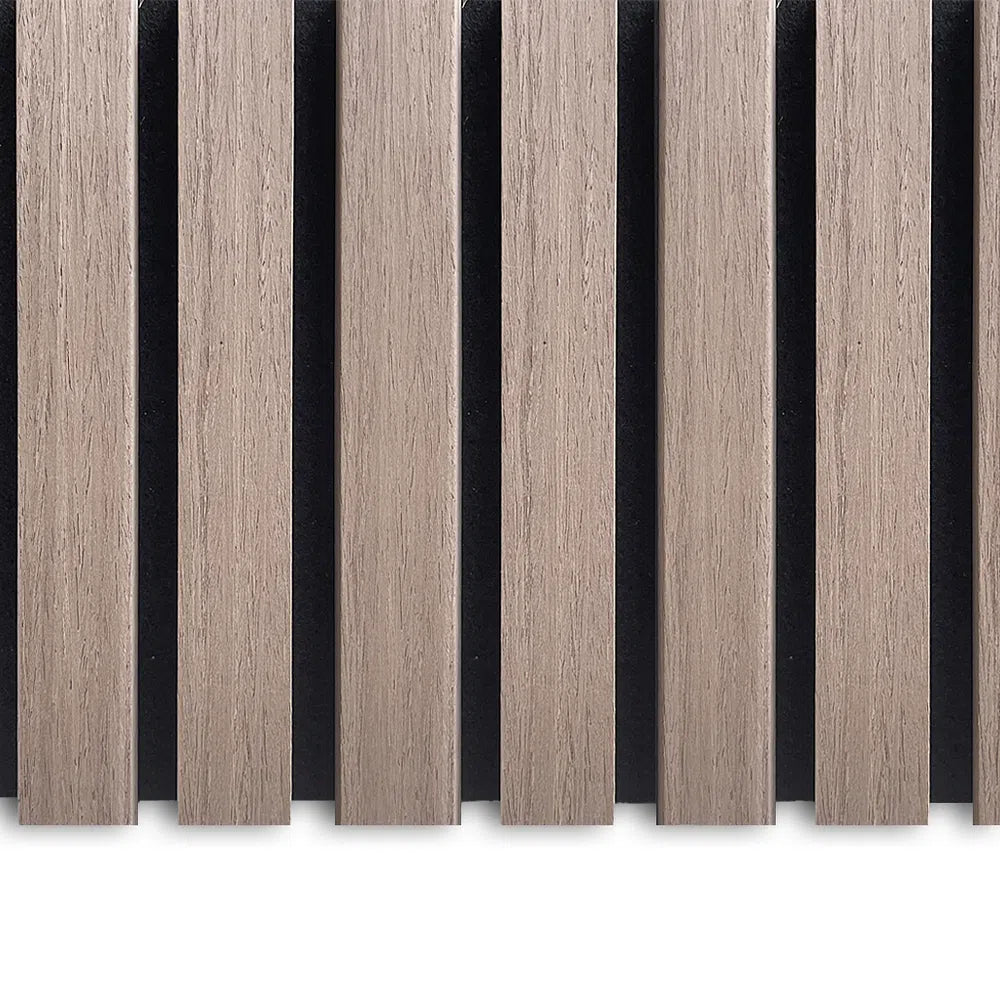
Karaoke booths get touched, leaned on, and lit with coloured LEDs more than most rooms. Darker finishes like a black oak panel hide marks better under warm venue lighting, while lighter oak tones bounce more ambient light around a small home booth.
- Pick a finish that will not show marks under constant handling
- Confirm the surface wipes clean without damaging the veneer
- Match panel tone to existing booth decor rather than treating it as an afterthought
- Check how the colour reads under the actual lighting rig, not daylight
Comparison: acoustic treatment options for karaoke booths
| Option | Best for | Key limitation |
|---|---|---|
| Felt-backed wood slat or hexagon panels | Permanent booths wanting absorption plus a visible wood face | More install effort than foam; needs measuring and fixing |
| Acoustic foam wedges | Budget DIY booths and temporary setups | Degrades faster in heat; no finished look |
| Fabric-wrapped mineral wool panels | Commercial venues needing maximum absorption | Needs framing and professional install labour |
| Moving blankets or curtains | Portable or rented booths | Minimal absorption; unfinished appearance |
Verdict: felt-backed wood panels such as the Akustiq UK hexagon range win for any karaoke booth that stays in one place and has to look presentable. Foam is the right call only for a short-term or strictly budget build.


Common mistakes karaoke booth owners make
- Treating the ceiling first. Wall-to-wall flutter echo is the bigger problem in a small booth; ceiling treatment is a second pass, not the opening move.
- Ignoring the corners. Flat wall panels alone do not fix low-frequency buildup where surfaces meet, which is why a treated booth can still sound muddy.
- Ordering panels without the felt backing. The veneer face looks identical in photos, but absorption performance drops without felt behind it.
- Skipping the clap test. Ordering quantity off a floor plan instead of listening in the room leads to under-coverage and a second order.
- Covering only one reflection wall. Echo needs two treated surfaces to break the parallel-wall bounce; one wall is not enough.
- Confusing absorption with soundproofing. Panels fix the sound inside the booth; they do not stop sound reaching the room next door.
FAQ
What are the best acoustic panels for a karaoke booth wall?
Felt-backed wood hexagon or slat panels rated around 0.75 NRC work best for karaoke booths because they absorb reflections and give a finished surface that survives constant handling. Foam is acceptable for a temporary or budget setup but wears out faster in a small, hot booth.
How many acoustic panels does a small karaoke booth need?
Cover roughly 25-30% of the hardest wall surfaces as a starting point, prioritising the wall behind the singer and the wall opposite. A 3m x 3m booth usually needs two walls partly treated before the echo drops noticeably.
Is wood panel or foam better for a karaoke booth?
Wood panel with a felt backing absorbs sound while giving a wipeable, finished surface, so it holds up better in a booth used daily. Foam absorbs sound too but shows wear quickly under heat and hand contact.
Do acoustic wood panels stop sound travelling to the next room?
No. Acoustic panels absorb reflections inside a room to cut echo; they do not block sound transmitting through the wall structure. Blocking sound between rooms needs added mass and isolation, not surface absorption.
Where should acoustic panels go first in an enclosed booth?
Start with the wall directly behind the singer, then the wall opposite it. Those two surfaces create the parallel-wall flutter echo that makes karaoke booths sound boxy; ceilings and corners come after.
Can acoustic panels handle the heat of a busy karaoke booth?
Real wood veneer panels with felt backing cope better than bare foam in a warm, high-traffic booth because the veneer face does not crumble or discolour the same way. Keep any panel away from direct contact with stage lighting heat.
How thick should acoustic panels be for karaoke booth walls?
Thickness varies by product line, and with felt-backed wood panels the felt does most of the absorption work rather than the wood face. Check the listed NRC rating rather than judging performance by thickness.
Do I need a professional to fit karaoke booth acoustic panels?
Most booth walls can be panelled DIY with panel adhesive or screws into battens, provided the wall is flat and level. Commercial venues with fire specification requirements should confirm compliance before install.
One last thing
The detail most booth owners miss in 2026: a 0.75 NRC panel across two facing walls outperforms a fully foam-covered ceiling, because flutter echo between parallel surfaces is what makes a karaoke booth sound harsh in the first place. Fix the two walls, listen again, then decide whether the ceiling needs anything at all.