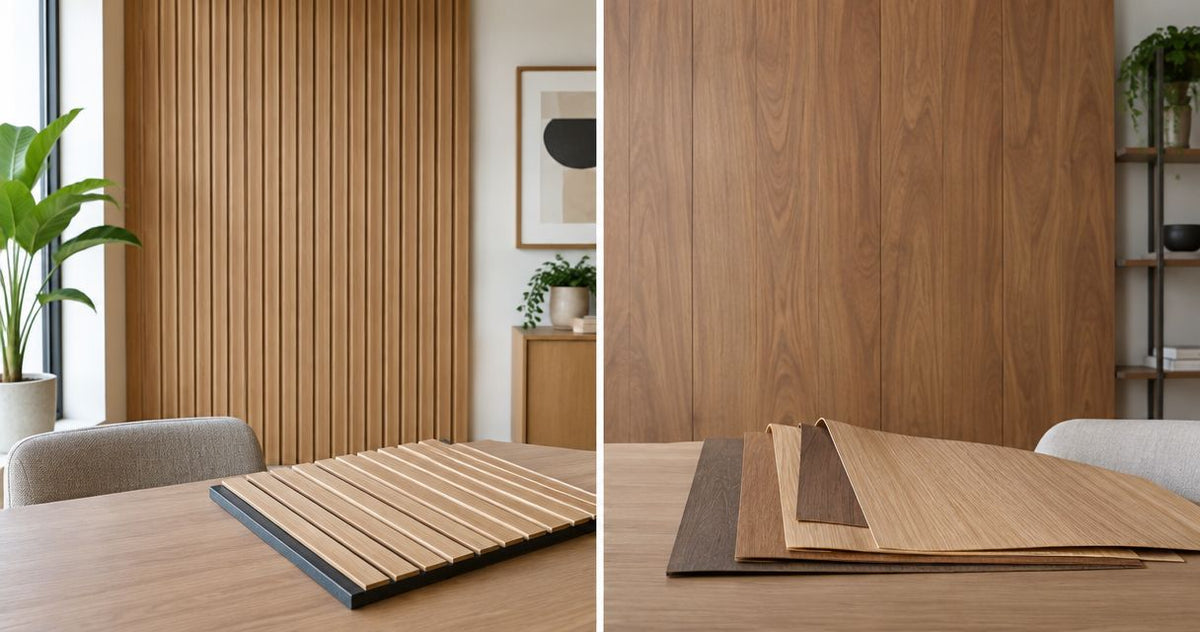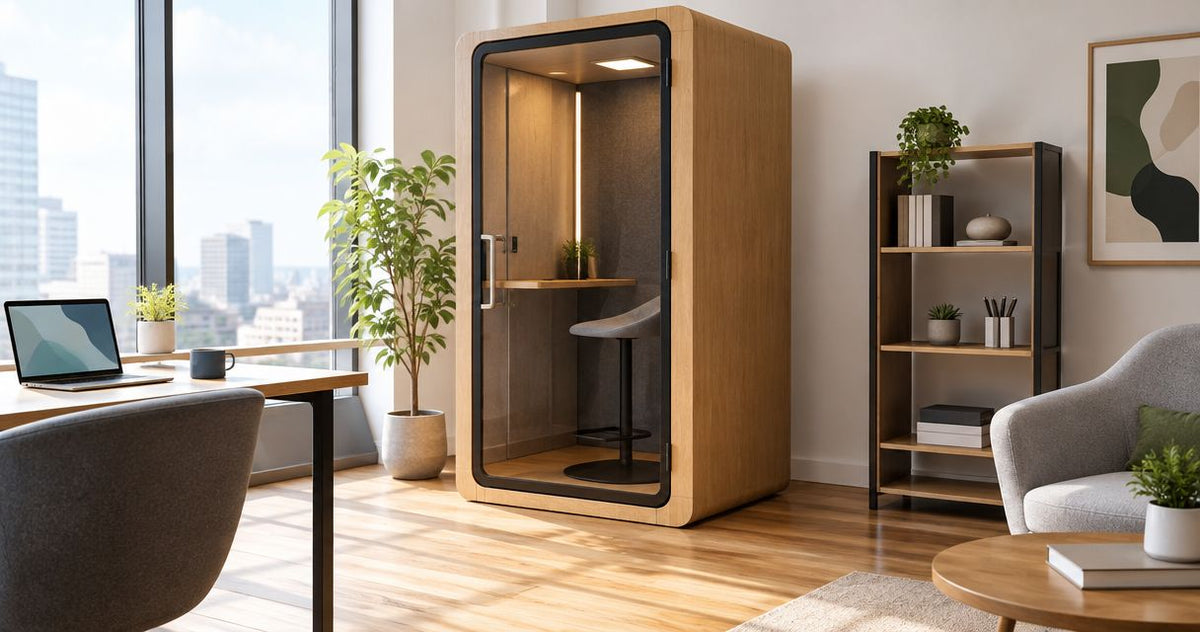
Woodupp’s wooden slat panels suit interiors where you want a wood finish, but a slatted feature wall is not the answer to every acoustic or decorating problem. The best Woodupp alternative in 2026 is Akustiq UK if you want acoustic wood panels with 3-sided real wood veneer; fabric acoustic panels suit rooms where a wood finish is not the priority.
- Comparing Woodupp alternatives? Akustiq UK acoustic wood panels suit homeowners who want real wood veneer and felt backing.
- Choose fabric acoustic panels when sound absorption matters more than a wooden slat finish.
- Consider hexagon acoustic panels when you want a geometric feature rather than continuous slats.
- Compare samples, installation instructions and acoustic test conditions before choosing a panel.
Why this matters
A living room that sounds harsh and a bedroom that needs a better-looking headboard wall are different projects. You can use wooden slat panels in either setting, but the reason for choosing them changes. Start with the problem, not the brand name.
Acoustic treatment reduces sound reflections within a room. Sound insulation addresses sound passing between spaces. Do not choose a Woodupp alternative on the assumption that decorative acoustic panels will stop noise travelling through a shared wall.
For your 2026 shortlist, separate appearance, acoustic suitability and installation. A finish you like does not establish an absorption rating, and an absorption rating only makes sense alongside the tested mounting arrangement.
Woodupp alternatives at a glance
The useful comparison is between panel types as well as suppliers. Woodupp belongs in the shortlist as the wooden slat benchmark; the alternatives below address different priorities rather than claiming an unsupported performance win.
| Option | Best for | Standout feature | How it differs from Woodupp | Main limitation |
|---|---|---|---|---|
| Woodupp | Buyers who want its wooden slat look | Wooden slat wall panels | The reference option for this comparison | Slats are not the right appearance for every room |
| Akustiq UK acoustic wood panels | Real wood veneer feature walls | 3-sided veneer and acoustic felt backing on flagship indoor panels | A different supplier to compare for finish and format | Veneered panels are not solid timber throughout |
| Fabric acoustic panels | Rooms where absorption takes priority over wood grain | Fabric-faced acoustic treatment | Replaces the wooden slat appearance | Does not provide a real wood finish |
| Hexagon acoustic panels | Geometric accents and smaller feature arrangements | Individual hexagonal shapes | Replaces continuous slats with a patterned layout | More layout decisions and exposed edges |
| DIY timber slats | Custom decorative spacing and detailing | Control over the visible arrangement | You assemble the wall rather than select a finished panel | Acoustic performance needs separate consideration |
Use this table to narrow the type of wall treatment first. Then compare the exact products, not just the supplier names. Materials, mounting details and the room itself determine whether a shortlisted panel meets your brief.
1. Akustiq UK: best for real wood veneer slat walls
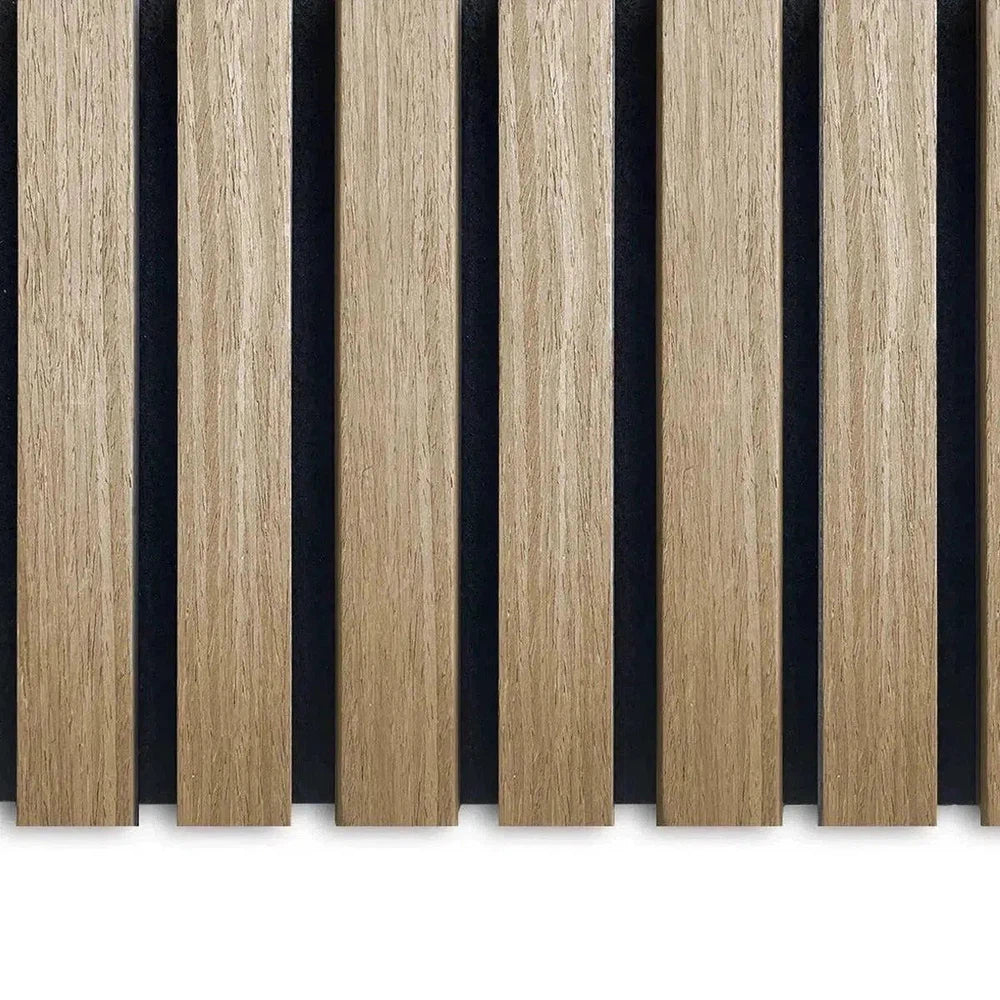
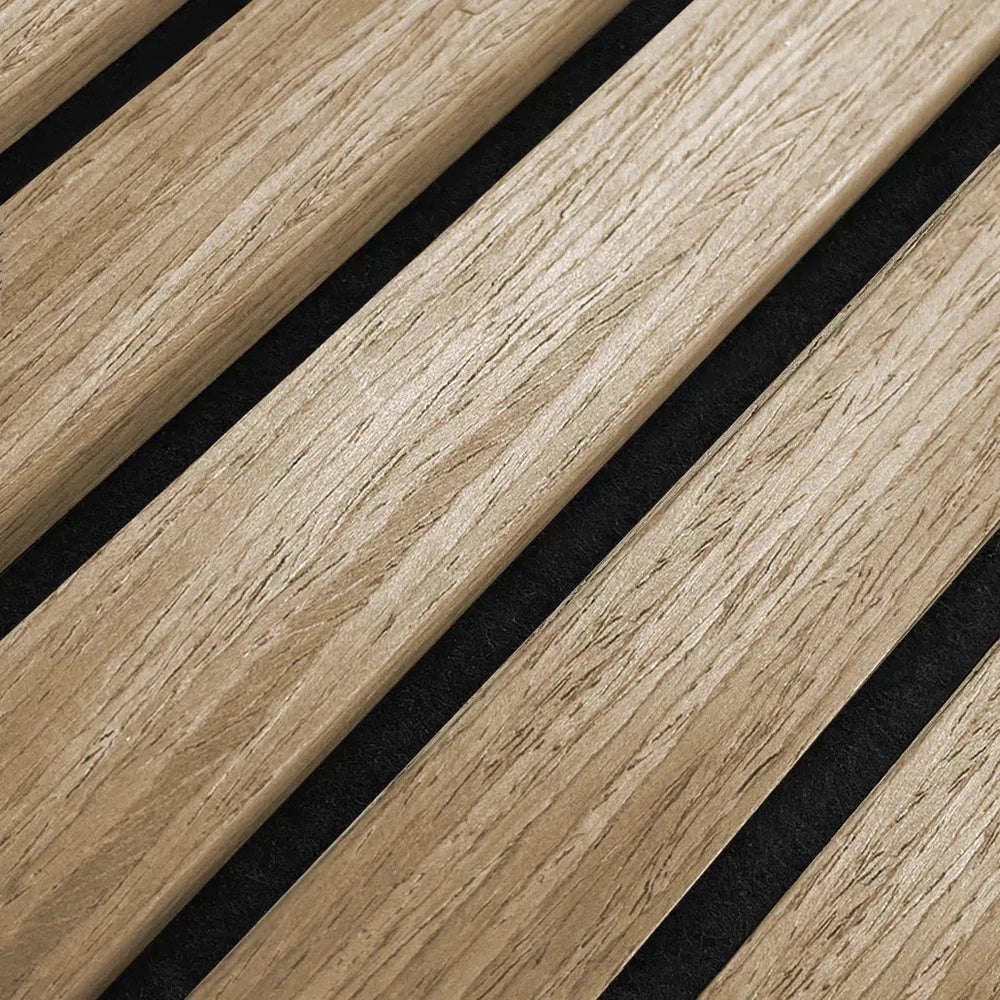
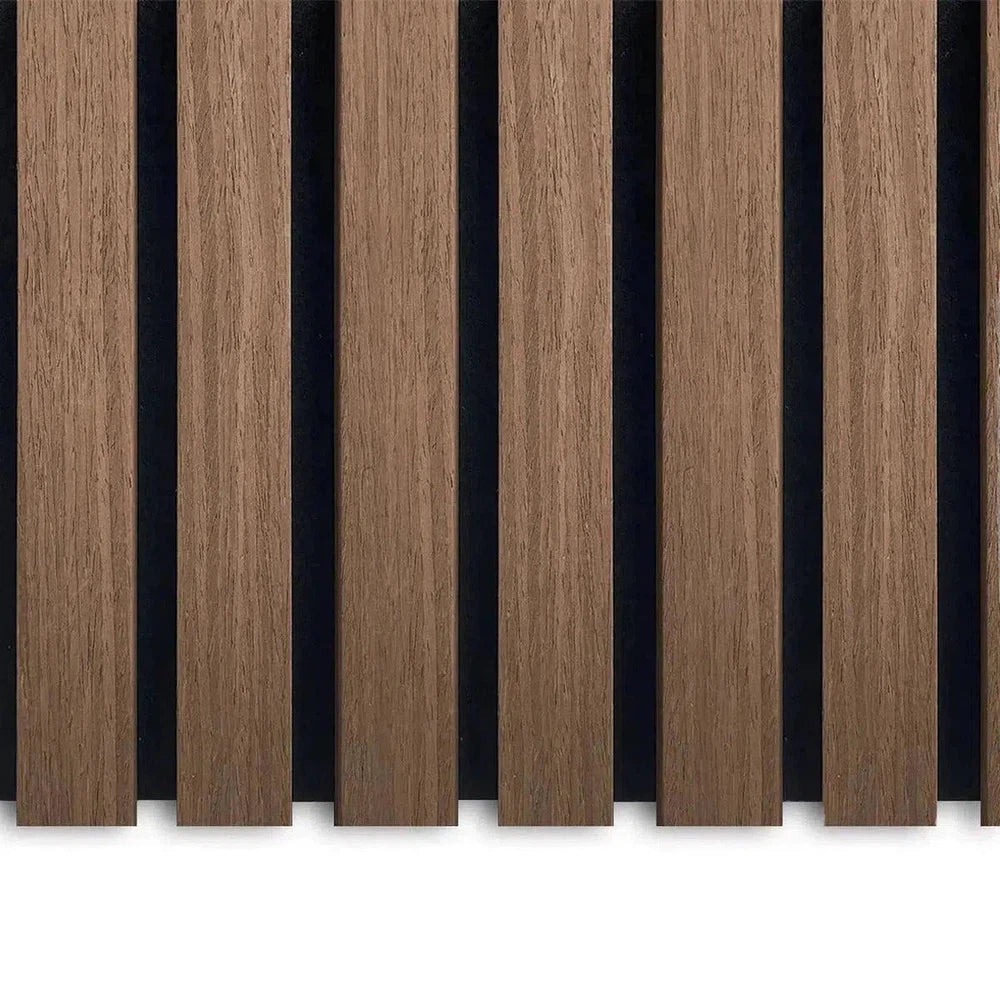
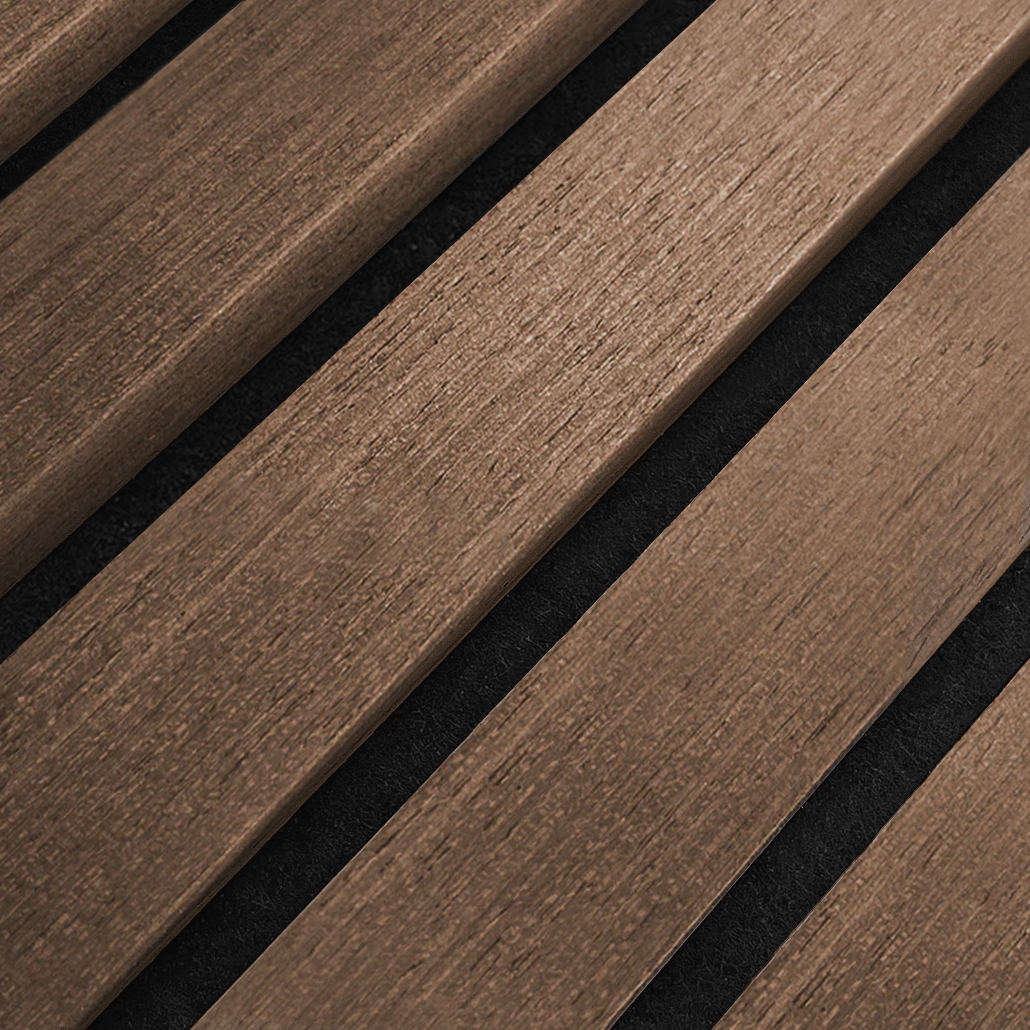
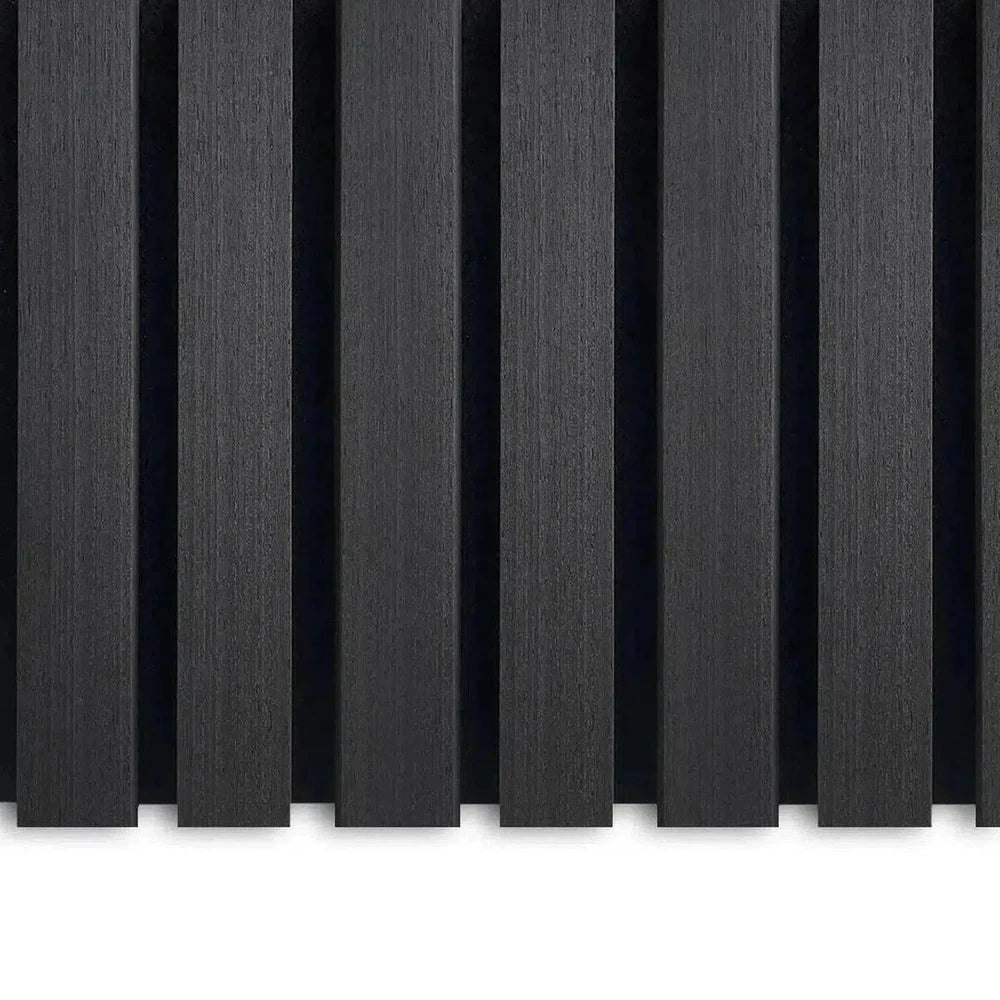
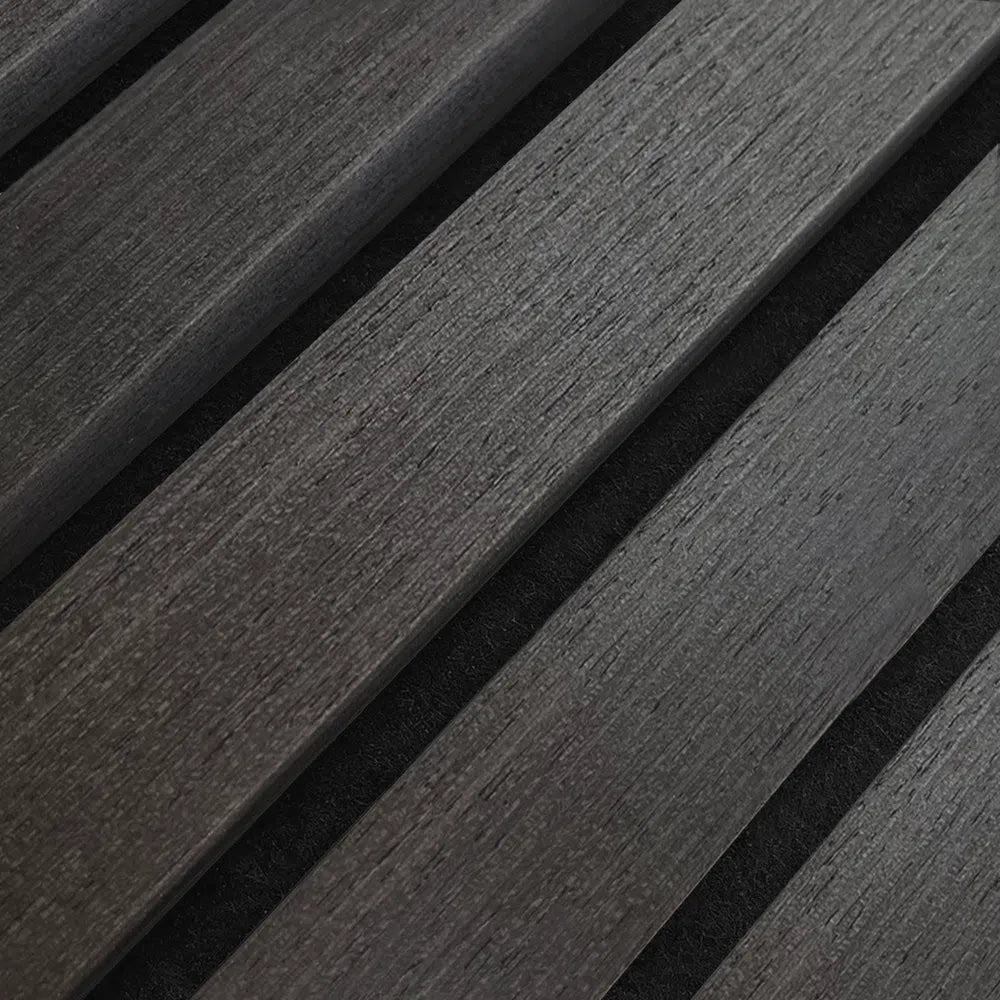
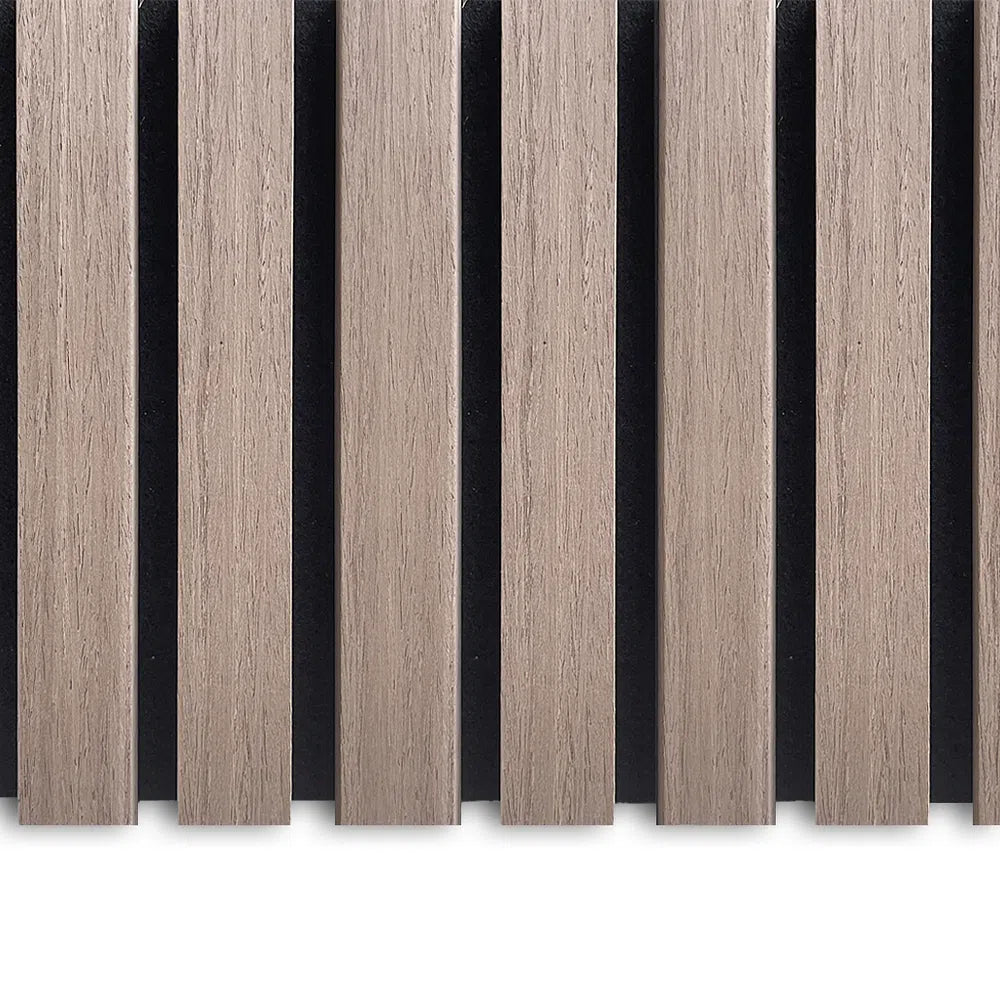
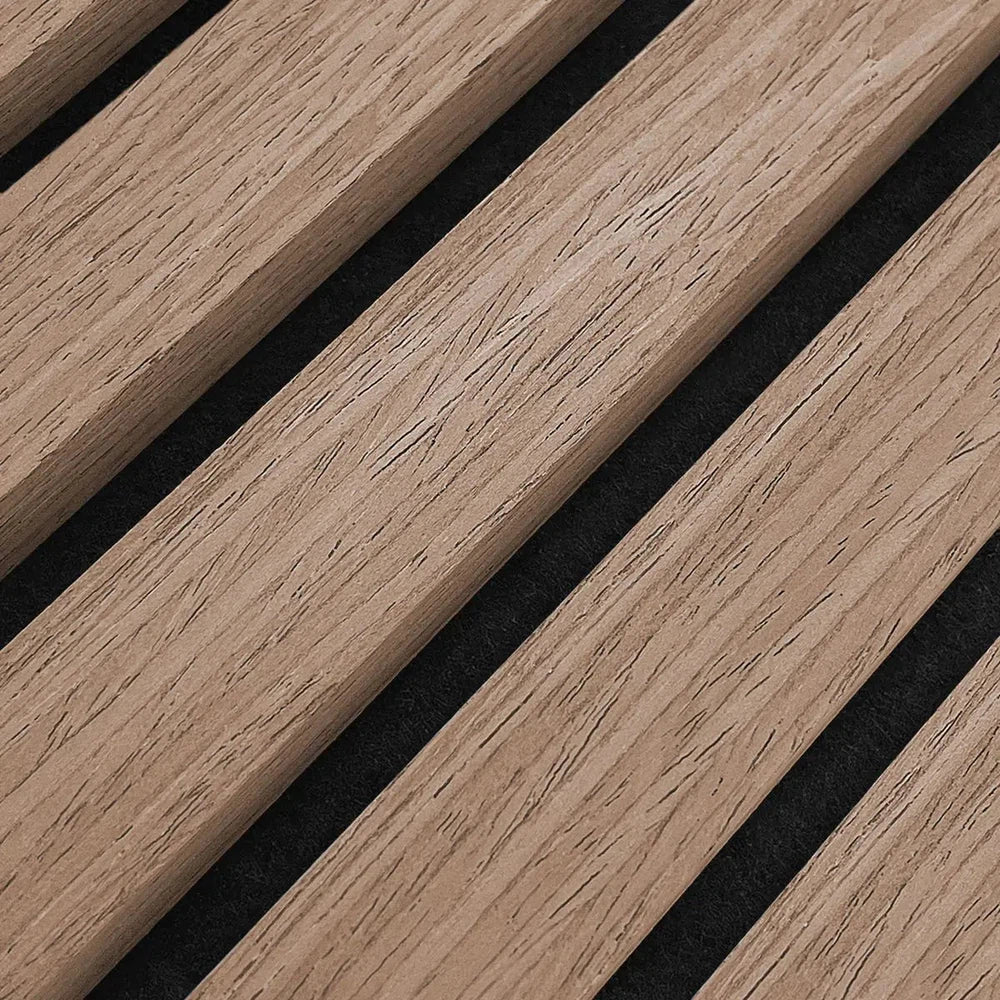
Akustiq UK acoustic wood panels are best for homeowners who want a real wood veneer feature wall with acoustic felt backing. The flagship indoor panels have veneer on 3 sides of the slats and come in 240 cm and 300 cm size formats. Those details give you concrete points to compare with the exact Woodupp panel you are considering.
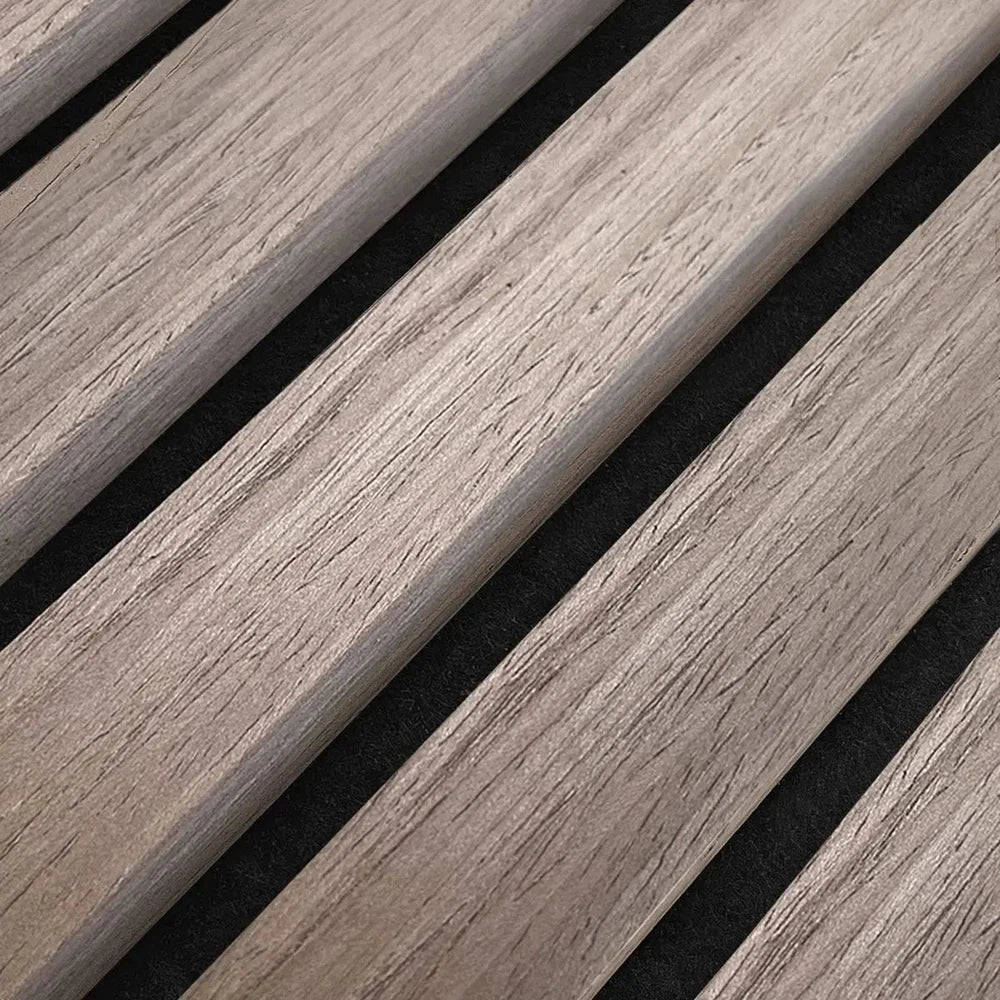
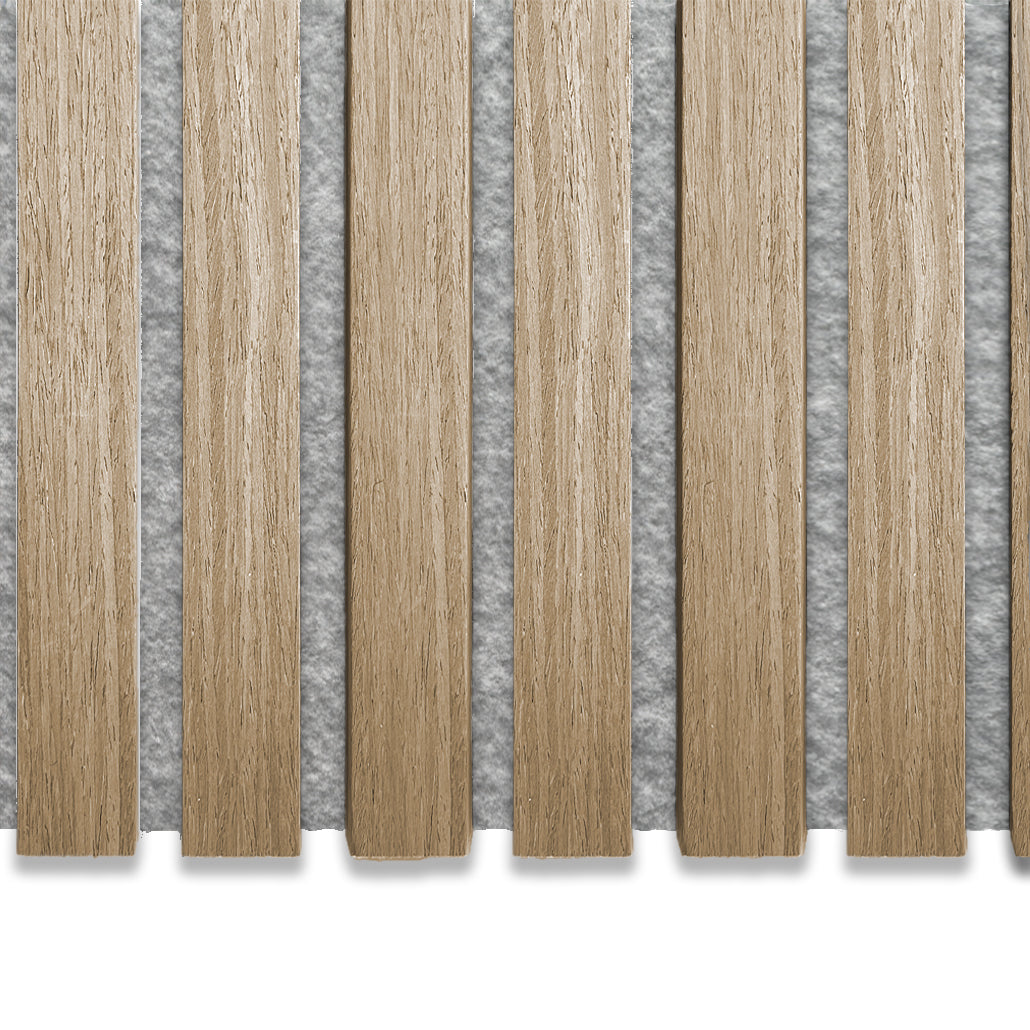
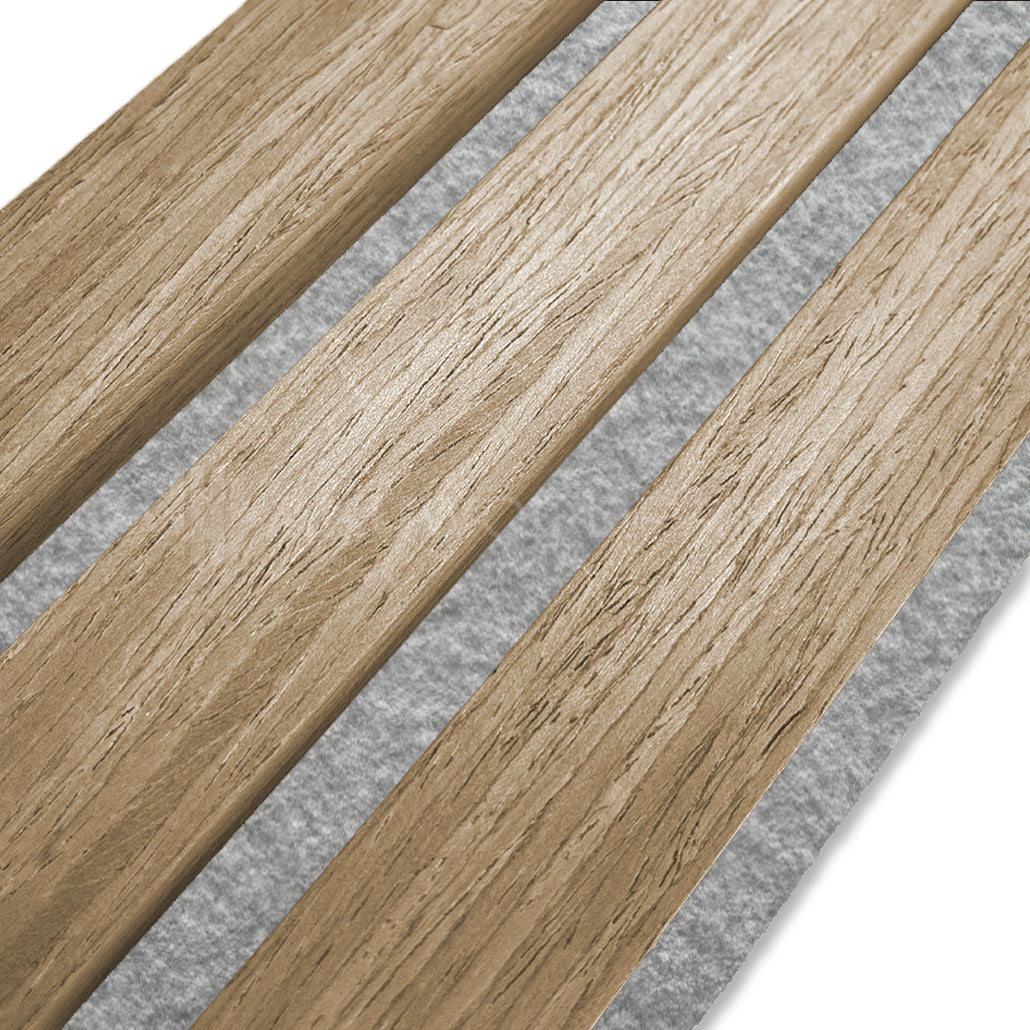
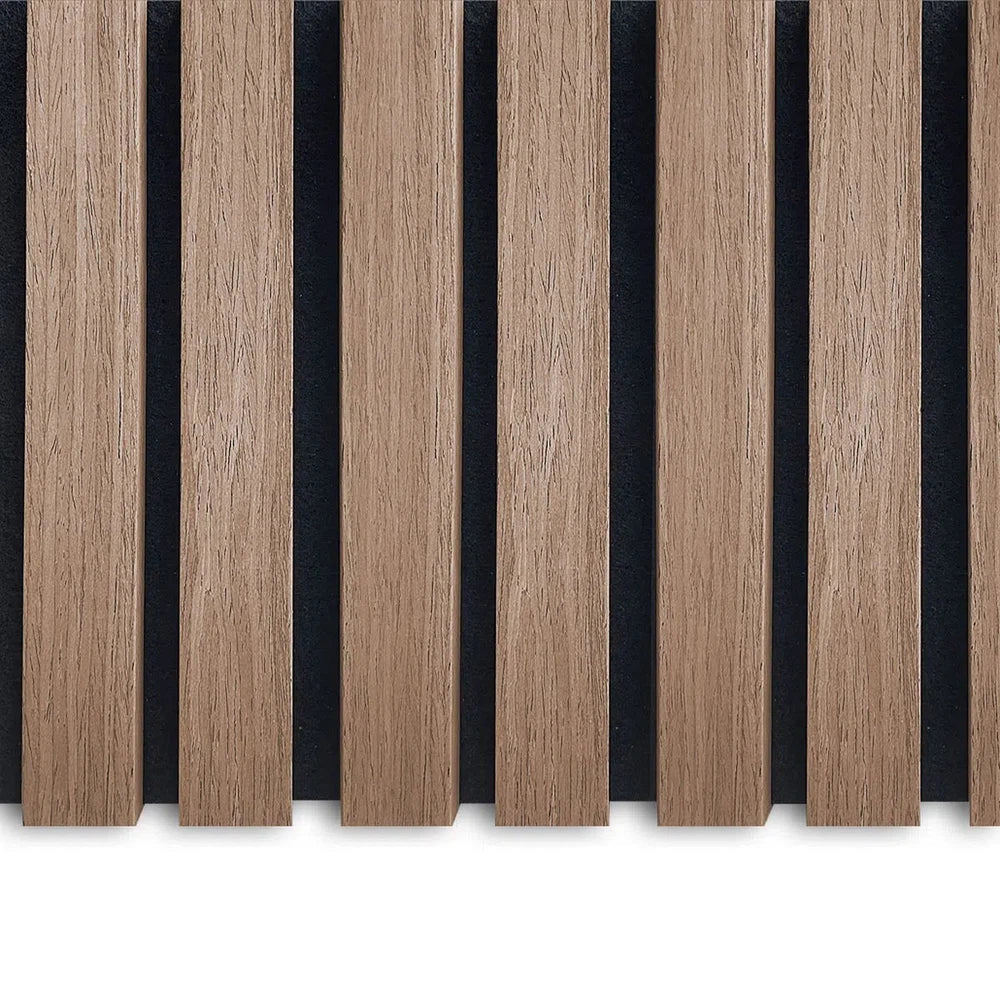
For an oak-led scheme, start with the Wooden Wall Panel Rustic Oak Premium 3-Sided Wood Veneer. Compare the surface and side finish against your flooring, furniture and paint colours. A close-up photograph helps you shortlist; a physical sample helps you decide.
Where the panels shine
- Visible slat sides: 3-sided veneer matters when you see the wall from an angle, such as entering a hallway or walking past a living-room feature.
- Height planning: The 240 cm and 300 cm formats give you different starting points for a vertical layout. Measure the finished wall rather than assuming its height.
- Material combination: Real wood veneer provides the visible surface, while acoustic felt forms the backing.
- Finish selection: The supplied range includes natural oak, smoked oak, black oak, walnut, mocca and grey oak options.
Where the panels fall short
- Veneer is a real wood surface, not a claim that the entire slat is solid wood. Choose on that basis.
- A full slatted wall introduces a strong repeated pattern. Skip it if you want an almost invisible acoustic treatment.
- Acoustic felt backing does not establish a room-level result by itself. Check the specified installation and relevant test information.
- Indoor acoustic panels are not interchangeable with exterior cladding. Treat those as separate products with separate installation requirements.
Head-to-head with Woodupp
| Decision | These acoustic wood panels | Woodupp |
|---|---|---|
| Visual direction | Wooden slat feature wall | Wooden slat feature wall |
| Surface comparison | Check the flagship 3-sided real wood veneer finish | Inspect the face and sides of the exact shortlisted panel |
| Height planning | Compare 240 cm and 300 cm formats with your measurements | Compare the chosen product’s dimensions with the same measurements |
| Acoustic decision | Match the proposed installation to the relevant test conditions | Apply the same requirement to the chosen Woodupp panel |
For a 2026 living-room or home-office project, this is the most direct alternative in the list: you keep the wooden slat concept and compare the material details. Do not treat a change of supplier as proof of better sound absorption.
Best for: Wooden feature walls where the veneer finish and panel height are central to the decision.
Verdict: Buy if the sample and installation specification match your room.
2. Fabric acoustic panels: best for absorption without wood grain
Fabric acoustic panels are a different kind of Woodupp alternative. Choose this category when your office, TV room or meeting room needs acoustic treatment but you do not want a timber feature wall. The appearance changes completely.
The fabric is the visible facing, not a complete description of the acoustic construction. Compare the absorber behind it, the panel depth, the mounting method and the test report. A fabric-covered decorative board is not automatically an effective acoustic absorber.
Where fabric acoustic panels shine
- Different visual brief: You can choose a fabric-faced treatment instead of repeated wooden slats.
- Targeted placement: Separate panels let you plan treatment around the room’s use rather than commit to one continuous feature wall.
- Acoustic-led selection: You can shortlist by tested absorption and mounting requirements before choosing the visible finish.
Where fabric acoustic panels fall short
- They do not give you real wood grain or the relief of a slatted wall.
- A visible fabric surface needs a cleaning approach suited to its material. Check the supplier’s instructions.
- Panel placement remains important. Buying an absorber does not remove the need to plan where it belongs.
| Decision | Fabric acoustic panels | Woodupp |
|---|---|---|
| Appearance | Fabric-faced surfaces | Wooden slat appearance |
| Selection priority | Absorber construction and tested mounting | Wood finish alongside acoustic suitability |
| Layout | Individual treatment positions | A slatted feature-wall arrangement |
Best for: Offices and media rooms where you prioritise acoustic treatment over a wooden finish.
Verdict: Buy for an acoustic-led brief; skip if real wood is essential.
3. Hexagon acoustic panels: best for geometric feature walls
Hexagon acoustic panels replace long slat lines with individual shapes. The supplied range includes smoked oak, walnut and grey walnut variants, including options named with grey felt. Compare the specific panel construction before treating it as equivalent to a full-height slatted system.
This approach suits a bedroom accent or a smaller living-room feature where the pattern is part of the design. Plan the arrangement first. A geometric composition can leave substantial wall areas uncovered, so judge the acoustic brief separately from its appearance.
Where hexagon acoustic panels shine
- You can build a geometric feature rather than cover the wall in continuous slats.
- Individual shapes let you define the outline of the arrangement.
- Wood-finish options keep timber in the scheme without repeating a floor-to-ceiling slat pattern.
Where hexagon acoustic panels fall short
- Alignment and spacing need careful planning.
- A scattered decorative arrangement is not equivalent to extensive acoustic coverage.
- The many visible edges make the layout more prominent than a continuous rectangular installation.
Best for: Geometric bedroom or living-room accents where the arrangement is the main design choice.
Verdict: Buy for the pattern; hold if your main requirement is a documented acoustic result.
4. DIY timber slats: best for custom decorative detailing
DIY timber slats suit a project where you want control over spacing, timber selection and the outline of the feature. You choose the components and build the arrangement yourself. That freedom also makes you responsible for the wall preparation, fixing method and edge detailing.
Where DIY timber slats shine
- You control the visible arrangement rather than work within a finished panel format.
- You can design around an awkward alcove or a specific decorative brief.
Where DIY timber slats fall short
- The completed wall has no established acoustic rating unless its construction is tested.
- Separate slats create more individual fixing and alignment work.
- Timber fixed to a hard wall should not be treated as a substitute for a specified absorber.
Best for: Decorative projects where custom detailing matters more than a ready-made acoustic panel system.
Verdict: Buy the materials for a decorative brief; skip an acoustic claim without evidence.
Why choose an alternative to Woodupp?
A useful reason to choose an alternative is a mismatch between the proposed panel and your room. That is not a criticism of Woodupp. It is a reason to make the shortlist more specific.
For your 2026 project, use these decision points:
- Veneer finish: Inspect the faces and sides that will remain visible. Compare physical samples rather than assume that similarly named oak finishes match.
- Wall height: Compare the exact panel dimensions with the finished height, including skirting and any ceiling detail.
- Different appearance: Choose fabric for a non-wood surface or hexagons for a geometric arrangement.
- Custom layout: Consider separate timber slats when a decorative design needs dimensions or spacing you want to control.
- Different noise problem: If sound is travelling from another room, reassess the construction rather than simply change acoustic panel brands.
These are buying criteria, not claims about why previous Woodupp customers switched. There is no need to assume a product fault to find a better match for a particular wall.
How to compare your shortlist before ordering
Use the same checks for every supplier in 2026. This keeps an attractive photograph from outweighing the practical details that decide the finished result.
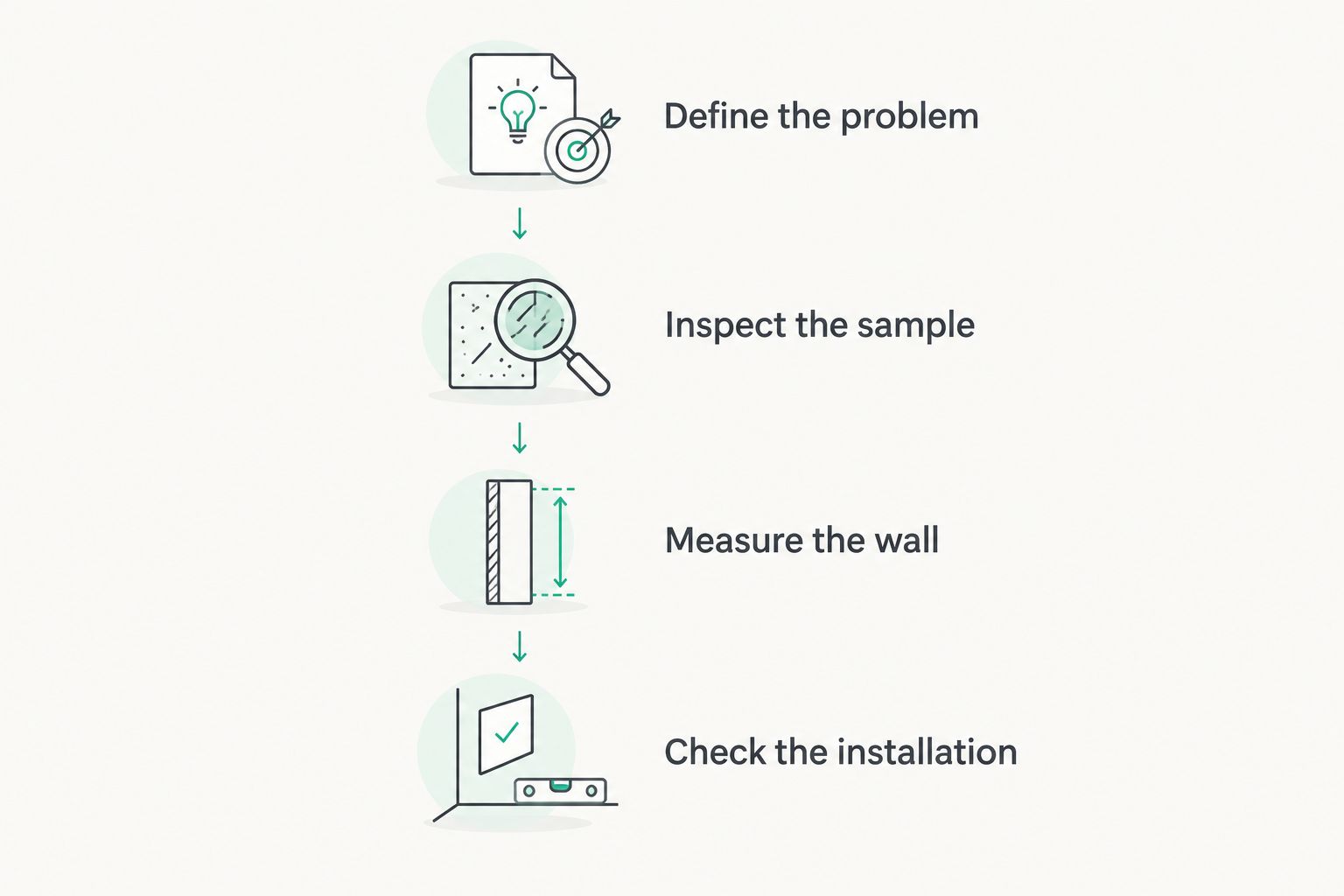
Define the problem
Write down whether you want less echo, a decorative feature or both. Identify the room and its use: conversation in a living room, video calls in an office or television listening in a bedroom. Do not combine neighbour noise and room echo into one requirement.
Inspect the sample
Look at the face, side surfaces and backing in the room where you will install it. Check it beside the materials that stay. View it in daylight and under your usual evening lighting.
Measure the wall
Record the finished height and width, plus sockets, switches, corners and obstructions. Sketch the panel joins and final exposed edge. Compare the 240 cm and 300 cm formats against the drawing, not against a rough estimate.
Check the installation
Read the product-specific fixing instructions and match them to your wall construction. For an acoustic-led project, check that the proposed mounting arrangement matches the performance evidence. For commercial work, confirm the required fire documentation before selecting the finish.
A sample answers the appearance question; a specification answers the construction question. Keep both in the decision. Neither replaces the other.
When staying with Woodupp is the right call
Stay with Woodupp if its chosen panel matches your preferred appearance, your measured layout and the installation requirements for your room. An alternative is not automatically an upgrade. Replacing a suitable shortlist entry adds no value by itself.
If you already have a Woodupp-panelled area and want to extend it, compare any new material beside the existing installation before changing supplier. Similar finish names do not guarantee a visual match. Keep the option that satisfies the actual brief, not the one that wins a generic ranking.
FAQ
What is the best Woodupp alternative in 2026?
Akustiq UK is the best fit in this comparison for acoustic wood panels with 3-sided real wood veneer and felt backing. Choose fabric acoustic panels instead when you want acoustic treatment without a wooden slat finish.
Are Woodupp alternatives better for reducing echo?
A different brand is not automatically better for reducing echo. Compare the exact panel’s absorption evidence, tested mounting arrangement and proposed coverage in your room.
Will wooden acoustic panels stop noise from my neighbours?
Wooden acoustic panels should not be treated as a solution to noise passing through a shared wall. Room absorption and sound insulation address different problems; shared-wall noise needs an assessment of the separating construction and sound paths.
Should I choose 240 cm or 300 cm wall panels?
Choose the format that fits your measured wall and planned joins. Account for skirting, ceiling details and exposed edges before comparing the 240 cm and 300 cm options.
Is real wood veneer the same as solid wood?
Real wood veneer is a wood surface layer, not solid timber throughout the panel. Compare the complete construction if the distinction matters to your project.
Are hexagon acoustic panels a substitute for slatted panels?
Hexagon acoustic panels are an alternative visual format, not an automatic acoustic equivalent. Compare their construction, coverage and installation evidence separately from the geometric pattern.
Can I make my own acoustic wall with timber slats?
You can build a decorative timber slat wall, but the finished arrangement has no established acoustic rating without testing. Design the absorber and mounting construction separately if sound absorption is the main requirement.
One last thing
Inspect your shortlisted sample from the doorway, not only straight on. The side surfaces become visible as you walk past a slatted wall, which is why the veneer coverage deserves attention. For your 2026 purchase, check that everyday viewing angle before committing to a finish.