

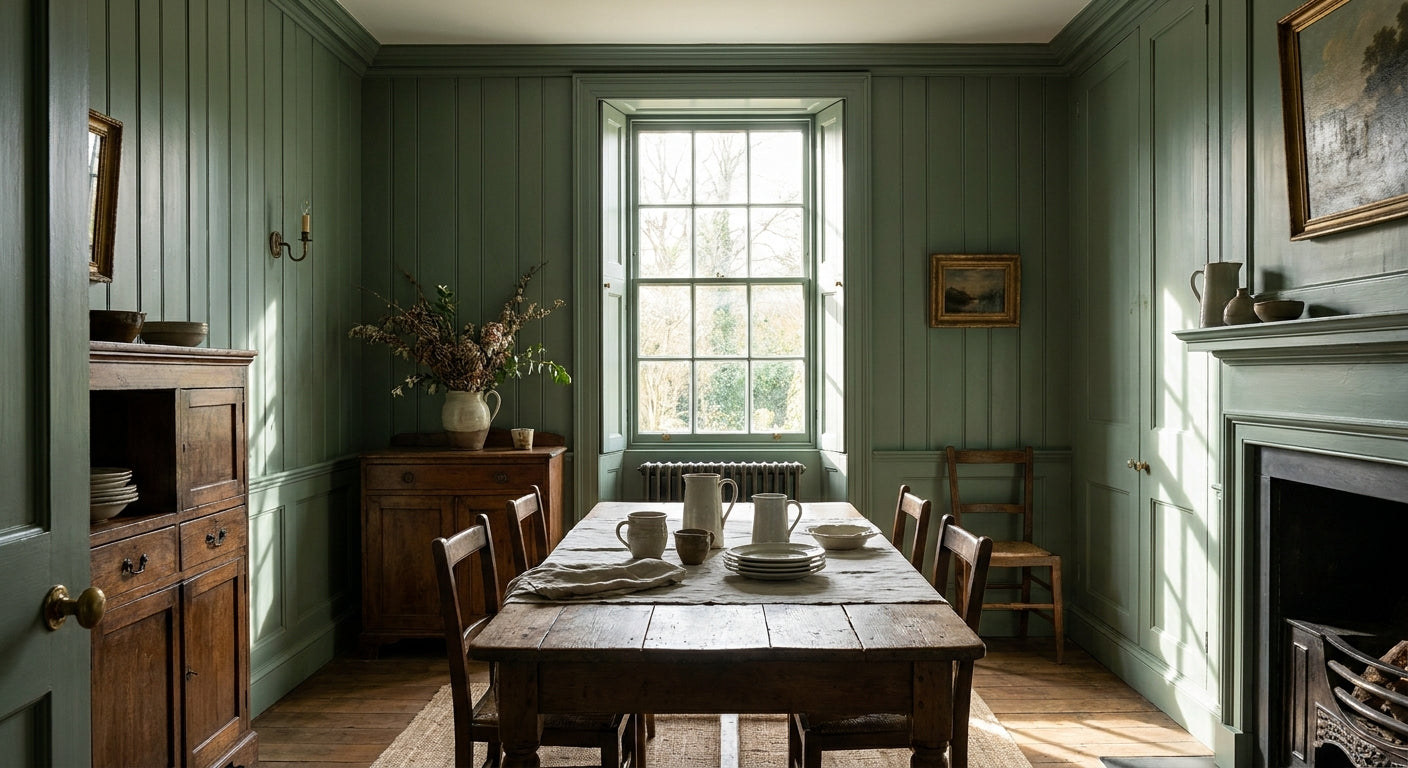
Tongue and groove wall panels are the classic look for Victorian hallways, Georgian drawing rooms, and Edwardian staircases, but most kits sold as tongue and groove today are MDF foil sheets that do nothing for the echo a stripped-floor period room throws straight back at you. This guide covers what to look for in tongue and groove wall panels for a period interior, which Aku Woodpanel finishes hold up, and what to skip in 2026.
- Natural oak wall panels give the classic tongue and groove look with acoustic felt backing built in - buy for Victorian hallways.
- Rustic oak 3-sided veneer suits uneven period plaster better than flat MDF sheets - buy for feature walls.
- 300cm panels fit Georgian ceilings above 2.7 metres without a visible cut line below the coving.
- Skip printed foil tongue and groove kits in listed properties - real wood veneer holds up better under fire and building control checks.
Why this matters
Period homes have the acoustics working against them before anyone picks a wood finish. Solid brick walls, high corniced ceilings, and reinstated original floorboards bounce sound around a room instead of absorbing it. That's exactly the kind of reverberation a panel like the natural oak wall panel is built to cut, because it pairs a 3-sided real wood veneer face with acoustic felt backing rather than a hard foil skin.
Traditional tongue and groove joinery solves the look. It does nothing for the echo. A panel that handles both jobs at once is the standard this guide measures every pick against for 2026, not just which finish photographs well.
Who this is for
This guide is for anyone renovating a pre-1930s property - Victorian terrace, Georgian townhouse, Edwardian semi - who wants the panelled-wall look original to the period without ripping out lath and plaster or living with an echoey hallway. You've probably got a hallway, a living room with a fireplace, or a staircase wall that needs the treatment, and you want something that reads as timber, not as an office fit-out.
What to look for in tongue and groove wall panels for period homes
Real wood veneer, not printed foil
A 3-sided real wood veneer face reads as timber under both daylight and lamplight because the grain runs through the surface, not printed on top of it. Foil-faced MDF looks convincing in a product photo and flat in person, especially next to original skirting or a stripped door.
Panel size matched to your ceiling height
Victorian terraces typically run ceilings around 2.4 to 2.7 metres, Georgian rooms often clear 3 metres. A 240cm panel finishes close to coving height in a standard terrace without a visible cut line; a 300cm option is built for taller Georgian and converted Edwardian rooms. Working out which size fits your run before ordering saves a return trip for a top-up order.
“If the ceiling is under 2.7 metres, a 240cm panel finishes just under coving height without a visible cut line.”
Acoustic felt backing for high-ceilinged rooms
A felt-backed panel does measurable work in a room with bare boards and no soft furnishings, which describes most restored period hallways and reception rooms. Panels without a felt layer look identical from three feet away and do nothing for the echo.
A finish that reads as period, not corporate
Oak, walnut, and muted grey-oak tones sit close to original stripped joinery. Stark white laminate or high-gloss grey reads like a serviced office reception, which is the fastest way to make a Victorian hallway look wrong.
Fixing method for solid brick and lath-and-plaster walls
Period walls are rarely flat. A batten-and-clip fixing system copes with the unevenness behind old plaster far better than a panel designed for direct adhesive fixing to plasterboard.
Fire rating for listed and conservation-area properties
If the property is listed or in a conservation area, check the fire rating documentation for any wall panel before ordering a full room run - building control will ask for it, and retrofitting a compliant product after installation costs more than getting it right the first time.
Top picks for period interiors
Natural Oak - the safe pick. Real 3-sided oak veneer, felt-backed, available in 240cm and 300cm lengths. It's the closest match to stripped original doors and skirting without looking new. Verdict: Buy for hallways and living rooms in Victorian and Edwardian properties.
Rustic Oak, 3-sided premium wood veneer - the character pick. Heavier grain and knot detail than the standard oak line, which suits a single feature wall rather than a full-room run where the texture can overwhelm a small space. Verdict: Buy for a chimney breast or stair wall, Consider before running it floor to ceiling in a small room.
Smoked Oak - the moody pick. Darker veneer tone that reads well in a study or snug with good window light, but it pulls a north-facing room darker still. Verdict: Consider for well-lit period rooms, Skip in a room that's already short on daylight.
Grey Oak - the contemporary crossover pick. A cooler, more muted tone than the traditional oak finishes, better suited to an Edwardian conversion getting a lighter refresh than to a Georgian drawing room aiming for period authenticity. Verdict: Consider for Edwardian and 1930s properties, Skip if the brief is strictly period-accurate.
Walnut - the depth pick. A warmer, richer tone that works well behind a dining table or in a study wall. Verdict: Consider for dining rooms and studies where you want contrast against lighter original joinery.
What to avoid
- Printed foil tongue and groove cladding kits. They look flat under any angled light and the seam lines crack within a couple of years of central heating cycling the room's humidity.
- 3D geometric decorative panels as a full-room treatment. Fine as a single accent wall, wrong scale for a hallway or drawing room where calm, straight panelling is the period look.
- Any panel with no stated felt backing in a bare-floor room. It matches the photo on the listing and does nothing for the echo you're trying to fix.
Verdict comparison
| Finish | Veneer | Sizes | Best room | Verdict |
|---|---|---|---|---|
| Natural Oak | 3-sided real wood | 240cm / 300cm | Hallways, living rooms | Buy |
| Rustic Oak | 3-sided real wood, heavy grain | 240cm / 300cm | Feature walls, stairs | Buy |
| Smoked Oak | 3-sided real wood | 240cm / 300cm | Studies, well-lit snugs | Consider |
| Grey Oak | 3-sided real wood | 240cm / 300cm | Edwardian conversions | Consider |
| Walnut | 3-sided real wood | 240cm / 300cm | Dining rooms | Consider |
FAQ
What's the best wood finish for tongue and groove wall panels in a period home?
Natural oak or rustic oak with a 3-sided real wood veneer is the closest match to original stripped joinery in Victorian and Edwardian properties. Darker finishes like smoked oak or walnut work in well-lit studies and dining rooms but pull a dim room darker still.
Is tongue and groove panelling suitable for a Victorian terrace hallway?
Yes, and a felt-backed veneer panel does more for the echo in a bare-floor Victorian hallway than traditional solid timber tongue and groove. Solid brick walls and stripped floorboards in these hallways bounce sound, and an acoustic backing addresses that where plain joinery does not.
Should I choose 240cm or 300cm wall panels for a period room?
Measure your ceiling height first: 240cm panels suit standard Victorian terrace ceilings up to roughly 2.7 metres, while 300cm panels fit taller Georgian and converted rooms. Getting this wrong means a visible cut line under the coving.
Can wall panels be fitted to original lath and plaster walls?
Yes, but a batten-and-clip fixing system copes with the unevenness of old plaster far better than direct adhesive fixing designed for flat plasterboard. Check the fixing method before ordering if the property has original lath and plaster walls.
Do wood wall panels actually reduce echo in a high-ceilinged room?
Panels with an acoustic felt backing absorb sound that a hard foil or laminate surface simply reflects back into the room. In a period room with bare floorboards and a high corniced ceiling, that backing does measurable work compared with plain tongue and groove joinery.
Is real wood veneer better than printed foil tongue and groove panels?
Real wood veneer holds its grain and colour under both daylight and lamplight, while printed foil looks convincing only in photographs. Foil-faced panels also tend to crack at the seams within a couple of years as heating cycles change room humidity.
Do I need building control sign-off for wall panels in a listed property?
Check the fire rating documentation for any panel before installing in a listed or conservation-area property, since building control will ask for it. Retrofitting a compliant product after the room is finished costs more than sourcing the right one first.
One last thing
Natural oak comes in a version backed with grey felt instead of natural felt, and the felt colour shows through the grooves under downlighting more than most people expect. Order samples of both before committing to a full hallway run in 2026 - it's a five-pound difference in sample cost against a full room re-order if the wrong felt colour shows once the lights go on.
Share:
Board and Batten Cladding for House Exteriors (2026)
Cedar Cladding for Garden Buildings: 2026 Buying Guide