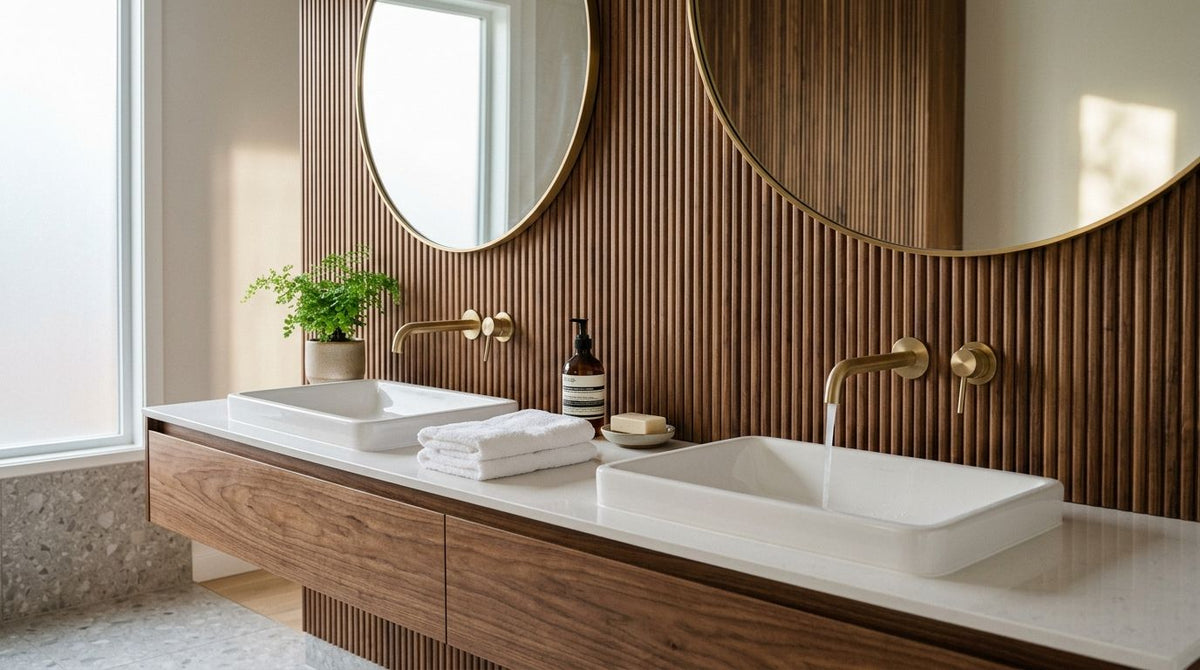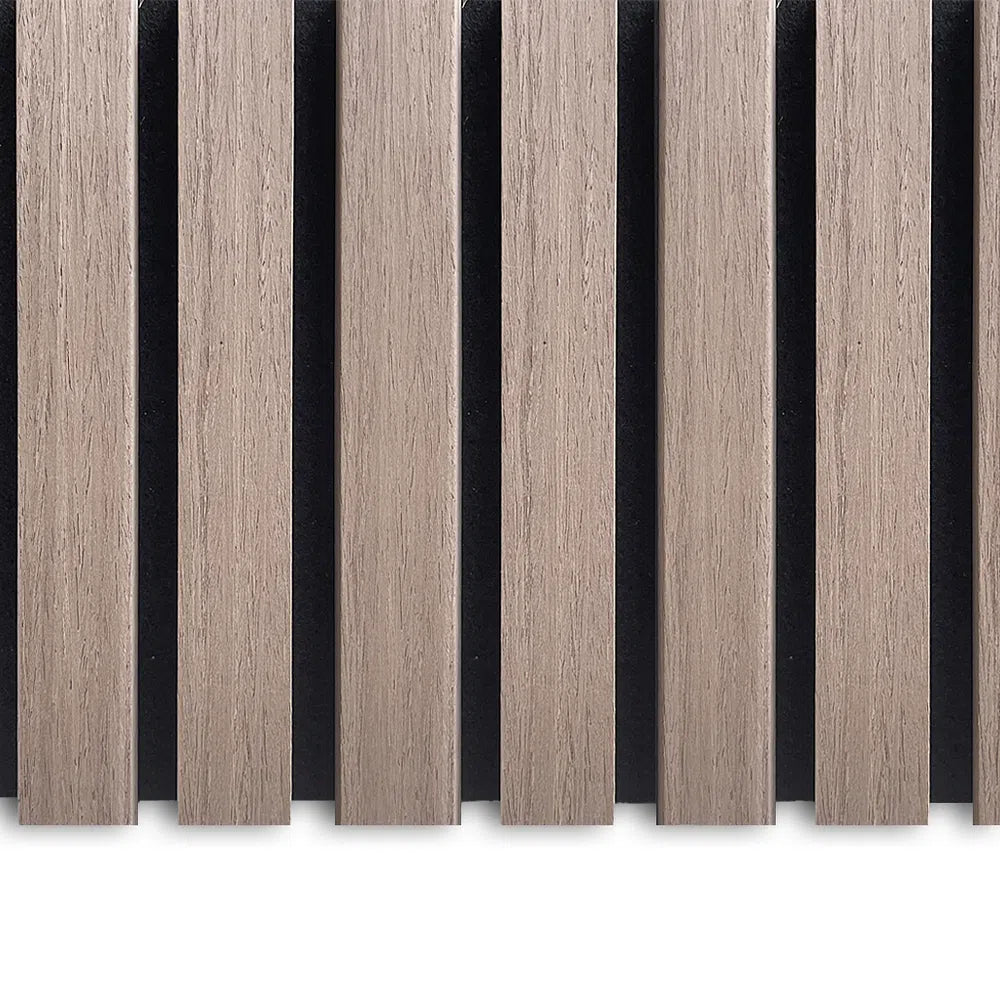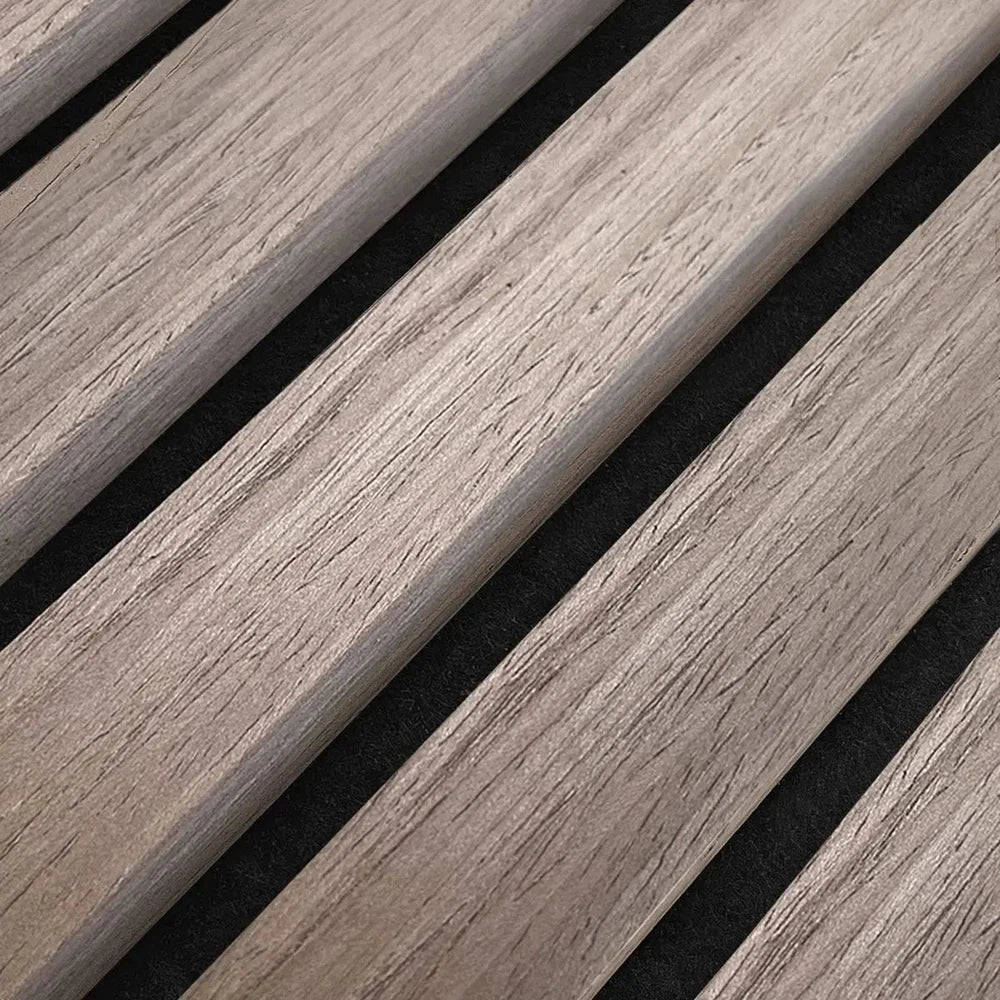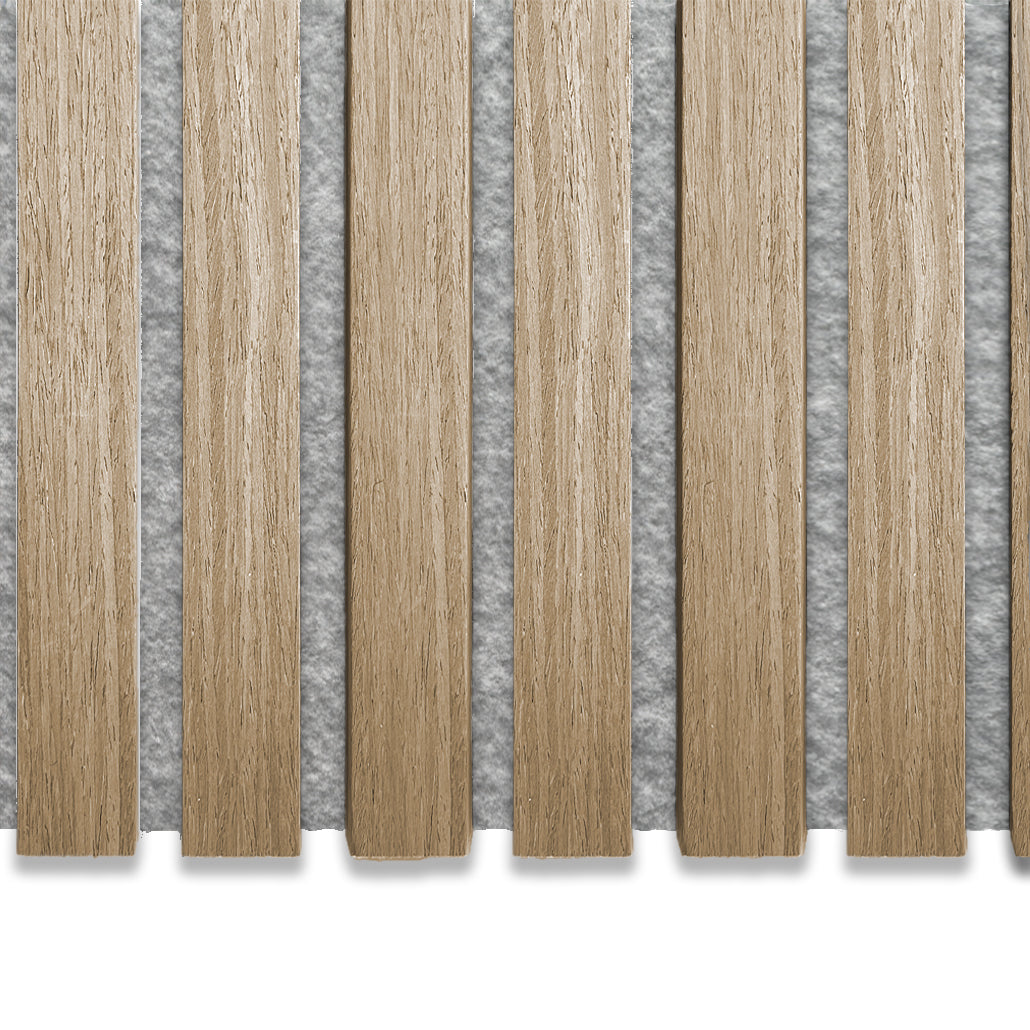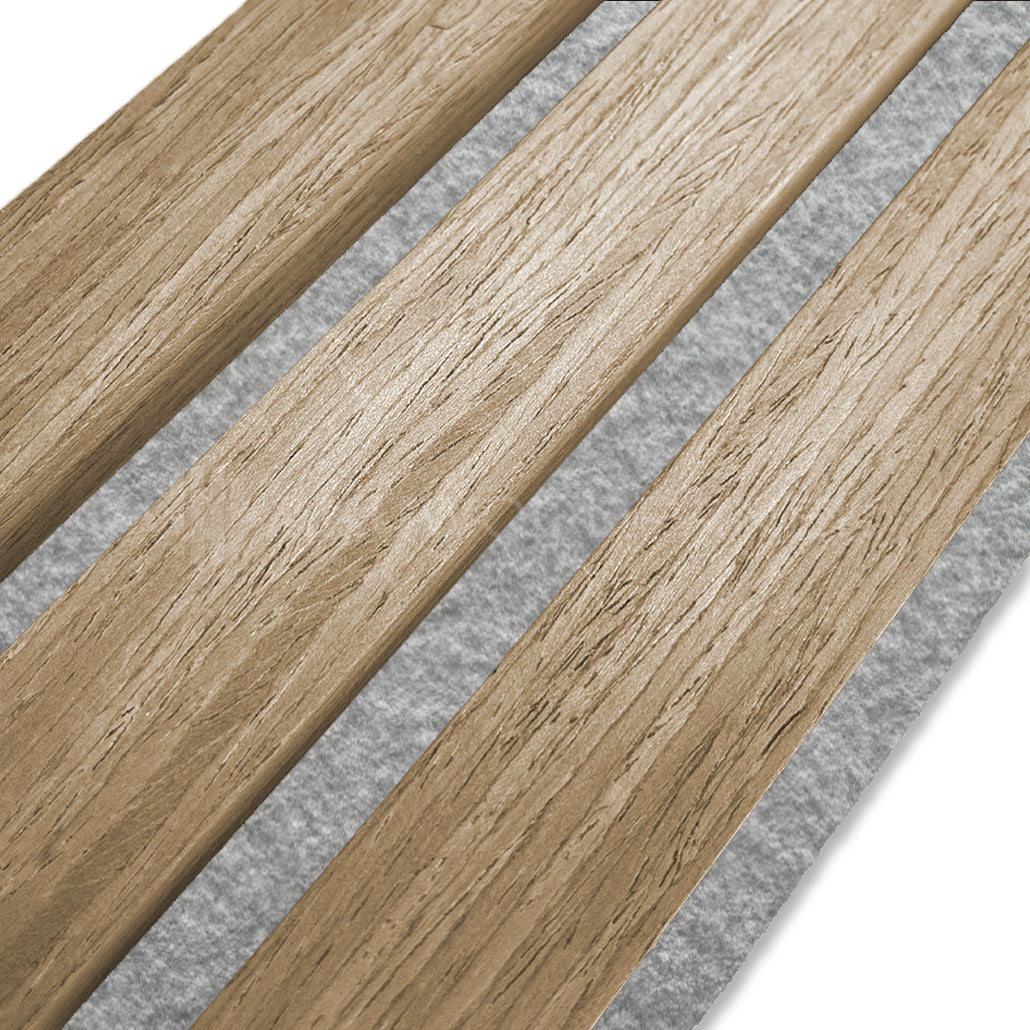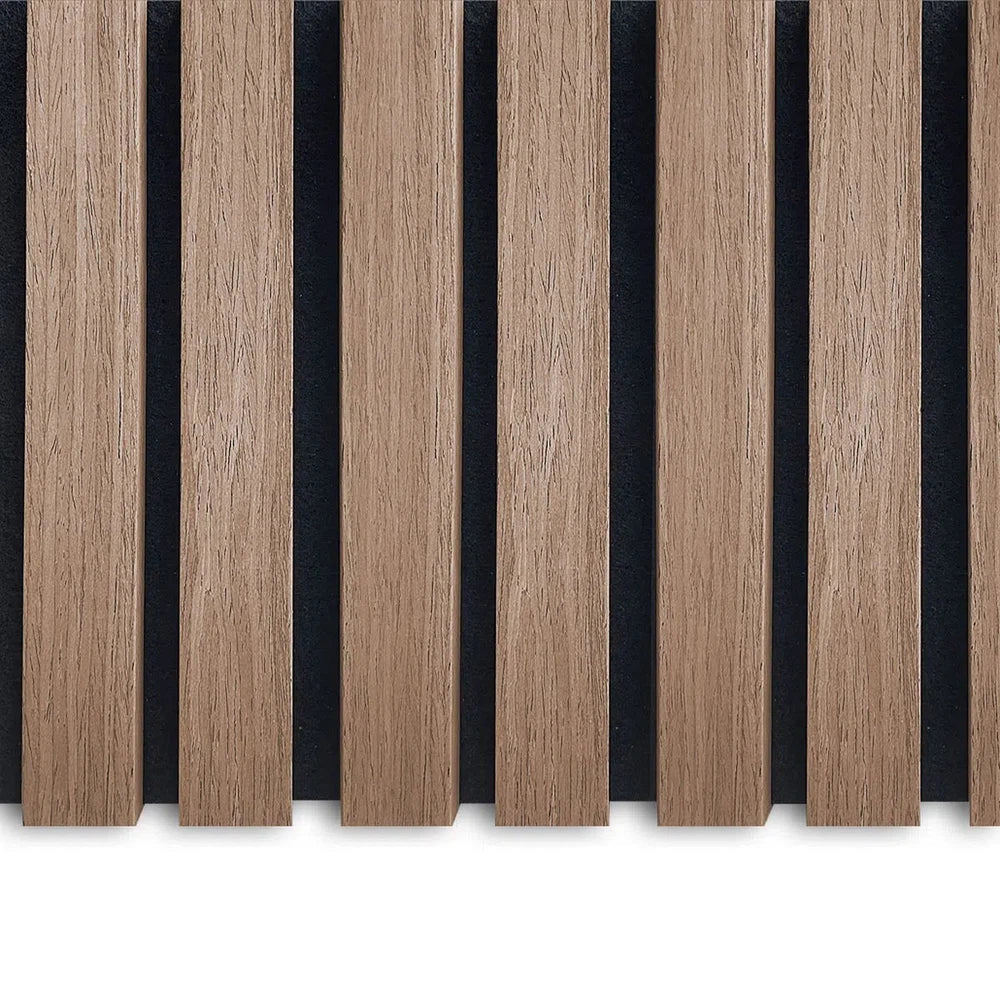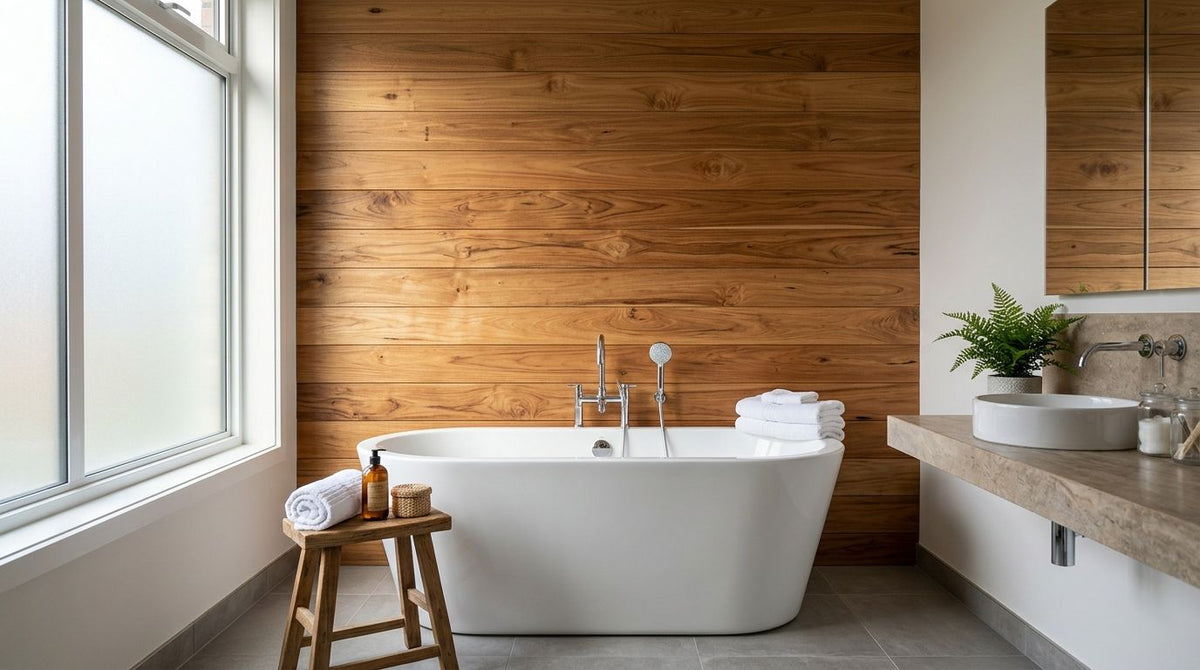
Teak wall panels for bathroom feature walls are wood-effect panels fitted to one dry accent wall to bring warmth and grain into a room where solid timber usually fails fast. Most people searching this term mean a vanity wall, a bath surround, or a hallway leading into the bathroom — not a shower enclosure — and that distinction decides which product actually survives 2026's bathroom humidity levels.
- AKU Woodpanel's walnut and mocca veneer panels get closest to a teak look for a dry bathroom feature wall in 2026.
- Solid teak survives direct water contact; felt-backed veneer panels do not — keep them off shower walls.
- Ventilation and correct zoning matter more than the wood species you choose.
- PVC or laminate wet wall panels still win inside the shower enclosure itself.
Why teak wall panels matter for bathroom feature walls
Bathroom air can spike above 90% relative humidity during a hot shower, then drop back down once the extractor fan clears it. Solid wood swells and shrinks through that cycle every single day, which is exactly why teak — dense, naturally oily, and rot-resistant — became the default choice for boat decks and outdoor bathing decks long before it turned up as a bathroom trend.
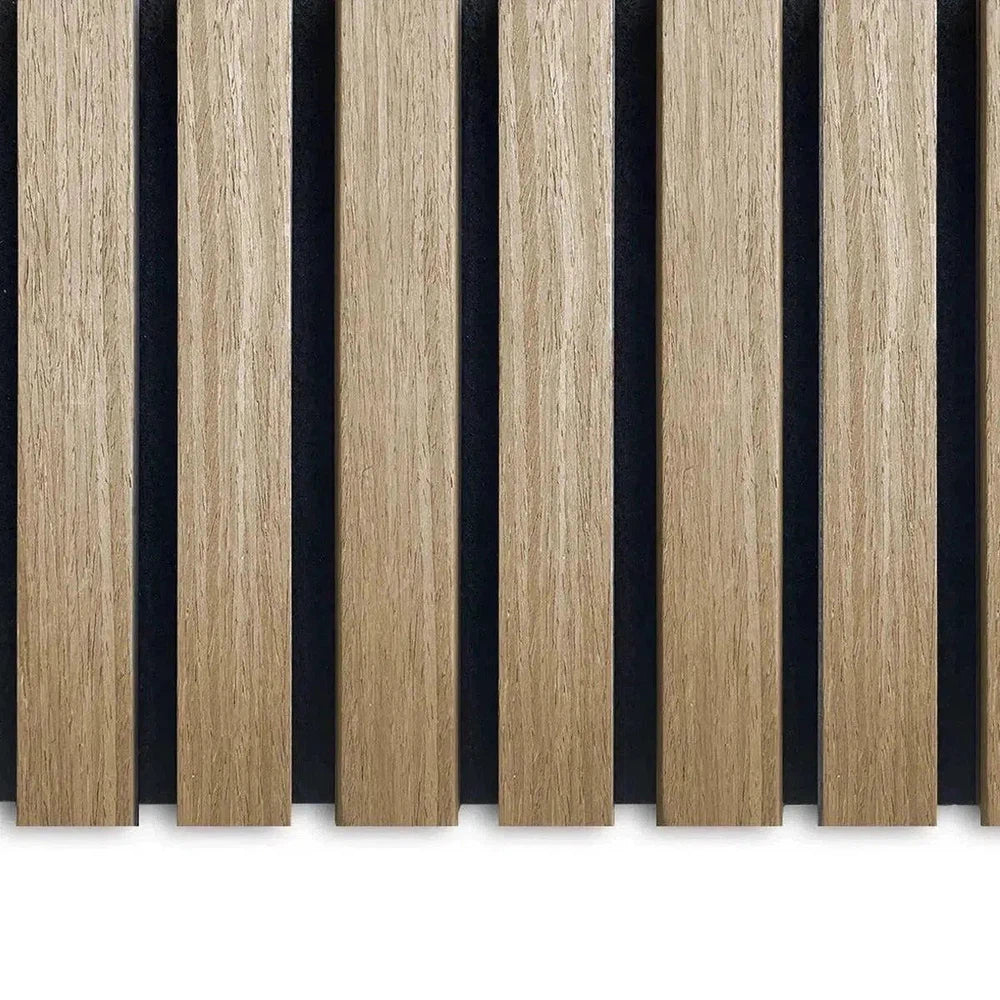
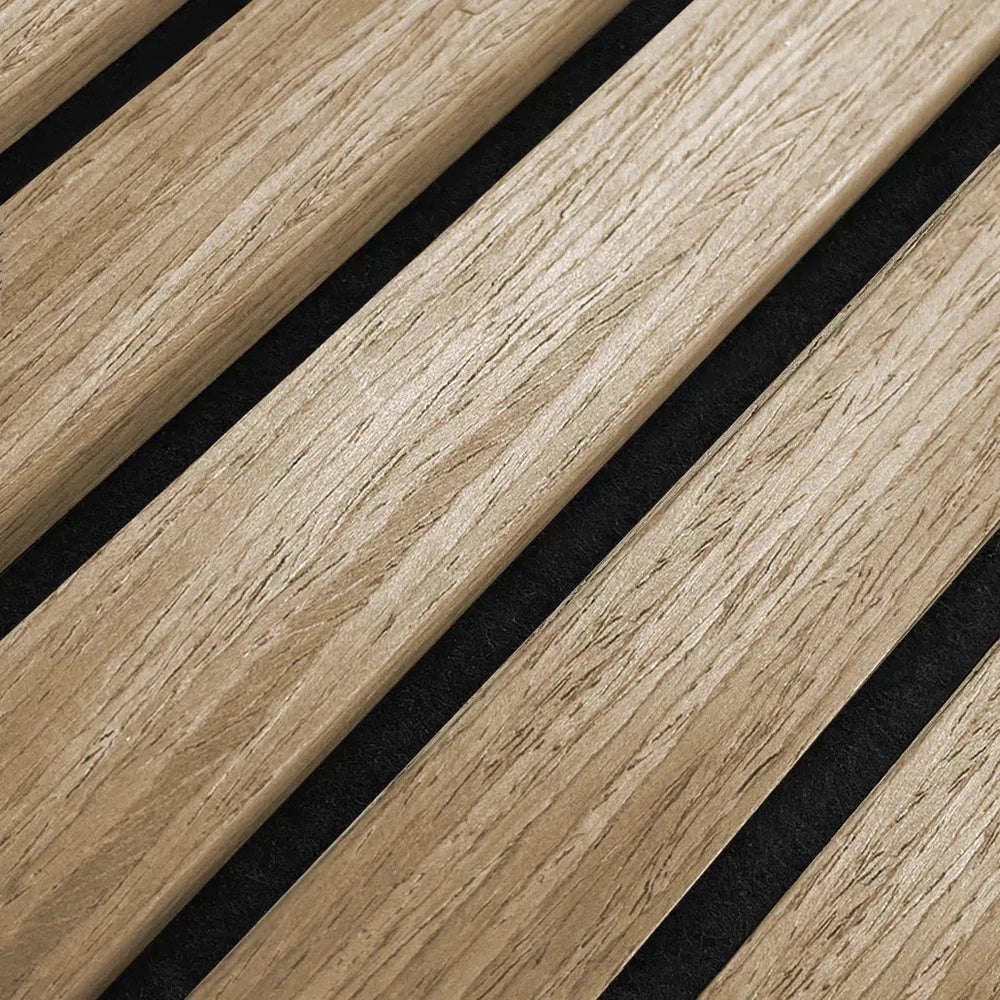
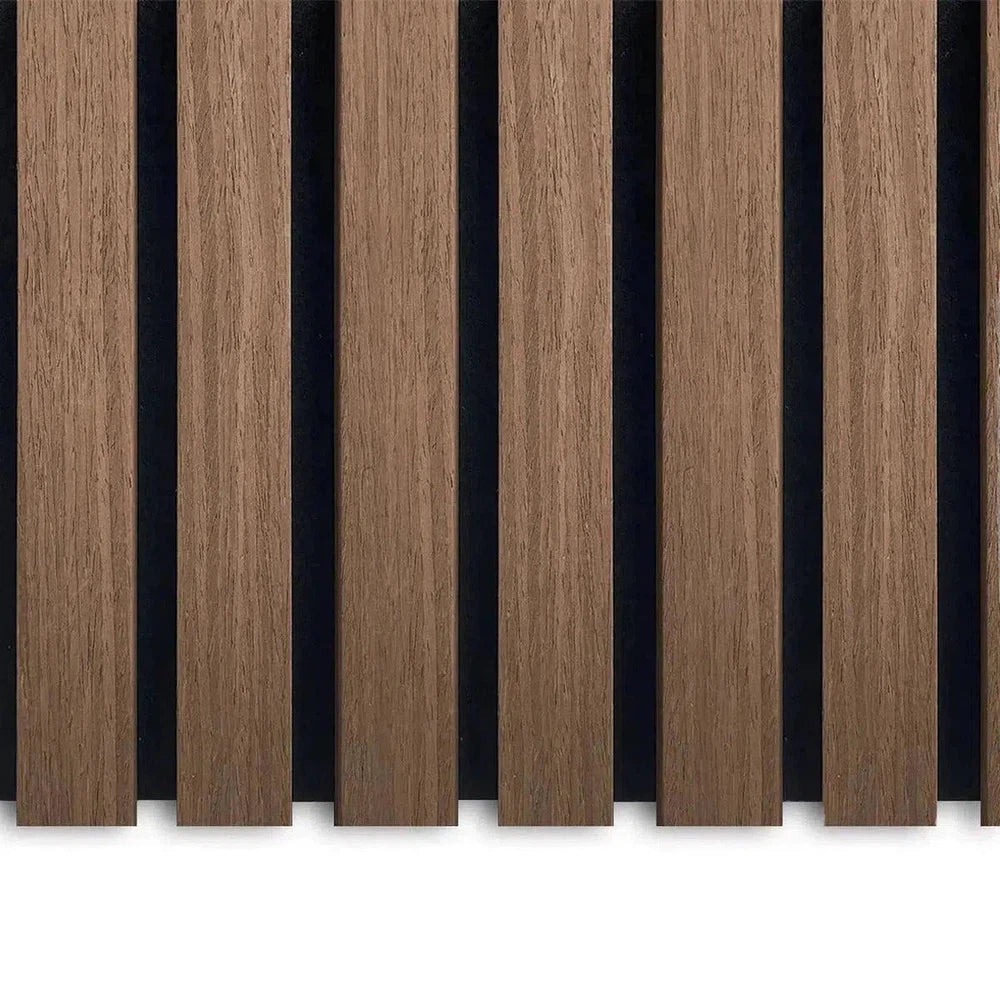
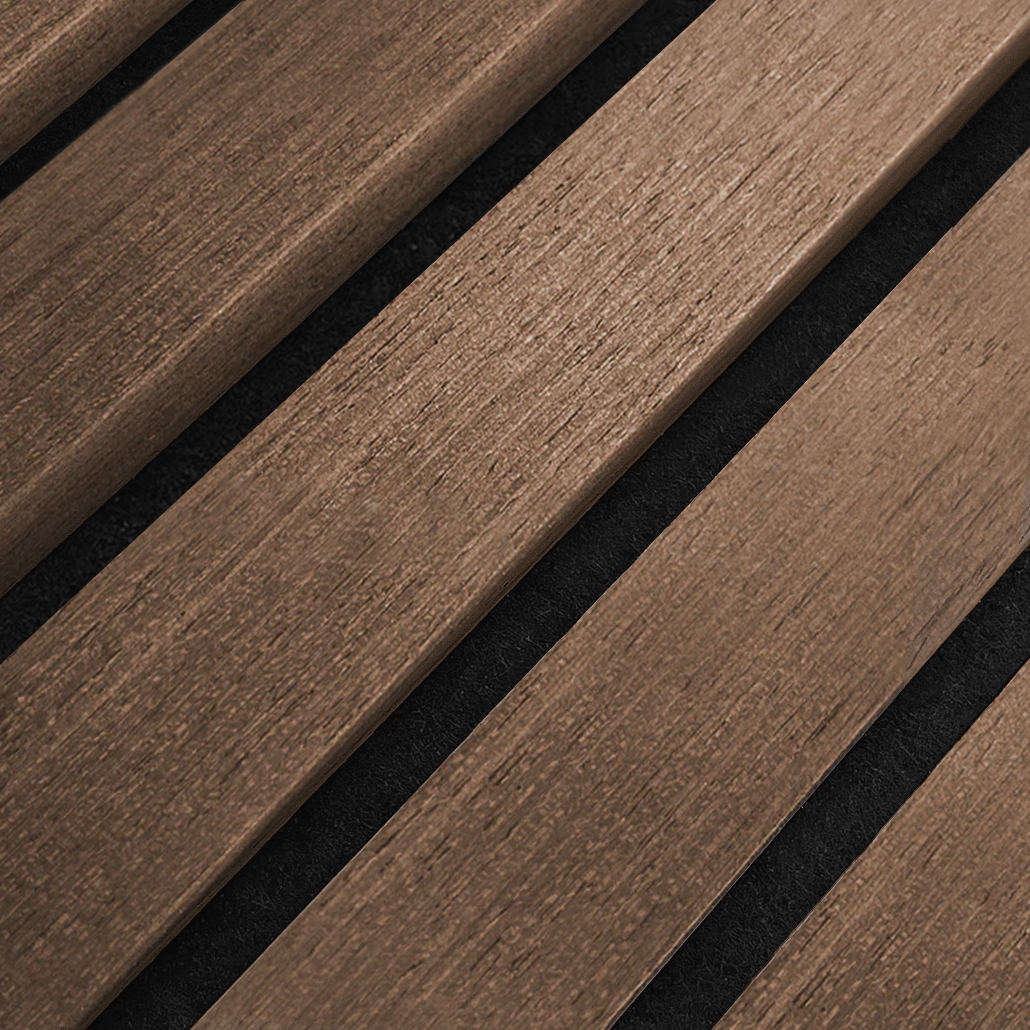
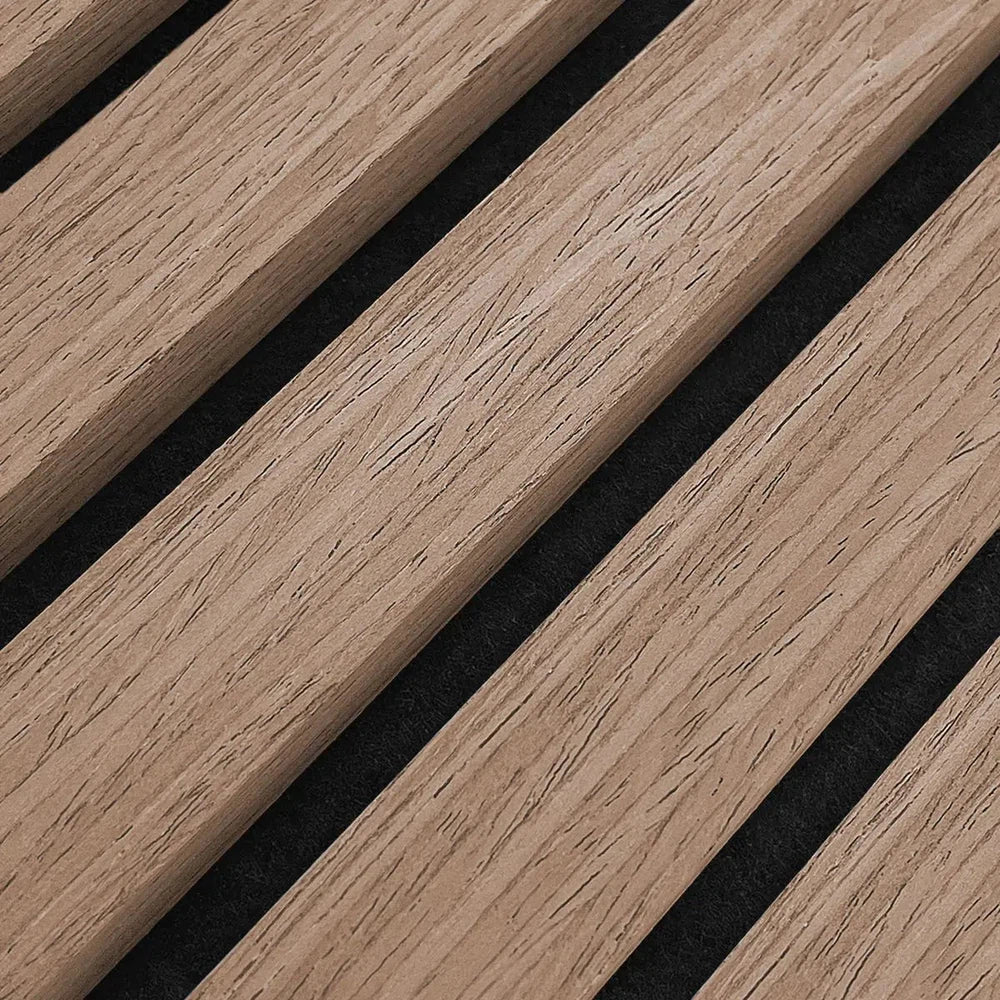
Most searches for teak wall panels for bathroom use in 2026 aren't actually asking about a wet-room shower surround. They're asking about one dry accent wall — behind a freestanding tub, above a vanity, or along the wall you see first walking in — where wood should read warm and expensive without fighting daily water contact. AKU Woodpanel's walnut wall veneer panel is built for exactly that zone: a 3-sided real wood veneer over an acoustic felt backing, available in 240 cm or 300 cm panel lengths.
That felt backing is the detail most buyers skip past. It's genuinely useful for the echo problem panelling solves — hard tile and glass bounce sound badly in a small bathroom — but felt is not a waterproof membrane. Keep any veneer panel, teak-look or otherwise, off a wall the shower head can reach.
Buyers researching this topic are usually mid-renovation, comparing tile, teak, and veneer side by side, which is why the practical question isn't which wood species looks best in a photo but which one survives the specific wall they've chosen.
“Keep any veneer panel, teak-look or otherwise, off a wall the shower head can reach.”
How to plan a teak-look feature wall for 2026
Bathrooms don't behave like living rooms, so treat the room in zones before picking a finish. Work through the steps below in order — skipping the ventilation step to get straight to the fun part is the single biggest reason feature walls fail within a year.
Map the wet zones before you choose a wall
Every bathroom splits into a genuine wet zone, a splash zone, and a dry zone, and wood veneer panels — teak-look or not — only belong in the last one.
- Mark the shower's spray radius and stay at least a full tile's width outside it before panelling
- Treat any wall directly opposite an open shower door as a splash zone, not a dry one
- Check the room has a working extractor fan or openable window before committing to any timber finish
- Rule out a wall with a radiator running behind it — heat cycling cracks veneer faster than humidity alone
- Photograph the space at a few different times of day, and after a shower, to see where condensation actually settles
Choose a finish that reads like teak without teak's maintenance
Solid teak needs periodic oiling to hold onto its natural water resistance, and skipping a year of that leaves the surface grey even though the panel still isn't rated for constant splash. A pre-finished veneer panel removes that maintenance step from the equation entirely.
- Natural oak veneer for a lighter, Scandinavian-leaning alternative to teak's golden tone
- The mocca veneer panel for a warm mid-brown finish closest to teak's natural colour
- Walnut veneer for a deeper, reddish-brown finish if the room leans moody rather than bright
- Rustic oak's premium 3-sided veneer if you want visible grain and knot character on show
- Grey oak if the rest of the bathroom fittings run cool-toned rather than warm
Ventilate before you panel, not after
No wood finish, teak-look or genuine teak, survives a bathroom with poor extraction. This is the step most DIY projects skip, and it's the one that cancels out every benefit of choosing a moisture-tolerant panel in the first place.
- Confirm the extractor fan clears visible steam within 15 to 20 minutes after a shower
- Add a humidistat-controlled fan if the current one only runs on a light-switch timer
- Crack a window during and after bathing whenever the layout allows it
- Wipe down glass and tile surfaces straight after showers to cut the ambient moisture load
- Leave the bathroom door open between uses so a panelled wall isn't sealed inside a damp box all day
Prep the wall surface properly
Panels only perform as well as what's behind them, and a damp or uneven wall undermines even the best veneer on the market.
- Strip old wallpaper completely — trapped moisture behind paper is a common, hidden cause of panel failure
- Check the plaster for damp with a moisture meter before fitting anything to the wall
- Batten out an uneven wall rather than gluing panels directly onto it
- Prime bare plasterboard first so adhesive bonds evenly across the full panel face
Fix the panels with a moisture-appropriate adhesive
Standard PVA-based wood glue isn't built for a bathroom's daily humidity swings. High-tack panel glue is formulated for direct panel-to-wall bonding and holds through temperature and humidity cycling better than a general-purpose adhesive would.
- Run the adhesive in a bead pattern rather than a full sheet so trapped air can escape
- Press and hold each panel for the stated cure window before letting go
- Use painter's tape to support the top edge while the bead cures on a vertical run
- Fit end pieces and trims at every open edge so the veneer's cut face isn't left exposed to moisture
Seal every edge and joint
Water finds the smallest gap, and edges near the basin, skirting board, or ceiling line need attention even on a genuinely dry-zone wall.
- Run a clear silicone bead anywhere the panel meets the floor or a bath surround
- Caulk the join between panel and adjacent tile instead of butting the two together dry
- Check mitred corners every few months and re-seal as soon as a gap appears
- Avoid drilling fixings through the veneer face in the bottom third of the panel, closest to splash height
Maintain the finish through the year
A veneer feature wall needs far less upkeep than solid teak, but less isn't the same as none.
- Dust or wipe the panel with a barely damp cloth, never a soaked one
- Check for lifting edges every few months, especially through the panel's first year as it acclimatises to the room
- Keep the extractor fan's filter clean so it keeps clearing humidity at the same rate
- Re-seal silicone joints as soon as they start showing gaps or discolouration
Teak-look options for a bathroom feature wall, compared
Four realistic options come up once you've decided where the feature wall sits — here's how they stack up for a UK bathroom in 2026.
| Option | Best for | Key limitation |
|---|---|---|
| Solid teak panelling | Full wet-zone cladding that takes direct water daily | Needs periodic oiling; heavier and slower to fit than veneer |
| PVC or laminate wet wall panels | Shower enclosures and splash zones | Reads as plastic rather than real wood grain |
| AKU Woodpanel veneer panels (oak, walnut, mocca) | Dry accent walls — vanity, bath surround, entry hallway | Felt backing isn't rated for direct water contact |
| Ceramic or porcelain tile | Full wet rooms and floors | Cold underfoot, no acoustic benefit, grout needs regular upkeep |
For a wall that takes direct spray every day, solid teak or tile wins — no veneer product should go there. Tile remains the safest choice for anyone nervous about moisture, but it costs more installation time and offers none of the acoustic benefit a felt-backed panel adds to a hard-surfaced room. For the dry feature wall most searches for teak wall panels for bathroom use actually mean, AKU Woodpanel's real wood veneer panels are the buy, provided the wall stays outside the splash zone mapped in step one.
For a textured rather than flat look on the same dry wall, AKU Woodpanel's handcrafted 3D decorative panels work just as well — keep them out of the splash zone the same way you would any wood panel.


Common mistakes bathroom feature-wall buyers make
The same handful of mistakes show up on almost every failed bathroom feature wall project, and most of them have nothing to do with the wood finish chosen.
- Panelling the shower wall itself. Even a teak-look veneer panel with felt backing isn't built for constant spray — that wall needs tile, tanking, or a dedicated wet wall board instead.
- Skipping the extractor fan upgrade. A feature wall fitted before ventilation is sorted fails within a season regardless of which wood species you picked.
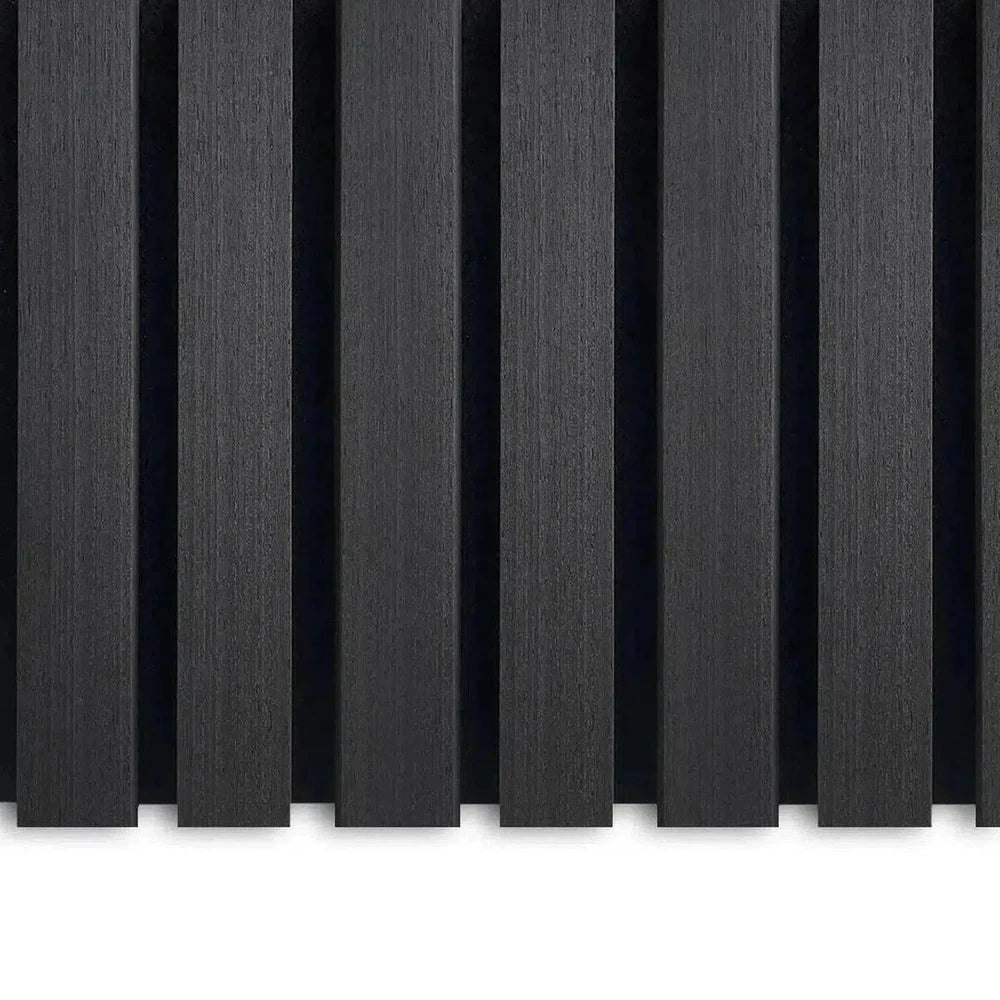
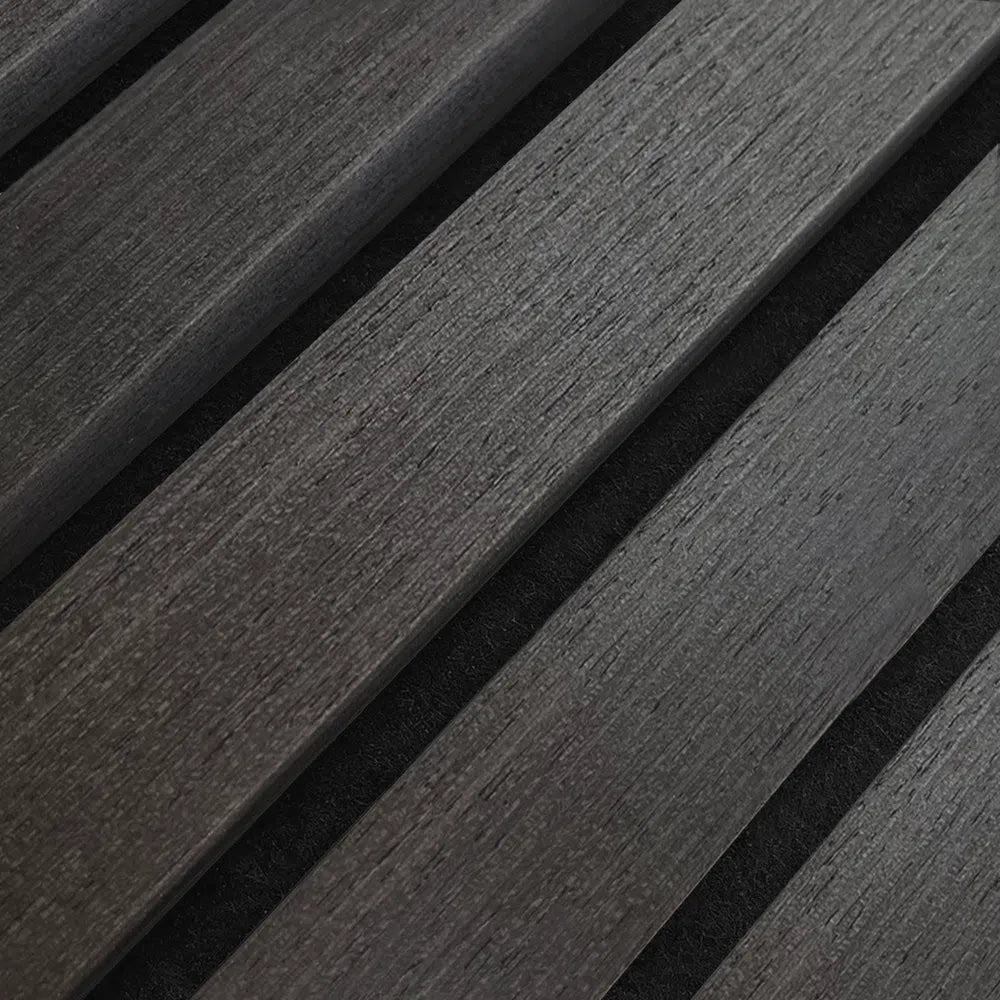
- Choosing a dark finish in a windowless bathroom. Smoked oak and black oak look striking in photos but can make a small, light-starved room feel smaller still.
- Gluing straight onto damp plaster. Moisture trapped behind the panel causes lifting and mould long before any damage shows on the front face.
- Forgetting trims at open edges. An unfinished cut edge on real wood veneer is the fastest route for water to get in behind the panel.
- Fitting panels straight out of the box. Wood veneer needs time to acclimatise to the room's temperature and humidity before installation, and skipping that step is a common cause of edge lifting later.
FAQ
What's the best wood for a bathroom feature wall in 2026?
For a dry accent wall, real wood veneer panels in oak, walnut, or mocca finishes are the best 2026 option — they give the teak look without teak's oiling schedule. Save solid teak or tile for zones that take direct water.
Is teak wall panelling safe in a bathroom?
Solid teak is safe in a genuine wet zone because its natural oils resist water, but most bathroom feature walls are dry zones where a lighter veneer panel does the same job for less upkeep. Confirm which zone you're panelling before choosing either.
Can you put real wood veneer panels in a shower?
No — veneer panels with a felt acoustic backing, including AKU Woodpanel's range, aren't rated for constant water contact. Use a PVC or laminate wet wall panel inside the shower enclosure itself.
How do you stop wood panels warping in a humid bathroom?
Keep the panel in a dry zone, run the extractor fan until humidity clears after every shower, and seal panel edges and joints with silicone. Panels fitted before the room's ventilation is sorted are the most common cause of warping.
Are AKU Woodpanel panels waterproof?
AKU Woodpanel's real wood veneer panels aren't waterproof — the acoustic felt backing is built for sound absorption, not moisture resistance. They suit dry feature walls, not shower surrounds or splash zones.
What's the difference between wet wall panels and wood veneer panels?
Wet wall panels are PVC or laminate boards built to seal against constant water, while wood veneer panels use a real wood face over an acoustic backing meant for dry rooms. Pick wet wall panels for the shower, veneer for the rest of the bathroom.
How much ventilation does a panelled bathroom need?
An extractor fan that clears the room within 15 to 20 minutes of a shower is the practical benchmark before fitting any wood panel. A humidistat-controlled fan is worth adding if the current one only runs on a light-switch timer.
Can you install wood wall panels over existing tiles?
Only if the tiles are flat, sound, and free of damp behind them — battening out an uneven tiled wall is safer than gluing directly onto grout lines. Check for trapped moisture with a damp meter first either way.
One last thing
AKU Woodpanel's veneer panels come in two size formats — 240 cm and 300 cm. For a floor-to-ceiling bathroom feature wall, the 300 cm format removes a horizontal joint that the 240 cm option would need, and every joint on a bathroom wall is one more place condensation can creep in behind the veneer. Heading into 2026, that single sizing choice affects how long the wall lasts more than the finish colour you pick.