

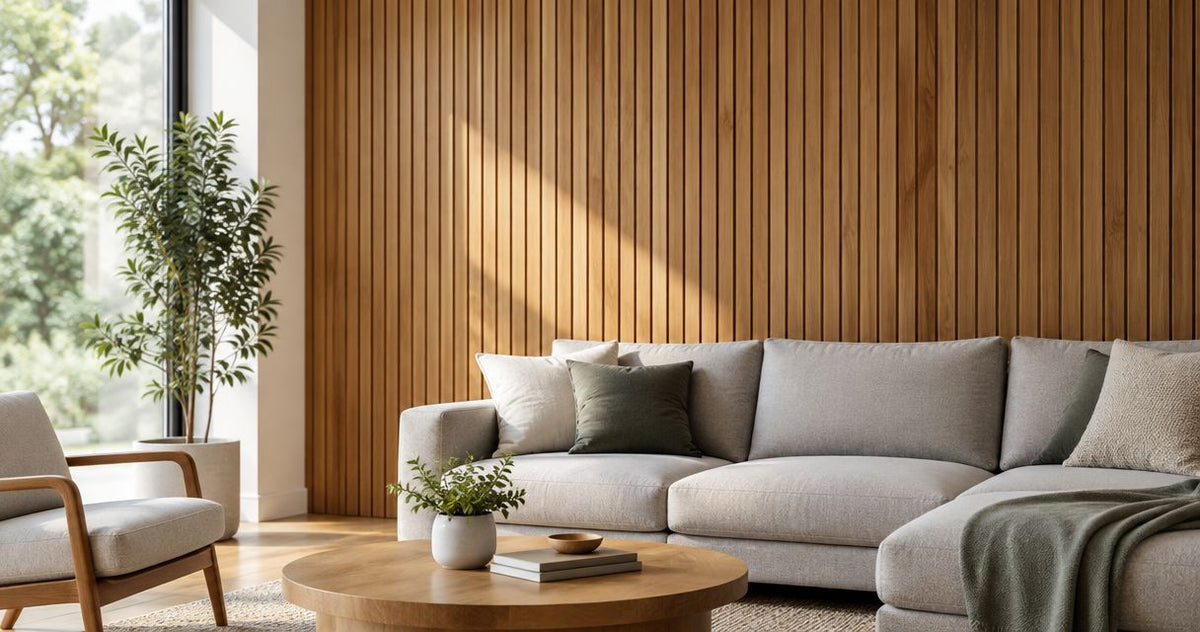
Wooden wall panels have no fixed replacement age: their useful life depends on the panel construction, moisture exposure, fitting and care, rather than a universal number of years. Keep panels while they remain dry, secure and sound; investigate swelling, lifting veneer or loose fixings instead of replacing them simply because they are old.
- How long do wooden wall panels last? Judge their condition, construction and exposure rather than a fixed replacement age.
- Akustiq UK acoustic wood panels combine real wood veneer with felt backing; follow the specific panel’s care instructions.
- Moisture damage, lifting veneer and insecure fixings need attention; colour changes alone do not establish panel failure.
- Check the wall before fitting: new panelling does not repair damp or unstable plaster.
How long do wooden wall panels last?
Wooden wall panels last as long as their materials and installation remain fit for use. A dry bedroom feature wall and an exposed exterior wall face different conditions, so treating them as having the same lifespan gives you the wrong basis for choosing or replacing panels.
For a 2026 project, compare the construction and intended application before comparing finishes. Prepare the room using the product’s instructions, including any requirements for acclimatising wood wall panels before installation.
| Panel construction | Best for | Practical advantage | Limitation affecting longevity |
|---|---|---|---|
| Solid wood panelling | Interiors where a repairable timber surface matters | Some finishes allow sanding and refinishing | Wood moves with moisture changes; repair options depend on its profile and finish |
| Real wood veneer panels | Interiors needing a real wood surface over a supporting material | Provides timber grain without a solid timber face throughout | Deep sanding can cut through the veneer |
| Felt-backed acoustic wood panels | Rooms needing sound absorption and a slatted finish | Combines a decorative surface with an absorbent backing | Care must suit the wood, backing and complete assembly |
| Exterior cladding | Outdoor walls with a specified cladding system | Designed for an exterior application | Durability depends on the actual material, fixings and weather detailing |
A panel’s appearance is not a durability specification. An oak-coloured surface does not tell you whether the panel is solid timber, veneered or another material with a wood-effect finish.
Why this matters
Replacing a sound feature wall because it has reached an arbitrary age wastes usable material. Keeping swollen or insecure panels because they still look acceptable creates a different problem: the underlying fault remains unresolved.
Separate appearance, attachment and material condition. A faded finish needs a different response from a panel pulling away from damp plaster, and neither should be diagnosed from age alone.
When choosing wooden wall panels in 2026, ask what the product is made from, where it can be installed and how it should be cleaned. Those answers help you protect the installation more directly than a general lifespan claim.
Solid wood panels: check movement and the finish
Solid wood takes up and releases moisture as conditions change. That movement matters at joints, edges and fixing points, especially where installation leaves insufficient allowance for the product’s requirements.
The advantage is repair potential. Depending on the timber profile, damage and finish, you can sometimes renew the surface without replacing the whole wall.
Do not treat that as permission to sand every panel aggressively. Grooves, mouldings and thin sections restrict what you can remove, while an unsuitable replacement coating can change the appearance. Check the finish and remaining material before attempting restoration.
Veneered acoustic panels: protect the face and backing
A real wood veneer is a timber surface layer, not a solid timber section throughout. Its repair options therefore differ from solid wood: deep sanding risks exposing the material beneath.
Akustiq UK acoustic wood panels suit homeowners seeking real wood veneer and felt backing. The indoor range includes a 3-sided real wood veneer finish and formats of 240 cm and 300 cm; those dimensions help you plan the wall, but they do not establish a longer service life.
For example, the Natural Oak wooden wall panel is an indoor finish choice, not evidence that every oak-looking panel has the same construction or durability. Confirm the specific product’s installation and care requirements before fitting.
The benefit of this construction is the combination of a timber finish and acoustic backing. The limitation is that cleaning, repairs and refinishing must protect both components rather than treating the entire panel as solid wood.
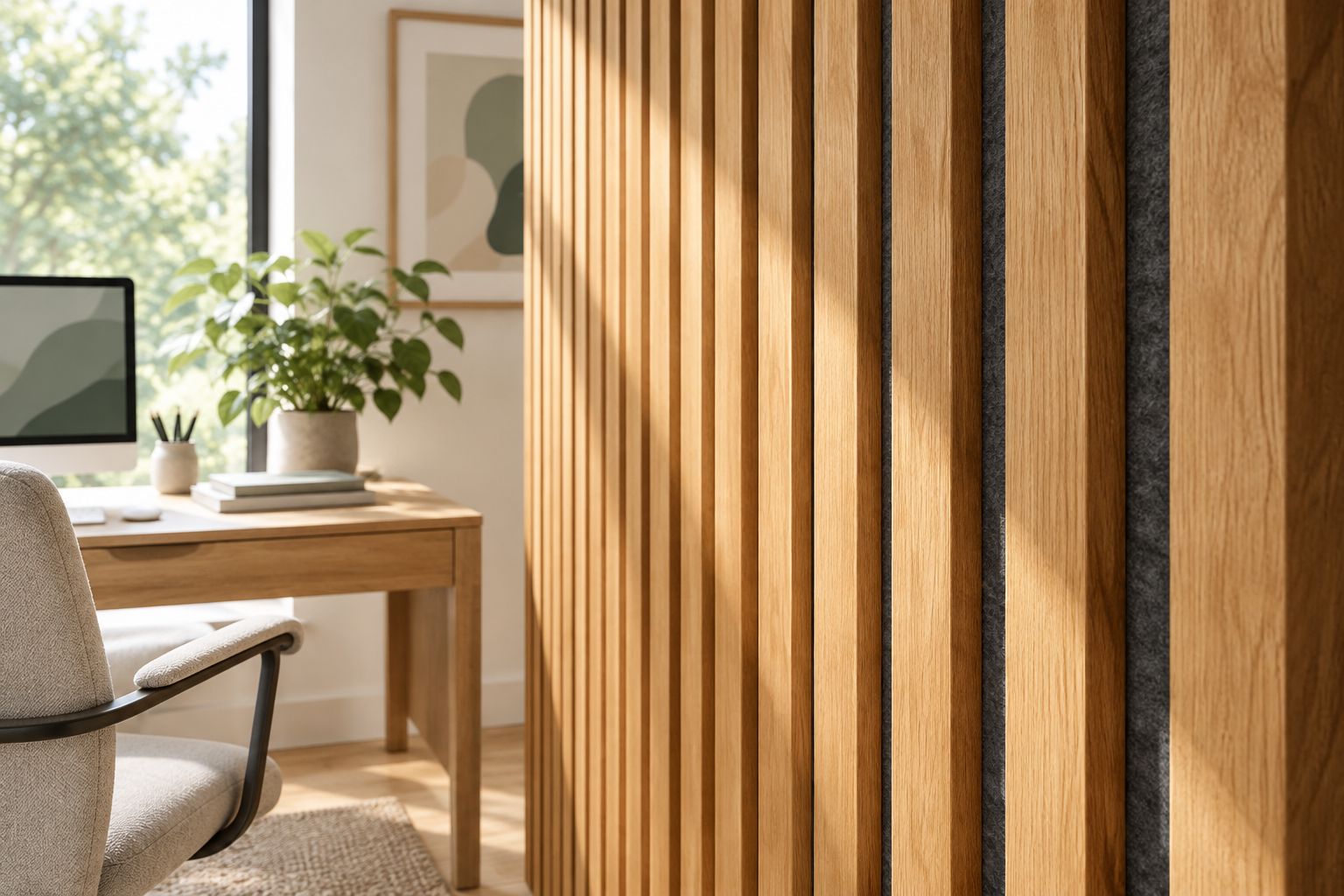
A surface scratch does not automatically mean the acoustic backing has failed. Equally, an undamaged-looking face does not prove that the backing, adhesive or wall behind it remains sound. Inspect the assembly, not just the visible grain.
Decorative wood panels: inspect edges and raised details
Decorative panels need the same basic checks for moisture and secure attachment. Raised patterns also create edges and recesses that need careful cleaning and protection from knocks.
Akustiq UK decorative wall panels include 60 × 60 cm American walnut formats. That format describes the panel size, not its expected lifespan or suitability for wet areas.
Choose a decorative surface because its pattern suits the room, then check whether you can maintain it in that position. A wall behind a chair, beside a busy doorway or close to food preparation presents different cleaning and impact demands from an unobstructed bedroom wall.
Exterior cladding: assess a separate system
Do not use an indoor wooden panel’s care instructions to judge exterior cladding. Outdoor walls face rain, sunlight and changing temperatures, and the complete cladding system must suit that exposure.
The practical advantage of exterior cladding is its intended outdoor application. The limitation is that the visible board alone cannot establish durability: joints, cut edges, fixings and water management also matter.
For exterior work planned in 2026, identify the actual cladding material and obtain the installation and maintenance instructions for that product. A wood-grain appearance does not establish whether a board is timber or another material, nor which treatment it needs.
Why wooden wall panel lifespan varies
The conditions around a panel explain why otherwise similar-looking walls age differently. Check these factors before blaming the finish or choosing a replacement:
- Moisture exposure: Leaks, condensation and repeated splashing can affect wood and moisture-sensitive supporting materials. Repair the source rather than covering it.
- Panel construction: Solid timber, veneer, backing materials and coatings have different repair and cleaning requirements. Identify the complete construction.
- Wall condition: Loose plaster, contaminated surfaces and unresolved damp undermine installation. A decorative covering does not make the substrate sound.
- Fixing method: Adhesive and mechanical fixings must suit the panel, substrate and manufacturer’s instructions. Do not assume one fixing method suits every wall.
- Sunlight and heat: Light can alter timber colour, while nearby heat sources require attention to the product’s permitted installation conditions.
- Cleaning and impact: Excess water, abrasive cleaning and repeated knocks can damage finishes or edges. Match the care method to the surface.
Choose the right panel for the location before choosing the colour. A finish you like cannot compensate for an unsuitable application.
How do you help wooden wall panels last longer?
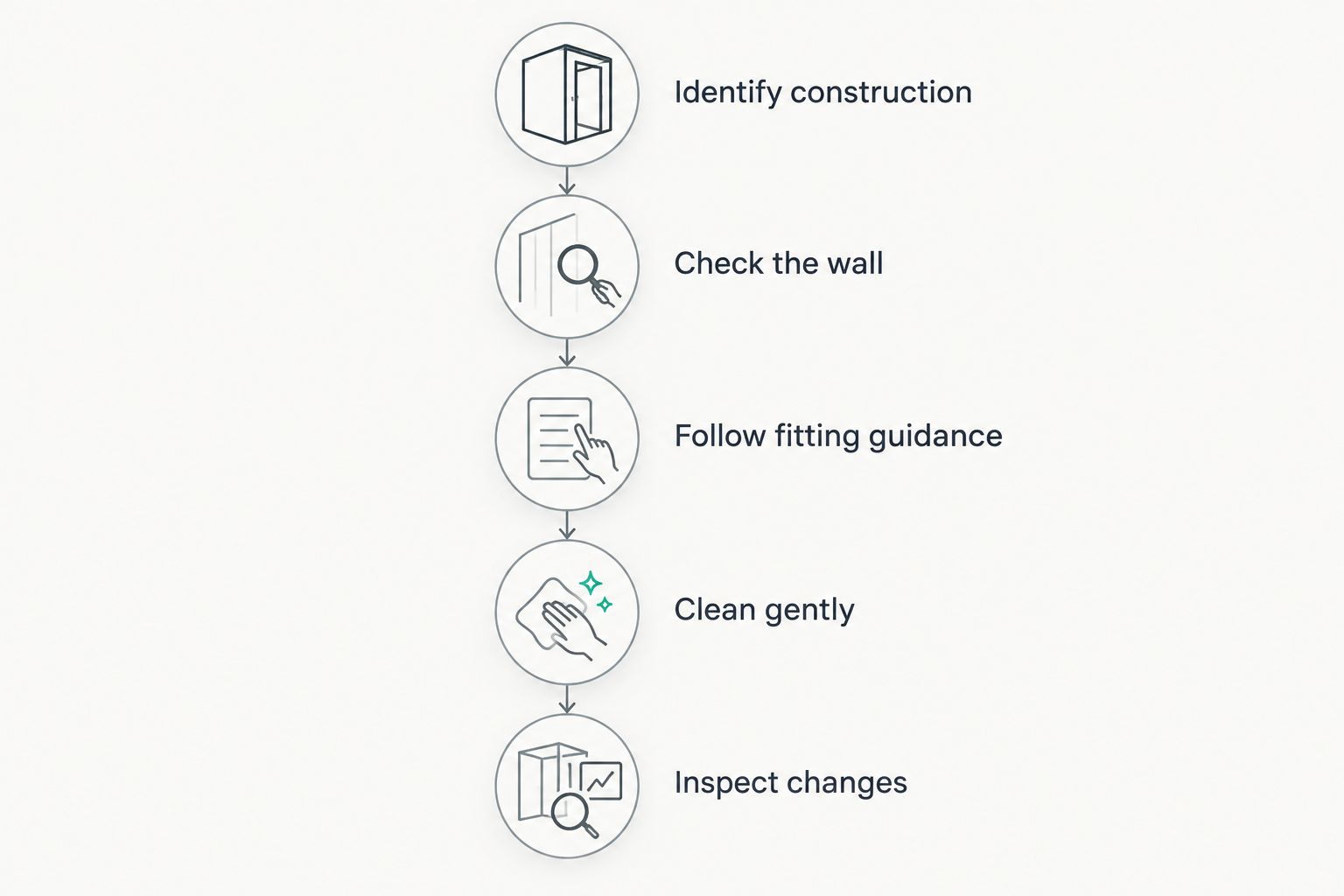
Protecting a panel starts before it reaches the wall. Use this sequence for a 2026 installation or when checking an existing feature wall; the product’s own instructions take priority over general DIY advice.
- Identify construction. Establish whether the face is solid wood, veneer or another finish, and identify the backing. Keep the product information for future cleaning or repairs.
- Check the wall. Investigate damp patches, unstable plaster and contamination before fitting. Do not use panels to hide an unresolved building defect.
- Follow fitting guidance. Use the specified preparation, acclimatisation, fixing method and movement allowances. Avoid copying details from a different panel system.
- Clean gently. Start with the manufacturer’s recommended method. Avoid soaking the panel or introducing a cleaner whose suitability you have not checked.
- Inspect changes. Look at joints, lower edges and fixing points when cleaning. Investigate new movement, staining or lifting before attempting a cosmetic repair.
Keep care instructions somewhere you can find them after the installation. If you later change the room’s use, heating arrangement or cleaning routine, check whether those changes introduce conditions the panel was not selected to withstand.
Cleaning without damaging the finish
Dust gently using a suitable soft tool and follow the panel supplier’s instructions for marks. Where a cleaning product is permitted, test it in an inconspicuous place before treating the visible wall.
Do not assume that household polish, oil, steam or a wet mop is suitable because the surface looks like wood. Treatments can affect the finish, and water introduced between slats can reach components you cannot easily dry.
Preventing avoidable knocks
Look at how furniture and doors move near the installation. A chair back repeatedly striking the same slat is a local impact problem, not proof that the whole wall has reached the end of its life.
Move the source of contact where possible. Before attaching hooks, shelves or equipment, check how loads must be supported; decorative slats should not be assumed to provide a structural fixing point.
When should you repair or replace wooden wall panels?
Use condition, not the installation date, as your replacement trigger. Check what has changed, identify the cause and decide whether a local repair is suitable before removing a complete wall.
| What you notice | What to check | Next move |
|---|---|---|
| Dust or light surface marks | The approved cleaning method | Clean gently before considering refinishing |
| Colour change without distortion | Light exposure and the condition of the finish | Decide whether the appearance remains acceptable |
| A scratch or chipped edge | Damage depth and whether the face is veneered | Ask about a compatible local repair |
| Lifting veneer or swollen material | Moisture exposure and damage beneath the face | Resolve the cause and assess the affected panel |
| A panel moving away from the wall | Fixings, adhesive and substrate condition | Keep the area safe and arrange inspection |
| Mould or persistent damp staining | The building’s moisture problem | Investigate the source before restoring or replacing panels |
Do not glue a loose panel back over a damp or crumbling surface. If the substrate has failed, repeating the original attachment without correcting the wall leaves the cause in place.
Can you sand wooden wall panels to extend their life?
Sanding is appropriate only when the panel construction and finish allow it. Solid wood and real wood veneer are not interchangeable repair surfaces.
For veneer, obtain specific advice before removing material. A scratch that remains visible can be less disruptive than sanding through the face and exposing the layer underneath.
Does a warranty tell you how long panels will last?
A warranty describes contractual cover, not an automatic replacement date. Its exclusions, installation conditions and covered defects matter alongside its duration.
For a purchase in 2026, read the current terms for the exact product. Keep the installation information and purchase record, and distinguish a covered manufacturing defect from damage caused by unsuitable use or an unresolved wall problem.
FAQ
How long do wooden wall panels last in a living room?
Wooden wall panels have no universal replacement age in a living room. Keep them while the materials remain sound and securely fitted, and investigate moisture, movement or lifting surfaces when these appear.
Do acoustic wood panels wear out just because they are old?
Age alone does not establish that acoustic wood panels have failed. Assess the face, backing, fixings and installation rather than assigning a replacement date from appearance alone.
Can I use indoor wood panels in a bathroom?
Use indoor wood panels in a bathroom only where the specific product is approved for the intended conditions. A real wood finish or felt backing does not establish waterproofing or shower suitability.
Can I sand Akustiq UK acoustic wood panels?
Do not assume Akustiq UK acoustic wood panels can be sanded like solid timber. Their real wood veneer surface requires product-specific repair guidance before you remove material.
Does fading mean wooden wall panels need replacing?
Fading alone does not establish that wooden wall panels need replacing. Check separately for swelling, loose attachment, lifting veneer or moisture damage before deciding whether the issue is cosmetic.
Is it better to repair one damaged panel or replace the wall?
Assess a local repair first when damage is confined to one area and the rest of the installation is sound. Resolve the cause and check repair compatibility before working on the affected panel.
Do exterior wood-look panels last the same as indoor wooden panels?
Exterior wood-look panels and indoor wooden panels should be assessed separately. Their materials, exposure, installation details and maintenance requirements differ, so appearance alone is not a useful lifespan comparison.
One last thing
Take clear photographs of the finished wall and keep a record of the product and fitting method. If a joint opens or a patch changes colour later, an installation record helps you distinguish an existing detail from a new problem.
Do not replace a sound wall to fix a fault elsewhere. A leaking pipe, damp substrate or chair striking the slats needs attention first; new panels are not a substitute for correcting the cause.
Share:
How much do acoustic wall panel samples cost?
How much does it cost to clad a house exterior?