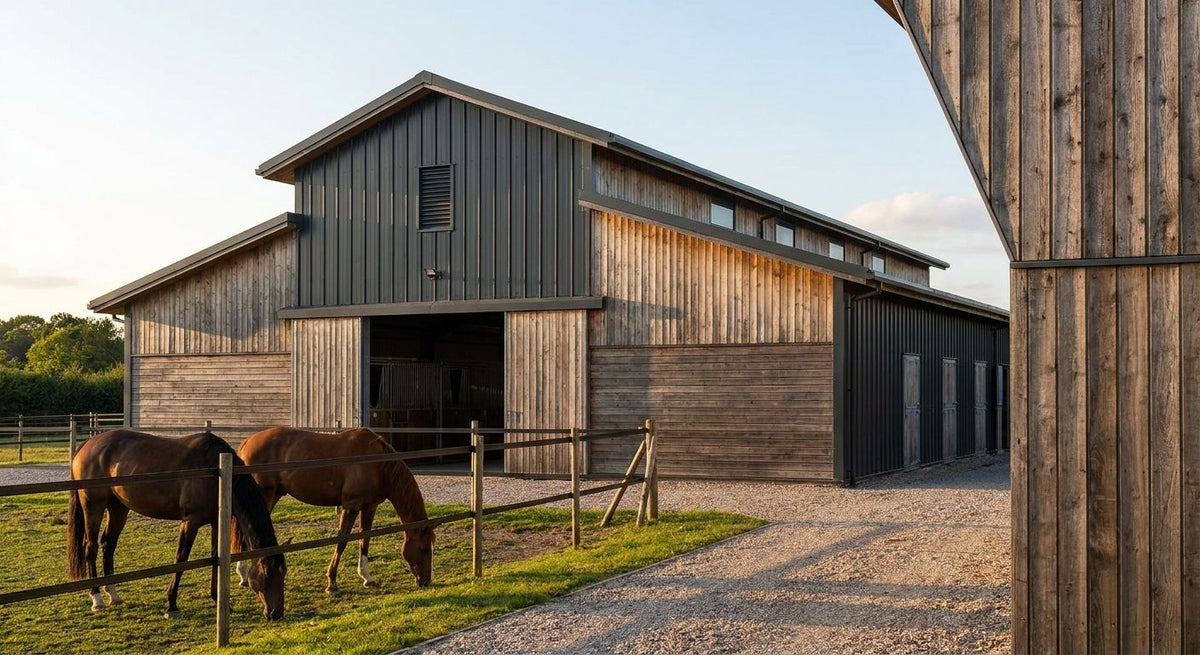
Stable blocks take a battering no house wall ever sees: driving rain off open paddocks, ammonia-heavy air, hooves against skirting boards, and pressure washers twice a week. Picking exterior cladding for stables means choosing a board that survives that routine, not just one that looks good in a brochure photo.
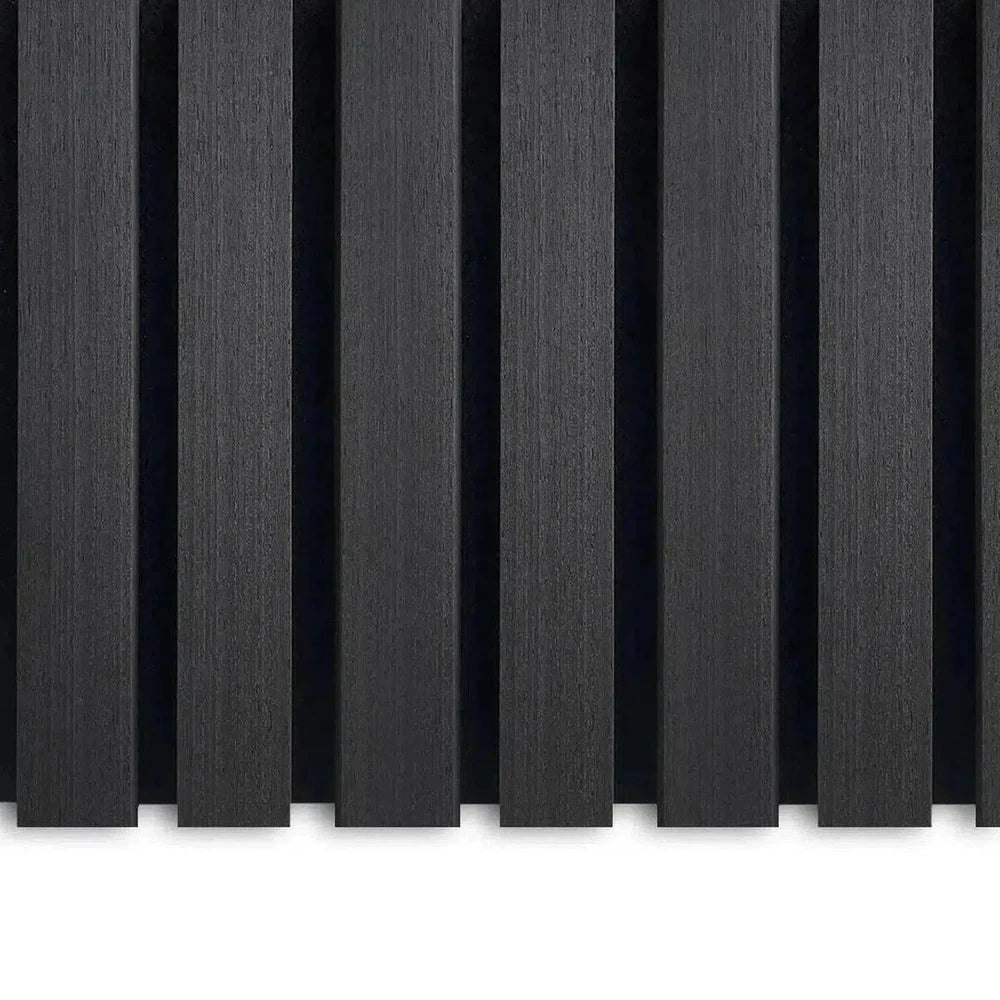
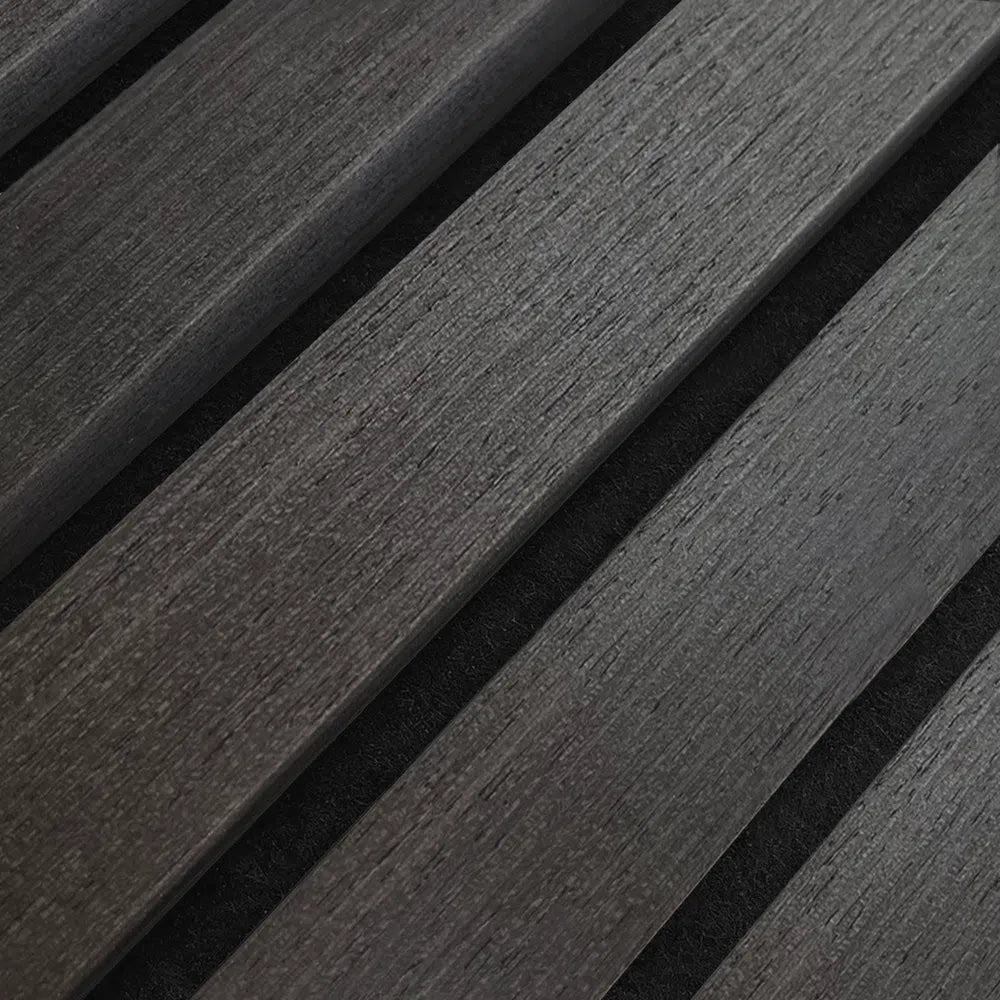
- Black exterior cladding panel suits modern equestrian centres wanting contrast against arenas in 2026 - buy it.
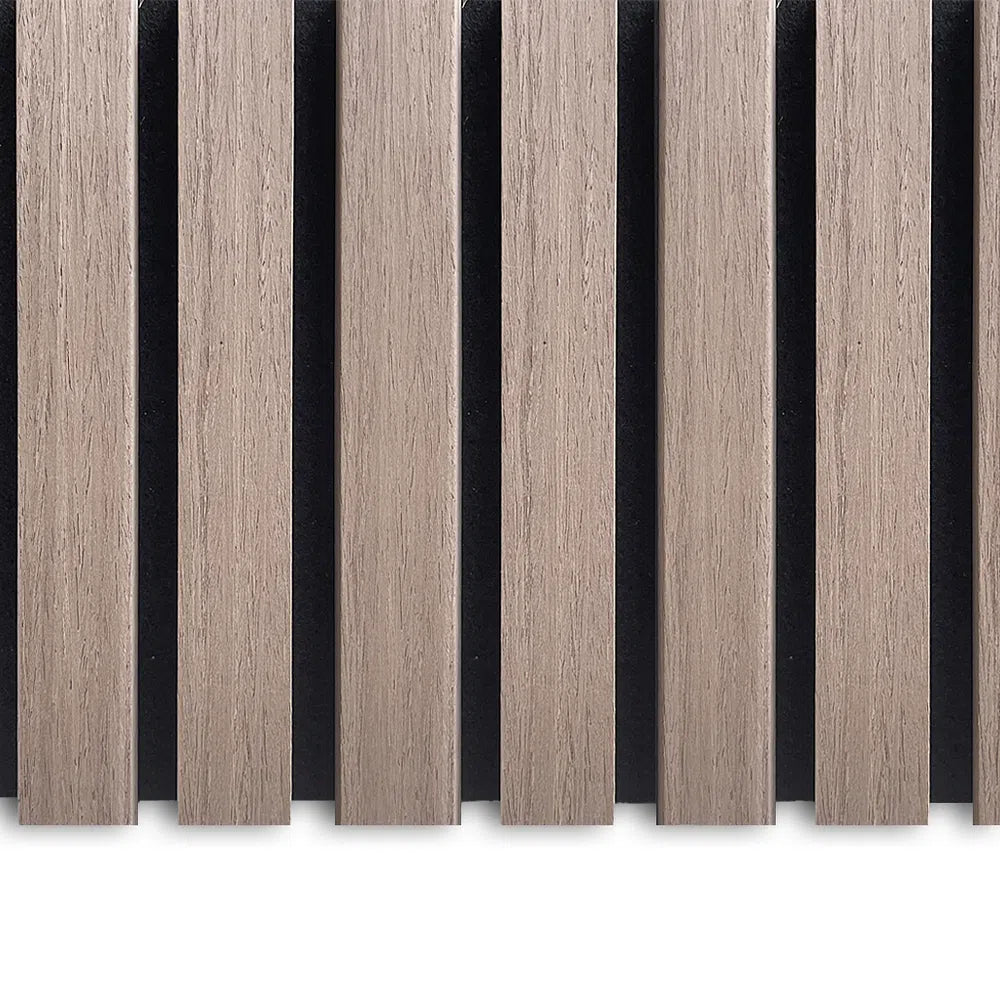
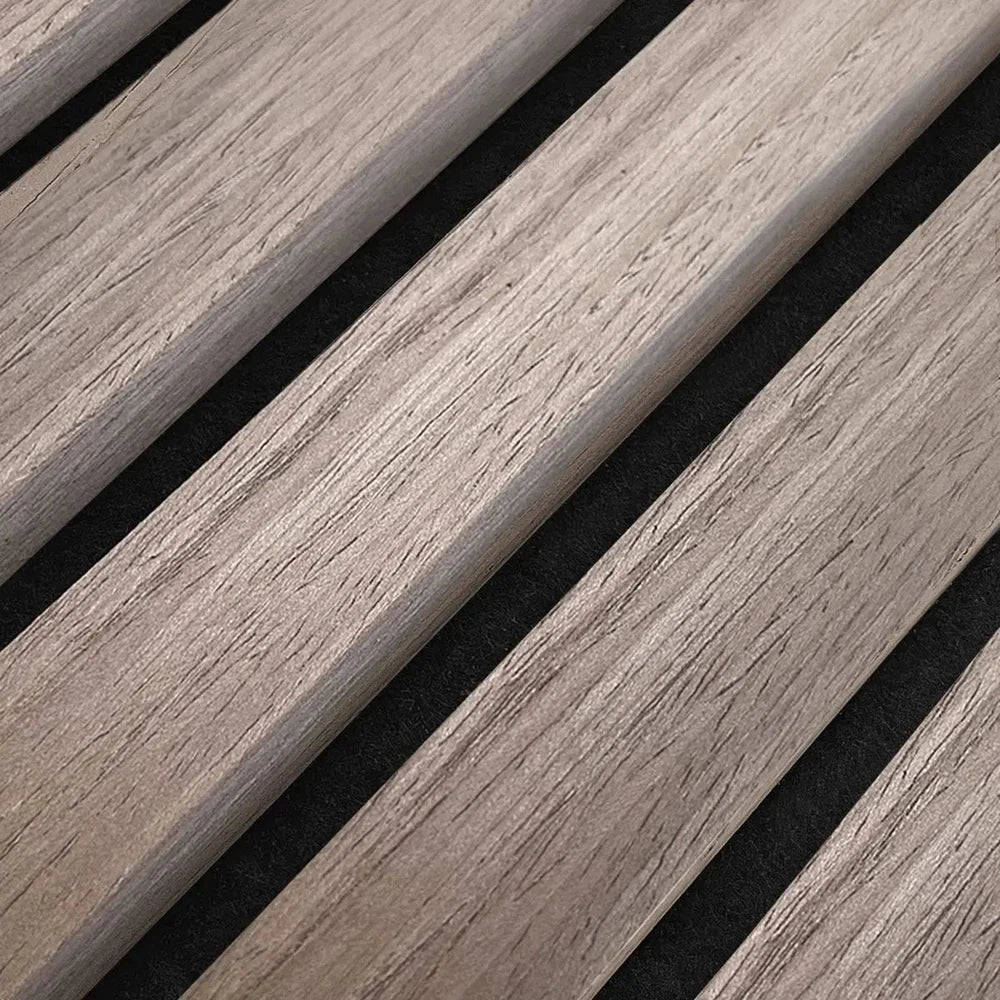
- Stone Grey exterior cladding panel fits planning-sensitive rural sites near stone barns - consider it.
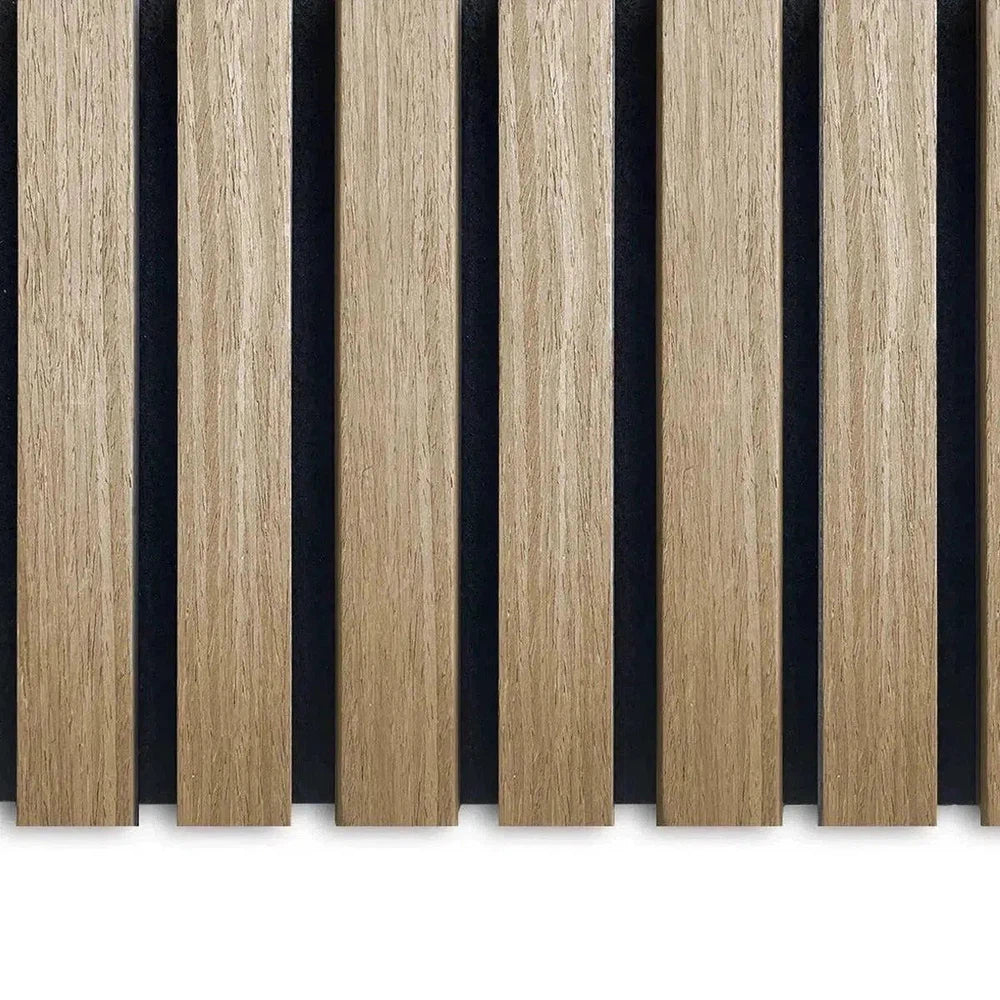
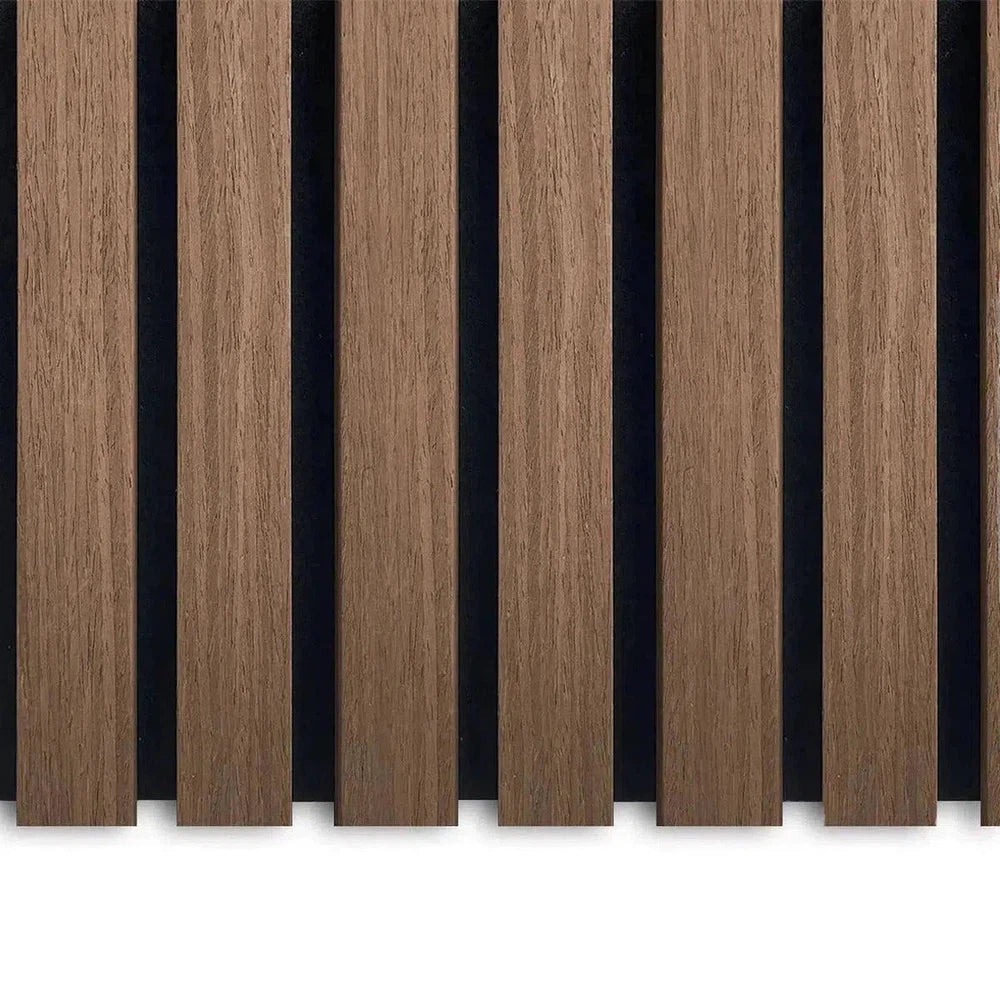
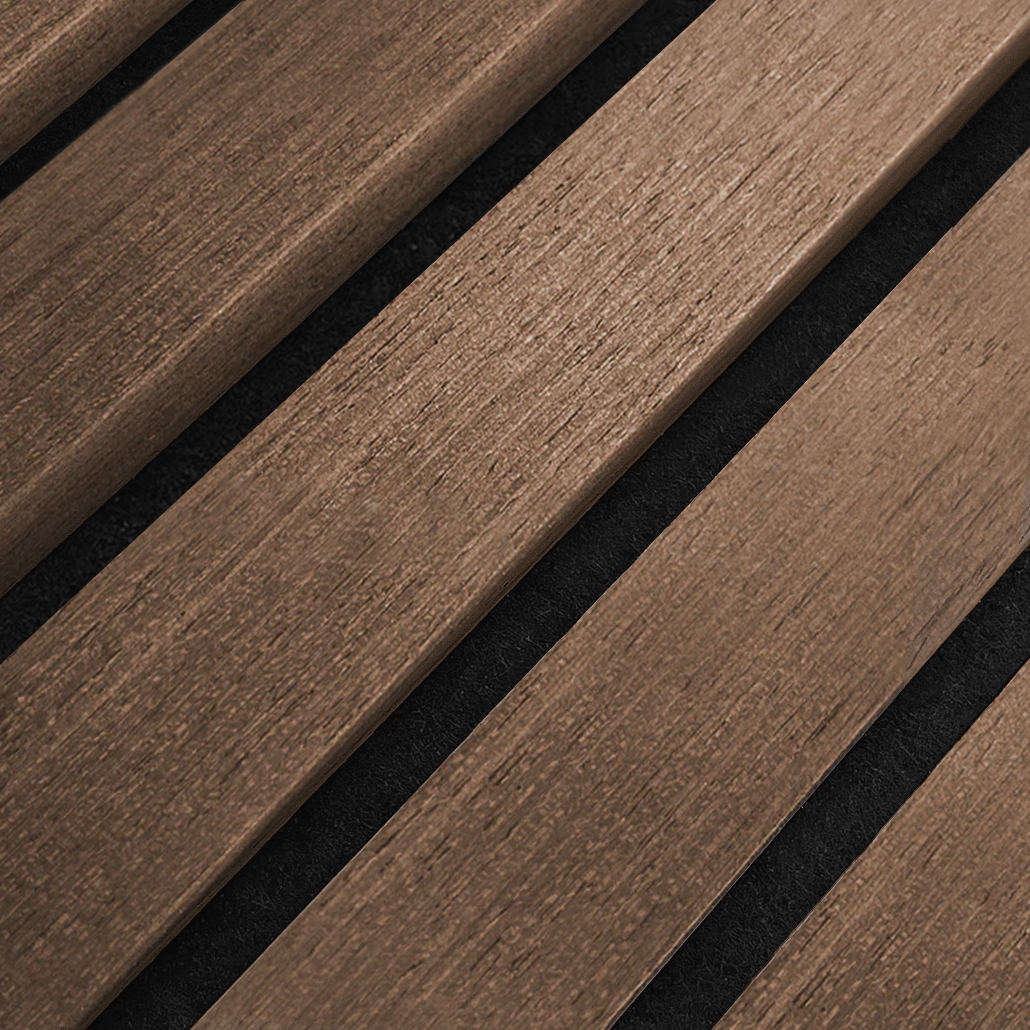
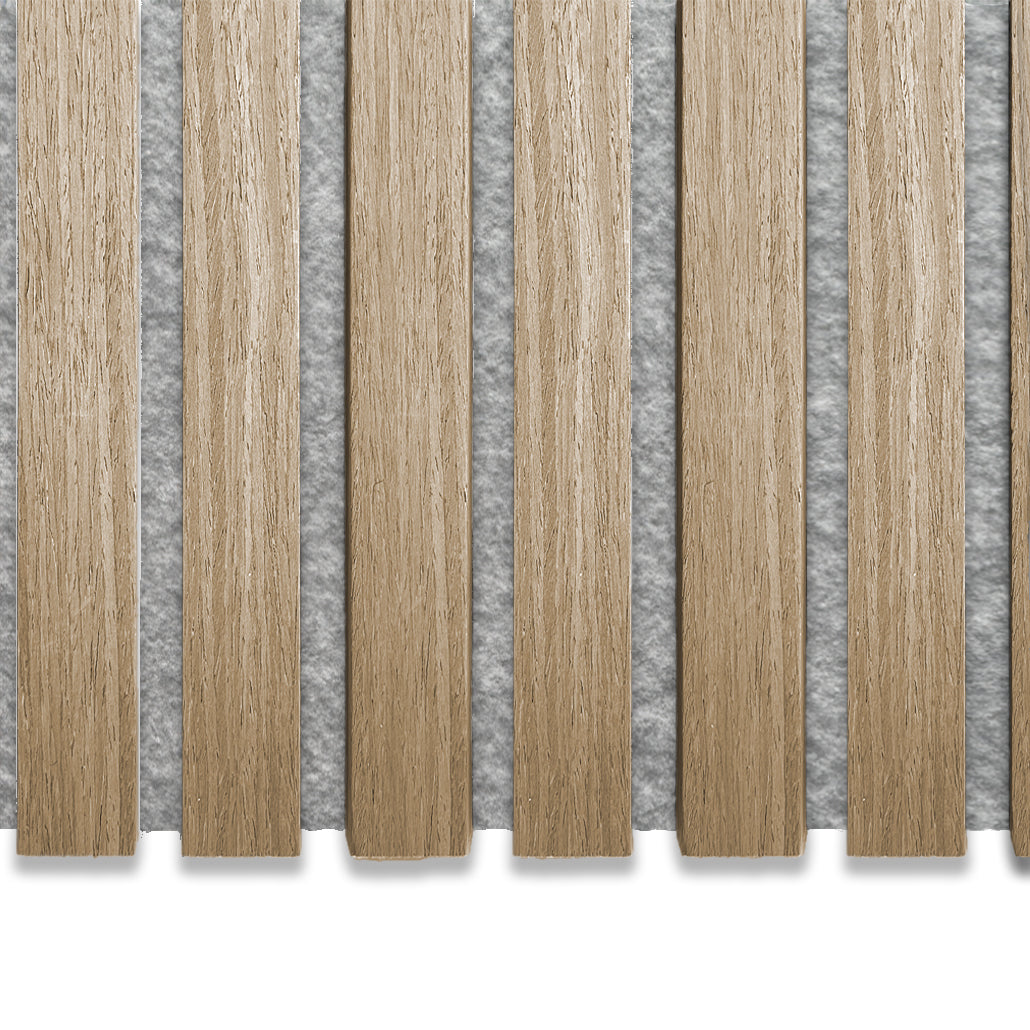
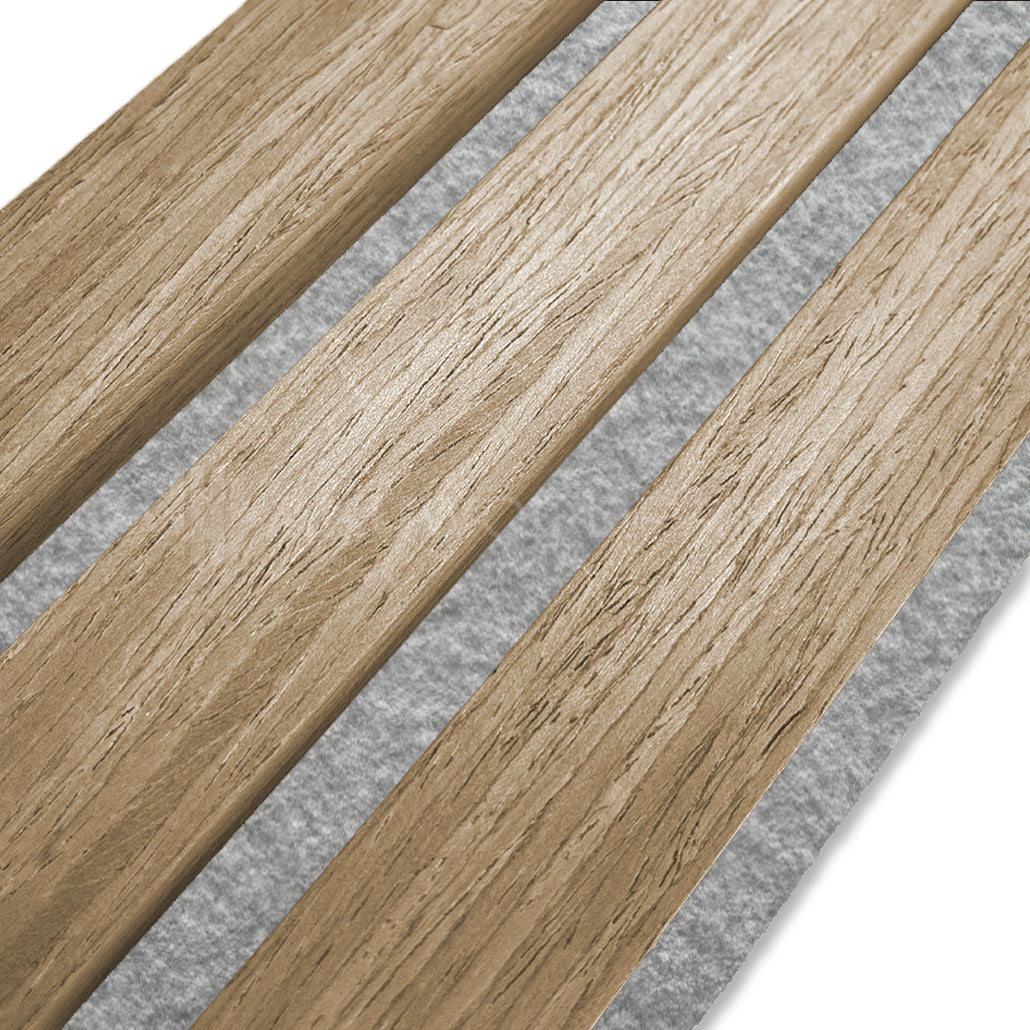
- Oak exterior cladding panel is the safe pick for traditional yards - buy it.
- Panel glue rated for indoor tack-room panels is not a substitute for mechanical fixings on stable exteriors - skip that shortcut.
Why this matters
A stable block is outdoors 365 days a year, and 2026 UK weather has not gotten gentler on timber facades. Exterior cladding for stables has to handle standing water at ground level, UV bleaching on south-facing runs, and knocks from wheelbarrows and stable doors that no lounge wall ever takes.
Get the board wrong and you are re-cladding a yard within five or six years instead of getting two decades out of it. AKU Woodpanel's exterior cladding for stables range is built from the same 3-sided veneer approach as the brand's indoor acoustic panels, adapted for outdoor exposure rather than room acoustics.
Who this is for
This guide is for livery yard owners, private horse owners renovating a stable block, and anyone specifying timber facades for a new equestrian building in 2026. If you are choosing between render, brick, and timber cladding for a stable, tack room, or field shelter, the criteria below apply whether you own two boxes or run a twenty-stall yard.
What to look for in exterior cladding for stables
Weather exposure and orientation
Stable blocks are rarely tucked behind other buildings the way a house extension might be, so the cladding takes rain and sun on every elevation. A board that only performs well when sheltered is the wrong choice for an open field site.
Impact tolerance near stall doors
Hooves, headcollars, and wheelbarrow handles hit cladding at knee height more often than any homeowner's wall ever will. Panels chosen for a stable run need to shrug off knocks without splitting the veneer or telegraphing dents through the finish.
Fixing method for your frame type
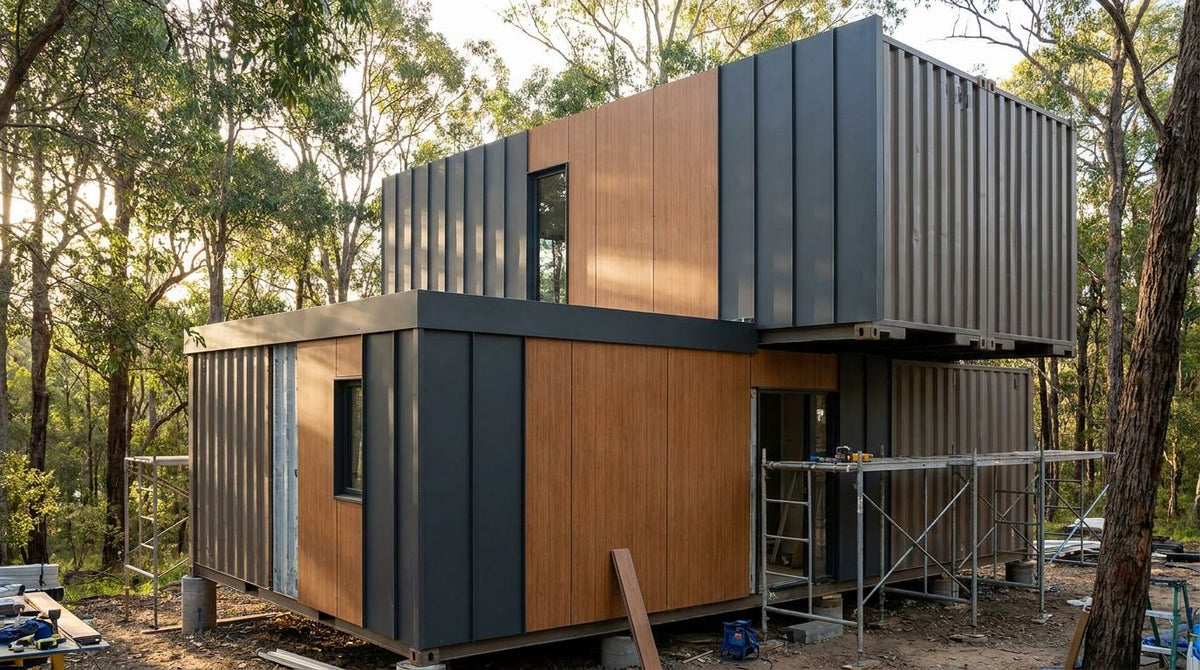
Most equestrian buildings are timber-frame, but a growing number of modern livery yards go up on steel portal frames instead. The fixing approach differs between the two, and getting it wrong is the single most common reason cladding fails early — worth checking fixing cladding to a steel-frame stable before you order.
Colour and planning fit
Rural planning conditions frequently specify a natural or muted palette for agricultural buildings. Stone Grey and Oak tones read as "agricultural" to a planning officer in a way that stark black sometimes doesn't, depending on the site's conservation status.
Maintenance under muck and ammonia exposure
Stable exteriors sit close to muck heaps and bedding stores, and ammonia off-gassing accelerates finish breakdown on cheaper boards. A panel that only needs a rinse-down twice a year beats one that needs re-oiling every spring.
Board format versus loose cladding boards
Some yard owners prefer a fixed panel width for speed of install; others want loose board-and-batten runs they can space by eye around doors and windows. Both formats exist in AKU Woodpanel's exterior range, and the right one depends on how bespoke your elevation needs to be.
Top picks for stable and equestrian buildings
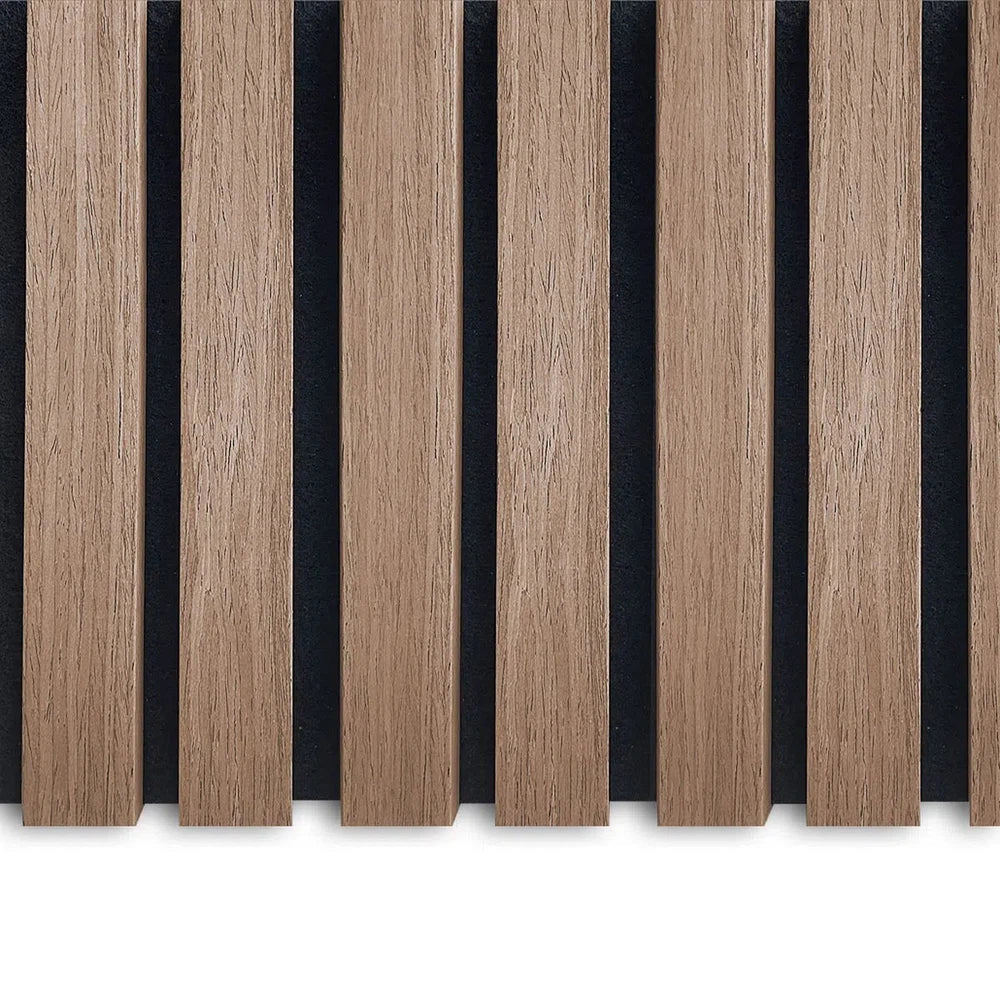
The safe pick — Black exterior cladding panel. This is the option most modern livery yards default to in 2026 because it reads as contemporary against a sand arena or a steel-framed indoor school. It hides splashback marks better than pale finishes do. Buy.
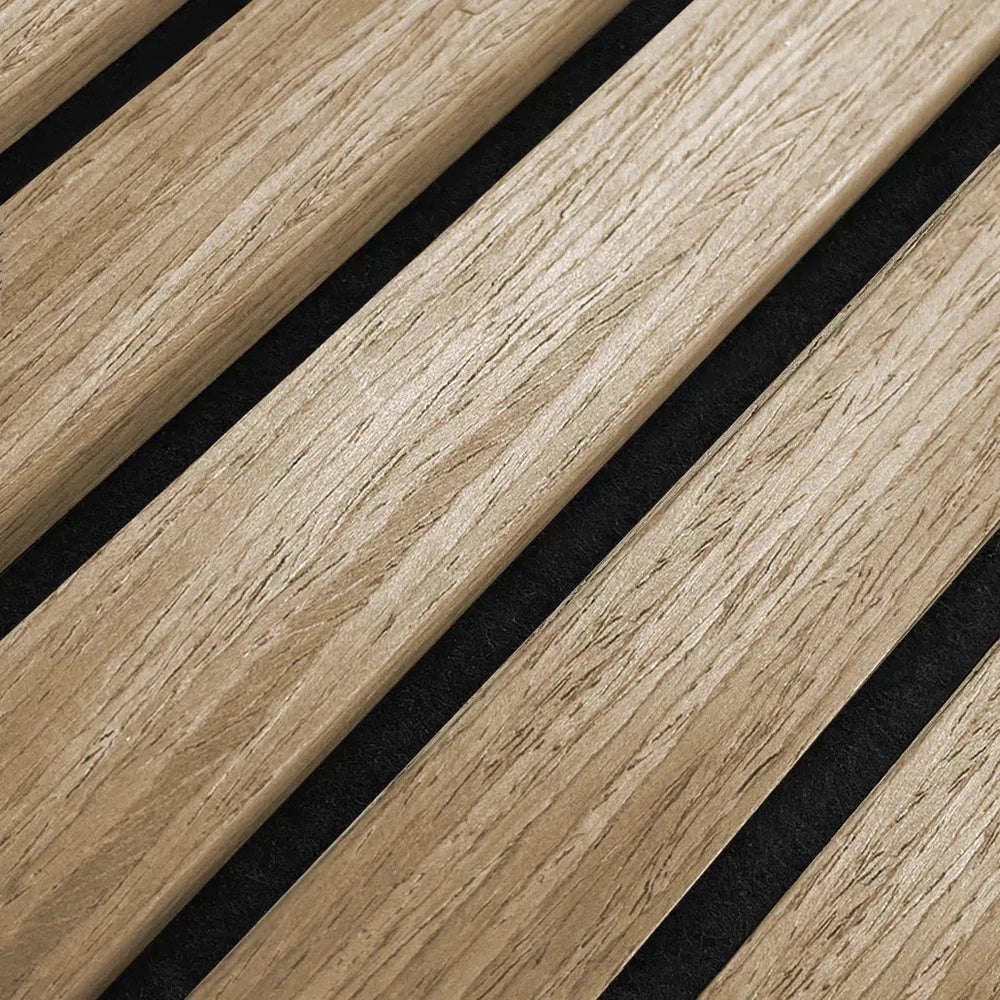
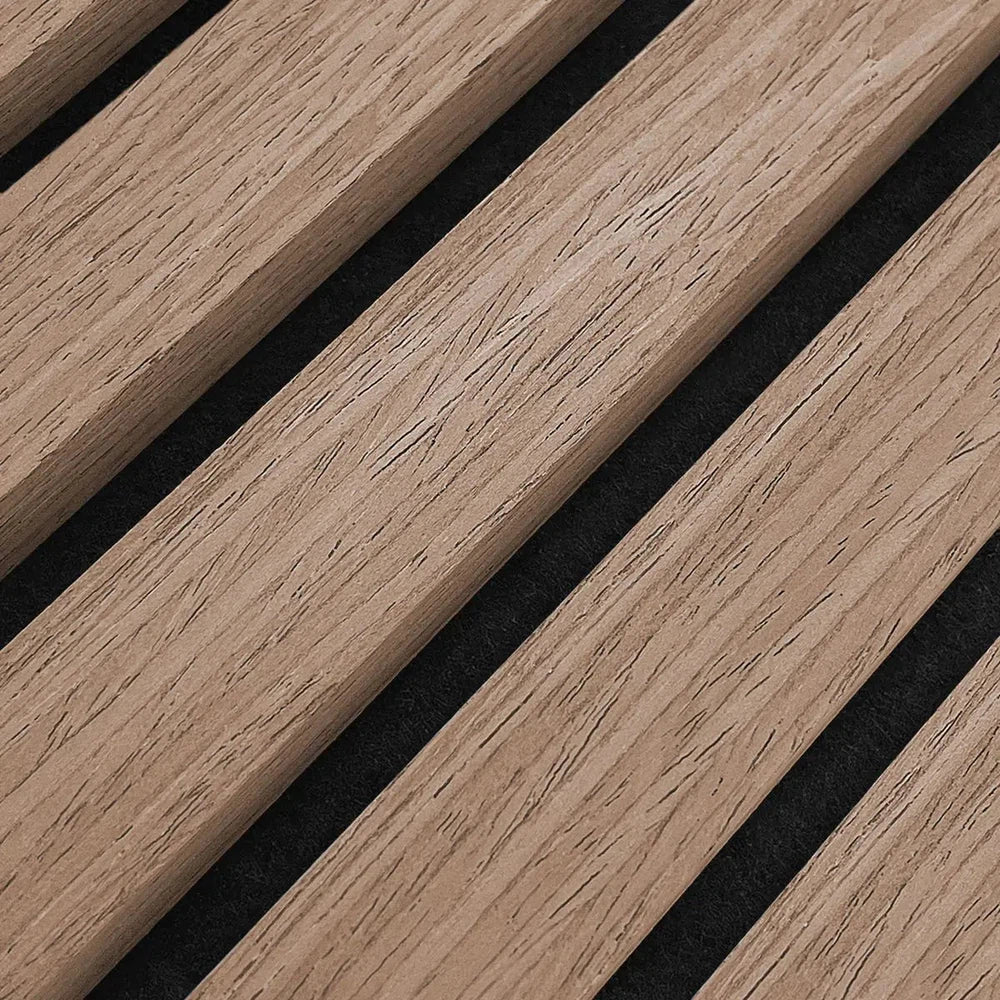
The estate pick — Oak exterior cladding panel. Warmer grain, the kind that suits a period farmhouse block or a yard with existing oak field gates. It ages evenly rather than patchily, which matters on a wall nobody re-paints every year. Buy.
The planning-friendly pick — Stone Grey exterior cladding panel. Neutral enough to sit next to existing stone barns or brick stable blocks without clashing, which helps on sites where a planning condition restricts strong colour. Consider.
The budget-conscious pick — Birch exterior cladding panel. Lighter tone, same 3-sided board construction as the rest of the range, priced to suit a smaller field-shelter project rather than a full yard rebuild. Consider.
The bespoke-run pick — loose cladding boards in Oak or Birch. Sold by the board rather than the fixed panel, useful when you're working around irregular stable door widths or want to hand-space a board-and-batten look. Consider.
“Horses don't respect a finish coat - if cladding dents under a kick, it was never rated for stable use.”
What to avoid
- Interior panel glue as your fixing method. AKU Woodpanel's high-tack panel glue, priced at £10.95, is built for indoor acoustic panels going onto a stud or plasterboard wall — it is not a substitute for mechanical fixings on a weather-exposed stable facade.
- Skipping a sample before ordering a full run. A £2.50 sample tells you how a finish looks in field light versus indoor showroom light, which is not the same thing at all — order one before committing to a 20-metre stable elevation.
- Matching finish to the house, not the yard. A cladding tone chosen to match your farmhouse windows can look wrong against sand, muck heaps, and steel gates once the stable block is actually built.
Verdict comparison
| Cladding option | Best for | Standout trait | Verdict |
|---|---|---|---|
| Black exterior cladding | Modern equestrian centres | High contrast against arena surfaces | Buy |
| Oak exterior cladding | Traditional or period yards | Warm grain, ages evenly | Buy |
| Stone Grey exterior cladding | Planning-sensitive rural sites | Neutral tone near stone or brick | Consider |
| Birch exterior cladding | Smaller budgets, field shelters | Lighter finish, same board build | Consider |
| Loose cladding boards | Bespoke board-and-batten runs | Sold by the board, hand-spaced | Consider |
If your tack room or feed store also doubles as an office, the interior wall behind the desk benefits from the same brand's acoustic panels in 240 cm or 300 cm lengths, which cuts the echo off bare block walls without touching the exterior spec at all.
FAQ
What's the best exterior cladding for stables in 2026?
Black or Oak exterior cladding panels cover most equestrian buildings well in 2026, with Black suiting modern yards and Oak suiting traditional or period stable blocks. Stone Grey works better where planning conditions favour muted, natural tones.
Is timber cladding better than render for a stable building?
Timber cladding is generally faster to fit on timber-frame or steel-frame agricultural buildings than wet render, and it's easier to replace a single damaged section. Render can crack around stable door frames where vibration and knocks are constant.
How much does exterior cladding cost for a stable block?
Cost depends on the run length, finish, and whether you choose fixed panels or loose boards, so check current panel and board pricing directly before budgeting a full yard. Ordering a sample first avoids costly reordering if the tone doesn't match on site.
Can I fix exterior cladding to a steel-frame stable building?
Yes, but the fixing method differs from a timber-frame stud wall and needs the right battens and spacing for a steel frame. Getting this wrong is one of the most common causes of early cladding failure on modern equestrian buildings.
Does exterior cladding need maintenance near muck heaps?
Cladding sited close to muck storage or bedding areas needs a rinse-down more often than a house facade would, because ammonia exposure accelerates finish wear. A twice-yearly wash keeps most finishes performing well through 2026 and beyond.
Should I use panel glue to fix exterior stable cladding?
No — panel glue is designed for indoor acoustic wall panels on stud or plasterboard walls, not weather-exposed exteriors. Exterior cladding on a stable needs mechanical fixings rated for outdoor movement and moisture.
What colour cladding suits a period farmhouse yard?
Oak or Stone Grey tones generally suit period farmhouse and estate yards better than stark black, especially where the stable sits near existing stone or brick buildings. Planning officers on rural sites often favour these more muted finishes too.
Can I order a sample before buying cladding for a stable?
Yes, samples are available for around £2.50 and let you check how a finish reads in outdoor light before committing to a full elevation. This matters more for exterior projects than interior ones because natural light shifts tone throughout the day.
One last thing
Most stable-cladding failures aren't the board's fault — they're a fixing mismatch, someone using an indoor adhesive or the wrong batten spacing on a steel frame that was never designed for timber-frame fixings. Get the fixing method right for your frame type first, then pick a finish; do it the other way round and you'll be re-doing the job in 2027.