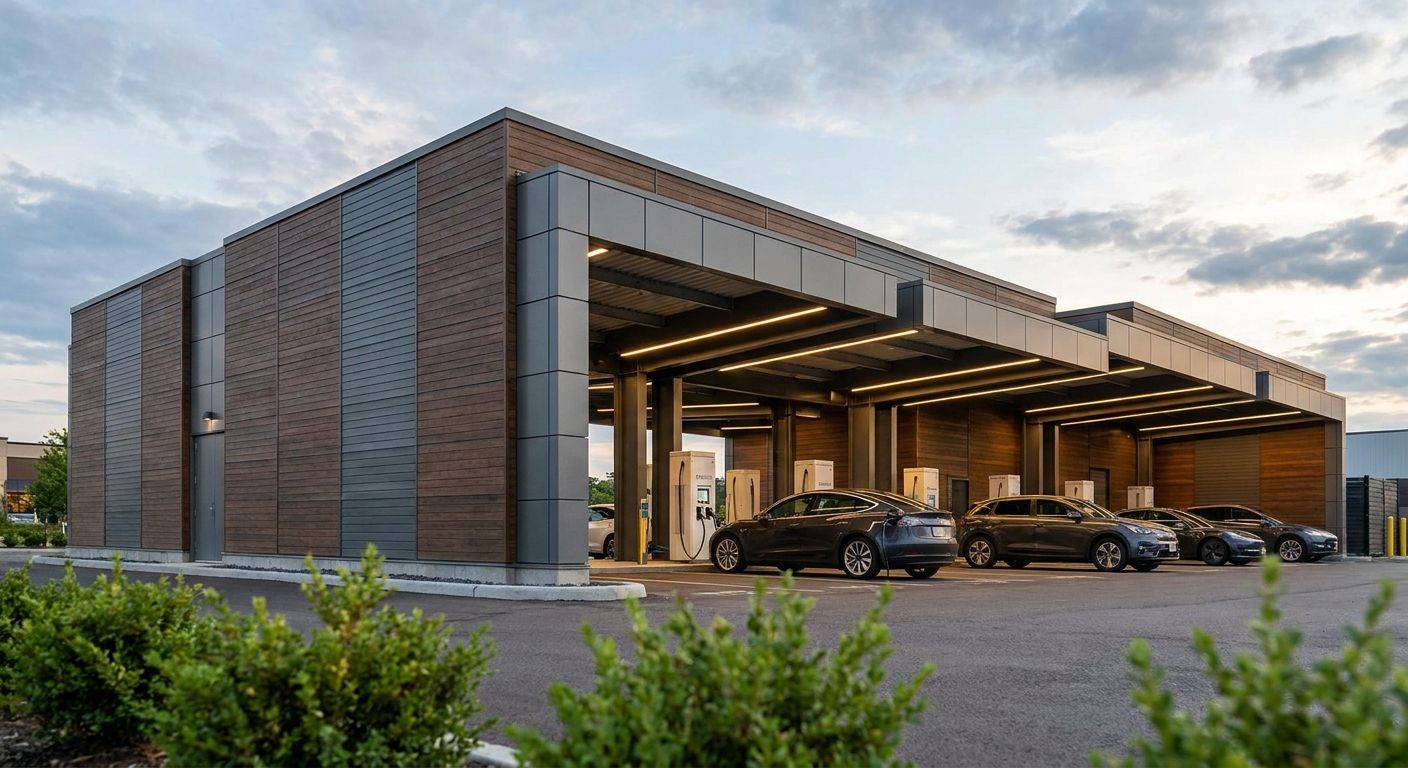
Cladding an EV charging canopy is not the same job as cladding a house wall — four-sided exposure, constant vehicle traffic, and zero maintenance visits between installer handover and the next fault call. This guide covers what to specify, what to buy, and what to leave off the order for a canopy fascia in 2026.
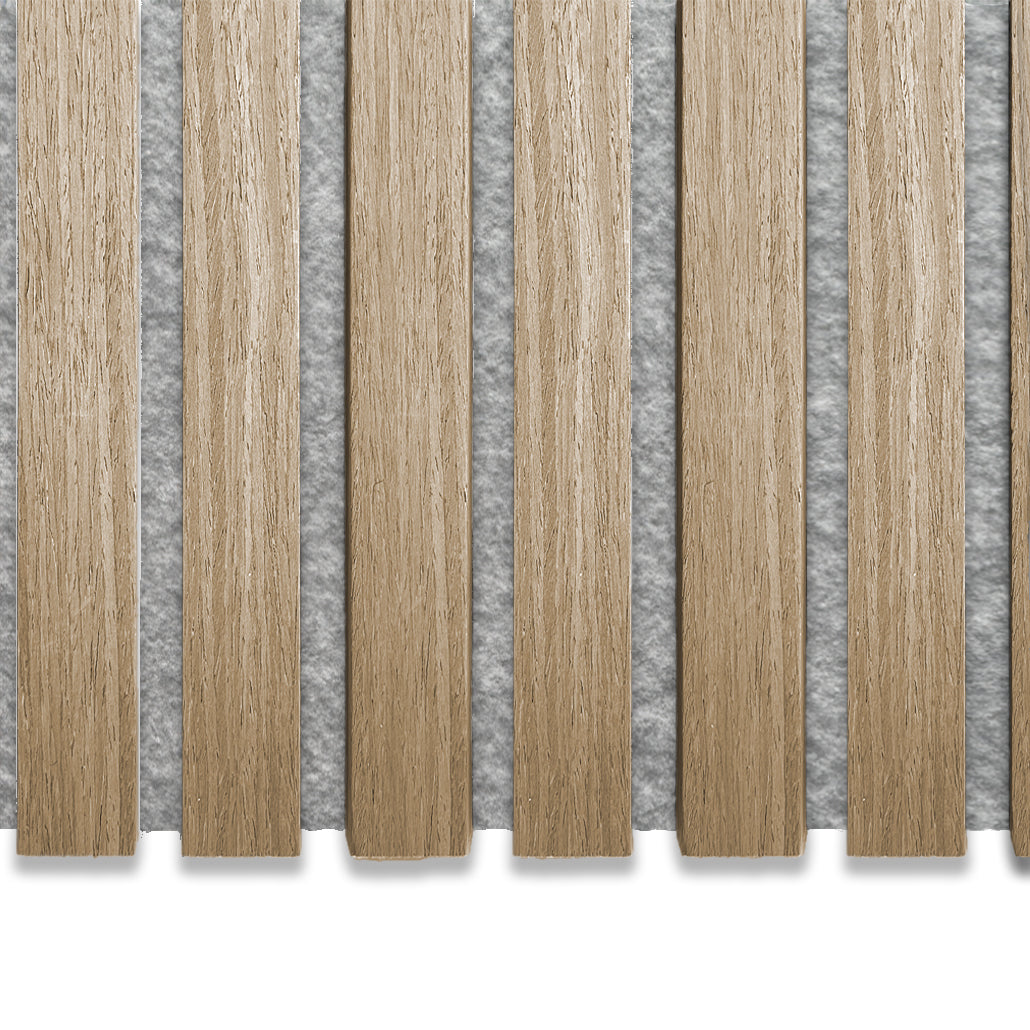
- Exterior Wall Cladding Panel Stone Grey is the safe spec for cladding for EV charging canopy fascias — Buy.
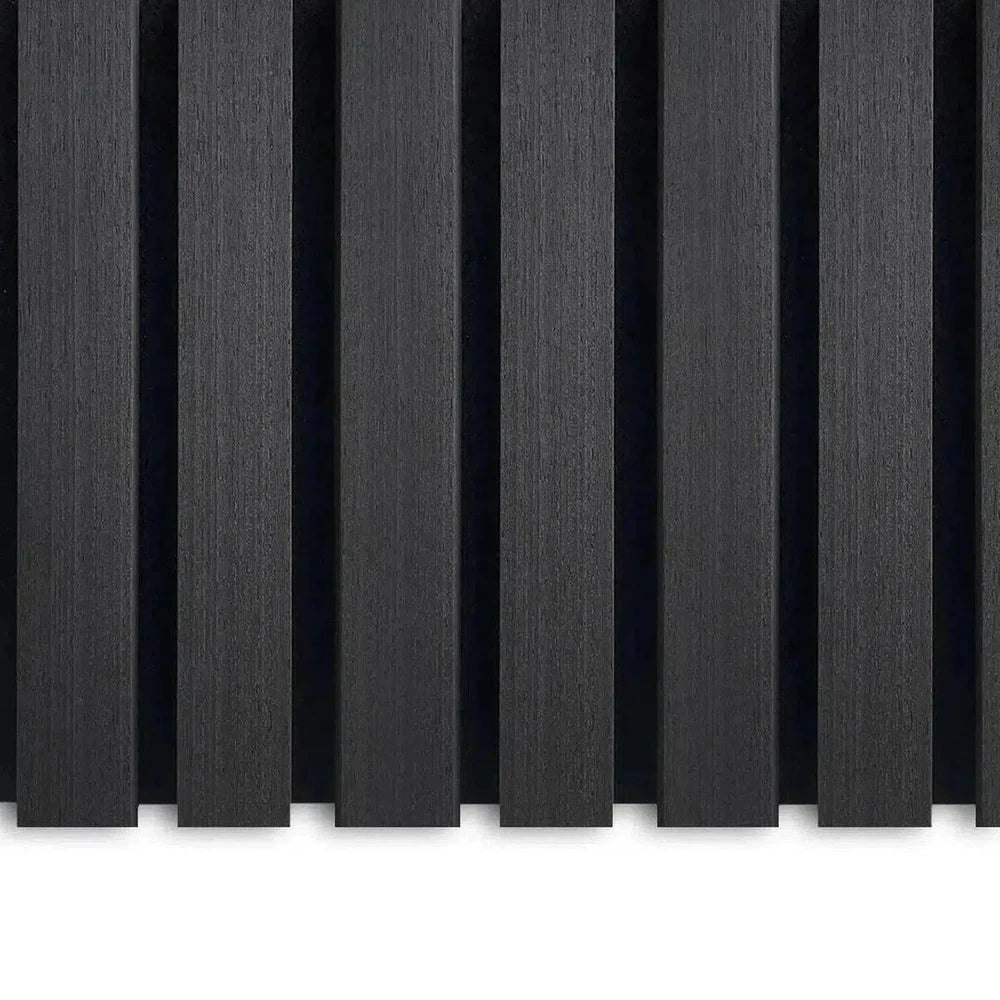
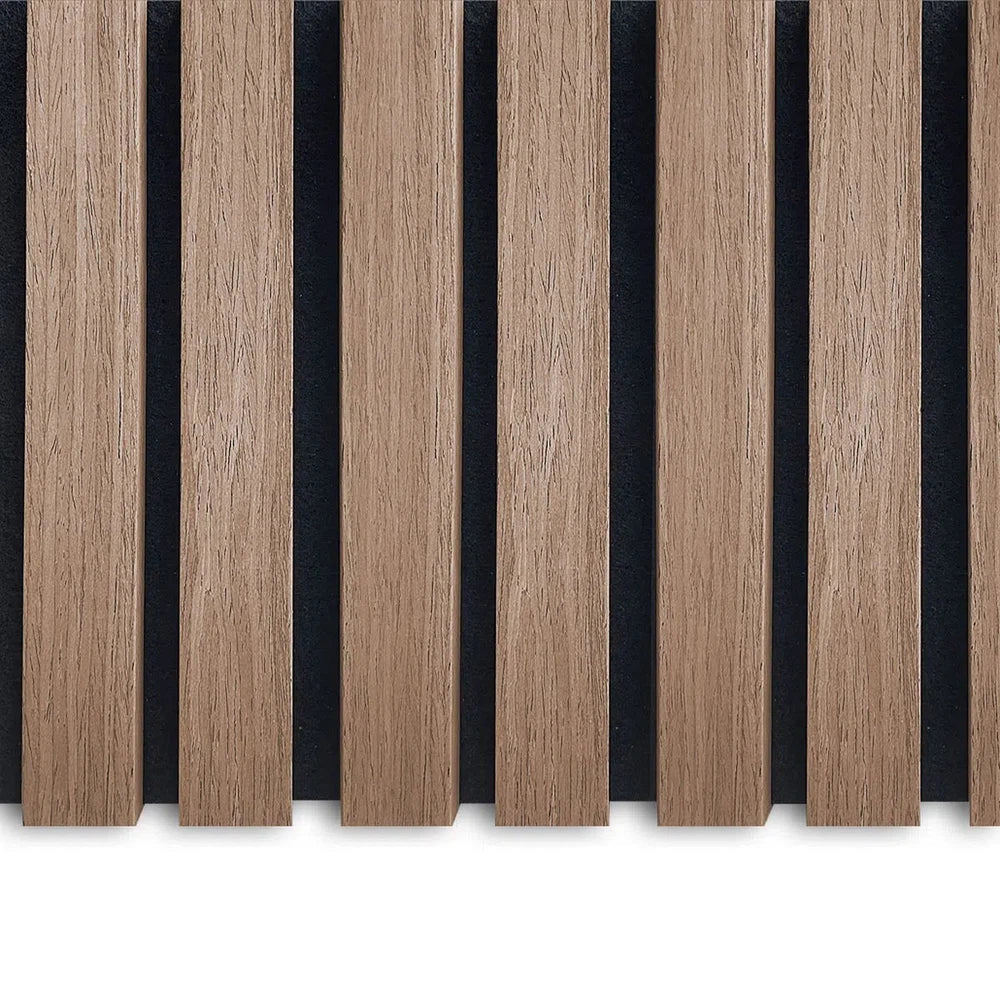
- Exterior Wall Cladding Panel Black suits premium forecourt branding but shows dust faster — Buy with a cleaning plan.
- Skip felt-backed indoor acoustic panels on any canopy structure — they are not rated for open-air exposure.
- Match corner and finishing trims to the panel colour or joints will show water staining within a season.
Why this matters
An EV charging canopy has no back wall to shelter it. Rain hits the fascia from the top and the side, headlights hit it at night from every angle, and in 2026 most operators are still specifying panels the same way they would for a garden fence — which is why so many canopy fascias look tired within two years. Facade cladding for commercial buildings carries different exposure and fixing requirements than a domestic exterior, and a charging canopy sits at the harder end of that spectrum: unmanned, exposed, and inspected rarely.
Getting the panel choice wrong on a canopy costs more than it does on a house, because access usually means scaffolding or a cherry picker, not a ladder against a wall. That changes the buying calculus completely — durability and finish stability matter more than upfront price.
Who this is for
This guide is for property developers, EV charge point operators, and facilities managers specifying the fascia and soffit cladding on a new or retrofit charging canopy — forecourt canopies, car park canopies, retail park charging bays, and depot charging structures. If you're panelling a living room or office reception, this is the wrong page; check the acoustic wood panel range instead.
What to look for in cladding for EV charging canopy structures
Weather and UV exposure rating
A canopy fascia gets more direct sun and driving rain than almost any wall in a building because it has no roof overhang protecting it and often no adjacent structure blocking wind-driven rain. Panels rated only for sheltered exterior use will fade unevenly across the fascia within a year or two, and colour mismatch between panels replaced at different times is the most common complaint on unmanned sites.
Fixing method for the canopy frame
Most EV charging canopies are built on a steel frame, some on timber, and the fixing system has to suit whichever one is on site. Get this wrong and you're either drilling into structural steel without the right fixings or over-tightening screws into timber battens that split under thermal movement — fixing exterior cladding to a steel frame building needs a different screw and batten spec than a masonry wall.
Colour and finish visible from the car park
A driver approaching the charger reads the canopy fascia from 20-30 metres away, not up close, so subtle wood-grain variation that looks premium in a showroom disappears at distance. Darker, higher-contrast finishes hold their read from further away and photograph better for the site's own marketing.
Impact resistance at vehicle height
Canopy support columns and low fascia edges take mirror clips, trolley knocks, and the occasional reversing bumper. A panel that dents or chips at the first knock needs replacing panel-by-panel, and colour-matching a two-year-old replacement panel to a faded original is close to impossible.
Panel format and trims for a weatherproof finish
A canopy fascia is rarely a single flat run — it wraps corners, meets soffits, and often finishes against a column or glazing line. Skipping matching corner and finishing trims to save on the order is the single fastest way to get water tracking behind the panel face at the joints.
Maintenance access on an unmanned site
Most charging canopies get inspected on a schedule, not walked past daily like a shopfront. Panels that need annual oiling or resealing are a liability on a site nobody visits between planned maintenance windows — a low-maintenance finish is worth paying for here even if it costs more upfront.
Top picks for EV charging canopy cladding
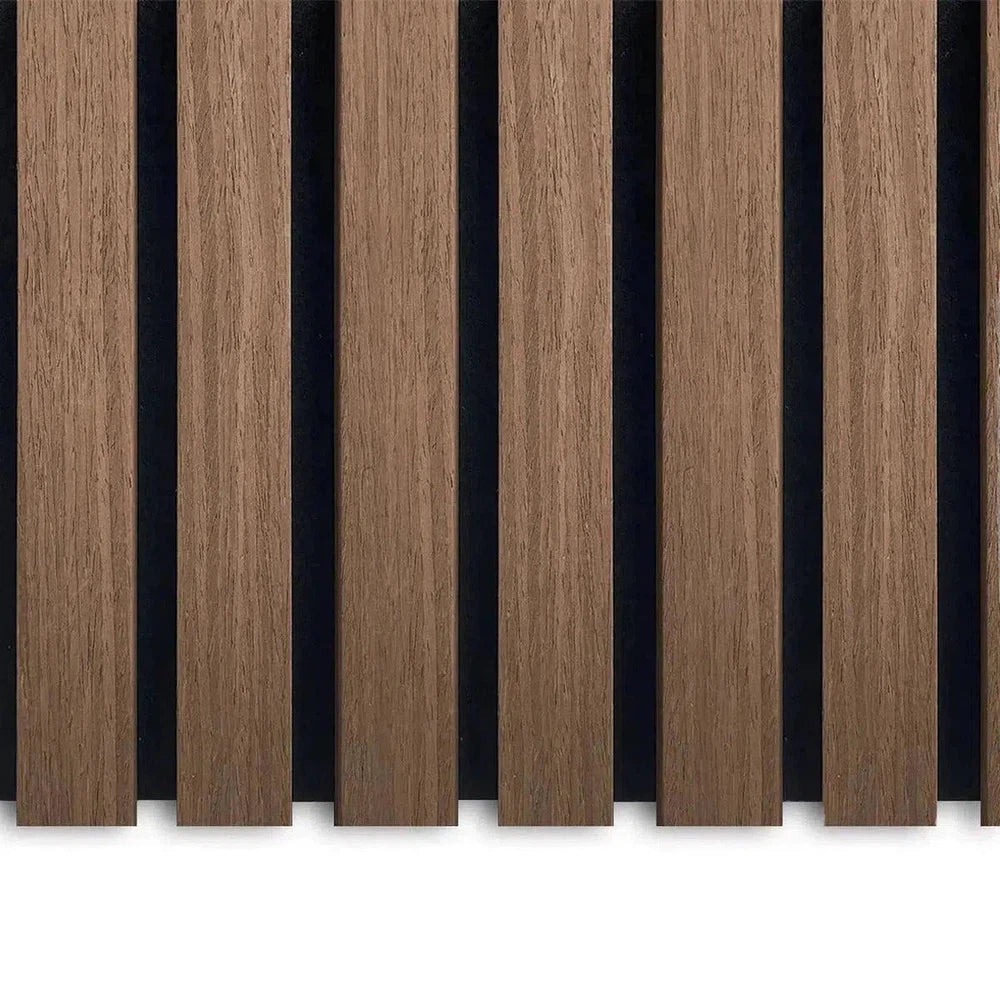
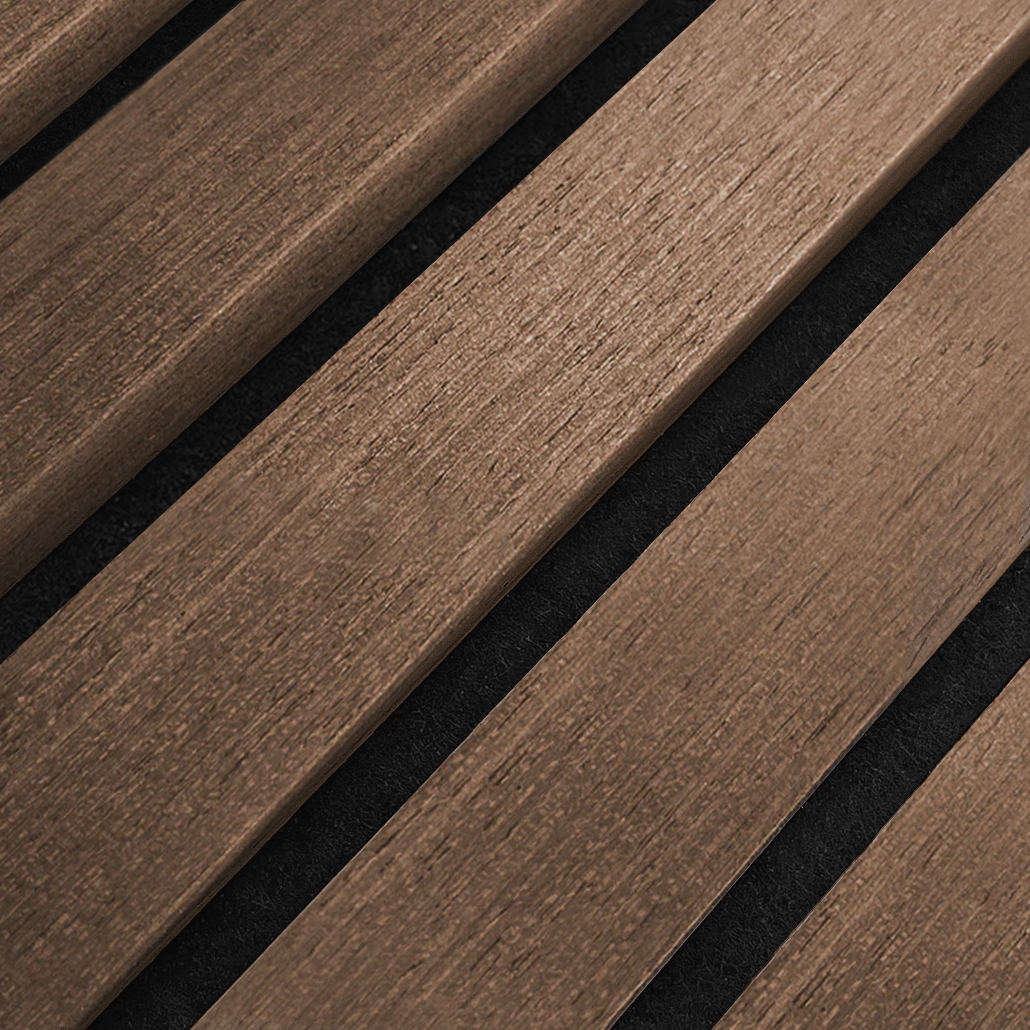
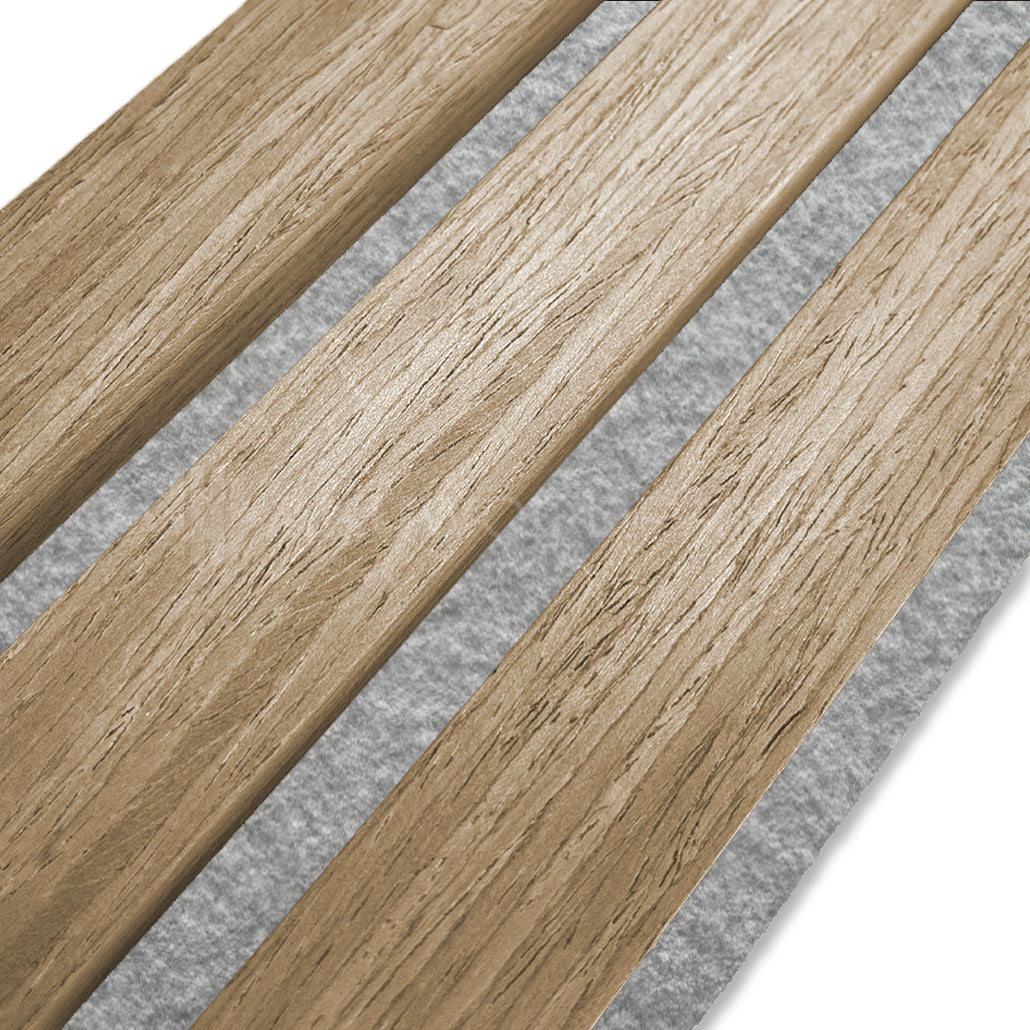
Exterior Wall Cladding Panel Stone Grey — the safe pick. At £41.95 per 290cm panel, it reads as a neutral, contemporary grey from a moving vehicle and hides road grime and tyre spray better than pale finishes. Akuwood Panel rates the exterior range for over 25 years of maintenance-free use with UV and weather resistance built in — exactly the profile a canopy fascia needs. Buy for the main fascia run on any Exterior Wall Cladding Panel Stone Grey canopy job.
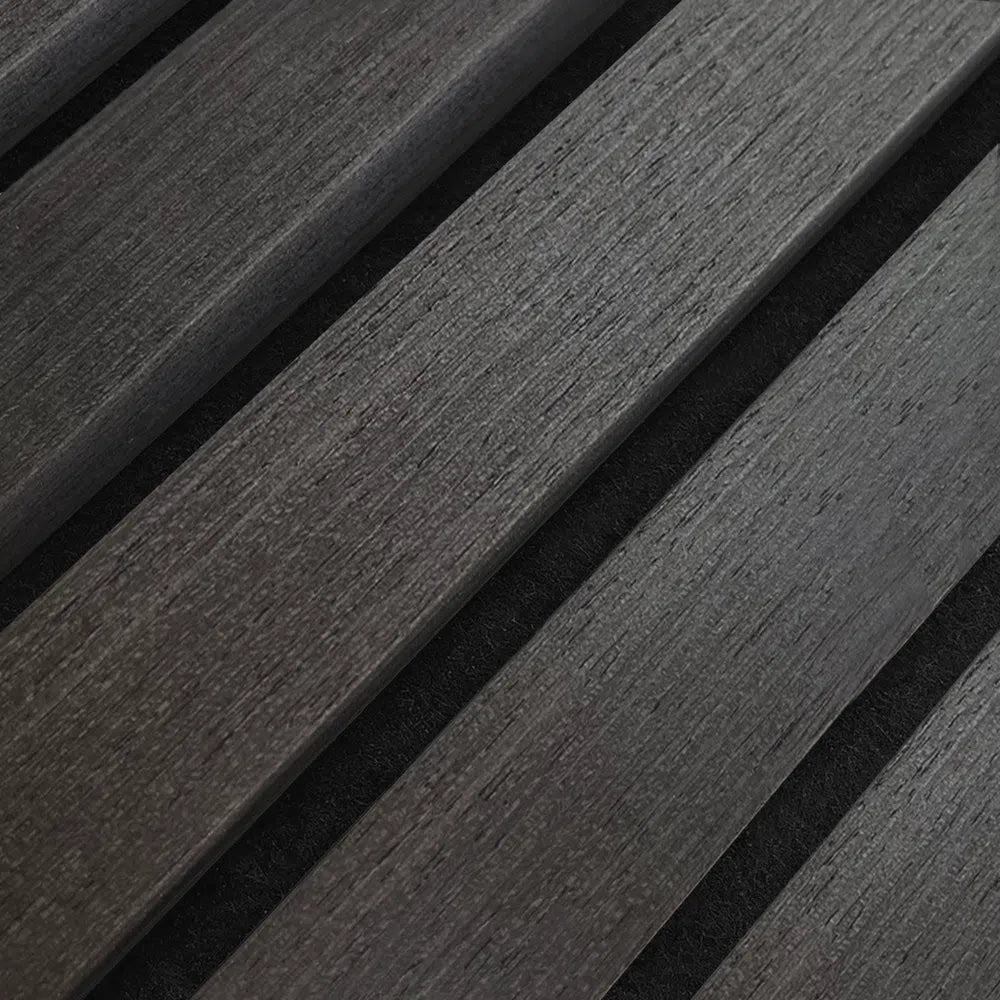
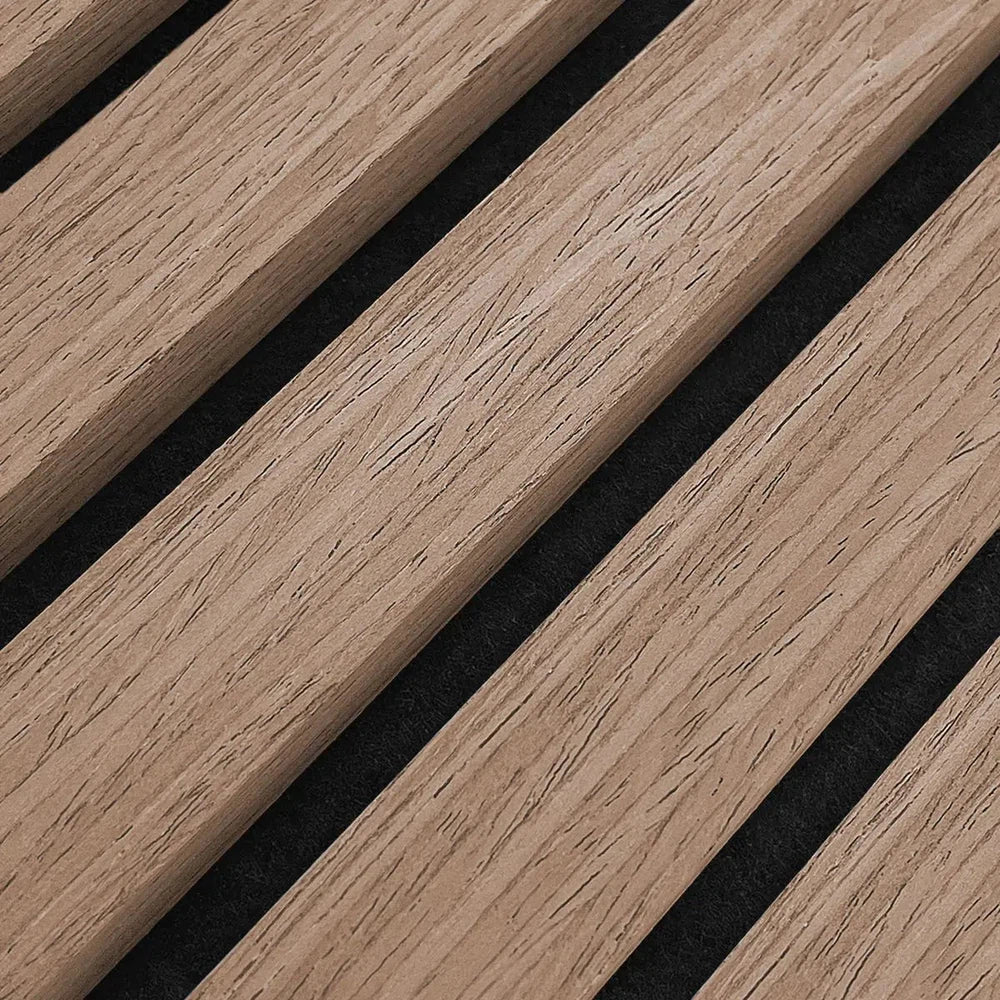
Exterior Wall Cladding Panel Black — the wildcard. Also £41.95 per 290cm panel, black cladding gives a charging canopy a premium, almost automotive-showroom look that suits flagship forecourt sites and branded charge point operator locations. It shows dust and water spotting faster than grey in direct sun, so it's the right call where the site gets cleaned regularly, not the right call for a depot nobody visits. Buy if the site has a cleaning schedule, Exterior Wall Cladding Panel Black otherwise sits on Consider.
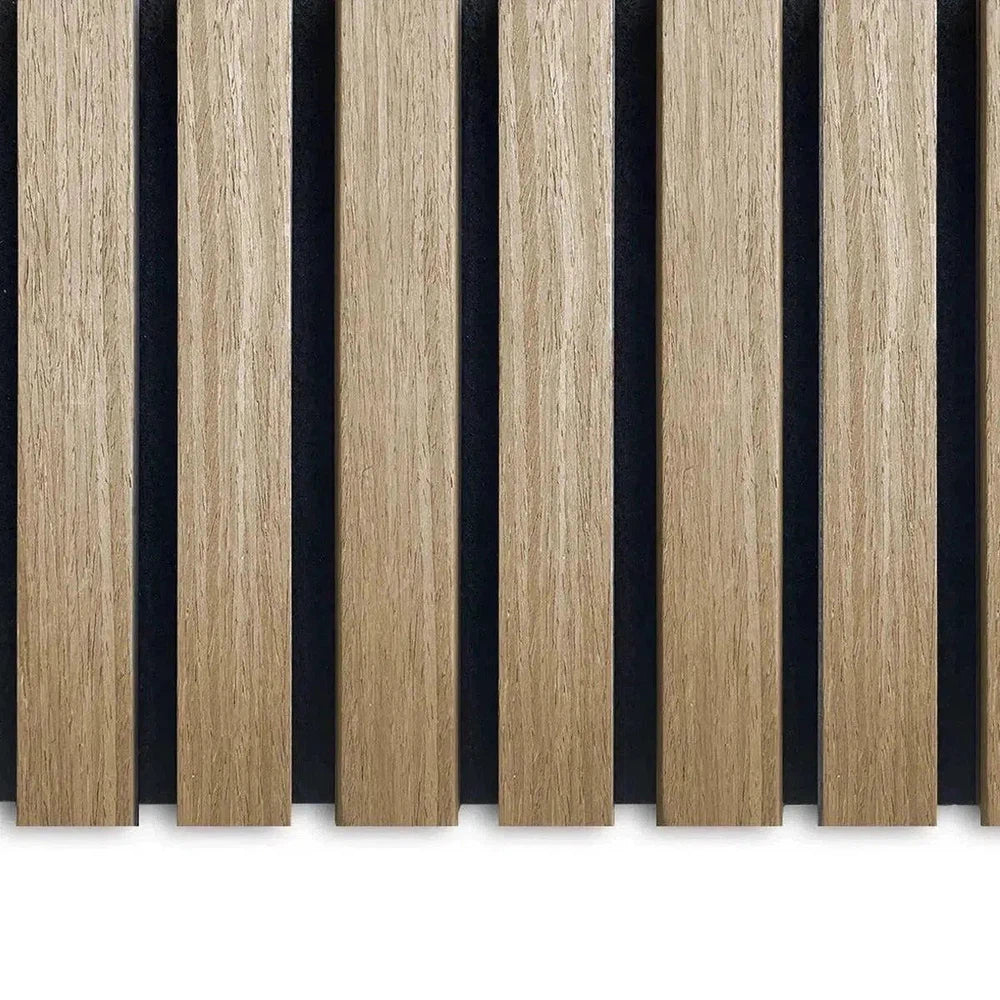
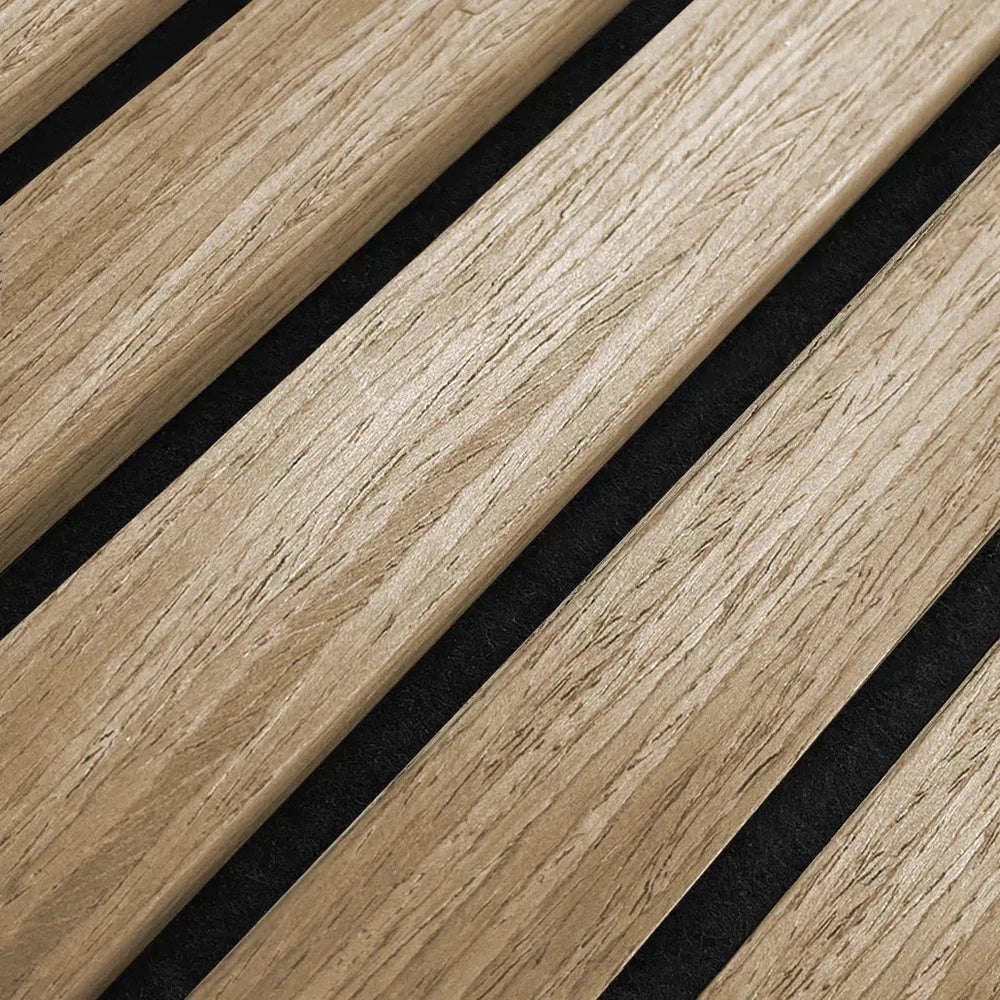
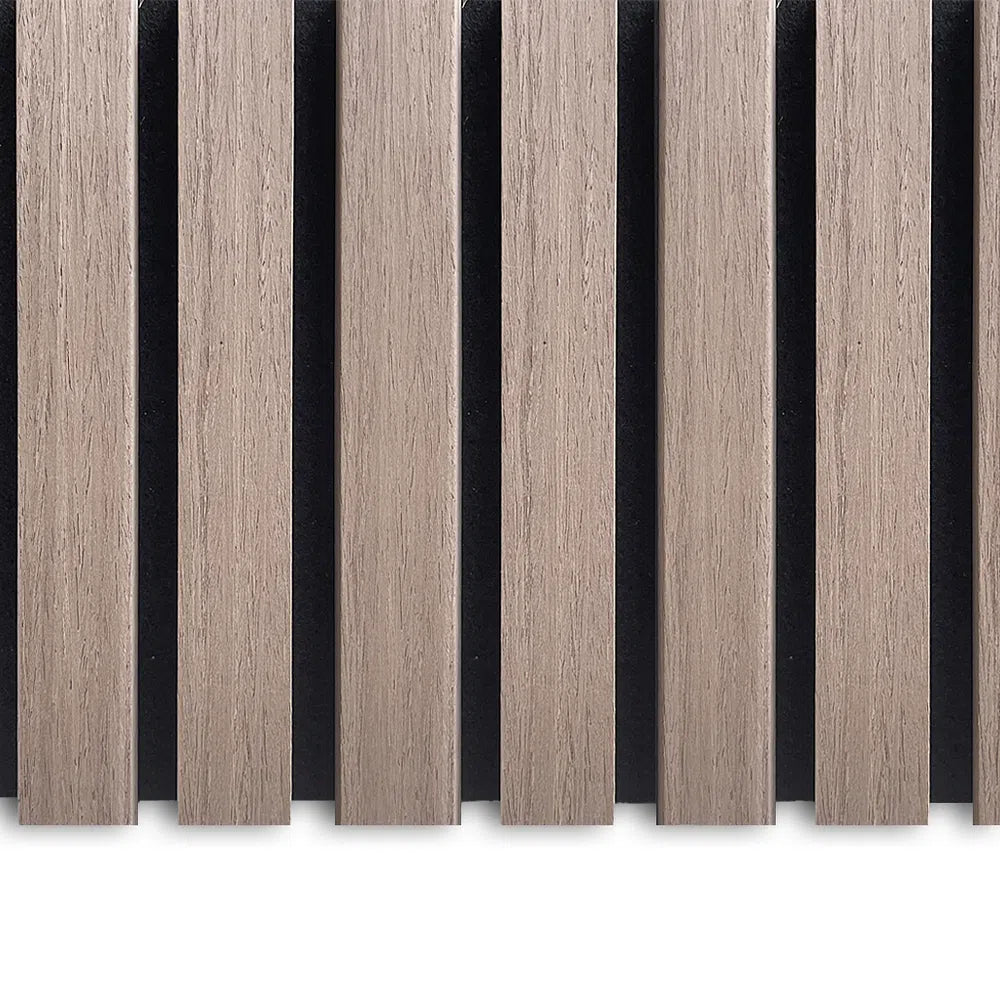
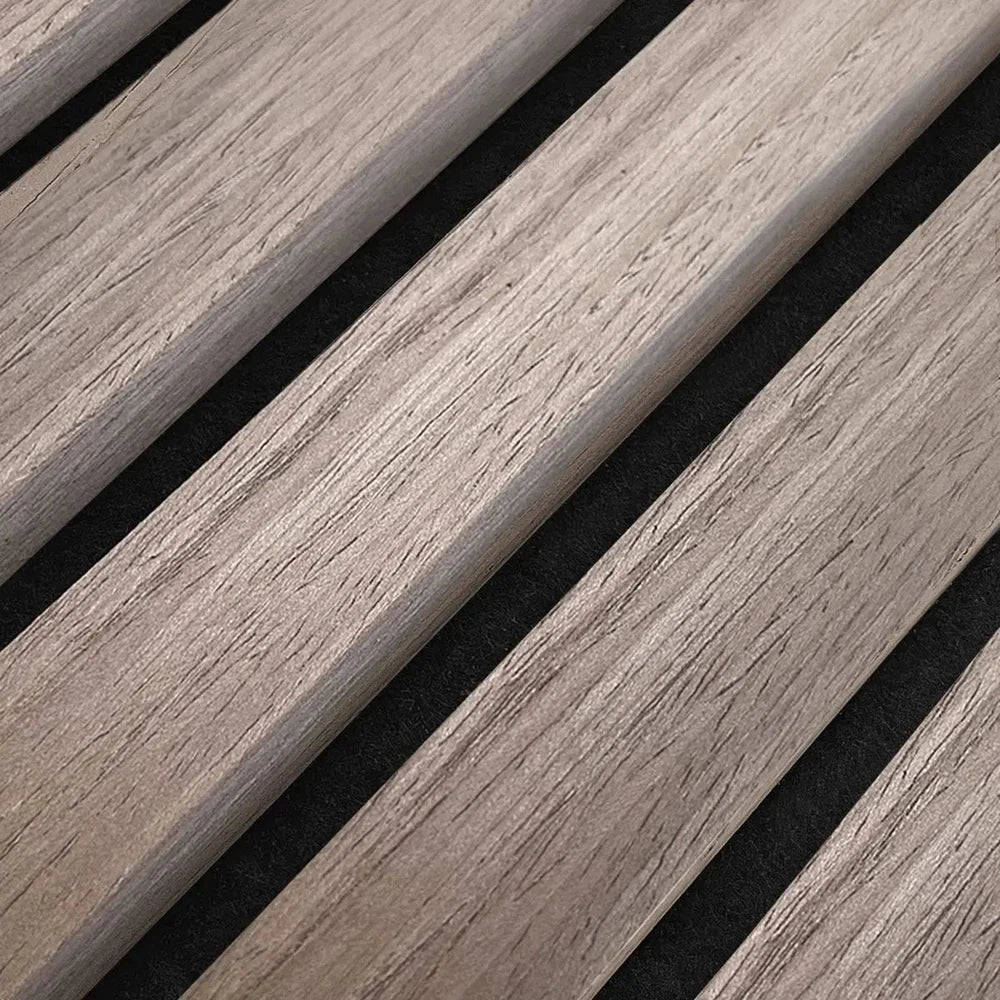
Exterior Wall Cladding Panel Oak — the warm accent pick. Same 290cm format and 3D wood grain finish as the grey and black options, but a natural oak tone reads warmer and softer at distance — better suited to retail park or leisure destination charging bays than roadside forecourts. It will show weathering and dirt streaks sooner than the darker finishes on a fascia that gets no cleaning cycle. Consider for low-traffic, regularly maintained sites; Skip for unmanned depot canopies.
Finishing trims and fixings — the pick nobody budgets for. Corner trims and finishing strips run £24.95-£28.95 each, and screws come in packs of 100 at £20.95. Ordering panels without the matching trim and fixing set is how canopy jobs end up with visible gaps and water ingress at the joints within the first winter. Buy them in the same order as the panels, every time.


What to avoid
- Indoor acoustic wood panels with felt backing. They're built for room acoustics, not rain — the acoustic felt has no place on an exterior fascia and will fail fast in wet conditions.
- Panels without a matching trim range. A cladding order that stops at flat panels and skips corners and finishing strips leaves every joint exposed to water tracking.
- Mixing finishes across a single canopy without planning the joins. Stone grey and oak side by side on one fascia run reads as a mistake, not a design choice, unless the canopy has a natural break point like a column or glazing bay.
Verdict comparison
| Panel | Best for on a canopy | Maintenance | 2026 verdict |
|---|---|---|---|
| Exterior Wall Cladding Panel Stone Grey | Main fascia, unmanned or depot sites | Low | Buy |
| Exterior Wall Cladding Panel Black | Flagship, regularly cleaned forecourts | Medium | Buy / Consider |
| Exterior Wall Cladding Panel Oak | Low-traffic retail or leisure charging bays | Medium-high | Consider |
| Indoor acoustic wood panel (felt-backed) | Never — indoor use only | N/A | Skip |
Where this fits with the rest of the build
Specify cladding after the canopy frame material is confirmed, not before — a steel frame and a timber frame take different fixings, and ordering panels before that decision is locked in usually means a second order for trims once the fixing method is finalised. Order trims and screws in the same batch as the panels rather than as an afterthought once the site's already scaffolded.
FAQ
What is the best cladding for EV charging canopy structures?
Stone grey 3D wood grain exterior panels are the safest spec for an EV charging canopy in 2026 because they hide road grime and hold colour better than pale or natural-toned finishes. Black panels work well on regularly cleaned flagship sites but show dust faster.
Can you use wood-look cladding outdoors on a charging canopy?
Yes, provided the panel is built for exterior exposure rather than an indoor acoustic panel repurposed outdoors. Akuwood Panel's exterior range is rated for over 25 years of maintenance-free use with UV and weather resistance.
Is exterior wall cladding fire safe near EV chargers?
Fire classification varies by product and installation detail, so check the specific fire documentation for the panel before specifying it near electrical charging equipment. This is a site-specific compliance check, not a general cladding attribute.
How long does exterior cladding last on an EV charging canopy?
Akuwood Panel's exterior cladding range is rated for over 25 years of maintenance-free use with minimal wear and fading under UV and weather exposure. Actual lifespan on a canopy depends on exposure severity and cleaning frequency.
Can exterior cladding panels be fixed to a steel frame canopy?
Yes, but the fixing method and batten spec differ from a masonry or timber wall. Confirm the frame material before ordering panels so the right screws and battens are specified in the same order.
What size are exterior cladding panels?
Akuwood Panel's exterior wall cladding panels run 290cm in length across the stone grey, black, oak and birch finishes. Corner and finishing trims are sold in matching 290cm lengths.
Should indoor acoustic panels ever go on a canopy fascia?
No. Indoor acoustic wood panels use a felt backing designed for room sound absorption, not rain exposure, and will degrade quickly if fitted outdoors.
One last thing
The detail most canopy specs miss in 2026 is cleaning access, not the panel itself — a stone grey or black fascia at 3 metres up on a canopy soffit gets tyre spray and road film that a house wall never sees, and nobody's washing it monthly. Pick the darker, dirt-forgiving finish for anything unmanned, and reserve the lighter oak and birch tones for canopies someone actually walks past and cleans.