

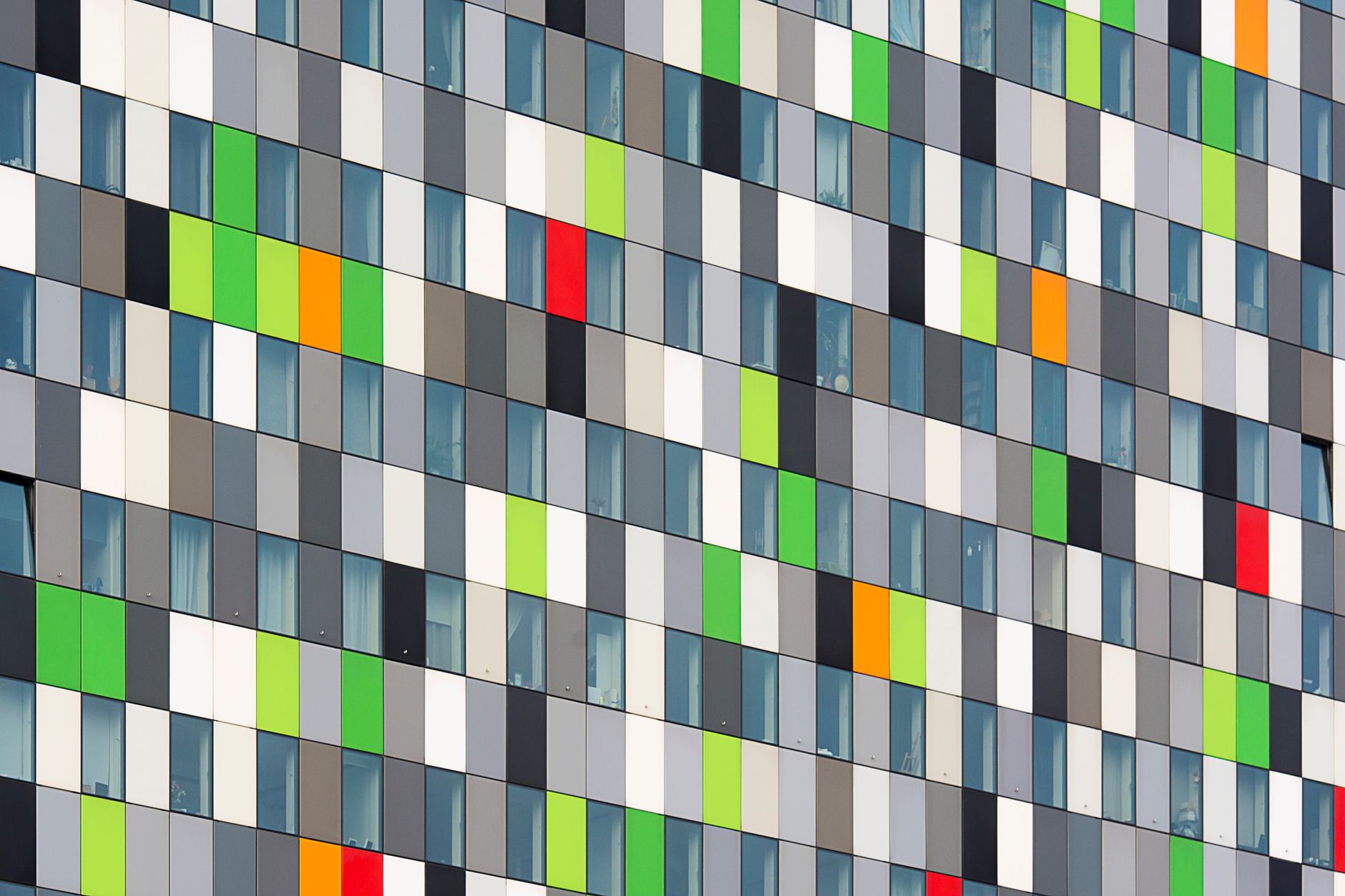
Facade cladding panels for commercial buildings span a wide range of materials, performance specs, and price points — this guide cuts through the noise for the buyers who need to get it right the first time in 2026.
TL;DR: The best facade cladding panels for commercial buildings balance weather resistance, fire compliance, and visual finish. Timber-composite and WPC exterior panels are the dominant choice in 2026 for low-rise commercial facades, offering realistic wood grain without the rot risk of solid timber. AkuWoodPanel's exterior wall cladding range — available in birch, oak, black, and stone grey — ships with matching trims and fixings, making them a complete commercial specification from a single supplier.
Why facade cladding choice defines a commercial project
A commercial building's facade is the first and most persistent statement it makes. Cladding panels that fail — through moisture ingress, fading, or delamination — trigger costly remediation and reputational damage. In 2026, UK building regulations and planning expectations have tightened further around fire performance (Regulation 7), so material selection is not a purely aesthetic decision. Get the spec wrong and you face re-cladding costs that routinely run into tens of thousands of pounds on even a small commercial unit.
The other factor architects and project managers underestimate is acoustic performance. A commercial building shell that does nothing for sound transmission leaves tenants exposed to external noise, which directly affects lease attractiveness.
Who this guide is for
This guide is written for commercial architects, contractors, and property developers specifying exterior cladding for offices, retail units, hospitality venues, and light industrial buildings in the UK. If you are sourcing panels for a domestic extension or a garden building, the criteria here still apply but the regulatory context differs. The focus throughout is on products that ship with full accessory systems — trims, corners, fixings — because commercial projects cannot afford gaps in a specification.
What to look for in facade cladding panels for commercial buildings
Weather and moisture resistance
UK commercial facades face persistent driving rain, freeze-thaw cycling, and UV exposure year-round. Panels must resist moisture ingress across their full cross-section, not just the face veneer. WPC (wood-plastic composite) panels outperform untreated solid timber because the polymer matrix prevents swelling, warping, and biological growth without annual maintenance treatments. Verify that the panel's stated moisture resistance applies to both the substrate and the surface finish.
Fire classification
Under the Building Regulations Approved Document B and the guidance updated post-Grenfell, external cladding on commercial buildings must meet Class B or better (European Classification) for most building types, with Class A2 required on buildings over 18 metres. Always request the fire test certificate for the specific panel product — not just the generic material category. A panel sold as "fire resistant" without a certificate number is not a specification-ready product in 2026.
Fixing system completeness
A panel without a matching fixing system is an incomplete product for commercial use. You need concealed or face-fixed screws rated for exterior use, corner trims that eliminate exposed cut edges, and finishing trims for tops and sills. Missing any one component means site-fabricated solutions, which introduce inconsistency and can void warranties. AkuWoodPanel's exterior range ships with colour-matched screws, corner trims, and finishing trims across all four colourways — birch, oak, black, and stone grey — meaning the full system is available from one SKU list.
Dimensional stability over a 10-year horizon
Commercial facades are expected to look consistent for at least a decade without panel replacement. Check the manufacturer's stated expansion gap requirements: a panel that requires 6 mm gaps at every joint will look noticeably different after thermal cycling than one specified with 3 mm gaps. WPC composites generally show less than 1% dimensional change across a 40°C temperature range, which is relevant for large-format commercial installs in the UK where south-facing facades regularly hit 50°C surface temperature in summer.
Acoustic performance contribution
Facade panels are not acoustic panels in the traditional sense, but panel mass and any backing layer do contribute to the overall Rw (weighted sound reduction index) of an external wall assembly. A 10–12 mm WPC panel over a ventilated cavity and insulated stud wall can contribute meaningfully to an overall assembly Rw of 45 dB or above, which meets the ambient noise requirements for most commercial occupancies near roads. If acoustic performance is a primary spec requirement rather than a secondary benefit, pairing facade panels with dedicated acoustic wall panels on interior surfaces is the correct approach.
Colour consistency and finish longevity
Commercial facades with mismatched replacement panels stand out immediately. Specify from a range where the manufacturer holds consistent batch stock and can supply replacement panels to the same colour reference. Stone grey and black finishes tend to show UV fade more visibly than natural timber tones, so confirm the UV stability rating (typically expressed as Delta E after 1,000 hours of accelerated weathering). A Delta E below 3 is the threshold for visually imperceptible fade.
Top picks for commercial facade cladding panels in 2026
Exterior Wall Cladding Panel — Oak
The safe pick for traditional and contemporary commercial schemes.
The exterior wall cladding panel oak is the most specified colourway for commercial projects where planning officers expect a sympathetic material palette. The oak finish reads as natural timber at any viewing distance while the WPC substrate delivers the moisture and frost resistance a solid oak board cannot. Matching oak-finish corner trims and screws are available, making it a complete system. If your project brief calls for a warm, natural-looking facade that doesn't require maintenance visits, this is the specification to reach for first.
Verdict: Buy for offices, retail frontages, and hospitality venues where a natural timber aesthetic is required.
Exterior Wall Cladding Panel — Black
The bold pick for contemporary commercial architecture.
Black-finish facade panels have become the dominant choice for new-build commercial units in 2026, particularly for gym operators, food and beverage brands, and creative sector tenants who need a strong visual identity from the street. The exterior wall cladding panel black pairs with black corner trims and black screws for a monolithic, joint-minimised appearance. Confirm UV stability data before specifying on west- or south-facing elevations where surface temperatures peak.
Verdict: Buy for contemporary commercial schemes; Consider on full south-facing elevations subject to prolonged direct UV.
Exterior Wall Cladding Panel — Stone Grey
The specification-safe neutral for mixed-use developments.
Stone grey sits between the warmth of oak and the contrast of black, making it the default choice when a planning condition restricts both warm tones and dark colours. It photographs well for marketing materials and ages predictably. The stone grey colourway in AkuWoodPanel's exterior range comes with a full complement of matching trims and fixings, which matters on mixed-use developments where multiple contractors are on site simultaneously.
Verdict: Buy for mixed-use, healthcare, and education sector facades.
Exterior Wall Cladding Panel — Birch
The wildcard for Scandinavian-influenced commercial design.
Birch finish is the lightest of the four colourways and the least commonly specified, which is precisely why it works for commercial buildings that need to stand out in a street of grey and black facades. It suits spa facilities, wellness brands, and high-end retail where the brief calls for a premium, airy aesthetic. Less UV-induced colour shift than black or stone grey over a 10-year period.
Verdict: Consider when the brand identity demands a distinctive, premium facade language.
What to avoid
- Panels without certified fixing systems. Any panel sold as facade cladding without manufacturer-supplied fixings forces site improvisation. Mismatched screw heads and self-fabricated trims void warranties and create leak pathways at edges and corners.
- Unverified fire classifications. Requesting a fire test certificate is not bureaucratic caution — it is the minimum due diligence for a building that will be occupied. A supplier that cannot produce one is not suitable for commercial specification in 2026.
- Single-panel suppliers without sample service. Colour and texture look different at scale than on a product photograph. Order physical samples before finalising a commercial specification — AkuWoodPanel supplies samples for all exterior colourways including sample outdoor wall panel oak so you can check the finish against your materials board before committing.
Comparison table
| Panel | Finish tone | UV stability | Full fixing system | Best application |
|---|---|---|---|---|
| Oak | Warm natural | High | Yes | Offices, retail, hospitality |
| Black | Bold dark | Moderate — verify | Yes | Contemporary commercial |
| Stone Grey | Cool neutral | High | Yes | Mixed-use, healthcare, education |
| Birch | Light pale | High | Yes | Premium retail, wellness |
FAQ
What are facade cladding panels made from for commercial buildings? Most commercial-grade facade cladding panels in 2026 are manufactured from WPC (wood-plastic composite), aluminium composite, or fibre cement. WPC panels offer realistic timber aesthetics with polymer-matrix moisture resistance, making them the most common choice for low-rise commercial facades in the UK.
Do facade cladding panels meet UK fire regulations? Compliance depends on building height and occupancy type. Buildings under 18 metres typically require Class B (European) minimum; buildings over 18 metres require Class A2. Always request the fire classification certificate for the specific panel product, not the material category.
How long do exterior facade cladding panels last on a commercial building? WPC facade panels are rated for 25 years or more under normal UK weather conditions. Actual lifespan depends on installation quality — particularly correct ventilated cavity depth and proper trim detailing at edges.
Can facade cladding panels be installed on a timber frame commercial building? Yes. WPC panels fix directly to a treated softwood or steel batten system over the frame, with a ventilated cavity of at least 25 mm. For more detail on timber-frame applications, the guide on exterior cladding panels for timber frame buildings covers the key installation considerations.
What is the maintenance requirement for commercial facade cladding panels? WPC composite panels require no painting, staining, or sealing. Annual cleaning with a low-pressure wash removes surface contamination. This is a meaningful operational cost saving versus painted render or untreated timber on a commercial building.
How much do facade cladding panels cost for a commercial project? Material costs vary by panel specification. For commercial projects, budget planning should include the panels, matching fixings, corner trims, and finishing trims as a complete system — buying panels and fixings from different suppliers routinely inflates overall cost and creates specification risk.
Is a ventilated cavity required behind facade cladding panels? Yes for all WPC and timber-based products. A ventilated cavity — minimum 25 mm — allows moisture that penetrates the face to drain and evaporate, preventing build-up against the structural wall. This is a requirement of both the manufacturer's warranty and BS 8297 good practice for external cladding.
Can I specify facade cladding panels in multiple colours on one building? Yes. Using two colourways — for example, black on the ground floor and stone grey above — is a common contemporary commercial design strategy. Specifying from the same manufacturer's range ensures the substrate profile and fixing system are identical, which simplifies the installation programme.
One last thing
The single most common commercial cladding failure in the UK is not product quality — it is inadequate detailing at junctions. Parapet edges, window reveals, and base flashings that are not matched to the panel system's own trim profile create the entry points for moisture. Specify the full AkuWoodPanel exterior system — panels, corner trims, finishing trims, and screws in a single colourway — and you eliminate the junction mismatch risk before it reaches site.
Share:
Best Wooden Wall Panels for Living Rooms 2026
Best Decorative Wall Panels for Hallways 2026