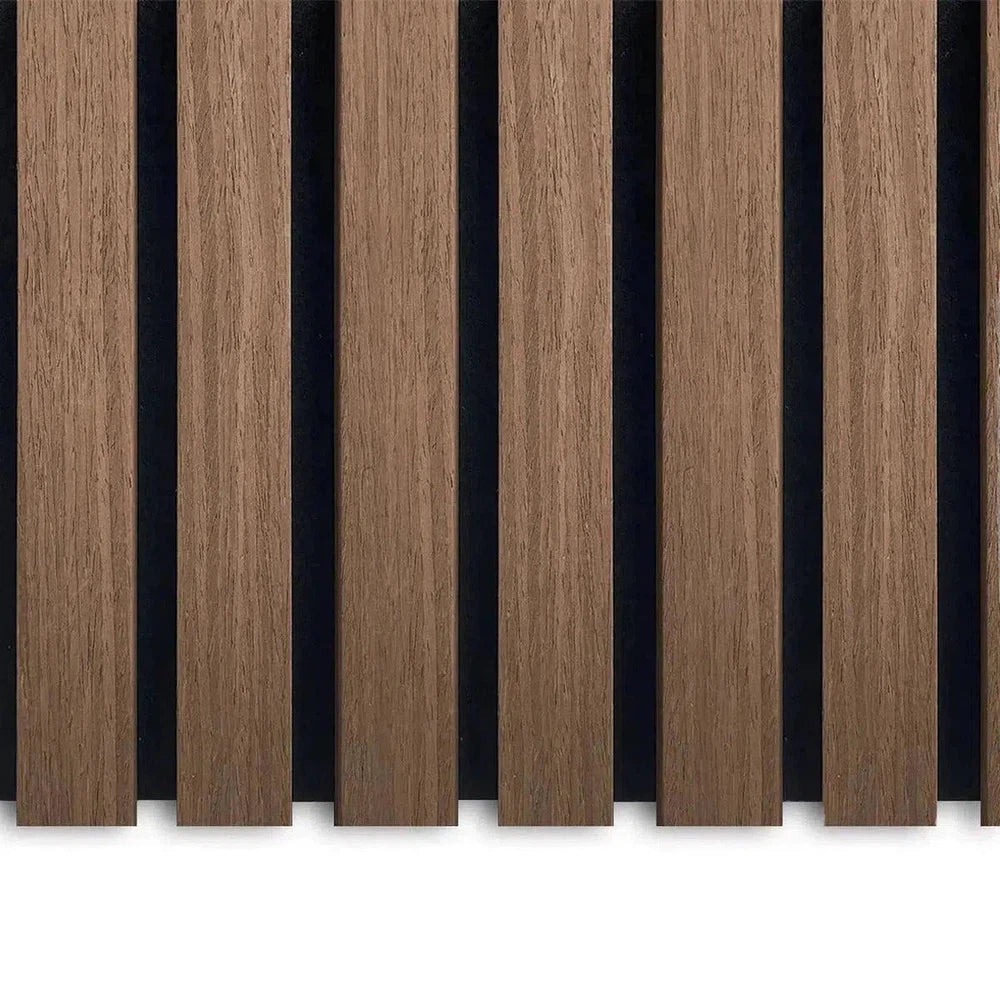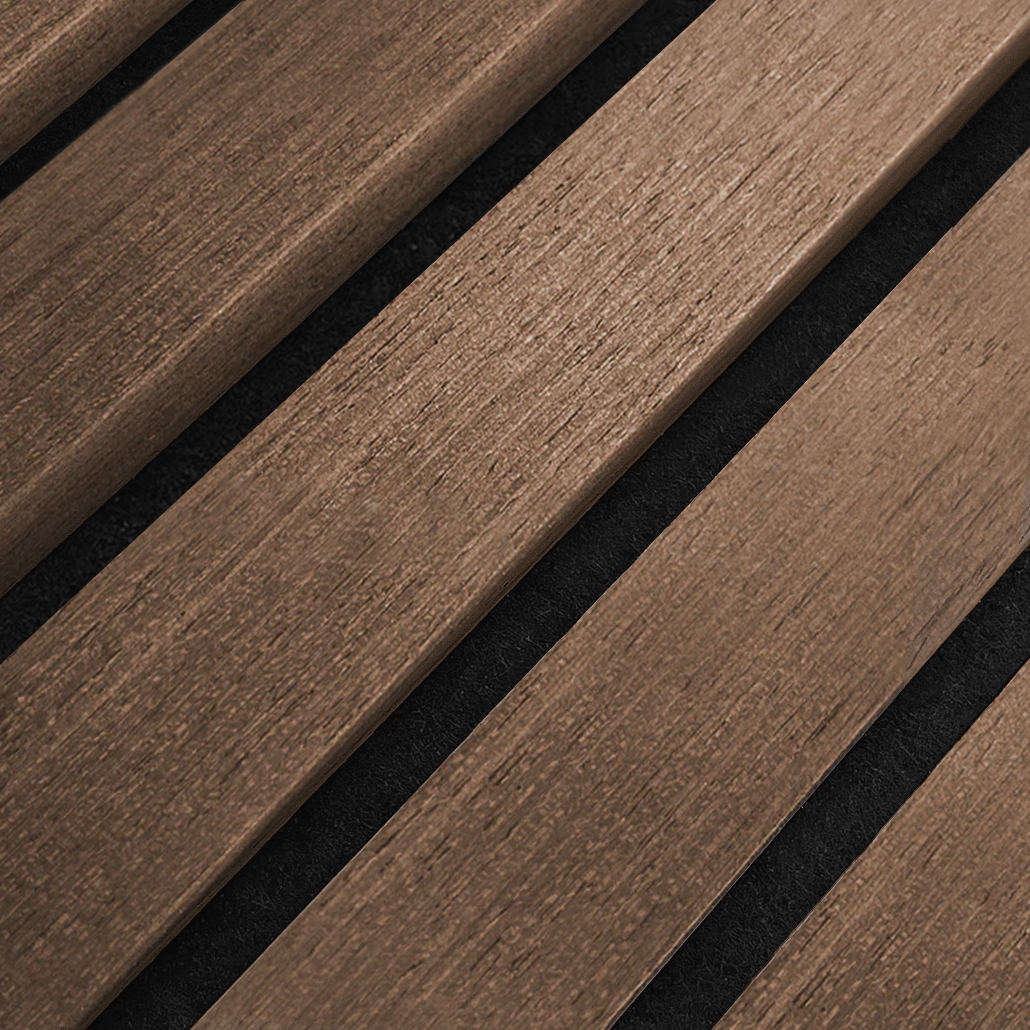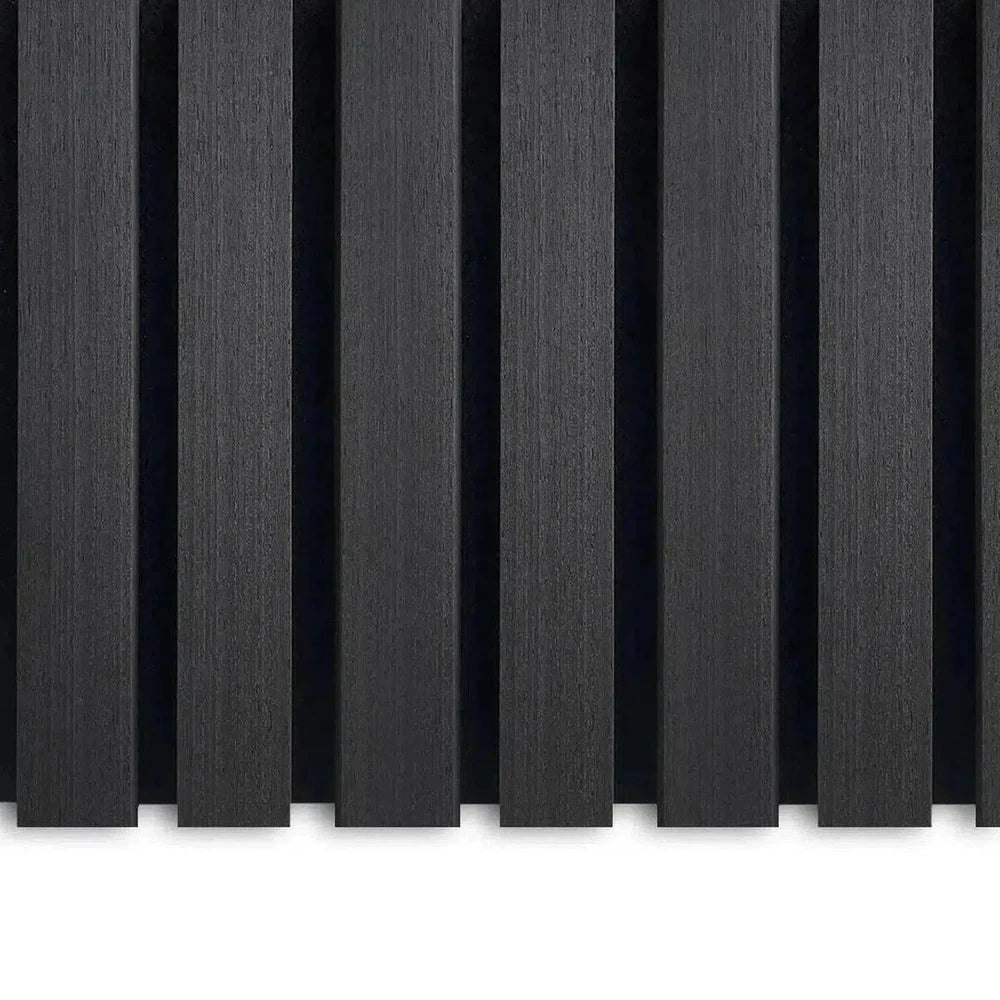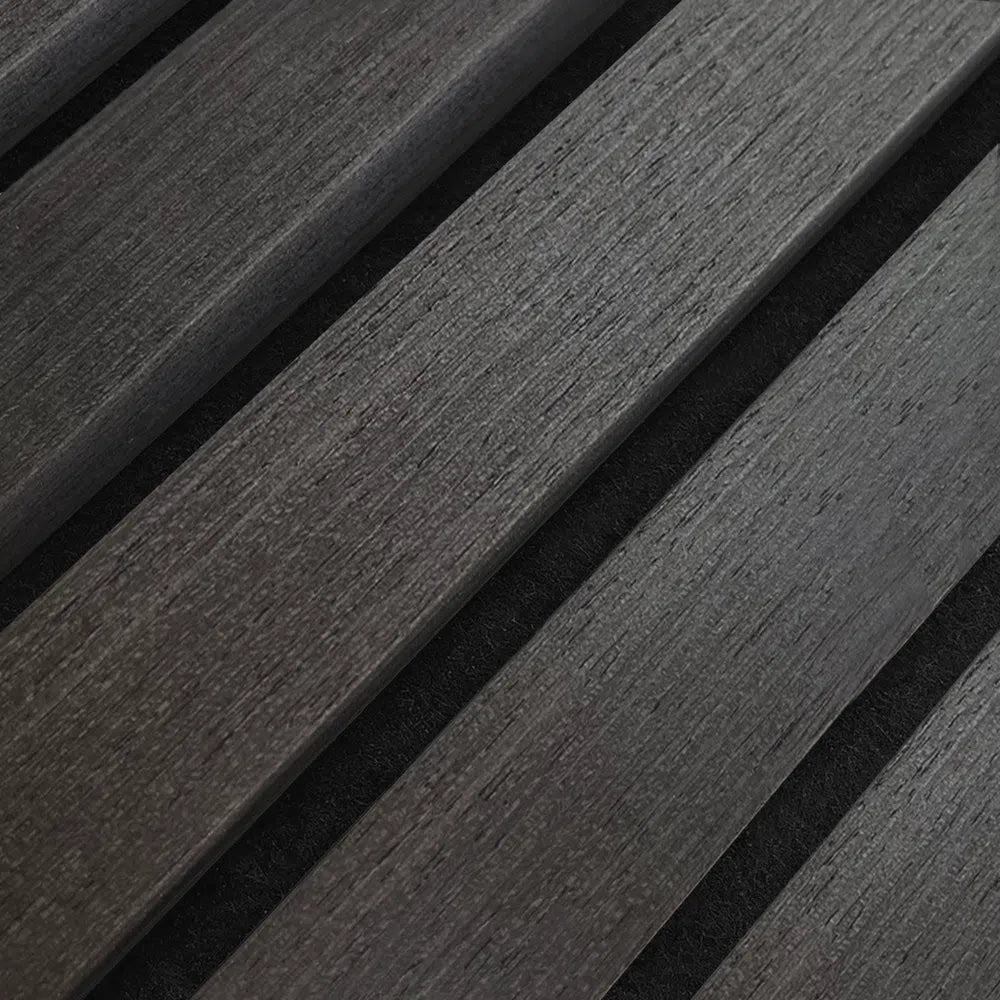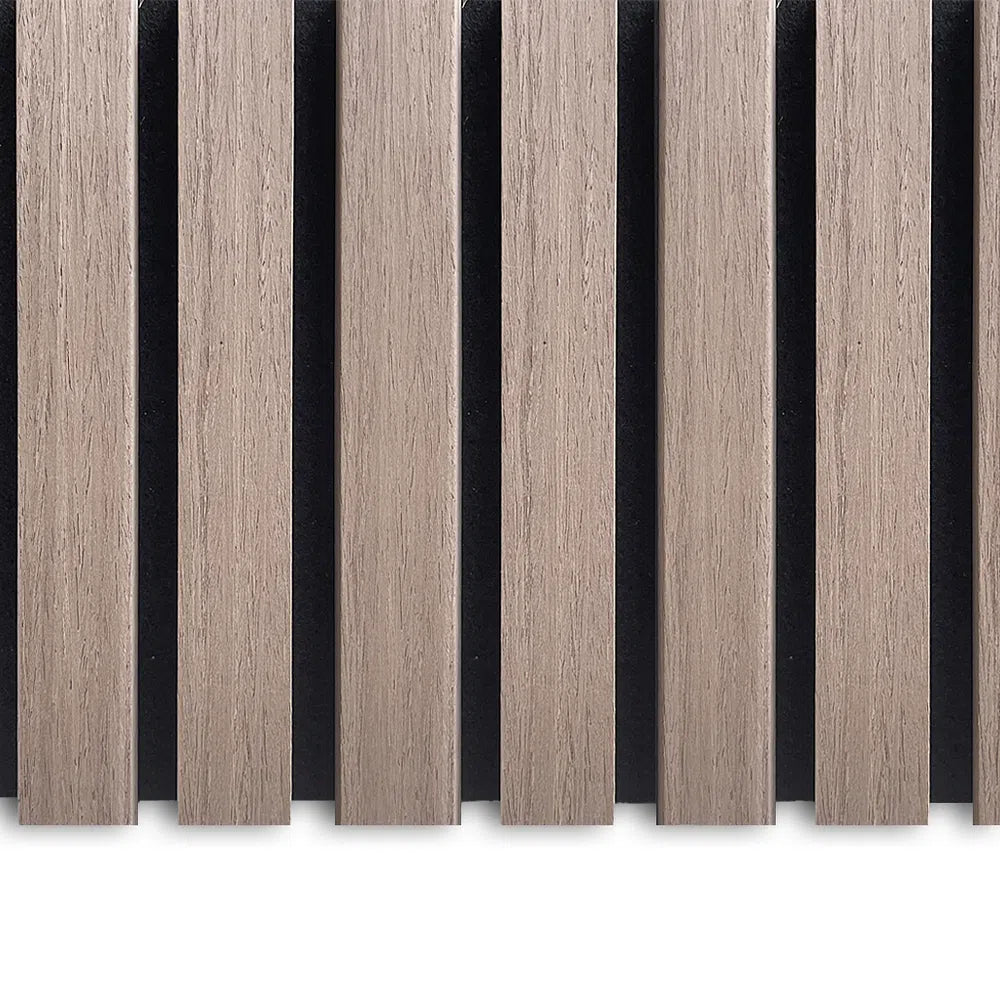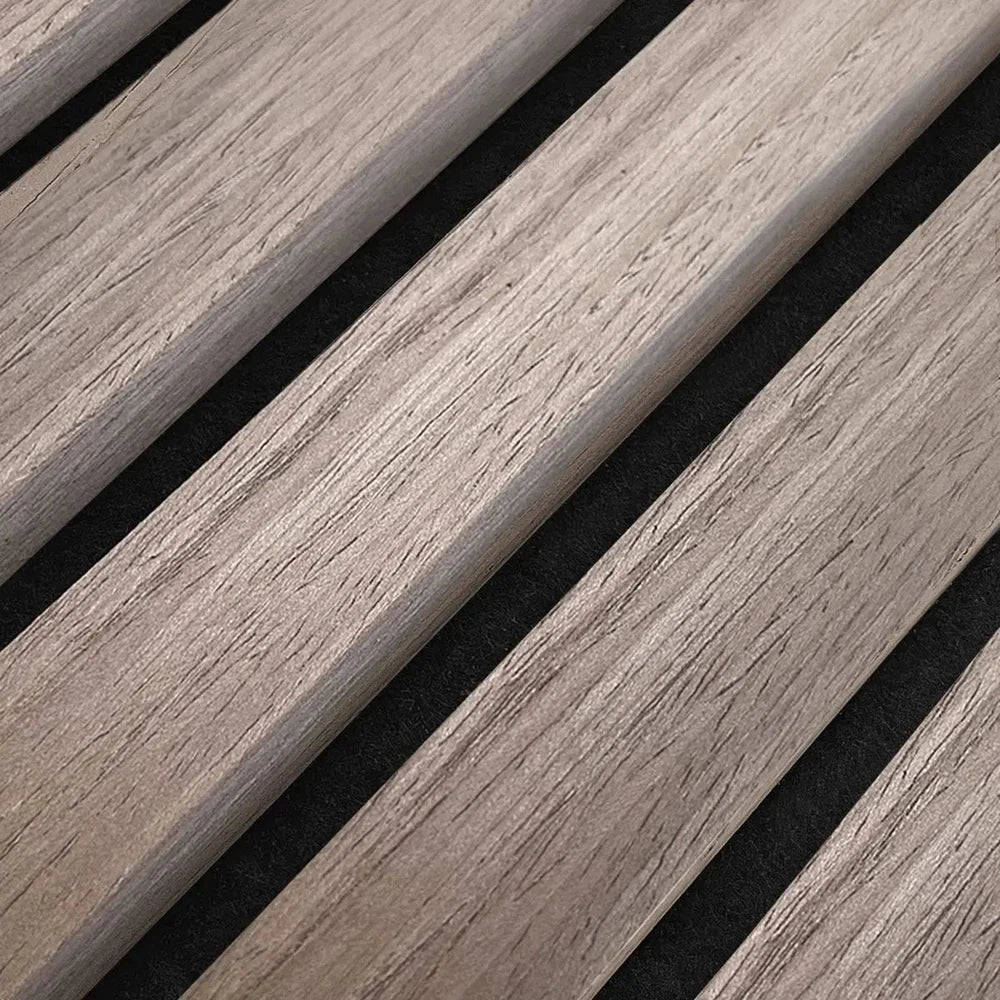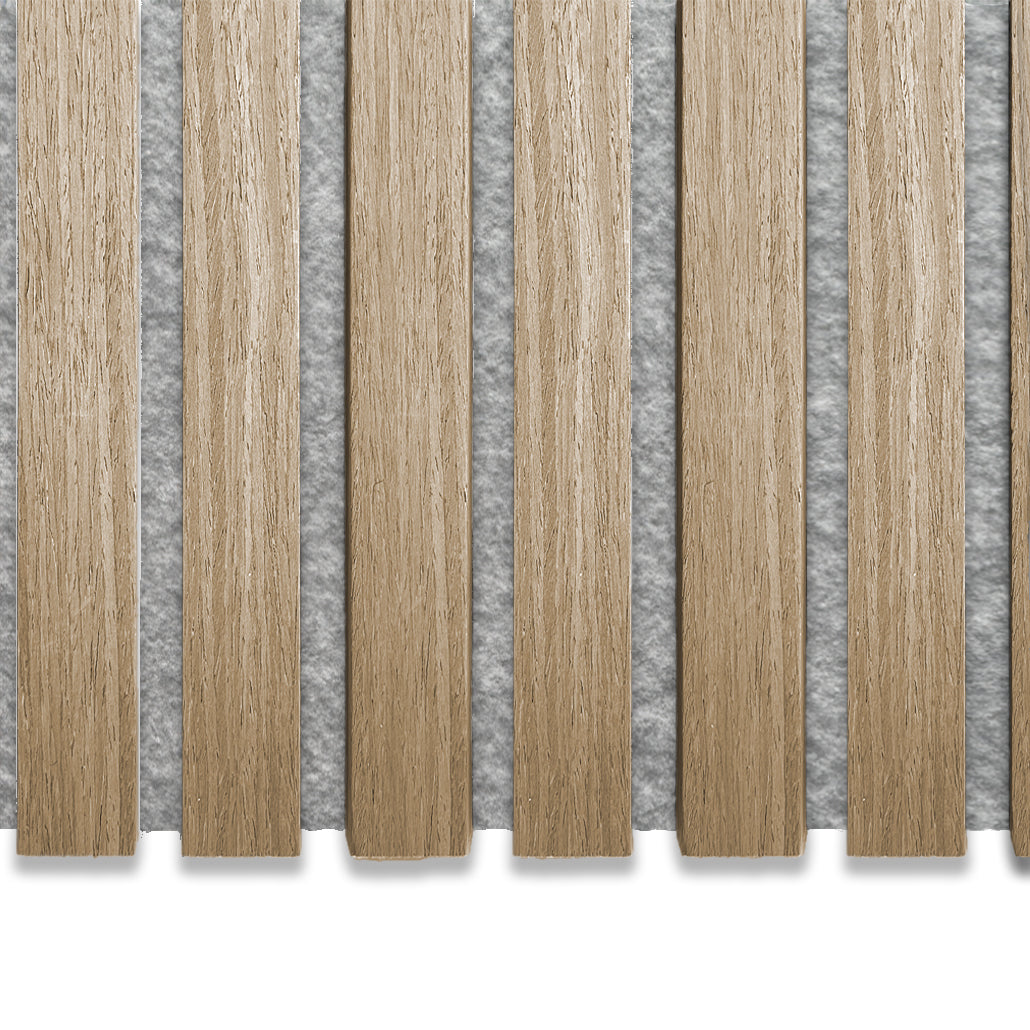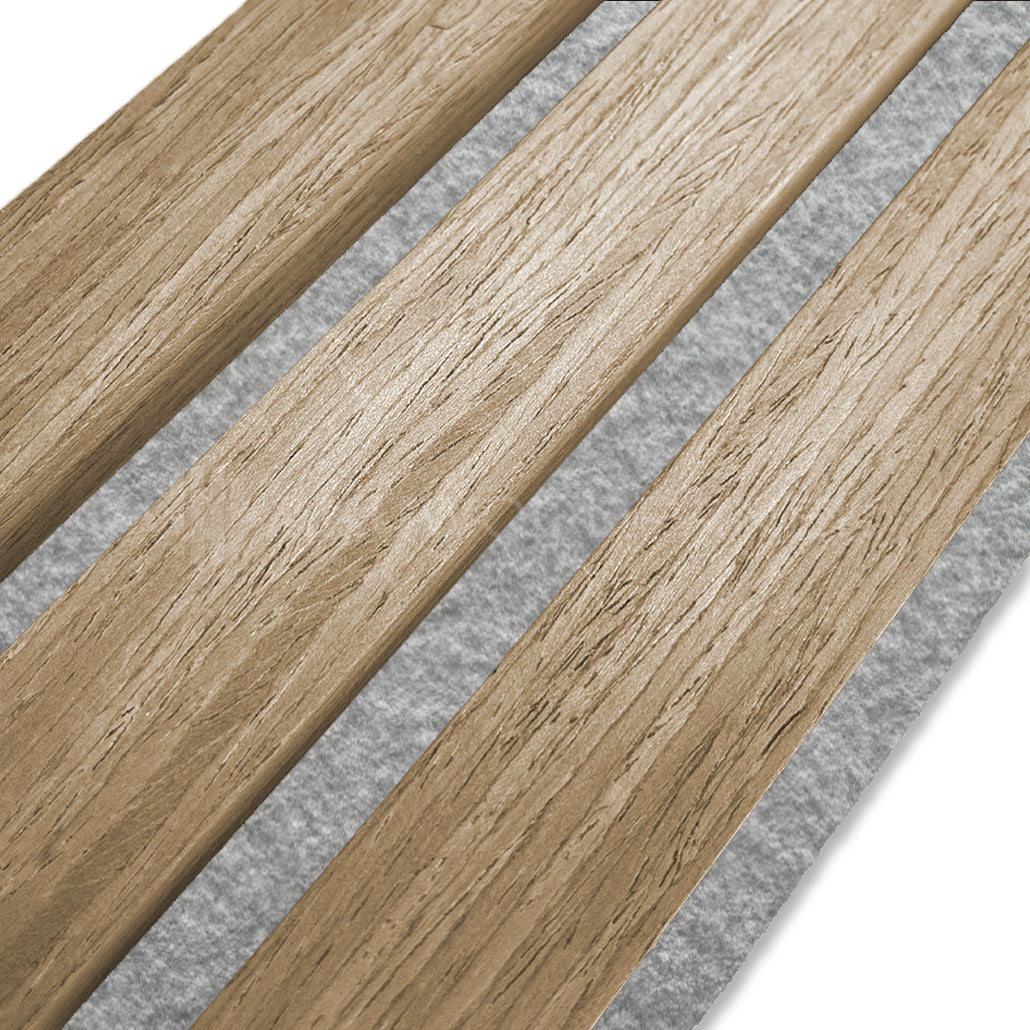
Best overall: composite cladding for low-maintenance UK exteriors. Best for natural character: solid timber. Best for a smooth, joint-free finish: render. For buyers who want panel-based wood-grain cladding, Akustiq UK exterior wall cladding in oak is the strongest fit among these three exterior cladding materials in 2026.
- Composite wins this exterior cladding materials compared guide for low-maintenance UK homes in 2026.
- Akustiq UK suits buyers who want weather-resistant exterior panels with a 3D wood-grain finish.
- Solid timber is best when genuine grain, natural ageing, or planning context drives the specification.
- Render is best for a continuous painted facade but requires careful detailing around joints and openings.
Why this matters
Exterior cladding controls more than appearance. It must shed water, tolerate seasonal movement, work around windows and doors, and remain repairable after installation. A finish that looks right on a sample can become the wrong choice if the wall build-up, exposure, fixings, or maintenance requirements do not suit the project.
The main 2026 decision is therefore not timber versus composite versus render in isolation. It is which system fits the building, the exposed elevation, your preferred finish, and the amount of recurring maintenance you will accept.
For every option, confirm the complete system before ordering. That includes the boards or finish coat, battens or substrate, membranes, ventilation path, fixings, trims, flashings, fire classification, and installation guidance. The visible surface is only one part of an exterior wall.
What makes the best exterior cladding material
Use these six criteria to audit each option before comparing colours:
- Weather performance: The outer finish must handle rain, sunlight, frost, and repeated wetting without trapping water behind the facade.
- Maintenance: Timber finishes, composite surfaces, and render coatings need different cleaning, inspection, and repair routines.
- Installation: Board systems need accurate battens, spacing, fixings, and edge details. Render needs a suitable substrate and consistent application.
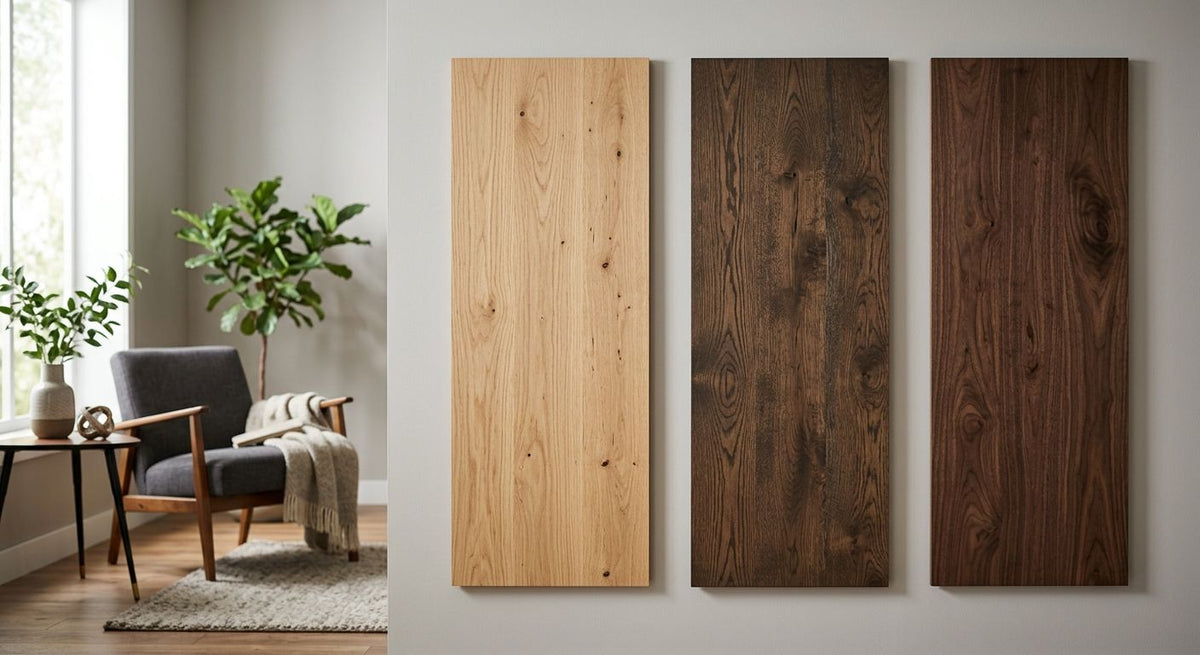
- Appearance: Timber gives genuine grain, composite provides a controlled wood-effect finish, and render creates a continuous surface.
- Repairability: Individual boards can usually be addressed locally, while a render repair must be blended into the surrounding elevation.
- Compliance: Planning context, fire performance, wall construction, and manufacturer instructions must be checked for the specific building.
For a 2026 project, rank these criteria before choosing a product. If low upkeep comes first, composite moves ahead. If authentic material character comes first, timber leads. If the design requires uninterrupted colour across a broad wall, render takes the slot.
Exterior cladding materials at a glance
| Rank | Material | Best for | Standout feature | Key limitation |
|---|---|---|---|---|
| 1 | Composite cladding | Low-maintenance homes, extensions, and garden buildings | Consistent wood-effect finish without timber refinishing | Must be installed as a complete manufacturer-specified system |
| 2 | Solid timber cladding | Natural character, period settings, and projects designed to weather | Genuine grain and natural variation | Appearance changes outdoors and treated finishes require renewal |
| 3 | Render | Smooth contemporary elevations | Continuous finish without board joints | Cracks, staining, and local repairs can remain visible |
1. Composite: best exterior cladding for low maintenance
Composite cladding uses a manufactured board rather than a solid piece of timber. Products vary by composition, profile, finish, fixing method, and fire performance, so the exact technical documents matter more than the category name alone.
The main advantage is controlled appearance. Boards arrive with a finished colour and texture, reducing the need to preserve a natural timber tone through repeated refinishing. Composite also gives you defined accessories for corners, ends, and fixings when the manufacturer offers them as part of the system.
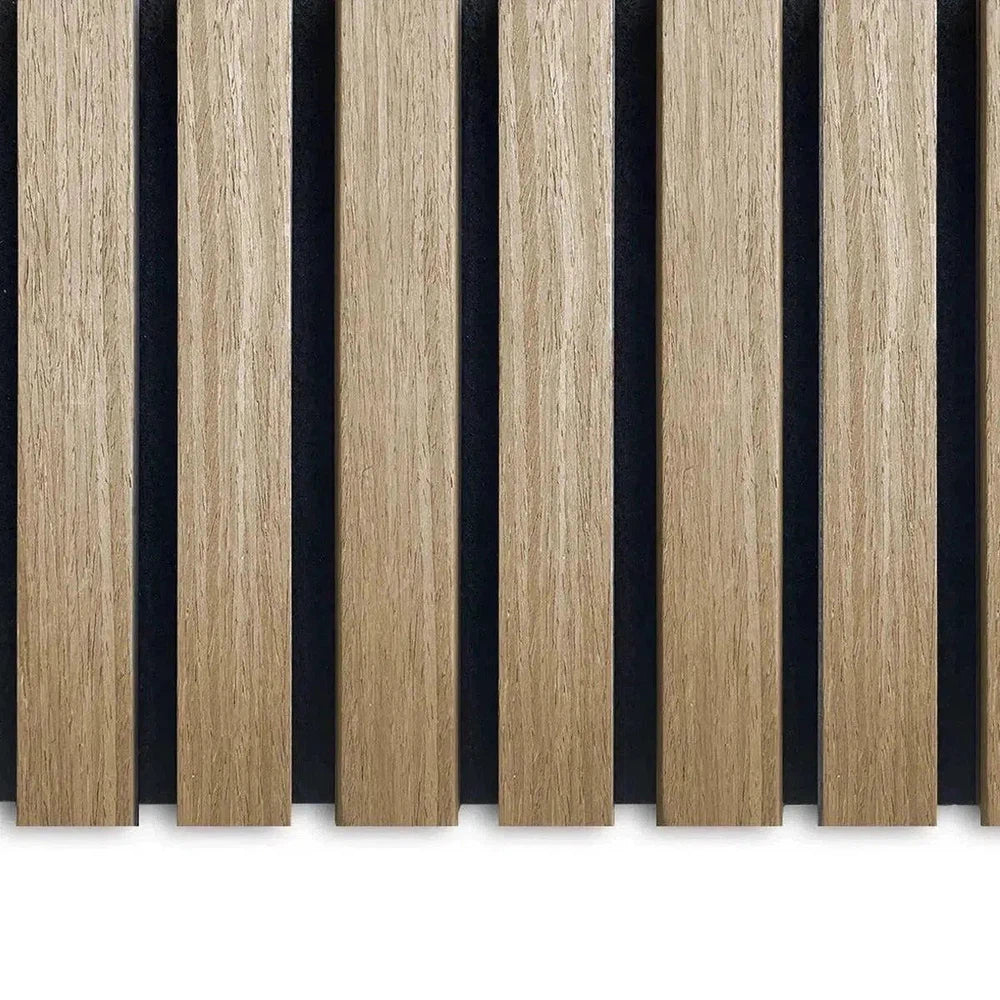
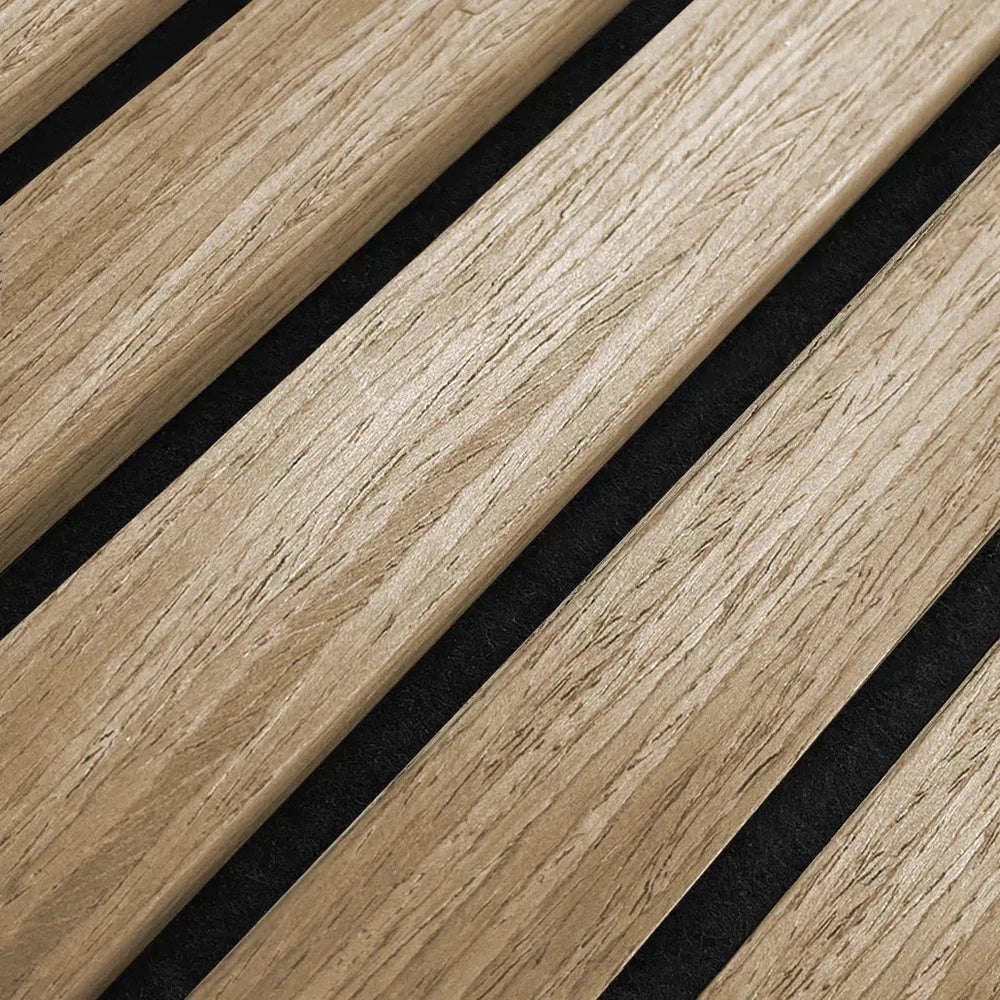
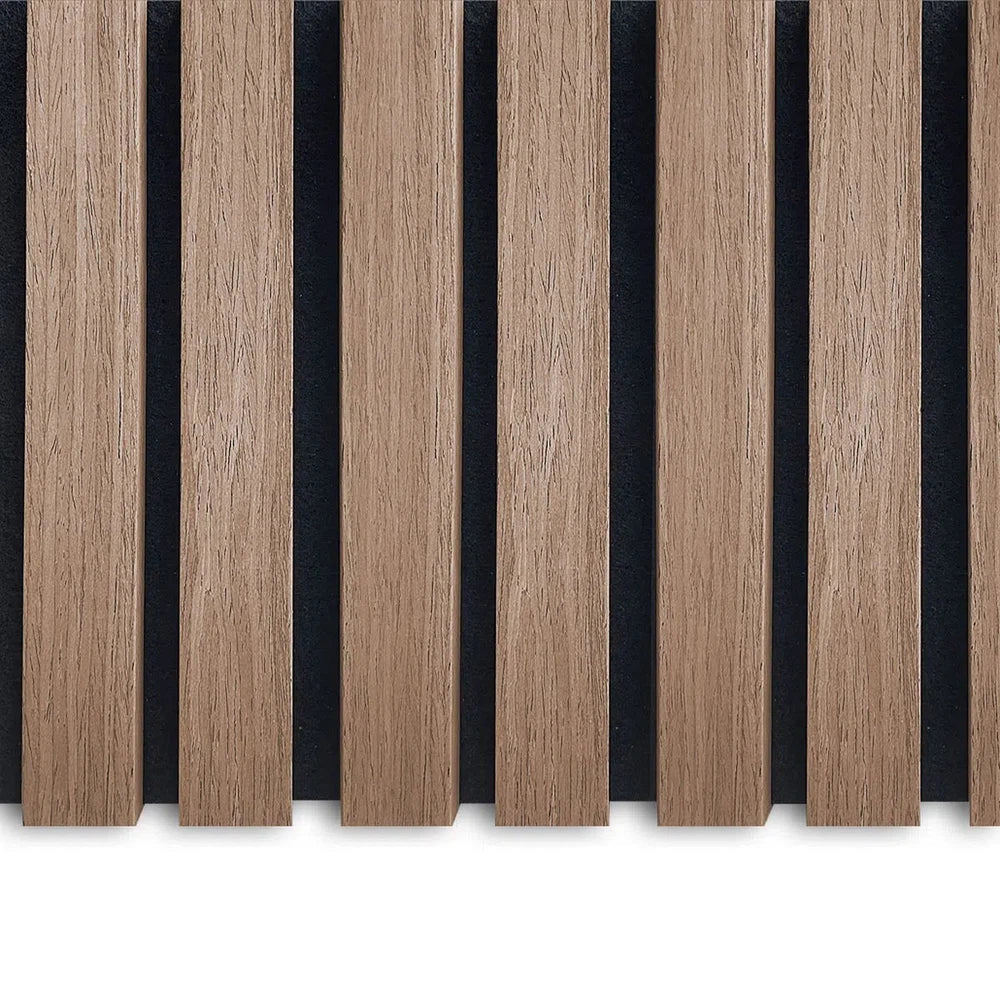
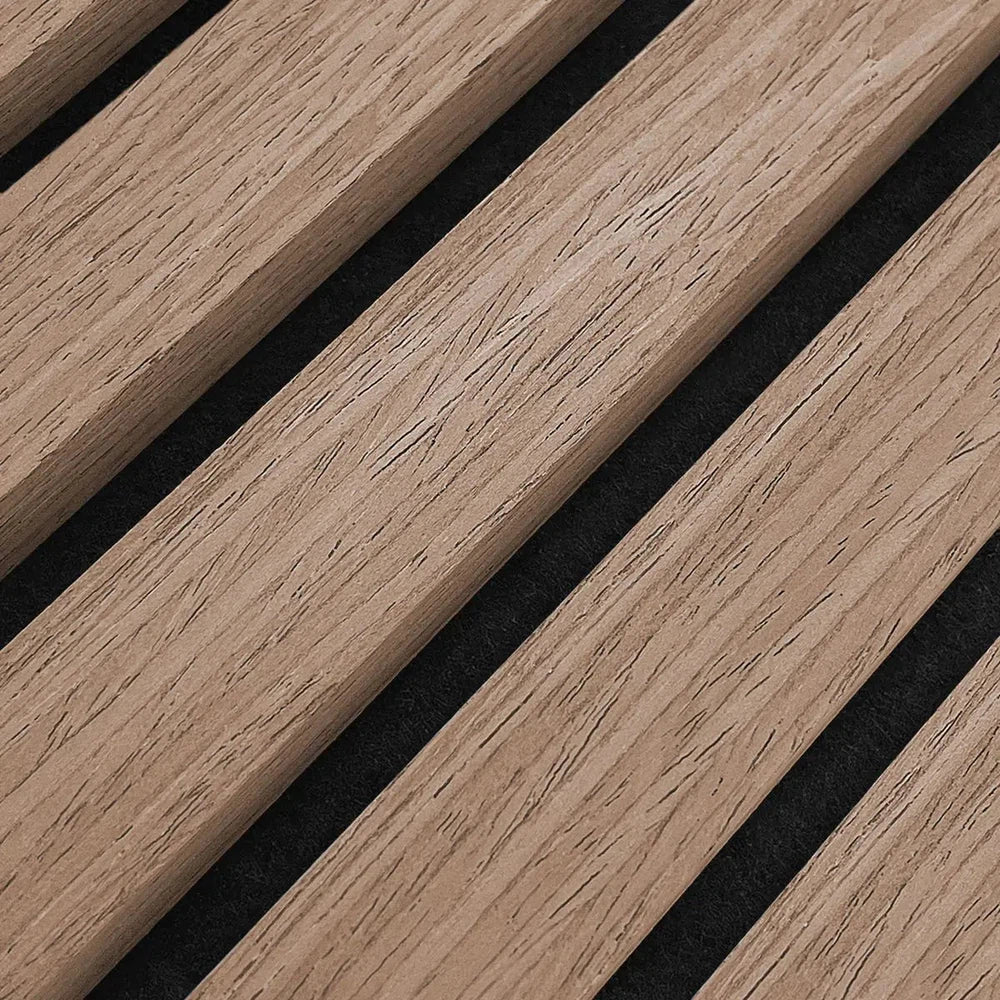
Akustiq UK supplies exterior wall cladding panels in oak, birch, stone grey, and black finishes. The listed panels are 290 cm long and use a 3D wood-grain finish. Their product descriptions state more than 25 years of maintenance-free use with minimal wear and fading, plus UV and weather resistance.
Those claims apply to the named products, not every composite board. Installation quality still determines whether water drains correctly, edges remain secure, and the facade can move without distortion.
Akustiq UK composite cladding pros:
- Finished wood-grain appearance without the natural colour variation of solid boards
- Four stated finish options for light, dark, warm, or grey exterior schemes
- Matching corner trims, finishing trims, and colour-specific screws are listed in the range
- Individual panel construction supports planned board replacement if access is retained
Akustiq UK composite cladding cons:
- The embossed 3D grain does not provide the material variation of solid timber
- The fixed 290 cm panel length creates cuts or planned joints on other wall dimensions
- Corners, ends, openings, and the base of the wall require separate detailing
- Product-specific fire and installation documents still need checking against the building design
Best for: Homeowners and project teams that want a repeatable wood-effect facade without adopting a timber refinishing routine.


For installation planning, the listed matching screw packs contain 100 pieces. The birch and oak screw descriptions specify M4x35mm steel screws with flat heads and star drives. Use only the fixing type, spacing, and substrate approved for the selected system; colour matching alone does not make a fixing suitable.
Verdict: Buy composite cladding when low recurring maintenance and consistent colour outrank genuine timber grain.
2. Solid timber: best for natural material character
Solid timber cladding is cut from real wood, so grain, knots, colour, and weathering vary from board to board. Species, profile, moisture content, treatment, coating, orientation, and exposure all affect its performance. A generic timber label is not enough for specification.
Timber earns second place because no manufactured wood effect reproduces its natural variation. It also fits projects where the material is expected to age visibly rather than preserve one fixed colour. This can suit a garden studio, barn-style building, or period property when the architecture calls for real timber.
The trade-off is maintenance and movement. Timber expands and contracts as moisture conditions change. Uncoated boards change colour outdoors, while coated boards need inspection and eventual refinishing according to the coating system and exposure.
Solid timber cladding pros:
- Genuine grain, texture, and board-to-board variation
- Can be specified by species, profile, orientation, and finish
- Natural weathering can become part of the intended design
- Damaged boards can often be replaced locally when fixings remain accessible
Solid timber cladding cons:
- Colour changes with weather exposure unless a suitable finish is maintained
- Boards can split, cup, or move when specification and installation do not control moisture
- Cut ends, fixings, ventilation, and clearances require careful detailing
- Natural variation makes exact colour matching difficult during later repairs
Best for: Projects where real wood, natural ageing, or architectural context matters more than a uniform low-maintenance surface.
Do not select timber from a small indoor sample alone. View weathered examples of the same species and finish, then decide whether that change is acceptable across the whole elevation. A south-facing wall and a shaded wall will not necessarily age at the same rate.
Verdict: Hold until the species, treatment, coating plan, and weathered appearance are confirmed.
3. Render: best for a smooth continuous facade
Render creates a continuous outer finish rather than a board pattern. Systems differ by substrate, reinforcement, base coat, finish coat, texture, and colour. Some are applied over masonry, while others form part of an insulated or framed wall system.
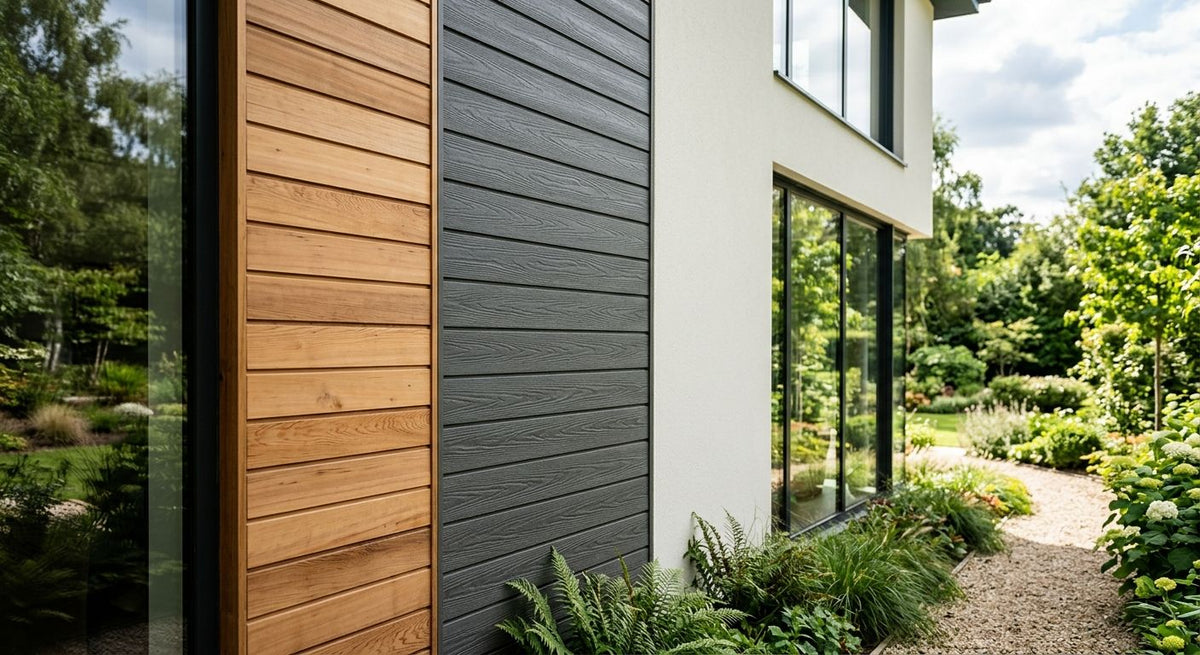
Render wins when the architecture needs broad, uninterrupted colour. It works particularly well across simple elevations where visible cladding joints would distract from the design. It can also sit beside panel cladding to add contrast around an entrance, extension, upper storey, or projecting section.
That mixed approach requires a designed junction. Cladding and render move, drain, and terminate differently, so the transition needs appropriate flashings, clearances, and edge details. The guide to combining exterior cladding with render covers that decision before either finish is installed.
Render pros:
- Continuous visual finish across large wall areas
- Broad choice of colours and surface textures
- No repeated board joints across the main elevation
- Works as a contrasting finish beside timber or composite cladding
Render cons:
- Cracking can occur where the substrate moves or details are poorly designed
- Dirt, algae, and runoff marks are visible on exposed or pale elevations
- Local patch repairs can differ in colour or texture from the existing finish
- Application depends on suitable weather, substrate preparation, and installer skill
Best for: Contemporary homes and extensions that need a flat, uninterrupted facade rather than a slatted or boarded texture.
Before committing, map every opening, movement joint, sill, parapet, service penetration, and material transition. Render failures often begin at details rather than in the middle of an uncomplicated wall.
Verdict: Buy render for a deliberately smooth elevation; skip it if the design brief actually calls for visible grain and panel depth.
How we ranked the options
The 2026 ranking uses the six criteria set out above rather than treating appearance as the only decision. Composite ranks first because it combines a controlled finish with a lower refinishing burden. Solid timber ranks second because its authenticity is unmatched, but its movement and changing appearance demand more planning. Render ranks third overall while remaining the clear winner for a continuous coloured surface.
The ranking changes when the brief changes. A conservation-led project can put timber first. A minimalist rendered extension can put render first. A garden room or modern rear extension designed around low upkeep is the clearest case for composite.
No option receives a blanket recommendation for every building. Fire performance, substrate compatibility, planning requirements, exposure, ventilation, and manufacturer instructions remain project-specific in 2026.
Which exterior cladding material should you choose?
Choose composite by default if you are undecided. It answers the most common practical brief: a wood-effect exterior with consistent colour and less recurring surface treatment than solid timber. Akustiq UK is best for homeowners and businesses specifically seeking 290 cm exterior panels in oak, birch, stone grey, or black.
Choose solid timber when the material itself is central to the design. Accept that real wood changes outdoors, then specify the species, treatment, fixing method, ventilation, and finish around that reality.
Choose render when the facade should read as one continuous plane. If you like render but want more depth, use it as the main field and add cladding to a smaller architectural section instead of forcing one material across every wall.
For any route, request the current installation instructions and technical documentation before setting battens, ordering fixings, or preparing the substrate. That check prevents a visual preference from becoming a construction mismatch.
FAQ
What is the best exterior cladding material for a UK home in 2026?
Composite cladding is the best default choice for a UK home in 2026 when low maintenance and consistent appearance are the priorities. Timber wins for genuine natural character, while render wins for a smooth continuous facade.
Is composite cladding better than timber?
Composite cladding is better when you want consistent colour and less recurring surface treatment. Timber is better when genuine grain, natural variation, and weathering are essential to the design.
Is render better than exterior cladding panels?
Render is better for a continuous painted or textured surface without repeated board joints. Exterior panels are better when you want visible grain, shadow lines, or the ability to address individual boards.
Can you combine render and composite cladding?
Yes, render and composite cladding can be combined on one facade. Their junction must account for drainage, movement, ventilation, flashings, and clean material terminations.
How long do Akustiq UK exterior cladding panels last?
The product descriptions state more than 25 years of maintenance-free use with minimal wear and fading. Installation quality, exposure, and compliance with the product instructions remain important.
Does exterior timber cladding need maintenance?
Yes, timber cladding needs inspection, cleaning, and finish maintenance when preserving its treated colour is part of the brief. Uncoated wood also changes colour as it weathers outdoors.
How much does exterior cladding cost?
Exterior cladding cost depends on the material, wall area, substructure, trims, fixings, access, and labour. Compare complete installed systems rather than board or coating costs alone.
Do I need planning permission for exterior cladding?
Planning requirements depend on the property, location, proposed material, and extent of the change. Check the project with the relevant local planning authority before ordering materials.
One last thing
Do not approve an exterior cladding sample until you have placed it outside beside the existing brick, render, roof, windows, and paving. Review it in dry and wet conditions. Oak, birch, stone grey, and black can each work on a 2026 exterior, but the surrounding materials decide whether the finish looks connected or added as an afterthought.
Then draw the corners and openings. The panel colour gets attention, but trims, cuts, sills, vents, sockets, downpipes, and the cladding base determine whether the completed facade looks resolved.