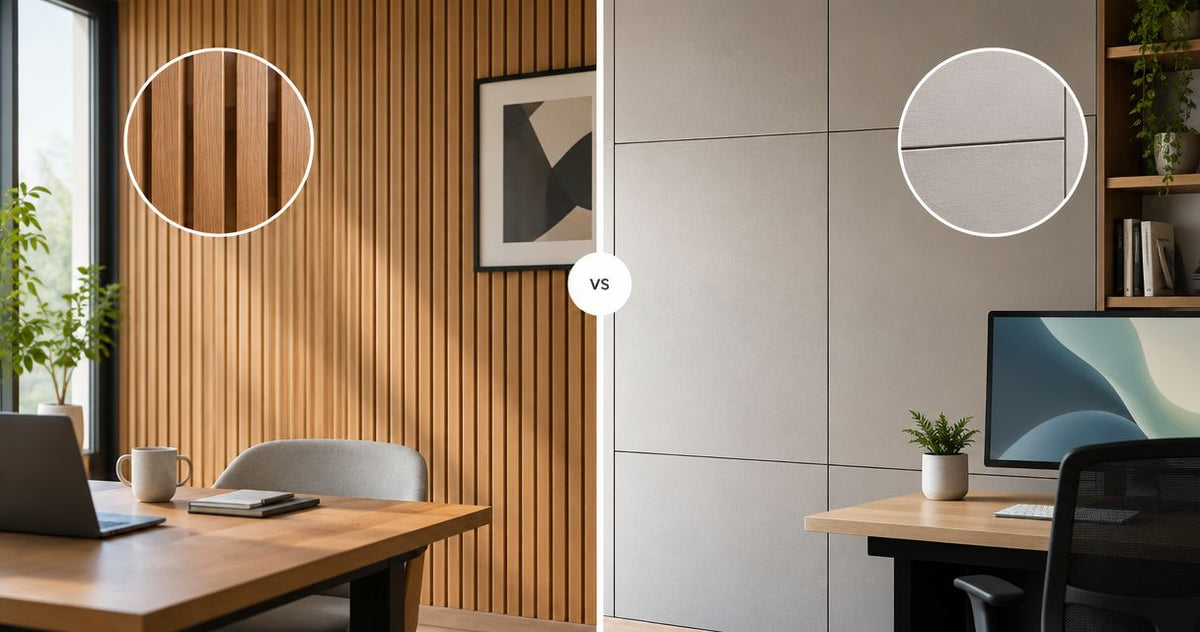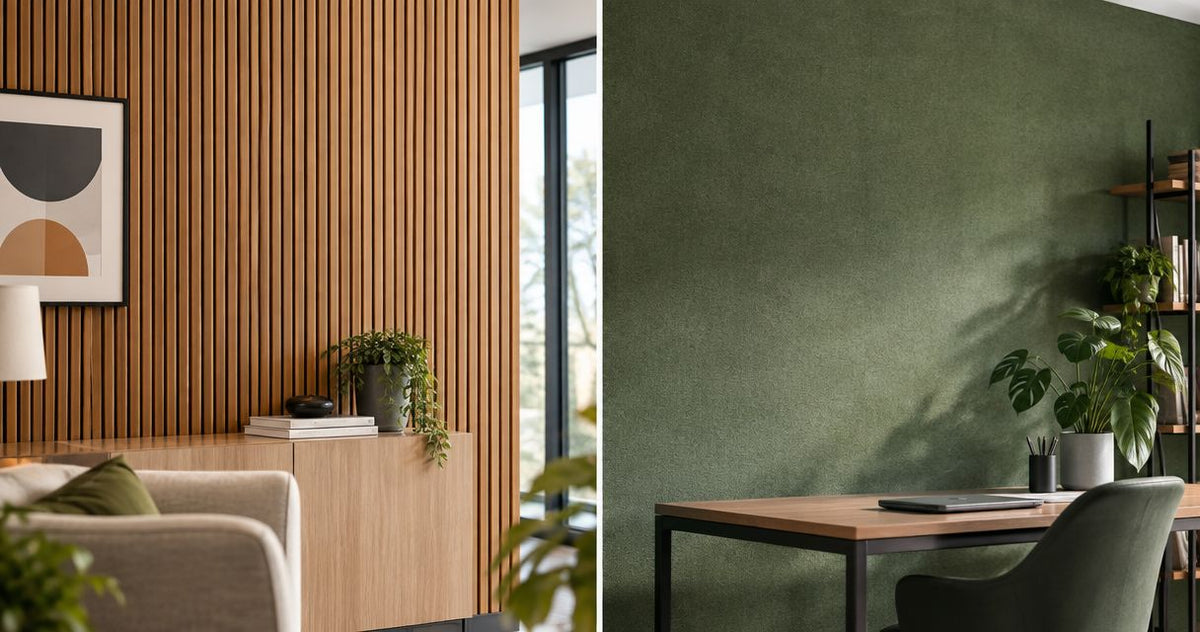
Choose Akustiq UK if you want acoustic wooden slat panels with a 3-sided real wood veneer finish and 240 cm or 300 cm formats; choose Naturewall if the exact panel you have sampled better matches an existing interior and meets your installation requirements. For your 2026 project, the deciding factors are the visible finish, wall layout and acoustic specification—not the brand name alone.
- For aku wood panel vs naturewall, choose by veneer finish, wall height and the exact acoustic panel specification.
- Akustiq UK acoustic wooden slat panels suit buyers seeking 3-sided real wood veneer and felt backing.
- Choose Naturewall when its approved sample is the better match for your existing interior.
- Neither brand name establishes soundproofing performance; assess the complete wall construction.
Why this matters
A living-room feature wall has different priorities from an office refurbishment. You need the finish to work beside your furniture, the panels to fit the wall and the acoustic treatment to address the actual noise problem. Getting one right does not automatically solve the others.
Start with the guide to ordering acoustic wall panel samples before buying. A photograph helps you shortlist a finish; a physical sample lets you inspect grain, exposed edges and the backing in your own room.
Akustiq UK acoustic wooden slat panels suit buyers who want real wood veneer on three sides of the slats. That is a specific buying reason, not proof of better sound absorption or easier installation than every competing panel.
At a glance
Use this 2026 comparison as a purchasing checklist. Each row identifies the decision you need to make before ordering a particular panel.
| Dimension | Akustiq UK | Naturewall |
|---|---|---|
| Best for | Buyers seeking the stated 3-sided veneer construction and indoor size formats | Buyers whose approved sample better matches their existing scheme |
| Standout feature: veneer | Flagship indoor panels have 3-sided real wood veneer | Inspect the selected panel's face and side finish |
| Wall height | Indoor formats include 240 cm and 300 cm | Match the selected panel's dimensions to your measured wall |
| Finish matching | Multiple wood finishes; choose against a physical sample | Choose when its sample gives the better room match |
| Acoustic suitability | Acoustic felt backing on flagship indoor panels | Assess the exact panel and proposed mounting arrangement |
| Installation planning | Plan cuts, exposed edges and fixings for the chosen panel | Follow the chosen panel's installation instructions |
| Applications | Indoor slat panels, hexagon panels, decorative panels and exterior cladding | Select by the exact product's stated application |
| Pricing model | Product purchase; compare the complete installation basket | Compare the selected product's purchasing unit and complete basket |
The best choice follows your room brief
Choose a panel for the problem you actually have. If speech sounds harsh in a bare office, investigate room reverberation. If you want to stop a neighbour's television coming through a shared wall, investigate sound transmission through the building fabric.
These are different jobs. Sound-absorbing finishes address reflections within a room; sound insulation addresses transmission between spaces. A wooden feature wall is not automatically a soundproof wall.
For a bedroom headboard, appearance and edge detailing can drive the decision. For a meeting room, ask for acoustic evidence and check that the proposed construction satisfies the project's fire requirements. Your brief should name the room, the desired result and any technical constraints before you compare suppliers.
A useful buying brief is short:
- Room: living room, bedroom, office or another named space.
- Purpose: appearance, reduced echo or a specified acoustic outcome.
- Constraints: wall dimensions, exposed ends, sockets and mounting surface.
This keeps a decorative preference from turning into an unsupported performance claim.
Three-sided veneer is a clear reason to choose this construction
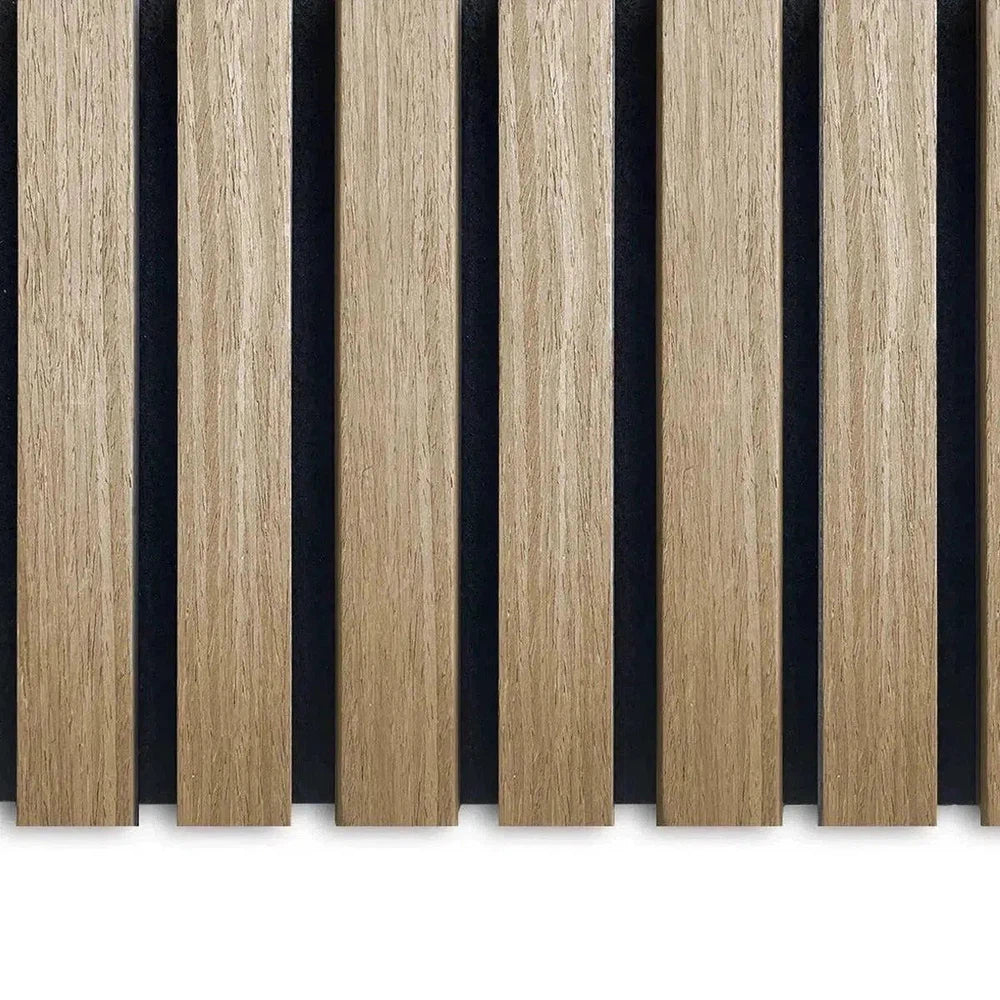
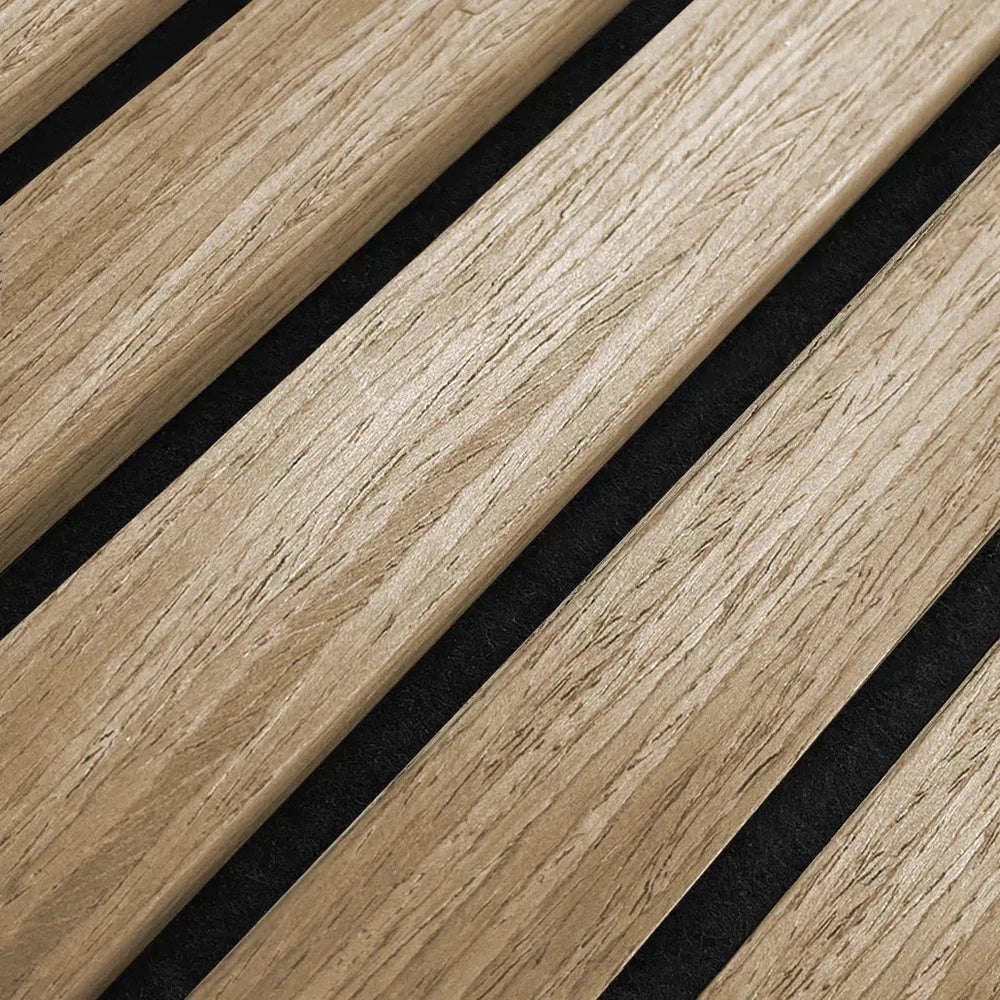
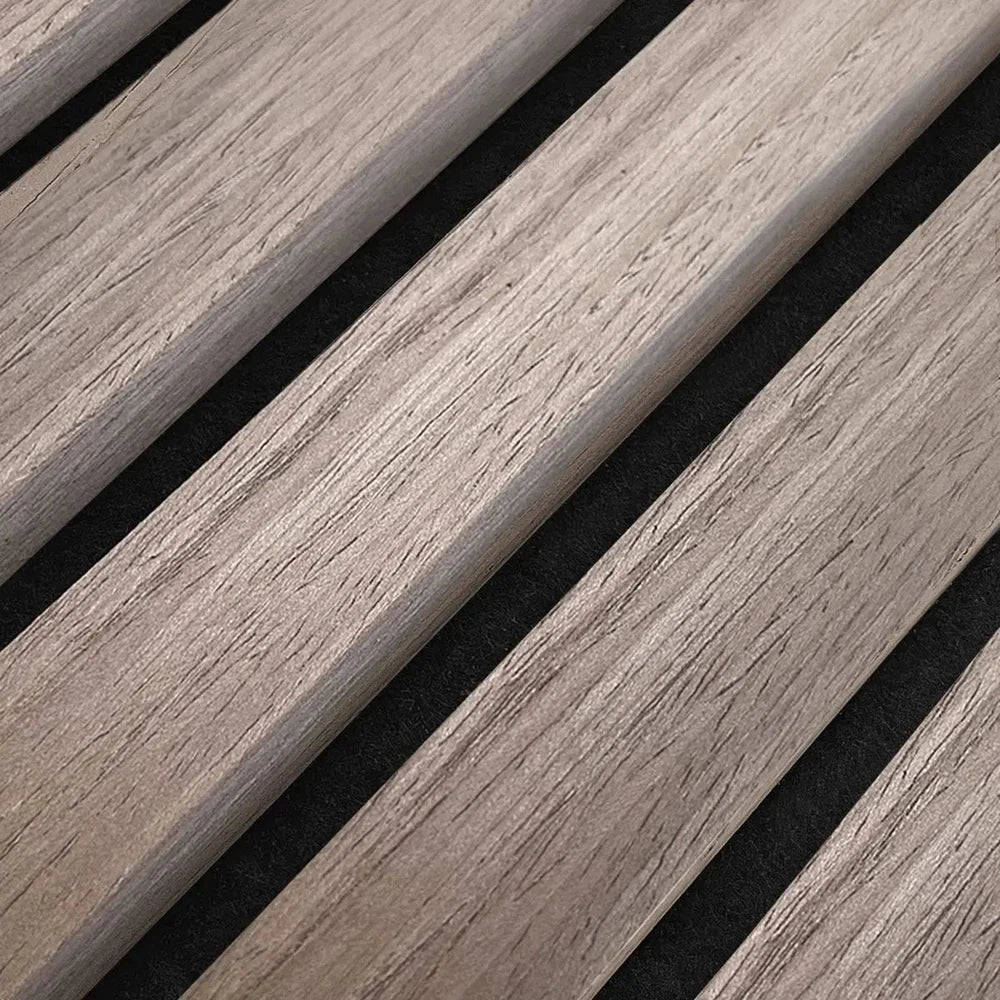
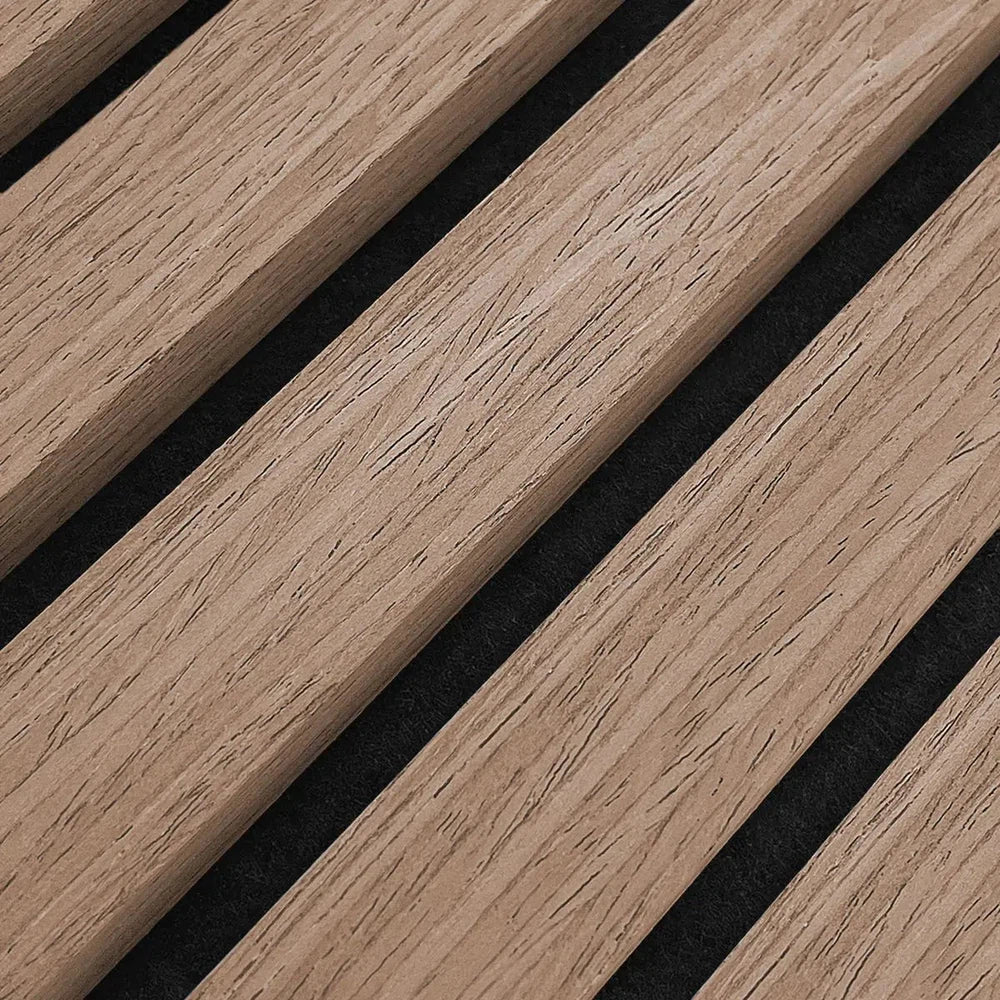
The stated veneer construction is a tangible advantage when you want wood visible on the slat faces and sides. The flagship indoor panels have a 3-sided real wood veneer finish with an acoustic felt backing.
Side finishes matter because you do not always view a wall straight on. In a hallway, you walk alongside it; beside a sofa, you see the slats at an angle. Inspect the sample from those positions rather than judging only its front face.
The trade-off is that real wood veneer does not establish the composition of the entire slat. Do not treat a veneer description as a solid-timber specification, a moisture rating or a fire classification. Each answers a separate question.
When comparing the Naturewall panel you are considering, inspect the same surfaces. If its sample delivers the appearance you prefer, that visual preference is valid; it does not establish a technical advantage elsewhere.
Ask yourself:
- Do the slat sides look right from the doorway?
- Does the backing suit the room's other finishes?
- How will a cut edge be concealed or finished?
The 300 cm format helps you plan taller feature walls
Choose the panel length against the finished wall height, not against an assumed ceiling height. The indoor range includes 240 cm and 300 cm formats, giving you different starting points for a vertical layout.
Measure from the intended lower edge to the intended upper edge. Skirting, ceiling details and deliberate painted borders change that measurement. Check more than one position because an uneven floor or ceiling affects the cut line.
A longer panel is useful when it spans the planned height without a horizontal join. It also creates handling and cutting considerations, so check access to the room and where you will support the panel while cutting.
For a 2026 refurbishment, draw the wall elevation before ordering. Mark doors, sockets, switches and any furniture that will obscure the lower section. Compare Naturewall using the dimensions of the exact product you intend to purchase, with the same drawing beside you.
The winner on height is the panel that fits your layout with the most sensible cuts and joins. A longer format is not automatically the better choice for a short feature wall.
Naturewall wins when its approved sample matches your scheme better
Choose Naturewall for finish matching when its physical sample is the one you have approved for the room. This is a genuine design decision, particularly when you are extending an existing panelled area or working beside furniture you will keep.
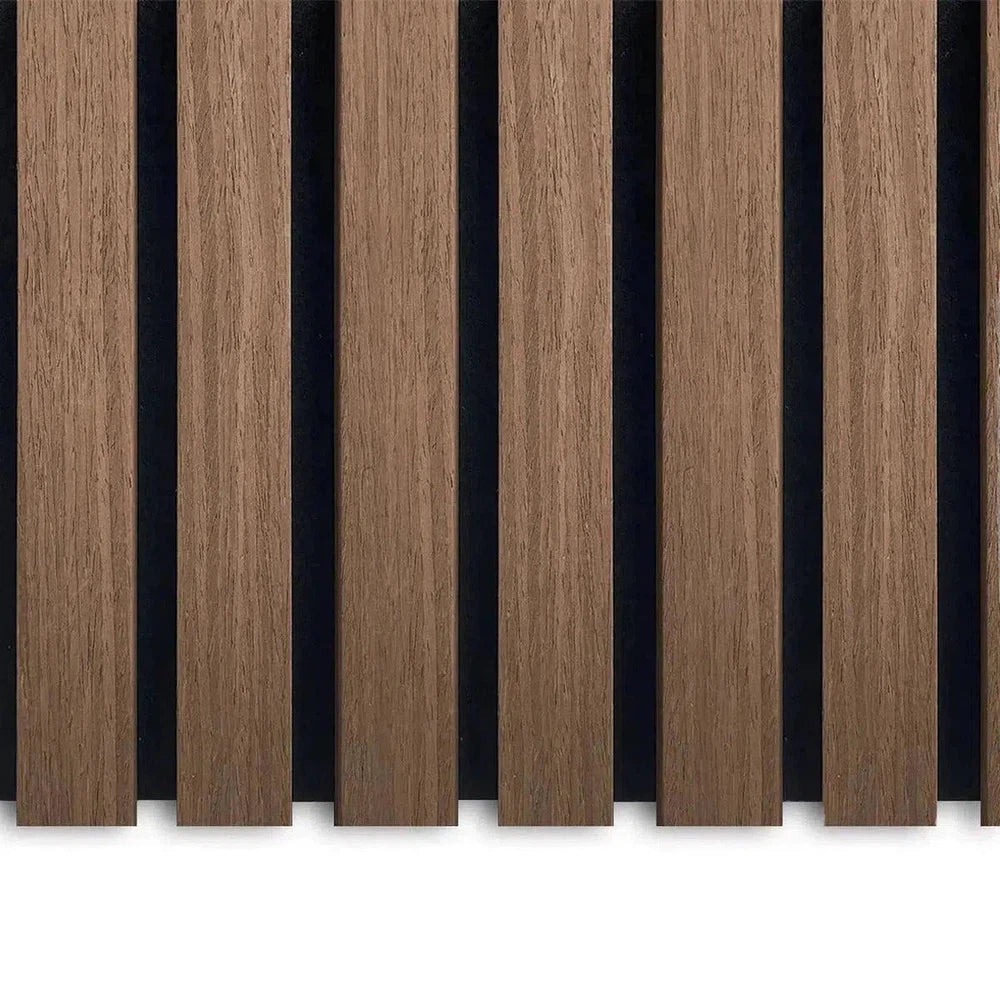
An oak finish name is not a colour-matching standard. Compare undertone, grain, sheen and backing together. Hold the sample vertically beside the floor, cabinet or door rather than laying it on a table away from the installation wall.
Check it in daylight and under the lamps you normally use. A finish that works beside a window needs to work in the darker corner too. The trade-off is simple: a preferred colour does not remove the need to confirm dimensions, suitability and installation details.
Do the same assessment with any competing sample. There is no universal winner for a living room's timber tones; there is a winner for your particular combination of flooring, furniture and lighting.
Acoustic performance has no winner without comparable evidence
Compare the panel-and-mounting system, not just the felt backing. Sound absorption depends on the material and how it is installed, including the backing arrangement and any cavity behind it.
For a meaningful comparison, ask each supplier for evidence covering the exact product and installation you plan to use. A result for a different mounting arrangement is not a direct prediction of your finished wall.
The supplied descriptions for the 81 cm hexagon acoustic panels state an NRC rating of 0.75. NRC describes sound absorption, not the sound insulation of a shared wall; that figure must not be transferred to the flagship slat panels or to another mounting system.
For your 2026 specification, ask:
- Which exact panel does the acoustic result cover?
- How was it mounted during the test?
- Does your planned installation reproduce that arrangement?
- Is the goal reduced room echo or reduced noise transmission?
Neither brand wins an acoustic comparison on appearance alone. For a demanding office or listening-room project, have the room treatment assessed as a whole rather than selecting a finish in isolation.
Installation is a tie until the wall and fixing method are defined
The easier installation is the one that suits your substrate and layout. A flat, sound wall with few interruptions is a different job from an uneven wall with sockets, corners and exposed panel ends.
Do not assume that either supplier's panel uses the same fixing method. Follow the selected product's instructions and check the proposed adhesive or mechanical fixings against both the panel and the wall surface.
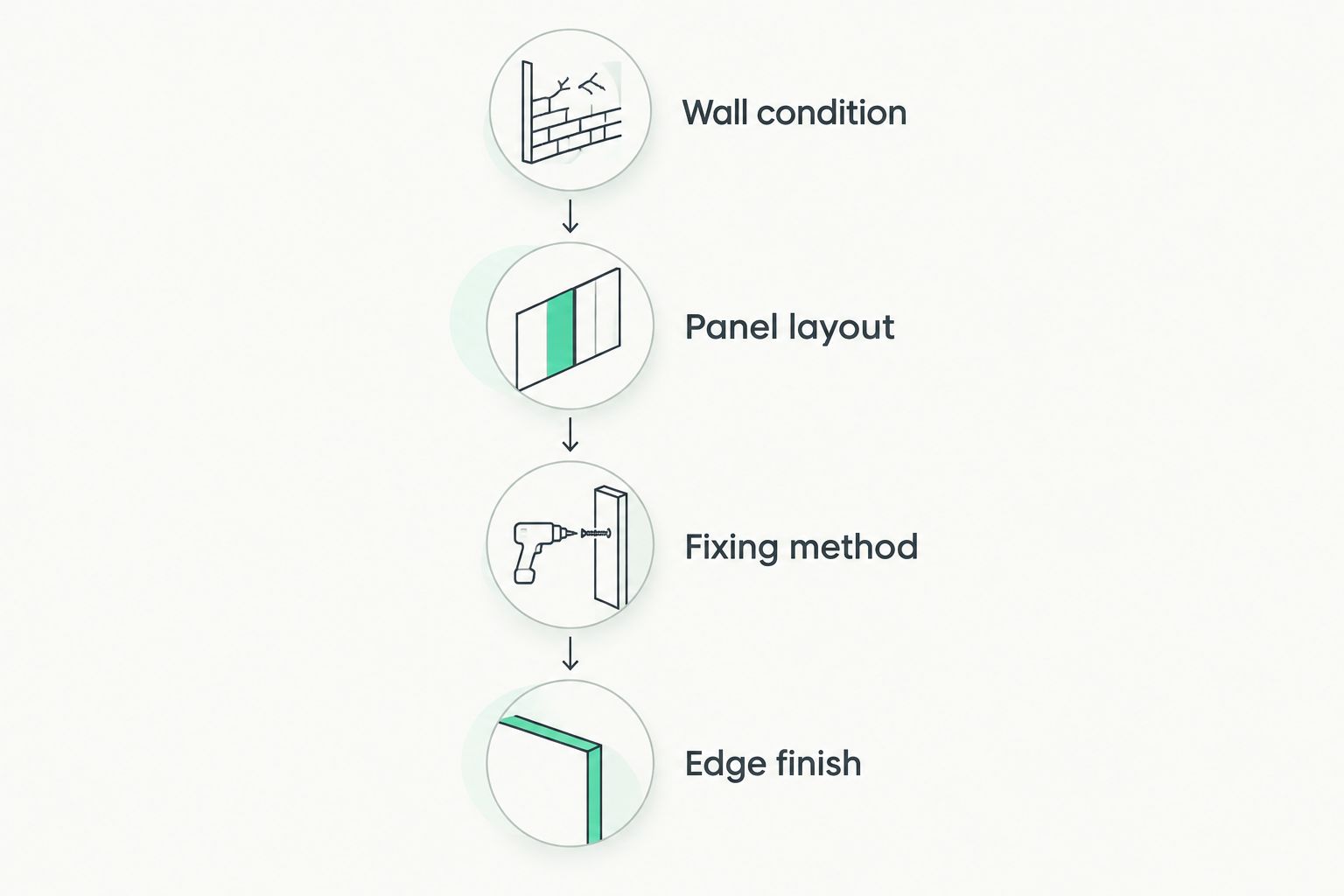
Plan the work in this order:
- Wall condition: check flatness, stability and moisture concerns.
- Panel layout: locate joins, sockets and exposed ends.
- Fixing method: follow the product-specific instructions.
- Edge finish: decide how the installation will terminate.
The practical advantage of planning is fewer decisions halfway through fitting. For a rented property, also obtain permission and assess removal before selecting a fixing method; a decorative panel is not automatically a damage-free addition.
The named range covers indoor decoration and exterior cladding
Akustiq UK has explicitly identified options for indoor acoustic walls and exterior cladding. The range also includes hexagon acoustic panels and decorative wall panels, so a full-height slat wall is not the only design direction.
The 81 cm hexagon format is worth considering when you want a geometric wall composition rather than continuous vertical lines. The trade-off is that the layout introduces more perimeter edges to plan, and a decorative arrangement does not establish whole-room acoustic performance.
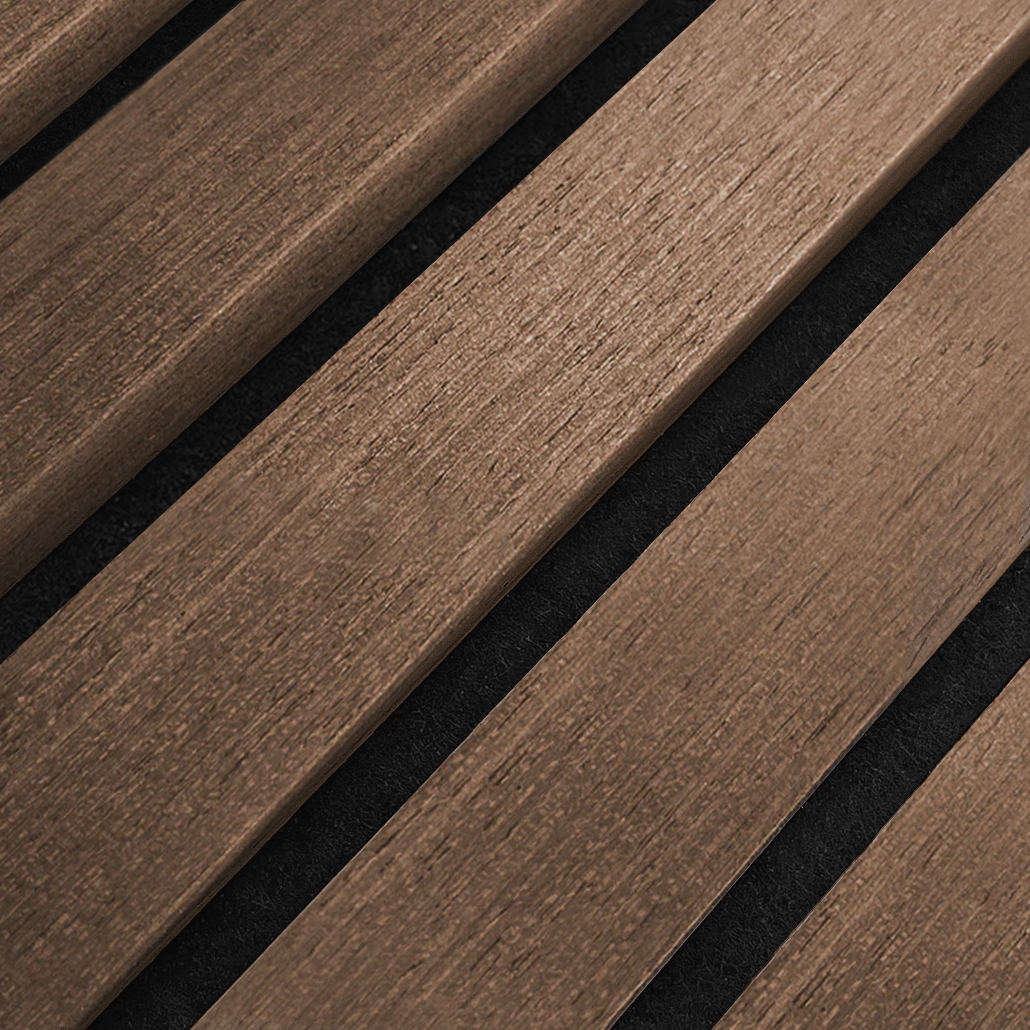
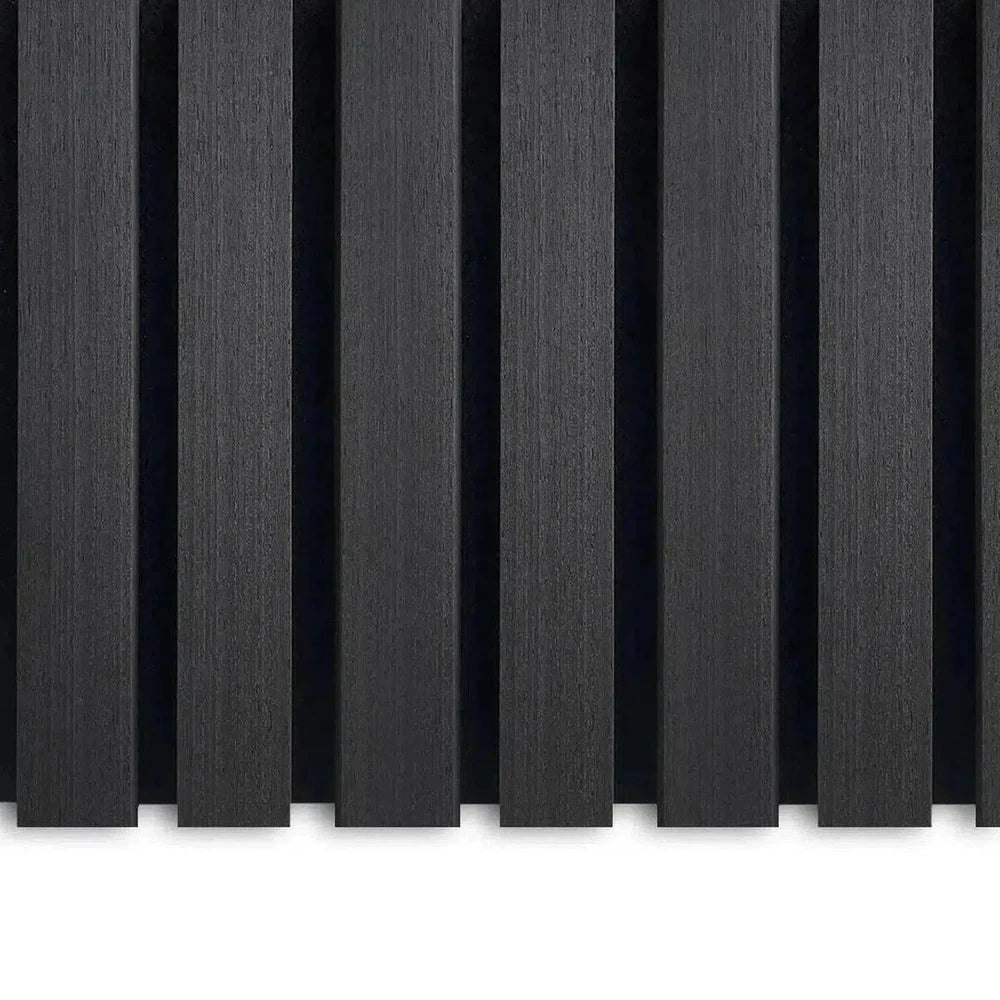
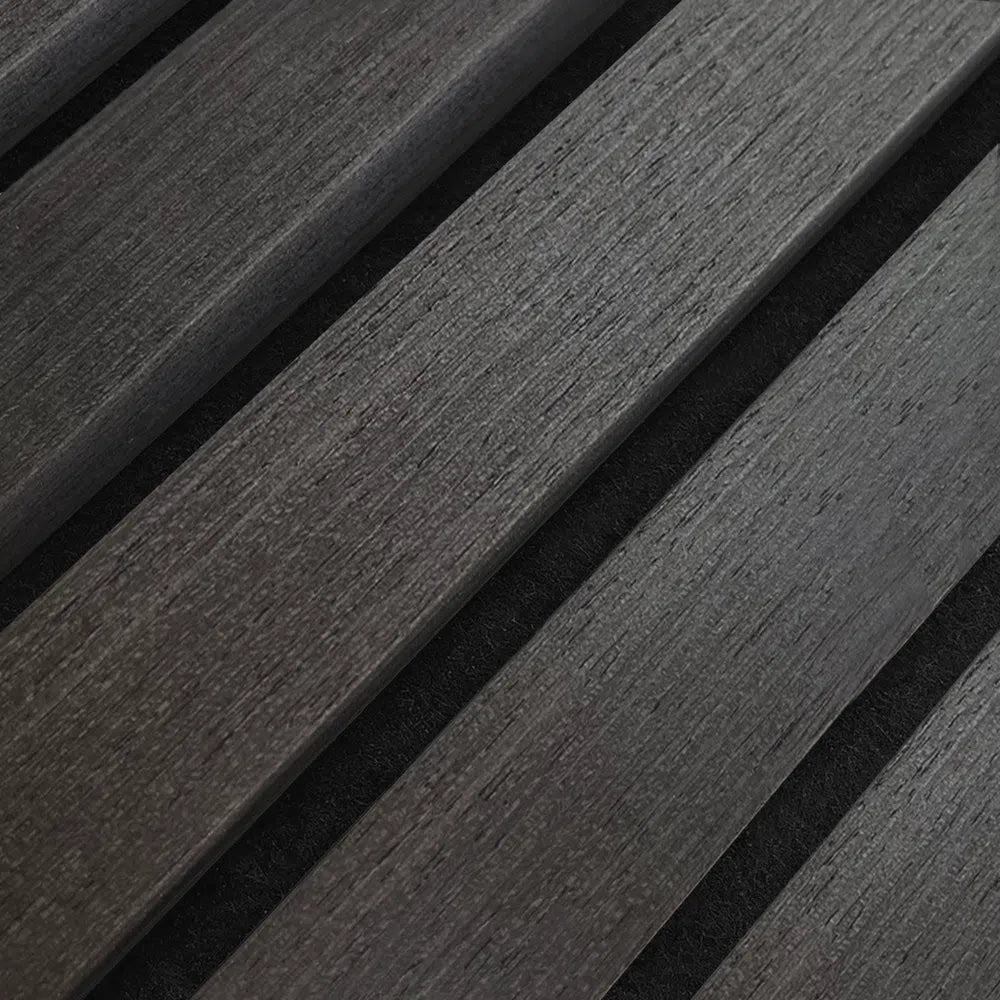
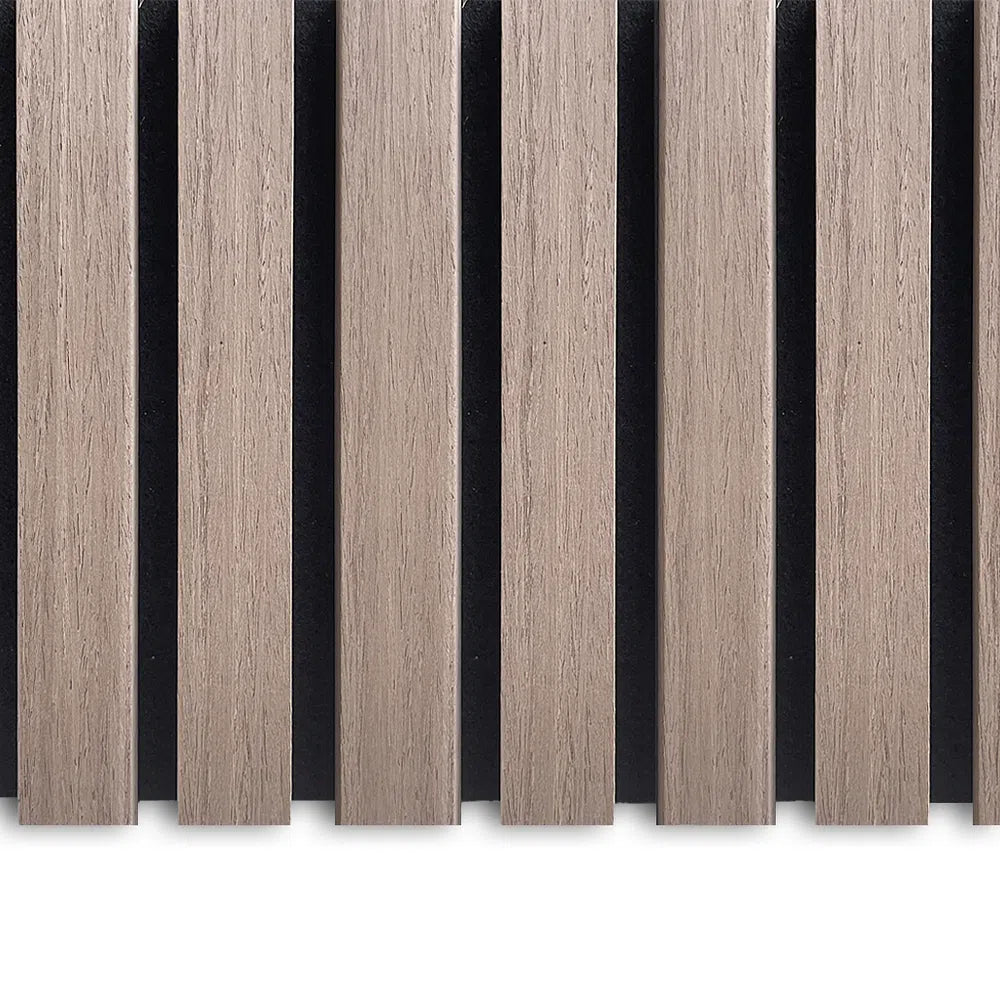
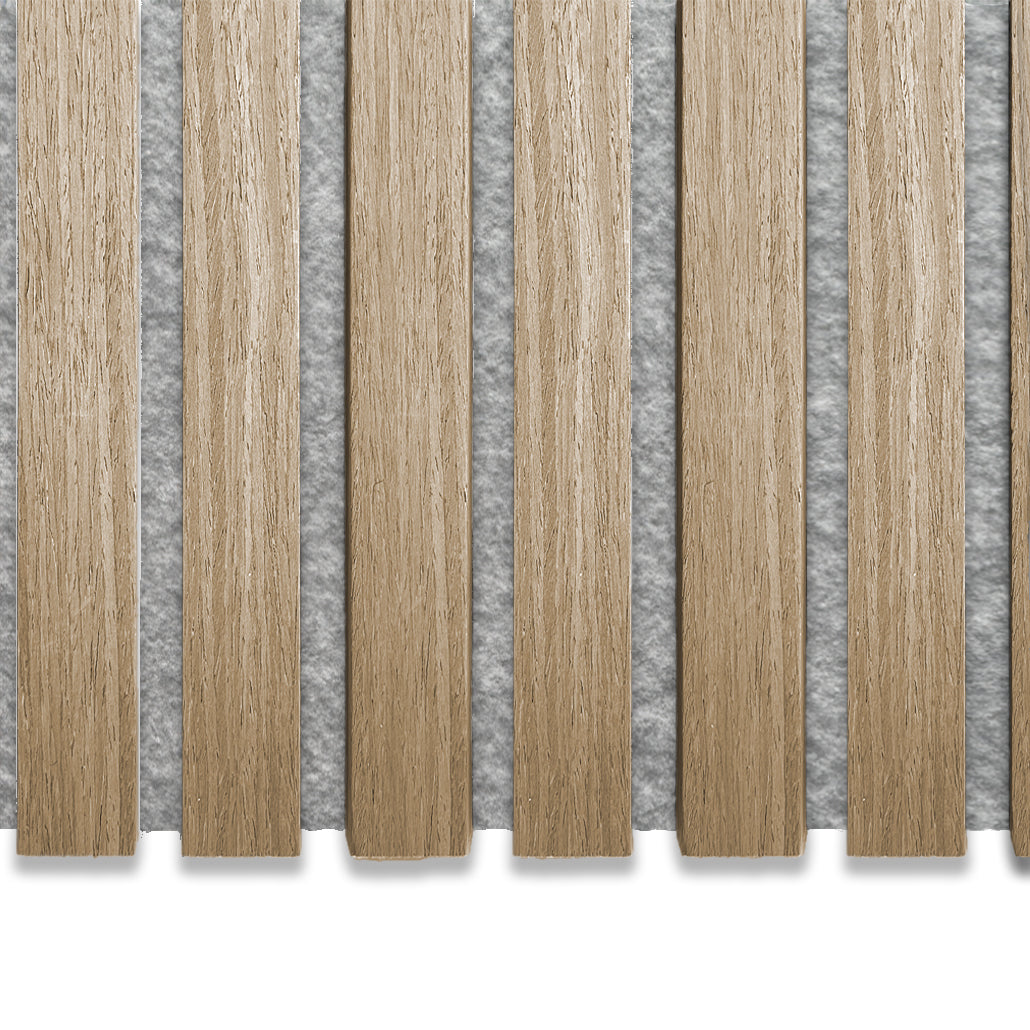
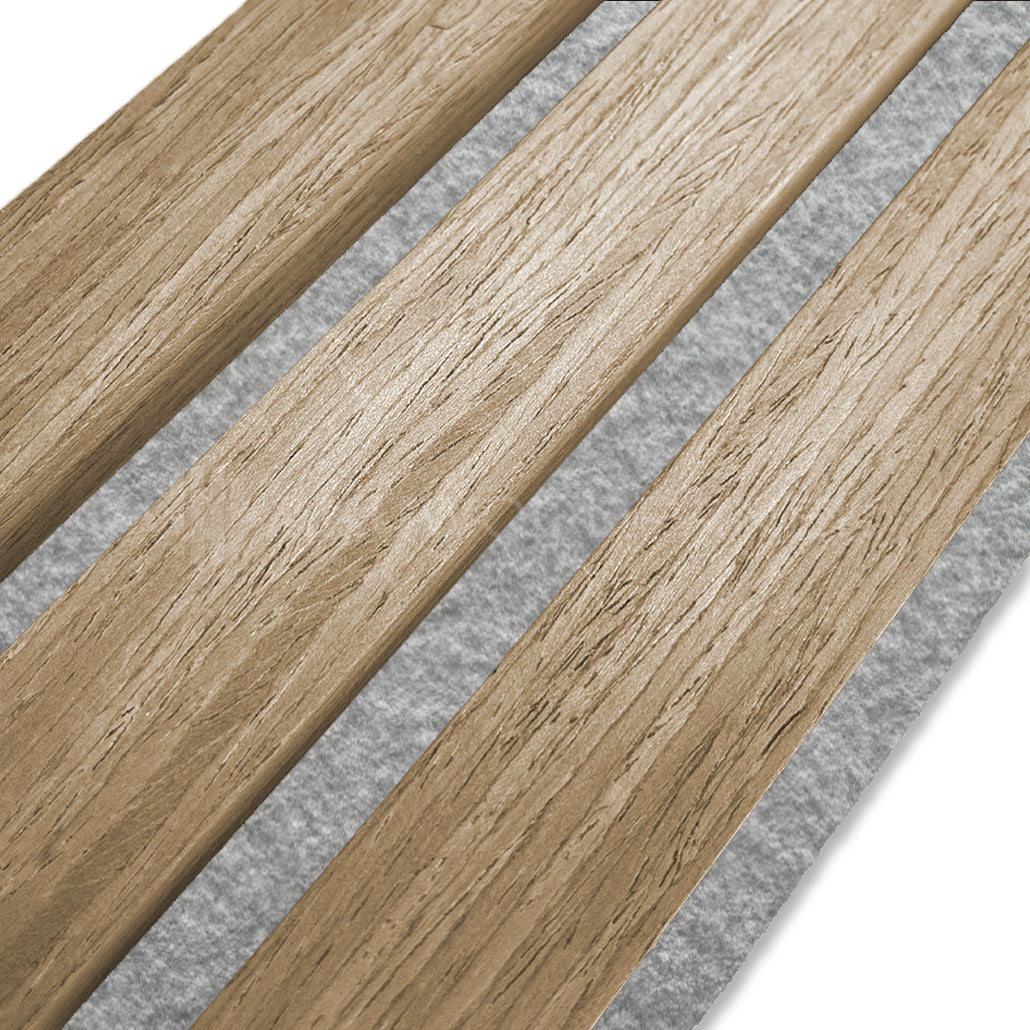
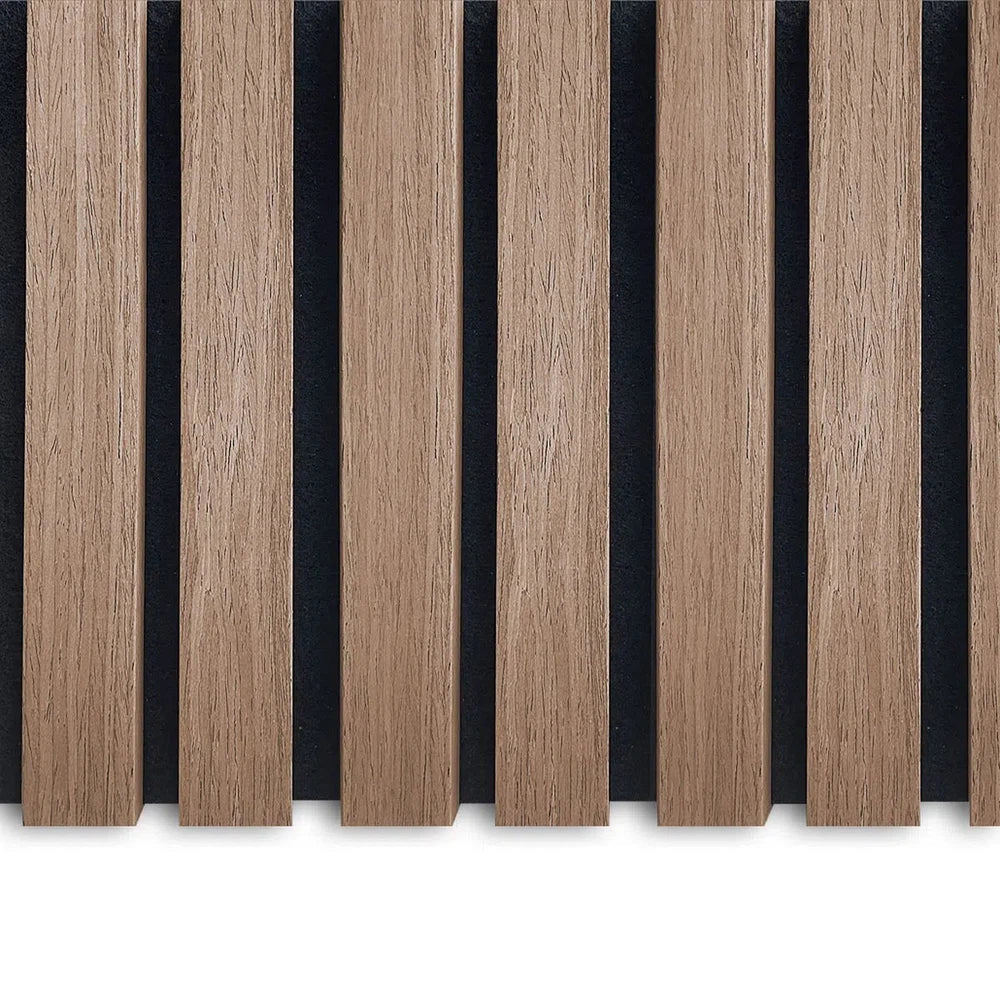
The two options below have the same stated size format and grey felt in their product names. Choose between them by the wood finish you want to assess, not by an assumed difference in acoustic performance.


Keep exterior and interior specifications separate. An acoustic indoor panel is not an exterior cladding specification, and exterior suitability does not establish suitability for a shower enclosure. For either supplier, select the product expressly intended for the location.
Pricing: compare the complete purchase, not a single panel
Compare the same finished wall and the same scope of work. A product purchase only becomes a useful comparison when you know the purchasing unit, usable coverage and installation requirements.
Build a complete basket for each option in your 2026 shortlist:
- Panels required by the drawn layout.
- End pieces or trims required by the exposed edges.
- The specified adhesive, fixings or supporting construction.
- Cutting waste identified from the layout.
- Delivery and installation services included in the purchase.
A fixed basket makes your decision more predictable because its scope is defined. Selecting pieces progressively gives you flexibility, but you still need to account for the complete installation. Neither approach proves that one supplier is cheaper.
Ask both suppliers to identify exclusions before you commit. A comparison that omits the finishing details is a comparison of unfinished walls, not the result you want in your room.
Final verdict: choose the panel that clears your project brief
Choose Akustiq UK if you want the stated veneer and height options
Best for: homeowners and interior buyers seeking felt-backed wooden slat panels with 3-sided real wood veneer. Choose this route when that construction and the 240 cm or 300 cm formats fit your wall plan.
The limitation is equally clear: those features do not establish a comparative acoustic rating, a fire classification or suitability for a wet area. Resolve those requirements separately before ordering.
Choose Naturewall if its sample is the better approved match
Best for: homeowners extending an existing scheme or prioritising a particular sampled finish. Choose Naturewall when its exact panel meets your brief and its sample gives you the better visual result.
The limitation is that sample approval answers an appearance question. It does not settle mounting, sound absorption or the complete installation budget.
| Dimension | Winner or deciding rule |
|---|---|
| Best for | The panel that meets the written room brief |
| Veneer construction | The stated 3-sided construction when that is your requirement |
| Wall height | The format that fits with sensible cuts and joins |
| Finish matching | Naturewall when its approved sample matches better |
| Acoustic suitability | No blanket winner; compare equivalent test arrangements |
| Installation planning | Tie until substrate and fixing method are defined |
| Applications | The product expressly intended for the location |
| Pricing model | Compare complete baskets for the same finished wall |
FAQ
Is Aku Wood Panel better than Naturewall in 2026?
Choose Akustiq UK for its stated 3-sided real wood veneer construction and 240 cm or 300 cm indoor formats. Choose Naturewall when its exact panel meets your requirements and its approved sample is the better match for your interior.
Which should I choose for a living-room feature wall?
Choose the panel whose physical sample works best beside your flooring, furniture and lighting. Check slat sides, backing and exposed edge details before approving the finish.
Do acoustic wooden wall panels soundproof a bedroom?
Acoustic wooden wall panels are not automatically a bedroom soundproofing system. Room sound absorption and sound transmission through a shared wall require different assessments.
Should I choose 240 cm or 300 cm panels?
Choose the length that fits your measured installation height and planned layout. Include skirting, ceiling details, access and cutting arrangements in that decision.
Does an NRC rating prove one brand is better?
An NRC rating only supports a comparison when it covers the exact products and comparable mounting arrangements. It describes sound absorption, not the sound insulation of the entire wall.
How should I compare the installation budget?
Compare complete baskets for the same finished wall. Include panels, trims, specified fixings, supporting construction, cutting waste and any delivery or installation services.
Can I use indoor acoustic panels outside?
Use a product expressly specified for exterior installation rather than assuming an indoor acoustic panel is suitable. Exterior cladding and indoor acoustic finishes serve different purposes.
One last thing
Inspect the sample from the doorway, not just straight on. That viewing angle exposes the slat sides and the contrast with the backing—the details you see whenever you enter the room.
Before approving your 2026 purchase, place the sample at its intended height and look at it beside the nearest painted wall. That is a more useful final check than comparing another pair of isolated product photographs.