

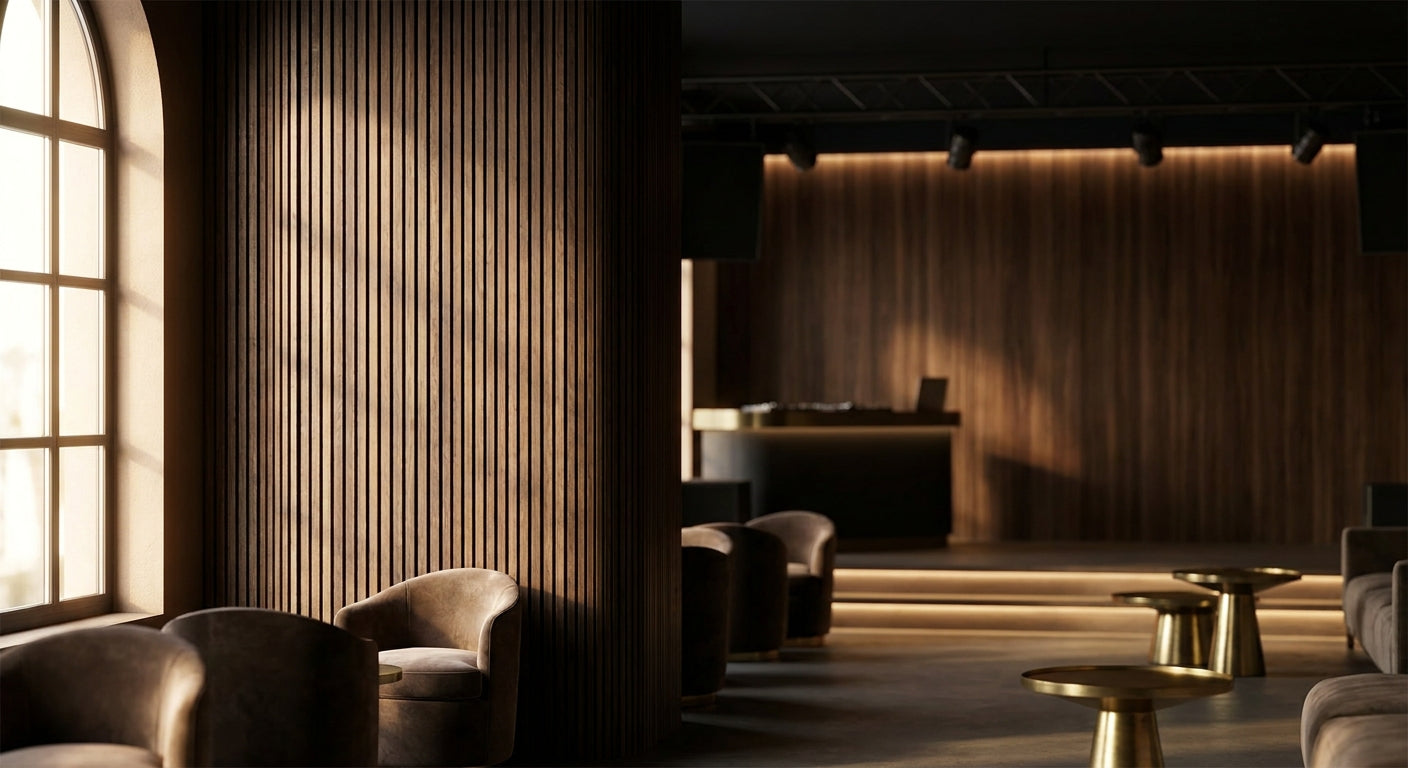
Nightclub walls take a battering every weekend service — sub-bass frequencies, condensation from a packed dance floor, and constant contact from bodies leaning against them. Acoustic wood panels for nightclub walls have to cut reverb, survive spilled drinks, and still look sharp under UV and strobe lighting in 2026.
- Wooden Wall Panel Black Oak is the buy for nightclub feature walls in 2026 — 3-sided veneer plus felt backing.
- Foam acoustic tiles fail fire compliance checks in licensed venues; skip them entirely.
- Hexagon panels break up flutter echo near DJ booths better than flat slat panels do.
- 300cm panels cut horizontal seams on tall club walls versus the 240cm format.
Why this matters
A nightclub with bare plaster or painted breeze block walls reflects sound straight back at the crowd, which pushes bass into a muddy wash and forces the sound engineer to fight the room instead of mixing the set. Reverb time in a hard-surfaced club room can run well past 1.5 seconds, and anything over 1 second in a space that size reads as noticeably harsh to dancers standing near the speaker stacks.
Acoustic wood panels solve two problems at once: they absorb mid and high frequencies at the wall boundary, and they give the room a finished look that plain acoustic foam never manages. That matters in 2026 more than it used to, because most licensing authorities now expect a documented noise-management plan before a venue reopens after refurbishment.
Who this is for
This guide is built for venue owners, fit-out contractors, and interior designers specifying wall treatment for a nightclub, late-bar, or live-music venue refit. If you're comparing acoustic wood panels for nightclub walls against foam tiles or bare plasterboard, the criteria below apply whether you're panelling a 40-square-metre back bar or a full dance floor perimeter. Browse the acoustic wood panel range before you spec a single wall — finish and format both change the install plan.
What to look for in acoustic wood panels for nightclub walls
Sound absorption performance
Check the NRC (Noise Reduction Coefficient) rating before anything else — it's the single number that tells you how much sound the panel actually absorbs versus reflects. Hexagon acoustic panels in this range carry an NRC of 0.75, which means roughly three-quarters of the sound energy hitting the panel gets absorbed rather than bounced back into the room. A club wall with no acoustic treatment at all is close to 0.05 NRC, so the gap is not subtle.
Fire rating and compliance
A nightclub is an assembly building, and assembly buildings get inspected. Panels with unclear or undocumented fire performance are a liability the moment a fire officer walks the venue, and foam-based acoustic tiles are the most common offender here. Read the fire-rated acoustic wall panels for commercial fit-outs breakdown before you commit to a supplier, and keep the paperwork on file for your licensing renewal.
Moisture and spill resistance
Condensation runs down club walls constantly once a room fills past capacity, and drinks get thrown, splashed, and spilled against wall-mounted panelling every single weekend. A real wood veneer finish with a proper felt backing holds up to incidental moisture far better than a raw MDF or laminate substitute that swells and delaminates within a season.
Dark, low-light finish tones
Most nightclubs run on low ambient light with coloured washes and strobes, and pale finishes show every mark under that lighting. Black Oak, Smoked Oak, and Grey Walnut tones hide scuffs and read as intentional under UV far better than a light natural oak does.
Install speed across large open walls
A nightclub dance floor perimeter can run 15 to 25 metres of unbroken wall, and every horizontal seam is a chance for the finish to look patchy under grazing light. The 300cm panel format covers more wall per piece than the 240cm option, which cuts seam count and installation time on a tall feature wall.
Top picks for nightclub walls
Wooden Wall Panel Black Oak — the safe pick. Real 3-sided wood veneer over an acoustic felt backing, available in the 240cm and 300cm formats, and the dark tone hides scuffs under strobe lighting better than any pale finish will. Verdict: Buy for main dance floor walls and DJ booth surrounds. See the Black Oak wall panel.
Wooden Wall Panel Smoked Oak — the moody backdrop. The grain reads darker than Black Oak without going fully matte black, which suits a club that wants warmth in the VIP or booth seating area rather than a stark finish. Verdict: Consider for seating and booth zones, less ideal on high-traffic entry walls.
Hexagon Acoustic Panel Grey Walnut with Grey Felt — the DJ booth texture piece. The geometric hexagon layout breaks up flutter echo near hard surfaces like the booth desk and speaker stacks in a way flat slat panels can't, and the £40.95 unit price makes small accent walls affordable to spec. Verdict: Buy for booth surrounds and feature niches.
Hexagon Acoustic Panel Natural Oak — the one to skip for nightclub work. It's a strong finish for a living room or reception, but the light tone shows fingerprints and spill marks fast under club lighting, and it doesn't read as durable once the room's had a few busy weekends. Verdict: Skip for main venue walls.


What to avoid on nightclub walls
- Foam acoustic tiles — cheap absorption but a common fail point on fire compliance checks in licensed venues, and they discolour fast under UV lighting.
- Fabric-wrapped panels with no hardback — soak up spilled drinks and don't dry out between sittings, which leads to mould inside the panel core within a year.
- Unrated MDF veneer copies — look similar in photos but carry no documented fire or acoustic rating, which is the exact gap a licensing inspector will flag.
Verdict comparison
| Panel | Finish tone | Format | NRC | Best for | Verdict |
|---|---|---|---|---|---|
| Wooden Wall Panel Black Oak | Dark oak | 240/300cm | Felt-backed | Main dance floor walls | Buy |
| Wooden Wall Panel Smoked Oak | Smoked dark | 240/300cm | Felt-backed | Booth and seating zones | Consider |
| Hexagon Grey Walnut with Grey Felt | Grey walnut | 81cm hex | 0.75 | DJ booth surrounds | Buy |
| Hexagon Natural Oak | Light oak | 81cm hex | 0.75 | Not recommended for club floors | Skip |
Where to buy
- Order a physical sample of the finish before committing to a full wall — colour under club lighting rigs reads differently than it does on a monitor.
- Buy panel adhesive and end-piece trims in the same order as the panels so the whole wall finishes with a clean edge rather than a raw cut.
- Confirm fire documentation is included with the invoice for your licensing file, not just quoted verbally by the supplier.
FAQ
What's the best acoustic wood panel for nightclub walls?
Wooden Wall Panel Black Oak is the strongest all-round pick for 2026 nightclub refits — the dark 3-sided veneer hides scuffs and the felt backing absorbs mid and high frequencies. Hexagon panels in Grey Walnut work well as a textured accent around DJ booths.
How much sound absorption do nightclub walls need?
Aim for panels with an NRC around 0.75 on any wall facing the dance floor or speaker stacks. Untreated plaster or breeze block sits closer to 0.05 NRC, so even partial coverage makes a measurable difference to reverb.
Are wooden acoustic panels fire rated for commercial venues?
Fire rating varies by panel construction, so always request documentation before installing in a licensed assembly building. Foam-based acoustic tiles are the most common product to fail this check, not solid wood veneer panels with felt backing.
Can acoustic wood panels handle condensation in a nightclub?
Real wood veneer over an acoustic felt backing handles incidental moisture and condensation better than raw MDF or laminate alternatives, which swell and delaminate within a season of heavy use. Avoid fabric-wrapped panels without a hardback for the same reason.
Is 240cm or 300cm panel size better for nightclub walls?
300cm panels cover more wall per piece, which cuts seam count on tall dance floor perimeter walls running 15 to 25 metres. 240cm suits standard ceiling heights in smaller bar or booth areas where full coverage isn't needed.
How do you clean acoustic wood panels in a nightclub?
Wipe the veneer surface with a damp cloth after service to remove spilled drinks before they dry and stain. Avoid soaking the felt backing directly, since prolonged moisture exposure is what causes delamination over time.
Do hexagon acoustic panels work for nightclub decor?
Yes — the geometric layout breaks up flutter echo near hard surfaces like DJ booth desks better than a flat slat panel does, and at £40.95 per unit they're an affordable way to treat a smaller accent wall.
What finish shows the least wear on a busy nightclub wall?
Black Oak and Smoked Oak hide scuffs, fingerprints, and spill marks far better than lighter finishes like Natural Oak under strobe and UV lighting. Darker tones read as intentional rather than worn after a few busy weekends.
One last thing
Most venues panel the dance floor perimeter and stop there, but the DJ booth desk and the wall directly behind the speaker stacks are where flutter echo actually starts — treat those two surfaces first if the budget is tight, not the whole room at once.
Share:
Funeral Home Acoustic Panels: Best Picks for 2026
Bowling Alley Acoustic Panels: Best Picks for 2026