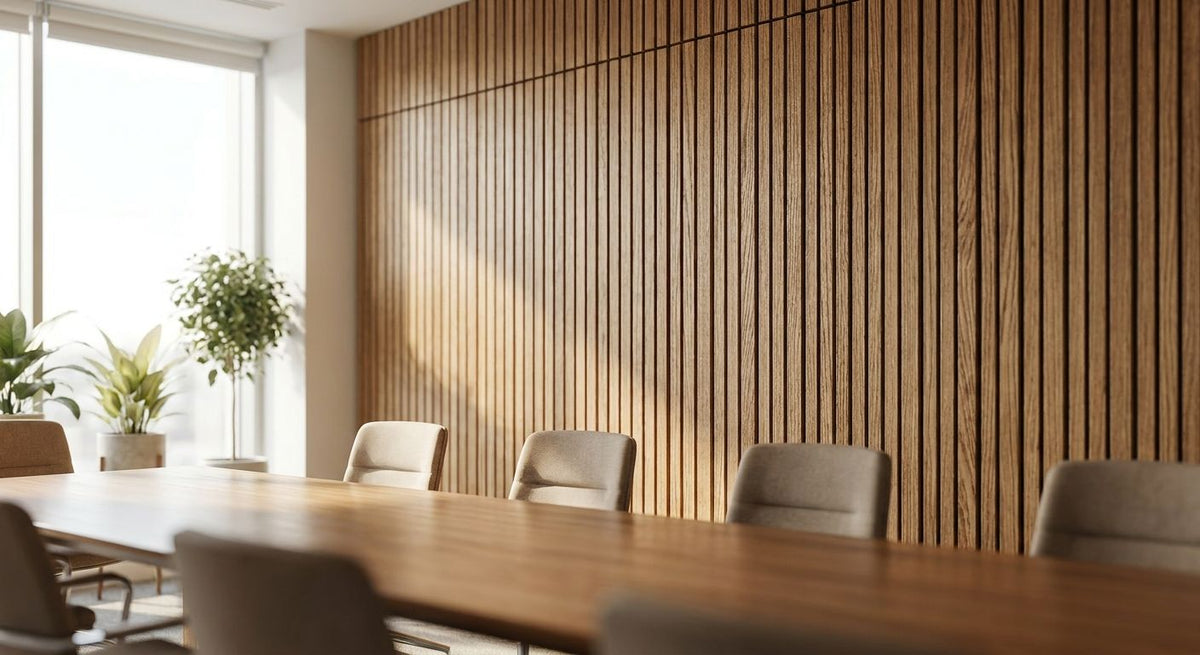
A meeting room with bare plasterboard and a glass partition turns every conference call into a fight against echo, and no amount of good broadband fixes that. This guide covers what to check before buying acoustic wood panels for meeting rooms, which Akustiq UK finishes work in a boardroom setting, and which panel format fits a standard commercial wall height in 2026.
- Grey Oak acoustic wood panels for meeting rooms suit neutral corporate interiors - Buy for most 2026 fit-outs.
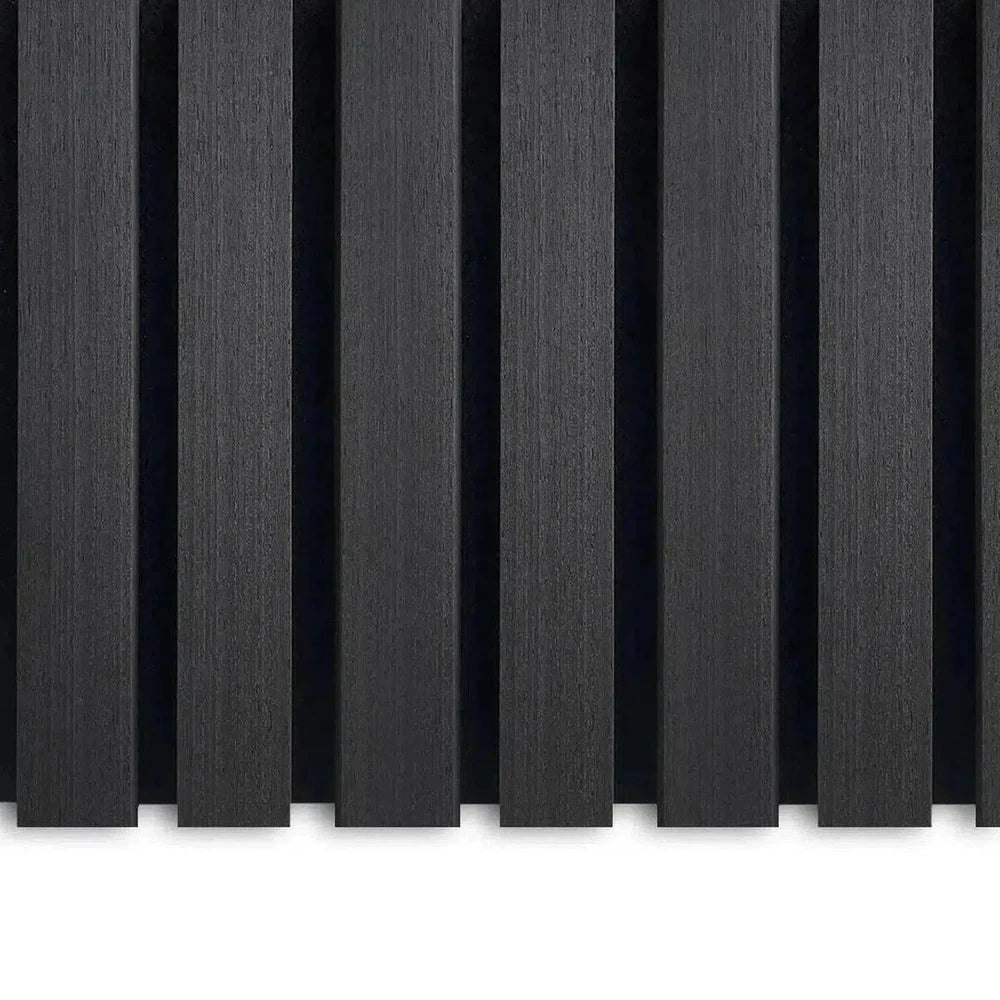
- Black Oak reads dark in windowless rooms; use it on one feature wall, not all four.
- 300cm panels cover floor-to-ceiling meeting room walls with fewer horizontal joints than 240cm stock.
- Panels run roughly £80.95 to £84.95 each across the Akustiq UK oak and walnut range.
- Skip printed foil slat panels marketed as acoustic - real 3-sided wood veneer holds its finish longer.
Why this matters
Open-plan offices pushed noise complaints into meeting rooms years ago, and glass-walled boardrooms make it worse: hard, parallel surfaces bounce sound around instead of absorbing it. A room with no soft surfaces can have a reverberation time long enough that six people at a table stop understanding each other clearly, and that's before anyone dials into a video call.
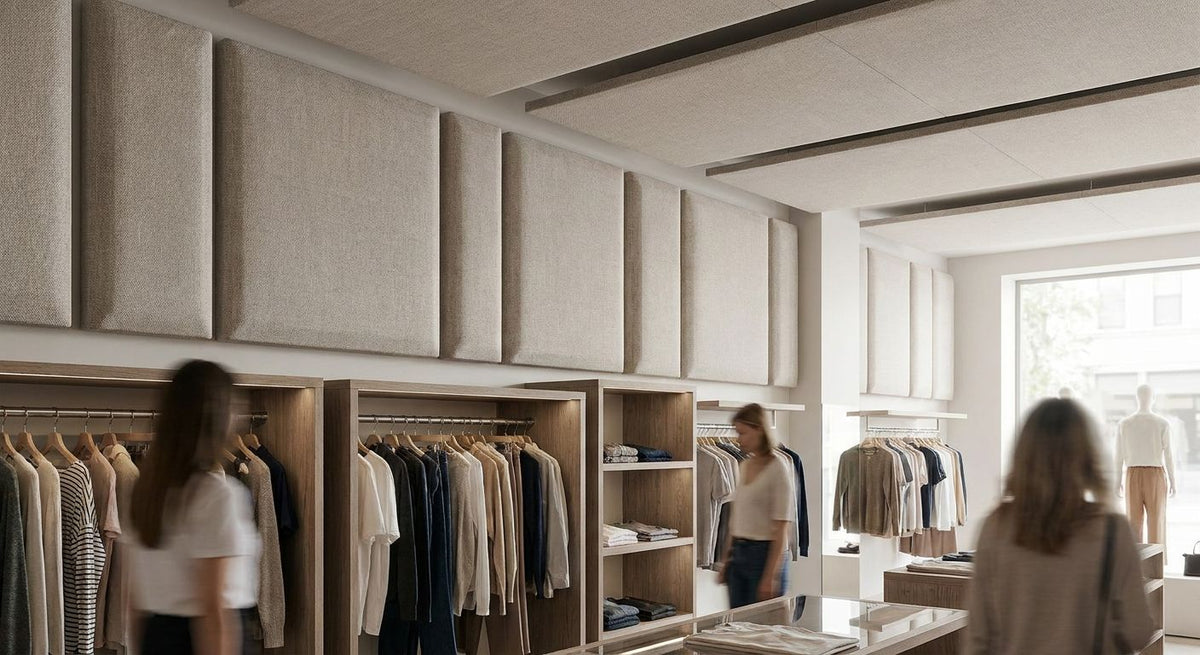
Acoustic wood panels solve this without covering the room in fabric or foam. A panel built with a felt backing behind a real wood veneer absorbs the mid and high frequencies where speech sits, while still looking like a boardroom fit-out rather than a recording studio. The full acoustic wood panel range at Akustiq UK covers eight wood finishes across two panel sizes, which matters more than it sounds once you're trying to match an existing corporate colour scheme.
Who this is for
This guide is for facilities managers, office fit-out contractors and small business owners specifying finishes for a boardroom, conference room or client-facing meeting space in 2026 - not for anyone treating a home office or a bedroom, where the acoustic load and finish expectations are different.
What to look for in acoustic wood panels for meeting rooms
Sound absorption behind the veneer
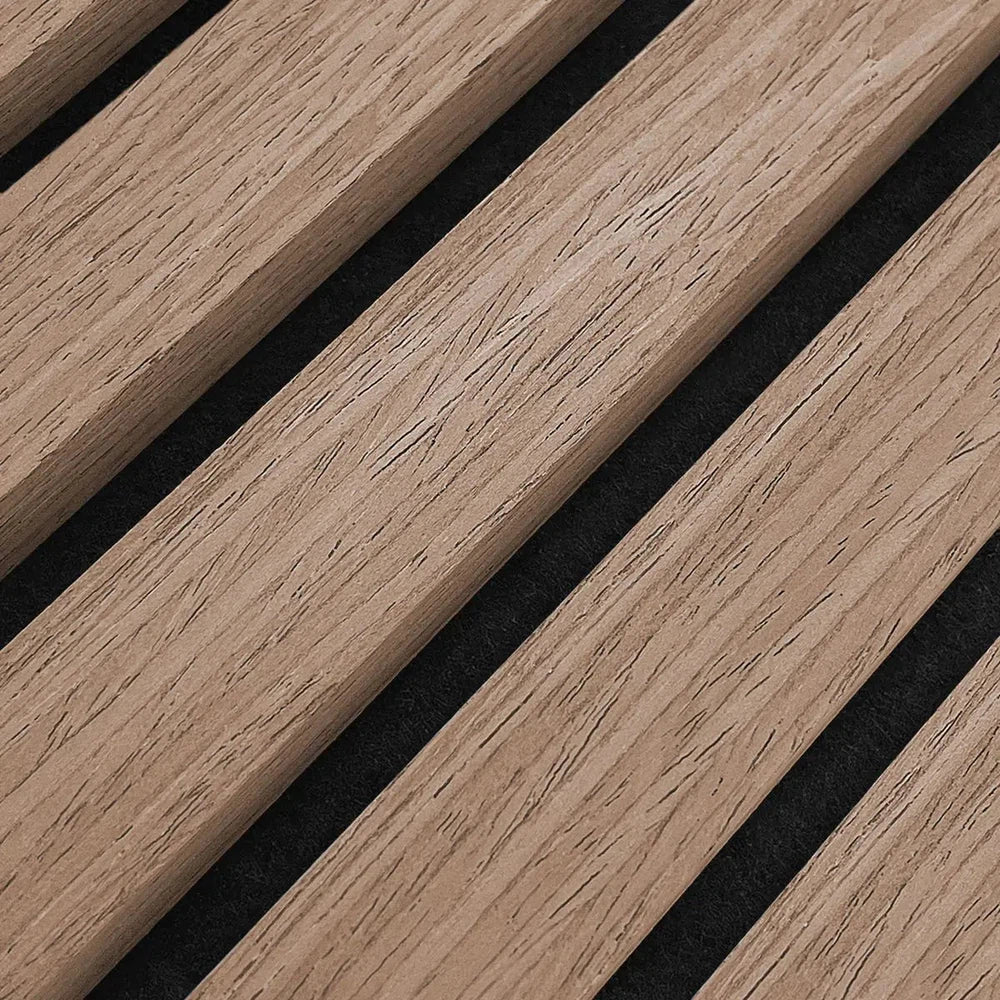
The felt backing behind the wood veneer does the acoustic work, not the wood itself - a solid oak panel with no absorptive layer barely touches reverberation. Look for panels built as acoustic slat panels rather than decorative cladding sold on looks alone. Sound absorption is usually rated on a Noise Reduction Coefficient (NRC) scale running from 0 to 1, and a supplier should confirm where a given panel sits on that scale for a commercial spec.
Real wood veneer vs printed finish
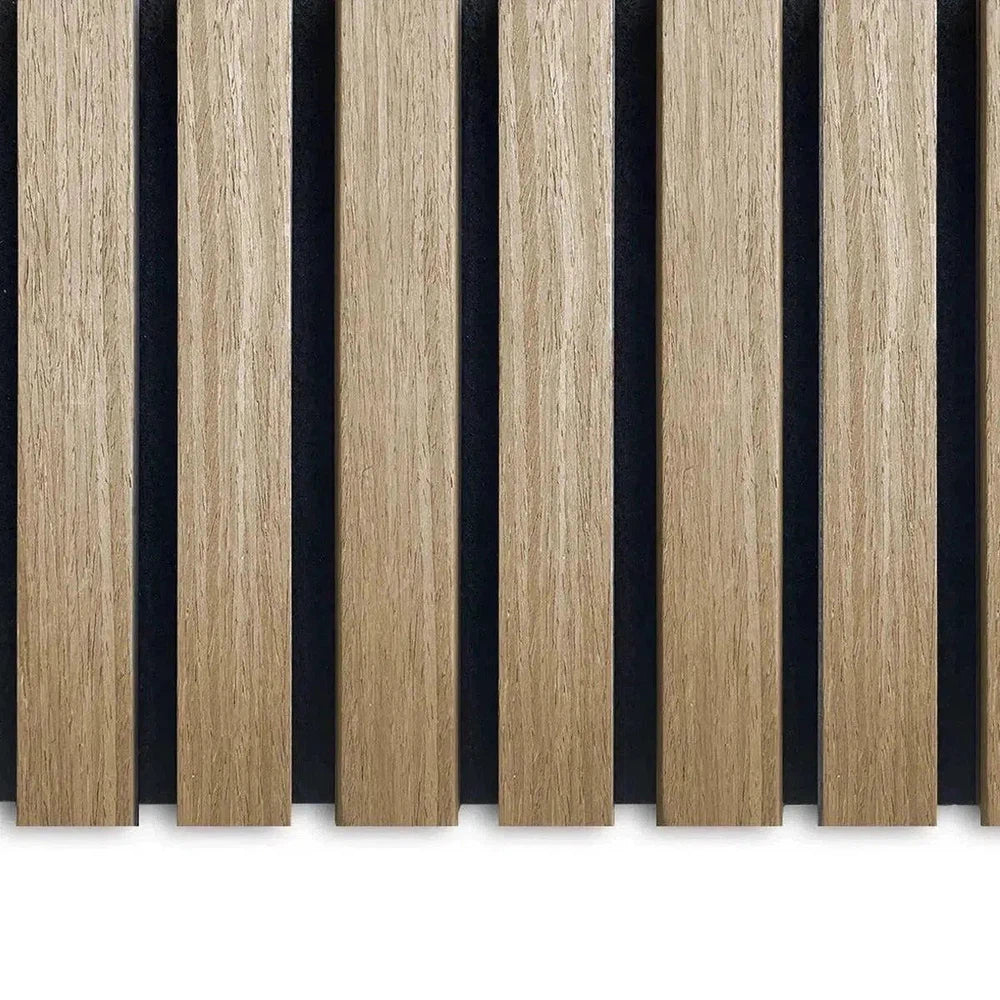
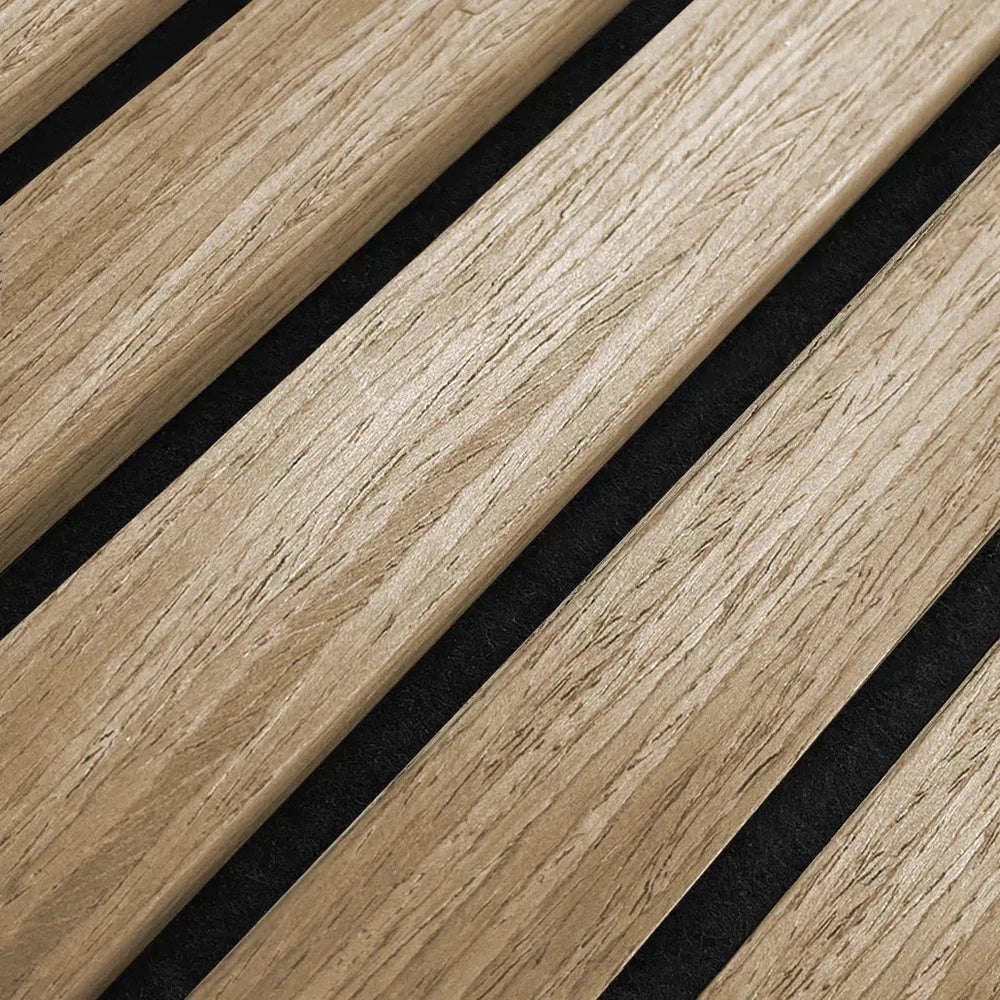
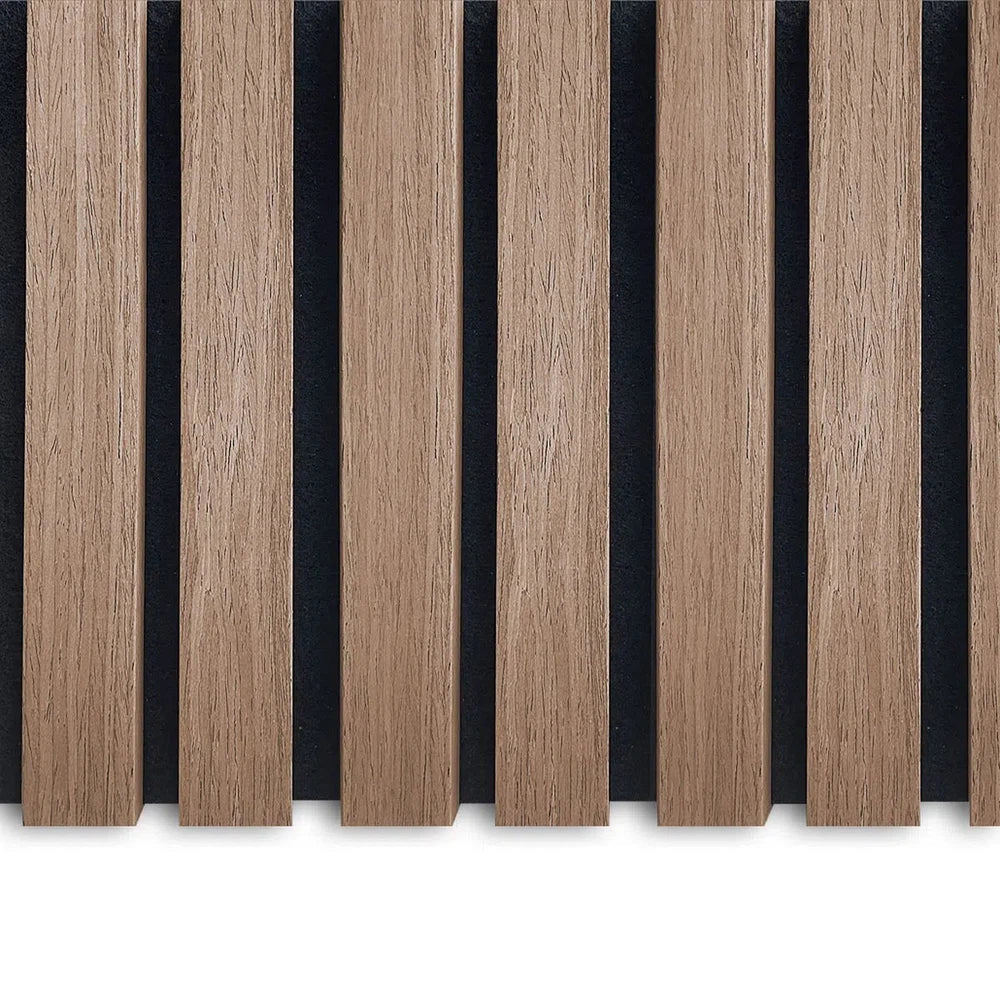
A 3-sided real wood veneer shows genuine grain variation panel to panel, which is exactly what a boardroom client notices when they touch a feature wall. Printed foil or laminate slat panels look convincing in a product photo and flat in person, and they don't age the way real veneer does after years of daylight through a glass partition.
Panel size vs ceiling height
Akustiq UK panels come in 240cm and 300cm formats, and picking the wrong one means an extra horizontal joint at head height on a standard meeting room wall. A 300cm panel runs floor-to-ceiling in most commercial spaces with one cut at the top, while 240cm suits lower ceilings or walls where panelling sits above a dado line rather than from the floor.
Installation surface
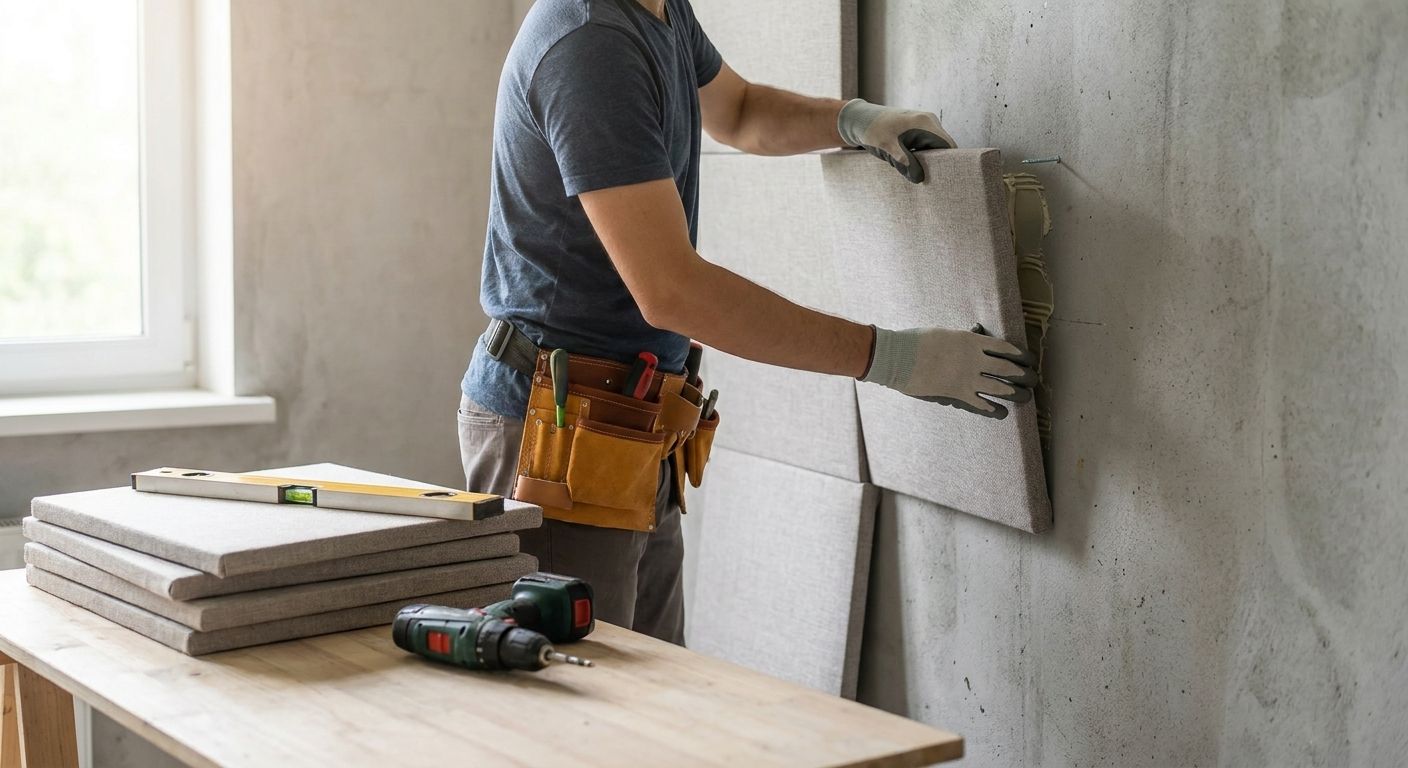
Stud walls, plasterboard and painted block all take acoustic wood panels differently - panel adhesive works on a flat painted surface, but a stud wall needs battens or direct fixing through the panel into timber. Confirm the wall type before ordering, because retrofitting fixings after panels are cut to size costs more than getting it right on the first measure.
Commercial fit-out compliance
A meeting room inside a commercial building usually sits under a wider fire and building-regulations spec than a domestic installation. Check current fire rating documentation and any specifier data sheet for the finish you're choosing before it goes into a contractor's package, rather than assuming a domestic product spec covers a commercial job.


Top picks for meeting rooms
Every finish below comes from the Akustiq UK acoustic wood panel catalogue, sized at 240cm or 300cm.
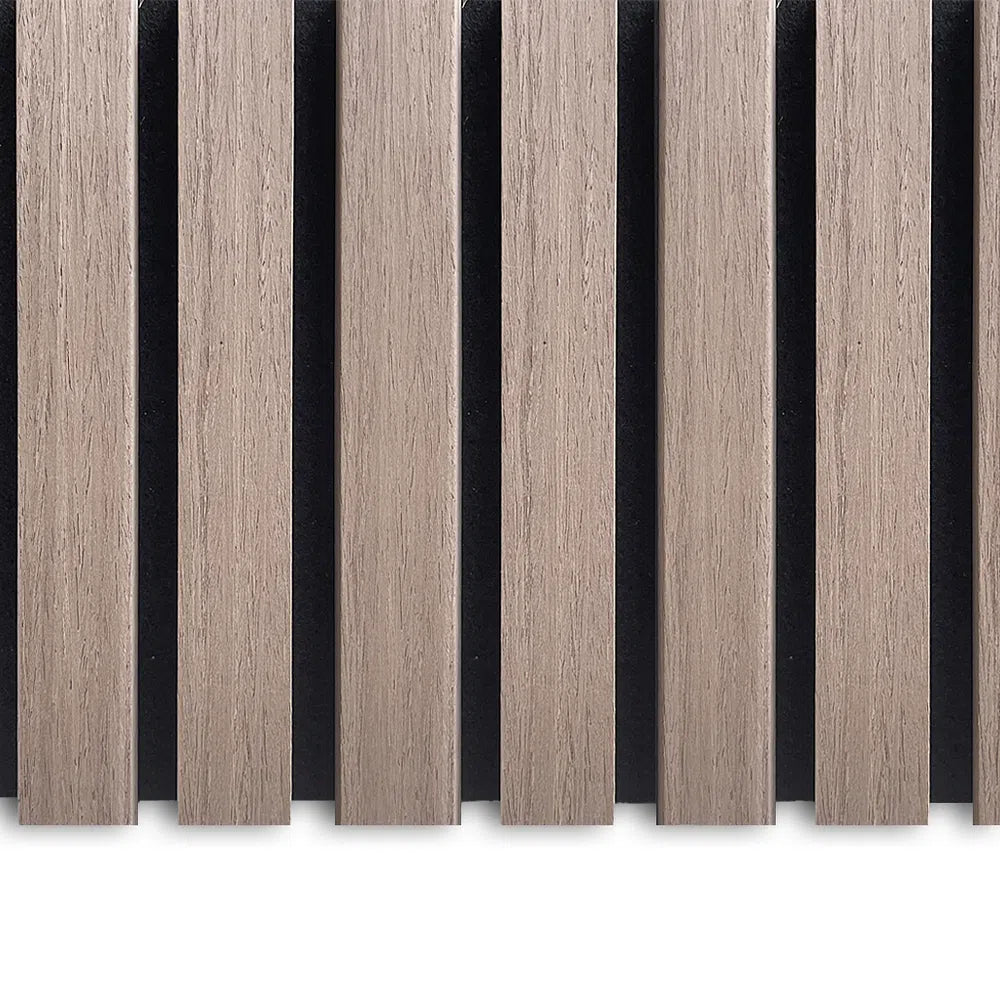
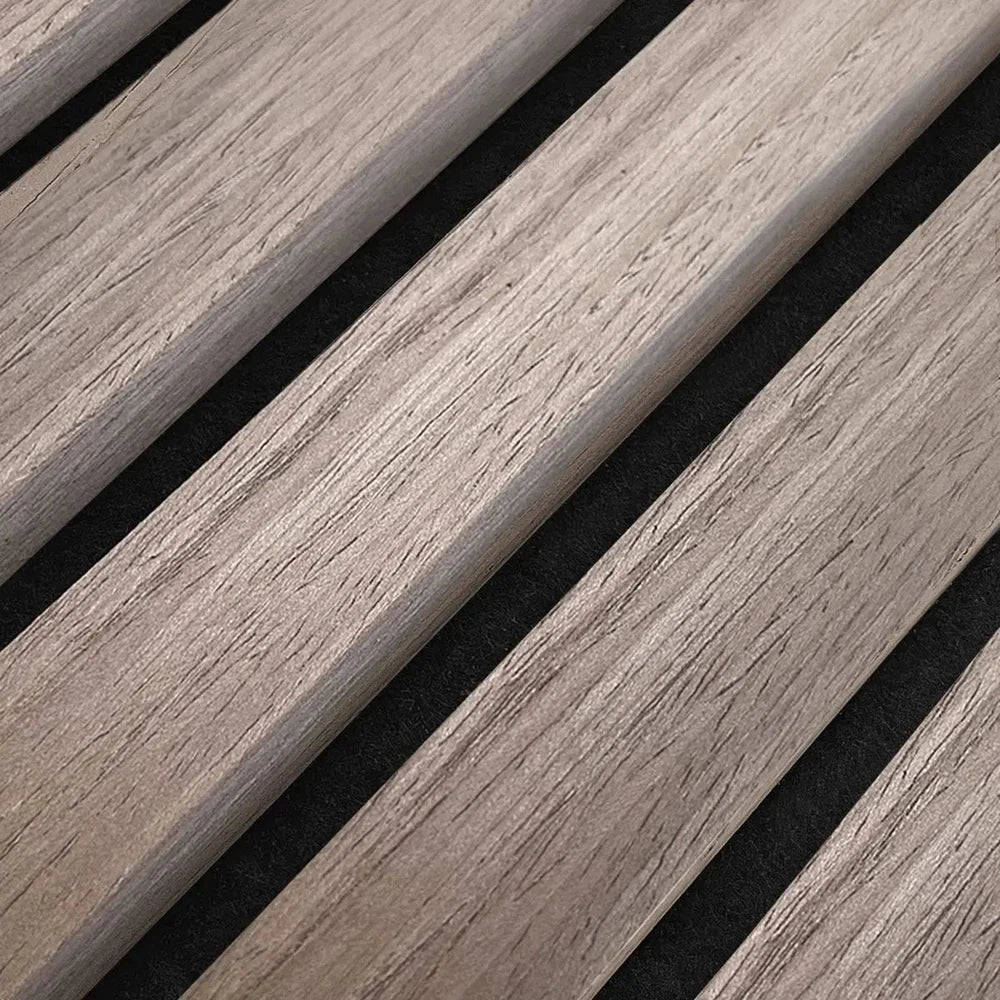
Grey Oak - the neutral corporate pick Grey Oak panels sit closest to what most commercial fit-out specs already call for: a cool, neutral tone that reads professional under fluorescent or LED office lighting without pulling attention away from a presentation screen. The grey oak wall panel works across three walls of a standard boardroom without competing with branded signage or a video wall. Verdict: Buy for most 2026 corporate meeting room fit-outs.
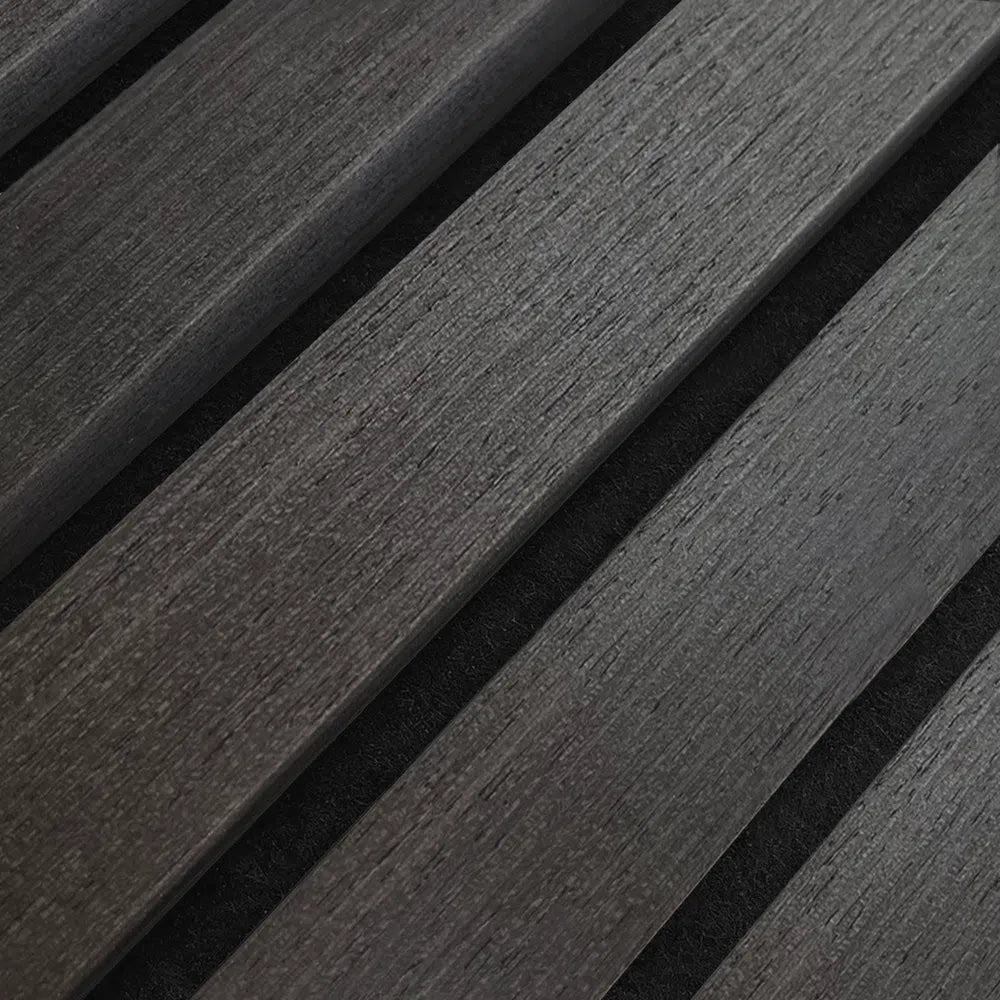
Black Oak - the boardroom statement wall Black Oak behind a top table reads as intentional rather than heavy, but only with enough ambient light in the room - windowless meeting rooms lit only by downlights make a full Black Oak wall feel boxed in. Run it on the single wall behind the head of the table and leave the other three lighter. The black oak wall panel is priced at £84.95. Verdict: Consider for one feature wall, not full-room coverage.
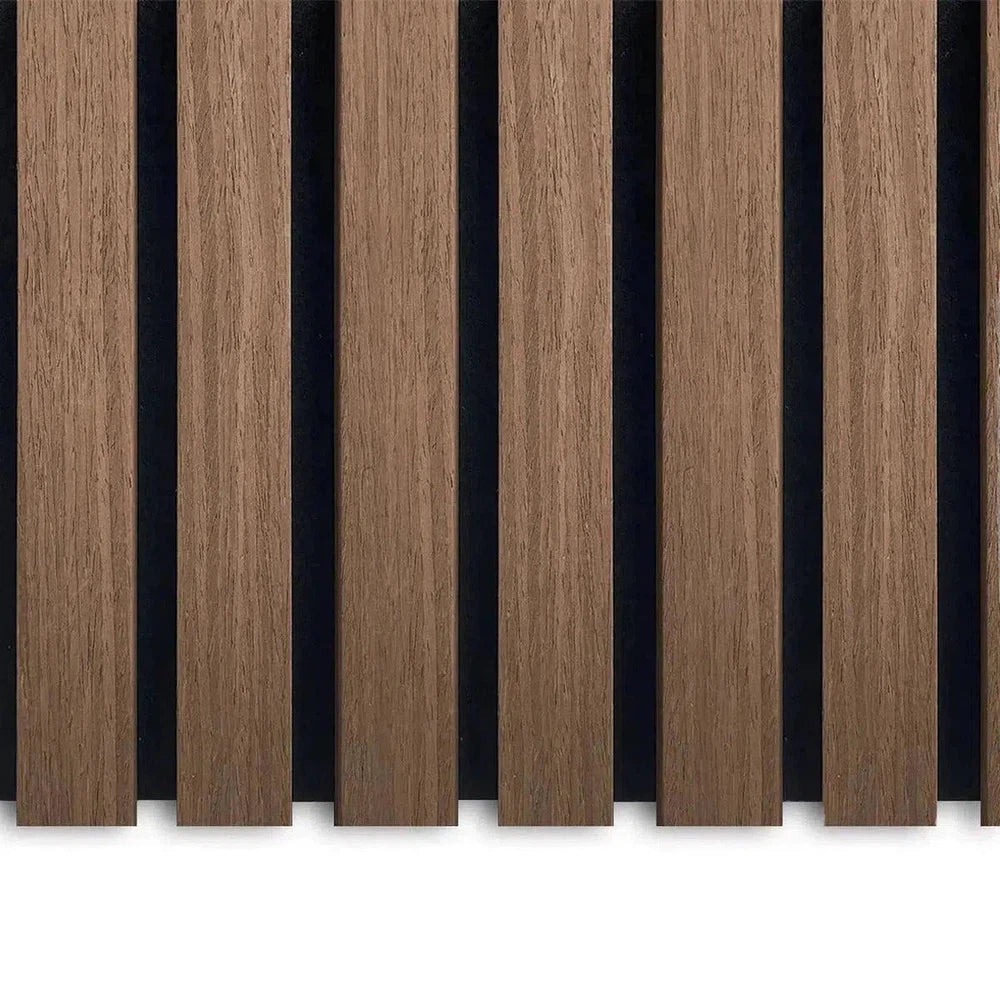
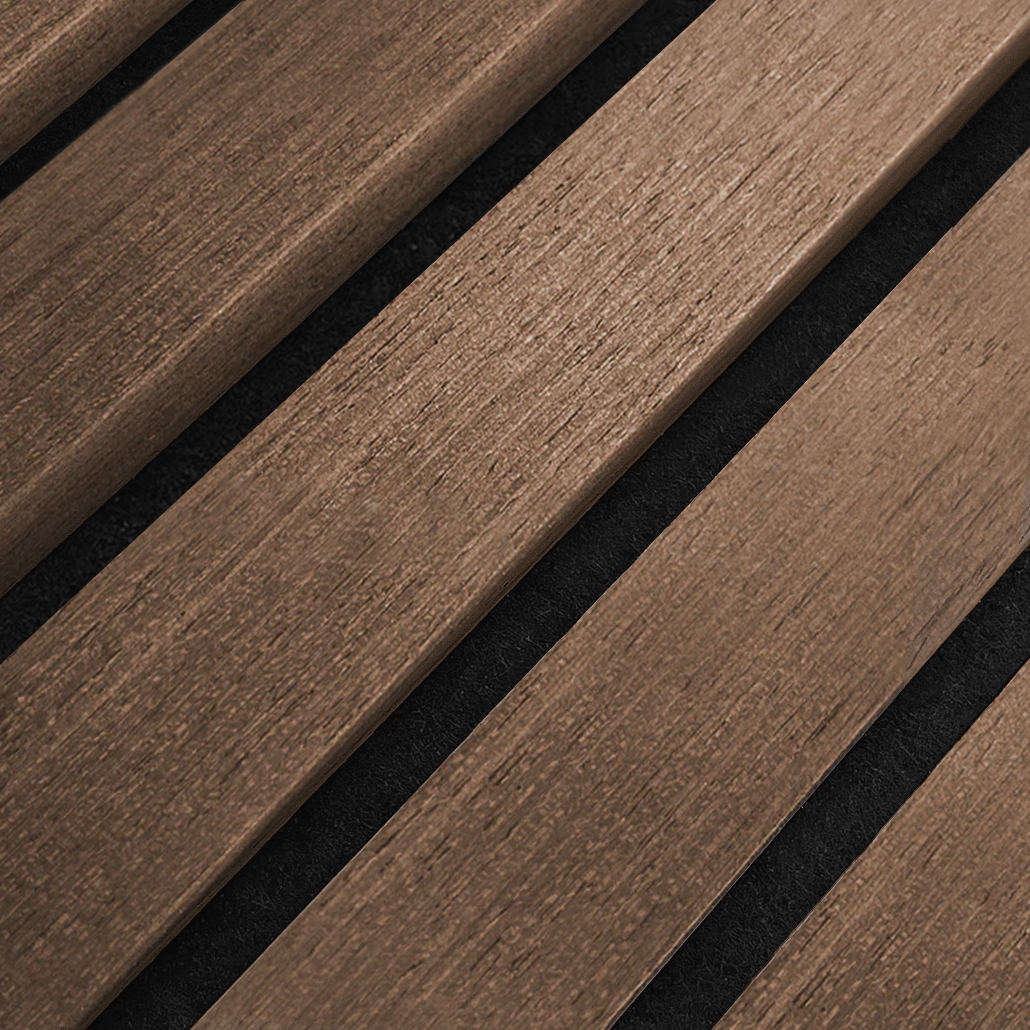
Walnut - the premium client-facing pick Walnut carries a warmer, reddish grain that suits a partner-level or client-facing meeting room where the brief is "looks expensive" rather than "looks neutral." It sits in the same price bracket as the oak finishes but reads noticeably higher-end in photography and site visits. Verdict: Buy for reception-adjacent or client meeting rooms.
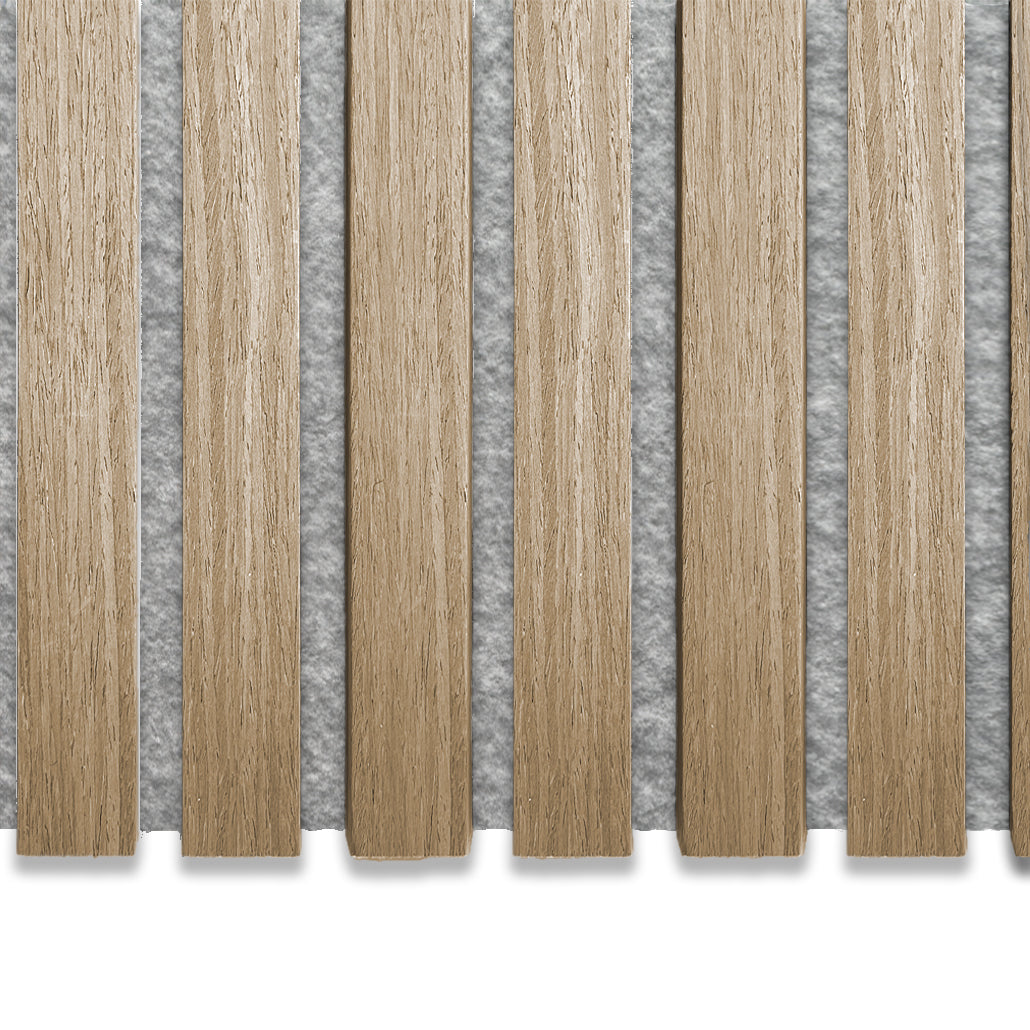
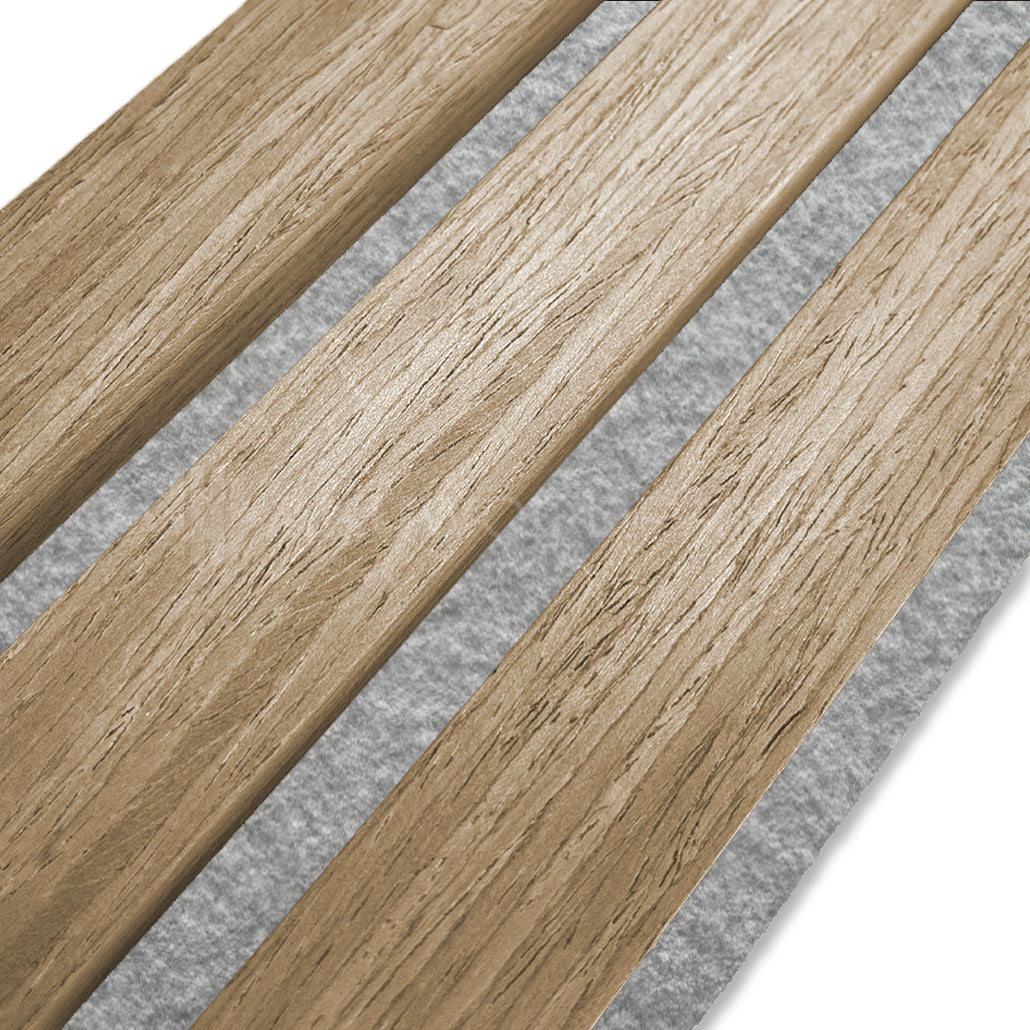
Rustic Oak - the wildcard for informal huddle rooms Rustic Oak shows more visible grain and knot character than the standard Natural Oak finish, which fits a casual huddle room or breakout space better than a formal boardroom. It won't suit every corporate brand guideline, but it's the pick when the meeting room is meant to feel less corporate. Verdict: Consider for informal or creative-team spaces.
Hexagon Acoustic Panel - the pattern-wall option Hexagon-format acoustic panels break up a flat wall with a geometric pattern instead of straight slats, which works on a single accent wall in a reception-facing meeting room but gets busy across four walls of a working boardroom. Verdict: Skip for primary meeting room walls; Consider for a single accent wall only.
What to avoid
- Printed foil slat panels sold as "wood look" acoustic panels. They photograph fine and fall apart in the finish department once daylight hits them for a few years - real 3-sided veneer holds colour and grain far longer.
- Full-height panels with no acoustic backing. A slatted wall that's purely decorative, with no felt layer, does close to nothing for reverberation in a meeting room - you've paid for the look and gotten none of the function.
- Mismatched size formats on the same wall run. Mixing 240cm and 300cm panels to save on cuts creates a visible seam line that a client sitting across the table will notice within the first five minutes.
Verdict comparison
| Finish | Size formats | Best for | Verdict |
|---|---|---|---|
| Grey Oak | 240cm, 300cm | Full-room corporate boardrooms | Buy |
| Black Oak | 240cm, 300cm | Single feature wall | Consider |
| Walnut | 240cm, 300cm | Client-facing meeting rooms | Buy |
| Rustic Oak | 240cm, 300cm | Informal huddle rooms | Consider |
| Hexagon Acoustic Panel | Pattern format | Single accent wall | Skip (primary walls) |
For a step-by-step breakdown of laying out slats, trims and end pieces on a working boardroom wall, the acoustic wall panels for meeting room walls guide covers the fitting order in more detail than fits here.
FAQ
What's the best acoustic wood panel for a meeting room?
Grey Oak is the safest 2026 pick for full-room corporate meeting rooms because its neutral tone doesn't clash with signage or screens. Black Oak and Walnut suit single feature walls or client-facing rooms where a warmer or darker statement works better.
How much do acoustic wood panels cost for a meeting room?
Individual panels run roughly £80.95 to £84.95 each across the Akustiq UK oak and walnut range in 2026. Total cost depends on wall area, panel size format, and whether you're covering one feature wall or all four.
Do wood panels actually reduce echo in an office?
Panels built with a felt backing behind the wood veneer absorb speech-range frequencies and cut reverberation noticeably compared with bare plasterboard or glass. Purely decorative slat panels with no acoustic layer don't deliver the same effect.
Is a 240cm or 300cm panel better for a meeting room?
A 300cm panel suits floor-to-ceiling coverage in most commercial meeting rooms with a single cut at the top. A 240cm panel fits lower ceilings or installations that stop above a dado line rather than running from the floor.
Can acoustic wood panels be fitted over plasterboard?
Yes, panel adhesive works directly on a flat painted plasterboard surface. Stud walls without a flat facing usually need battens or direct fixing through the panel into the timber frame instead.
Are wood veneer acoustic panels fire-rated for commercial use?
Fire rating requirements vary by building type and local regulations, so check current documentation for the specific finish against your project's fire and building-regulations spec before ordering. A domestic product spec doesn't automatically cover a commercial job.
What's the difference between hexagon acoustic panels and slat panels?
Hexagon panels create a geometric pattern across the wall rather than parallel slats, which suits a single accent wall in a reception or client area. Slat panels in Grey Oak, Black Oak or Walnut cover full meeting room walls more consistently without the pattern becoming busy.
How many panels does a standard meeting room need?
Coverage depends on wall length and height, so measure each wall you're panelling and divide by the panel width in your chosen 240cm or 300cm format. Ordering a sample first confirms the finish and colour match before committing to a full wall run.
One last thing
Most meeting room echo complaints trace back to the glass, not the walls. A single glazed partition reflects almost as much sound as it lets light through, so pairing that glass with absorptive panels on the remaining walls solves more of the reverberation problem than panelling every surface in the room would.