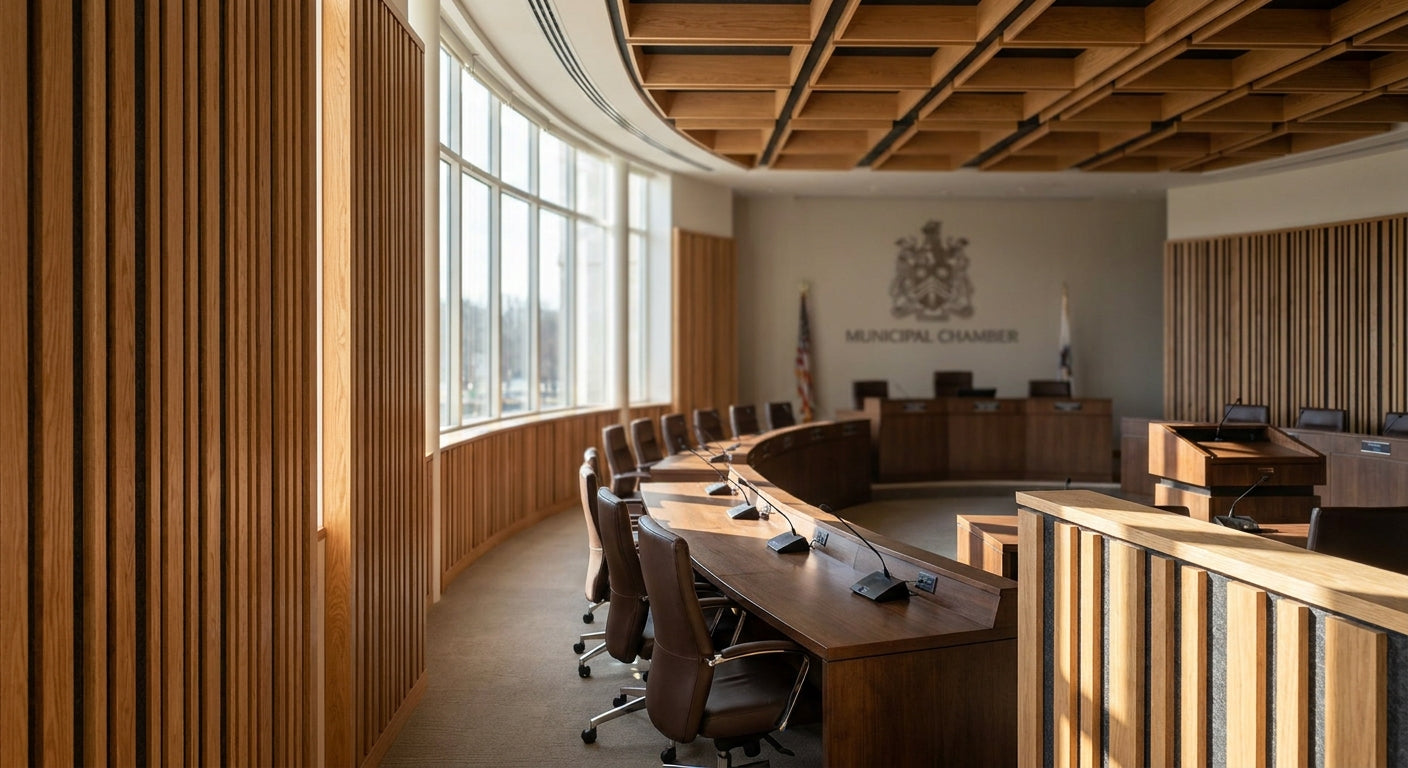
Council chambers and committee rooms present a specific acoustic problem: hard floors, glass partitions, and high ceilings built for grandeur, not speech clarity, which means councillors and public gallery attendees strain to follow debate that gets minuted word for word.
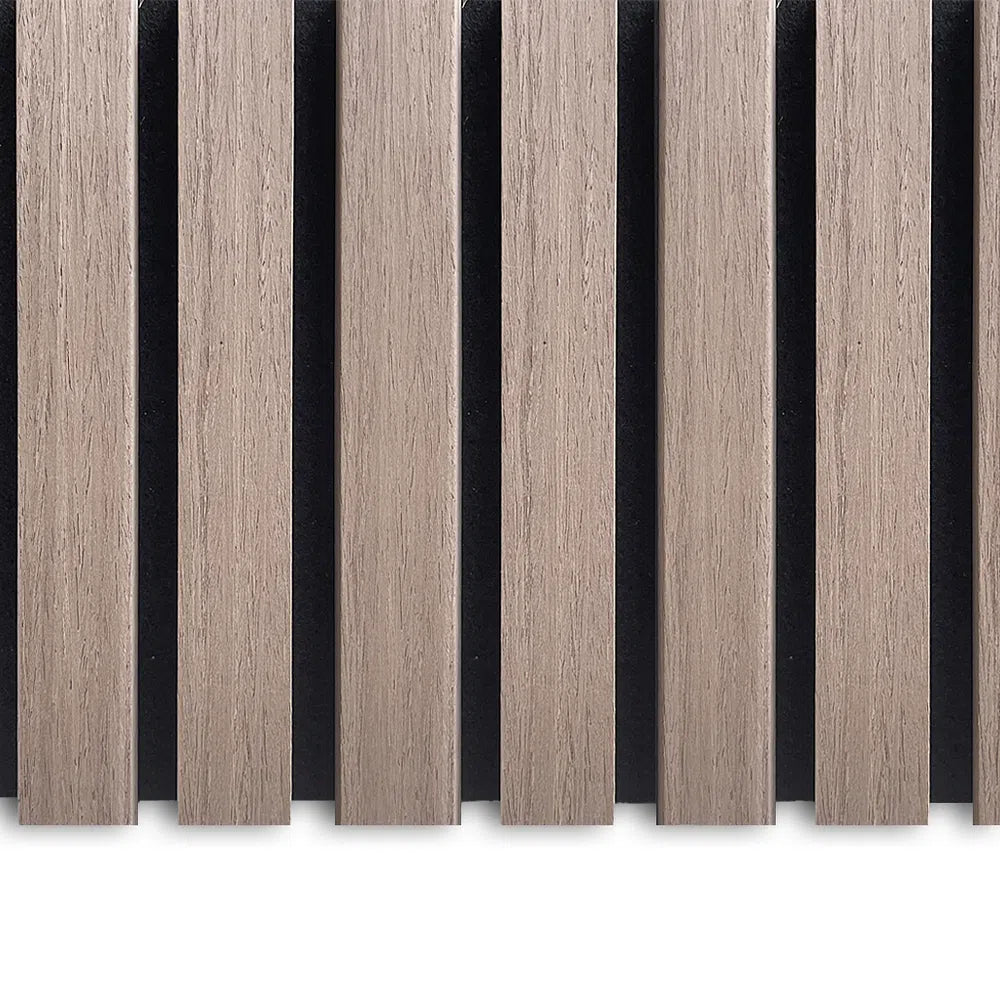
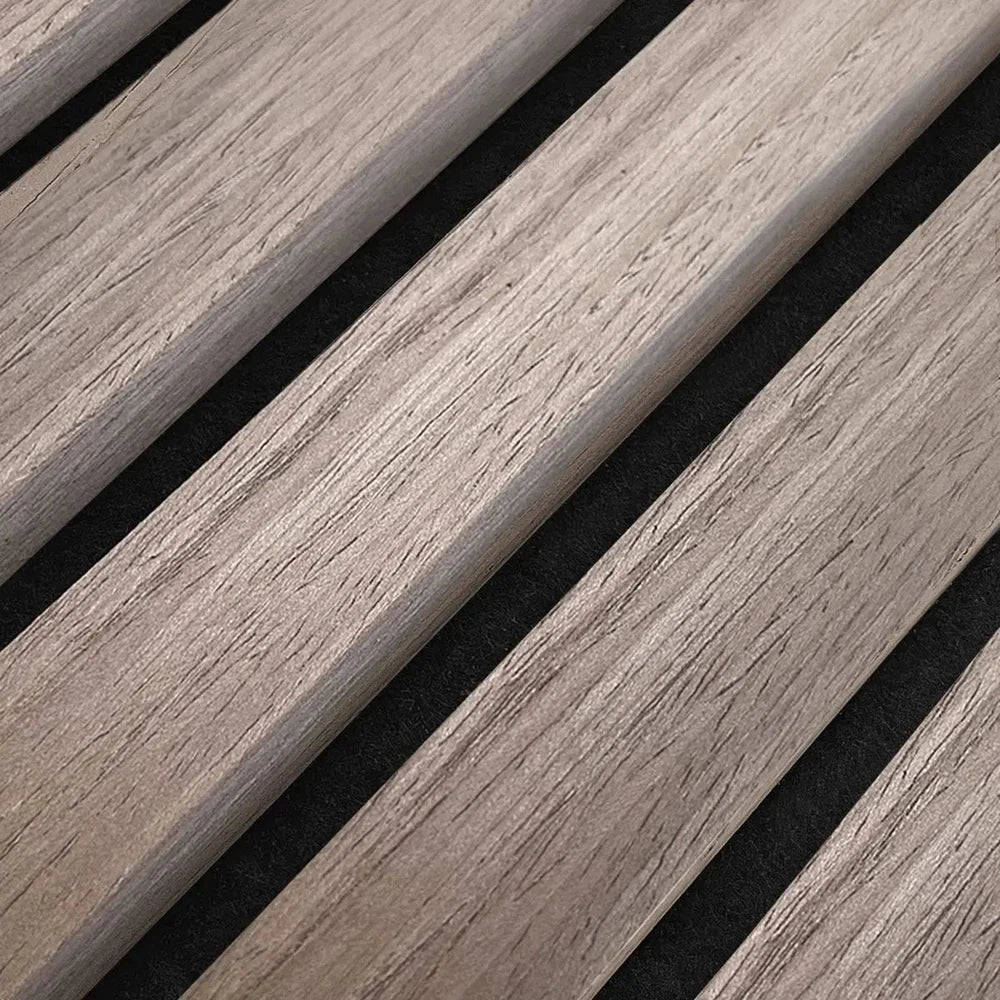
- Grey Oak acoustic wood panel (NRC 0.75) is the safe pick for council chamber acoustic panels in 2026 - buy.
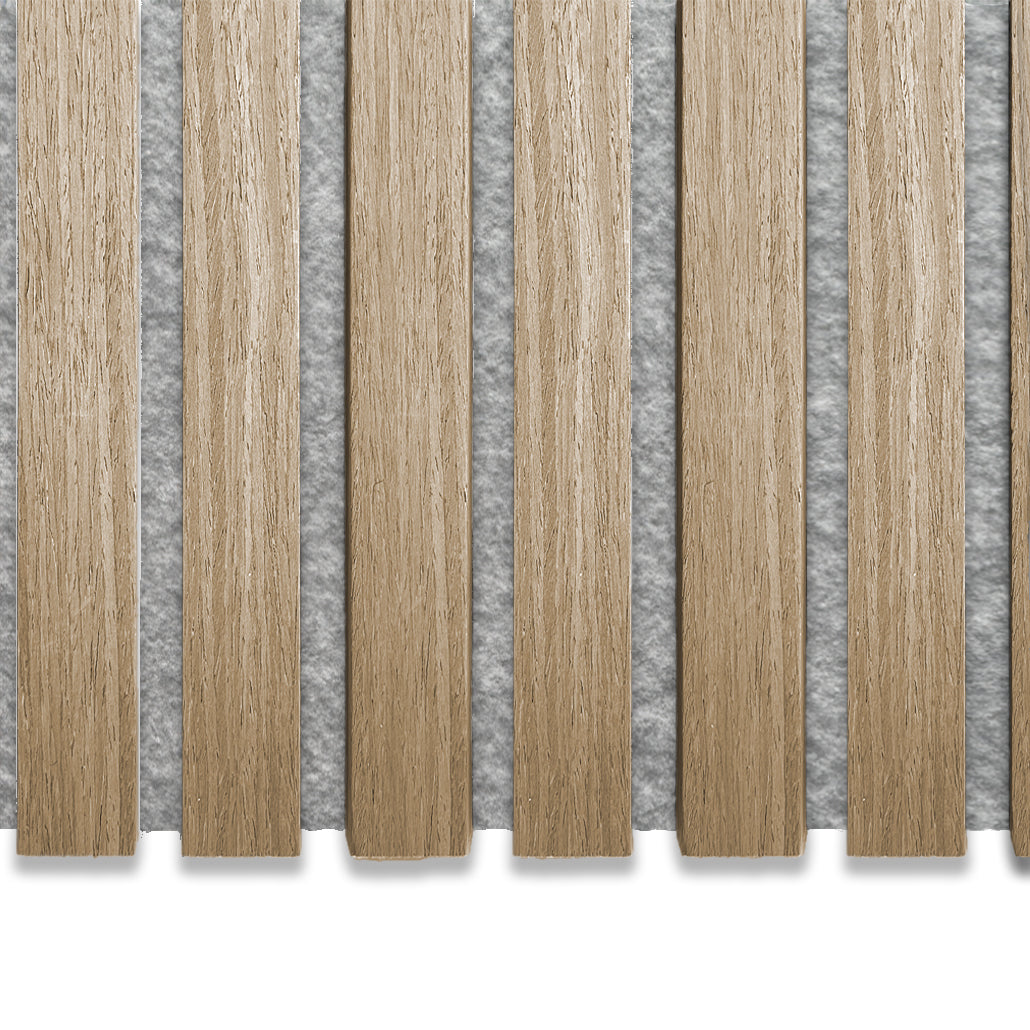
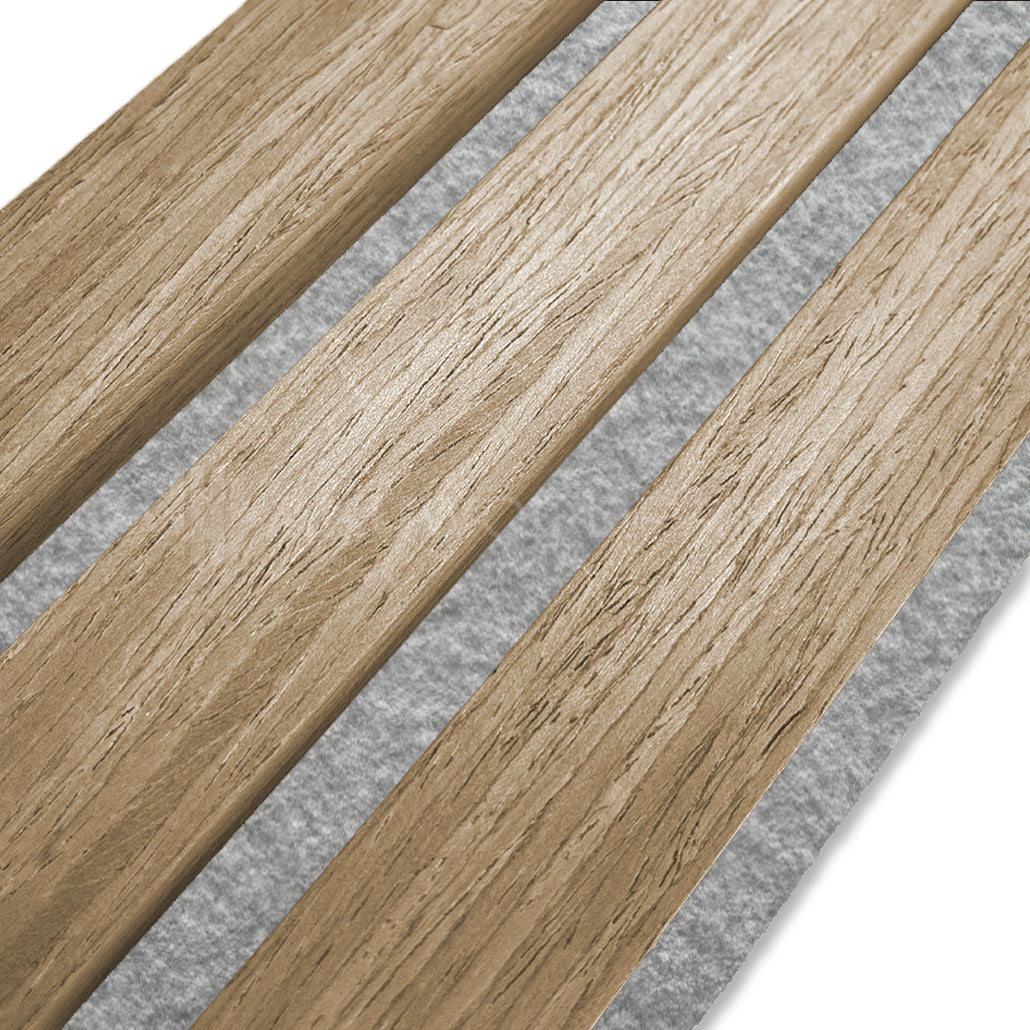
- Natural Oak with Grey Felt suits public gallery walls where warmth matters more than uniformity - buy.
- Hexagon acoustic panel in Walnut with Grey Felt works as a feature wall behind the dais - buy for that use case only.
- Skip foam-backed fabric panels in any building open to the public; they don't survive contact and don't meet the durability bar councils need.
Who this is for
This guide is for facilities managers, procurement officers, and building services teams specifying finishes for council chambers, committee rooms, and civic meeting spaces in 2026 - anyone weighing acoustic performance against public-sector budget scrutiny and a duty to keep a listed or heritage-adjacent room looking dignified rather than corporate. If you're comparing options for a meeting room acoustic refit, the same sound-absorption logic applies here, just with tighter compliance requirements and a public gallery watching.
Why this matters
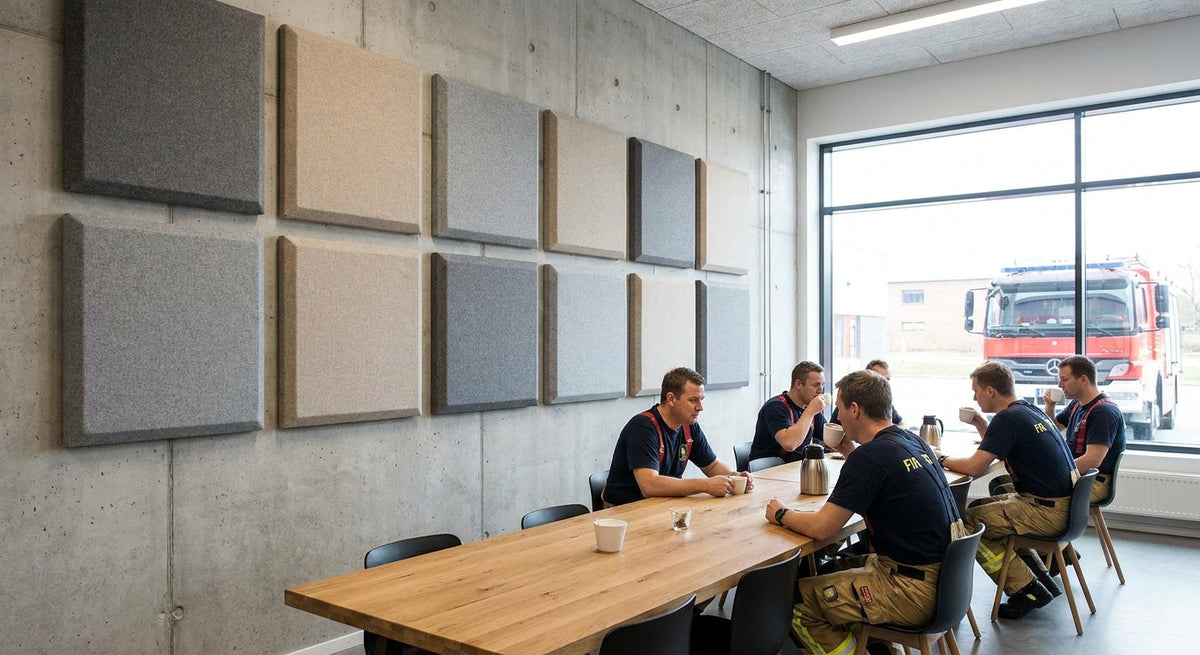
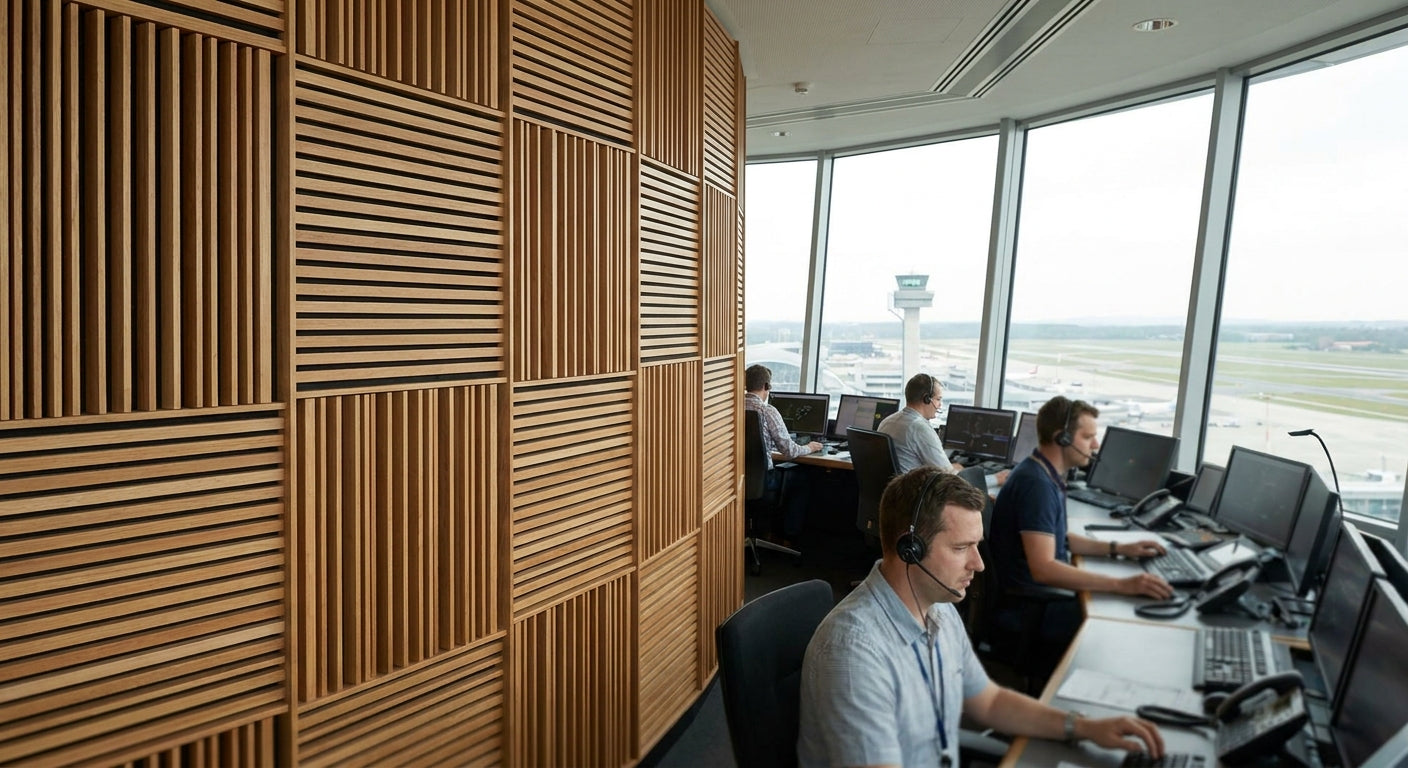
A council chamber isn't a boardroom. Meetings run two to four hours, get minuted verbatim, and increasingly get livestreamed or recorded for public record - so if the room echoes, the minute-taker mishears a vote and the webcast picks up a boomy hum under every voice. Bare render, glass screens, and parquet or vinyl flooring are common in civic buildings built before 1990, and none of them absorb sound. Adding acoustic wood panels with a felt backing brings the reverberation time down without changing the character of a room that residents associate with formality and permanence.
What to look for in acoustic panels for council chambers
NRC rating, not just "acoustic" on the label
A Noise Reduction Coefficient (NRC) of 0.70 or higher is the practical threshold for a room where speech intelligibility is the whole point. Panels rated 0.75, like the felt-backed slat panels in this range, absorb roughly three-quarters of incident sound energy rather than reflecting it back across the chamber. Anything lower and you're paying for aesthetics without solving the echo.
Fire performance for a public assembly space
Council chambers are public assembly buildings, which puts them under stricter Part B scrutiny than a private office. Ask for fire test documentation on any panel before it goes on a shared wall - a supplier who can't produce it shouldn't be on the shortlist for a public building in 2026.
Durability under daily public contact
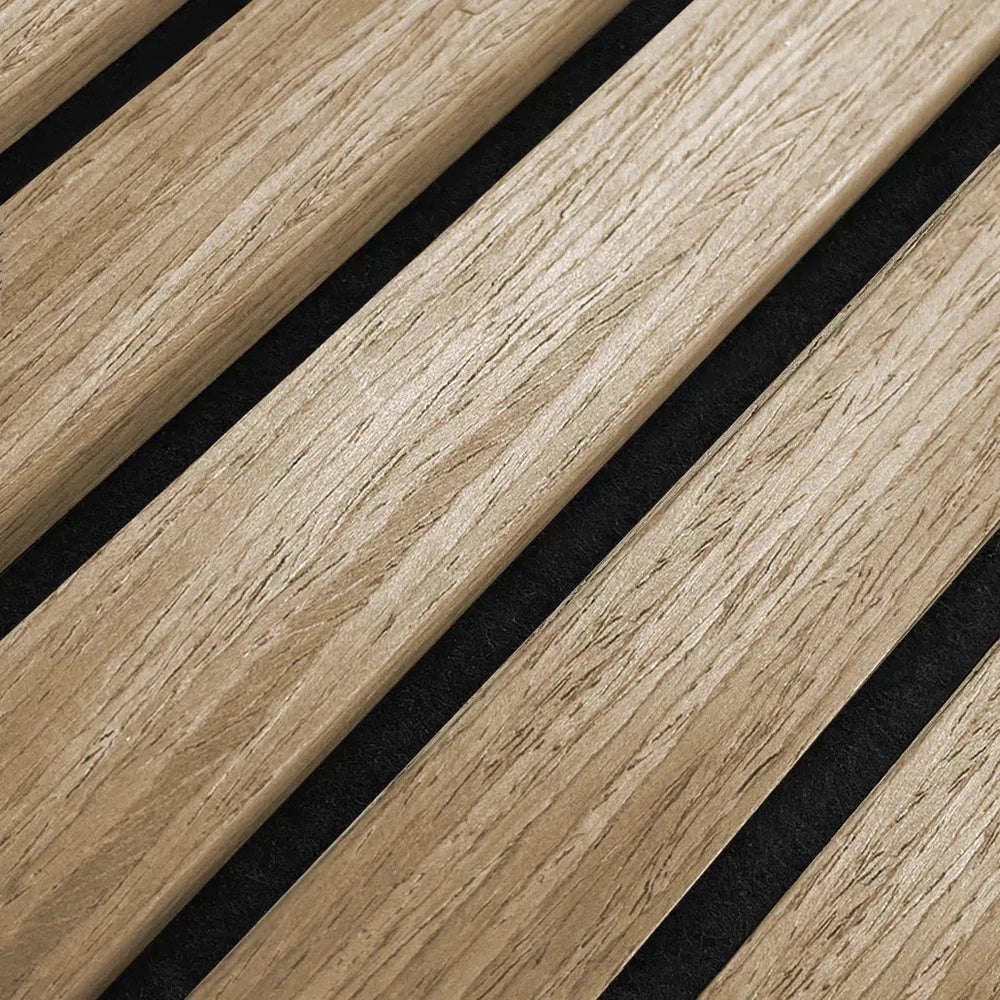
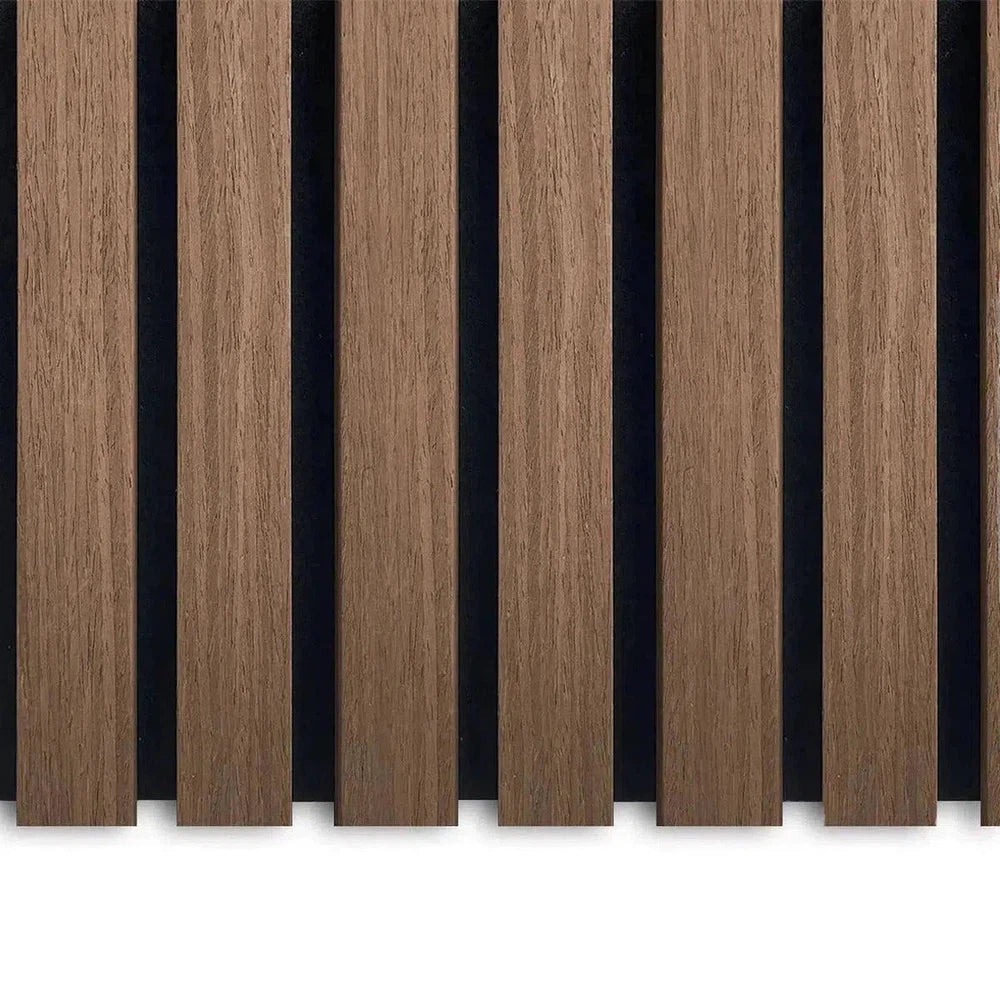
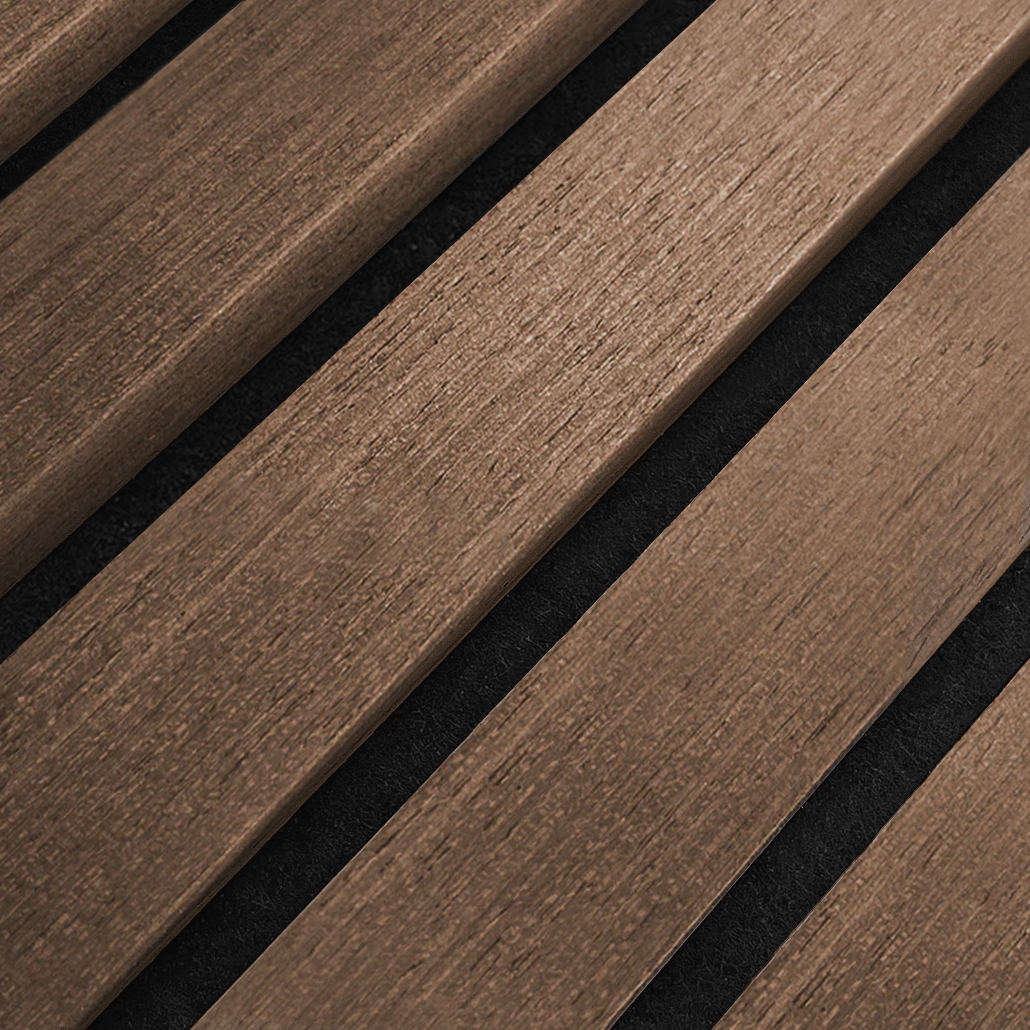
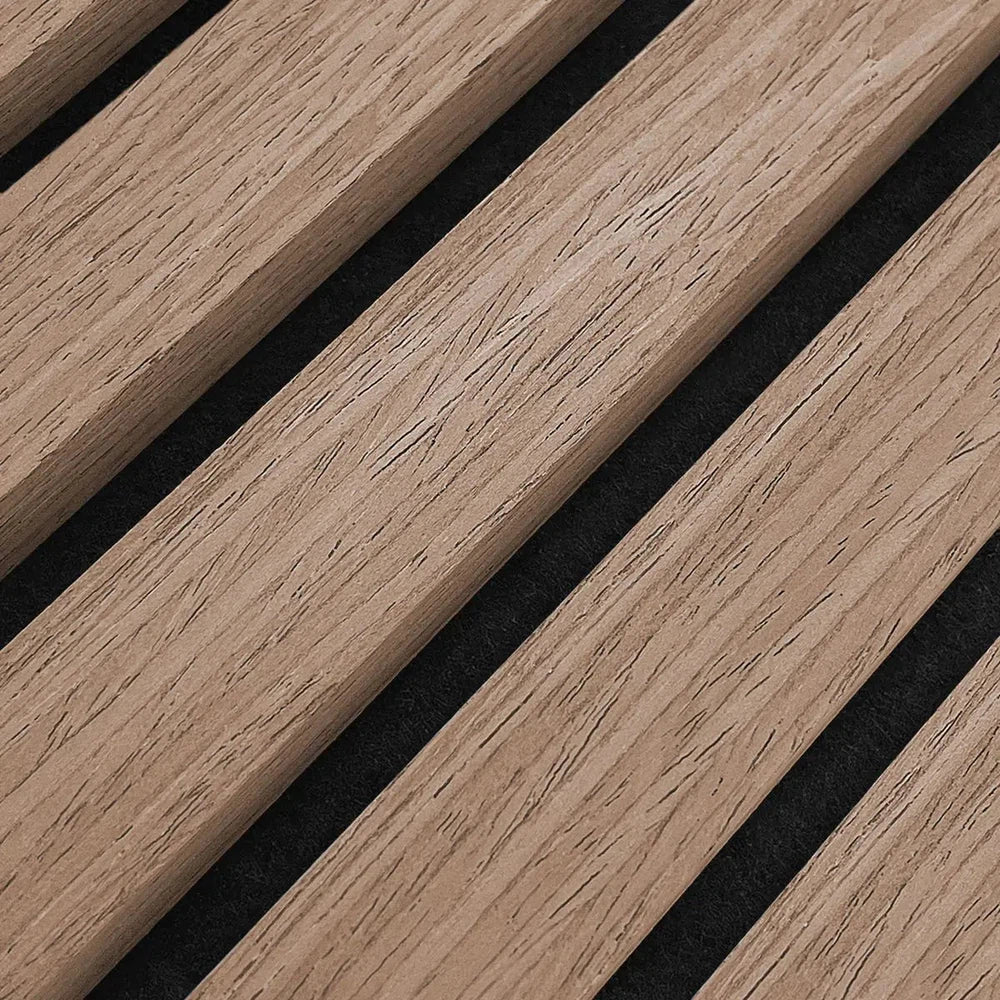
Committee rooms see wheelchairs, trolleys, and furniture moved in and out for every sitting. A 3-sided real wood veneer over an MDF or HDF core survives knocks that painted MDF slat panels don't - scuffs sand out or blend into the grain instead of chipping through to raw board.
Installation windows that don't disrupt the council calendar
Most chambers only go dark on evenings, recess weeks, or the odd Friday. Panels that click together with concealed fixings and glue - rather than requiring wet trades or long cure times - let a contractor finish a wall in a single closed weekend, which matters when the next full council meeting is fixed on the calendar months in advance.
A finish that reads as civic, not corporate
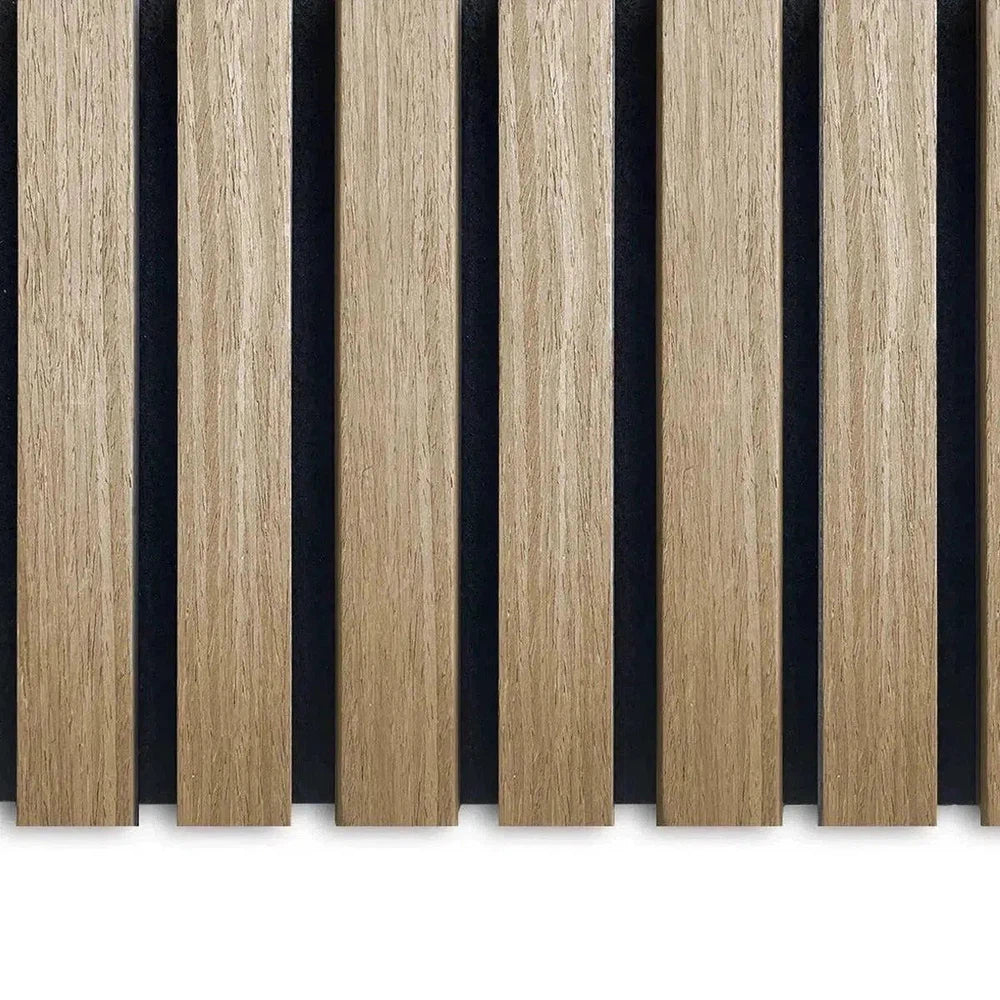
Grey felt backing behind a natural or grey oak veneer keeps the room neutral and non-partisan - it doesn't skew masculine or overly modern the way a glossy black finish can in a 1960s civic hall. Match the finish to the room's existing joinery rather than the latest office trend.
Budget that survives procurement sign-off
Public money means every spec gets scrutinised. A panel system priced and documented per square metre, with a clear NRC figure and fire data attached, moves through procurement faster than a bespoke acoustic install quoted as a lump sum.
Top picks for council chamber acoustic panels
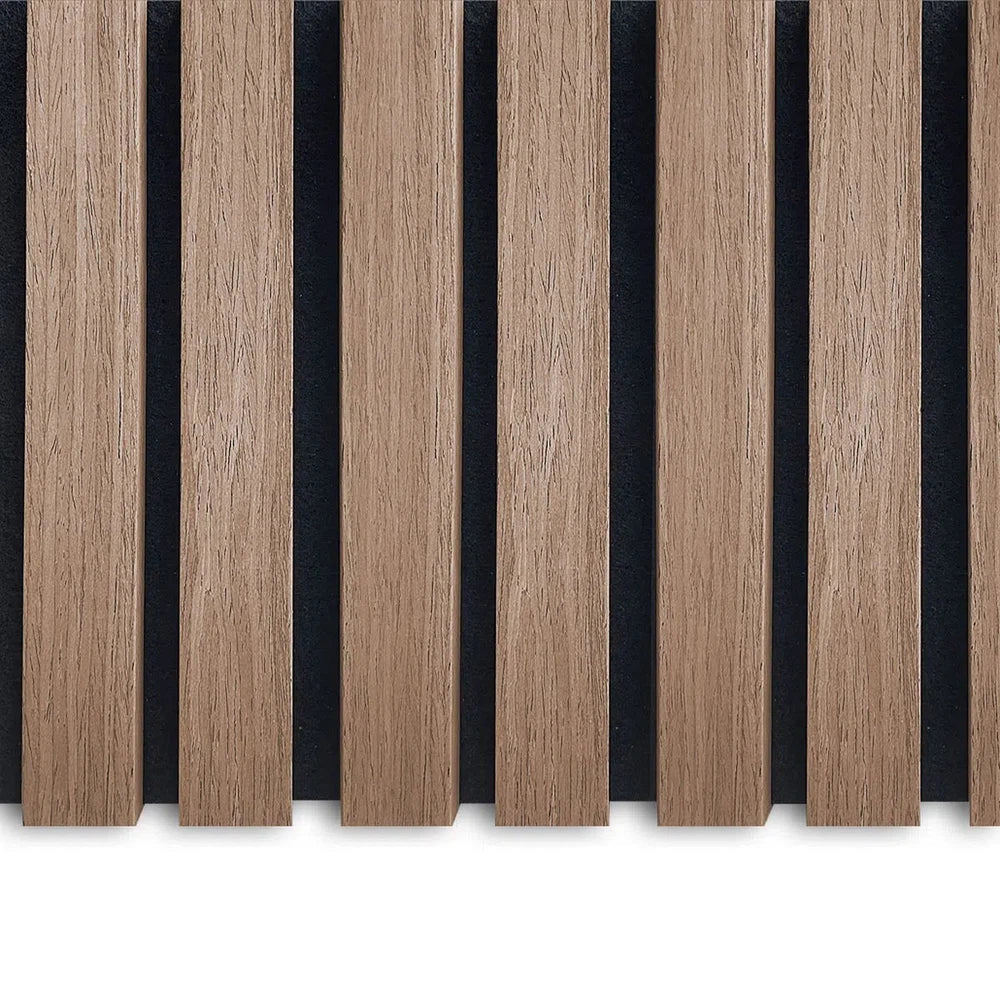
The safe pick: Grey Oak wall panel. Neutral grey-brown tone that reads as civic rather than domestic, on the same 0.75 NRC felt backing as the rest of the range. Works on long committee room walls without competing with council crests or existing joinery. Buy for the main chamber walls in Grey Oak.
The premium pick: Natural Oak with Grey Felt. Warmer veneer tone than plain grey oak, still on a grey acoustic felt backing, so it softens a room without sacrificing absorption. Suits public gallery walls where residents sit facing the dais for hours. Buy for gallery-facing walls in Natural Oak with Grey Felt.
The wildcard: Hexagon acoustic panel in Walnut with Grey Felt. A geometric feature wall behind the mayor's or chair's seat, at £40.95 per 81 cm panel, adds visual weight to the room's focal point without turning it into a boardroom. Same 0.75 NRC as the flat panel range. Buy for a single feature wall in Walnut hexagon acoustic panel.
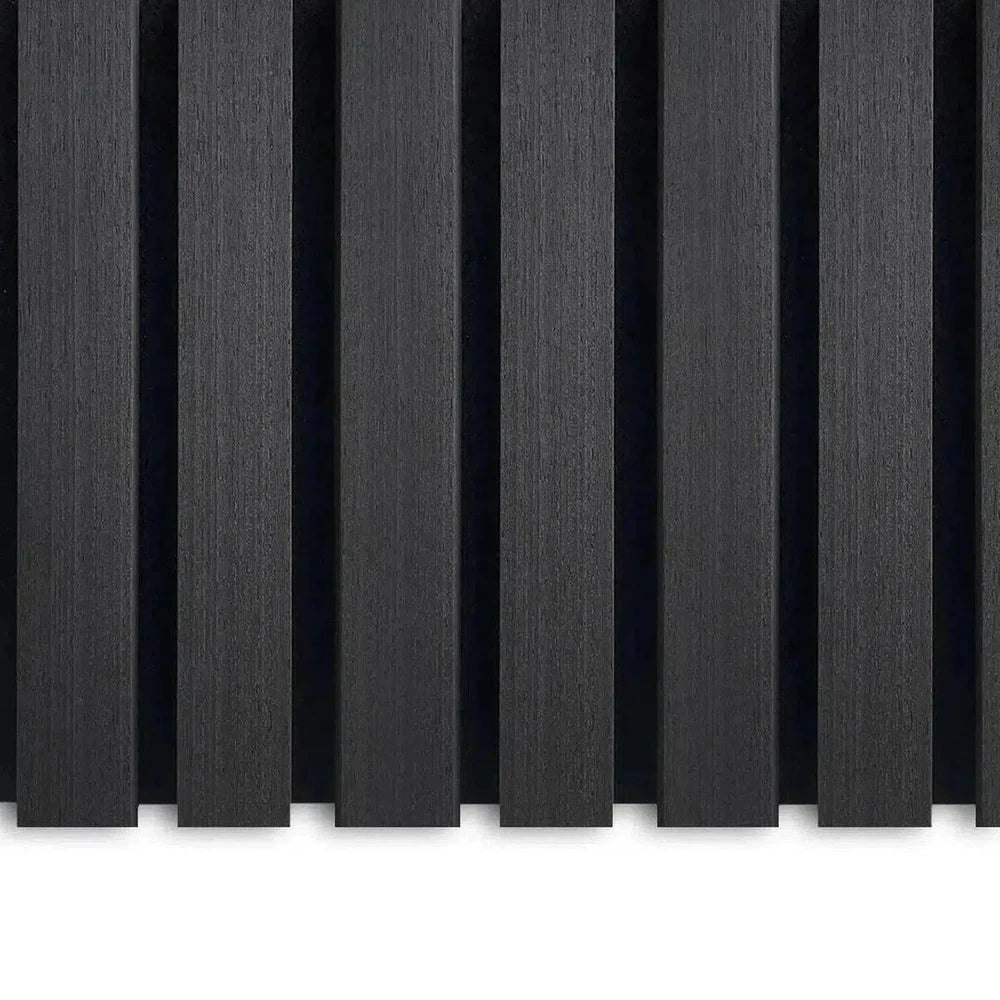
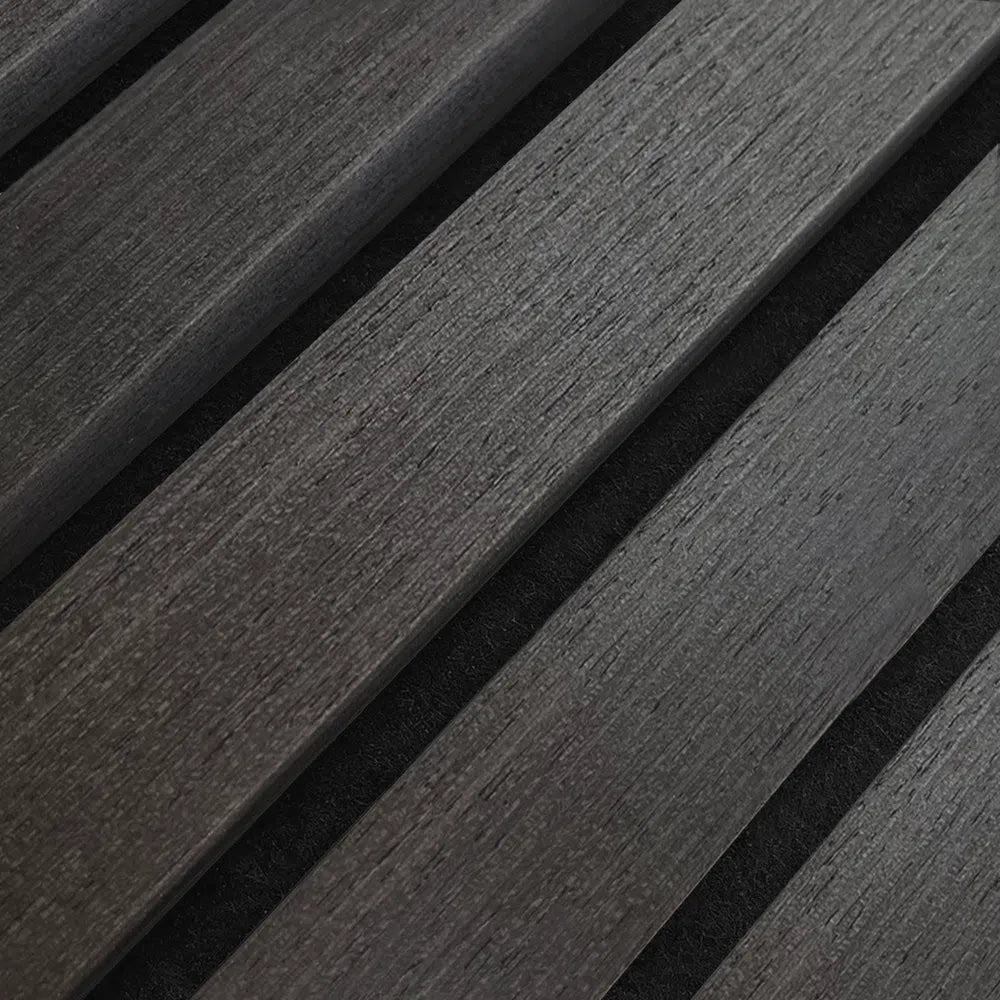
Black Oak wall panel reads well in newer civic buildings with modern glazing but can feel too corporate against older stone or brick chamber walls built before 2000. Consider only where the rest of the room is already contemporary.
Smoked Oak sits between grey oak and black oak in tone - a reasonable middle ground if the room needs contrast against pale walls but full black feels too heavy. Consider for accent walls rather than full-room coverage.


What to avoid in a council chamber spec
- Foam-backed fabric acoustic panels - they absorb sound well but tear and stain under public contact, and replacing torn fabric panels mid-term is a procurement headache nobody wants to explain to a scrutiny committee.
- Painted MDF slat panels with no felt layer - they look identical to acoustic panels in a photo but do almost nothing for reverberation. If a supplier can't quote an NRC number, assume it's decorative only.
- High-gloss veneer finishes - livestreamed meetings pick up glare off glossy surfaces under committee room lighting, which is a real problem for any chamber that broadcasts sittings in 2026.
Verdict comparison
| Panel | NRC rating | Best use | Verdict |
|---|---|---|---|
| Grey Oak wall panel | 0.75 | Main chamber walls | Buy |
| Natural Oak with Grey Felt | 0.75 | Public gallery walls | Buy |
| Hexagon Walnut with Grey Felt | 0.75 | Feature wall behind dais | Buy |
| Black Oak wall panel | 0.75 | Modern civic buildings only | Consider |
| Smoked Oak | 0.75 | Accent walls | Consider |
| Foam-backed fabric panel | varies | Not recommended for public buildings | Skip |
FAQ
What's the best acoustic wall panel for a council chamber?
Grey Oak wall panel with a 0.75 NRC felt backing is the safest choice for council chambers in 2026 because its neutral tone works with existing civic joinery while cutting reverberation on hard-floored, high-ceiling rooms.
Are wood acoustic panels fire rated for public buildings?
Fire performance varies by manufacturer, so request test documentation for the specific panel range before specifying it in a public assembly space. Council chambers fall under stricter Part B scrutiny than a private office.
How much NRC do you need for a council meeting room?
An NRC of 0.70 or higher is the practical threshold for rooms where speech intelligibility matters, such as chambers where minutes are taken verbatim. Panels rated 0.75 sit comfortably above that bar.
Do acoustic panels help with hearing loop systems in council chambers?
Reducing background reverberation improves the signal-to-noise ratio that hearing loops rely on, since loops amplify whatever the microphone picks up, echo included. Cutting echo at the wall reduces what the loop has to fight.
What size acoustic panels work best behind a council dais?
A hexagon format in a single accent finish, such as walnut, works well as a focal-point feature wall behind a dais or chair's seat without covering the full room in a geometric pattern.
Can acoustic panels be installed without disrupting scheduled council meetings?
Panels with concealed click-fit fixings and adhesive rather than wet trades can typically be installed over a single closed weekend, which fits around most council meeting calendars.
Are hexagon acoustic panels too decorative for a formal government room?
Used as a single feature wall rather than full-room coverage, hexagon panels in oak or walnut read as intentional design rather than decoration, and carry the same 0.75 NRC rating as flat panel formats.
One last thing
The detail most specs miss: livestreamed council meetings amplify acoustic problems that a room felt fine for decades before cameras and microphones were added, so a chamber that never had an echo complaint in 1995 can still need acoustic treatment in 2026 purely because of how modern AV picks up reflected sound.