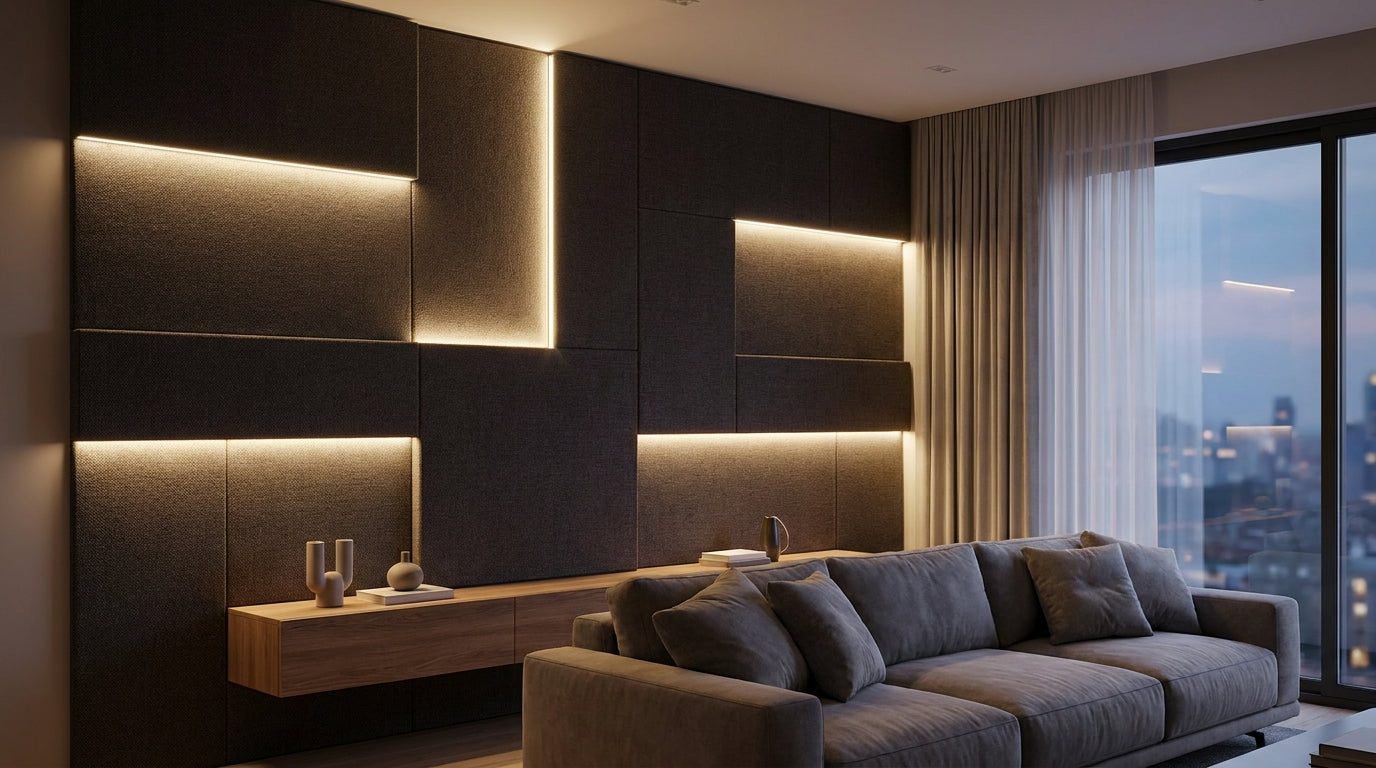
LED strip lighting turns a flat run of slat panelling into a lit feature wall — the trick is picking a groove profile and finish that hides the strip, controls glare, and still kills the echo you installed acoustic wall panels to fix in the first place.
TL;DR
Acoustic wall panels with LED lighting work best when the slat groove is deep enough to recess a 10mm LED strip and the wood finish diffuses light rather than mirroring it. Akuwood Panel's Black Oak and Walnut wooden wall panels are the two clear buys for 2026 if you're building a media wall or living room feature wall around a lighting strip; the pale Natural Oak finish bounces too much glare for a direct-view strip and works better as an indirect backdrop instead. Budget a tube of high-tack panel glue alongside your LED kit, because most strip failures trace back to a panel that lifted at the seam, not the lights themselves.
Why this matters
A plain plasterboard wall with an LED strip stuck on top looks like an afterthought. Run the same strip behind or through a slatted acoustic panel and you get shadow gaps, a warm glow line, and sound absorption in one install — the felt backing behind the veneer is doing real acoustic work, not just decoration.
The mistake most people make in 2026 is buying the lighting first and the panel second. Slat spacing, groove depth and finish colour all change how the light reads on the wall, so the panel decision has to come first if you want the strip to disappear into the design rather than sit on top of it.
Who this is for
This guide is for homeowners fitting a TV wall, home bar, or bedroom headboard feature and want ambient LED lighting built into the panelling rather than bolted on afterwards — plus anyone renovating a living room in 2026 who wants the echo-reducing benefit of wooden wall panels with LED lighting without a cluttered strip visible along the skirting.
What to look for in acoustic wall panels for LED lighting
Groove depth for the strip channel
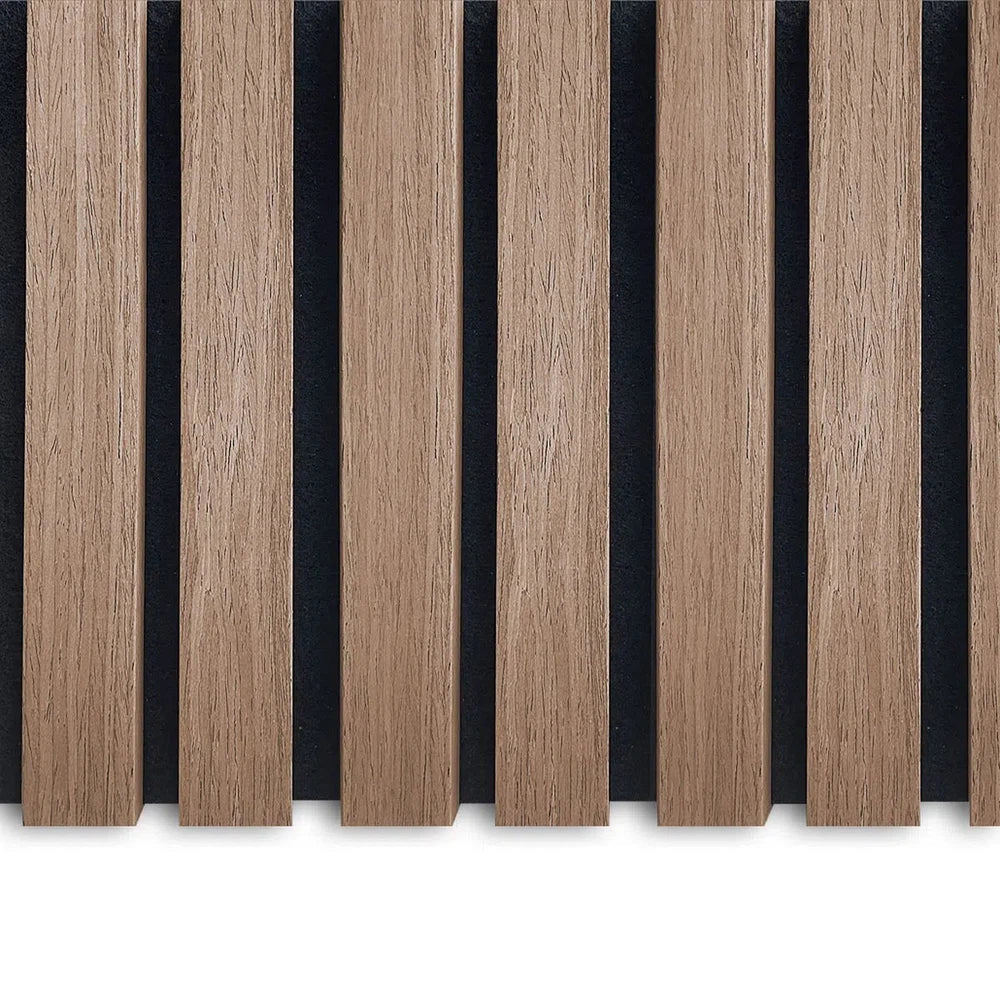
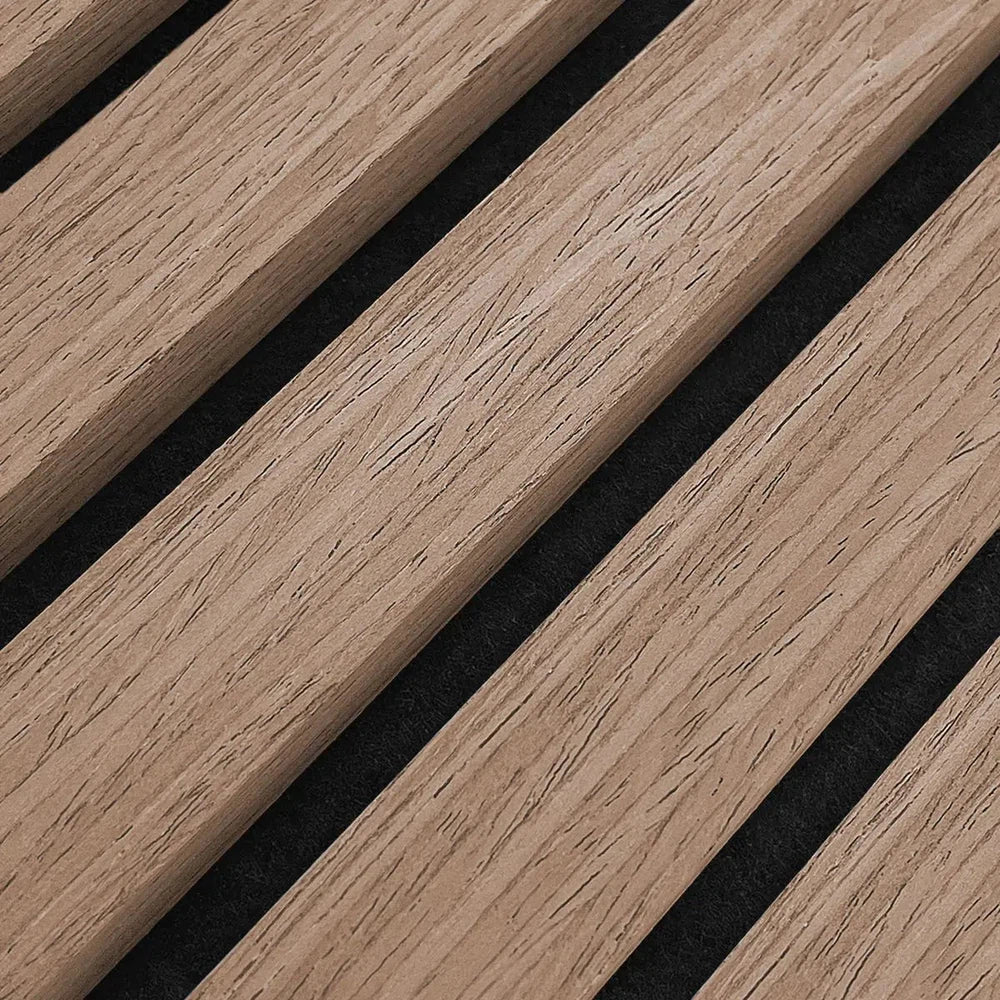
A shallow slat groove leaves the LED strip proud of the wood, so you see a hard white line instead of a soft wash. Look for a groove that recesses at least 8-10mm — enough to tuck a standard strip flush and let the light spill sideways across the veneer rather than straight at your eyes.
Felt backing colour and light bleed
The acoustic felt sitting behind the veneer isn't just sound absorption — a darker grey felt blocks more light bleed through the panel gaps than a pale felt, which matters if you're running a strip behind the panel rather than in front of it. Check this before you buy, not after the wall's up.
Wood finish and how it reflects light
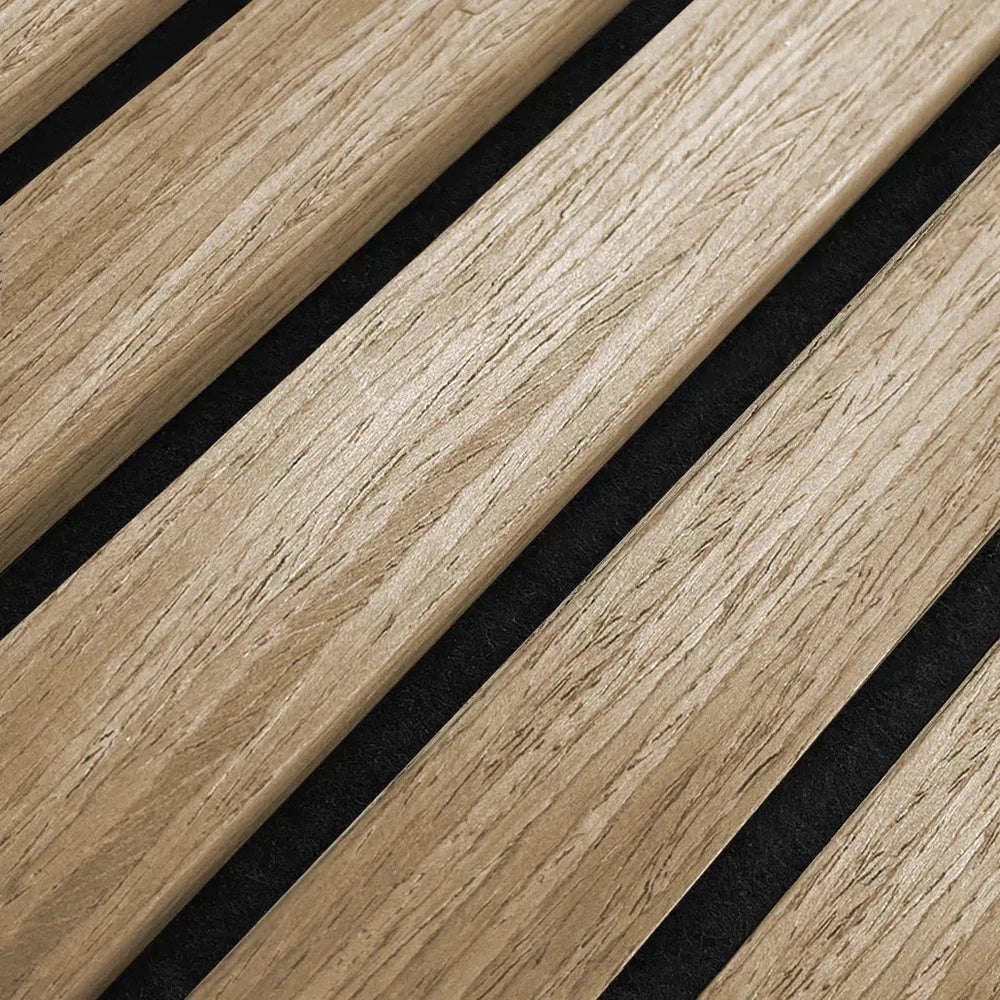
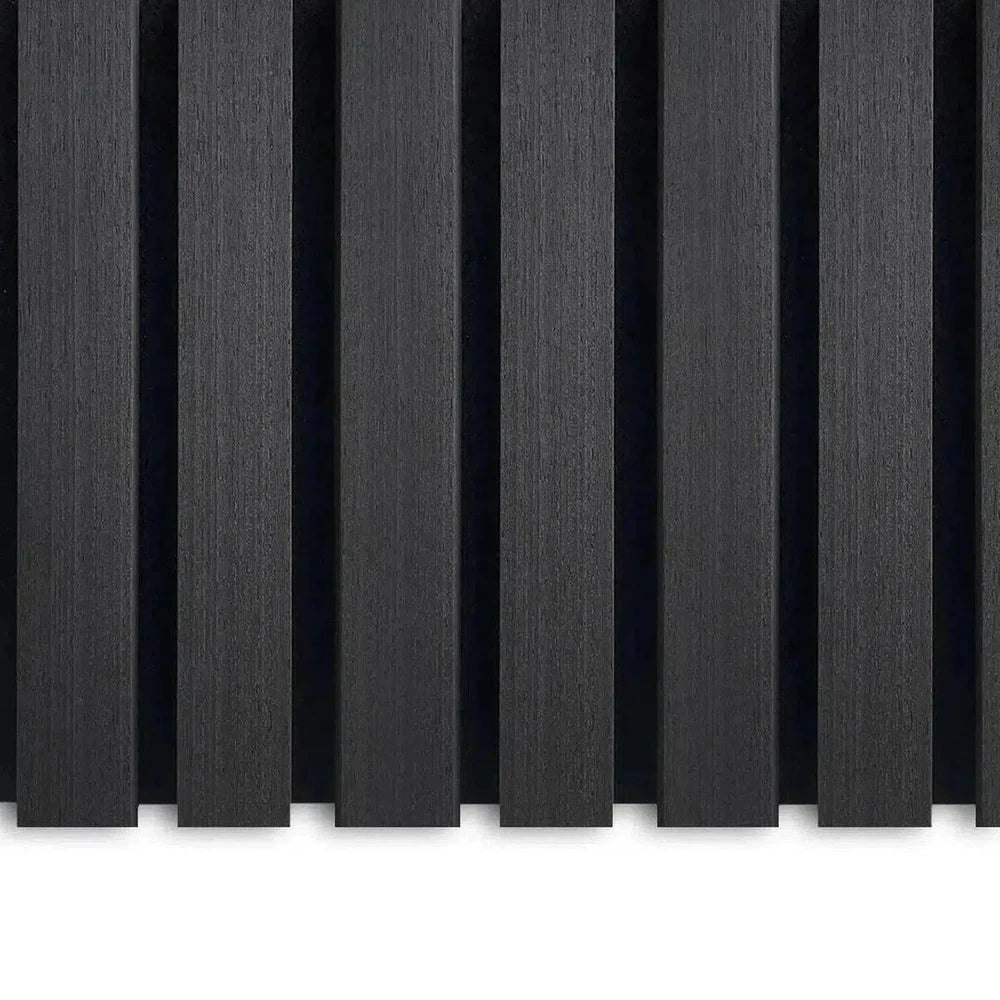
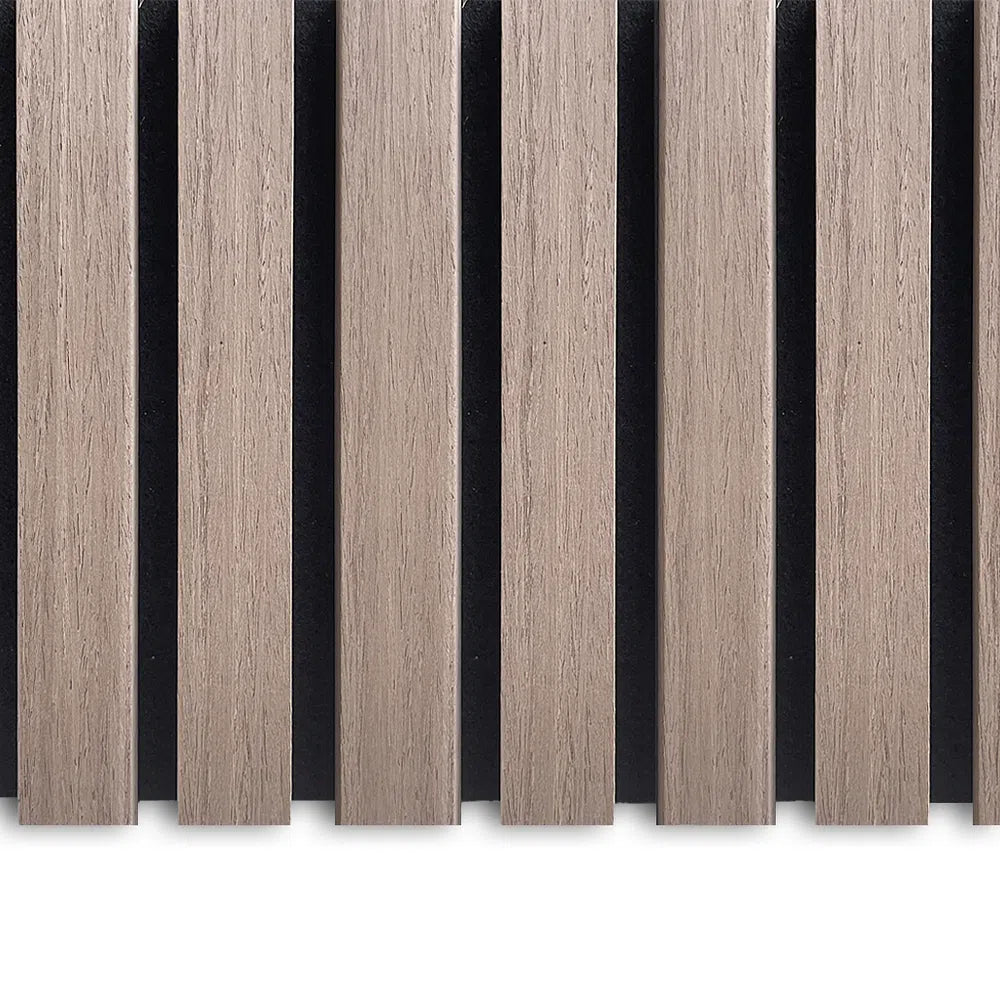
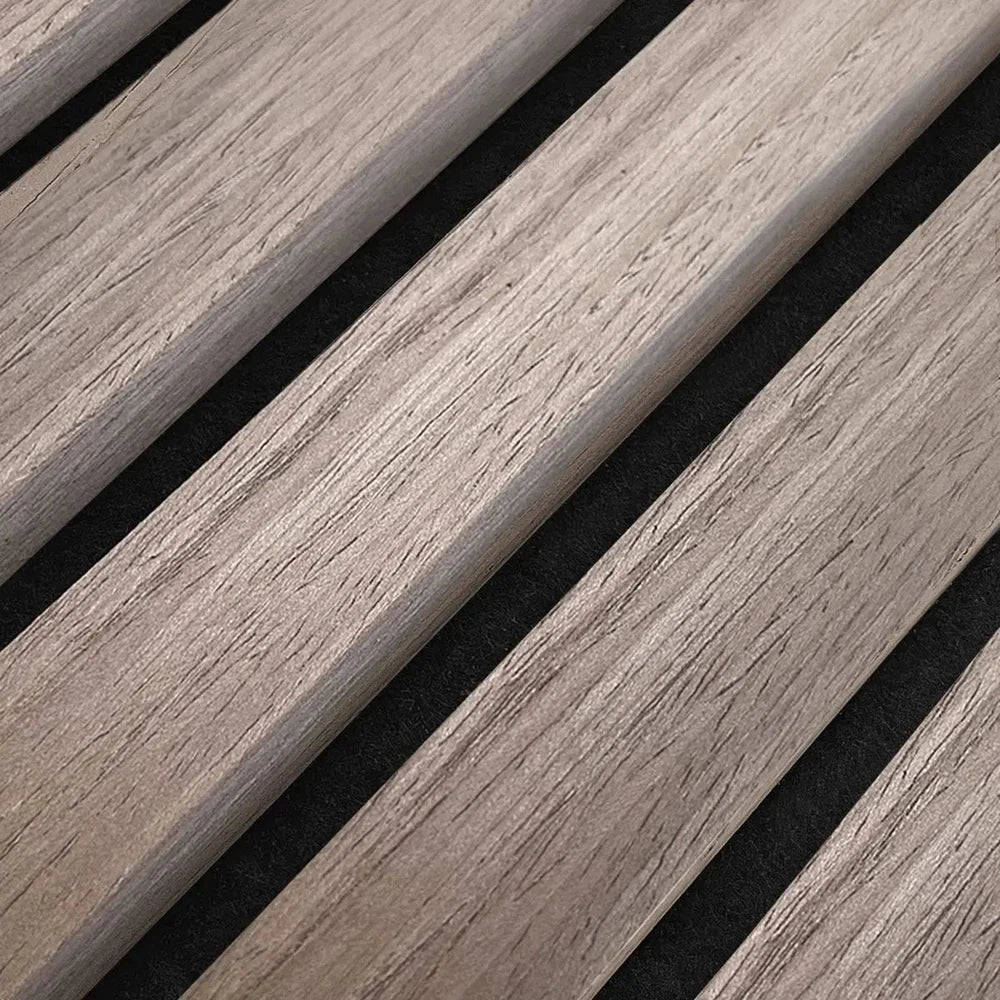
A gloss-heavy varnished finish throws hard reflections that make an LED strip look like a fluorescent tube. Matt, real wood veneer finishes — the kind used across Akuwood Panel's range — scatter the light instead, which is why darker finishes like Black Oak and Smoked Oak tend to photograph and read better once the strip is switched on.
Panel length versus your wall run
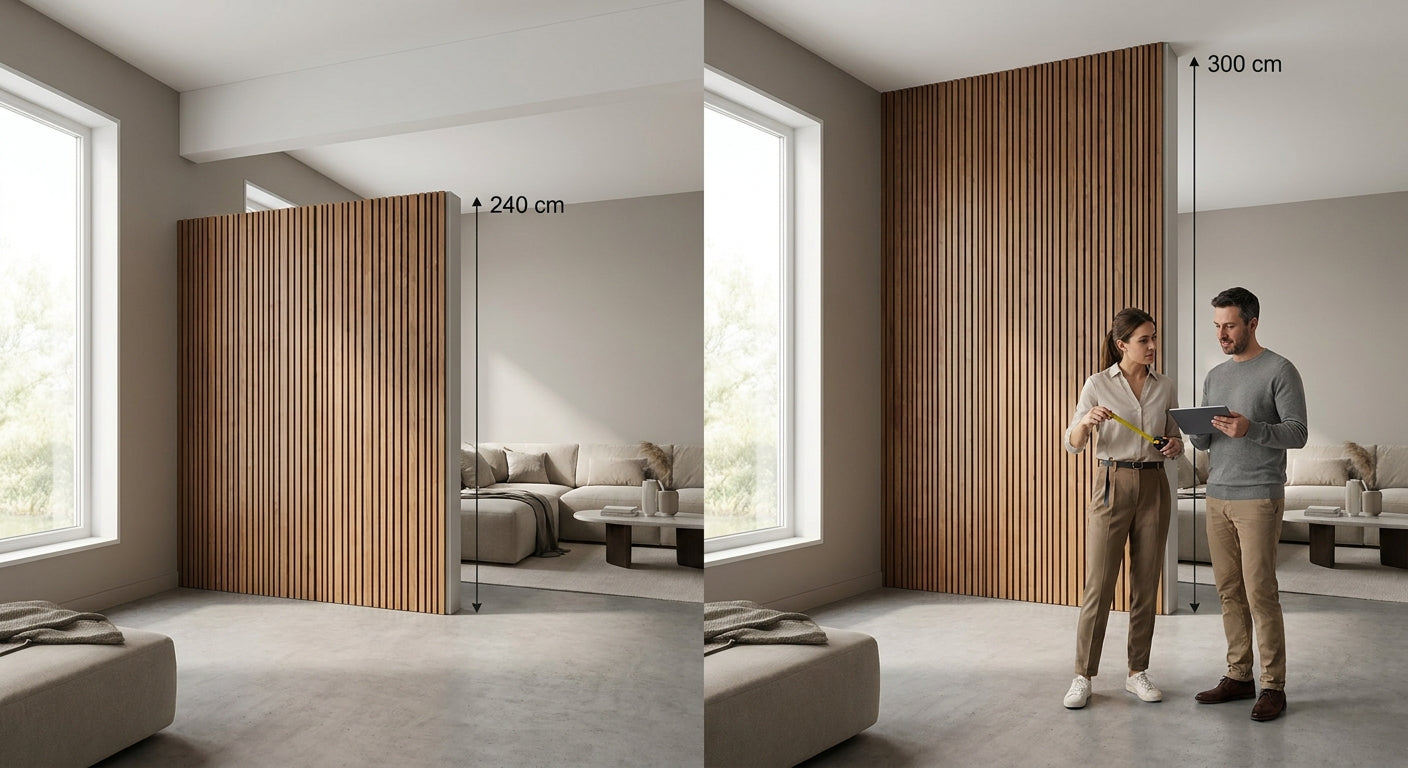
Akuwood Panel's panels come in 240cm and 300cm lengths. Matching the panel length to your wall height (or width, on a TV wall) means fewer horizontal seams for the LED strip to cross, which keeps the light line continuous instead of interrupted every 240cm.
Mounting method and cable routing
Battens leave a cavity behind the panel deep enough to run both the LED strip cable and a driver; glue-fix mounting sits tighter to the wall and suits a strip mounted along the visible edge instead. Decide the wiring route before you commit to a fixing method, because retrofitting a cable channel after glue-fix installation means pulling panels back off the wall.
Colour temperature of the strip itself
A 3000K warm white strip suits every finish in the range; a cool 6000K strip or an RGB strip clashes badly with darker woods like Black Oak and Mocca, washing out the grain instead of highlighting it. Warm white is the safer call for 2026 feature walls unless you're deliberately going for a colour-changing gaming or media room look.
Top picks for LED-lit panel walls
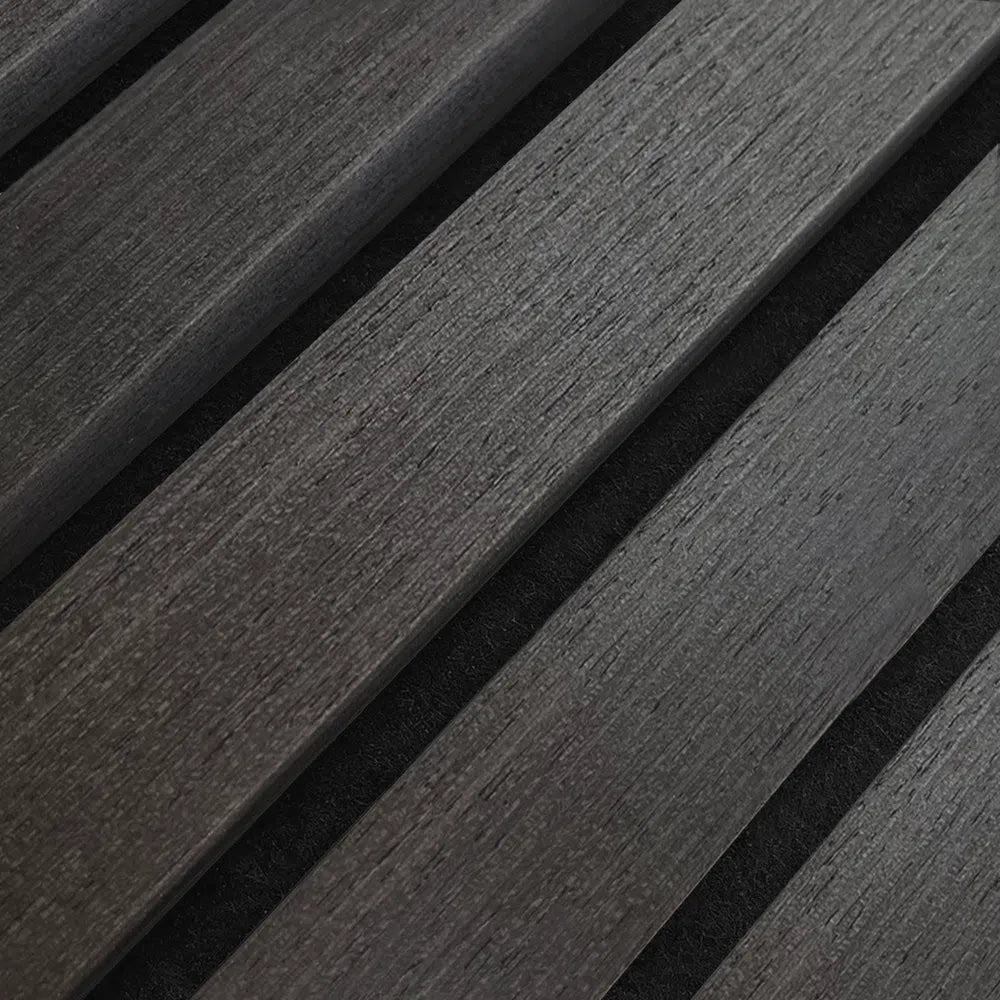
Black Oak wooden wall panel — the moody statement. Groove depth on this profile comfortably recesses a 10mm strip, and the dark veneer keeps reflections low so the light itself becomes the visible feature rather than the wood grain. Verdict: Buy for a TV wall or home bar where you want the strip to be the focal point.
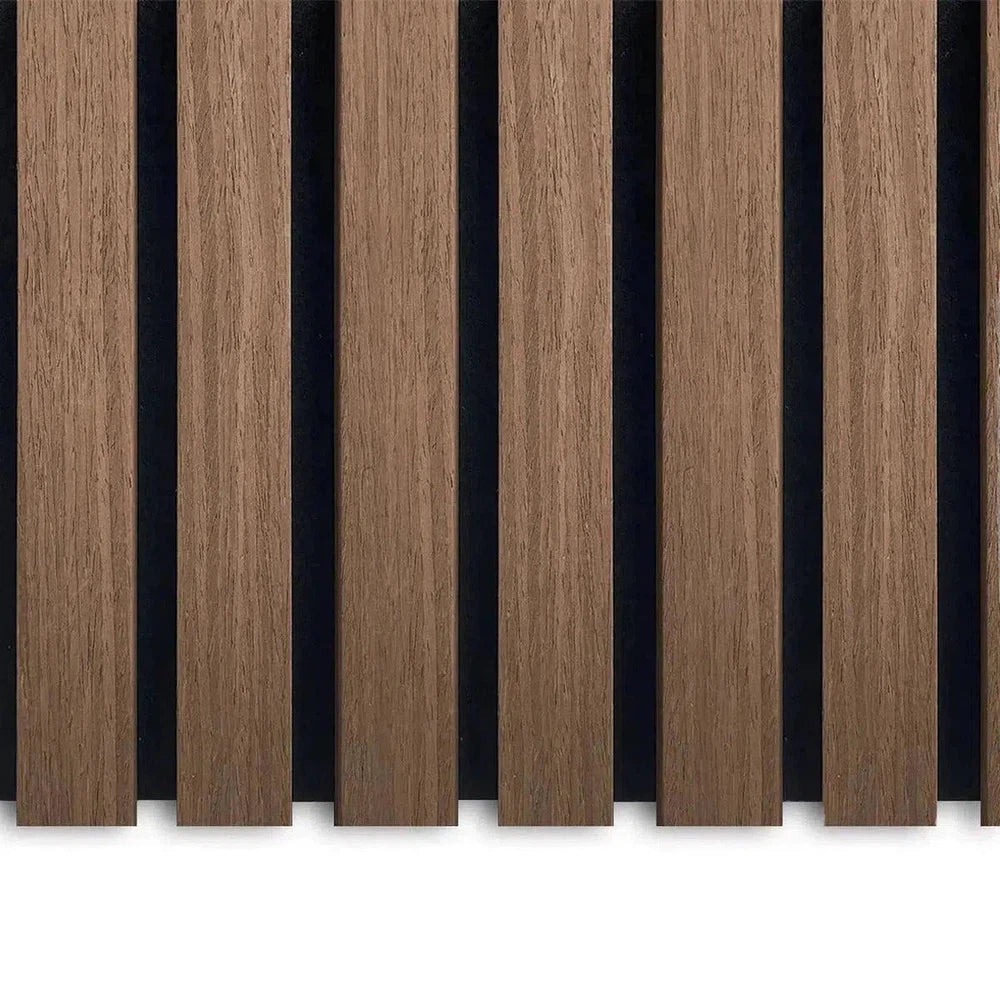
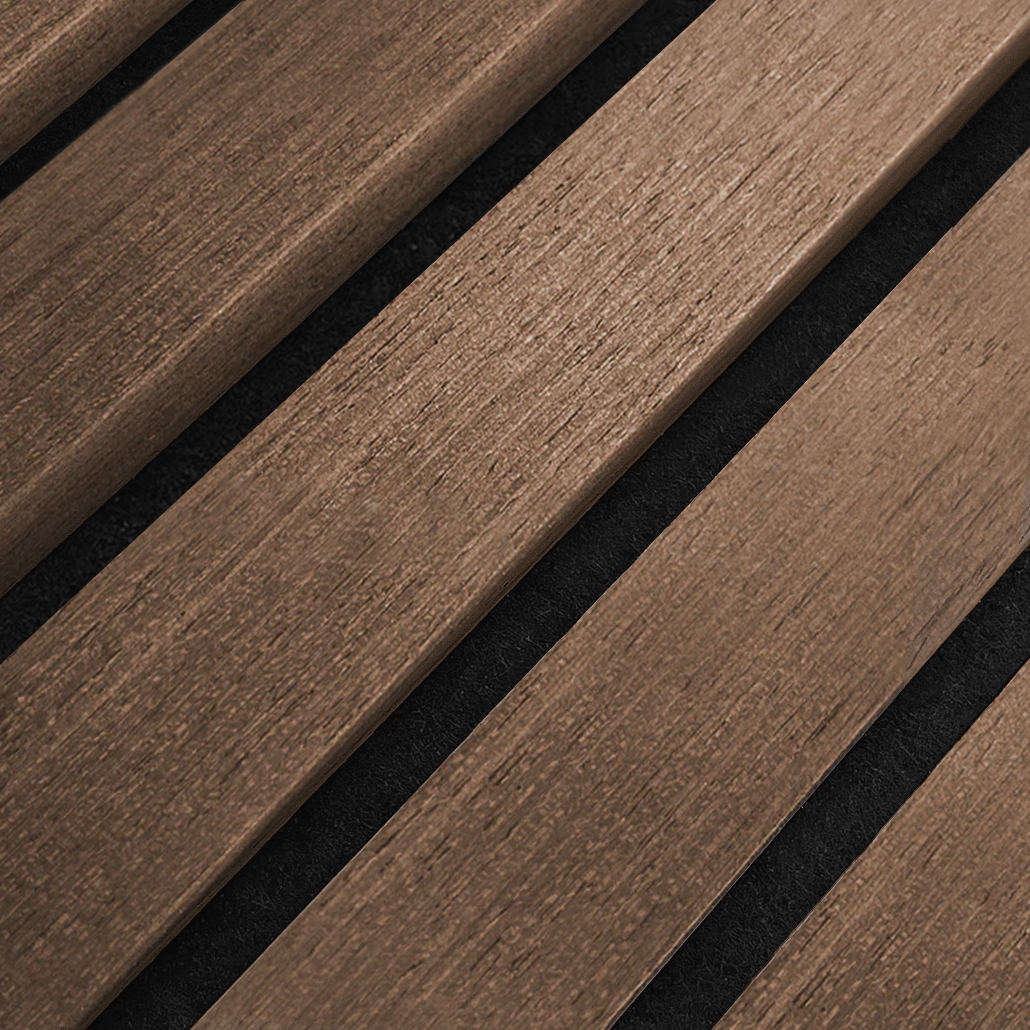
Walnut wooden wall panel — the warm classic. Walnut's mid-tone grain reads well under a 3000K strip without the glare risk of paler finishes, and it's the pick that works across both 240cm and 300cm lengths without looking patchy at the seams. Verdict: Buy for living rooms and bedrooms where you want warmth over drama.
Smoked Oak — the wildcard. The smoked finish sits between Black Oak and Walnut in tone, so it hides fingerprints and dust better than a pale finish while still catching warm light along the grain lines. Verdict: Consider if Black Oak feels too heavy for the room.
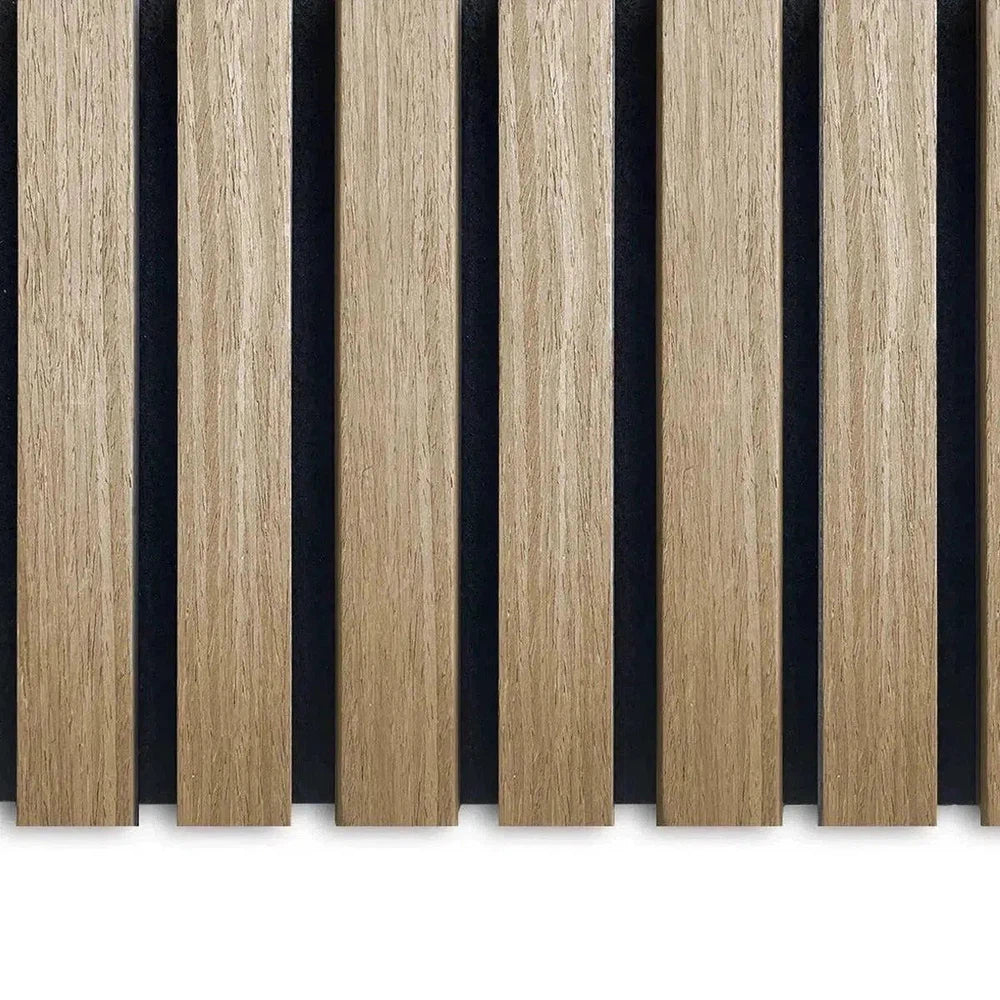
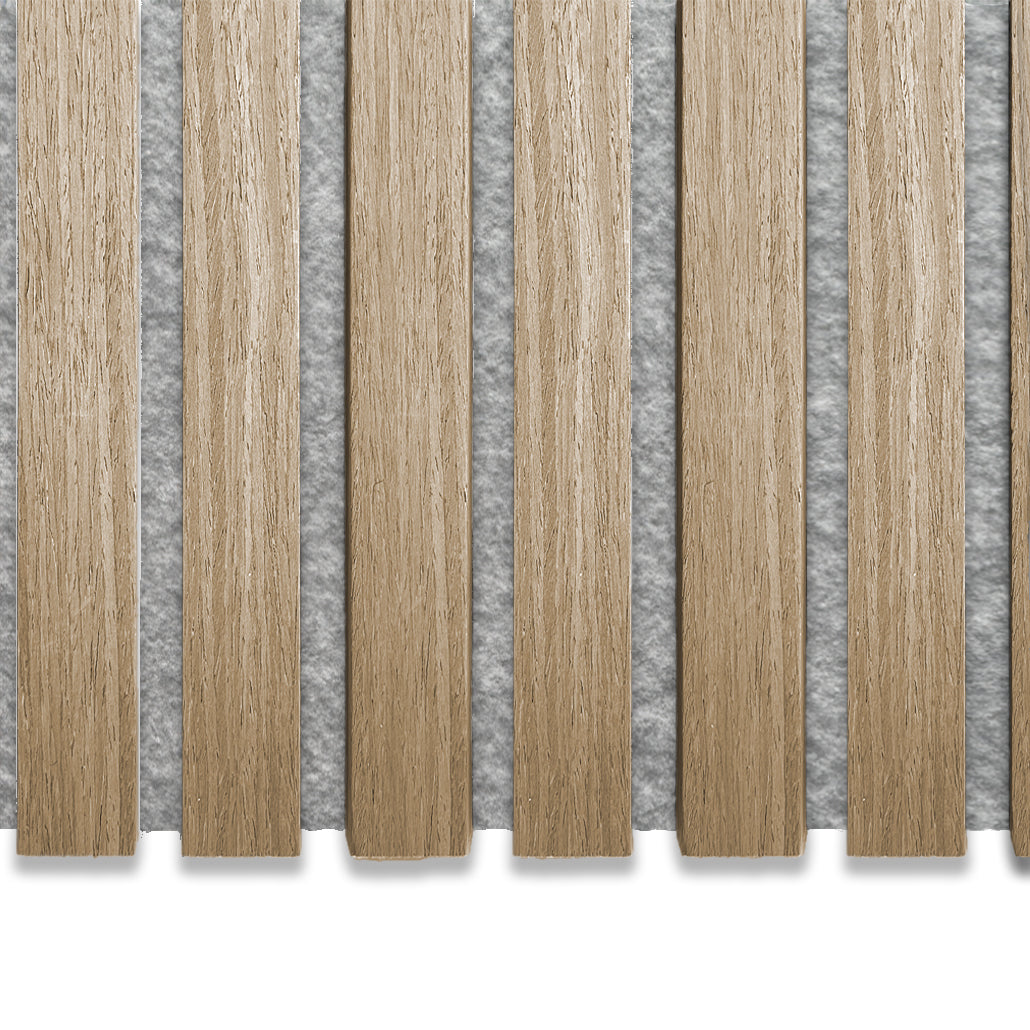
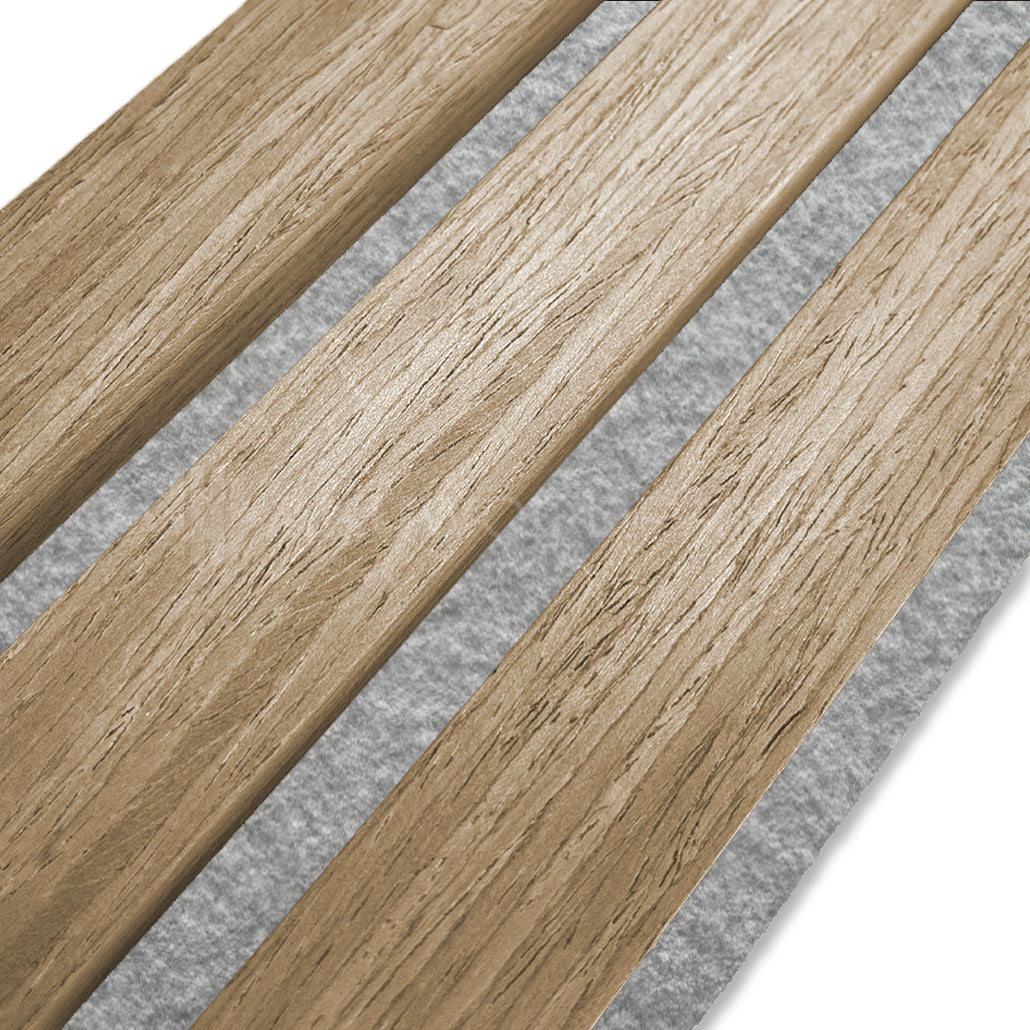
Natural Oak with grey felt — the subtle option. Natural Oak's pale veneer bounces more light than the darker finishes, which is exactly why it suits an LED strip mounted behind the panel as indirect wash lighting rather than a visible line strip. Verdict: Consider for a soft ambient glow rather than a defined light edge.
High-tack panel glue — the fixing most people underbuy. One 290ml tube typically covers a handful of standard panels depending on wall flatness, and running short mid-install is the single most common reason a seam lifts and a strip channel goes crooked. Verdict: Buy an extra tube before you start, not after.
What to avoid
- Exterior cladding panels used indoors for the LED look. They're built for weather resistance, not acoustic felt backing, so you lose the echo-reduction benefit entirely while paying for a finish designed for rain, not a living room.
- Ultra-gloss lacquered veneers. They look premium in a showroom but throw hard reflections once an LED strip switches on, undoing the softer, diffused look most people want.
- Underpowered LED drivers on long runs. A driver sized for 3 metres struggling to push 5 metres of strip dims unevenly along the wall and shortens the strip's lifespan — size the driver to the full run length, not the panel count.
Verdict comparison table
| Finish | Light reflectance | Best room | Verdict |
|---|---|---|---|
| Black Oak | Low (light becomes the feature) | TV wall, home bar | Buy |
| Walnut | Medium (warm, even glow) | Living room, bedroom | Buy |
| Smoked Oak | Medium-low | Home office, snug | Consider |
| Natural Oak + grey felt | High (best for indirect wash) | Hallway, reading nook | Consider |
| Gloss lacquered veneer (any finish) | Very high (glare) | Not recommended for LED | Skip |
FAQ
Can you fit LED strip lighting behind wooden wall panels? Yes — mount the panel on battens rather than glue-fix so there's a cavity deep enough for the strip and its cable, then run the strip along the top or side edge so light washes out from behind the panel onto the wall.
Does adding LED lighting affect the acoustic performance of the panel? No, provided the strip sits in the mounting cavity or groove rather than covering the felt backing — the acoustic felt behind the veneer keeps absorbing sound exactly as it would without any lighting fitted.
What LED colour temperature works best with dark wood finishes like Black Oak? A 3000K warm white strip suits Black Oak and Smoked Oak best in 2026 lighting setups; cooler 5000-6000K strips tend to wash out the grain and make dark veneers look grey rather than rich.
Is 240cm or 300cm better for an LED feature wall? Match the panel length to your actual wall run — 300cm suits floor-to-ceiling walls over roughly 2.4 metres, while 240cm suits standard UK ceiling heights, and picking correctly means fewer seams for the light strip to cross.
Do you need battens or can you glue-fix panels with an LED strip? Glue-fix works if the strip mounts along the visible panel edge rather than behind it; if you want the strip and its cable hidden inside a cavity, battens are the safer fixing method.
How much panel glue do you need for a typical feature wall? Coverage depends on wall flatness and panel count, so buy one extra 290ml tube of high-tack panel glue beyond your estimate — running short mid-install is the most common cause of a lifted seam.
Are acoustic wall panels with LED lighting worth it in a home cinema? Yes — the felt backing reduces reflected sound while the LED strip along the panel edge gives bias lighting that reduces eye strain against a bright screen, a combination increasingly common in 2026 home cinema fit-outs.
Can you run RGB colour-changing strips with wood veneer panels instead of warm white? You can, but RGB tends to clash with wood grain and reads better on painted or plastered walls; warm white 3000K is the safer, more durable-looking choice against real wood veneer.
One last thing
Most people budget for the LED strip and the panels but forget the driver enclosure — leave a small access point in your batten cavity so you can swap a failed driver in 2026 or beyond without pulling the whole feature wall off the studs.